SIG SAUER - Never Settle

ZRODelta Unveils the FKS-9 9mm Pistol at SHOT Show 2024, Available for Pre-Order Now!

February 21st, 2024

[Rutherford College, NC 02/20/24] – ZRODelta, a leading innovator in firearm technology, proudly introduces the FKS-9, showcased for the first time at the SHOT Show 2024. Designed with the latest advancements in mind, the FKS-9 sets a new standard for performance, reliability, and user experience in the firearms industry.

Crafted to meet the demands of discerning shooters, the FKS-9 boasts a range of features that elevate its capabilities to unparalleled levels:

• Slide Options: Choose between Standard, Deluxe, or Premium slides. Deluxe slides feature an optic cut that accommodates the direct mounting of a Trijicon RMR®. Premium slides feature an optic cut and plate system to accommodate a wide range of sight options, ensuring precision and flexibility in any shooting scenario.

• Compatibility: The FKS-9 is Glock® Gen3 compatible, ensuring seamless integration with existing Glock® accessories and components, providing users with familiar functionality and convenience.

• Grip Texture: Equipped with a 360° grip texture, the FKS-9 offers enhanced control and recoil management, empowering shooters to maintain accuracy and stability during every shot.

• Enhanced Beavertail: Engineered for comfort and slide bite prevention, the enhanced beavertail design of the FKS-9 ensures optimal handling and reduces the risk of discomfort during extended shooting sessions.

• Reversible Mag Catch: Featuring a Glock® Gen4 compatible reversible mag catch, the FKS-9 offers enhanced customization options to suit individual preferences and shooting styles.

• Double-Undercut Trigger Guard: The double-undercut trigger guard of the FKS-9 enables a higher grip, promoting improved control and stability for shooters of all skill levels.

• Control Ledge: Designed with a recoil management thumb pad on both left and right sides, the control ledge of the FKS-9 provides shooters with enhanced handling and maneuverability, allowing for greater precision and confidence in every shot.

• 18° Grip Angle: With an optimized 18° grip angle, the FKS-9 delivers superior ergonomics, ensuring a comfortable and natural shooting experience for users of all hand sizes.

“We are excited to introduce the FKS-9 9mm Pistol, embodying our unwavering commitment to innovation and excellence,” expressed Chad Wylie, CEO at ZRODelta. “Designed with the staunch support of the 2nd Amendment community in mind, the FKS-9 offers an affordable and dependable means of firearm ownership, honoring individuals’ rights to bear arms. With its advanced features and unwavering performance, the FKS-9 indicates a new era for ZRODelta, empowering shooters to explore the full extent of their capabilities.”

The FKS-9 9mm Pistol starts at $399 and is now available for pre-order, offering enthusiasts the opportunity to be among the first to experience its dependable performance and craftsmanship. Early pre-orders are expected to ship during the latter half of Q2. For more information and to secure your order, visit www.zrodelta.com.

Rigorous Analysis of Future Operational Environment Informs Army Readiness

February 21st, 2024

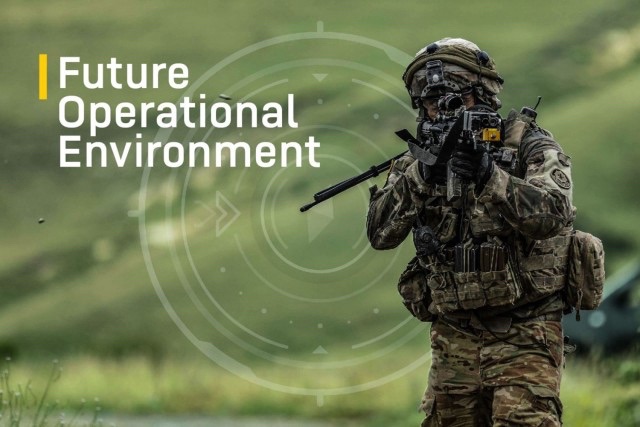
AUSTIN, Texas – Army Futures Command is charged with transforming the Army to ensure war-winning future readiness.

A major effort underpinning this goal is the command’s extensive study and assessment of the future operational environment.

“It’s not about getting it right,” said AFC Commanding General Gen. James E. Rainey of the command’s efforts to forecast future likelihoods. “It’s about not getting it really wrong and seeing what you got wrong and adapting faster than your enemy.”

In late 2022, AFC leadership identified the need for a “running estimate” of what future challenges the Army of 2040 might face, including how it is likely to be shaped by rapidly evolving technologies and shifting global geopolitics.

An initial version of the document, which focused on the 2040 timeframe, was developed by AFC’s Directorate of Intelligence and Security in early 2023.

Referred to as the Future Operational Environment Running Estimate, the living document draws upon insights from previous iterations of future forecasts — among them AFC Pamphlet 525-2, Future Operational Environment: Forging the Future in an Uncertain World 2035-2050 — but was uniquely designed to be updated continually, offering the Army the ability to iteratively refine its understanding of future warfare.

“Army Futures Command’s critical mission is to transform the Army through new capabilities, formations and operational concepts that provide war-winning readiness. Understanding the conditions of the future operational environment and how adversaries may fight is necessary to inform the command so it can develop the capabilities, formations and concepts to achieve overmatch in those conditions,” said Jacob Barton, Ph.D., AFC’s future operational environment intelligence chief.

The running document explores types of conditions warfighters might encounter, technologies that could disrupt the status quo and implications of near-peer adversary activities.

Input for the document is derived from intelligence reporting, academic and scientific studies, and sustained engagement with experts from across the intelligence community, industry, academia and think tanks. The document also includes input from organizations across the command and other elements of the Department of Defense, resulting in comprehensive and in-depth analysis of information, Barton explained.

AFC uses the assessment of the future operational environment to inform all other critical functions performed by the command, including research, concepts, experimentation, requirements and integration.

The work is often extraordinarily complex, given how rapidly situations and technologies can change.

“Some of the most challenging aspects of preparing for the future operational environment involve the difficult nature of attempting to forecast the future,” Barton said.

“In assessing trends about the current operating environment, we attempt to envision the range of possibilities that exist in 10 and 20 years. Then we make assessments of what we believe at the time to be the most likely conditions within the range of potential possibilities.”

Despite the vastness of the challenge, Barton believes AFC is well-positioned to serve as a steward of the document for the Army.

“By having close collaboration with concepts and capabilities writers, engineers, scientists, technologists and integrators, AFC is uniquely suited to compare friendly and adversarial capabilities and provide useful analysis about what might be necessary to provide the Army advantages in the future,” Barton said.

AFC shares its analysis with other members of the joint force, helping to refine understanding of mutual challenges and opportunities related to future readiness.

The Army-specific lens of the running estimate also extends beyond what is typically provided by academia and industry, making it particularly useful to Army leaders and planners. Due to the sensitive nature of the document, it is not available for public consumption; however, its insights are directly contributing to the nation’s ability to protect its future.

“Ultimately, the Army must maintain its advantages,” Barton said. “Protecting the information and judgments inherent to the running estimate is a necessary step to maintaining this advantage.”

By Maureena Thompson, Army Futures Command

General Atomics Expands International Collaborations and Partnerships with Japan in Critical and Emerging Technologies

February 20th, 2024

SAN DIEGO – 19 February 2024 – General Atomics, a defense and diversified technologies company with affiliates operating on five continents, is expanding its collaborations and partnerships across Japan with new investments in the nuclear energy and rare earth elements sectors.

Numerous teaming arrangements are in the late stages of discussion and are set to be announced in early 2024. These partnerships will complement the company’s existing relationships as a long-term partner collaborating with Japanese industry and government agencies.

“General Atomics is committed to collaborating with its Japanese partners to advance the development of cutting-edge technologies in the maritime security, nuclear energy, and rare earth elements sectors,” said Dr. Vivek Lall, chief executive at General Atomics Global Corporation. “Building on a legacy of successful collaborations, we have held a series of strategic engagements with government officials, industry leaders, and research institutions in Japan. These engagements have laid the foundation for future partnerships aimed at advancing the development of critical and emerging technologies.”

In 2023, Japan’s Kyoto Fusioneering announced an agreement with GA to supply two advanced gyrotrons to the U.S. Department of Energy’s DIII-D National Fusion Facility in San Diego, Calif.

Currently, the Japan Coast Guard (JCG) and Japan Maritime Self-Defense Force (JMSDF) are testing and deploying the MQ-9B SeaGuardian® Remotely Piloted Aircraft (RPA) built by General Atomics Aeronautical Systems, Inc. (GA-ASI). SeaGuardian is a long-endurance maritime surveillance aircraft that can be used for a variety of missions, including search and rescue, disaster response, and maritime law enforcement.

GA-ASI’s MQ-9B aircraft is revolutionizing the global RPA systems market by providing true all-weather capability and full compliance with STANAG-4671 (NATO UAS airworthiness standard). This feature, along with GA-ASI’s operationally proven collision avoidance radar, enables flexible operations in civil airspace.

Join Clawgear at Enforce Tac

February 20th, 2024

Soviet Weapons of the Afghan War

February 20th, 2024

Launching today on Kickstarter from author Vlad Besedovskyy is “Soviet Weapons of the Afghan War.”

The manuscript also includes weapons, which are not to be seen in any other work – such rarities as RPG-16, folding-stock RPKS-74, APB silenced pistol and others.

Each chapter is a comprehensive exploration of a specific Soviet firearm, tracing its origins, modifications, and battlefield performance. Whether you’re a military history enthusiast, firearm collector, or just curious about this era, this book offers a unique blend of information and excitement.

www.kickstarter.com/projects/345pdp/soviet-weapons-of-the-afghan-war

Get ready for Tactical Tuesdays with Vertx!

February 20th, 2024

If you’re not familiar with us, Vertx is known for delivering durable, high-quality bags, packs, and apparel tailored to the needs of tactical enthusiasts, civilians, and pro-2A advocates. In 2023 we unveiled our exclusive Vertx Pro line, featuring three uniform collections specifically designed for Federal, Military, and Public Safety professionals. Every Tuesday will be an opportunity to learn more about our product range, innovations, and events that matter to you.

Check out some of our best-selling products and see what others love about them:

vertx.com

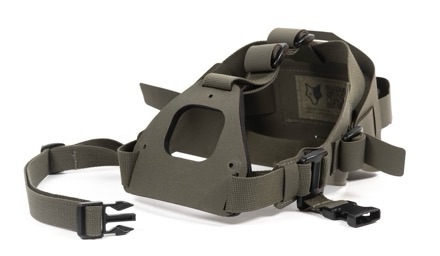
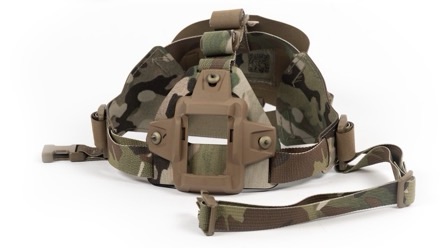
Tracer Tactical – Night Vision Head Harness

February 20th, 2024

Tracer Tactical’s Night Vision Head Harness is currently available for pre-order.

It’s a lightweight stand alone harness which allows you to wear your NODa without the bulk and weight of a helmet. These are great for recce missions and hunting. It spreads the weight of the device via wide straps that run over the top of and around the user’s head. Additional comfort is provided via the frontal closed-cell foam behind the Tegris plate used to hold the shroud and offer rigidity. Finally, there is a battery pack strap and chinstrap.

Made in the USA and offered in a variety of colors and patterns.

tracer-tactical.com/collections/frontpage/products/night-vision-head-harness-bundle-pre-order-1

Please note, a shroud is NOT included in this bundle.

Army Expeditionary Warrior Experiment Tests Emerging Battlefront Advancements

February 20th, 2024

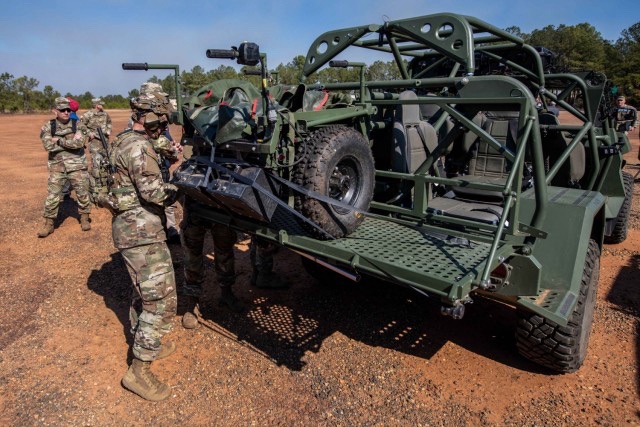
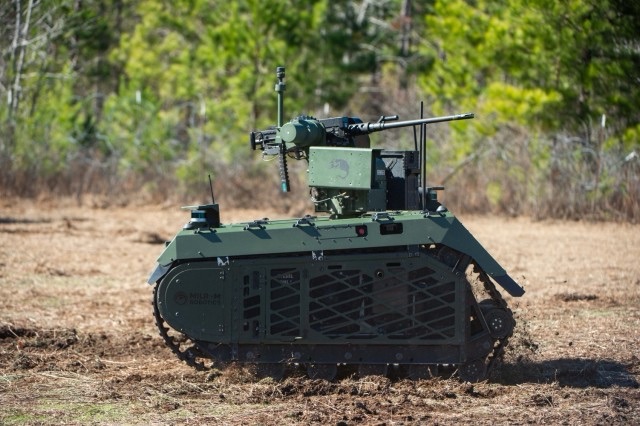
FORT MOORE, Ga. — Operational insights on the battlefront are crucial. The Army Expeditionary Warrior Experiment executes field experiments in real time, featuring live fires, simulations and force-on-force engagements to validate what will and won’t work for Soldiers amidst the conflicts of today and the challenges of tomorrow.

DRIVING CHANGE IN THE MANEUVER FORCE

The Maneuver Capabilities Development and Integration Directorate leads the Maneuver Battle Lab’s Live Experimentation Branch and sets the stage for the Army’s concept and materiel development for small unit modernization. As a key proponent on rising technologies, MBL hosts AEWE, an annual event held at the Maneuver Center of Excellence, a premiere showcase of innovations come to life. Each year, MBL partners with the science and technology community to submit ideas that can enhance the future of warfare.

Chris Willis, director of the MCoE Maneuver Battle Lab, shared this year’s experiment focus is “increasing the lethality of the infantry brigade combat team through robotic-enabled maneuver.” This means “taking capability, state-of-the-art technologies, and putting it into the hands of Soldiers, increasing the lethality to deliver the Army of 2030, and design the Army of 2040.”

AEWE

“For twenty years, AEWE has served as our Army’s premiere choice for modernization experimentation,” said Col. Scott A. Shaw, director of Maneuver CDID. “Vendors from all over the world, both industry and government based, submit to participate in the event to gather invaluable data, test their applications, and better yet, receive informative outcomes without the fear of failure when it really matters — in combat.”

Selected systems are presented for Army leadership interaction and put to the test throughout the experiment with Soldier touchpoints. Soldiers at the lowest tactical level can directly engage with the new technologies and various prototypes, and vendors receive invaluable feedback from experienced potential end users.

Willis noted, “AEWE brings together a live experiment and simulation. They are doing live field maneuvers that tie in, and a fighting simulation is simultaneously running.”

There have been a wide range of concepts showcased at AEWE, and some that incorporated feedback have been implemented into real Army applications.

“I remember seeing things like the Black Hornets, which are micro unmanned aerial vehicles, and the Nett Warrior system where Soldiers wear smartphones on their chest, and night vision goggles with infrared and thermal technology — they were all presented and tested here,” said Maj. Joseph Tague, Maneuver Battle Lab operations officer.

The AEWE runs from the beginning of the fiscal year in October, through second quarter, culminating in March with an insights brief. Outcomes and recommendations gathered during AEWE feed the Army Modernization Strategy, support the U.S. Army in Multi-Domain Operations, and this data informs leadership about the functionality and capabilities available. For many participating technologies, this means getting on the radar for future Army equipment decisions.

HERE AND NOW

“Inviting our partners and allies to collaborate on next-generation military warfare enhances our foreign relationships and underlines the significance of how enduring partnerships are a way our joint forces can deliver ready combat formations and strengthen the profession of arms,” said Shaw.

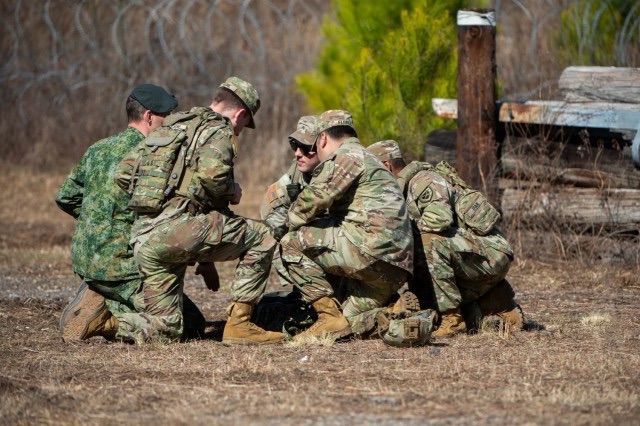
This year, AEWE has 48 participating concepts that will be put to the test over 50 days, which includes training and data collection conducted at Fort Moore. For AEWE, MBL brought together 182 Soldiers to comprise a multifaceted experimentation force of MCoE service members, foreign allies participating from the British Army, Dutch Army and German Army, and a platoon of Soldiers from Fort Johnson, Louisiana, who will serve as the opposition force acting as near-peer adversaries during Force-on-Force exercises.

“We need to be able to understand how we can integrate new technologies into both our infantry and armor formations,” Willis said. “From the experiment, we are trying to understand the operational effectiveness of new capabilities, looking at concepts, formations, or technologies, and how all three of these connect and could affect each other.”

Soldiers will evaluate components from seven categories — lethality, survivability, mobility, training, intelligence, surveillance, and reconnaissance, command and control, and sustainment — of these emerging technologies to gauge their potential effectiveness on modern battlefields. Experimenting and testing proposed concepts and capabilities can directly determine what tools could benefit the force and enhance tactical skills at the lowest echelon.

Shaw emphasized “Across multiple domains, innovation is key in warfighting and successful implementation of cutting-edge technology creates the overmatch necessary to win on future battlefields.”

By Camelia Streff