Colt

Ghost X Tactical MPLS Headlamp from Princeton Tec

June 9th, 2026

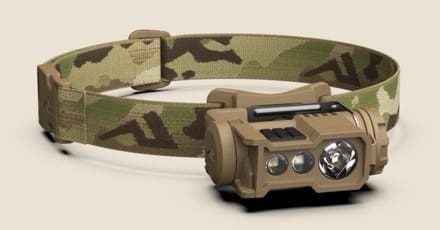
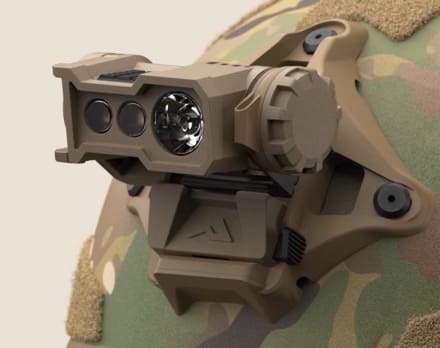
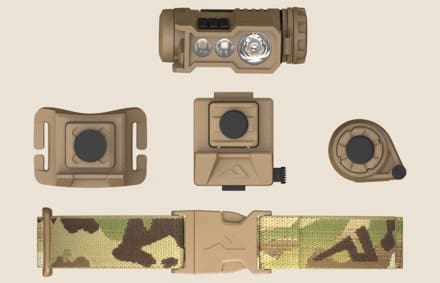
New for 2026 is the Ghost X Tactical MPLS Headlamp from Princeton Tec is compatible with MOLLE as well as helmets thanks to an inculded NVG and ARC rail adapter.

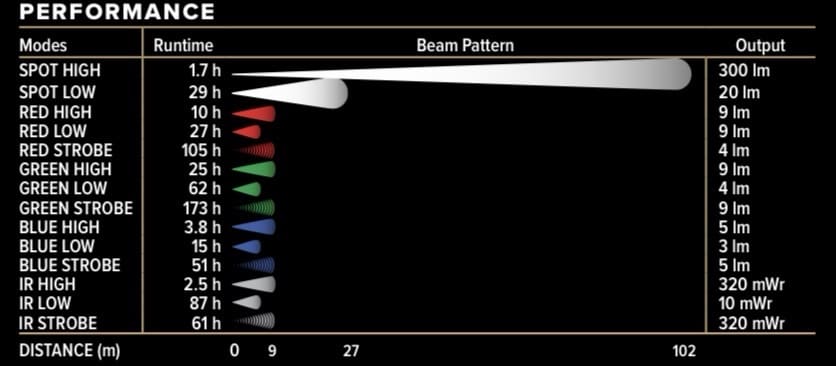
I’m really excited about this light. It offers 300 lumens dimmable light and 320 mWr IR output, with an IP68 rating. What’s more, the Ghost Mode switch only allows activation of IR High, IR Low, or IR Strobe settings, so no accidental white light incidents.

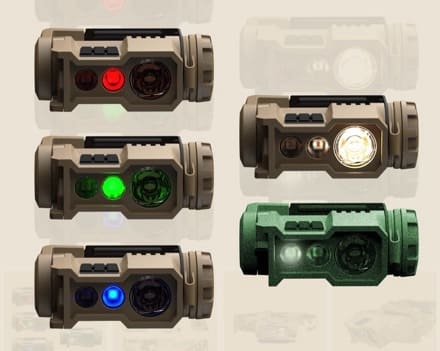
Light colors include white, red, blue, green and IR.

Offered in Black, MultiCam, OD, and Tan as a headlamp only, or as a full MPLS kit.

princetontec.com/product/ghostx-mpls

Mustangs of the 4th Joint Communications Squadron (4JCS), Joint Communications Support Element (Airborne) Complete Mustang Challenge

June 9th, 2026

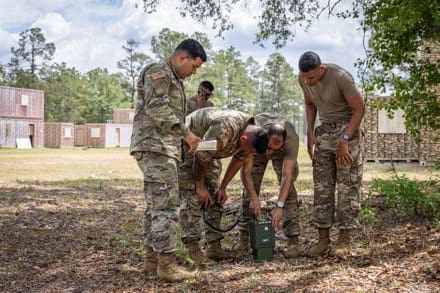
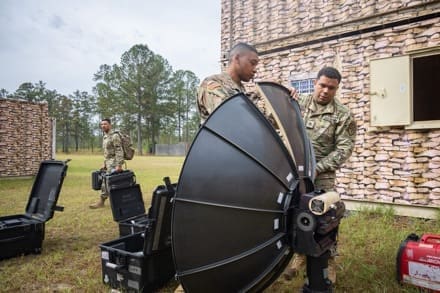
Recently, the Mustangs of the 4th Joint Communications Squadron (4JCS), Joint Communications Support Element (Airborne), put their skills, endurance, and determination to the test during their annual Mustang Challenge.

So, what is the Mustang Challenge?

It is a rigorous competition designed to evaluate Soldier readiness through a demanding series of events that test physical fitness, technical proficiency, military knowledge, and teamwork. Conducted during the Squadron’s two-week U.S. Army Reserve Annual Training period, this year’s challenge consolidated key Army and JCSE training requirements into three intense days of mission-focused competition.

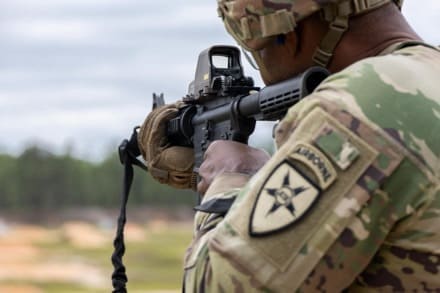
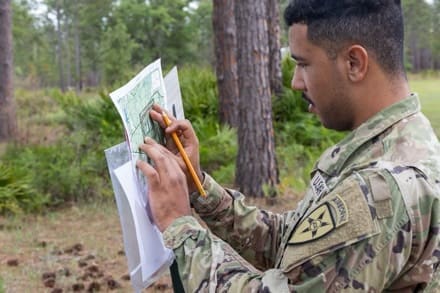
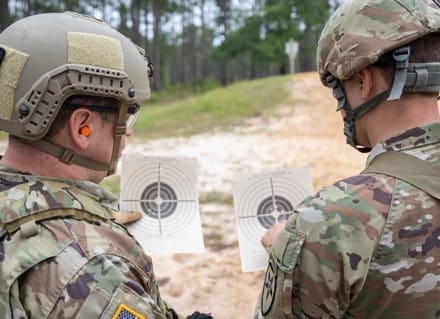
The competition began with Weapons Qualification and a Soldier Board, challenging competitors to demonstrate both marksmanship and professional military knowledge. On day two, the pace intensified with Stress Shooting, where Soldiers were required to maintain accuracy, speed, and composure after navigating the newly implemented Combat Field Test (CFT). Competitors then transitioned to Land Navigation, relying on their map-reading skills, compass proficiency, and confidence to successfully maneuver across unfamiliar terrain.

The final day began before sunrise with an 8-mile ruck march, testing both physical endurance and mental resilience. Competitors then moved into a 24-hour field training exercise, where they demonstrated proficiency with high-frequency radio systems and conducted CN Team equipment validation. Throughout every event, the Mustangs displayed the adaptability, technical expertise, and determination that define the Squadron and contribute directly to mission success. After meeting with JCSE’s Element Command Team, 335th Signal Command (Theater) Commanding General and Deputy Commanding General (both were previous Commanders of 4JCS) paid the Mustangs a visit and joined in on the training right along side the troops! Probably brought back some fond memories of their time as Mustangs.

When the scores were finalized and the competition came to an end, one troop emerged on top. Congratulations to Lima Troop, the 2026 Mustang Challenge Champions, for earning top honors and securing bragging rights for the year ahead.

The Mustang Challenge continues to strengthen readiness, sharpen warfighting skills, and reinforce the culture of excellence that drives the mission forward.

Train Hard. Communicate Harder. Sound the Charge!

(Photos by U.S. Army SGT Brandon Best)

New Leadership of Technology Systems Division at Rohde & Schwarz

June 8th, 2026

On July 1, 2026, Hansjörg Herrbold and Andreas Hägele will take over as Executive Vice Presidents Technology Systems at Rohde & Schwarz. They follow Dr. Luis Alejandro Orellano, who will leave the company on June 30 at his own request. The decision to establish a dual leadership position is a logical next step to align the division even more consistently with customers and markets.

Munich, June 5, 2026 — Rohde & Schwarz relies on two experienced, entrepreneurial managers with a strategic vision. Hansjörg Herrbold and Andreas Hägele will strategically divide responsibility for the different topics of the Technology Systems Division.

Herrbold has more than 20 years of experience in defense at Rohde & Schwarz, providing comprehensive knowledge of customers and their requirements. Among other things, he led the naval communications segment on a long-term growth path. Most recently, he headed the Information and Business Technology Division and was a member of the group’s Corporate Management in this role.

Hägele has extensive expertise in critical infrastructure and physical security. In his five years with Rohde & Schwarz, he has established the Microwave Imaging business unit and particularly led the R&S QPS security scanner to success. More than 2,000 scanners are now used at airports around the world to ensure secure, convenient passenger screening. Prior to that, he worked at a digital security company, where he was managing director and was responsible for several hundred million euros in revenue.

In their new position, Hansjörg Herrbold and Andreas Hägele will remain or become members of the Corporate Management of Rohde & Schwarz.

Mehler Protection to Showcase Body and Platform Protection Solutions at Eurosatory 2026

June 8th, 2026

FULDA, KÖNIGSLUTTER, GERMANY (05 June 2026)

Mehler Protection, part of Mehler Systems and a leading provider of ballistic body and platform protection solutions, will present its latest developments at Eurosatory 2026, taking place from 15–19 June in Paris.

Visitors can meet the team in Hall 5B, Stand C220, where Mehler Protection will showcase a broad portfolio of protection solutions ranging from advanced platform armour systems to personal protection equipment. With Eurosatory serving as one of the defence industry’s most important meeting points, the brand will place particular emphasis on its platform armour capabilities, highlighting solutions designed to enhance vehicle survivability and occupant protection.

Among the key exhibits will be SCILT, Mehler Protection’s close-range Counter-UAS system designed to protect vehicles against FPV drones, loitering munitions, and other small aerial threats approaching from short distances and low angles. Developed as a dedicated last layer of vehicle protection, SCILT addresses a growing capability gap between conventional air-defence systems and passive armour solutions.

In addition, visitors will gain an early insight into a new protected mobility concept developed in cooperation with a major European vehicle manufacturer. The project highlights the flexibility of Mehler Protection’s M-RACC protection architecture and its ability to support a broad range of operational requirements while maintaining a strong focus on occupant protection, operational flexibility, and mission effectiveness. Further details regarding the project will be announced before Eurosatory.

Alongside its platform protection portfolio, Mehler Protection will present a comprehensive range of personal protection systems for military and law enforcement applications.

Among the highlights will be the latest generation of the ExoM Exoskeleton, a passive load-bearing system designed to reduce operator burden while improving mobility under heavy loads. Visitors will also be able to explore the full M.U.S.T. configuration, a modular protection system that can be scaled according to mission requirements.

Additional exhibits will include the MOBAST protective vest system developed for the German Armed Forces, covert and overt body armour systems, military waistcoats, plate carriers, soft- and hard-ballistic protection solutions, ballistic helmets, and shields.

Eurosatory remains one of the world’s leading defence and security exhibitions, bringing together armed forces, procurement authorities, industry representatives, and technology providers from around the globe.

Learn more about Mehler Protection: mehler-protection.com

USMC Issues Sole Source Notice for 5.56mm Anti-Drone Rounds

June 8th, 2026

According to a sole source notice issued last week, Portfolio Acquisitions Executive Marine Corps (PAE MC), Program Manager, Combat Support Systems (CSS), PdM Ammunition (PdM AMMO), Quantico, VA 22134, intends to enter into a sole-source negotiations and subsequently award an Indefinite Delivery/Indefinite Quantity (ID/IQ) contract to Drone Round LLC for the 5.56mm “L Variant” Anti-Drone Rounds. This effort is estimated for award December 2026.

Launched earlier this year, the 5.56mm Drone Round “L Variant” projectile separates into several pieces to act in a similar fashion to a shotgun, making it effective against drones.

According to the Marines, it is the only kinetic munition currently available in the commercial or defense marketplace that meets the Marine Corps’ strict minimum capability requirements for immediate c-sUAS defense. Specifically, this round is the only solution offering “drop-in” compatibility that requires no physical modifications, specialized upper receivers, or distinct weapon platforms to be operable in current-issue Marine Corps 5.56mm weapons (e.g., M27 M4, and M4A1). Furthermore, its deployment requires zero additional New Equipment Training or specialized occupational specialties, rendering it immediately effective upon issue. Failure to deliver this capability places an unnecessary risk to Marines and could lead to mission failure and loss of life. Market Research indicates that Drone Round LLC is sole manufacturer and reseller of this ammunition. The appliable North American Industry Classification System code is 332992, Small Arms Ammunition Manufacturing.

CTOMS Celebrates 20 Years

June 8th, 2026

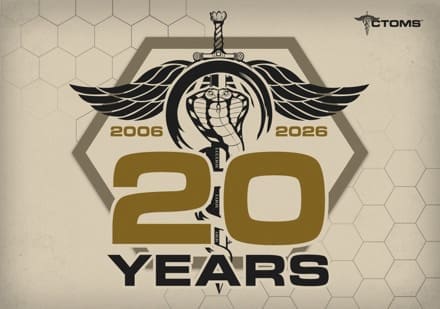
In 2026, CTOMS proudly marks the twentieth anniversary of active operations. Founded by Chris Kopp in response to the 2002 loss of Canadian soldiers in Afghanistan, the company was formally incorporated in 2005 and launched operations in 2006. What began as a personal mission to honor the fallen has become a leading provider of tactical medical training and equipment solutions for military, law enforcement, first responders, and prepared citizens.

CTOMS has always followed a training-first philosophy: skills and knowledge must come before gear. Our evidence-based programs focus on critical thinking, self-reliance, and the full spectrum of care, from Care Under Fire to prolonged field care. Through CTOMS Academy, we offer accessible online tactical and emergency medicine courses. We also develop our own innovative brands including MGTD Systems™, TRACE™, FireFly™, CTOMS Essentials™, and PROKITS™, and are a proud distributor of industry leading brands.

Over two decades, we have trained thousands of professionals, supplied frontline agencies across Canada and internationally, and refined our methodologies based on real-world feedback, research, and rigorous evaluation. Our newly unveiled 2026 logo with its longsword, King Cobra, golden wings, and crocus flower symbolizes this journey: resilience after tragedy, the seamless integration of tactical and medical excellence, and the lifelong pursuit of mastery.

Looking Forward

As we enter our third decade, CTOMS remains dedicated to becoming a world leader in tactical, medical, and rescue solutions. We will continue expanding CTOMS Academy, developing cutting-edge gear, and supporting those who do the work with the best training.

Thank you to our clients, partners, instructors, and team for two decades of saving lives. Here’s to the next twenty years!

Visit us at: ctomsinc.com

The Army Wants To Improve Your Combat Boots

June 8th, 2026

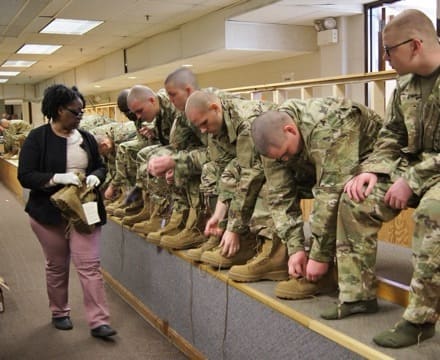
In a request for information recently issued to industry, the US Army DEVCOM Soldier Center sought out potential sources which will support the re-shoring of the domestic footwear industry, improve capabilities for the domestic military footwear industrial base, and ultimately provide the best performing footwear technology to the Warfighter.

Naturally, this effort won’t just improve the Army’s boots but those of every service as well as potentially commercial footwear manufactured domestically.

The reality is that the US has a small domestic footwear production capacity belated primarily on military procurement which by law requires US made goods. The Berry Amendment specifies that most textile goods purchased by the US military must be manufactured in the US using US materials.

Because the industry is so small and caters to military procurements it hasn’t kept up with technological improvements found in many overseas factories which are newer and must be responsive to changing materials and processes.

The military has been very slow to adopt those same material and manufacturing processes developed for commercial footwear, there’s no pay off for US based companies to make capital improvements. In fact, building a new, state of the art factory could result in failing to capture military contracts due to the inability to build to older specifications.

While the RFI is open to everyone, the reality is that companies who aren’t already building to US military specs and comfortable with low margins are going to be at a serious disadvantage.

Specifically, DEVCOM SC asked footwear manufacturers to identify possible gaps and process and/or equipment improvements to enhance domestic processing capabilities, which may be beneficial to future military footwear systems. This request is part of a research and development effort under the FY24 Congressional Military Footwear Research Initiative. 

That last bit is a bit concerning. Two years later and they’re just getting to it. Our procurement system is going to have to move faster and become more responsive.

However, I am very excited about the focus of this effort:

  • Increase domestic production capacity and adopt advanced manufacturing technologies to enhance productivity. Efforts should provide tangible improvements to footwear manufacturing processes.
  • Re-shore critical footwear technologies and strengthen domestic production capabilities.
  • Improve the cost-effectiveness, quality, or performance of military footwear.
  • Implement flexible, automated, or digital manufacturing approaches adaptable to multiple footwear types.

As I mentioned earlier, the specification or Purchase Description for military footwear is pretty basic. The Army is asking for innovation but they don’t want to innovate their designs.

All proposed solutions must align with the project scope and the following constraints:

1. Product Compliance: The proposed manufacturing improvements must not alter the footwear’s design, materials, or construction in any way that would result in non-compliance with the applicable DoD purchase description. Any footwear prototypes delivered must meet all specifications of an existing purchase description.

2. Funding Limitations: Funding may not be used for capital expenditures, defined as purchases of long-term physical assets such as equipment, facility improvements, or tooling intended for full-scale production. Tooling used for short-run prototype production (e.g., lasts or molds), as well as consumables, prototype materials, labor, and short-term leases, are considered allowable project expenses.

I realize we facing a chicken or egg moment but that is what always holds the domestic textile industry back. The military wants a new capability but won’t specify it because it doesn’t yet exist in the supply chain. Industry won’t invest in modernizing their factories unless there’s a solid demand signal from their customer. Delays ensue and stack up. Before long, we are decades behind the international industry standard.

Finally, I’d like to point out that two boots for specialized environments are not included in this effort, the Army Extreme Cold Weather Boot (often called the “Bunny Boot”) and the Army Jungle Boot The purchase descriptions and technical requirements for these specific platforms are under revision, making them unsuitable for this initiative.

BFG Monday: The Weight Problem Is a Readiness Problem

June 8th, 2026

For decades, the conversation around Soldier load has often been treated like a comfort issue. Lighter gear was something nice to have. Easier on the back. Better for morale. A quality-of-life improvement for the individual Soldier.

But that way of thinking does not match the reality of the problem.

The weight problem is a readiness problem.

Every extra pound a warfighter carries affects speed, endurance, mobility, recovery, and the ability to stay effective over time. That weight does not just sit in a ruck or hang from a plate carrier. It is connected to a human being. It compounds over hours, miles, training cycles, deployments, and years.

Eventually, weight becomes fatigue.
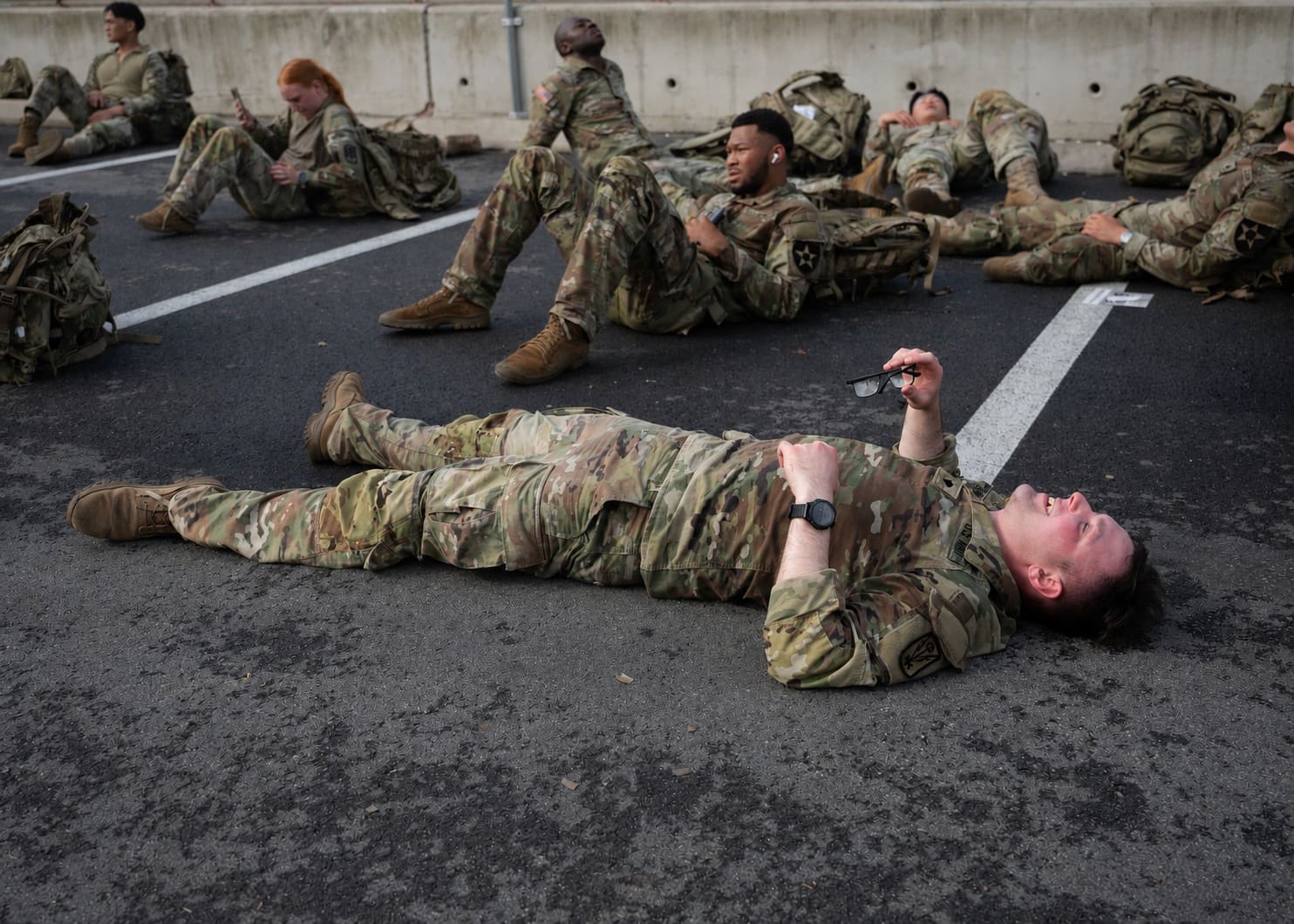
Fatigue slows movement. Slower movement reduces effectiveness. And in combat, reduced effectiveness can carry serious consequences.

The Army has acknowledged this plainly. In Soldier Load: The Art and Science of Fighting Light the issue is framed as more than a comfort concern. Excessive Soldier load creates risk to the force and risk to the mission, especially inside formations that depend on speed, endurance, and the ability to maneuver under pressure.

That is the point.

This is not about making the load feel better. It is about making the force more capable.

Heavy loads reduce maneuverability, increase energy demand, slow reaction time, and accelerate wear on the body. Knees, hips, backs, and feet absorb that cost over time. Research on the biomechanics of load carriage has shown that carried loads can change movement patterns, increase stress on the lower extremities, and add to the physical burden placed on military personnel.
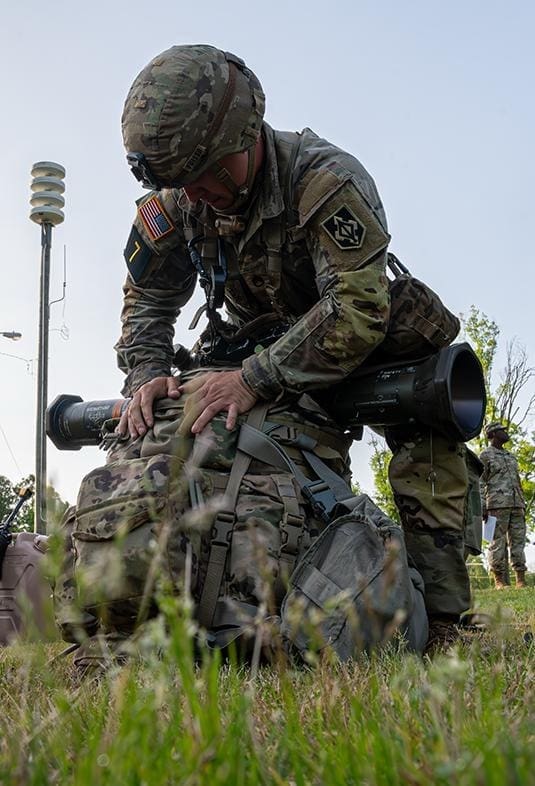

Photo credit: U.S. Air Force photo by Senior Airman Olivia Bithell

The damage does not always show up immediately. It builds quietly through training, field problems, deployments, schools, movements, and repetitions. Eventually, it can affect performance, recovery, and the long-term health of the people who have carried that weight for years.

The cost is cumulative.

A few extra ounces on one pouch may not seem like much. Neither does a heavier attachment system, a bulky platform, or one more piece of unnecessary material. But multiply those ounces across a full fighting load. Then multiply that across every mile, every movement, every range, every training cycle, and every Soldier in the formation.

The burden was never just one item.

It was the totality of all of it.

That is why fighting light is not a trend. It is not a slogan. It is not a marketing angle.

It is a design responsibility.

A lighter load can help a warfighter move better, conserve energy, recover faster, and stay effective longer. It can support better awareness, better decision-making, and better performance under stress. When the body is less consumed by the burden of carrying unnecessary weight, more energy is available for the mission.

None of this means reducing capability. That has never been the right answer.

The answer is not to ask Soldiers to carry less of what they need. The answer is to examine every piece of equipment with greater discipline. Every pouch. Every platform. Every attachment method. Every material choice. Every ounce that does not need to be there.

Military leaders routinely study vehicles, fuel, logistics, sustainment, and mobility because movement wins wars. The same level of scrutiny should apply to individual warfighters.

If unnecessary weight slows the force, then unnecessary weight affects readiness.

This is why Blue Force Gear has always been so focused on weight reduction. Not because lighter gear sounds better on paper, but because weight matters in the real world. It matters when a Soldier is climbing, crawling, sprinting, patrolling, recovering, reacting, or fighting through fatigue.

It matters when the mission lasts longer than expected.

It matters when seconds count.

The answer is not carrying less capability.

It is carrying capability, smarter.

At Blue Force Gear, we have always believed that weight matters because the person carrying it matters. Fighting light is not about comfort. It is about movement, endurance, readiness, and survivability.

Because every ounce matters.

For units seeking to increase survivability and operational performance through reduced load carriage by upgrading to Helium Whisper, contact the Blue Force Gear Military Department or visit BlueForceGear.com.