
MSNBC-National Geographic still screenshot; 9/11 2001 terrorist attacks on New York City.
0846 – Flight 11 crashed into the north face of the North Tower of the World Trade Center.

America is at war.
0850-0854 – Flight 77 is hijacked.


MSNBC-National Geographic still screenshot; 9/11 2001 terrorist attacks on New York City.
0846 – Flight 11 crashed into the north face of the North Tower of the World Trade Center.
America is at war.
0850-0854 – Flight 77 is hijacked.

0814 – United Airlines Flight 175, a Boeing 767 carrying 56 passengers and nine crew members, departed from Logan International Airport, bound for Los Angeles International Airport, with five hijackers onboard.
0820 – American Airlines Flight 77, a Boeing 757 carrying 58 passengers and six crew members, departed from Washington Dulles International Airport in Fairfax and Loudoun Counties, Virginia, bound for Los Angeles International Airport, with five hijackers aboard.
0842 – United Airlines Flight 93, a Boeing 757 carrying 37 passengers and seven crew members departed from Newark International Airport, bound for San Francisco International Airport, with four hijackers aboard.
0842-0846 – Flight 175 is hijacked.
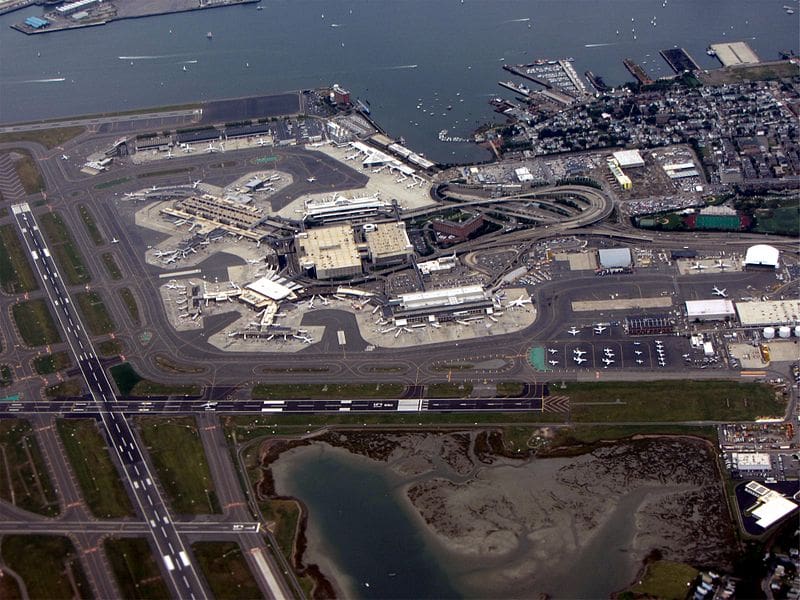
0600 – terrorists Mohammed Atta and Abdulaziz al-Omari traveled to Logan International Airport from Portland International Jetport in Portland, Maine.
0652 – fellow terrorist Marwan al-Shehhi called Atta at Logan to confirm the plans of the attack.
MARINE CORPS LOGISTICS BASE ALBANY, GA – The Marine Corps Advanced Manufacturing Center of Excellence (AM COE) recently helped the Navy solve a supply chain issue for the USS Kentucky.
The Kentucky, an Ohio-class ballistic submarine (SSBN), needed a specifically designed cover for a ventilation system, and a long lead supply chain and the complex geometry of the part meant that a creative solution was needed.
In December, Naval Sea Systems Command’s Trident Refit Facility Bangor (TRFB), which is responsible for repairing, incrementally overhauling and modernizing the Pacific Fleet SSBNs during refits, contacted the Marine Depot Maintenance Command (MDMC). The AM COE, part of the Marine Corps Maintenace Command, leverages AM technology to increase depot production and bolster supply operations and expeditionary capabilities for the Fleet Marine Force.
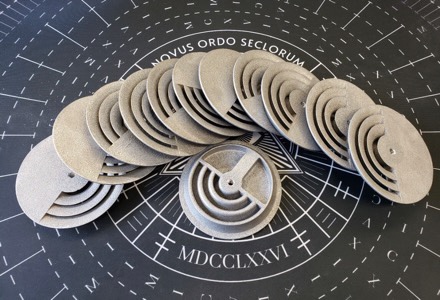
Aluminum printed by Marine Depot Maintenace Command’s Production Plant Barstow using an EOS 400-1 machine for the USS Kentucky.
When TRFB reached out to the MDMC’s Advanced Manufacturing team for a solution, they answered the call. The Marine Corps AM COE reengineered the provided drawings to meet 3D printer specifications and MDMC’s Production Plant in Barstow, California, 3D printed the aluminum using an EOS 400-1 Machine.
This is the first additively manufactured metallic component produced to solve a supply chain issue on Ohio-Class submarines.
“We appreciate the tremendous work of the Marine Corps Advanced Manufacturing Center,” said CAPT Mike Eberlein, commanding officer, TRFB. “Having access to AM greatly increases our efficiency and this is just one of many examples of multiple commands working together to solve problems for the benefit of our warfighters.”
The Marine Corps AM COE continually explores ways to expand partnerships and welcomes inquiries from organizations across the U.S. Marine Corps, Department of Defense, industry and academia.
Learn more at the AM COE Website: Advanced Manufacturing Center of Excellence
I don’t normally post stuff from the same company back-to-back like this, but Black Hills Designs seems to be on a roll, providing low-cost, mission enhancing solutions.
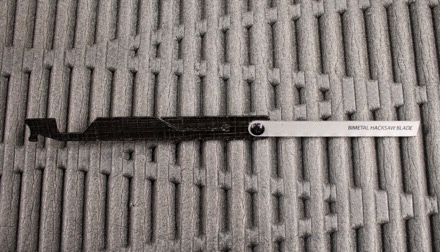
Their lastest is the SHOVE-R shove knife which they describe as a hyper minimalist entry tool designed to be with you when you need it. With a thickness of 1.4mm and a width of 8mm the SHOVE-R is one of the thinnest entry tools you can carry.
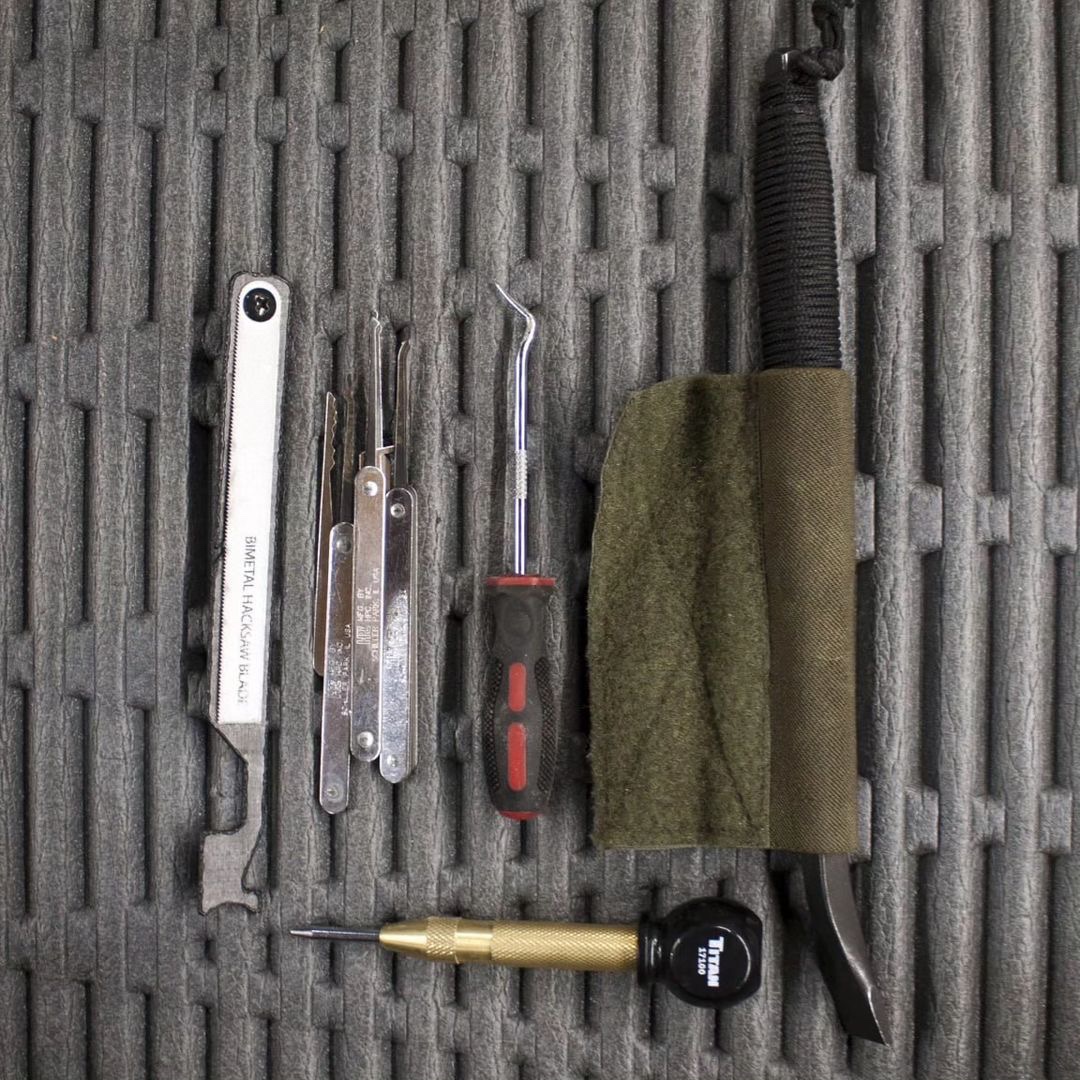
So what exactly is this thing? You remember the old “open the door with a credit card trick?” That’s what this is used for. Just a tool in a box, like you see above.
It’s also XRAY passive and can be woven in between PALS webbing bars or just carried wherever.
www.blackhillsdesigns.net/product/shove-r
Opportunity provides deeper understanding of at-sea operations and ideas on expanding online military educational offerings
WEST LAFAYETTE, Ind. – It was the experience of a lifetime for members of a Purdue University delegation as they cruised the Pacific Ocean on the USS Nimitz with almost 5,000 sailors.
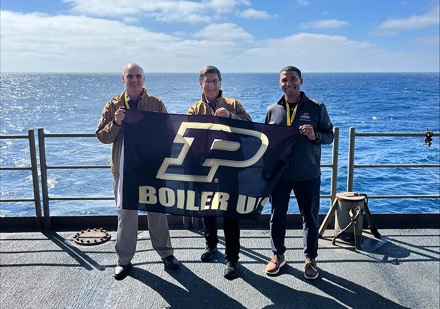
From left to right, Dimitrios Peroulis, senior vice president for Purdue University Online; Frank Dooley, chancellor of Purdue Global; and Kelvin Gumbs, executive director for educational partnerships in Purdue’s Office of Industry Partnerships, were members of a Purdue delegation that visited the USS Nimitz in August.
Frank Dooley, chancellor of Purdue Global; Dimitrios Peroulis, senior vice president for Purdue University Online; and Kelvin Gumbs, executive director for educational partnerships in Purdue’s Office of Industry Partnerships, participated in this firsthand experience, which offered a unique view into the training-rich environment of sailors at sea, learning about ways to strengthen educational opportunities for officers and enlisted personnel.
“It was truly a once-in-a-lifetime opportunity,” Dooley said of his weekend at sea. Approximately 300 dignitaries a year visit the Nimitz (CVN 68), a supercarrier and the lead ship of the U.S. Navy’s Nimitz class of nuclear-powered aircraft carriers.
The trio started their visit receiving briefs at the Naval Air Force, U.S. Pacific Fleet headquarters and then took off from Naval Air Station North Island in Coronado, California, on a C-2 Greyhound aircraft, which made an arrested landing on the Nimitz.
“The arrested landing forces the aircraft to stop completely within a second or two. The deceleration that you feel is immense — going from 160 miles per hour to zero,” Peroulis said. “By the time you realize what is going on, it has ended. It’s only a few hundred feet and the plane has stopped.”
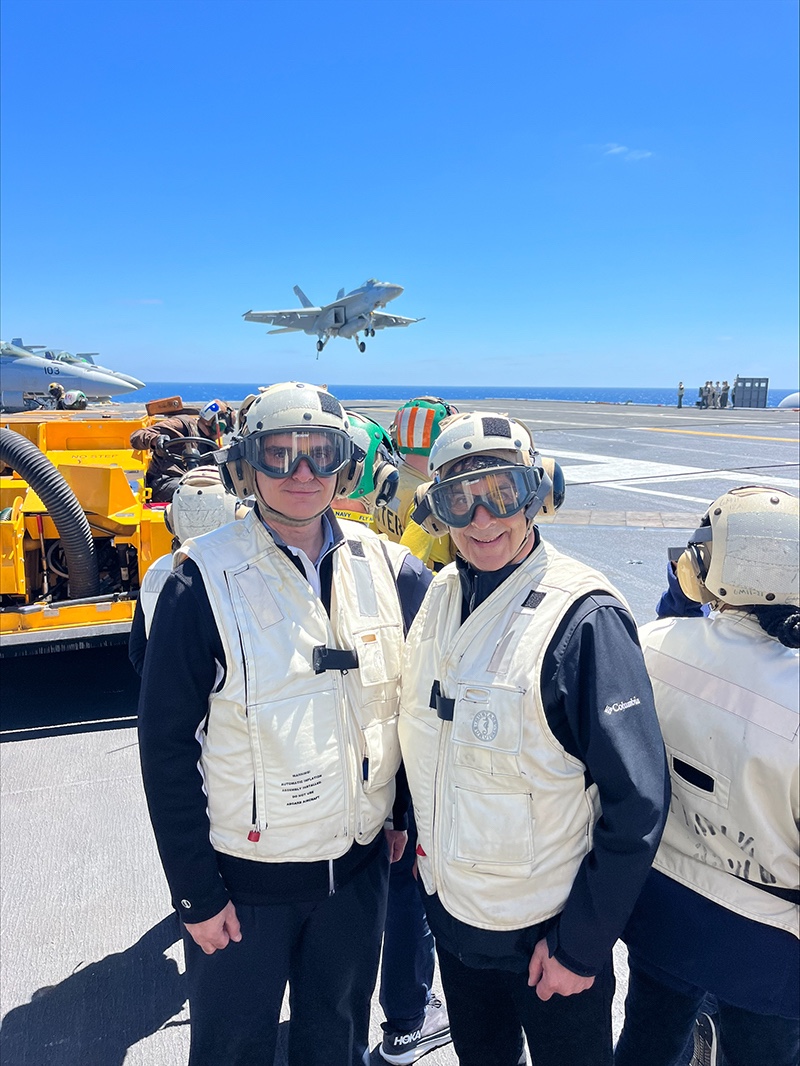
Dimitrios Peroulis, senior vice president for Purdue University Online; and Frank Dooley, chancellor of Purdue Global, on the flight deck of the USS Nimitz.
Once on board, the Purdue delegation began meeting with the admiral, commanding officer, executive officer, command master chief, and other officers and enlisted personnel, touring most areas of the ship.
A highlight of the Purdue delegation was watching the crew perform about 180 daytime and nighttime flight maneuvers, in some instances observing from just 30 feet away as F/A-18 Super Hornets launched from the flight deck.
“All of these men and women serving on the USS Nimitz have received training and are constantly training,” Dooley said. “It is incredible, and it shows how the team all knows how to work together in their areas. Everyone knows what they are supposed to do. It’s a well-organized and -operating machine.”
Purdue Global serves approximately 10,000 military-affiliated students, a population that includes uniformed personnel, veterans and eligible dependents. Purdue University Online serves about 200 military-affiliated students through its online master’s programs.
As the trio toured the ship, they were continually greeted with “Boiler Up!”
“There were people who shared stories of relatives and friends who had come to Purdue; some people had themselves been to Purdue. There was a Purdue connection almost everywhere, which was impressive,” Peroulis said.
Dooley, Peroulis and Gumbs learned of the need for continuing education for sailors of all ranks, especially after their time in the service, and saw firsthand not only where they work but also where they live and would study. The group plans to further develop programs and procedures to make online learning programs more innovative for Navy and other armed forces personnel and more aligned with sailors’ professional development needs.
“The fact that we can serve both officers and enlisted personnel at the same time through the virtual campuses of Purdue was intriguing to them, as they are aware of Purdue’s quality education and commitment to the military. This is where Purdue is positioned so differently than other schools,” Dooley said.
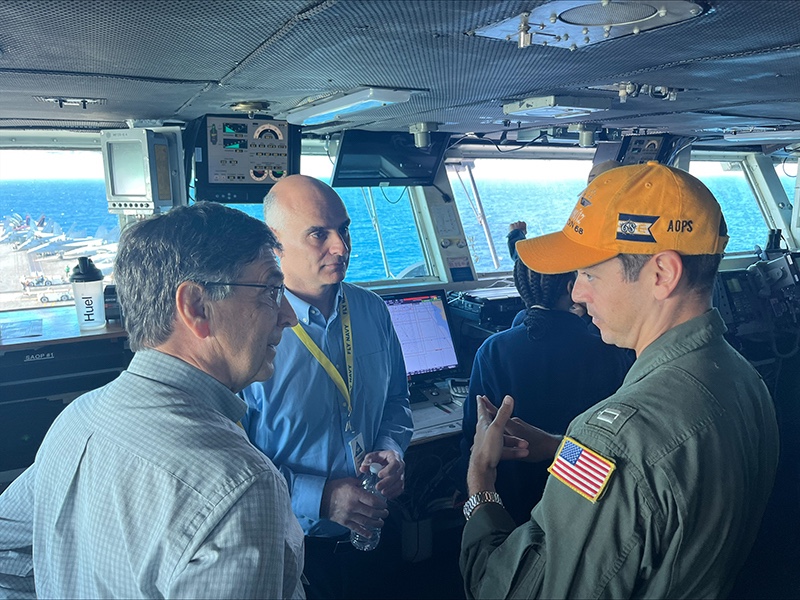
Frank Dooley, chancellor of Purdue Global (left), and Dimitrios Peroulis, senior vice president for Purdue University Online (middle), learn about naval operations while on the bridge of the USS Nimitz.
Gumbs, himself a Purdue Global grad and a Navy veteran who previously served on the Nimitz, said the visit allowed everyone to understand and witness the training and learning that takes place on board.
“America’s Navy provides a tremendous opportunity for young people to receive highly technical training and learn countless skills, develop themselves as leaders, thinkers, communicators and innovators, all things that also translate smoothly into success as adult learners and our military students,” Gumbs said.
The visit also renewed a commitment to improve access to the various programs offered through Purdue Global and Purdue University Online.
“I appreciate the dedication, professionalism and skill that the Navy has. You really get to understand how much they sacrifice to accomplish their missions,” Peroulis said. “We want to further improve the quality of the opportunities we offer those crew members in their next career steps.
“Getting to know the people behind that and understanding the challenges they face, the sacrifices they make and the dedication to our country really increased my appreciation for them and my desire to serve them as best we can,” Peroulis said.
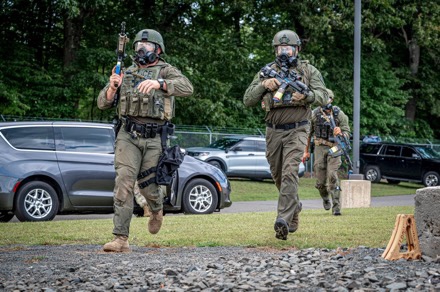
SWAT and Military teams put their tactical combat care skills to the test during the 5th Annual Tactical Rescue Challenge at the Connecticut National Guard’s Camp Hartell in Windsor Locks, Conn. Aug. 14, 2023.
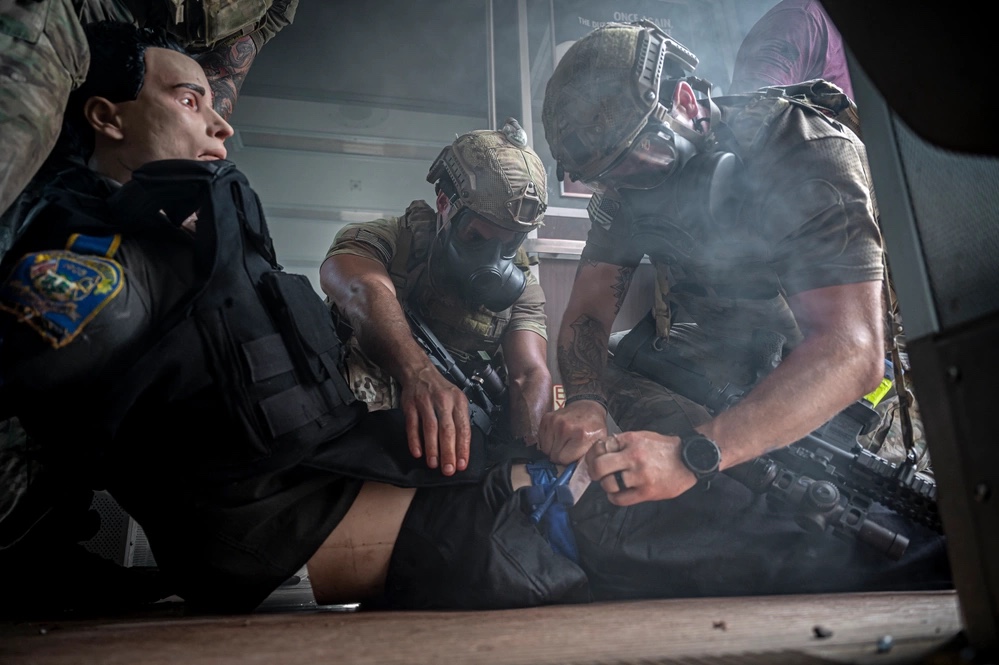
The Tactical Rescue Challenge was created in 2018 as an additional piece to the annual Connecticut SWAT Challenge and tests police and rescue teams on critical medical skills and tactics necessary during rescue operations in austere environments.
“[The challenge is] really geared toward the team medic although operators are cross trained into medicine, so you have not just medics participating in the event but other operators for any kind of tactical team,” said Maj. Wesley Kyle. “There’s a heavy emphasis on medicine in addition to casualty evacuation rescue techniques, moving the casualties off the “X”, and performing treatments at appropriate times.”
Prior to 2001, a trauma patient may have received basic life-saving medical care when an Emergency Medical Technician arrived on the scene. However, Kyle said the wars in Iraq and Afghanistan lead to a shift in the point of origin for beginning emergency medical care from the EMT to the police officer or other first responders.
“Moving care toward the point of injury really started out of those wars and then quickly transitioned to the civilian tactical teams,” said Kyle, an Emergency Room doctor in the civilian sector with experience working with SWAT during his residency. “We’re still translating lessons learned from the battlefield because there was such a large loss of life with penetrating trauma, and there was kind of an explosion of new ideas … it’s changed the whole landscape and it’s incredible to see all these things fully adopted on the civilian side.”
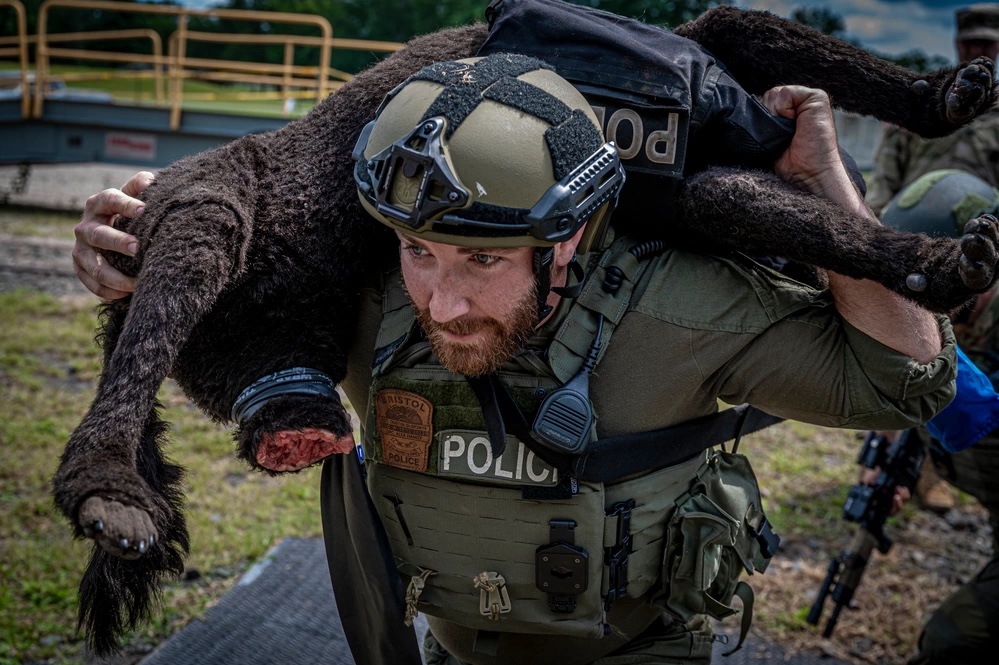
Medical innovation is, of course, not something new on the battlefield. Tourniquets were first developed by the Roman army. The concept of triaging patients was developed by Baron Dominique Jean Larrey, chief surgeon in Napoleon’s Army. The ambulance was invented during the American Civil War. Tactical Combat Casualty Care, or TC3, methodologies were developed in the early 90s and fine-tuned during the Global War on Terror. There have also been massive advancements in preventative medicine, mental and emotional health, sanitation, plastic surgery and prosthetics, and many, many more.
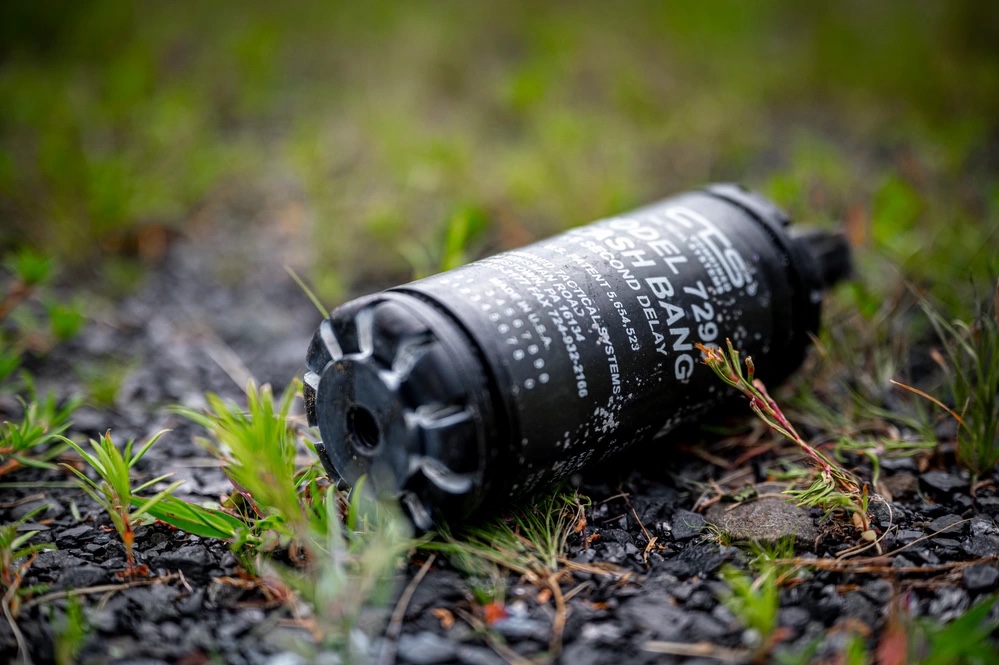
For competitors in the Tactical Rescue Challenge, the primary focus was on TC3: care under fire, tactical field care, and tactical evacuation care. In one scenario, teams were required to breach a train and eliminate a threat before evaluating and applying field care to a simulated casualty and extracting the patient to a higher-level of care. A second scenario had teams extract a wounded K-9 from a tear gas-filled train car before administering a tourniquet.
While the idea of a first responder, such as a police officer, having the capability, training, and resources available to administer lifesaving first aid may seem logical, the truth is not every department or officer is afforded this luxury. In addition to providing a competitive environment for officers and operators to practice their skills in a stressful, high-pace environment, the Tactical Rescue Challenge is also meant to demonstrate the importance of incorporating these skills at the lowest level to improve the survivability for people in harm’s way.
To learn more about the Tactical Rescue Challenge, visit: www.ctswatchallenge.com/tactical-rescue-challenge
Photo by Timothy Koster, Connecticut National Guard Public Affairs Office