I ran across this and thought it was worth a share.

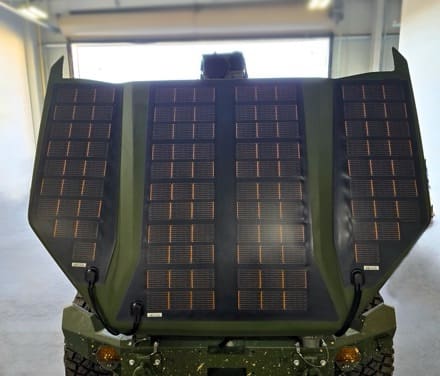
The Mobile Auxiliary Power System from Red Hill Mobility Group utilizes custom Merlin Solar flexible hood panels for the Infantry Squad Vehicle.


I ran across this and thought it was worth a share.
The Mobile Auxiliary Power System from Red Hill Mobility Group utilizes custom Merlin Solar flexible hood panels for the Infantry Squad Vehicle.
WASHINGTON — Hungry individuals don’t put much thought into the packaging of their food. When people grab a snack, they generally rip into it and toss it aside to get to the good stuff.
But at the Army Combat Capabilities Development Command Soldier Center’s Combat Feeding Division in Natick, Massachusetts, about a half-dozen engineers spend their days focused on nothing but packaging. With military rations, including meals, ready-to-eat and supplemental bars, packaging is a crucial part of preserving the food’s freshness and extending shelf-life stability, so troops stay fueled up during important missions.
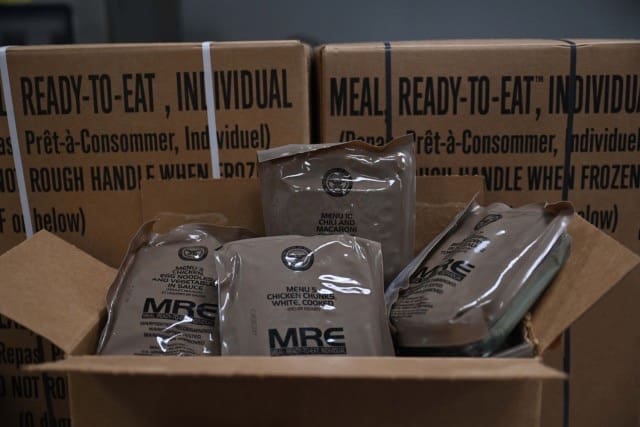
While the rations themselves go through a lot of trial and error, so, too, does the packaging.
Cutting Waste, But Keeping Quality
For the unfamiliar, MREs come in one large plastic bundle with several smaller packages inside consisting of an entree and supplemental snacks and drinks. These rations are packaged in three or four layers of materials, depending on the product, to protect food from the elements and preserve freshness until opened.
But Natick’s experts are always looking to improve.
“There are 10, 15, maybe even 20 components in an MRE, and each one of those has their own specific package,” said Danielle Froio-Blumsack, a longtime materials engineer on the division’s Food Protection and Individual Packaging Team. “That’s a large amount of packaging waste to dispose of, and it’s an issue for the Army. It’s also an environmental and health hazard.”
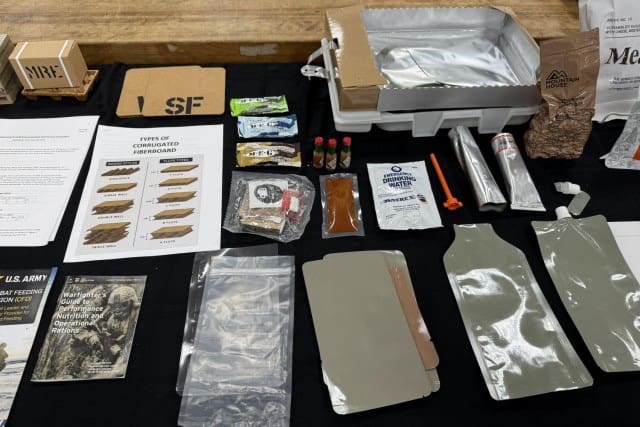
The lab’s specialists run most of the entrees through what’s known as the retort process, which hermetically seals them into sterilized packaging via a pressurized chamber. Synonymous with pasteurization and canning, retort extends a product’s shelf life without the need for preservatives.
Current retort pouches have three layers of blended polymers and a foil layer that keeps water vapor, oxygen and light out.
“You need to have low permeation … because that allows you to extend the shelf life and improve the overall quality for the warfighter,” Froio-Blumsack said.
Unfortunately, the foil isn’t recyclable, so FPIPT personnel created a new polymer blend with similar properties that weighs significantly less and meets shelf-life requirements. It doesn’t meet water vapor transmission rates, however, so experts are determining if they need to rework their requirements.
“Are our requirements too stringent and are they maybe limiting the materials that we could use?” she said. “That could open up the door to either cheaper or more sustainable materials.”
Some of the new, nonfoil pouches spent five years in storage and recently passed food safety and quality testing in the division’s microanalytical and sensory evaluation labs, where trained microbiologists and sensory panelists test the rations.”
“It was a pretty big success,” Froio-Blumsack said.
However, it takes a long time for new materials to make it to the warfighter.
“Already it’s been seven years for this project, and it’s still just on the cusp of being able to go out into the field,” she said.
Exploring Energy Harvesting
The lab works with academia and industry to create new materials and find commercially available technologies that can be formulated to meet military needs. One project that’s in the early stages collaborates with Purdue University on energy harvesting, which converts ambient energy into usable power. The lab is looking at doing so by putting what are called tribal voltaic nanogenerators on patches that would go on pallets of boxed rations.
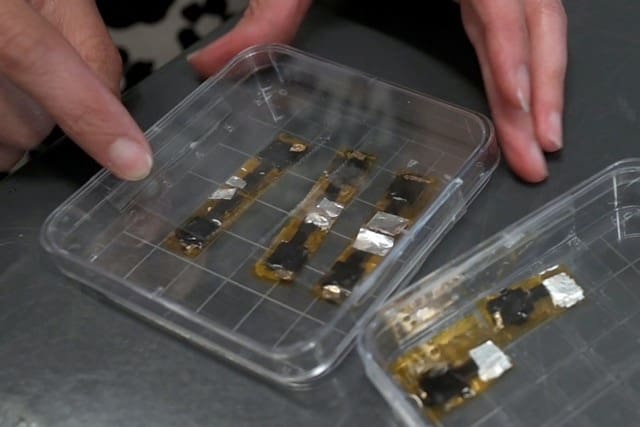
“Within each one of these little patches are … two layers of material that, when they vibrate or shake or move in any way, their vibrational energy can be harnessed and stored as energy,” Froio-Blumsack said.
The hope is that during the logistics cycle — when pallets of rations are moved and bounced around through air, ship or truck — they could harvest enough energy to potentially heat a ration instead of needing the flameless ration heater currently used by troops. In Arctic conditions, the process could prevent rations from freezing, she said.
“Anytime the pallet would shake or bounce or move, those materials would rub against each other and generate energy,” she said, adding that where they would store that energy has yet to be worked out.
The FPIPT has also worked closely with NASA to extend the shelf life of astronaut food in preparation for future missions to Mars.
Testing, Testing … and More Testing
Meanwhile, at the division’s packaging lab, all materials, layers and structures are tested multiple times.
“The idea behind this is to really put things through their paces. If we get a new product, where did it fail? What was the material?” explained Wes Long, the CFD’s packaging lab manager. “We pass this data along … and then we can come up with a solution.”
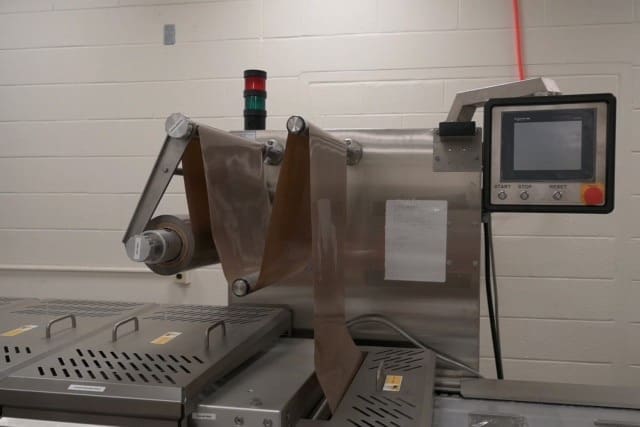
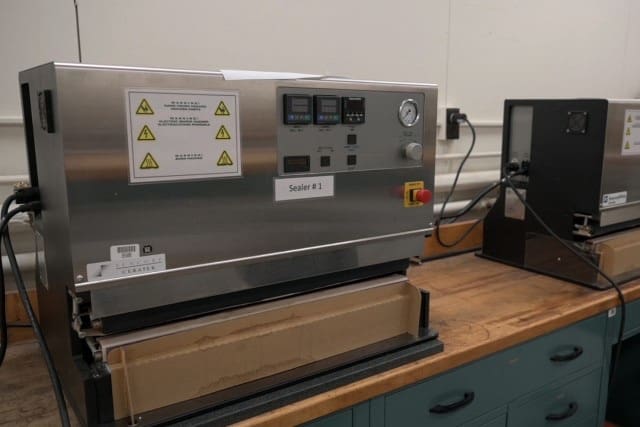
The lab is filled with various vacuum, heat and impulse sealers that suck the air out of the packaging. Analysis equipment inspects the pouches to make sure they’re strong enough. For example, tensile testers measure a material’s ability to tear, and burst testers check a package seal’s ability to withstand internal pressure before it ruptures. The lab also uses a water tank to blow ration packages up like a balloon to test for leaks — even those as small as a pinhole are marked as a failure.
“It immediately bubbles whenever there’s a failure,” Long said.
After each material is tested, the lab’s experts create parameters and send them to their industrial partners for standardization.
When vendors incorporate new automated technology, the division buys the same equipment to ensure it can replicate potential issues. For example, several of the division’s biggest vendors who previously hand-filled MRE pouches now use a faster automated process. However, the machines can sometimes thin out the material at the corners of the pouches and along the seals. Items can also get stuck in the machinery, which is one reason why the ever-popular mini bottles of Tabasco sauce were removed from MREs and replaced with polymer-based packets instead.
“While respecting the needs of the soldiers for morale, we have to give them good quality,” Long said of the unpopular change. “That [hot sauce bottle] was no longer working.”
Much like the food itself, the warfighter also gets to test and approve the packaging.
“If we invent something we think is great, we need them to have that final approval, because that’s what matters,” Long said.
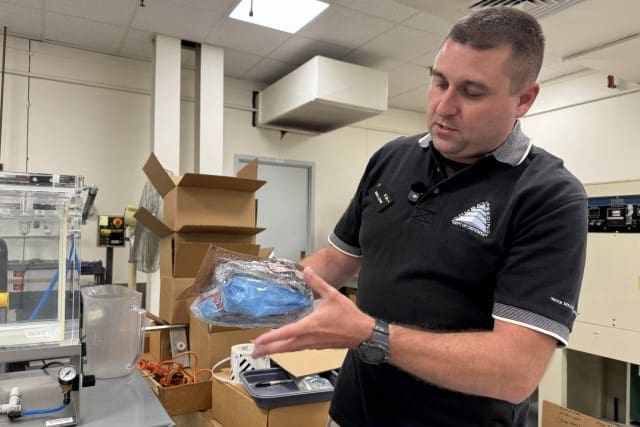
He added that it’s important for the sealed packages to be flexible without fail since they’re piled together and shipped all over the world.
“These rations inside that have food — those pouches rub against the [bigger] pouch. That pouch is in a box. That box is in a pallet, and they’ll be stacking pallets about four high, so that bottom box with that bottom ration has to absorb all that weight,” Long said.
Those ration cases are made of thick, solid fiberboard that’s been engineered for structural strength and compression.
“Nothing like what your [online order] comes in,” Long said. “It’s strong and weather resistant.”
Before being put into pallets, the boxes are dropped and shaken — what they call rough handling tests — to simulate real-world conditions to make sure the products get to the warfighter in one piece.
By Katie Lange, Pentagon News
Constructed with Curv and shock cord, the Variable Carry Platform flexes and expands to securely fit everything from slim handhelds to larger radios.
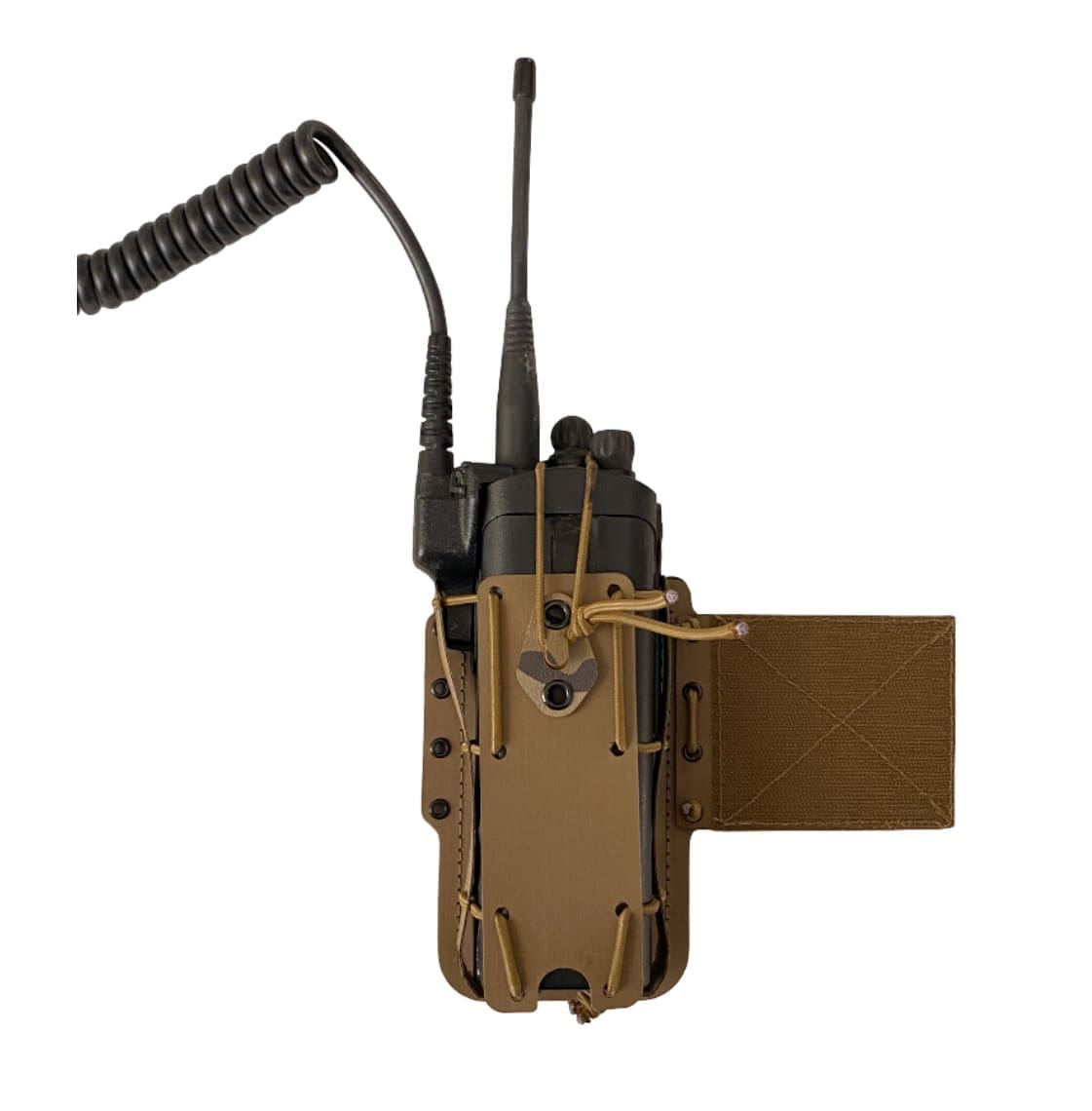
The rear panel features thick foam padding to eliminate pressure points during extended wear. A separate, reversible hook-and-loop mounting panel allows the VCP to be installed on either the left or right side.
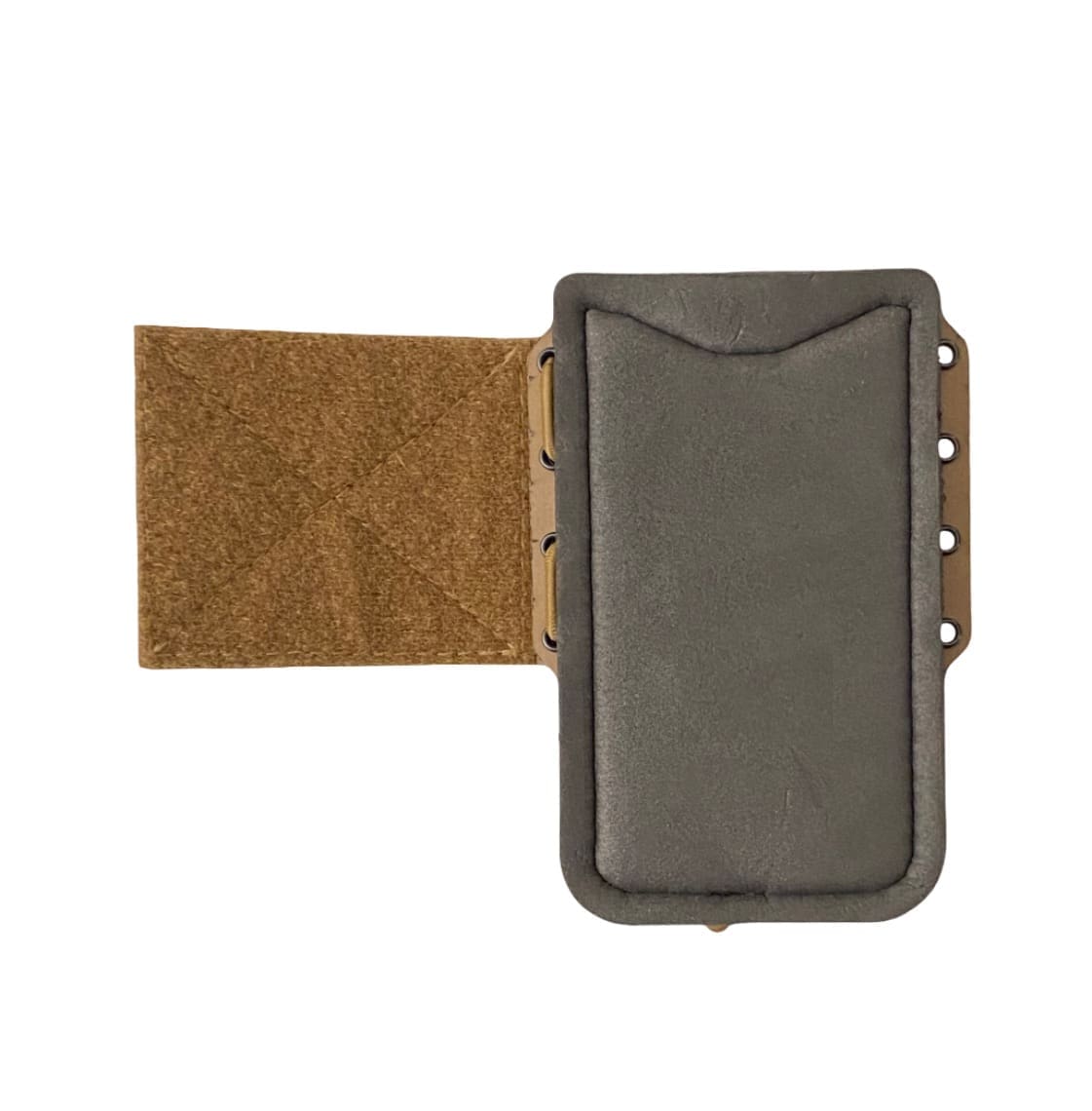
dirtybastardscollective.com/variable-carry-platform
Product Development Lead – Technical Apparel
Location: Lower Mainland, BC, Canada
Position Type: Full-Time
Reports to: Design and Development Manager
About Tomahawk Performance
Tomahawk Performance provides a technical advantage for those who value hard work, pushing beyond limits, and the unwavering pursuit of freedom. Rooted in a deep heritage of military special operations and technical apparel expertise, we design layering systems engineered to empower mission success in any environment.
Position Overview
We are seeking an experienced Product Development Lead – Technical Apparel to oversee the development and commercialization of products from design initiation through prototyping to bulk approval. This role is pivotal in ensuring that our products meet the highest standards of performance, quality, and compliance.
Key Responsibilities
• Own the development and commercialization process from design initiation through prototyping to bulk approval
• Collaborate with global vendors to communicate design and construction updates, ensuring quality standards are met
• Review costing, compliance testing, quality evaluations, and approval requirements with key stakeholders
• Manage samples, tech packs, measurement charts, and BOMs
• Oversee costing reviews with internal partners
• Create and maintain a Digital Construction Library and Standards Manual
• Research and implement military-specific standards to meet government contract compliance requirements
• Communicate with factories and manufacturing partners
• Manage materials and trim development, including sourcing with manufacturing partners
• Coordinate fit schedules and design floor inventory
• Implement product development software, procedures, and standards
Preferred Skills & Qualifications
• 4+ years of experience in technical apparel product development
• Comprehensive understanding of design intent, product aesthetics, construction, production, and fit
• Complete knowledge of the product lifecycle—from ideation to consumer
• Strong expertise in raw materials, technical construction, and sourcing
• Proficiency in Adobe Illustrator
• Willingness to travel as needed to support business requirements
Why Join Us
At Tomahawk Performance, you’ll play a key role in shaping products designed for elite performance in the most demanding environments. Your leadership will ensure innovation, precision, and compliance at every stage of development.
Interested parties should send their resumes to careers@tomahawkperformance.com.
Garment Engineer / Sample Maker – Technical Apparel
Location: Lower Mainland, BC, Canada
Position Type: Full-Time
Reports To: Design and Development Manager
About Tomahawk Performance
Tomahawk Performance provides a technical advantage for those who value hard work, pushing beyond limits, and the unwavering pursuit of freedom. Rooted in a deep heritage of military special operations and technical apparel expertise, we design layering systems engineered to empower mission success in any environment.
Position Overview
We are seeking a highly skilled and detail-oriented Garment Engineer / Sample Maker – Technical Apparel to join our team. This role is critical in developing and refining our technical apparel prototypes, ensuring exceptional quality and performance standards.
Key Responsibilities
• Own the process of cutting and sewing full prototypes across multiple categories—from knits to technical outerwear—while providing feedback on improved construction techniques for production efficiency.
• Contribute to the creation of a physical construction standards library containing validated constructions for use in in-line and prototype garments.
• Patternmaking using Gerber Accumark or equivalent (Clo3D experience is a bonus).
• Create block patterns and samples.
• Execute sample sewing: cutting, sewing, and finishing.
• Conduct sample review reporting, including measurements and construction notes.
• Develop and test garment constructions, including mockups for inline and testing purposes.
• Manage material/construction validation and maintain testing standard library.
• Perform machine maintenance and assist with warehouse management.
Preferred Skills & Qualifications
• Solid knowledge of Gerber Accumark or equivalent digital patterning software.
• Ability to sew multiple apparel categories, from knits to seam-taped technical garments, at production-level quality.
• Strong troubleshooting skills with the ability to provide feedback on improving garment construction for better appearance, functionality, and production efficiency.
• 5–7 years of experience operating various types of industrial machinery, including sewing machines, heat presses, and seam-taping machines.
• Willingness to travel as needed to support business requirements.
Interested parties should send their resumes to careers@tomahawkperformance.com.

Developed by Sleeping Indian Wool in collaboration with Survival instructor Kevin Estela, this OD colored vest features eight front pockets to provide large carrying capacity for survival equipment as well as a dual zippered rear pouch for flat items like maps, VS-17 Signal Panel, or flat folded survival blanket/tarp.
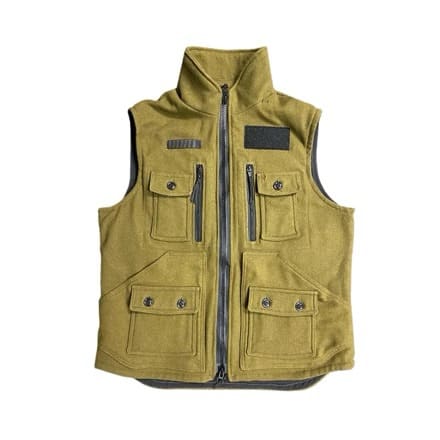
Features:
sleepingindianshop.com/products/estela-signature-survival-vest
We initially mentioned LOFT’s new Station 150 Multi-Mode Rolling Duffel during their Kickstarter campaign. Following a successful launch they have transitioned sales to their website where the Station 150 is now available for order in case you missed out on the crowdfunding effort.
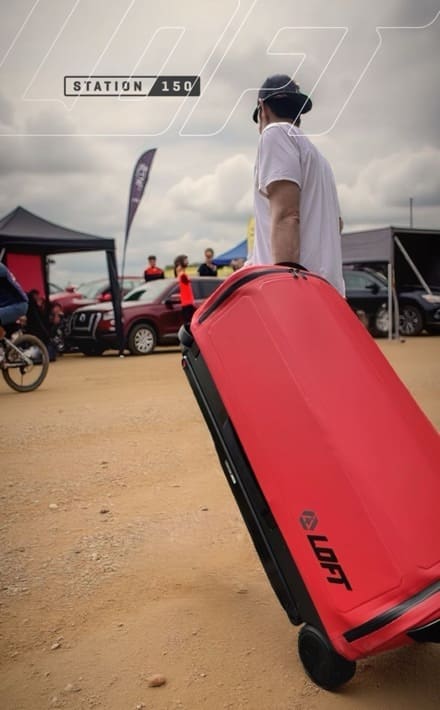
Designed by Caleb Crye, the Station 150 is a mobile work station offering a stable platform for a variety of applications including field desk, maintenance, and meals.

Packaged as a 150L rolling duffel with all terrain wheels it can easily be stored and transported and configured for use in seconds.
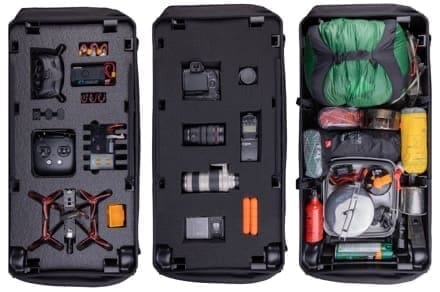
Station 150 Dimensions:
Overall: 36” x 18” x 14”
Worksurface height: 34”
Interior of rigid backshell: 35” x 17.75”
Volume: approximately 149 Liters
Weight: 16.5 lb (only 1 lb more than market-leading traditional rolling duffle)
Wheels: 5” diameter, 2” wide with smooth gliding air-less tires
Max supportable weight in table mode: 50lbs
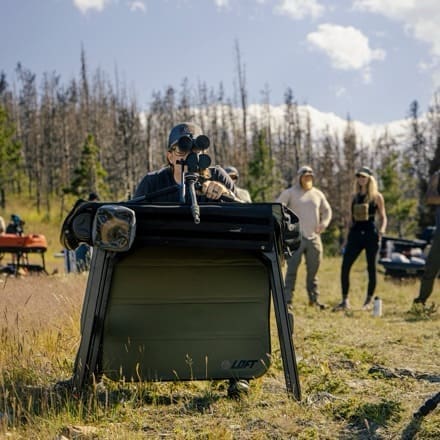
Offered in Dark Olive, Fire Red, and Jet Black, deliveries will begin in late January.

Get yours at loftgear.com.

I am of two mindsets regarding the good news that LTG Joshua Rudd has been nominated to lead the National Security Agency and US Cyber Command. On one hand, he’s not an intelligence or cyber officer and has no intelligence experience, particularly with neither SIGINT nor Cyber. Considering how vital these two agencies are to our national defenses that’s a serious issue. It also continues to indicate that our nation is not serious about its Information Warfare capability.
On the other hand, he has extensive JSOC as well as current PACOM experience. As a consumer of intelligence, he’ll have an idea of what he expects the organization to produce and he comprehends the pacing threat we face in the Pacific. An additional advantage is that as an ARSOF General, he may gain a better appreciation for the “Cyber” element of the SOF-Cyber-Space triad currently so popular with his compatriots. In particular, I’m hoping he realizes that Electromagnetic Spectrum Operations are what they are really interested in and not the Cyber buzzword. Maybe he’ll also gain an appreciation for the authorities and expertise needed to provide the services associated with EMSO and why it’s best to defer to the pros from Dover and that the Cyber Electromagnetic Activities (CEMA) penguins don’t really need thumbs (a “Madagascar” reference) as they have their own. If anything, SOF needs more of them within their formations.
For those of you unfamiliar with LTG Rudd’s here’s a link to his rather impressive bio.
This was first published in Soldier Systems Digest Vol 5, Issue 51, “The Convergence of Irregular Warfare and Information Warfare”
You can sign up for this weekly newsletter which concentrates on emerging warfighting capabilities here.














































































































