SIG SAUER - Never Settle

Archive for April, 2025

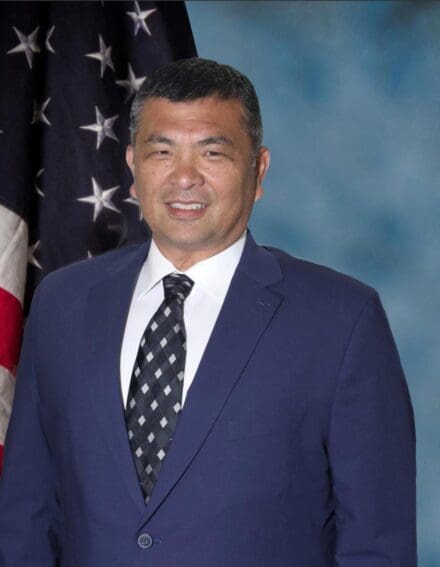
Michael Kelly, IVAS Acquisition and Operations Chief

Monday, April 14th, 2025

Fort Belvoir, Va

If you had told 18-year-old Army recruit Michael J. Kelly in 1987 where he would be nearly four decades from then, he wouldn’t have believed it.

“I didn’t think I would be here after I retired from the Army,” Kelly said during a recent interview. “I didn’t think I’d go back into government civilian work.”

Yet after serving honorably in the Army for 25 years, Kelly proudly serves as the Acquisition and Operations Chief for Project Manager IVAS.

The Integrated Visual Augmentation Systems (IVAS) is the Army’s cutting-edge mixed-reality headset of the future that provides Soldiers with a single platform to train, rehearse, and fight through a mixed-reality heads up display. IVAS has the flexibility to integrate situational awareness tools such as low light and thermal sensors, augmented reality, advanced targeting capabilities, 3D mapping and navigation, squad immersive training, and much more all in one platform.

IVAS provides Soldiers with a level of situational awareness and human-machine integration capabilities not currently seen anywhere else in the world.

It’s that unprecedented level of flexibility and Soldier integration that Kelly is most excited about while working with IVAS.

“It’s the extensibility and everything else that we can bring into the system,” Kelly said about IVAS, noting the advancements offered to Soldiers now compared to when he was in the Army.

Having used old PVS-5 night vision goggles, which he jokingly described as “like strapping a brick to your face,” Kelly knows first-hand just how much Soldiers will benefit from using IVAS headsets.

“There’s no extensibility in goggles,” Kelly said, holding his hands up to his face to mimic binoculars as a way to demonstrate a goggle’s smaller field of vision. “You don’t get the extensibility or ability to be extensible.”

IVAS is unique in that it provides both low-light and thermal vision to Soldiers, as well a fused option to provide soldiers with an unprecedented amount of visibility all in one headset.

“When you’re in the woods, even with low-light and enhanced night vision there’s still parts you can’t see,” Kelly explained. “But if you turn thermals on, if there’s a person there they won’t be able to hide.”

That’s also in-part due to IVAS providing Soldiers a significantly wider FOV that what night vision or thermal goggles.


There’s a lot more that Kelly enjoys about working with IVAS, such as the headset’s digital zoom feature to allow soldiers to see objects from further away, or IVAS’ ability to create 3D maps and models that can be shared across all soldiers to provide enhanced situational awareness.

But it’s getting to work with the IVAS team that Kelly most appreciates.

“I like this team,” Kelly says, answering almost immediately when asked about what he liked most about his position. “This is a very high-performing team. It’s one of the things I enjoy about this. More than most places I’ve worked, it’s the team here at IVAS. And I’ve been on a lot of teams in a lot of situations both in and out of the Army.”

Kelly definitely speaks from experience, having served multiple tours in the Middle East during the height of the War on Terror.

Although he prefers not to think of moments during his life and career as highlights, Kelly did mention one moment in particular as something he is particularly proud of.

In 2008, Kelly was again deployed to Iraq as a First Sergeant. His unit was moved around a lot, due in part to the fact that America had already begun the process of withdrawing from the country. Despite that, all of Kelly’s unit returned home.

“We brought everybody back,” Kelly says. “We had some injuries, but no KIAs.”

Kelly has lived a fascinating life, one that has taken turns that even he never would have expected. Throughout all of it, however, Kelly has always held the mindset of embracing things as they come, and it’s led him to where he is today.

“Never say never. Because you don’t know what is going to change in your life,” Kelly said, reflecting on how he never imagined he’d have the duties and position he has now. “So keep your possibilities open. Keep your options open.”

By Zach Montanaro
Embry Riddle’s Air Force ROTC Programs Rank Among the Best in the Nation

Sunday, April 13th, 2025

DAYTONA BEACH, Fla. / PRESCOTT, Ariz.

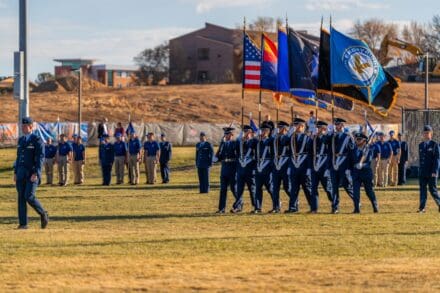
U.S. Air Force ROTC programs based at Embry Riddle Aeronautical University’s Daytona Beach and Prescott campuses have been recognized as among the top 10% of all detachments nationwide.

Photographer, Wilson Van Ness, 2024
The evaluation — conducted annually by the U.S. Air Force’s Jeanne M. Holm Center for Officer Accessions and Citizen Development — reviewed all 145 ROTC detachments based on the quality of officers commissioned, resource utilization and meeting Air Force needs for rated and critical skills.

At the Daytona Beach, Florida, campus, Air Force ROTC Detachment 157 currently has 477 cadets and is one of the largest detachments in the country. Air Force ROTC Detachment 028 at the Prescott, Arizona, campus has 210 cadets.

“Our two detachments earning these uppermost rankings highlight that Embry?Riddle is producing elite Air and Space Force officers who are making our nation stronger and more secure,” said Embry?Riddle President P. Barry Butler, Ph.D. “Congratulations to Detachments 157 and 028 for providing cadets the highest level of education and training.”

Noted accomplishments of Detachment 157 to earn the top 10% evaluation included success in officer production, with 245 cadets commissioned over the 5-year period during the 2020-2024 fiscal years, said Col. Gregory Adams, commander of the Daytona Beach Campus detachment.

Detachment 157 also has the highest Rated Officer selection. Rated Officer selections encompass four career fields: pilot, combat systems officer, air battle manager and remotely piloted aircraft pilot. Cadets compete for these jobs during their junior year and are selected in their senior year.

In addition, the detachment has one of the highest selections of Space Force officers.

“This honor is due to the tremendous effort our cadets put forward every day. Their drive, perseverance and ingenuity are what continue to make Detachment 157 a special place,” Adams said. “Our university leadership has also contributed to our success. We would not be able to offer cadets the opportunities they receive without the university’s support. We continue to rise to the occasion of preparing and producing future Air and Space Force leaders.”

The top 10% evaluation for ROTC Detachment 028 at the Prescott Campus recognized the detachment’s success in officer production, technical degree attainment and aviation officer commissioning, ranking in the top 2% to 3% in these key areas. Detachment 028 excelled in all evaluation criteria, said Col. Russell Davis, commander of the detachment and professor of Aerospace Studies.

“This recognition is due to the outstanding work of our cadets and support from our university leadership,” Davis said. “We consistently exceed expectations in our mission to prepare future officers to succeed in today’s Air and Space Forces.”

Detachment 028 was one of only two detachments in the Southwest region to earn a top 10% ranking this year.

“The recognition of Detachment 028 underscores the strength of our program and the exceptional students we develop,” said Dr. Ken Witcher, chancellor of the Prescott Campus. “It’s a credit to our faculty, staff and especially our cadets who embody the values of integrity first, service before self and excellence in all they do.”

ASA President Knox Williams Elected to the NRA Board of Directors

Sunday, April 13th, 2025

WASHINGTON, DC – Today, the American Suppressor Association (ASA) issued a statement following the announcement that Knox Williams, President and Executive Director of ASA, was elected to the National Rifle Association (NRA) Board of Directors.

“It is an honor to fight on behalf of firearm and suppressor owners across the country. The American Suppressor Association has worked diligently to advocate for the Second Amendment rights of all Americans, and this position allows me to take that critical work to a new level,” said Knox Williams, President and Executive Director of ASA. “I look forward to bringing a fresh perspective and representing the next generation of leaders in our community to this long-standing and important organization, so that we can protect and expand our rights for generations to come.”

“Knox has dedicated his career to defending and advancing the rights of law-abiding gun owners,” said Owen Miller, Vice President of ASA. “His leadership, drive, and unwavering commitment to our mission have been instrumental in shaping the success of the American Suppressor Association. We’re proud to see his hard work recognized by the broader firearms community.”

Click here to read the NRA’s full announcement on the 2025 Board Election Results: www.americanrifleman.org/content/2025-nra-board-election-results

Muhlenberg College Earns 2025-2026 Military Friendly School Designation

Sunday, April 13th, 2025

Allentown, Pa. (4.8.25) – Muhlenberg College’s Division of Graduate and Continuing Education has earned recognition as a 2025-2026 Military Friendly ® School. Institutions earning the Military Friendly ® School designation were evaluated using both public data sources and responses from a proprietary survey. More than 1,800 schools participated in the 2025-2026 survey with 830 earning special awards for going above the standard. 

The 2025-2026 Military Friendly® Schools list will be published in the May and October issue of G.I. Jobs magazine and militaryfriendly.com. Methodology, criteria, and weightings were determined by Viqtory with input from the Military Friendly ® Advisory Council of independent leaders in the higher education and military recruitment community.

“We are honored to once again be recognized as a Military Friendly® School for 2025-2026,” says Vice President of Muhlenberg College Division of Graduate and Continuing Education, AJ Lemheney, Ed.D.  “At Muhlenberg, we are deeply committed to supporting our student veterans and military-affiliated learners with flexible, high-quality academic programs and dedicated support services tailored to their unique needs. This designation reflects the strength of our community, the value we place on service, and our ongoing commitment to helping military-connected students succeed in their academic and professional journeys.”

Final ratings were determined by combining the institution’s survey scores with the assessment of the institution’s ability to meet thresholds for student retention, graduation, job placement, loan repayment, persistence (degree advancement or transfer) and loan default rates for all students, and specifically for student-veterans.

“Military Friendly® is committed to transparency and providing consistent data-driven standards in our designation process. Our standards provide a benchmark that promotes positive outcomes and support services that better the educational landscape and provide opportunity for the Military Community. This creates a competitive atmosphere that encourages Institutions to evolve and invest in their programs consistently. Schools who achieve awards designation show true commitment in their efforts, exceeding the standard.” – Kayla Lopez, vice president, Military Friendly®.

The Muhlenberg College School of Continuing Studies has specialized in adult and continuing education for over 100 years, offering over 25 programs, including accelerated and traditional bachelor’s degrees, teacher certification and a certificate in project management. Its programs are built for the unique needs of the adult learner and provide flexible scheduling options. The Muhlenberg College School of Graduate Studies offers graduate degrees and certificates with multiple pathways that provide flexibility for students to create their own graduate experience. Programs are delivered in a fully online format and provide impactful learning experiences with virtual learning, helping our students achieve an enhanced work-life balance.

Founded in 1848, Muhlenberg is a highly selective, four-year residential, liberal arts college in the city of Allentown, Pa., with nearly 2,000 bachelor’s and master’s degree-seeking students. The college’s curriculum and experiences are designed to open doors to new ideas, discoveries, friendships and a lifetime of personal and intellectual growth. 

For all inquiries, please contact: careymanzolillo@muhlenberg.edu

Army Junior Officer Counsel Drives Change from the Ground Floor

Sunday, April 13th, 2025

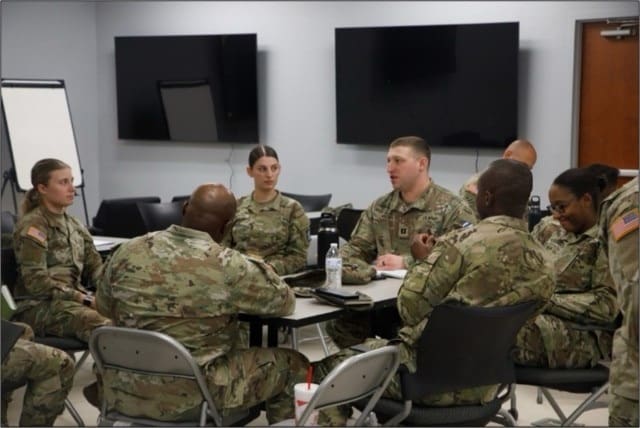
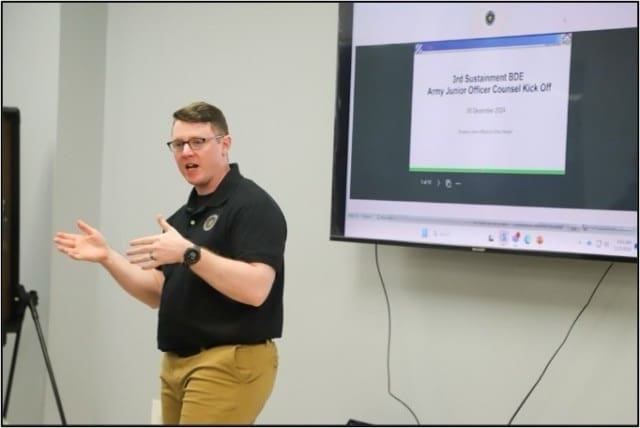
WASHINGTON — The Army Junior Officer Counsel is a pilot program sponsored by the Deputy Chief of Staff, G-1, that is led by junior officers. Its goal is to transform how the Army learns, develops and retains young leaders in the officer grades of O-1 to O-3 and WO-1 to CW-3.

AJOC gives junior officers a formal platform to improve Soldiers’ quality of service and life, which supports junior officer retention and career satisfaction. It’s proving to be a valuable asset by fostering innovation and positive change within the Army while cultivating the next generation of Army leaders.

The name AJOC deliberately contains the word “counsel” to highlight its advisory role to senior leaders, which allows JOs to share perspectives, insights and innovative ideas. The program capitalizes on the leading-edge knowledge and experience of junior officers because they are often the most recently formally trained, and they work close on the final planning and execution of many of the Army’s missions.

“We’re taking the knowledge we gain in our specific fields and applying it to broader Army challenges,” said Maj. Chris Slininger, AJOC’s director and founder. “AJOC provides a space to hone these skills amongst our peers, allowing for candid feedback and rapid growth.”

AJOC is designed to have numerous chapters at different installations gathering feedback, research and recommendations from JOs. It currently has three active chapters at Fort Stewart, Georgia; Smith Barracks in Baumholder, Germany; and Fort Huachuca, Arizona.

Slininger said AJOC chapters prioritize action-oriented, collaborative problem-solving approaches that focus on delivering rigorous research and tangible results. They also emphasize active listening, encouraging JOs to gather information effectively, understand diverse perspectives and build consensus.

“This isn’t about endless debates and discussions,” explained Slininger. “AJOC is about identifying challenges, developing practical solutions and driving meaningful change within the Army.”

AJOC also offers significant professional development opportunities for participating JOs by cultivating critical thinking and encouraging them to leverage data, artificial intelligence and other resources to inform and improve decision-making.

One of the program’s core strengths involves encouraging JOs to take ownership of driving change within the Army profession. It also gives senior leaders who want to support change an opportunity to hear from JOs and mentor them to help implement effective solutions to identified challenges and gaps.

Interaction with senior leaders is an invaluable experience for JOs as it gives them first-hand access to the perspectives of senior leaders, who help them understand the Army’s broader vision and its network of stakeholders, campaigns and responsibilities.

Slininger created AJOC as a junior officer after recognizing the need for a more structured and effective system to understand and address the perspectives and needs of junior officers. Even now, as a field grade officer, he is a strong advocate for the program because of its value to the Army and JOs.

“AJOC offers a unique opportunity for JOs who want to make a tangible impact on the Army,” said Slininger. “Whether driven by a desire to improve their units, enhance their leadership skills or contribute to solving complex challenges, AJOC provides a platform for JOs to drive tomorrow’s solutions today.”

As AJOC expands, its impact on the Army’s future is poised to grow even further.

U.S. Army Public Affairs there you go

Did AFSOC Field A New Helmet? Well, Sort Of….

Saturday, April 12th, 2025

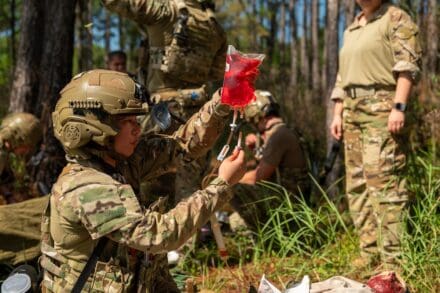
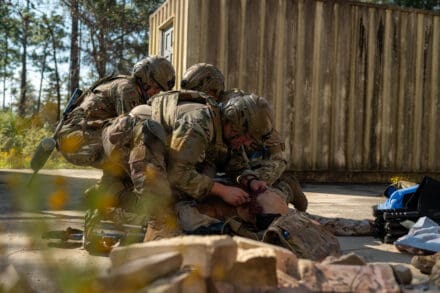
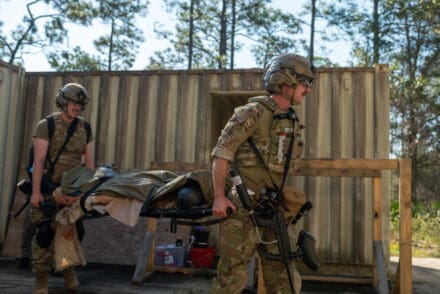
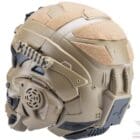
A buddy recently sent me this photo and asked me about this new helmet being worn by AFSOC, inquiring what it was.

I hadn’t seen it before and was intrigued. I put out some feelers and then I tracked the photo down to the Air Force Special Operations Command website, showcasing the Special Operations Forces Medical Skills Development program last October at Hurlburt Field, Florida. There was a whole photo story with these helmets peppered throughout.

It didn’t look like any helmet I had ever seen. Here I am thinking it might be some Air Force Research Lab project, but the truth, it would turn out, reminds me of that old Eddie Murphy comedy sketch, “We’ve got McDonald’s at home.*”

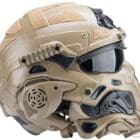
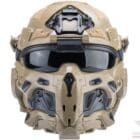
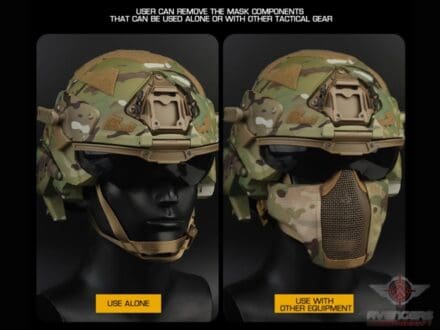
After further investigation, I found that this airsoft helmet (yes, I said airsoft) costs around $150 and goes by several names online, but seems to be manufactured by Avengers Airsoft. Avengers calls it the “Ark” Helmet w/ Integrated Cooling System & Headset. Granted, once you look at more of the photos you realize that they are training with paintball guns and that’s likely why they were purchased. They sort of look like issue helmets and are meant for airsoft. Even the website claims that the helmet is “Designed for Foam Blaster, Nerf, Gel Blaster, Battle Blaster, and low power Airsoft Gaming. ANSI rated full face mask recommended for close quarter / high power Airsoft Gaming.”

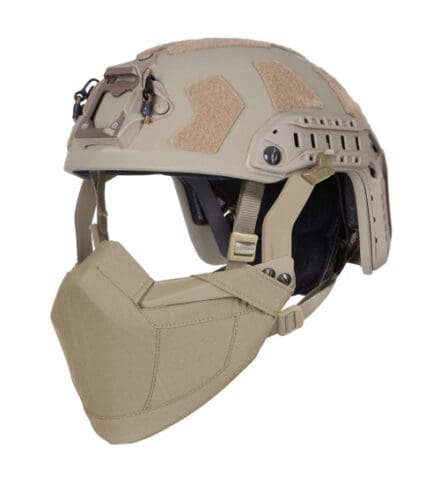
However, not only is this helmet not safety certified or approved for use as a ballistic, or even bump helmet, it’s also not Berry compliant. Sure, you can hide behind the micro-purchase exemption for Berry but I’d only use that defense if it were some uber cool European ballistic helmet like the NFM Hjelm, not some ABS bucket. What’s more, they aren’t using the face mask, despite using paintball guns, which kind of defeats the purpose of buying these helmets.

I’m not going to cast aspersions on the person who actually bought these things. I am sure they were well intended and bought what they were told to buy. They look sort of like an approved high cut helmet, but not much. Manufacturers Galvion, Gentex, and Team Wendy all make both ballistic and bump helmet models which are approved for wear and have been procured by the Air Force, and they can be used for sim training and have the appropriate mandibles.

Hopefully, AFSOC will procure some proper helmets for these Airmen soon which are actually certified for sim training. These toys should be crushed and put in the dumpster.

As for the rest of you, this is a cautionary tale. If you’re tasking a GPC holder to buy something for you, be very specific about what you want, even down to manufacturer and model preferences. Include specifications in order to further avoid confusion. If you don’t know, I suggest you have your GPC holder, or supply, get ahold of one of the Special Operations TLS vendors like Darley or Noble. There are several contract holders and they have in-house experts who can go over options. You can also do some research each here on SSD.

AFSOC Photos by Airman 1st Class Raul Mercado.

*Language warning, it’s Eddie after all…

Limited Edition VCAS Desert Tiger Stripe Sling from Blue Force Gear

Saturday, April 12th, 2025

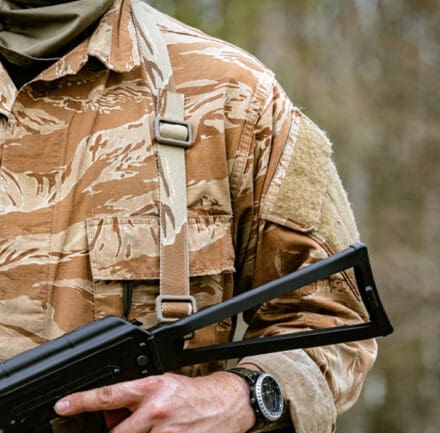
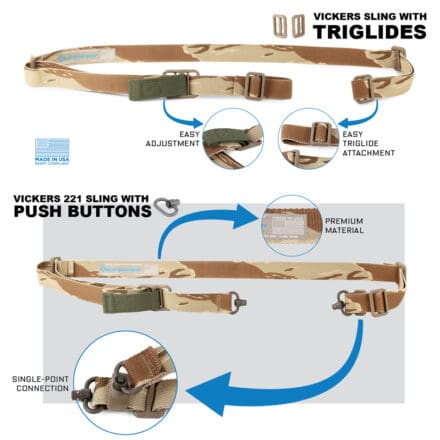
The latest in Blue Force Gear’s limited edition VCAS slings is in Desert Tiger Stripe Camouflage.

Made in the USA, the Vickers Combat Assault Sling has become an industry icon, featuring DuPont Zytel nylon slider and triglides along with printed 1″ webbing.

BFG offers two versions – the Base Model with triglides on the front and rear for attaching directly to sling swivels or combined with other hardware such as Uloops, and the Vickers 221 Sling version with Dual Push Button comes with push button sling swivesl and a Burnsed Socket on the rear that allows for single-point carry.

Get yours before they sell out.

www.blueforcegear.com/desert-tiger-stripe-sling

Project Convergence Capstone 5 Experiments at NTC

Saturday, April 12th, 2025

FORT IRWIN, Calif. — In early March, Soldiers, technology, equipment and defense industry partners came together at the National Training Center to execute Project Convergence Capstone 5 (PC-C5), a critical component of the U.S. Army’s Continuous Transformation efforts. The first portion of PC-C5 focused on enabling operations at the Corps and below level along with integration with Joint and Multinational allies and partners.

Participants of previous Project Convergence events can see similarities, as PC-C5 was built upon the successes and lessons learned from earlier experiments. However, they will also see the vast differences that planners developed to ensure concept-driven experimental objectives align with the future Army Warfighting Concept and the Joint Warfighting Design.

PC-C5 is a critical proving ground for emerging technologies and concepts crucial to enabling a data-centric and networked fighting force. Participants are engaging in both live and simulated experiments focused on:

Data-Driven Decision Making: Evaluating the effectiveness of advanced data analytics and artificial intelligence to provide real-time situational awareness for rapid, informed decisions.

Expanded Maneuver: Experimenting with new concepts and technologies that enhance the ability to maneuver and engage adversaries across land, air, sea, space and cyberspace.

Forging Seamless Joint and Multinational Interoperability: Refining the ability of allied forces to operate together seamlessly across all domains.

Brig. Gen. Zachary Miller, PC-C5 Deputy Experiment Director, and U.S. Army Joint Modernization Command commanding general, said, “What Project Convergence does is bring every single war-fighting system we have together in one place.”

Additionally, the Army is exploring four primary warfighting notions during PC-C5. The first is expanded maneuver aimed at how the joint force is thinking about time and space in all domains. Second is cross-domain fires, involving how to shoot and create effects across all domains of warfare. Third is formation-based layered protection, which is the idea of how to protect units in all domains, such as the electromagnetic spectrum, dispersion of command posts and countering unmanned aerial systems. Last is command and control (C2) and counter-C2, which prevents the adversary from being able to command their forces.

To explore these notions, the experiment consists of more than 6,000 personnel from joint and multinational military forces, plus defense industry participants executing multiple vignettes across two scenarios.

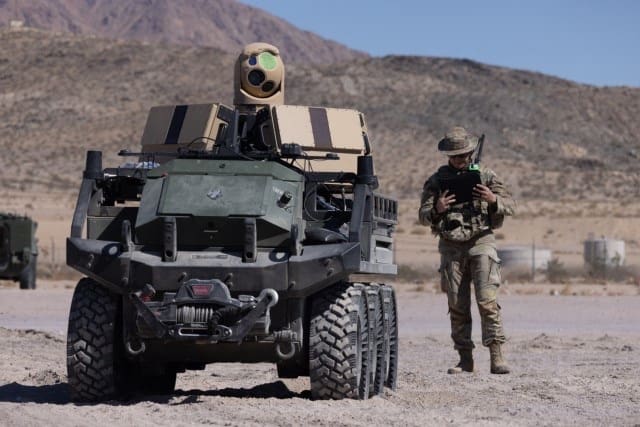
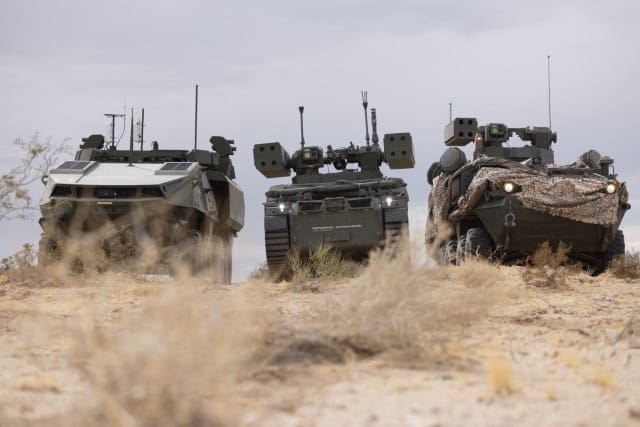
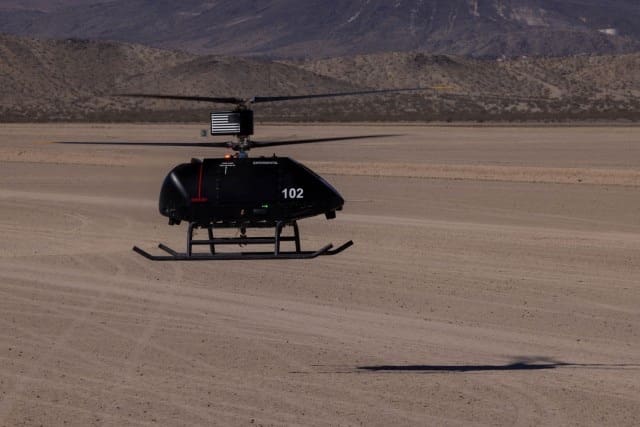
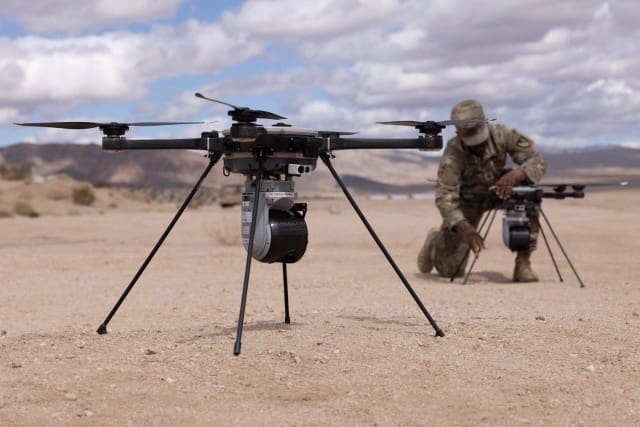
Participants brought legacy equipment and new technologies to the event, including drones, robotics, and concealment equipment.

“Since last Capstone, the Army has thought deeply about the future operating environment and what it is going to take to win, and what we don’t have now,” Miller said. “We’re layering new technology, new capabilities, with a new way to organize and seeing if that helps us achieve the warfighting aims we know we have.”

To gauge the effectiveness of these emerging technologies, participating units experimented with the equipment in a replicated combat scenario. PC-C5 included the primary units from the 82nd Airborne Division and the 1st Armored Division, with many other U.S. military units supporting, along with forces from Britain, France, New Zealand, Australia and Canada. Together, they executed three vignettes.

During Vignette One, the 82nd Airborne Division, British and Australian forces conducted a joint forcible entry operation. This vignette focused on a large-scale maneuver by an Army division that needed to suppress enemy defenses to reduce enemy air space while increasing friendly air space.

Vignette Two saw elements of the 1st Armored Division supporting the 82nd Airborne Division along with multinational partners conduct a combined arms breach. C2, fires and using human-machine integration formations with robotic and autonomous technologies were crucial to survivability and lethality during this vignette, which set the conditions for Vignette Three.

Vignette Three was built on the previous vignettes, in which the 1st Armored Division defended the seized objective. During this vignette, the unit had to retain key terrain for the joint force while generating combat power to destroy enemy capabilities.

Across all three vignettes, C2 and data-driven decision-making were critical elements driving successful actions.

“What we’re trying to do is take these emerging technologies where we can get this data better and faster to execute,” said Lt. Col. Tad Coleman, commander of 2-37 Armor Battalion, 1st Brigade, 1st Armored Division.

PC Capstone events present a unique opportunity to demonstrate the Army’s transformation efforts to senior leadership. Within the first few weeks of his confirmation as the 26th Secretary of the Army, the Honorable Daniel Driscoll, accompanied by Gen. Randy George, the Army’s chief of staff, visited Soldiers during PC-C5 and saw first-hand how the Army is pushing transformation efforts into the future.

During Driscoll’s confirmation, he highlighted readiness and modernization as priorities.

“The world is changing rapidly, and we must ensure the Army is prepared to operate in new, complex, and contested environments,” Driscoll said. “From advancing our capabilities in multi-domain operations, to cutting-edge technologies, my sacred duty to our Army is to ensure our Soldiers have the world’s finest training, equipment and leadership to accomplish any mission.”

Viewing live experimentation at PC-C5 gives leaders an understanding on how technologies in the hands of Soldiers shapes future decisions. Some of these technologies may end up in Transforming in Contact 2.0 or future iterations.

In an interview with Breaking Defense George stated, “TiC is very, very valuable to us because we can do it in formation after formation after formation. We can also do it in every different environment, like Europe, [the Indo-Pacific Command] INDOPACOM, stateside [or] in the Arctic… that’s the real advantage of TiC.”

Some participants will transition to Scenario B as Scenario A finishes at NTC.

Scenario B, conducted in the U.S. Indo-Pacific Command, is experimenting with all service components at the combatant command level.

Experimenting in the Pacific is not new, but incorporating experimentation into existing exercises provides additional learning opportunities.

As part of the U.S. Army’s campaign of learning, PC is designed to aggressively advance and integrate the Army’s contributions to the Joint and Multinational Force and ensure that the Army, as part of the Joint and Multinational fight, can rapidly and continuously converge effects across all domains — air, land, sea, space and cyberspace — to overmatch our adversaries.

By SGT Joseph Enoch and David Miller, PC-C5 Joint Information Center