TYR Tactical

Archive for May, 2025

Texas A&M Cadets Win SIG Championship With FoldAR Concealed Carry Rifle

Sunday, May 11th, 2025

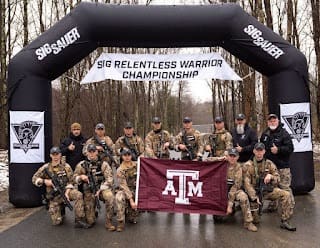
The Texas A&M Corps of Cadets Marksmanship Unit (CCMU) walked away from the 2025 SIG SAUER Relentless Warrior Championship with another major win under their belt.

Competing against 126 shooters from the U.S. service academies and international military colleges, the CCMU claimed its fifth championship title in just nine years.

At the center of their success? Discipline, preparation, and in the hands of their top shooter, a 16” FoldAR Concealed Carry Rifle that proved itself on one of the most demanding stages in collegiate tactical shooting.
A Championship That Demands More Than Marksmanship

This wasn’t a casual weekend match. The Relentless Warrior Championship, hosted by SIG SAUER at their Academy in New Hampshire, is one of the most demanding collegiate-level tactical shooting events. Six mission-focused stages. Multigun challenges. Freezing wind, rain, and snow.

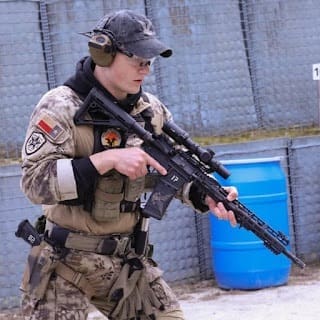
The Texas A&M CCMU rose above the rest, winning four of six stages, including every field course and the long-range rifle stage. They placed six shooters in the Top 12, with senior cadet Shiloh Lewis ’25 taking first overall—using a FoldAR CCR built to perform.

Why FoldAR Was the Rifle of Choice

When it came time to pick a rifle for the Relentless Warrior Championship, Shiloh Lewis had plenty of options. He chose a FoldAR—and the results speak for themselves.

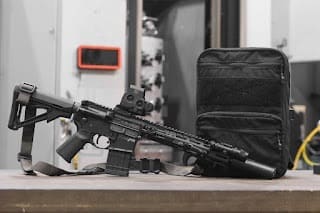
FoldAR’s platform is purpose-built for reliability and precision:

  • Patented folding barrel system at the barrel-breach interface for unmatched compactness, durability, and repeatability.
  • Match-grade CHF 4150 barrels with QPQ Melonite coating for long-term performance.
  • Mid-length gas system and adjustable gas block for smooth, consistent cycling.
  • Guaranteed sub-MOA accuracy and return-to-zero after folding and deploying.
  • Chambered in .223 Wylde to maximize versatility and accuracy
This isn’t a novelty design. It’s a serious rifle built for serious work.

The Coach’s Perspective on FoldAR: Reliability First

Coach Kevin Jimmerson, who has spent over 40 years working with the M16/M4/AR platform as both a shooter and instructor, offered a powerful endorsement of the FoldAR system after two years of hard testing:

“There are only two things that ultimately matter…accuracy and reliability.

Of those two, reliability is the most important. Accuracy is of little use if the system isn’t working.”

He continued:

“Designing in reliability is where most systems fail. Not just for a day at the range—but after thousands of rounds, in everything from 100-degree heat to below-freezing conditions. The FoldAR system is, in my opinion, the only truly revolutionary modification of the AR platform in its history.

After two years of shooting, I can honestly say this folding system is absolutely reliable—and just as accurate as any custom rifle in our armory.”

Coach Jimmerson didn’t just trust it casually. He put the FoldAR through serious tests:

  • Mag dump stress tests followed by precision grouping
  • Heat-induced stress accuracy checks
  • Shooting groups while locking and unlocking between shots

The FoldAR passed them all—with no loss of accuracy, no reliability issues, and no functional failures.

“We train in 90-degree heat. That match was shot in freezing temps. And the FoldAR did what it always does—run like a sewing machine. And makes hits. We have the trophy to prove it. FoldAR is the rifle that did it.”

Built in Texas. Trusted Nationwide.

FoldAR rifles are manufactured in Henderson, Texas, by a veteran-owned and operated company that approaches firearms engineering with a mission-driven approach.

Often described as a skunkworks of the firearms industry, FoldAR has pioneered the first true concealed carry rifle platform, as well as the first true field-configurable weapon system (i.e. the “One Rifle”). It shows you can still get accuracy and reliability without hauling around a standard fixed-barrel AR.

More than just a compact system, the FoldAR platform is:

  • Non-NFA configurations, legal, and ready to ship.
  • Standard lower compatible.
  • Tool-less barrel swap capable, making caliber conversions fast and field-friendly.
  • Outfitted with top-tier components like the Nickel Match PTFE trigger, B5 SOPMOD stock, Lancer 20-round mags, and Magpul M-LOK rail system
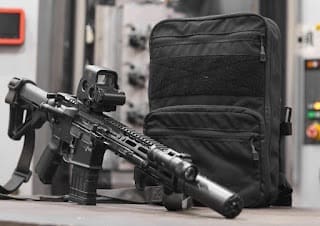
Whether it’s for duty use, competition, or concealed carry in unconventional situations, the FoldAR Concealed Carry Rifle is engineered to meet the demand.

The Future of the AR Platform Is Here

Texas A&M’s win at the Relentless Warrior Championship wasn’t luck. It was the result of preparation, hard work, and choosing equipment that wouldn’t let them down when it mattered most.

FoldAR isn’t just a more compact rifle—it’s an evolution of the AR platform itself, offering capabilities that even custom builds struggle to match.

This is why School Resource Officers across the nation are choosing the FoldAR, now protecting over 700,000 students.

When you need a rifle that stows small, deploys fast, and performs like a full-sized carbine—FoldAR is the answer.

Looking towards the future, FoldAR invites all firearm manufacturers to explore options of integrating the folding barrel interface into their existing platforms.
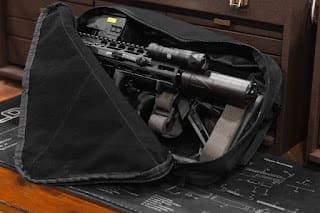
Explore FoldAR’s full lineup of Concealed Carry Rifles™ at FoldAR.com.
Saturday Night Movie: Nuclear Effects During SAC Delivery Missions

Sunday, May 11th, 2025

Via AtomCentral we bring you a Cold War-era Strategic Air Command training film about nuclear effects concerns of combat aircrew conducting Emergency War Order Single Integrated Operation Plan missions. Produced by Lookout Mountain Labs for the Air Force.

European High-Tech Consortium Secures Funding from the European Defence Fund to Develop Multipurpose Unmanned Ground Systems

Saturday, May 10th, 2025

The consortium that successfully delivered the groundbreaking iMUGS (integrated Modular Unmanned Ground System) project in 2023 has secured funding from the European Defence Fund (EDF) for the follow-up project, iMUGS2, which aims to develop next-generation Multipurpose Unmanned Ground Systems (UGS).

The consortium’s €55 million proposal, submitted under the EDF’s 2024 call for collaborative defence research and development, was officially approved for funding of nearly €50 million in late April. This strategic victory highlights Europe’s commitment to enhancing its defence capabilities and technological independence through innovative and cooperative industrial development.

“Winning this EDF call is a crucial step in ensuring that Europe remains at the forefront of developing advanced unmanned technologies. Our consortium unites top-tier expertise from across the EU, and we are prepared to deliver a capability that enhances our armed forces’ operational effectiveness and safety,” said Raul Rikk, Capability Development Director at Milrem Robotics, the consortium lead.

Unmanned vehicles (UxVs) have emerged as one of the most significant innovations in modern military operations, as evidenced by their deployment during the war in Ukraine. Effective cooperation among UxVs, manned vehicles, operators, and soldiers is crucial for enhancing combat effectiveness. This collaboration aims to reduce casualties, minimise collateral damage, and lessen the cognitive burden on warfighters.

Using outputs from iMUGS and other European-funded initiatives, iMUGS2 aims to expedite research and move rapidly towards practical, deployable solutions. The enhancement of operational capabilities will be demonstrated through trials with military tactical units. The project will also focus on developing interoperability among European nations and incorporate lessons from recent conflicts, including the war in Ukraine, where several Consortium member systems are deployed.

“Our project aims to develop and deploy cost-effective, modular unmanned systems capable of supporting dismounted, mechanised, and motorised infantry in all European environments, including GNSS-denied areas and adverse climatic conditions,” Rikk added.

iMUGS2 has three primary outcomes. Firstly, it aims to develop, validate, and demonstrate cost-effective, combat-ready UGSs that support dismounted troops at various operational levels and provide practical value in different operations. Secondly, the project will establish operational concepts demonstrating how UGS and unmanned aerial systems (UAS) can enhance the capabilities of infantry battalions and cross-domain operations. Thirdly, the project will improve the modular and open architecture and Through Life Capability Management (TLCM) framework, which enables the efficient integration of autonomous functionalities with both legacy and new systems across unmanned and optionally manned ground platforms, including the conversion of manned vehicles.

About the Consortium

The iMUGS2 consortium has grown to include 29 partners from 15 European Union member states and associated nations, encompassing all initial project partners. The team consists of large corporations, mid-sized businesses, SMEs, and research organisations. Each partner contributes leading expertise in their respective fields, promoting a comprehensive vision throughout the project’s lifecycle. This diversity allows the consortium to tackle potential challenges and deliver strategic and effective solutions.

The iMUGS2 Consortium consists of the following entities: AVL List, Bittium Wireless, Czech Technical University in Prague, Cybernetica, Delft Dynamics, Diehl Defence, dotOcean, Elettronica, Escribano Mechanical and Engineering, FN Herstal, GMV Aerospace and Defence, Huta Stalowa Wola, Insta Advance,  Integrated Systems Development, John Cockerill Defense, KNDS France, KNDS Germany, Kongsberg Defence & Aerospace, Latvijas Mobilais Telefons, ?ukasiewicz – PIAP, Milrem Robotics (project coordinator), Netherlands Organisation for Applied Scientific Research, Nortal (Talgen Cybersecurity), Norwegian Defence Research Establishment, the Royal Military Academy of Belgium, Safran Electronics & Defense, Secura, Svensk Konstruktionstjänst, Systecon Konsult.

For more information, please visit imugs.eu.

Ultra-Rugged Fischer UltiMate Series Now Features USB-C Connector with Ratchet Locking System for Maximum Vibration and Shock Resistance

Saturday, May 10th, 2025

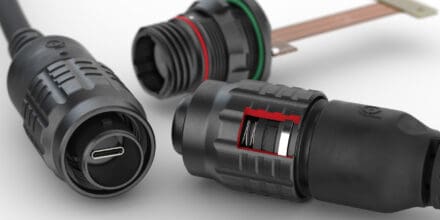
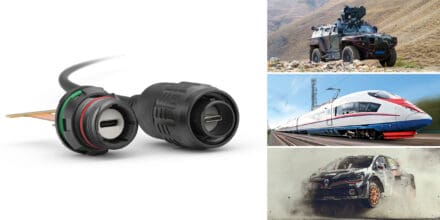
Fischer Connectors, the global leader in high-performance connectivity solutions, has brought its world-renowned Swiss engineering expertise to the universal USB-C standard. The Fischer UltiMate™ Series, the company’s flagship range for harsh environments, now includes a pre-cabled USB-C connector equipped with Fischer Connectors’ new Ratchet Locking System (RLS). This connector provides unmatched resistance to vibration and shock, ensuring safe connections for high-speed data transfer under extreme operating conditions in sectors such as defense, mining, construction, motorsports and railways.

The newly released Fischer UltiMate USB-C connector with the Ratchet Locking System (RLS) combines high-speed data transmission with the robust mechanical performance Fischer Connectors is known for.

Leveraging its core competencies in ruggedization, sealing, miniaturization, and data transmission, Fischer Connectors designed the connector to provide optimal reliability in mission-critical environments, ensuring safe and stable connections in demanding applications and markets, such as defense armored vehicles, UAVs, and UGVs, mining, heavy machinery at construction sites, motorsports, and railways. These environments are characterized by high levels of vibration and shock.

The Fischer UltiMate™ USB-C connector featuring the Ratchet Locking System (RLS) is ideal for high vibration applications such as armored vehicles, UAVs, UGVs, railways, and motorsports.

Ratchet Locking System (RLS) designed to resist high vibration and shock

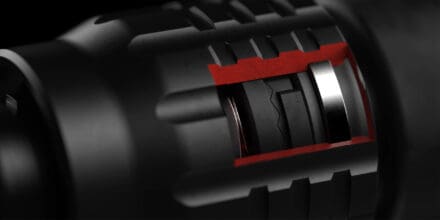
At the heart of this innovation is the new Ratchet Locking System (RLS). Its fastening mechanism uses an asymmetrical tooth profile to securely lock under load and resist loosening under high vibration. Key benefits include exceptional vibration resistance (by maintaining lock under high-frequency vibration), tool-free operation (easy mating and unmating in the field, even with gloves), and durability with high rates of mating cycles.

Logically, Fischer Connectors has introduced the RLS to its most robust product line, UltiMate. In the Fischer UltiMate’s classical size 15 contact block (with up to 27 pins and 25.8-mm receptacle diameter), the RLS system achieves the best vibration and shock resistance in the entire Fischer Connectors product portfolio, withstanding 37.8 Grms of random vibration and 300 g of shock amplitude.

Ruggedized USB-C connector for harsh environments

The new UltiMate USB-C connector with RLS has been independently validated to withstand 5.35 Grms of random vibration (50–2000 Hz, 3×1.5 hrs, no discontinuity >1 ?s), 10 g of sinus vibration (10–500 Hz, 3×3 hrs, no discontinuity >1 ?s), and shock up to 100 g (half sine pulse, 6 ms, no discontinuity >1 ?s).

Additional features include an IP68 sealing for the plug; hermeticity for the receptacle (<10?? mbar l/s); an operating temperature range of -30 °C to +80 °C; corrosion resistance of 350 hours of salt mist; 3,000 mating 1/3cycles; and 360° EMC shielding.

“Our new USB-C RLS connector offers environmental and mechanical performance in compliance with IEC and MIL-STD norms,” says Alexandra Monchâtre, Head of Product Management at Fischer Connectors.

“This new product truly offers the best of both worlds: the ultra-standard and the ultra-rugged.”


The Fischer UltiMate™ USB-C RLS connector is available as pre-cabled plugs and receptacles.

As part of a versatile portfolio of rugged, compact and high-speed connectors

With its new USB-C interface supporting high-speed data, video, and power transmission over a compact connector footprint, the new Fischer UltiMate USB-C RLS connector complements Fischer Connectors’ existing range of rugged, high-speed data transmission solutions designed for signal integrity, mechanical endurance, and space-constrained environments.

The UltiMate USB-C RLS is available as a pre-cabled plug and receptacle (28 mm diameter) with a flex PCB.

This all-in-one solution provides robust connectivity and flexibility in various design configurations for modern electronic devices, especially in applications where space, speed, and reliability are critical. It offers a compact design and supports USB 3.2 Gen 1×2 transmission with data rates up to 10 Gbit/s.

The new USB-C RLS connector expands Fischer Connectors’ offerings across its high-speed Core, MiniMax, and UltiMate series, which support data protocols such as USB 3.2, Ethernet up to 10 Gbit/s, Audio/UHD

Video up to 18 Gbit/s (HDMI 2.0 type), and Single Pair Ethernet (SPE).

“As part of our technology and innovation strategy, our Group R&D team offers engineers designing applications in extreme environments a versatile technology platform with various standards and connector types,” explains Alvaro Goncalves, Technology Director at the Conextivity Group, of which Fischer Connectors is a part. “This new USB-C connector with RLS is a good example of how we combine our technology ‘bricks’ – high-density miniaturization, high-speed data, and ruggedness – to increase integration capability, compatibility, and interoperability across customer markets. Conextivity has the innovation, agility, and precision skills needed to meet the most stringent requirements in demanding environments.”


The RLS fastening mechanism uses an asymmetrical tooth profile to securely lock under load and resist loosening under high vibration.

More information on Fischer Connectors’ website:

Fischer UltiMate™ Series USB-C with Ratchet Locking System (RLS) – flyer

Fischer UltiMate™ Series – web page

Fischer UltiMate™ Series – Technical Specifications

High-speed data connectors – web page

Safariland Expands Solis Holster to Include Sig Sauer P365 Family

Saturday, May 10th, 2025

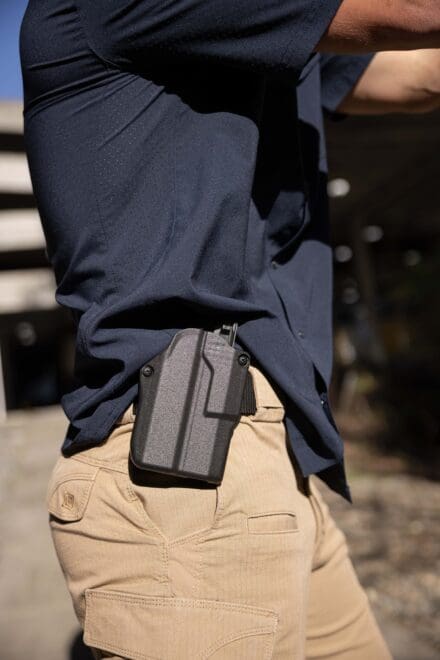
JACKSONVILLE, Fla. – Safariland®, a brand of The Safariland Group®, a leading global provider of safety products designed for the public safety, military, professional and outdoor markets and one of Cadre Holdings, Inc.’s (NYSE: CDRE) (“Cadre”) key brands is proud to announce an exciting new addition to its innovative Solis™ holster line: compatibility with the popular Sig Sauer® P365 family, including the XMacro and Fuse.

Initially launched in 2023, the Solis holster is purpose-built for subcompact pistols equipped with lights and optics—delivering high-performance security in a sleek, low-profile design.  Now, with fits available for the Sig Sauer P365 models, law enforcement and civilians have access to a secure, outside-the-waistband (OWB) carry solution that doesn’t compromise speed or reliability.

“We designed the Solis holster to address the growing demand for compact, optics-ready firearm carry options,” said Eric Gasvoda, Vice President and General Manager of Duty Gear for Safariland. “Expanding support to the Sig Sauer P365 family underscores our ongoing commitment to equip our customers with cutting-edge gear that evolves alongside their needs.”

Crafted by the pioneers of holster retention, the Solis holster features a robust two-piece reinforced construction that balances strength with streamlined carry. Key features include:

ALS® (Automatic Locking System): Secures the firearm on holstering; a straight-up draw is all it takes once the release is deactivated

Red Dot Sight Compatible: Designed for modern optics-ready handguns

Compact Light Compatibility: Ideal for low-light operations

To learn more about the Solis OWB  holster and to explore Safariland’s extensive range of safety equipment, visit Safariland.com.

WTF’s Back Panel 91.1 for Crye AVS

Saturday, May 10th, 2025

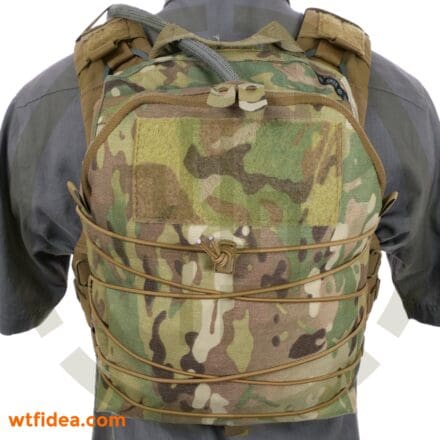
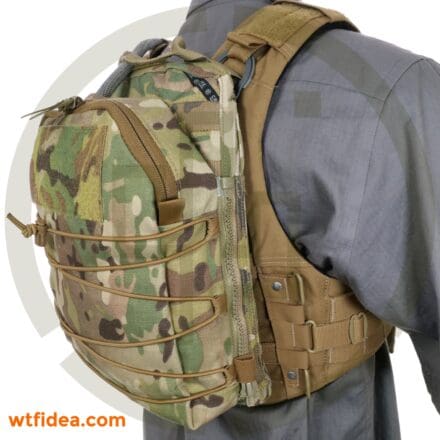
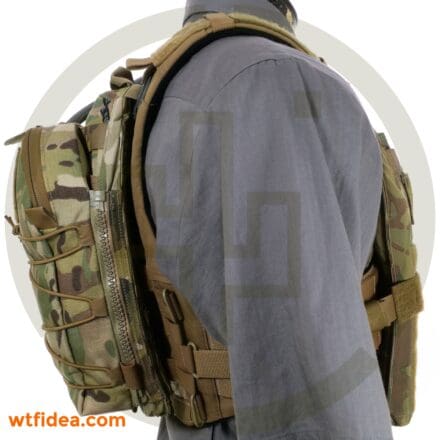
WTF’s Hydro Zip-On Back Panel 91.1 for Crye Precision AVS is designed for use with Source Kangaroo, WLPS, and ILPS bladder and CamelBak’s 70oz and 100oz short bladders.  To discourage inadvertent separation from the carrier, zipper pull tabs tuck securely and silently into milspec elastic loops to prevent the slider from riding upward.  A VELCRO® Brand ONE-WRAP® loop, as a universal bladder hanger, can interface with almost any bladder.


Back Panel 91.1 uses NIR & Berry compliant MIL-DTL-32439 500D nylon, A-A-55126 nylon hook & loop, A-A-59826 bonded nylon thread, MIL-W-5691.1 nylon elastic, A-A-55634 spec heavy duty zippers, and well compensated, skilled labor to produce a cost effective part.

Back Panel 91.1 for AVS (size medium) is lightweight at just 7.1 oz / 202 g (size medium).  Approx 3.25 liter volume.

Bladders, additional pouches, plate carrier, etc not included.

wtfidea.com

*all Crye Precision trademarks, brands, etc are the sole property of Crye Precision, LLC.  Crye Precision, LLC does not endorse this product.

Introducing the New FROG.PRO Pouch Lines: FAST Access and FLAP Protection, Designed for Mission Success

Saturday, May 10th, 2025

(GATTATICO (RE) – ITALY) – FROG.PRO®, the Italian reference brand for tactical tailoring, is finally ready to launch its new pouches. They will be available on their website starting from today May 9th 2025.

“At FROG.PRO, our mission has always been clear: deliver high-performance tactical gear that professionals can trust in any operational environment. Today, we are proud to unveil two new lines of pouches designed to meet the demands of modern military and law enforcement users across the globe.

FAST Line: speed and control in every movement.

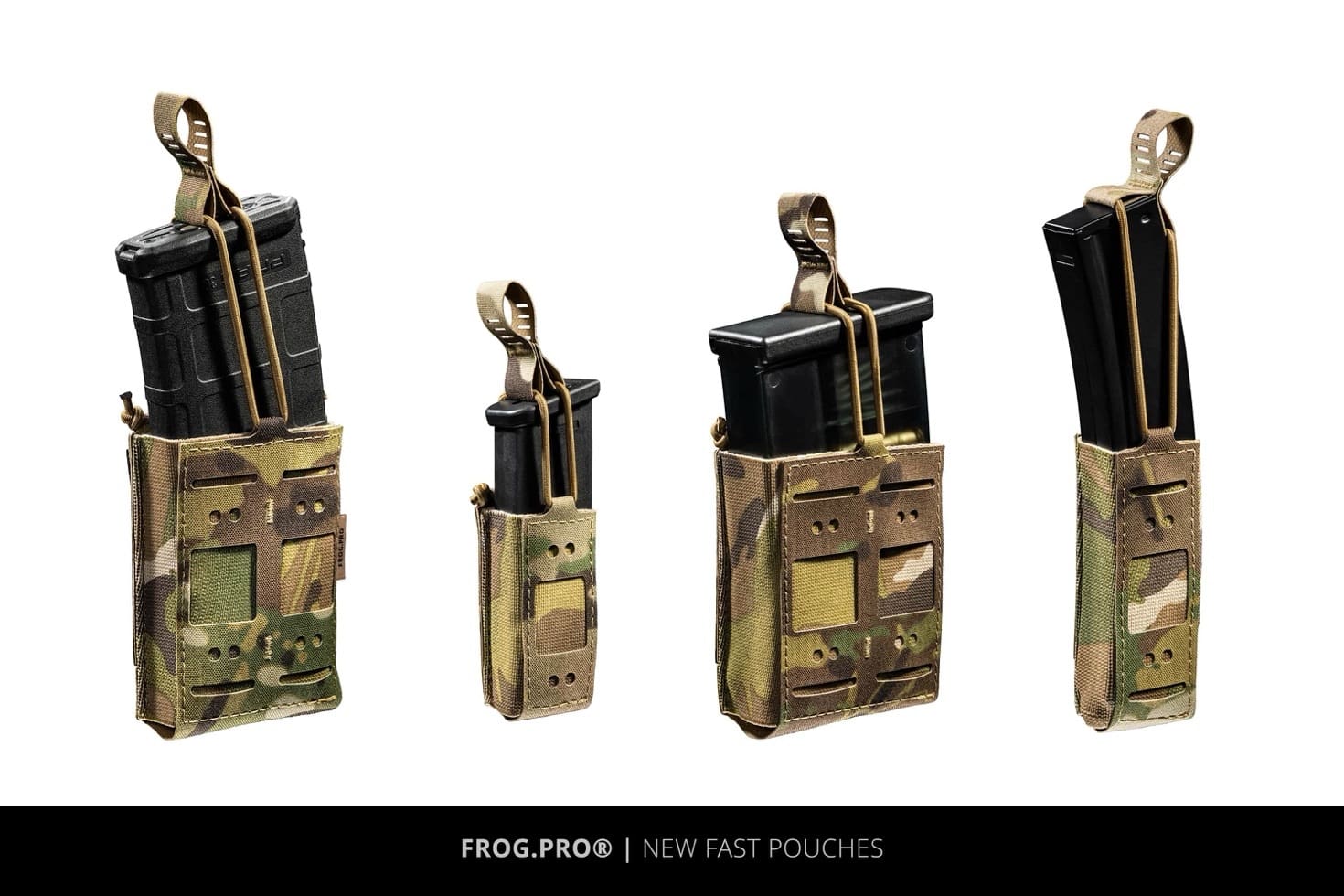
The FAST line is engineered for those who operate under pressure and require lightning-fast access to their gear. These magazine pouches use elastic retention combined with an ergonomically designed high-grip puller, allowing quick and precise magazine extraction even in high stress scenarios.

Operators can further customize their setup by swapping the standard puller with a rubberized, enhanced grip variant, perfect for wet, muddy, or maritime conditions.

The FAST line represents a leap forward in rapid access design, ensuring users are always one step ahead.

FLAP Line: maximum retention, maximum protection.

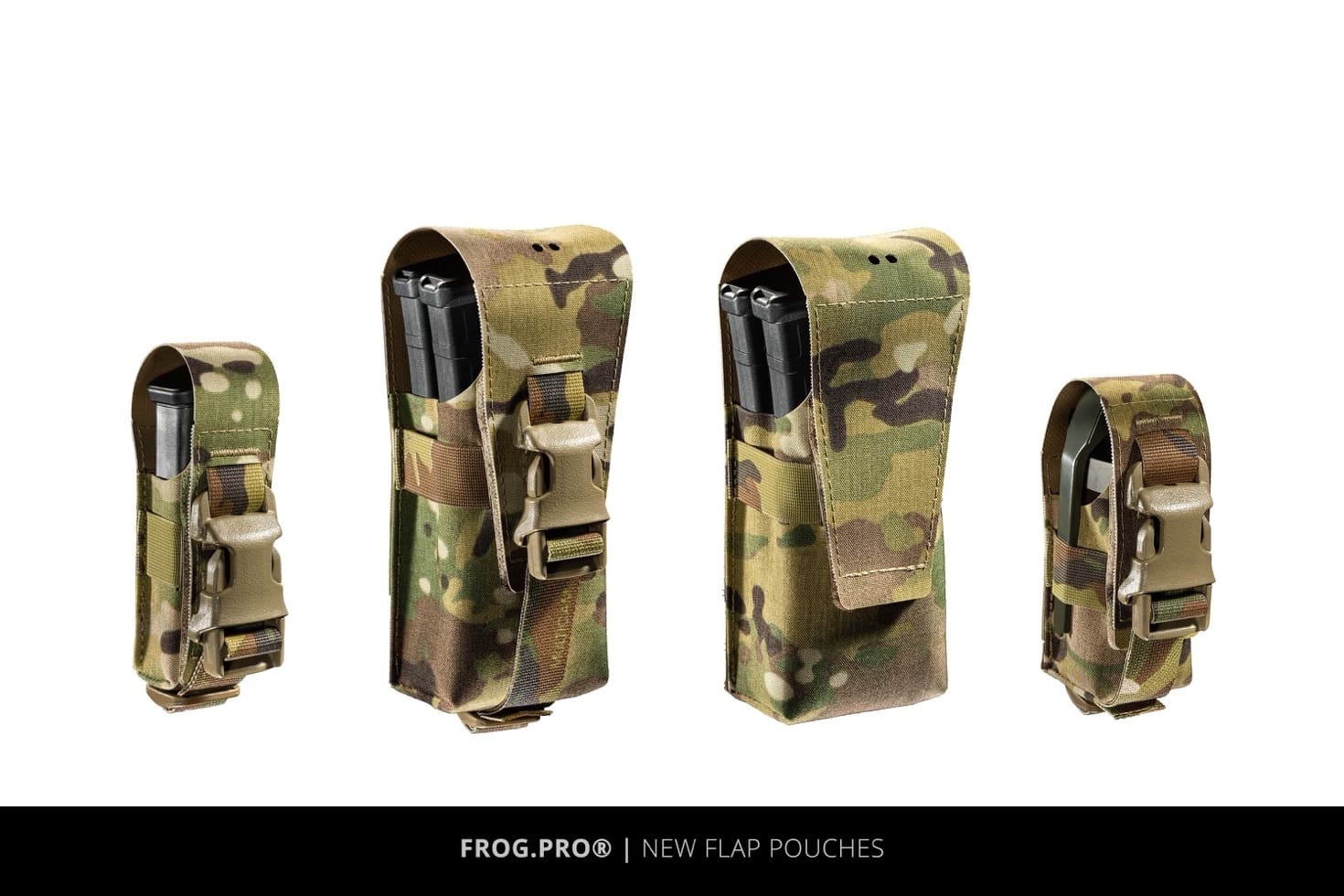
When retention and protection are the priorities, the FLAP line delivers. These pouches feature a protective flap closure with velcro and/or buckle, offering added security and shielding from environmental factors like rain, mud, and debris.

This line includes pouches for:

• Rifle magazines
• Pistol and SMG magazines
• Grenades

Each magazine pouch includes a Tegris insert that maintains structural integrity and facilitates smooth reinsertion of the magazine, ensuring that even under stress, performance is never compromised. Drainage holes at the base prevent water buildup, supporting use in maritime and amphibious operations.

Expanded radio carry capabilities.

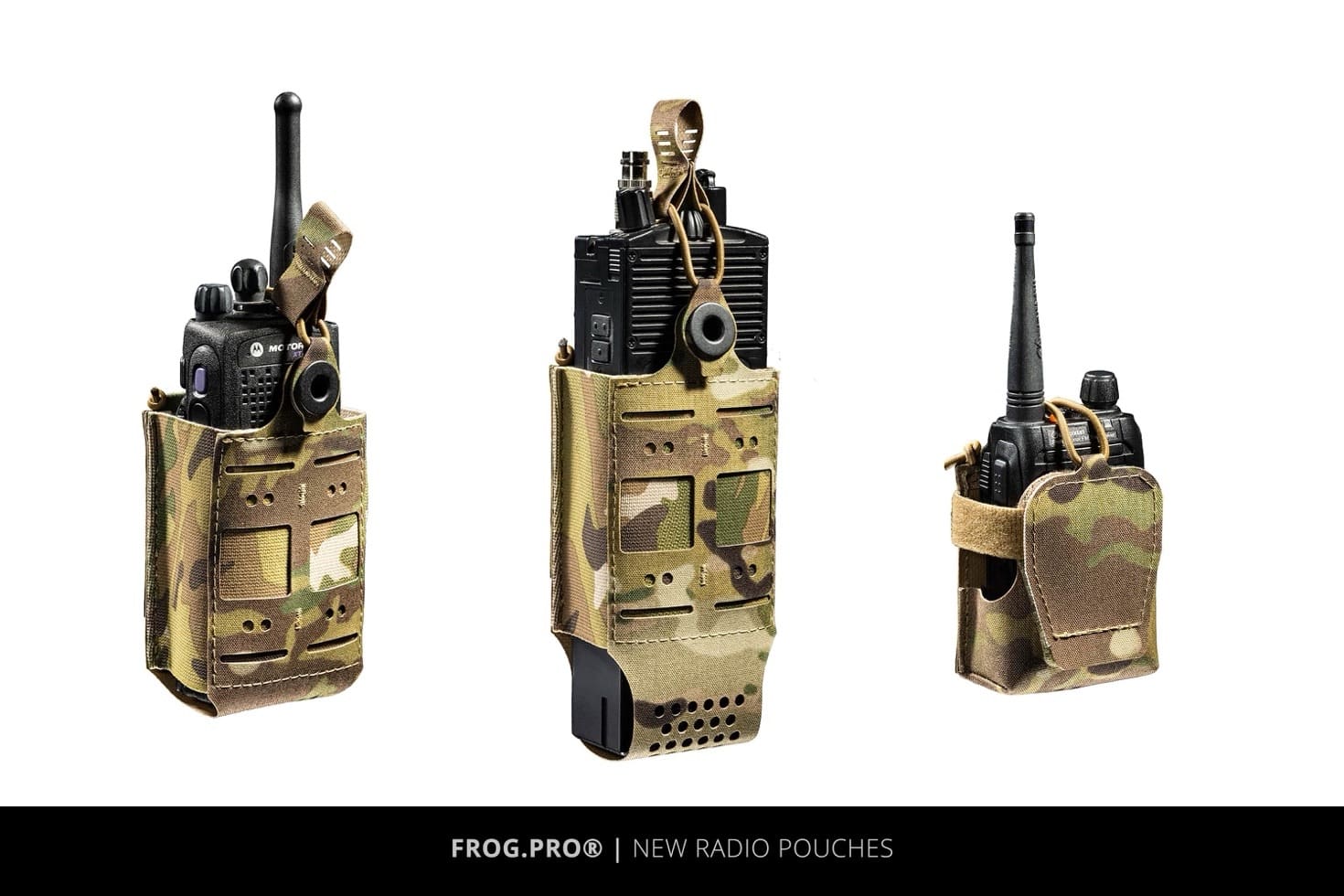
With communication being mission critical, FROG.PRO has also developed three new radio pouches:

AN/PRC Radio Pouch: Built for rugged military radios, with maximum durability and accessibility;

Medium Radio Pouch: Ideal for police departments using medium-sized comms;

Small Radio Pouch: Compact and low-profile for law enforcement or special duties with smaller radios.

Built with purpose: modularity, lightweight, and mission durability.

All new pouches are crafted from mil-spec LAHYCO, a composite fabric that is:

• Water repellent
• Flame Resistant
• NIR – Compliant

Fully molle compatible and modular, these pouches are designed to integrate seamlessly into a wide range of setups, chest rigs, belts, and plate carriers alike.

Handmade in Italy by skilled craftsmen, these products reflect FROG.PRO’s commitment to quality, performance, and innovation.

Mission-Ready, World-Proven.

Whether you’re conducting long range patrols in arid environments or engaging in CQB operations in complex terrain, these new pouch lines offer:

• Lightweight construction
• Extreme durability
• Maximum versatility

Available in MultiCam, Ranger Green, Coyote 498, and Black, they’re ready to serve professionals “wherever duty calls.”

Ready to upgrade your loadout? The new pouches are already available on www.frogpro.eu.

They offer free shipping to USA on orders over 200 EURO (about 220 USD).

Army Research Yields Rechargeable Battery for Extreme Operating Conditions

Saturday, May 10th, 2025

ABERDEEN PROVING GROUND, Md. (May 6, 2025) — Soldiers deploying in a wide range of climates for future conflicts will need batteries capable of powering their advanced electronics in extreme weather conditions. To meet these challenges, Army researchers are developing rechargeable batteries for Soldier-worn and handheld equipment with increased temperature ranges.

Initiatives to field Soldiers with next-generation equipment — such as night-vision devices, weapons, and radios — are driving the need to transition from single-use batteries to rechargeable versions, said Lexi Karalekas, an Army C5ISR Center chemical engineer.

The U.S. Army Command, Control, Communications, Computers, Cyber, Intelligence, Surveillance and Reconnaissance (C5ISR) Centeris working to improve performance of these batteries in cold and hot weather to meet the demands of Soldier-missions across a broad range of environments. Researchers are conducting lab testing of the cell technology.

“Results at the cell level show a significant enhancement in performance at extreme temperatures, achieving a higher capacity when compared with commercial-off-the-shelf options,” said Karalekas, C5ISR Center’s lead for the battery development project. “Through collaboration with industry, we are demonstrating advancements that potentially double the operational range and duration of systems powered by the innovative technology. This will enable Soldiers to operate in previously inaccessible temperatures.”

The Army’s next step is to incorporate these specialized cells into a prototype of the Army’s most widely used standard battery across many Soldier-portable systems. Because of the battery’s widespread use by Soldiers, any new iterations can be easily accommodated as ‘drop-in’ replacements. The new prototype will be delivered in the near term to C5ISR Center for lab testing before multiple rounds of Soldier field testing in extreme temperatures.

Once prototypes have been tested successfully in one battery pack, the cells inside can be incorporated into other standard Army batteries, said Dr. Ashley Ruth, a C5ISR Center senior electrochemical engineer.

“The use of standard batteries allows multiple systems to quickly see the benefits of this new technology rather than redesigning and requalifying bespoke batteries as improvements in cell chemistries occur,” Ruth said.

In addition to Soldier handheld electronics, the Army is looking to incorporate the technology into other battery types for vehicles, unmanned aerial systems and sensors.

Since 2023, the C5ISR Center has partnered with the Department of Defense Industrial Base Policy Office and Defense Innovation Unit to incorporate more advanced standard batteries from commercial industry to power Army equipment. C5ISR Center’s expertise in battery research and Army equipment power needs is paired with DIU’s commercial industry reach, flexibility and rapid contracting ability.

The newly developed battery cells can also be integrated into industry applications as the Army increasingly looks to commercial technology to support field experimentation.

For example, the Army is developing a rechargeable standard cell — the Operational Single Cell for Accessory Readiness (OSCAR) — in the same form factor as the common AA commercial cell.

“This cell has voltage flexibility and increased cold and hot weather performance that commercial manufacturers can leverage,” said Jon Novoa, a C5ISR Center division chief. “The voltage flexibility of OSCAR and emerging standard batteries allows military capability developers to focus on system development and their areas of expertise without having to focus on energy storage.

“The C5ISR Center continues to lead the way in standardizing Army batteries and coordinates capabilities and requirements across government agencies.”

Feedback from field experimentation continues to drive Army R&D to ensure batteries meet performance specifications required where Soldiers operate.

“Army technical investment, combined with industry partnerships, remains critical to meet the unique power needs of Soldiers,” said C5ISR Center Director Beth Ferry.

By Dan Lafontaine, C5ISR Center Public Affairs