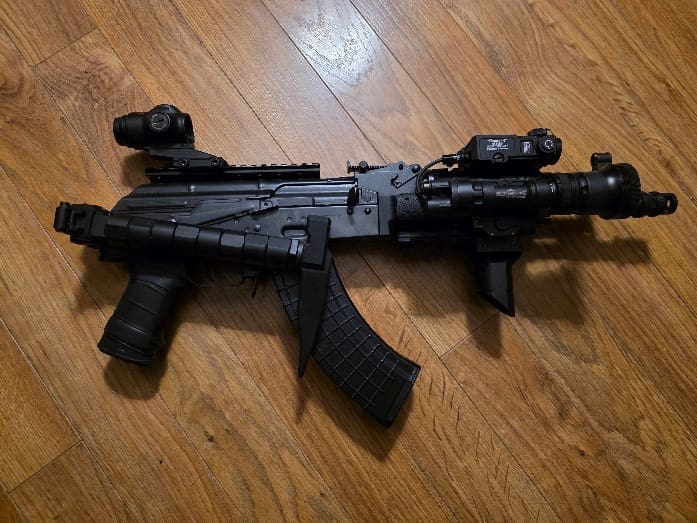
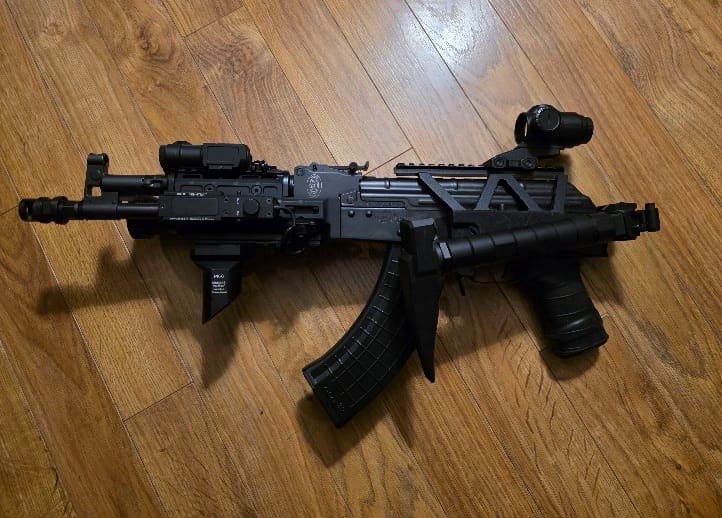
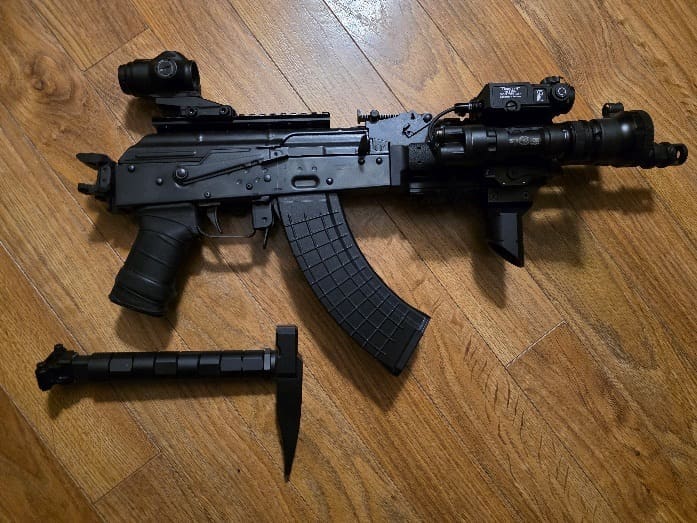
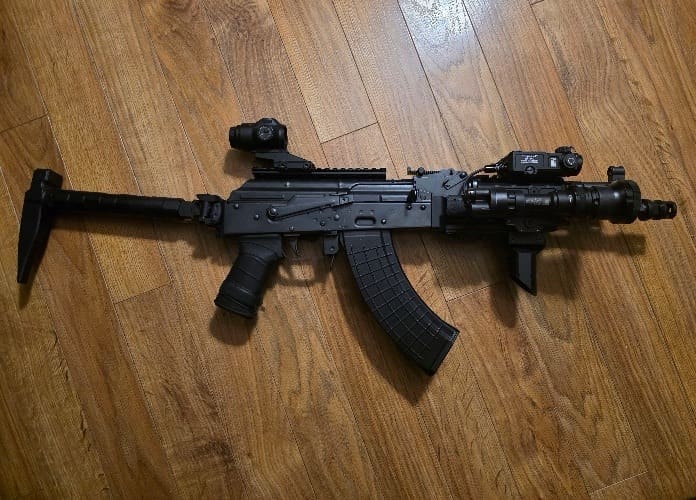
XC3 Weaponlight

Archive for January, 2026

VTEC Fort Gillem National Training Center: A HighROI Solution for Federal and State Government Agencies

Tuesday, January 6th, 2026

A National Model for Efficient Workforce Development, Reduced Government Burden, and Stronger Economic Outcomes

ATLANTA, Jan. 5, 2026 — The Veterans Training Empowerment Center (VTEC) , a 501(c)(3) nonprofit dedicated to military workforce development and an approved U.S. Army Career Skills Program (CSP) provider delivering on-base training at Fort Benning, Georgia, and recognized with Guidestar’s Platinum Seal of Transparency, today announced the expansion of the VTEC Fort Gillem National Training Center. This centralized, military-focused workforce hub is designed to support soldiers, veterans, military families, and civilian learners while providing direct, measurable benefits to federal and state agencies.

The Fort Gillem center will provide a unified system for training, credentialing, and placing transitioning service members into high-demand civilian careers. While the existing Fort Benning Command Training Center has successfully supported soldiers, increasing demand from both participants and hiring partners requires expansion. The new Fort Gillem National Training Center will scale training capacity, centralize employer access, reduce government costs, and strengthen national workforce participation, supporting economic and readiness objectives across multiple agencies.

Government agencies at the federal, state, and local levels are invited to visit www.100partnersportal.org to learn how they can partner with VTEC, support military workforce development, and access trained, job-ready personnel for their programs and operations.

(more…)

Framework Contract Extended: Bundeswehr Orders 30mm Ammunition for Puma Infantry Fighting Vehicles from Rheinmetall – New Order Worth Several Hundred Million Euros

Tuesday, January 6th, 2026

The Bundeswehr has once again placed an order with Rheinmetall for 30mm ammunition for Infantry Fighting Vehicles (IFVs). The German Armed Forces placed the order for additional cartridges as part of an extended framework contract concluded in 2022. The new order is worth several hundred million euros.
In December 2022, the Bundeswehr signed a framework contract with Rheinmetall for the supply of 30mm x 173 ammunition for the Puma IFV. This framework contract, which runs until 2029, has now been extended in terms of delivery quantity and order volume. It provides for the delivery of several hundred thousand cartridges worth around €1 billion. At the same time, a medium six-figure quantity of ammunition was retrieved. The order intake amounts to several hundred million euros. 

To strengthen its Puma fleet, the German Armed Forces recently commissioned joint venture partners Rheinmetall and KNDS Deutschland to supply 200 additional IFV’s. The Puma is equipped with Rheinmetall’s MK30-2/ABM (Airburst Munition) machine gun. It combines a high rate of fire with programmable state-of-the-art ammunition technology. This makes the MK30-2/ABM an extremely reliable and uncompromising weapon system. With an effective range of over 2,000 metres, the MK30-2/ABM is extremely powerful against land, air and sea targets.

Rheinmetall is a key supplier of combat ammunition to the Bundeswehr. The corporation produces and supplies two types of combat ammunition for the Puma IFV: KE-TF DM21 and KE DM33 in 30 mm x 173 calibre. Both types of ammunition have been developed and certified in accordance with the latest standards, offering unrivalled reliability, effectiveness, penetration and precision worldwide. The programmable KE-TF (Kinetic Energy Time Fuse) ammunition is highly reliable and enables the Puma IFV to engage larger soft and semi-hard surface targets, as well as drones.

The order underscores Rheinmetall’s position as a leading supplier of 30mm medium-calibre ammunition to the Bundeswehr. It reflects the armed forces’ efforts to replenish their stocks and increase their ammunition reserves in light of the current security situation. Rheinmetall is one of the world’s leading manufacturers of medium-calibre ammunition.

Bundeswehr Birds Group – The New Innovation Network

Tuesday, January 6th, 2026

The army sends a clear signal: innovation should be created faster, closer to the force and much more effectively and implemented in practice in the future. The newly established Birds Group at the Heer command, the staff of the inspector, combines ideas from the associations with the innovation actors of the Bundeswehr.


In the future, the Birds Group will bundle the innovation potential of the German Army and put it under a uniform leadership. It is important to make new technologies, processes and ideas ready for use in a short time.(Bundeswehr/Marco Dorow)

The Birds Group becomes the central point of contact for unmanned systems, technical innovations and tactical testing in the field of land forces. The “look from above”, which provides an overview of a broad picture of the situation and provides the basis for decision-making, gives the group its name.

The structure that is being created is a decisive step towards more commitment and technological security for the future. The task of the Birds Group is to strengthen the innovation culture of the Bundeswehr through networking, expertise and openness to new solutions. How can this be realized?

Benefits for the entire Bundeswehr

The Birds Group is a hub at the highest management level in the army, which identifies innovations faster, bundles, coordinates with the other players outside the army and brings them into the area. The entire Bundeswehr is to benefit from this later, because successful approaches from the force become visible more quickly and can then be transferred to other areas. The German Army thus strengthens its role as a driver of innovation and puts the important ideas and suggestions that already exist in the force under a uniform leadership.

The Birds Group does not replace the responsibility of leadership at all levels as well as in the respective professionalism. In the future, it will promote exchange with key innovation actors of the Bundeswehr through its leadership mission and will make it easier to make new technologies, processes and ideas ready for use in a short time. In this way, it strengthens the ability of all sub-forces to go into future positions in a more modern, networked and action-proof manner.

by PIZ Heer

EchoCore Suppressors Take 1st & 2nd Place in 5.56 Category at the 2025 Suppressor Summit

Tuesday, January 6th, 2026

North Conway, NH (January 7, 2026) — In its first year of public evaluation, EchoCore Suppressors made an immediate impact at the 2025 Silencer Summit, taking first and second place in the 5.56mm category with its Sector 5.56 Full Size and Sector 5.56 Compact suppressors. Tested under the industry’s most advanced and transparent standard — Shooter’s Ear (SE) LEQ dBA measurement — EchoCore’s performance marks a decisive debut for the new American manufacturer.

The Silencer Summit represents the gold standard in suppressor performance testing, providing independent, data-driven comparisons across leading brands using real-world acoustic analysis. EchoCore’s dual podium finish highlights the company’s commitment to advancing suppression through precision engineering, additive manufacturing, and its XCR (Cross Chamber Regulation) technology — designed to reduce backpressure while maintaining exceptional sound and flash reduction.

“Earning first and second place in our debut year validates everything we’ve worked toward,” said Chris Mudgett, Founder of EchoCore Suppressors. “EchoCore was built on the belief that true innovation is alive and well in this industry. Our team’s expertise, discipline, and relentless pursuit of performance are what make these results possible — and this is just the beginning.”

EchoCore Suppressors’ victory underscores the company’s technical leadership and rapid ascent within the competitive suppressor landscape. Each EchoCore model is engineered, manufactured, and tested in the United States using the most advanced materials and additive processes available to create industry-leading suppressors.

About Suppressor Summit

The Silencer Summit is the firearms industry’s premier independent suppressor evaluation event, bringing together leading suppressor manufacturers to benchmark performance using the most advanced acoustic testing methods, components and software from HBK. Hosted annually by TBAC, the Summit provides transparent, data-driven sound comparisons across key categories. Using Shooter’s Ear (SE) LEQ dBA measurements — the industry’s most accurate standard for real-world sound perception — the Silencer Summit establishes the definitive performance reference for modern suppressor design.

About EchoCore Suppressors

EchoCore Suppressors is redefining the science of suppression. Together with designers, engineers, and Mil/LE veterans with decades of industry experience, we craft precision-built suppressors engineered for superior signature reduction, minimal backpressure, and uncompromising durability. Guided by innovation, authenticity, and excellence, EchoCore represents the pinnacle of modern suppressor design — proudly made in the USA.

Dealer Contact:

EchoCore Suppressors

Sales@echocoresuppressors.com

www.echocoresuppressors.com

Crucial Defense Unveils Tartarus Gel Binary — A Next-Generation Gelatinous Explosive for Modern Energetic Applications

Tuesday, January 6th, 2026

6 January, 2026 — In an operational environment where precision, safety, and adaptability increasingly define capability, Crucial Defense Technologies is introducing Tartarus™ Gel Binary, a next-generation gelatinous binary explosive designed for tactical breaching, demolition, and specialized energetic applications.

Headquartered in Southwest Florida, Crucial Defense Technologies is an emerging manufacturer rapidly building a reputation for developing compliant, high-performance energetic systems for defense, security, and industrial users. Tartarus™ Gel Binary reflects the company’s focus on modern supply chains, modularity, and operational flexibility.

What Is Tartarus™?

Tartarus™ Gel Binary is a patent-pending gelatinous binary explosive formulation developed to address many of the limitations historically associated with binary energetic systems. A binary explosive consists of two stable components that only become energetic when combined. While binary explosives are not new, prior formulations have delivered inconsistent results or presented integration challenges.

Crucial Defense’s approach differs in that Tartarus™ suspends the fuel component within a proprietary gel matrix, allowing the material to be used in conjunction with plastic housings and polymer-based delivery systems. This capability has historically been a major hurdle for gel binary explosives, particularly for applications requiring integration into modern munition designs.

Extensive internal testing has been supported by independent evaluation. Testing conducted by General Dynamics demonstrated that Tartarus™ achieved a Relative Effectiveness (RE) factor of 1.28 when compared to TNT, the baseline reference for modern explosive testing. While this does not reach the approximate RE of C4 (~1.34), Tartarus™ offers a compelling balance of performance, safety, and logistics.

Unlike traditional high explosives, Tartarus™ is shipped as two non-energetic components that only become explosive once mixed. This approach significantly improves transportation safety, storage longevity, and regulatory compliance, making it particularly attractive for users operating in constrained or expeditionary environments. Tartarus™ also features a lower density of approximately 1.15 g/cm³, compared to TNT’s density of roughly 1.65 g/cm³, contributing to overall weight savings.

Why Gelatinous Binary Explosives Matter

Gel-based binary explosives offer several practical advantages over conventional cast or plastic explosives:

Conformality: The gelatinous consistency allows Tartarus™ to be molded around irregular shapes and into confined spaces, improving surface contact and enabling more predictable blast effects.

Reduced Shipping Burden: Traditional explosives such as TNT and C4 are regulated as DOT Class 1 materials, among the most heavily restricted categories for transport. Tartarus™ is shipped as a DOT Class 3 material, greatly simplifying shipping, storage, and handling. In some cases, Tartarus™ can be shipped via common carriers, including expedited options.

Reduced Sensitivity: When stored and transported as separate components, Tartarus™ remains relatively insensitive to impact, friction, and static electricity. This reduces handling risk and eliminates the need for specialized storage magazines or hardened facilities.

Pound-for-Pound Performance: With an RE factor approaching 30% greater than TNT and a significantly lower density, Tartarus™ delivers increased energetic output while weighing substantially less by volume.

In practical terms, these characteristics translate into consistent, controllable explosive performance that operators and engineers can rely on, even in environments with limited infrastructure or uncertain supply chains.

Operational Utility and Tactical Value

For military and law-enforcement breaching teams, explosive ordnance disposal (EOD) units, and defense engineers, Tartarus™ Gel Binary represents a meaningful shift in how energetic materials can be deployed. Field-mixing capability reduces logistical complexity and allows teams to move lower-hazard materials forward, converting them into an energetic state only when required.

Reduced storage constraints and improved transport flexibility directly support expeditionary operations where weight, volume, and regulatory compliance all influence mission planning. As the saying goes, pounds equal pain — and in aerial and unmanned systems, weight reduction translates directly into increased range, longer loiter times, and greater payload flexibility.

Looking Ahead — The Future of Energetics

While Tartarus™ Gel Binary is still progressing through broader product-development phases, its introduction highlights Crucial Defense Technologies’ growing footprint in advanced energetic materials. As demand continues to increase for safer, lighter, and more adaptable explosive solutions, binary gel systems like Tartarus™ may help define the next generation of tactical energetics.

As field evaluations continue and operational use cases mature, Crucial Defense plans to release additional data covering performance parameters, mixing practices, and integration guidance for military, law-enforcement, and specialized industrial users.

Learn more about Tartarus™ Gel Binary here.

Rapidly Developed Counter-Drone Prototype Succeeds at NATO’s Bold Machina

Tuesday, January 6th, 2026

A new, innovative detection system for countering uncrewed aerial systems (c-UAS) conducted its first field tests at sea during the Bold Machina (BOMA) exercise in the Netherlands this September. Rapidly developed by a small team led by officer-scholars from the Naval Postgraduate School (NPS), the c-UAS system deployed aboard a Dutch Navy fast raiding, interception, and special forces craft (FRISC).

Designed for passive operation, the system employed artificial intelligence (AI) to integrate multiple independent sensor platforms to detect and identify class 1 drones. Because these types of drones are numerous, small, and difficult to track, they pose significant threats. When fully functional, the system provides special forces operating in the maritime domain valuable protection against distant incoming drones without compromising their position.

The NPS efforts support the U.S. Department of War’s priority to accelerate drone development and deployment outlined in “Unleashing U.S. Military Drone Dominance.” The memo laid out the plan for how the department would “… power a technological leapfrog, arming our combat units with a variety of low-cost drones made by America’s world-leading engineers and AI experts.”

Local and International Teamwork

NATO Allied Special Operations Forces Command (SOFCOM) sponsored BOMA with technical support from the NATO Center for Maritime Research and Experimentation (CMRE). Over 150 personnel from 17 individual NATO special operations forces (SOF) commands and two NATO partner SOF commands participated. Representatives from Ukraine also attended. International collaborations like this are essential for ensuring national and global security and maintaining cooperation between allies.

Military conflicts often drive rapid advancement and adoption of new technology. Exemplifying this, the war in Ukraine has thoroughly demonstrated the urgent need to detect hostile drones that continuously evolve in capability. And NPS is helping to harvest these hard-earned lessons.

“For us, it’s a question of survival,” said a special operations forces colonel, who serves in the Armed Forces of Ukraine and is also earning a master’s degree in defense analysis from NPS. “So, we’re more than motivated to create the most efficient and effective weapons and counter-weapons to use against enemies as soon as possible and as cheaply as possible.

“Every time I watch or read the news about a missile attack or drone attack or mixed attack, it’s so hard,” the Ukrainian colonel added.

But all of the Ukrainians understand the vital importance of their advanced education at NPS — to share what they know and what they are learning. It’s a force multiplier and will allow them to make bigger contributions to Ukraine’s defense once they return. “One thought that actually warms and encourages me is this education. Sharing our experiences. Thinking more strategically. It will help me execute my mission much better,” he said.

During the Ukrainian colonel’s studies, he joined over 80 other NPS officer-scholars — from the U.S. and across the globe — and faculty from the defense analysis and information sciences departments to observe NPS’ Joint Interagency Field Experimentation (JIFX) exercise held in August. It’s here where he encountered the BOMA team from NPS testing their c-UAS system in collaboration with other experimenters and industry partners. He and his countrymen had insight to share.

Former NPS provost Scott Gartner is now a professor teaching for the NPS Department of Defense Analysis. He was responsible for organizing the large student and faculty group visit to JIFX because he understands its importance.

“JIFX captures what’s really special about NPS. It’s a collaboration of students, faculty, military, industry, government, and leaders from all over — just like NPS,” said Gartner. “I think that kind of collaboration is critical. It’s applied and working to accomplish important advances, which is demonstrated by JIFX’s focus on innovation. It’s the secret sauce of NPS.”

Bold Machina Design Challenge

SOF combatant craft, such as FRISCs and other rigid-hull inflatable boats (RHIBs), on open water can be at high risk of drone attack because they’re exposed without cover. NATO SOFCOM identified this vulnerability as the focus of their design challenge for the 2025 BOMA exercise.

Back in January, as two NPS officer-scholars worked toward their graduate degrees, they faced the seemingly impossible while enrolled in a special directed study course that covered this BOMA design challenge.

The course was a 90-day sprint study that tasked them “to understand the unique c-UAS challenges posed to maritime SOF combatant craft and propose next steps to close an existing capability gap.”

U.S. Navy Lt. Cmdr. Max Leutermann, an engineering duty officer studying system engineering, and Swedish Armed Forces Maj. Patrik Liljegard, a special forces officer studying defense analysis, eagerly accepted the challenge. They brought over 35 years of military service together, and their multidisciplinary experience proved invaluable to finding a solution.

“The ability for NPS to bring together defense subject matter experts, industry partners, and operationally experienced officer-scholars was recognized by NATO Allied SOFCOM as a unique opportunity to develop innovative solutions to a real-world problem,” said Kevin Smith, the lead and principal investigator for the BOMA effort at NPS. “This partnership not only advanced warfighting capability, but also greatly enriched the educational experience of all of the students involved.”

Liljegard and Smith presented the proposal to NATO Allied SOFCOM in Poland last April, where it was approved and additional funding for them to build a prototype was provided. But they still needed a lot of help to turn their proposed solution into reality. So, by forming partnerships across industry, they found the resources and expertise able to assist them.

“NATO required us to create a system that was passive so that operators who were on a small boat wouldn’t give off any sort of detectable signatures or emissions,” said Leutermann, who served as a submariner for years. “We spent the beginning of the year figuring out solutions. Now, we started figuring out how to build it and who to build it with.”

Testing Counter-UAV Prototype at JIFX

Temperatures in August frequently climbed to over 100 degrees at NPS’ JIFX, which is held quarterly in southern Monterey County at Camp Roberts. The scorching, dry, and dusty inland terrain did not exactly mimic the conditions likely faced during a SOF mission aboard a FRISC silently cruising along the coast of northern Europe. Instead, the harshness at JIFX in summertime provided benefits in other ways.

It was this environment that enabled the c-UAS team to shake out their prototype while navigating unexpected challenges as they pushed the system beyond its limits. They needed to complete this rigorous testing in time for BOMA.

“We had a very tight timeline,” said Leutermann. But he and Liljegard had been thinking ahead. They attended the JIFX exercises earlier in February and May as observers to learn how to best take advantage of the August exercise.

“After we built a mockup, we took it to JIFX to test and prove its functionality. Our goal was to detect drones. Eventually, the system will go on a RHIB for BOMA. But we first strapped the system into the back of my pickup truck and used it like a land boat.”

Their c-UAS system tied together four subsystems: — Multiple independent sensor platforms, which are customizable to the requirements and resources of the operators. — The Tactical Hybrid Operational Router (THOR), which provide the power and network to the hardware. — The Operational Data Integration Node (ODIN), which is an AI-driven, sensor fusion engine. — The navigation display, which overlays the drone detection data from the sensors on the graphical user interface for the operators.

“While companies and other NPS students at JIFX flew their drones all around, we tried to detect them,” Leutermann continued. “Different types of drones at different altitudes, distances, directions, angles of attack, and all of that. Our second goal at JIFX was processing what we detected and representing it on the navigation display.”

The sensor platforms used by the system included: short-range acoustic and electro-optical/infrared (EO/IR) from Mara; direction-finding radio frequency (RF) from DroneShield; broad-spectrum RF from Silvus Technologies; long-range EO/IR from Trakka Systems; and low probability of intercept/detection radar from DspNor.

To counter evolving drone design and adversary tactics, AI from an Nvidia Jetson developer kit drives the c-UAS system by fusing the multi-sensor data, refining real-time UAS detection models, and updating threat libraries. The operators receive the output on a SeaCross navigation display, giving them the detected drone’s bearing, range, altitude, orientation, and identification.

Their system combined sensors and hardware from seven different companies in Australia, Norway, Sweden, and the U.S. Together, these industrial partners provided the sensing, compute, and interface capability the team needed to succeed.

Not all the system’s sensor platforms were in place or ready for evaluation during JIFX, and building of the THOR and ODIN subsystems was ongoing. However, there was still much to learn, and the team spent the days at JIFX driving around the base in their “land boat” detecting drones.

Mounted on a mast attached to the pickup bed of the “land boat,” the Mara sensor platform caught the attention of the NPS students from Ukraine.

Mara’s CTO and co-founder Sriram Raghu explained, “They had great questions, like can our system detect against low altitude flights? What about resilience against fiberoptic drones? What kind of sensors are we using to do different kinds of detection? These questions were helpful to hear from them because they were very aware of the limitations of the different sensors.

“Our system uses a combination of sensors because the behavior of individual sensor types can vary under certain conditions. For instance, on a really hot, sunny day like today, drones light up against the sky on a thermal camera. But against the ground they don’t. Similar things happen with microphone signatures. If drones fly at certain speeds and their motors spin certain ways, they can trick the microphones. So, lots of good insight from them.”

Also attending JIFX were other teams from NPS conducting electronic warfare (EW) studies and operating drones. Like pilots who fly crewed aircraft, certified remote drone operators must stay in practice by flying regularly. So, JIFX provides an outstanding opportunity for them to keep current with flight hours by not only flying drones for their field tests but also assisting in-need experimenters who don’t have their own drones and operators. This collaboration is a very big win-win.

“JIFX not only provides our EW team with the opportunity to perform live RF hardware experimentation in the field, but it allows us to gain valuable ‘stick time’ in order to maintain small-UAS flight proficiency,” said Lt. Cmdr. Calvin Sessions, an electrical and computer engineering Ph.D. student from NPS’ Radar and Electronic Warfare Laboratory and a certified remote drone operator. “In addition to flying for our own investigations, JIFX is an excellent networking event, and we’re happy to collaborate with fellow engineers and researchers.”

“The BOMA team was one of our collaborations that our team worked with going into the event. During JIFX, they told us where to fly as they recorded their data. After the event, we provided their team with the actual flight track data pulled from our system to assist in their analysis. It was a pleasure to give them the support that they needed for their research, and it helped us out, too.”

Leutermann and Liljegard benefitted from working together with others at JIFX as well. Without the exceptionally collaborative environment at JIFX, it would have been impossible for them to fully integrate the hardware and software of their c-UAS system’s multiple sensor platforms.

The intense testing under field conditions that they were able to achieve greatly expanded their understanding of how the system would operate best, which allowed them to better optimize its functionality in preparation to execute during the BOMA exercise.

NATO Special Operations Forces Command’s BOMA 2025

In a matter of months, Leutermann and Liljegard had developed, built, tested, and prepared a prototype of their c-UAS system for sea trials during BOMA by the Dutch Navy from the port city of Den Helder, Netherlands. However, this did not mean the system was complete and fully functional.

“Our system is a system of systems,” said Liljegard, who has made over 10 global deployments with the Försvarsmakten or Swedish Armed Forces. “It was not fully integrated and fully operational before going to BOMA due to the timeline and the unavailability of some of the sensors we planned to use.”

During the first days of BOMA, sensors and equipment were still arriving and had to be connected. The team assembled and integrated hardware and software that they had never used before. But the multinational industry partners that joined them at BOMA stepped up in a big way.

“The great thing is how far we reached in such a short timespan with the NPS team and the industry partners, who all worked together,” added Liljegard. “If one of the companies lacked something, then another company shared its resources. It was fantastic to see everybody work toward the same goal of completing the system.”

Still, having to complete the prototype system while at BOMA was a delay that ate up valuable sea trials time. Once ready, the team deployed aboard a FRISC several kilometers offshore and waited for contacts. Four different types of class 1 drones launched at them—ordinary RF controlled, modified RF controlled, fiberoptic, and autonomous.

“We were able to put all the sensors on the boat, power them up, connect them to the fusion engine, funnel all the detection data through the fusion engine and the database, and then populate it all on the SeaCross display,” Liljegard said of the engagements.

As the FRISC maneuvered, the team watched the drones track on the navigation display in real time. For some drones, Leutermann and Liljegard not only tracked the drones themselves for the entire time in the air but also the drone controllers’ positions. In one case, after the third sighting of a drone not in their UAS library database, the system was able to learn it was a new type of drone, add it to the library, and alert the team that it was a threat.

“In the end, we showcased a system that integrated sensors from multiple companies into one display that operators can use,” said Leutermann. “That capability didn’t exist before. We were able to bring something new to the field.”

Despite the challenges, teammates Leutermann and Liljegard both agreed that the performance of their c-UAS system was very successful and did indeed meet the objectives set by BOMA.

Continuing the Collaboration

NATO says a critical function of the BOMA exercise is to adapt “lessons from ongoing conflicts, transforming today’s battlefield realities into tomorrow’s maritime SOF capabilities.” The collaboration with NPS was so productive that NATO SOFCOM is supporting another 90-day sprint study this winter to explore unique needs in underwater communications, command, and control.

Applying lessons from the war in Ukraine was especially relevant. So, members of the Ukrainian Special Operations Forces participated in the BOMA exercise. While in attendance, they had also visited with the NPS c-UAS team. As Ukrainians also did during JIFX at NPS, they provided insightful feedback to help further advance the development of the system.

The success of the c-UAS system at BOMA could not have been accomplished without the prototype experiments run at NPS’ JIFX exercise in August. For decades, JIFX and its predecessor programs have enabled the rapid development of innovative technology—drones, lasers, AI, additive manufacturing, and much more—vital to meeting national and global security challenges.

“The war in Ukraine has made one point unmistakable: defense innovation must move much faster,” said Aleksandar Matovski, an expert on Russian and European security at NPS’ Institute for Regional and International Security (IRIS).

“New technologies such as the one c-UAS team demonstrated at the BOMA exercise in the Netherlands must be built and fielded at speed to close critical gaps, and existing systems updated almost daily to outpace adversaries who are learning and adjusting rapidly,” Matovski continued. “NPS is uniquely positioned to accelerate these efforts, drawing on its deep academic expertise, officer-scholars with operational experience, strong industry ties, and long-standing programs such as JIFX.”

NPS, located in Monterey, California, provides defense-focused graduate education, including classified studies and interdisciplinary research, to advance the operational effectiveness, technological leadership, and warfighting advantage of the naval service. Established in 1909, NPS offers master’s and doctorate programs to Department of War military and civilians, along with international partners, to deliver transformative solutions and innovative leaders through advanced education and research.

Story by Daniel Linehan
NATO photos by Deacon Westervelt

Tiberius Aerospace’s GRAIL Assessed “Awardable” for Department of War Work in the CDAO’s Tradewinds Solutions Marketplace

Monday, January 5th, 2026

Tiberius Aerospace, a modern defence technology company built to empower the UK, US and their global allies and partners with next-generation weapon systems and AI-powered solutions, has achieved “Awardable” status for their GRAIL (Generative Real-Time Artificial Intelligence for Lethality) platform through the Chief Digital and Artificial Intelligence Office’s (CDAO) Tradewinds Solutions Marketplace.

The Tradewinds Solutions Marketplace is the premier offering of Tradewinds, the Department of War’s suite of tools and services designed to accelerate the procurement and adoption of AI/ML, data, and analytics capabilities. The Solutions Marketplace Model is fully compliant with the SECWAR Memo entitled “Directing Software Acquisition to Maximize Lethality” (March 6, 2025) and the Executive Order entitled “Modernizing Defense Acquisitions and Spurring Innovation in the Defense Industrial Base” (April 9, 2025).

Tiberius GRAIL is an integrated AI platform designed to transform how defense capabilities are evaluated, acquired, and fielded. The platform includes AI-powered weapon system analysis delivering Cost-Efficient Lethality Scores (CELS) in seconds rather than months; a defense marketplace reducing acquisition timelines from 12+ years to under 2 years; and secure coalition collaboration tools with automated export control enforcement.

Tiberius Aerospace’s video, “GRAIL: The Operating System for Coalition Defense,” is accessible to government customers on the Tradewinds Solutions Marketplace, and demonstrates how GRAIL enables rapid capability evaluation, transparent supplier discovery, and coalition-wide collaboration.

Tiberius Aerospace was recognized among a competitive field of applicants to the Tradewinds Solutions Marketplace whose solutions demonstrated innovation, scalability and potential impact on DoW missions. Government customers interested in viewing the video solution can create a Tradewinds Solutions Marketplace account at tradewindAI.com.

Blythe Crawford CBE, Director GRAIL said, “Having served with 1st Infantry Division in Bagdad, commanded 121 Expeditionary Air Wing and been intimately involved in the rapid development of urgent operational capability in the Pentagon and as Commandant Air and Space Warfare Centre it is clear that to maintain a battle winning edge, defense acquisition must undergo a wholesale transformation to deliver new innovative capability to the warfighter quicker, and GRAIL has been built to accelerate that shift – this is a shift from the analogue to the digital, from bureaucratic waterfall to Silicon Valley-modelled agile – it is not just our tech which has to change in this way, but the means by which we deliver it.” he added, “This recognition from CDAO validates our approach: replacing subjective, years-long procurement processes with objective, AI-powered analysis that gets capability to the warfighter faster. The GRAIL Alliance creates the necessary ecosystem to facilitate this change, and we now have over 100 key defense contractors, OEMs and primes signed up to participate.”

Helikon-Tex Raid Shirt, MCDU Pant & Boonie Now Available in ERDL

Monday, January 5th, 2026

Made from Polycotton Stretch Ripstop (48% cotton, 50% polyester, 2% elastane) the Raid Shirt features raglan sleeves and a total of 8 pockets:

2 angled, zippered chest pockets
2 mesh inner pockets
2 sleeve pockets
2 small pockets for small items

Offered in sizes XS – 3XL.

Aside from ERDL, there are a variety of colors and patterns available for the shirt including Woodland, Tiger, PL Woodland, Duck Hunter, and Brush.

The MCDU Pant is a great pairing for the Raid Shirt. Made from the same base fabric for range of motion the pant is also features Versastrech material at the waist, crotch, and back of the knees which dries quickly and is highly breathable.

The knee area is reinforced with 500D Cordura fabric with slots for protective inserts. Thanks to additional drawstrings located under the knee and at the bottom of the leg, the pants can be easily adjusted to the leg.

The pants are only available in Woodland, Tiger, DNC, and ERDL.

Look for sizes XS – XL.

Once again made from the same material, the Boonie Mk2 is designed to be a companion for the Raid shirt. It’s lightweight with a signal panel insert inside the crown. It’s also available in the same colors and patterns as the Raid Shirt.