XC3 Weaponlight

Archive for August, 2026

ARO – Omnivore Wrap

Monday, August 17th, 2026

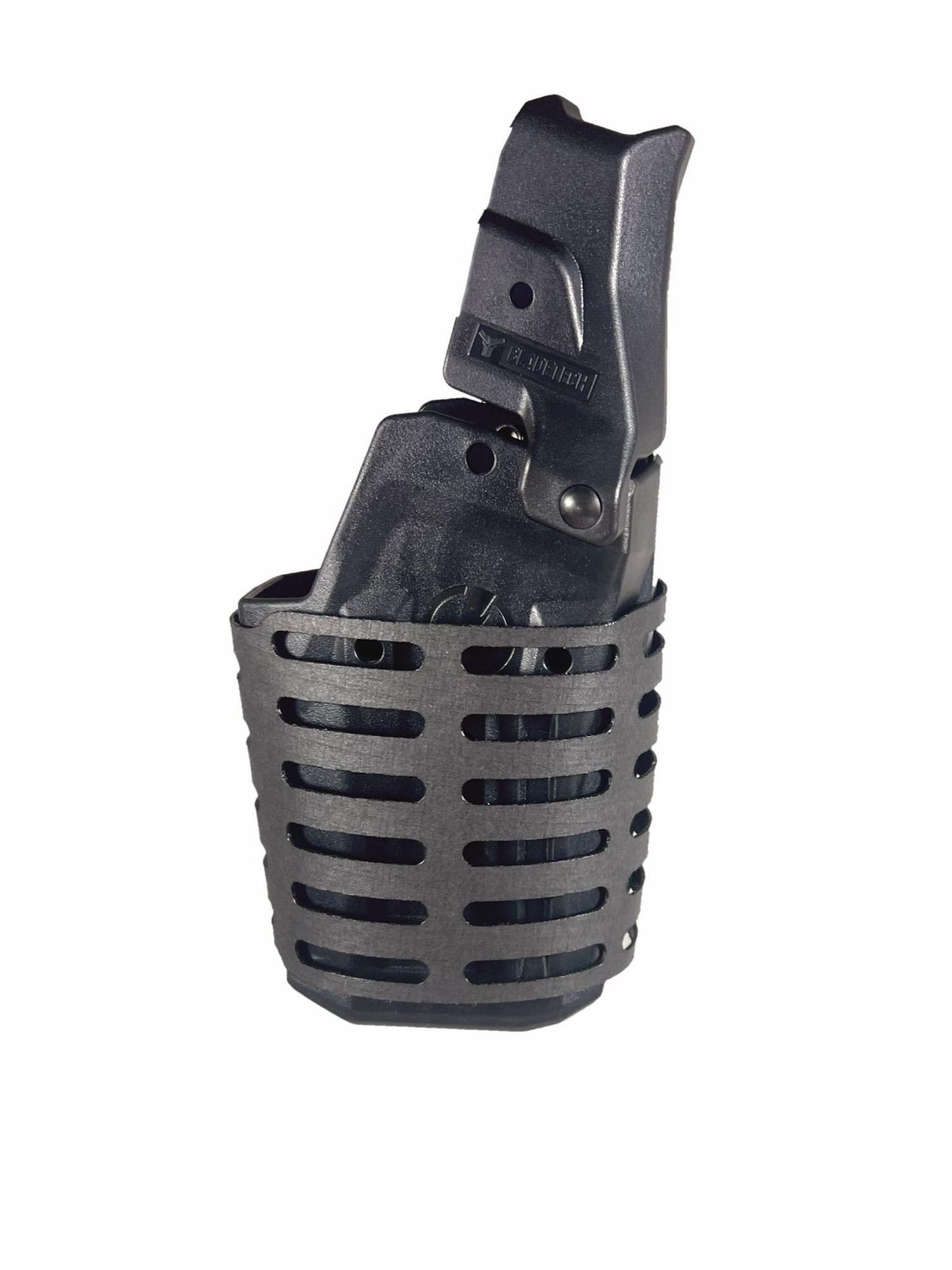
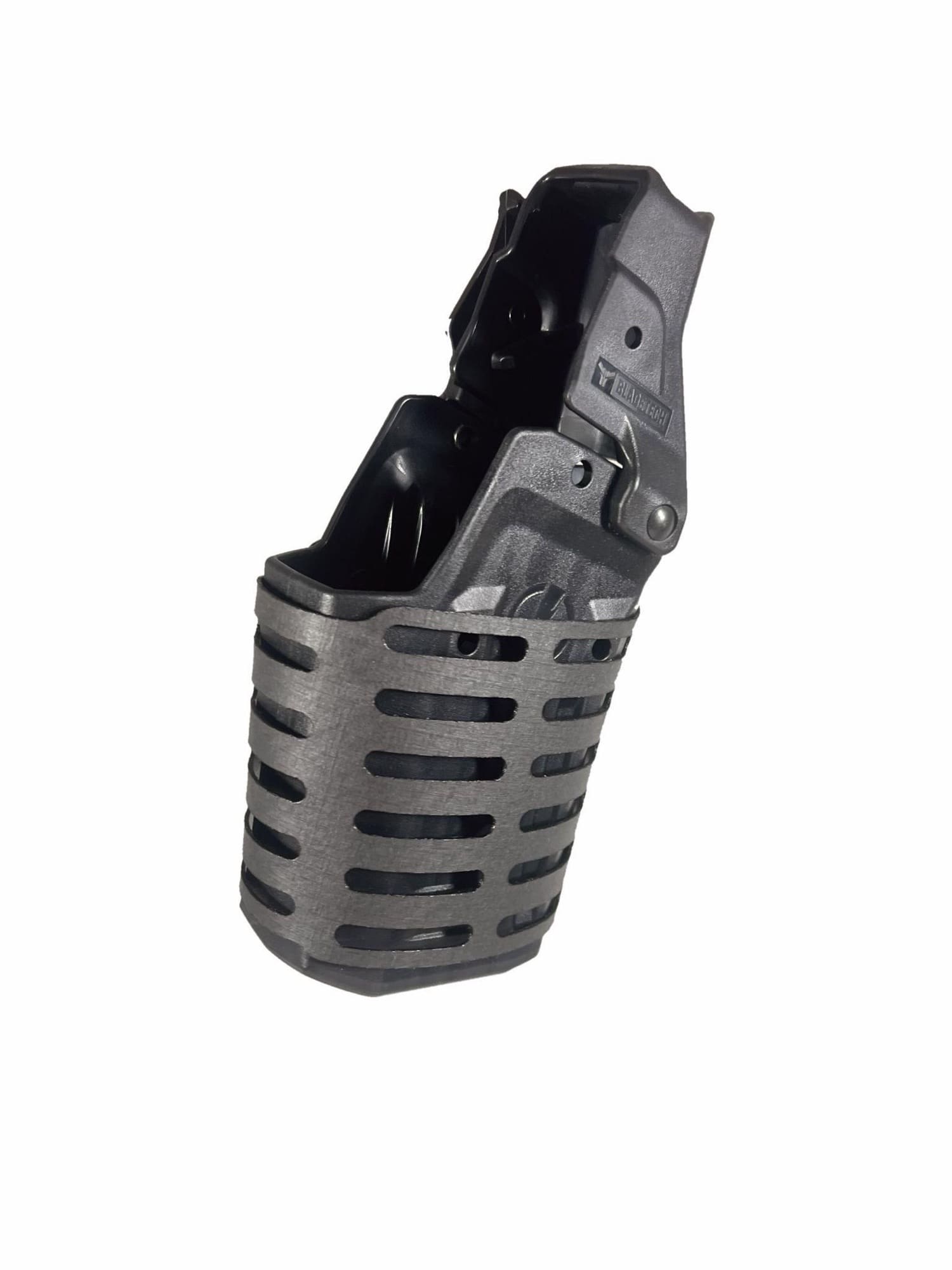
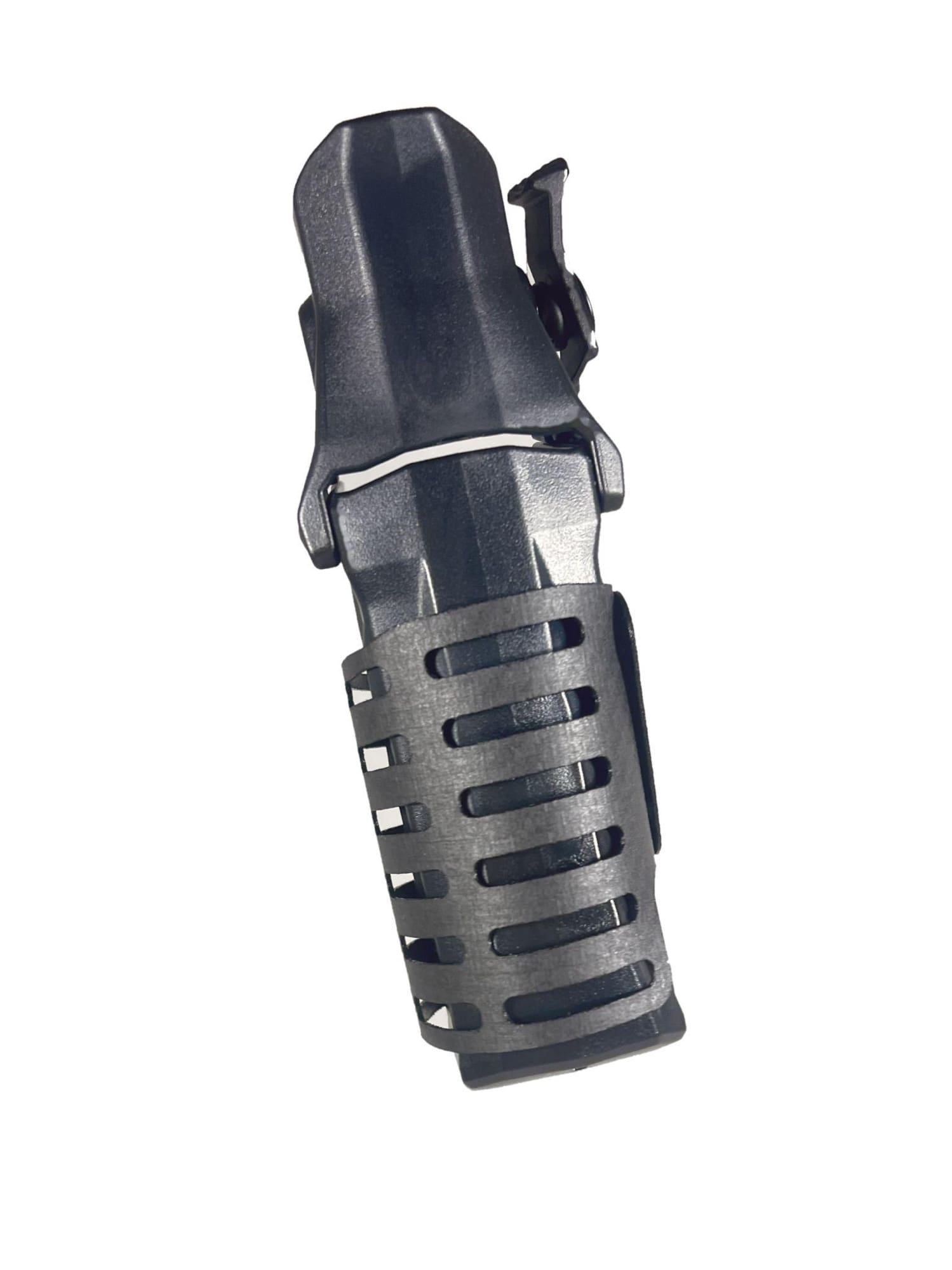
As part of the first of a series of new product launches, ARO has released a Wrap model for the Blackhawk! Omnivore. The Wrap is designed to allow the user to mount pouches to their retention holster.

Extremely low profile the Wrap is constructed from polypropylene sheets woven together for maximum strength and weight savings. By wrapping around the holster body, the bulk added to the holster is virtually zero. Weighing less than an ounce, the Wrap is lighter than the competition. The Wrap is the most modular solution enabling pouches on every face of the holster.

The Wrap is designed to use your existing retention holster hardware.

ARO has produced exceptional instruction materials available at:

The Wrap is currently available for Safariland 6000/7000 series & Safarivault series holsters, AlienGear RapidForce Levels 3&4 WML Holsters and now, Blackhawk! Omnivore WML Holsters. 

www.aroproducts.com

MATBOCK Monday: Tarsier Eclipse Pro

Monday, August 17th, 2026

The Tarsier Eclipse Pro — the next generation of the NVG iris protective cover that lets you see near and far without ever losing clarity.

It keeps everything that made the original a staple: a protective “otter-box” rubber housing, a mil spec Gorilla Glass sacrificial lens and an easy lens swap design. Now it adds a smooth, fully closing, anti-reflective coated iris and integrated kill flash.

Smaller profile, same weight updated features. We are taking pre-orders now: www.matbock.com/products/tarsier-eclipse-pro

Why Arktis Invests in Developing Its Own Camouflage Systems

Monday, August 17th, 2026

At Arktis, camouflage development is part of the wider capability we offer military organisations, government agencies and defence brands.

The COMB family demonstrates this approach.

Rather than creating a single “do everything” pattern, COMB was developed as an environmental system. COMB Arid addresses grassland, semi-arid, and rocky terrain, while COMB Blizzard focuses on alpine and winter operations. Additional variants like COMB Urban, or the separate French Desert Noir, and Tundra  developments further showcase Arktis pattern development capabilities.

  • Camouflage and colourway development
  • Pattern scaling and repeat optimisation
  • Garment integration across complete clothing systems
  • Manufacturing across combat apparel, insulation, waterproofs and load carriage
  • Low-volume specialist development through to large-scale manufacture

For organisations looking to develop proprietary camouflage or launch exclusive product lines, these capabilities form part of Arktis’ wider OEM and manufacturing services.

With more than 40 years of experience designing and manufacturing tactical clothing for military and law enforcement customers worldwide, Arktis supports partners from initial concept through to production-ready solutions.

If you’re developing a new capability, launching a specialist product range or looking for an experienced manufacturing partner, we’d welcome the conversation.

Learn more about Arktis’ manufacturing capabilities: Arktis Endurance Textiles.

View the COMB collection: COMB Family Collection

BFG Monday: Patrol Has a Communication Problem Nobody Talks About

Monday, August 17th, 2026

Patrol runs on communication, and most of that communication happens over a radio or through spoken words. Both fail in predictable places.

A driver cannot describe which of four driveways is his. An officer inside a house cannot safely call out that he has cleared the back bedroom. A medic pulling into a dark rural property has no way to know the patient is two hundred feet behind the house near the tree line.

These are not rare problems. They happen on ordinary calls, especially in rural jurisdictions where distance, terrain, darkness, and limited staffing are part of the job.

Patrol has accepted a lot of that friction as normal. It should not.

There is an old fix that law enforcement has mostly left toSWAT, the military, and the training range: the chem light. A breakable stick, a couple of dollars, no batteries, no signal, and no maintenance. Used under a simple patrol marking standard, it becomes a practical tool for guiding responders, marking progress, and reducing confusion when events start moving faster than the radio can keep up.

Start With the Standard

The standard matters more than the light.

Without a standard, the tool becomes noise. One officer uses blue for one thing, another uses yellow for something else, supply buys whatever color is cheapest, and the whole idea falls apart before it becomes doctrine.

Patrol does not need five colors. It needs two.

Green means a law enforcement function.
Red means a medical function.

That is the entire vocabulary.

The military can sustain larger marking systems because it has standardized training and constant reinforcement. Most local agencies cannot. Every additional color is one more thing officers have to remember under stress.

Put the standard in policy. Keep it simple. Green is law enforcement. Red is medical.

For stocking, agencies will likely find that an eighty-percent green and twenty-percent red mix covers most patrol needs.

When the Call Goes Bad Fast

The highest value of a marking standard appears when events become confusing.

During an active threat, a school response, or a large building search, officers are not only trying to find the threat. They are trying to understand what has already happened inside the structure.

An officer moving into a building can mark his path as he goes. That tells responding officers something important before a word is spoken: a friendly officer has already moved through this area.

The same applies to searched rooms. A light at a doorway can indicate a room has been checked. Moving that light to the center of the room after a more detailed search provides a visible indicator of progress.

This matters because patrol officers do not perform methodical building searches every day. Under stress, assumptions happen. A simple marking standard gives supervisors and responding officers a way to quickly understand what has and has not been done.

You do not call the structure clear because someone thinks it is clear.

You call it clear because the search process shows it is clear.

Rural Calls Need Better Marking

The most common patrol application may also be the most valuable: marking the call location.

Rural addresses lie.

The published address may sit on the road while the actual residence is hidden hundreds of yards away. Multiple driveways can look identical in the dark. Responding units waste time driving past entrances, turning around, and clarifying directions over the radio.

A green chem light placed at the driveway entrance solves the problem immediately.

“Turn in at the green light.”

For a medical call, use red.

That single visual reference reduces confusion and gets responding units to the correct location faster.

Medical calls create another challenge. Medics often arrive at the police vehicles first, but the patient is not always there. The casualty may be behind a house, inside a barn, at the edge of a wood line, or somewhere off the main driveway.

A red chem light placed at the patient location creates a direct reference point for EMS.

I worked a call on a large property at night where the patient was near the woods behind the residence. The ambulance stopped at my vehicle because it was the obvious landmark. I ended up breaking a red chem light and throwing it toward them so they knew where to come.

That is not complicated.

But on a medical call, seconds matter.

Search Operations

The same principle applies during area searches.

Whether officers are searching for a suspect, a missing child, or a vulnerable adult, visibility into what terrain has already been covered becomes critical.

A line of green chem lights can indicate completed search areas and direct newly arriving officers toward unchecked ground. Instead of relying entirely on radio traffic, supervisors gain a visible way to track the search effort and reduce duplicated work.

The farther a search expands, the more valuable that becomes.

The Carry Problem

The issue with chem lights has never been whether they work.

They work.

The issue is carrying enough of them without creating another gear problem.

A handful of full-size chem lights stuffed into a cargo pocket is not a system. They get crushed, lost, or left in a patrol bag.

That is where the Blue Force Gear MARCO® system becomes relevant.

MARCO reduces the chem light to a compact two-inch format and organizes it in a dispenser officers can actually carry on a duty belt, plate carrier, or existing loadout.

For patrol use, that matters more than the light itself.

A marking concept only works if officers have the tools readily available when they need them.

Blue Force Gear® originally developed MARCO as a low-light training tool for marking firing lines, lane boundaries, and targets. The same hardware adapts naturally to patrol marking applications because it solves the biggest obstacle to adoption: carrying the lights consistently.

Why Agencies Can Adopt It Quickly

One of the strengths of this system is its simplicity.

Two colors and a placement standard can be taught during roll call, reinforced during training, and implemented immediately.

There are no batteries to charge, no software to manage, and no specialized systems to maintain.

The equipment is affordable; the training burden is minimal, and agencies can begin using it almost immediately.

Every jurisdiction will develop its own applications. Rural properties, apartment complexes, schools, churches, industrial sites, and large outdoor events all create situations where clear visual marking can reduce confusion and improve coordination.

Bottom Line

The patrol profession has spent decades working around problems that often do not need to exist.

The wrong driveway. The patient nobody can find. The room that gets searched twice while another goes unchecked.

Most officers simply accept those things as part of the job.

They do not have to be.

A two-color chem light standard will not solve every communication challenge on patrol. It is not intended to.

What it does provide is a simple, affordable, and immediately deployable way to reduce confusion, improve coordination, and help responders find what matters faster.

For agencies operating in rural areas, where distance, darkness, terrain, and limited resources amplify every problem, that can make a meaningful difference.

Sometimes the best solution is not the most complicated one.

It’s the one everyone can understand and use tomorrow.

By John Chapman
Executive Director, Task Force 70 Foundation

Cold War-era Law Finds New Use at America’s B-2 Bomber Base

Monday, August 17th, 2026

KANSAS CITY, Mo. (AFNS) —  

Qilin Wu, a Chinese national who returned to Whiteman Air Force Base after being warned not to photograph the installation, was sentenced to six months in federal custody following a case built on a 76-year-old executive order signed by President Harry Truman.

The conviction showed how a Cold War-era legal framework can be used against repeated, unauthorized photography around sensitive military installations, and how Special Agents will investigate similar cases before they develop into something more.

“For our Special Agents, this isn’t about a single case,” said Col. David Bethel, commander of the Air Force Office of Special Investigations Region 8. “It’s about recognizing that the operating environment has changed.”

Bethel was referring to a shift from clear-cut threats in overseas environments to more ambiguous activity around military installations inside the United States. In Wu’s case, investigators said the concern was not just his camera, but that he returned after being warned and photographed more than the aircraft.

That conduct ultimately led to an investigation, guilty plea and sentencing. After the hearing, held earlier last month, the court remanded Wu to the U.S. Marshals Service. He was later processed on an Immigration and Customs Enforcement detainer and will be deported to China.

“When someone gathers information around a sensitive military installation, AFOSI has the tools to hold them accountable,” Bethel said.

The encounter began on Dec. 2, 2025, when members of the 509th Security Forces Squadron responded to a report of a suspicious minivan near Whiteman’s perimeter. Wu, who was driving a vehicle with Massachusetts license plates, said he had come to observe the B-2.

“What made this different was the pattern of behavior,” said a senior AFOSI official involved in the investigation. Wu’s return after the warning, along with his focus on the base’s perimeter and infrastructure, heightened concerns.

Wu later admitted to photographing aircraft and installations at other U.S. military bases, including locations in Florida and Virginia.

Section 795 of Title 18, together with Executive Order 10104, prohibits unauthorized photographs, sketches, maps and other visual representations of designated military installations, aircraft, weapons and equipment requiring protection from the general dissemination of information.

AFOSI officials said the law provides authorities with a means to address unauthorized photography involving protected military property. In Wu’s case, investigators focused on his repeated conduct, his return after being warned and the subjects captured in his photographs.

Officials said the case also demonstrates the importance of coordination between installation security forces and federal investigators when suspicious activity is reported near sensitive military facilities.

AFOSI will continue to identify, assess and investigate suspected unauthorized photography around protected installations and equipment, officials said, while evaluating each incident based on its specific facts and circumstances.

For Bethel, the case highlights the agency’s role in protecting the homeland.

“Det. 811’s work delivered strategic deterrence,” he said. “This case reflects AFOSI’s professionalism, integration and operational discipline required to defend our installations in an increasingly complex threat environment.”

By Thomas Brading

AFOSI Public Affairs

Editor’s note: Some AFOSI personnel and mission partners are not identified by name in this article to protect operational security, personal privacy and ongoing mission readiness.

ShellShock Protection Introduces New High-Performance Ballistic Glasses for the Ultimate Athlete

Sunday, August 16th, 2026

All New SunShift Ballistic Glasses in Flat Dark Earth
Austin, TX — August 14, 2026 — ShellShock Protection is excited to announce the expansion of its SunShift Ballistic Glasses lineup with a new Flat Dark Earth (FDE) colorway, offering shooters and outdoor enthusiasts adaptive eye protection in a mission-ready frame.

The SunShift FDE features a low-profile, field-ready frame paired with photochromic lens technology that transitions from clear to a protective gray tint when exposed to UV light. This allows wearers to move between varying light conditions without changing eyewear, maintaining a clear field of view from low-light environments to bright outdoor settings.

“We built the SunShift lens to keep up with the dynamic nature that shooters demand,” said Eric Hung, owner of ShellShock Protection. “These lenses transition from clear to a protective gray tint when exposed to UV light, helping wearers move between changing environments without swapping eyewear. With variable visible-light transmission, these glasses are built to a high standard that ShellShock Protection stands for.”

Meeting ANSI Z87.1+ standards, the SunShift glasses provide 99.9% UVA/UVB protection. The durable polycarbonate lens is treated with FogGuard Pro™ anti-fog technology to reduce condensation, while an oleophobic coating resists fingerprints, oil and smudges.

Weighing just one ounce, the SunShift is engineered for all-day comfort. Its flexible TR90 frame balances lightweight wear with durability. The non-slip rubber temple details and adjustable rubber nose piece allow for these glasses to stay secure in high intensity training sessions, range practice and outdoor activities.

The new FDE frame offers a classic earth-tone option, ideal for tactical gear, field apparel and everyday outdoor setups. It delivers the same lightweight, adaptable performance of the SunShift line in a colorway suited for those who prefer a more grounded look.

Each pair of SunShift Ballistic Glasses includes a microfiber cleaning cloth, microfiber drawstring bag and drop-proof clip case.

Key Features:

  • New Flat Dark Earth frame color
  • ANSI Z87.1-rated ballistic eyewear
  • Photochromic polycarbonate lens transitions from clear to gray tint
  • 99.9% UVA/UVB protection
  • FogGuard Pro™ anti-fog and anti-scratch treatment
  • Oleophobic, fingerprint-resistant lens coating
  • Lightweight, flexible TR90 frame
  • Adjustable nose piece and non-slip rubber temples
  • 1 oz. total weight

The SunShift Ballistic Glasses in FDE are now on sale for $79, originally $95, starting August 15, 2026 on ShellShock’s website here.

For more information about ShellShock Protection, visit shellshockpro.com or follow ShellShock on Instagram and Facebook.

Red Cat Announces Multiyear Partnership with Washington Commanders to Support America’s Military Community

Sunday, August 16th, 2026

?

SALT LAKE CITY, Aug. 10, 2026 — Red Cat Holdings, Inc. (Nasdaq: RCAT) (“Red Cat” or the “Company”), a U.S.-based provider of advanced all-domain drone and robotic solutions for defense and national security, today announced a multiyear partnership with the Washington Commanders to support U.S. service members, veterans, and their families.

As a Proud Partner of the Washington Commanders, Red Cat and the team are working together on military appreciation initiatives, including community events, fan experiences, and recognition programs that honor service members, veterans, and military families throughout the season.

The partnership reflects both organizations’ commitments to supporting those who serve and highlights Red Cat’s mission to strengthen American leadership in autonomous systems. Through its Family of Systems, Red Cat develops secure, American made drone technologies that provide critical intelligence and situational awareness to the U.S. military and allied forces.

“Red Cat is focused on building the next generation of autonomous systems for the men and women who defend our country,” said Jeff Thompson, Founder and Chief Executive Officer of Red Cat. “Our partnership with the Washington Commanders extends that mission beyond the battlefield by recognizing the service and sacrifice of our military community. We are honored to work alongside an organization that shares our commitment to giving back to those who have given so much.”

Throughout the upcoming NFL season, Red Cat will launch a comprehensive marketing campaign across one of the country’s largest media markets. The partnership will include in-stadium branding and digital signage at Northwest Stadium, military appreciation programming, community initiatives, game day activations, and digital content that highlights Red Cat’s commitment to those who serve.

“The Washington Commanders are proud to partner with Red Cat to celebrate the military community and the values of service, leadership, and innovation,” said Jim Rushton, Chief Partnerships Officer of the Washington Commanders. “Together, we look forward to creating meaningful experiences that recognize our service members while engaging fans throughout the season.”

US Army Combined Arms Command Advances AI-Powered Knowledge Platform, VICTOR

Sunday, August 16th, 2026

FORT LEAVENWORTH, Kan. — The U.S. Army is creating VICTOR, a new artificial intelligence-powered network engagement platform designed to transform how soldiers and Army career professionals discover, share and apply operational knowledge. Managed by the leaders within the U.S. Army Combined Arms Command, the effort represents the next step in connecting the Army’s institutional knowledge with the needs of Soldiers across the force.

This new tool aims to solve a long-standing problem: critical lessons and insights are often locked away in disconnected data silos, which impedes and discourages Soldiers from finding them. Whether preparing for a training event, planning an operation or responding to an emerging threat, Soldiers and leaders often spend valuable time searching across multiple systems for information. VICTOR is focused on reducing that burden by bringing trusted Army knowledge together into one interface.

Combat leaders must make confident decisions under extreme pressure; they deserve access to the Army’s collective knowledge at the point of need. VICTOR is being designed as a mobile-first capability that connects authoritative Army knowledge and lessons learned to deliver relevant, actionable information when it matters most.

“We’re getting away from Soldiers having to comb through a haystack of links to websites and documents that may or may not even have the answers they need,” said Lt. Col. Jonathan Nielsen, the VICTOR lead at the Combined Arms Command.

“The point of this effort is to combine AI capabilities with the massive canon of knowledge we have in our doctrine library and in the experience of our Soldiers. VICTOR aims to bring all of that together on a secure, easy-to-access platform that Soldiers can use to get instant answers to their questions and only the most relevant resources brought directly to them.”

Rather than replacing existing systems, VICTOR is designed to connect them, enabling users to receive synthesized answers instead of searching across multiple repositories.

The application launched this month to an initial group of innovators consisting of Soldiers and Army civilian professionals. This cohort is testing the system and providing critical insights to shape future capabilities. Based on this feedback, the VICTOR team is targeting a launch to the force this fall accompanied by multiple user upgrades, ensuring that the platform is fully tuned to warfighter needs.

This initiative is designed to improve readiness by helping leaders and Soldiers make faster, more informed decisions. For a squad leader in the motor pool or a company commander in the field, it means getting instant answers when they are needed most. It allows units to benefit from lessons learned across the force rather than relying on trial and error.

“Most of us grew up in the Army where the Center for Army Lessons Learned and the Army Publishing Directorate were the go-to platforms for the latest established and emerging doctrine,” Nielsen said.

“That entire ecosystem was built on the institutional Army and everyday Soldiers sharing their hard-earned tactics, techniques and procedures to help each other fight and win. Over the years, we went from carrying that info in physical books, to scrolling through digital PDFs, and eventually listening to audiobooks on the move. VICTOR is the next-generation step in that evolution. It’s transforming those decades of shared knowledge into an AI-driven, personalized mission partner that puts instant, customized answers at the point of need.”

By connecting lessons learned across the force, VICTOR is designed to accelerate how the Army learns and adapts. In a multi-domain environment, that ability to turn knowledge into timely decisions will provide a decisive information advantage. Combat leaders must make split-second, critical decisions under extreme pressure. VICTOR will help shape how the Army learns, shares knowledge, and prepares for tomorrow’s fight.

By U.S. Army Combined Arms Command