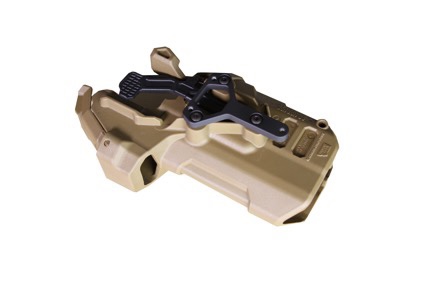
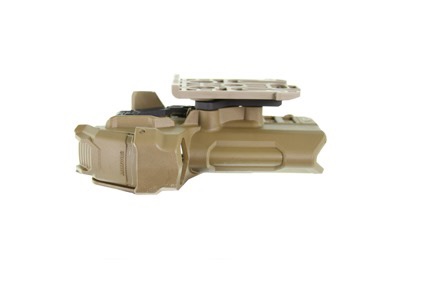
XC3 Weaponlight

Archive for the ‘Advertiser’ Category

FirstSpear Friday Focus: OEM Spotlight – F9 Gear

Friday, October 21st, 2022

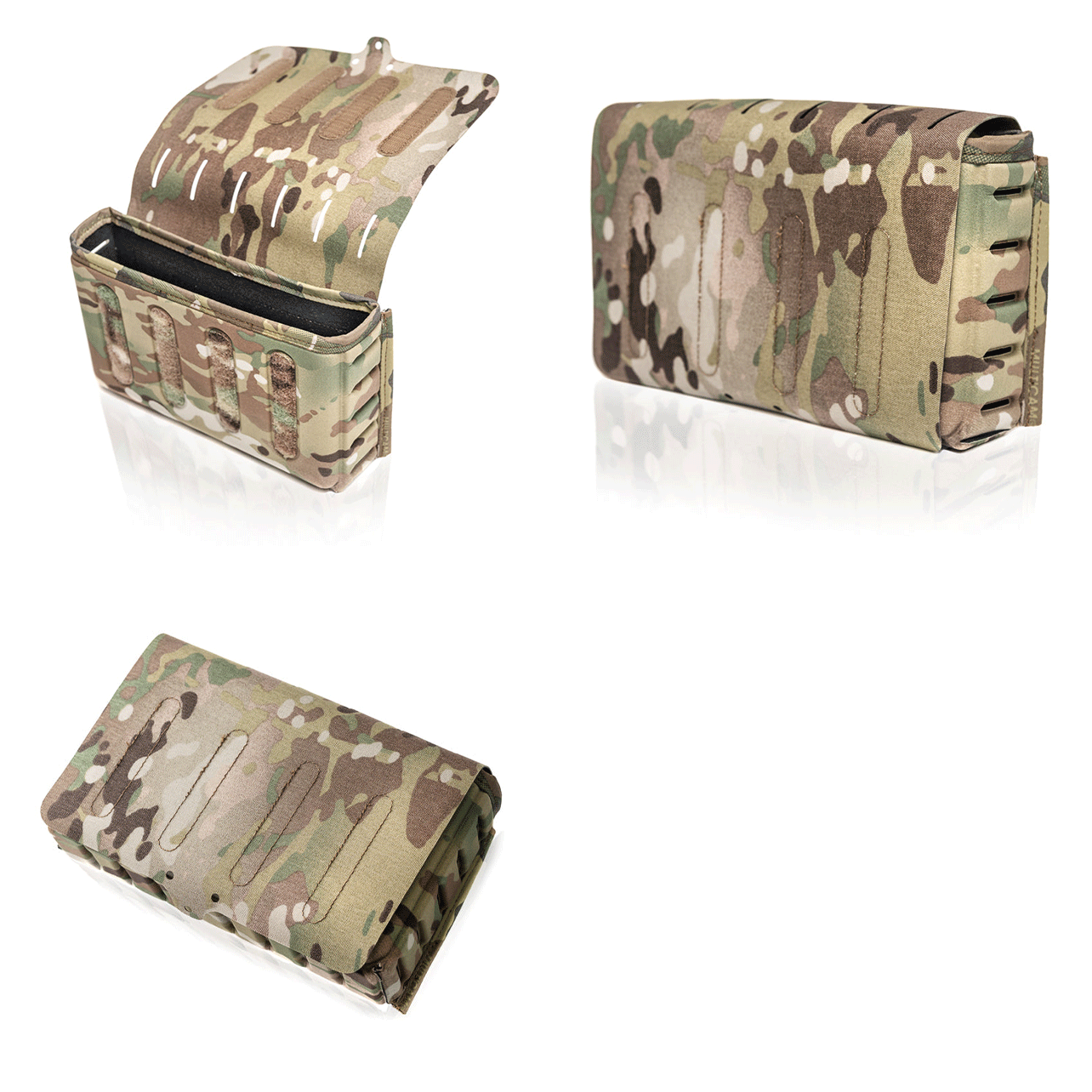
This week’s Friday Focus features another OEM Spotlight, F9 Gear (aka The Full 9). Working with FirstSpear, F9 Gear has developed a versatile and modular placard system known as, the Ammo Hub A1.

The Ammo Hub A1 is the ideal foundation to build out a kit that will suit exactly what you need, with absolutely nothing you don’t.

It is compatible with a huge variety of industry standard inserts, attachments, harnesses, pouches and accessories that can be customized into almost any imaginable PC placard or chest rig configuration. The Ammo Hub A1 naturally curves around the body as a chest rig and around plates as a PC placard.

Made in the US by FirstSpear using all American raw materials that meet or exceed military specifications.

Through smart use of laser cutting the body of the Hub is sewn from one single, continuous piece of FirstSpear 6/12 cordura laminate, with the Hub base and the side attachment loops being integral to that single piece of fabric.

Native to its design, the Ammo Hub A1 has the ability to be double stacked on top of itself using the integrated top buckle attachment straps.

Check out F9 Gear to learn more about the Ammo Hub A1.

Visit FirstSpear to find all the gear and apparel for America’s Warfighter.

UNI&FORMA d.o.o. Appoints Jože Kastelic as New CEO

Thursday, October 20th, 2022

The change in leadership advances UNI&FORMA’s objectives of achieving long-term stability and enlarging upon the success of its UF PRO brand.

KOMENDA, SLOVENIA (20 October 2022) — UNI&FORMA d.o.o. announced today the appointment of Jože Kastelic as its new chief executive officer. Kastelic, an experienced business leader, assumed the post on 1 September 2022. He will gradually succeed Milena Wagner and Armin Wagner who are stepping down from their co-CEO roles on 31 December 2022.

Milena Wagner will retire after departing UNI&FORMA. She founded the company 25 years ago.

Armin Wagner, meanwhile, will continue in his capacity as UNI&FORMA’s Head of Product Development. He will also continue holding that same title within the company’s UF PRO brand.

Born in Novo mesto, Slovenia, Kastelic earned a Master’s degree from the University of Ljubljana in 2012 and brings to UNI&FORMA nearly 25 years of managerial experience. For his previous employer, Kastelic served as a Business Unit Managing Director and was responsible for leading a team of 185 employees. By implementing lean business approaches, new technologies and other efforts to achieve a better market position, Kastelic and his team doubled the company’s revenue and increased profitability significantly.

“I am extremely pleased and grateful for the opportunity to join UNI&FORMA, a brand with an outstanding reputation for innovation, top-quality products, and reliability,” said Kastelic. “My goal is to put in place a long-term strategy for the stability of the company and consolidate its global reputation as the leading manufacturer of tactical clothing.”

Said Wagner, “It is certainly a huge change, but it was immediately clear that Mr Kastelic is the right fit. It’s not only his impressive past achievements but also the positive attitude, work ethic, and drive to succeed—it all suggests that he will take UF PRO to the next level.”

Founded in 1997, UNI&FORMA became a part of Mehler Vario System Group in 2019. The MVS-Group is a broadly based and globally active group of companies with Mehler Vario System GmbH as parent company and its subsidiaries: UNI&FORMA, Lindnerhof Taktik GmbH, Mehler Law Enforcement GmbH, Mehler Engineered Defence GmbH.

ufpro.com

Unity Tactical Expands Leadership Team

Thursday, October 20th, 2022

Halle Nagel Joins as Vice President of Marketing

BROUSSARD, LA. (Oct. 20, 2022) – UNITY™ Tactical, a leading innovation and design company for the tactical community, announced today the hire of Halle Nagel as vice president of marketing. In this role Halle joins the executive leadership team and is responsible for the direction of the brand, leading marketing communications projects with a focus on building a differentiated brand through customer-centric initiatives that create a meaningful connection with people.

Halle joins UNITY after spending the last five years leading marketing communications and brand strategy for tactical helmet manufacturer Team Wendy where she steered the business through a successful rebrand that yielded a significant increase in both brand awareness and product adoption.

“This is a critical role for the business as we execute our strategic growth plan,” said Trent Zimmer, founder and president of UNITY Tactical. “Halle brings with her a wealth of experience working on brands that are household names. Her work in the defense space to advance the Team Wendy brand speaks for itself, and we’re excited about all that she’ll bring to the UNITY brand.”

Prior to joining Team Wendy, Halle spent the previous nine years helping to launch the Dallas, Texas office of Jackson Spalding, a marketing communications agency on the Forbes list of best PR agencies in America. There, she helped with a wide range of projects, such as the launch of Chick-fil-A’s spicy chicken sandwich to the development of Klyde Warren Park, a 5.2-acre park built with public-private funds over a 10-lane freeway in the heart of downtown Dallas. There she also led the content marketing and social media strategy for Houston-based Mattress Firm, the largest multi-brand mattress retailer in the U.S.

“UNITY has all the critical elements that make a great brand – most importantly a laser focus on the needs of the customers it serves,” Halle said. “I am thrilled to join a team with such a strong culture of innovation and problem-solving, and to be able to continue to support men and women in uniform.”

www.UnityTactical.com

GORE-TEX Stretch Fabric Technology

Thursday, October 20th, 2022

During last week’s AUSA event GORE-TEX brand outfitted three mannequins with jackets made from their GORE-TEX Stretch Fabric Technology which retains the water and wind proof breathable characteristics of Gore’s ePTFe material but adds the ability to stretch.

This offers an adaptive fit that reduces air gaps and leads to a more optimized design with less bulk. This means a garment with a more tailored fit can be worn with underlayers without going up a size. It will also move with the wearer. An added bonus is that the fabric improves the garment’s evaporative resistance and increases breathability by 25%.


It was an excellent means to demonstrate how verstaile a shell garment made from the GORE-TEX Stretch fabric is. It can be worn under armor, or over it, fully protecting the gear from
invelement weather.

www.goretexprofessional.com

SIG MG 338 x AimLock Remote Weapon Station

Wednesday, October 19th, 2022

The AimLock Remote Weapon Station has arrived on the scene as a lower cost alternative to more comprehensive RWS on the market.

During the recent AUSA expo in Washington, DC, SIG SAUER showcased the AimLock R-M1 paired with the MG 338 machine gun in .338 Norma Mag. The R-M1 can be mounted on a variety of platforms including tripods, buildings, ATVs, UTVs, ground vehicles, boats, and helicopters.

In addition to being remotely operated, the R-M1 integrates AimLock’s auto-targeting technology.

BCM Gunfighter History – Commanders In-Extremis Force (CIF) Assault High Cell Leader Kit

Monday, October 17th, 2022

I spent 2008-2012 as an assaulter in the Commanders In-Extremis Force, with my final years there as an Assault High Cell Leader. The CIF was tasked with direct action, hostage rescue, counter proliferation and counter terrorism actions.

Due to the nature of assaulting/fighting in an urban environment, I ran as light and as slim as possible. We trimmed our basic load down four to five M4 magazines, two initiators for interior charges, an M67 frag grenade, and, in my case, both an MBITR and PRC-117G with associated cables, PTT and antenna. It came out to 26 lbs all in, not including specialty items and tools we occasionally carried.

I had been originally issued the Eagle RBAV (Releasable Body Armor Vest), a platform I ran for three trips (one to Iraq and two in Afghanistan). During both deployments, the vest required repeated repairs. Duct tape and dental floss fixes dotted the vest where the sewing had failed. It got to the point where I began looking to find a more durable alternative that was both lighter, and less restrictive to fight in, even if I had to pay for it myself.

One of our attached Navy WMD specialists gave me a London Bridge Trading (LBT) 6094A and a set of LTC 28340 plates. Lighter and slimmer than the RBAV, the LBT 6094A came in a “shooter cut” with plate pockets that allowed me to run my M4 without fighting the vest. The LTC plates were also significantly lighter, half as thick and more capable (Level IV stand-alone) than my Army issued PPE. These plates were also size medium versus the size large I was issued due to my build. At the end of the day, the LBT and LTC package shaved pounds and inches while increasing mobility and protection.

This would be my set-up until I left the Army a few years later.

Here’s a run down, from a shooter’s perspective, of the layout and why things were positioned where they were.

Front Plate Pocket

I ran a double mag carrier on the right, and a single mag pouch on the left. The double mag pouch served a number of masters based on the mission, but typically was used for secondary exterior initiators, specialty grenades or extra M4 magazines. The remaining single magazine pouch was positioned for the most consistent and quick reloads based on positions I was most often in while working. The pouch featured a bungee strap that could be employed for retention when roping, but more often than not, I left the pouch top open.

Running no deeper than a single magazine on the front of my carrier allowed for a far better dexterity and capability when dealing with non-compliant people as well as climbing.

On the top right and left edges of the plate pocket I ran Nexus U-94A/U Push-To-Talk (PTT) activators. At the time, these were the most reliable and minimalist PTT available. The right side fed off a PRC-117G for external comms and on the left, an MBITR for team/enabler chatter. I set them on opposite sides of my body to eliminate the chance of keying the wrong radio.

Both systems fed into a Peltor dual comm headset, with the shortest cables possible to minimize excess cable management.

Cummerbunds

Right-side, I ran a M67 Frag in a High Ground frag pouch just rearward of where my belt worn Glock 19 pistol grip sat. This gave me rapid access to the frag as well as positive retention without a Fastex buckle. Fastex buckles had proven to be less than optimal for employing a grenade on mission.

Slotted into the PALs webbing just off the front plate bag, I had breacher’s tape to replace or augment any compromised charge attachment medium. Additionally, I had a QCC-CSD (Quick Cap Connector-Connector Single Delay) to replace compromised QCCs on interior breaches, and a QCC-CDI (Connector Dual Instantaneous) for replacement of dual-primed exterior charges.

On my left-side, a Paraclete triple M4/Glock magazine shingle cut down to a double shingle, was positioned with additional M4 magazines captured by bungie retention. Both pistol pouches carried initiators for interior charges as I never ran pistol reloads in combat. Set just off the front plate bag, this positioning gave me the most consistent reloads and equipment employment on mission.

Just adjacent to the rear plate bag, I ran a MBITR radio in Diamondback Tactical MBITR pouch, the most minimal/reliable radio pouch available at the time. Placed to put the antenna comfortably behind the left armpit or to provide protection for connectors when running an antenna relocator, the positioning allowed me to access and rapidly manipulate both dials and channels from memory. This also allowed me to remove the radio from the pouch without disconnecting all the attachments to troubleshoot the system. A lesson learned the hard way.

Finally, I rigged some 550 cord loops to create improvised cable management channels that reduced the odds of snags or other potential breakages in the routed comms wires. These loops also allowed the cables enough slack to move freely during movement and fighting.

Rear Plate Bag

Managing comms with unilateral assets + enablers, partner forces, and air assets across multiple objectives simultaneously required a second radio that could talk to a wide spectrum of receivers. To this end, I ran the PRC-117G manpack radio in a Tactical Tailor pouch (not pictured) and controlled the radio with a Keypad Display Unit (KDU) velcro mounted to my right shoulder (which I had also affixed with loop). Despite being mounted on my back, I was able to still access both the radio’s battery compartment as well as troubleshoot issues without pulling the 117 from the pouch.

Shoulder Straps

One of the first mods I made to the 6094 was to dump the shoulder strap pads. With the minimal weight, the discomfort was negligible, and I was able to further reduce bulk. Adding Velcro loop to both shoulders created a mounting surface for the aforementioned KDU, that was positioned high enough to not interfere with the rifle stock nor was it a snag hazard.

Today, I would relocate the KDU centerline along the top edge of the front plate bag, but there was no interface available in-country at the time.

I ran a host of other equipment, to include medical pouches, tourniquets, a Glock 19, and more on my belt, but this vest was set up based on years of combat experience and training. Every inch of it was informed by experiences, both positive and hard learned.

– Commanders In-Extremis Force (CIF) Assaulter

SCUBAPRO Sunday – Gunners Mate First Class Ingram WWI  

Sunday, October 16th, 2022

Gunners Mate First Class GM1 Osmond Kelly Ingram of Pratt City, Alabama, was the first enlisted man to die in World War I. On 15 October 1917, the 30-year-old seaman was serving aboard the Navy destroyer USS Cassin DD-43, which was sunk by a German submarine U-61. For his bravery that day, Ingram would be awarded the Medal of Honor. He would also be the first enlisted man to have a ship named after him.

Osmond Ingram was born in Oneonta, Blount County, Alabama, on 7 August 1887, to Naomi [Bettie] and Robert Ingram. His father was a Confederate Army soldier and Methodist Episcopal priest. Before Robert’s death in 1897, the family relocated to Pratt City, Jefferson County, Alabama. After becoming 16 years old in 1903, Kelly, as he was known, decided to join the Navy. On 24 November 1903, he enlisted in the United States Navy with his mother’s permission. He left the Navy after five years to join the Pratt City Fire Department. He spent five years as a firefighter before reenlisting in the Navy. As a Gunner’s Mate in the Gunnery Department, he was assigned to the USS Cassin. When the United States entered the war on 6 April 1917, Ingram was still aboard the USS Cassin. His ship was part of a Navy armada going to France and England to safeguard American commercial ships transporting merchandise.

The USS Cassin was patrolling off the coast of Ireland on 15 October 1917 when she came in contact with the German submarine U-61, which fired a torpedo. Ingram was the first person on board the destroyer to notice the torpedo heading straight for the ship’s stern. When Ingram realized the depth charges were kept in the stern, he dashed to the back of the ship and began releasing them to lessen the blast’s impact. Before the torpedo hit, he had detonated many of the depth charges. Ingram was thrown overboard from the explosion, and Cassin’s rudder was severely damaged. The warship was able to return to port for repairs. Ingram’s death was the lone fatality. His remains were never found.

In 1920, Secretary of the Navy Josephus Daniels wrote to his mother, notifying her of the decision to award Ingram the Medal of Honor posthumously:

“For extraordinary heroism in the presence of the enemy on the occasion of the torpedoing of the Cassin, on 15 October 1917. While the Cassin was searching for the submarine, Ingram sighted the torpedo coming and, realizing that it might strike the ship aft in the vicinity of the depth charges, ran aft with the intention of releasing the depth charges before the torpedo could reach the Cassin. The torpedo struck the ship before he could accomplish his purpose, and Ingram was killed by the explosion. The depth charges exploded immediately afterward. His life was sacrificed in an attempt to save the ship and his shipmates, as the damage to the ship would have been much less if he had been able to release the depth charges.”

After Congress established the Military and Naval Insurance Act in 1918, his mother became the first beneficiary of money for dependents of soldiers and sailors. The USS Osmond Ingram DD-255, a destroyer, was commissioned in June 1919 in his honor. It was the first navy ship to be named after an Enlisted sailor. The ship was one of the ships anchored at Pearl Harbor on 7 December, 1941.

Spiritus Systems – Configurable Med Tray Insert

Saturday, October 15th, 2022

The new Configurable Med Tray Insert is a velcro hook-backed panel with a removable rigid Tegris insert that allows you efficiently organize and secure small items.

In an effort to pack in as many use cases as possible, they built this product so the end-user could configure it to lock down pretty much anything. A simple grid system with an ample amount of shock cord makes it easy to set up retention for a wide variety of items, not just medical equipment.

The Tegris backer sleeve can also be used to store flat items like bandages, notes, and other thin equipment. The Configurable Med Tray Insert measures 7″ wide x 4.5″ tall and comes with 4 cord locks and 4’ of shock cord that can be cut to length.

www.spiritussystems.com