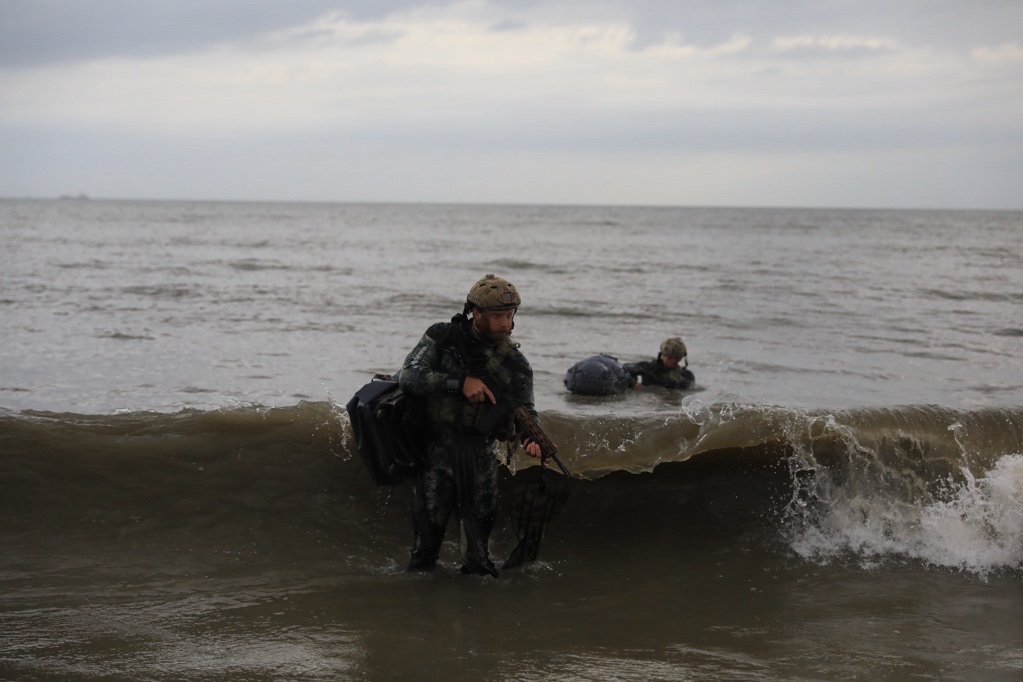
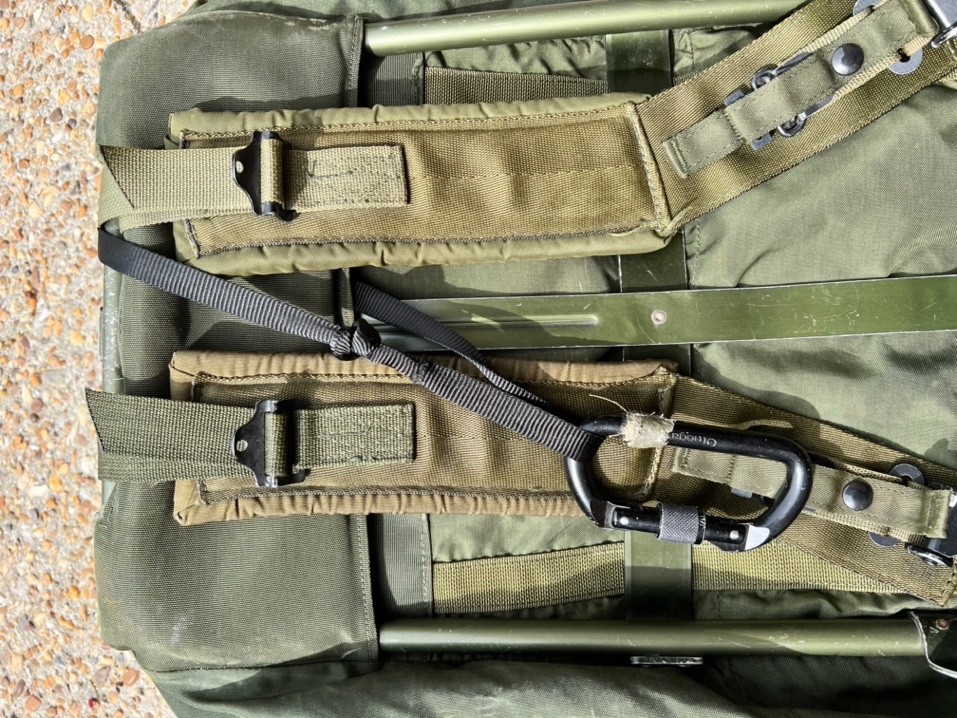
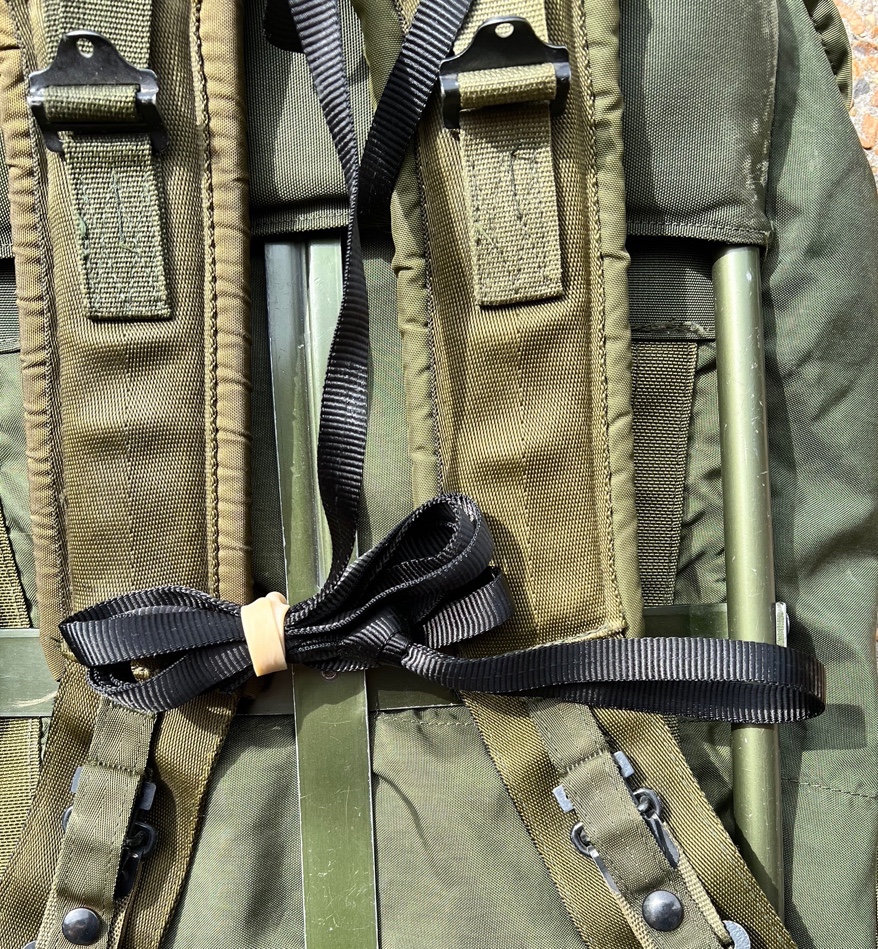
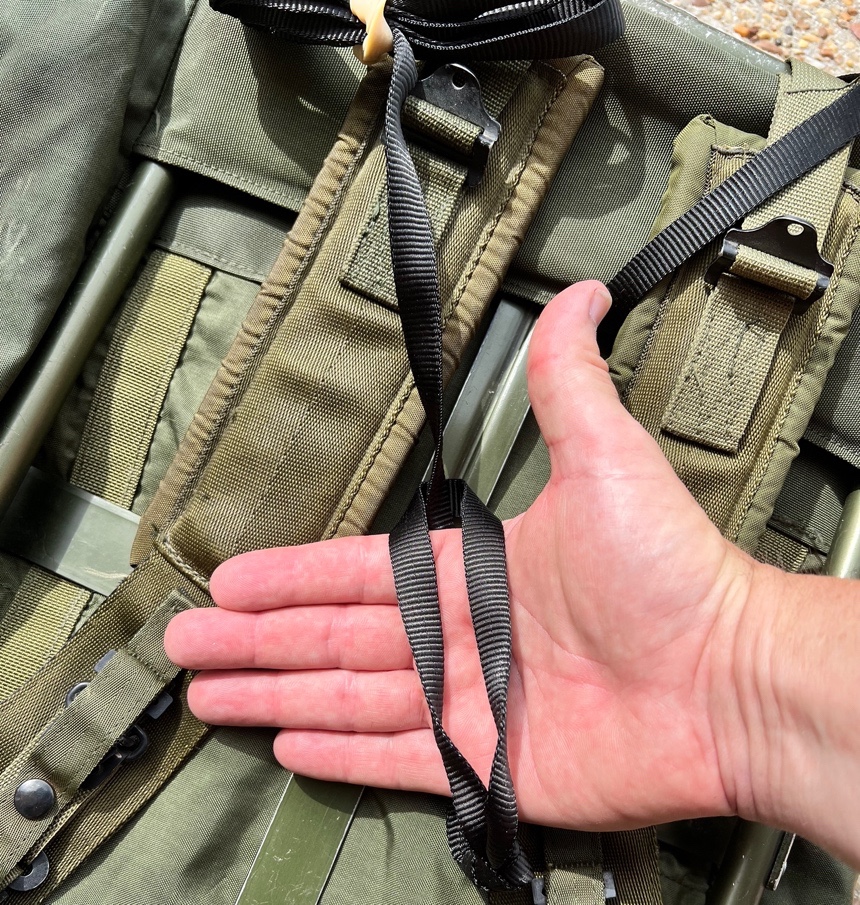
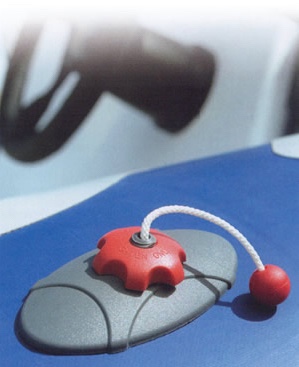
BOSS-Xe from Wilcox Industries

Archive for the ‘Advertiser’ Category

Hydrogen Strategy: Rheinmetall Presents Solutions in South Africa for Producing, Storing and Transporting Green Hydrogen

Monday, September 26th, 2022


At this year’s Africa Aerospace & Defence (AAD) expo at AFB Waterkloof in Centurion, the technology enterprise Rheinmetall AG is presenting innovative, turnkey, mobile modular solutions for producing, storing and transporting CO2-free hydrogen. The mobile solution offered by Group subsidiary Rheinmetall Denel Munition in South Africa assures climate-neutral energy security for stationary and mobile infrastructure in civil and industrial settings as well as for expedition and outdoor applications. Suitable for use in undeveloped terrain, it does not require an external power supply. Moreover, because the system can simultaneously produce oxygen, it offers an all-encompassing solution for mobile field hospitals. Armed with this technology, Rheinmetall is not only expanding its civil sector operations as part of its hydrogen strategy: the Group’s plant engineering skills have put it on the path to becoming an energy producer.

The concept is based on electrolysis technology, in which water molecules are separated into hydrogen and oxygen. The electricity necessary for this is produced with solar panels, making it CO2-free. Wind and Hydropower can also be used to produce the required electricity. The green hydrogen produced in this way is gaseous, meaning that can be stored indefinitely and transported anywhere worldwide.

Developed by Rheinmetall, all the components of this modular system can be combined into a fixed stationary system mode as well as into mobile applications of various scopes. With larger mobile set-ups, such as field hospitals, the conversion of solar power, electrolysis, storage of the hydrogen produced, and fuel cell based electrical generation takes place in separate containers. The necessary modules can all be concentrated in a single container, operated by solar panels for producing electricity as well as water, thus further enhancing its potential for mobile operations. Mobile production of green hydrogen lends itself to industrial, private and expedition contexts as a means of generating power and heat. Byproducts such as oxygen can either be used for their own requirements or sold into the global commodity market. Basically speaking, the hydrogen produced by the system can either be kept in situ or transported to a different destination, meaning that it can be stored at a distant location for subsequent use.

Production volume can be tailored to meet individual requirements. A container solution consisting of four standard sea containers can supply power for 30 to 40 households. The different systems, whether for tent cities, field hospitals, or stationary solutions, enable not just the production of green hydrogen as a future energy source, but also self-sufficiency and maximum mobility in undeveloped places or in off-grid commercial applications where electricity is lacking.

This technology solves one of the great problems of the Energy Revolution, the ability to store and transport energy. But it is also a sustainable, secure source of power, including in undeveloped areas. As well as expanding Rheinmetall’s portfolio as a reliable energy partner, this modular system adds a further element to its hydrogen strategy: a self-sufficient, customizable, mobile solution. The Group now offers solutions for completely solar-powered energy production. It is also a global supplier of green hydrogen and complete turnkey solutions as well as large-scale stationary H2 factories in addition to the mobile modular solutions outlined above.

At its locations in South Africa, Rheinmetall offers turnkey industrial solutions for renewable energy, extending from the initial concept to final commissioning, coupled with full lifecycle support, training, maintenance, and operator models. Regardless of the individual use, key objectives here include cutting carbon emissions, gaining independence from energy suppliers, and adapting to the needs of the user, while simultaneously assuring low maintenance costs and adequate scope for meeting individual customer requirements.

The African Aerospace and Defence Exposition takes place every two years at AFB Waterkloof in Centurion, Gauteng, South Africa. A combined trade fair and air show, AAD Expo runs from 21 to 25 September 2022.

TNVC Offering Repairs, Maintenance, and Extended Warranty on Select L3Harris Night Vision Systems

Monday, September 26th, 2022

REDLANDS, Calif., Sep 26, 2022— Tactical Night Vision Company (TNVC) announced today repair and maintenance, and extended warranty support for select L3Harris night vision systems.

Repair and maintenance support will be available for the L3Harris-produced Binocular Night Vision Device (BNVD) product line including the AN/PVS-31, 31A, 31B and 31C, BNVD-1531; the M914A and AN/PVS-14. In addition, all PVS-31, BNVD-1531, and M914A systems purchased through TNVC or one of our dealers will include an in-house five-year extended warranty.

Released for unrestricted commercial sales by TNVC in early-2021, the L3Harris BNVD-family and AN/PVS-14 (M914A) are some of the most popular and proven night vision systems in existence. These high performance L3Harris goggles are identical to those currently in service with USSOCOM and the DoD and provide end-users with critical situational awareness while conducting complex tasks under the cover of darkness. These goggles increase user safety and survivability while reducing liability by enabling end-users to clearly see, identify, and discriminate between potential threats and non-threats.

“At TNVC, we believe in a focus on the end-user and the end-user’s needs, whether they are an armed professional, lawfully-armed citizen, or recreational user. Our commitment to our customers, education, and training does not end when we’ve made a sale. Sustainment is vitally important to any kind of viable operational capability at any level, and we at TNVC are proud to be able to provide full-spectrum support to users of all walks of life,” said Augee Kim, chief operating officer for TNVC.  

Only a small number of organizations possess the training, knowledge, and equipment to properly service and maintain the BNVD. TNVC recently completed training with L3Harris’ field repairs team in Londonderry, New Hampshire on proper repair and maintenance of the BNVD family. Armed with this training and state-of-the-art diagnostic and repair equipment and specialized tools and materials to conduct these repairs, TNVC is prepared to support these systems throughout their lifecycles.

While all factory L3Harris night vision systems carry a one-year warranty, all L3Harris BNVDs (AN/PVS-31A), BNVD-1531s, and M914A MNVDs (AN/PVS-14) purchased direct from TNVC or one of our dealers will be backed by an exclusive, in-house five-year extended warranty through TNVC, retroactive to all night vision systems purchased on or after January 19th, 2021 through TNVC or a TNVC dealer.  

Like our Lifetime Limited Warranty, TNVC’s in-house five-year extended warranty on L3Harris’ finished night vision systems will cover any and all manufacturing or assembly defects, including image intensifier tubes on systems purchased through TNVC or a TNVC Dealer, providing customers with even greater confidence in their equipment and its sustainability.

tnvc.com/shop/category/brands/l3-harris-technologies

TNVC is an L3Harris Factory-Direct Spare Parts Distributor: tnvc.com/shop/category/l3harris-spare-parts

For TNVC’s L3Harris Repair and Maintenance Service inquiries, please contact the Build, Repair, and Maintenance Team at: brm@tnvc.com

SCUBAPRO Sunday – Wetsuit Care

Sunday, September 25th, 2022

Your wetsuit is an essential part of your dive gear, as it protects your body from heat loss, abrasions, and wildlife injuries on a dive. Without proper care, neoprene can be damaged easily when you’re not even diving. Although they are designed to last a long time, certain elements will destroy it, if you don’t take care of it. Here are a few things that will damage neoprene. This stuff will also damage your H-gear/ Armor carrier and other nylon equipment.




Sunlight

Sunlight is one of the worst things for any nylon product. You never want to leave your wetsuit hanging in direct sunlight to dry. Neoprene takes a beating from UV radiation, and it will begin to break it down quickly. Paired with heat, it can break a new wetsuit down in a matter of months.

Heat

Even in the absence of sunlight, heat is not good for neoprene. Under no circumstances should you ever put neoprene in the dryer. Even leaving it in a hot car can begin the process of deterioration. The best way to dry your wetsuit (after a fresh water rinse, of course!) is to hang it in the open air, in the shade. So, try not to store your wetsuit in a Conex box.

Salt and Minerals

If you’ve been diving in the ocean, you’ll need to rinse your wetsuit immediately with fresh water so that the salt, minerals, and bacteria accumulated during the dive will not remain to crystallize and produce odors. Soaking it in a tub is the best way to do this. Do more than just rinse it with a hose and hang it up to dry. Even if you haven’t exposed your wetsuit to any of the other damaging elements in this post, a stinky, bacteria-laden wetsuit is just as ruined if you never rinse it. Occasional soakings with a product like Sink the Stink are a great way to refresh your wetsuit every few weeks or months, depending on how often you dive. Also don’t think “oh I just used it in a pool it will be fine” chlorine is bad for your wetsuit. Look at all the people that use the same T-shirt in the pool and never wash it, it is a different color because of the chlorine. I have also just discovered something called Saltaway- this is great stuff to use to clean your suits and gear after a week or so of diving. I am not saying to use it if you have only used your suit for one dive, but you don’t need to use it every time you dive. It will help get all the salt off of your gear.

Improper Storage

As well as suffering heat damage, leaving your wetsuit wadded up in your gear bag, trunk, or garage will cause rapid deterioration, as it compromises the structure of neoprene. Hanging your wetsuit on a proper wetsuit hanger is the ideal storage, but if you’re limited on space, you can store it folded in half in a dry container once it is fully dry.

If you rinse your wetsuit with fresh water after every use, it should stay clean in most cases. However, you sometimes might find that your wetsuit gets a little funky. If you pee in it, it will get funky. Make sure that you always use a cleaner that is designed for wetsuits. The wrong type of cleaning product on your wetsuit can be the thing that damages neoprene. Some people say you have to get a new wetsuit every 3 to 5 years. The truth is it depends on how much you use it and how deep you go. Every time you dive deep it will compress the wetsuit and push some of the bubbles that are in the neoprene out. So there is no real time line on how long a suit will last. But like most things the better you treat it the longer it will last and more importantly the better it will treat you when you need it the most.

What Makes a Good Tactical Flashlight?

Saturday, September 24th, 2022

“Tactical” is a word that gets thrown around a lot these days, used for everything from pens to bacon. In this context though, we mean a light that’s designed specifically for use in high-stress situations and demanding environments, both with and without a firearm.

First and foremost, it needs to produce enough light. There’s a great deal of debate about what constitutes “enough” light, but we can comfortably say a tactical light needs to output at least 300 lumens on its highest setting.

Next, we want to consider the secondary attributes of the beam. The most common metric for this is candela. While lumens measure the total amount of light a flashlight creates, candela measures how much of that light is focused in a single direction. A higher candela means a more focused beam with higher intensity. A light with very high lumens but very low candela is basically going to be a lantern rather than a spotlight.

Candela often gets simplified into “flood” and “throw.” Flood describes a flashlight’s ability to light up a wide area, while throw speaks to how well it can illuminate objects far away.

In a good handheld tactical flashlight, we want a combination of the two. Good flood is important, because you may not know exactly where the suspected threat is, but you also want your light to be able to illuminate objects and figures from a good distance.

After a good beam, we want to look at the control scheme. A tactical flashlight needs to be usable with a pistol, so one-handed operation is important. A push-button tail switch is usually best.

Most firearm/flashlight techniques are designed around flashlights with tail switches, so low-light training will be easier if you’re starting with a tail switch light. There are a few exceptions, though, so a switch located somewhere on the body is not necessarily a deal-breaker if it’s well designed.

Regardless of the activation system, a tactical flashlight must be capable of going straight to high output with a single button press. There’s no time for cycling through modes when you’re trying to decide if a shadow in the darkness is a threat or not.

Other tactical features like crenelated bezels or shielded switches are nice to have, but largely unnecessary. A crenelated bezel can improve the flashlight’s performance as an impact weapon or glass breaker, but that’s not the primary purpose of a tactical flashlight.

Shielded switches, especially tail switches, are convenient in that they make the flashlight less likely to activate unintentionally. Shielded tail caps can make a light easier to balance pointed straight up, which is nice if you need room-wide light for an extended period, such as during a power outage. But again, that’s not the primary purpose of a tactical light, so we file that under convenient rather than necessary.

With all that in mind, let’s look at a few of the most popular tactical lights on the market.

Streamlight ProTac 2L-X

The Streamlight ProTac 2L-X won’t break the bank, but it’s a great example of all the features we look for in a tactical flashlight. It has a full aluminum body and can put out up to 500 lumens with 6,800 max candela. That’s a fairly low candela number for a tactical flashlight, so the ProTac 2L-X is going to have a lot of flood, perfect for an urban or suburban environment. If you want to be able to use your tactical flashlight to light up pastures, though, you may want to opt for one with more throw.

The switch is programmable with several different modes but comes from the factory in a high/strobe/low configuration.

This is good for tactical use, as it allows you to get straight to high output, but users would be wise to practice with it a bit. It’s easy to mash the button too hard and get constant-on when you wanted momentary, especially when you’re swimming in adrenaline.

It’s a multi-fuel light, so you can use your choice of disposable CR123A batteries or a rechargeable 18650. The bezel is lightly crenelated—enough to protect the light and make it effective as an impact weapon or maybe even as a glass breaker, but so much as to chew through your pocket. The tail switch is shielded to help discourage accidental discharge, but not quite enough to allow it to tail stand effectively.

At over five inches long, it’s what we would consider “full-size” for this kind of flashlight: anything larger wouldn’t really fit in a standard pocket and would be more at home on a belt. As such, it’s small enough for everyday carry, but most users are going to notice the extra weight and bulk in their pocket.

SureFire EDCL1-T

For a more pocket-friendly light, we recommend looking at the SureFire EDCL1-T.

The EDCL1-T offers many of the same features of full-size tactical lights, just in a smaller package. It outputs 500 lumens at high and an unobtrusive 5 lumens on its low setting. At 7,600 candela, it’s mostly focused on flood rather than throw, but with 500 lumens it will still reach out far enough for most applications.

It’s also got low-profile crenelation around the bezel but doesn’t feature any significant tail switch shrouding and won’t be able to stand upright on its tail. Not that this is a big deal; it’s a purpose-driven tactical light.

This is most evident in its switch design, which is very well thought-out. A light press activates the low setting, outputting 5 lumens, while a hard press gives you the full 500. This is perfect for high-stress use; just mash the button and see what’s out there. Both options are momentary, so there’s no chance of accidentally hitting constant-on.

Constant-on with this light is achieved by activating the desired mode and then twisting the bezel.

Sadly, the EDCL1-T is not compatible with rechargeable 18350 batteries; it runs on a single CR123A, with no dual-fuel function.

Modlite Systems PLHv2

The Modlite PLHv2 is the most powerful light on our list, kicking out a whopping 1350 lumens: no low mode, no high mode. The beam is potent as well, packing 54,000 candela.

The Modlite is deceptively simple in design; it looks basic, with no crenelations around the head or tail. The tail switch is fully shrouded though, recessed into the body of the light to prevent accidental activation. This full recess also allows the light to stand on the tail cap. The clicky tail switch works similarly to many of the others, offering momentary activation with a light press or constant-on with a full press.

To achieve its prodigious output level, the PLHv2 runs exclusively on 18650 or 18350 rechargeable batteries, depending on the body size you choose. It does not accept CR123A batteries at all; in fact, Modlite states that CR123 lithium batteries can explode if used in Modlite flashlights. Modlite does, however, offer a bundle with the handheld light and an appropriate 18650/18350 battery and charger, so you have nothing to worry about.

Lastly, because of Modlite’s design, popularity, and range of models, their flashlights enjoy a wider range of aftermarket accessories than most on this list. Heads, switches, pocket clips, retention rings; if they make it for a handheld flashlight, they make it for a Modlite. This gives Modlite a much higher range of available customization than the other lights.

The (Tactical) Light at the End of the Tunnel

There you have it: three tactical flashlights for your consideration, from budget to bespoke. Each has its own pros and cons and serves a particular use case. Like handguns, pocket knives, and most other tools, some will serve your individual needs better than others, but the most important thing is to have one on you when you need it.

Whether it’s telling if that thing rummaging through your garbage is a rabid raccoon or the neighbor’s cat, or identifying a figure lurking in an alleyway, a tactical flashlight gives you options a weapon light simply can’t.

FirstSpear Friday Focus – FS Sponsors Hunting with Heroes Wyoming

Friday, September 23rd, 2022

Giving Back To America’s Disabled Veterans

FirstSpear is proud to support Hunting with Heroes Wyoming – HwH WY. This organization honors disabled veterans by facilitating unique hunting, fishing and other outdoor activities.

HwH WY provides a supportive and healing community where disabled veterans can grow and enjoy the camaraderie they once knew. They were founded by veterans, for veterans. As a non-profit and charitable organization, HwH WY works with Wyoming state agencies, landowners and local volunteers to offer big game hunts and fishing outings designed to fit the special needs of each disabled veteran. 2022 marks their 10-year anniversary which now sees an average 275 hunts per year.

If you would like to find out more or get involved, please visit huntingwithheroes.org.

Visit FirstSpear to find all the gear and apparel for America’s Warfighter.

Woodland SAM 2 Fabric Now Available from MMI Textiles

Thursday, September 22nd, 2022

Now available from MMI Textiles, the stretch woven SAM2 fabric is Made in the USA and Berry Compliant. It is made of 86% nylon and 14% spandex and weighs in around 4.3 oz making it great for outer shells. This performance apparel fabric is durable, lightweight, breathable, wind and water resistant. Also, has excellent inherent abrasion resistance. Plus, it’s available in Woodland camouflage.

For more information, contact MMI Textiles.

SPD CAS OTF

Thursday, September 22nd, 2022

Special Projects Division CA.lifornia S.pecial O.ut t.he F.ront Auto Knife

Prometheus Design Werx introduces their CA.lifornia S.pecial O.ut t.he Front automatic knife under their sub-label of Special Projects Division. Compact and legal to carry in the state of California, this knife is precision made from aerospace grade T6061 aluminum, 6AL-4V titanium, Böhler M390 blade steel, and best in class Hyperglow. Details make the design. We produce some of the only OTFs on the market with a milled contoured handle, which requires 3x longer on the CNC to achieve. We designed this OTF handle where the machine screws are in blind holes for an uncluttered and clean presentation side. A titanium pocket clip, and a titanium slider with Hyperglow ring round out the fine details.

The SPD Edition CAS OTF will be available with a 2-tone finished blade and dark gray, OD green, and limited-edition orange or red anodized handles.

The Design and R&D Team at PDW states:

“The CA.lifornia S.pecial OTF exemplifies our design and production ethos. Its functional design strength comes from its simplicity. There are no racing stripes, randomly ground contours, garish decorative elements, superfluous swooshes and silly lines. Despites its diminutive ‘California Special” size, this compact out the front knife is very versatile and highly usable for your daily cutting chores. From opening boxes, stubborn plastic packages, to envelopes, and much more, this knife will easily tackle the job. The action is crisp and satisfying to fire and close. We chose the highest level of materials and held steadfast to our stringent attention to details and highest quality of make. For those who adhere to the philosophy of form follows function, find beauty in finely made edged tools, and demand precision made mechanical objects, the CAS OTF is made for you.”

The SPD CAS OTF will be available for $195.00 at noon Pacific, Friday September 23rf, 2022 via their website, prometheusdesignwerx.com.

UF PRO Announces Coming Availability of the AcE Gen.2 Winter Combat Shirt, Described as a Perfect Next-Level Clothing Solution for Ops in Extreme Cold

Wednesday, September 21st, 2022

KOMENDA, SLOVENIA (21 September 2022)—Tactical garment innovator UF PRO today announced that its new AcE Gen.2 Winter Combat Shirt for military and law-enforcement personnel will soon become available for purchase online and at the company’s brick-and-mortar store in Komenda.

The AcE Gen.2 Winter Combat Shirt is a tactical garment that embodies revolutionary, next-generation advances in performance and comfort. UF PRO said its AcE Winter Combat Shirt was developed in response to the very specific, cold-weather operational requirements of today’s armed forces and police units.

“This is a second-generation product built upon the proven strengths of the original AcE Winter Combat Shirt,” said Armin Wagner, UF PRO head of development. “The result is a next-level iteration that incorporates a hybrid design intended to give wearers even greater ability to execute mission-specific movements and to better meet the requirements for overall more rugged performance and remarkable comfort.”

According to UF PRO, the AcE Gen.2 Winter Combat Shirt’s key features include:  

• Hybrid design that achieves superior thermal performance by integrating a 100-percent windproof and highly water-repellent face fabric with G-LOFT® insulated sleeves plus a body lining consisting of Merino wool and COCONA® 37.5™ microfleece  

• Two-way VISLON® zippers for easier use of ventilation openings

• Kangaroo pockets with meshed air vents

• Fixed air/pac® inserts in the shoulder and upper back for increased air circulation along with better plate-carrier support and weight distribution

• Angle zippers to reduce pressure points that can result from wearing additional layers of clothing

• Collar-width adjuster

• Layered design for softer, quieter performance and better management of body moisture  

• Compatible with both hard-shell and thermal jackets

• schoeller®-dynamic stretch cuffs

• Improved durability and moisture-wicking owing to breathable, abrasion-resistant, 3D mesh along the section where the shirt overlays the hips

Said Wagner: “We designed the AcE Gen.2 Winter Combat Shirt to follow and fit the contours of the human body as perfectly as possible, while at the same time opting for a material to give it exactly enough stretchiness that wearers can put it on and take it off with ease.

“Also, this second generation’s face fabric is more resilient, lighter in weight, softer to the touch, and a lot quieter. It combines the functionalities of a base, middle, and outer layer in a single garment—all so that the AcE Gen.2 Winter Combat Shirt can readily adapt to the needs and output of the individual wearer’s body.”

Wagner added that the AcE Gen.2 Winter Combat Shirt is intended for high-intensity ops conducted in cold weather.

“It’s an incredible team player,” he said. “Here’s why. Our bodies perform best when they’re able to maintain a core temperature that’s consistent. If that temperature fluctuates and drops below 35°C, hypothermia sets in. We start shivering and experience confusion. On the other hand, if our body’s core temperature rises too high, we’re at risk of suffering heat exhaustion. The complex hybrid structure of the AcE Gen.2 Winter Combat Shirt is designed to counter such core temperature fluctuations and their bad effects, so wearers never feel too cold or too hot.”

Core temperature is maintained in large part thanks to the existence of a miniscule amount of space between the fabric and the skin. This space, said Wagner, supports an interior microclimate that helps wearers enjoy optimum comfort while active even in extremely cold weather.

“This very slender space is between the shirt’s microfleece lining and laminated outer layer, which creates an air pocket,” he explained. “This pocket serves two other purposes besides supporting the microclimate zone. First, it functions as an additional layer of insulation. Second, it contributes to the ability of wearers to move freely and not feel as if the shirt is binding them or tying them down.”

Among the enhancements found in the second-generation AcE Winter Combat Shirt is extra protection for those parts of the body that normally are the most exposed to outdoor cold.

“Additionally, the Merino wool and 37.5™ microfleece lining provides stronger resistance to odour build-up and gives this next-generation combat shirt better moisture-wicking and breathability properties,” Wagner said. “Meanwhile, the G-LOFT® filling increases the shirt’s previous outstanding thermal-insulation performance as well as enabling it to regain its original shape more readily after being compressed. And Kangaroo pocket openings built for easy access—even with a plate carrier in place—feature interior mesh linings that permit air to flow directly to the body and rapidly draw off excess heat.

UF PRO said it will later announce a firm date for the start of AcE Gen.2 Winter Combat Shirt sales. The company did, however, indicate that the garment will be available in a choice of colours: they are Brown Grey, Navy Blue, Black, Steel Grey, and MultiCam®.

“With the AcE Gen.2 Winter Combat Shirt, our product-development team has once again raised the bar when it comes to tactical garments delivering highest-level performance capabilities,” Wagner said.

For additional information and release dates, please visit ufpro.com or contact support@ufpro.si.