FirstSpear

Archive for the ‘Advertiser’ Category

New U94 GEN-II PTT from TEA

Tuesday, January 5th, 2021

The new U94 GEN-II W/Nemesis connector is specifically designed for today’s modern multichannel handheld and manpack radios currently being fielded by SOF and others. There are currently 5 different configurations available, single Comm PTT, Dual Comm PTT W/O EUD Port, Dual Comm with in line port for EUD/KDU use, TRI – Comm with additional 3rd Net “Stealth PTT” W/O EUD and TRI – Comm with additional 3rd Net “Stealth PTT” and in-line EUD/KDU port.

All PTT’s with in-line EUD/KDU support S7 through S9 androids using either KAGWERKS or Juggernaut cases. The junction also has a unique charging circuit that allows the EUD to stay continuously charged while the radio is on.

The PTT also supports either “Split Ear” or “Both Ear” for incoming audio depending on user preferences.

www.teaheadsets.com

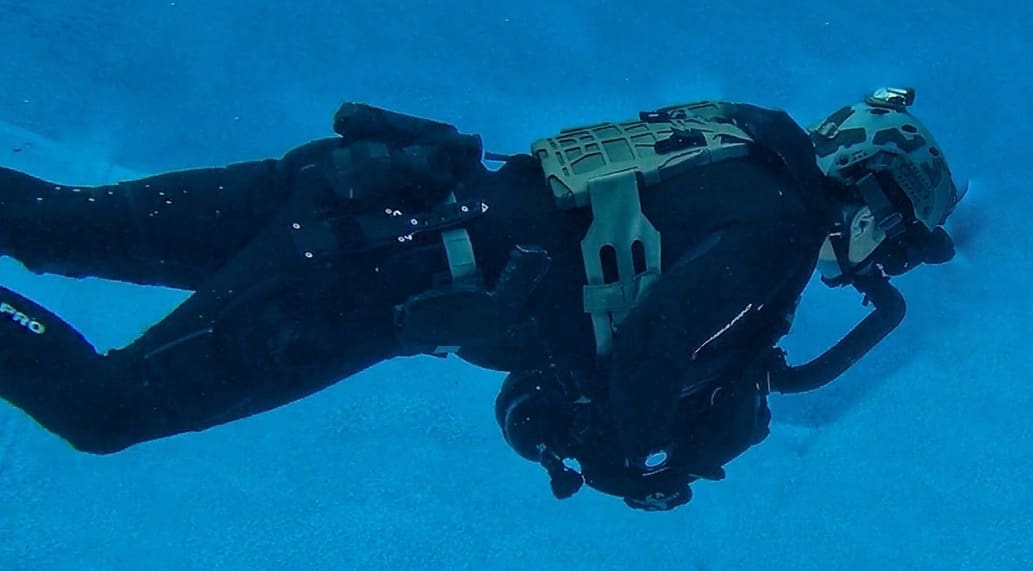
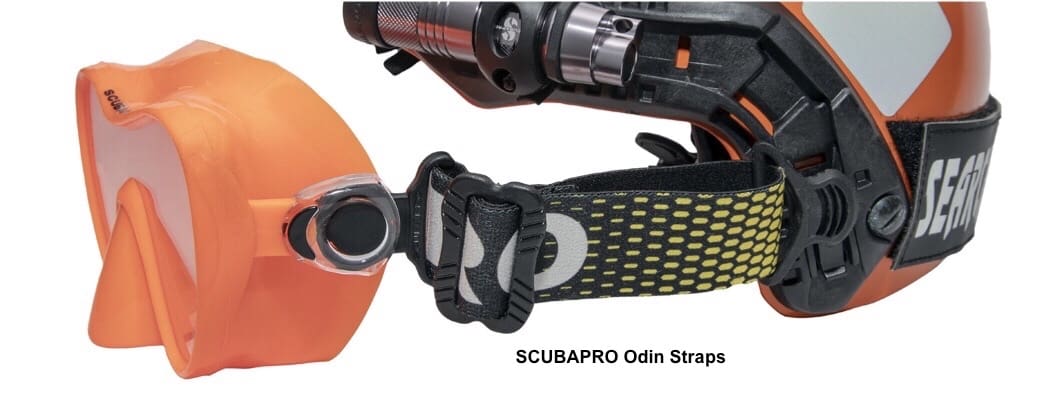
SCUBAPRO Sunday – The Watch That Won WWII

Sunday, January 3rd, 2021

As the world marked the 76th anniversary of the end of World War II, people can claim a lot of items was the “one thing” we had that is the main reason we won the war. The .50 machine gun, The Higgins Boat, The Jeep (G.P.), and the M1 Grand rifle. There are more items I could list, but it would take a long time. There is one that was one of the best-kept secrets to helping win the war. In every campaign, everyone in charge of a ship, a plane, a boat, or a bomb had one, or it was part of that item. It was the Hamilton watch. Renowned for its accuracy. Hamilton’s wartime contributions took many forms, long known for their accurate timepieces, and they were essential to the Allied Forces’ victory in WWII.

The Hamilton watch company was incorporated in1892 in Lancaster, PA. In 1891, an engineer’s inaccurate pocket watch led to a terrible train crash near Cleveland, Ohio. As a result of the investigation into that crash, an industry commission devised precise timekeeping standards for pocket watches (there were no wristwatches at this time) (get it time) used by railroad personnel. Pocket watches that met those exacting requirements were known as “railroad watches,” and a leader in making them was the. Hamilton watch company. Hamilton’s first production of those watches in March 1894 became so highly regarded for their accuracy  they were called the “Watch of Railroad Accuracy.”

That reputation took Hamilton into World War I, as the official watch of the American Expeditionary Forces. Soldiers and some watch companies had devised strapped pocket watches to the wearer’s wrist so that their hands were free so they could still fight, and Hamilton took note. Soon, the 981 Wrist Watch was born. The below picture is a 981 with a shrapnel guard on it.

In the 1930s, its wristwatches’ accuracy led several new airlines to adopt Hamilton as their official timepiece. By 1940, Hamilton was one of America’s best-selling watch brands. They had their own designers, engineers, physicists, and metallurgists, and they were a leader in research in watch oils, hairsprings, jewel bearings, and escapement design. An Escapement is a mechanic, a device that permits controlled motion, usually in steps. In a watch or clock, it is the mechanism that controls the transfer of energy from the power source to the counting mechanism. For the ASVAB waivers in the room,  basically, it helps maintain a steady flow of energy. In the summer of 1939 and again late 1940, the United States Naval Observatory (the U.S. authority on timekeeping, chronometers, and other navigational equipment) sent letters to eight watch companies that might be interested in creating an American marine chronometer. Hamilton replied and requested a sample chronometer for them to study.

In Feb, of 1942, 13 weeks after the attack on Pearl Harbor, they delivered two prototypes for review to the U.S. Naval Observatory. Navy officials were “simply astonished” by their precision, innovations, and reproducibility. Timekeeping and measuring devices were of critical importance to the military for planning missions, dropping bombs, time fuses for the bombs, navigation for ships and planes, and countless other efforts. As part of the war effort, Hamilton produced top-secret mechanical time fuzes for the exact timing of the anti-aircraft fire, jewel bearings, hairsprings, aircraft clocks, elapsed time clocks, altimeters, tachometers, map measurers—even tools, dies, and precision machinery for another watch, instrument, and jewel makers.

A lot of U.S. watchmakers made wristwatches for the military during WWII. Hamilton alone produced hundreds of thousands of them for the military and other special “military” sections. They also made them for Canada, the U.K., and the Russians. These included “hack” watches, “like in Let’s get a time hack” named for a mechanism in the movement, connected to the crown, which set time to the exact second. They were used to synchronize countless military attacks, troop and train movements, bombing raids, even training events.

Hamilton timepieces also included a top-secret Frogman watch, with a large “crown” over the regular crown to keep it watertight.

Hamilton made watches for almost every aspect of war. In the air, pilots, navigators of fighters, bombers, and even blimps navigate using a pocket watch as their “master time source.” This military version of Hamilton’s railroad watch was kept on simple rubber or spring shock absorbers in a small metal carrying case (to isolate it from magnetic fields, vibrations, and turbulence) with a glass window.


Also essential was Hamilton’s “bomb timer,” with wristwatch movement and dial mounted into a bombsight with a movie camera, which filmed the dial and target at the moment of impact to measure the bombs’ effectiveness. Hamilton’s most significant achievements in World War II were its marine chronometer and chronometer watches. Many experts consider its marine chronometer to be the finest ever produced. What makes this even more impressive is that, until World War II, Hamilton had never made such a timepiece. Before the invention of the GPS (you still should have a chart/ map and a way to navigate if the GPS goes down, especial if you are jumping your boats into the water), you would use time, speed, and distance to calculating longitude and plotting location and direction, from a place of departure or use the stars, you also needed to have the exact time to be in the right place to start an invasion.    

Hamilton’s marine chronometer Model 21 was based on traditional ones but with several improvements. Most evident was a unique balance and hairspring assembly, a radical departure from conventional chronometer design. Such advances made Model 21 more accurate than any other marine chronometer. Properly maintained, it kept time to within a half-second per day.

It wasn’t only the Navy (which bought around 9,000) that used them. The Army Air Corp bought 500, and the Maritime Commission bought 1,500. President Franklin D. Roosevelt had one in the White House map room to maintain a day and night watch. Hamilton continued making marine chronometers after the war; they made a little under 14,000 by 1970, when it ended U.S. production. Every vessel that belonged to the U.S. and many of our allies used a Hamilton chronometer for navigation. Battleships and aircraft carriers used the Model 21, housed in a glass-covered wooden box, with its movement swung on brass gimbals to keep it level and accurate even in the roughest seas. The Model 22 was used as an auxiliary timer for bigger ships and navigation on smaller vessels like destroyers, submarines, merchant marine, hospital ships, tankers, escort vessels, and P.T. boats. The model 22 was a chronometer watch, not a marine chronometer. Though smaller and less delicate than Model 21, Model 22 also was kept in a gimbaled wooden box. 


By war’s end in 1945, Hamilton timepieces ruled the sea, air, and land, getting victorious Allied troops to where they were going, whether on foot or by ship, plane, tank, submarine, or troop train. The Hamilton watch company made over 10,000-chronograph for the war effort. It should really be in the running, if not considered the one thing we could not have won the war without.

In 1957, Hamilton came out with the Ventura, the world’s first battery-powered watch; it was also helped by Elvis, who wore it in the 1961 movie “Blue Hawaii.”

The Hamilton watch served the U.S. military well into the Vietnam war and beyond; it is one of the longest serving watches in U.S. history.

As a foot note for Eric, in 1968, Hamilton was asked to design futuristic timepieces for the crew of Stanley Kubrick’s famous film, “2001: A Space Odyssey.” A few years after being commissioned to make a “futuristic” looking watch for the movie, Hamilton invented (along with Electro/Data Inc. of Texas) the digital watch. They designed the watch to look far more like HAL 9000 than the watches that were actually in A Space Odyssey.

Lastly, for E.G., they designed the watches for the first “Men in Black” movie.

In 1968 they moved production to Switzerland. In 1971, they were acquired by the Omega & Tissot Holding Company SSIH purchased the Hamilton brand and utilized the Hamilton name for several branding efforts, including numerous quartz watches in the 1980s. Then in 1984, they became a subsidiary of The Swatch Group.

Friday Focus: Beanies, Neckies & Wool Socks

Friday, January 1st, 2021

As the temperatures dive and the new year kicks off, check out FirstSpear all American wool Beanies, Neckies and wool socks. FS Neckies and Beanies are constructed from FirstSpear ACM BASE 100, a merino, poly, and modal blend. Featuring flat seams for maximum comfort under helmets and just enough material to double up over the ears when temperatures drop. Neckies are available in charcoal, FS sand, FS commando and heather grey. Beanies are available in black, charcoal, FS commando, FS sand and heather grey.


Unlike cotton, wool is the ultimate insulator and it absorbs a high amount of moisture all while maintaining its insulating properties when wet. The FirstSpear Boot Super Sock and Every Day Sock are 100% American made with USA materials. Both the EDS and BSS are constructed from a tubular knit for enhanced support and all day comfort.


The EDS features a reinforced heel and toe box, support ribbing through the arch, as well as light and thin across the top to help dissipate heat. Exceptional moisture wicking and antimicrobial properties will keep your feet dry and comfortable throughout the day.

EDS: 82% Merino Wool, 12% Nylon, 6% Lycra

BSS: 86% Merino Wool, 8% Nylon, 6% Spandex blend

Available and shipping now in sizes small through XL.

If you want to see out more FirstSpear gear in action, check out FirstSpear TV’s X-RAY Team.

www.first-spear.com/every-day-sock-eds

www.first-spear.com/boot-super-sock-bss

www.first-spear.com/neckie-acm-base-100

www.first-spear.com/beanie-acm-base-100

INVISIO Acquires Racal Acoustics, a World-Leading UK-based Supplier of Communication and Hearing Protection Solutions

Thursday, December 31st, 2020

INVISIO has signed an agreement to acquire all the shares in Racal Acoustics, a UK-based supplier of communication and hearing protection systems for high noise environments, with annual sales of approximately SEK 130 million.

Racal Acoustics Ltd, a subsidiary of TransDigm Group Inc. prior to INVISIO’s acquisition, is a world-leading brand with a history of more than 100 years in the design, develop­ment and manufacture of communication and hearing protection systems, focused on audio ancillary equipment for the military, first responder and aviation sectors. The London-based business has 55 highly skilled employees and a global footprint.

The acquisition is aligned with INVISIO’s growth strategy and the ambition to further strengthen its global market-leading position within communication and hearing protection systems. 

The acquisition means that INVISIO will broaden its offer with a complementary new product category, consisting of advanced and rugged hearing protection and communications headsets for environments with constant high noise, often found in larger military vehicles and around aircraft.

The acquisition will provide INVISIO with access to customers and prospects in the attractive market niche for communication and hearing protection in vehicles, which is a highly relevant area for the new INVISIO Intercom System.

The purchase price to be paid by INVISIO is approximately SEK 170 million and is expected to be cash and debt-financed. Racal Acoustics has recently completed a successful restructuring. The acquisition is expected to contribute to INVISIO’s revenue for 2021 with more than SEK 130 million and with a positive result. No material integration costs are anticipated.

Under the terms of the acquisition, INVISIO will also acquire Racal Acoustics Inc, a US based sales company through which Racal Acoustics markets and sells its products to the US market. The acquisition, which is expected to close during the first quarter of 2021, is subject to regulatory approvals and customary closing conditions.

“We are very excited to welcome Racal Acoustics into the INVISIO-family. The deal is a perfect fit as the two companies are largely complementary. Over many years Racal Acoustics has built a strong position for communication and hearing protection in high noise environments such as military vehicles, while INVISIO has built a strong position for users in the field. Our combined product offerings and market footprints will strengthen our world leading position as the communication and hearing protection expert for users within military, first responder and aviation markets, whether in the field or in a vehicle,” says Lars Højgård Hansen, CEO of INVISIO.

“Joining INVISIO is the perfect next step to fully explore the potential in Racal Acoustics. As the companies to a large extent share the same business-DNA but target different market segments and sales channels, we have all the elements for a strong growth story and future together,” says James Ewing, Managing Director at Racal Acoustics.

S.O.Tech Reaches a 300,000 Mask Milestone While Incurring a Sad Loss

Thursday, December 31st, 2020

It was with great pride that this week the S.O.Tech team delivered our 300,000th cloth facecover, but that news turned somber when we learned that a dear friend to the company, Deputy Tim Tellez, died battling COVID-19. So we dedicate our accomplishment to Tim’s memory, and we will continue the effort for Tim and other fallen first responders.

If you’ve seen a picture of police gear on SOTECH’s website, it was probably strapped onto Tim, we just cut his face out and blurred his name badge. He took gear design to heart and was always there to give thoughts and feedback on patrol officer gear because he cared about his fellow LEOs.  He was a 20 year veteran of LASD. We will be making a donation in his honor.

Not only was S.O.Tech able to deliver the 300,000 masks, but we have been able to fill major military, aerospace and law enforcement contracts in the face of a pandemic strained supply line.  We are proud of the teamwork exhibited by our staff.

UF PRO Now Offering Its All-Round Weather-Protective Hunter FZ Gen.2 Tactical Jacket in Improved MultiCam Fabric

Wednesday, December 30th, 2020

TRZIN, SLOVENIA (29 Dec. 2020)—UF PRO today announced it has begun making its popular lightweight Hunter FZ Gen.2 tactical jacket in an improved MultiCam fabric designed to help wearers stay warmer in low temperatures and be better protected against inclement weather.

The move represents an expansion of the UF PRO MultiCam Low-Temperature Line, which currently includes Multicam versions of the company’s Delta OL 3.0 Tactical Winter Jacket, Delta AcE Plus Gen.2 Tactical Winter Jacket, and AcE Winter Combat Shirt.

According to Armin Wagner, head of UF PRO product development, the company began offering its Hunter FZ Gen.2 MultiCam garment today.

The newly improved MultiCam fabric is a laminate formed from a 100-percent polyamide face material layered atop a membrane made of polyurethane, Wagner explained.

“This is the softest MultiCam material yet, so it emits less noise as the wearer moves about,” he said. “It’s also fully windproof and extremely water-repellent, which affords the wearer protection in weather ranging from light rain to high winds.

Wagner noted that the improved fabric exhibits an impressively high sheer-strength thanks to a special ripstop weaving technique used in producing the face layer.

“Wearers will be very pleased by its abrasion resistance,” he said. “It holds up exceptionally well, even after being continuously rubbed against by backpacks, plate carriers, and other gear.”

The improved MultiCam fabric is a perfect fit for the Hunter FZ Gen.2 Tactical Jacket, which is favored among military and law-enforcement operators for its comfort-enhancing features, such as mesh side-panels that provide cooling ventilation to prevent overheating and a 37.5™ microfleece lining that helps keep the inside of the garment dry by very efficiently dissipating sweat.

“The jacket is also a favorite because it folds up compactly for easy stowing inside a backpack,” Wagner added.    

Go here for more information about the UF PRO Hunter FZ Gen.2 Tactical Jacket.

Go here for more information about the UF PRO MultiCam Low-Temperature Line.

Kitanica – Nightwatch Sweater

Tuesday, December 29th, 2020

Made from Polartech Power Stretch Pro, Kitanica’s Nightwatch sweater is a modern take on the classic GI 5-button sweater. In addition to the performance fabric, they’ve also added thumb loops at the cuff.

Offered in Black, sizes Small through XXX-Large.

Made in the USA.

www.kitanica.net/Nightwatch

LBT x TD Tiger Camo Day Pack

Monday, December 28th, 2020

The LBT x TD Tiger Camo Day Pack is Tactical Distributor’s last colab of the year to celebrate their 10th Anniversary.

Manufactured by LBT, this 14 liter limited edition pack features a laptop sleeve, exterior water bottle holder, 2 exterior zip pockets, and a roomy main compartment.

Black and Tigerstripe.

www.tacticaldistributors.com/products/lbt-x-td-10-yr-anniv-tiger-stripe-14l-day-pack