SIG SAUER - Never Settle

Archive for the ‘Advertiser’ Category

ADS Federal Range Day 2020

Tuesday, August 25th, 2020

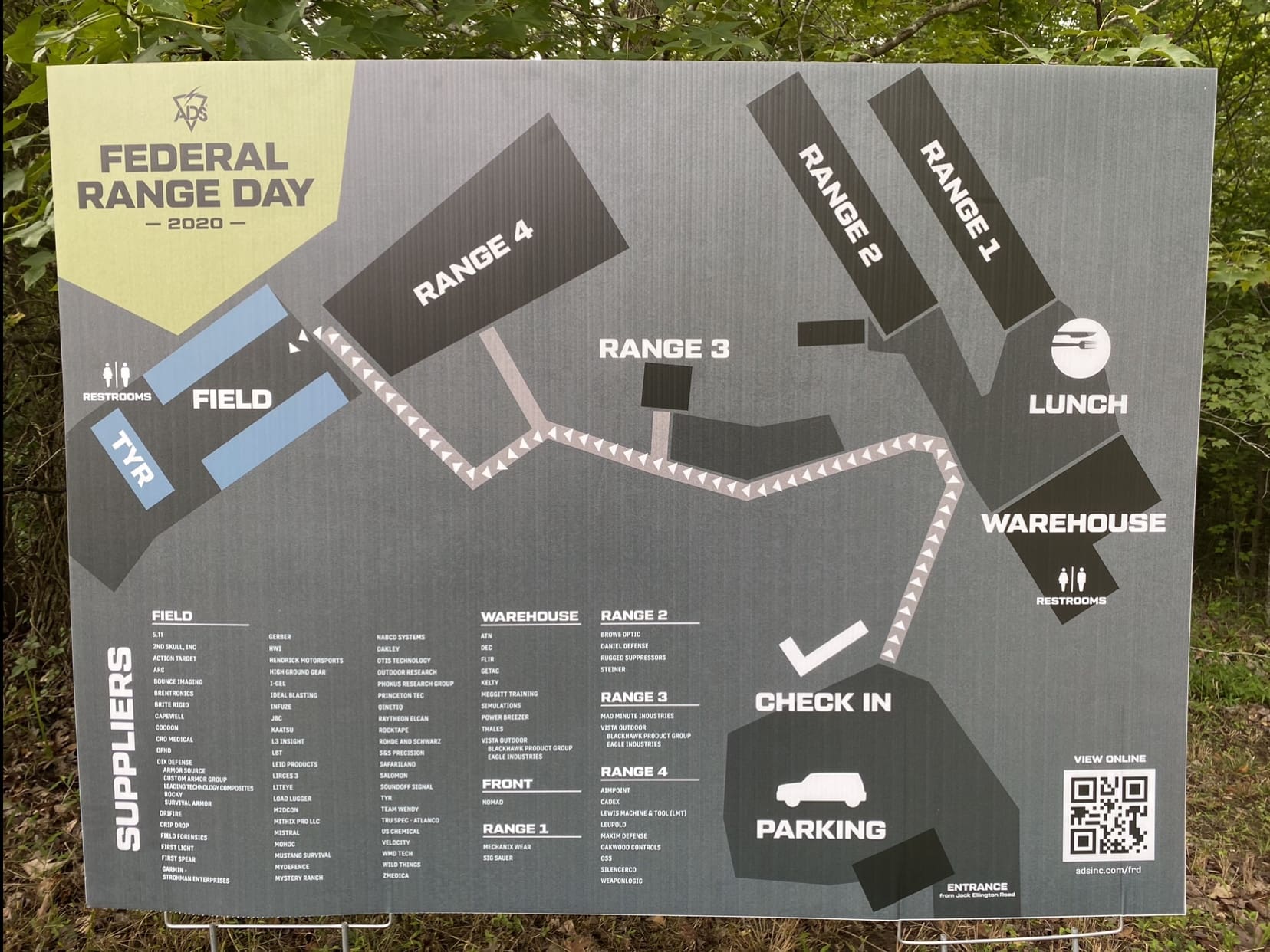
ADS Inc held their annual Federal Range Day last Friday at the Crucible near Fredericksburg, Virginia.

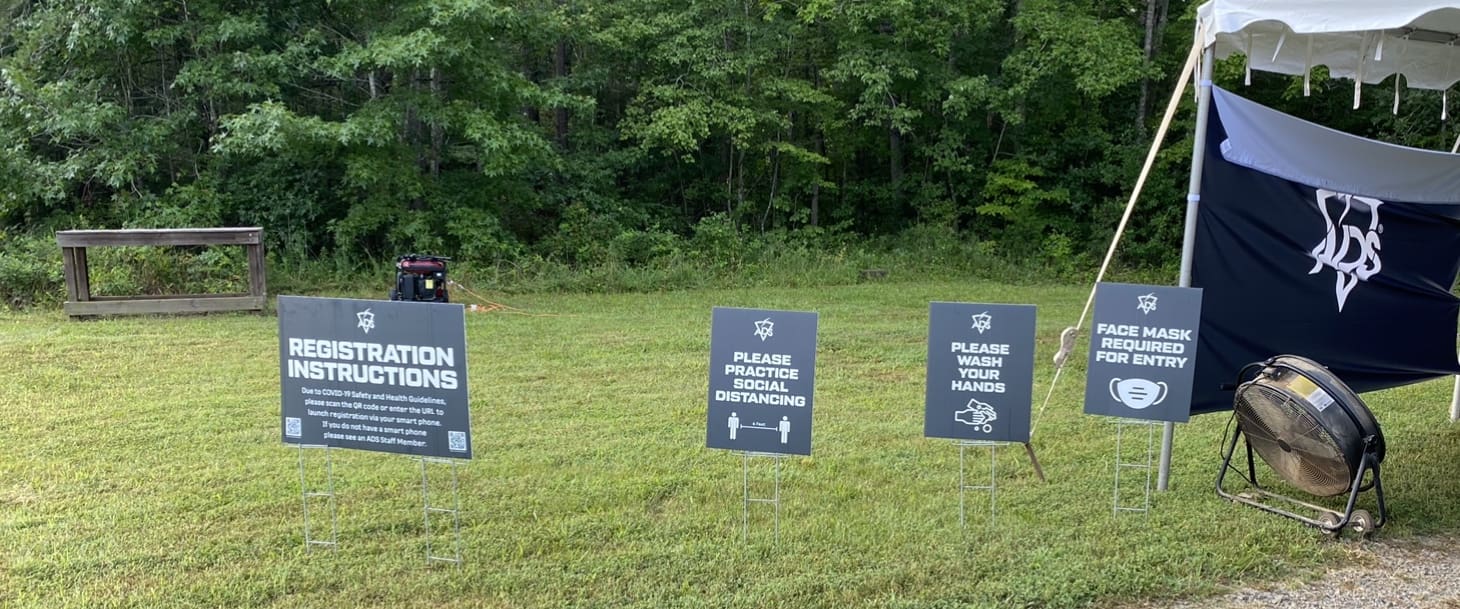
There were almost 100 vendors on site and attendees came from various local, state local, and federal agencies along with military representatives. While the crowd was smaller than in years past, ADS did a great job of managing social distance, decon and wearing go masks to protect the health of those on site.

Masks were available for those who showed up without them and was were lots of hand sanitizer and decon wipes.

For many, it was their first time in an industry setting since COVID-19 forced nationwide closures. Hopefully, it’s the first of many gatherings as we open back up.

Units and agencies can procure all products shown during ADS Federal Range Day by contacting ADS Inc.

TYR Tuesday – IDTOUR VTS |Virtual Trade Show| Shield Spec Review

Tuesday, August 25th, 2020

Episode Nine of Innovate or Die® Tour Virtual Trade Show #IDTOURVTS is here!

Episode Nine:
IDTOUR VTS |Virtual Trade Show| Shield Spec Review

CQB Shield with Viewport Available Now:
www.tyrtactical.com/products/list/shield-systems/ballistic-shields-and-armor

New episode launching every Tuesday.

What is IDTOURVTS?
Our mission has always been about protecting those who run towards the threat. To that end, we created the Innovate or Die® Tour and Mobile Showroom. Over the past couple years it has allowed us to meet you face-to-face, gather your feedback and answer your questions.

Life has been put on hold for many people around the world, but you have not stopped risking your safety and health against all the threats we face today.

We can’t wait to meet you on the road again.

Thank you to the men and women of the armed forces, first responders and health care professionals who continue to put their lives on the line. You haven’t stopped working and neither will we.

Episode One:

IDTOUR VTS |Virtual Trade Show| PICO-DS & DSX Plate Carriers

Episode Two:

IDTOUR VTS |Virtual Trade Show| The Ultimate Range Bag

Episode Three:

IDTOUR VTS |Virtual Trade Show| Shield & Dolly System

Episode Four:

IDTOUR VTS |Virtual Trade Show| Huron™ Hot Weather Uniform

Episode Five:

IDTOUR VTS |Virtual Trade Show| PICO-MVW-DSX Plate Carrier System

Episode Six:

IDTOUR VTS |Virtual Trade Show| EPIC-DSX Plate Carrier System

Episode Seven:

IDTOUR VTS |Virtual Trade Show| Gunfighter Belts

Episode Eight:

IDTOUR VTS |Virtual Trade Show| Shield Camera System Preview

Garmin Montana 700i

Monday, August 24th, 2020

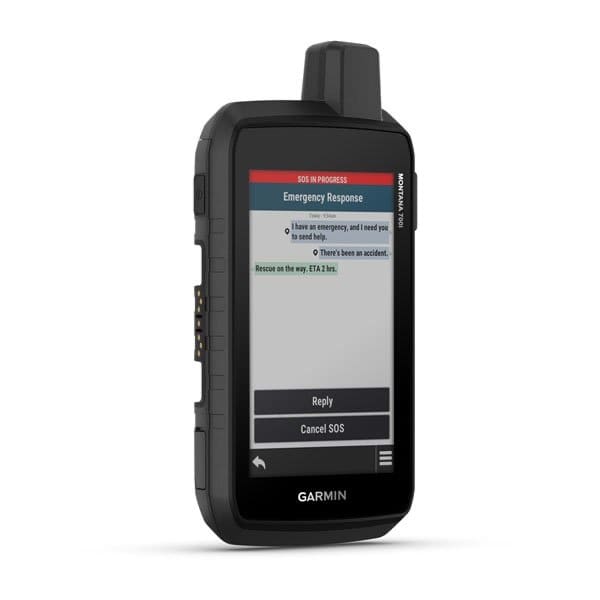
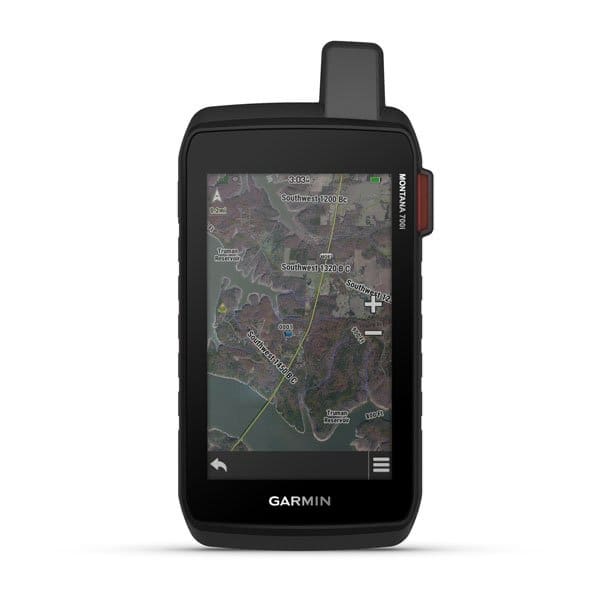
The new Garmin Montana 700i is a Touchscreen Navigator with inReach Technology which offers worldwide SOS and messaging as well as weather reports. The device also incorprates an optional 8 MP camera. Position data is via both GPS and Galileo satellite networks.

To facilitate two-way satellite messaging via inReach, the Montana utilizes a full QWERTY keyboard. Maps and imagery are easy to discern thanks to the 5″ color screen which is 50% larger than the previous model.

Like other Garmin devices, the Montana has full ABC sensors, including an altimeter for elevation data, barometer to monitor weather and 3-axis electronic compass.

An internal, rechargeable lithium-ion battery pack provides more than 18 hours of battery life in GPS mode, but to keep you going for a week or more between recharges, use Expedition mode, an ultralow-power GPS reference.

As always, SSD readers are highly encouraged to purchase Garmin devices from Strohman Enterprise.

Improved TNVC/Steiner TOR-MINI IR VPC (v)2 IN-STOCK!

Monday, August 24th, 2020

tnvc.com/shop/steiner-tnvc-tor-mini-ir-vpc-variable-power-control

Redlands, CA

Introduced at SHOT Show 2020, the TNVC/Steiner TOR-MINI IR Variable Power Control IR aiming laser has quickly become one of our most popular products and they have been flying off the shelves! We’re happy to announce the release of a new (v)2 variant, NOW BACK IN-STOCK!

While the original TOR-MINI IR crossbolts were provided a secure user configurable mounting system, they were a little bit more difficult to install properly. The newest TOR-MINI IR VPC (v)2s feature an more user-friendly, improved rail mounting system. Instead of the two crossbolts on the original TOR-MINI IR, these units feature a more robust rail clamp and mounting system, including a user-configurable recoil lug that can be positioned in one of six (6) different positions, allowing the TOR-MINI IR to fit almost any rail interface as well as allowing the user to fine-tune it’s positioning on the rail.

Moreover, the rail clamp itself has been enlarged and simplified, making it easier to install, and two slotted screws replace the long Allen screws in the initial versions.

With an MSRP of $269 and weighing less than 2 ounces, the TOR-MINI IR was designed to offer a miniaturized, budget friendly Class I IR aiming laser to the market, and is equally at home on pistols, long guns, SMGs and PDWs, and even on thermal devices and spotting scopes! The TOR-MINI IR Variable Power Control features a “step down” feature that allows the user to easily select between 0.7, 0.4, and 0.2 mW outputs by holding down the activation paddle attenuating the aiming dot size and bloom based on range, target size, and ambient lighting conditions.

These new improved TOR-MINI IR (v)2 are now in full production and in-stock and ready to ship today. Dealer inquires are also welcome!

Order Now at:

tnvc.com/shop/steiner-tnvc-tor-mini-ir-vpc-variable-power-control

For Dealer Inquires, please e-mail sales@tnvc.com

MATBOCK Monday – GRAVEROBBER Sustainment and Gram

Monday, August 24th, 2020

Happy MATBOCK Monday!

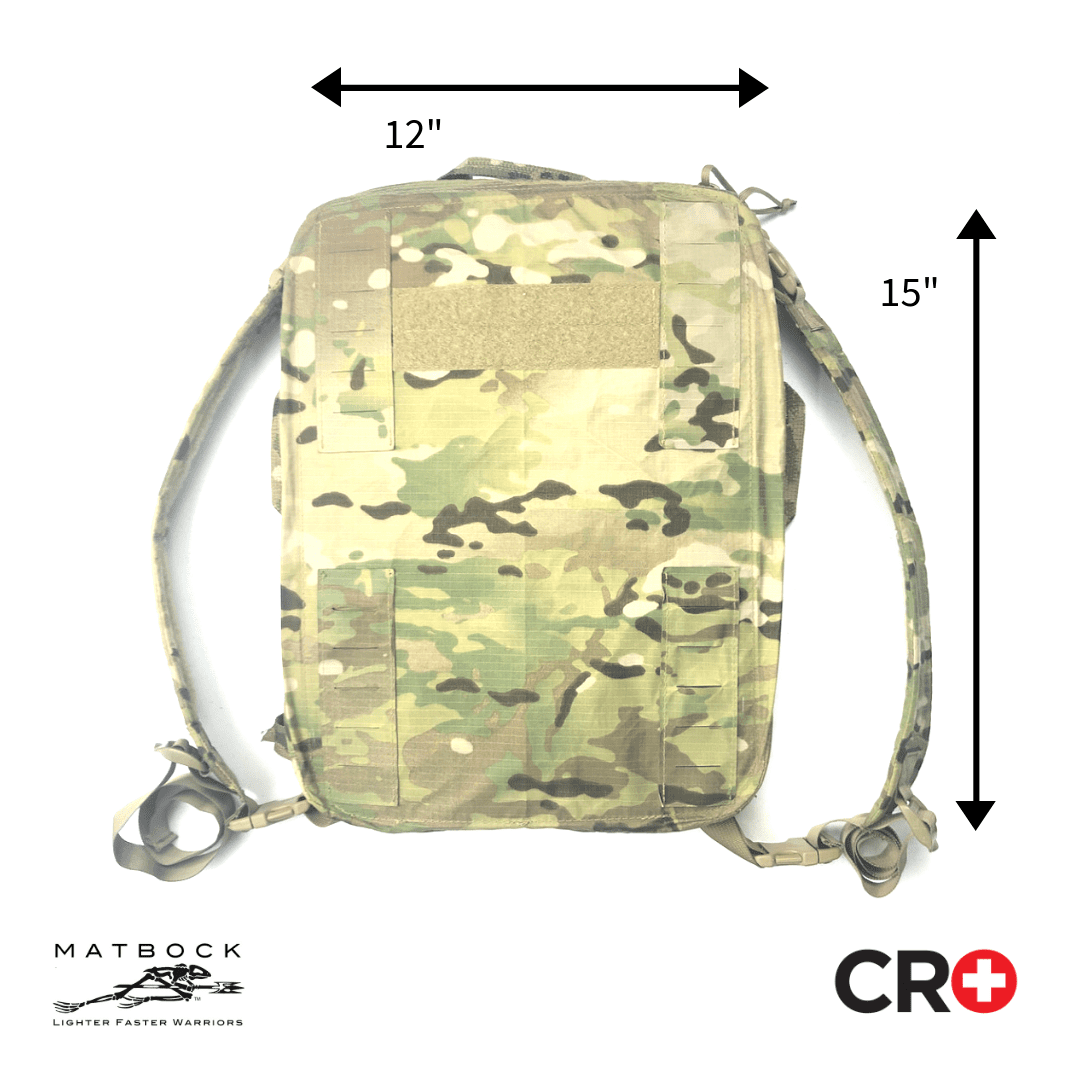
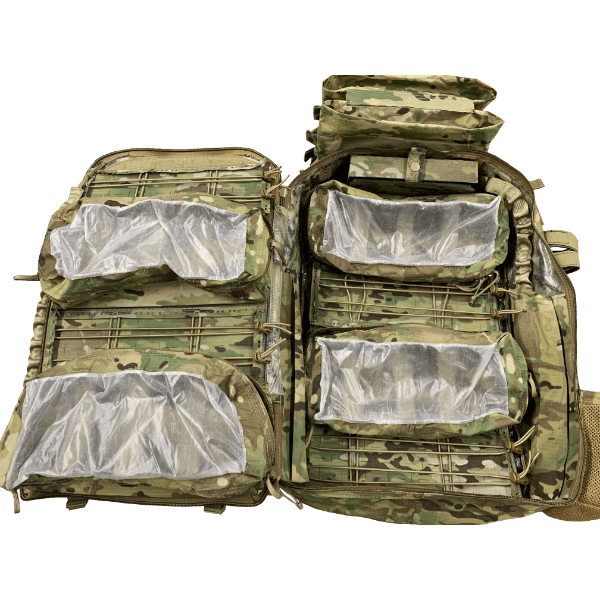
The Graverobber™ Assault Medic (GRAM) bag is the result of years of needed improvement in bags specifically designed for the team medic. CRO brings a multi-mission approach to the design with their well-thought-out adaptability, including a panel insert that converts to a skeleton med panel which can be clipped or slung using the thin padded shoulder straps. Remove to design a custom panel that is interchangeable for different packing requirements, or easily change bags with the versatility of a panel insert.

Lighter Faster Warriors, The MATBOCK ethos, is realized by the GRAM. MATBOCK Ghost® material is used throughout with Tegris reinforcements, giving the inside contents protection to allow for narcotics to be set up using a soft case.

The GRAM is designed to be mounted to an ALICE frame, giving the medic a slim assault bag that can be configured in many ways to enhance medical load carriage. This jumpable, water resistant bag bridges the gap between assault bags and en-route care, due to its expandable design and ability to hang.

This versatile, meticulously designed med bag was created with everyday medic load carriage in mind.

www.matbock.com/collections/grave-robber/products/gram

The Graverobber™ Sustainment Kit is a joint CRO Medical and MATBOCK project to bring a prolonged field care pack to the operational medic. It features the Sustainment bag, 4 x sustainment pouches, 4 x sustainment panels, and the Graverobber™ Drug Box. All made from MATBOCK Ghost and Ghost Light materials.

www.matbock.com/collections/grave-robber/products/grave-robber-sustainment-kit

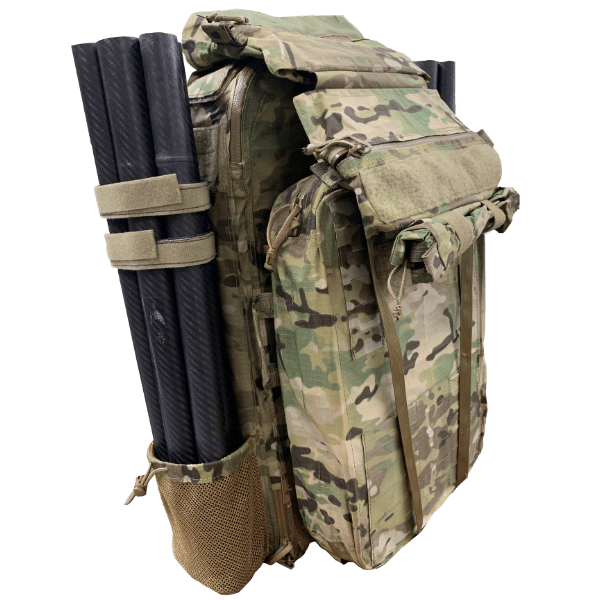
The Technical Mountain Ruck is a combination of the GRAVEROBBER Assault Medic (GRAM) Kit and the GRAVEROBBER Sustainment Kit. The GRAM easily zips to the outside of the sustainment bag to give the medic everything needed for both assault and prolonged medical operations. Made from MATBOCK’s Ghost and Ghost Light materials for superior water resistance, durability, strength and weight savings.

www.matbock.com/collections/grave-robber/products/grave-robber-technical-mountain-ruck

Don’t forget to tune in on Monday at 1:00 PM EST as we go live and show you what the GRAVEROBBER Sustainment and GRAM have to offer!

SCUBAPRO Sunday – Binoculars for Use on the Water

Sunday, August 23rd, 2020

Binoculars are one of the most important things to have when you are on the water. It one of the only times you will truly be in the wide open for everyone to see you and if you can’t see them you are at a big disadvantage. When it comes to selecting a good pair of binoculars for use on the water or in the field, there are a lot of things to look for. Most of the time, if you are not a sniper, you really don’t understand or care what all this stuff means. But here are a few things you should know to help you choose the right ones for the job.

• 7 x 50’s and 8 x 32’s
• What about prisms
• Are coated optics important

Binoculars are described using two numbers, such as 7 x 50 or 8 x 25. The first number identifies the magnification or power. The second is the diameter of the objective lens (the lens at the front) in millimeters. Magnification power describes how much closer objects appear when you view them. In a 7 x 50 binocular, the image is magnified seven times. Increased magnification reduces the brightness of the image, so as magnification increases, binoculars require increasingly larger objective lenses to maintain brightness. The larger their size, the more light they can gather. 

Magnification: Many binoculars used on land have too much magnification for use on a non-stable platform. The more an image is magnified, the harder it is to keep an object in view, so 7x power is the practical magnification limit for small boats (under 50′). Image stabilizing binoculars allow comfortable viewing with much higher magnification, up to 18x power, because they automatically compensate for movement.

Waterproof construction: With the combination of water, salt, and changes in temperature, it will cause the interior lenses of a non–waterproof binoculars to fog. Waterproof construction, with the internal O-rings, sealed and filled or “charged” with dry nitrogen, combined with flotation in the strap, to help protects your binoculars if they are dropped overboard.
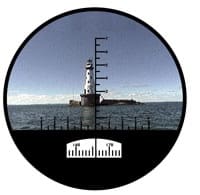
Rangefinders are handy for taking bearings or determining approximate height of or distance to an object.

Do you need a built-in compass or rangefinder reticule?

Bearing compasses: Built-in compasses, which appear superimposed near the image you see through the lens, lets you take bearings from an object that is very far away. They are highly recommended for marine use.

Rangefinder reticule: If you know the height of an object, such as a hill or navigation marker (often printed on charts and maps) and can measure the angle to its top using binoculars equipped with a rangefinder reticule, you can calculate your distance from that object.

Individual focus, center focus, or fixed focus?

Binoculars may have independent eyepiece focus to compensate for the differences between eyes and for different distances. In center-focus binoculars, one eyepiece adjusts to accommodate the difference between your eyes. A central focus knob then adjusts both sides simultaneously for distance.

Steiner Binoculars use a fixed-focus system, with a very deep depth of field, called Sport Auto-Focus. With Sports Auto-Focus, once you’ve adjusted your ocular settings for differences in your individual eyes, you won’t need to adjust the binocular again for varying distances. You’ll get a sharp, clear picture from 50′ to infinity. This set-it-and-forget-it system works well.

Relative brightness: How bright an image appears is a function of the quality of the optics and the ratio of the objective lens diameter divided by the magnification, squared (50 ÷ 7)2. So, 7 x 50 binoculars have a relative brightness of about 50, while 8 x 23 binoculars have a relative brightness of only 8.2. Objects will be visible in far less light with the 7 x 50 models.

Light transmission efficiency: Cheap glasses may allow only half the light entering the objective lenses to reach your eyes. Good quality glasses pass about 75% of the light. Truly exceptional binoculars, such as top models from Steiner and Fujifilm, pass more than 93% to 97% of light to your eyes, making all objects appear brighter. Quality optics also make the image sharper. Inexpensive glasses may produce astigmatic images that are fuzzy at the edges. Superior glasses are sharp from edge to edge and are less fatiguing to the eyes when used for extended periods.
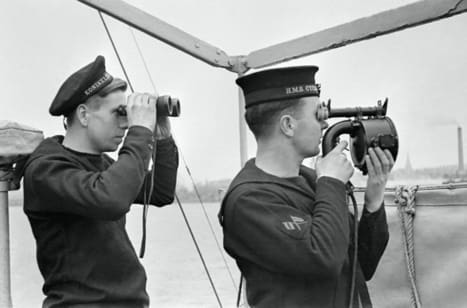
Lens coatings.  When light enters or leaves a piece of glass, about 5% is reflected back. With as many as 16 air/glass surfaces inside your binoculars, there could be a lot of internal light bouncing around, reducing the brightness, sharpness, and contrast of the image. Lenses are coated using one or more thin layers of chemicals (most commonly magnesium fluoride), reducing this internal reflection from 5% to 1% or less. But not all coatings are the same. If you look at the outside lens surfaces, quality lens coatings will appear as subtle tints of violet, blue, or green. Heavily colored lenses in cheap glasses actually reduce the amount of light transmitted. Also, better binoculars include more layers, with more complex chemical combinations, on more surfaces, to achieve light transmission efficiency.

• Coated: one or more surfaces coated with a single layer.

• Fully coated: all air-to-glass surfaces are coated with a single layer.

• Multi-coated: one or more surfaces coated with multiple layers.

• Fully multi-coated: all air-to-glass surfaces are coated with multiple layers.

Field of view The field of view describes the width of the image you see, measured in feet at the distance of 1000 yards. Binoculars offering 385′ field of view show the viewer a cone that is 385′ wide 1000 yards out. Higher-powered image-stabilized binoculars provide a narrower field of view (200–340′) than conventional units (up to 430′).
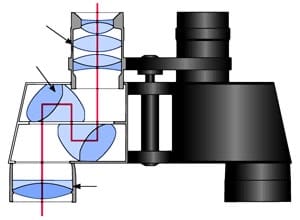
Prisms are used to invert and magnify an upside-down image, are either Porro (binoculars with a dog-leg shape) or roof prisms (with straight tube configuration that is easier to hold). There is some disagreement as to which is best, but it’s generally believed that Porro prisms yield superior optical performance. They transmit more light, resulting in brighter images, and provide better depth perception, because their objective lenses are farther apart. However, some roof prisms with phase shift coating provide excellent performance.

Image-stabilizing binoculars
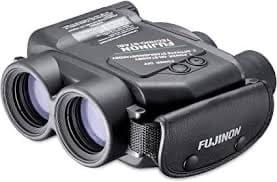
Image Stabilizing (I.S.) binoculars provide a steady image, even on a Zodiac that is not stable. The rolling, pitching and bouncing motion on a boat makes it hard to keep an image in focus using binoculars. I.S. binoculars automatically compensate for movement on a non-stable platform, like a boat, helo, or a side by side to deliver a stable image, even at high magnifications.

There are a few companies that make I.S bino’s, and they all basically work the same but, every company is a little different. Fujinon’s Techno–Stabi IS binoculars are built with dual piezo–motion sensors and gyro position sensors that are linked to direct drive motors for instant and continuous stabilization with low battery drain. The Techno–Stabi achieves a high degree of stabilization in all planes. Two direct-drive motors–one horizontal, one vertical–each controlled by its own piezo vibration sensor, instantly stabilize the image. Phase–coated roof prisms help provide clarity. Power consumption is minimal, and they are advertised as waterproof.
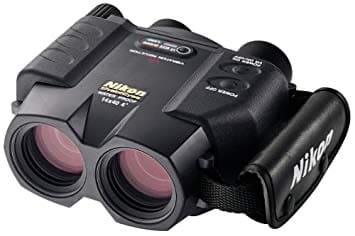
 

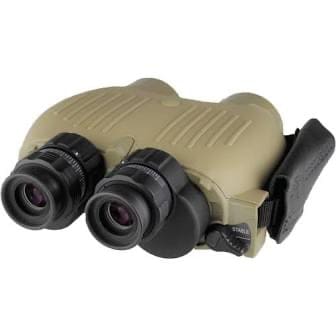
Nikon’s StabilEyes binoculars and Fraser Optics binoculars and monocular are built with a digitally stabilized gimbaled servo system to provide a view that is unaffected by handshake or vibration. The StabilEyes provide constant stabilization when activated, and Nikon’s original dual-mode system allows for use on land and sea by compensating for both roll and shake. The StabilEyes line is also completely waterproof and fog proof. The power consumption of the AA batteries is minimal in spite of the constant image stabilization functions.

Franklin Armory Title 1 Mass Action Lawsuit!

Saturday, August 22nd, 2020

Minden, NV, July 29, 2020– Mass Action Lawsuit Against the California Department of Justice Over Its Refusal to Process Legal Sales of the Franklin Armory® Title 1® Firearm is Underway!

Franklin Armory® goes to great lengths and expense to bring quality products to market that people want. Franklin Armory® has designed, developed, and begun the manufacture of a new firearm — The Title 1® — that is California compliant but is neither a rifle, shotgun, nor pistol. Franklin Armory® has, and will continue lawfully taking preorders from buyers in the state.

Tens of thousands of Californians have already placed deposits on the Title 1® firearm so they could get one as soon as they become available. Franklin Armory® has made it a priority to deliver on these pre-orders to their customers – but we can’t – because CADOJ is unlawfully refusing to process the requisite paperwork.

In response to this inaction, the law firm of Michel and Associates, PC is preparing a Mass Action Lawsuit to represent those persons whom CADOJ has prevented from lawfully acquiring their firearm. If you have made a deposit and are unable to receive your firearm(s) because of defects in the CADOJ designed and maintained Dealer Record of Sale Entry System, you should consider joining this lawsuit. There are no fees or costs involved for participants.

Even though the possession of Title 1® does not violate California law, CADOJ has deliberately refused to process sales of the Title 1®. As a result, Franklin Armory® retailers cannot transfer Title 1® firearms to consumers because licensed dealers cannot submit their sales applications to CADOJ online. The state-mandated system, Dealer Record of Sale Entry System (“DES”,) does not allow for the transfer of certain firearms that do not meet the limited predefined identifiers in the DES System. It is an easy technical fix, but CADOJ has deliberately delayed the simple technical correction to allow this product to be sold.

The sale of Title 1® firearms are being blocked by biased CADOJ bureaucrats. CADOJ was made aware last year of the need to add an “other” category to facilitate Title 1® sales but refused to take this step. This technological barrier prevents licensed firearm dealers from proceeding with a sale, transfer, loan, or submission of information

to the CADOJ. The actual effect is that California firearm dealers cannot accurately submit the necessary information to the CADOJ for processing.

This, we believe, constitutes a violation of the CADOJ’s duty to accept and process all firearm applications and a violation of each purchaser’s due process rights. On behalf of the tens-of-thousands of people who put a deposit down to purchase the Title 1®, this lawsuit seeks to declare CADOJ’s conduct unlawful and to compel CADOJ and its agents to fulfill its obligations and process all Title 1® purchases that were made prior to any subsequent prohibitions, restrictions, and/or limitations.

To join the lawsuit or for more information, visit title1lawsuit.leverage.law

SOLGW – What is the A5 System? And Why Do We Use It?

Friday, August 21st, 2020

Instead of finely tuning a rifle, we want to give it the widest operational envelop. The more finely tuned something is the more narrow that window. A fighting gun should be forgiving. Our goal is to incrementally improve the performance of this platform…and those incremental improvements added up absolutely make a difference.

www.solgw.com