Tropo Performance

Archive for the ‘AI / ML’ Category

Axon Vision Announce Strategic Cooperation Agreement with Leonardo DRS to Deliver AI-Enhanced Counter-UAS Solutions for US Market

Monday, December 8th, 2025

TEL AVIV, Israel, Dec. 3, 2025 — Axon Vision (TASE: AXN) announced today a strategic cooperation agreement with Leonardo DRS to pursue opportunities in advanced situational awareness, lethality, and survivability, with special emphasis on Counter-UAS (C-UAS) solutions in the U.S. defense market. The partnership is expected to address a critical demand for on-platform AI-driven capabilities that support force protection and platform modernization. It positions both companies for expanded participation in large-scale programs seeking proven, scalable solutions.

Under the new Memorandum of Agreement, the cooperation between the companies leverages Leonardo DRS’ deep operational experience, advanced sensors and system integration capabilities along with Axon Vision’s AI-based perception and autonomy technologies. Together, the companies aim to deliver turnkey, next-generation combat systems that deliver low latency, high bandwidth sensor data management, enhance crew awareness, and enable automated threat engagement, focusing on C-UAS. This synergy underscores a shared commitment to enhancing mission effectiveness, protecting lives and delivering technological superiority on the modern battlefield.

The collaboration builds on an ongoing relationship between the two companies and a shared commitment to enhancing mission effectiveness, protecting lives and delivering technological superiority on the modern battlefield. Together the companies have jointly developed and demonstrated operational solutions embedding Axon Vision’s AI-based perception and automation capabilities into Leonardo DRS’ range of integrated multi-spectral, multi-function C-UAS mission packages, which include radar, electro-optical and infrared advanced sensors, rugged AI-ready processors, and both kinetic and non-kinetic effectors.

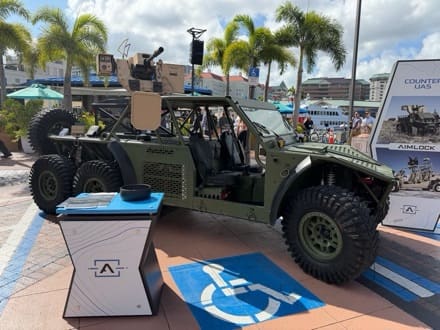
The most recent demonstration came at the Association of the United States Army’s exposition showcasing unmanned ground vehicle platforms hosting modular, reconfigurable Leonardo DRS mission payloads integrated with Axon Vision’s AI solutions for aerial threat detection & defeat and AI-enhanced smart remote-controlled weapon station capabilities. The combined offering is designed to significantly enhance a platforms’ lethality, autonomous operation, and situational awareness.

“We are excited to solidify our relationship with Axon by integrating advanced mission equipment packages with their AI-driven Counter-UAS and smart RCWS capabilities. It represents a decisive leap forward in manned and unmanned ground combat effectiveness,” said Aaron Hankins, senior vice president and general manager of the Leonardo DRS Land Systems business unit. “By combining real-time aerial threat detection, autonomous or man-on-the-loop engagement, and enhanced situational awareness, this solution delivers unmatched lethality and operational superiority.”

“We are proud to partner with Leonardo DRS, a trusted and highly capable leader in the U.S. defense industry,” said Ido Rozenberg, president, CTO & co-founder of Axon Vision. “This collaboration marks a significant step in bringing Axon Vision’s advanced AI solutions to the U.S. defense market. Together, we are delivering a true powerhouse solution for combat vehicles, combining world-class sensing and integration with cutting-edge AI to enhance lethality, survivability, and overall battlefield dominance.”

Founded in 2017 by entrepreneurs Ido Rozenberg, Raz Roditi, and Michael Zolotov, Axon Vision is a leading provider of AI-based operational systems for the defense market. Its solutions are trusted by the IDF and other military forces worldwide.

For further information, visit www.axon-vision.com.

2025 Microelectronics Commons Call for Projects

Monday, November 24th, 2025

The Microelectronics Commons program was established through the Strategic & Spectrum Missions Advanced Resilient Trusted Systems (S²MARTS) Other Transaction Agreement (OTA) established by the Naval Surface Warfare Center (NSWC), Crane Division and is managed by the National Security Technology Accelerator (NSTXL).

It is a network of regional technology Hubs acting on a shared mission: to expand the nation’s global leadership in microelectronics.

Technology Areas Supported by the Microelectronics Commons:

  • 5G/6G Technology
  • Artificial Intelligence Hardware
  • Commercial Leap Ahead Technologies
  • Electromagnetic Warfare
  • Secure Edge/IoT Computing
  • Quantum Technology

They have released their 2025 Call for Projects and are accepting white papers until 13 January 2026.

Learn more at nstxl.org/opportunity/mec-cfp-fy26.

Launching the AI Model Arena

Saturday, November 22nd, 2025

The Defence AI Centre has worked with industry to develop a new tool that will help redefine how Defence evaluates and procures AI technologies.

The Defence AI Centre (DAIC) is launching the AIModel Arena to help redefine how Defence evaluates and procures artificial intelligence (AI) technologies.

The tool, developed in partnership with UK AIcompany Advai and the National Security Strategic Investment Fund (NSSIF), will pilot a secure, standardised platform for suppliers to more rapidly test and demonstrate their models against Defence use cases.

The AI Model Arena will:

  • help UK Ministry of Defence (MOD) identify the best AI solutions and provide an objective ‘demonstration by doing’ mechanism for triaging into the Defence Tech Scaler and innovation pathways
  • enable more dynamic supplier interactions, significantly reducing timelines by assessing up to 100 models simultaneously and providing constructive feedback to suppliers, helping them to iterate their solutions
  • communicate priority Defence use cases and initial key requirements, ahead of the more comprehensive testing associated with pre-deployment stages, for any solutions that are triaged

The AI Model Arena will be a secure, vendor-neutral evaluation platform that can objectively assess models across 4 critical categories: performance, reliability, robustness, and security. These data-backed evaluations will be based on Defence-specific requirements such as JSP 936. Up to 100 suppliers can be phased through a down-selection process, ensuring the best-in-class solutions progress.

The AI Model Arena builds on work previously undertaken by the Royal Navy in partnership with Advai and the Accelerated Capability Environment (ACE), a Home Office unit solving public sector data challenges, where MOD first conducted independent side-by-side testing of AImodels from multiple suppliers. This approach supports more confident procurement decisions while mitigating risks and ensuring performance, robustness, and security in mission-specific scenarios. It will also help with earlier identification of the most promising models and suppliers, reducing procurement bottlenecks, accelerating innovation, and ensuring the most promising AI solutions are triaged for procurement teams to investigate further.  

Head of DAIC, Commodore Rachel Singleton said:

This initiative is central to our ambition to adopt AI responsibly and at pace, ensuring we maintain a strategic advantage in an increasingly competitive landscape. I encourage all AI suppliers to engage with the AI Model Arena. This is your opportunity to showcase your capabilities, drive innovation, and help shape the future of Defence AI.

The AI Model Arena pilot provides a scalable solution to procurement challenges, improving performance, boosting confidence, and delivering cutting-edge AI capabilities to our warfighters in a much shorter timeframe. Falling in line with the ambitions outlined in Action 43 of the AI Opportunities Plan (2025), the tool can automate the evaluation of AI models against Defence benchmarks. This approach will ultimately deliver the same insight as more intensive review techniques, but with significantly shorter timelines.

The AI Model Arena will speed up the rate of AIadoption, in support of matching the demand outlined in the Strategic Defence Review (SDR). Its vendor-neutral processes support a level playing field for industry and enables the growth of UK small and medium-sized enterprises by identifying where they have an edge, helping advance a stronger sovereign AI ecosystem.

Achieving these strategic ambitions will result in the efficient procurement of secure, compliant and operationally ready AI systems for Defence.

By streamlining how we evaluate and procure AItechnologies, the AI Model Arena will help to reduce barriers to innovation, strengthen our defence industrial partnerships, and ensure our warfighters have access to the most advanced AIsolutions to operate, deter, fight and win. The AIModel Arena directly supports the SDR’s recommendation to harness cutting-edge technology and innovation to maintain the UK Defence’s strategic advantage. As part of MOD’s Digital Function, the DAIC enables and accelerates AI across Defence. The Digital Function is part of the newly formed National Armaments Director Group, which brings together acquisition, science, innovation and support functions under unified leadership to deliver capabilities faster and more efficiently for our Armed Forces.

The Defence AI Centre are aiming for the Model Arena to be live by DAIC Connect 2026 being held in March next year.

Find out more about the Defence AI Centre and stay up to date by following the DAIC on LinkedIn.

From UK Ministry of Defence

Civil Affairs, AI, and the Future of Army Readiness

Saturday, November 22nd, 2025

Soldiers from the 91st Civil Affairs Battalion, 3rd Special Forces Group, executed a team-level validation exercise conducted October 20 – 24 2025. This annual training event enhances unit readiness and prepares Soldiers for complex missions worldwide. Following months of individual and collective training, Civil Affairs teams validated their skills in a realistic training scenario, designed to test Soldiers’ skills in a complex and dynamic environment.

Army Special Operations Forces Civil Affairs (ARSOF CA), is a branch of Soldiers specially trained to understand and influence the civil component of the operational environment. Civil Affairs professionals serve as an integral component in providing Commanders with key information about a region’s civilian population, enabling commanders to maintain operational tempo, preserve combat power, and consolidate gains. Capable of operating within the full spectrum of operations, ARSOF CA teams integrate with key populations and organizations to best understand civil networks to support national and theater-level objectives.

During Atlas Lion 26-1, two 4-person teams from Bravo Company of the 91st Civil Affairs Battalion navigated complex scenarios designed to evaluate months of tactical training. From engaging with local nationals to evacuating simulated casualties under hostile conditions, teams worked through multifaceted scenarios in a large-scale combat operations environment to prepare Soldiers for the unforeseen challenges overseas.

“This training environment replicates a large-scale combat operations environment. When we train, we train for the future,” explained Lt. Col. Michael Veglucci, Commander of the 91st Civil Affairs Battalion. “This gets after our core competencies and our Civil Affairs battle drills.”

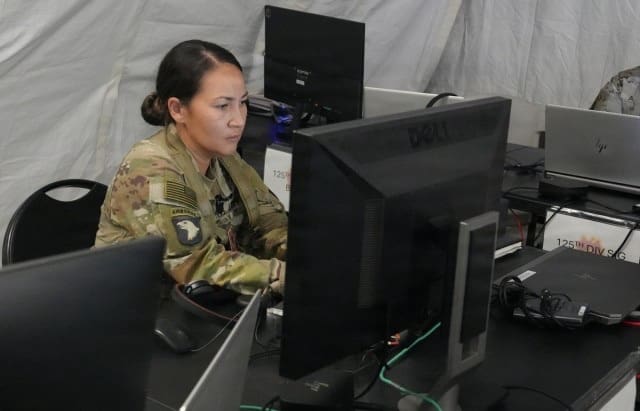
After a week of validating their CA collective tasks, the 91st Civil Affairs Battalion partnered with Delta Company, 96th Civil Affairs Battalion, to execute a comprehensive tabletop exercise. This exercise leveraged a one-of-a-kind artificial intelligence and machine learning (AI/ML) model that enabled leaders to certify their Company in the unit’s critical tasks, a groundbreaking shift in how the Army assesses readiness.

In a first full iteration for the formation, ARSOF CA conducted a company-level certification exercise without using humans as external evaluators. For decades, units relied on observers to monitor training and assess Soldier competencies. Today, that work is being done by AI.

Civil Affairs Soldiers, who typically find themselves engaging with civil populations to solve complex problems, suddenly found themselves interacting with role players and civilian leaders built into the AI model.

In an innovative approach to transform how Soldiers prepare for future conflicts across multiple operational environments, AI is helping standardize training. AI enables commanders to rapidly scale training without proportionally increasing resources. What was once expensive and resource-intensive feat is now being done with the stroke of a keyboard.

“What makes this AI model unique is that it is limitless in complexity and cohesion to give the training audience a valuable and effective training opportunity,” said Moran Keay, CEO and founder of Motive International, who ran the training. “This training provides commanders with an objective assessment of their formation’s ability to execute critical tasks before sending anyone overseas.”

During Atlas Lion, the AI model analyzed tens of thousands of data points using key performance indicators, a task previously impossible for human evaluators. By leveraging thousands of pages of doctrine, documents, and regulations, the model provided an unbiased assessment of the Company’s ability to conduct Civil Affairs tasks critical to mission success.

While some express skepticism about the role of AI in evaluating Soldiers whose primary role is to engage with civilian populations, the Army is adapting, modernizing, and transforming how it trains and certifies its troops.

As the Army continues to identify innovative ways to train and certify formations, Civil Affairs Soldiers are shaping the future of training. Through innovation and forward-thinking leadership, ARSOF CA is not only enhancing their readiness but also setting the standard for how the Army will train and certify its Soldiers to meet the demands of tomorrow’s missions.

Story MAJ Justin Zwick

3rd Special Forces Group (Airborne)

Photos by PFC Christina Randall

xTechOverwatch Competition Showcases Autonomous Capabilities

Thursday, November 20th, 2025

BRYAN, Texas — U.S. Army Transformation and Training Command hosted xTechOverwatch for Unmanned Systems Oct. 27-29, 2025, at the Bush Combat Development Center – Innovation Proving Ground in Bryan, Texas, which provided industry partners and academia the ability to compete for opportunities to continue development integrated within the Army.

This invitation-only competition showcased cutting-edge autonomous unmanned system technologies from 40 selected industry teams, evaluated alongside private capital partners, as they integrate their solutions with the Army’s most lethal squads. Twenty teams were chosen to continue development with the Army.

These teams will work directly with Transformation in Contact formations from January 2026 to July 2027, providing the chance to influence the Army’s modernization strategy by accelerating autonomous capabilities.

This competitive assessment, facilitated by T2COM and key stakeholders, aimed to accelerate the adoption of autonomous systems in line with the Chief of Staff of the Army’s directive. Competitors demonstrated their air, ground, payload, and collaborative autonomy technologies on situational training lanes, providing a real-world assessment of their capabilities.

“xTechOverwatch was incredibly successful for the Army,” Lt. Col. Nick Rinaldi, competition lead, Army Applications Laboratory, said. “Having the entire ‘materiel kill chain’ as evaluators invested in the outcome was critical to the speed of decisions on which technologies were most suited to move into a TiC formation.”

Rinaldi continued, “this was a microcosm of how we have to do business. We have to engage industry on real problems we’re trying to solve, get their capabilities in a place where Soldier formations can actually use the equipment in context and in concert with other capabilities, and then make decision quickly.”

A critical component of this approach is the rapid fielding of experimental technologies to active-duty units. The competitors selected will be under contract within 60 days to work directly with the formations training cycle. This allows Soldiers to experiment with prototypes and provide crucial feedback, driving iterative improvements.

By exposing warfighters to cutting-edge advancements, the Army empowers them to adapt, anticipate challenges, and maintain relevance in the modern battlespace. Delaying this process risks forcing Soldiers to learn how to use these capabilities under the pressure of combat.

– US Army T2COM Public Affairs

Scientific Systems’ Autonomy Software Achieves A Major Milestone in Test with Group of Unmanned Boats

Wednesday, November 19th, 2025

Advanced Software Enables Coordinated, Autonomous Execution of Complex Maritime Operations During Real-World Ocean Trial

BURLINGTON, Mass., Nov. 18, 2025 — Scientific Systems, a defense software prime with expertise in maritime and multi-domain operations, announced today that its distributed AI-powered OPTIMUS autonomy software successfully executed a recent on-water test of multiple unmanned surface vessels (USVs) performing end-to-end cooperative mission activities. The weeklong maritime test demonstrates that Scientific Systems’ scalable autonomy software is ready now to support “intelligent affordable mass” — the deployment of swarms of autonomous low-cost platforms that use edge-based AI to dynamically coordinate, rapidly adapt, and dramatically increase survivability & lethality, to achieve mission intent in relevant scenarios.

The August demonstration featured a fleet of nine boats equipped with Scientific Systems’ AI-powered collaborative autonomy software. The software enabled the vessels to operate as an intelligent swarm, searching, monitoring, and engaging targets while avoiding obstacles with dynamic rerouting. This activity was a result of seamless integration of real-time sensing, sense-making, and AI decision-making in the decentralized system. Scientific Systems’ unique, decentralized autonomy software enables the formation of “smart swarms” — collaborative, adaptive teams of platforms that can execute complex missions in degraded communications environments. A single remote operator defines only the mission rules, intent, and key authorities, while the intelligent coordination and execution occur autonomously among the platforms within the contested network. This decentralizedapproach delivers major advantages over communications-dependent, centrally controlled systems, enabling mission plans to continue even with intermittent or lost communications and eliminating vulnerability to the loss of any single “leader” vessel—all while providing superior resilience, scalability, and security.

“This test underscores the critical role software plays in enabling affordable mass and autonomy at sea,” said Scientific Systems Chief Executive Officer Kunal Mehra. “We’re proud to support the mission of maritime operators and to advance the readiness of scalable, autonomous USV squadrons.”

Today’s announcement follows July’s unveiling of the VENOM small Unmanned Surface Vehicle (sUSV), developed to meet the Navy’s operational need for high-performance sUSV interceptors.

Scientific Systems’ software, integrated with the VENOM sUSV family—offered in 6-, 9-, and 13-meter models and extendable to other USVs—provides a flexible, mission-ready solution built around a modular, scalable autonomy stack tailored to customer-defined objectives.

SOFWERX To Host Hardware Enabled AI Acceleration Event

Monday, November 17th, 2025

SOFWERX, in collaboration with USSOCOM J24 Intelligence Data Science Team (IDST), will host an Assessment Event (AE) 06-08 January 2026, to determine the best solution to upgrade a remote location with high-performance Graphics Processing Unit (GPU) servers to support large language model (LLM) workloads for up to 100+ concurrent users.

The U.S. Government’s data science portfolio is rapidly expanding its reliance on largescale AI workloads, especially LLMs and highspeed inference pipelines. To sustain this growth and to maintain a strategic edge, the program requires cutting-edge GPU acceleration, capable of delivering the throughput and memory bandwidth needed for state-of-the-art training, finetuning, and deployment. Advanced GPUs will provide a high-performance, energy efficient, and?future ready?foundation for advanced AI workloads, while ensuring low response times, reliability, and room for future growth. 

The goal of this assessment is to acquire, deliver, and install/deploy advanced GPU hardware that will add a high bandwidth, energy efficient GPU capability that is immediately ready to power LLM inference, finetuning, and Retrieval-Augmented Generation (RAG) workloads.  
The GPUs must be delivered as part of a complete, rack-mounted server solution suitable for immediate deployment in the data center at a remote site. The server must include all necessary hardware to operate the GPUs safely and efficiently, including redundant power supplies, appropriate power cables, connectors, and any transfer switches required to support high-availability operation. 

High-speed Peripheral Component Interconnect express-based (PCIe-based) network connectivity must be included, with all necessary cables and interconnects to support GPU-to-GPU communication within the server and connectivity to the site’s broader network. This includes GPU bridges (NVLink or equivalent), network cables, and any peripheral connections required for remote management and monitoring. Storage and memory subsystems must be pre-installed and connected, providing sufficient RAM and Non-Volatile Memory express (NVMe) SSD storage to support large AI models and high-throughput workloads. 


Servers must be pre-configured or delivered with the ability to quickly install necessary software, including firmware, drivers, and GPU libraries, so that the system can be operational for AI workloads immediately upon installation. All components, cabling, and connections must conform to enterprise data center standards and integrate seamlessly with the site’s existing power, cooling, and network infrastructure. Vendors must provide a turnkey solution that minimizes on-site assembly, configuration, and troubleshooting, ensuring the server is ready for immediate use with minimal IT intervention.  

The solution must support deployment to two networks, within air-gapped or otherwise strictly isolated environments. The server(s) and all GPUs shall be physically and logically isolated from each other, and any non-approved networks (no dual-homed network connections).

Submit NLT 09 December 2025 11:59 PM ET

U.S. Citizens Only

To learn more, visit events.sofwerx.org/hardware-enabled-ai-acceleration.

Veteran Entrepreneur Austin Holmes Leads Signal Raptor in Advancing Digital Trust and Innovation

Tuesday, November 11th, 2025

NASHVILLE, Tenn., (November, 2025) — As the country celebrates Veterans Day and National Entrepreneurship Month, U.S. Army veteran and entrepreneur Austin Holmes, founder of Signal Raptor, shines a light on how veterans are shaping the future of technology through mission-driven innovation. This is a purpose-driven tech company in the business of digital trust and secure communication, reflecting Holmes’s journey from combat to the C-suite, where integrity, accountability, and dependability remain the mission.

After years serving in the military, Holmes drew parallels between mission-critical communication in the field and the growing need for clarity and security in the digital environment. Signal Raptor was built on that foundation to ensure that people, businesses, and organizations can operate with confidence and transparency in the digital space.

“Veterans understand that trust is at the heart of every mission,” said Holmes. “That very same principle drives our work at Signal Raptor: building technology that’s dependable, disciplined, and focused on protecting what matters most.”

Signal Raptor is part of a growing wave of veteran-owned technology companies redefining the meaning of entrepreneurship. Holmes brings business and technology development through leadership qualities instilled in his military background: precision, adaptability, and service.

This veteran, father, and founder supports his fellow service members in transitioning from active duty back into civilian life and eventually into becoming entrepreneurs. This season, the outreach efforts of Signal Raptor are in line with that mission, including partnerships with veteran business networks in support of veteran innovation and digital literacy.

The following are highlights of the continued Signal Raptor mission:

Veteran-Led Innovation: Applying the lessons of strategy, teamwork, and resilience learned in military service to drive technological solutions.

Digital Trust Commitment: Building trust, reliability, safety, and privacy into all products surrounding communication.

Community Involvement: Partnerships with organizations that serve veterans to extend technology entrepreneurship resources even further.

This Veterans Day and throughout National Entrepreneurship Month, Holmes and Signal Raptor want to highlight the value that veterans bring to the entrepreneurial ecosystem. Indeed, because of their discipline and problem-solving approach, veteran founders are leading the charge in innovation, cybersecurity, and emerging technologies. 

To Holmes, the vision for Signal Raptor goes beyond just building software; it is about building trust in an increasingly complex digital world. His story shows just how much the lessons learned in service can power meaningful innovation in civilian life. “Service doesn’t end when you leave the military-it evolves,” Holmes says. “To us, that means creating technology that serves people, protects them, and helps them connect more securely.” 

Learn more at signalraptor.com.