Atrius Development Group

Archive for the ‘Air Force’ Category

Get Your New ABUs

Wednesday, February 22nd, 2012

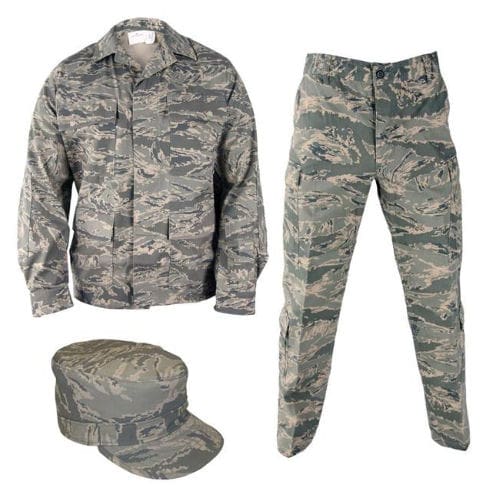
Finally last November, after five years, the Air Force approved a lighter weight fabric for the Airman Battle Uniform. Previously, ABUs were manufactured from a 50/50 Nylon and Cotton twill. You old timers can think winter or heavy weight BDUs and you younger guys need to know that even the original BDUs weren’t as hot as the ABU.


But now everything has changed. ABUs will now be made from the same ripstop 50/50 blend of Nylon and Cotton used by the Army and they are beginning to roll of the production line at Propper. This newer fabric was first introduced in the early 1990s on the Enhanced Hot Weather Battle Dress Uniform. Why it took so long we will never know.

Something to remember, the ABU is not intended to be worn outside of the wire in combat environments.

New Air Force recruits will begin to receive the new version of the ABU at BMTS. But militarygear.com wanted us to pass this along.

If you just can’t stand the heat anymore, you can pre-order the nylon-cotton ripstop ABU coats (MSRP $59.99) and ABU pants (MSRP $59.99) at MilitaryGear.com. The first orders are expected to ship around April 16, 2012.

Men’s
militarygear.com/mens-propper-nylon-cotton-ripstop-abu-coats
militarygear.com/mens-propper-nylon-cotton-ripstop-abu-pants
Women’s
militarygear.com/womens-propper-nylon-cotton-ripstop-abu-coats
militarygear.com/womens-propper-nylon-cotton-ripstop-abu-pants

Forces Focus – NRA LOD Covers USAF Emergency Management

Sunday, February 5th, 2012

Air Force Specialty Code 3E9 (Emergency Management) has been known By other names over the years. For example, when I was a kid, I remember they were called Disaster Preparedness. Interestingly, they are kind of like EOD in that they are part of Civil Engineering even though it isn’t a good fit and this is recognized with a special careerfield badge that reveals their true focus, bugs and gas. They are the CBRNE specialists of the USAF.

Specifically the careerfield, “Prepares, plans, trains, educates, and equips Air Force personnel to respond to, maintain mission capability, and recover from the full spectrum of physical threat events including major accidents, natural disasters, weapons of mass destruction, and wartime chemical, biological, radiological, nuclear, and high-yield explosive (CBRNE) attacks. Provides technical expertise to commanders during full spectrum threat response operations. Performs detection, monitoring, warning, and reporting of chemical, biological, radiological, nuclear (CBRN) events.

If you were in the Air Force prior to the current conflict you were probably pretty familiar with them. We regularly trained in MOPP 4 conditions (even in SOF) and Ability to Survive and Operate (ATSO) was an important part of Operational Readiness Inspections. Maybe it was all institutional momentum from the Cold War, but it was drilled into Airmen enough that they could do it.

Now, NRA’s Life of Duty has prepared a report focusing on this small community of specialists and why they are more relevant now than ever. Here is a teaser.

www.nralifeofduty.tv

Bomber Jacket Art

Tuesday, December 27th, 2011

If you are into bomber jacket art then do yourself a favor and visit this flickr. Too bad our modern military can’t honor traditions like these.

Doc's Disciples

USAF EOD Beret Nixed

Thursday, December 1st, 2011

Recently, the USAF Explosive Ordnance Disposal (EOD) careerfield (AFSC 3E8X1) asked for a distinctive beret. Specifically, they selected Tan, which as most of us know was chosen for wear by US Army Rangers after their Black beret was given to Big Army. Probably not the best choice of beret but it isn’t already an AF beret color. Additionally, they requested recognition of a distinctive flash featuring the Red Bomb emblem first used by EOD in World War Two.

USAF EOD Beret Proposal

In October their request was denied by Air Force leadership. Specifically, the Air Force’s top Civil Engineer, Maj Gen Timothy Byers rejected the idea and he was understandably supported by the Chief of Staff of the Air Force, Gen Norty Schwartz. In a statement to EOD, Byers stated, “Ultimately, their superior training, absolute professionalism, unwavering dedication and joint EOD badge are the hallmarks which definitely set them apart.”

Currently, several careerfields wear berets.

CCT/STO – Scarlet
PJ/CRO – Maroon
TACP/ALO – Black
Weather Parachutists – Grey
Security Force – Blue
SERE Techs – Sage Green

It’s really been a helter skelter smattering of who has a beret and who doesn’t with more and more added over the years. In some cases the beret is worn by actual combat oriented AFSCs and in others only by certain members of careerfields. Additionally, the entire AF Security Forces careerfield wears a beret. Berets have often been considered a mark of the elite (despite the US Army’s decision to institutionalize the Black beret for all Soldiers). When you look at the list, the Air Force’s policy really doesn’t make much sense. For instance Air Force parachutists in careerfields other than those above do not wear a beret (although in many joint billets they do in spite of AF uniform regs) while non-parachutists in some AFSCs do wear them.

This is why the decision to deny an EOD beret makes no sense and there has been much gnashing of teeth on the internet over EOD and why they do or do not rate a beret. There are non-combat AFSCs in the mix already so that argument doesn’t hold water. Granted, a beret does not make the man, but by that argument no one should be wearing them. EOD is being asked to go above and beyond the call and on a regular basis.


USAF Photo

This is the second setback for a careerfield that has recently had to align themselves more as a combat force, based on actual deployed taskings, than the institutional force they have traditionally been. Last year, EOD asked to be declared part of the Battlefield Airman community along with Combat Control, Guardian Angel (PJ/CRO/SERE), TACP, and Combat Weather. Their bid was unsuccessful although they got a partial win.

EOD now has an enhanced indoc course for candidates and they will be required to pass a new EOD-specific PAST (Physical Ability and Stamina Test) test. Additionally, they will now be equipped through the Battlefield Airman Management System, a menu based supply program which was created in 2004 to consolidate and standardize the fielding of personal equipment for those in the Battlefield Airman community.

Both of these decisions are indicative of an Air Force leadership that continues to look at the world as they wish it was rather than how it actually is. Ten years into our nation’s longest conflict, it’s as if the Corporate Air Force refuses to accept that we are actually at war. EOD is completing combat taskings, embedded with Army units and this reality has touched virtually every facet of EOD. While bomb ranges are still supported, EOD Airmen have to learn a whole new set of tasks to survive under fire and neutralize IEDs. Some of EOD’s issues may be that they are part of CE (Civil Engineering) and the CE leadership may well prefer to have their EOD troops pulling range support rather than deployed, dealing with IEDs in a war zone. Wishing won’t make it go away. But then again, where do you put them if not CE?


USAF Photo

An additional issue for EOD may well be that they do not have any career officers. CE officers attend EOD school and command a flight but due to the structure of EOD there are no Squadrons or Groups to command. Officers move on to other CE duties. Other careerfields have opened up to officers such as CRO and career ALO and they are seeing a new emphasis. Perhaps EOD could do with the same.

Don’t get me wrong, EOD enjoys special pays, generous bonuses (due to low manning), higher physical fitness requirements, and access to BAMS. But, with all of this, it seems like they’ve got all of the responsibility of being “special” and none of the recognition. Maybe they don’t need a beret, but like we said earlier, decisions by Air Force leadership regarding EOD seem to display a lack of acceptance of reality. The war is going on. If anything, the IED threat will only increase and there will be more demands on EOD.

Survival Straps Offering USAF Items

Saturday, November 19th, 2011

Survival Straps has introduced a line of licensed US Air Force products. Items include several models of survival bracelets (including a ladies model), key fob, luggage tag, and neck ID lanyard. As with all Survival Straps bracelets, you can choose the size and configure the type of buckle. Additionally, all of the USAF licensed products feature an ID tag emblazoned with the new Air Force logo.

www.survivalstraps.com

Finally, An Up Side To The Budget Cuts

Monday, November 14th, 2011

Air Force civilian PT testers are on the way out. Not because the Air Force has restored faith in Blue Suiters. No, it’s because they can’t afford them. As you may recall, the Air Force instituted civilian PT testers in the Summer of 2010 amid low test scores. A new emphasis on “physical fitness” came as PT testing criteria were tightened. Unfortunately, evidence suggested that some testers were less than stringent in their duties and allowed some substandard performers a pass. Naturally, rather than dealing with the problem in a case-by-case basis, the Air Force decided to slap everyone in the face and hire civilian test proctors. Initially, they tested every Airmen but after time wore on, they monitored testing of Airmen counting others repetitions on some installations.

Why civilians? Who knows. It seems that it would have made more sense to have Stan Eval peek their heads in every once in awhile to ensure that the test was being properly administered but a wholesale solution was over the top. If there’s truly an integrity problem in the Air Force, this solution won’t make it go away. What will truly be telling is if standards once again slip now that Airmen will be back in charge.

While the Air Force is being forced to once again rely on NCOs to do what NCOs are paid to do; train and assess their subordinates, the service has yet to get a grip on reality and adapt the PT test itself to reward performance over looks. The waist measurement remains a part of the test and with looming personnel cutbacks, I doubt they will do away with it. It’s too easy to let the old, chubby guys go. Perhaps at some point they’ll get a Chief of Staff who values execution and doesn’t want a service that sports that heroin chic look.

USAF SF Updates DF-LCS

Wednesday, October 26th, 2011

We’ve written about the Defensor Fortis Load Carrying System (DF-LCS) in the past. Love it or hate it, it was designed specifically for USAF Security Forces (AF SF). But, like other equipment, it has evolved to better suit the needs of the careerfield.

Beginning in late November, AF SF will begin receiving an improved version of their gear harness commonly referred to as (HGEAR) as part of the 5-Year Indefinite Delivery Indefinite Quantity (IDIQ) contract with Garrett Container Systems (GCS).

Over a year ago, the AF Security Forces Center (AFSFC), surveyed the careerfield for suggested improvements to DF-LCS. The majority of the recommendations from users included: a better fit to size, improved padding, and web management.

The latest version, dubbed GEN 3 will incorporate those major recommendations. For example, padding was added to the shoulder area and the neck yoke was altered to improve wear comfort. Remember, this is the same system being worn by our Defenders both deployed as well as at home station. When working the gate, AF SF rarely wear heavy armor, rather relying on concealable, soft armor. Consequently, the harness can chafe the neck. Additionally, Velcro straps and additional management buckles were added to the design to help police loose straps. They also changed the front height adjuster to allow the user to pull down to adjust rather than pull up. It’s a more natural movement and mimics strap adjustments on packs.

Finally, each harness in the rifleman kit will now include a tear/water resistant guide on adjustment, wear and care of the DF-LCS as well as an instructions on how to use PALS. Odd as it seems in this day and age, there are some folks that don’t know how to weave. But, better safe than sorry.

For those not allowed to buy from AFSFC’s IDIQ (and that’s a lot of folks), the GEN3 in both Air Force Digital Tigerstripe as well as Operation Enduring Freedom Camouflage Pattern (OCP) or, more popularly known as MultiCam, will soon be available at www.GCSwarrior.com or through one of their sales reps.

USAF Security Forces Making Some Changes

Wednesday, October 5th, 2011

The Air Force is currently looking at making two moves that will affect their Security Forces in an initiative entitled, “SECURITY FORCES TRAINING FACILITY RE-ALIGNMENT AND MOBILITY LOGDET EQUIPMENT CONSOLIDATION.” Launched before the plan had even been briefed to the entire force, it makes some pretty serious changes.


(Photo USAF, Staff Sgt. Nathan G. Bevier)

The first is that they want to go from 8 Regional Training Centers that provide “pre-deployment training to meet expeditionary combat readiness skills training” to 4. According to Air Force documents these, “Combat skills include non-standard expeditionary ground combat roles.”

The current RTCs:
Air Combat Command – Silver Flag Alpha, Creech AFB, NV
Air Force Materiel Command – Brave Defender, Eglin AFB, FL
Air Mobility Command – Phoenix Warrior, Ft Dix
Air Force Global Strike Command – Camp Guernsey, WY
ANG – 204th SFS Ft Bliss, TX
PACAF – Commando Warrior, Anderson AFB, Guam
USAFE – Creek Defender, Sembach AB, Germany

Generally, troops attend the RTC aligned with their command.

Realigning pre-deployment training is the good part of the plan. Closing some of these facilities makes sense, particularly considering that between the 8 centers, only around 8,700 Airmen are trained annually. Fewer RTCs will save money and help further standardize pre-deployment training for SF. Go for it Air Force!


(Photo USAF, 180th FW PAO)

Unfortunately, the second part of the proposal gives us pause. There is a plan afoot to consolidate all SF LOGDETs at a single facility. You see the Air Force deploys in UTCs which are Unit Type Codes consisting of personnel to accomplish a certain function. Think of them as capabilities sets. The LOGDET is the material half of this equation and is a laundry list of the gear needed to provide that capability.

There are reasons each unit responsible to provide UTCs maintained their own LOGDETs.

1. No single point of failure. If the balloon goes up, some forces may survive initial strikes and still be able to operate with their equipment.
2. It is THEIR equipment. They maintain and can train with the gear to ensure that it is complete and works properly.
3. The commander has responsibility to ensure that his UTCs and LOGDETs are complete and ready. If it’s incomplete or sub-par the commander has to answer for it.

Separating the personnel from their equipment makes no sense. Commanders would no longer be responsible to provide combat ready forces. Furthermore, the LOGDETs would be at the mercy of transportation. TRANSCOM makes miracles happen everyday but ensuring that troops from one base mate up with the right shipping container from another base, at the right place and the right time, especially in the middle of a war zone, is a bit too much to ask.

Furthermore, if LOGDETs are consolidated the next logical step for the shoe clerks is numbers. Imagine this argument, “Well, we don’t need ALL of this gear sitting here at once, after all, we’ve never ever used it all at the same time so we can cut back on how much gear we stockpile” Then, war comes and gear does not work, is incomplete, or entire sets are missing due to funds being diverted to purchase new furniture at HQ. Don’t believe that last one? Just visit an Air Force base.

This is a bad idea and we hope it crawls back under the rock it came from.