Phantom Lights

Archive for the ‘Air Force’ Category

Air Force Changes Path of Entry for Enlisted Special Warfare Operators

Friday, February 21st, 2020

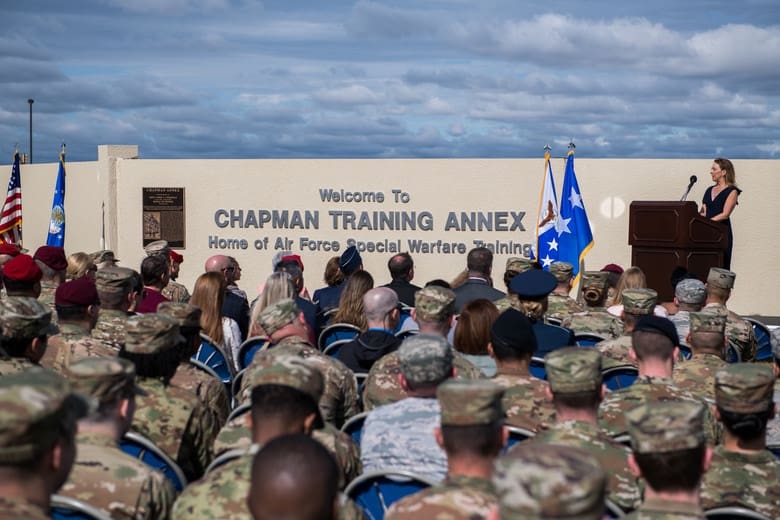
JOINT BASE SAN ANTONIO-RANDOLPH, Texas – To better afford enlisted recruits the time and opportunity to find the path of their greatest calling, the Air Force has created a single path of entry into the special warfare recruiting and initial training pipeline.

TACP FTX @ Camp Bullis, Texas

The Special Warfare Operator Enlistment Vectoring program will officially commence in early April of this year with a new Air Force Specialty Code for accessions and the first shipment of special warfare candidates to the service’s basic military training.

“On initial entry into the Air Force, the 9T500 AFSC will be the only path for new Airmen to pursue a career into the Combat Control, Pararescue, Tactical Air Control Party or Special Reconnaissance career fields,” said Lt. Col. Joseph Lopez, chief of the special warfare division at Air Education and Training Command headquarters. “This change allows candidates to make a more informed career decision, prior to being vectored, after months of education, training, development, and mentorship, to see what career field might be the best fit for them. The program also enhances the Air Force’s ability to assign Airmen a permanent AFSC in an equitable way across the special warfare community after a thorough “whole-person” evaluation has been conducted on every candidate going through through the accessions and initial phase of training.”

Every day, special warfare Airmen deploy around the world to project American military power through global access, rescue friendly forces through personnel recovery operations and to destroy the enemy through precision strikes.

The SWOE-V program centers on a “coach-develop-mentor” mindset that begins in the pre-accession phase where recruiting development teams identify potential special warfare operators and begin the process to prepare them for the rigors of the special warfare training pipeline and later, their designated career field.

“The typical special warfare scouting, recruiting and development process for a candidate from pre-accessioning to shipping to BMT takes from four to six months,” said Lt. Col. Heath Kerns, commander of the 330th Recruiting Squadron which specializes in special warfare and combat support recruiting. “During pre-accessioning with help from our developers, candidates begin a 21-day “Pass the PAST” workout program developed to help them pass the Physical Abilities Stamina Test, while at the same time being educated on special warfare components, missions and specialties and the SWOE vector process.”

Another key element to the SWOE-V program will be the base lining of enlistment standards for recruits.

“Having a standardized baseline of enlistment standards will eliminate confusion amongst potential recruits, as well as opens up a larger pool of candidates during the recruiting process who might be eligible for and interested in a career in special warfare,” Kerns said.

After a potential candidate passes the PAST, a test that represents the minimum physical fitness entrance standards for enlisted special warfare career fields, they compete for selection and receive a developer recommendation before contracting and shipping to BMT at Joint Base San Antonio-Lackland, Texas, as a SWOE candidate, Kerns said.

During BMT, SWOE candidates will master curriculum that includes the Air Force mission and vision, core values, drill and ceremony, history and priorities, field training and joint warfare like every other trainee, but undergo additional training to prepare them for the Special Warfare Prep Course.

100% and then some, TACP apprentice course

“While assigned to their special warfare BMT flights, candidates conduct additional physical training and continue their education about all things special warfare related including components, missions and specialties and the SWOE vectoring process,” Lopez said.

SWOEs’ BMT performance evaluation data is collected throughout training to be included as part of the vectoring process once trainees enter the Special Warfare Prep course, administered by officials at the Special Warfare Training Wing, also at JBSA-Lackland.

“Along with the performance data from BMT, data from the Special Warfare prep course, and a SWOE’s career preference, candidates are vectored to either the Special Tactics and Guardian Angel, or the Tactical Air Control Party, courses of initial entry,” Lopez said.

Selection for a specific special warfare Air Force Specialty Code is heavily based on a candidate’s performance, which drives a competitive model early on, even before shipping to BMT, thus helping shape individual’s drive, determination and strengths, intended to create trust and team cohesion among candidates, Lopez said.



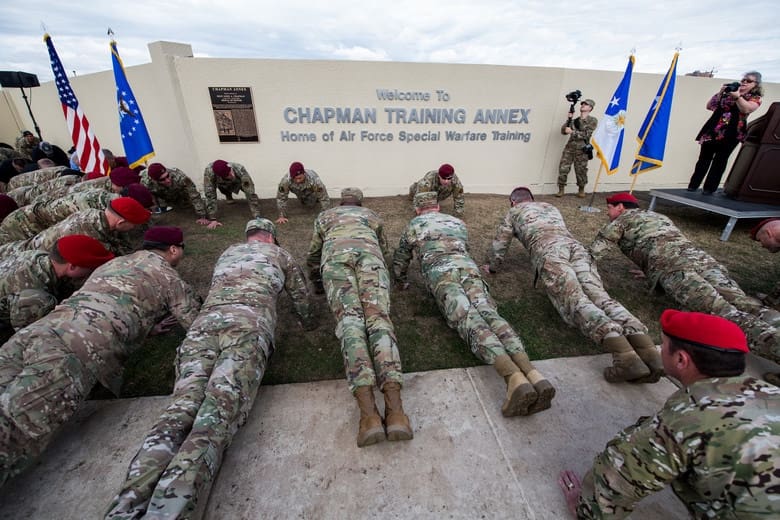
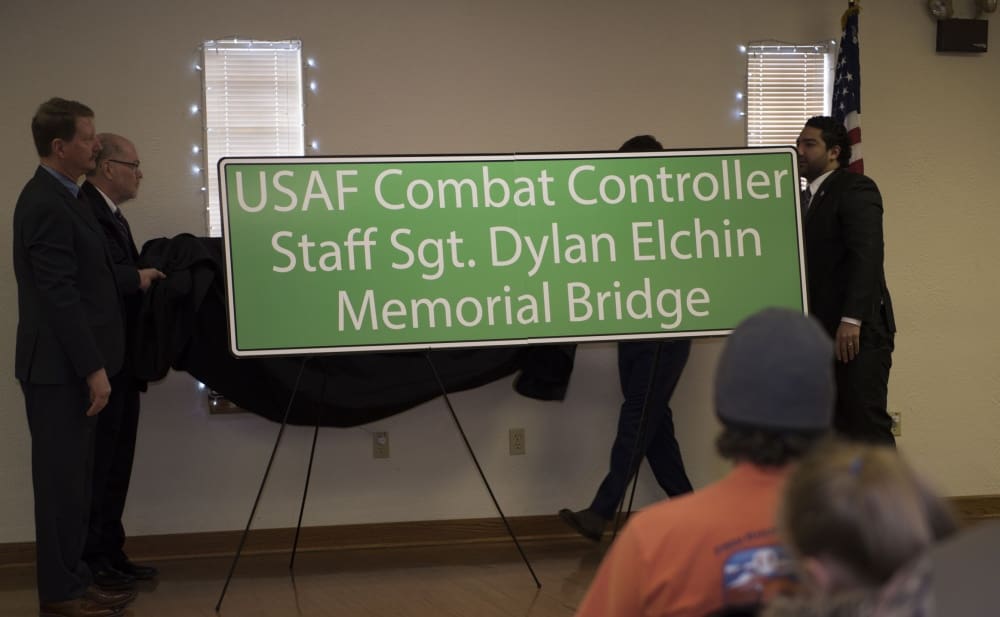
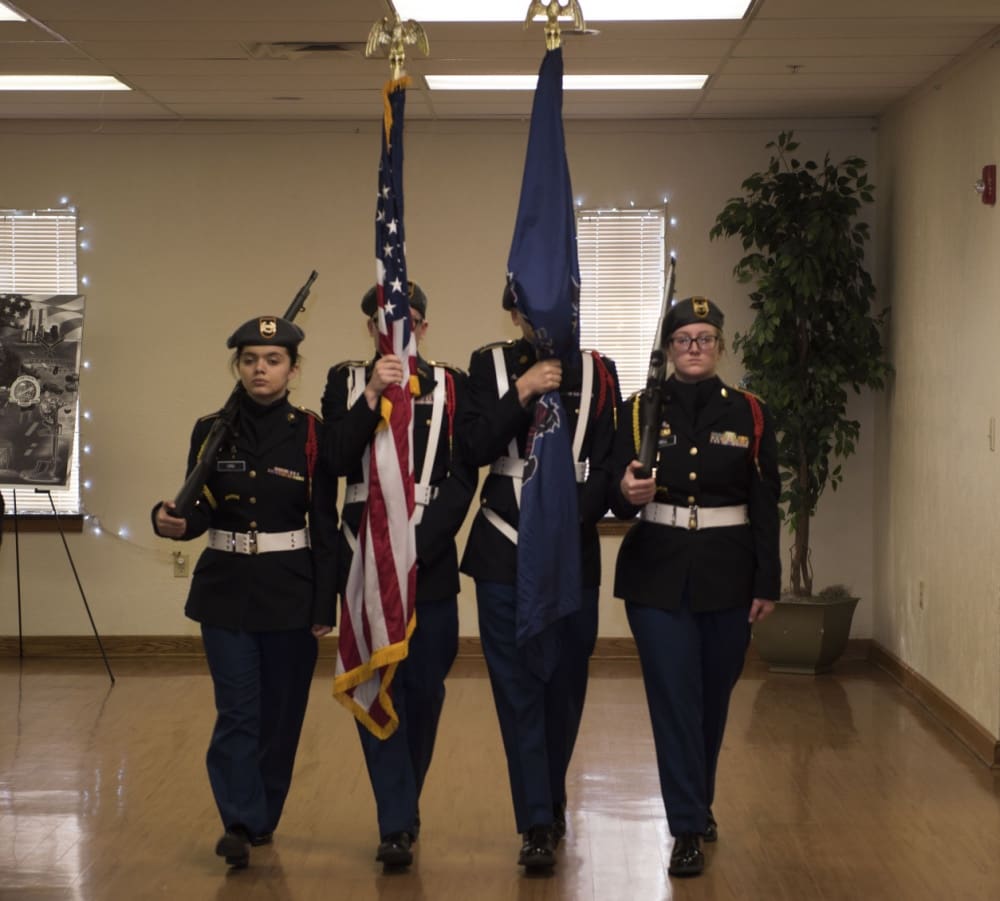
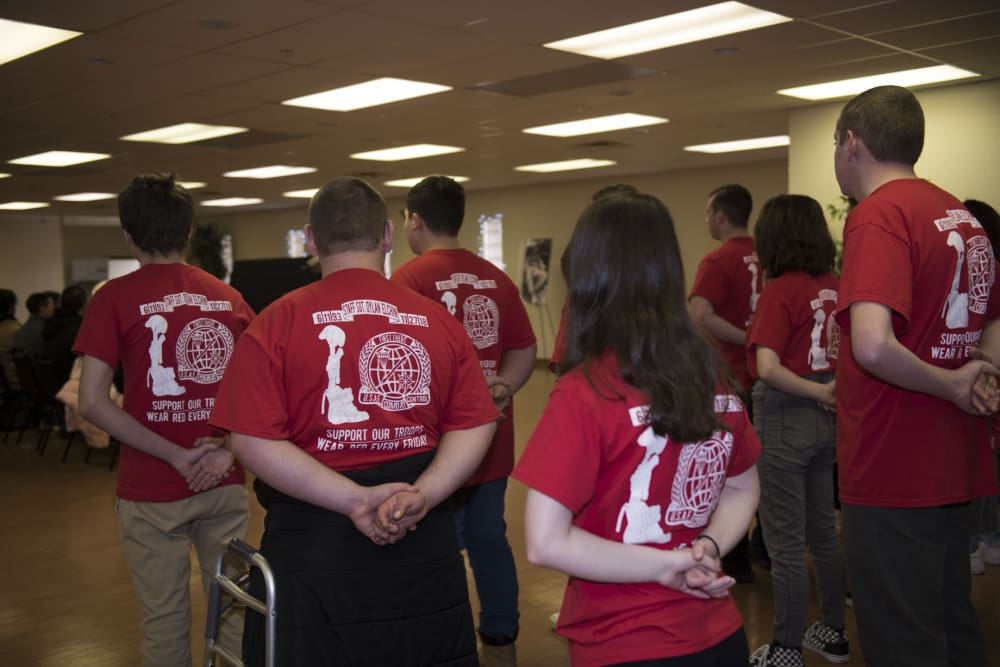
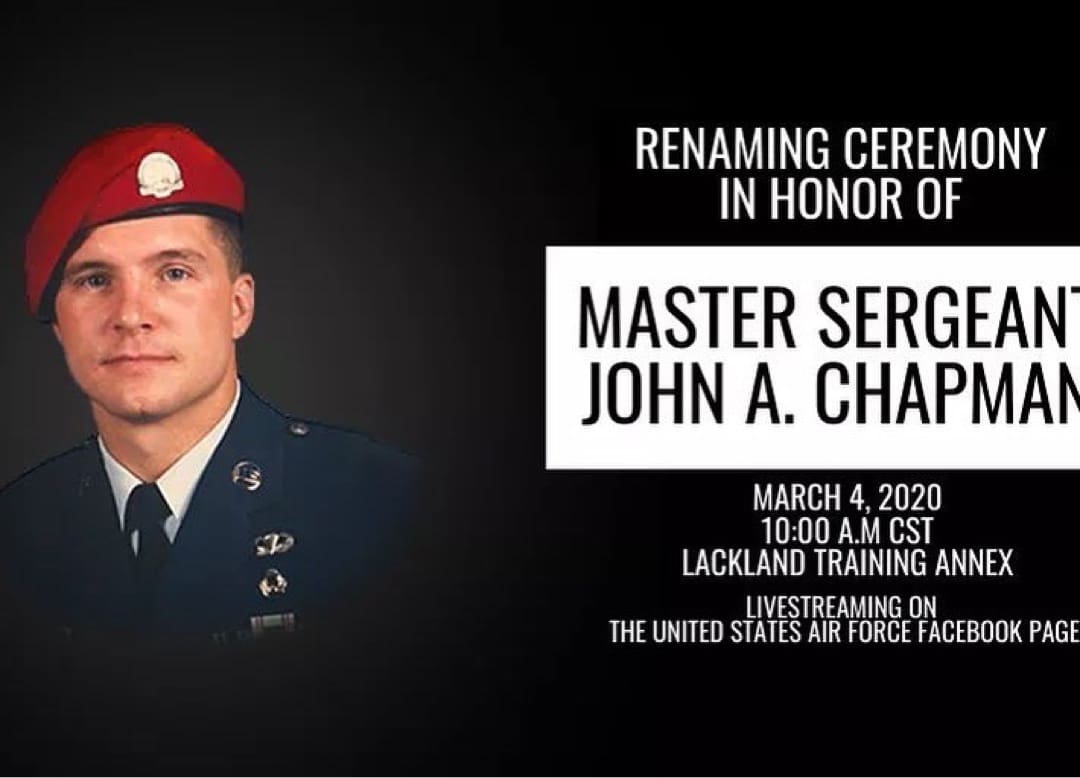
Special Warfare trainees honor fallen combat controller

“Nothing is given; Airmen must earn their spot in their chosen career field and fight for it,” Lopez said. “We are evaluating them continuously through pre-accessioning, BMT and the Special Warfare Prep Course, using a whole person concept that includes cognitive, physical skills, as well as Airmanship and instructors’ evaluation of teamwork and attitude.”


From this point in the pipeline, SWOE candidates are split into one of two paths: the four-week Special Tactics and Guardian Angel course of initial entry or the TACP initial course of entry.

“After successful completion of the ST/GA initial course of entry, candidates will be assigned into the combat controller, pararescue or special reconnaissance AFSC based on their continued performance during training and their preference,” Lopez said. “After successful completion of that course, candidates continue along their respective AFSC-specific training pipelines.”

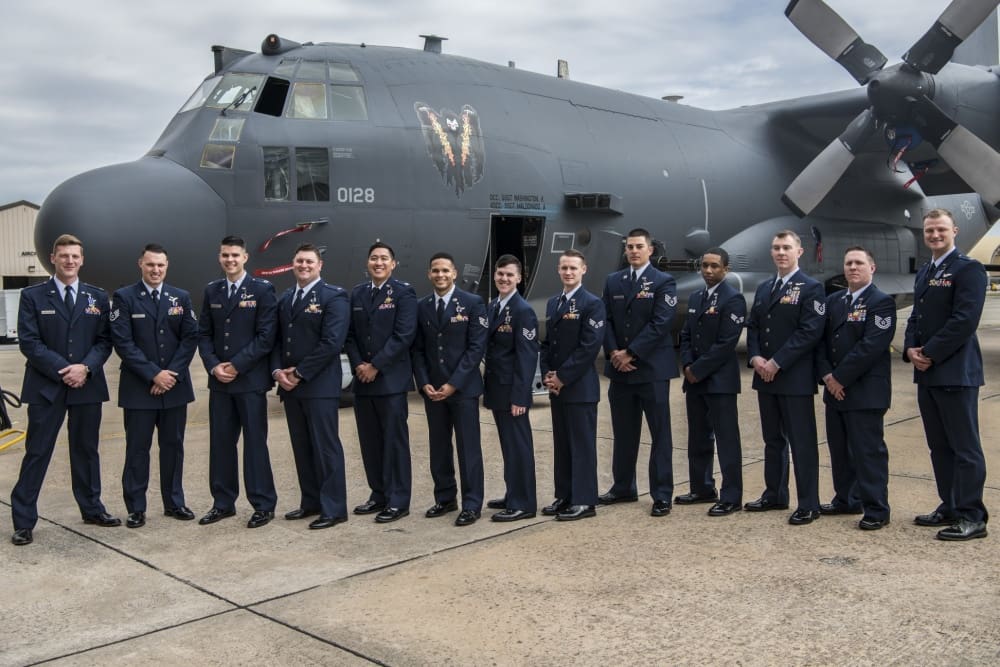
Special Warfare Airmen train with U.S. Marine Corps Reserve

Those who enter the TACP course of initial entry and successfully complete it will continue along in the remainder of the TACP training pipeline, said Lopez.

“The SWOE-V really is a big deal as it represents a momentous change for the Air Force special warfare community,” Lopez said. “By removing constraints in the recruiting and accessions process, we are expanding the talent pool while streamlining entry into the service. We also ensure ensure equitable distribution consistent with and proportional to Air Force-established production goals.”

By Dan Hawkins, Air Education and Training Command Public Affairs

AF Note: To hear more about the SWOE-V program, listen to “The Air Force Starts Here” podcast featuring Lt. Col Lopez, AETC’s special warfare division chief, and Lt. Col. Heath Kerns, 330th Recruiting Squadron commander. The podcast is available for download or streaming on Apple Podcasts, Spotify and Google Play, as well as on the AETC website.

USAF Parachute Riggers: One Ripcord at a Time

Tuesday, February 18th, 2020

CAMP LEMONNIER, Djibouti (AFNS) — The Air Force uses more than 20 types of parachutes to conduct personnel recovery, airdrops and asset insertion into combat zones. Knowing what type of parachute is required for each mission and verifying the safety of those parachutes is the job of a parachute rigger.

This responsibility on Camp Lemonnier is up to the 82nd Expeditionary Rescue Squadron Aircrew Flight Equipment riggers, deployed from Moffett Federal Airfield, California.

“Being a rigger, everything we do has to be 100 percent,” said Tech. Sgt. Isaac Corniel, the 82nd ERQS AFE NCO in charge. “There is no room for mistakes. There’s no room for error. Their lives are in our hands. Even if we have a small twist in a line we want to make it straight, as it can mean someone’s life.”

Being deployed to Djibouti has allowed the 82nd ERQS AFE to train on real-world missions unlike any other training they can get at home station.

AFE riggers are required to pack a variety of chutes in a variety of conditions throughout the world to meet mission needs. The packing can take from 35 minutes to several hours to inspect and repack. Along with the complex quality control measures that must be performed.

“We just try to be the best that we can. We preach quality, quantity and efficiency,” Corniel said. “We are combined with a variety of military forces being deployed, so our guys get to train on more scenarios than they would at home.”

According to Corniel, being deployed to Africa has allowed the team to have hands-on experience with more airdrop missions, whereas back home they would only provide chutes for one or two drops a month. The AFE Airmen said they have grown their understanding on the job to make their deployment a success.

“The guys have been great. They all live up to the riggers creed; they know now what it is to be a rigger,” Corniel said. “We are a part of something special and we strive to keep the history of excellence between the pararescue teams and riggers.”

By SSgt Carlin Leslie , Combined Joint Task Force-Horn of Africa Public Affairs

Wanted: Ideas on Space Force Members’ Name, Ranks

Sunday, February 16th, 2020

ARLINGTON, Va. (AFNS) — The U.S. Space Force is looking for feedback from U.S. military space professionals on what Space Force members should be called – similar to how the Air Force refers to its members as ‘Airmen’ or the Army refers to its members as ‘Soldiers’.

Given the significance a name has to the identity and culture of an organization, the Space Force is taking a deliberate approach to ensure Space Force member titles and ranks appropriately convey the nature of the newest Armed Forces branch and the domain in which it operates.

Toward that end, Space Force officials are soliciting ideas related to Space Force ranks, names for operational units and what Space Force members should be called collectively. They are especially interested in soliciting ideas from those currently assigned to the U.S. Space Force or those who expect to be members of the Space Force in the future.

Air Force Common Access Card holders with access to Air Force Portal should submit their ideas online by Feb. 24 through the IdeaScale website at usaf.ideascalegov.com/a/ideas/recent/campaigns/122. Space Force officials will also be reaching out to the Army, Navy and Marine Corps space communities to offer military space professionals in other services the opportunity to submit ideas.

“As we continue to forge the Space Force into a lean, agile and forward-looking 21st century warfighting branch, we want to provide space professionals the opportunity to influence what the members of our new service will be called,” said Lt. Gen. DT Thompson, U.S. Space Force vice commander. “The decisions we make today will shape the Space Force for decades to come, so we want to ensure those who will serve in the Space Force have a say when it comes to important organizational and cultural identity considerations.”

Officials emphasized several guidelines respondents must consider when submitting ideas. For example, proposals must be gender-neutral, distinctive and should emphasize a future-oriented military force. In addition, submissions cannot violate copyrights, infringe on trademarks or other intellectual property rights, or be proprietary. Any submission falling into those categories will not be considered. Submissions must also be in good taste.

Once the submission deadline closes, a panel of Space Force officials will review inputs along with other feedback received from various sources to help inform a final decision on the new Space Force member moniker. That decision, which will be made by senior Space Force leaders, will be announced publicly at a future date to be determined.

By Secretary of the Air Force Public Affairs

Eielson AFB’s 354th SFS Test Cold Weather Gear

Monday, February 10th, 2020

Testing of the Army’s potential cold weather solutions is joint. Last month, Alaska’s 354th SFS partnered with the U.S. Army Combat Capabilities Developmental Command to try out some of the new cold weather gear also being evaluated at Fort drum in New York.

Photos by Senior Airman Beaux Hebert

USAF Issues Updated AFI 36-2903 Dress and Personal Appearance of Air Force Personnel

Monday, February 10th, 2020

The Air Force has updated AFI 36-2903, dated 7 Feb 2020. The biggest change is dealing with beards. Don’t get too excited. They are still only authorized for medical or religious accommodation. It’s just that now, there is guidance on how they should look.

A major oversight is that the new AFSC Special Reconnaissance has been left out of the AFI. Technically, they are no longer authorized a beret. Weather Parachutists however, are still authorized to wear the Grey beret.

Special Tactics Operators Simulate First-Ever Extreme Cold Weather FARP with Next Generation Fighters

Friday, February 7th, 2020

HURLBURT FIELD, Fla. — If an aircraft is behind enemy lines and running low on fuel, a forward area refueling point may be necessary to refuel that aircraft and carry out the mission.

Behind those enemy lines, Special Tactics Airmen are relied on to survey the area of interest to ensure the aircraft can land and be refueled. Special Tactics teams can assess, open, and control major airfields to clandestine dirt strips in either permissive or hostile locations, providing strategic access for our nation’s military.

For the first time, aircrew with the 27th Special Operations Wing, Cannon Air Force Base, New Mexico, along with a team of Special Tactics Airmen carried out a simulated FARP for F-22 Raptors assigned to Pacific Air Forces’ 3rd Wing in an extreme cold weather environment during Emerald Warrior at Joint Base Elmendorf-Richardson, Alaska, January 21- 31.

“The ability to refuel aircraft at forward airfields and in austere environments is a critical element of Agile Combat Employment,” said U.S. Air Force Col. Robert Davis, commander of the 3rd Wing, Joint Base Elmendorf-Richardson, Alaska. “Practicing this capability with Special Tactics operators enhances our interoperability with the special operations community and increases our ability to generate combat power in a contested environment. Special Tactics operators are uniquely suited to seize and control airfields, and demonstrating our ability to conduct forward area refueling in challenging arctic conditions takes ACE to new heights.”

The ACE concept provides special operations forces an opportunity to produce lethality with a smaller footprint.

“Bringing together [Air Force Special Operations Command] and the [Conventional Air Force] capitalizes on the rapid planning cycle and precision lethality of Special Tactics in combination with the overwhelming firepower of the CAF,” said a Special Tactics officer and one of the leads for the exercise. “We are able to break open opportunities not afforded to aircraft, like the F-22, in a major combat operation when we rapidly seize an airfield and utilize it to rearm and refuel air dominance assets to keep them in the fight.”

The training familiarized Special Tactics operators with the Air Force’s fifth-generation aircraft, providing unmatched lethality and adaptability to the warfighter.

“F-22s and F-35s were designed to compete and win against advanced adversaries,” said a Special Tactics officer. “Working with the newest and most advanced fighters in the Air Force provides [Special Tactics] the opportunity to maintain technological edge and develop the tactics, techniques and procedures needed in order to leverage their full capabilities.”

During this exercise, Special Tactics operators integrated with an MC-130J Commando II and F-22 Raptors. The airfield was surveyed, secured and operated by an ST team while the C-130 crew refueled the fighters.

The environment allowed ST teams to train on how to best prepare and pack for an extreme cold weather mission as well as perform certain tasks with decreased dexterity.

“This year’s location pushed our limits on sustainability in a major combat operation and provided an opportunity to refine and rewrite TTPs for a challenging operational environment,” the STO said.

Emerald Warrior is a U.S. Special Operations Command directed exercise focusing on irregular warfare in a joint, NATO combined realistic environment. This training hones special operations forces’ air and ground combat skills and the development of improved tactics, techniques and procedures, while strengthening relationships for future deployments.

For Special Tactics, Emerald Warrior is a way to execute and demonstrate a range of skills while integrating the capabilities of joint assets and allies, maintaining an edge over the nation’s adversaries.

“The team was thrilled to have the opportunity to work with the professionals in the F-22 and MC-130 community,” the STO said. “We experienced incredible motivation and creative problem solving to push this program forward.”

Special Tactics is U.S. Special Operations Command’s tactical air and ground integration force, and the Air Force’s special operations ground force, leading global access, precision strike, personnel recovery and battlefield surgery operations.

Story by: Senior Airman Rachel Williams, 24th Special Operations Wing Public Affairs

 Photos by: Staff Sgt. Ridge Shan

Nellis Threat Training Facility

Saturday, February 1st, 2020

SSD Reader and fellow AFSOC Veteran MSgt Steve Venski (USAF, Ret) sent us this write up of his recent visit to the Nellis Threat Training Facility, or as commonly known the “Petting Zoo” near Las Vegas. He thought other readers would be interested as well. We agree.

Deserts rarely give up their secrets willingly. And the deserts of Nevada are no exception. Outside of Las Vegas, off to the northwest, lies the Nevada National Security Site; euphemistically known as N2S2. Covering almost 1400 square miles of Nevada, there are legends and secrets galore. However, much closer to Sin City, is Nellis Air Force Base, home to U.S. Air Force Fighter Weapons School. The most widely known exercise, is RED FLAG. While the movie TOP GUN has received much press and movies made, the fact is, the U.S. Air Force (USAF) trains all branches of the service (except the Coast Guard; still haven’t figured out how to make those boats fly…) in what’s termed ACM; Air Combat Maneuvering, dogfighting. The airspace of RED FLAG, lies within what’s known as the Nevada Test and Training Range (NTTR); over 5,000 square miles of Nevada. Get your head around that one.

Towards that end, realistic training is essential. Our adversaries don’t fly the same gear we do. Over the decades, the U.S. has acquired (by hook or by crook), quite a few airframes of what the bad guys would be flying. There exists a formerly classified facility on Nellis Air Force Base, known as the Threat Training Facility. Many years ago, I visited this place, and it took a full-on security clearance to gain admission.

Fast-Forward 20 years….the proliferation of weapons by countries hostile to the U.S., has resulted in explosive growth of the TTF, and a re-thinking of who needs to know about these weapons systems, and why. The classification has come off of the Threat Training Facility, and access has been granted to almost all. Rumor has it, that all the ‘Alphabet Kids’ (The CIA, FBI, NGA, DIA, NSA, NRO), come thru the TTF, for not only hands-on inspection and recognition, but to learn how each piece of equipment works, and to understand its’ capabilities, so as to be able to use it, or to disable it, if necessary. That’s right folks, this is not just a museum where you just look at things, but you’re invited and encouraged to go give things a feel. Because of that, the facility has been given the name of ‘The Petting Zoo’. Seriously. I couldn’t make this stuff up.

-I mean, I could,…but I didn’t.

Once I heard about the ability to enter the ‘New & Improved’ Petting Zoo, I couldn’t wait. While in Las Vegas for SHOT, I made plans for my colleagues and me, to visit the ‘Zoo’.

Let me say this: It does NOT disappoint. The Cliffs-Notes are this: There is more shit in there, than a Corsicana Texas Fruitcake. All small arms and weapons from the former Soviet Union and Warsaw Pact relatives, are there. Additionally, there are crew-served weapons, and light and heavy artillery. Moving on, there’s armored personnel carriers and tanks. Since the aviators from all branches will be moving through what’s known as ‘Denied Territory’, there’s a very real possibility they will encounter Surface-to-Air Missiles (SAMs). For visual recognition, the Zoo delivers. All possible types of shoulder-fired missiles, and ground radar systems are present. Every type of Surface-to-Air radar-guided missile system is also there.

Holy Hannah, does it get any better than this? -Oh yeah. Like the man on the commercial said, “But Wait! There’s MORE!” Fixed- wing aircraft, from a MIG-15, all the way up to a MIG-29! Rotary-wing aircraft, include not only the smaller utility helicopters, but the big, honkin’ HIND-24 Russian Attack Helicopter. In Texas parlance, It’s a big sonafabitch. I can imagine it struck fear into the hearts of the Afghan tribesmen when those huge things came roaring over the mountains. -Right up until the time the mujahedeen got their hands, on U.S. Stinger missiles…. Gotta love technology.

As a former member of Air Force Special Operations, I knew ‘The Back-Story being the Real Story’, and I had to ask where all these artifacts had come from. Some of the articles were ‘gifted’ from defectors, as part of their ‘Desperately Seeking Asylum’ deal. Others came from our allies, as they swept thru their adversary’s armies and air forces. Some of them were what’s known as ‘Battlefield Pick-Up’; sorta like Pick-Up Sticks, only with weapons and stuff. -And others were rumored to be outright stolen by some of the ‘Alphabet Kids’, in their missions to acquire the bad guys goodies. Looking out in the five-plus acre lot that just houses the larger aircraft and missiles, I couldn’t help but wonder what stories these things could tell, if they could talk.

Finally, in closing, I will offer this: I have been told there is a base out in the ‘upper reaches’ of the Nevada Test Range, where MIG-21s, 23s, and 29s reside, and are flown by U.S. Aggressor squadron pilots, to train our U.S. military pilots, on tactics and capabilities. 

Lies? Cock-and-Bull story? Like the poster says: “The Truth Is Out There.’ 

-But since you can’t get there, I urge you to go visit ‘The Petting Zoo’, at Nellis AFB.

V,

SENDS

About the author:

MSgt Steve Venski spent 20 years in the United States Air Force, working in the Avionic Sensors career field.

The Avionic Sensors career field, began the early years of what is now called ISR; Intelligence, Surveillance, and Reconnaissance.

MSgt Venski’s ‘platform resume’ consists of F-4 PHANTOM aircraft, to include both photographic film and electronic reconnaissance. Additionally, laser-target designators, and strike systems.

No career could be complete without serving in Special Operations, of which MSgt Venski did two tours in Southeast Asia, with the AC-130 SPECTRE aircraft.

Upon being some of the last people out of Southeast Asia in 1975, he rotated back to Florida with the 1st Special Operations Wing, out of Hurlburt Field, and enjoyed touring the globe, and introducing bad guys everywhere, to the AC-130 SPECTRE Gunship.

He currently resides in Texas, with his wife and Low-Light Level attack kittens.

“The Meek May Inherit The Earth,

-But The BOLD Shall Command The Skies.”

Air Cop Combatives

Sunday, January 26th, 2020

From the 1964 pamphlet “Air Police Combat Preparedness Personal Protection”