GORE-TEX WINDSTOPPER

Archive for the ‘AUSA’ Category

Saab and Boeing Conduct Successful Test Firing of Ground-Launched Small Diameter Bomb

Tuesday, October 15th, 2019

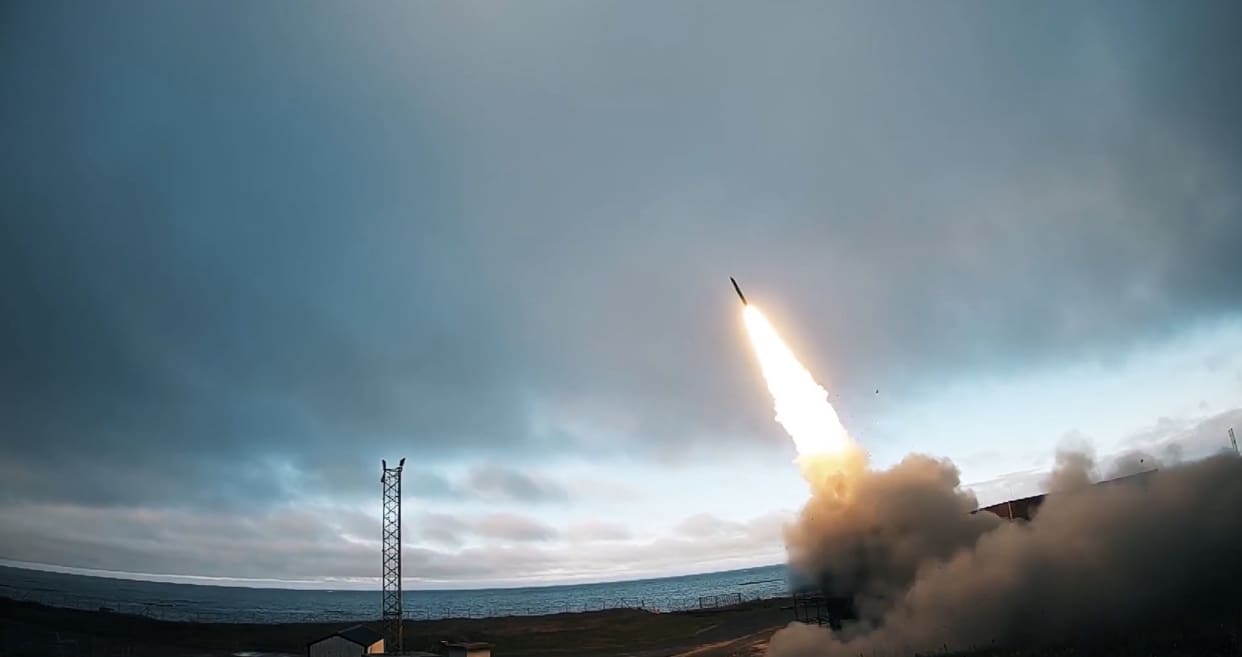
Saab has together with Boeing conducted a successful long-range test firing of the Ground-Launched Small Diameter Bomb (GLSDB) in Norway.

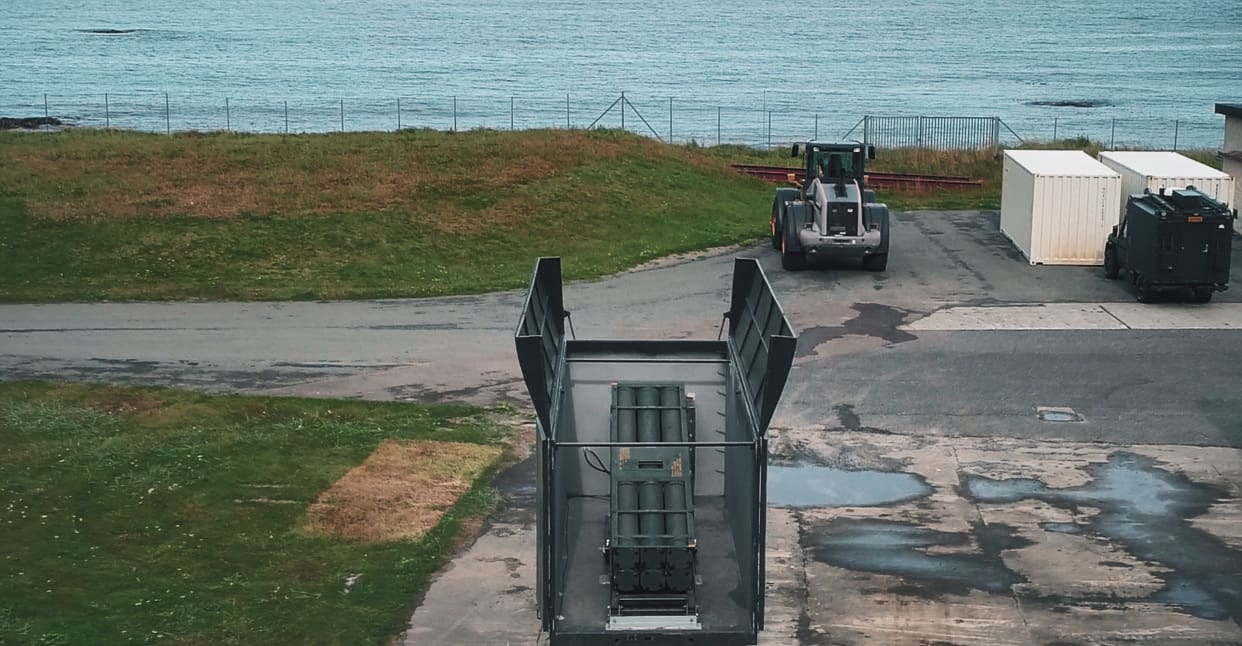
The test firing took place at the Andøya Test Center in Andenes, Norway, September 26, 2019. The objective of the test firing was to hit a predetermined target in the sea, 130 km away from the launcher. The launcher used in the test firing was a custom made, fully autonomous, 20 foot container.

“In collaboration with Boeing, we have developed a highly competent system that offers high precision at long range. We see a lot of potential in the GLSDB, since it provides armed forces around the world with a long range artillery capability, which there is a great demand for”, says Görgen Johansson, Head of Saab business area Dynamics.

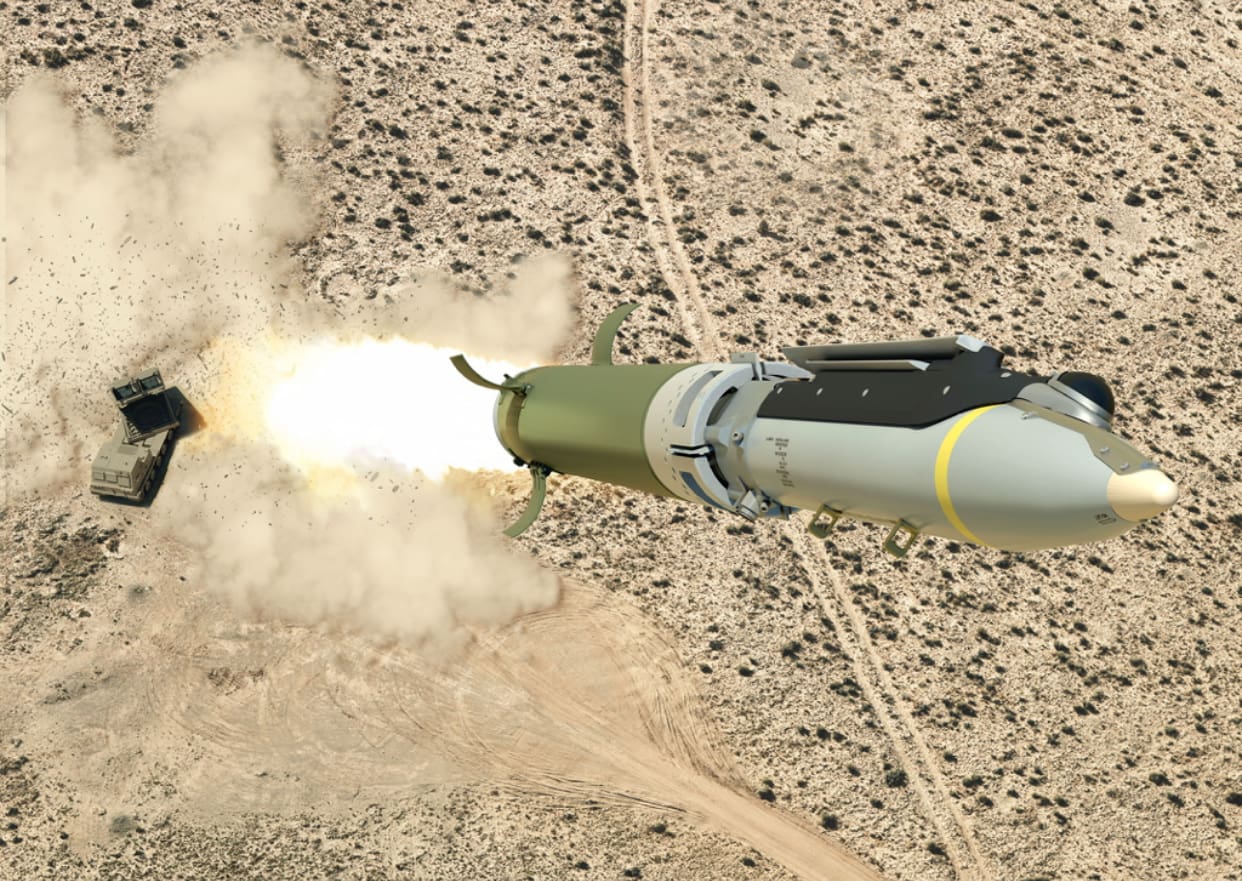
GLSDB is a partnership between Saab and Boeing. The GLSDB system stands out with its high accuracy over long ranges, and has the ability to fly complex trajectories and maneuvers to strike targets that cannot be reached by conventional direct and indirect fire weapons. It is launcher independent, which means that it can be fired from a containerized solution as well as any launcher capable of using the M26 launch pod container e.g. HIMARS, M270 and ChunMoo. The containerized solution can also be used onboard ships, providing GLSDB with the ability be fired from both land and sea assets.

“Boeing and Saab bring together deep knowledge of precision weapon systems and the ability to rapidly integrate and test solutions,” said Cindy Gruensfelder, vice president, Boeing Weapons. “Combining our companies’ expertise, experience and resources have resulted in an advanced, cost efficient, supportable global rocket artillery solution that brings warfighters the level of capability needed to combat current and future threats in a joint force environment.”

GLSDB gives land and naval forces a mobile, organic capability to hit targets that were previously out of their reach. This is achieved by taking advantage of the Small Diameter Bomb’s inherent maneuverability and accuracy. GLSDB is the ultimate long-range solution, combining affordability and performance, and meets the evolving needs of armed forces today and tomorrow.

3M Ballistic Helmet Portfolio Pushes the Boundaries of Technology to Save Lives

Tuesday, October 15th, 2019

Using the performance-to-weight ratio brings clarity to selecting the right ballistic helmet
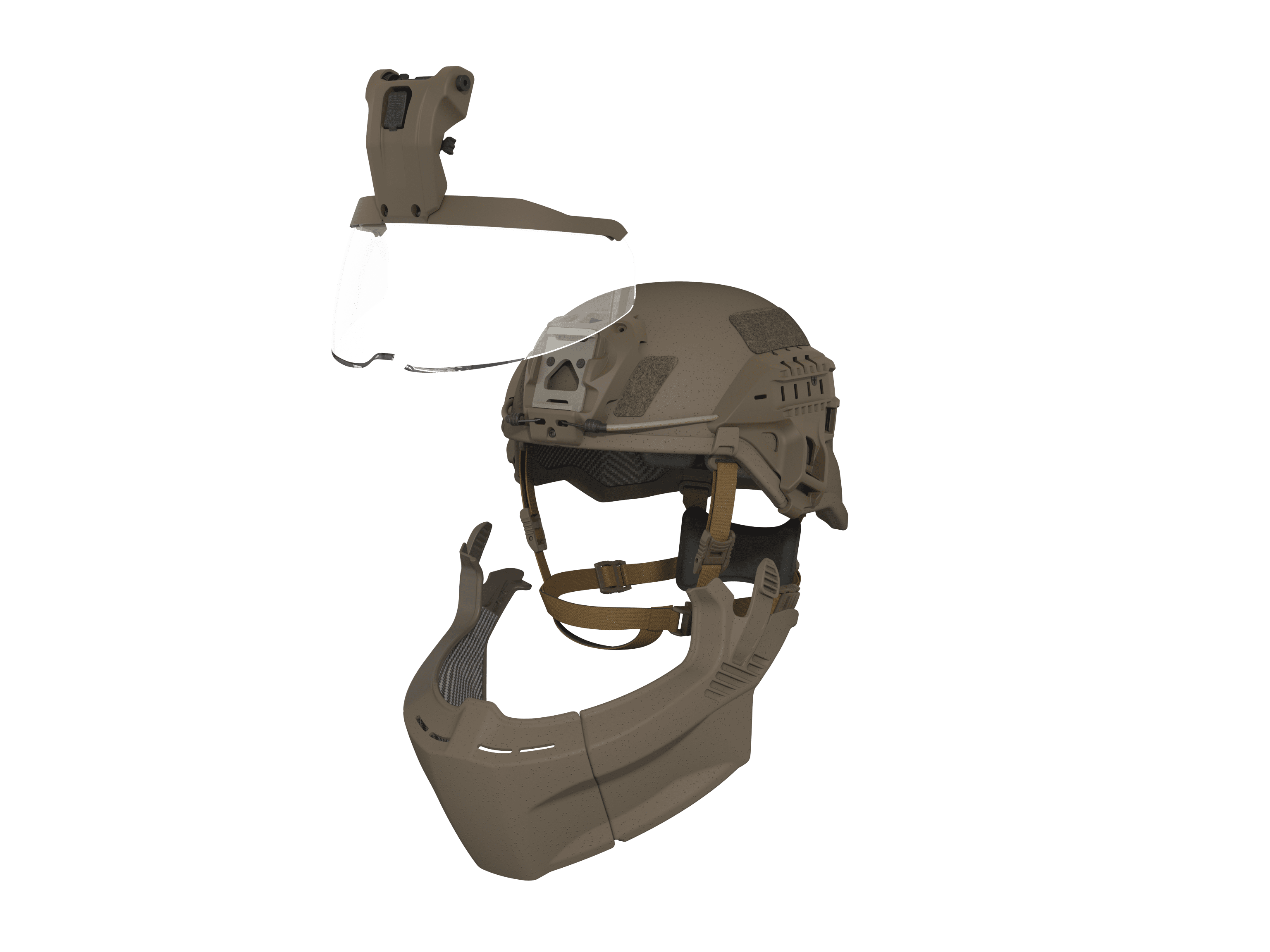
ST. PAUL, Minn. – Oct. 14, 2019 – Each day, thousands of military and police forces across the world rely on cutting-edge protection to keep them safe. When it comes to equipping these service members with helmets, decision makers look for ballistic protection they can count on, as well as designs that deliver the right fit, comfort and weight for each end user’s mission and operational environment.

Today, Ceradyne, Inc., a 3M company, announces new options for decision makers with the availability of its 3M™ Ballistic Helmet F70. The F70 delivers a high level of protection at a light weight that far exceeds conventional (ACH) ballistic helmet specifications. The helmet geometry creates a comfortable and modular design that is well suited for a wide range of missions and includes a novel no thru-hole construction for mounting the NVG shroud, retention system and rails. The elimination of thru-holes increases the shell’s effective protection area, reduces overall system weight by up to 31% (compared to the finished shell of an ACH helmet) and eliminates the risk of bolts becoming secondary projectiles during ballistic events.

The 3M Ballistic Helmet F70 provides V50 fragmentation protection against 17-grain (.22-caliber) fragment-simulating projectile (FSP) at greater than 2,760 feet per second (greater than 840 meters per second). The ballistic shell weight starts at 1.52 pounds in the high-cut version and 1.75 pounds in the mid-cut version. This line of light-weight helmets meets or exceeds all U.S. Army Advanced Combat Helmet (ACH) ballistic fragmentation requirements for 2-grain, 4-grain, 16-grain and 64-grain RCC, and 17-grain FSP when tested in accordance with MIL-STD662F.

In addition to the F70, the 3M ballistic helmet portfolio includes the 3M™ L110 and N49 offerings. Designed for military combat operations and counterterrorism police missions, the Combat II L110 helmet can help protect service members from bomb fragmentations, certain rifle projectiles, handgun bullets and blunt impacts. The helmet provides protection against select small-arms projectiles including V50 ballistic limit value greater than 2,400 feet per second (greater than 731 meters per second) against the 7.62 x 51 mm M80 NATO ball projectile.

The Ultra Light Weight Ballistic Bump Helmet N49 is the first multi-use helmet for bump and ballistic operational requirements. At just over one pound (shell weight, size L), the N49 is the lightest helmet to provide ballistic fragmentation and blunt impact protection. It provides V50 protection against 17-grain (.22-caliber) FSP at greater than 2,200 feet per second (greater than 670 meters per second) when tested in accordance to STANAG 2920.

“Having a wide range of choices is critical, as ballistic protection and mobility requirements differ for each end user,” said Terry Griffith, defense business manager, 3M Advanced Materials Division. “But with all the different helmet options available in the marketplace – and the varying information about them – it can be a struggle to compare them and evaluate which one best meets the requirements. Identifying the performance-to-weight ratio of different helmets can bring clarity to this decision-making process.”

A performance-to-weight ratio is calculated by identifying the V50 ballistic resistance against the 17-grain .22-caliber FSP, then dividing it by the helmet shell aerial density. 3M understands the value and supports the use of this ratio to give decision makers a consistent means of comparing helmet choices.

3M will discuss the performance-to-weight ratio and showcase its portfolio at booth 2442 at the UASA 2019 Annual Meeting and Exposition, October 14-18, at the Walter E. Washington Convention Center in Washington, D.C. For more information about soldier protection solutions provided by 3M, visit www.3M.com/ballistichelmets.


AUSA 19 – Polartec Woobie

Tuesday, October 15th, 2019

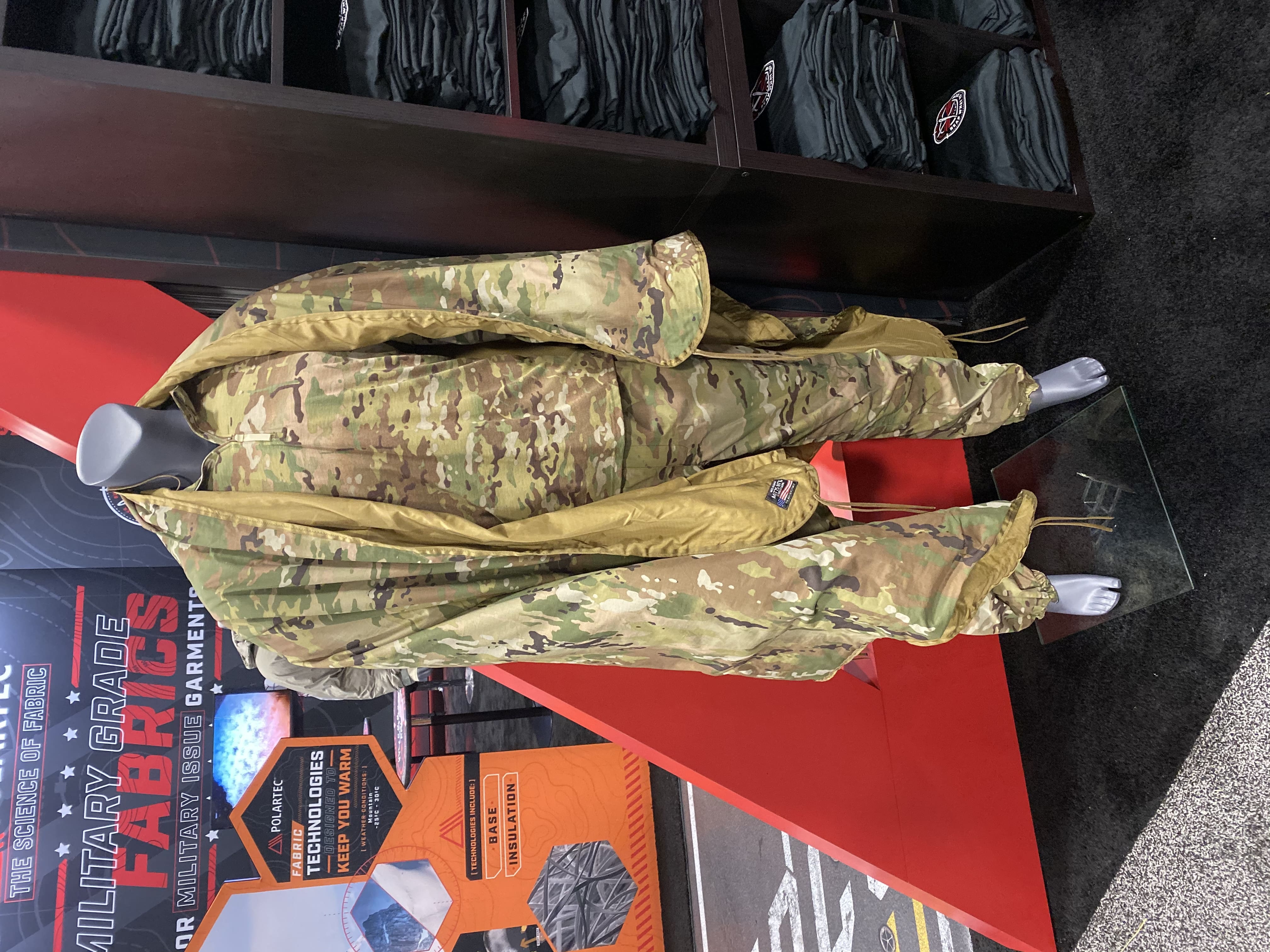
It was only a matter of time before someone made a woobie insulates with Polartec Alpha, and now one is on the way.

Available soon through Polartec’s new online Miliatry Issue Collection, this blanket features the same amount of insulation in the SOCOM issued Protective Combat Uniform Level 3A jacket. It’s manufactured by Mitt’s Nitts.

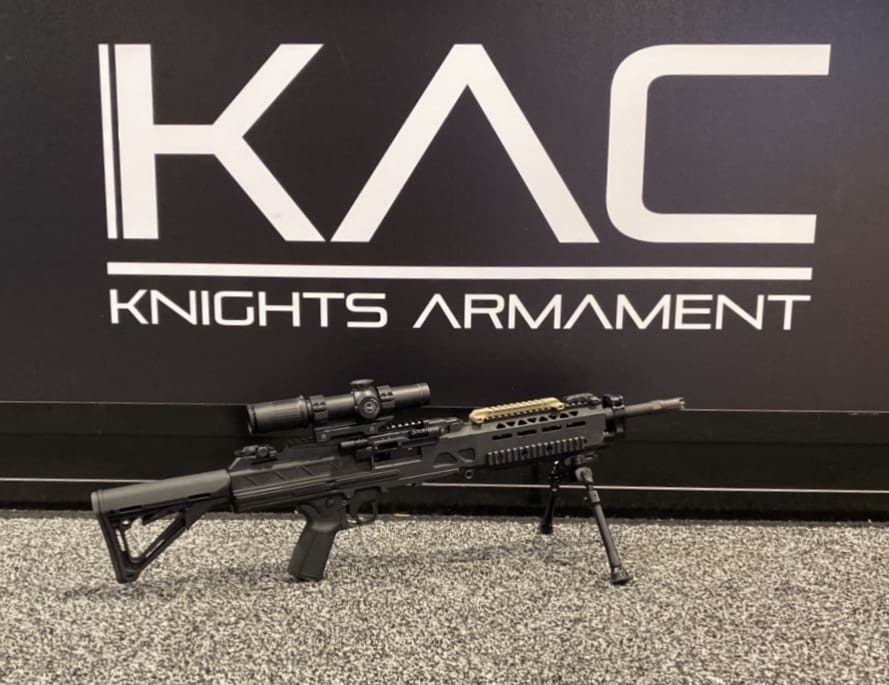
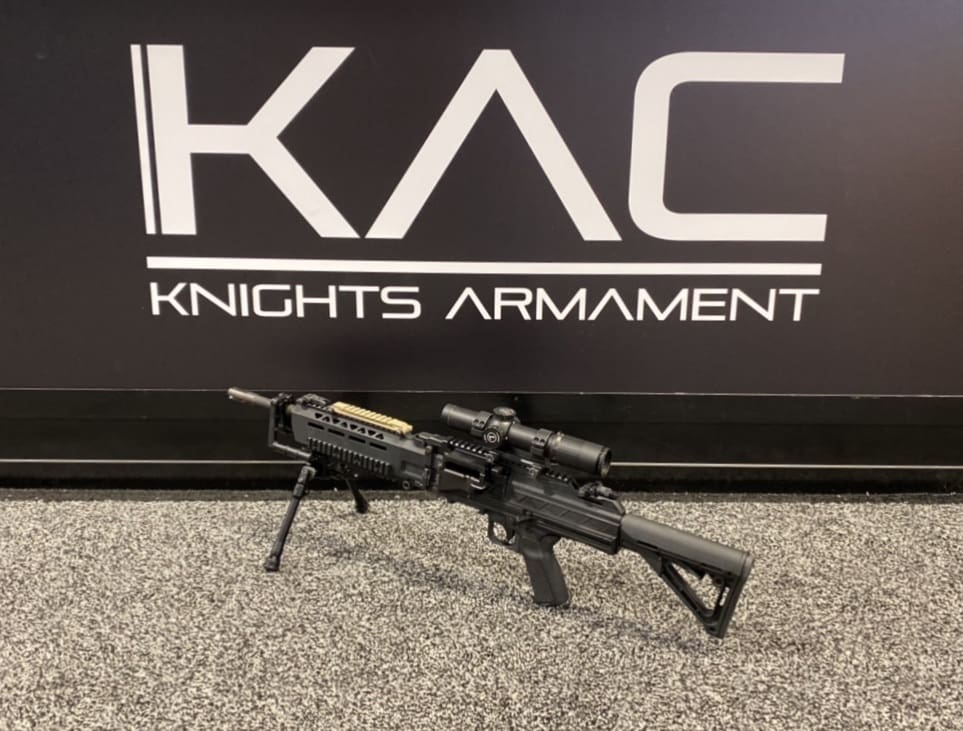
AUSA 19 – Latest Version of KAC Lightweight Assault Machine Gun

Tuesday, October 15th, 2019

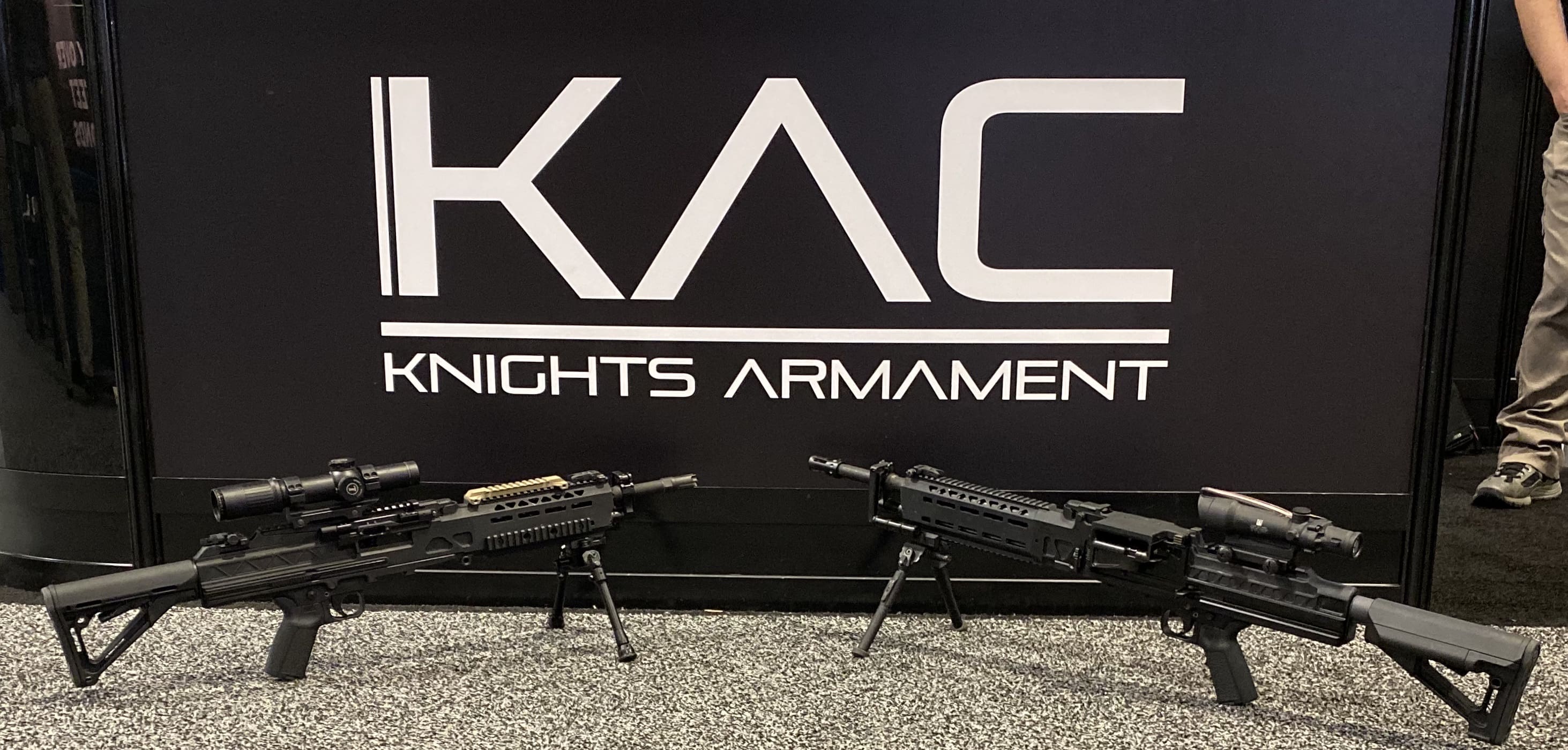
Although it’s a pretty mature design, Knight’s Armament Co continues to refine their Lightweight Assault Machine Gun.

With variants so far in 5.56, 7.62 and 6.5, the weights are 9, 12 and 14 lbs respectively. Everyone who picks one up says, “whoa!”

They’ve made a few improvements to the 5.56 gun which will be reflected in the other variants.

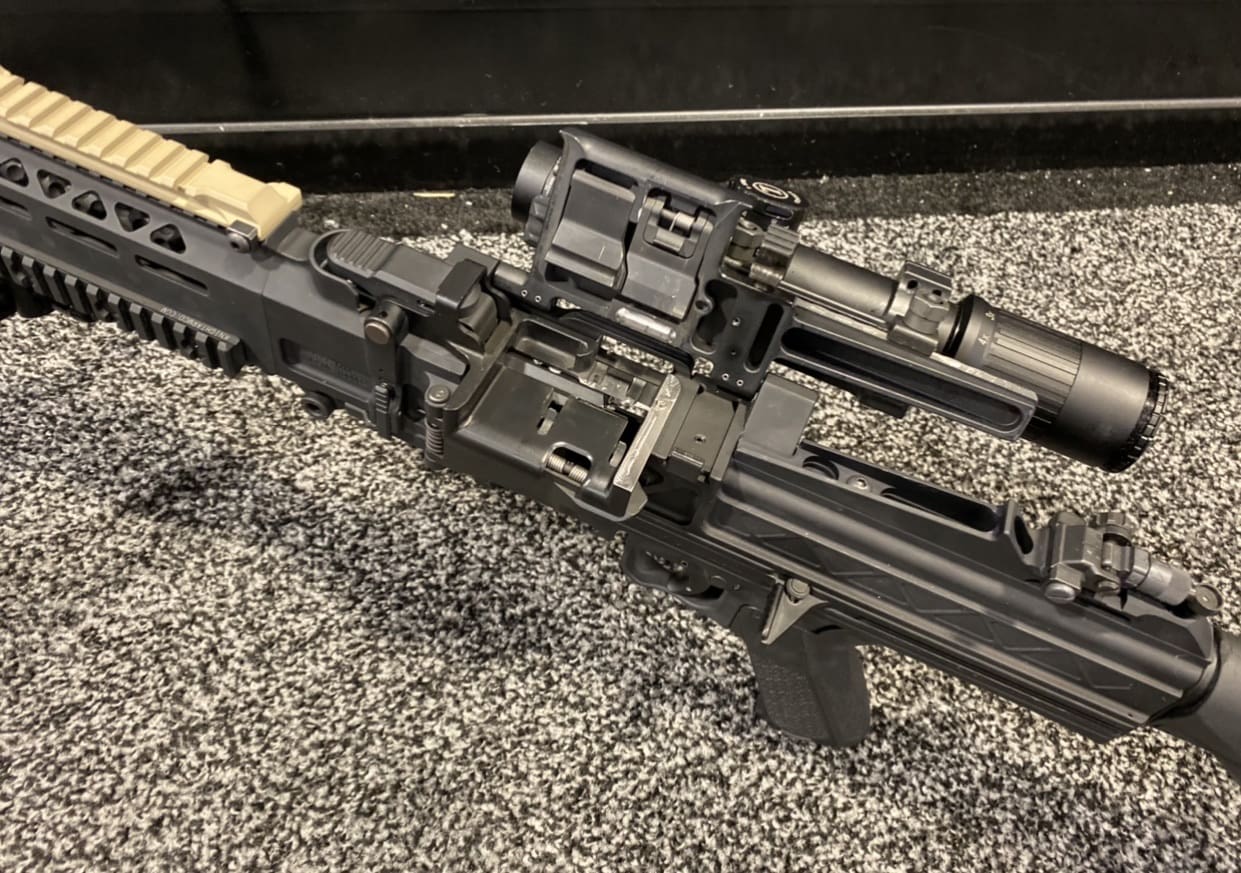
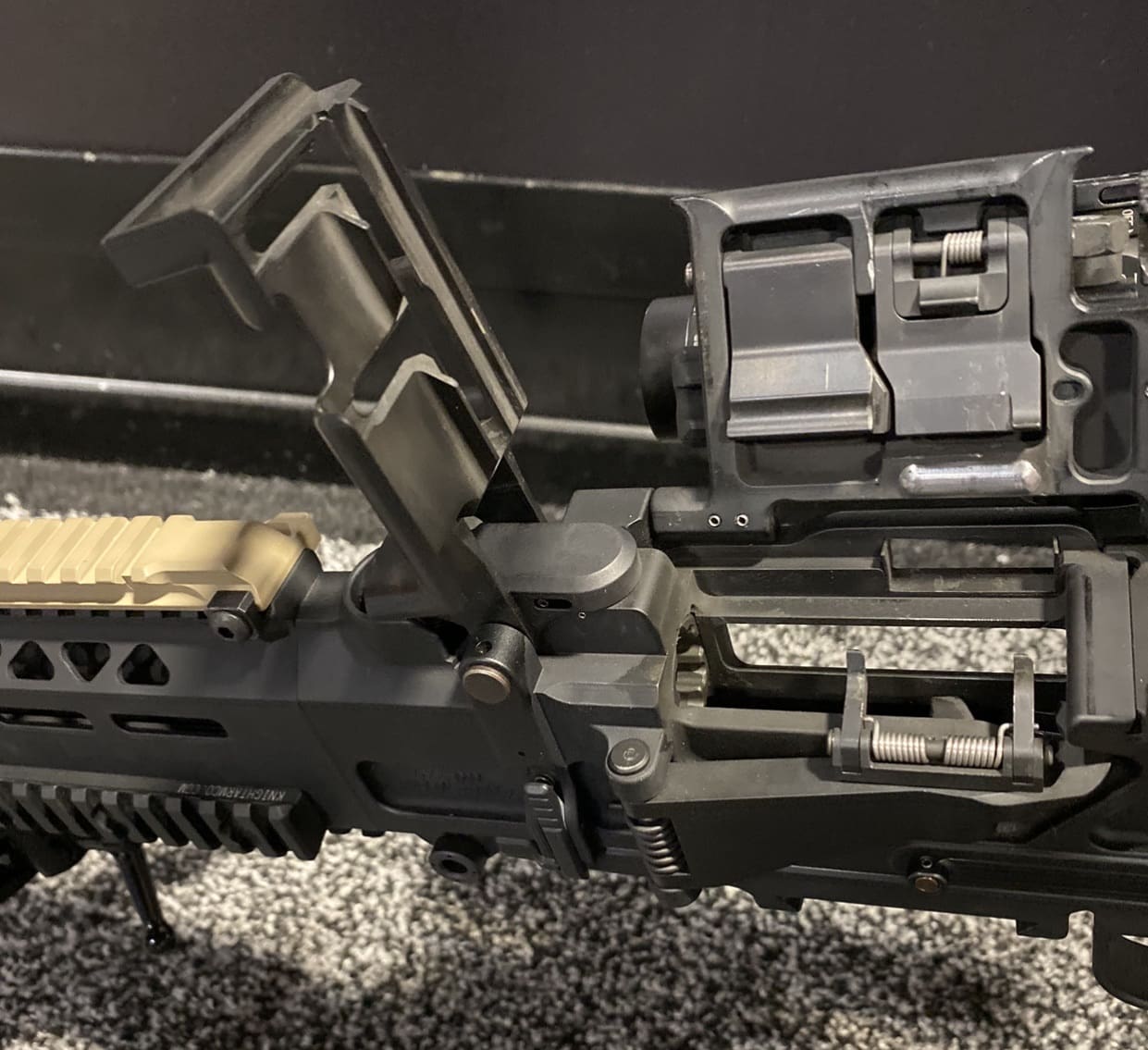
For instance, they’ve updated the feed tray cover to be side folding.

Additionally, by lifting the feed tray, you also depress the barrel release button. Likewise, if the feed tray is down, in firing configuration, the barrel release button can’t be depressed.

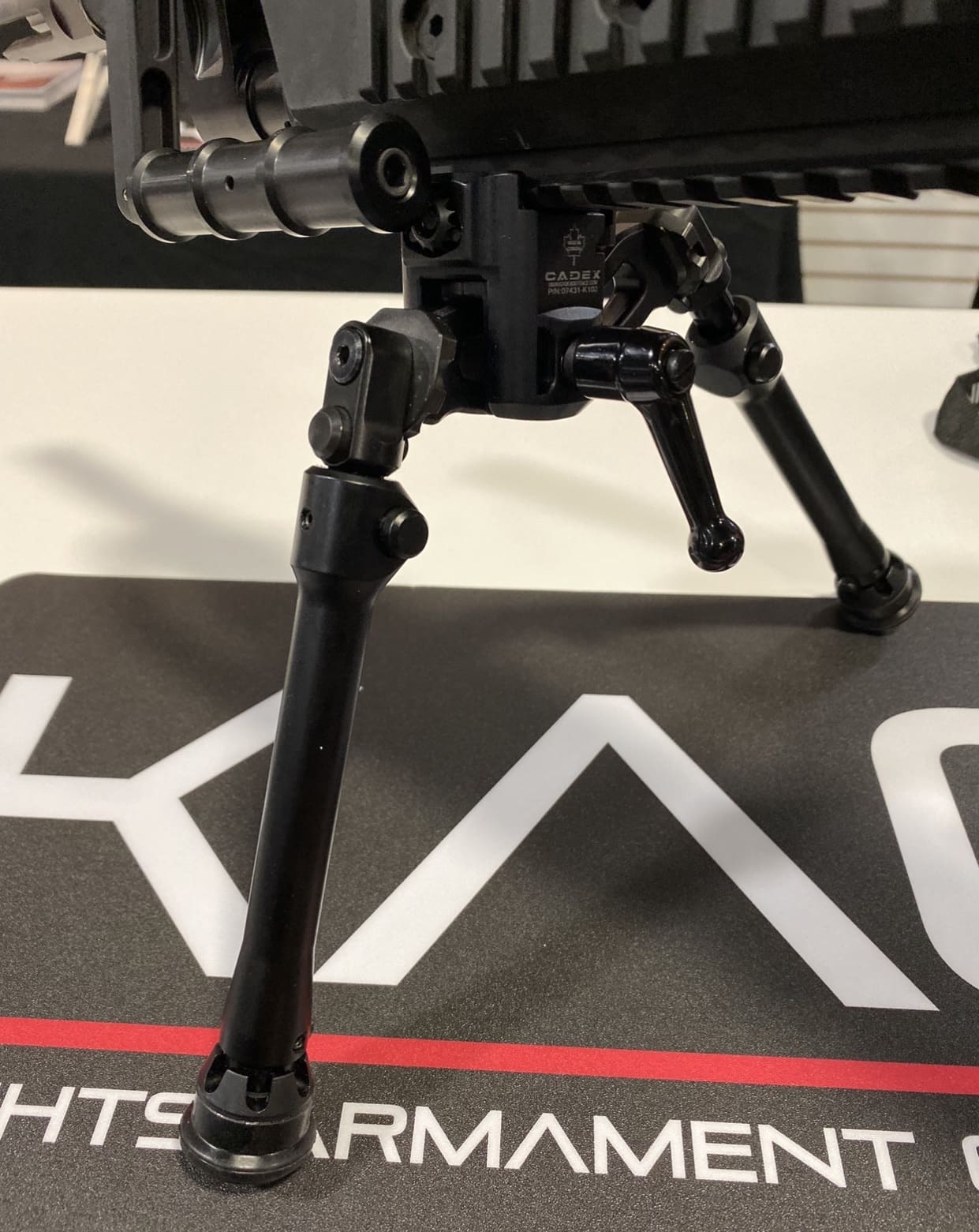
They’re also using the Cadex Falcon bipod, due to its pan and tilt capabilities.

If you’re in the market for a badass machine gun, Knight’s has you covered.

AUSA 19 – Power Stretch Pullover by Wild Things

Monday, October 14th, 2019

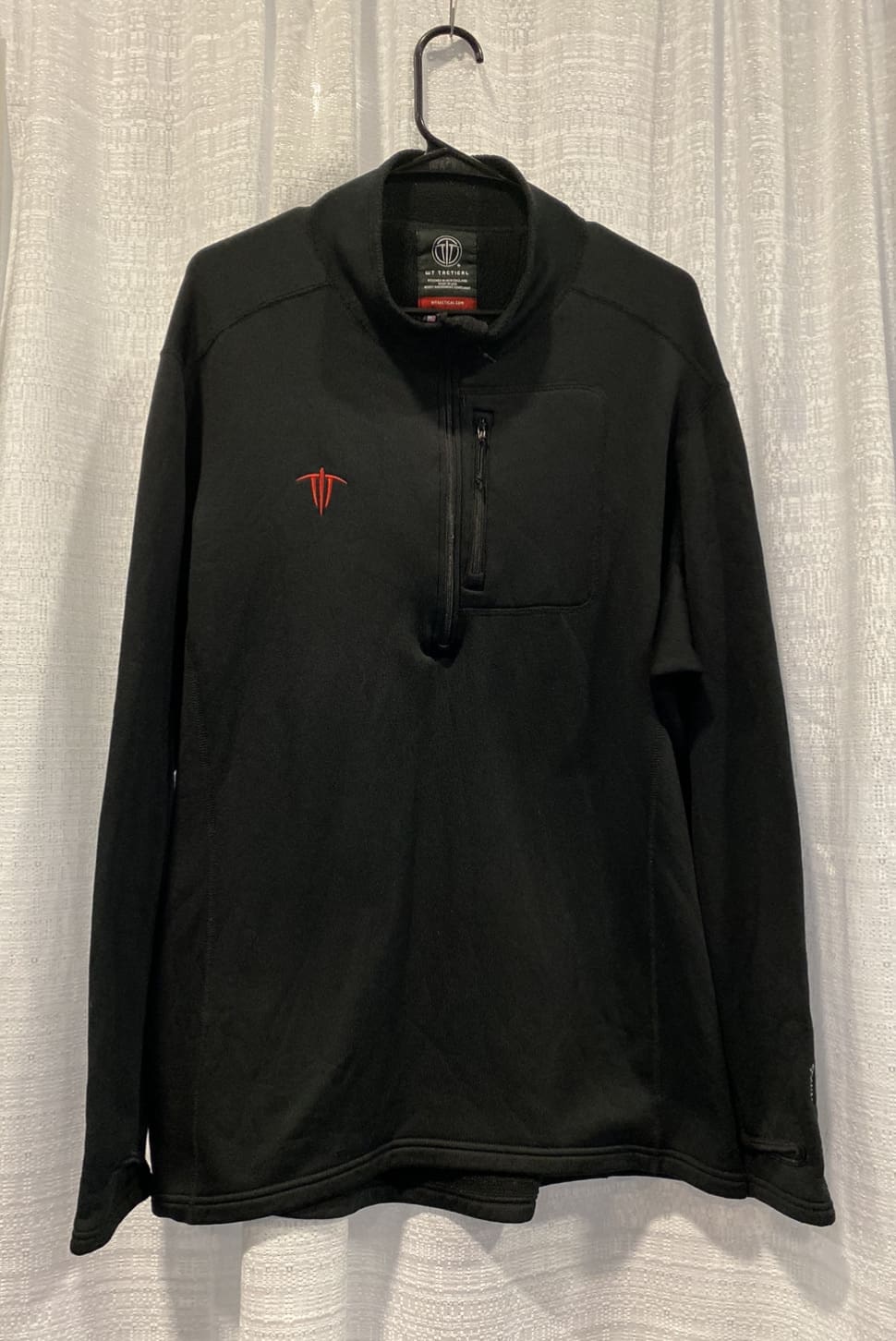
Now available in Black for federal and LE agencies, the Wild Things Power Stretch Pullover features 1/4 zip front, 4-way stretch and moisture wicking.

Also available in Coyote.

www.wildthingsgear.com

AUSA 19 – Textron Systems Unveils Latest Next Generation Squad Weapon – Carbine Candidate

Monday, October 14th, 2019

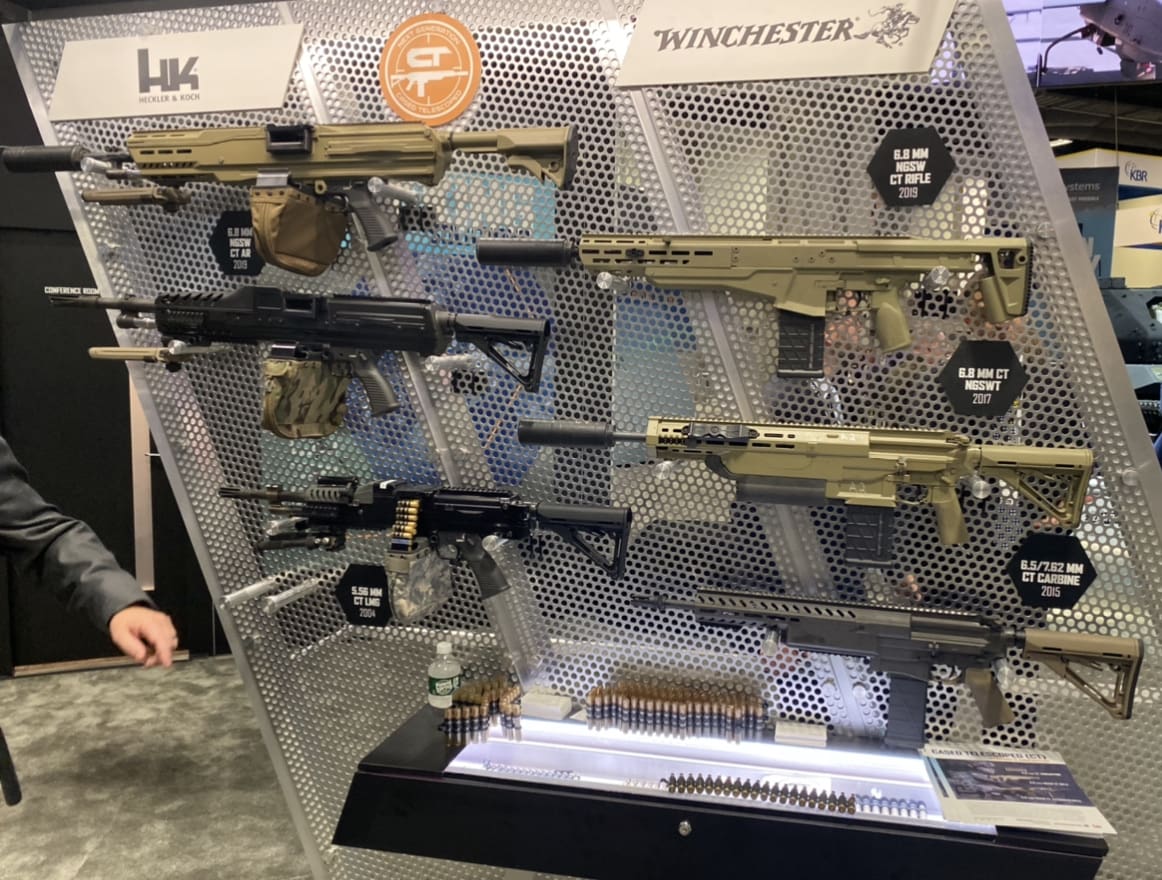
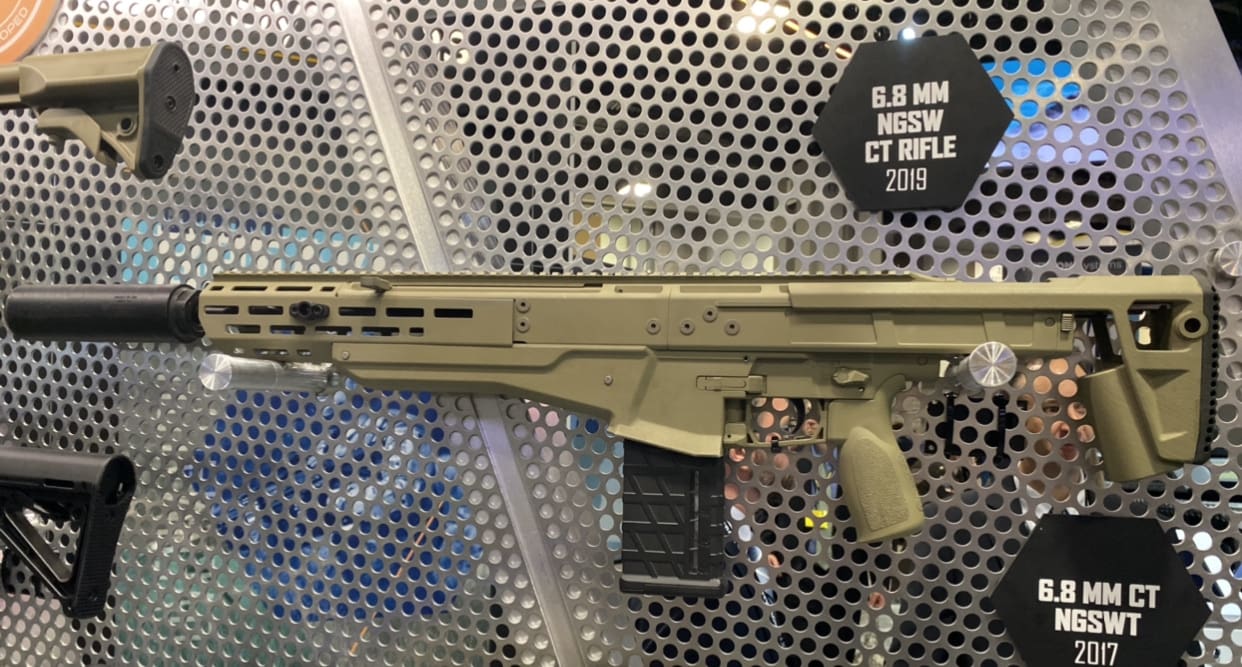
At AUSA, Textron Systems showcased their Next Generation Squad Weapon candidates, along with a historical perspective of weapons developed as part of the Lightweight Small Arms Technology program, which started out life in 5.56mm and then transitioned to 6.5mm. NGSW requires a 6.8mm cartridge which performs similar to 270 WSM. The top left weapon is their belt-fed Automatic Rifle and top right is their Carbine.

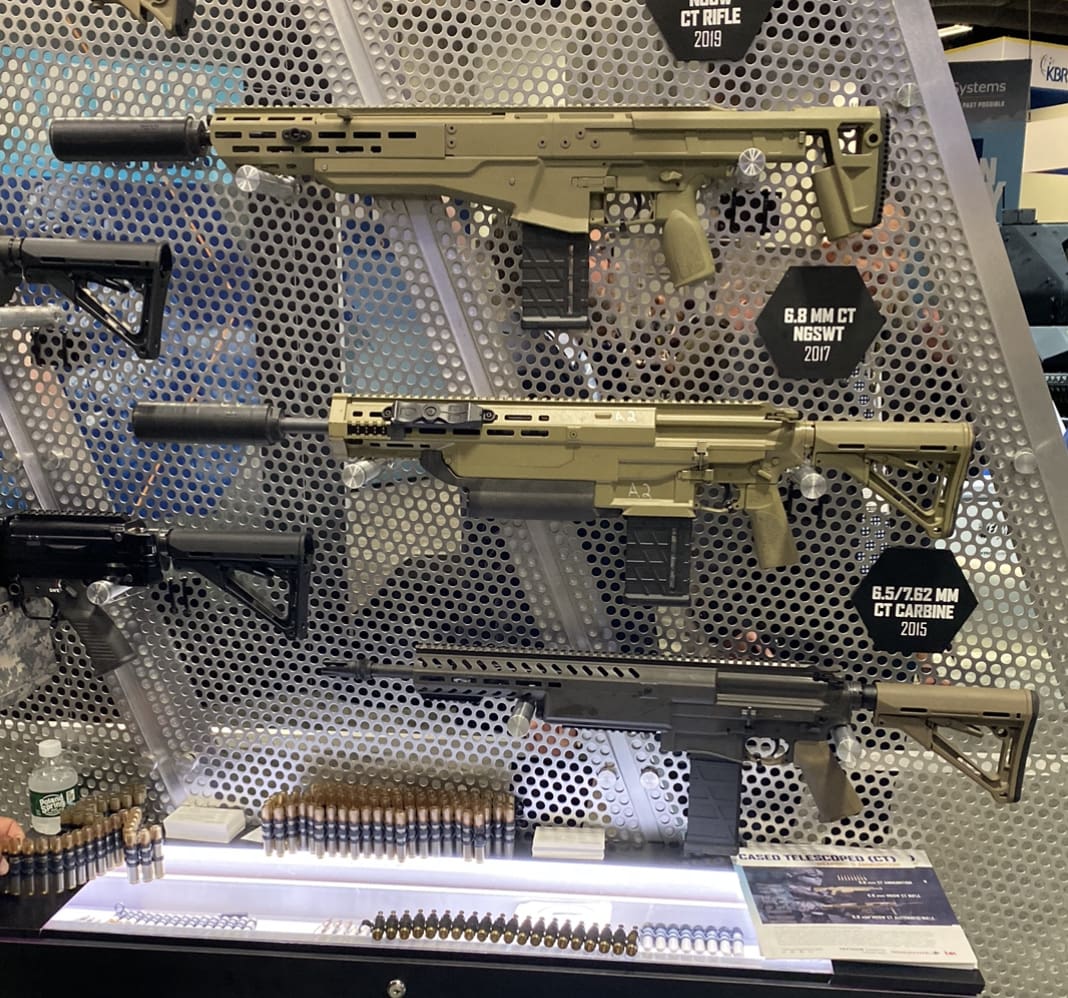
Below is the latest version of the Carbine. The carbine in the middle of the photo above has been seen recently. It is a bid sample with a commercial battery pack.

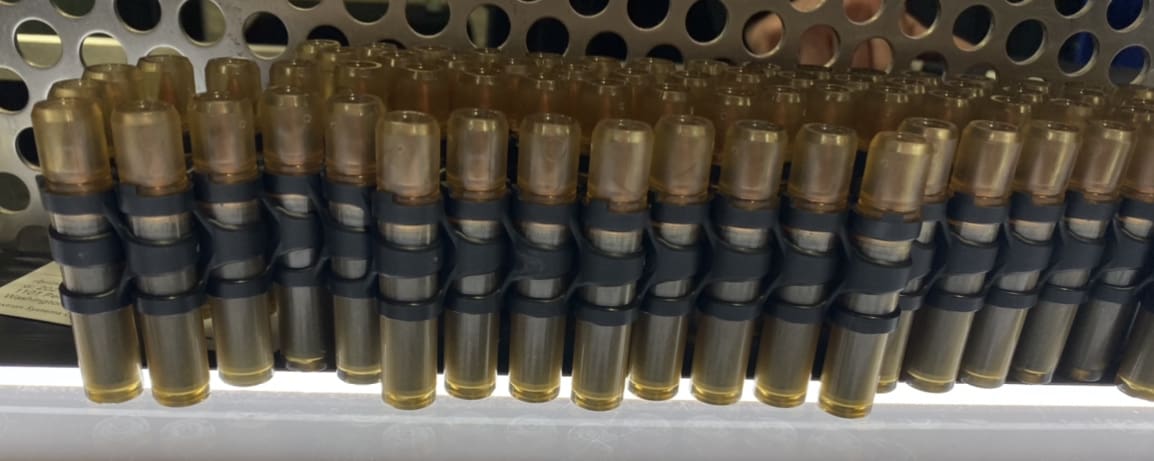
Textron brings almost two decades of Case, Telescoped weapons and ammunition development. This 6.8mm polymer cased ammunition fully encapsulates the projectile into the case. Olin Winchester, who produces over 4 billion wounds of small arms ammunition a year, will manufacture the 6.8mm rounds of the solution is selected by the Army.

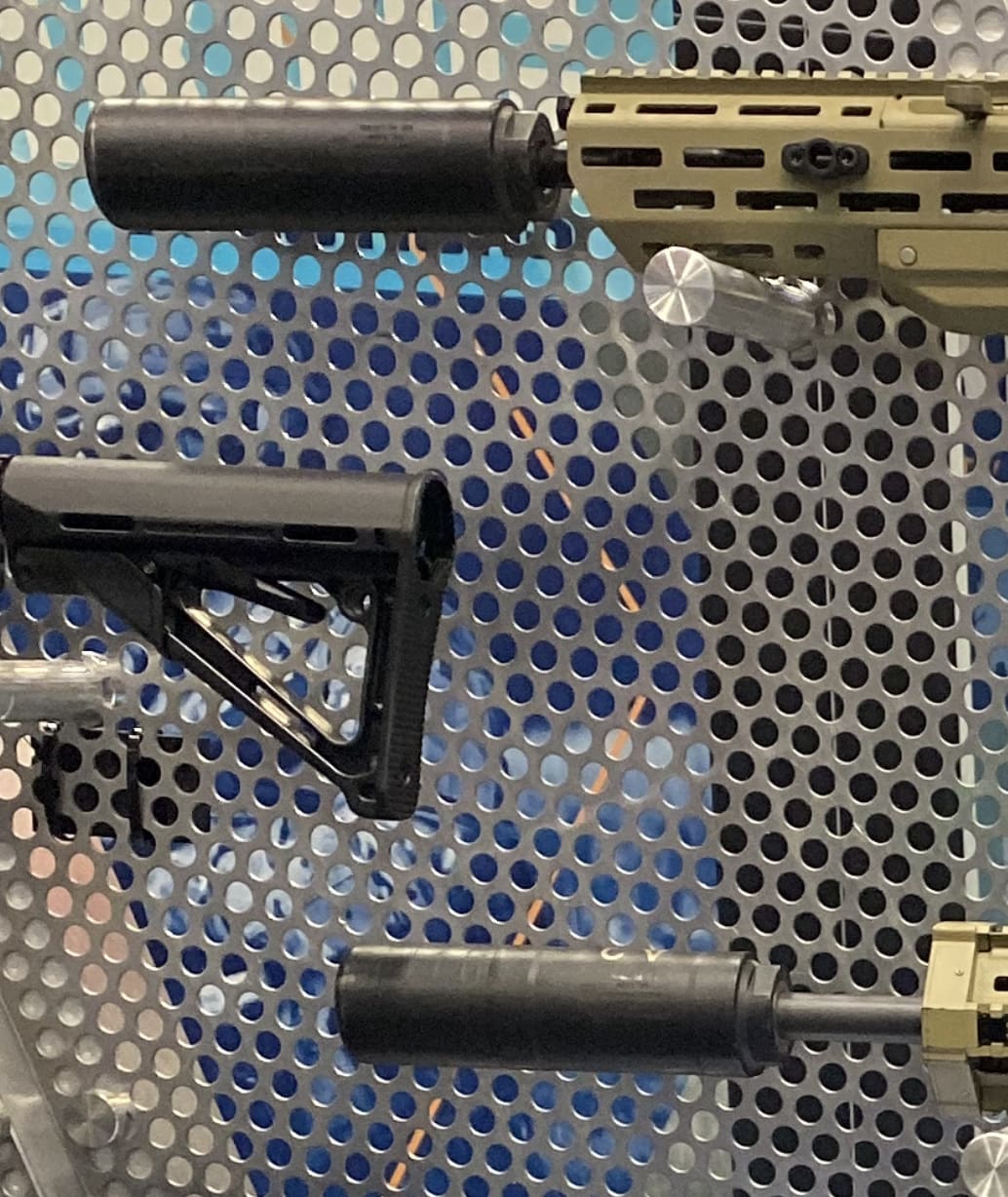
LMT developed the suppressor for these weapons which utilized their virtual baffle technology.

Textron reports they will be prepared to deliver test article prototypes this Spring for the Army’s final down select for NGSW.

AUSA 19 – WL Gore & Assoc Showcases New Temperate Weather Boot

Monday, October 14th, 2019

The upcoming Terassault GTX from McRae Industies is a temperate boot with improved breathability range thanks to the Extended Comfort membrane from W. L. Gore & Assoc.

It is a very lightweight, low profile design. It offers extreme flexibility and doesn’t impede the design of the boot. In addition to less bulk, it offers at least 30% increased breathability over the Army issue temperate weather boot.

Coming Spring 2020 from McRae Industries.

AUSA 19 – Close Combat Assault Ration

Monday, October 14th, 2019

The Close Combat Assault Ration initiative is working to go beyond what even the First Strike Ration has accomplished by reducing the weight and volume of operational rations by 40%.

The prototype above shows current form factor and includes ration components that can be eaten on the go. One area of effort is to increase nutrient stability of performance optimizing food products.

This graphic shows how much smaller the CCAR footprint is for a 10-day operation than the MRE.