FirstSpear

Archive for the ‘CEMA’ Category

Harnessing SIGINT and EW for Tactical Dominance: A Guide for Combat Arms Leaders

Monday, June 16th, 2025

Introduction

To the combat arms platoon leader and company commander: You are leading formations that will close with and destroy the enemy. Your ability to shoot, move, communicate, and then move again (see later section on countering enemy surveillance in the electromagnetic spectrum) is paramount to our success on the modern battlefield. The enemy is sophisticated, adaptive, and aggressively contesting your ability to maneuver in all domains, including the electromagnetic spectrum (EMS). You are not alone in this fight; the intelligence and cyber communities will enable you to dominate the EMS. These communities stand ready to provide you with actionable targets and the means to influence/dominate the EMS at echelon. This is not theory; this is the reality of combat against peer and near-peer adversaries, and we are bringing the full weight of the Department of Defense (DoD) and its combat support agencies to bear. Your S-2 section and Cyber Electromagnetic Warfare Activities (CEMA) cell will innovate at speed across the range of operations to ensure that you have the capabilities necessary to win.

SIGINT and EW: Your Tactical Edge

Signals intelligence (SIGINT) and electromagnetic warfare (EW) are distinct but complementary disciplines that must be integrated effectively to maximize battlefield effects. SIGINT identifies and characterizes enemy signals, providing critical intelligence that inform EW operations. EW teams can use that information to help locate enemy positions for destruction, or simply to disrupt, deceive, or deny the adversary’s use of the electromagnetic spectrum. Proper coordination between SIGINT and EW enables deception operations, enhances precision targeting, and strengthens force protection measures, ensuring that friendly forces maintain dominance over the EMS while denying the enemy key capabilities.

Based on historical analysis of large-scale combat operations (LSCO), recent lessons learned from Ukraine, and predictive analysis of China’s People’s Liberation Army (PLA) capabilities, the teaming of SIGINT and EW can be a force multiplier across the warfighting functions. By integrating SIGINT-derived intelligence with EW’s ability to deny and disrupt, we can significantly degrade an adversary’s ability to maneuver and execute multidomain operations (MDO).

Understanding SIGINT in Your Fight

SIGINT is not just a tool for strategic planners in some far-off headquarters. It is a tactical enabler that allows you to detect, locate, and exploit enemy communications in real time. Whether you are setting up an ambush, planning a fire mission, or maneuvering to secure a key objective, SIGINT can provide the enemy’s disposition, intent, and vulnerabilities. The Army’s ability to identify and track enemy command nodes, air defense systems, and maneuver elements through SIGINT means you can strike at the right place and time with overwhelming force.

How EW Shapes the Battlefield

EW is your ability to seize control of the EMS. EW is the counterweight to enemy SIGINT and can greatly affect their ability to execute command and control (C2) while disrupting their ability to communicate, navigate, and coordinate. If the enemy cannot receive orders, they cannot react. If their targeting systems are blinded, they cannot fire effectively. Ultimately, if they can’t navigate, they cannot effectively maneuver forces on the battlefield. EW, when employed effectively, can have significant battlefield effects, all without firing a shot.

EW’s Three Essential Functions:

Electromagnetic Support (ES): Detecting and identifying enemy emitters to support targeting and situational awareness.

Electromagnetic Attack (EA): Jamming and deception operations that deny the enemy use of the spectrum.

Electromagnetic Protection (EP): Ensuring that friendly forces maintain reliable communications despite enemy jamming, to include employment of emission control measures (e.g., radio power, antenna placement, etc.) to defeat enemy attempts to surveil and target friendly forces.

The Critical Role of SIGINT and EW in Tactical Operations

The operational environment requires agility, synchronization, and unity of effort to converge all sensors and effects on a rapidly evolving threat. The ability to integrate SIGINT with EW at the tactical level allows commanders to enhance targeting fidelity (SIGINT and EW), disrupt adversary operations (EW), and provide real-time intelligence for maneuver forces (SIGINT).

To focus on C2 and counter-C2, expanded maneuver, and cross-domain fires, we must team SIGINT and EW across EA, ES, and EP to present multiple dilemmas to our enemy, enhance C2 protection, and increase lethality. Let’s look at an example:

Kill Chain Analysis: A Counter-Unmanned Aerial System (C-UAS) Scenario

In an era where UAS play an increasingly critical role in modern warfare, understanding the full kill chain process for countering these threats is essential for operational success.

Phase 1: Detect and Identify

A brigade combat team (BCT) is executing a deliberate attack when SIGINT elements intercept and transcribe enemy communications emanating from an urban area associated with drone activity. Electromagnetic support reporting from sensors riding on a remote-controlled scouting vehicle confirms the presence of enemy UAS operating frequencies, geolocating multiple launch sites and relay nodes.

Phase 2: Target and Disrupt

Upon confirming the threat, the BCT’s organic EW platoon, using Terrestrial Layer System (TLS) Manpacks, receives the locations of the threat signals of interest (SOI), and executes an electromagnetic attack to jam the drone’s control frequencies, disrupting the operator’s ability to maneuver the UAS effectively. Simultaneously, SIGINT analysts coordinating with higher-echelon intelligence teams pinpoint the drone operator’s location for kinetic targeting.

Phase 3: Engage and Destroy

With the drone rendered ineffective, the fire support element coordinates an artillery strike on the enemy UAS ground control station, leveraging the precision geolocation refined by enhanced tools like the Electromagnetic Warfare Planning and Management Tool (EWPMT) and the Army Intelligence Data Platform (AIDP). Simultaneously, the EW platoon continues to jam the enemy’s communications, preventing coordinated support or retrograde. Friendly forces neutralize the threat, allowing maneuver elements to proceed unimpeded.

Phase 4: Assess and Adapt

Post-strike analysis from SIGINT utilizing High Altitude Platform (HAP) sensors reveals ongoing enemy attempts to reestablish drone operations, underscoring the necessity for sustained EA efforts. In response, SIGINT teams disseminate updated threat reporting to the EW platoon, enabling them to adjust jamming frequencies and counter enemy adaptations. Concurrently, SIGINT elements refine their intelligence collection to anticipate and prepare for potential future enemy tactics, ensuring proactive EW measures.

This coordinated SIGINT and EW kill chain ensures the enemy’s UAS capability is neutralized before it can affect friendly operations. This vignette effectively illustrates the critical synergy between intelligence-driven targeting and spectrum dominance.

How You Can Leverage SIGINT and EW at Your Level

To gain a decisive battlefield advantage, leaders must integrate SIGINT and EW capabilities to counter enemy threats in the EMS. The following approaches can help achieve this:

Incorporate SIGINT and EW into the DNA of Your Planning and Execution

From the outset, consider how to effectively integrate these capabilities into your operations to inform and shape your decision-making. Collaborate closely with supporting staff elements, such as the BCT CEMA cell and S-2 section, to gain a deep understanding of the enemy’s electromagnetic spectrum usage and identify opportunities to disrupt and exploit their vulnerabilities. By incorporating SIGINT and EW into your operational framework, you can create a more comprehensive and effective approach to achieving your mission objectives.

Train Your Leaders and Soldiers to Recognize and Exploit the EMS

Your Soldiers must understand that controlling the EMS is just as vital as controlling key terrain. Integrate SIGINT and EW considerations into your battle drills, mission rehearsals, and after-action reviews. Units that fail to account for enemy EW will put their formations at significant risk on the battlefields of the future. Training ensures you can adapt and maintain tempo under contested conditions.

SIGINT and EW teams can sense across the EMS with ES at the tactical edge. By developing new tactics, techniques, and procedures (TTPs), SIGINT support from higher echelons, such as from the division level, can be pushed down to BCTs, providing real-time EMS sensing without burdening them with protecting and maneuvering higher-echelon intelligence capabilities. Ultimately, this enables more agile and lethal maneuver forces.

Ensure Interoperability with Supporting SIGINT and EW Units

SIGINT and EW units are enablers, not afterthoughts. Integration of SIGINT and EW elements throughout the organic targeting process is key. Work with them to refine target identification and EA options. Develop unit standard operating procedures (SOPs) that detail how to request and synchronize their capabilities in real-time engagements and incorporate them in all rehearsals. Leaders must ensure that EW Soldiers are embedded within tactical formations to provide immediate effects that enhance maneuver and fires.

Adopt an Aggressive, Learning-Focused Mindset

The enemy is adapting. As such, we must do the same. Stay informed on the latest TTPs by leveraging resources such as the Center for Army Lessons Learned (CALL) and current doctrinal publications like Field Manual (FM) 2-0, Intelligence, and FM 3-12, Cyberspace Operations and Electromagnetic Warfare. We must continue to share lessons learned across our formations and with intelligence and EW enablers to continually refine our operational effectiveness.

Conclusion

In an era where the electromagnetic spectrum is as contested as the physical battlespace, success demands leaders fully integrate SIGINT and EW into their tactical decision-making. These are not ancillary capabilities but core enablers of maneuver, fires, and protection. By treating SIGINT and EW as an integral piece of battlefield operations rather than separate support functions, we can outthink, outmaneuver, and overwhelm our adversaries before they can react.

The future fight will be won by those who master the integration of intelligence and electromagnetic warfare, seamlessly fusing these disciplines into their formations and operational planning. This requires continuous learning, rigorous training, and adaptive thinking to counter evolving enemy tactics. The intelligence and EW communities stand ready to support, provide counsel for our specialties, and execute through our commanders’ intent.

Superiority in the EMS is not an option — it is a necessity. By embracing these capabilities and fostering interoperability, we ensure that our forces maintain a lethal edge on the battlefield. The challenge is clear, and the tools are at hand. Now is the time to educate our leaders and Soldiers and incorporate these capabilities into our training so we are prepared to fight and win our nation’s wars.

By MG Rick Appelhans and MG Ryan Janovic

MG Richard T. “Rick” Appelhans currently serves as the commanding general of the U.S. Army Intelligence Center of Excellence and Fort Huachuca, AZ. Prior to assuming this position, he served as the director of Intelligence, U.S. Forces Korea/deputy director of Intelligence, Combined Forces Command. MG Appelhans’ overseas assignments and deployments include the Republic of Korea, Kuwait, Germany, the Netherlands, Afghanistan, Bosnia-Herzegovina, and Iraq. He began his military career as an Armor officer, serving as a tank platoon leader, company executive officer, and battalion S-4. Since transitioning to Military Intelligence in 1997, MG Appelhans has served in a variety of command and staff assignments to include detachment commander, battalion S-2, company commander, brigade combat team S-2, analysis and control element chief, region commander, division G-2, and group commander.

MG Ryan Janovic currently serves as the commanding general of the U.S. Army Cyber Center of Excellence and Fort Eisenhower, GA. A native of Akron, OH, he graduated from the U.S. Military Academy at West Point, NY, in 1993 and commissioned into the Military Intelligence Corps. He served with Multi-National Forces-Iraq, 1st Infantry Division in eastern Afghanistan, Military Intelligence in Korea, and later with Commander United Nations Command/Combined Forces Command/U.S. Forces Korea. His other assignments include various posts throughout the U.S. to include a tour as a White House Fellow. In 2019, MG Janovic joined the cyber ranks as the deputy commander of Joint Force Headquarters – Cyber (Army), leading the organization toward unit citations earned in support of U.S. Central Command.

This article appears in the Summer 2025 issue of Infantry. Read more articles from the professional bulletin of the U.S. Army Infantry at www.benning.army.mil/Infantry/Magazine or www.lineofdeparture.army.mil/Journals/Infantry.


NAVIFOR Team Captures First at 2025 Best Linguist Games

Wednesday, April 16th, 2025

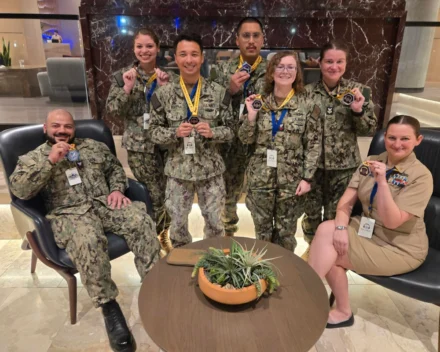
SALT LAKE CITY – In a remarkable display of linguistic expertise, Naval Information Forces placed first at the 2025 Best Linguist Games, formerly known as the Polyglot Games.

Hosted by the Utah Army National Guard’s 300th Military Intelligence Brigade, the 7th annual event brought together more than 270 military and civilian linguists from across the Department of Defense. The Games took place Feb. 6 at the downtown Hyatt Regency.

NAVIFOR, which provides operationally ready information warfare forces to support fleet and joint force commanders worldwide, fielded a seven-person team for the first time this year. Among the team members was Petty Officer 1st Class Anna Bilodeau, a Cryptologic Technician (Interpretive) Sailor assigned to Information Warfare Training Command Monterey in California.

“We had no expectation that we would win, so when it happened, it was quite a shock, but also all the more exciting,” she said.

A battle of words: The competition

The Best Linguist Games are designed to test military linguists in real-world scenarios, requiring rapid translation and analysis under intense conditions. Teams compete in several events, including:

? Voice intercept: Live translation of intercepted foreign language communications.

? Site exploitation: Rapid intelligence gathering from a simulated high-risk environment.

? Document exploitation: Extracting key intelligence from foreign documents.

? Open-source collection: Analyzing publicly available information to support intelligence operations.

? Operational analysis & commander’s brief: Synthesizing linguistic intelligence into actionable reports for senior leadership.

For the NAVIFOR team, Bilodeau dedicated time studying French military vocabulary to get ready.

“I was the only trained French linguist on the team,” she added, “so I focused primarily on refining my skills in that language ahead of the competition.”

Victory through teamwork

The NAVIFOR team was composed of diverse and highly skilled linguists and CTI Sailors:

? Bilodeau (French, Arabic) – IWTC Monterey

? Petty Officer 1st Class Samantha Dayton (Chinese, Spanish) – IWTC Monterey Detachment Goodfellow

? Chief Petty Officer Deborah Bowers (Russian, Arabic) – IWTC Monterey Detachment Goodfellow

? Petty Officer 1st Class Albert Solis Sloan (Spanish, Russian) – Cryptologic Warfare Activity 65

? Petty Officer 3rd Class Bashar Akkawi (Arabic) – Navy Information Operations Command Georgia

? Petty Officer 2nd Class Rebekah Cupitt (Persian) – NIOC Georgia

? Petty Officer 1st Class Ralph Rivera (Korean) – NIOC Pacific

NAVIFOR outperformed 40 teams to claim victory. One of the most intense events was the site exploitation exercise, which tested the team’s ability to operate under simulated combat conditions.

“This competition isn’t just about who can translate the fastest or the most accurately,” Bilodeau said. “It’s about working together, applying our skills in real-world intelligence scenarios that could impact national security.”

That teamwork, along with individual expertise, didn’t go unnoticed.

“Since arriving at IWTC Monterey only four months ago, CTI1 Bilodeau has been a standout Sailor, and her success at the 2025 Best Linguist Games is no surprise to anyone,” said Cmdr. Miles Alvarez, commanding officer of IWTC Monterey. “Her technical skills are what got her recognized and selected for the Navy team, and her outstanding contributions overall helped the Navy win this year’s event.”

Importance of Best Linguist Games

The annual Best Linguist Games is a unique training ground for military linguists, reinforcing the importance of language proficiency, intelligence gathering and analysis in modern warfare. The event also offers military linguists a chance to connect with others they wouldn’t normally meet.

“This competition provided a unique opportunity to network and engage in operational language work that we rarely experience in daily assignments,” Bilodeau said. “The leadership representation that NAVIFOR provided to support us was fantastic; we were able to learn about the CTI community and provide feedback and input in a way that is seldom available to E-6 and below personnel.”

Looking ahead

Bilodeau would like to return to the Best Linguist Games if she has the chance and hopes more Navy linguists will participate.

“I would highly encourage linguists, especially CTIs, to participate,” she said. “Also, if you have language skills, make sure they’re documented. That can open doors to incredible opportunities like this.”

With NAVIFOR’s victory, Bilodeau said she hopes more Navy linguists will be inspired to join the competition, test their skills and continue to strengthen the community of military linguists.

About IWTC Monterey and Detachment Goodfellow

As part of the Center for Information Warfare Training, Information Warfare Training Command Monterey provides a continuum of foreign language training to Navy personnel, which prepares them to conduct information warfare across the full spectrum of military operations.

Detachment Goodfellow aligns under IWTC Monterey and oversees follow-on “A” school accession training for more than 200 Sailors.

With four schoolhouse commands, two detachments and training sites throughout the United States and Japan, CIWT provides instruction for over 26,000 students every year, delivering information warfare professionals to the Navy and joint services. It also offers more than 200 courses for cryptologic, information systems and electronics technicians; intelligence specialists and officers in the information warfare community.

By Chief Petty Officer Lindsay Fondren and Petty Officer 1st Class Anna Bilodeau,

Information Warfare Training Command Monterey

US Army Conducts First Battalion-Level All-Domain Home Station Training Exercise

Tuesday, April 15th, 2025

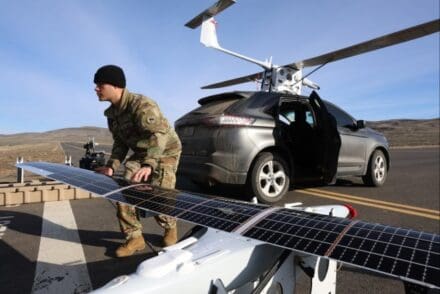
YAKIMA TRAINING CENTER, Wash.—Within the foothills of the Cascade Mountain range, the 1st Multi-Domain Effects Battalion (MDEB) from the 1st Multi-Domain Task Force (MDTF) conducted the Army’s first battalion-level All-Domain Home Station Training (HST) exercise, Static Focus 3. Held from March 3-14, the exercise took place at the Yakima Training Center in conjunction with Project Convergence Capstone 5 (PC-C5).

Static Focus 3 enabled live training of the MDEB’s family of systems used to conduct Reconnaissance, Surveillance, and Target Acquisition (RSTA) and non-kinetic effects execution. 1MDEB, activated concurrently with 1MDTF in 2020, integrates the task force’s information, intelligence, cyber, electromagnetic warfare, and space capabilities.

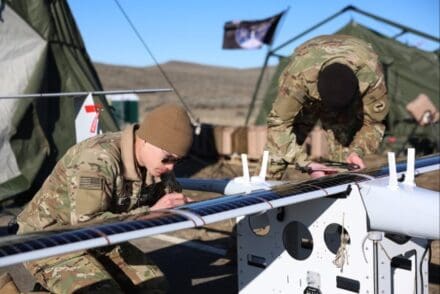
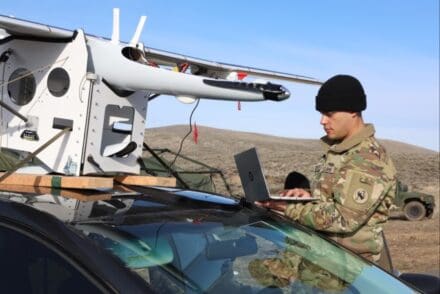
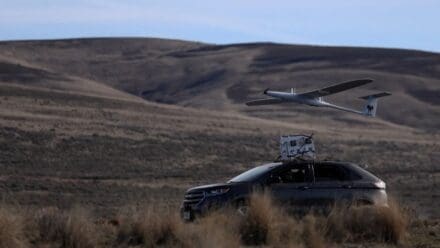
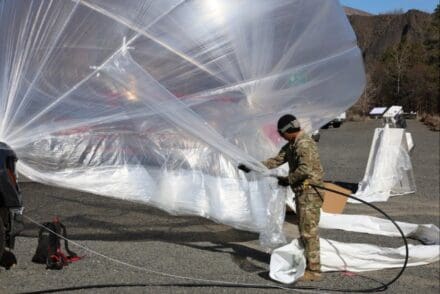
A highlight of the training was the network extension integration and deep sensing capability of High-Altitude Balloons (HABs) and the experimentation with ultra long-endurance, solar powered Unmanned Aircraft System (UAS).

“This is our first real exercise integrating government owned and operated ultra long-endurance UAS specifically designed for long-range deep sensing,” said Lt. Col. Joseph Mroszczyk, commander of 1MDEB.

Prior to the exercise, the unit spent two years testing and training with the platform alongside the long-endurance UAS system’s contractor, Kraus Hamdani Aerospace. It wasn’t until this event that the Soldiers were able to independently operate the system.

“We’ve got trained pilots and mechanics gaining valuable experience on the platform now,” Lt. Col. Mroszczyk added. “They’re logging hours and providing crucial sensor data, enabling us to serve as the task force’s eyes and ears, and as key contributing Army sensor to the Joint Force.”

During Static Focus 3, 1MDEB logged over a hundred UAS flight hours in various configurations.

“From a maintenance perspective, I was astonished by how little time and resources the platform demanded,” said Sgt. Jake Meyer from the UAS platoon from 1MDEB’s Extended Range and Sensing Effects (ERSE) Company. “Compared to traditional platforms, which require several months to get familiarized with, we were up and running in just two days.”

Max endurance testing was included in the experimentation of the platform, to include multi-ship flights.

“Multi-ship flight operations are the most complex missions, but the autonomous capability allows me, as an operator, to focus on the mission instead of my continuous direct management of each aircraft,” said Staff Sgt. Jacob Wilbert from the UAS platoon from 1MDEB’s ERSE Company.

Complementary to the long-range deep sensing UAS, the unit also experimented with HABs from three vendors, sponsored by the Army Intelligence, Surveillance, and Reconnaissance (ISR) Task Force for inclusion in the event and in conjunction with PC-C5.

“For me, the highlight of the event was witnessing the successive launches from all three HAB vendors and creating a constellation. Being part of this was exhilarating, because each vendor offered their own unique features and capabilities,” said Sgt. Antonio Morales from 1MDEB’s ERSE Company’s HAB platoon.

Previously, the unit had to travel to Fort Huachuca, Arizona, to access the same level of training. Static Focus 3 not only reduced the cost of traveling to Arizona to train, but also served as a valuable technical rehearsal for future employment.

“The progress that we’ve made over this last week greatly enhanced our capability as a task force,” said Mroszczyk.

As a theater-level unit and Joint Force enabler, assigned to the Indo-Pacific, the 1MDTF plays a vital role in synchronizing long-range precision fires layered with long-range precision effects to create multiple dilemmas and neutralize adversary anti-access and area denial networks. The MDTF’s proven innovation, agility, and lethality have led the Army to direct five full MDTFs in strategically significant locations worldwide.

PC-C5 is an Army hosted experiment that provides Joint and Multinational participants various locations that supports individual modernization efforts while solving problems through applications with Combined, Joint All Domain Operations (CJADO). PC-C5 ensures that the Army, can rapidly and continuously converge effects across all domains – air, land, sea, space, and cyber, to increase operational tempo and generate decision advantage over our adversaries. These structured series of experiments demonstrate transformation and modernization efforts, expand war-winning capabilities, and deliver the Army of 2030 while designing the Army of 2040.

By SSG Brandon Rickert

General Atomics Acquires North Point Defense

Monday, March 3rd, 2025

SAN DIEGO – 03 March 2025 – General Atomics (GA) today announced the strategic acquisition of North Point Defense, Inc. (NPD), a leading provider of Signals Intelligence (SIGINT) exploitation software and sensor integration, by General Atomics Integrated Intelligence, Inc. (GA-III), formerly known as General Atomics Commonwealth Computer Research, Inc. This acquisition enhances GA’s capabilities in the rapidly evolving SIGINT field, positioning the company to deliver advanced ISR solutions for air, sea, ground, and space platforms.

From concept to deployment, NPD delivers AI/ML-based autonomous signal processing and data dissemination solutions providing real-time actionable intelligence, supporting tactical and national mission priorities. “Joining GA represents an incredible opportunity to enhance our impact in delivering cutting-edge SIGINT solutions in support of national and tactical users,” said Bruce Benenati, President of NPD. “As part of a mission-focused organization with a proven track-record in tactical intelligence across the DoD and IC, we can accelerate innovation and deployment at scale. The integration gives our team access to unmatched operational expertise, resources, and a broader customer base. Together, we are poised to deliver even greater capabilities to those who depend on us in the field.”

GA-III is committed to providing a comprehensive suite of “out-of-the-box” hardware and software tools to meet mission requirements and expand the innovative intelligence capabilities within the GA group of companies. “The integration of NPD technologies into a division of GA-III is a strategic shift, enhancing GA’s ability to innovate rapidly and provide greater value to customers with end-to-end ISR solutions that are more efficient, effective, and technologically advanced.” said Brian Ralston, President of GA-III.

Baird served as the exclusive financial adviser and Miles & Stockbridge acted as legal counsel to North Point Defense on the transaction.

TacJobs – Army MOS 35P at 20th Group

Wednesday, February 26th, 2025

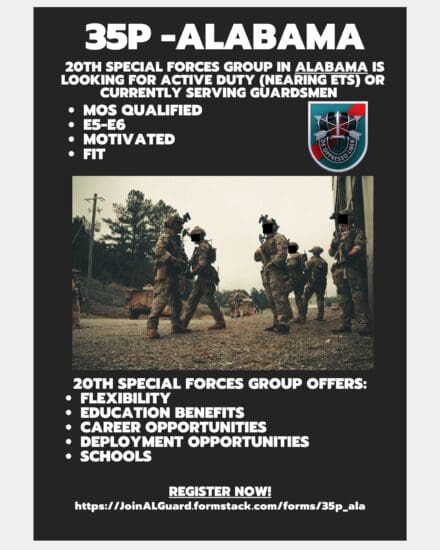
20th SFG(A) in Alabama is is looking to fill 35P slots.

You must already be MOS qualified and be E5-E6.

If you qualify, go to guardsf.com and use the registration link under “Special Forces Support”.

joinalguard.formstack.com/forms/35p_ala

Being on a SOT-A is one of the best jobs in the Army.

Have a question on how to earn the Green Beret? Or interested in becoming support?

Click “Contact a Green Beret” at guardsf.com.

Allen-Vanguard Launches Its Next-Generation RF Multi-Function Cyber Electromagnetic Activities (CEMA) Platform at IDEX 2025

Friday, February 14th, 2025

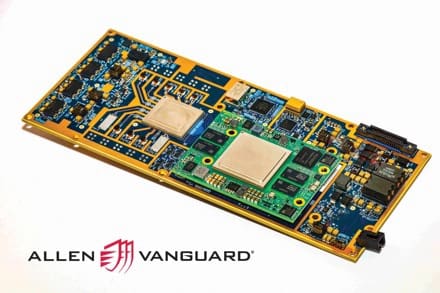
Allen-Vanguard, a global leader in providing customised solutions and enabling technology for Radio Frequency (RF) spectrum monitoring and RF defeat of Unmanned Air Systems (UAS) and Radio Controlled Improvised Explosive Device (RCIED) threats employed by terrorists and extremists, is launching its next-generation core technology at IDEX 2025. As modern battlefield threats evolve, Allen-Vanguard is responding by launching the cornerstone of their latest RF multi-function CEMA platform that provides the necessary flexibility and adaptability for front-line troops to quickly and easily dominate the CEMA space; a capability that is particularly important when providing security in the Middle East.

Allen-Vanguard is very excited to announce at IDEX 2025, the advanced core that will underpin its next-generation family of multi-function CEMA platforms. This new capability leverages the very latest in analogue signal processing technology and is the culmination of significant strategic investment and massive engineering development that the company has placed in its future program of systems, the ‘NXT’ family. This technology delivers a highly integrated mixed-signal front-end technology, combined with enhanced RF processing power to deliver increased flexibility and improved detect and defeat capability for the end user. This new technology enables direct RF sampling, without the use of tuners, across the entire RF spectrum used by UAS and RCIED devices.

Allen-Vanguard has engaged best-in-class experts to collaborate on this exciting new project which enables this new more powerful software-defined radio (SDR) platform to form the core of their new products and help dominate the EW space. The new platform comprises of an RF System on Module (SOM) and a customisable product-specific application interface card which means users can detect, protect and defeat a wider range of threats from each system. Allen-Vanguard will be showcasing this and its current range of products at IDEX 25 on stand C3-006 from 17-21 February at the ADNEC Centre, Abu Dhabi.

Bobby Strawbridge, President of Allen-Vanguard said: “The Middle East has been a core market for Allen-Vanguard for a long time, and we have used our experience gained from supporting our clients in the region to help design and develop this new technology. Not only is it exciting from an engineering perspective and enables the EW capabilities that our customers demand, but it also should be of interest to any OEM in the EW sector. This card delivers best of breed metrics in a small, customisable footprint at a fraction of the price of standardised formats. I am very grateful to our partners and our in-house design team, who together, have pushed the boundaries of what is possible in the CEMA space.”

www.allenvanguard.com

Army Awards Information Collection Management Application

Tuesday, September 24th, 2024

The Army Contracting Command – Aberdeen Proving Ground (ACC-APG) recently awarded ECS Federal a delivery order valued at $1.2M for initial acquisition, tailoring, integration and testing of the Information Collection Management Application (ICM). This is the first delivery order on the IDIQ which has a ceiling of up to $23M to support all development, integration, testing, training, license procurement and maintenance across the next five years.

The Information Collection Management App, a critical component of the Army’s modernization initiatives, is designed to digitize collection management workflows and provide a tactical, expeditionary toolset that addresses Commander’s information needs. With streamlined workflows, the app significantly reduces the burden of soldier operations, ensuring that our forces are equipped with the best possible intelligence capabilities to face the challenges of tomorrow’s complex battlefield environments.

“The awarding of the Information Collection Management App marks a significant milestone in our mission to develop and field modernized intelligence systems,” said Col. Chris Anderson, Project Manager for PM Intelligence Systems & Analytics. “This app is a testament to the exceptional work of our dedicated professionals who are committed to integrating best value solutions for the battlefield of tomorrow.”

PM IS&A is responsible for multiple Army Intelligence Foundation’s modernization initiatives and develops and fields modernized intelligence systems through an exceptional workforce of dedicated professionals, integrating best value solutions for the battlefield of tomorrow.

MI History: Army Security Agency Establishes DARRS Detachments

Sunday, August 4th, 2024

I love military history and in particular SOF and SI history, having served in both communities. I especially appreciate the MI stuff since so little has been published. The US Army’s Military Intelligence Soldier Heritage Learning Center recently shared this post:


Photo: Personnel of the 1st ASTD, one of the ARVN units supported by the DARRS detachments

On 31 July 1970, the Army Security Agency (ASA) established Division Advisors Radio Research Support (DARRS) Detachments in South Vietnam. The DARRS detachments were an effort to further the overall “Vietnamization” of the war as well as provide direct support to the American advisors with Army of Republic of Vietnam (ARVN) divisions.

In early 1969, President Richard Nixon’s administration began a program to end American involvement in Vietnam, which involved expanding, equipping, and training South Vietnamese military forces so they could take an increased combat role while reducing the number of American forces. As part of this broader program, the ARVN began to organize their SIGINT effort. To support their divisions, they organized ARVN Special Technical Detachments (ASTDs) consisting of four officers and fifty-six enlisted personnel. Modeled on the ASA’s highly successful direct support units attached to American divisions and separate brigades, the ASTDs provided SIGINT support to combat divisions and passed information up the South Vietnamese cryptologic chain of command. On 1 July 1969, two ARVN divisions received the first ASTDs.

Under the terms of the Vietnamese Improvement and Modernization Program, ASA’s 509th Radio Research (RR) Group, under Col. William W. Higgins, would assist the ASTDs by providing mission equipment and logistical support and by instructing the South Vietnamese on how to perform their own maintenance. All the while, ASA leaders continued to take every opportunity to press the ARVN to focus upon voice intercept and even offered on-the-job training by temporarily assigning Vietnamese to the 509th RR Group’s own low-level voice intercept teams.

Over the next year, Higgins and his group informally supported the ARVN’s nascent SIGINT efforts. Under Project SCREWDRIVER, 509th RR soldiers regularly visited South Vietnamese elements to pass on maintenance tips and to ensure they were receiving necessary supplies. These visits also proved an excellent means to monitor overall operational progress.

At the same time, intelligence support for American advisors became more critical. Consequently, the 509th RR Group field-tested the concept of a team dedicated to specifically support the senior American advisor for the 1st ARVN Division. This test proved so successful that the U.S. Military Assistance Command, Vietnam (MACV) approved the concept for all of the ASTDs. On 31 July 1970, MACV and ASA established the DARRS detachments.

The DARRS detachments’ primary function was to pass SIGINT information to senior American personnel advising the South Vietnamese divisions and to provide a sanitized version for the ARVN commanders. In addition, DARRS personnel provided the ASTDs with constant support and advice. Their impact was immediately evident and began to assure that the ARVN detachments were operationally functional.

As one advisor noted, “For a long time we had a shortage of hard intelligence…The 9th DARRS has given us the ability to make estimates and allow the commander to make decisions.”

?Michael E. Bigelow