TYR Tactical

Archive for the ‘Clothing’ Category

Dressed to Survive: How an Army Decision Aid Is Improving Cold-Weather Readiness

Saturday, July 11th, 2026

NATICK SOLDIER SYSTEMS CENTER, Mass. – Where there is little rest, comfort, or compromise in the world’s most austere cold-weather environments, a soldier’s clothing is more than just a uniform – it is survival. For leaders, clothing decisions are tactical decisions, and the Medical Research and Development Command’s U.S. Army Research Institute of Environmental Medicine’s Cold Weather Ensemble Decision Aid – CoWEDA – is giving them the information to make the right ones.

Developed by biophysical mathematical modeler Dr. Xiaojiang Xu, CoWEDA is a research-backed decision aid designed to take the guesswork out of a leader’s most critical pre-mission decisions. By accounting for environmental conditions, physical activity levels, and clothing ensembles, CoWEDA gives leaders the data they need to make informed and confident decisions about what their soldiers’ clothing needs are before stepping into the field. The Air Force recognized that need more than 10 years ago when approaching Xu and USARIEM looking for their expertise to a simple but critical question — what types of clothing do Airmen need when operating, maintaining, or jumping from aircrafts in extreme cold weather conditions?

“Ultimately, the question became, is this specific clothing suitable for minus 50 degrees Fahrenheit? We realized there was no reliable method to answer that question,” said Dr. Xiaojiang Xu, a USARIEM biophysical mathematical modeler. “The only available method was to provide a single insulation number, such as if you go to minus 50 degrees, you need a clothing value of five, but for the average user, that number means very little in terms of actual injury prevention. It was at that point we began designing a new method. With CoWEDA, the standard compares gear performance directly against the risk of hypothermia and frostbite, making it the most practical and usable decision aid to assess whether clothing will prevent cold weather injuries, and if not, when they will occur.”

At the heart of CoWEDA is Xu’s Six Cylinder Thermoregulatory Model, or SCTM, a sophisticated framework that breaks the human body into six distinct areas: the head, torso, arms, hands, legs, and feet. By combining the physics and physiology of heat transfer across each of those areas, the model can predict not just whether a soldier is at risk, but when that risk may become critical. Rather than offering a blanket assessment, CoWEDA delivers time-based outputs by telling a leader, for example, that frostbite may occur within two hours or hypothermia within twenty, based on the specific clothing being worn, the environmental conditions, and the physical demands of the mission.

Built for the leader, rather than the individual soldier, CoWEDA allows decision makers to tailor those assessments by inputting expected weather conditions, such as temperature, humidity, and wind speed, alongside the planned physical activity level and the clothing ensemble available to the unit. Critically, the aid accounts for the reality that soldiers are not static. A soldier standing still at minus-20 degrees Fahrenheit in a standard Army glove presents a very different risk profile than one moving artillery shells in the same conditions, because physical exertion generates body heat and that changes the equation entirely. CoWEDA captures that nuance.

“CoWEDA is designed for any warfighter going out into a cold weather environment,” said Dr. John Castellani, acting division chief of USARIEM’s Thermal and Mountain Medicine Division. “It is really about prevention. If a leader has an idea of the operation, mission, or training their soldiers are going into, the predicted air temperature, the intended activity, and what clothing is available — CoWEDA will tell them what the risks are.”

Xu’s research has positioned CoWEDA as a resource that extends well beyond the Army with other military branches and federal agencies increasingly turning to the decision aid to inform their own cold weather decision making. One example is the Probability of Survival Decision Aid which USARIEM first developed for the U.S. Coast Guard in 2010. Today, the PSDA has been expanded to incorporate Xu’s thermoregulatory model. It is now mandated for USCG use and runs automatically whenever a rescue swimmer enters the water during a search and rescue operation. When the Coast Guard responded to search for workers who fell into Baltimore Harbor during the Francis Scott Key Bridge collapse in 2024, the model was immediately activated, informing leaders how long it was safe to sustain active search operations. Other agencies are adopting the decision aid as well to include: the United Kingdom Coast Guard and the Department of Homeland Security. The science behind CoWEDA is not theoretical, it is already saving lives.

Beyond developing CoWEDA, USARIEM is responsible for producing and maintaining the Army’s cold weather injury prevention and treatment guidance — the doctrine that shapes how leaders think, plan for, and respond to cold weather threats across the force. USARIEM’s research data with CoWEDA affirms what many experienced leaders intuitively know: that no two soldiers respond to cold in the same way.

“The Army values uniformity, but in extreme cold, a one-size-fits-all approach to cold weather dressing can put soldiers at risk. What works for one soldier, may not work for another,” said Castellani. “By allowing a leader to input factors specific to their soldiers and operating environment, CoWEDA does not replace a leader’s judgment, it gives them the ability and researched backed information to exercise it better.”

For the Army and USARIEM, the next steps are about access and integration. Currently as a desktop application, CoWEDA is in the process of being developed into a web-based platform that would make it easier for leaders to access the decision aid without specialized software. The longer-term vision is more ambitious: embedding CoWEDA into the larger operational planning systems already used by military planners, so that cold weather medical risk becomes a standard input in mission planning alongside logistics, terrain, and threat assessments.

“Oftentimes, the medical side is that last part of planning,” explained Castellani. “The hope is that CoWEDA will be embedded into the Army’s broader planning systems such as the Android Tactical Assault Kit, so that the medical side is present from the outset. Then a leader might say, ’we are going to do this mission in these conditions with this clothing, what is our cold weather injury risk’ they will get an evidence-based response and be able to decide if they are willing to accept that risk.”

Ongoing research continues to sharpen the decision aid’s precision. Current studies are examining the specific role of socks in frostbite prevention; a gap identified directly from field feedback. Mannequin and human subject testing are currently underway to generate the data needed to make footwear selection as accurate within CoWEDA.

For now, the decision aid is available, the science is sound, and the need has never been clearer. As more soldiers are called to operate in cold and austere environments, CoWEDA offers leaders something no experience alone can provide, data, certainty, and the confidence to make the right call before the cold does.

Story by Danae Johnson 

Medical Research and Development Command

Prometheus Design Werx Releases the Apex Boonie Hat

Wednesday, July 8th, 2026

A modern refinement of the Vietnam-era RECCE boonie. Custom-milled 2-way stretch NYCO+ Ripstop. Bug-proof NoSeeUm mesh liner. Made in Vietnam, the country where the boonie hat was born.

San Francisco, CA — July 8, 2026 — Prometheus Design Werx announces the Apex Boonie Hat, a modern interpretation of a Vietnam-era field classic built on the RECCE short brim, a custom-milled 2-way stretch NYCO+ Ripstop shell, a bug-proof NoSeeUm mesh liner, and a cinching crown fit system. It’s available now for $59.00 USD, available in three colorways: Universal Field Gray, All Terrain Brown, and Ranger Green.

FROM THE JUNGLES OF VIETNAM TO THE RECCE BRIM

The boonie hat is one of those rare pieces of equipment that transcended its origins so completely that most people wearing one today have no idea where it came from. It started as improvised headwear sewn by Vietnamese tailors from salvaged parachute fabric, made its way into the field with American troops in the early 1960s, and within a decade became standard issue across all branches of the U.S. Armed Forces. For over half a century the design held. That kind of longevity does not happen by accident, it happens when a piece of equipment solves a problem so well that no one can improve on the core concept.

The Apex Boonie is built on the RECCE cut, a field modification born with Vietnam-era reconnaissance teams who trimmed their brim widths to improve peripheral vision during close-quarters jungle movement. It is a refinement, not a reinvention: identify what works, understand why it works, then apply contemporary materials science without losing the functional DNA that made the original essential.

THE HAT

The shell is a custom-milled 6.8oz NYCO+ Ripstop – 55% cotton, 42% high-tenacity N6 nylon, 3% spandex. The nylon delivers durability, quick-dry performance, and resistance to rot and mildew. The cotton contributes breathability and a natural hand feel. The 2-way stretch, a feature no standard boonie offers, lets the hat conform to the wearer’s head, pack flat without permanent creasing, and return to shape after being rolled into a pack or stuffed into a cargo pocket.

Ventilation runs through soft, low-profile slit vents rather than the stamped, corrosion-prone metal eyelets of the original, each backed by NoSeeUm mesh, the same fine-weave netting used in high-performance backpacking tents, to block insects while allowing airflow through the crown. The interior is finished with a synthetic micro-suede sweatband that wicks moisture and resists odor over all-day wear. A cinching crown system with custom nylon toggle locks dials in fit, and a cinching chin strap secures the hat during active movement and high wind. Classic foliage and accessory loops run the crown, with a rear loop panel for cat eyes, insignia, or reflective tape, and an interior map pocket rounds out the build.

MADE IN VIETNAM

The Apex Boonie Hat is made in Vietnam, the country where the modern boonie hat was born. The sewing workshops that produced the first locally made boonies in the 1960s established a garment manufacturing tradition that today serves the world’s leading technical outdoor and premium apparel brands. Making the Apex Boonie in Vietnam is a direct acknowledgment of that lineage; a homecoming.

SPECIFICATIONS

Materials:

– 6.8oz, 55% Cotton / 42% High Tenacity N6 Nylon / 3% Spandex NYCO+ Ripstop

– 70D Nylon Ripstop

– Poly Synthetic Micro-Suede

– Nylon NoSeeUm Mesh

– Custom Nylon Slotted Buttons and Toggle Locks

– Poly Flat Lace / T40 Nylon Thread

Features:

– Custom-Milled 2-Way Stretch Technical Ripstop Fabric

– Bug-Proof NoSeeUm Mesh Liner

– Soft, Low-Profile Slit Vents for Airflow

– Synthetic Micro-Suede Sweatband

– Cinching Crown Fit System with Chin Strap

– Interior Map Pocket

– Foliage/Accessory Loops and Rear Loop Panel for Cat Eyes, Insignia, or Reflective Tape

Sizing:

– S/M: 6.5″ – 7.375″ head circumference

– M/L: 7.375″ – 7.75″ head circumference

Get yours at prometheusdesignwerx.com/collections/instock/products/pdw-apex-boonie-hat-recce.

DFND: Supporting the Warrior Athlete

Friday, July 3rd, 2026

For the past decade, DFND, a Berry Compliant performance company has focused on supporting those who protect us. U.S. active-duty military personnel are among the most highly conditioned athletes in the world, but the physical demands placed on them result in high rates of musculoskeletal injuries (MSKIs) and chronic sleep deprivation. This is where DFND delivers measurable impact.

Through our proprietary, patented graduated compression technology and Recovery IR Sleepwear, DFND helps improve recovery, reduce injury risk, and enhance sleep quality for the modern warrior athlete. Since implementing DFND compression solutions, MSKI rates have been reduced by as much as 30%.

Our Recovery IR Sleepwear technology works naturally with the body’s recovery processes by helping regulate body temperature — one of the key drivers of restorative sleep and physical recovery.

Over the last several years, the Army’s Holistic Health and Fitness (H2F) program has become the gold standard for comprehensive soldier readiness and recovery. H2F demonstrates the Army’s commitment to taking care of its men and women by prioritizing injury prevention, recovery, sleep, and long-term performance optimization.

DFND aligns directly with this mission.

The MSKI Crisis in the Military

Musculoskeletal injuries remain the leading cause of medical visits and limited-duty days across the U.S. military.

• Service members experience approximately 25 million limited-duty days annually due to MSKIs.

• MSKIs significantly reduce combat readiness and cost the Department of Defense billions of dollars every year.

• Across U.S., Canadian, and British Armed Forces, MSKI rates range from 40–76%, with repetitive lower-body injuries being the most common.

In a study conducted within a U.S. Special Forces unit:

• 98% of soldiers reported reduced calf soreness and cramping while wearing DFND compression socks.

• 98% reported reduced swelling and soreness the following day after wearing recovery compression tights.

• 92% experienced partial or complete soreness reduction overall.

Graduated compression has also been shown to help reduce:

• Shin splints

• Achilles tendinitis

• Lower-leg pain from prolonged standing

• Fatigue associated with strenuous activity

Sleep & MSKI Risk

The Dose-Response Relationship

Sleep deprivation dramatically increases injury risk among warfighters.

A study involving 7,576 U.S. Army Special Operations soldiers found that soldiers sleeping four hours or less per night were 2.35 times more likely to suffer an MSKI compared to those sleeping eight or more hours.

Additional systematic reviews found:

• Lower sleep duration was consistently associated with musculoskeletal symptoms over both short-term and long-term periods.

• Poor sleep quality independently increased current MSKI risk among U.S. Army Rangers, even after controlling for age.

Why Sleep Deprivation Drives Injury

Insufficient sleep directly impacts physical performance and recovery by:

• Reducing muscle strength

• Slowing muscle repair

• Decreasing endurance

• Impairing cognitive function and reaction time

Research has also shown that short-term sleep deprivation can reduce testosterone levels by 25–30%, limiting the body’s ability to repair tissue and recover from physical stress.

When reduced sleep is combined with increased training demands, the likelihood of muscle injury rises significantly due to accumulated fatigue and decreased recovery capacity.

The Scope of the Problem

• MSK injuries result in more than 2 million medical encounters annually

• They account for approximately 10–12 million limited-duty days

• Only 1 in 3 active-duty soldiers consistently receives adequate sleep

Compression recovery systems and quality sleep work best together:

• Compression supports passive recovery during rest periods

• Sleep amplifies the body’s natural repair and regeneration processes

Together, they create a powerful injury-prevention and recovery strategy.

The Financial Impact of MSKIs

MSKIs are not only a readiness issue — they are also a massive financial burden.

When a soldier is injured and unable to complete training, the Army loses its entire investment in recruiting, training, and development.

For example:

• A stress fracture during Basic Combat Training can cost the government $50,000+ per soldier with no operational return.

• Non-combat MSKIs cost the U.S. military more than $3.7 billion annually.

• In one year alone, the Army spent $434 million in direct medical costs treating MSKIs.

Embedding injury-prevention specialists into Initial Entry Training programs has already reduced sunk training costs by as much as $20 million annually simply by preventing MSK-related attrition.

Long-Term Consequences

The long-term effects of MSKIs extend far beyond initial injury:

• MSKIs contributed to nearly 70% of Army medical disability discharges

• More than 90% of disability discharges among first-year enlisted soldiers from 2010–2015 were MSKI-related

• MSKI disabilities account for 44% of all service-connected disabilities among compensated Global War on Terrorism veterans

Why DFND Matters

DFND exists to improve readiness, recovery, and resilience for the warrior athlete.

Our technologies support the exact priorities the military is now emphasizing through programs like H2F:

• Injury prevention

• Recovery optimization

• Improved sleep

• Enhanced performance

• Reduced medical costs

• Increased force readiness

By combining patented graduated compression with advanced IR recovery sleepwear, DFND delivers a scalable, non-invasive, and performance-driven solution to one of the military’s most expensive and persistent problems.

5.11 Expands Professional Services Line with Premium, Performance-Driven Scrubs Designed for Healthcare Professionals

Tuesday, June 30th, 2026

Costa Mesa, Calif. (June 30, 2026) – For healthcare professionals, every shift brings responsibility. Long hours. Constant movement. Critical decisions. Moments where performance, comfort, and reliability matter more than ever.

To support the demands of that work, 5.11, the global innovator of purpose-built apparel, footwear, and gear, is proud to announce the launch of its new line of high-performance medical scrubs designed specifically for nurses and frontline healthcare professionals.

Built on decades of experience designing apparel for professionals whose work demands durability, mobility, and reliability, the new collection brings that same commitment to healthcare settings nationwide. The launch marks another major expansion of 5.11’s growing Professional Services category, enabling hospitals and healthcare systems to outfit a wide range of roles—from security teams and EMS personnel to environmental services staff, administrators, and now frontline medical professionals.

“Healthcare professionals don’t choose the easy path. They choose a profession built on service and showing up for others when it matters most. At 5.11, we believe growth lives on the other side of challenge. That’s what Challenge Possible™ means. It’s why we’re proud to build purpose-built gear for healthcare professionals who live that belief every single day.”  Troy Brown, CEO of 5.11

Created for professionals who move toward responsibility when others need them most, the collection is designed to support movement, endurance, and confidence when the work becomes difficult. 5.11’s new medical apparel system was developed alongside healthcare professionals whose firsthand experiences helped shape a collection built to meet the demands of modern healthcare—long shifts, constant movement, and the need for comfort, confidence, and durability throughout the workday.

Designed to support long shifts and high-movement workflows without sacrificing comfort or professionalism, the collection features lightweight stretch fabrics, moisture-wicking technology, antimicrobial properties, and ripstop durability engineered to extend garment life. Thoughtfully designed for everyday wear, the garments help reduce wrinkling and maintain a polished appearance throughout demanding shifts. The line includes short-sleeve tops and both regular and jogger-fit pant options for men and women across six hospital-approved colorways, including Pacific Navy, Black, Ciel Blue, Royal Blue, Storm, and Burgundy.

The new 5.11 scrubs line is available now through participating hospital partners, select wholesale distributors, and online at www.511tactical.com/511-scrubs.

Nester Hosiery Awarded US Army and US Marine Corps Cold Weather Sock Contracts

Friday, June 26th, 2026

Leading U.S. sock manufacturer strengthens position as the warfighters choice for military cold weather performance hosiery.

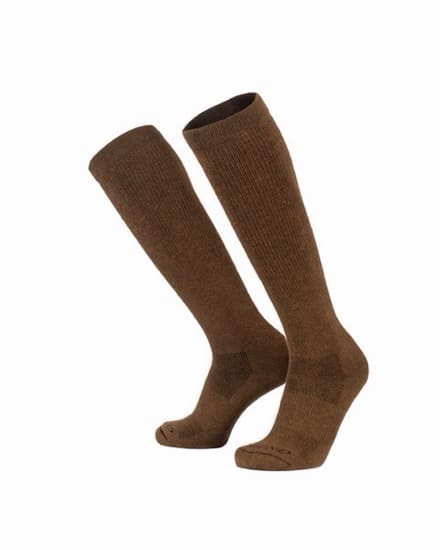
June 25, 2026 – Mount Airy, NCNester Hosiery, a leading U.S.-based manufacturer of high-performance Merino wool socks, announced today that it has been awarded contracts supporting both the U.S. Army Cold Weather Sock Program and the U.S. Marine Corps Intense Cold Weather Sock Program following the successful novation of the programs from Fox River.

These awards reinforce Nester Hosiery’s position as a leading provider of Berry Amendment compliant cold weather and performance sock systems for the U.S. military, delivering mission-critical products that are designed, engineered, and manufactured entirely in the United States.

Under the awards:

Nester Hosiery will serve as the provider of record for the U.S. Army Cold Weather Sock Program under a three-year contract structure.

Nester Hosiery was also awarded the U.S. Marine Corps Intense Cold Weather Sock Program under a three-year term.

“These two major awards reflect the trust placed in our team, our domestic manufacturing capabilities, and our longstanding commitment to delivering premium performance products to the warfighter,” said Kelly Nester, CEO of Nester Hosiery.

With manufacturing operations rooted in North Carolina and a decades-long legacy of domestic sock manufacturing expertise, Nester Hosiery continues to invest in its U.S.-based workforce, product innovation, and resilient supply chain capable of supporting both military and commercial markets.

The company’s military programs are supported through advanced knitting technology, technical product development expertise, and a commitment to delivering consistent quality and performance in the most demanding of operational environments.

To learn more about Nester Hosiery’s support with the Military community, please visit nesterhosiery.com/military.

Sneak Peek – Polartec Powergrid Hoodie from Hill People Gear

Thursday, June 25th, 2026

Coming soon from our friends at Hill People Gear is the Polartec Powergrid Hoodie.

They’ve been mulling insulation over for quite awhile so we’re looking forward to this piece.

Here are the features of our pullover hoodie:

  • contoured hood that will go under a helmet or cowboy hat
  • drawstring around face
  • no pockets to maximize breathability under exertion
  • doubled cuff with thumb loops to prevent drafts and make it easy to put a jacket over the top length is 2″ shorter than a Windcheater to keep the weather off of your fleece layer

Caveat Emptor, the fabric isn’t US origin but the sewing is.

According to HPG they’ll be in stock fairly soon so sign up for the waitlist now.

FirstSpear Friday Focus: Crew Shorts

Friday, June 5th, 2026

The FirstSpear CREW SHORTS are built for range days, training sessions, and well-earned days off. Durable, comfortable, and easy to move in, they bring dependable performance without the tactical billboard look.

The modern 6-inch inseam and streamlined fit make them a solid choice for warm-weather work, travel, or kicking back after a long week.

Whether you’re loading mags, running drills, or just handling the weekend like a responsible adult, the CREW SHORTS are ready to keep up. They deliver the rugged construction FirstSpear is known for in a clean, versatile package. Because sometimes the best gear is the kind that works hard without making a big deal about it.

To request an estimate click image above or visit First-Spear.com/Request-For-Estimate. FirstSpear is the premier source for cutting-edge tactical gear for military, law enforcement and those who train. For more information visit First-Spear.com.

Rampart Range Day 26 – DNS Alpha

Monday, June 1st, 2026

This is the latest incarnation of the DNS Alpha GORE-TEX coverall but beefed up as an overgarment for freefall parachuting.

It also includes a removable insulated liner.

The rear incorporates stretch panels.

This image offers a good view of the sleeve and thigh pockets as well as Velcro fields to attach equipment.

Here you can see the full length zippers, thigh stretch panels, and internal booties.

And finally the left upper quadrant of the coveralls.

I’d call it a Fallschirmspringeranzug. Hopefully, we’ll see these begin to see these show up soon for US MFF jumpers.

This and other products shown at Rampart Range Day are available for unit and agency orders in Canada and the US through Rampart.