DUAL COMMS slap live on Disco32.com.

Spectra Group is an internationally renowned specialist provider of secure voice, data and satellite communications systems, specifically optimised for use in remote and challenging environments, with offices in UK and USA. Spectra Group has recently taken part in the UK Army Warfighting Experiment 2020 (AWE20) demonstrating high-capacity over-the-horizon communications systems.
The British Army has established AWE20 as a capability spotlight to explore emerging technologies and identify specific capabilities in the agile Command, Control and Communication (C3) space that are suitable for rapid exploitation. AWE20 aims to push the boundaries of technology and military capability, testing a range of systems by putting them in the hands of the user while giving invaluable military feedback to suppliers. Previously known as URBan Experimentation (or URBEX), AWE20’s purpose is to ‘Identify how the Army can exploit developments in technology in the agile C3 arena’.
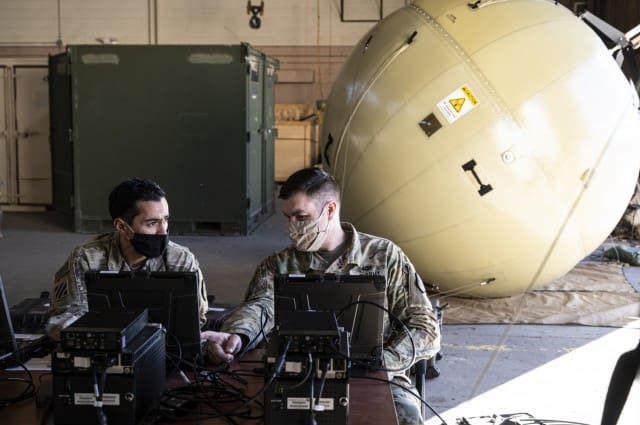
At AWE20, Spectra Group, together with industry partners Comtech, have been demonstrating the advanced troposcatter mobile system known as COMET (Compact Over-the-horizon Mobile Expeditionary Terminal) that provides high capacity, low-latency data links for over-the-horizon communications, without the need to rely on satellites or multiple line-of-sight repeaters. At AWE20 Spectra demonstrated how the new, innovative, low-RF signature modems can consistently deliver bandwidths far exceeding those possible using satellite communications systems. Sitting alongside Spectra Group’s highly acclaimed SlingShot satellite tactical communications system, COMET completes a mobile communications suite, enabling Spectra Group to deliver remote, beyond line of sight communications capability, both with and without satellites.
Simon Davies, President of Spectra Group said: “It’s an important and prestigious step for Spectra Group to take part in AWE20 with the COMET troposcatter system. Feedback has been very positive with users appreciating the ease of use, large bandwidth and overall ability to communicate over the horizon in a potentially satellite and GPS denied environment”. He added: “Troposcatter and SlingShot offer different yet complimentary capabilities to our users. We’re confident that all of our existing and future customers will see the benefits on offer in using both systems side-by-side, to meet every Beyond Line Of Sight communications scenario”.
ARLINGTON, Va. (AFNS) — The Air Force’s Spectrum Management Office, or AFSMO, officially transferred Oct. 23 from a function under Air Combat Command to full integration under the Headquarters Air Force Staff.
AFMSO joins the Cyberspace Operations and Warfighter Communications Directorate assigned to the Deputy Chief of Staff for Intelligence, Surveillance, Reconnaissance and Cyber Effects Operations. This is a vital move in a larger plan to support, from a Headquarters Air Force perspective, the synchronization of Information Warfare functions; a move which is happening at the right time for on-going developmental work to enable all-domain operations.
Air and Space Force weapon systems depend on the electromagnetic spectrum (EMS) to connect warfighters around the world and across all domains. The Air Force’s growing need for spectrum requires AFSMO to maintain continuous engagement across the federal government, commercial industry and the international community.
Coming just 18 months after the HAF Staff merger of ISR and Cyber Effects Operations, this move is another step in the shift toward great power competition under the 2018 National Defense Strategy.
“This is a critical step to information warfare integration and synchronization because command, control, communications, computers, intelligence, surveillance and reconnaissance (C4ISR) is inextricably linked to EMS management,” said Lt. Gen. Mary O’Brien, deputy chief of staff for ISR and Cyber Effects Operations. “To compete and win in competition as well as a high-end fight, our Air and Space Force activities and capabilities like EMS must not only be de-conflicted, but integrated with our service counterparts. The heart of JADC2 (Joint All Domain Command and Control) is that military activities in one domain must enhance the effectiveness of those in other domains and compensate for vulnerabilities, and I believe this move will help us in this area.”
AFSMO, continuing to work out of Fort George G. Meade, Maryland, remains integral to helping the Air Force integrate new technologies and adopt new approaches to spectrum management. As the Air Force increases focus on JADC2, effective and efficient management of EMS is exceedingly important because it is a finite and essential resource.
“Given the Air Force-wide scope of AFSMO’s roles and responsibilities, bringing it back to the Air Staff is a natural fit,” said Brig. Gen. Eric DeLange, director of Cyber Operations and Warfighter Communications. DeLange will oversee the AFSMO efforts as part of the HAF Staff. “As we look to advance our efforts in Information Warfare, and with our focus squarely on cyberspace and warfighter communications that so heavily depend on the electromagnetic spectrum, I have no doubt that bringing AFSMO into the Directorate fold will create new and important synergies. I’m definitely excited to have them join the team!”
The current commander, Col. Kenneth Miller best describes their work as “…ensuring Airmen have access to the spectrum they need, when and where they need it.”
The electromagnetic spectrum transcends all physical domains and the information environment and extends beyond defined borders and boundaries. “The Air Force’s insatiable appetite for spectrum requires AFSMO to maintain continuous engagement across the federal government, commercial industry and the international community to ensure our Air Force spectrum equities are protected,” Miller said.

The EMS is a finite resource, and the Air Force must integrate new technologies and adopt new approaches to spectrum management to increase sharing between federal and nonfederal users. An example of this was AFSMO’s efforts to support the federal government response to the COVID-19 pandemic. As much of the American workforce transitioned to telework, the demand for commercial broadband reached new heights. In response, the Federal Communications Commission granted commercial broadband carriers special authorizations to increase bandwidth capacity across several basic economic areas throughout the U.S.
Another top Secretary of the Air Force’s priority is modernizing the Air Force with new technologies and innovating with urgency. In support of this priority, AFSMO has been working closely with the MAJCOMs responsible for hosting ongoing Advanced Battle Management System, or ABMS, onramps to ensure all spectrum requirements are properly identified and documented. In early September, the second ABMS onramp concluded at Andrews Air Force Base. During this event, live fire demonstrations utilized both 4G- and 5G-networks for access to over 60 data sources. In preparation for the next ABMS onramp, the AFSMO team is gearing up to ensure warfighters will have the spectrum they need to accelerate change.


By Secretary of the Air Force Public Affairs

Designed to fit the AN/PRC-152 family of radios, the LBT Light Modular Comms Pack can be configured with shoulder straps or attached to armor back panel. It features industry standard zippers and PALS compatible zipper adapters are available for vests without integrated zippers.

There’s a zippered outer mesh pocket at the back of the pack and the radio can be accessed via a U-shaped zipper. Additional top access is provided through a flap which secures via Velcro.

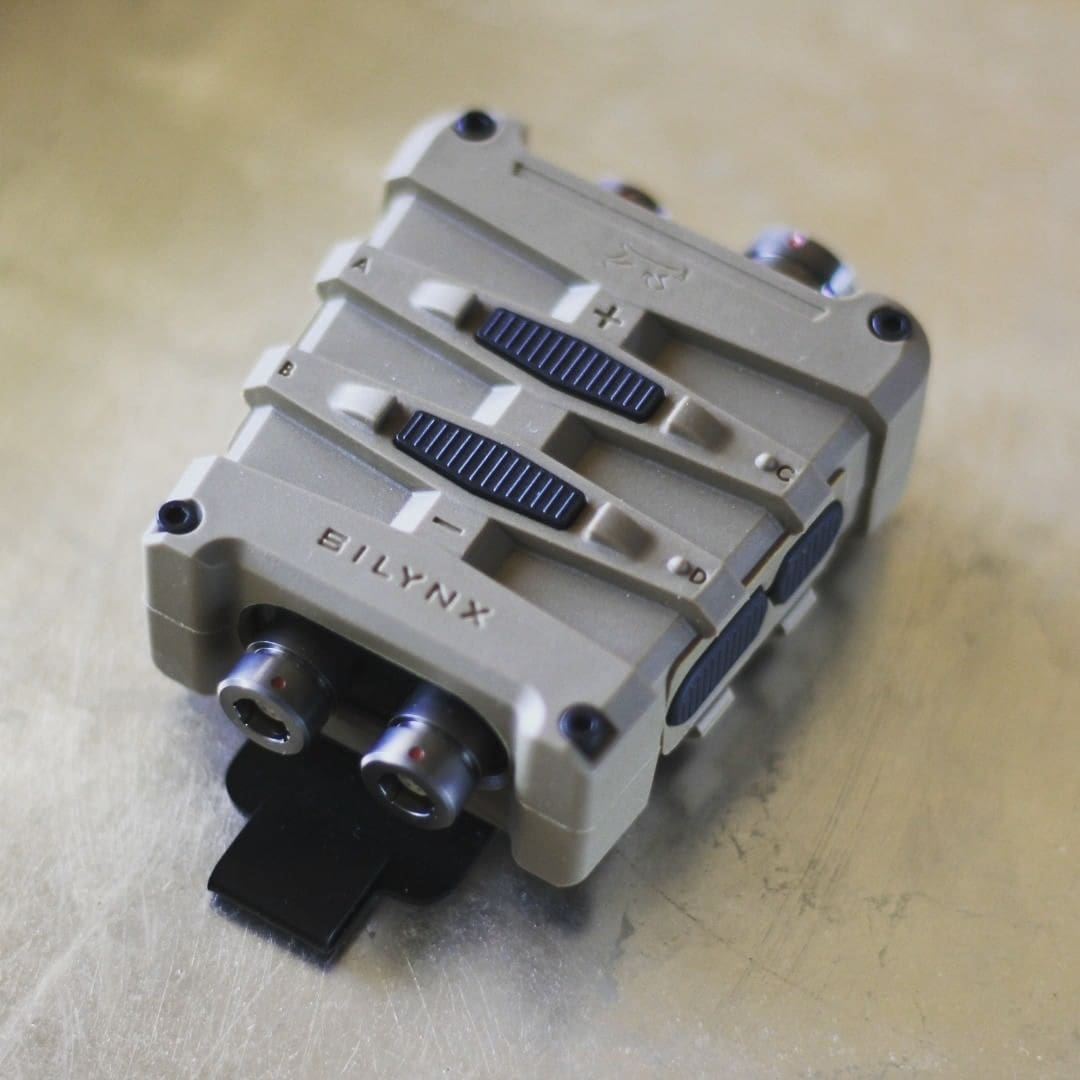
Users have been asking OTTO to integrate their NoizeBarrier Micro in-ear hearing protection with their other comms systems like the H3 seen here. The issue has been that they didn’t want encrypted comms going into a Bluetooth enabled earpiece.

They made it happen by introducing a new earpiece with dual leads. This way the signals are kept separate.

It works with the H3, Listen Only and Surveillance kits.
Spectra Group (UK) Ltd, world-leading provider of high-grade information security and communication capabilities, has announced the addition of a new product to their portfolio: the SlingShot Tactical Operations Centre System (STOCS). Spectra’s STOCS adds additional capability and operability to the already hugely successful SlingShot tactical satellite communications system.

STOCS is a specially designed and modified version of SlingShot that allows the user to communicate beyond line of sight (BLOS) while being up to 35 meters from the antenna. Because it operates on L-Band, the current configuration limits the current SlingShot system to being operated at a remote distance of up to 10 meters (depending on system type) from the antenna, which in most operational scenarios is sufficient, for example, in a vehicle or when dismounted. However, in response to customer requests, the new STOCS variant of SlingShot enables the user to now operate in more enclosed locations such as a command HQ, a tactical operations room, any type of building, a protected bunker or when dug in. In all scenarios, by placing the antenna away from the operator they can remain in cover whilst still effectively communicating via the satellite. The STOCS hardware has been ruggedized and weatherproofed (IP67) to enable the user to leave it in a more exposed position, such as a rooftop, without any risk to the electronics.


In April 2019, Spectra’s SlingShot was awarded the prestigious Queen’s Award for Enterprise for Innovation. SlingShot is a unique, lightweight system that enables existing, in-service tactical military and commercial VHF/UHF radios to utilise commercial L-band satellite coverage (COMSATCOM). The technology delivers Beyond Line of Sight (BLOS) Comms on the Move (COTM) with low-latency voice and data connectivity to radio networks for ground, vehicle, maritime and airborne platforms. SlingShot’s unique capability provides reliable, secure communications between widely dispersed military forces and/or civilian agencies operating in austere and hostile environments, without the cost, delay or logistical challenges of deploying additional infrastructure. Over 3500 SlingShot systems are in operation worldwide in the Manpack, Vehicle, Maritime and Aviation variants. Spectra Group’s new STOCS now adds further capability for existing and future users of the wider SlingShot system.
Simon Davies, CEO of Spectra Group said: “the launch of the new STOCS product enhances our offering and adds significant additional capability to the user. Effective communication is a fundamental part of command and control centre operations so being able to use SlingShot in these scenarios is a game changer for global special forces and other defence and security units or organisations”. He added: “here at Spectra Group we’re very focused on innovation and we’re constantly working to evolve and enhance our product and service offering. The addition of STOCS to our product line is a great example of that. We’ve listened to what our customers need and developed STOCS to deliver the required capability enhancements”.