GORE-TEX Professional - AWICS

Archive for the ‘Contracts’ Category

Army Charging Ahead With M4 PIP

Friday, March 29th, 2013

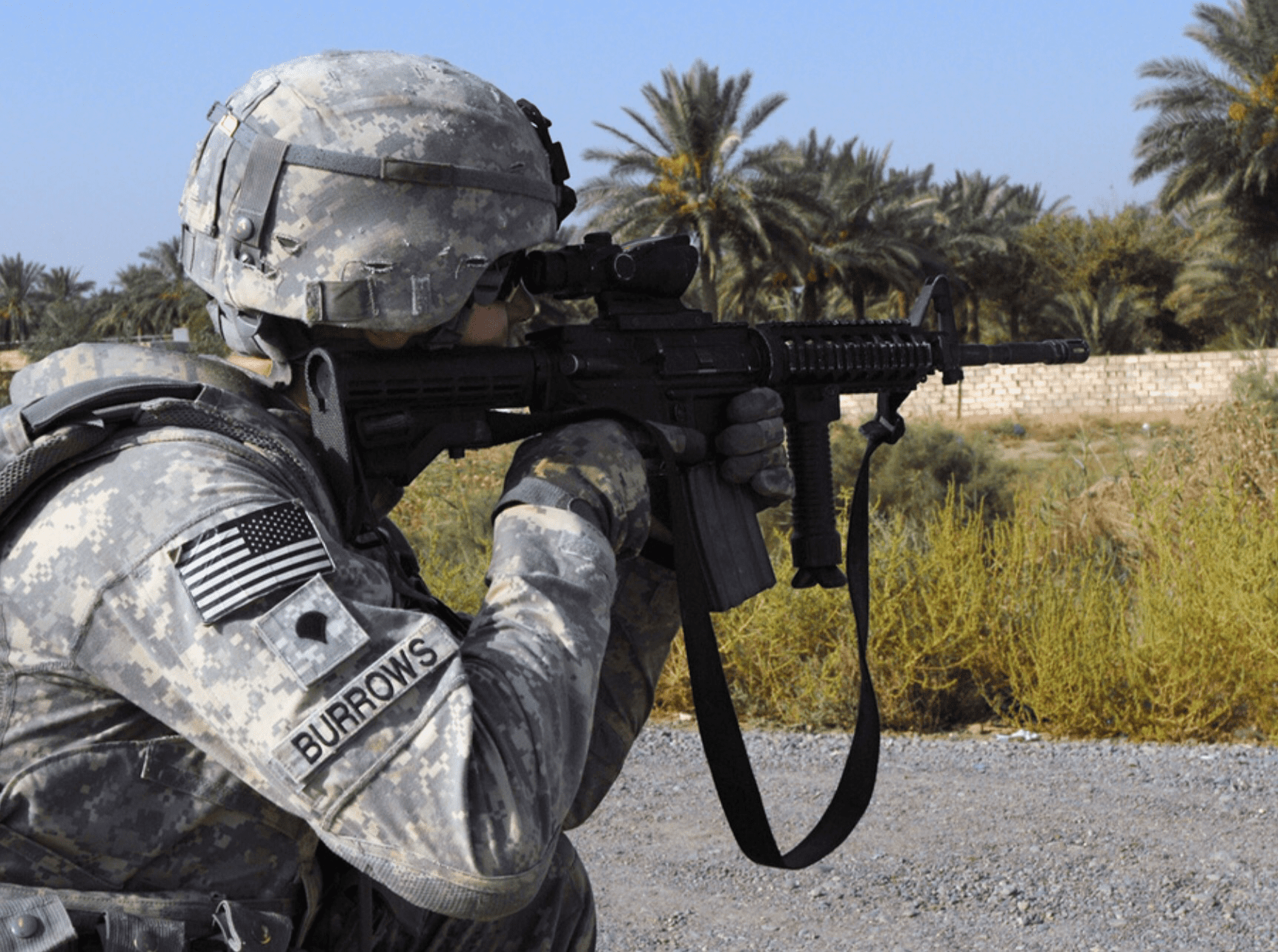
If the recent testimony by Ms. Lynne M. Halbrooks, Principal Deputy Inspector General, Department of Defense Inspector General before the Committee on Oversight and Government Reform discussing issues with the US Army’s Individual Carbine program wasn’t enough to make you question the future of that program, the Army has released or updated several solicitation actions within the last week regarding the M4 Carbine Product Improvement Program including work on an improved bolt, heavy replacement barrel and Fire Control Selector Assembly.

The Dual Path strategy hedges the Army’s bets on a new rifle by improving the carbines they’ve already invested in while simultaneously searching for a replacement.

Recent FBO postings include:
M4 Product Improvement Program (PIP)-Bolt
M4 Replacement Barrel and Front Sight Assembly ( Heavy Variant )
M4 Carbine Product Improvement Program (PIP) Fire Control Selector Assembly

Is the US Army’s Individual Carbine Program Doomed?

Tuesday, March 19th, 2013

Earlier today, in a statement by Ms. Lynne M. Halbrooks, Principal Deputy Inspector General, Department of Defense Inspector General before the Committee on Oversight and Government Reform entitled, “Opportunities to Reduce Waste and Improve Efficiency at the Department of Defense and Other Federal Agencies,” she made a rather interesting comment about the US Army’s proposed replacement for the M4/M16 family.

In another example, we are auditing the Army’s acquisition of the individual carbine program, which is an acquisition the Department may want to re-evaluate. We expect to report concerns that DoD may not have an established need for this weapon nor developed performance requirements for the $1.8 billion acquisition. Currently, the Army is modifying its existing M4 rifle and, at the same time, seeking to develop a new rifle. However, key performance parameters such as accuracy, reliability, and lethality have not been established. In addition, it is unclear what additional capability this new rifle will have over the modified M4. Further, the Army is seeking to acquire more rifles during a time when their total force structure will be reduced. We expect to issue our draft report within the next two months that will further elaborate on these concerns and provide recommendations for the Department to increase efficiencies.

Considering the Army’s dual path strategy that is alluded to in the statement which concurrently improves the performance of existing M4A1 carbines while simultaneously working to acquire an entirely new weapon, it is no wonder that DoD is reconsidering the replacement half of the equation. Industry analysts have long questioned the notion that a new weapon would offer a dramatic increase in performance without first undertaking a caliber and associated ammunition change. The IC program does not adequately do this. And then there’s Sequestration…

USSOCOM Interested in Snow Camouflage

Monday, March 18th, 2013

As last as last month, during the Military Mountain and Cold Weather Work Shop, snow camouflage was discussed and there was no formal requirement for it. So I found it most interesting that Natick’s Program Manager-Special Operations Forces Survival, Support & Equipment Systems (PM-SOF SSES) initially released a Sources Sought Notice for Winter/Snow Camouflage on 14 March and then just today released an additional Sources Sought Notice for Over Whites. Both were issued on FedBizOpps and they are looking for at this point are samples. Perhaps, from this an actual RFP will be developed and released.

It is important to note that this is for USSOCOM only and that the current US Army Camouflage Improvement Effort did not identify a requirement for Winter/Snow Camouflage. The US Marine Corps fields a pattern that was developed by HyperStealth but access to this pattern by other military organizations has been difficult.

USMC snow camo

For the Camo Pattern of which there are now a multitude of commercially derived examples, they are “…seeking winter/snow camouflage patterns for possible use on over white garments. The camouflage pattern should be designed to provide concealment in alpine to sub-alpine environments, where snow, ice and rocks are the primary environmental features.

Camouflage patterns submitted to this sources sought solicitation must be beyond the development phase, and be printable on lightweight synthetic materials.

Interested parties are asked to submit three yards of material, preferably a lightweight synthetic material, with the camouflage pattern printed on it for evaluation by PM-SOF SSES by 2 April 2013.” As you can see, not a lot of direction. It’s really more of a “hey, show us what you got.

The Over White RFI on the other hand is a little more detailed.

Parka
* Anorak style jacket large enough to fit over PCU Level 7/ high-loft jacket
* Half zip in the front center
* Large zippered pocket on the bottom front starting just below half zip, large enough to fit mittens
* Pass through pockets to access items in interior garment pockets or on body armor vest/load carriage
* Hood with drawstring which fits over helmet and PCU Level 7 hood
* Drawstring around the waist
* Coverage to approximately 4 inches below waistline when high-loft jacket is worn

Pants
* Full side zippers
* Two-way zippers
* Front button closure
* Two interior horizontal suspender attachment points
* Waistband with drawstring closure
* Mechanism at the end of each leg which will keep pants from riding up, i.e. hook or elastic band to attach to boots

The key physical performance characteristics that the material will be evaluated for are weight, compressibility and water resistance. Wind resistance and breathability are desired, but are secondary to the aforementioned key performance characteristics. The total cost of the parka is not to exceed $75, and the cost of the pants is not to exceed $50.

Companies are asked to submit one sample of the over white parka and pants in order to demonstrate the design, and can submit up to three different materials for evaluation. For each material submitted please include 2 yards of the material to be utilized for physical performance testing, as well as a report showing any test results already obtained for the material by 12 April 2013.

As this thing was originally discussed at the Military Mountain and Cold Weather Work Shop so I’m happy to see that something came out of it.

LaRue Decides Not To Pursue US Army M110 Sniper Rifle Upgrade

Sunday, March 10th, 2013

After determining that the juice isn’t worth the squeeze, LaRue Tactical has decided to opt out of the US Army’s US Army’s Compact Semi-Automatic Sniper System (CSASS) program which, as currently structured could resu in a replacement for the current M110 gas operated sniper rifle.

20130309-172347.jpg

LaRue’s Thoughts on the M110 Compact Semi-Automatic Sniper System (CSASS).

It’s no secret that LaRue Tactical is one of the contenders for the US Army’s Compact Semi-Automatic Sniper System (CSASS). The CSASS solicitation is exploring the options for reconfiguring the existing M110 Semi-Automatic Sniper System (SASS) currently available in Army inventory, or completely replacing the M110 with a new system.

At the recent SHOT Show, aisle-talk centered on impending and drastic military cuts. Rumors were flying, from aircraft carriers missing important scheduled maintenance, to drastically-reduced training flights, to warships stacking up in Pacific harbors …

Given the tsunami of cutbacks our military organizations are crashing head-on into, we feel the substantial costs required for LaRue Tactical to pursue the upcoming CSASS / M110-Upgrade would simply be a waste of resources.

While we believe that America’s Warfighters should always have the best, and that we are large enough to handle the project, our consensus is that the program will not gain full traction. We feel our money is better spent invested in people, processes, manufacturing infrastructure, and continued improvements to our product lines.

Henceforth, we are officially opting-out of the CSASS / M110-Upgrade solicitation.

However, let it be known that our doors are always open for OTS/OTC purchases … like recent customers: FBI-HRT, DEA, U.S. Marshals, DoE, Texas Rangers, just to name a few …

v/r,

Mark LaRue – President
LaRue Tactical
www.larue.com

Repost – Army Camo Improvement – What’s Up?

Saturday, March 2nd, 2013

I posted this just two weeks ago and it remains just as true today as it did then. The Army Uniform Board was to be briefed on the program on 28 Feb. As far as I know that happened. Everyone was up in arms on Thursday and Friday because they didn’t hear anything. No kidding. Of course they didn’t, because that’s not how it works.

Of course, we’ve had another rash of people claiming on various forms of social media that they’ve seen this Army PowerPoint Briefing that tells all. That horribly put together thing keeps showing up like a bad penny and if you believe it, I’ve got some swamp land in Suffolk, VA I’d like to sell you. If I’d have created something like that when I was an action officer I’d have become CINC Snack and never given another project. So here once agin, is the truth as I believe it be.

Unless you’ve been living under a rock, you know that the US Army is currently looking for a replacement for the so-called Universal Camouflage Pattern (UCP) currently worn by Soldiers in virtually all environments except Afghanistan. Now, after months and months of silence, PEO Soldier has provided an update to the US Army Camouflage Improvement Effort. I know, this thing seems to be going on forever, but there is light at the end of the tunnel. The results of the most exhaustive camouflage testing in history will be briefed to the Army Uniform Board on 28 February.

If you’re familiar with how the Army Uniform Board works, they don’t announce their findings directly from the board but rather later, an announcement will be made once the Chief of Staff of the Army gives his approval. Considering the gravity of this decision, the Secretary of the Army will most likely also give his approval. There is precedent for this. When the Army officially announced the adoption of MultiCam for use in Afghanistan as Operation Enduring Freedom Camouflage Pattern (OCP).

We said that this is the most exhaustive camouflage testing in history and since last Summer the Army has been running the four families of patterns along with baseline patterns through the paces in locations that replicate the nine Military Operating Environments. Over the past couple of months sources have told us that testing was curtailed in two locations due to fires and that the Army had to go back and reaccomplish data collection. The Army wants to make sure that the record is complete and that their decision is based on the data. Consequently, we are told that an independent auditor has been used to verify the integrity of the data. No matter the decision, it will be based on facts so there won’t be any second guessing the choice a year or two down the road.

So when will we see a final Army announcement? Sequestration and continuing resolution notwithstanding, the switch for ACUs, the day-to-day uniform of the Army is essentially cost neutral. It’s a matter of altering contracts to procure the new pattern(s) rather than UCP. The real, long-term sunk cost is in the Organizational Clothing and Individual Equipment such as the IOTV and MOLLE. It costs more and lasts longer than a uniform. However, we understand the Army has a few concepts up their sleeve to ease the transition. When UCP was fielded it was all in. The Army essentially transitioned everything to UCP in about five years and issued ACUs to each Soldier gratis. I don’t think recapitalization will go so smoothly this time. The US Army officially adopted the woodland camouflage pattern in 1981. The old OD green fatigues could still be worn until September 30 1987. OD field equipment was still being used up until the advent of UCP. Based on budget shortfalls I would expect serving Soldiers will have to purchase new uniforms with their annual clothing allowance and expect a longer transition period than with UCP. Also, don’t expect any changes to the actual cut of the ACU along with the camouflage change. It will be the same uniform but with an entirely new paint job.

In conclusion, I would say that no matter which family of pattern they select; ADS/Cramer, Brookwood, Crye or Kryptek, the Army will announce its decision when it’s good and ready and not a day sooner.

Dutch Military Intends to Replace Current Machine Guns with New Models

Tuesday, February 26th, 2013

The Dutch military intends to replace weapons in a class referred to as supporting small caliber weapons or kleinkaliberwapens (KKW) in Dutch, these are weapons below 20mm. Specifically, they are replacing both medium-weight (Middelzware ondersteunende KKW (MOW)) and (Zware ondersteunende KKW (ZOW)) heavy-weight machine guns commonly known as the FN MAG and Browning .50 because of age and rising maintenance costs. The currently issued weapons date back to the 1960s and have seen extensive use in the Afghanistan conflict.

They have stated a primary requirement of a medium-weight range up to 600m and heavy-weight up to 1200m. Because these are new weapons they will also be required to meet other specific requirements for use on vehicles or vessels such as coax mounting.

MAG
Photo – Royal Netherlands Army

The Dutch are looking at 2100 medium-weight guns along with 955 fast aiming sights and 280 NVD sights as well as 840 heavy-weight with 248 fast aiming sights and 575 NVD’s. These replacement numbers are not a one for one replacement but rather are in line with their current force structure.

It is noteworthy that they intend is to buy off-the-shelf. Since the whole project is targeted to stay under 100 million Euros the Defense Material Organisation (DMO) will be mandated to carry out this project. They currently plan to issue a tender in 2014 and be fully equipped by 2017.

Army Camo Improvement – What’s Up?

Thursday, February 14th, 2013

Unless you’ve been living under a rock, you know that the US Army is currently looking for a replacement for the so-called Universal Camouflage Pattern (UCP) currently worn by Soldiers in virtually all environments except Afghanistan. Now, after months and months of silence, PEO Soldier has provided an update to the US Army Camouflage Improvement Effort. I know, this thing seems to be going on forever, but there is light at the end of the tunnel. The results of the most exhaustive camouflage testing in history will be briefed to the Army Uniform Board on 28 February.

If you’re familiar with how the Army Uniform Board works, they don’t announce their findings directly from the board but rather later, an announcement will be made once the Chief of Staff of the Army gives his approval. Considering the gravity of this decision, the Secretary of the Army will most likely also give his approval. There is precedent for this. When the Army officially announced the adoption of MultiCam for use in Afghanistan as Operation Enduring Freedom Camouflage Pattern (OCP).

We said that this is the most exhaustive camouflage testing in history and since last Summer the Army has been running the four families of patterns along with baseline patterns through the paces in locations that replicate the nine Military Operating Environments. Over the past couple of months sources have told us that testing was curtailed in two locations due to fires and that the Army had to go back and reaccomplish data collection. The Army wants to make sure that the record is complete and that their decision is based on the data. Consequently, we are told that an independent auditor has been used to verify the integrity of the data. No matter the decision, it will be based on facts so there won’t be any second guessing the choice a year or two down the road.

So when will we see a final Army announcement? Sequestration and continuing resolution notwithstanding, the switch for ACUs, the day-to-day uniform of the Army is essentially cost neutral. It’s a matter of altering contracts to procure the new pattern(s) rather than UCP. The real, long-term sunk cost is in the Organizational Clothing and Individual Equipment such as the IOTV and MOLLE. It costs more and lasts longer than a uniform. However, we understand the Army has a few concepts up their sleeve to ease the transition. When UCP was fielded it was all in. The Army essentially transitioned everything to UCP in about five years and issued ACUs to each Soldier gratis. I don’t think recapitalization will go so smoothly this time. The US Army officially adopted the woodland camouflage pattern in 1981. The old OD green fatigues could still be worn until September 30 1987. OD field equipment was still being used up until the advent of UCP. Based on budget shortfalls I would expect serving Soldiers will have to purchase new uniforms with their annual clothing allowance and expect a longer transition period than with UCP. Also, don’t expect any changes to the actual cut of the ACU along with the camouflage change. It will be the same uniform but with an entirely new paint job.

In conclusion, I would say that no matter which family of pattern they select; ADS/Cramer, Brookwood, Crye or Kryptek, the Army will announce its decision when it’s good and ready and not a day sooner.

USAF Selects Storm SRTV as GAARV

Saturday, January 19th, 2013

In an award announced 17 January, 2013, the US Air Force has selected the HDT Storm SRTV as the Guardian Angel Air-Deployable Rescue Vehicle. As you may recall, the GAARV is an airdroppable, all terrain vehicle designed to transport Guardian Angel Weapon System members which consists of the Combat Rescue Officer (CRO), Pararescue (PJ), and SERE careerfields and their patients/survivors out of bad guy territory. As PJs are the guys who generally do this for a living, it will be for their use.


It’s good to see that the Storm SRTV won considering they have been chasing this requirement from the beginning. Since we first wrote about this BC Customs design, HDT purchased the rights and saw it through to the win.

Unfortunately, I don’t have a photo yet of the exact model that won but this is a photo of a Storm variant and looking back at the earlier BC Customs photos should give you a good idea of how this went.

Storm