SIG SAUER - Never Settle

Archive for the ‘Drone’ Category

Shadow Concepts x Skydio – Magnetic Drop Release System

Wednesday, September 24th, 2025

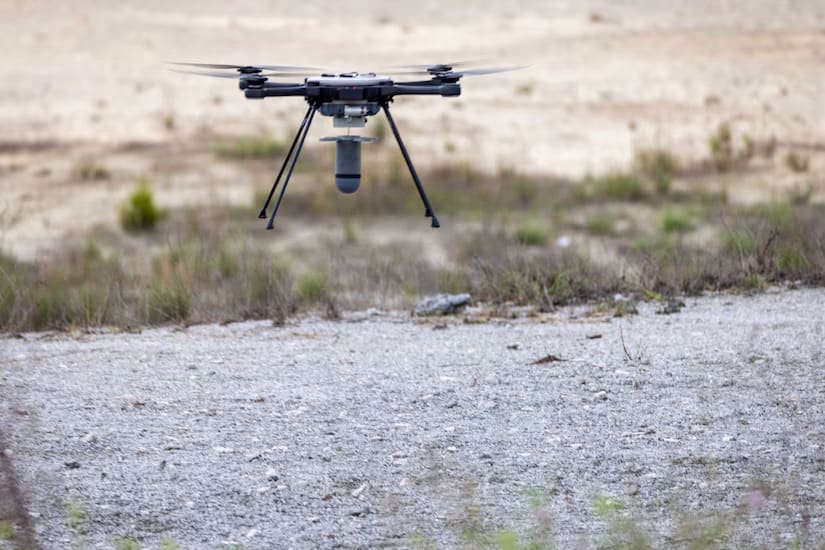
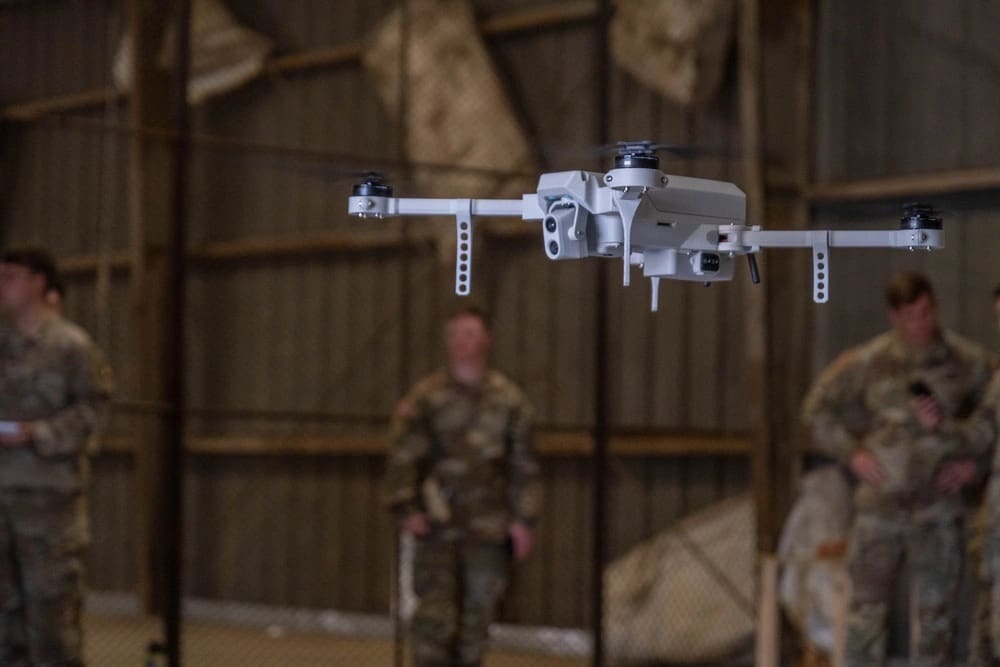
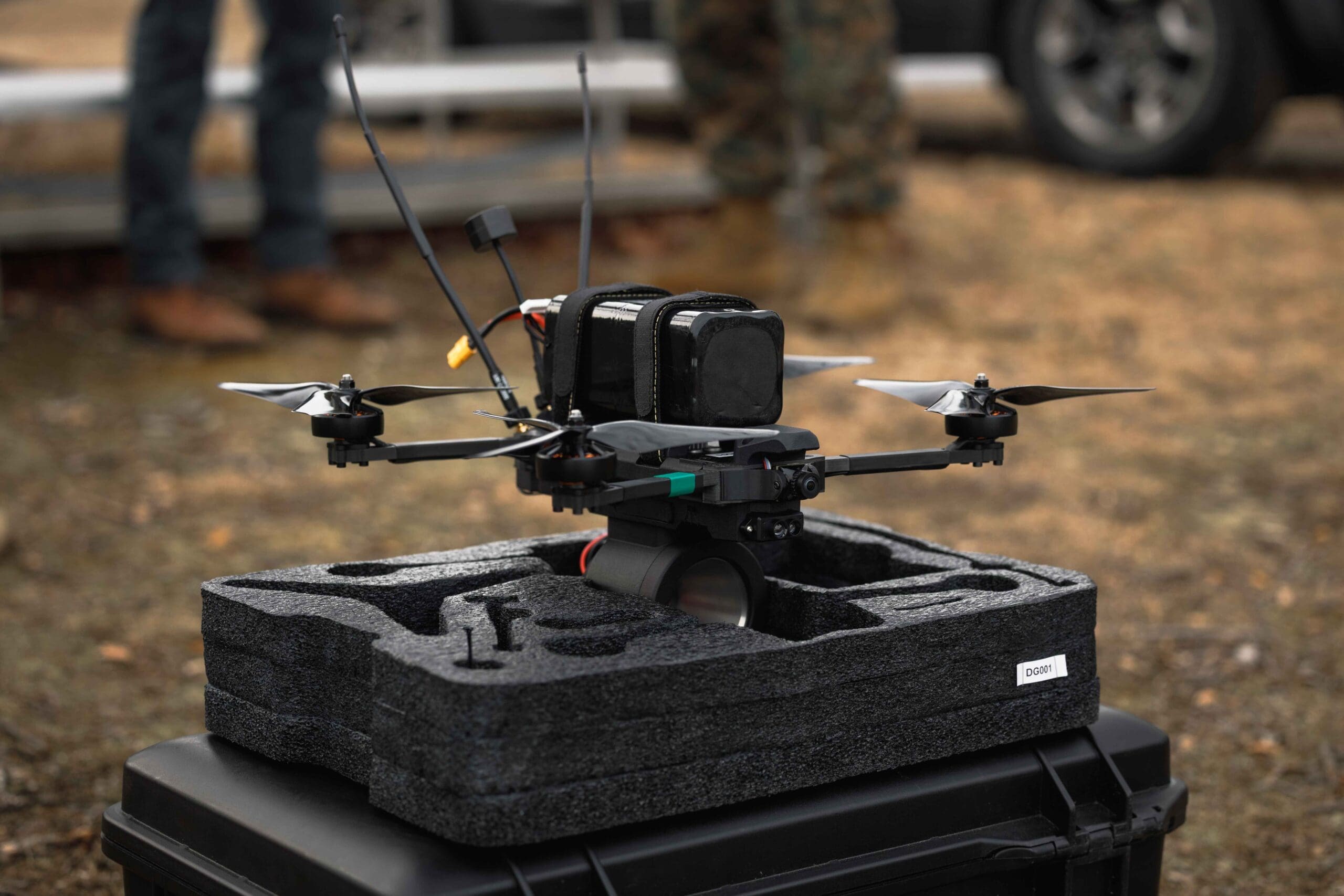
One of the coolest things I ran across at DSEI is the Magnetic Drop Release System. Developed by the UK’s Shadow Concepts and sold by sUAS maker Skydio, the MDRS is a purpose built, magnetically actuated, end effector release system which integrates into Skydio XD10 quadcopters. This is particularly interesting for US forces who have adopted the Skydio system, which is on the Blue UAS list, for use at the Squad level. Currently, units are home brewing their own release systems for munitions.

Like those unit built systems, MDRS is 3D printed, but they use a much higher fidelity printer than is found in most workshops making it more durable and the novel magnetic release system offers consistent reliable payload retention during flight and release of ordnance precisely where you want it. It even maintains full holding force even if the drone loses power. MDRS only draws a momentary charge the moment you intentionally release the payload.

Additionally, there are several ways to attach the payload, including the MOLLE Plate Basket.

Shadow Concepts is working to adapt MDRS to other drones.

Marine Corps Initiates Drone Task Force Summits to Accelerate UAS Lethality

Wednesday, September 24th, 2025

QUANTICO, Va. —

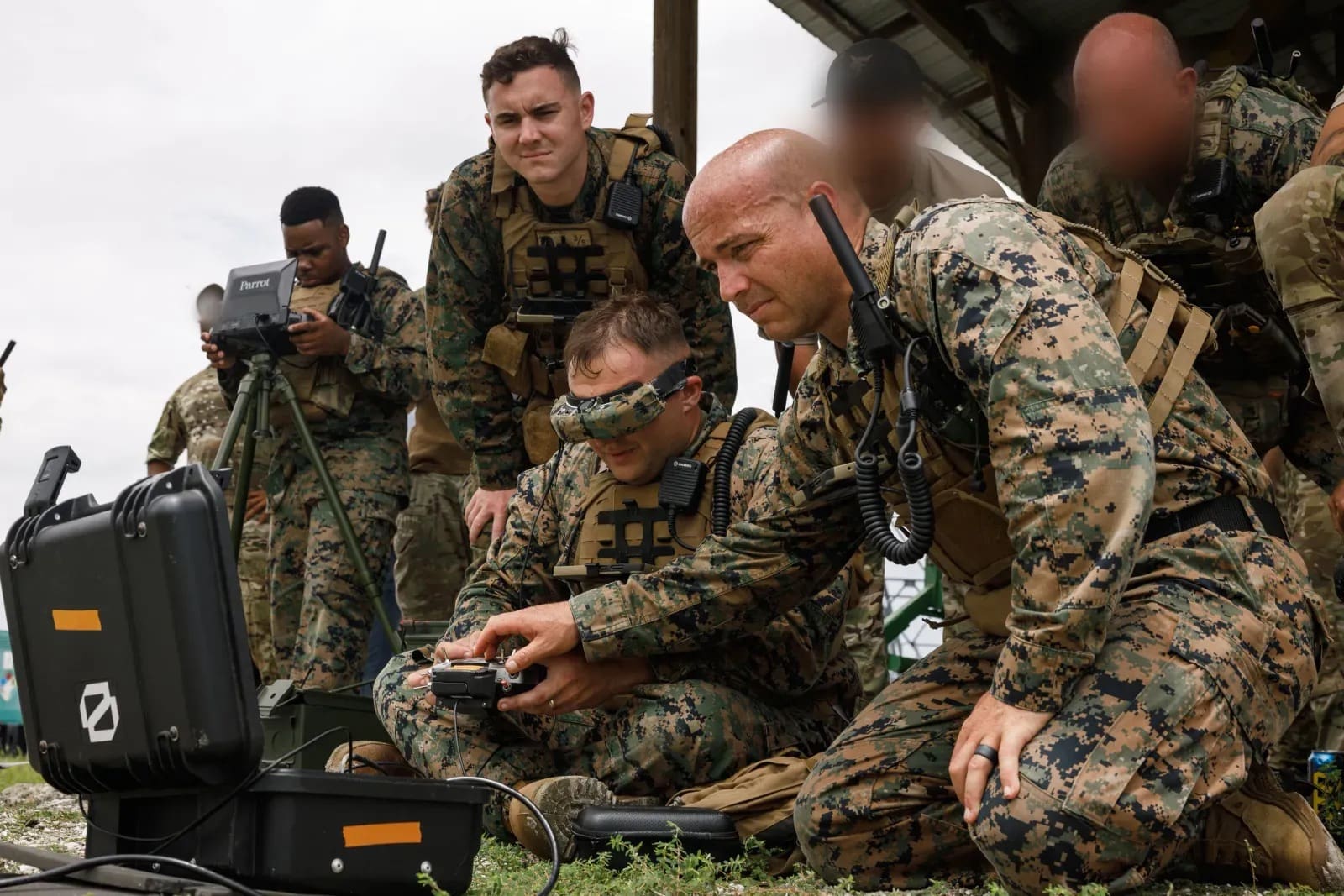
In August, the Marine Corps began hosting drone task force summits to chart a way forward for operational units across the Marine Corps to effectively employ small drones.

The drone task force leverages work done over the last several years by various units, including Marine Corps Special Operations Command, the infantry battalion experiment (IBX), and the Marine Corps Attack Drone Team (MCADT) to hone techniques for using small surveillance and lethal attack drones.

The purpose of the task force is to organize, train, and equip Marine Air-Ground Task Force (MAGTF) elements to achieve proficiency in employing both lethal and non-lethal unmanned aerial systems at scale. Supporting this effort is the years-long development, testing, and fielding of existing organic precision fires systems to Marine infantry units.

The near-term goal is to enable the Marine infantry squad to achieve concentrated effects at operationally relevant distances, providing a decisive advantage in distributed operational environments. The Secretary of Defense’s “Unleashing U.S. Military Drone Dominance” memo will accelerate these efforts by paving the way for faster procurement pipelines to provide units the equipment and training they need to remain at the forefront of drone adaptation into the MAGTF.  

The drone task force is incorporating best practices and lessons learned from the Fleet Marine Forces with cost-effective solutions for operating first-person-view (FPV) drones. These solutions include advanced manufacturing techniques to build and repair drone components in austere, contested environments. The task force will allow the service to quickly address challenges the Fleet Marine Force faces and facilitate timely, cost-efficient solutions to enhance the lethality of all elements of the MAGTF.

Some efforts to accelerate the use of surveillance and weaponized drones to Marines are:

UAS/C-UAS integration handbook for best practices

Mature training programs to expand the number of experienced operators in the Fleet Marine Force

Updated Blue List systems for the service to purchase

Signature management training

Establishment of communities of interest across the Marine Corps

Integration of SUAS in future marksmanship competitions

Collaboration with the Defense Innovation Unit to purchase and distribute FPV and one-way attack drones.

Establishment of the Marine Corps Attack Drone Team to standardize tactics, techniques and procedures

Continued infrastructure improvements and maturation of training areas to accommodate the incorporation of drones into combined arms training and exercises.

Continued efforts to develop a common ecosystem and command and control architecture.

The Marine Corps Attack Drone Team, established in January 2025, by Training Command and the Marine Corps Warfighting Laboratory, has driven greater understanding of lethal UAS opportunities and challenges for the Marine Corps. Based at Weapons Training Battalion, Quantico, the MCADT builds on the Marine Corps’ legacy of precision weapons expertise to advance another layer of lethality for infantry battalions and littoral combat teams. It addresses the rapid progression and proliferation of armed FPV drone technologies and aims to translate lessons from modern drone warfare into doctrine, training, and fleet integration.

Through agile experimentation, MCADT has made significant progress in accelerating the service’s adoption of armed FPV drones. The first kinetic live-fire FPV drone strike was conducted at Quantico on April 24, 2025, demonstrating real-world lethality at a fraction of traditional costs: less than $5,000 per strike compared to over $80,000 for current infantry battalion organic missiles. With effective ranges of up to 20 kilometers, these drones dramatically expand the reach of small-unit formations, far surpassing the 1–2 kilometer range of current systems available to rifle squads and platoons.

In parallel, MCADT partnered with the Marine Corps Tactics and Operations Group to draft the Corps’ first Armed Drone Employment Tactics Techniques and Procedures pamphlet, which will serve as the baseline training resource for squad certification beginning this fall. To further refine employment techniques and accelerate proficiency, the team also initiated the Service’s first Armed FPV Drone Employment Competitions, formalized in Marine Corps guidance earlier this year. These competitions will evolve into intermediate and advanced training venues modeled after the Competition-in-Arms Program, leveraging the same proven approach long used by the Marine Corps Shooting Team to refine tactics and weapon system design. The inaugural competition is scheduled for October 2025 at MCB Quantico, followed by events in INDOPACOM at Camp Hansen, Okinawa, in December, and MCB Hawaii in January 2026.

Under the drone task force’s governance, these ongoing experimental initiatives will continuously inform the concurrent service effort to fully field lethal drones at scale to a force that is organized, trained, and equipped for the modern battlefield.

By Lt. Col. Eric Flanagan | Marine Corps Combat Development Command

Teledyne FLIR Defense Unveils SkyCarrier Autonomous UAS Launch and Recovery Platform

Friday, September 19th, 2025

Referred to as the “Drone-in-the-box” Teledyne FLIR debuted their new SkyCarrier Autonomous UAS Launch and Recovery Platform at last week’s DSEI in London.

The system enables fully autonomous quadcopter launch and recovery from fixed sites as well as vehicles or ships while on-the-move.

SkyCarrier’s ruggedized container fully protects the drone when closed and opens to unfold an articulating launch and landing pad, allowing drones to autonomously take off and return, even while in motion or on uneven terrain. The pad maximizes the UAV landing area, centers aircraft, and reduces storage space. Using visual markers such as NIR landing beacons and QR codes or AprilTags, the drone can precisely navigate back to the platform without operator input.

SkyCarrier has been successfully trialed on multiple maritime vessels, including fast attack boats and rigid hull inflatable boats (RHIBs), and from ground vehicles traveling over rugged terrain at speeds up to 50km/h (30mph), demonstrating its reliability in real-world conditions.

Features:

Autonomous Launch & Recovery – Actively compensates up to 20°, enabling UAS to land on moving or stationary platforms without manual control

Environmental Protection – Protects the drone from brush, debris, and other environmental factors when not operating

Optionally Tethered – Supports either free-flight or tethered operation over a variety of radio and network configurations, even while the unit is fully closed

Autonomous Management – Supports rapid charging and active thermal management, enabling fully remote operations in extreme environments

‘Follow Me’ Mode – Drones can track and return to designated vehicles, personnel, or locations

Autonomous In-air Replacement (AIR) – A single operator can manage up to 16 drones, maintaining persistent surveillance by autonomously swapping drones mid-mission

Dark Mode & GPS-Denied Navigation – Operates in RF-silent and GPS-degraded environments using computer vision and dead reckoning; also features NIR beacons for low-visibility environments, obstacle avoidance, and jam-resistant RTK GPS

Extended Endurance with XL Batteries – Enables up to 45 minutes of flight time with a 2kg (4.4lb) payload.

Wired for War: Drones, Real-World Lessons, and Future Frontiers

Friday, September 19th, 2025

Oak Grove Technologies is pleased to announce an exclusive event, Wired for War: Drones, Real-World Lessons, and Future Frontiers hosted at our Test & Training Center (T&TC) near Fort Bragg, NC. This symposium brings together active-duty military personnel and select invited vendors to explore cutting-edge drone technologies, real-world battlefield lessons, and the future of unmanned systems.

Date: Wednesday, 5 November 2025

Tome: 1230 – 1700

Location: OGT Test & Training Center

158 Rushing Rd.

Hoffman, NC 28347

Details:

• Live and simulated demonstrations showcasing innovative unmanned systems technologies

• A dial-in briefing from the front lines in Ukraine

• Industry and government panel discussion

• Networking opportunities with government, military, and industry leaders

Please Note: Attendance is limited to Government personnel and invited vendors only.

More details and registration information to follow, but for now please mark your calendars!

Oregon Guard Advances Drone Capabilities with New Training Systems

Friday, September 19th, 2025

RAYMOND REES NATIONAL GUARD TRAINING CENTER, Ore. – The Oregon Army National Guard is transforming its unmanned aircraft systems training at the 249th Regional Training Institute, introducing advanced platforms while developing innovative solutions to meet evolving battlefield requirements.

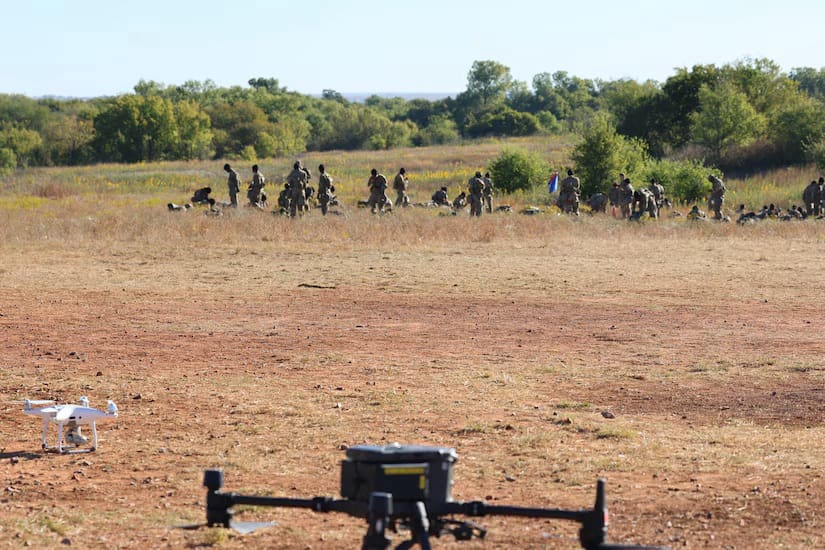
During September 2025, the Regional Training Institute at Rees Training Center hosted two distinct training events that showcase Oregon’s expanding role as the state’s center for drone operations. A specialized Master small Unmanned Aircraft Systems pilot course focused on the Flightwave Edge 130 system from Sept. 3-5, followed by the broader Small Unmanned Aircraft Systems course running Sept. 3-12.

The training represents a significant evolution from the RQ-11B Raven systems that were divested in March 2024. Students now learn on the RQ-28A Sky Ranger, officially designated by the Army for Short Range Reconnaissance missions, along with the more advanced Edge 130 platform.

“The course itself is 10 days, but with optimal weather conditions and smaller class sizes, we could potentially complete the comprehensive training in about five days,” said Staff Sgt. First Class Mannen, the course manager. “That includes all the classroom instruction and flight operations, which allows me to give students more hands-on flight time.”


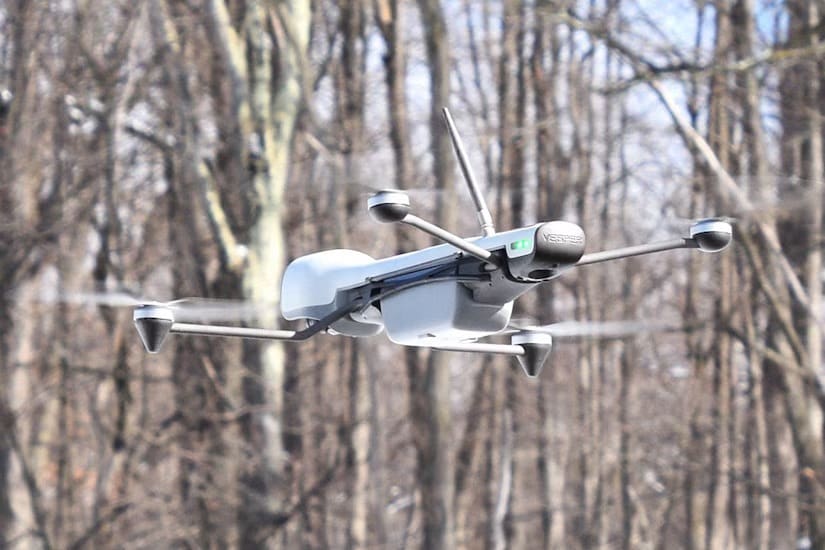
The Edge 130, manufactured by Red Cat Holdings’ Flightwave division, represents a significant upgrade in capabilities. The aircraft features vertical takeoff and landing with transition to fixed-wing flight, providing 60 minutes of flight time in vertical mode and 90 minutes in fixed-wing configuration.

“The edge 130 has three different payloads on it right now,” explained Peter DeJoseph, a Flight Trainer Three with Red Cat Holdings. “You have the gimbal 360 payload that can gimbal 360 around, has 10 times zoom, and has electro-optical infrared functionality on it. And then the other payload is the mapping array where you can set a survey of an area.”

The training methodology has also evolved. Red Cat’s approach includes a Learning Management System that students access two weeks before arrival, allowing them to complete theoretical modules at their own pace.

“They get two weeks and go through each module and learn,” DeJoseph said. “When they get through a module, they can take a 15-minute practice, take out that part of the system, build up the aircraft, go through the ground control station, build missions, download maps, and be all hands on with that learning module system.”

Perhaps the most innovative aspect of Oregon’s UAS program is the development of custom-built aircraft designed to supplement expensive commercial systems. Lt. Col. Mark Timmons, RTI commander, initiated this effort after recognizing the financial constraints of relying solely on $45,000 commercial platforms.

“These systems cost $45,000 apiece, so talking with Sgt. 1st Class Mannen, here do we go once we get them here and we want to loan these out to various UAS operators? Well, what’s going to happen? We know what’s going to happen. They’re going to crash,” Timmons explained.

Working with Echo MAV, a company that specializes in NDAA-compliant components, Oregon has developed prototypes that cost between $2,000-$5,000 including ground control stations. The initiative draws inspiration from similar programs at the 101st Airborne Division and 25th Infantry Division.

“The opportunity for us to be able to essentially design and build by 3D printing our own aircraft, partnering with a company who are experts in the technology piece of it and the compliance piece of it, putting those two efforts together gives us an Oregon-made, essentially US-made system,” Timmons said.

Oregon’s UAS training builds on infrastructure established through partnerships with the U.S. Navy. The state operates the Unmanned Aerial System Operating Facility in Boardman, a $13 million, 12,400-square-foot facility that opened in April 2023. While the RQ-7B Shadow Tactical UAS no longer operates from that facility, it established Oregon as a significant player in unmanned systems training.

Rees Training Center now serves as the primary hub for Oregon Army National Guard drone operations, with capabilities extending beyond basic flight training to include intelligence, surveillance, and reconnaissance applications, mapping surveys, and potential support for environmental monitoring missions.

The versatility of the new systems opens possibilities for diverse mission support. Plans include using the Edge 130’s mapping capabilities to conduct environmental surveys of the Rees Training impact area to locate burrowing owl habitats for the Oregon National Guard’s environmental office.

“With the edge 130 we could task the platoon to do a map survey with the mapping payload and we can get a high fidelity aerial photography of that impact area for environmental, which is super cool,” Timmons noted. The training also addresses modern operational challenges, including electronic warfare considerations and fiber optic drone flight capabilities, preparing soldiers for the evolving nature of unmanned operations in contested environments.

As the Oregon Army National Guard continues developing its UAS capabilities, Rees Training Center positions itself as not just a training facility, but as an innovation hub where soldiers learn to operate, maintain, and even build the unmanned systems that increasingly define modern military operations.

The September training courses represent another step in Oregon’s journey from traditional UAS operations to a comprehensive program that combines commercial systems, custom-built platforms, and innovative training methodologies to prepare soldiers for the future of unmanned warfare.

Story by MaJ Wayne Clyne

Oregon National Guard Public Affairs Office

Steadicopter and ParaZero Introduce Precision Airdrop Capability for Tactical Unmanned Helicopters

Thursday, September 18th, 2025

New DropAir integration with Black Eagle 50E enables rapid, autonomous supply delivery in complex environments

September 17, 2025 – Steadicopter, a leader in the Rotary Unmanned Aerial Systems (RUAS) industry, is proud to announce a new operational capability developed in collaboration with ParaZero: the integration of the DropAir precision airdrop system into Steadicopter’s Black Eagle 50E all-electric unmanned helicopter.

The DropAir module transforms the Black Eagle 50E into a highly accurate and autonomous airborne delivery platform. Equipped with dual-mode parachute deployment and advanced drop algorithms, the system enables precise mid-air release of mission-critical payloads—including medical supplies, ammunition, or spare parts—with minimal drift, even in harsh conditions or GPS-denied environments.

Combined with the Black Eagle 50E’s VTOL capabilities, long endurance, and minimal logistic footprint, this integration supports rapid, flexible resupply across remote or contested areas. It is ideal for both tactical and humanitarian missions.

“This collaboration with ParaZero brings a new level of agility and precision to aerial logistics,” said Noam Lidor, CEO at Steadicopter. “Together, we are enabling forces to operate smarter and faster-delivering supplies exactly where and when they’re needed, with no compromise on accuracy or safety.”

“Our shared vision to enhance unmanned aerial capabilities is reflected in this integration,” added Ariel Alon, CEO of ParaZero. “With DropAir onboard, the Black Eagle 50E becomes a powerful tool for precision aerial delivery in the most demanding environments.”

About Black Eagle 50E

The Black Eagle 50E is a mature, operational, high-performance, all-electric propulsion , providing superior-high-quality real-time intelligence, with high mission versatility and nearly zero logistic footprint . It supports multi-mission operations with advanced sensors and payload integration.

About Steadicopter

Steadicopter Ltd. is a leading developer of rotary tactical unmanned aerial systems for military, homeland security, and civilian missions. Its vertical take-off and landing UAVs are known for endurance, adaptability, and advanced mission sensor suites. The company is ISO 9001:2015 certified for development, manufacturing, and marketing.

For more information, visit: steadicopter.com

About ParaZero

ParaZero Technologies Ltd. (Nasdaq: PRZO) is an aerospace defense company pioneering smart, autonomous solutions for the global manned and unmanned aerial systems (UAS) industry. Founded in 2014 by aviation professionals and drone industry veterans, ParaZero is a recognized leader in advanced drone technologies, supporting commercial, industrial, and governmental operations worldwide. The company’s product portfolio includes SafeAir, an autonomous parachute recovery system designed for aerial safety and regulatory compliance; DefendAir, a counter-UAS net-launching platform for protection against hostile drones in both battlefield and urban environments; and DropAir, a precision aerial delivery system. ParaZero’s mission is to redefine the boundaries of aerial operations with intelligent, mission-ready systems that enhance safety, scalability, and security. For more information, visit parazero.com.

AV Expands Tomahawk Line with Future-Ready Grip TA5 Tactical Controller

Thursday, September 18th, 2025

The Grip TA5 was selected as the Dismounted Common Controller (DCC) as part of the $5.1M U.S. Army RCCTO Human-Machine Integrated Formations (HMIF) rapid prototyping project.

ARLINGTON, Va., [September 12, 2025] — AeroVironment, Inc. (“AV”) (NASDAQ: AVAV), a global leader in all-domain defense technologies, today unveiled its Tomahawk Grip TA5. The Grip TA5 is an 8-inch tactical controller designed to deliver enhanced situational awareness, precision strike capabilities, and seamless scalability across mission sets for today’s modern warfighter.

Built to integrate with the military-grade Samsung Tab Active5 Tactical Edition, the Grip TA5 turns off-the-shelf tablets into mobile command centers. It’s modular architecture and multi-platform compatibility offers operators command and control of multiple robotic assets in real-time – enhancing mission adaptability and response speed. The system enables intelligence, surveillance and reconnaissance (ISR) missions, target acquisition and tracking, situational command and control (C2), and fire control functions–enabling direct operation of lethal payloads, loitering munitions, and direct-fire weapons. At just 2.5 pounds, the compact, rugged controller meets MIL-STD-810 and adds enhanced software security, advanced networking, and hot-swapping flexibility—positioning AV as the permanent control layer regardless of the underlying device model.

“Our ability to deliver effective, next-generation solutions at mission scale and speed positions AV as a top developer and manufacturer in the defense industry,” said Trace Stevenson, President of Autonomous Systems for AV. “The Grip TA5 is more than a controller. It’s a force multiplier that brings speed, interoperability, and future-ready capabilities to the modern warfighter.”

In May, AV announced that its Tomahawk Ground Control Station (GCS) product line was awarded a $5.1 million contract by the U.S. Army Rapid Capabilities and Critical Technologies Office (RCCTO) in support of the Human-Machine Integrated Formations (HMIF) rapid prototyping project. The Grip TA5 was officially selected as the Dismounted Common Controller (DCC) to advance human-machine teaming and strengthen battlefield command and control.

AV previously developed and delivered multiple iterations of prototypes based on the previous Samsung Tab Active3 as part of the United States Marine Corps’ Force Design 2030. The Grip TA5 leverages lessons learned from this work, adding the interoperability and multi-mission capabilities needed to meet requirements for the U.S. Army’s Low Altitude Stalking and Strike Ordinance (LASSO), Long Range Reconnaissance (LRR), and Launched Effects (LE) programs while still maintaining operability with USMC programs, like Marine Air-Ground Tablet (MAGTAB).

The Grip TA5 expands AV’s Tomahawk Ground Control Station product line, which also includes the Grip S20 designed around the Samsung Galaxy S20 Tactical Edition smart phone. Responding to operator feedback for larger screen sizes, the Grip TA5 offers a ruggedized and streamlined, cost-effective solution with an expandable port for dual 8-inch displays to boost visibility and efficiency. The controller will begin shipping as a standard catalog configuration or as an alternative option with AV platforms starting in late 2025.

“Developed for warfighters from warfighter feedback, the Grip TA5 highlights our focus on rapidly turning feedback into real, fielded innovation,” said John Bolen, AV’s Tomahawk GCS Product Line Manager. “By expanding screen size, enhancing networking, and offering scalability across clients, vehicles, and operations, we are giving soldiers a tactical edge on the battlefield.”

PDW Awarded $20 Million Army Contract for ‘Transformation in Contact’ Initiative

Wednesday, September 17th, 2025

PDW to supply the U.S. Army with C100 quadcopters to demonstrate the system’s multi-mission capabilities with various payloads

HUNTSVILLE, Ala., Sept. 16, 2025 — As the Army continues to invest in agile and emergent UAS cutting edge technologies to accelerate Transformation in Contact initiatives, PDW has responded with time sensitive delivery, support and escalating capabilities. “In order to maintain a competitive edge in the current unpredictable state of war, the U.S. must embrace technological advancements as they are introduced to adapt faster than our opponents are,” stated PDW co-founder Ryan Gury. “Right now, the advancement that can truly transform the battlefield is small, multi-mission drones like the C100, and PDW is ready to rapidly deliver these critical assets at scale.”

PDW received a $20.9 million award from the U.S. Army to supply C100 UAS and Multi-Mission Payloads (MMP) in support of the Army’s ‘Transformation in Contact’ (TiC) initiative. This is the third C100 contract for the TiC initiative, part of the Army’s Company Direct Requirement for Medium Range Reconnaissance (MRR). The goal of TiC is to rapidly move cutting-edge commercial systems and products from concept to production through real-time fielding and evaluation. The C100 was fielded to seven Army PM UAS units under the first two contracts. This next iteration of C100 systems and MMPs will support units within both 18th Airborne Corps and U.S. Army Special Operations Command (USASOC).

“Selection of PDW for another round of TiC support is a testament to the reliability, affordability and modularity of the C100,” said PDW CEO and co-founder Ryan Gury. “At a lower cost per system than comparable platforms, PDW can supply the Army with increased operational capabilities at greater reach with a true multi-mission platform.”

The MMP program delivers unprecedented organic edge capability to ground force commanders through the integration of three purpose-built payloads onto the C100. These modular integrations enable GPS-denied operation, extend peer-to-peer and BLOS communications, and detect and attack adversary signals of interest. All three payloads have demonstrated operational effectiveness in theater and now significantly elevate the C100’s mission impact—enhancing situational awareness, electronic warfare capabilities, and freedom of maneuver for the modern battlefield.

“While rapid response is critical, it is equally essential to respond equipped with the appropriate support capability,” continued Gury. “This is why the C100 is the ultimate force multiplier; It can provide varying levels of support to operators in the field with immediacy through employment of a variety of payloads.”

Under the $15 million TiC 2.0 contract PDW received in Dec. 2024, C100s were deployed across multiple high-profile theaters, including Indo-Pacific Command (INDOPACOM), European Command (EUCOM), and Central Command (CENTCOM), to enhance the capabilities of U.S. forces in critical regions across the globe. This new contract will build upon previous performance by further demonstrating the bounds and functionality of the C100 as a multi-mission platform.