Colt

Archive for the ‘Drone’ Category

Marine Corps Launches New Drone Training Program

Sunday, January 4th, 2026

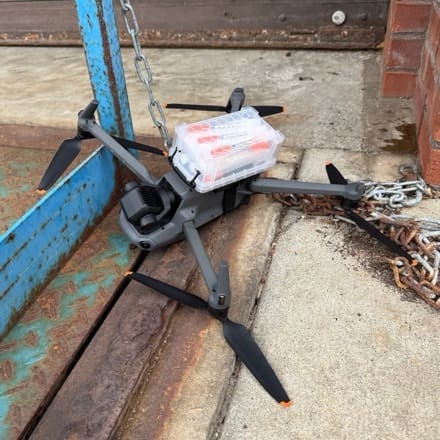
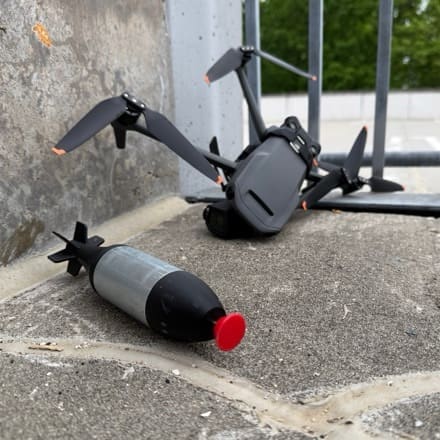
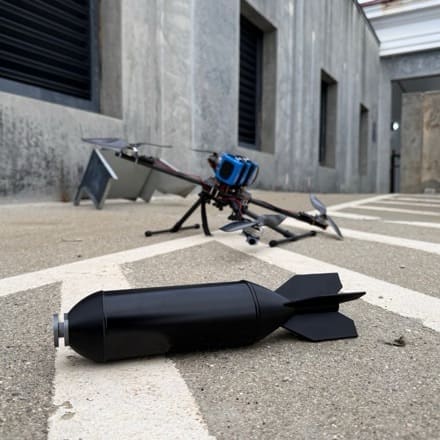
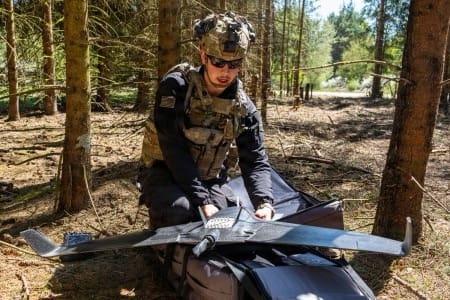
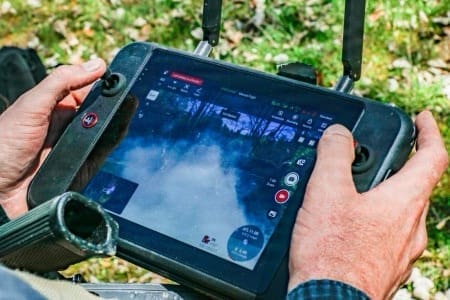
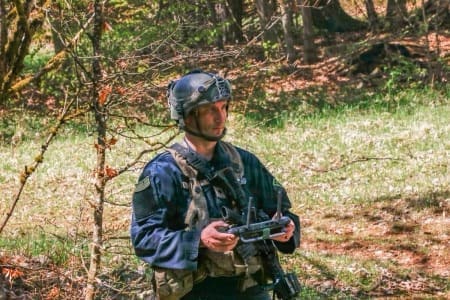
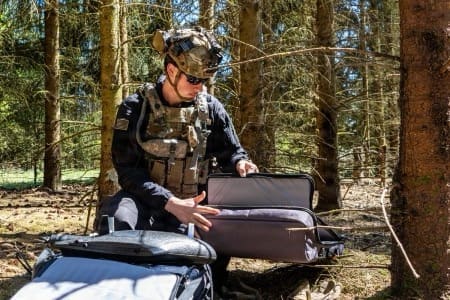
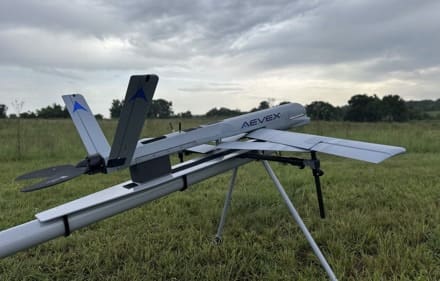
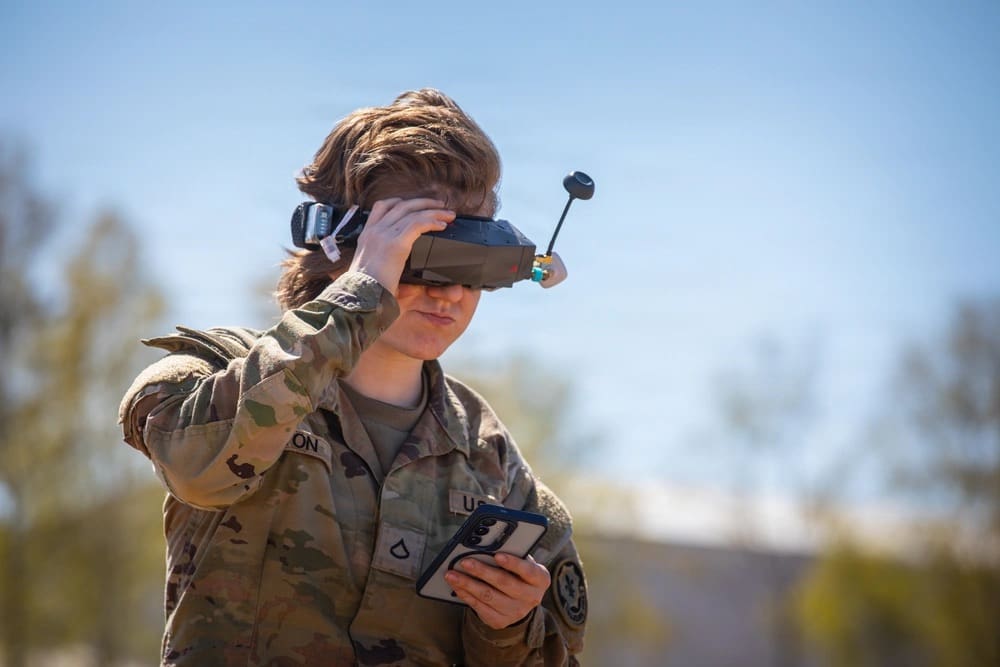
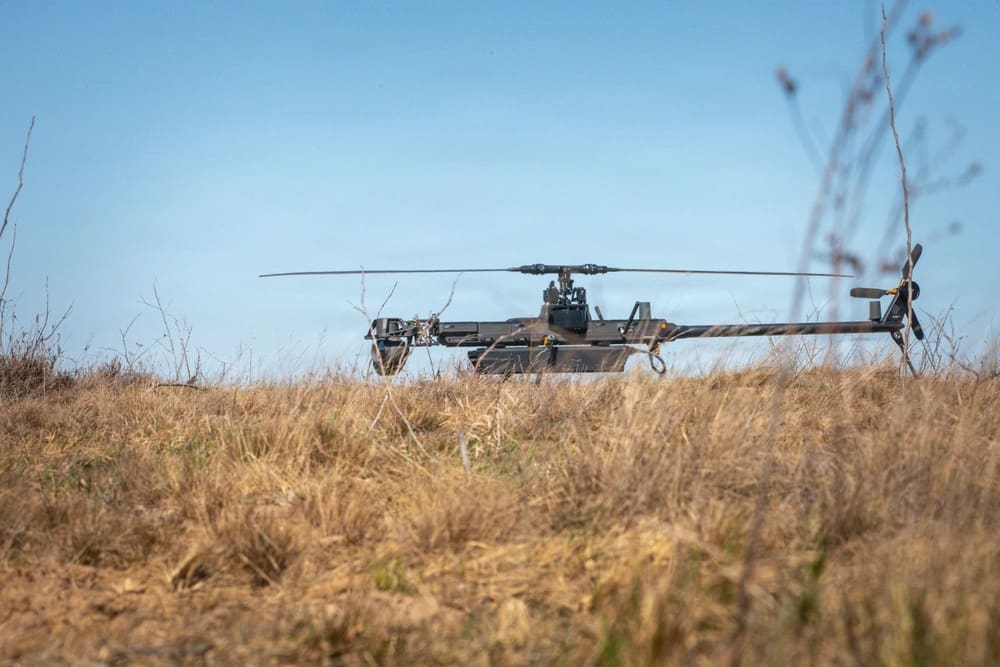
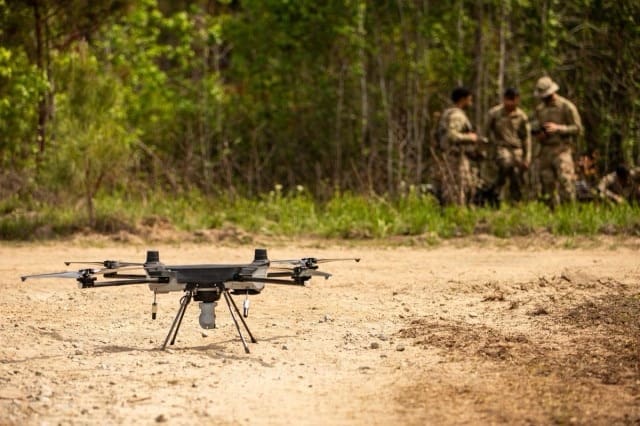
The Marine Corps has launched a training program to rapidly increase the number of small unmanned aircraft system operators for commercial off-the-shelf attack drones. 

The program, announced in Marine Corps administrative message 624/25, addresses a critical need for standardized training as the service integrates new systems, including the Neros Archer first-person-view attack drone and prepares for this significant investment in various drone technologies.  

This initiative builds on the service’s success over the past few months scaling FPV attack drones across the Fleet Marine Force. It also aligns directly with War Department plans to field tens of thousands, and then hundreds of thousands, of attack drones across service components starting in March 2026 and continuing over the next several years. 




The new framework, created by Training and Education Command, establishes six pilot courses and eight certifications to create a standard for drone operators across the force. These initiatives are designed to provide foundational skills for a variety of small unmanned aircraft systems. 

“We are fielding these courses as pilot programs to move quickly while maintaining our commitment to quality training and safety,” said Marine Corps Lt. Gen. Benjamin T. Watson, commanding general, Training and Education Command. “This allows us to validate all aspects of the training, from prerequisites and instructional methods to resourcing needs and certification standards, ensuring that we refine and perfect the curriculum before it becomes part of our long-term training framework.” 

Six approved pilot courses will certify Marines while testing instructional methods and curriculum. These courses include training for drone operators, payload specialists and instructors, with specific prerequisites such as simulator experience on Training and Education Command-approved systems. The courses aim to ensure proper integration and supervision of new drone capabilities. The Training and Education Command has also established a process to grant certifications to Marines who have existing qualifications and experience through an exception to policy. 

Seven organizations are designated as regional training hubs with the authority to immediately begin conducting the pilot courses, including schools within Training and Education Command, 1st Marine Division, 2nd Marine Division, III Marine Expeditionary Force, and Marine Forces Special Operations Command. 

Weapons Training Battalion at Marine Corps Base Quantico, Virginia, will serve as the interim central hub, responsible for standardizing training, certification and safety across the force. It will consolidate lessons learned and function as the Marine Corps’ focal point for adapting training to emerging platforms, payloads and evolving operational requirements. 

This effort to scale standardized FPV attack drone training was shaped by lessons from recent certifications, including two Marine Corps attack drone competitions, one in the National Capitol Region and the other in Okinawa, Japan. These efforts certified 19 attack drone operators, five attack drone instructors, seven payload specialists, and two payload specialist instructors. 

In mid-November, the Marine Corps Attack Drone Team also supported the certification of 22nd Marine Expeditionary Unit Marines, resulting in 14 attack drone operators and 11 payload specialists fully trained, equipped and ready for contingency operations. 

Over the next few months, the Marine Corps Attack Drone Team, alongside Weapons Training Battalion and regional hubs, will certify hundreds more Marines. By May 2026, all infantry, reconnaissance battalions and littoral combat teams across the Corps will be equipped to employ FPV attack drone capabilities. 

By Marine Corps SSgt Claudia Nix, U.S. Marine Corps Training and Education Command

USMC Releases Message Regarding Approved Training Requirements for Small Unmanned Aerial Systems

Thursday, January 1st, 2026

Kudos to the Marine Corps for consolidating the training for the raid expansion of attritable drones across the force. Last week they released MARADMIN, “Approved Training Requirements for Small Unmanned Aerial Systems” which announces six courses open to all Marines:

Basic Drone Operator (BD-O) Course: “Provide the foundational skills required to assemble, maintain and operate both full-acro and stabilized non-lethal drones in an operational environment.”

Attack Drone Operator (AD-O) Course: “Provide the foundational skills required to tactically employ lethal attack drones.”

Attack Drone Leader (AD-L) Course: “Provide the instructional understanding of Fire Support Plan integration, threat assessment, system capabilities and coordination with maneuver and fires.”

Payload Specialist (PS) Course: “Provide the foundational skills and basic knowledge for safe explosive handling and preparation of pre-fabricated warheads used to arm lethal drones in an operational environment.”

Attack Drone Instructor (AD-I) Course: “Provide the instructional skills required to administer and certify Marines in the BD-O, AD-O, and AD-L courses.”

Payload Specialist Instructor (PS-I) Course: “Provide the instructional skills required to administer and certify Marines in the PS course.”

There is also additional training which is MOS specific. Finally, the message offers some details about types of drones hitting the fleet.

We’ve included the whole MARADMIN at the jump. Please note, we have redacted all contact info for POCs.
(more…)

Dedrone by Axon’s 10th Annual Airspace Security Report 2026

Monday, December 29th, 2025

As the global leader in airspace security, Dedrone by Axon is at the cutting edge of how drone technology is reshaping public safety, enterprise operations, and defense. The sky is becoming one of the most dynamic and contested domains in modern life, that now demands continuous awareness and coordination. 

The coming years will redefine who protects our airspace and how, as drones become inseparable from daily operations and security missions. The line between “drone use” and “drone defense” is disappearing. 

This 10th Annual Report includes Dedrone by Axon’s predictions for how this new era of airspace will evolve — and how agencies, enterprises, and nations will adapt to a world where awareness and control of the sky defines safety and security.  Airspace is the new front line.

We have examined both counter-drone (AKA counter uncrewed aircraft systems or CUAS) trends as well as positive drone usage across public safety and defense sectors.

Public Safety & Enterprise CUAS

Prediction 1: Exponential Increase in CUAS Adoption Across Public Safety Agencies

From stadiums to state fairs: airspace defense becomes part of every security plan.

Counter-drone systems will expand far beyond airports and stadiums into every major public venue—from outdoor concerts to parades, sports arenas, and civic gatherings. The World Cup in 2026 and 2028 Los Angeles Olympics will be the catalysts that normalize counter-drone as part of every large-scale security posture. Expect state and local agencies to begin mandating airspace security audits for any event over a specified attendance threshold.

Prediction 2: Airspace Security Becomes an Enterprise Compliance Standard

In 2026, airspace security will move from emerging technology to corporate requirement. Major facilities—especially those related to energy, logistics, and technology—will begin including drone detection and tracking in routine physical security audits. Insurance providers and risk assessors will start requiring proof of airspace monitoring, just as they do for cybersecurity today. Airspace intelligence will become a built-in layer of enterprise security infrastructure. Counter-drone sensors will integrate into real-time awareness systems that unify land, air, and perimeter data into a single operational picture. Building automation, access control, and video analytics platforms will all ingest airspace telemetry as a standard data stream, giving enterprises continuous visibility from the ground to the sky.

What changes inside the enterprise:

• Airspace security added to compliance checklists for insurance and risk audits.

• Integration into real-time awareness systems connecting land, air, and perimeter monitoring.

• APIs and interoperability standards emerging across physical security, building automation, and video analytics platforms.

Prediction 3: The Great Convergence of Positive and Protective Airspace

Public safety agencies and enterprises will no longer separate “drone use” from “drone defense.” DFR fleets, delivery operators, and counter-UAS systems will operate within a shared airspace layer where detection, authorization, and deconfliction happen automatically. Airspace awareness will evolve into a common operating picture, connecting public safety, commercial, and enterprise users through shared data and trust protocols. This will blur the line between response and protection—enabling legitimate missions while automatically isolating unknown or unsafe flights.

Prediction 4: The Sky Gets Low Altitude Highways

Governments and industry will begin establishing structured drone corridors — fixed routes in the low-altitude airspace that function like highways for autonomous flight. The first versions will appear near major metro areas and logistics hubs, coordinated between the FAA, state authorities, and major operators like Amazon, Wing, and Zipline. Each corridor will rely on integrated UTM and counter-UAS technology to manage traffic and prevent incursions.

Over time, these drone highways will form a national low-altitude transportation grid, complete with right-of-way rules, altitude tiers, and enforcement mechanisms — the foundation for safe, scalable drone operations in shared airspace.

Drone Usage: Drone as First Responder, Delivery, Inspection and More

Prediction 5: Drones Become Standard Equipment for Law Enforcement

Drones will evolve from a specialized resource into standard patrol gear. Every officer or patrol vehicle will have a small, easily deployable drone for close-quarters and indoor operations—giving officers immediate eyes on a scene during building searches and other confined-space incidents. At the same time, dock-based patrol drones will handle the majority of calls for service and situational awareness. These highly automated systems will launch, recharge, and redeploy on their own, providing continuous overwatch and rapid response across an agency’s coverage area. Together, they will deliver layered aerial support that shortens response times and extends visibility without adding personnel.

Prediction 6: Shared Air Support Across Agencies

Public safety agencies will begin pooling Drone as First Responder (DFR) resources into local airspace networks. Cloud-based tasking, shared flight zones, and unified command dashboards will let police, fire, and EMS access the same docked drone fleets across neighboring jurisdictions. AI-based flight management will enable one operator to supervise multiple drones simultaneously across active incidents, extending real-time coverage citywide without adding staff. Expect the first public-private DFR consortiums to emerge, delivering local mutual-aid coverage for emergencies, pursuits, and natural disasters.

Prediction 7: Part 108 Opens the Skies and Drives the Need for Integrated Airspace Management

In 2026, the US FAA will finalize Part 108, unlocking routine BVLOS operations and fuelling mass drone adoption across delivery, inspection, and DFR programs. The rule will clarify right-of-way responsibilities and legitimize autonomous flight at scale. Yet as more authorized drones take flight, airspace deconfliction and counter-UAS will become more critical than ever. Part 108 will expand the need for integrated airspace management, blending drone operations, UTM, and counter-UAS into one connected ecosystem. Additionally, these new standards in the US will encourage other countries to follow suit. The EU, UK, and Australia will begin harmonizing around similar right-of-way and BVLOS standards to enable commercial drone corridors. Global companies like Amazon, UPS, and Zipline will demand consistent counter-UAS frameworks at the same time, creating new opportunities for exportable airspace-security tech.

Defense CUAS

Prediction 8: UAS Types & Usage Shifts

In 2026, the concept of “airspace defense” will expand into multi-domain defense of uncrewed systems, transforming how militaries and public safety agencies think about threat detection and response. Expect increased operational use of Uncrewed Underwater Vehicles (UUVs), Uncrewed Surface Vehicles (USVs) and Uncrewed Ground Vehicles (UGVs), all of which are capable of intelligence, surveillance and reconnaissance (ISR) and payload delivery missions within their respective operational environments. Micro-sized drones, including insect-like “cybugs” and bio-hybrid platforms, will move from prototype to field testing, offering near-undetectable capabilities for espionage, sabotage, or facility infiltration. Simultaneously, nations will accelerate investment in autonomous or semi-autonomous interceptor drones designed to disable or capture hostile drones in midair, bridging the gap between electronic warfare that disrupts signals and traditional kinetic countermeasures. These will include net-based, kinetic, and energy-based systems, purpose-built to operate safely over populated or sensitive areas. As RF-based defenses become ubiquitous, adversaries will shift toward RF-silent and fully autonomous drones, rendering legacy RF-controlled systems obsolete. 

Prediction 9: Defense Primes Will Begin to Operate with More of a Startup Mindset 

Long development  timelines and proprietary hardware / software will become increasingly unacceptable to defense customers.  With speed to field becoming a procurement requirement, traditional defense primes will begin to operate more like startups, leveraging open architecture designs and making decisions to buy versus build more often. 

Prediction 10: Shift from CUAS “Air Walls” to Fully Networked & Integrated CUAS Systems

Air walls which exist only at the border are no longer sufficient. We have seen that drones can be smuggled into a country while powered off and then take off once they are well past the air wall – in depth – conducting devastatingly effective missions. These incidents will not only push nations to expand their internal detection networks but also to form multi-country CUAS collaborations, beginning in Europe and later extending through NATO and Indo-Pacific partnerships.  These networks will expand on the initial air wall concept by establishing comprehensive networked CUAS systems which exist not only at the border, but also deep within each country.  These CUAS coalitions will leverage shared airspace intelligence protocols, enabling the exchange of drone signatures, RF telemetry, and incident data in real time.

Prediction 11: AI-Mediated Engagement Decisions

The next evolution of counter-UAS systems will pair AI decision-support with human oversight, mirroring missile-defense frameworks. Automated sensors and targeting algorithms will evaluate speed, flight path, and threat behavior to generate real-time “shoot/no-shoot” recommendations, placing humans on the loop rather than fully in control. This model will enable faster, safer responses in complex airspace and reduce the cognitive burden on operators managing multiple threats at once. Ethical and policy debates will intensify as militaries test the balance between automation and accountability in kinetic engagements.

This year’s predictions highlight the rapid convergence of drone operations and airspace security. Public safety agencies are integrating drones into daily response. Enterprises are expanding their use of aerial data. Governments are redefining airspace policy while preparing for new classes of threats.

Drones now serve every mission — and challenge every boundary. The next phase of airspace security is about managing coexistence and countering threats across defense, public safety, and enterprise domains.

Boneyard

Prediction 8: Airspace Defense Becomes Multi-Domain Defense

The counter-drone mission will no longer be isolated to the air. In 2026, we’ll see increased use of underwater, surface, ground-based and micro-sized uncrewed systems, requiring integrated command and sensor layers across domains.

• Uncrewed Underwater Vehicles (UUVs) used to surveil or conduct attacks on maritime vessels or infrastructure.

• Uncrewed Ground Vehicles (UGVs) adapted for intelligence, surveillance and reconnaissance (ISR) and payload delivery missions.  

• Uncrewed Surface Vehicles (USVs) used for surveillance or to conduct attacks on maritime vessels or critical infrastructure.

• Micro Uncrewed Vehicles such as Insect-sized “cybugs” and bio-hybrid drones will move from experimental to operational testing.  Their small size, low heat output, and biological camouflage will make them nearly undetectable to conventional sensors, enabling new forms of espionage, sabotage, and infiltration inside secure facilities

Prediction 9: Rise of ‘Drone-on-Drone’ Interceptors

Expect an explosion of interceptor drone programs — autonomous or semi-autonomous UAS designed to physically disable or capture hostile drones midair. They will bridge the gap between “soft kill” electronic measures and conventional firepower. Methods will include net-based, kinetic, and energy-based interceptors that can operate safely over populated areas.

Prediction 10: Radio Frequency (RF) Controlled Drones Will Become Obsolete on the Battlefield

As RF-based counter-drone technology is fully integrated at the tactical edge, adversaries will all but abandon traditional RF controlled drones, instead focusing on RF-silent, autonomous technology.

Orqa Scales Global Production Capacity to 1m Drones

Monday, December 29th, 2025

Orqa’s New Global Manufacturing Program Expands Proprietary Drone Production to 1 Million Units Annually

Osijek, Croatia / California, US — December 2025: Orqa, Europe’s leading developer of FPV (first-person view) and unmanned aerial systems (UAS), today announced the launch of its Global Manufacturing Partnership Program, a strategic initiative that will expand Orqa’s production capacity to more than one million drones per year through collaborations with the US Army and with trusted partners worldwide.  This game-changing move will create, for the first time, a resilient global supply chain for the industry, wholly independent of China.

Building on its proven ability to produce 280,000 drones annually at its European headquarters in Osijek, Croatia, Orqa is now extending this robust production model globally through a decentralised network of strategic manufacturing partners. 

Partnerships are already established across key territories in North America, Europe, the Middle East, and the Indo-Pacific, with additional agreements in progress to further expand Orqa’s global footprint. Together, these facilities will form a distributed and resilient production network that meets rising global demand for defence-grade UAS platforms while supporting re-industrialisation and creating high-value manufacturing jobs in local markets. 

“We are a rapidly growing business with the capacity to produce 280,000 drones at our headquarters alone,” said Srdjan Kovacevic, CEO of Orqa. “Our Global Manufacturing Partnership Program extends this capability by enabling allied markets to produce the same high-performance systems using Orqa’s standardized components. The agreements we’ve already secured put us on track to achieve our target capacity of one million drones per year, a significant milestone at a time when global security challenges are evolving rapidly.”

Through this model, Orqa combines world-leading engineering with localized manufacturing agility, ensuring that each manufacturing partner can deliver drones and components to the highest standards while reducing lead times, logistics complexity, and regulatory barriers. By increasing global production to 1 million per year, allied territories will have the means to level up their defence tech capabilities significantly.

orqafpv.com

Next-Generation Drone Pilots Face Off at Comp

Wednesday, December 24th, 2025

Army’s newest drone and robotics talent went head-to-head at Victoria Barracks last month in the finals of Rise of the Drones and War of the Machines.

The culmination of months of training, designing and testing at Battle Lab’s MakerSpace sites across the country had finals competitors assembling, configuring, flying and repairing first-person-view (FPV) drones and robotic ground systems. 

The event represents a step forward in building Army’s uncrewed systems capability, with 161 new FPV drone pilots and 98 uncrewed ground vehicle operators trained through the MakerSpace program.

Commander Battle Lab Colonel Pete Allan said the competitions played an important role in supporting Army’s future capability needs.

“We’re clearly seeing that robotics and automated systems are reshaping how militaries fight, so activities like Rise of the Drones and War of the Machines are part of how Army rapidly adapts at the forward edge,” Colonel Allan said.

The Battle Lab MakerSpace training model, originally conducted over six weeks, was condensed to four weeks to demonstrate the ability to accelerate capability when required. 

‘There are lessons to be learned from Ukraine and the Middle East. Innovating in the FPV space is critical.’

Participants received instruction and mentorship as they progressed from assembly to simulation to live flights. Some completed the initial training in less than three days.

Competitor Captain Jesse Wood, of Headquarters 7th Brigade, said the training was highly relevant to contemporary warfare.

“There are lessons to be learned from Ukraine and the Middle East. Innovating in the FPV space is critical,” Captain Wood said.

“The course stepped us through UAV fundamentals, flight characteristics, basic controls and customising the software and settings. We also spent time in simulation before our first flight.”

Private Dan Leeks, a competitor from the 8th/9th Battalion, Royal Australian Regiment, said the program armed him with the skills and confidence to employ FPV drones.

“We learned how to solder the boards and motors, program the drones and test-fly them. I started with no experience, but now I’d be confident employing them in my job,” Private Leeks said.

By Captain Andrew Lee, ADF

101st Airborne Division Takes Flight with 3D Printed Drones

Friday, December 12th, 2025

FORT CAMPBELL, Ky – Turning another page in the 101st Airborne Division (Air Assault) journey within the Army’s transformation and its emerging technologies, the Division now has plans underway to revolutionize military drone creation in preparation for their upcoming division training exercise – Operation Lethal Eagle.

The Division began 3D manufacturing of small-unmanned aircraft systems (sUAS) at the EagleWerx Applied Tactical Innovation Center at Fort Campbell, Ky.

“This is bigger than simply printing parts. We are reshaping the sUAS enterprise at the tactical level,” said Col. (Promotable) Travis McIntosh, deputy commanding officer for support of the 101st ABN DIV. He said the project will impact the entire unit as it would affect “how we do small UAS in the division, from air worthiness to parts ordering, to fielding and training.”

The plan to build the systems at Fort Campbell came as a cooperative effort from the Division and 5th Special Forces Group (Airborne). Soldiers asked for sUAS that were more versatile, durable, and expendable than the standard previously fielded versions. For experimentation during the exercise, the Division and EagleWerx representatives are manufacturing 100 sUAS units and purchasing the ground control consoles, at a fraction of the cost of previously acquired sUAS’s.

Operation Lethal Eagle, a 21-day rigorous training exercise, is designed to prototype Army initiatives, train unit lethality, and build mastery of large-scale, long-range air assault (L2A2) capabilities throughout the Division.

Many on the project including Capt. Andrew Blomquist, the 2nd Mobile Brigade Combat Team innovation officer, are excited for the 3D printed drones to get into the hands of the end-users permanently.

“We have done multiple Soldier touch points, demos, and flight tests so luckily, we have already received great end user feedback”, said Blomquist. “One Soldier in particular that has experience with all of the previously fielded sUAS was surprised with its performance.”

The Division’s revolutionary experiment will continue in anticipation of its next major training event, in late spring at the Joint Readiness Training Center, at Fort Johnson, Louisiana.

To learn more about Eaglewerx Applied Tactical Innovation Center, visit home.army.mil/campbell/eaglewerx.

Story by Capt. Andrew Lightsey IV and Photos by Staff Sgt. Kaden Pitt 

101st Airborne Division (Air Assault)

From Quadcopters to Micro-UAS: The Aircraft Used at DOW’s Drone School

Thursday, December 11th, 2025

The increasing prevalence of drones on the modern battlefield means it’s crucial for our service members to be familiar with the various systems they might encounter, which is why at the Joint Counter-Small Unmanned Aircraft Systems University at Fort Sill, Oklahoma, students learn the ins and outs of about two dozen of these aircraft.  

The JCU is the War Department’s only joint training center aimed at countering the growing number of aerial threats U.S. troops face across the world. It teaches service members of every branch how to operate drone equipment, plan counter-small UAS strategies and train others to defend installations.

During the courses, students get to know 24 types of commercial off-the-shelf small UAS that they may see downrange, from “blue air” drones that are considered friendly to “red air” drones that are used by our adversaries.

The types of aircraft the JCU trains students on range from commercial quadcopters to tiny micro-UAS and custom-built foam drones that can mimic real threats. Here are the highlights of a few of them:

The Black Hornet

The Black Hornet is the smallest drone currently used by the JCU. Developed under Special Operations Command, this tiny, covert drone does close intelligence, surveillance and reconnaissance — it can even be used inside buildings for hostage rescues. It includes an enhanced thermal camera and is small enough for service members to carry on their utility belts.

R80D SkyRaider

Developed exclusively for DOW and other federal agencies, the R80D SkyRaider is a vertical takeoff and landing quadcopter that’s agile and can carry and deliver multiple payloads up to 7.7 pounds. It has one of the fastest, most powerful embedded artificial intelligence computing devices available for small UAS. It can also thrive in GPS- or communications-denied environments.

WingtraOne Gen II

The WingtraOne Gen II is one of the fastest mapping and surveillance small UAS on the planet. This fixed-wing drone has multiple cameras and a light detection and ranging — LiDAR — option, which can create precise 3D models of objects and environments. It can go about 36 mph and works well in high winds.

IF 1200

Weighing between 21 and 55 pounds, the IF 1200 electric hexacopter is the most aggressive small UAS the school has, and it’s mostly used for detection, said JCU Air Boss Jacob Cameron. The IF 1200 can adapt to any requirement set and can be used with LiDAR, radiation detection sensors, electro-optical/infrared sensors and delivery capabilities. It can travel up to 70 mph, carry up to 35 pounds and stay in the air for up to 45 minutes.

“That drone can do flips,” Cameron said. “You think it’d be slow and clunky, but that is probably the fastest hexacopter drone that we have, and it’s the most capable.”

Alta X:

The IF1200’s larger counterpart, the Alta X, is the school’s largest quadcopter, even though it’s significantly quieter than the JCU’s other drones. The all-electric Alta X is also mostly used for detection and can carry up to 40 pounds. It flies best when it’s got a heavy payload. The Alta X can fold down to half its size in 20 seconds and can accommodate many sensors and third-party payloads, such as EO/IR, mapping and LiDAR.

TSM-800:

Produced by the Army Threat Systems Management Office, this drone is designed for threat simulation and is capable of swarming up to 150 systems from a single ground control station. Each drone can carry a payload of 8 pounds. Three bomblets can be carried per drone. It is Wi-Fi compatible or can be used on a private LTE tower, Cameron said.

Super Decathlon:

The “Super D” is a larger aircraft that has a gas engine and can be used for autopilot and manual missions. It’s primarily used for detection and identification in the JCU’s operator’s course, as well as for loitering munition demonstrations for the planner’s course.

If an enemy tries to electronically jam it while it’s on autopilot, the Super D can still fly through that area without being affected, Cameron said. It’s completely autonomous, can carry large payloads over long distances, and can fly up to 70 miles. Cameron said it’s great for student practice because its size makes it easier to find on radar signatures.

Vesper:  

The small Vesper quadcopter provides intelligence, surveillance and reconnaissance. At 2.2 pounds, it’s light and easily portable. It has an EO/IR camera and can top out at 45 mph for about 50 minutes of flight time. It has low-light capabilities, extended endurance and stealth capabilities.

Opterra:

The lightweight Opterra has multiple camera mounting stations and is predominantly used as a target drone.

“The Opterra is outstanding for being shot at because it’s foam, and bullets will pass straight through it unless you hit specific small components on it, like the engine itself,” explained Army Maj. Dennis “Chip” Stanford, JCU’s executive officer. “It can be shot a lot.”

The JCU also teaches students on the CarbonCub, Skywalker X8, Vector-Scorpion, Osprey, IF 800 and the JTAC24, a JCU-designed and 3D printed target drone, as well as a few others.

By Katie Lange, Pentagon News

Army Drone Team Advances Tactics at Drone Crucible Competition

Wednesday, December 10th, 2025

FORT RUCKER, Ala. – The Army Drone Team competed in the National Drone Association’s Drone Crucible Competition Dec. 4-6, joining some of the military’s top drone operators and industry experts in a series of combat-focused challenges.

The event, held at Camp Blanding, Fla., brought together teams with their own unmanned aircraft systems to test and refine squad-level drone capabilities. Scenarios included close-quarter breaching and room clearing, strikes against moving enemy convoys and aerial targets, long-range engagements on critical assets, and integrated missions against multiple targets and counter-drone systems.

Capt. Jacob Bickus, officer in charge of the Army Drone Team stationed with the 1-145th Aviation Regiment, US Army Aviation Center of Excellence at Fort Rucker, said the competition was only the third event for the newly formed unit since its launch in September. Over the three-day event, the team, comprised of top drone operators and specialists from across the Army, showed they belong among the military’s leading drone experts in both technical and tactical drone employment.

Chief Warrant Officer 2 Scott Carpenter, an unmanned aircraft system operations technician from the 20th Special Forces Group said the Drone Crucible Competition offered a rare chance to bring together some of the Army’s best minds in unmanned systems.

“I think it’s a great way to bring all those different viewpoints and experiences and really generate the best tactics, techniques and procedures,” Carpenter said. “It’s powerful as far as how UAS is employed.”

Carpenter noted that success often hinges on having the right tool for the mission, whether infrared cameras for night operations or quadcopters with prop guards for close?quarters training. He said developing subspecialties within units could strengthen capabilities across the force.

The event also gave Carpenter, a National Guard Soldier and Dual Status Military Technician, the opportunity to see how active?duty units are employing drones. “It’s a very good opportunity to get outside of your normal sphere and see what the conventional Army is doing across the nation,” he said. “Even down to the finer details, like what kind of antenna they’re using. It absolutely translates.”

The Army Drone Team’s participation in the Drone Crucible competition is aimed at more than testing equipment though. Capt. Nathan Rosenberger, a military intelligence officer and artificial intelligence technician assigned to the Army’s Artificial Intelligence Integration Center in Pittsburgh, said the event highlights the value of working across branches.

“Inter-service collaboration is extremely important,” Rosenberger said. “One of the main takeaways from a competition like this is having all of the services come together, work together, and take some lessons to work from.”

Sgt. Ernesto Viveros, an unmanned aircraft systems operator in the 1st Armored Brigade Combat Team, 1st Cavalry Division at Fort Hood, Texas, said his path to the team began after the Army retired the Shadow system, forcing soldiers to adapt to new platforms. “I’ve been flying drones since August of last year,” Viveros said. “Our chief put us on a path to figure it all out, because he saw what was going on and wanted us to be prepared.”

Viveros said that the rapid pace of innovation has pushed the Army to keep up. “Shadow was an old system, and they just kept it around,” Viveros said. “Now you’ve got conferences, the USNDA, everyone’s trying to learn and buy new systems. From last year it’s just been fast-paced, and we’re jumping on.”

Bickus reflected on the competitive nature of the exercise and the opportunity to train alongside elite units. “Anytime you can train with someone as elite as the Navy SEALs, it’s a good day,” Bickus stated. He also compared commercial drones with systems developed in?house, noting that Soldiers are still building trust in different platforms. “The more we use them, the more we’ll get comfortable and kind of build trust with certain systems,” he said.

Finally, Bickus addressed the broader learning environment, pointing to the importance of adapting established tactics while observing global drone employment. He remarked that the competition allowed Soldiers to refine their skills in close?quarters battle scenarios and nighttime operations, while also learning from allied and partner practices.

The Army Drone Team came out on top in many of its matches, underscoring the unit’s rapid growth and potential. The competition, however, was less about winning individual events and more about building trust in emerging systems, refining tactics and strengthening ties across the force. As the Army continues to adapt to the fast pace of drone innovation, the team’s performance at Camp Blanding marked another step toward shaping how Soldiers employ unmanned systems in future conflicts.

By Leslie Herlick