FirstSpear TV

Archive for the ‘EW’ Category

Harnessing SIGINT and EW for Tactical Dominance: A Guide for Combat Arms Leaders

Monday, June 16th, 2025

Introduction

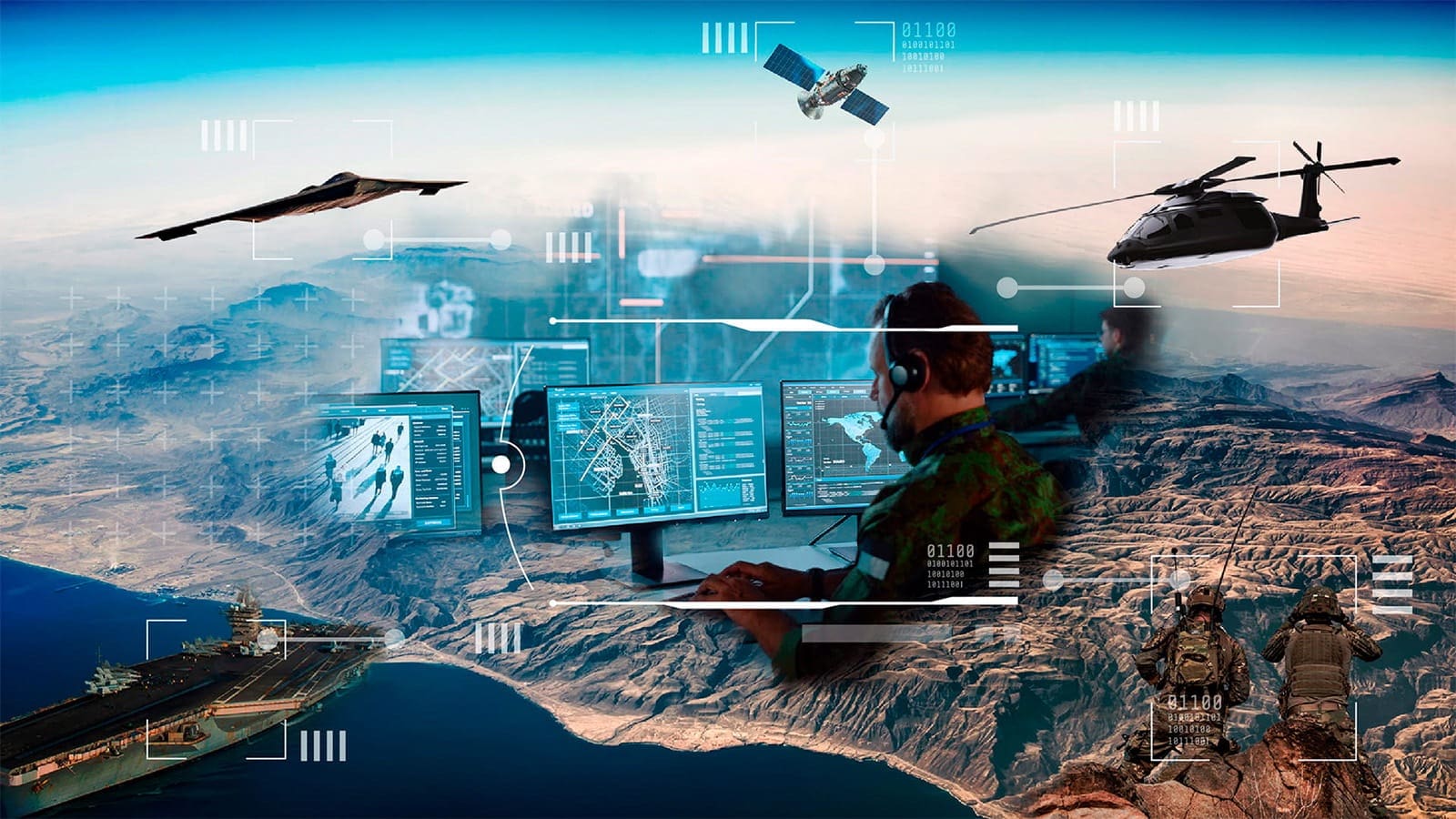
To the combat arms platoon leader and company commander: You are leading formations that will close with and destroy the enemy. Your ability to shoot, move, communicate, and then move again (see later section on countering enemy surveillance in the electromagnetic spectrum) is paramount to our success on the modern battlefield. The enemy is sophisticated, adaptive, and aggressively contesting your ability to maneuver in all domains, including the electromagnetic spectrum (EMS). You are not alone in this fight; the intelligence and cyber communities will enable you to dominate the EMS. These communities stand ready to provide you with actionable targets and the means to influence/dominate the EMS at echelon. This is not theory; this is the reality of combat against peer and near-peer adversaries, and we are bringing the full weight of the Department of Defense (DoD) and its combat support agencies to bear. Your S-2 section and Cyber Electromagnetic Warfare Activities (CEMA) cell will innovate at speed across the range of operations to ensure that you have the capabilities necessary to win.

SIGINT and EW: Your Tactical Edge

Signals intelligence (SIGINT) and electromagnetic warfare (EW) are distinct but complementary disciplines that must be integrated effectively to maximize battlefield effects. SIGINT identifies and characterizes enemy signals, providing critical intelligence that inform EW operations. EW teams can use that information to help locate enemy positions for destruction, or simply to disrupt, deceive, or deny the adversary’s use of the electromagnetic spectrum. Proper coordination between SIGINT and EW enables deception operations, enhances precision targeting, and strengthens force protection measures, ensuring that friendly forces maintain dominance over the EMS while denying the enemy key capabilities.

Based on historical analysis of large-scale combat operations (LSCO), recent lessons learned from Ukraine, and predictive analysis of China’s People’s Liberation Army (PLA) capabilities, the teaming of SIGINT and EW can be a force multiplier across the warfighting functions. By integrating SIGINT-derived intelligence with EW’s ability to deny and disrupt, we can significantly degrade an adversary’s ability to maneuver and execute multidomain operations (MDO).

Understanding SIGINT in Your Fight

SIGINT is not just a tool for strategic planners in some far-off headquarters. It is a tactical enabler that allows you to detect, locate, and exploit enemy communications in real time. Whether you are setting up an ambush, planning a fire mission, or maneuvering to secure a key objective, SIGINT can provide the enemy’s disposition, intent, and vulnerabilities. The Army’s ability to identify and track enemy command nodes, air defense systems, and maneuver elements through SIGINT means you can strike at the right place and time with overwhelming force.

How EW Shapes the Battlefield

EW is your ability to seize control of the EMS. EW is the counterweight to enemy SIGINT and can greatly affect their ability to execute command and control (C2) while disrupting their ability to communicate, navigate, and coordinate. If the enemy cannot receive orders, they cannot react. If their targeting systems are blinded, they cannot fire effectively. Ultimately, if they can’t navigate, they cannot effectively maneuver forces on the battlefield. EW, when employed effectively, can have significant battlefield effects, all without firing a shot.

EW’s Three Essential Functions:

Electromagnetic Support (ES): Detecting and identifying enemy emitters to support targeting and situational awareness.

Electromagnetic Attack (EA): Jamming and deception operations that deny the enemy use of the spectrum.

Electromagnetic Protection (EP): Ensuring that friendly forces maintain reliable communications despite enemy jamming, to include employment of emission control measures (e.g., radio power, antenna placement, etc.) to defeat enemy attempts to surveil and target friendly forces.

The Critical Role of SIGINT and EW in Tactical Operations

The operational environment requires agility, synchronization, and unity of effort to converge all sensors and effects on a rapidly evolving threat. The ability to integrate SIGINT with EW at the tactical level allows commanders to enhance targeting fidelity (SIGINT and EW), disrupt adversary operations (EW), and provide real-time intelligence for maneuver forces (SIGINT).

To focus on C2 and counter-C2, expanded maneuver, and cross-domain fires, we must team SIGINT and EW across EA, ES, and EP to present multiple dilemmas to our enemy, enhance C2 protection, and increase lethality. Let’s look at an example:

Kill Chain Analysis: A Counter-Unmanned Aerial System (C-UAS) Scenario

In an era where UAS play an increasingly critical role in modern warfare, understanding the full kill chain process for countering these threats is essential for operational success.

Phase 1: Detect and Identify

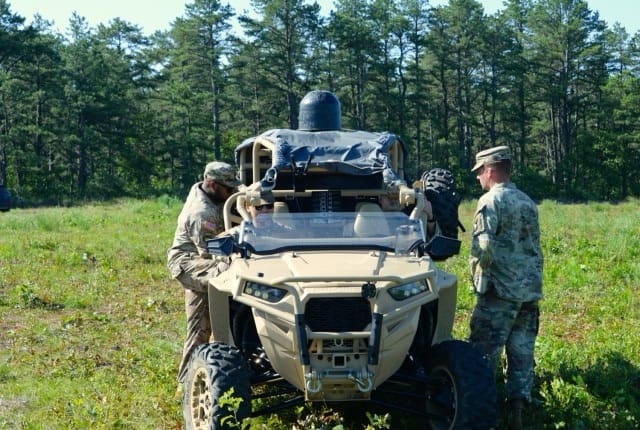
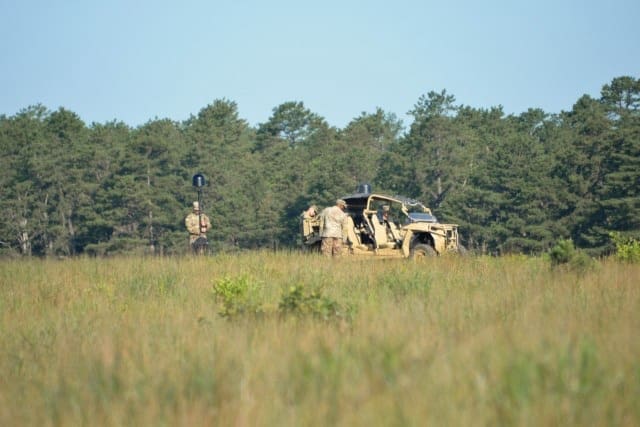
A brigade combat team (BCT) is executing a deliberate attack when SIGINT elements intercept and transcribe enemy communications emanating from an urban area associated with drone activity. Electromagnetic support reporting from sensors riding on a remote-controlled scouting vehicle confirms the presence of enemy UAS operating frequencies, geolocating multiple launch sites and relay nodes.

Phase 2: Target and Disrupt

Upon confirming the threat, the BCT’s organic EW platoon, using Terrestrial Layer System (TLS) Manpacks, receives the locations of the threat signals of interest (SOI), and executes an electromagnetic attack to jam the drone’s control frequencies, disrupting the operator’s ability to maneuver the UAS effectively. Simultaneously, SIGINT analysts coordinating with higher-echelon intelligence teams pinpoint the drone operator’s location for kinetic targeting.

Phase 3: Engage and Destroy

With the drone rendered ineffective, the fire support element coordinates an artillery strike on the enemy UAS ground control station, leveraging the precision geolocation refined by enhanced tools like the Electromagnetic Warfare Planning and Management Tool (EWPMT) and the Army Intelligence Data Platform (AIDP). Simultaneously, the EW platoon continues to jam the enemy’s communications, preventing coordinated support or retrograde. Friendly forces neutralize the threat, allowing maneuver elements to proceed unimpeded.

Phase 4: Assess and Adapt

Post-strike analysis from SIGINT utilizing High Altitude Platform (HAP) sensors reveals ongoing enemy attempts to reestablish drone operations, underscoring the necessity for sustained EA efforts. In response, SIGINT teams disseminate updated threat reporting to the EW platoon, enabling them to adjust jamming frequencies and counter enemy adaptations. Concurrently, SIGINT elements refine their intelligence collection to anticipate and prepare for potential future enemy tactics, ensuring proactive EW measures.

This coordinated SIGINT and EW kill chain ensures the enemy’s UAS capability is neutralized before it can affect friendly operations. This vignette effectively illustrates the critical synergy between intelligence-driven targeting and spectrum dominance.

How You Can Leverage SIGINT and EW at Your Level

To gain a decisive battlefield advantage, leaders must integrate SIGINT and EW capabilities to counter enemy threats in the EMS. The following approaches can help achieve this:

Incorporate SIGINT and EW into the DNA of Your Planning and Execution

From the outset, consider how to effectively integrate these capabilities into your operations to inform and shape your decision-making. Collaborate closely with supporting staff elements, such as the BCT CEMA cell and S-2 section, to gain a deep understanding of the enemy’s electromagnetic spectrum usage and identify opportunities to disrupt and exploit their vulnerabilities. By incorporating SIGINT and EW into your operational framework, you can create a more comprehensive and effective approach to achieving your mission objectives.

Train Your Leaders and Soldiers to Recognize and Exploit the EMS

Your Soldiers must understand that controlling the EMS is just as vital as controlling key terrain. Integrate SIGINT and EW considerations into your battle drills, mission rehearsals, and after-action reviews. Units that fail to account for enemy EW will put their formations at significant risk on the battlefields of the future. Training ensures you can adapt and maintain tempo under contested conditions.

SIGINT and EW teams can sense across the EMS with ES at the tactical edge. By developing new tactics, techniques, and procedures (TTPs), SIGINT support from higher echelons, such as from the division level, can be pushed down to BCTs, providing real-time EMS sensing without burdening them with protecting and maneuvering higher-echelon intelligence capabilities. Ultimately, this enables more agile and lethal maneuver forces.

Ensure Interoperability with Supporting SIGINT and EW Units

SIGINT and EW units are enablers, not afterthoughts. Integration of SIGINT and EW elements throughout the organic targeting process is key. Work with them to refine target identification and EA options. Develop unit standard operating procedures (SOPs) that detail how to request and synchronize their capabilities in real-time engagements and incorporate them in all rehearsals. Leaders must ensure that EW Soldiers are embedded within tactical formations to provide immediate effects that enhance maneuver and fires.

Adopt an Aggressive, Learning-Focused Mindset

The enemy is adapting. As such, we must do the same. Stay informed on the latest TTPs by leveraging resources such as the Center for Army Lessons Learned (CALL) and current doctrinal publications like Field Manual (FM) 2-0, Intelligence, and FM 3-12, Cyberspace Operations and Electromagnetic Warfare. We must continue to share lessons learned across our formations and with intelligence and EW enablers to continually refine our operational effectiveness.

Conclusion

In an era where the electromagnetic spectrum is as contested as the physical battlespace, success demands leaders fully integrate SIGINT and EW into their tactical decision-making. These are not ancillary capabilities but core enablers of maneuver, fires, and protection. By treating SIGINT and EW as an integral piece of battlefield operations rather than separate support functions, we can outthink, outmaneuver, and overwhelm our adversaries before they can react.

The future fight will be won by those who master the integration of intelligence and electromagnetic warfare, seamlessly fusing these disciplines into their formations and operational planning. This requires continuous learning, rigorous training, and adaptive thinking to counter evolving enemy tactics. The intelligence and EW communities stand ready to support, provide counsel for our specialties, and execute through our commanders’ intent.

Superiority in the EMS is not an option — it is a necessity. By embracing these capabilities and fostering interoperability, we ensure that our forces maintain a lethal edge on the battlefield. The challenge is clear, and the tools are at hand. Now is the time to educate our leaders and Soldiers and incorporate these capabilities into our training so we are prepared to fight and win our nation’s wars.

By MG Rick Appelhans and MG Ryan Janovic

MG Richard T. “Rick” Appelhans currently serves as the commanding general of the U.S. Army Intelligence Center of Excellence and Fort Huachuca, AZ. Prior to assuming this position, he served as the director of Intelligence, U.S. Forces Korea/deputy director of Intelligence, Combined Forces Command. MG Appelhans’ overseas assignments and deployments include the Republic of Korea, Kuwait, Germany, the Netherlands, Afghanistan, Bosnia-Herzegovina, and Iraq. He began his military career as an Armor officer, serving as a tank platoon leader, company executive officer, and battalion S-4. Since transitioning to Military Intelligence in 1997, MG Appelhans has served in a variety of command and staff assignments to include detachment commander, battalion S-2, company commander, brigade combat team S-2, analysis and control element chief, region commander, division G-2, and group commander.

MG Ryan Janovic currently serves as the commanding general of the U.S. Army Cyber Center of Excellence and Fort Eisenhower, GA. A native of Akron, OH, he graduated from the U.S. Military Academy at West Point, NY, in 1993 and commissioned into the Military Intelligence Corps. He served with Multi-National Forces-Iraq, 1st Infantry Division in eastern Afghanistan, Military Intelligence in Korea, and later with Commander United Nations Command/Combined Forces Command/U.S. Forces Korea. His other assignments include various posts throughout the U.S. to include a tour as a White House Fellow. In 2019, MG Janovic joined the cyber ranks as the deputy commander of Joint Force Headquarters – Cyber (Army), leading the organization toward unit citations earned in support of U.S. Central Command.

This article appears in the Summer 2025 issue of Infantry. Read more articles from the professional bulletin of the U.S. Army Infantry at www.benning.army.mil/Infantry/Magazine or www.lineofdeparture.army.mil/Journals/Infantry.

Georgia Guard Activates First-Ever Electromagnetic Warfare Company

Thursday, June 12th, 2025

FOREST PARK, Ga. — The Georgia Army National Guard made history with the activation of the 111th Electromagnetic Warfare Company, the first unit of its kind in the U.S. Army.

The ceremony, held at the Fort Gillem Enclave, also included the assumption of command by Capt. Caleb Rogers.

Lt. Col. Luke Gurley, commander of the 221st Intelligence and Electronic Warfare Battalion, the parent command of the 111th EW, presided over the ceremony.

“Today we activate the 111th Electronic Warfare Company, a unit that will be at the forefront of our capabilities in the electromagnetic spectrum,” Gurley said.

The activation of the 111th EW Company marks a significant step in modernizing the Army’s capabilities within a domain that is increasingly critical to national security. This new formation will provide capabilities to detect, recognize, locate and identify signals of interest, supporting combatant commanders.

During his remarks, Gurley said the activation aligns with the philosophy of U.S. Army Chief of Staff Gen. Randy George, who advocates for rapidly modernizing units and equipment based on emerging needs and technology. He also believes every unit will need to master the electronic warfare fight.

“The legacy of the 221st Intelligence and Electronic Warfare Battalion and the Georgia Guard to lead from the front and provide those critical capabilities to support the warfight both locally and abroad is going to be driven by Georgia Soldiers,” said Brig. Gen. Theodore Scott III, commander of the 78th Troop Command. “And that means the world to me.”

Scott, once the leader of the 221st IEW, has watched the formation grow over the years.

“As the battlefield continues to evolve, the 221st IEW is ready,” Scott said. “It’s one of the most deployed units in the state and has been for a number of decades. And so that continues to articulate the relevancy of 221st and now the 111th.”

The 221st IEW has deployed Soldiers to Afghanistan, Iraq, Kuwait, Syria, Jordan, Turkey, Qatar, United Arab Emirates, Kosovo, Cuba and the southern border, and has supported U.S. Central Command and U.S. Indo-Pacific Command activities.

The 111th EW Company traces its lineage to the 1st Battalion, 111th Signal Battalion, the only Georgia Army National Guard unit mobilized during the Berlin Crisis in 1961 and the first unit mobilized since the Korean War.

“Today is not simply about activating a new unit. It’s about recognizing and honoring a proud legacy,” Gurley said.

Rogers, the newly appointed commander, acknowledged the unique challenges and opportunities associated with leading this pioneering unit. He said he is charged with coordinating with relevant schools and units to train on developing systems as the Army continues to identify and finalize the necessary training for the unit’s capabilities.

“No Soldier in the 111th ended up here through recruiting,” Rogers said. “They knew what they wanted when they came to the 111th. They knew that they wanted to rebuild Army EW.”

Rogers said the company will provide division commanders with four platoons of electromagnetic warfare teams, with a total of more than 80 Soldiers.

“All of our Soldiers are expected to keep up with evolving technology, and the unit as a whole is remaining flexible with the expectation of receiving a growing number of mission types,” Rogers said.

He also confirmed that the 111th EW Company will conduct its first field exercise in August at the Chattahoochee National Forest, focusing on electromagnetic support training and identifying and locating static and moving targets, including helicopters provided by the Georgia Guard’s 78th Aviation Troop Command.

“It’s a great time to be in military intelligence and electromagnetic warfare,” Scott said. “I am excited for the future.”

By Charles Emmons, Georgia National Guard

US Army Opens Recruiting for Robotics Warrant Officer MOS

Monday, May 19th, 2025

Last fall, I mentioned a that US Army Special Operations Command was adapting to the evolving face of warfare by creating a new Military Occupational Specialty. In true SOF fashion, they attacked the problem asymmetrically by adapting a career management field they had control over and using authorities to recruit talent into the warrant officer force. Now, it’s open for applications. If you are into emerging warfighting capabilities, this is the job for you. I’m jealous something like this wasn’t available when I was in.

MOS 390A Robotics Technician

The result is MOS 390A Robotics Technician, intended to enable and provide robotic and autonomous system solutions to tactical problems across all warfighting functions and domains during competition, crisis, and combat operations.  The 390A will be assigned to tactical formations at brigade/group-level and above.  This new MOS will be the subject matter expert for planning robotics and autonomous systems operations, integrating those operations into broader plans, engineering and fabricating robotic and autonomous system solutions to tactical problems, managing attritable systems and their kinetic and sensor payloads, and delivering those capabilities and effects in support of Soldiers at the tactical edge.

Eligibility:

a.  The MOS is open to all enlisted, officer, and warrant officer that are currently serving in Special Operations Forces Units. As there is no requirement for SFQC graduation, I hope to see some enablers applying.

i.  Enlisted: Open to all MOS and grades/ranks.

ii.  Warrant Officer: Applicants must be a graduate of the Warrant Officer Candidate School and a Warrant Officer Basic Course.  Must be a Chief Warrant Officer Two (CW2) with a minimum of one-year time in grade or Chief Warrant Officer Three (CW3) with no more than one-year time in grade.

iii.  Officer: Applicants open to all branches. Officers must be branch qualified.

b.  Must meet Army physical fitness and Army Height / Weight standards.

c.  Must possess a Secret clearance.

d.  Have no derogatory information in their OMPF, a referred NCOER or OER, or pending adverse action.

e.  Must be able to complete a 3-year tour following graduation from WOBC.

Packet Submission Deadline is Friday, 1 August 2025 

For full information, visit recruiting.army.mil/In-Service-Opportunities/US-Army-Warrant-Officer-Recruiting/Do-I-Qualify/WO-MOS-Feeder-List/39A-Robotics-Technician

Cubic Digital Intelligence Expands TAKTICS Platform With New Intelligence Feeds for Enhanced Situational Awareness

Wednesday, May 14th, 2025

Delivering powerful radio frequency (RF) intelligence directly to the tactical edge

SAN DIEGO, May 12, 2025 -Cubic Digital Intelligence (CDI), a leader in geospatial and full-motion video software solutions, has announced the integration of advanced RF data and analytics from HawkEye 360 into its TAKTICS platform. These capabilities provide mission-critical insights directly to Tactical Assault Kit (TAK) users, strengthening decision-making at the tactical edge.

“This integration reflects our commitment to delivering powerful, real-time intelligence tools that support the operational needs of modern defense missions,” said Paul Sartorius, VP and General Manager at CDI. “By adding these advanced RF analytics to TAKTICS, we’re giving users the ability to act faster, with greater precision and context.”

TAKTICS is a trusted, web-based hub that rapidly delivers geospatial intelligence (GEOINT) data to users operating in time-sensitive and bandwidth-constrained environments. With the addition of HawkEye 360’s advanced RF data and analytics, TAKTICS now offers enriched intelligence derived from space-based RF signal detections, streamlining access to high-value insights through a single, integrated platform.

Enhanced Domain Awareness

HawkEye 360’s RF geolocation data enhances situational understanding across land and maritime environments by continuously detecting and analyzing emissions from signals of interest. This data supports daily updates to the TAKTICS platform and enables users to identify strategic threats without needing access to classified sources. By providing only the most relevant detections, it supports tip-and-cue workflows that allow analysts to efficiently direct additional sensors, such as EO or SAR, for further investigation. The result is persistent, unclassified insight that reduces analyst workload and strengthens mission planning in high-risk and contested areas.

A Unified Tactical Picture

Through these integrations, TAKTICS continues to evolve as a comprehensive intelligence dissemination platform, enabling secure access to critical GEOINT and RF-derived intelligence across desktop and mobile environments.

With TAKTICS, CDI reinforces its mission to get the right data to the right place at the right time – empowering tactical edge users with superior situational awareness, mission planning, and execution capabilities.


Roke Redefines Electromagnetic Attack with a New Portable SOSA-Aligned, Modular EW System

Thursday, May 8th, 2025

EM-Vis Deceive is the dismounted Electromagnetic Attack platform that ushers in a new frontier for electronic warfare. Modular, open-standards based, and mission configurable, it delivers operational advantage at the edge  

The system is light enough for a single soldier to carry, and has been designed so that even an unskilled operator can deliver battlefield impact 

Launched at AOC Europe 2025, EM-Vis Deceive is STICS/SOSA aligned 

Romsey, UK, Wednesday, May 7, 2025?- Roke has launched EM-Vis Deceive, a new portable electronic warfare system that brings electromagnetic attack (EA) capabilities directly to troops on the ground. The lightweight system, something a soldier can carry like a backpack, helps military forces detect, track, and disrupt enemy communications, drones, or other electronic signals. 

EM-Vis Deceive is the first fully integrated person-borne system of its kind to be designed and built to modular open standards – providing a flexible, upgradable and tailorable solution for different missions. EM-Vis Deceive is also STICS aligned. STICS is a suite of open standards and specifications enabling modularity and interoperability in C5ISR and Electronic Warfare (EW) systems. 

The system can disrupt a wide range of enemy targets – from drones, to missiles and communication systems – and can be operated by skilled light, medium or heavy EW specialists or by general troops with minimal training. 


It marks a major step as electronic warfare moves closer to the frontline, responding to the growing need for faster, more flexible responses to threats on the modern battlefield. 

Roke, a UK company that stands at the forefront of defence and security, delivering cutting-edge intelligence and engineering solutions that protect nations, troops, borders, and businesses, launched EM-Vis Deceive today at AOC Europe 2025 in Rome.  

Paul MacGregor, Roke Managing Director, said: “EM-Vis Deceive marks a major turning point in electronic warfare. For decades, most EA systems on the battlefield were custom-built, one-offs, made to counter specific threats. These were expensive, slow to upgrade and hard to integrate with other technology. And with weaponry, and the battlefield in general, evolving so quickly, these clunky systems were leaving troops at a severe disadvantage.  

“Let’s take drones as an example, Ukraine has had to defend itself from 18,000 drone attacks in the last year alone according to UK intelligence. An army squad could be using an electronic warfare system to jam enemy drones – but what happens if a new enemy drone model appears that uses different frequencies? A new custom build would have to be designed, tested and deployed – it could take months or even years.

EM-Vis Deceive changes all of that, it can be quickly upgraded, software updates can be pushed faster and it can easily communicate with other systems.” 

Experts in electromagnetic warfare 

Roke has been at the forefront of Cyber and Electromagnetic Activity (CEMA) technology for more than 40 years. This experience has been integrated with technology gained from small form factor radio system development to produce a highly agile system in a modest package, with a range of integrated support functionality. Key attributes of EM-Vis Deceive include:  

Modular by design – easily configured to meet the full spectrum of EW missions through swap in/swap out Software Defined Radios (SDR).? 

Open standards driven – uses OpenCPI generated Applications and open APIs to develop new techniques or port existing IP onto the system? 

Scalable and multifunctional – initial release will be person-borne based on demand for increased survivability in peer threat environment, but scalable and stackable to support high mobility and platform mounted deployment? 

At AOC Europe 2025, themed “EMO in Transition – Learning from the Ukrainian/Russian War”, Roke will:? 

Launch and demonstrate its new targeted attack EW capability, giving attendees a first-hand look at this game-changing technology.? 

Exhibit a suite of EW and EMSO solutions, reinforcing its position as a trusted partner in electronic warfare innovation.? 

Engage with partners and defence leaders, sharing insights on collaborative approaches to developing resilient and agile EMO strategies.? 

Visit Roke at Stand B06 to meet the team, explore the new EW product’s capabilities, and learn how Roke is helping reshape the electromagnetic battlespace.? 

For further information, please contact:?info@roke.co.uk 

SOF Week 25 – Anduril Industries Pulsar-L EW System

Tuesday, May 6th, 2025

No larger than a 3kw portable generator Anduril Industries’ new Pulsar-Light is a software-defined Electromagnetic Warfare (EW) system designed primarily for counter drone operations, combining detect, ID, track, and defeat all in one box.

Deployable in two minutes, Anduril is fielding two configurations of Pulsar-L:

– Airborne, designed for airborne EW missions

– Expeditionary, built for every warfighter

Like other versions, Pulsar-V (vehicle), Pulsar Alpha (airborne) and the fixed-site emplacement, this new Light model can be operated independently or integrated with Lattice. It is also compatible with other C2 and Common Operating Picture solutions, including TAK.

VTG Acquires Triaplex, Enhancing Cyber and Signals Intelligence Capabilities

Friday, May 2nd, 2025

CHANTILLY, Va., April 30, 2025 — VTG, an industry-leading national security solutions provider, announced that it has acquired Triaplex, Inc., gaining access to expert signals and cyber warfare expertise. Triaplex is based in Fulton, MD, and expands VTG’s Intelligence Community footprint to new customers in the National Capital Region.

“We are excited to welcome Triaplex and its exceptionally skilled cadre of deep domain experts and specialized engineers to VTG,” said John Hassoun, VTG President and CEO. “Acquiring Triaplex enables VTG to tackle emerging national security challenges and highlights our continued investments in the advanced technical capabilities and expertise the Intelligence Community needs most.”

Triaplex, Inc., founded in 2020, has earned a reputation for delivering radio frequency solutions that protect our nation’s warfighters and their mission-critical systems. Triaplex CEO David Lee said, “This partnership allows us to make the right, focused investments in our talent and technology, bolstering our core RF expertise. The combined resources & talent will scale exponentially across VTG’s diverse Defense and Intelligence Community program portfolio.”

The acquisition of Triaplex is VTG’s fourth since receiving a majority investment from private equity firm A&M Capital and underscores the Company’s commitment to accelerating growth within the Intelligence Community.

About VTG
VTG delivers modernization and digital transformation solutions that expand America’s competitive advantage in the modern battlespace. Headquartered in Chantilly, Virginia, VTG provides full lifecycle engineering for naval, aerospace, network, and digital requirements. Whether at sea, in the air, on land, or in cyberspace, VTG delivers Tomorrow’s Transformation Today. For more information, visit us at www.VTGdefense.com.

Tecore Delivers Legally Compliant Intelligent Jamming to U.S. Correctional Facilities

Monday, April 7th, 2025

IntelliJAM™ Featured at CLA 2025 Technology Conference; Backed by more than 20 Patents and Over a Decade of Proven Deployments

HANOVER, Md., — Tecore Networks, the inventor of managed access technology (MAS) and a leader in the combat of contraband cellphone use in correctional and secured facilities, is showcasing its advanced IntelliJAM™ platform at the Correctional Leaders Association (CLA) 2025 Technology Conference, being held today in Charleston, SC. Attendees are invited to visit Booth 51 for demonstrations and discussions with the Tecore team.

With over a decade of operational deployment, IntelliJAM is the most comprehensive, legally compliant intelligent jamming technology in use today—delivering real-time signal control, selective access, E911 support, and advanced analytics in a single, integrated platform. Backed by over 20 patents, Tecore’s innovations are engineered to combat contraband cellphone threats while maintaining compliance and connectivity for authorized users.

The newly proposed Cellphone Jamming Reform Act of 2025—introduced by Senator Tom Cotton (R-AR) and Congressman David Kustoff (R-TN)—seeks to obtain authority for jamming. Such measures may face delays and resistance due to concerns around potential interference with public safety, impacts to nearby residential real-estate, commercial businesses, and broader liability risks. However, Tecore’s IntelliJAM is already industry compliant and engineered to support multiple jamming methods activated with a simple software configuration.

Unlike sweeping jamming approaches, IntelliJAM is precision-targeted to operate without affecting surrounding public coverage and is effective in both indoor and outdoor environments, including housing units and courtyards of correctional facilities.

“The technology since we first introduced this bill has increased greatly down to very precise targeting,” Senator Cotton stated in a recent press conference.

Congressman Kustoff added, “I think we can all agree that if people lawfully have a cellphone, they should be entitled and be able to use and get a signal. The programming with some technology is you can program lawful numbers from within a prison or a jail that can make or receive calls. But if there is a contraband cellphone, and obviously that number is not authorized, it doesn’t get a signal. So the technology has advanced a lot over the last several years. It will continue to advance and the fact that you can protect the innocent people, those who should be able to lawfully use cell phones and not harm them – to me makes this issue a no brainer.”

“Identify people who are in jails or prisons, guards other personal who lawfully have the right to be able use their phone, allow them to have access and essentially cancel out the contraband cell phones, that protects everyone,” Congressman Kustoff stated.

Key Capabilities of IntelliJAM Include:

Selective Access Management: Blocks contraband cellphones while maintaining secure access for staff, first responders, and designated users.

Legally Compliant Intelligent Jamming: Localized, facility-contained signal control that preserves access for authorized personnel and emergency services.

Legally Compliant E911 Functionality: Supports emergency call routing in accordance with current regulatory standards.

Stakeholder-Aligned Interoperability: Designed in collaboration with all key wireless stakeholders for secure, authenticated device management and system integrity.

Proven Deployment Across U.S. Correctional Facilities: In operation for over 15 years with consistent, complaint-based results.

Patent-Driven Innovation: Backed by more than 20 patents specific to intelligent jamming, analytics, and lawful control protocols.

Real-Time Intelligence and Analytics: Captures call patterns, text activity, locations, and behavioral insights to detect and investigate criminal activity.

Software-Driven Flexibility: Easily configured to support “jam-all” strategies where legally authorized—without the need for infrastructure overhaul.

IntelliJAM unifies jamming control and actionable intelligence in one system—empowering facilities to not only block illicit cellular activity, but also to combat broader patterns of contraband use, gang coordination, and criminal activity through analytics-based intervention.

“Recognizing the unique security challenges correctional institutions face,” said Bipin Noble, Vice President of Business Development at Tecore Networks, “we designed IntelliJAM to deliver not only an immediate solution to contraband cellphone use but also a robust intelligence platform to combat threats proactively. Our system equips facilities with real-time insights while remaining flexible enough to integrate future policy changes without operational burden.”

Tecore Networks remains at the forefront of public safety innovation—committed to providing trusted, scalable, and compliant wireless control technologies for the nation’s most secure environments.