GORE-TEX WINDSTOPPER

Archive for the ‘Guest Post’ Category

US Army Awards $65.5 million contract to Hardwire LLC and Leading Technology Composites, Inc for Lightweight Small Arms Protective Plates

Friday, September 26th, 2025

FORT BELVOIR, Va. (Sept. 11, 2025) — The Army recently awarded $65.5 million in delivery orders Sept. 11, 2025, to Hardwire LLC and Leading Technology Composites, Inc., for the production of 72,179 Lightweight Small Arms Protective Inserts (LSAPI). The awards mark the official start of production for LSAPI, the newest component of the Soldier Protection System under Project Manager Soldier Survivability.

The official contract, awarded under the Army’s existing multiple-award indefinite delivery/indefinite quantity (IDIQ), allows the Army to place orders with approved vendors as requirements are finalized. Delivery Orders W91CRB-25-F-A210 (Hardwire) and W91CRB-25-F-A211 (LTC) were issued under Notice of Fair Opportunity 0001. The total delivery order value of $65,564,335.70 covers 72,179 plates, with anticipated delivery to Program Executive Office (PEO) Soldier within 18 months, no later than March 15, 2027.

LSAPI plates are approximately 30% lighter than the current Enhanced Small Arms Protective Insert (ESAPI) Generation III, reducing the Soldier’s combat load while maintaining ballistic protection. The plates also use a shooter’s cut geometry to improve mobility and range of motion. LSAPI integrates with the Army’s Modular Scalable Vest (MSV) Gen II and other systems in the Soldier Protection System (SPS) family of equipment.

“The Lightweight Small Arms Protective Insert award reflects our team’s dedicated effort to advance and optimize Soldier protection,” said Lt. Col. Ken Elgort, product manager for Soldier Protective Equipment (PdM SPE). “With this milestone, LSAPI moves into production and will soon begin fielding alongside the Modular Scalable Vest, reducing combat load while maintaining state-of-the-art ballistic performance. It also reflects a major win for domestic manufacturing and a proud moment for our team as we deliver on PEO Soldier’s commitment to equip Soldiers with world-class protection,” he added.

The LSAPI award is the latest step in modernization under Product Manager Soldier Protective Equipment (PdM SPE), Project Manager Soldier Survivability (PM SSV), and Program Executive Office (PEO) Soldier, reducing weight, enhancing lethality and delivering modular protection across the Army’s combat formations.

25th Infantry Division Leads the Way in Army Modernization with xTechPacific 2025

Thursday, September 25th, 2025

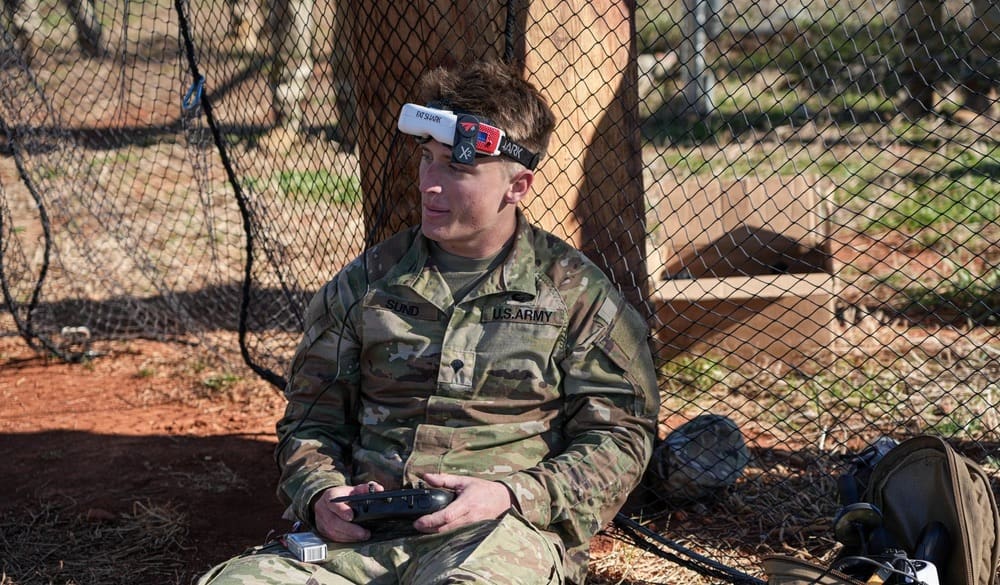
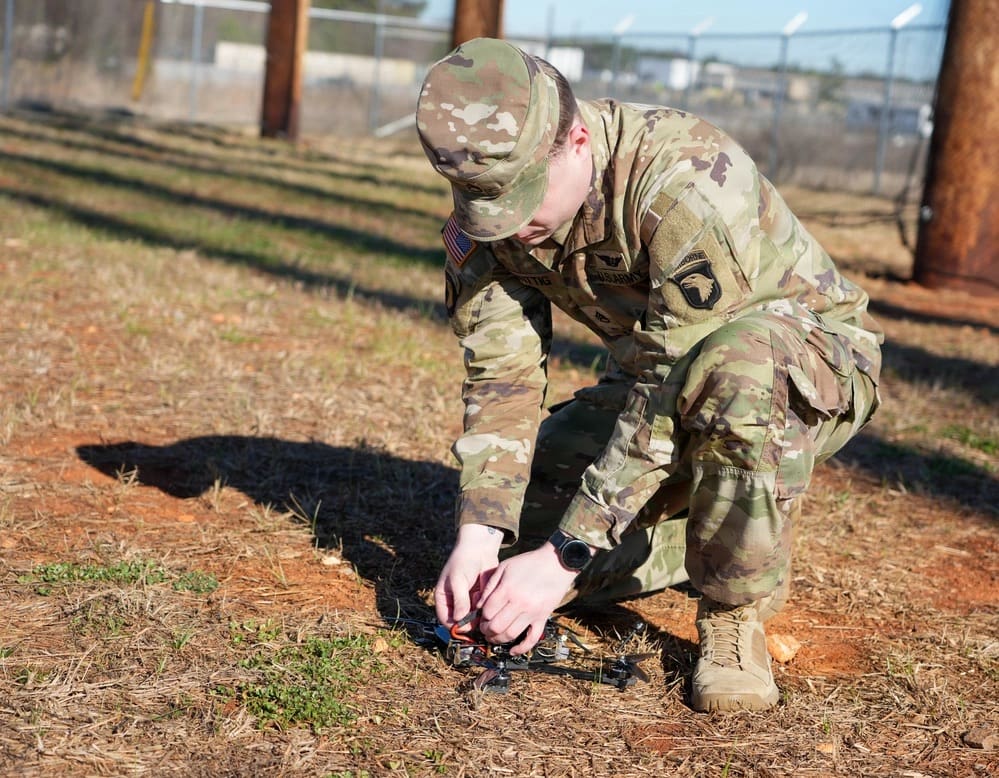
SCHOFIELD BARRACKS, Hawaii – From September 9–18, 2025, the 25th Infantry Division transformed its training areas into a living laboratory for the U.S. Army’s modernization efforts, hosting the xTechPacific 2025 competition.

The event, which brought ten innovative small businesses to Oahu, gave Army and joint leaders a rare chance to see emerging capabilities tested in realistic operational settings. Soldiers of the 25th Infantry Division and partner units integrated new technologies into live experimentation across Schofield Barracks and Joint Base Pearl Harbor-Hickam, culminating in Distinguished Visitors Day on September 18.

For the 25th Infantry Division, xTechPacific was more than just a showcase of new tools. It was a powerful demonstration of the Army’s Transformation in Contact initiative, which ensures emerging technologies are tested, refined, and employed by operational forces at the point of need.

Transforming in Contact

The Army’s Transformation in Contact initiative is designed to shorten the gap between laboratory innovation and battlefield application. Instead of waiting for long acquisition cycles to deliver fully mature systems, the initiative prioritizes getting promising prototypes into the hands of Soldiers early — allowing them to shape how technology evolves.

As one of the Army’s forward-deployed divisions in the Indo-Pacific, the 25th Infantry Division is uniquely suited for this mission. Its training environments mirror the diverse challenges of the theater: dense jungle terrain, mountainous regions, urban spaces, and maritime surroundings. By hosting xTechPacific 2025, the Division positioned itself as the Army’s bridge between innovators and operational demands.

“The 25th Infantry Division is leading the Army in continuous transformation, and we welcome every opportunity to partner with industry,” said U.S. Army Maj. Gen. James Bartholomees, commanding general of the 25th Infantry Division and U.S. Army Hawaii. “This division was the first in contact on the day of Pearl Harbor, and we have remained in contact ever since—that’s why innovation is so critical. Innovation today directly impacts our readiness against both current and future threats in the most dynamic theater in the world.”

Confronting the Hidden Threat: UXO and IED Detection

Few threats create more danger for ground forces than buried explosives and unexploded ordnance (UXO). In the Indo-Pacific, where soils vary from volcanic rock to dense clay, detecting these hazards is particularly challenging.

At Schofield Barracks’ South Range, innovators worked side-by-side with Soldiers to test advanced detection technologies. Some systems used drone-mounted magnetometers to map anomalies hidden underground. Others combined ground-penetrating radar with thermal imaging to distinguish between clutter and dangerous ordnance.

Soldiers provided critical feedback on ease of use, portability, and performance under stress. For the Division, these tests were not abstract — they reflected real threats encountered during operations.

“The work being done here in the Indo-Pacific is decisive for giving our troops an advantage in protection and capability,” said U.S. Army Lt. Gen Joel B. Vowell, deputy commanding general of U.S. Army Pacific Command. “When Soldiers, industry, and academia come together in real-world experimentation, the results can be transformational.”

The UXO experimentation underscored Transformation in Contact’s central idea: Soldiers must shape the development of tools that will one day protect them on patrol or in combat. By hosting these trials, the 25th Infantry Division directly influenced how the Army will confront the IED and UXO challenge in the years ahead.

Dominating the Spectrum: Electronic Warfare

Electronic warfare (EW) is one of the most contested domains in modern conflict, and the Indo-Pacific presents unique challenges across vast distances and crowded airwaves. For the 25th Infantry Division, ensuring its formations can fight through interference, jamming, and deception is essential.

At South Range, Soldiers tested portable spectrum-awareness systems designed to detect and classify enemy signals. These devices, many of them compact enough to fit in a rucksack, used artificial intelligence and advanced processing to rapidly identify emitters across multiple frequencies.

During live scenarios, Soldiers moved through training lanes where they were challenged to detect and respond to simulated electromagnetic threats. Some systems automatically geolocated emitters, allowing units to pinpoint hostile sources. Others provided simplified user interfaces to reduce the cognitive load on Soldiers in fast-moving situations.

“For the first time, Soldier experimentation was incorporated directly into this competition, shaping how technology meets mission needs,” said Jessica Stillman, the U.S. Army xTech program manager. “These innovators received direct feedback from Soldiers and scientists to refine their solutions and ensure operational relevance. This competition embodies how the Army is transforming—incorporating Soldier experimentation into innovation from concept to capability.”

For the Army, xTechPacific’s EW demonstrations showed how Soldier feedback can make advanced technologies more practical for the field. For the 25th Infantry Division, the event reinforced its role as a leader in shaping the Army’s ability to dominate the spectrum in contested environments.

Securing the Seas: Watercraft Defense and Logistics

Operating in the Indo-Pacific means operating across the world’s largest maritime theater. For the Army, this requires not only defending watercraft from threats but also sustaining forces across distributed islands and austere shorelines.

At Ford Island Waterway and later at Schofield Barracks, the 25th Infantry Division helped evaluate technologies designed to meet these challenges head-on.

Autonomous surface vessels demonstrated their ability to provide layered defense for logistics convoys, escorting larger craft while detecting and neutralizing potential threats. Other systems focused on logistics, showcasing modular platforms that could be assembled in shallow waters to support distributed operations.

Soldiers tested these systems in scenarios simulating contested maritime environments, providing input on maneuverability, reliability, and adaptability to real-world missions.

“I’ve seen firsthand how Soldiers, warrant officers, and industry working together can develop life-saving solutions in combat,” said Vowell. “We don’t have the luxury of mass; instead, we must innovate asymmetrically to offset our adversaries’ advantages.”

The Division’s role in hosting these demonstrations highlighted how Transformation in Contact extends beyond the battlefield ashore. By testing technologies in Hawaii’s waterways, the 25th Infantry Division reinforced its readiness to operate in a truly joint, multi-domain environment.

Distinguished Visitors Day: Showcasing Innovation

On September 18, senior Army and joint leaders gathered at Schofield Barracks for Distinguished Visitors Day, the capstone event of xTechPacific 2025.

Guests observed live technology demonstrations in the morning before transitioning to Schofield’s Sgt. Smith Theater for a watercraft expo and the award ceremony. There, the Army recognized three winning innovators, each earning prize funding and the opportunity to pursue further development under the Army’s Small Business Innovation Research program.

“The ideas and technologies you bring will help our reconnaissance companies deploy, fight, and win in multi-domain operations” said Bartholomees.

For leaders, the day was about more than recognizing innovation — it was about seeing firsthand how the Army is accelerating modernization by placing Soldiers at the center of experimentation.

A Division at the Forefront

The xTechPacific 2025 competition reaffirmed the 25th Infantry Division’s position as one of the Army’s leading formations in modernization. By hosting live experimentation in Hawaii, the Division not only validated promising technologies but also demonstrated how the Army is operationalizing its Transformation in Contact initiative.

“Innovation today directly impacts our readiness against both current and future threats in the most dynamic theater in the world,” said Bartholomees.

As the Army looks to the future, the 25th Infantry Division’s role will remain vital. Positioned at the center of the Indo-Pacific, the Division will continue to connect innovators with operational realities, ensuring Soldiers remain ready, lethal, and adaptive in the face of evolving threats.

The Division’s leadership in this effort is not new. Over the past several years, the 25th Infantry Division has been at the cutting edge of transformation by fielding and refining some of the Army’s newest capabilities. The High Mobility Artillery Rocket System (HIMARS) has already proven its value in Pacific-focused training exercises, providing long-range precision fires that extend the Division’s reach across the region’s vast maritime and island geography. By incorporating HIMARS into distributed operations, the Division has shown how precision fires can deter aggression and provide critical options to commanders.

The Division has also embraced the Infantry Squad Vehicle (ISV), a lightweight, highly mobile platform that increases the agility of small units in jungle and mountainous terrain. Soldiers have employed ISVs in rigorous training scenarios across Hawaii, demonstrating how these vehicles enhance maneuverability, reduce fatigue, and enable faster movement in terrain that would otherwise slow infantry forces.

Beyond new equipment, the Division has restructured its formations to better align with the demands of multi-domain operations. Adjustments in task organization, command relationships, and sustainment practices reflect lessons learned through repeated experimentation. These changes allow the Division to operate more effectively as part of joint and coalition task forces, ensuring its units are ready to fight and sustain operations across dispersed island chains.

By combining these advancements with its role as host of xTechPacific, the 25th Infantry Division continues to demonstrate how Transformation in Contact is more than a concept — it is a daily practice. Positioned at the center of the Indo-Pacific, the Division will remain the Army’s proving ground for innovation, ensuring Soldiers stay ready, lethal, and adaptive in the face of evolving threats.

“The technologies showcased [at xTechPacific] will not only serve the Army, but also benefit society,” said Bartholomees. “Their dual-use applications, ranging from disaster response to infrastructure security, demonstrate how military innovation drives national progress and resilience.”

Story by SSG Alvin Conley 

25th Infantry Division

US Air Force Updates Physical Fitness Program

Wednesday, September 24th, 2025

ARLINGTON, Va. (AFNS) —  

In support of the Department of the Air Force “Culture of Fitness” initiative, the Air Force unveiled changes to its Physical Fitness Assessment and a new fitness program, which will apply to Total Force Airmen.   

Beginning Jan. 1, 2026, the Air Force will pause all PFA testing to facilitate the transition to the updated program. The Air Force will then begin testing Airmen on the new PFA standards on March 1, 2026, with the release and implementation of the revised AFMAN 36-2905.  

From March 1, 2026, through Aug. 31, 2026, all fitness tests will be diagnostic to provide Airmen time to adapt to the new standards. Beginning Sept. 1, 2026, the Air Force will resume official, scored testing under the new PFA standards.

“These fitness changes are about having a healthy, ready force prepared to meet today’s mission and the demands of the future fight,” said U.S. Air Force Chief of Staff Gen. David Allvin. “The updated model reflects our high standards for fitness and ensures our Airmen have the tools they need to protect their long-term health.”

The new PFA reimplements the scored body composition component using the current Waist-to-Height Ratio program and introduces a two-mile run. Additionally, service members will be required to take the PFA every six months regardless of their score. The updated scored components, to include body composition, and increased testing frequency introduce a more challenging physical fitness assessment to better gauge the fitness of the force.

The updated PFA features a 100-point scoring system across four categories:  

• Cardiorespiratory (50) 

• Waist-to-Height Ratio (20) 

• Muscle Strength (15)  

• Muscle Core Endurance (15)

All alternate exercises for cardiovascular, strength and endurance components remain an option for Airmen during their PFA; however, Airmen will be required to perform a two-mile run during at least one PFA every 365 days; however, Airmen will be required to perform a two-mile run as their cardio component during at least one PFA every 365 days.  

Active-Duty members can complete the body composition measurement up to five days before their PFA. Air Force Reserve and Air National Guard members may complete their body composition component during their drill period prior to their PFA. All members retain the option to take their body composition measurement during the PFA, but that is not mandatory. 

To better foster a culture of fitness across the force, installation commanders may now direct units to conduct mass testing for PFAs twice per year on the following cycles: 

Cycle 1 – September to March 

Cycle 2 – March to September 

In addition to the PFA updates, the DAF is releasing “The Warfighter’s Fitness Playbook,” which provides guidance to Airmen and Guardians reinforcing the service’s efforts to ensure service members safely, healthily and effectively meet fitness and readiness standards. 

“The Warfighter’s Fitness Playbook” is an adaptive and agile resource for Airmen and Guardians for implementing fitness and lifestyle management programs to include sleep and nutritional tips, and exercise and fitness guidance.    

This toolkit emphasizes how physical fitness is essential for service members to meet and exceed the demands for airpower through strength and stamina and provides a comprehensive guide for Airmen to reach and maintain a high level of physical fitness. 

This change augments the DAF’s approach to fitness, building a more ready and resilient force by empowering Airmen to prioritize their health and encourage excellent performance.  

AFMAN 36-2905, “The Warfighter’s Fitness Playbook” and updated PFA scoring components can be found at www.afpc.af.mil/Career-Management/Fitness-Program

Secretary of the Air Force Public Affairs

Marine Corps Initiates Drone Task Force Summits to Accelerate UAS Lethality

Wednesday, September 24th, 2025

QUANTICO, Va. —

In August, the Marine Corps began hosting drone task force summits to chart a way forward for operational units across the Marine Corps to effectively employ small drones.

The drone task force leverages work done over the last several years by various units, including Marine Corps Special Operations Command, the infantry battalion experiment (IBX), and the Marine Corps Attack Drone Team (MCADT) to hone techniques for using small surveillance and lethal attack drones.

The purpose of the task force is to organize, train, and equip Marine Air-Ground Task Force (MAGTF) elements to achieve proficiency in employing both lethal and non-lethal unmanned aerial systems at scale. Supporting this effort is the years-long development, testing, and fielding of existing organic precision fires systems to Marine infantry units.

The near-term goal is to enable the Marine infantry squad to achieve concentrated effects at operationally relevant distances, providing a decisive advantage in distributed operational environments. The Secretary of Defense’s “Unleashing U.S. Military Drone Dominance” memo will accelerate these efforts by paving the way for faster procurement pipelines to provide units the equipment and training they need to remain at the forefront of drone adaptation into the MAGTF.  

The drone task force is incorporating best practices and lessons learned from the Fleet Marine Forces with cost-effective solutions for operating first-person-view (FPV) drones. These solutions include advanced manufacturing techniques to build and repair drone components in austere, contested environments. The task force will allow the service to quickly address challenges the Fleet Marine Force faces and facilitate timely, cost-efficient solutions to enhance the lethality of all elements of the MAGTF.

Some efforts to accelerate the use of surveillance and weaponized drones to Marines are:

UAS/C-UAS integration handbook for best practices

Mature training programs to expand the number of experienced operators in the Fleet Marine Force

Updated Blue List systems for the service to purchase

Signature management training

Establishment of communities of interest across the Marine Corps

Integration of SUAS in future marksmanship competitions

Collaboration with the Defense Innovation Unit to purchase and distribute FPV and one-way attack drones.

Establishment of the Marine Corps Attack Drone Team to standardize tactics, techniques and procedures

Continued infrastructure improvements and maturation of training areas to accommodate the incorporation of drones into combined arms training and exercises.

Continued efforts to develop a common ecosystem and command and control architecture.

The Marine Corps Attack Drone Team, established in January 2025, by Training Command and the Marine Corps Warfighting Laboratory, has driven greater understanding of lethal UAS opportunities and challenges for the Marine Corps. Based at Weapons Training Battalion, Quantico, the MCADT builds on the Marine Corps’ legacy of precision weapons expertise to advance another layer of lethality for infantry battalions and littoral combat teams. It addresses the rapid progression and proliferation of armed FPV drone technologies and aims to translate lessons from modern drone warfare into doctrine, training, and fleet integration.

Through agile experimentation, MCADT has made significant progress in accelerating the service’s adoption of armed FPV drones. The first kinetic live-fire FPV drone strike was conducted at Quantico on April 24, 2025, demonstrating real-world lethality at a fraction of traditional costs: less than $5,000 per strike compared to over $80,000 for current infantry battalion organic missiles. With effective ranges of up to 20 kilometers, these drones dramatically expand the reach of small-unit formations, far surpassing the 1–2 kilometer range of current systems available to rifle squads and platoons.

In parallel, MCADT partnered with the Marine Corps Tactics and Operations Group to draft the Corps’ first Armed Drone Employment Tactics Techniques and Procedures pamphlet, which will serve as the baseline training resource for squad certification beginning this fall. To further refine employment techniques and accelerate proficiency, the team also initiated the Service’s first Armed FPV Drone Employment Competitions, formalized in Marine Corps guidance earlier this year. These competitions will evolve into intermediate and advanced training venues modeled after the Competition-in-Arms Program, leveraging the same proven approach long used by the Marine Corps Shooting Team to refine tactics and weapon system design. The inaugural competition is scheduled for October 2025 at MCB Quantico, followed by events in INDOPACOM at Camp Hansen, Okinawa, in December, and MCB Hawaii in January 2026.

Under the drone task force’s governance, these ongoing experimental initiatives will continuously inform the concurrent service effort to fully field lethal drones at scale to a force that is organized, trained, and equipped for the modern battlefield.

By Lt. Col. Eric Flanagan | Marine Corps Combat Development Command

Drones 101: Welcome to DOW’s Joint Counter-Small UAS University

Tuesday, September 23rd, 2025

FORT SILL, Okla. — In the subtropical landscape of Fort Sill, those who are up early can often hear a constant buzzing coming from part of the installation. But it’s not their tinnitus acting up, or a swarm of killer bees. That low droning sound is likely coming from the Joint Counter-Small Unmanned Aircraft Systems University.

The school is the War Department’s only joint training center aimed at countering the growing number of aerial threats against U.S. troops and coalition forces. It teaches Soldiers, sailors, airmen and Marines how to operate drone equipment, plan counter-small UAS strategies and train others to defend their comrades from harm.

“Coming out of a long period of counterterrorism … we’ve really seen the proliferation of drones [that] we call small-UAS … at low altitudes that have speed and accuracy that we’ve never seen before,” explained Army Lt. Col. John Peterson, JCU director. “That alone has changed the landscape.”

The urgent need to understand how to counter these threats is obvious from the conflicts unfolding in Ukraine, the Middle East and the Indo-Pacific region. Enemy drone tactics, techniques and procedures change almost daily, JCU officials said, leaving experts to constantly search for ways to update their defenses.

“Just understanding how easily these drones can be converted for malicious intent — that was something that was very surprising [to] me,” said Marine Corps 1st Lt. Jacob Ceglenski, JCU student.

Joint Counter-small Unmanned Aircraft Systems (C-sUAS) University Director U.S. Army Lt. Col. John Peterson and JCU Student U.S. Marine Corps 1st Lt. Jacob Ceglenski speak about the JCU at Fort Sill, Oklahoma, Aug. 20-21, 2025. DoW video by U.S. Air Force Staff Sgt. Madelyn Keech.

However, air defense is nothing new to the U.S. military. American short-range air defense has been dominant for decades, so despite the new threats that are persistently cropping up, it’s nothing the U.S. can’t handle.

“For our [counter-small] UAS battle drills, they’re really not any different than anything our air defenders have already been doing,” said Army Sgt. 1st Class Alan Buhl, JCU instructor. “Everyone else is just now learning entry-level air defense doctrine.”

“[We are] making sure that we’re sustaining the training for joint partners,” Peterson said. “That they have the understanding and they’re comfortable using the equipment that they’re being provided.”

Courses Cover Operation, Planning and Protection

The JCU couples lessons learned in the field with intelligence assessments and other capabilities to give deploying service members the knowledge they need to mitigate ever-changing threats. About 30 experts run the school, which offers three courses that can last from one to three weeks.

The operator’s course goes in-depth to teach service members, most of whom are enlisted, how to use counter-small UAS equipment and understand the technicalities. The planner’s course teaches officers and staff how to place and employ those assets. Those students gain an understanding of U.S. systems and enemy tactics, then develop defensive plans to protect critical capabilities and assets. The installation protection course teaches post leaders how to sharpen their defenses, including how to tell the difference between potential threats and benign hobbyists’ drones.

Each course starts in a joint classroom environment where students from all career fields learn the basics: the types of aircraft they may see downrange, where they come from, how to identify them, and how to employ passive air defense measures, such as aircraft shelters, camouflage to hide assets and dispersion to spread them out.

“Looking up in the air — the third dimension — is not a requirement for most jobs in the military. But now everyone — the infantrymen, the artillerymen, the logistician — all have to look up,” explained Army Maj. Dennis “Chip” Stanford, JCU executive officer and a career air defender. “People [have to] adopt the mindset that everything is being observed from multiple angles, and it’s realistically a transparent battlespace.”

After a few days, the classes are split into service-specific tracks. At the JCU’s training range, they’re taught how to operate and maintain various systems and pieces of equipment, depending on what their service uses downrange.

Students also gain an understanding of 24 types of commercial off-the-shelf UASs. Many are known as “blue air” drones, which are used by DOW during operations. Others, known as “red air” aircraft, are used by countries perceived as our enemies.

Air Force Capt. Sarah Dahlke, assigned to Air Forces Central Command Force Protection at Al Udeid Air Base in Qatar, took the planner’s course in August. Approaching the UAS problem from the intel side, Dahlke often monitors aerial threats from a desk, so it’s good for her to see all the various aircraft up close.

“It looks a lot different when you’re out here on the ground, especially when you’re talking about visually identifying things,” she said. “Working in intel, you see all the red [adversary threats], but you don’t really get into the intricacies of the blue side. So, for me, that’s been the most valuable thing.”

All of the students know how important the curriculum is to the current global environment.

“We need to learn, and we need to be able to train people, as well as have knowledgeable planners,” said Army Chief Warrant Officer 2 Jilliene Huffman, air and missile defense systems tactician assigned to the 82nd Airborne Division. “[The 82nd] did just stand up the 3rd Battalion, 4th Air Defense Regiment. They’re going to be one of the first air battalions under a division that has actual counter-UAS systems … which is why it’s important that I came here.”

The Threat Detection Systems

When it comes to students in the operator’s course, there are 15 fixed-site systems they may learn, each of which identifies, tracks and mitigates drone threats using a combination of components.

One of the main fixed-site systems students train on is the Fixed-Site Low, Slow, Small Unmanned Aircraft Integrated Defeat System. It includes components to counter electromagnetic attacks, as well as ground-based radar and an electro-optical/infrared camera that can identify potential threats. The FS-LIDS can detect and even shoot down missiles, school officials said — a scenario students practice during simulations.

The simulations operate from trailers on the compound that mimic forward operating base command and control centers. Students learn the roles of each player in the room so they can understand the capabilities and limitations of every portion of the process, from the camera systems to the radar and the Forward Area Air Defense System.

“[FAADS] controls everything that’s supposed to happen … from shooting a rocket to electronic warfare,” explained Fred Hill, manager of the JCU operator’s course. “Everything the service member does — how he would do it downrange — he’s going to do it that exact way right here.”

While Army students heavily focus on FS-LIDS, the Navy and Air Force both use a fixed-site system known as a Counter-Remote Control Model Aircraft Integrated Air Defense Network. Other systems taught include the Negation of Improvised Non-State Joint Aerial system, used to counter small UASs; the Drone Restricted Access Using Known Electromagnetic Warfare system; and the Tactical Intelligence Targeting Access Node, a next-generation intelligence ground system.

The culmination of the classes is a joint exercise, during which all the students work together to counter a simulated threat.

JCU Staff: Going Above and Beyond

Before any students can be taught, the JCU staff has to get spun up on each piece of equipment, and commercial partners help with that. To repay the favor, instructors keep manufacturers in the loop on new technology they see on the battlefield so those drone builders can adapt, too.

Many of the staff go above and beyond their daily roles by doing all the flying, maintenance and aircraft development. For example, one staff member has created intricate manuals for each aircraft, while another works with 3D printers to create drones and replacement parts.

“The cost of [having] drones to shoot is unrealistic — at least $1,000 a pop. And when we’re talking 36 students a class, we can’t keep up with that cost,” explained JCU staff member Richard Stairs, who runs the compound’s 3D printing lab. “By using 3D printing, we minimalize that cost and basically cut it in half, based on what components we’re using.”

Peterson said it’s not a big team, but they are all passionate, adding, “The adaptation and innovation that they’ve been able to do on their own time … it’s remarkable what this team at the JCU is doing and will continue to do to help support the joint force.”

The JCU shares a lot of its products with DOW drone forces so they can develop their own capabilities in the future. The school also partners with federal agencies and academia and even trains foreign service members of partner militaries.

“Each country has a little bit of a different environment and theories behind [counter-small UAS strategy], so it helps give us a more well-rounded experience,” Peterson explained.

While drone warfare is perpetually changing, the school is determined to keep pace.

“We are constantly evolving — that’s with the new equipment, new threats and new student input that comes through,” said Jacob Cameron, JCU air boss. “No matter what the threat is, the JCU is adapting.”

The JCU, which became operational in 2023, falls under the Army’s 30th Air Defense Artillery Brigade. Fort Sill is home to the Army Field Artillery School, the Army Air Defense Artillery School, the 75th Fires Brigade and the 31st Air Defense Artillery Brigade, all of which have nurtured counter-small UAS strategies since the threat first surfaced.

By Katie Lange, Pentagon News

Army’s Principal Cyber Advisor Says Cyber Key to Preparing for Future Fight

Monday, September 22nd, 2025

WASHINGTON — Cyber is central to the Army’s once-in-a-generation transformation and to defending the homeland’s critical infrastructure, said Principal Cyber Advisor to the Secretary of the Army Brandon Pugh to attendees at the Billington CyberSecurity Summit, Sept. 11.

Pugh said the Army’s Continuous Transformation aims to put the right technology in Soldiers’ hands faster while strengthening readiness for the future battlefield — where cybersecurity underpins everything from base operations to mobilization.

“This is our effort to make sure the Army is adapting to the future battlefield,” Pugh said. “Cyber is a key component of Army Continuous Transformation.”

Pugh participated in “The Future of Cyber Threat” panel, moderated by Chris Townsend, an Elastic vice president. Alongside Pugh were Col. Ivan Kalabashkin, Deputy Head of Ukraine’s Security Services Cyber Division; Vikram Thakur, Technical Director at Broadcom; and Josh Salmanson, Vice President for the Defense Cyber Practice at Leidos. Panelists discussed a range of cyber-related issues.

People first

“People are the core of the Army,” Pugh said, noting that modernization efforts revolve around Soldiers and Army civilians who defend the nation every day. He highlighted opportunities to better harness the skills of Army National Guard and Army Reserve cyber professionals — many of whom work in cybersecurity in their civilian careers. “Who is better positioned to defend a critical infrastructure threat than the people who live there?” he asked.

Protecting critical infrastructure at home

Pugh emphasized that defending the homeland is a top priority, and that the Army has a direct stake because vulnerabilities in privately owned critical infrastructure — from power grids to transportation networks — can affect Army installations and unit mobilization. He pointed to assessments by the Army Cyber Institute at the U.S. Military Academy at West Point that examine how infrastructure weaknesses could disrupt the Army’s ability to project forces in crisis or conflict. “We need to be able to mobilize forces and equipment at a moment’s notice,” he said.

When asked how to address critical infrastructure vulnerabilities, Salmanson urged organizations to “get back to the basics” — patching systems, reducing vulnerabilities and avoiding shared passwords — to cut noise in networks and improve response to new threats. “We’re seeing higher volumes and better quality [attacks] consistently,” he said.

AI for cyber — at scale

Panelists agreed adversaries are already using artificial intelligence to increase the speed and quality of attacks. Kalabashkin said Ukraine has faced more than 13,000 cyberattacks on government and critical infrastructure systems since the start of the full-scale war, with Russia using AI in recent months to scan for network vulnerabilities.

Pugh said the Army is leaning into AI where it can provide a decisive edge. “How can AI be used more effectively and at scale for defensive cyber operations and perhaps even offensive cyber operations?” he asked, noting strong work already underway across Army Cyber Command and U.S. Cyber Command. “We should leverage AI to gain the upper hand — a force multiplier for our Soldiers.”

Speed to capability

Pugh said the Army is working to shorten timelines to field cyber capabilities, particularly from innovative companies with niche solutions. “If you have a unique capability that can add value to the military, there should be an ability to get that in the hands of a warfighter and test it in weeks,” he said. That effort, he added, aligns with the Army’s broader push to transform how it acquires, tests and fields technology.

By MAJ Sean M. Minton

Beyond the Strategic Corporal: 9th Communication Battalion Extends Gen Krulak’s Vision to Information Domain

Sunday, September 21st, 2025

“Attention in the COC!”

The gentle ripple of hushed conversation and rustling papers in the expeditionary command operation center completely subsided in response to the watch chief’s baritone voice. Heads snapped from computer monitors to the sound of his voice, and pens scrawled shorthand notes, recording his description of enemy signal interference.

After receiving the report, corporals and sergeants of the 9th Communication Battalion’s newly established intelligence department swiftly analyzed it and initiated an assessment that would be routed to the operations officer. The report indicated interference from an adversary’s nearby electronic warfare training exercise. The Marines sprang into action and applied pre-coordinated frequency protocols, maintaining the integrity of their communications and preventing their location from being revealed, thus preserving the mission.

This fictional scenario highlights a different kind of challenge Marines face today: not one of firepower or physical maneuver, but of connectivity and communication in a contested information environment, which is increasingly characterized by jamming, malware, and cyberattacks. These attacks, which have become a growing concern of military planners throughout the world, threaten communications and can lead to the isolation of forward elements. Marine tacticians say the potentially high tempo and wide range of simultaneous attacks in the information environment require decentralization of information operations.

As part of this transition to decentralization, the battalion, based at Marine Corps Base Camp Pendleton, California, stood up an intelligence staff section in July 2025. The creation of the intelligence section makes the battalion more tactically responsive to threats in the information environment. The intelligence section now proactively monitors the electromagnetic spectrum for potential interference, analyzes adversary abilities related to electronic warfare and cyberattacks, develops threat assessments tailored to communication assets, and provides real-time intelligence updates to commanders and subordinate units. This is a significant shift from the past, when Marine Corps communication battalions relied upon Marine Corps Forces Cyberspace Command (MARFORCYBER) to fulfill these functions.

“Historically it was very reactive,” stated Capt. Brock Turner, the company commander of 9th Communication Battalion. “A malicious actor would attempt to gain access to our networks, and we would then receive feedback from MARFORCYBER. Now we are putting in measures to ensure that we strengthen posture based upon examination of adversarial tactics, techniques, and procedures.”

2nd Lieutenant Aaron Hern, an intelligence officer with 9th Communication Battalion, I Marine Expeditionary Force Information Group, explained the reason for the change.

“Our integration into the battalion is crucial in supporting the Battalion Commander’s decision-making in support of all domain operations, with impacts on communication units of action,” he said. “My signal intelligence capabilities of signature management and electronic warfare aid the planning process and employment of communications capabilities.”

The decentralization of information warfare follows a precedent set by U.S. Marine Corps Gen. Charles C. Krulak, the 31st commandant of the Marine Corps, who emphasized the importance of small unit leadership through his conceptualization of the “Strategic Corporal,” a noncommissioned officer whose tactical decisions on a three-block battlefield could have strategic, international consequences. Krulak understood and embraced the possibility of junior leaders being isolated in geographically dispersed locations and having to make important, time-sensitive decisions on the spot. His philosophy placed confidence in junior leaders to do so and emphasized tough training to prepare them for the task.


Krulak articulated his vision in “The Strategic Corporal: Leadership in the Three-Block War”, which appeared in the January 1999 edition of Marines Magazine. Although his article, which was written while the internet was still emerging, focuses on war on land and in the air rather than in the information environment, the information warriors of 9th Communication Battalion say it’s just as applicable to information operations today.

“We are directly supporting leadership decision making cycles by providing intelligence reporting,” said Sgt. Gabriel Tuazon, an intelligence specialist with 9th Communication Battalion.

During a training exercise at Camp Pendleton in August 2025, 9th Communication Battalion incorporated its new intelligence capability into the task of establishing and maintaining communications while dealing with a variety of notional threats to their networks. The training exercise provided a realistic environment for Marines to hone the skills necessary to identify threats and develop innovative solutions to overcome adversary actions.

Cpl. Tobias Laskowski, a transmission system operator with 9th Communication Battalion, provided a general description of the battalion’s activity during the exercise. He explained that this exercise provided an opportunity for the Marines to train on less familiar radio waveforms, which allows for communication to continue in the event of enemy disruption to primary channels.

“When the enemy uses their electronic warfare assets to jam us and disrupt our communication, we can keep communicating with whatever echelon we need to talk to,” Laskowski said.

Tuazon said the battalion 9th Communication Battalion is adapting to the new challenges of a rapidly changing battlespace by embracing a decentralized approach and empowering Marines to operate as strategic corporals. He envisions broad application of the information warfare tactics now being employed at the battalion.

“I definitely see this integration model being a standard across the Marine Corps as other communication battalion S-2s (intelligence sections) can support their operations,” said Tuazon.

Story by Sgt Sean Potter    

I MEF Information Group

Lethality, Innovation, and Transformation Through AI Education at the U.S. Army School of Advanced Military Studies

Sunday, September 21st, 2025

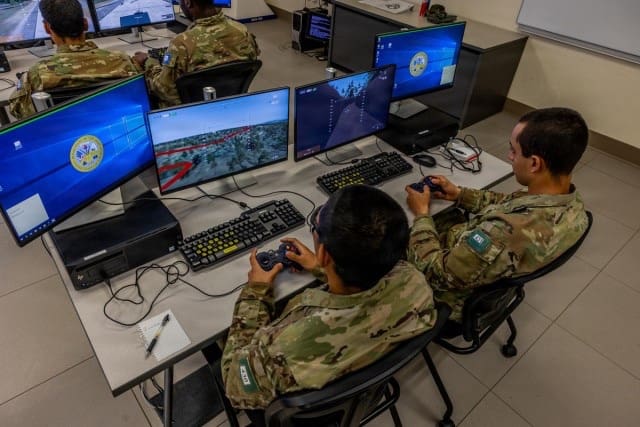
THE ARMY UNIVERSITY, FORT LEAVENWORTH, Kansas – In late July 2025, the Advanced Military Studies Program at the School of Advanced Military Studies, known as SAMS, launched its first-ever experimental, three-day, Practical Application of Artificial Intelligence module.

The mission was simple: transform the program with an innovative, hands-on AI learning experience for students and faculty. The purpose was to enable warfighter lethality through AI education and training.

“AI is changing the character of warfare. Our graduates have got to be ready to lead formations powered by AI—and that’s why we did something about it,” Col. Dwight Domengeaux, Director, SAMS said.

Dr. Bruce Stanley, Director, AMSP, envisioned a module that pushed institutional norms about how mid-career officers learn about AI and learn with AI.

“Did we accept risk? Yes. We did—to create a critical learning opportunity for our students,” Stanley remarked. “We knew what was at stake, and we trusted our faculty and students to make it work.”

And make it work they did.

According to AMSP faculty, the module’s experimental instructional design was key, consisting of ten-and-a-half hours of total classroom contact time divided over three lessons.

“We covered a lot of ground with our students in three days,” Dr. Jacob Mauslein, associate professor, AMSP, said. “Subjects ranged from AI theory and ethical considerations of AI, to applying AI tools, and leading AI-enabled organizations.”

A novel feature of the module was that it was developed by AMSP students. As a task in their Future Operational Environment course, six students from the Class of 2025, mentored by two faculty, developed the AI module that would be taught to the Class of 2026. The students’ final draft was adopted almost without change by the faculty.

“Incorporating students as full participants in the process allowed us to co-develop lesson objectives and materials that deeply mattered to them,” Dr. Luke Herrington, one of the faculty leads for the module shared.

Meeting students where they were in terms of their AI skills and then taking them to the next level was part of the academic approach for the AI module, Herrington explained.

Maj. Justin Webb, PhD, an AY 2025 AMSP student, and one of the module’s developers explained it this way: “SAMS is a warfighting school—so we chose learning activities that would help us become more lethal warfighters with AI. Using AI tools like CamoGPT, Ask Sage, and others for several hours over three days helped us get there.”

Some students in the AY 2026 class were initially skeptical of using AI.

“At first, I didn’t know what I didn’t know,” Army Maj. Stuart Allgood, an Armor officer SAMS student said. “But by the end of the first day my thinking about AI had changed. After the second day, I could use AI tools I had never even heard of.”

Maj. Callum Knight, an intelligence officer from the United Kingdom summed up his experience.

“Before this course I viewed AI as just a data point,” Knight said. “Now that I’ve experienced what’s possible with AI, I realize it’s an imperative that is going to impact everything I do going forward.”

So, what’s next for AI at SAMS?

“Based on what our students got out of this, we intend to add more AI learning moments across the program,” Stanley said. “The priority now is to integrate AI into our upcoming operational warfare practical exercise.”

AMSP is one of the three distinct academic programs within SAMS.

The other two SAMS programs are the Advanced Strategic Leadership Studies Program or ASLSP – a Senior Service College equivalent, and, the Advanced Strategic Planning and Policy Program or ASP3 also known as the Goodpaster Scholars—a post-graduate degree program.

Matthew Yandura is an AMSP assistant professor, and retired Army colonel.

By Matt Yandura, Assistant Professor, School of Advanced Military Studies