FirstSpear TV

Archive for the ‘Guest Post’ Category

XM204 Terrain-Shaping Munition Achieves Urgent Materiel Release

Thursday, January 15th, 2026

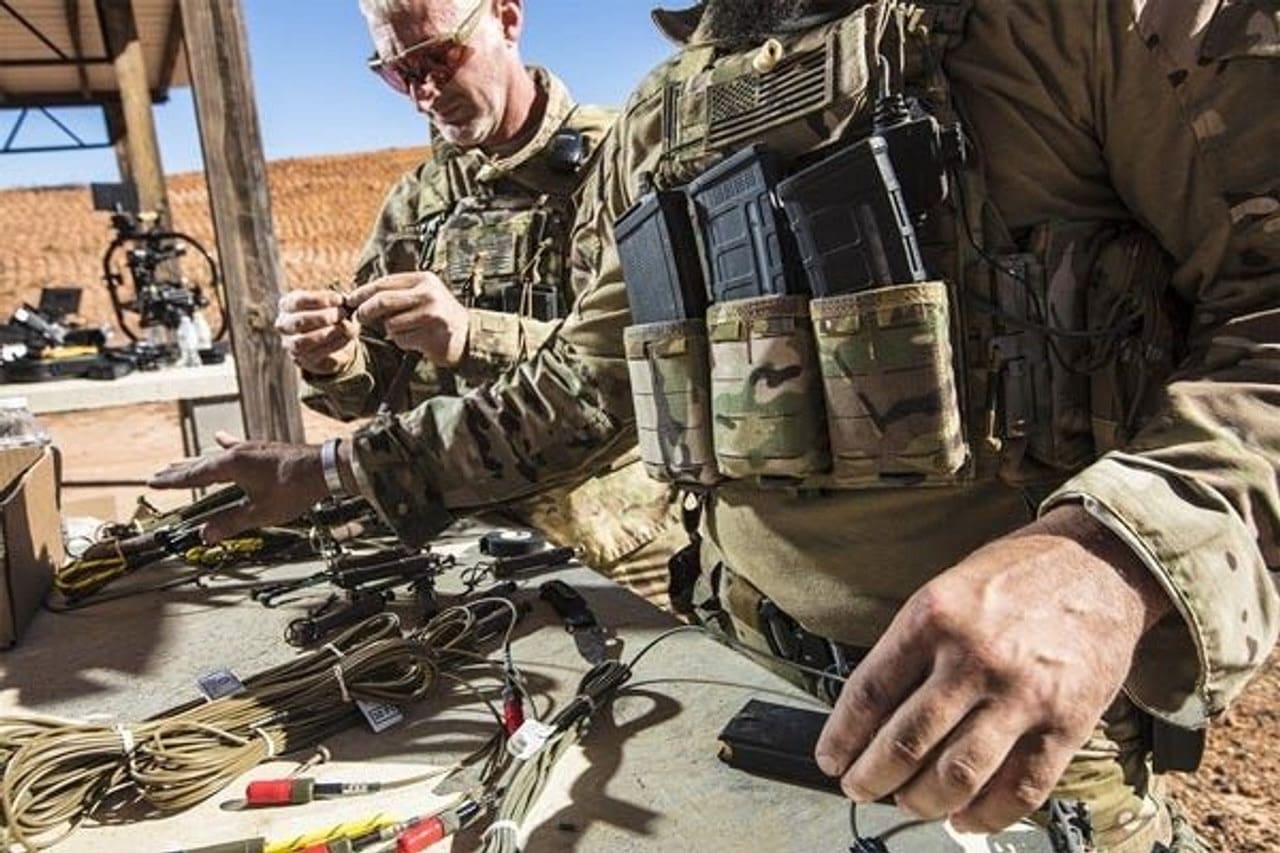
PICATINNY ARSENAL, NJ — The U.S. Army’s XM204 interim top-attack munition was approved for Urgent Materiel Release (UMR) and successfully conducted initial fielding in Europe on December 4, 2025. Managed by Project Manager Close Combat Systems (PM CCS) at Picatinny Arsenal, NJ in partnership with Textron Systems of Wilmington, MA, the XM204 completed Low-Rate Initial Production in September of 2025. The munition was then fielded to the 2nd Cavalry Regiment, based at Rose Barracks in Vilseck, Germany for training.

New Equipment Training and Doctrine, Training and Tactics were provided to 2nd Cavalry Regiment to review the performance, reliability, and integrated safety features of the XM204 and prepare for use Army-wide.

Eight Observer Coach/Trainers from the Joint Multinational Readiness Center also attended the train-the-trainer course so those personnel can continue to guide other Soldiers on the effective use of the weapon system. The training was held at Grafenwoehr Army Base and at the conclusion of training/fielding, PM CCS and JPEO Armaments & Ammunition (JPEO A&A) achieved Initial Operational Capability milestone.

The XM204 is an anti-vehicle munition with standoff and top attack capabilities designed to support terrain shaping operations by supporting a number of counter mobility tasks such as blocking, disrupting, fixing, and turning an enemy force.

“Seeing the XM204 perform so successfully reinforces the strength of our development teams and the speed at which they can design, build, test and field critical munitions that can degrade enemy mobility and create tactical advantages for friendly forces,” said Maj. Gen. John T. Reim, JPEO A&A and Commanding General of Picatinny Arsenal. This new system addresses evolving battlefield demands and the ongoing need to produce safe, reliable, and lethal munitions for our Warfighters and international partners.

The XM204 can be rapidly emplaced and is highly portable; the system can be employed alone, in multiples or in tandem with other terrain shaping systems. The lightweight munition features a dispenser launcher module that autonomously deploys multiple submunitions. Each submunition is equipped with onboard sensors to detect enemy vehicles and utilizes an explosively formed penetrator to defeat those threats. If not armed, the system is recoverable which allows Soldiers to reposition it as needed.

The XM204 also includes tamper-resistant features, armed/safe indicators, and self-destruct timers, aligning with U.S. landmine policy on anti-personnel landmines and reducing post-conflict risks to civilians.

In addition to the XM204, the XM98 Emplacement Trainer was approved by U.S. Army Tank-Automotive and Armaments Command in November. The XM98 training munition was also fielded to the 2nd Cavalry Regiment in Germany. The regiment is the longest continuously serving cavalry unit in the Army and plays a key role in North Atlantic Treaty Organization’s enhanced Forward Presence initiative.

By Michael Chambers

Catch Up with MATBOCK SHOT Show 2026

Wednesday, January 14th, 2026

Reach out to sales@matbock.com to book your meeting with the MATBOCK team. They will be releasing a new carrier and the next generation Tarsier Eclipse.

ARC Ghost:

This is a collaboration between Shaw Concepts and MATBOCK to bring innovative designs by Shaw Concepts utilizing MATBOCK Ghost. The ARC Ghost will also be on display at Show Concepts booth 60508 level one of the ballrooms.

Tarsier Eclipse Pro:

After nearly 14 years, the Tarsier Eclipse is getting a huge upgrade and the Tarsier Eclipse Pro was born. Early production prototypes are going out to units now with production of the Tarsier Eclipse Pro rolling out at the end of Q1 / early Q2 2026.

*Final designs may vary slightly as these are in the final stages of pre-production prototypes.*

Schedule your meeting today and stop by Shaw Concepts booth #60508 to see the latest from both companies

See you all at Shot Show 2026! Email: sales@matbock.com

www.matbock.com

US Army Enhances C-UAS Data Flow and Interoperability During Project Flytrap 4.5

Wednesday, January 14th, 2026

ABERDEEN PROVING GROUND, Md. — When Soldiers took to the field for Project Flytrap 4.5, they were not only testing emerging counter-unmanned aerial system technology but also tackling a challenge facing multinational operations: how to move sensor data quickly, reliably and securely across networks.

Project Flytrap is a recurring C-UAS experimentation series in Europe focused on assessing passive and active sensors, and defeat capabilities against group 1-3 UAS in a coalition environment. Conducted by V Corps alongside U.S. and partner nation forces, the exercise series is designed to identify capability gaps, test new technologies and refine tactics under realistic operational conditions.

As part of the exercise, Army teams worked alongside V Corps to evaluate how the integrated sensor architecture, or ISA, could help address data sharing and interoperability gaps revealed during earlier iterations of the exercise.

Developed by Capability Program Executive – Intelligence, Electronic Warfare and Sensors, ISA is a framework that connects sensors and networks across domains, services and coalition partners using standardized, open-architecture data formats. As demand for rapid, interoperable sensor data grows across Europe, ISA has emerged as a scalable, plug and play backbone for operations.

“The goal is a plug and play environment where partner nations can bring in their sensors and contribute to a common operating picture,” said Russell Nadler, a technical program integrator with CPE-IEW&S’ Integration Directorate. “ISA can be the enabler that helps pass sensor data seamlessly between allied and U.S. systems.”

Conducted over multiple iterations in recent months across locations in Germany and Poland, Project Flytrap supports the Eastern Flank Deterrence Line warfighting concept by bringing U.S. and partner-nation soldiers together to evaluate new technologies under realistic conditions. Previous iterations exposed limitations in existing networks, particularly when integrating multiple sensors and processing large volumes of data in real time.

“For us, Flytrap really highlighted the importance of having an architecture that could scale and adapt as systems were added,” said Maj. Oniel Rhooms, Project Flytrap network integration lead for V Corps. “By the time we got to 4.5, ISA had matured to a point where it could actually enable that integration instead of becoming another barrier.”


Built for Interoperability

By leveraging open data standards, ISA enables information from radar, optical, infrared and acoustic sensors — regardless of origin — to flow into a shared environment without custom re-coding or system-specific interfaces. This approach provides a more flexible and resilient way to integrate sensors across units and coalition partners.

“ISA wasn’t just part of the network, it was also part of how we validated vendors,” Rhooms said. “It helped us determine early on whether systems could actually connect and deliver what they claimed, which saved time and reduced risk once we went live.”

That flexibility extended beyond technology. Rhooms emphasized the importance of the ISA team’s on-site support, noting their ability to adapt quickly as conditions changed.

“The people mattered just as much as the technology,” he said. “They were able to pivot, solve problems on the spot, and make connections happen that otherwise wouldn’t have.”

Looking ahead

As adversary drone tactics continue to evolve, exercises like Flytrap remain essential for testing technologies under real-world stress. With Flytrap 4.5 demonstrating the value of a more integrated approach, V Corps and CPE-IEW&S will continue refining how ISA supports interoperable C-UAS and sensing operations across the European theater.

By Kay Edwards

JMRC Trains World-Class OC/Ts

Tuesday, January 13th, 2026

HOHENFELS TRAINING AREA, Germany – The Joint Multinational Readiness Center (JMRC) has been training its Observer, Controller/Trainers (OC/T) in new technologies to keep its world-class training ready for the future fight.

The OC/Ts from the nine “critter” teams are being trained in evolving tasks and technologies such as Maven, electronic warfare (EW), unmanned aircraft systems (UAS), and integrated tactical network (ITN).

“This OC/T recertification training is an opportunity for the OC/Ts to become proficient on some tasks that are constantly changing and new,” said Maj. Dustin Allen, deputy operations for JMRC. “It’s to meet higher headquarters’ intents of knowing new technologies so that we can better facilitate the rotational units as they come through ‘the Box’.”

One of the systems that the OC/Ts are training on is the Maven Smart System. The Maven Smart System is the Department of Defense’s most prominent artificial intelligence capability. Designed to process drone imagery and full-motion video, Maven integrates sensors with artificial intelligence and machine learning to enhance battlefield awareness and support operations such as targeting, logistics planning and predicting supply requirements for deployed Soldiers.

“Maven is something that is near and dear to (U.S. Army Europe and Africa’s) heart,” said Allen. “We are trying to incorporate it into our daily battle rhythms, so that the critter teams are well versed in it. We also want to be able to teach the rotational units that come through that aren’t familiar with the system and get them better with it.”

OC/Ts have also been working with UAS. UAS training develops Soldiers’ abilities to operate and employ aerial systems in support of reconnaissance, intelligence collection, and mission planning, helping to facilitate the combined arms fight on the ground.

“UAS is a big push, especially in past rotations where we have seen a massive increase in UAS capabilities on the battlefield,” said Allen. “OC/Ts are going to have their own UAS so that they can send a drone up and inject it there, and watch the rotational units’ UAS.”

Another system that has been seen on the battlefield that OC/Ts are being trained on is EW. EW enhances commanders’ abilities to detect, disrupt and protect against enemy electromagnetic capabilities, enabling freedom-of-action across the battlefield.

“Big in current warfare is the introduction of electronic warfare,” said Allen. “During this time, we are giving the OC/Ts the opportunity to see and become familiar with the vastly growing EW capabilities.”

The last system that the OC/Ts are being trained on is the ITN. ITN delivers secure, resilient and expeditionary communications that connect Soldiers, platforms and command posts across the battlefield. ITN is designed to operate in contested and degraded environments, and enable timely data sharing and mission command to support multi-domain operations.

“You can interconnect the radios that we use for our communications network across Hohenfels and JMRC, so we can communicate more clearly across the box,” said Allen.

“Our OC/Ts are already world-class,” said Allen. “This training can help make them even better and have more systems that they are proficient in. We’re really going to see all this hard work they are putting in, be used in the next Combine Resolve we host, and I’m excited to see them use all these new systems we have.”

Story by SGT Collin Mackall 

7th Army Training Command

Leader Transforms SMDC for the Future

Monday, January 12th, 2026

REDSTONE ARSENAL, Ala. – Lt. Gen. Sean A Gainey, commanding general of U.S. Army Space and Missile Defense Command, is focused on transforming USASMDC into a warfighting headquarters as he closes out his second year in command.

One factor driving that transformation is the addition of the 263rd and 32nd Army Air and Missile Defense Commands to USASMDC.

“We have gone through a significant change inside of the command, we now have two of the Army’s air and missile defense commands within SMDC,” Gainey said. “Defending the homeland has been a priority, and now the Army is putting additional resources into this command. We have a bright future as we transition into a warfighting headquarters.”

Gainey, who is dual-hatted and also serves as the commander of the Joint Functional Component Command for Integrated Missile Defense, expects changes within JFFC IMD, too. He said details are evolving on how team members will provide operational expertise to those organizations planning for homeland defense.

“JFFC IMD will transform to play a greater role in supporting air and missile defense protection of the homeland,” he said.

As USASMDC continues to evolve, Gainey said the integration of space, missile defense, and high-altitude capabilities to enable multi-domain operations will be crucial in addressing the complex challenges of the future battlefield.

“If you look at any conflict in a contested environment, the need to conduct over-the-horizon communication and provide command and control is critical,” he said.

The SMDC Technical Center’s and Space and Missile Defense Center of Excellence’s focus on pushing capability to warfighting formations quickly puts SMDC at the forefront of continuous transformation, Gainey said.

“We’ll continue to do the work we’re doing with U.S. Army Special Operations Command to validate high altitude platforms,” he said. “We’ll also continue to develop and refine our Tactical Integrated Ground Suite and some of our smaller form factor capabilities pushing those systems to the tactical edge of our warfighting formations.” When looking to deliver combat ready air and missile defense and space operations forces, Gainey, as the Army’s senior air defender and space operations proponent emphasized the importance of having trained and ready forces capable of global commitment.

“As you look at any conflict out there, space capabilities are a high priority,” he added. “In the current and future fight, the reliance on space is significant.”

Gainey’s focus on space operations included the development of the 40D space operations military occupational specialty which is expected to have its first enlisted members in October 2026.

“Now is the right time to have an Army space operations MOS and in the future a space branch inside the Army,” Gainey said. “The 40D MOS is going to give us more capacity to be able to leverage our space capabilities at the close tactical edge.”

Gainey said his role as the Army’s air and missile defense enterprise integrator takes on additional significance with the command’s expanded role as Army Service Component Command role to U.S. Northern Command for air and missile defense of the homeland.

While the Army is currently meeting AMD demand, Gainey said it’s coming at a cost to the AMD Soldiers. He said he’s focusing on finding ways to optimize the ability to globally provide trained and ready forces and ensure that AMD forces are adequately prepared to respond to emerging threats.

“The ability for the Army to be able to generate formations to support the COCOMs has driven our deploy-to-dwell rate to an all-time low,” he said. “We’re looking at other ways to provide forces to our combatant commands.” Spearheading this historic change to USASMDC is a team of professionals working together to meet the goals Gainey has set.

Gainey said it’s an exciting time to be part of the command.

“The efforts of our Soldiers and civilians strengthen the profession and embed the warrior ethos throughout SMDC,” he said, “We are starting to realize what this command was always intended to be, a warfighting headquarters that provides the Army and Joint Force with ready combat forces to deter aggression, defend the homeland against aerial threats, develop and deliver integrated space, missile defense and high-altitude capabilities, and dominate the land domain in conflict.”

Story by Jason Cutshaw 

US Army Space and Missile Defense Command

Nellis AFB to Gain Electronic Warfare Squadron

Sunday, January 11th, 2026

ARLINGTON, Va. (AFNS) —  

The Department of the Air Force has selected Nellis Air Force Base, Nevada, as the preferred and final location for the 562nd Electronic Warfare Squadron.

The 562nd EWS, assigned to the 350th Spectrum Warfare Wing, will be co-located with the United States Air Force Warfare Center to streamline electromagnetic spectrum operations.

The mission of the 350th SWW is to deliver adaptive and cutting-edge electronic spectrum capabilities that provide the warfighter a tactical and strategic competitive advantage and freedom to attack, maneuver, and defend.

The activation of the 562nd EWS will allow the USAFWC to deliver advanced, realistic training that incorporates electronic warfare concepts, tactics, and techniques, ensuring warfighters are better equipped to operate in contested electronic environments.

The environmental analysis was completed in summer 2025. The service plans for initial operational capability by summer 2026 and full operational capability by summer 2028.

Nevada will gain 59 active-duty authorizations.

Via Secretary of the Air Force Public Affairs

Breaking Barriers: Jeremy Chambers Becomes First NCO to Commission as Captain in Foreign Affairs

Saturday, January 10th, 2026

FORT SHAFTER, Hawaii – In a milestone moment for the United States Army and U.S. Army Pacific, U.S. Army Master Sgt. Jeremy Chambers, of the Security Cooperation Division at the U.S. Army Pacific (USARPAC), Fort Shafter, Hawaii, has shattered expectations and set a new precedent by becoming the first noncommissioned officer in Army history to commission directly as a U.S. Army Captain in the elite Foreign Area Officer (FAO) career field. His achievement marks a transformational step forward in Army talent management and showcases the extraordinary potential found within the enlisted corps.

Chambers’ historic transition did not arise overnight. For years, he has performed the duties and strategic coordination typically expected of a Foreign Area Officer—often at a level well above his rank. His proven track record is why multiple deputy commanding generals, beginning with Lt. Gen. Braga, now the commanding general of Joint Special Operations Command, have consistently advocated for his direct commission. Their support reflects a shared belief that Chambers had long been performing the duties of an FAO and deserved the formal authority and rank commensurate with his contributions.

“I can’t be thankful enough that the Army got it right when they chose to promote my husband,” said Sergeant Major Krystal Chambers, wife of Captain Jeremy Chambers. “I think he has accomplished something that not many will be able to do.”

The FAO program produces experts in regional studies, foreign languages, diplomacy, and international security cooperation. FAOs work alongside partner militaries, operate within U.S. embassies, and advise senior leaders at strategic levels. Entry into this field is highly selective and requires proven academic ability, operational experience, and strategic thinking.

“My hope with this entire direct commission was to help create a legacy and a pathway for other NCOs. Still, it’s more important now that we’ve created an opportunity for other NCOs, other enlisted Soldiers, to recognize that there’s another thing they can do,” Capt. Chambers said. “Your hard work can be recognized, and things can be done if you accomplish all of your tasks and do your job. The most significant impact, whether they have a specialized skill or not, is that they recognize your talents and abilities, and reward them in creative ways, as you see today.”

Throughout his distinguished enlisted career, Chambers excelled in key leadership roles, guided Soldiers through complex missions, and supported operations that required both tactical skill and strategic insight. These experiences positioned him uniquely for the FAO program’s rigorous demands.

As he begins his journey in the FAO program, Chambers will complete advanced academic studies, regional cultural training, and intensive language development. He will be prepared for future assignments, including embassy roles, multinational coordination, and high-level international engagement missions. At the ceremony, U.S. Army Gen. Ronald Clark, commanding general of the U.S. Army’s largest Service Component Command, U.S. Army Pacific, highlighted the years of strategic leadership and mentorship that contributed to this significant milestone.

“We all know that the promotion comes from the determination by senior leaders who individually possess the potential for increased responsibility,” Clark said. “I have to give credit to the number of senior leaders at this headquarters who have gone to other assignments or are in retirement, who have shaped this action, which took many years to develop. It started with Lieutenant General John Braga, who had the tremendous idea to commission Jeremy as an officer.”




Chambers’ commissioning represents not only a historic achievement for the unit but a powerful symbol of what dedication, excellence, and vision can accomplish within the Army’s ranks.

By SGT Qishaunia Hawkins

FirstSpear Friday Focus: Thin Blue Line T-Shirt

Friday, January 9th, 2026

National Law Enforcement Appreciation Day lands on Friday, January 9th, and the FirstSpear THIN BLUE LINE T-SHIRT is built to represent those who stand watch when it matters most. This is a no-nonsense way to show respect for the men and women in law enforcement who run toward the problem, hold the line, and keep pushing through the hard days.

Whether you’re training, on the range, off-duty, or just moving through the day, this shirt is designed for comfort and everyday wear without sacrificing the message behind it. The Thin Blue Line graphic says exactly what it needs to—support, unity, and unwavering respect for the badge and the mission.

Offered in both short-sleeve and long sleeve options, it’s ready for any season and any environment. Wear it under kit, layer it up, or run it solo—either way, it stays on mission. Law enforcement is a lifestyle, not a job you clock out of, and this shirt is for the people who understand that. 

It’s also a solid gift for your team, your family, or anyone who carries that responsibility every shift. On January 9th, don’t just say you support them—show it. Grab the FirstSpear Thin Blue Line T-Shirt and stand behind those who protect and serve.

To request an estimate click image above or visit First-Spear.com/Request-For-Estimate. FirstSpear is the premier source for cutting-edge tactical gear for military, law enforcement and those who train. For more information visit First-Spear.com.