SIG SAUER - Never Settle

Archive for the ‘Guest Post’ Category

Whiskey & War Stories – “Objective Rock Creek” – This Weekend in Va Beach

Thursday, March 12th, 2026

The Silent Warrior Foundation will be holding its 10th Annual Whiskey & War Stories™ Gala Saturday, March 14, 2026, from 5-10 pm in the Seaside Ballroom at the Marriot Virginia Beach Oceanfront Resort.

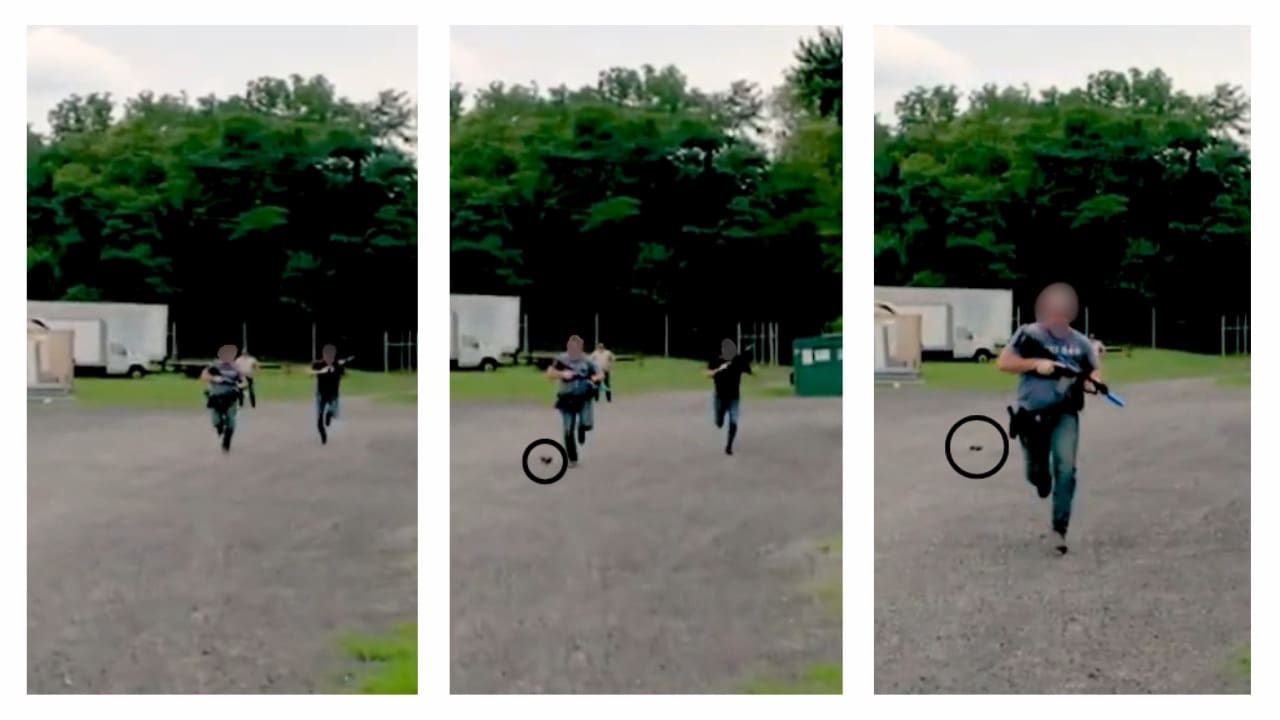
The event consists of a cocktail hour, dinner, auction and presentation of the hostage rescue mission “Objective Rock Creek”, the rescue of American Roy Hallums in Iraq in 2005. The details of Roy’s kidnapping, captivity and liberation were chronicled in his book “Buried Alive”. Roy Hallums and Dan O’Shea will be onstage to tell the story to our guests.

Several guests who have spoken at previous Whiskey & War Stories™ will be present, as well, so it will be a very special night.

There will also be a more casual event the night prior from 5-10 pm in the Executive Hospitality Suite on the 4th Floor of the hotel called “VIP Night”. An extensive taco bar, open bar, and whiskey tasting by Tarnished Truth Distillery are provided during this casual social event. This is a more relaxed opportunity to mix with our past and present speakers and attendees. Cigars on the patio, weather permitting.

This year’s auction items include the Christian Craighead painting, an extremely detailed clone of the M4’s used on the Rock Creek rescue, and a Cylinder & Slide JSOC 1911 clone to name a few. The auction website will populate this weekend.

Tickets and registration link: 10th Annual Whiskey & War Stories | Auction Frogs

2nd Cavalry Regiment Advances Army Transformation Through Innovation and Experimentation

Thursday, March 12th, 2026

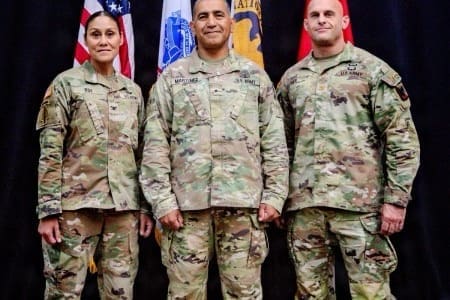
WASHINGTON — Leaders from the 2nd Cavalry Regiment (2CR) presented the story of America’s only permanently stationed Stryker brigade in Europe during an event at the Pentagon, Arlington, Va., on March 6, 2026. This event was part of the Army Current Operations Engagement Tour (ACOET), where 2CR leaders emphasized how the brigade is evolving to address modern threats along NATO’s Eastern Flank.

Throughout a series of meetings with senior Pentagon leaders, members of Congress and their staff, and national security reporters, the leaders from 2CR explained how the regiment is applying lessons learned from Ukraine. They discussed how they are leveraging industry partnerships and testing new capabilities to enhance deterrence and improve warfighting readiness in Europe.

Col. Donald R. Neal Jr., Regimental Commander, explained how 2CR’s transformation efforts were influenced by experiences training Ukrainian soldiers who were returning from and preparing for combat.

“Our unit begins by training Ukrainians in Europe who have recently come off the front lines, and we engage with them directly,” Col. Neal said. “During the training, we learned a lot about their use of what we refer to as the triad: Unmanned Aerial Systems (UAS), counter-UAS operations, electronic warfare, and the network that enables all of it.”

The interactions provided insight into integrating unmanned aerial systems, electronic warfare, and networks with maneuver on the battlefield. These lessons helped the regiment identify areas for adaptation within our formations.

“We realized that they had some really good foundational skills in employing these new systems, and their recent experience using them to enhance maneuver in combat operations was something that we could learn from,” Col. Neal said.

The regiment has applied lessons learned from experimentation efforts such as Project Flytrap. This initiative brings together soldiers, industry representatives, and Army acquisition professionals to test counter-unmanned aerial systems in real-world conditions. The program allows soldiers to assess new technology in operational scenarios and provide direct feedback to both vendors and acquisition officials.

“It takes the development of new capability out of the lab, and it really puts it in the field,” Col. Neal said. “You’re getting soldier feedback, the people who will actually use the equipment, giving feedback directly to vendors and the acquisition community.”

Project Flytrap has expanded as more organizations participate in the experimentation effort. Col. Neal mentioned that the next iteration will include approximately 60 pieces of equipment from multiple vendors.

“What I charged my staff with was to really try to recreate a day in the life on the battlefield in Ukraine,” Col. Neal said. “Increasing the number of UAS, the various types that are in the air that are either friend or foe, and stressing our network in ways we didn’t in previous Flytraps.”

The exercise also allows the Army to test how networks handle large volumes of sensor data and unmanned systems operating in contested environments.

In addition to aerial systems, the regiment is exploring the use of unmanned ground vehicles through the Army’s xTech innovation program, which connects soldiers with industry developers to test emerging technology and refine requirements.

Maj. Andrew Kang, the Regiment’s Fire Support Officer, said the program allows soldiers to help shape how unmanned systems could be used in future operations.

“They’re soliciting feedback from the soldiers who are testing the kit, so they are the ones selecting the tactical employment and capabilities that the Army needs to fire,” Maj. Kang said.

Initial experimentation has focused on practical uses such as casualty evacuation and logistics, where unmanned systems could reduce risk to soldiers operating in conflict areas.

Affordability will be a key factor in how the Army uses unmanned ground systems.

“In most uses for unmanned ground vehicles, we know we’re going to put them in a position where we’re not going to recover them, or they’ll be destroyed, because we want to make contact with the enemy first with the line of sensors and robots,” said Col. Neal.

He added that robotic systems could also support reconnaissance and sensing missions by deploying sensors, extending communications, or operating in areas where commanders may not want to send soldiers.

The regiment is also examining how unmanned systems, sensors, and networks support the Army’s broader mission in Europe. Leaders said these capabilities contribute to the Eastern Flank Deterrence Initiative, which focuses on strengthening deterrence while integrating new technologies into formations.

Maj. Kang stated that the concept emphasizes building a forward layer of sensors and robotic systems to improve awareness while reducing risk to soldiers.

“The core concept is how do we reduce forward posture with manned formations and build that sensor layer in the forward line of robotics,” Maj. Kang said.

In closing remarks, 2CR leaders noted that efforts such as Project Flytrap and ongoing experimentation will continue to inform how U.S. forces and NATO allies adapt their formations and capabilities for future operations in Europe.

Story by SGT Tien-Dat Ngo 

Defense Media Activity – Army Productions

Army Approves M111, First New Lethal Hand Grenade Since 1968

Wednesday, March 11th, 2026

PICATINNY ARSENAL, N.J. — The U.S. Army has cleared the M111 Offensive Hand Grenade for full material release. Developed by the Capabilities Program Executive Ammunition and Energetics, CPE A&E, in conjunction with the U.S. Army Combat Capabilities Development Command Armaments Center at Picatinny Arsenal, the M111 OHG will replace the obsolete body and fuze of the Mk3A2 hand grenade series, marking the first new lethal hand grenade to achieve full material release since 1968 when the Mk3A2 entered service. The Mk3A2 is restricted for use due to its asbestos body, unlike the M111 which utilizes a plastic body that is fully consumed during detonation.

The M111 will provide increased training and operational readiness while providing the Soldier with a safer option. It also offers Soldiers the ability to fight more effectively in closed quarter urban environments by leveraging blast overpressure, BOP, instead of fragmentation to deliver lethality. When used in grenades, BOP delivers devastating effects to enemy personnel and equipment without fragmentation and is a potent tactical advantage in the field. The M67 fragmentation hand grenade projects lethal and incapacitating fragments that can be deflected when employed in enclosed, restricted terrain like buildings, rooms and structures, whereas the M111 OHG projects high BOP effects that are less affected by obstacles in enclosed and restricted terrain.

“One of the key lessons learned from the door-to-door urban fighting in Iraq was the M67 grenade wasn’t always the right tool for the job. The risk of fratricide on the other side of the wall was too high,” explained Col. Vince Morris, Project Manager Close Combat Systems, CPE A&E. “But a grenade utilizing BOP can clear a room of enemy combatants quickly leaving nowhere to hide while ensuring the safety of friendly forces.”

In open terrain, the Soldier will employ the M67 to maximize lethal fragment effects, whereas in enclosed and restricted terrain, Soldiers will employ the M111 to maximize BOP effects on the enemy.

“We’ve given our Soldiers and joint warfighters the flexibility to determine in the field which type of grenade will best suit the current situation they are facing, be it open space or confined area,” explained Tiffany Cheng, one of the DEVCOM Armaments Center engineers that developed the M111 at Picatinny Arsenal.

Another major benefit of the new M111 design is standardization. The new grenade and its training version, the M112, leverage the same five-step arming process as the M67 and its training version, the M69, allowing Soldiers to train as they fight, improving combat performance and effectiveness. In addition, the M111 and M112 use the same fuzes as the M67 and M69 respectively, thereby enabling Army acquisition professionals to save costs by leveraging economies of scale made possible by common fuze production lines when sourcing both grenades. Both grenades also have government-owned intellectual property that enables the Army to effectively compete production contracts across the industrial base, enhancing production opportunities for multiple vendors while providing best value to our customers, the Soldiers and the taxpayer.

“By standardizing the arming process and the fuzing, the Army saves taxpayer money without sacrificing lethality on the battlefield,” said Morris. “This is the kind of acquisition reform that is currently underway throughout the Army acquisition enterprise. We are taking advantage of that initiative to drive down costs while increasing combat effectiveness.”

By Michael Chambers

From IEDs to Drones – What the Dismounted Soldier Needs to Weather the Storm

Wednesday, March 11th, 2026

STORM 2 – C-UAS system for the dismounted soldier

At the turn of the century, remotely controlled IEDs littered routes and roadsides throughout Iraq and Afghanistan. These asymmetric and indiscriminate weapons exacted a devastating cost in human lives and, despite only costing hundreds of dollars to make, were capable of destroying military equipment worth millions.

The response to this threat was swift and decisive. The Joint IED Defeat Organization – stood up by US DOD in 2006 – had a singular mission: to defeat IEDs “as weapons of strategic influence.” Its approach spanned route clearance, persistent surveillance, forensic analysis of recovered devices to disrupt bomb-making networks, and the rapid procurement of blast-resistant MRAP vehicles.

Dismounted force protection methods and electronic countermeasures improved too, with manpack jammers creating protective RF bubbles around soldiers. These worked – but not without draining power, constraining movement and adding weight to already overburdened troops.

A new strategic reality needs a new standard for countermeasures

This tension between protection and performance defined the next phase of counter-IED systems. The requirement was no longer simply to jam more powerfully, but to protect more intelligently. Countermeasures had to become lighter, more efficient and more selective, reducing burden without impairing performance.

That requirement has only intensified. Twenty years on and today’s battlespace – denser, faster and more connected – demands something smarter and more discriminating in return.

“Dismounted soldiers increasingly face drone threats that are pervasive and persistent,” says Timothy Coley, Product Manager at Thales. “Whether it be a first-person view one-way attack drone or a munition-dropping drone, these threats keep heads on a perpetual swivel. The challenge is no longer just to shield a patrol from a single trigger – instead, countermeasures must be as agile and adaptive as the soldiers they protect.”

This new reality isn’t news to industry or militaries. Projects like Vanaheim, a British Army experimentation activity to understand the capability of relevant, reliable C-UAS solutions, come in response to the growing realisation of the threat and in anticipation of ever-shrinking countermeasure cycles.

The question now facing industry is whether the traditional rhythms of defence development – and the products they produce – can keep pace with a battlespace that waits for no one.

“When any hard-won advantage can be countered in a matter of weeks on the frontlines of Ukraine, the challenge for industry is to move faster – which includes adapting existing technology to address the very latest threats,” Timothy continues.

“We kept this tenet front-of-mind when we set out to rapidly develop STORM 2. Initially conceived as a counter-IED solution for dismounted soldiers, it has evolved to offer counter-UAS capability, allowing individual operators to disrupt RF?controlled drones. With a tenacious team of engineers, and a clarity of the operational need, we transformed the tech in a matter of weeks.”

Three key axes of countermeasure capability

When it comes to countering fast-moving aerial threats, Individual Electronic Countermeasures (IECM) – like STORM 2 – introduce a distributed protective layer that addresses the limitations of traditional ECM capabilities (weight; conspicuity; manoeuvrability).

Such countermeasures are soldier-centric and, as such, typically defined by three key axes of capability to keep individual operators protected: reactive jamming, frequency range, and power output.

“Reactive jamming doesn’t have the same power consumption and signature as an active jammer that’s sending out RF signals constantly,” says Timothy. “It’ll spring to life only when it needs to, saving battery life while keeping soldiers inconspicuous until the critical moment when the threat manifests.”

The wider the frequency range a device can operate across, the harder it is for an adversary to hop out of reach – while the higher the power output, the greater the chance of overpowering and jamming their signal entirely. However, a higher power output drains the battery quicker and makes the jamming signal more likely to be detected. As such, a fine balance is required to ensure an optimal solution.

Each axis is powerful on its own, but any capability that combines all three must balance Size, Weight and Power (SWaP) requirements to give dismounted soldiers an advantage while saving space for bullets, water and other mission-critical equipment.

Operational advantage depends on technological advancement

Where today STORM 2 offers reactive jamming across a wide frequency range, its architecture means it can be updated to deliver new functionality, from spectrum analysis and tactical electronic sensing through to signal characterisation.

“You’ll be able to ask and answer questions like: Have I detected a drone video transmitter or a combat net radio? What type of combat net radio might that be? Am I able to determine whether it’s running a frequency hopping cycle?

“You can start to peel back layers of detail about the kind of things that it might be detecting. Such insights can be critical, with every scrap of RF data able to provide a battlefield advantage.”

Capability must move at the speed of the fight

Relevant globally, the UK MOD has defined the problem in its most recent SDR.

“Drones now kill more people than traditional artillery in the war in Ukraine, and whoever gets new technology into the hands of their Armed Forces the quickest will win.”

“Behind all of the strategies and against an ever-evolving backdrop of threats is an unerring need: dismounted soldiers need capability (and capability development) that moves at the pace of relevance,” Timothy says.

“On a technical level, we reconfigured STORM 2 to offer C-UAS alongside C-IED such that it could respond to this new strategic reality. But we’re not done delivering. Technologically, it’ll need to evolve again and again if it’s to continue being useful to those who depend on it – and technology like it – for their survival.”

“After all, protection is no longer just about surviving the fight,” Timothy adds “It’s about understanding it, shaping it and thriving within it.”

STORM 2

Thales will be exhibiting STORM 2 at Future Soldier 2026. Visit us to learn more about our dismounted soldier capabilities.

Beneath Norway’s Mountains

Wednesday, March 11th, 2026

NORWAY

The ability to rapidly mobilize forces has shaped the outcomes of conflicts since the very beginning. During the opening stages of World War I, Germany’s war plans assumed that Russia would require months to mobilize its military. Instead, Russia mobilized faster than expected, forcing Germany to divert troops, weakening its advance against France and ultimately resulting in them fighting a war on multiple fronts.

More than a century later, that lesson remains relevant. In today’s security environment, the difference between days and weeks can determine whether forces deter conflict or respond to crisis.

Hidden within Norway’s mountains lie one of the United States’ most enduring yet least-known military partnerships; one that cuts more than a month from deployment timelines while also saving millions of dollars in transportation costs. For nearly four decades the Marine Corps has maintained prepositioned equipment in climate-controlled facilities across Norway. This equipment, part of the Marine Corps Prepositioning Program-Norway (MCPP-N), ensures U.S. forces can mobilize quickly, fall-in on gear, and begin operating immediately in the High North.

“The Marine Corps Prepositioning Program–Norway has been a solid bilateral cooperation between the United States and Norway for decades. Joint management of this program takes part from the sub-tactical level all the way up to Pentagon level. It’s a collaborative effort to ensure the best possible support to the warfighters.” Norway Lt. Col. Morten Aae, commanding officer of the Marine Expeditionary Brigade section of the Norwegian Defense Logistics Organization (NDLO/MEB)

Originally established to support the defense of Norway, the MCPP-N has evolved into a strategically significant capability that supports NATO’s collective defense and U.S. European Command’s operational objectives for joint interoperability and rapid deployment. Norwegian and U.S. personnel jointly manage the prepositioned equipment, ensuring it meets NATO standards and can be seamlessly integrated during multinational operations and exercises in the Arctic such as the upcoming exercise Cold Response 26.

A key component of NATO’s enhanced vigilance activity Arctic Sentry, exercise Cold Response 26 is a routine Norwegian-led winter military exercise in Northern Norway. U.S. forces are participating as part of U.S. government efforts to support Norwegian and NATO total defense concepts. The exercise is a significant milestone to demonstrate the readiness of a U.S.-based Marine Air Ground Task Force to swiftly composite and rapidly deploy across the Atlantic, be received by Norwegian forces, and conduct operations that enable larger NATO operations. Cold Response will bring together over 25,000 personnel from 12 nations, including Canada, Denmark, Finland, France, Germany, Italy, Netherlands, Spain, Sweden, United Kingdom, the United States, and NATO to enhance interoperability and prepare for future challenges in the Arctic.

In preparation for exercise Cold Response 26, U.S. Marines with Combat Logistics Regiment 27 and Combat Logistics Battalion 6, both part of 2nd Marine Logistics Group, are using the MCPP-N to draw vehicles, cold-weather gear and mission-essential equipment, allowing them to support U.S. forces’ transition from their arrival to the start of operations seamlessly.

Blount Island Command, the logistics hub for managing the lifecycle and maintenance of prepositioned equipment, worked with CLR-27 and CLB-6 to successfully issue over 14,000 items of equipment and supplies from within the MCPP-N.

“The MCPP-N directly supports our ability to deploy and fight in the Arctic,” said Buddy Cote, officer in charge of the technical assistance and advisory team. “By maintaining equipment forward, we reduce reaction time and ensure Marines can integrate quickly with NATO Allies and partners when it matters most.”

The MCPP-N builds the foundation for NATO Allies and partners to move fast and move together. Every vehicle maintained, every piece of cold-weather gear inspected, and every supply pallet accounted for represents joint readiness built in advance of crisis. When Marines arrive in Norway, they are not starting from scratch, they are stepping into a system designed over decades to ensure rapid response and integration. This capability is the conclusive factor in enabling successful joint training between U.S. and Norwegian forces in the Arctic.

“We have successfully equipped the U.S. Marine Corps component participating in exercise Cold Response 26 in a joint operation,” said Aae, emphasizing the close coordination between Norwegians and their U.S. counterparts in accountability and readiness. “We are now planning for an equally successful joint regeneration following the exercise.”

As exercise Cold Response 26 continues, Marines and Sailors operating in Norway are not only training for Arctic conditions, but validating the MCPP-N, a system built and refined over decades.

By 1st Lt. Jorin Hollenbeak | 2nd Marine Logistics Group

Dragon’s Lair Pitch Goes from Idea to Production

Tuesday, March 10th, 2026

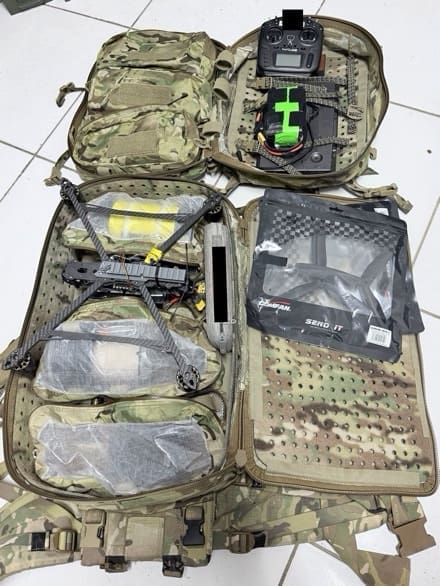
FORT BRAGG, N.C. — A modular drone case conceived by two 82nd Airborne paratroopers is heading into production eight months after being a runner-up at the XVIII Airborne Corps’ Dragon’s Lair competition on June 25, 2025.

This rapid turnaround from idea to production demonstrates the success of Secretary of the Army Daniel Driscoll’s Transformation Initiative, which simultaneously increase warfighter lethality and accelerates the Army’s acquisition process.

Spc. Alexander Soto, a paratrooper assigned to the 1st Battalion, 508th Parachute Infantry Regiment, noted the reoccurring problem of drones being broken during airborne drops and rigorous field exercises.

“We needed to be able to carry drones in our rucksacks for airborne operations,” said Soto. “The idea of a smaller rigid case that allowed us to pack it also made it possible to get them in the air as soon as we hit the drop zone.”

His solution was born out of necessity and pitched at Dragon’s Lair 11, an annual competition modeled after the TV show Shark Tank. Soldiers from across the corps presented their battlefield solutions to real-world challenges to a panel of judges for potential adoption.

Following the competition, Soto collaborated with Staff Sgt. Larry Dockins from the Airborne Innovation Lab. Together they developed a functional prototype in just three months. The result was a lightweight, rigid, and jumpable modular drone case compatible with multiple small unmanned aerial systems.

The accelerated path from concept to contract was made possible by another of the Corps’ innovation initiatives: the Lt. Gen. James M. Gavin Joint Innovation Outpost. The drone case project served as a successful pilot for the outpost’s new rapid-procurement model — testing the team’s ability to align the necessary resources for production.

The JIOP officially opened its doors in January 2026. Its primary mission is to bridge the gap between military needs and industry partners, fast-tracking the procurement process.

“By implementing the systems that the Lt. Gen. James M. Gavin Joint Innovation Outpost enables, we are able to bring these Soldiers’ ideas forward and implement them rapidly,” explained Col. Thomas R. Monaghan Jr., the JIOP’s director. “It also demonstrates the shift in prioritizing innovations that Soldiers want and view as viable solutions to problems.”

The significance of such Soldier-led innovation was not lost on leadership.

“Any solution that makes a warfighter more lethal is a winning solution for us,” Dockins said. “Ultimately, ounces make pounds, seconds make minutes. Creating a device that cuts weight could mean winning or losing on the battlefield.”

By SGT Prim Hibbard

Green Berets Hone Drone Proficiency with Advanced Training

Tuesday, March 10th, 2026

FORT CARSON, Colo. — High winds tear across the tactical range — tumbleweeds pass and debris swirls but a tactical drone maneuvers steadily through the sky, locked on course and unmoved by the elements. This moment reflects the culmination of three demanding weeks of training.

Green Berets from the 10th Special Forces Group (Airborne) completed an intensive training program from Feb. 9 to 27, conducting exercises both in the classroom and across multiple tactical ranges on Fort Carson. The Advanced Drone Course taken by the Soldiers is designed to expand operational capabilities and enhance small unmanned aerial system employment across the modern battlefield.

The course, led by instructors from 4th Battalion, 10th Special Forces Group (Airborne), brought together Green Berets, alongside a Soldier from the 4th Infantry Division. Throughout the training, students developed hands-on proficiency in soldering, assembling, programming and piloting small UAS platforms.

The course emphasized technical mastery and tactical integration, reinforcing that drones are not a substitute for core Soldier skills but an additional asset that increases precision, adaptability, and lethality during reconnaissance and combat operations.

“This is simply another tool in a Soldier’s kit but its impact depends on how well we understand and employ it,” said Sgt. 1st Class Jovani Vasquez of the 4th Combat Aviation Brigade. “Our adversaries recognize that too. This technology is increasing worldwide, and enemy forces and terrorist organizations are actively using it. We must remain just as adaptive and informed to maintain the advantage.”

As the rhythm of warfare continues to evolve, UAS platforms have become increasingly central to operations. Over the past two decades, the battlefield has expanded beyond traditional ground maneuvering, requiring Soldiers to adapt to threats and opportunities in the air domain. The Advanced Drone Course reflects the Army’s commitment to ensuring units remain agile and prepared to meet emerging challenges.

Upon completion of the course, graduates are capable of independently maintaining and repairing their systems in austere environments. Soldiers are trained to troubleshoot malfunctions, replace components, and conduct basic modifications to sustain mission effectiveness.

“If the motor goes out, they now have the ability to re-solder a new motor, fix it, and continue the mission,” said a UAS instructor from 4th Battalion, 10th Special Forces Group (Airborne). “If your M4 jams, you don’t stop — you find a solution. The same mindset applies to drones. Soldiers need to perform basic repairs and keep the mission moving.”

By investing in advanced drone training, the 10th Special Forces Group (Airborne) reinforces its ability to adapt to the evolving character of warfare. The course equips Soldiers with the technical skills and problem-solving mindset needed to build, repair, and employ small unmanned aerial systems in any environment. As technology reshapes the battlefield, initiatives like this ensure Green Berets remain agile, self-sufficient, and ready to maintain the advantage.

By SGT Zachary Myers

BFG Monday: Why Signature Management Matters More Than Ever

Monday, March 9th, 2026

There’s a reason why soldiers in the early days of the Global War on Terror were spray-painting the stems of their safety glasses. It wasn’t about aesthetics or unit cohesion; it was about survival. A glint of light reflecting off glass or the distinctive silhouette of night vision devices could be the details that turn a concealed position into a target.

That reality hasn’t changed. If anything, it’s intensified. As optics improve and adversaries become more sophisticated, the margin for error shrinks. The things that make you visible don’t just compromise your position, they compromise your mission.

Blue Force Gear took all of this into consideration when designing the BNVD Slipcover. The Slipcover addresses a reality that many operators face: your night vision is an incredible tool, but those reflective lenses can also make you detectable during missions. The Slipcover simply slides over your NODs providing minimal protection and when worn during the day, doubles as a face-shade and most importantly, a key signature reducer.

Blue Force Gear is known for creating “elegant” designs that are simple for a reason. In an industry that often defaults to “more” – more attachment points, more pockets, more features – there’s something quite radical about equipment that succeeds by staying out of your way. The Slipcover adds virtually no weight and is incredibly easy to stow. The Slipcover was designed to work with the BNVD Pouch, and together they address the full lifecycle of your NODs.

Between movements, in staging areas, during transport—those are the moments when NODs need to be protected against damage that compound over time. The BNVD Pouch was designed around that reality. It keeps your devices shielded from the elements, impact, and scratches whether it’s mounted to your kit, stowed in your pack, or sitting on a shelf. That kind of reliable, ready availability means when the moment comes that you need your NODs, they perform.


The Pouch mounts to any MOLLE-compatible platform using BFG’s Helium Whisper attachment system, which means it integrates with your current MOLLE gear using the lightest, most durable attachment system available. The Fastex Buckle closure keeps everything secure and the padded, structured pouch keeps the NODs protected.

What makes the Slipcover and Pouch work as a system is the same principle that defines everything Blue Force Gear builds: every design decision serves the end user, not the other way around. The Slipcover is a great signature reducer while NODs are being worn, and the Pouch protects them when they’re not. Neither one gets in your way, adds meaningful weight, or asks you to compromise somewhere else to accommodate them.

The soldiers who spray-painted their safety glasses understood something fundamental: in tactical operations, what you don’t show can be as important as what you bring. Blue Force Gear built that operational insight into equipment designed for the reality of modern combat—not as an add-on, but as a foundational principle.

Because the best gear doesn’t just protect your equipment. It protects you.