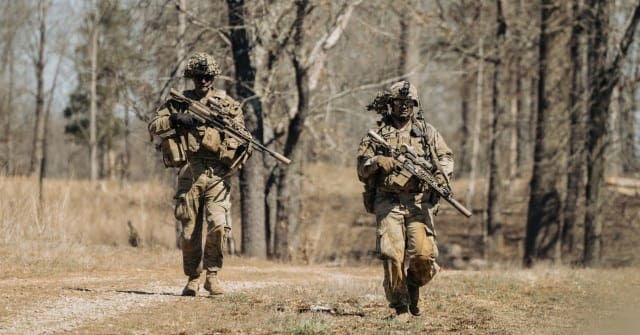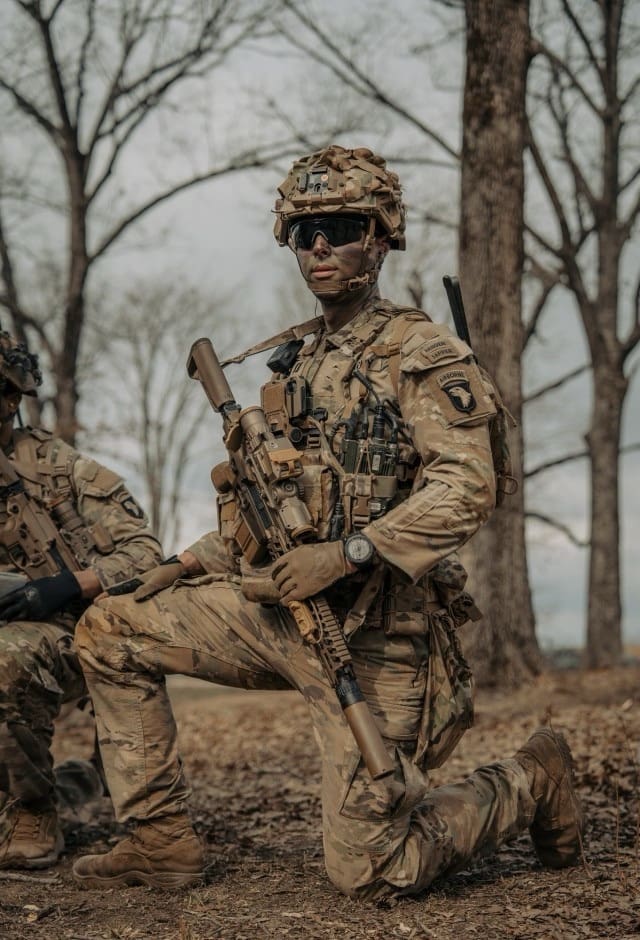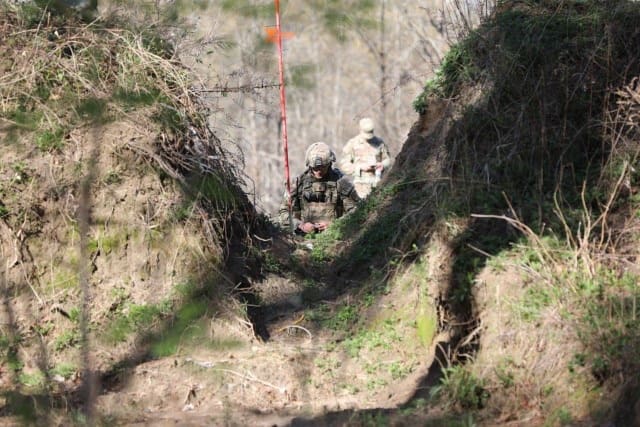
FORT WALKER, Va. — U.S. Army Explosive Ordnance Disposal techs from the Fort Wainwright, Alaska-based 65th Ordnance Company (EOD) “Far North EOD” took top honors in the all-Army EOD Team of the Year competition on Fort Walker, Virginia, April 7-11, 2025.
Staff Sgt. Seth Harper, Sgt. Brandon Grimes and Pfc. Landon Lowrance from the 65th EOD Company, 8th Theater Sustainment Command, U.S. Army Pacific, came in first place during the all-Army EOD competition.
Staff Sgt. Isaac Klein, Sgt. Michael Trevino and Sgt. Michael Lavely from the Fort Stewart, Georgia-based 38th EOD Company, 184th EOD Battalion, 52nd EOD Group, took second place.
Staff Sgt. Kyle McLaughlin, Sgt. Justin Hansen and Sgt. Camden Resinger from the Joint Base Lewis-McChord, Washington-based 707th EOD Company, 3rd EOD Battalion, 71st EOD Group, came in third place.
The other top EOD teams in the all-Army competition were Staff Sgt. Ronald Helsel, Pfc. Caelan Stanley and 1st Lt. Joseph Hunter from the Baumholder, Germany-based 720th Ordnance Company (EOD) and 702nd Ordnance Company (EOD) in U.S. Army Europe and Africa.
The Massachusetts National Guard was represented by Staff Sgt. Christopher Liberty, Staff Sgt. Raphael Riordan and Sgt. Gerald Harris from the 387th EOD Company, 48th EOD Group.
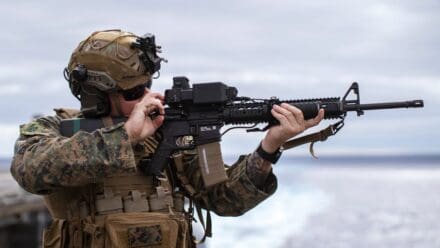
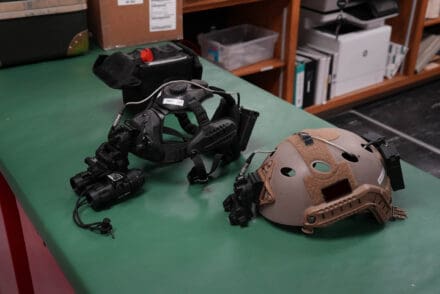
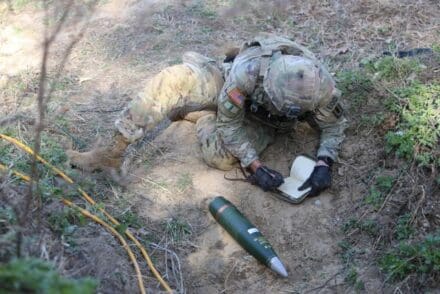
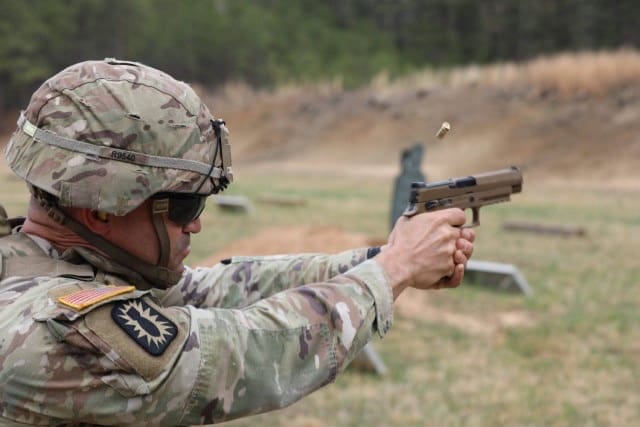
During the five-day competition, the five Army EOD teams took on challenging training lanes that were built from real-world EOD missions in large-scale combat operations that included joint forcible entry, expanding the lodgment and night operations.
The teams were tested on their ability to both enable lethality and safeguard U.S. forces on battlefields around the world and to support domestic response missions across the nation.
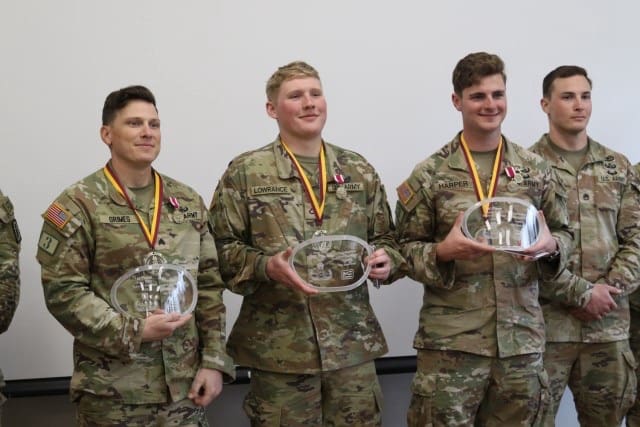
Coming from the much colder climes of the 49th state, Lowrance said the 65th EOD Company team had to overcome many obstacles to prevail in the competition.
“The biggest challenge of this competition was falling in on equipment that was not our own in an environment that we were unfamiliar with,” said Lowrance, who is originally from Valliant, Oklahoma. “It required adaption and overcoming the gaps that we faced with equipment that we may or may not have and try to do our job as best as possible utilizing the tools and equipment we had.”
Grimes said his team fully leveraged the expertise of the 65th EOD Company’s more seasoned EOD techs to hone their lifesaving and mission-enabling skills prior to the competition.
“We prepared for this competition through a structured training program facilitated by the NCOs in our company who have a vast array of experience to include 1st Sgt. Forrest Hull and Sgt. 1st Class Matthew Carr who brought a multitude of real world and training experiences to enhance our ability,” said Grimes, a former Army Combat Engineer and Iraq War veteran from Hemet, California.
“The training received at the U.S. Army Pacific Team of the Year allowed us to enhance our training and skills and prepare for the all-Army Team of the Year competition,” said Grimes.
From Fort Wainwright and Fort Greely, Alaska, the 65th EOD Company supports the 11th Airborne Division and other organizations requiring EOD support while using the 870,000 acres of training land available in Alaska.
The 65th EOD Company also supports civilian and federal law enforcement across the northern half of Alaska.
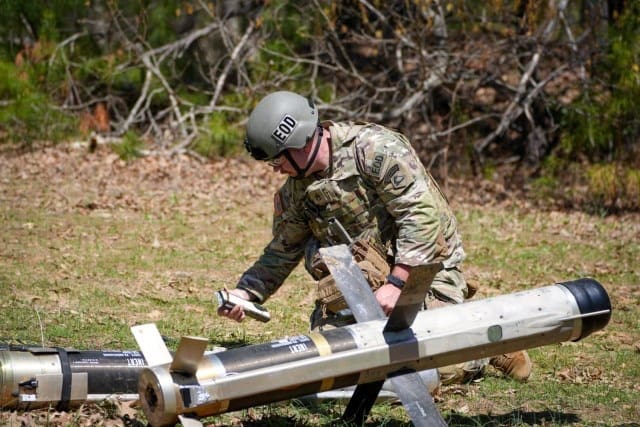
Harper, the EOD team leader, said the lessons learned from the all-Army competition will make the 65th EOD Company even stronger.
“We will use what we learned here at this Team of the Year to bring a wide variety of problem sets to our home station and utilize the scenarios we’ve done here to bring experience to the other EOD techs in our unit. This will ensure our unit can prepare and train for a large-scale combat operations environment, said Harper, a native of Wildomar, California.
A former infantry Soldier who deployed to Cameroon in Africa, Harper was inspired to serve as an Explosive Ordnance Disposal technician by his brother who served as an EOD tech.
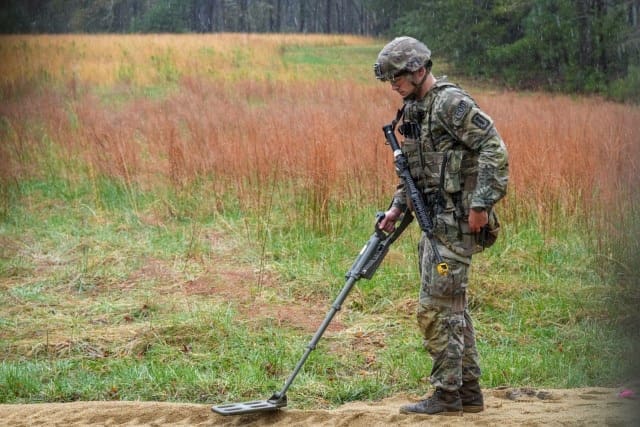
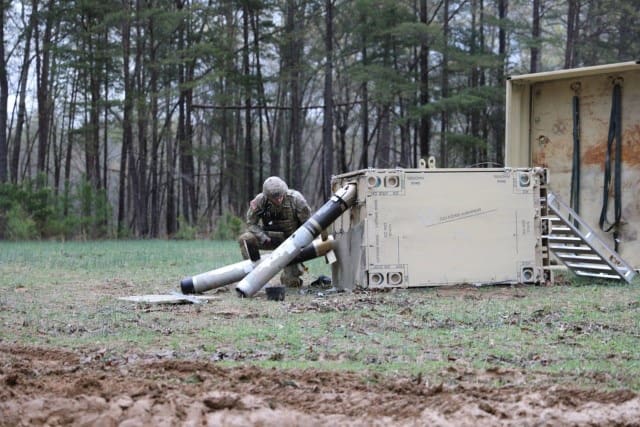
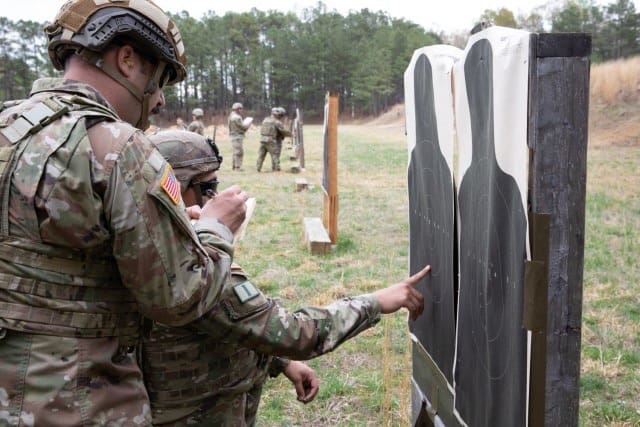
The all-Army EOD Team of the Year competition was hosted by the 52nd EOD Group and 20th Chemical, Biological, Radiological, Nuclear, Explosives (CBRNE) Command. The 52nd EOD Group and 71st EOD Group are part of the 20th CBRNE Command, the U.S. military’s premier multifunctional and deployable CBRNE formation.
Headquartered on Aberdeen Proving Ground, Maryland, in Northeast Maryland’s science, technology and security corridor, the 20th CBRNE Command is home to 75 percent of the active-duty U.S. Army EOD techs and Chemical, Biological, Radiological, Nuclear (CBRN) specialists, as well as the 1st Area Medical Laboratory, CBRNE Analytical and Remediation Activity, Weapons of Mass Destruction Coordination Teams and Nuclear Disablement Teams.
Soldiers and Army civilians from the 20th CBRNE Command deploy from 19 bases in 16 states to confront and defeat the world’s most dangerous hazards in support of joint, interagency and multinational operations.
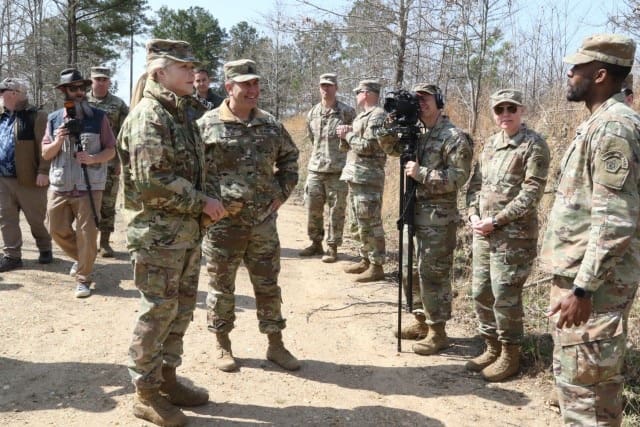
Brig. Gen. W Bochat, the commanding general of the 20th CBRNE Command, and Command Sgt. Maj. Dave Silva, the senior enlisted leader of the 20th CBRNE Command, attended the award ceremony.
Lt. Gen. Heidi J. Hoyle, the U.S. Army deputy chief of staff (G4) and the senior EOD officer in the U.S. Army, spoke at the awards ceremony.
Hoyle previously commanded the 71st EOD Group, and she served as the 41st U.S. Army Chief of Ordnance and commandant for the Army Ordnance School. She also previously served as the executive officer of the 242nd EOD Battalion in support of Joint Task Force Paladin. The combined task force had the critical mission of locating and defeating improvised explosive devices in Afghanistan.
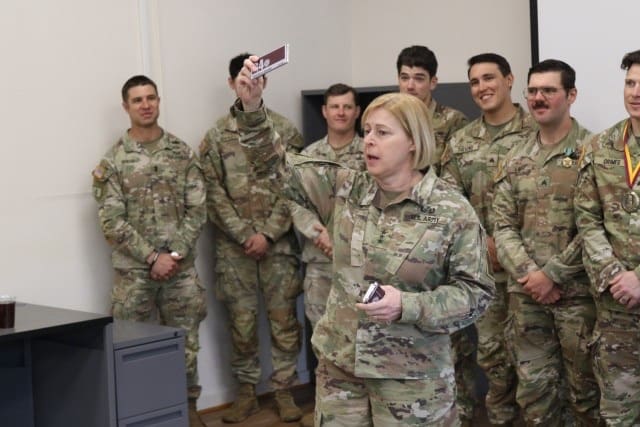
Command Sgt. Maj. Dave Silva, the senior enlisted leader for 20th CBRNE Command and the senior U.S. Army EOD technician, said the competition strengthened the entire EOD profession.
“The 2025 all-Army EOD Team of the Year Competition was more than just a battle of skill. It was a proving ground for the indomitable spirit of the U.S. Army’s Explosive Ordnance Disposal warriors. In the face of adversity, these Soldiers displayed unmatched intelligence under pressure, relentless determination and the teamwork that defines our force,” said Silva.
A native of Long Beach, California, Silva has deployed seven times and served in Iraq and Afghanistan. He has served on protection missions for presidents and the Pope. He has also been to all 50 states and five of the seven continents.
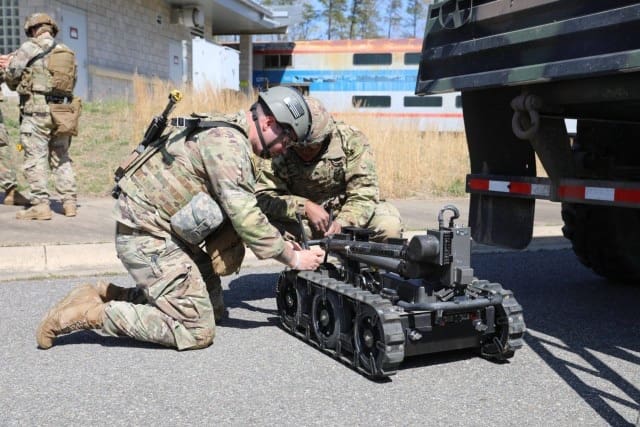
Silva said the all-Army EOD Team of the Year competition showcased the strength, ingenuity and adaptability of the U.S. Army EOD techs who confront and defeat explosive threats.
“Every competitor in this year’s event showed what it means to be an EOD Soldier: the ability to rise, adapt and lead under pressure,” said Silva. “The winning team has earned their place at the top, but every Soldier who stepped into this competition has proven their worth, reinforcing that our Army is built on a foundation of excellence.”
As the U.S. Army’s explosives experts, EOD Soldiers take on dangerous and complex explosive devices that harm people and hinder missions.
Silva said EOD techs operate in a world where precision is essential, and the competition demonstrated the absolute commitment of the EOD techs to their profession.
“It requires a level of composure and frankly, sheer grit that few could comprehend. The focus is not on winning, but on executing flawlessly,” said Silva. “To hone those fundamentals, they lean on their teammates and trust the rigorous training they received.”
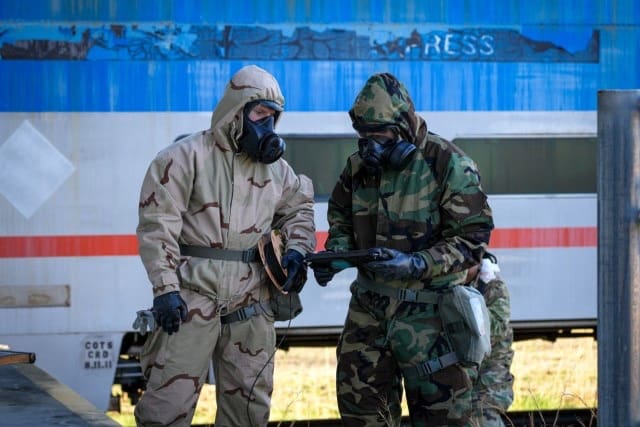
Silva said he was inspired by the EOD techs who participated in the competition.
“Your commitment strengthens our Army and safeguards our nation. Let this competition serve as a reminder that greatness is not achieved alone but forged through teamwork, discipline and a shared dedication to the mission. Keep pushing forward. Keep leading. And never stop striving for excellence,” said Silva.
“This wasn’t just another competition,” said Silva. “It was a demonstration of everything we embody as EOD technicians — the courage to face the unthinkable, the technical mastery to neutralize the threat and the unwavering commitment to protecting those who serve.”
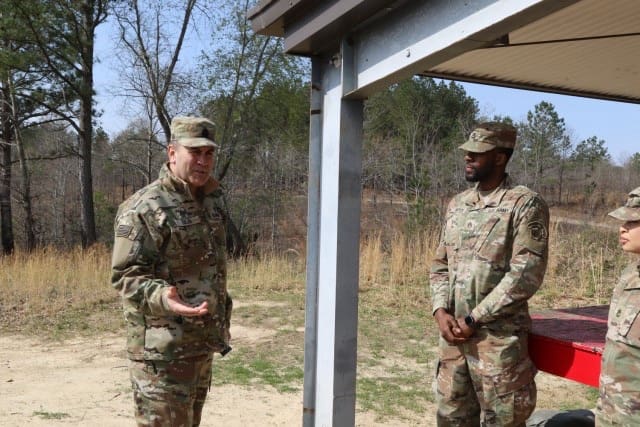
Silva said Army Explosive Ordnance Disposal technicians save lives, protect property and enable operational success every day.
“EOD is not just a job — it’s a mission, a calling. It demands precision, resilience and the ability to act decisively when lives hang in the balance,” said Silva, adding that the Army EOD teams had lived up to the highest standards of the profession.
“I had absolute faith in their capabilities. I told them to go out there, be bold, be disciplined, and show the Army — and the world — what it means to be an Army EOD technician – to leave everything on the range, and that they did,” said Silva. “I couldn’t possibly be prouder. Liberty, We Defend!”
By Walter T. Ham IV