XC3 Weaponlight

Archive for the ‘Guest Post’ Category

CSAF Allvin Adds Details, Articulates His ‘Nonstop’ Commitment to ‘Reoptimize’

Sunday, June 23rd, 2024

ARLINGTON, Va. (AFNS) —  

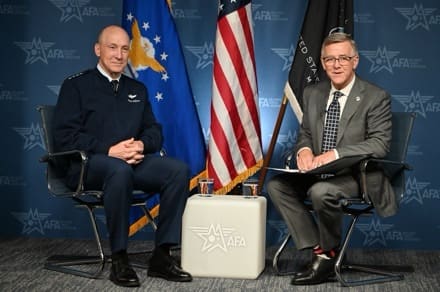
Adding detail and context to an ambitious effort for “reoptimizing” the Air Force, Chief of Staff Gen. David W. Allvin said in separate appearances June 13 and 14 that changing the way the Total Force trains, plans, modernizes, and is equipped must succeed for the Air Force to meet emerging challenges from China and other competitors.

Speaking first at an Air & Space Warfighters in Action session June 13, Allvin said the Air Force has made real and tangible progress instituting elements of a broad strategy announced in February to evolve how the Air Force develops people, generates readiness, projects power, and develops integrated capabilities.
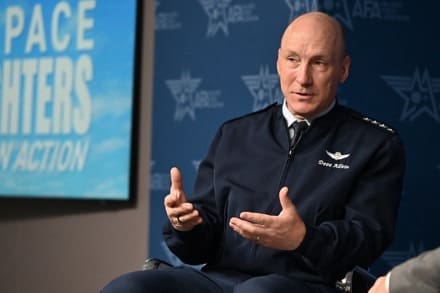
Allvin pointed out, for example, progress in reinstituting warrant officers to help fill and keep personnel with in-demand skills such as cyber and information technology. That effort, he said, is well underway, with the warrant officer selection board scheduled to convene this month and the announcement of selects tentatively scheduled for late July.

The service started soliciting applications from April 25 to May 31 for Airmen aspiring to become the inaugural cohort of warrant officers in information technology and cyber careers.

He also provided an unambiguous rationale for the undertaking and why Air Force leaders insist on pushing it forward with urgency.

“We are finding that it is more difficult to retain the cyber talent that we spend a lot of time investing in, and that is going to be so critical to us going forward,” Allvin said at AFA. “We believe this is going to be a good path to ensure that we have the talent for today and tomorrow in a very cyber-heavy force that we’re going to need.”

Separate efforts to assemble, train, and deploy so-called “Air Task Forces” are moving briskly. These units will work and train together throughout the AFFORGENcycle to deploy as Units of Action in fiscal year 2026. The introduction of ATFs marks a significant milestone in the journey toward modernization and readiness, laying the groundwork to ensure the Air Force maintains a competitive advantage over the pacing challenge, he said.

“We have an advancing threat the likes of which we haven’t seen for decades,” Allvin said at AFA. He went on to say, “a key piece of reoptimization is taking all our Airmen and developing them with a common understanding of that threat … That’s central to being ‘Mission Ready Airmen’.”

In addition to understanding the threat, Mission Ready Airmen comprehend the service’s unique and inherent capabilities to defend against the threat.

“If we believe that the future of national defense and the joint force is going to require some of the attributes that exist in our air and space forces, then we have a requirement to not only be able to participate in the joint force, we need to be leading it. The character of war is privileging the things that airpower has been doing for a long time.

Air Force Chief of Staff Gen David Allvin

In a media session June 14 at the Pentagon, Allvin expounded on his comments from the day prior and discussed the need to be “One Air Force.”

“We are taking an Air Force that has been somewhat fragmented due to the strategic environment over the years and really better aligning it and coming back to be one Air Force with one force design, one unit of action type, and one Airmen development concept,” he told a group of reporters.

Near the end of the hour-long session with reporters, Allvin articulated his long-term commitment to the reoptimization effort and better integrating the force.

“I got about a little less than three and a half years left [as Chief of Staff] … and this [reoptimization] is what I am going to be about. It will be nonstop. That I can promise you,” Allvin said.

By TSgt Nicholas G. Koetz

Secretary of the Air Force Public Affairs
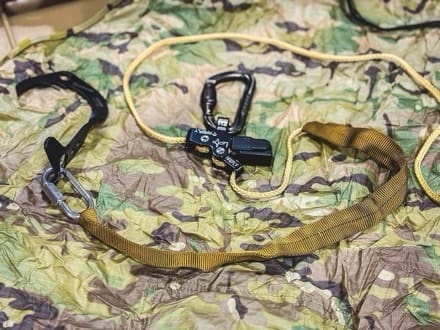
CTOMS – Vector Operator Urban Egress

Saturday, June 22nd, 2024

Operations in multistory buildings can pose the risk of a barricaded or obstructed exit. Historically there have been circumstances of ambushes on teams where all avenues of exit from the building are blocked and the building was detonated before the team was able to safely escape. It’s also feasible that escape from high to lower floors could be obstructed by fire, structural collapse, escaping crowds, or any number of other variables. While these occurrences are typically rare, survival can be at stake. The VECTOR Kit was designed to be so small, lightweight, and unobtrusive, that you would not even know you are carrying it. Yet it provides a critical egress capability from an urban elevated position that would otherwise be dangerous or impossible to conduct.

The kit allows rapid anchorage of the rope into wood frame, cinder, plaster, etc. construction. The stock 20m rope should allow egress from up to the fifth floor depending on floor heights and interior depth of the anchor. Longer lengths may be possible for special circumstances. The descent control device will provide a controlled descent with up to a 265 lbs. working load.

ctomsinc.com/products/vector-urban-egress-kit

Air Force Special Operations Command Demonstrates Ability to Support Joint Force Readiness and Resilience Through Real-Time Onboard Data Collection

Saturday, June 22nd, 2024

AFSOC Public Affairs

HURLBURT FIELD, Fla. —  



Air Force Special Operations Command gathered members of Special Operations Forces Acquisition, Technology, and Logis tics, AFSOC Staff, Cyber Mission Defense Teams (MDTs), and maintenance personnel here to demonstrate its latest capability to collect and analyze onboard data from an operational MC-130 aircraft, detect cybersecurity and maintenance anomalies in real-time, and stream data and anomalies into a Department of Defense  cloud environment. This demonstrated AFSOC’s ability to support joint force readiness and resilience through real-time onboard data collection, detection, and alerting capabilities from the tactical edge.

The demonstration utilized commercial off the shelf observability platform which collected and analyzed aircraft data as it was generated during flight, revealing a set of simulated operational and cybersecurity anomalies which were streamed to the MDT ground station. Once received, the MDT streamed the alerts and corresponding data into a joint cloud instance in real-time for further analysis, enabling cybersecurity, maintenance, and intelligence analysis use across the joint force.

“To evolve and outpace the adversary, AFSOC must embrace change that will enable technical overmatch during high-end conflict and long-term strategic competition. Gaining real-time or near real-time observability into operational aircraft gives us the ability to develop countermeasures to overcome enemy cyber-attacks, generate force readiness, and improve mission capable rates,” said Col Alfredo Corbett, AFSOC Director, Cyber & C4 Systems.

AFSOC currently leverages equipment to gain observability into the onboard operational technology generated by the MC-130 aircraft. Hardware captures, analyzes, detects, and alerts on anomalies at the edge, enabling real-time maintenance and cybersecurity monitoring, insights and intelligence, and the ability to build and deploy new detections. By integrating the alerts and data into the DoD cloud environment, AFSOC demonstrates its ability to support DoD modernization efforts, enabling it to improve the readiness, survivability, and lethality of vehicles fleet wide.

NFM Launching New THOR MCVS Light Weight at EUROSATORY 2024

Friday, June 21st, 2024

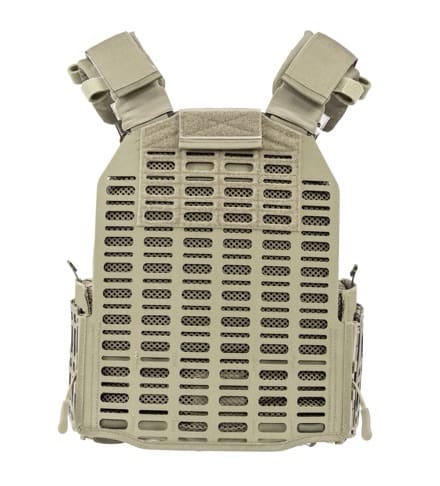
NFM are launching their new THOR™ Modular Combat Vest System Light Weight (MCVS-LW) at EUROSATORY 2024. The innovative MCVS-LW will be showcased from June 17th to 21st, and visitors can explore its advanced features and light weight at NFM’s booth in Hall 6, stand G145.

Paris, France – June 17, 2024 – The THOR™ MCVS-LW an individual load bearing and ballistic protection vest, designed specifically for military and law enforcement personnel who prioritize low weight, slim fit and quick water drainage. This vest ensures comfort, modularity, light weight, and functionality in diverse operational environments.

“Our mission at NFM has always been to provide the best possible protection and solutions for those who serve on the front lines,” said Tor Inge Thun, Chief Product Officer at NFM. “The THOR™ MCVS-LW is a testament to this commitment, offering unparalleled weight efficiency and quick-drying capabilities without compromising on ballistic protection.”

Advanced features and superior design

The THOR™ MCVS-LW is constructed from laser cut flame retardant, hydrophobic and colorfast laminates, permitting to integrate functionalities such as pouch attachment interface. The Omega material used in the vest excels in water operations, ensuring no added weight when exiting the water and allowing for rapid drainage.

“The MCVS-LW’s design leverages the unique properties of the Omega material, enabling users to maintain high mobility and comfort even in wet conditions. This vest is truly a game-changer for operations involving water”, says Thun.

Key Features of the THOR™ MCVS Light Weight:

• Optimal weight-performance ratio: The vest’s low weight does not come at the expense of protection, ensuring optimal performance in the field.

• Modular design: Primarily set up for plate carrier configuration, the MCVS-LW offers the same modularity as the MCVS 3.0, allowing users to customize their loadout as needed.

• Advanced protection: With front and back ballistic protection panels and plates, the MCVS-LW safeguards against high-speed fragments, handgun, and rifle ammunition, protecting vital anatomical structures within the thorax.

• Load bearing capacity: The laser-cut pouch attachment system on the vest’s front, back, and sides ensures efficient load distribution and easy access to mission-critical equipment.

• Enhanced mobility and comfort: The padded shoulder supports distribute pressure evenly, while the front and back comfort pads enhance airflow, reducing moisture buildup and ensuring maximum comfort.

• Quick release mechanism: The slim G-hooks on the shoulders and Tubes® buckles on the sides allow for quick release and easy closing, providing a secure fit that is easy to manage even with gloved hands.

• Field repairability: The waist Tubes® can be easily exchanged by the user without the need for specific tools, ensuring the vest remains functional in the field.

“The THOR™ MCVS-LW is designed with the end-user in mind, ensuring they have the best possible equipment to perform their duties effectively and safely,” says Thun. “We are proud to introduce this innovative vest at EUROSATORY 2024 and look forward to demonstrating its capabilities.”

NFM invites all attendees of EUROSATORY 2024 to visit our booth in Hall 6, stand G145, to explore the THOR™ MCVS-LW and witness the future of lightweight, modular combat vest systems.

FirstSpear Friday Focus: Just the Tip T Shirt

Friday, June 21st, 2024

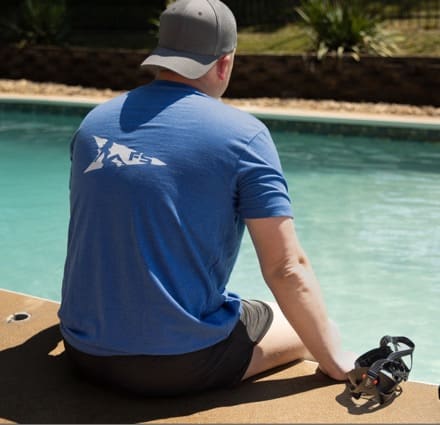
Introducing the V5 Just the Tip T-Shirt – Limited Edition.

The V5 Just the Tip T-Shirt is the latest T-Shirt. Made from a premium cotton-poly blend, this shirt pays homage to those who have done it all and lived to share their stories.

Continuing the bold tradition of its predecessors, the V5 edition is designed for the daring and the in-the-know. Wear it with a grin—this shirt is for those who embrace life head-on. Be warned: FirstSpear is not responsible for any whiplash caused by turning heads.

This short-run, limited edition drop won’t last long. Grab yours now before it’s gone!

The team will also be exhibiting at the ADS Warrior East Show in Virginia Beach on June 24 and 25.

Check out www.first-spear.com/just-the-tip-v5-t-shirt.

Emergency Response Trailer Strengthens Comms During Crisis Response

Friday, June 21st, 2024

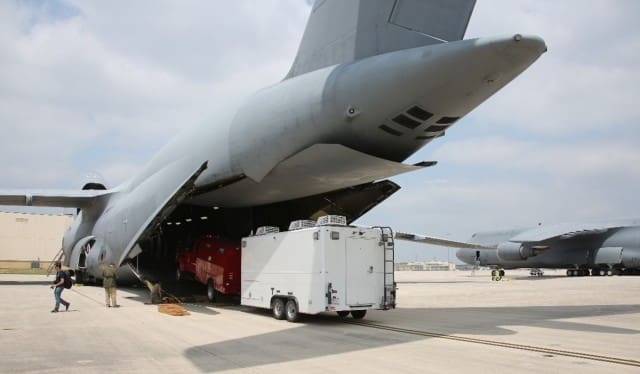
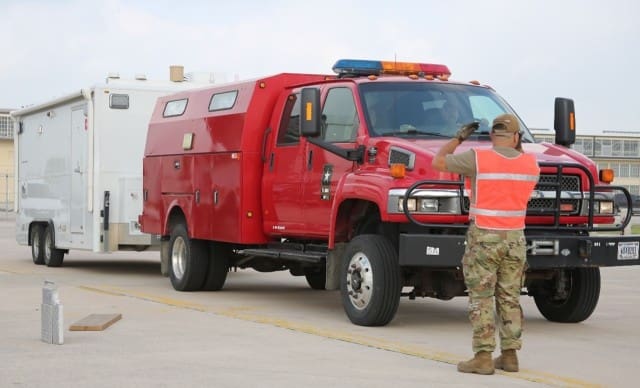
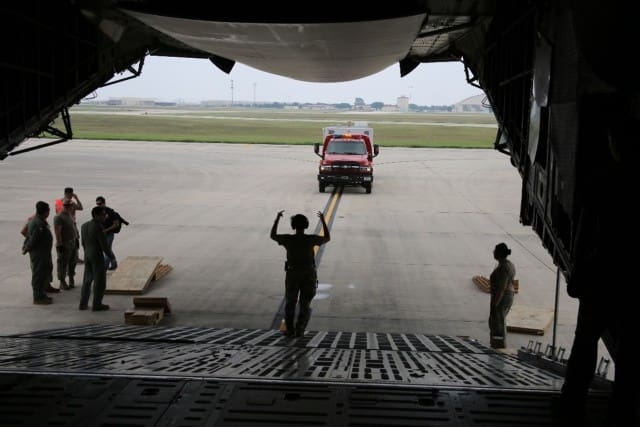
SAN ANTONIO, Texas — Communication is critical during times of crisis. The emergency response trailer, or ERT, provides digital communication platforms in austere environments. The Army’s first ERT belongs to Task Force 51, U.S. Army North’s contingency command post. When requested, U.S. Army North provides defense support to civil authorities to support local, state and federal partners during natural or man-made disasters as the command-and-control element. In such a scenario, an ERT can make all the difference.

The ERT is a modern and rugged response platform that replaced the emergency response vehicle, or ERV, as of February 2024. When disaster strikes, ERVs are employed by defense coordinating elements to rapidly respond. Like the ERT, ERVs provide digital communications but with limited capacity.

Engineered from the ground up, the ERT’s capabilities include unclassified and secret communications, Starlink satellite internet compatibility, long-distance radio transmission and increased self-sustainment capabilities. The ERT can also provide limited commercial bandwidth and cellular services to support interagency partners. Tested and certified at Aberdeen Proving Ground, Maryland, the ERT is now the program of record for military specification emergency vehicles.

“The ERT underwent rigorous testing by the Aberdeen team to confirm it could survive intense weather and hazardous terrain while supporting mission requirements,” said Matt Hopper, an ERT operator and subject matter expert. “Task Force 51 is the first unit in the Army to receive the emergency response trailer because of their role as the ARNORTH contingency command post.”

During disaster responses, U.S. Army North deploys Task Force 51, or TF-51, forward to coordinate between the lead federal agency and the military. The ERT allows TF-51 to operate in challenging environments, such as the aftermath of a hurricane.

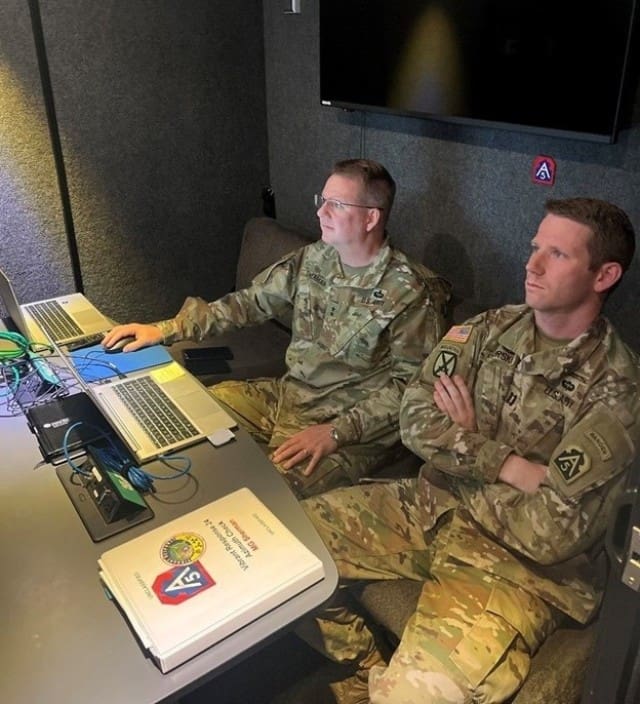
The task force tested the ERT’s capabilities during Vibrant Response 24, an annual training exercise focused on a nuclear disaster event. The ERT provided secret and unclassified data and voice requirements for TF-51’s operations center, which consisted of 45 computer workstations. Maj. Gen. Scott Sherman, the TF-51 commander and exercise director, conducted daily commander update briefs from the ERT. Regional separation between the outstations were as far as California to Michigan.

“Communication is key to saving lives in a disaster response. Having the ERT and its capabilities allows the military, specifically U.S. Army North and TF-51, the capability to direct assets and resources to the right place and at the right time in support of our partners,” said Sherman.

The ERT’s interior features a control room, conference room and storage room. The conference room can host six seated individuals. Television screens mounted to the walls allow for easy presentation of information. The control room monitors communication output. Additionally, the ERT’s benches can be folded down into two twin beds allowing operators to live out of the vehicle.

The ERT is also imperative to U.S. Army North’s main mission of homeland defense. Close coordination with partners, like the Federal Emergency Management Agency, is important during disaster response and that is exactly what the ERT provides.

“The ERT was designed to withstand challenging environments for DSCA operations but also in the event of a homeland defense scenario. It is highly likely we will encounter a simultaneous DSCA event while defending the homeland; therefore, modernizing our emergency response platforms ensures we are ready if we are called upon,” said Hopper.

By CPT Tara Santon, U.S. Army North Public Affairs

SFABs in Army 2030: Experimenting with a Unified Approach

Thursday, June 20th, 2024

FORT MOORE, Ga. — Security Force Assistance Command conducted a tabletop experiment at the Maneuver Battle Lab to prepare for future conflicts and warfighting needs from May 13-17, 2024. It brought advisors together from 1st, 2nd, 3rd and 4th Security Force Assistance Brigades to evaluate and enhance their operational capabilities for 2030 and beyond, focusing on multi-domain operations and large-scale combat readiness during competition, crisis and conflict.


The primary goal of this exercise was for advisors to identify operational gaps and friction points in the current doctrine or structure to enhance readiness by providing improvement solutions. This insight will guide decision-making, optimize resource allocation and refine training and doctrine to foster continuous improvement and preparation for advisors in real-world scenarios.


“We took a deep look in terms of what multi-domain capabilities we would need to enable partner foreign security forces at the operational level, so large-scale formations and multi-domain operations, throughout large-scale combat operations,” said Lt. Col. Mark Morrison, Security Force Assistance Command strategist. “It was a great opportunity to pull Soldiers from the captain-led team level up to the brigade level to understand what capability gaps exist in the SFAB formation and to be able to close those gaps, so SFAB 2030 is capable of performing our wartime role.”

During the experiment, mentors threw out all sorts of scenarios to ensure advisors were ready for anything they might experience in competition, crisis and conflict situations.

This comprehensive approach ensures SFABs can maintain national security and support global stability.

“We incorporate lessons learned from all parts of doctrine, organization, training, material, leader development, personnel, facilities and policy changes,” stated Morrison. “With the training changes, we can implement some of them ourselves and mirror our signature validation exercise, Operation Combined Victory to incorporate some of these lessons learned so we close the gap through training.”

Our advisors must be able to navigate different environments — established through understanding the battle space.

Moving from large-scale combat operations to multi-domain operations, the use of SFABs will be critical to combatant commanders and the SFABs’ use on the battlefield,” said Maj. Jeremy Hillyard, Maneuver Battle Lab simulations officer. “Any exercise that SFABs can do as we transition from competition, crisis to a full conflict phase will only benefit planners going forward, so combatant commanders and divisions commanders in 2030 know how to use SFABs properly and know their capabilities.”

Participants formed small working groups of advisors to discuss detailed scenario analysis, examining potential outcomes and solutions.

“Every brigade does something different because they’re somewhere different, so seeing how they do things is very different from how my brigade does things, and it’s very challenging sometimes to understand how that makes sense to them,” said Capt. Javier Diaz Martinez, fires direction officer from 4th battalion, 4th SFAB.

“But, getting yourself in their shoes and seeing what they do and where they do it starts to make sense, and it’s sometimes even the better plan.”

The simulated scenarios included cyber-attacks, conventional warfare, and logistical challenges – simulating a wide range of threats to identify and address any gaps or friction points in current operational plans.

The Air Force’s participation demonstrated how crucial it is to work together during conflicts. By teaming up with other military branches, we improve our readiness, response capabilities, and effectiveness to achieve our goals with a unified approach.

U.S. Air Force Capt. Andrea Pangrac, logistics air advisor from the 818th Mobility Support Advisory Squadron, highlighted the value of joint solutions and collaboration across different military branches. “The [tabletop exercise] ultimately embodies not only the commitments advisors in the U.S. have with our regional partners but also across the sister services to enhance trust and transparency and create cooperative and collaborative solutions,” she added.

The experiment highlights the important role of an advisor network, a unity of effort across echelons.

Capt. Pangrac mentioned the value of the tabletop exercise in conditioning advisors to think innovatively and strategically.

“It was a phenomenal experience. This experiment prepares us as advisors to operate effectively by conditioning us to think outside of the box, to think about what we weren’t thinking about in existing doctrine and our existing tactics, techniques and procedures,” she explained.

After the simulated scenarios, mentors reviewed how the participants performed and how well the strategies worked. Guest speakers and mentors offered valuable feedback and pointed out areas where they could improve.

“I think that when you look at the SFABs now, and in the future, they are a very important component to the combatant commander, but more importantly, I would say to the Army commander because they can bring a lot of information and systems to the fight,” said Anthony Lieto, U.S. Army Peacekeeping and Stability Operations Institute.

“They can assess, assist and liaise where the theater commander needs that influence.”

For more information on the SFABs or to volunteer, visit the Security Force Assistance Brigade site on Army.mil.

By SPC Cristina Gomez

Department of the Air Force Launches NIPRGPT

Wednesday, June 19th, 2024

ARLINGTON, Va. (AFNS) —  

As part of its ongoing modernization efforts, the Department of the Air Force chief information officer, in partnership with the Air Force Research Laboratory, is accelerating initiatives to provide Guardians, Airmen, civilian employees, and contractors the ability to responsibly experiment with Generative AI, with adequate safeguards in place.

DAF senior leaders are focused on maximizing competitive advantage, recognizing that Airmen and Guardians need advanced technologies at the speed of relevance. To that end, the DAF is launching NIPRGPT, an experimental bridge to leverage GenAI on the Non-classified Internet Protocol Router Network while continuing to explore maturing industry solutions.

“Our recent GenAI Roundtables with industry and academia have shown us this is an actively growing field,” said Venice Goodwine, DAF chief information officer. “Now is the time to give our Airmen and Guardians the flexibility to develop the necessary skills in parallel. There are multiple modernization efforts going on right now across the federal government and within the DAF to get tools in the hands of the workforce. This tool is another one of those efforts.”

NIPRGPT is part of the Dark Saber software platform developed at the Air Force Research Laboratory Information Directorate in Rome, New York. Dark Saber is an ecosystem of Airmen and Guardians from across the DAF that brings together innovators and developers and equips them to create next-generation software and operational capabilities deployable to the Force at a rapid pace.

At no additional cost to the unit or the users, NIPRGPT is an AI chatbot that allows users to have human-like conversations to complete various tasks. The CAC-enabled GenAI tool can answer questions and assist with tasks such as correspondence, background papers and code, all within a secure computing environment.

“Technology is learned by doing,” Chandra Donelson, the DAF’s acting chief data and artificial intelligence officer, said in a statement. “As our warfighters, who are closest to the problems, are learning the technology, we are leveraging their insights to inform future policy, acquisition and investment decisions.”

The experiment is an opportunity to facilitate real-world testing, focusing on key metrics such as computational efficiency, resource utilization, security compliance, etc., to understand GenAI’s practical applications and challenges and ensure that future implementation is effective and efficient. The platform includes user feedback opportunities to help develop governing policies and enable informed conversations with vendors as the DAF works to incorporate these tools into its operations.

“NIPRGPT is a critical bridge to ensure we get the best tools we have into our team’s hands while larger commercial tools are navigating our intense security parameters and other processes,” said Alexis Bonnell, AFRL chief information officer. “Changing how we interact with unstructured knowledge is not instant perfection; we each must learn to use the tools, query, and get the best results. NIPRGPT will allow Airmen and Guardians to explore and build skills and familiarity as more powerful tools become available.”

Civilian and uniformed Airmen and Guardians, as well as contractors who are CAC holders, can register for NIPRGPT access here: niprgpt.mil. The system has a limited number of users available to be registered during the experiment. After capacity has been reached, individuals seeking access will be put on a waitlist.

Secretary of the Air Force Public Affairs