Celebrate 20 years of the TLR-1

Archive for the ‘Guest Post’ Category

Cyber Quest 23 Informs Cyber and Electronic Warfare Program Managers

Friday, September 1st, 2023

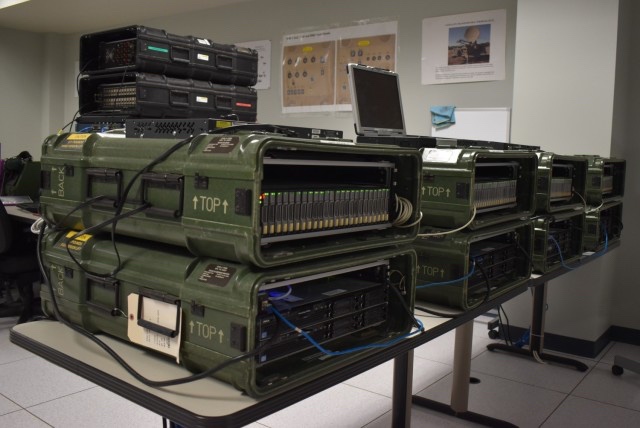
FORT GORDON, Ga. — Environment matters when it comes to experimentation and analysis of capabilities for the Army. To determine how a piece of technology will perform on the battlefield, the right environment is needed that replicates many of the battlefield variables.

In the electronic warfare and cyberspace — shortened as EW and cyber — communities, Cyber Quest is that environment. Developed with purpose, Cyber Quest is the perfect place for EW and cyber to experiment and analyze potential technologies that may make their way onto the battlefield one day. It’s where Soldiers, industry and government partners come together for a common purpose — inform capability development in various portfolios including EW and cyber, areas not only critical to the Army but critical to the Program Executive Office, Intelligence, Electronic Warfare & Sensors — known as PEO IEW&S.

This annual prototype assessment, now in its eighth year, explores industry innovations and captures Soldier feedback through a series of rigorous and objective experimentations to provide evidence-based results. Soldiers from the U.S., Australia and Canada took part in evaluating technologies this year.
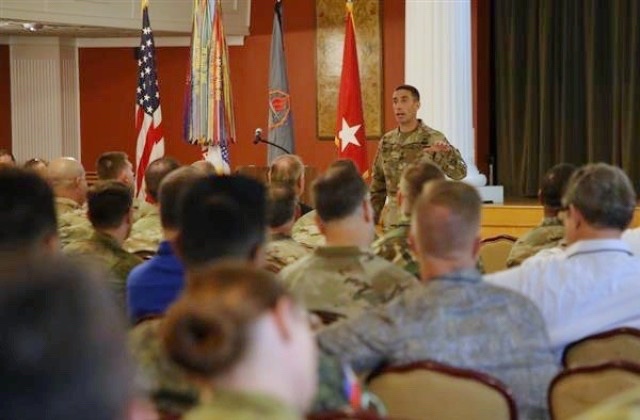
“Cyber Quest is about making sure the interaction between the science and the practitioners is at the right level,” Maj. Gen. Paul Stanton, commanding general, U.S. Army Cyber Center of Excellence said during his opening remarks. “We take the state-of-the-art capabilities that industry and the scientific community have been working on and we refine them in accordance with what Soldiers tell us they need.”

Anyone within the EW and cyber communities will agree, things move incredibly fast and change constantly. To keep pace, events like Cyber Quest help inform the requirements documents and ultimately increase the rapid acquisition of EW and cyber capabilities.

Members from the EW and cyber requirements and acquisition communities, as well as Soldiers, attend Cyber Quest to see what industry has developed and how those capabilities performed in the experimentations during a culminating distinguished visitors day event.

Due to its focus, Cyber Quest has become the premier prototyping event for the Army, and feeds into larger Army technology assessments like Project Convergence.

From a product manager perspective, “Cyber Quest allows us to see a broader perspective of what’s going on in the [EW] community,” Liz Bledsoe, Product Manager, Electronic Warfare Integration, explained. “There may be technology here we can use in some capacity in the future.”

Beyond the technology results, networking with the community adds even more value to Cyber Quest. “Stakeholder relationships is important at our level,” Bledsoe said. “I met with our Canadian and Australian allies in attendance to catch up and talk shop. We operate alongside both countries often so it’s important we keep those relations up.”

Bledsoe’s work focuses on the Electronic Warfare Planning and Management Tool, or EWPMT, a commander’s tool to remotely control and manage electromagnetic spectrum assets to execute offensive and defensive EW operations. At Cyber Quest, EWPMT was set up to receive data from the participating vendor products and was able to receive data as a result. “Experimentations are great. Any of the data we get from Cyber Quest helps with the future of EWPMT,” Bledsoe explained.
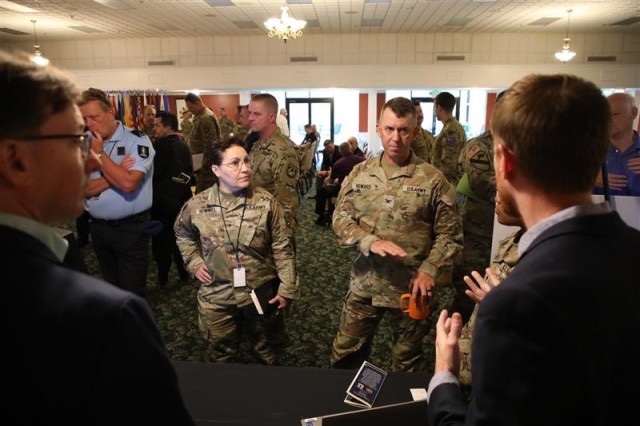
The experimentation aspect of Cyber Quest is fairly unique and can provide the acquisition community a look ahead. “If there’s something really important, we see in the final results, could be positive or negative, it gives us insight on changes we need to make and where can we build the capability up to,” Bledsoe explained. “We may identify aspects the Combat Capabilities Development Command, Command, Control, Communication, Computers, Cyber, Intelligence, Surveillance and Reconnaissance Center or other science and technology organization could work through first and then we can pick up and implement it in two to three years.”

The experimentation component of Cyber Quest 23 also drives home an increasingly important aspect of software development — Soldier feedback matters.

“If you want good Soldier feedback, you have to show you value it in the first place by quickly integrating feedback into the next iteration of a product,” Bledsoe said.

She hopes to be able to take data from the experimentations and Soldier feedback back to her team to help them further develop and improve EWPMT.

“This community is at the nexus of the science and the practitioners, new protocols, new kit, new antennas, new algorithms — aligning with our Signal, EW and Cyber Soldiers – this is our time at Cyber Quest to make sure things work,” Stanton explained. “What we’ve done here at Cyber Quest informs future requirements and capability drops that we hand off to our Acquisition community to buy and build the equipment that’s going to work the way we need it to. It does us no good to give Soldiers a piece of kit that is not going to function under the extreme circumstances of the operating environment.”

By Shawn Nesaw
EOY TLS DeadlinesCloseout Dates

Thursday, August 31st, 2023

Darley Defense has provided a reminder that FY23 DLA/TLS Deadlines are approaching.

— FY23 TLS Order Receipt Deadline: September 5, 2023 11:59 p.m. EST

— FY23 TLS Funding Receipt Deadline: September 15, 2023 11:59 p.m. EST

Darley has been a Department of Defense contractor for more than 80 years, involved in manufacturing and distribution. With just one call or email, our dedicated team of industry experts (and many veterans) will help you rapidly and ethically procure everything you need. Reach out to at SupplyPartnerTeam@Darley.com

Signal Course Aims to ‘Transform the Army One NCO at a Time’

Thursday, August 31st, 2023

FORT GORDON, Ga. — When a Signaleer graduates from initial military training their learning has all but ended; rather, it is only beginning.

As members of a career field that is ever evolving, it is imperative to seek out — and take advantage of — opportunities for professional development.

One such opportunity is the Signal Digital Master Gunner, or S-DMG, Course. Offered exclusively at Fort Gordon, Georgia, it is the only S-DMG course in the Army that is approved by U.S. Army Training Command.

This five-week functional course supports the training of noncommissioned officers to install, operate, and maintain the local area network integration with the tactical server infrastructure and various mission command information systems.

Instruction encompasses the installation and configuration of hardware and software including: routers, switches and networking devices, Warfighter Information Network-Tactical operations, signal flow, troubleshooting, Exchange server, Active Directory, Structured Query Language server, domain controller, tactical messaging solutions, Extensible Messaging Presence Protocol, Cisco Unified Call Manager, Tactical Local Area Network Encryptor, Tactical Operations Center Intercommunication System and virtual machine software. Additionally, students are taught how to integrate data using the Data Dissemination Services, Joint Battle Command Platform and Command Post Computing Environment.

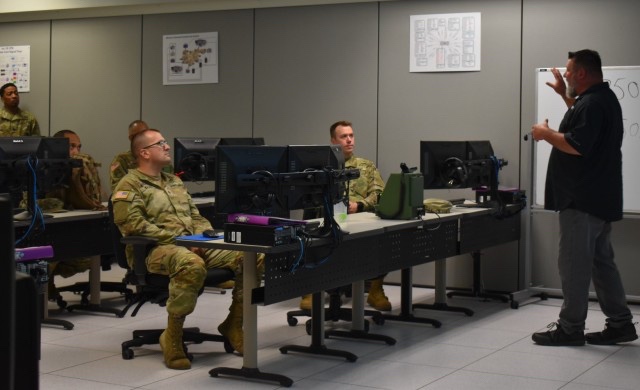
Students are initially trained in a classroom environment then required to conduct performance-based tasks on unit-fielded equipment.

Claudius Blanding, S-DMG course manager, said the course’s primary objective is integration, noting that students do not become experts on any one particular system but instead become well-versed in several.

“We teach them as integrators, so they know what questions to ask so that they know where to go to get the information,” Blanding said.

Each learning position in the classroom represents a brigade’s worth of servers, and each student, from beginning to end, builds those assets.

“They are utilizing that same network from day one in order for them to move on to the next block,” Blanding said.

The course is designed primarily for information technology specialists and signal support systems specialists, military occupational specialties 25B and 25U respectively, in the rank of sergeant or above. However, all other enlisted signal military occupational specialties — specialist and below — are eligible to attend with a waiver signed by their battalion commander. The training students receive is intended to complement the training that signal warrant officers and chief information officers receive at the battalion and brigade level.

Blanding said that there are many benefits to Signaleers taking the S-DMG Course.

“What this does is … when you have your warrant [officers] and S6 up at either brigade or division, they can call down at the battalion level and talk to somebody like one of these trained NCOs, and they understand the lingo,” Blanding explained. “It really benefits the battalion and below having a S-DMG graduate, because it helps out the signal warrant officers on that side.”

Ultimately, the intent is to develop signal noncommissioned officers as signal-digital master gunners and the commander’s subject matter expert providing critical and near real-time situational awareness in the unit’s integrated common operational picture.

Furthermore, Soldiers who complete the course are offered a resource of lifetime tech support.

“We encourage them to reach back to us if they have any questions … and we constantly get emails and phone calls from [graduates] giving us new updates on stuff or things that are changing out in the force, so we learn from them as well and pass that information along,” Blanding said.

Soldiers who are interested in enrolling must pass a pre-entrance exam. Enrollment is on a first-come, first-serve basis by registering in the Army Training Requirements and Resources System.

There is no pre-entrance exam study material available, as Soldiers are expected to have networking fundamentals experience and knowledge of the various Mission Command Information Systems.

Classes fill up quickly, so Soldiers should begin the process to enroll as soon as they know they want to attend.

For more information about the course, click here.

By Laura Levering

Platatac – SD Duffel Bag

Wednesday, August 30th, 2023

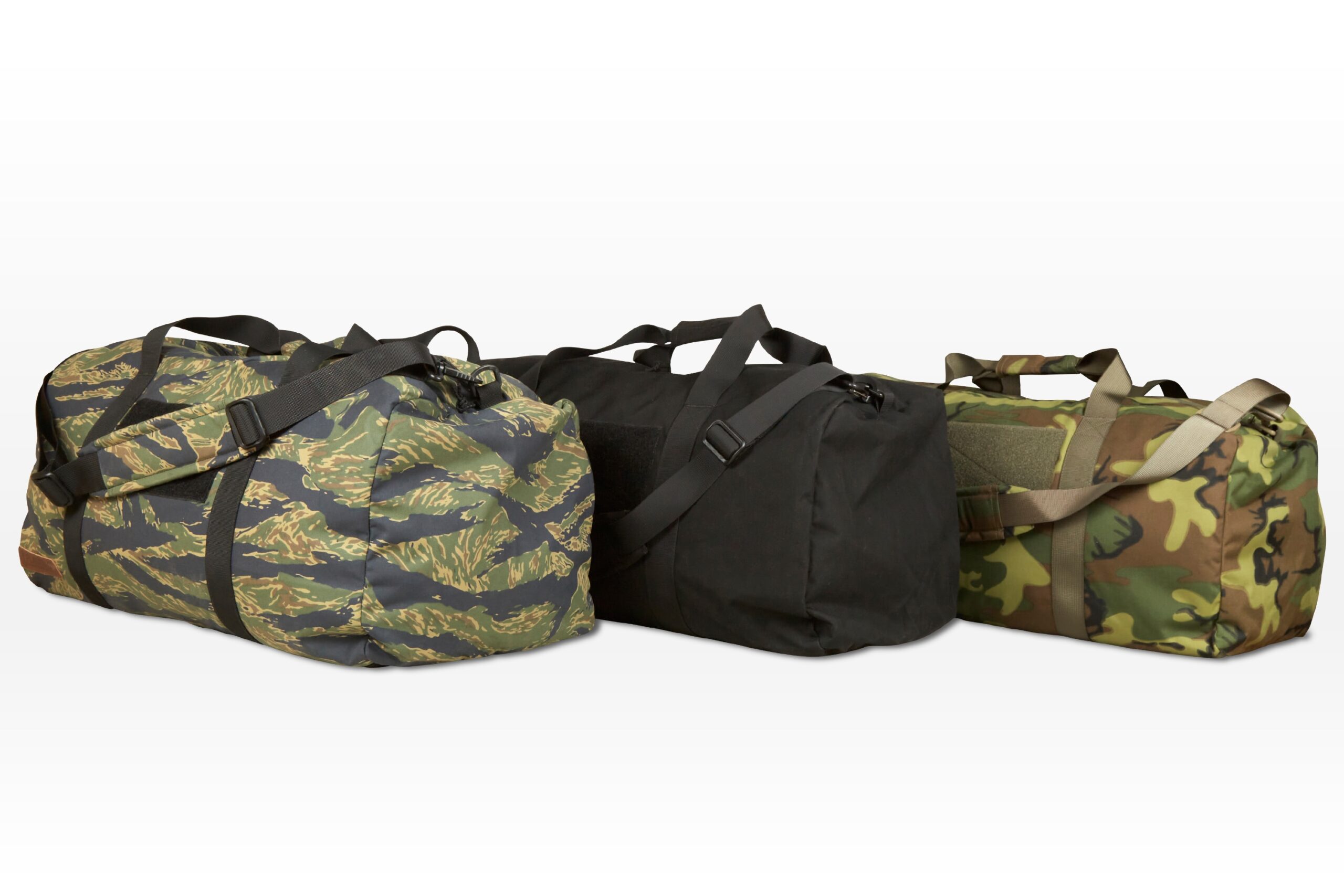
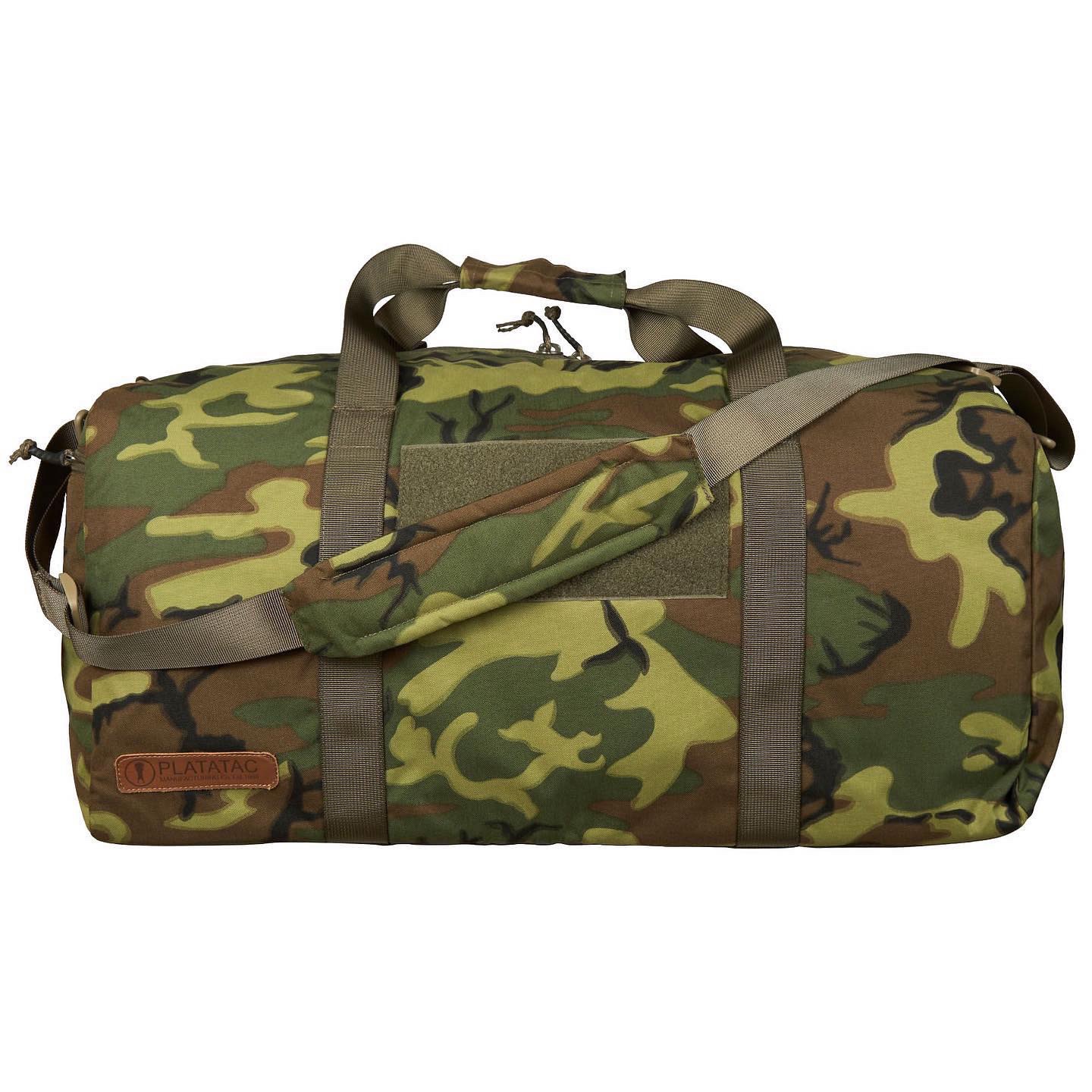
The new Platatac SD Duffel Bag launches Friday 1st September 15:00 AEST. The SD Duffel is a hard wearing, tactical weekender built for whatever mission you have planned. ?

Whether it’s a weekend away, day at the range or just the daily commute, there’s no bag better than a Platatac SD Duffel Bag.

Available in MultiCam®, MultiCam® Tropic, MultiCam® Arid, M81 Woodland, ERDL, Tigerstripe, Desert Tigerstripe, Ranger Green & Black.

• Genuine licensed 500D nylon outer with durable water-repellent (DWR) finish
• Padded base and side walls for protection
• Detachable cross-body strap with shoulder pad
• Durable nylon carrying handle with hook-and-loop wrap
• Zip entry to main compartment
• Three internal mesh pockets for storage of small items
• Large external zip end pocket
• Embossed heritage leather branding
• Measurements: L59cm x W32cm x H29cm
• 50 litre Capacity

platatac.com/platatac-duffle-bag

DoD Announces Changes to Special Leave Accrual Policy for Service Members

Wednesday, August 30th, 2023

WASHINGTON (AFNS) —  

The Department of Defense announced Aug. 25, changes to the special leave accrual policy for service members. The DoD Instruction 1327.06, “Leave and Liberty Policy and Procedures,” was reissued incorporating change five to implement the provisions of section 701 of title 10 United States Code that was revised by section 632 of the National Defense Authorization Act for Fiscal Year 2023.

A service member may retain a maximum of 60 days of annual leave from one fiscal year to the next. However, a service member who is assigned to certain duties that prevent them from taking annual leave may be eligible for SLA that qualifies the service member to retain more than 60 days of leave at the end of the fiscal year.

The revised provisions of section 701 U.S.C. title 10 reduced the maximum amount of accrued leave that may be retained by a service member at the end of the FY from 120 days (60 days of annual leave plus 60 days of SLA leave) to 90 days (60 days of annual leave plus 30 days of SLA leave). Also, the timeframe a service member may retain SLA leave was shortened from three fiscal years to two fiscal years following the fiscal year in which the SLA qualifying duty ended. Further, a duty assignment in support of a designated contingency operation by itself is no longer a qualifying duty for SLA. These changes went into effect Jan. 1.

The revised provisions of law made by the FY2023 NDAA do not negatively impact the unused SLA leave of service members who accumulated SLA leave due to the COVID-19 or due to other reasons that occurred before FY2023. Service members may continue to use this SLA leave according to the timelines previously established by their service.

Beginning in FY2023, a service member in an SLA qualifying duty such as an assignment to a designated deployable ship may retain a maximum of 90 days of accrued leave (60 days annual leave and 30 days of SLA leave) at the end of the fiscal year if he or she receives written approval to do so from the first flag or general officer in their chain of command.

The service member’s leave that is approved as SLA will be forfeited unless used before the end of the second fiscal year following the fiscal year in which the SLA qualifying duty ended. For example, SLA leave that is approved for FY2023 will be forfeited unless used by September 30, 2025.

Service members who have approved SLA leave that caused their accrued leave balance to exceed 90 days as of Dec. 31, 2022, may continue to carry SLA leave that is in excess of 90 days; however, any SLA leave that exceeds 90 days on or before Sept. 30, 2026, will be forfeited. No service member may be authorized additional SLA at the end of the FY2023 if their accrued leave balance exceeds 90 days.

Enlisted service members who would lose accumulated SLA leave in excess of 90 days may elect to be paid for SLA leave up to 30 days. This election can only be taken once in a career. The sell back counts toward the enlisted service member’s cap of 60 days over a career.

Service members are encouraged to review the “remarks” section of their Leave and Earning Statement to monitor their SLA leave balance and to determine the expiration date of their SLA leave to avoid forfeiting days of SLA leave.

The reissuance of DoD Instruction 1327.06 incorporating change can be found here.

USASOC Study Outlines Measures to Optimize Female Soldiers

Tuesday, August 29th, 2023

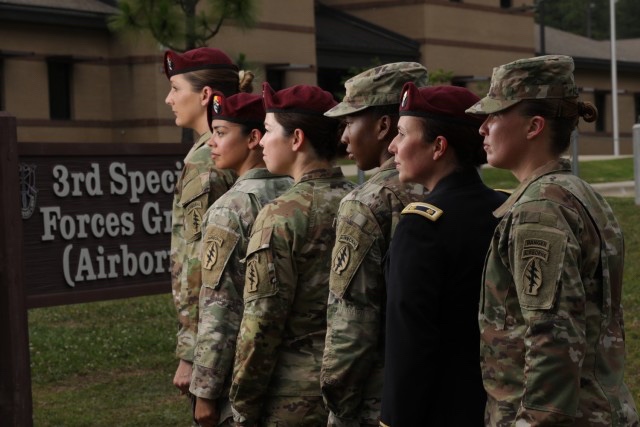
WASHINGTON — To better address obstacles facing female Soldiers serving in special operations units and to retain its top talent, Army Special Operations Command outlined 42 recommendations in a study released Monday.

The research’s findings will guide USASOC in optimizing female warfighters while noting their physical and anatomical differences.

“It is not about providing accommodations for women,” said USASOC Command Sgt. Maj. JoAnn Naumann. “It’s providing tools that allow women to maximize their performance and continue to serve at all levels and across time.”

During the yearlong study, researchers found that 44% of the female Soldiers surveyed said they experienced equipment-fitting challenges relating to body armor, helmets and ruck systems. The problem can impact women’s abilities to perform basic Soldier maneuvers and skills.

Female Soldiers also reported that the time they spent planning pregnancies negatively impacted their careers, leading to Soldiers scheduling childbearing around career milestones or avoiding pregnancy entirely, according to the 106-page report, titled, “Breaking Barriers: Women in Army Special Operations Forces.”

Researchers held more than 40 focus groups and interviews with women and men from across the force. The study focused on the areas of equipment fitting, childcare, gender bias, social support, sexual harassment, pregnancy and postpartum, and morale and wellbeing. Retired Lt. Gen. Francis Beaudette, former USASOC commander, initiated the 2021 study, which had more than 5,000 respondents. Additionally, the survey addressed other concerns including challenges of small-statured Soldiers and access to healthcare.

The study also explored attitudes towards females serving in combat and special operations units. The survey results showed Soldiers had a favorable view of women serving in special operations units with no reported decline in morale. About 72% of women and 64% of men surveyed said they would support their daughter joining Army special operations units.

According to findings, 80% of men reported that gender-related concerns had no impact on their decision to remain in special operations forces. Researchers found most gender-biased comments and attitudes during the study came from senior NCOs, indicating a difference in generational views, Naumann said.

“Although disappointed by some of the findings and comments in the study, we are committed to addressing these issues with candor and transparency,” Lt. Gen. Jonathan Braga, USASOC commander wrote in the report’s introduction.

“To change culture takes time,” Braga added. “We have to be better — we must be better.”

The Women in ARSOF Initiative outlined three lines of effort to address the hurdles: mentorship and sponsorship, health and readiness, and modernization.

For mentorship and sponsorship, units can create a “culture of excellence” through education and accountability, said Lt. Col. Rachel Cepis, the director of the Women in ARSOF Initiative. For example, the Army can host more educational forums where Soldiers can learn how to schedule duties around breastfeeding or deal with postpartum related issues, as well as women’s health and nutrition.

Survey participants that have had children listed the top five postpartum challenges: (1) depression, stress, and anxiety, (2) inability to perform to the same level as the unit, (3) lactation, (4) maternity leave, and (5) diastasis recti abdominus.

Focus group participants said they experienced hardship finding adequate care during and after pregnancy. Soldiers also voiced concerns about pregnancy hindering career progression and having adequate breastfeeding locations, as well as convalescent leave following miscarriages.

The 10th Special Forces Group at Fort Carson, Colorado began a female mentorship program, while the 3rd Special Forces Group and 528th Sustainment Brigade at Fort Liberty, North Carolina, plan to establish a similar initiative at each battalion headquarters. The 528th Sustainment Brigade also hosts monthly engagements with female Soldiers.

“We’re looking at it holistically. I’m excited to see the growth of women in our formation in all positions,” Cepis said. “And I’m thrilled that we’re looking at ways to help them perform at their maximum potential.”

“This is about driving change and making ultimately, ARSOF and the [Defense Department] better,” she added.

In the second line of effort, health and readiness, USASOC partnered with Army Research Institute of Environmental Medicine in Natick, Massachusetts to study physiological, metabolic and psychological responses during and after completion of extreme and prolonged training. USASOC has also submitted four topics to the Defense Advisory Committee on Women in the Services 2024 research solicitation: (1) women’s physical and physiological characteristics of elite female warfighters, (2) pregnancy and postpartum impacts on readiness, (3) long and short-term impacts of intentional dehydration, and (4) endocrine adaptations of female warfighters.

Cepis said USASOC is working with the Army, SOCOM, and academic partners to study the effects of menstrual cycles on female warfighters and ways to maximize performance. USASOC plans to examine sicknesses and illnesses that females suffer in the field and explore how to avoid musculoskeletal injuries related to female anatomy differences, she added.

Finally in modernization, the study recognizes the anatomical and anthropometric differences between men and women and Army Combat Capabilities Development Command [DEVCOM] at Aberdeen Proving Ground, Maryland will be modernizing dress and duty uniforms as well as body armor that better fits the varying body types and sizes.

USASOC has done limited user assessments with the Army Modular Scalable Body Armor, a lightweight, adjustable bulletproof vest, and the Army Integrated Helmet Protection System, a multi-faceted head gear, which consists of protection and retention systems, a helmet cover and hearing protection.

The Women in ARSOF Director has partnered with DEVCOM to better develop items ranging from pregnant female service uniforms to female urinary devices.

USASOC founded the Women in ARSOF Initiative to specifically study female-modernization challenges while advising Army and SOF senior leaders. ARSOF also began publishing a newsletter series, created an online platform and developed a portal site to keep Soldiers updated on the study findings and ongoing efforts.

“I have never felt so heard and understood in my career until [the newsletter] started being published,” wrote a 25-year-old Soldier who has spent five years in special operations forces.

USASOC, headquartered at Fort Liberty, North Carolina, trains, equips and educates special operations units in support of the joint force.

By Joe Lacdan, Army News Service

Iowa Guard Tests Innovative Technology during Northern Strike

Monday, August 28th, 2023

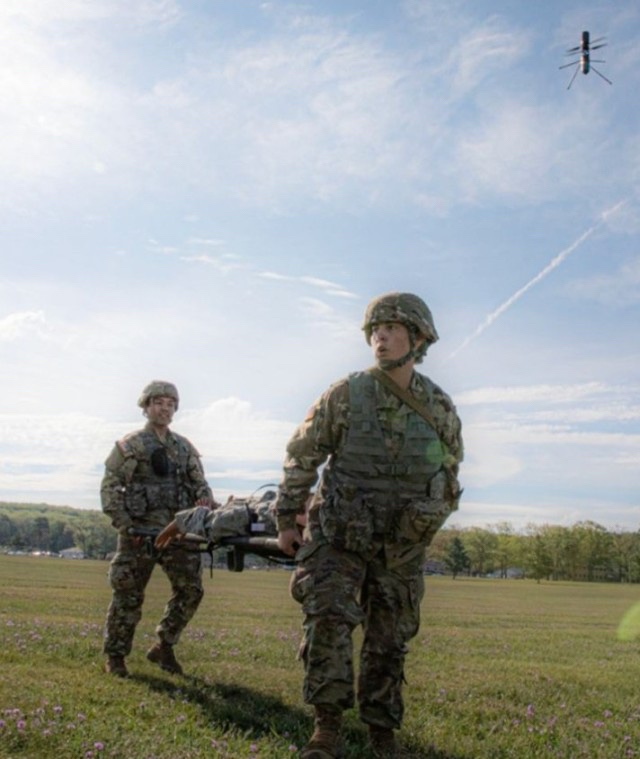
GRAND RAPIDS, Mich.– The 294th Medical Company Area Support from the Iowa National Guard tested a groundbreaking technology by integrating drones in a training environment on August 7. Medical squads were able to experience a cutting-edge drone system that can detect casualties from the sky and assess their vital signs, making it a game-changer in disaster response scenarios. The drones utilize VISTA (Vision and Intelligence Systems for Medical Teaming Applications), which has been in the works for four years, with two dedicated years of intense development for unmanned aerial systems for casualty protection.

“At Northern Strike, we had the perfect place to test the technology. Working with medical personnel is what we want to take to the next level,” said Jay Rouse, the director of business development for Aerete, who played a crucial role in integrating the remote triage capability into the VISTA system’s medical ability.

Northern Strike was the ideal training location for the technology to be tested, emphasizing training to advance the technology. The 294th Medical Company Area Support (MCAS) includes the Medical Treatment Squad, which operates on the field, performing lifesaving measures for those wounded in combat. Utilizing medical drones in the field comes from Aerete’s pioneering use of photoplethysmography to monitor heart and respiration rates through the skin, enabling early detection of casualties from a distance. The system has been successfully tested with body armor, demonstrating its capability to scan from 10 to 50 meters, enhancing casualty detection.

SGT Brady Overstreet from the 294th MCAS out of Iowa, who is among the medics utilizing the medical drones, expressed his optimism, stating, “I have high hopes for the potential usage of this. This is the first time our squad is using this technology. I think this training is great; there are so many moving parts to being a medic,” Overstreet said. “This will be better for our patients, units, and Army.”

The Iowa Medical Company’s collaboration with the Army Medical Research and Development Command’s Telemedicine and Advanced Technology Research Center (TATRC) has been instrumental in advancing Project VISTA. This joint effort aims to enhance human detection signals from casualties, with future expansion plans to include wound classification and broader medic capabilities.

The Northern Strike exercise provided the ideal platform for demonstrating the medical capability, showcasing the potential for broader use in disaster response scenarios. Ethan Quest, the Deputy Chief of the Medical Robotics and Automatic Systems Division at TATRC, highlighted the importance of Northern Strike as a platform for demonstrating their solution.

“We are here to support Project VISTA for casualty detection and standoff assessment of casualty through a US solution,” Quest said. “This was a very good opportunity for us to demonstrate our capabilities of showing our solution. The specific goal is to get feedback from the Medics. We are looking to improve the system for their capabilities. We were happy to be here at Northern Strike and work with the medics to see the capability to keep our Soldiers and medics safe.”

The collaboration between the Iowa Medical Company and TATRC leads to advancements in medical training and real-world application. The innovative medical drone represents a significant step forward in improving medical practices.

As the eyes and ears of first responders in mass casualty and emergency events, the medical drone is a valuable asset for ensuring prompt and efficient medical assistance. As the medical field looks to the future, exploring the potential for broader adoption of innovative medical technologies like VISTA will undoubtedly shape a brighter future for medical care in challenging environments.

“With the medical drones, we can find casualties and wounded quicker and further away. We can identify the triage before we even get to the site and monitor the patients as they get evacuated to the next level of care,” said Jay Rouse, business director at Aerete, emphasizing the system’s capability to revolutionize medical response.

The drone project VISTA at Northern Strike showcases the power of collaboration and innovation in advancing medical capabilities. The medical field continues to evolve and improve through the dedication and passion of individuals like Jay Rouse, SGT Brady Overstreet, and Ethan Quest, promising a future where advanced tools enhance patient care and save lives in the most challenging situations.

By 2LT Paige Bodine

Charity Evening at the Bike Shed During DSEI

Sunday, August 27th, 2023

C2R FAST in the UK are throwing a party at the Bike Shed in London Shoreditch on Thursday 14th September during DSEI. This event will bring together people from across the defence and security industry many of whom are exhibiting at DSEI to raise money for some incredible charities.

The event will raise funds for the following causes:

• The Clock Tower Foundation

• The Police Firearms Association

• The Silent Warrior Foundation

Funds will be raised through the following means:

Online Raffle which is open now!

Open to anyone, tickets are priced at £20 pounds we will post* internationally *shipping costs will apply

The prizes increase daily but currently we have:

• Sur-Ron light bee road legal motorcycle

• Elliott Brown Holton Professional time Piece

• Red Devils Tandem Jump

• 3 Hour Grappling session with 6 x BJJ Champion Andy Good at Ground Hammer

Jiu Jitsu in Hereford

• 5 Eagles and angels CTSFO Wolf grey caps with a unit coin

• 5 Eagles and angels UK Military tan caps with a unit coin

• 2 Pairs Oakley Holbrook Blackside

• 2 Pairs Oakley Fuel Cell Prizm Polar

• 2 Pair Oakley Frogskins

• 2 Pair Standard Issue Leffingwell

• 1 Pair Oakley Flak 2.0 X-L Maritime

Live Auction: On the evening with some incredible prizes including a small quantity of the limited edition eagles and angels caps and some amazing special edition Bourbon sets.

The silent Auction: Which has some incredible prizes. The winners will be announced on the evening.

The event commences at 8pm on Thursday 14th September 2023 with the draws and charitable parts of the evening commencing around 9pm. Some hot snacks will be served on the evening and is included in the ticket fee. All funds raised will go to the causes.

A limited amount of tickets remain for the evening and are for sale on the event website. We look forward to welcoming you to the event.

Kindest Regards

Paul & Nick

www.c2rcharityevent2023.com/lite-ui