SIG SAUER - Never Settle

Archive for the ‘Guest Post’ Category

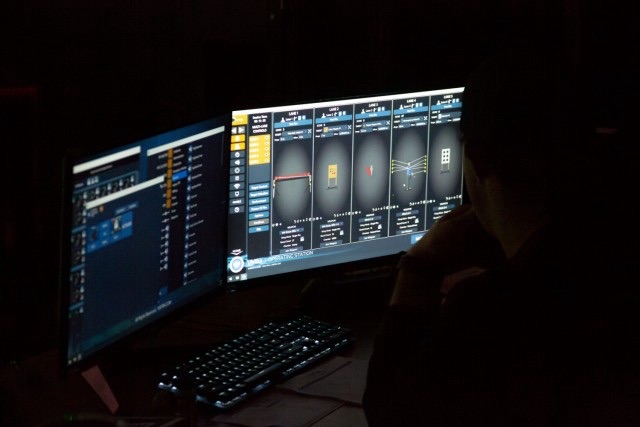
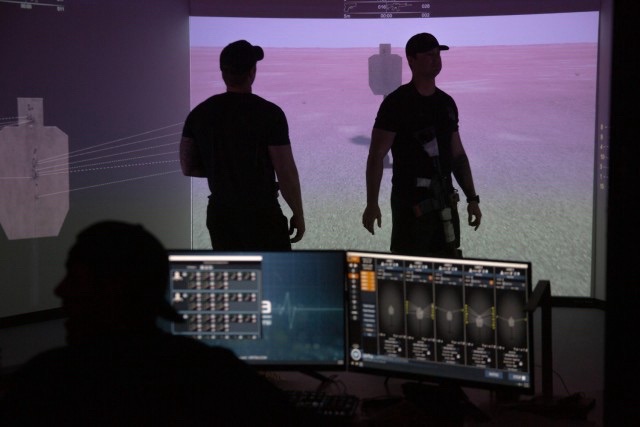
Combat Support Training Ranges Proof of Concept Tests Defender Unit-Led Training, Equipment Delivery

Saturday, August 19th, 2023

TYNDALL AIR FORCE BASE, Fla. (AFNS) —  

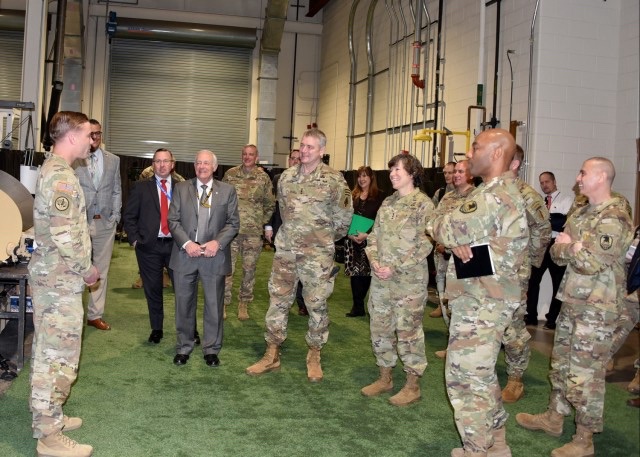
The Air Force Installation and Mission Support Center moved another step forward in establishing combat support training ranges across the enterprise with a security forces-focused proof of concept exercise at the Silver Flag site on Tyndall Air Force Base, Florida, July 17-28.

As part of the CSTR concept, the exercise tested the delivery of Defender unit-led combat skills training using low-density, high-demand equipment at a new site.  

Florida’s 801st RED HORSE Training Squadron Silver Flag site is primarily used for civil engineer combat training.

Currently, security forces deployment training is only available at the Air Force Security Forces Center’s Desert Defender Ground Combat Readiness Training Center at Fort Bliss, Texas, because it uses equipment categorized as low density, high demand, meaning it’s only at select overseas locations or the Fort Bliss training site because of cost-effectiveness, said David Clifford, AFIMSC expeditionary and readiness training lead analyst and CSTR action officer.

The Tyndall proof of concept exercise involved two squads of 13 Defenders from the 78th Security Forces Squadron at Robins Air Force Base, Georgia, and the 96th SFS from Eglin Air Force Base, Florida.

It is one of several beta tests organized and funded by AFIMSC this summer as the center builds out a CSTR plan for fully equipped, multi-functional installation and mission support training sites across the Department of the Air Force. Its goal is CSTR training sites within 400 miles of most installations, giving commanders the flexibility to conduct unit-led training without having to travel long distances with troops and equipment. Thus far, nine sites are proposed in the continental U.S. and three overseas at Andersen Air Force Base, Guam; RAF Feltwell, England; and Ramstein Air Base, Germany.

Helping commanders maintain readiness and ensuring Airmen are prepared to deploy and win future wars is the focus of the CSTR initiative, said Col. Lance Turner, director of AFIMSC Expeditionary Support and Innovation Directorate.

“We don’t get to win wars because of what the previous generation of Air Force leaders did,” Turner said. “We win wars because of what we are doing today and how we are preparing Airmen today. That’s what this is all about.”

Leaders use the terms “sets and reps,” Clifford said. “The CSTR locations will allow our agile combat support Airmen to complete unit-led training … sets and reps … on low-density, high-demand equipment unit type codes in austere field conditions.

“That’s what this is about … prepping our ACS Airmen for the next high-end fight against near-peer competitors in distributed operations and theaters,” Clifford said.  

Previous and planned proof-of-concept events allow units to create scenarios that cover the full range of military operations, said Pervis King, counter improvised explosive device integrator at the Air Force Security Forces Center.

The exercise began with cadre from Desert Defender transporting equipment from Fort Bliss to Florida, setting it up and standing ready for security forces to begin training July 17.

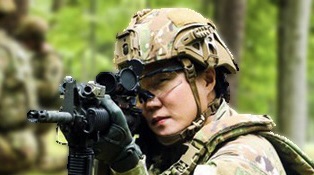
The equipment, like a Base Defense Operations Center and tactical radios normally only found at Fort Bliss or in a deployed environment, allowed security forces teams to receive deployment training on mounted and dismounted patrols, base defense scenarios involving land navigation, night vision goggles, intelligence, prepping the battlespace, formations, troop movements, battle drills, urban operations and mission planning. The event ended with a field exercise and evaluation.

“Access to this equipment allows Defenders to come out and practice their full scale of operations using equipment not readily available at home station,” King said. It’s also an opportunity to train in austere, simulated operational environments before they are deployed to permissive or non-permissive hostile locations.”

The security forces-focused event “went very well, as we’d hoped it would,” he said.

“Each unit sent well-trained Airmen to oversee the training and develop lesson plans and timelines, and the squads supporting it executed it with excitement and vigor even though the heat and elements were harsh at times. They were still excited and executed at a high level,” King said.

This exercise and others like it this summer serve as beta tests that allow CSTR planners to gather data and lessons learned from after-action reports.

“All of this data will allow AFIMSC to select sites, gather cost data, build our requirements and resources needed, and eventually submit that information into a program objective memorandum, or POM, to allocate future funding,” Clifford said.

A final proof of concept is set for next month at Desert Defender site at Fort Bliss. The AFIMSC team will then hold a CSTR lessons-learned conference in mid-September in San Antonio to capture and discuss the data and after-action reviews.  

“From there, our CSTR working group will meet sometime late May 2024 to transition the program with final site selection and a fiscal year 2026 POM build,” Clifford said. 

Story by Debbie Aragon, Air Force Installation and Mission Support Center Public Affairs

Photos by Emily Mifsud

Introducing the Modular Vest Adaptor (MVA) by Unobtanium Gear and @The_Random_Oh

Friday, August 18th, 2023

The MVA (Modular Vest Adaptor) fills a capability gap in the standard issued IOTV (Improved Outer Tactical Vest) and MSV (Modular Scalable Vest) platforms. Designed by active duty soldiers and produced in partnership by Unobtanium Gear and The Random Oh.

The MVA allows the user to attach any hook/loop wing or radio pocket and dangler style pouches without interfering with the quick disconnect features found on the vests themselves. No modification to the plate bag or cummerbund necessary.

The MVA has been tested to be compatible with the following vests and sizes:

MSV Gen 2 – XS, S-S, S, S-L, M, L
IOTV Gen 3 – XS, S, M, L
IOTV Gen 4 – XS, S, M, L
Weight: 1.55oz / 44g

Available now, the MVA can be purchased online at Unobtanium Gear and OP Tactical, as well as select in store retailers in the Fayetteville, North Carolina area.

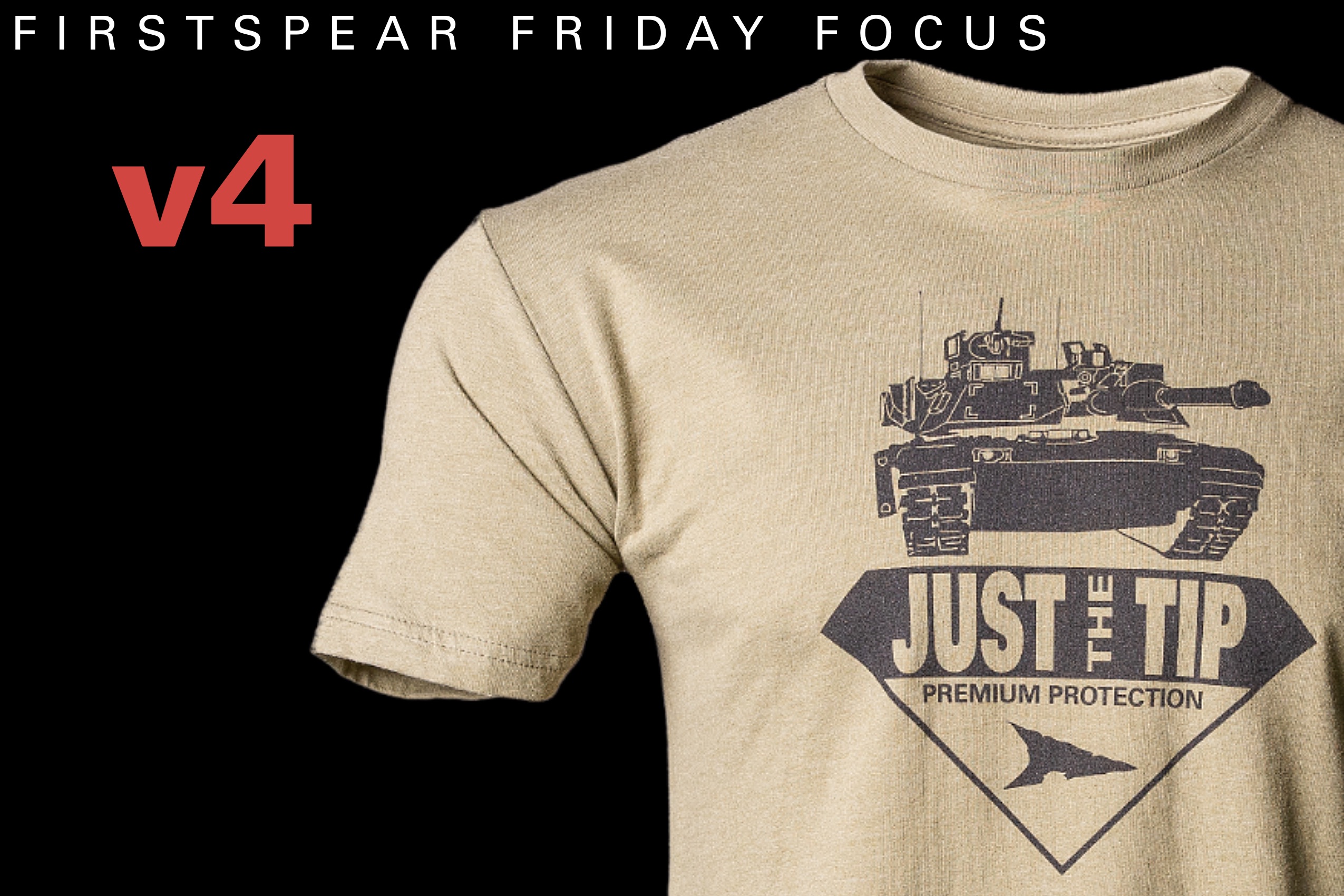
FirstSpear Friday Focus – Cell Tags

Friday, August 18th, 2023

Do you or your team need to be labeled and identified easily and effectively? Check out the FirstSpear Cell Tag! Our patented Cell Tags solve the problem of identifying key and specific personnel under passive and thermal night vision with ease. Don’t let your team get confused – the FirstSpear Cell Tag is the perfect way to differentiate and label key members. Let our unique and top-of-the-line precision cutting and bonding processes do the hard work for you! Whether it’s a call sign, an identifier or other information that you need to quickly display, the Cell Tag has you covered. It’s easy to attach to technical clothing or equipment with its hook back design. Take the confusion out of tedious night ops with the FirstSpear Cell Tag.

Visit FirstSpear to find American Made kit and accessories, Built For The X.

Army Kicks Off Network Field Experiments

Friday, August 18th, 2023

JOINT BASE McGUIRE-DIX-LAKEHURST, N.J. — Army scientists and engineers are kicking off the annual Network Modernization Experiment, or NetModX, as they move their capabilities from the lab to a field environment across the New Jersey installation.

The Army’s Command, Control, Communications, Computers, Cyber, Intelligence, Surveillance and Reconnaissance Center conducts NetModX at JB-MDL and Aberdeen Proving Ground, Maryland, over eight weeks as a capstone experimentation event. It creates an operationally relevant, threat-informed environment to prove out disruptive and transformative C5ISR technologies. The C5ISR Center is an element of the Combat Capabilities Development Command.

The center’s field experimentation builds upon its modeling and simulation work and lab research, according to Noah Weston, the C5ISR Center’s chief of strategic experimentation. The NetModX team partners with subject-matter experts from across the Army to design experiments that best address the Army’s needs and gaps.

“The Army needs data to make the right decisions at the right time to mature science and technology products to be deployable,” Weston said. “Experimentation allows us to obtain early data on system performance that can inform future Army requirements.”

The C5ISR Center conducts NetModX, which is composed of about 80 technologies for 2023, with the Army’s programs of record, cross-functional teams, other DEVCOM organizations and industry partners for an approach that ranges from science and technology to acquisition.

“NetModX expands our knowledge of emerging networking technologies in relevant field conditions and fosters critical early collaboration between government and industry partners,” said Stephen Blair, senior science and technology advisor for the Network Cross-Functional Team, part of Army Futures Command. “It informs our collective efforts to reduce network complexity at lower echelons; increase speed and survivability through mobile command posts; manage electronic signature; and improve interoperability.”

NetModX intends to deliver key insights to help transition capabilities from the “art of the possible” to the “achievable,” said Joe Saldiveri, NetModX project lead and C5ISR Center engineer.

“These experimentation opportunities enable the Army stakeholders to come together to spark collaboration and inform critical decisions,” Saldiveri said.

The C5ISR Center partners with the Army’s Program Executive Office Command, Control and Communications-Tactical during NetModX to provide technical and operational data on emerging technology.

“Experimentation events such as NetModX support our network design efforts for the Army of 2030 or to inform conditions as we look forward to how our programs will support Army of 2040 network modernization,” said Assistant Program Executive Officer Ward Roberts. “NetModX data supports our developers with integration and technical maturity insight on targeted capability that has transition potential into programs of record and informs formulation of design goals as we work with Cross-Functional Team community.”

By Dan Lafontaine, DEVCOM C5ISR Center Public Affairs

New Agilite General Purpose Pouch

Thursday, August 17th, 2023

Agilite just launched their General Purpose Pouch. It brings several new features to a basic pouch-see them in the video below:

For more details check it out at www.AgiliteGear.com

Advanced Infantry Marine Course Hawaii

Thursday, August 17th, 2023

MARINE CORPS BASE HAWAII, HI —

Across the thick jungles and mountainous terrain of Oahu, U.S. Marines participating in the Advanced Infantry Marine Course execute their patrol plans under the watchful eye of their combat tested instructors. Each iteration of the course is mentally rigorous and physically demanding, pushing Marines to the limit of their capabilities, and molding them into ready, highly proficient warriors.

Over seven intense weeks, Marines hone multiple infantry skills such as calling for fire and close air support, patrolling techniques, jungle and urban terrain warfare, and casualty care. Each skill is first taught in the classroom, followed by demonstrations and practical application in the field. For these Hawaii Marines, training took place aboard Marine Corps Training Area Bellows and throughout the Kahuku Training Area, each offering a unique, and realistic venue to prepare for modern warfare. “MCTAB and KTA are perfect for creating authentic and realistic training scenarios for our students…” said Staff Sergeant Ricardo Hernandez, Staff non-commissioned officer in charge for Advanced Infantry Training Battalion, Hawaii Detachment.

[blockquote: “MCTAB serves as a crucial component in shaping the training experiences of our infantry marines.”: Staff Sergeant Ricardo Hernandez, Staff non-commissioned officer in charge for Advanced Infantry Training Battalion, Hawaii Detachment.

“The training areas have been designed to simulate urban environments, encompassing a diverse range of scenarios.”

For the students, all infantry Marines, the tropical climate, and the effects on the body present another variable for consideration during long patrols and extended operations in the field. This additional layer of realism offers a unique opportunity to students to make decisions and gain leadership experience when they are tired, hot, sweaty, and hungry. Sgt. Connor Hoovler, a rifleman with 3d Littoral Combat Team, 3d Marine Littoral Regiment, 3d Marine Division, attests to the environmental impacts, “The climate and humidity make this course more difficult. Staying hydrated and maintaining peak performance are a constant struggle we face.” 

Aside from development of individual skills and the opportunity for Marines to learn more about themselves in stressful situations, AIMC also collectively develops cohesion, teamwork, and camaraderie. Even in the thick and humid jungle air, the students share a common bond – the ‘ohana spirit’ – thought responsible for building strong and resilient families. “Living out in the field for weeks at a time, your Marines to your left and right become life family,” Hoovler added. “Trust and seamless cooperation are crucial for team success.”

At the heart of AIMC lies the development of an adaptable mindset and decisive problem-solving skills. Marines learn to thrive in unpredictable environments and must make sound decisions on the fly. “The ability to devise effective solutions under pressure is invaluable,” said Lance Cpl. Nicholas D’angelo, a rifleman with 3d LCT, 3d MLR, 3d MARDIV. “It instills confidence and transforms us into more capable leaders.” Under high-pressure scenarios, trainees are tasked with crucial leadership roles and decision-making. “During the fleet event, I led my squad through a challenging blocking position, formulating and executing a plan under tight timeframes that tested my leadership abilities,” Hoovler said.

Completing the AIMC is a badge of honor and garners respect within the Marine’s platoon and their entire company. While it is a career requirement for many Marines, it serves as a stepping stone and showcases their dedication to their Military Occupational Specialty. AIMC is more than a training regimen; it’s a transformative journey that forges warriors. “The training environment at Marine Corps Base Hawaii is meticulously designed to deliver an unmatched level of realism, preparing our Marines for the complex and ever-evolving challenges of modern warfare,” said SSgt. Hernandez. These Marines emerge stronger, more resilient, and better equipped to face the unknown challenges that await them on the battlefields of the future, standing ever ready for any clime and place.

By Cpl Cody Purcell | Marine Corps Base Hawaii

Wind Tunnel Training: Key to Expeditionary and Special Warfare Readiness

Wednesday, August 16th, 2023

NORFOLK, Va. – Several members from the Naval Safety Command (NAVSAFECOM) Expeditionary and Special Warfare Directorate participated in simulated skydiving training at the iFly Virginia Beach July 17. This periodically scheduled training allows jump participants a simulated free fall environment to work on various body positions, corrective actions and emergency action procedures in a controlled and supervised environment.

IFly provides an indoor skydiving experience that creates free fall conditions without having to jump out of an aircraft. The facility’s vertical wind tunnel generates 1600 horse power from four powerful fans, creating a wall-to-wall cushion of air on which participants can safely float. While an entertainment venue for the general population, the wind tunnel is more than just fun for the DoD personnel who use it for training purposes. 

“I have been doing the wind tunnel training for about six years and the training is the closest we can get to representing the feeling, motion and training to actual flight,” said a Senior Chief Special Warfare Operator stationed at NAVSAFECOM as a naval special warfare safety analyst. “This training is important to me and others as it allows the opportunity to maintain jump qualification proficiency while stationed at a non-operational command.”

The wind tunnel is a low-risk atmosphere that provides the jumper with a realistic experience of falling through the air at 125 mph. Jumpers work on stability, 360-degree turns, side slide and forward or back movements. Once the basic movements have been mastered, jumpers can transition into emergency procedures and simulate each emergency procedure they might encounter at the “bottom end” of their jump. Not only will jumpers practice their wave off procedure, but they will simulate and conduct a hard pull Emergency Procedure (EP), learning how to stay stable and still execute with quick but precision hard pull.

On this training day at the wind tunnel, participants had their own individual areas they aimed to train in. Participants have different levels of experience and specific training goals to work toward.

“Today I worked on various free fall body positions. Moving forward and back, left to right in different varieties,” said the Senior Chief Special Warfare Operator. “The other thing I worked on was recovery stability, having the instructor push or pull me and roll me over and working on my recovery.”

Senior Chief Special Warfare Boat Operator Brad Rumbaugh, a small boat safety analyst with NAVSAFECOM, has over 200 military free fall (MFF) jumps and countless hours going into the tunnel. Rumbaugh’s training focused on his “Coach’s Position,” which uses legs to maneuver, freeing one’s hands for hand signals while instructing another flyer.

“The position is for assisting another jumper. If someone hasn’t jumped in a while or asks for someone to jump out with them, that position allows for the “coach” to use his or her hands to either help or eventually pull the rip cord if the jumper freaks out or freezes in the air and misses their pull altitude,” said Rumbaugh. “When coaching you have to be ready to stop their spin, direct and communicate corrections with your hands. You can’t be using your hand to maneuver and pass hand signals at the same time, so you have to learn to fly with your legs so your hands are free.”

The participants know the value of wind tunnel training and seize every opportunity they have to participate.

“Training like this is important to DoD because like everything else you have to stay current with your skills. You either use or lose your skills with things like shooting, skydiving, scuba diving, etc.,” said Rumbaugh. “Wind tunnel training allows military free fall parachutists the ability to knock the rust off, gain more experience and boost their confidence in emergency procedures prior to the real evolution of military free fall.”

Chief Explosive Ordnance Disposal Technician Jeremy Marco, a NAVSAFECOM expeditionary warfare safety analyst stressed the importance of the free fall emergency and survivability procedures and the opportunity the vertical wind tunnel provides.

“Vertical wind tunnel training with procedures increases the jumper’s in-air survivability and ability to withstand and cope with malfunctions and in-air emergencies that could occur,” said Marco. “Today, I worked specifically on belly fly, turns using hands and feet, situational awareness and air space management.”

Risk is inherent in all tasks, training, missions, operations and personal activities no matter how routine. While there is no shortage of inherent risk in the Navy’s expeditionary and special warfare communities, training such as the wind tunnel remains key to readiness ? Navy’s top priority. Today’s operational environment demands ships, aircraft, submarines, expeditionary forces, special operations forces and personnel that are ready to fight and win.

From Leslie Tomaino

DISCLAIMER: The use of IFLY by name in this article does not imply endorsement by the Naval Safety Command.

Leaders Give Update on ‘Modern Triad’

Tuesday, August 15th, 2023

HUNTSVILLE, Ala. — Space, cyber and special operations leaders said America and its allies continue to integrate capabilities in a triad intended to influence multi-domain and full-spectrum operations and provide the joint force with an enhanced capability to see, sense, stimulate, strike and assess across the spectrum.

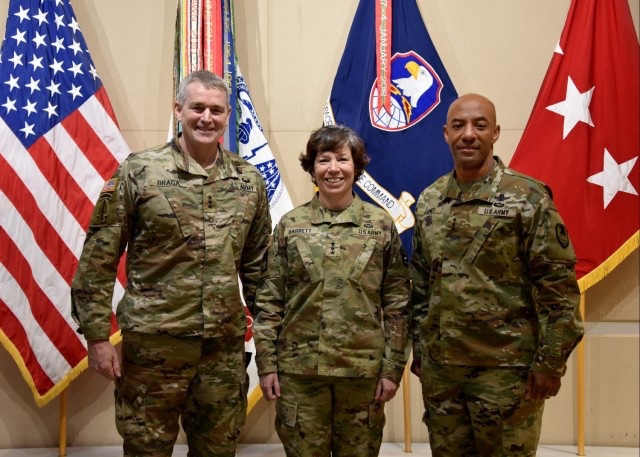
The triad panel members: Lt. Gen. Daniel L. Karbler, commanding general of U.S. Army Space and Missile Defense Command; Lt. Gen. Maria B. Barrett, commanding general of U.S. Army Cyber Command; Lt. Gen. Jon Braga, commanding general of U.S. Army Special Operations Command; and United Kingdom Royal Air Force Air Commodore Adam Bone, U.K. Space Command director of operations, plans and training; participated on a panel discussing the triad during the 26th annual Space and Missile Defense Symposium at the Von Braun Center in Huntsville on Aug. 8.

“The combined use of space, cyber and special operations force capabilities provides other options to commanders that are less likely to cause escalation,” Karbler said. “When you look at what the triad demonstrates in its ability to integrate and synchronize space, cyber and SOF capabilities at the most effective, tactical echelon and then expand options for creative venues to exploit, that is what commanders and joint forces are looking for.”

Karbler said USASMDC is the Army’s force modernization proponent and operational integrator for global space, missile defense and high-altitude capabilities, and that space capabilities enable land operations in multiple ways in the same way that land capabilities enable space operations.

“We have explored countless opportunities and taken advantage of different exercises that all of us have gone arm-in-arm to demonstrate capabilities the triad brings,” Karbler said. “When you look at the complimentary, reinforcing nature of each capability and how they present multiple dilemmas for the enemy, the overall effect is greater than the sum of each individual effect.”

Bone said the UK is realistic about its current status as a military space power, creating the U.K.’s Space Command to help advance U.K. and allied equities in space.

“We are justifiably more confident of our established U.K. strengths in special forces, cyber and intelligence,” Bone said. “The obvious next steps are to leverage those strengths in the space domain. With that in mind, the innovation we see the U.S. Army leading is of significant interest.”

Bone said the U.K. Space Command recognizes the triad’s acknowledgment that the space domain provides a vital role in national defense. He added the U.K.’s capabilities across special forces and cyber domains are highly regarded by partners globally, and it is only rational to demonstrate ambition to leverage and support such potent resources in the space domain.

“By synchronizing effects, the layered output adds up to be greater than the sum of their parts — that’s what makes the triad concept so valuable,” Bone said. “And, it links neatly with the U.K. concept of multi domain integration. If space is recognized by the U.K. to be the most essential integrator, why wouldn’t we also want to make the most of those connections in mutual multi-domain support?”

Bone said in regard to U.K. Space Command’s connection with the U.S. Army, and in particular USASMDC, that there are synergies between the organizations, highlighting the scale, mindset and approach. He added that experimentation, innovation and operational integration are all second nature because of this.

“U.K. defense broadly understands the value of ‘space as an enabler,’ but we haven’t quite indoctrinated the joint force in the opportunity of ‘space as an effector’ in its own right,” Bone said. “The triad concept will act as a proving ground for this employment within a slightly smaller community of interest that has both the operational necessity and experience to drive this forward, particularly given the synergies between the space and cyber domains. In turn, we hope that the subsequent lessons and vignettes will help further the U.K. multi-domain integration concept — maximizing the value of the space domain within U.K. operations.”

These space, cyber and special operations experts said the synergy of these organizations help the joint force, Army and U.S. allies and partners to face the future. With space, special operations and cyber all possessing unique but independent capabilities, each component can rapidly gain intelligence and attack critical vulnerabilities.

Barrett said they are focused on synchronizing and converging each organization’s capabilities to create an effect and combining their unique capabilities and efforts to facilitate the use of these capabilities with either combatant commanders or their service commanders in the theaters.

She said the triad is a partnership that will help the Army and joint force commanders achieve information advantage. Barrett added the triad is more than an idea saying they are already coming up with solutions and tools together as a team.

“The triad brings an essential aspect of battlefield geometry that alone none of us can,” Barrett said. “We now have an understanding of what is happening in the competition’s space we previously did not have.

“We will never run out of challenges,” she added. “We have to provide the proof of concept that this works and that it’s worth the investment. Adaptation and innovation are imperative. We can see what the threat is and know we are going to have to do to adapt.”

Braga said during the last year, his command has started to change their organizational structures for tomorrow’s needs. He added they are integrating triad concepts into doctrine and exploring professional educational opportunities and the development of a new military occupational specialty to codify the focus and investment required to achieve success.

“Moving forward I would expect more adaption to technology,” Braga said. “Adaptation of technology and how you leverage them affects elements from SOF, space and cyber communities.

“Innovation is a mindset, and if not us, then who?” Braga asked. “Who is going to adapt the changing technology of all three legs of the triad? Who is going to embrace that technological change to their advantage the quickest and the fastest?”

Braga asked if space, cyber and SOF and its coalition partners were prepared to win if the country faces a high-end conflict.

“That is what’s before us,” Braga said. “Although the weight of that burden is not 100 percent on the legs of the triad, we certainly have a major role to play and an outsized ability to influence and prevent and contribute toward deterrence with this modern day triad.”

By Jason Cutshaw, USASMDC