TYR Tactical

Archive for the ‘Guest Post’ Category

Simple Jack Carbine from Sons of Liberty Gun Works

Thursday, August 24th, 2023

24 AUGUST 2023 – San Antonio, TX – Sons of Liberty Gun Works (SOLGW), is pleased to announce the release of the “Simple Jack” Carbine. SOLGW products feature meticulous craftsmanship, unbeatable reliability, and a lifetime warranty. Founded in 2014, SOLGW is a premier rifle manufacturer that builds quality, hard-use platforms.

Conceptualized by “AT” Ambrosia Terrebonne (moniker), Subject Matter Enthusiast, the Simple Jack AR rifle is a solution that brings real-world, affordable enhancements in a complete package to the SOLGW signature lineup.

“Picking out components to build a rifle ready for use can be overwhelming. I wanted to see a platform that focused on solving the “paralysis of analysis” of what to choose when you are unsure if your needs and capabilities will change in the future.

My thoughts were this: Why pay for components you may not need when you could put that money towards actual life-support items, for example, an optic, light, and sling? The Simple Jack does this as a platform that can accept your modifications as your needs and capabilities change.”

– Ambrosia Terrebonne

Simple Jack Rifle Features:

• Larue MBT-2S Straight Bow Trigger (flat-faced trigger for greater surface area)
• HRF Concepts Rifle Combat Magwell (250% larger funnel surface – Rebellious Stripes Edition
• SOLGW Hard Chrome Bolt Carrier Group (Enhanced durability linking back to Eugene Stoner’s original design)
• 13.7″ (Mid-length Gas System with P/W NOX9) 16” OAL
• Barrel: SOLGW 4150CoMOV 1:7 MPI HPT Barrel
• Caliber: 5.56 NATO Chamber
• Barrel Steel: 4150 CrMoV (Chrome Moly Vanadium per MIL-B-11595E)
• Twist Rate: 1/7 Twist Six Groove
• Thread Pitch: 1/2-28 Threaded Muzzle
• Gas Block: .750? Gas Block Journal with appropriately sized gas port
• Barrel Finish: QPQ Corrosion Resistant Finish
• Barrel Extension: QPQ coated M4 Feed Ramp Extension
• High Pressure Tested (HPT)
• Magnetic Particle Inspected (MPI)
• With “F” Marked Taper Pinned Front Sight Block
• Midwest Industries Combat Flip Up Rear Sight
• Mil-Spec Safety
• SOLGW LCH (Liberty Charging Handle)
• B5 Systems Bravo Stock and Grip
• Magpul SL Mid-Length Handguard

Available today at Interstate Guns

Follow Ambrosia Terrebone

Follow Sons of Liberty Guns Works

AFSOC hosts 2023 Weapons and Tactics Conference

Thursday, August 24th, 2023

HURLBURT FIELD, Fla. —  

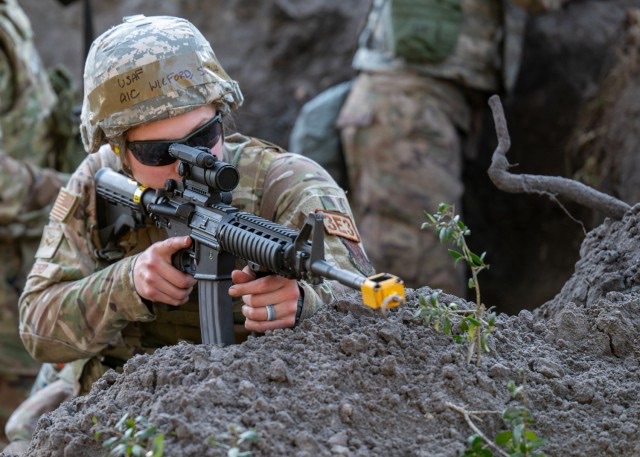
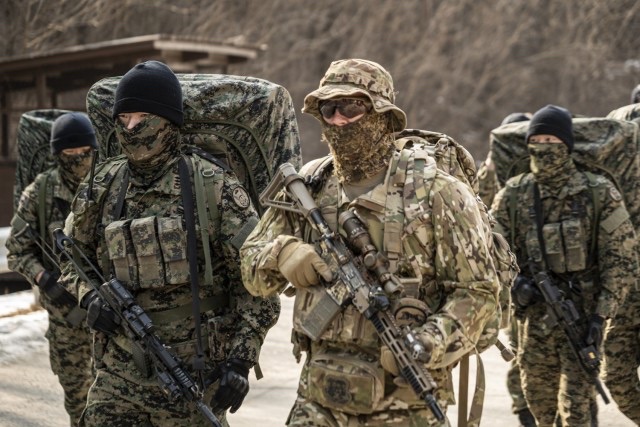
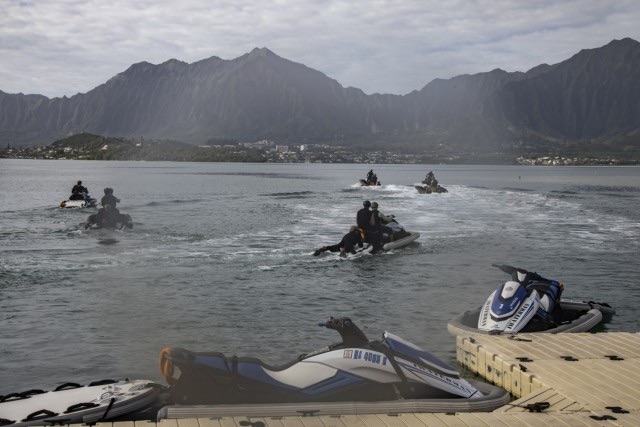
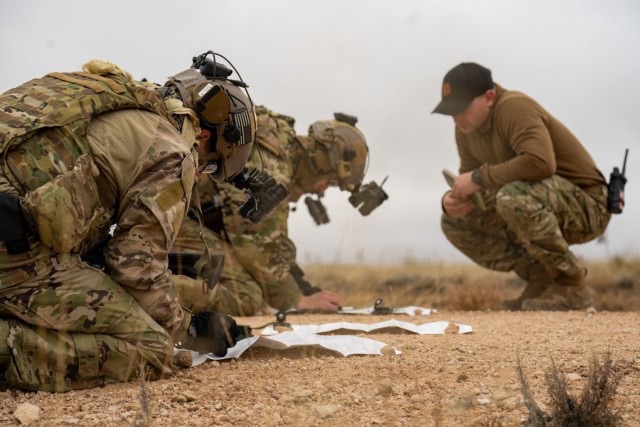
AFSOC held the 2023 Weapons and Tactics Conference led by the command’s Operations directorate, 2-11 Aug.

Weapons and tactics experts from across the AFSOC enterprise gathered to participate in mission focused working groups to produce warfighter driven solutions to tactical problems. The conference also facilitated an academics portion as well as a Tactics Review Board to evaluate current practices, to ensure the command is postured to defeat threats now and in the future.

Brig Gen Rebecca Sonkiss, AFSOC deputy commander, kicked off the conference explaining the importance of continuously improving weapons and tactics.


“As America’s Air Commandos, we must be Ready to Fight Tonight and be Pathfinders for Tomorrow. Ready tonight means that we consistently and realistically train and train hard,” said Sonkiss. “It is important that you build expertise and toughness through challenging and complex scenarios and continue to iterate and innovate to stay ahead of our adversaries across the spectrum of conflict.”

Working groups during the conference included focus areas such as precision strike, irregular warfare, specialized mobility, information warfare, and small unmanned aerial systems tactics.

Weapons and tactics experts were able to work together to identify solutions and objectives to effectively improve Special Operations tactics, techniques, and procedures in highlighted focus areas prioritized by AFSOC.

On the last day of the conference, Lt Gen Tony Bauernfeind, AFSOC commander and command’s leaders were briefed on Tactic Improvement Proposals from the TRB in addition to proposed solutions gathered from the working groups.

Bauernfeind concluded the conference by energizing the weapons and tactics experts in the room with gratitude and intent on the way forward.

“It is going to be this team of experts that will make us more effective against our adversaries,” said Bauernfeind. “We must continue to tackle these hard problem sets, drive for solutions, and then go faster so we are postured to best enable the joint force. The solutions we work through during WEPTAC conferences are imperative to shaping our tactics and the mission effectiveness of our Air Commandos for tomorrow.”

By Capt Amy Rasmussen, Air Force Special Operations Command Public Affairs

SCUBAPRO – New Odin Helmet Mask Strap for Team Wendy SAR Helmet

Wednesday, August 23rd, 2023

SCUBAPRO has been working closely with the Search and Rescue (SAR) community to help with the development of a new Odin Helmet Mask strap. SCUBAPRO has the Odin Helmet mask strap which allows you to attach any SCUBAPRO mask that works with the comfort strap to an Ops Core, Team Wendy exfil, Galvion helmet rails, and even the Ops Core Skull mounted system. Essentially, for anytime you must wear a helmet and a dive mask at the same time. When using a diver propulsion vehicle (DPV), the Patriot3 Jet boots, or over the beach (OTB), any time it’s a good idea to wear a helmet.

With the updated TW Odin strap you can now attach your SCUBAPRO mask to the Team Wendy SAR helmet. Allow for ease of use when using a mask with a helmet. It is made for SCUBAPRO by S&S Precision and is in the process of being added to the US Navy SAR State of the Art Catalog (SOA). This will allow all Navy SAR swimmer to use it, with any SCABAPRO Mask that works with the comfort straps.

Both Odin straps now have a new mask clip which allows the strap that attaches to the mask, to be pulled tighter with one hand.

Part number for the Odin strap (older model) that works with Ops Core, Team Wendy Exfil and Galvion helmets.
24.815.100

New Odin strap TW for the Team Wendy SAR helmet
24.815.200

New Antiterrorism Strategic Plan Coming This Fiscal Year

Wednesday, August 23rd, 2023

WASHINGTON — The Department of the Army is working on a new Antiterrorism Strategic Plan that is scheduled to roll out this fiscal year.

The plan, which is being coordinated with the Department of Defense, will update policy, training, exercises and how the Army analyzes and shares information about terrorism.

“The threats we faced 20 years ago aren’t the threats we face today, nor are they the threats we will face in the future,” said Maj. Gen. Duane R. Miller, Army provost marshal general. “Our adversaries are constantly evolving with the use of technology to identify vulnerabilities. It’s through this strategic plan that we hope to address any vulnerabilities and any threats we may face in the future.”

The program will help put Army civilians, contractors, Soldiers and their families on common ground with the service’s antiterrorism goals and objectives moving forward, he added.

The Army’s Antiterrorism Division worked with multiple federal organizations, including the Department of Homeland Security, as they developed the antiterrorism program. This allowed them to share information on best practices and emerging technologies that could pose a threat.

Training, education and awareness remain the key elements in the service’s efforts to prevent terrorism at home and overseas, Miller said.

“The more aware our community members are, the more likely we are to obtain advanced warning to defend against terrorist attacks,” he said. “Constant vigilance, timely threat reporting, knowledge of antiterrorism prevention measures and Army leadership advocacy are vital to sustained prevention.”

August is dedicated as Antiterrorism Awareness Month to educate members of the Army on the threat and provide information on how to prevent acts of terrorism.

“Soldiers who are aware of the risks and who report concerning behavior can help prevent threats from impacting the local community,” he said. “Don’t be a bystander. Do your part as a member of the team.”

According to Miller, the fight against terrorism has shifted in recent years from terrorist groups overseas to individual domestic terrorists fueled by extremist ideologies.

To combat the evolving threat, the Army has updated the antiterrorism program and continues to look for ways to improve protection efforts. The service is continuing to field and expand the capability of the Joint Analytic Real-time Virtual Information Sharing System.

JARVISS is a desktop and mobile application that pulls information from more than 80,000 sources to give commanders real-time data on potential threats, so they can make informed decisions.

Along with advances in technology, the Army and the National Guard continue to conduct annual exercises to stay ready. The Ohio National Guard held their emergency response exercise in April with support from local emergency services.

The exercise evaluated how the responding agencies can affect control and containment of the situation as well as the effectiveness of the facilities’ response capabilities.

National Guard units from 12 states along with multiple federal and local agencies completed an emergency response exercise at the Anchorage Fire Department Fire Training Center in June. The training is designed to maintain readiness, validate response procedures and collaborate with partners.

These efforts, along with others throughout the service, allow the Army and local partners to stay vigilant in the fight against terrorism.

“We must understand the threat and be prepared to prevent any impact on Army readiness,” Miller said. “We’re confident the outcomes from implementing the strategy will align policy, training, doctrine, partnerships and information sharing to meet the challenges of terrorism over the horizon.”

Army personnel can report suspicious behavior to their chain of command or submit a report online through INSCOM’s iSALUTE form.

By Christopher Hurd, Army News Service

Photos by Jenn DeHaan, Mike Strasser, SSG Aven Santiago, and SPC Cecilia Soriano

Alaska National Guard photos by Robert DeBerry

Exclusive OPT x Altama Maritime Assault Boots – Land Warfare Mod in Multicam Arid

Tuesday, August 22nd, 2023

Exclusive OPT x Altama Maritime Assault Boots – Land Warfare Mod in Multicam Arid are available for the first time. These shoes have a few modifications that make them a better for non-amphibious ops while keeping the feel and form factor of the Maritime Assaults. The drain holes have been omitted to limit the ingress of water and debris, and the included insole is an anti-microbial foam with a fabric top for ease of use with socks, making them ready to go out of the box.

We are happy to bring these to the market with Altama. These are a limited run, get yourself a pair today.

www.optactical.com

Minot AFB Develop Prototype Gloves for Extreme Cold Temperatures

Tuesday, August 22nd, 2023

MINOT AIR FORCE BASE, N.D. (AFNS) —  

Minot Air Force Base’s innovation cell, also known as Atomic Spark, brought another innovative solution to the mission.

Atomic Spark is an agency that accelerates grassroots innovations within Minot AFB, providing both a voice and conduit to turn powerful ideas into operational capabilities. The newest innovative solution brought forward to the cell … gloves.

“Innovation can start with any Airman; they are the subject matter experts and know how to solve the problems,” said Capt. Matthew Matuszak, 91st Missile Wing Atomic Spark director. “Atomic Spark helps refine and elevate the Airman’s idea so that it can be seen by a decision maker.”

With frigid winter temperatures that can reach 50 below zero, Airmen working outdoors are exposed to extreme weather. This makes gloves an essential item in the winter. The standard-issue gloves currently used by many Airmen may protect them from the elements but don’t offer the dexterity and movement needed to perform duties easily. A custom, heated glove was identified as a potential solution by the 54th Helicopter Squadron during a recent IGNITOR outreach project with their unit. Commercially-available gloves did not offer the right amount of dexterity, comfort and insulation required by the mission.

“You can’t effectively employ your weapon system or the hoist if you can’t feel your fingers in the winter,” said Staff Sgt. Mathew Brown, 54th HS flight engineer. “The previously issued version had some limitations, so it was determined that an improved glove was needed.”

These issues were brought to the IGNITOR group, a working group whose goal is partnering with Minot AFB units to identify feasible contractual, facilities or process improvement solutions to tactical problems.

The IGNITOR group saw the need for a custom heated glove opportunity that spanned several career fields across both the 5th Bomb Wing and the 91st MW. Atomic Spark brought the idea for custom heated gloves to base leadership and assisted with drafting the required documents to request innovation funds at the Air Force level. As a result, custom heated gloves are now being developed to not only help Airmen assigned to the 54th HS, but all base personnel working in extreme weather conditions.

“It can be difficult to get good training in ambient temperatures of 20 below zero or lower if you’re only thinking about how cold you are so anything that can help you focus on the task you’re accomplishing in the aircraft only makes you and your squadron better,” Brown said.

Minot AFB’s custom glove proposal was selected by Air Force Chief of Staff Gen. CQ Brown, Jr. as the recipient of a portion of his Momentum Innovation Fund. The next step in the process involved the 5th Contracting Squadron soliciting and awarding a contract prior to the winter.

The Atomic Spark and IGNITOR teams at Minot AFB have shown no signs of stopping their streak of innovation, having acquired over $45 million in Small Business Innovation Research funding in just under two years. These funds allow Minot AFB to identify small businesses that can provide solutions to the warfighter in a faster, more efficient manner.

“Atomic Spark is critical to Team Minot’s innovation goals, having been extremely successful obtaining Department of Defense innovation funds,” said Lt. Col. Stephen Kroft, 5th CONS commander. “The partnership between Atomic Spark and IGNITOR has been a key factor in turning Team Minot into a hotbed for innovation.”

Atomic Spark and IGNITOR have more than 40 projects currently in the works. Custom heated gloves won’t be the last innovation coming from Minot AFB as Airmen work hard to improve not only the base but the Air Force as a whole.

By Airman 1st Class Alexander Nottingham, 5th Bomb Wing Public Affairs

The Baldwin Files – The Tools I Carried (Part 2)

Monday, August 21st, 2023

In this iteration of the series, I am going to drill down on individual survival kits. In truth, every item a soldier wears or carries is supposed to contribute to his or her survival. Boots to headgear. Everything serves a purpose and helps the soldier stay alive and successfully complete the mission. However, when most people talk about a “survival kit” they are thinking about a much smaller package of last-ditch “emergency” items tailored to the operating environment and potential contingencies. I, for one, chose items to fill a kit like that based on what I consider the “more likely and most dangerous” survival scenarios I might realistically face – not the apocalypse. So, that is the specific kind of survival kit I will mostly focus on.

At the highest end of that concept is the multipocketed Pilot’s Survival Vest that military aircrews and some others wear filled with issued survival gear. The one in the picture above was used from the 1960s thru the 90s. On the other end, would be the handful of useful items I started carrying in my uniform pockets early in my career that was my de facto first survival kit; and – as would likely be the norm for an entry-level soldier even today – it was very minimalistic. It was an issue “Utility Knife’ by Camillus (the design dating back to WWII), Zippo lighter, P38 (issue can opener on my dog tag chain), several packets of C Ration Toilet Paper (TP), and book matches. Yes, the TP was there to wipe my rear in case of any inconvenient gastro-intestinal “emergency,” but it was also handy to start fires. And, not so surprisingly, my last kit, 35 years later, still included a Swiss Army Knife (SAK – a more versatile version of the Camillus knife), a Bic lighter, a P38, and MRE TP. The classics may evolve, but they never go out of style.

In the interim, I did add, and would recommend, a number of other useful items to consider. Now, I am not going to tell anyone what is “right” or “wrong” to carry in their personal survival kit. For one thing, I do not want to argue with anyone about the relative value of this or that item. Secondly, identifying adequate and appropriate contents of a survival kit involves very subjective decisions that each person ultimately must make for themselves. After all, you are gambling your own life on these choices. Certainly, the relative experience and training of the individual and the potential survival environment should inform those selections. Someone snowmobiling in the backwoods of Wisconsin in the winter, obviously, has different potential environmental risks to mitigate than someone on a cross-country summer ATV trip in the desert Southwest.  

Of course, advice from a more experienced individual or other information sources, like a Survival Manual, is also useful. As I said, I am not going to dictate a particular packing list. However, I can and will explain what I carried – and chose not to carry, over time – and why. I will also throw in a couple of tips that seemed to work out for me. Here is one more caveat. I, and other people who are formally trained and experienced “survivalists,” RARELY get themselves into a situation where they have to put their carefully assembled survival kit to the ultimate test. Indeed, most instruction in any formal survival training program is simply intended to give a person confidence that they have the requisite basic skills and aptitude to assemble the minimal tools that are desirable to facilitate survival. This pre-crisis preparation – hopefully – serves to effectively “inoculate” them against the first and most dangerous threats to survival anyone faces when put in a real-world life-or-death survival situation – panic and despair!  

Most reputable Survival Manuals, like the Army’s FM 21-76 (above top left), talk about the psychological challenges and list and talk through the process of selecting survival kit items in some detail. I suggest reading a good book on the subject and getting some education before spending money on any alleged, guaranteed to survive any situation, “perfect” kit someone is trying to sell. Not to say there are not legit “store-bought” survival kits out there; just that this is definitely an area where it pays to be an informed consumer. Reference military vs commercial gear. The stuff that I have on display in the attached pictures, based solely on availability and my work needs at the time, is clearly military-centric. However, there are suitable civilian alternatives for all this paraphernalia. The fact is, some of the gear that I chose to carry or a fighter pilot would have in his vest – like a survival beacon/radio – is not necessarily relevant to a non-military survival situation anyway.

There are several survival “rules” or principles that I found useful to follow when putting a kit together and I will mention them as we go along. I want to emphasize a couple up front. I learned that it was smart to think in terms of layering and redundancy. If it is a critical tool – say a blade or firestarter – it pays to have more than one. Even several. When I was working, I usually had five or six blades of different lengths on me somewhere. A clip blade in my pants pocket, a Leatherman on my plate carrier, a field knife on my gun belt, a machete on my ruck, and a Victorinox brand SAK in my last-ditch “pocket” survival kit.

As I became more knowledgeable and had more experience, there were a couple of categories of items that I generally did NOT choose to include in my own individual survival kits even though they were routinely issued in official kits. One is first aid items. Not that I did not consider those medical items important, but rather because I did not find it useful to mix the two functions. I did not want to dig through Bandaids and Motrin to find a firestarter or vica versa. Therefore, I kept medical gear segregated in a first-aid kit attached to my first- or second-line gear. My smaller “omega’ survival kit would initially be in an outside pocket of my ruck but would be moved onto my person if and when the situation changed for the worse.

The other major category was food and food procurement items. If one has a rucksack full of food when circumstances go south, by all means, hang on to that ruck as long as you can. However, it seems to me that if you still have all your gear – including food – you might just be ‘extreme camping” and are not yet in a true survival situation. Normal – rather than emergency – fieldcraft would still apply. Food items are generally bulky to the point that they will not readily fit in a small, austere survival kit container anyway. As for food procurement, I did not find elaborate fishing kits or snares (not shown) worth the space either. The fact is, if someone is healthy, they can go days without food; and one would very likely expend more energy hustling to procure the food than would be gained in eating it. Moreover, if one eats improperly prepared fish or game, food poisoning might very well result – turning a bad situation much worse. Starvation is NOT likely to be your most pressing challenge! Ignoring the grumbles of your stomach, and using that limited space for something more immediately relevant, is almost always the wiser choice.

For instance, in a survival situation, hydration is significantly more important than food. So, having some means to purify and then carry water is essential (below left). The only item I would consider more important than addressing that basic need, is a compass. That simple tool is vital for getting me from where I am to where I would rather be. I would never want to be without it. Having a reliable means – or two, or three – to start a fire as well as a blade and lashing material to build a hasty shelter should also be a very high priority. Items that can be used to signal possible rescuers would be next: signal mirror, signal panel, and whistle would be some examples. Of course, soldiers who may find themselves in an evasion situation must contemplate how to use tools like that effectively to attract the attention of “friendlies” while simultaneously avoiding drawing unwanted attention from those who are less than friendly.  

Let us talk about multitools. I have some examples in the first picture (above, top right). I am fond of the Victorinox brand of SAK. I prefer the “mid-sized” varieties like: Climber, Huntsman, Mountaineer, and Ranger. If space is tight, there are smaller versions with fewer tool options. The tools I find most useful are: a large blade, small blade (backup), bottle opener, can opener, scissors, and corkscrew. For Leathermans, I prefer the WAVE, but the original PST will do – again, especially if space is limited. The Leathermans have most of the same tools as the Victorinox knives, minus the corkscrew, but plus the plyers. Now, I must admit I have never had to use the corkscrew to open a bottle of wine or anything else with a cork. However, I read somewhere a long time ago that “a Gentleman should never be without a corkscrew.” That still seems like sound life advice to me. And, if that hypothetical unopened wine bottle ever challenges me, I will be ready with the solution.    

In terms of firestarters (below left), the military has issued several good choices. The Doan Magnesium Firestarter has been around for a long time. The Sparklite is another tried and true veteran. Cigarette lighters, as well as book and stick matches work well and, because of their almost universal familiarity, they do not require much additional training to be used effectively by even inexperienced people. The classic “flint and steel” (not shown) is NOT a good survival choice in most cases because of the relatively heavier weight and – more significantly – because of the training and practice required to use those tools reliably under stress. It is instructive to note that our pioneer ancestors – who literally started fires almost every day – happily put away their flint and steel as soon as manufactured stick matches became widely available.

Candles are very useful items as well in this category. They can supply critical heat and light, especially in a small shelter but require enough ventilation to be safe in that kind of enclosed space. Beyond that, candles can help buy time. That is, matches light for perhaps as little as ten seconds. A spark from one of the other devices will extinguish even faster. If you use the match or spark to light a candle – even small ones like birthday candles (below, next to the full-sized candle) – the flame will now last for several minutes – or longer with larger candles. There are a lot of “tricks of the trade” for fire starting that I do not have the space to cover here. I will refer you back to a manual and I am sure there are videos out there as well. I will just caution that it takes actual practice and repetition to do it right. There is an art to building and sustaining a fire in the right place and fashion so that it efficiently warms a shelter space for your benefit while effectively diverting detrimental smoke and fumes away so that you do not suffocate yourself.

Another major category of survival items to consider is “cordage” (above right) I already mentioned that some kind of cord is essential to lashing together a hasty shelter, or raft, or litter, or travois, or some other useful jury-rigged apparatus that someone might need to construct in an emergency. There is a lot of good quality cordage available in various diameters. The small gauge stuff that is used as a “dummy cord” for survival vests would be one example. However, the classic answer to just about anybody’s cordage needs is 550 Cord, a.k.a. “Paracord.” The secret to 550 Cord’s wide-ranging utility is that it is eight nylon cords in one. With seven strands inside a sleeve that can be separated and used individually for multiple tasks. Caution: I am talking specifically about military issue Type III 550 Cord. That is the only kind I can recommend with full confidence. There are some top-quality commercial brands available as well – especially if one has a need for cordage in non-military standard colors. However, there are also a lot of commercial options out there that may or may not be of the same quality, reliability, or strength. Caveat Emptor!

I mentioned earlier that food procurement would be relatively low on my priorities. The kind of survival situation I anticipate would last days not weeks. However, if I still had food on me or was able to scrounge some up along the way I would certainly eat it. That is why I carry one or more tool(s) with a can opener, bottle opener, and corkscrew in the first place. As a rule, food in intact cans or jars has likely already been cooked/pickled/salted/preserved, etc., and can be consumed safely out of the container once it is opened. Still, most canned foodstuff will probably be more palatable if it is heated. That is if the situation allows for a fire to be built for cooking.

I do not want to insult anyone’s intelligence, but I thought it was advisable to add this tip. Most soldiers in the military today have only eaten field rations from retort pouches (MREs) – not cans. Many folks who camp, hike, or hunt, today use the same kinds of pouch meals. If they use cans at all, they cut the lid of the can completely off – as they would at home – dump the contents into some kind of backpacker’s pot to do the actual cooking; and simply discard the original can. In the days of C-Rations, one of the first things a soldier learned was how to open a can so that the lid would form a functional handle. Then the can and contents could be heated directly on a campfire or with a heat tab. As my example shows (above top right), the can should be opened only approximately ¾ of the way and the lid bent back. This provides a solid handle that can be used (preferably with gloves) to put the full can on the heat source. If it gets too hot, or gloves are not available, the plyers of a Leatherman can be used to safely grab the lid/handle instead.

What do I think are the barest minimum of items that need to be carried in a survival kit? I have just three that I consider absolute “must haves.” A multitool, firestarter, and compass. Any container I use for a kit has to be at least big enough for those three items. In smaller “Altoid Tin” sized containers (below left) I use more compact versions of the critical items to optimize the space available. However, if possible, I prefer “full-sized” tools because they are easier to manipulate when hands get numb from cold or manual dexterity is otherwise compromised. I have used Altoid Tins and similar small containers mostly for kits I put on field knife sheaths (below center). The first clear plastic container on the left is meant to carry a pack of smokes and a book of matches. I call this my “glove compartment” kit because I have had one in each of my vehicles for many years. I also used to give these to friends as starter” survival kits.

The larger plastic green and orange boxes (above) were originally intended for first aid kits. But they serve well for slightly more comprehensive survival kits. The other two clear plastic boxes (above right) have been part of military survival kits since the 1960s and I used them throughout my career. They were still in the system when I retired in 2011. They came in short and tall versions. The taller one fits very nicely in an ALICE ammunition pouch. That is where I carried mine until ALICE was superseded by other gear. After that, I tucked the kit away in various belt pouches (examples shown above)). As I mentioned, I kept them assembled in an outside ruck pocket until needed. Later, I transitioned to small fanny packs (above right) since I found them to be quicker and simpler to don in an emergency. That eventually became my setup until I retired.

After I retired, I realized I needed to rethink my kit container. The plastic box was adequate because I also habitually carried a metal canteen cup or titanium cup to: heat water to sterilize it, melt snow, or to cook. I could not do any of that with just the plastic container. So, instead of going back to carrying a canteen cup in addition to my survival kit container, it seemed much more efficient to use the canteen cup and lid – or another similar-sized metal container with lid (2 examples below on the right) – to store the survival kit in the first place. I found that I could fit all the items from my old “standard” kit in the canteen cup. And the whole thing still fits neatly in a small fanny pack.

Here is what I have now in my new standard survival kit (left to right): signal mirror, SAK, Bouillion Cubes, Charms hard candy, compass, P38, signal panel, Firestarter, matches, candle, roll-up commercial water storage bags (2), water purification tablets, whistle, backup compass, and folding Spork. Bouillion Cubes and Charms? Wait a minute. Did I not just spend multiple paragraphs arguing against including foodstuffs in a minimalistic survival kit? I did and I stand by every word. But, plot twist! I strongly recommend consideration of these two items specifically as justifiable exceptions for strictly non-dietary reasons. I have spoken many times about the dangers of hypothermia and dehydration. In both cases, getting fluids – preferably warm/hot drinks in the case of hypothermia – inside someone BEFORE they go down hard with either of these all-too-common casualty-producing issues is the proper prophylactic.

As we all know, warm water is very unpalatable unless flavored. That usually means that: cocoa, tea, coffee, or bouillon, must be added before the heated water can be consumed. I chose bouillon cubes because they take up the least amount of space; and purely for their medicinal rather than nutritional value. The hard candy? Again, not for the minimal nutritional potential of the individual pieces. Instead, the candy is there for its psychological value. You read that right. Someone in a No Shit survival situation is facing potential imminent death. That reality is daunting. Feeling despair or even being on the verge of panic is natural and debilitating. These negative feelings must be overcome by the individual. A single piece of candy can be a self-reward for every small but positive accomplishment. For example, things like: completing a shelter, starting a fire, finding a water source, or moving two kilometers closer to “home base and safety “earns” one piece. Yes, it is a mind game. But it is a game that has been shown to work to lift a person’s spirits; and, therefore, increase their chance for survival.

Of course, it is smart to inspect, reevaluate, and perhaps update, a kit’s contents on a regular basis. I always have and always will continue to do that. Not unlike changing the batteries in a smoke alarm twice a year. What works for me may not be relevant to you and the survival situations you think you might face. Learn about the environment you will be working in or traversing. Study weather and climate patterns; is the area prone to monsoon rains, or flash flooding, or sudden extreme temperature changes; identify flora and fauna that is edible and those that are poisonous or otherwise dangerous. Make sure you show up dressed and equipped appropriately for the conditions. I would caution you not to fall into the trap of trying to have something in your kit for every conceivable situation. Then you end up with a rucksack – a very large rucksack – full of items you do not need and will likely end up ditching if the circumstances truly become dire. Know your limitations and stay safe! Survive and thrive!

De Oppresso Liber!

LTC Terry Baldwin, US Army (Ret) served on active duty from 1975-2011 in various Infantry and Special Forces assignments. SSD is blessed to have him as both reader and contributor.

Lieutenant Colonel Baldwin’s “The Tools I Carried (Part 1)” can be read here.

Challenge Fuels Transition for Army’s Newest Infantry Soldiers

Sunday, August 20th, 2023

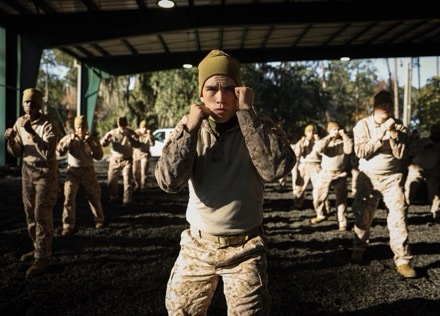
FORT BARFOOT, Va. — A few times each year, the Virginia National Guard’s 1st Battalion, 183rd Regiment, Regional Training Institute, conducts an 11B Infantry Transition Course.

Some of the Soldiers who attend the course, all junior Soldiers and noncommissioned officers, want to test themselves. Others are fulfilling childhood dreams or chasing promotion opportunities. Whatever their reason, their goal is singular: to earn the 11B military occupational specialty and leave Fort Barfoot with a blue infantry shoulder cord.

“It is not an easy MOS, but it is a very rewarding one at the same time,” said Sgt. 1st Class Brian Cook, a long-time cadre member at the 183rd RTI.

During the course, Cook and the rest of the cadre put Soldiers, who arrive as engineers, medics, intelligence analysts and mechanics, through three rigorous weeks of infantry training. Soldiers gain proficiency on weapons, improve their land navigation skills, learn how to communicate and move effectively across a battlefield. The days are long and often made more challenging by sweltering heat and humidity.

The challenge of becoming an infantryman motivated many of the students as they worked their way through the course.

“The reason I wanted to become an 11B is because I like to put myself to the test,” said Staff Sgt. Patrick Powers, a 91B wheeled vehicle mechanic in the Virginia National Guard. He said the course would also help prepare him for his next challenge, U.S. Army Ranger School.

Sgt. Allison Stanton, assigned to the 82nd Airborne Division as a 35F intelligence analyst, was also there to challenge herself.

“I wanted to become at 11B because it’s really the only MOS that I felt was out of my comfort zone,” she said. “I felt like the whole job would be very challenging for me, so that’s why I chose it.”

Spc. Alexander Wyatt started his military career as an infantryman in the U.S. Marine Corps. He was discharged due to an injury but rehabilitated himself and worked on an ambulance while out of the military. When he joined the Army, he returned as a 68W combat medic but felt pulled toward the infantry.

“I wanted to become an infantryman because it’s always been a dream of mine. I just always had the itch to still be an infantryman, and I finally scratched that itch,” Wyatt said. He’s now assigned to the 75th Field Artillery Brigade at Fort Sill, Oklahoma.

Spc. Steven Schmidt drove across the country to attend the infantry transition course. He started his military career as a medic.

“During my time in the military, I’ve met all sorts of people with different MOSs, but the 11Bs stood out to me in their brotherhood,” Schmidt said. “I’ve always believed that going through difficult times is what brings people together, and I think 11Bs go through that more than any other MOS. I just wanted to be a part of that.”

As the most recent course came to a close, after the Soldiers hauled themselves, their gear and their weapons through the forests, roads and fields of Fort Barfoot, after they tested their endurance with a timed 5-mile run and sent thousands of rounds down range from a variety of weapons systems, they gathered near a small pond. The cadre, decorated with an assortment of badges, tabs and scrolls, formed a corridor through the water. Tired and dirty from days spent in the field, the students were called forward into the water, guided through the protected passage formed by the cadre. Then, dripping pond water and steaming in the midday sun, they worked their way to the top of a hill.

The immersion and ascent served to mark the transition from what they were before to what they had become.

On top of a Fort Barfoot hill on July 26, 2023, 22 Soldiers received their blue infantry cords and officially became the newest infantry Soldiers in the U.S. Army.

By SFC Terra C. Gatti, Virginia National Guard Public Affairs Office