Aquaterro

Archive for the ‘Guest Post’ Category

Breaking Barriers: Sailor Becomes First Female Jungle Warfare Leaders Course Graduate

Monday, April 10th, 2023

OKINAWA, Japan — Deep in the jungle where venomous snakes outnumber people, survival is not for the faint of heart — it’s a matter of strength, skill, and mental fortitude. For decades, American service members across the globe have attended the Jungle Warfare Training Center (JWTC) in Okinawa, Japan, to hone their survival skills and learn the craft of jungle warfare. But until recently, no woman had ever completed the grueling Leaders Course — until a U.S. Navy Sailor broke the mold.
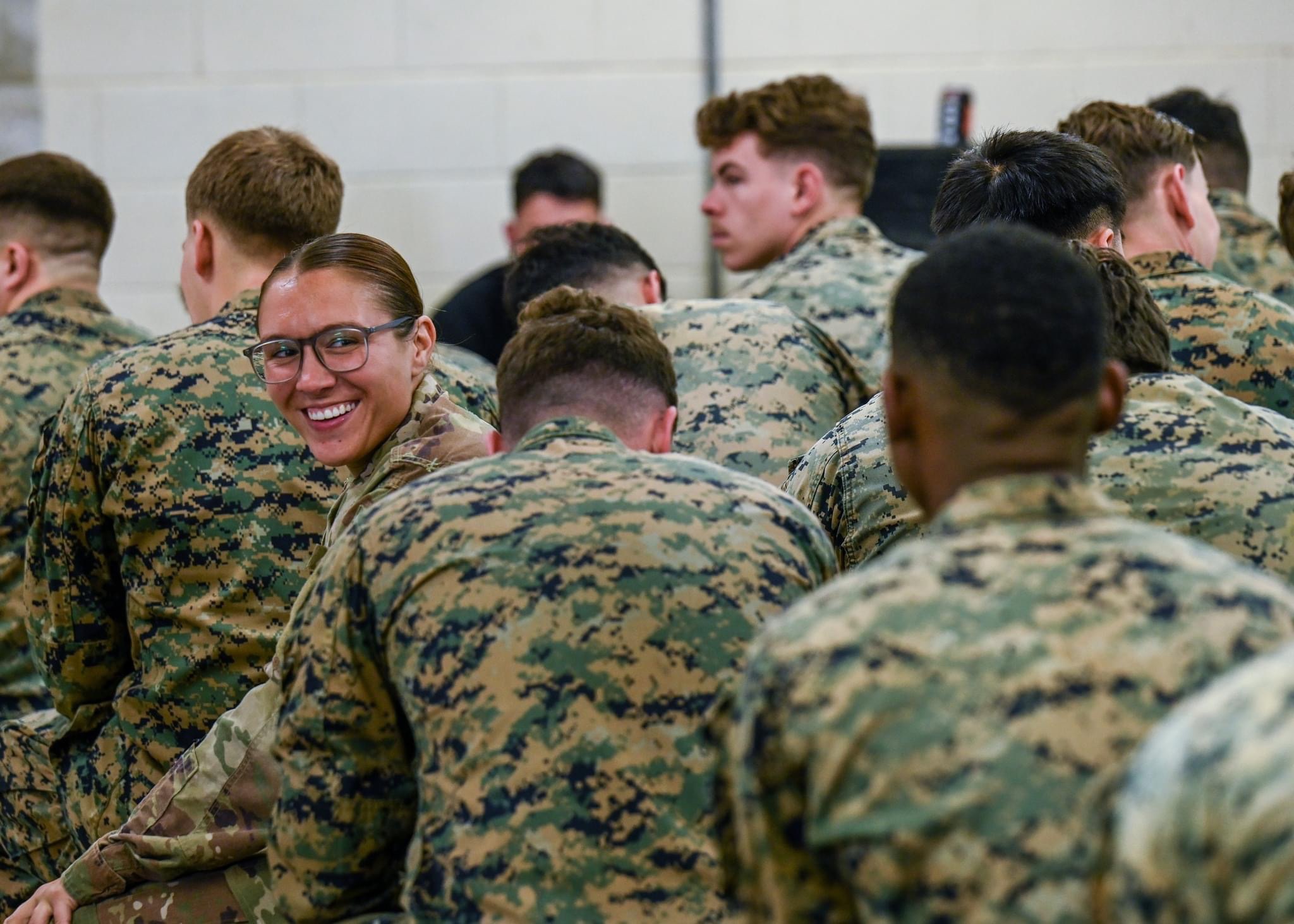
JWTC’s Leaders Course is a rigorous five-week program that tests service members’ physical and mental endurance to the limit. Teams are given minimal supplies and must rely on their training and resiliency to survive. Navigating 8,000 acres of dense, treacherous terrain is just one requirement for participants to demonstrate they can survive in the harsh conditions of the jungle.
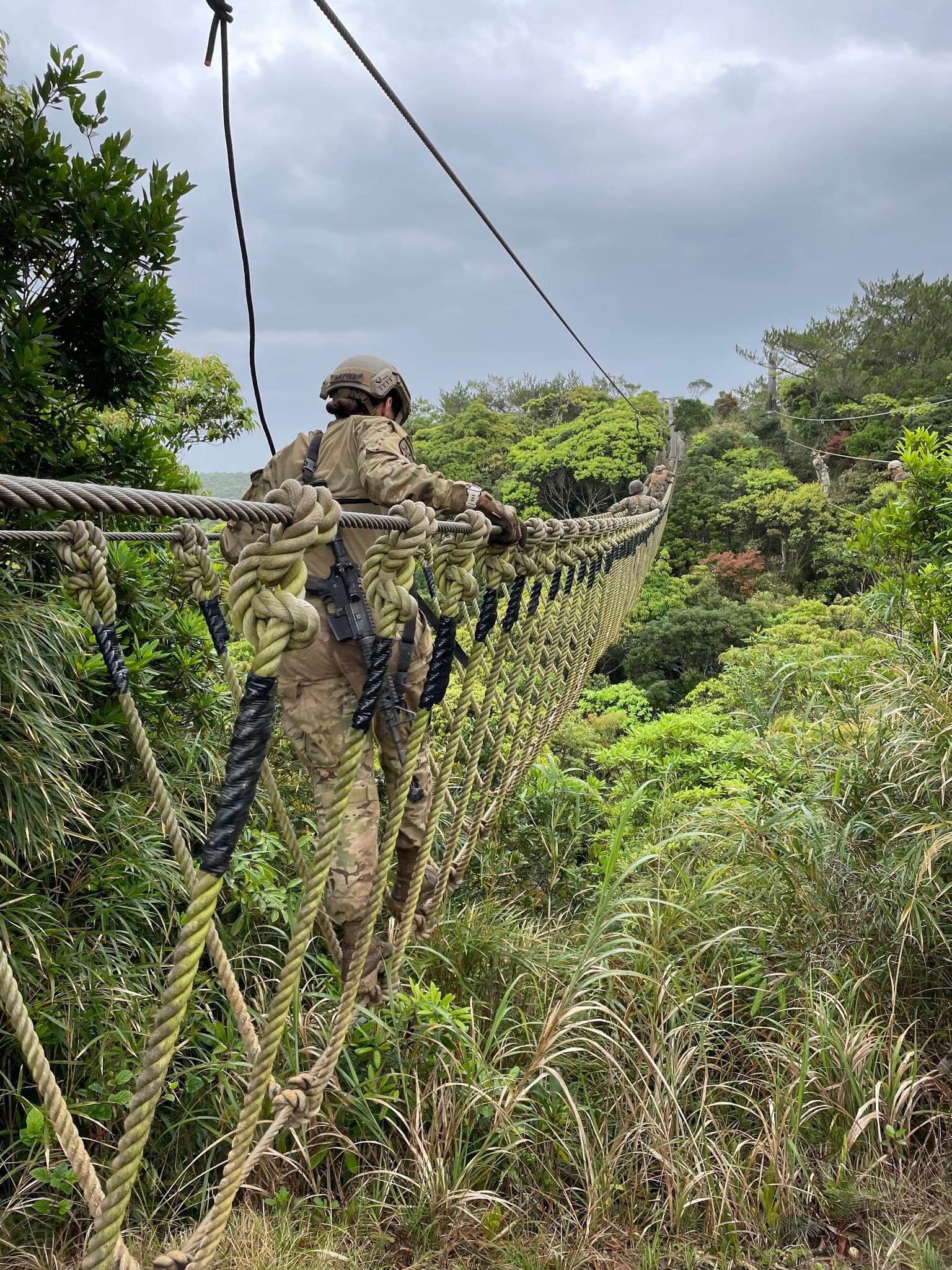
The class endured 455 hours of instruction in a fast-paced, compartmentalized jungle environment where they were taught in a multitude of phases on everything from weapons and rope suspension techniques to combat tactics. Participants received intensive instruction on jungle mobility and Marine scouting and patrolling skills. The capstone was a substantial 120 hours of training on how to survive in the jungle.
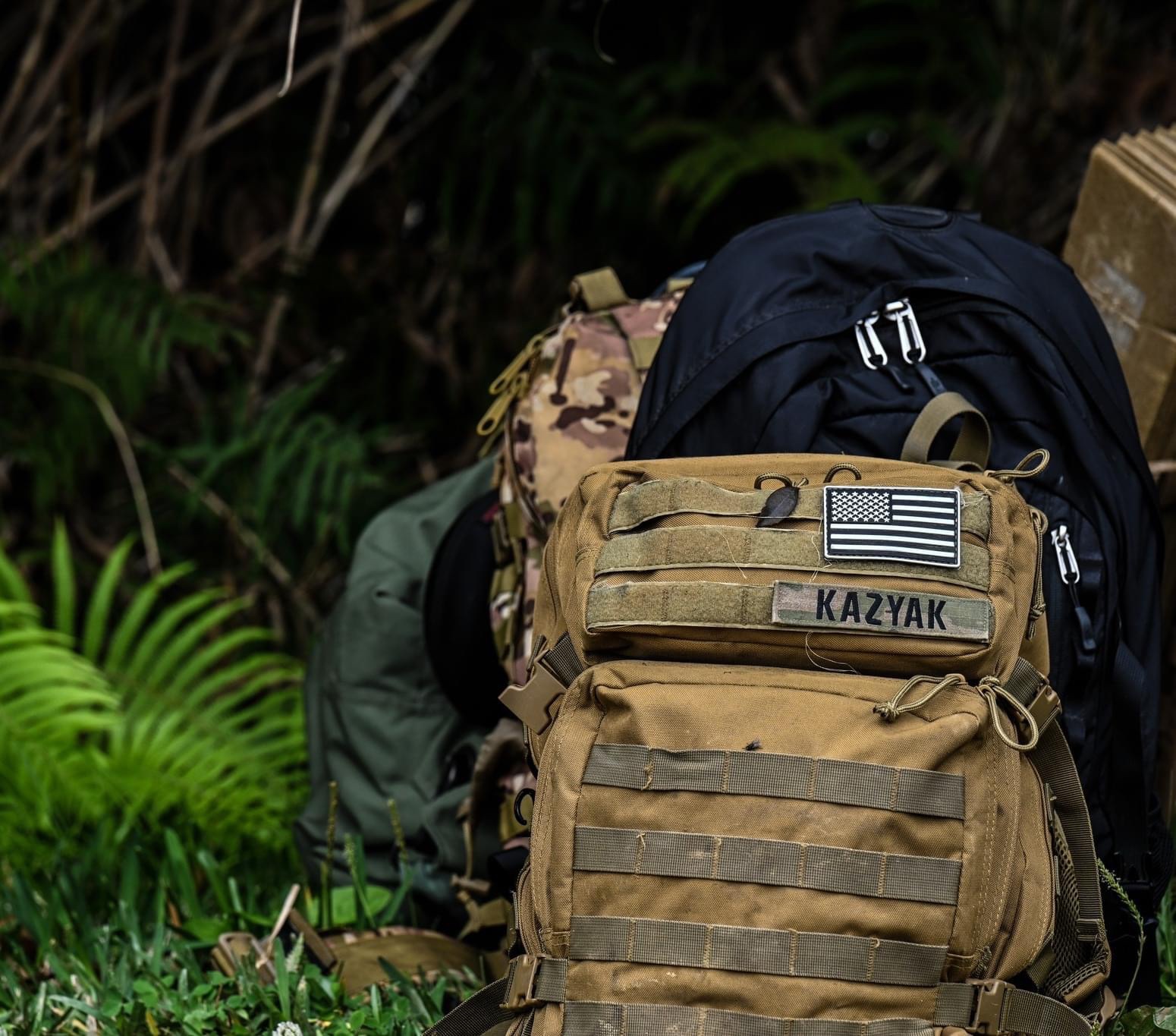
Information Systems Technician 1st Class Nicole Kazyak (pronounced KAY-ZACK) has always gravitated towards challenging opportunities. A 28-year-old native of Midland, Michigan, she graduated from Michigan State University, majoring in Communication with a minor in Public Relations before joining the military in late 2017. After an initial assignment in Hawaii, she transferred to the Joint Communications Support Element (JCSE) at MacDill Air Force Base, Florida, a joint tactical Airborne communications unit prepared to rapidly deploy at a moment’s notice.
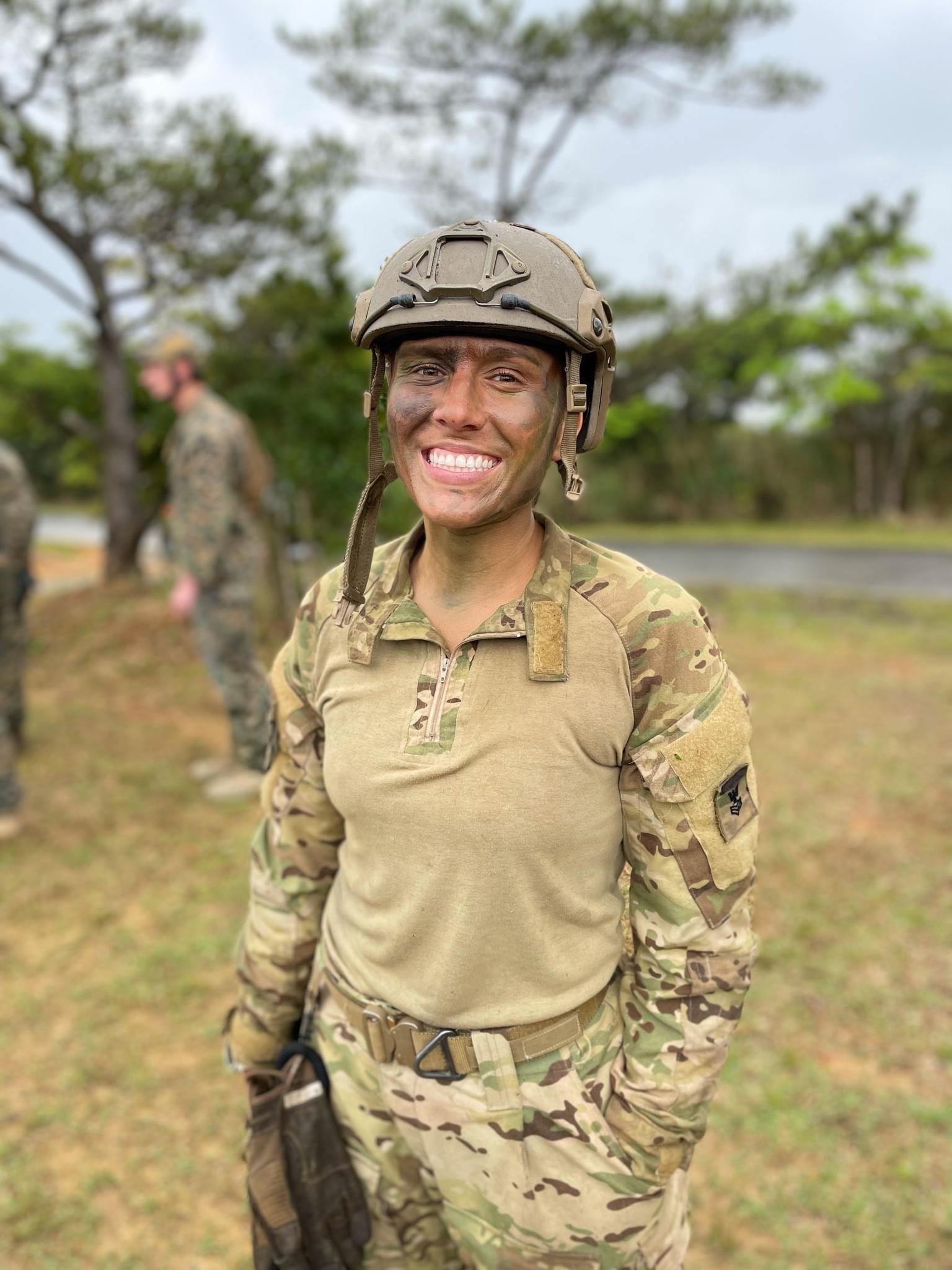
JCSE serves as the “Voice Heard ‘Round the World” and has opened the door to incredible opportunities for Kazyak and others. In 2022, she earned her jump wings from the U.S. Army’s Airborne School, despite a tremendous fear of heights. “Every time I jump, I’m scared. But I feel like that’s not necessarily a bad thing. I feel like once you stop being scared, you should probably stop jumping. Because jumping out of a plane is not a normal thing to do in the first place.”
This experience came in handy at JWTC, which featured a rappelling course with a heart-stopping 75’ drop. “I was scared on that, too. But after a couple days of hooking yourself in and rappelling down, after 10-15 times you get a lot more comfortable with it, and it’s not as scary. It becomes a little more fun.”
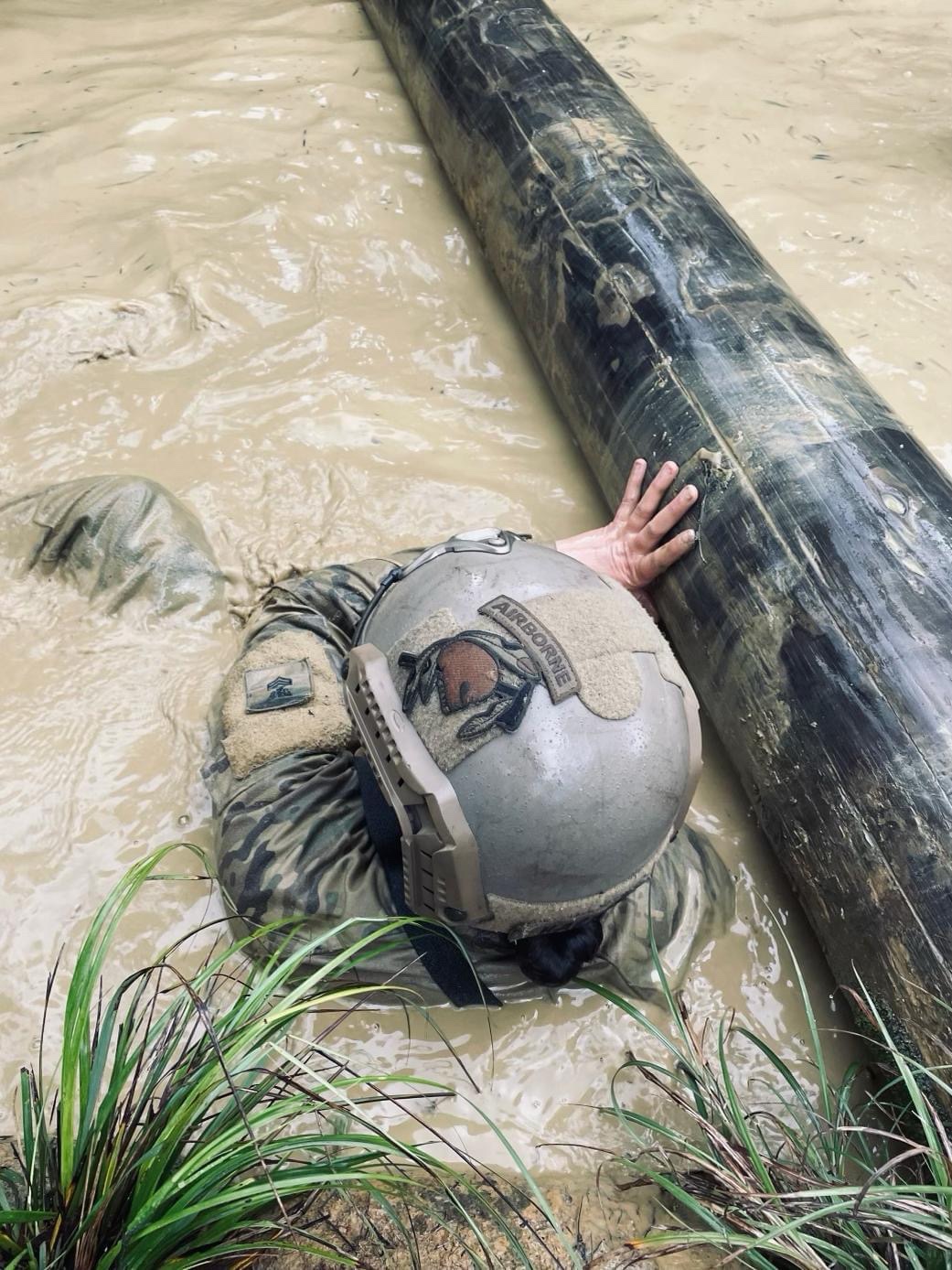
Kazyak survived the training, but not without a major challenge from the outset. “For the first time in my life, I rolled my ankle — and it just happened to be on my first day in the jungle.” She pushed through her injury with the help of on-site medics, ibuprofen, and the support of her teammates. Her desire to complete the training overshadowed the pain of rucking a 30-pound pack, day in and day out. And her discovery that she was the first female to attempt the course motivated her even more.
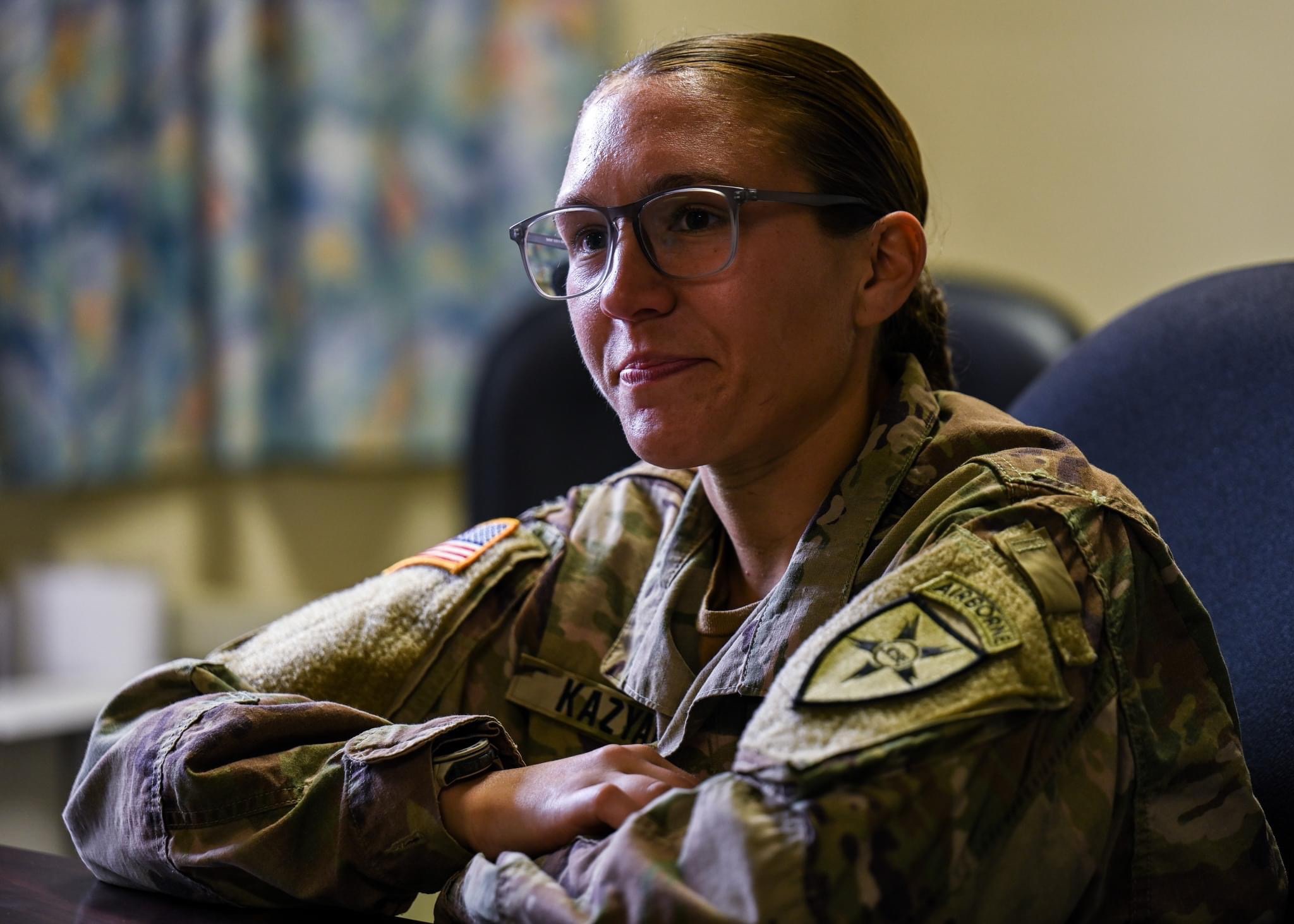
“I didn’t know until after I arrived that I was the first woman to go through the course. There aren’t a lot of females doing infantry, so this was a learning experience for all of us.” Early on, participants embarked on a multi-mile ruck, up and down steep cliffs. “I ended up getting a decent time and keeping up with a lot of the guys. I think after that, we broke the ice. I felt like they could see I really wanted to be there, and I wasn’t going to ask for special treatment,” said Kazyak.
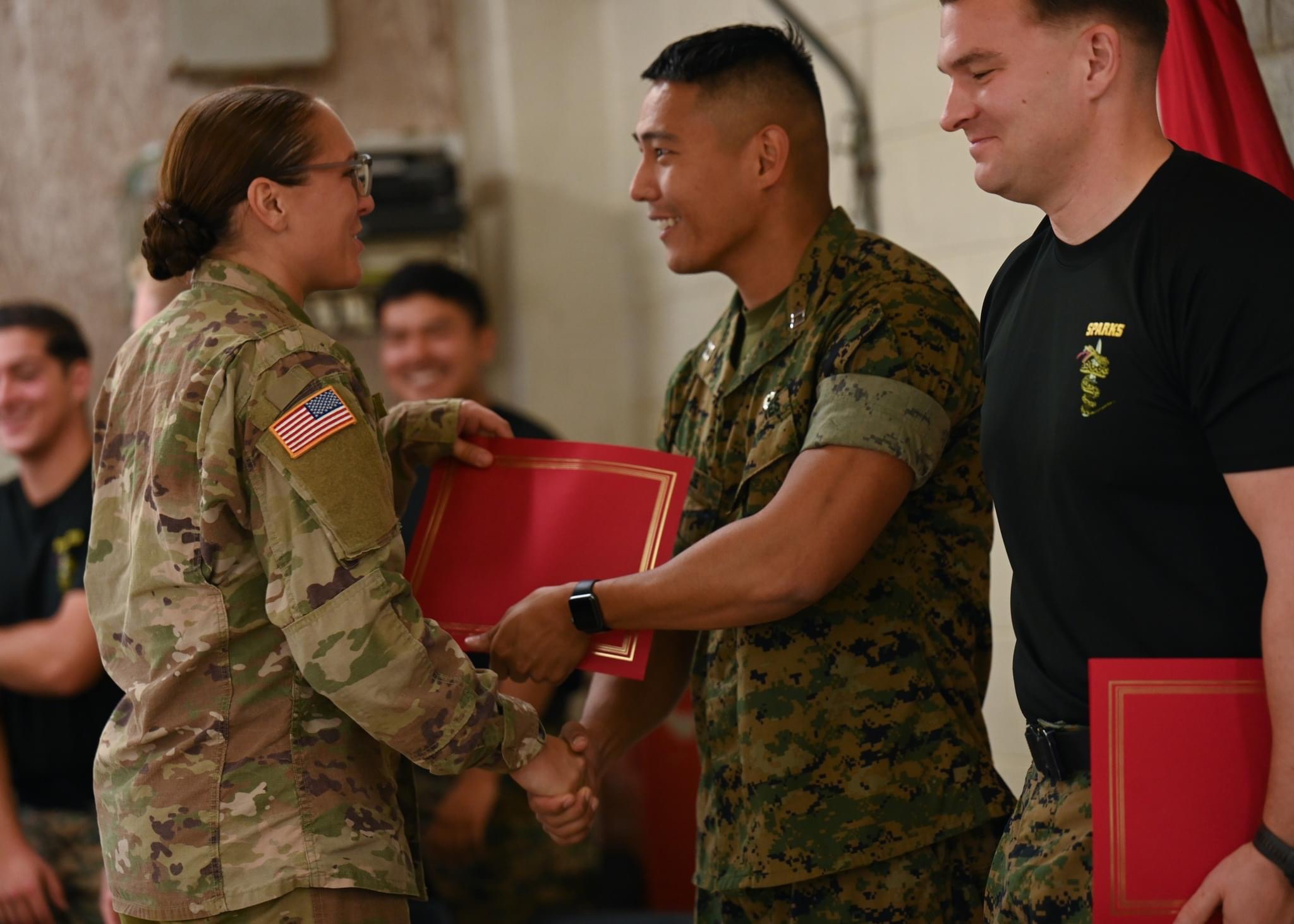
JWTC Commander, Lt. Col. Nathaniel R. Jones, added, “The survival phase these students went through was harder than probably any survival phase I’ve seen in the Leaders Course due to the weather and some of the terrain. The amount of growth that happened with this group was inspiring.”

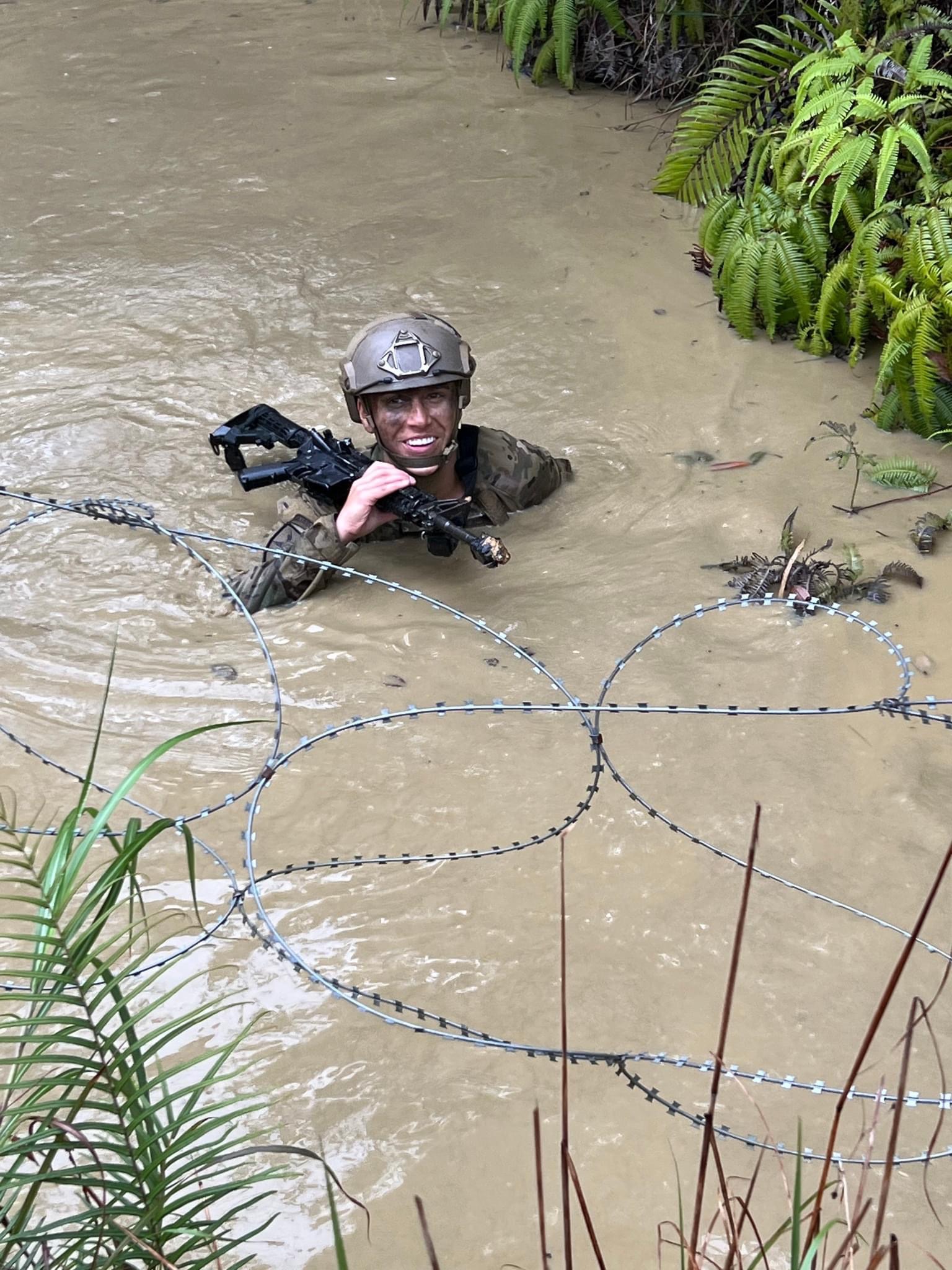
Describing the team’s time in the jungle as “intense” would be an understatement. For the majority of the course’s survival training, rain and abnormally low temperatures were a constant battle. Okinawan jungles are notoriously hot and humid, so participants were presented with an unexpected hurdle. “I was born in Michigan, but for the past five or six years, I’ve lived in hot climates like Hawaii and Florida. I hate being cold, and I hate being wet. At one point, I was sitting there thinking, ‘I am not going to be able to do this.’ I kept asking myself, ‘Why did you volunteer to be here?’ We were all freezing and absolutely miserable.”

Adding to the unforgiving conditions, the team wasn’t allowed to have light at their campsite for the bulk of their training. It was pitch black at night. “We’d hear the wildest sounds creeping up to our camp. It was so dark you couldn’t see anything. Then you’d hear guys sit up in their bivy sacks, listening. Of course we were all thinking the same thing, ‘What the heck was that?’”

Kazyak was fortunate to avoid the deadly habu snakes, which are more active in the summer, but she encountered the largest spiders of her life. “One guy walked straight into an orb spider’s web. I had heard about the size of spiders on Okinawa, but I didn’t think they would be as big as they were. That spider was massive, the size of my fist.”

That same week, her team’s campsite washed out because of the constant rain. She relied heavily on her teammates. “We realized we had to take it day by day and that we were all in the suck together and had to embrace it. Now that we’re done with it, I realize I can push myself more than I ever thought I could.”

It was thoughts of her mom, dad, and brother that got Kazyak through the tough moments. “Growing up, my mom always told me, ‘Be comfortable being uncomfortable.’ Because once you get comfortable, that means you’re not learning. And you learn the most out of those situations.”

Kazyak’s infantry training was definitely far outside her comfort zone. Nevertheless, her expertise managing the Navy’s global satellite telecommunications systems set her up for success during the comms phase of the jungle warfare training. “I was able to teach these Marines the ins and outs of telecommunications after they had just shown me the ropes of their life in infantry. We all speak in different languages based off our ratings in the military, so this was a cool opportunity to coach one another on our specialties.”

Jungle warfare training is now more crucial than ever, and thanks to this opportunity, she has a greater perspective on the value of the region and the importance of training locally. “At the end of the day, if a conflict does kick off, having a baseline knowledge of this terrain is going to be super beneficial. We’re going back and teaching the troops in our home units. There are so many factors out here: the terrain, the cold, the heat, the location. This is definitely the place to train. It’s just a completely different ballgame for sure.”

Despite the physical and mental challenges, Kazyak and her teammates refused to give up. They ate berries, ferns, and lots of ginger — while staying hydrated by filtering drinking water from ravines. They spent time reminiscing on the comforts of home. “We were all so miserable, but kept pushing through together. I remember at one point, we sat there on the jungle floor, talking about foods we were craving. I couldn’t stop thinking about a place back in Florida that serves pepperoni pizza with hot honey on top. I lost about eight pounds while we were in the jungle, but gained it back once we were finally able to visit the chow hall.”

In reflecting on her time in the jungle, Kazyak was reminded of her mom’s wise advice. “She always tells me, ‘The only thing constant in life is change.’” Kazyak garnered wisdom of her own throughout the course. “You don’t have to be at the peak of everything; you just need to have the motivation and the willingness to actually move forward and complete your goal. I’m not the strongest or the fastest, but I know I can push myself enough to get through those crappy times. I think too many people get complacent and get so used to their day to day and they’re scared of change.”

Kazyak made history on March 31, 2023 — the last day of Women’s History Month — when she became the first female Leaders Course graduate of the U.S. military’s premiere training center on jungle warfare. “This wasn’t a comfortable scenario for me at all. But I feel like those are the situations you learn the most about yourself.”

In an era of change, the U.S. military has come a long way in recognizing and appreciating the contributions of women. Kazyak continues, “I just want to keep pushing and proving women can do anything and everything. I feel like we always have to work 10 times harder to prove ourselves. A lot of people don’t get the opportunities I’ve had, like becoming a jungle leader or going to Airborne School. I like to hold on to that. I’m grateful for it. It shows we can do the same things as the men.”

Story by Candice Barber, Commander, Fleet Activities, Okinawa

Photos by Petty Officer 2nd Class Jessica Hattell

Sterling Promise Fundraiser – Sponsors & Silent Auction Items Needed

Friday, April 7th, 2023

Industry Friends:

WANTED: SPONSORS & SILENT AUCTION ITEMS

We are approaching the deadline to confirm sponsorship for the Sterling Promise Foundation fundraiser, taking place on Tuesday, May 9th during SOF Week 2023 at the Westin Channelside Terrace. We are still looking to secure more sponsors and silent auction items.

Sponsorship of this event has incredible benefits:

• Showcase brand to quality, tier 1 industry companies and customers

• Obtain a package of social content for posting

• Engage online with industry partners during a joint-force campaign leading up to and during SOF week

• Complimentary social feature from our media partners, announced below

Of greatest importance:

Honor the life of Staff Sergeant Scott Sterling

Provide funding to support the wellbeing of our nation’s veterans that include initiatives to provide early detection cancer screenings along with access and financial support for higher quality healthcare

We are proud to announce that TacGas and Soldier Systems Daily will once again be our official media partners for the 2023 fundraiser. We are honored to leverage their platforms to promote the event, feature our sponsors, build our silent auction offering, and promote the stars of the auction: Sig Sauer’s vaulted, highly collectible surplus M17 & M18 pistols.

Thank you to those companies who have committed to sponsorship and silent auction donations thus far. We are so grateful for your support and look forward to partnering with you over the next month, and to a memorable evening in Tampa.

Additional Information:

• Sponsorship agreement attached, to be completed and provided to Mary & Gabby, donation receipt provided

? Tier 1 Sponsorship: $2,000 minimum Donation + Silent Auction Item(s)

? Tier 2 Sponsorship: Silent Auction Item(s)

• We will be accepting silent auction items through May 5th

• The fundraiser is open to SOF week attendees, government customers and friends of Scott

• If you are unable to sponsor the event, we hope you will still join us for a special evening – Invitations to follow

Foundation video &amp website

FirstSpear Friday Focus: Wind Cheater

Friday, April 7th, 2023

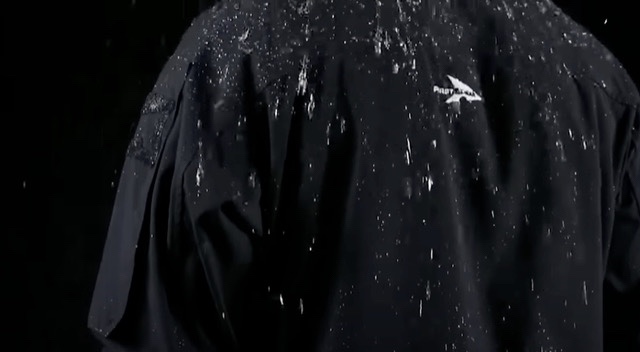
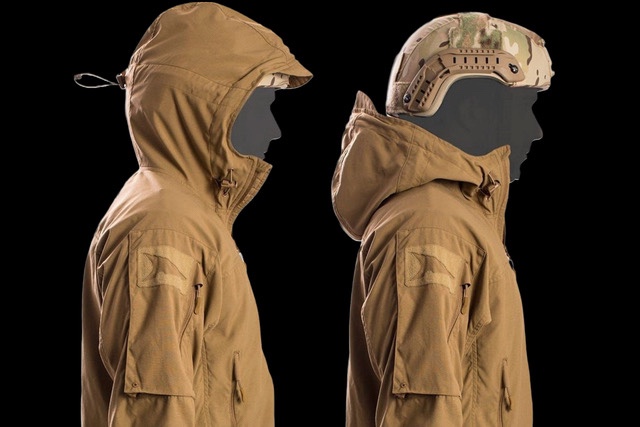
The Wind Cheater utilizes a 100% Nylon Cordura variant known as Ambush. Unlike standard cordura, Ambush is brushed and allows for breathability. The material provides a soft and quiet experience. This jacket breathes like a T-shirt and sheds wind and light rain thanks to its DWR coating. The Wind Cheater dries quickly and compresses small when packed away. The large hood accommodates combat helmets and climbing helmets alike. These are offered in multiple colors and sizes. Due to the popularity of this incredibly versatile, year-round jacket, new shipments move quickly so don’t wait to pull the trigger.

Visit FirstSpear to find America’s premier tactical gear and equipment.

Infantry Squad Vehicle Program Approved for Full-Rate Production

Friday, April 7th, 2023

Providing a “better boot” for Army units

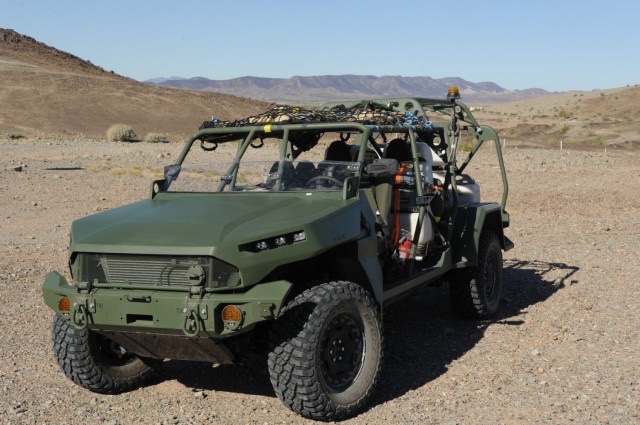
DETROIT ARSENAL, Mich. — The U.S. Army’s Infantry Squad Vehicle (ISV) program was approved by the Program Executive Officer for Combat Support & Combat Service Support (PEO CS&CSS) on March 30 to transition to Full-Rate Production, or FRP. This green light represents a major Army acquisition programmatic milestone in “motorizing” Infantry Brigade Combat Teams, Security Force Assistance Brigades, as well as Army Ranger units. The Army Acquisition Objective currently stands at 2,593 ISVs.

The Army in June 2020 selected GM Defense LLC to produce the ISV. Based on the Chevrolet Colorado ZR2 architecture, the ISV derives a high percentage of its parts from commercial-off-the-shelf components. The Army’s newest light tactical vehicle is dubbed a “better boot,” and its basic operational capabilities include:

Nine-Soldier squad carrying capability

3,200-lb. payload

External sling load/external lift by UH-60/CH-47 helicopters

Low-velocity air drop by fixed-wing C-130 and C-17 transport

Exceptional mobility over a wide variety of terrain.

John Hufstedler, product director, Ground Mobility Vehicles, PEO CS&CSS, said, “The comprehensive team responsible for bringing the ISV program to a full-rate production decision not only involves Army Acquisition professionals assigned to our PEO, but also relevant stakeholders and collaborative partners representing the Army’s funding community, Army Futures Command, Army Forces Command, Army Materiel Command and the testing community.

“Soldier touchpoints, developmental testing and operational testing have been key elements throughout the ISV program,” Hufstedler continued. “Leveraging a commercial vehicle and the world-class manufacturing capability of GM Defense has helped compress the time it takes to field a modernized capability meeting infantry Soldiers’ needs.”

The ISV has been rigorously tested, including production qualification testing and transportability certification, which included low-velocity air drops and helicopter sling loading. Developmental and operational testing enable units to train while offering feedback to the requirements and acquisition communities. This is aimed at improving a system’s utility and operational effectiveness in Soldier’s hands, as well as suitability for the environments in which Soldiers train and fight.

Reliability testing concluded earlier this year, which completed the ISV production qualification test.

To date, the Army has accepted more than 300 ISVs and has fielded three brigade sets of 59 vehicles, for a total of 177. The program is on track to continue to meet fielding plans, with two Brigade sets fielding this June.

By Rae Higgins, Program Executive Office Combat Support & Combat Service Support

Rotapoint Systems Introducing New Line of Offset Mounts

Thursday, April 6th, 2023

Following an enthusiastic reception at a recent international sniper competition, Rotapoint’s patent-pending new mount, code-named GANCHO, will begin shipping to dealers in May 2023.

A30, the first model in the new line of ambidextrous mounts replaces existing scope caps on Geissele’s Super Precision and Reptilia’s AUS 30mm mounts, with an Aimpoint Micro footprint.  The offset optic is placed at an optimized 34 degree angle like Rotapoint’s existing models, and keeps the offset optic mount off the handguard while offering consistent cheekweld.  To install, the user simply removes the existing scope cap and hooks the offset mount over the scope tube and secures it onto the base with the existing scope ring screws.  Depending on scope dimensions, the offset optic may be installed on the front or rear ring.

Precision machined and anodized in the USA. 

Joint Effort Underway To Power Rocket Sleds Into The Future

Thursday, April 6th, 2023

HOLLOMAN AIR FORCE BASE, N.M. (AFNS) —  

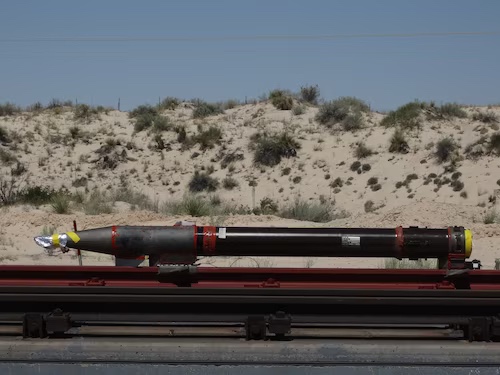
Rocket sled testing is critical to bridging the gap between the laboratory and full-scale flight tests for weapon systems under development.

Keeping those sleds moving is the focus of a joint effort within the Department of Defense, which operates three sled track organizations, one each at China Lake, California; Eglin Air Force Base, Florida; and Holloman Air Force Base. Two other non-DoD tracks, Sandia National Laboratories in New Mexico and a track in Utah, round out what are considered the Big 5 sled tracks.

Holloman High Speed Test Track, a facility operated by the 846th Test Squadron, 704th Test Group, Arnold Engineering Development Complex, can achieve the fastest speeds among the five tracks and is used for a variety of tests, including munitions, crew escape systems, guidance systems, aerodynamics and environmental effects.

“At 50,000-plus feet, Holloman High-Speed Test Track is the longest and most versatile sled track, to our understanding, in the world,” said Bryan Sinkovec, Joint Economical Sled Track Rocket, or JESTR, project director and a test capabilities integration engineer with the Capabilities Integration Branch Operating Location – Holloman, Plans and Programs Division, AEDC.

Since sled tracks began operating, they have primarily used solid rocket motors and they have been the exclusive source of propulsion for more than three decades, according to Sinkovec.

The rocket motors currently in use are mainly sourced from surplus motors repurposed from Cold War assets, most of which were made in the 1950s, 1960s and 1970s. The motors work for sled track testing because of their short burn times, enabling them to achieve fast acceleration over the relatively short track lengths. Not all the motors available, though, are compatible with sled track testing.

While the surplus motors are essentially free, they have their limits in both quantity and capability.

The JESTR project aims power sled testing into the future by developing new sled track motors purpose-built for high performance, short burn times and structurally stable under sled track conditions.

The Air Force is leading the joint effort by the sled tracks and other DoD organizations, including the Navy. Desiree Craig, deputy project director for JESTR and flight chief for program management in the 704th Test Support Squadron, led the effort to leverage a Navy run other transaction authority.

“An OTA allows us to collaborate with the contractors to better define the technical portions of the statement of work to get the best product in the end,” Craig said. “Every portion of this project is team based.”

Since surplus motors were never intended for sled track usage, sleds and testing had to be designed around the motors.

“When describing our requirements, we were able to design the motor to the sled track testing instead of the other way around,” Sinkovec said. “That was new and exciting. We’ve always had to design our tests around the motors.”

The project is developing multiple sled track motors that vary in size and capability – small, medium, large and high performance.

While developing new rocket motors is the central focus, as the effort got underway team members realized they couldn’t develop the motors in a vacuum.

“The program was initially focused on only developing four rocket motors for production, but to execute an actual test it requires motors and sleds,” Craig said. “One of the problems we were running into was being able to utilize some of the legacy sleds here at the Holloman High Speed Test Track and fitting the new motors to all those various sleds. Therefore, we had to change how we looked at this program, from just motors to delivering the total capability.”

Realizing the effort was bigger than just designing new motors, the team then began to develop scenarios or missions the motors would be used in as proof that they work in the unique environment. Three scenarios – hypersonic impact, hypersonic rain erosion and supersonic munitions – will be tested at HHSTT, with a fourth – transonic impact – slated to be tested at China Lake.

The effort now includes developing new sled types, one of which is being developed in-house by the 846th Test Squadron.

“This effort is exciting because we’ve always had this lingering over our heads and now, we think we have a long-term solution,” Sinkovec said.

The DoD effort will benefit all the sled tracks by leading to the development of the production means and creating a supply of sled track motors.

Story by Jill Pickett, Arnold Engineering Development Complex Public Affairs

Photos by Deidre Moon, USAF

3rd Infantry Division Soldiers Win Dragon’s Lair 8

Tuesday, April 4th, 2023

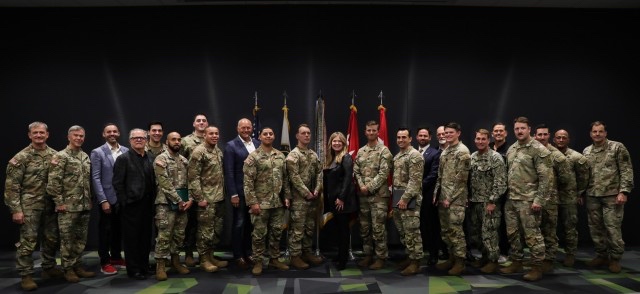
TAMPA, Fla. — The eighth iteration of Dragon’s Lair was co-hosted by the U.S. Special Operations Command and the 18th Airborne Corps, which brought the finalists to the University of South Florida’s Research and Innovation Park in Tampa on Mar. 29, 2023.

During the competition, seven innovations that were developed by individuals and teams were presented in front of a panel of expert judges from government, industry, academia and investors. Each innovator had seven minutes to present the concept, scope and application of their ideas, which was followed by 12 minutes of questions generated by the judging panel.

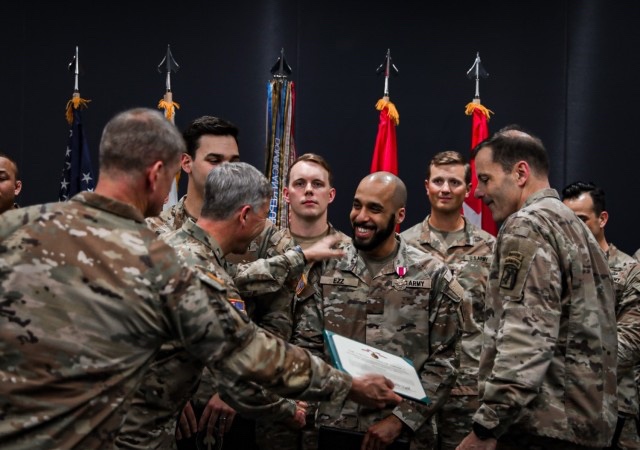
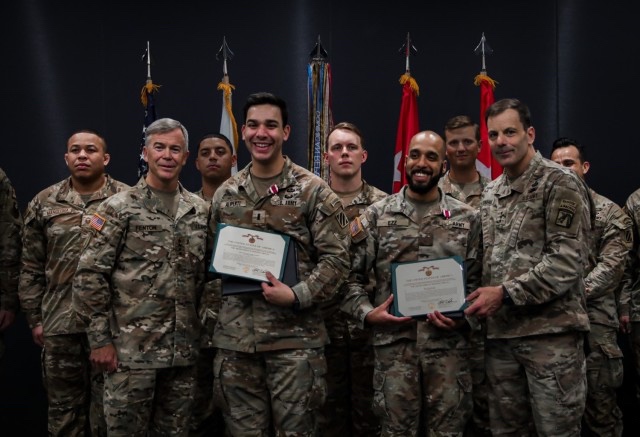
After careful deliberation, the judges selected the Mold Conditions Awareness Tool, or MCAT, that was presented by U.S. Army 1st Lt. Chris Aliperti and Pvt. Salem Ezz from the 3rd Infantry Division, as the top innovation of Dragon’s Lair 8.

The MCAT is a specialized 3D-printed device that uses sensors to detect temperature and humidity levels within barracks rooms to identify early signs of mold. The data is ingested in real-time to an application through Wi-Fi that enhances military leaders and barracks managers’ visualization to assess the conditions and remediate through taking action.

“Dragon’s Lair was a great opportunity to present our ideas to leaders across the Department of Defense and the civilian sector,” Aliperti said. “It is not every day you get to present your ideas on improving the Army to a three and four-star general, so it was a great honor to be selected.”

Aliperti and Ezz expected the first problem they would address would focus on national security. “We did not expect to find the greatest threat to our Soldiers right now was within their own living areas,” said Aliperti.

The 18th Airborne Corps was fortunate to have Ms. Kathi Vidal, U.S. Undersecretary of Commerce for Intellectual Property and Director of the U.S. Patent and Trade Office, as a judge. Her experience and resources will help the innovator service members find a pathway to patent their intellectual property.

“I thought all the ideas today were so phenomenal,” said Vidal. “We saw these innovators really put their boots on the ground to see their projects through and create concrete solutions for real problems the Army currently faces.”

Ezz spent months developing the MCAT, and now it is being beta tested in barracks on Fort Stewart.

“It feels great to be recognized for our technical skills in software engineering and product management,” said Ezz. “This tool has been months in the making and it feels great that the hard work has been recognized by the Department of Defense.”

U.S. Army Gen. Bryan Fenton, commander of USSOCOM, presented Certificates of Achievement to the seven competing teams, thanking them all for their participation in Dragon’s Lair.

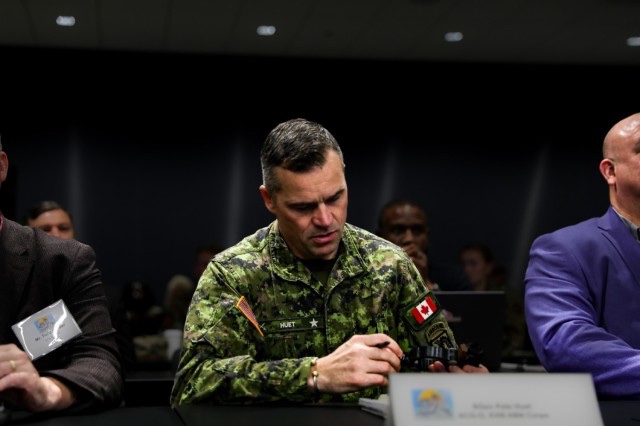
Canadian Army Brigadier General Pierre “Pete” Huet, the Assistant Commanding General of Operations, 18th Airborne Corps, directs modernization and innovation initiatives for the Corps.

“This was the best episode of Dragon’s Lair yet,” said Huet. “These innovators had their voices heard by industry and military leaders, and their concepts will make a real impact across the U.S. Department of Defense.”

With their selection, Aliperti and Ezz each were presented with the Meritorious Service Medal, they will be allowed to attend a military school of choice, and they will receive the support and resources from U.S. Special Operations Command and the 18th Airborne Corps to propel their idea’s implementation across the U.S. Department of Defense.

Story by SGT Jameson Harris

Photos by SGT Maxine Baen

Designing a New Vertical Capability

Monday, April 3rd, 2023

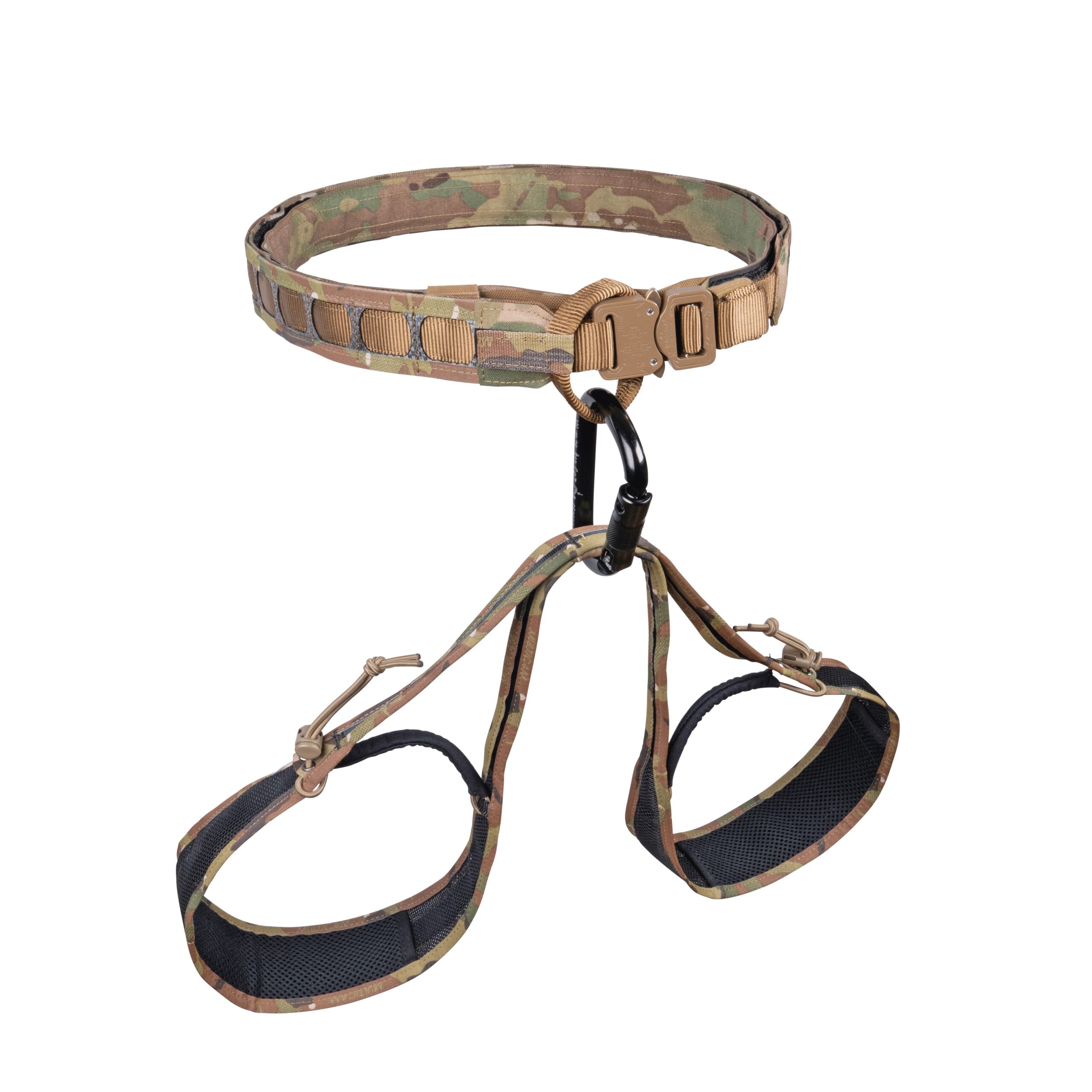
CRO Medical (Missoula, MT) is excited to announce the Hoist Harness. An ALL-IN-ONE riggers belt, gun belt, and assault climbing harness. Now available for select government buyers. Public release is scheduled for Summer 2023. For inquiries email support@cromedical.com

Almost everyone needs a vertical capability at some point in their career. The most common load-bearing feature is a hard-point tether attachment from a gun belt. This is fine for tying into helos or elevated positions but generally not suitable for rappelling, belaying, hoisting, or climbing, something you inevitably find yourself doing on occasion, regardless of the job.

We surveyed the market about a year ago to see what commercial options were available for hard point tethers in gun belts and climbing harnesses for tactical and civilian use. It became clear that there was a significant gap in capability for an all-in-one riggers belt, gun belt, and climbing harness.

We embarked on a year-long process researching and building countless prototypes, testing, and validating the design. This is what we discovered:

For flight missions that focus on hoisting, the Misty Mountain ISH harness or Edelrid tactical harness were common choices when surveying the community. The primary features that were most desirable for flight missions included:

1 Comfortable leg loops must be worn all day and hoisted for extended periods

2 Working loop to secure the carabiner for ease of clipping in

3 Load-rated friction buckle, commonly found in climbing harnesses, due to some flight crews not allowing cobra buckles

4 Lightweight and easy to integrate into existing gun belt setups

The ground assault mission has several different requirements. We had to strike a balance between a harness always worn for climbing or flight operations and an “in extremis” vertical capability when lowering, hauling, or hoisting for HAF, climbing, and VBSS assault missions.

For the ground force, the most desired features were the following:

1 Gun belt suitable for all existing tools and solid shooting platform

2 Rated climbing harness integration

3 Compact leg loops for “in extremis” use

4 Not dropping the gun belt to don the harness

Design

Eventually during the process we had a “light bulb” moment and decided that the inner belt should be the load-bearing component of the system. The inner belt would also replace the riggers belt and be worn all the time. The outer belt would provide a stable shooting platform, and the leg loops would need to detach to prevent dropping the belt when stepping into the harness. Never a good idea to drop your pistol, especially in a hasty hoist situation.

Here’s the full breakdown:

Inner Belt

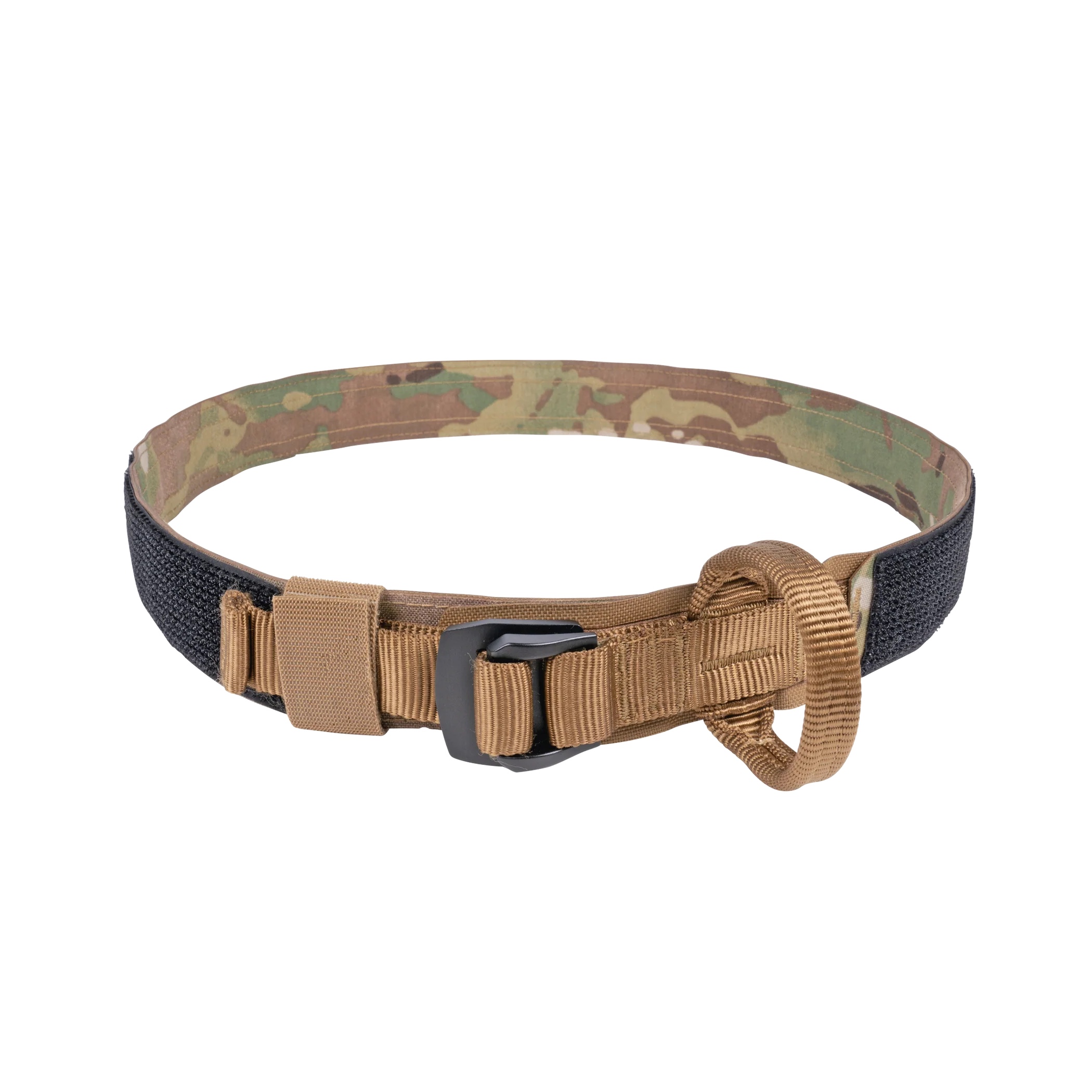
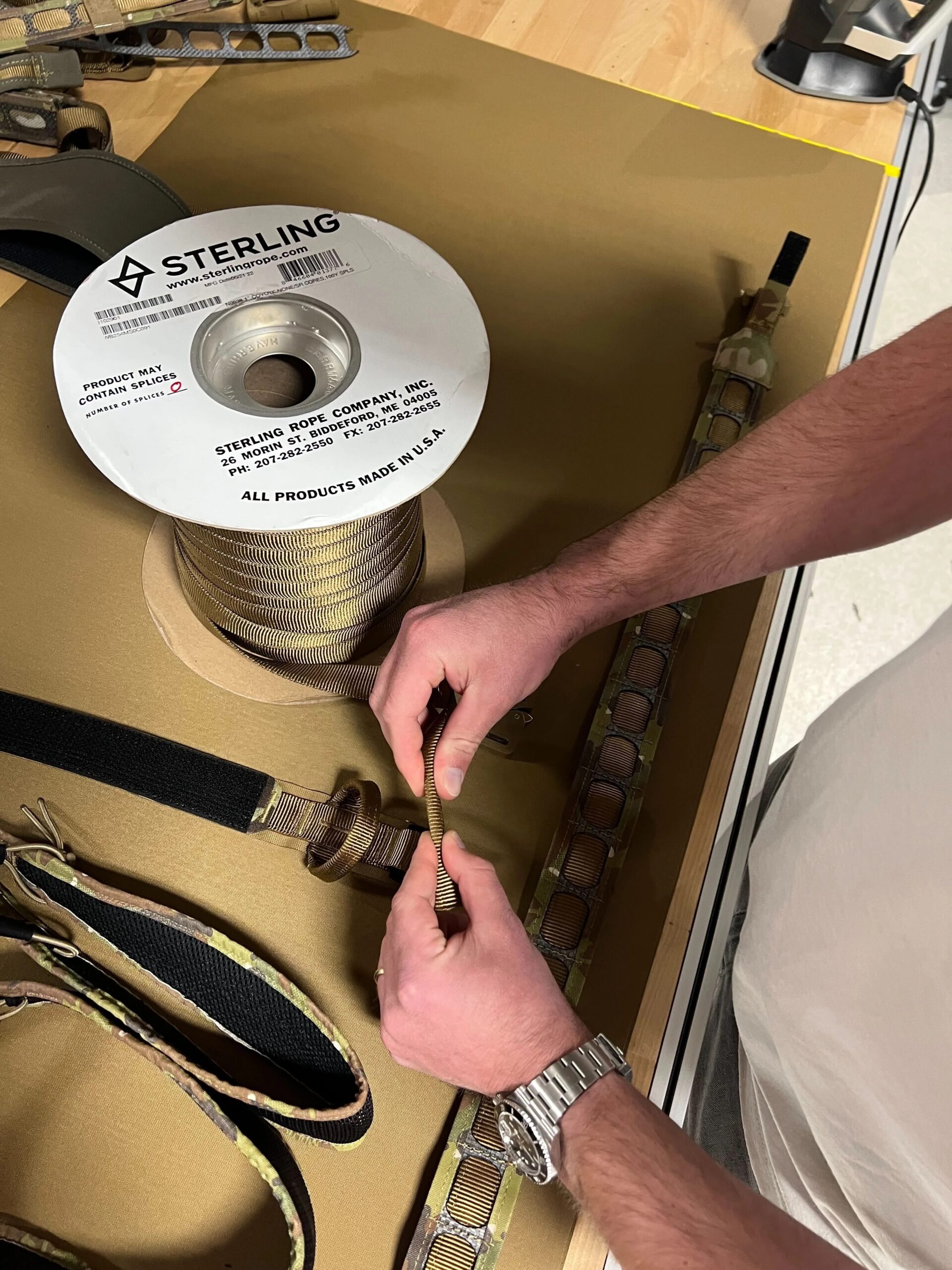
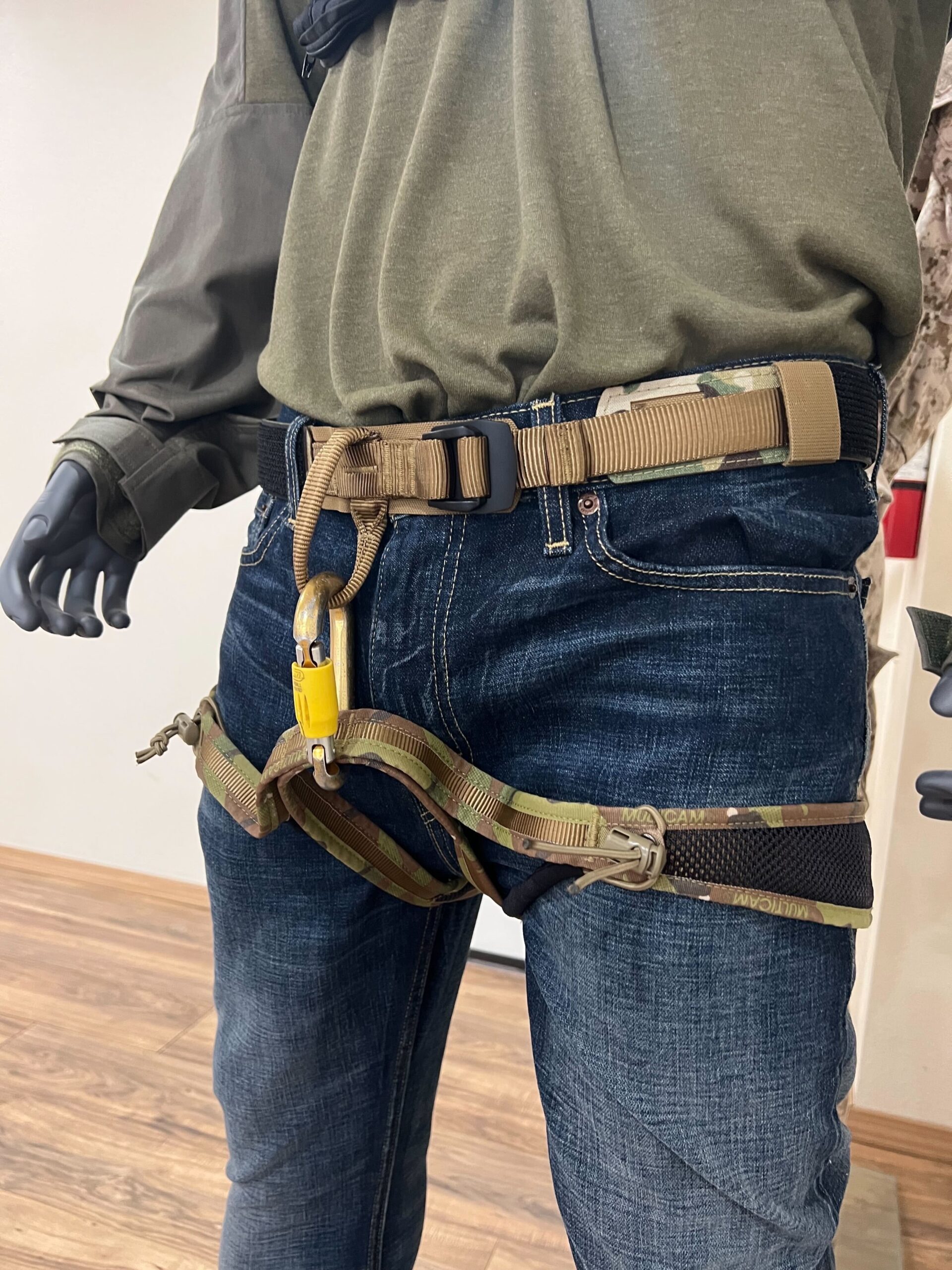
The Inner Belt replaces the riggers belt for everyday wear with combat pants, a key design feature of this product. The inner belt has a load-rated friction buckle and a belay loop/ working loop fixed, so no matter what, you always have a load-bearing capability whether you are using your gun belt or not. This also makes for an ultra-lightweight climbing harness. Feedback from the pararescue crowd confirmed working on the tower all day without the outer gun belt, but still having the harness available was a nice feature.

Belay Loop/ Working Loop

The load-bearing aspect of the product required us to certify both EN 12277 and EN 358 safety standards. This is the Type C fall arrest standard, including the belay loop being rated to 15 kN.

We had to lean into our material selection to meet the 15 kN safety rating while still being small and low profile. We settled on Sterling climbing webbing, which is both load rated and has a reliable supply chain.

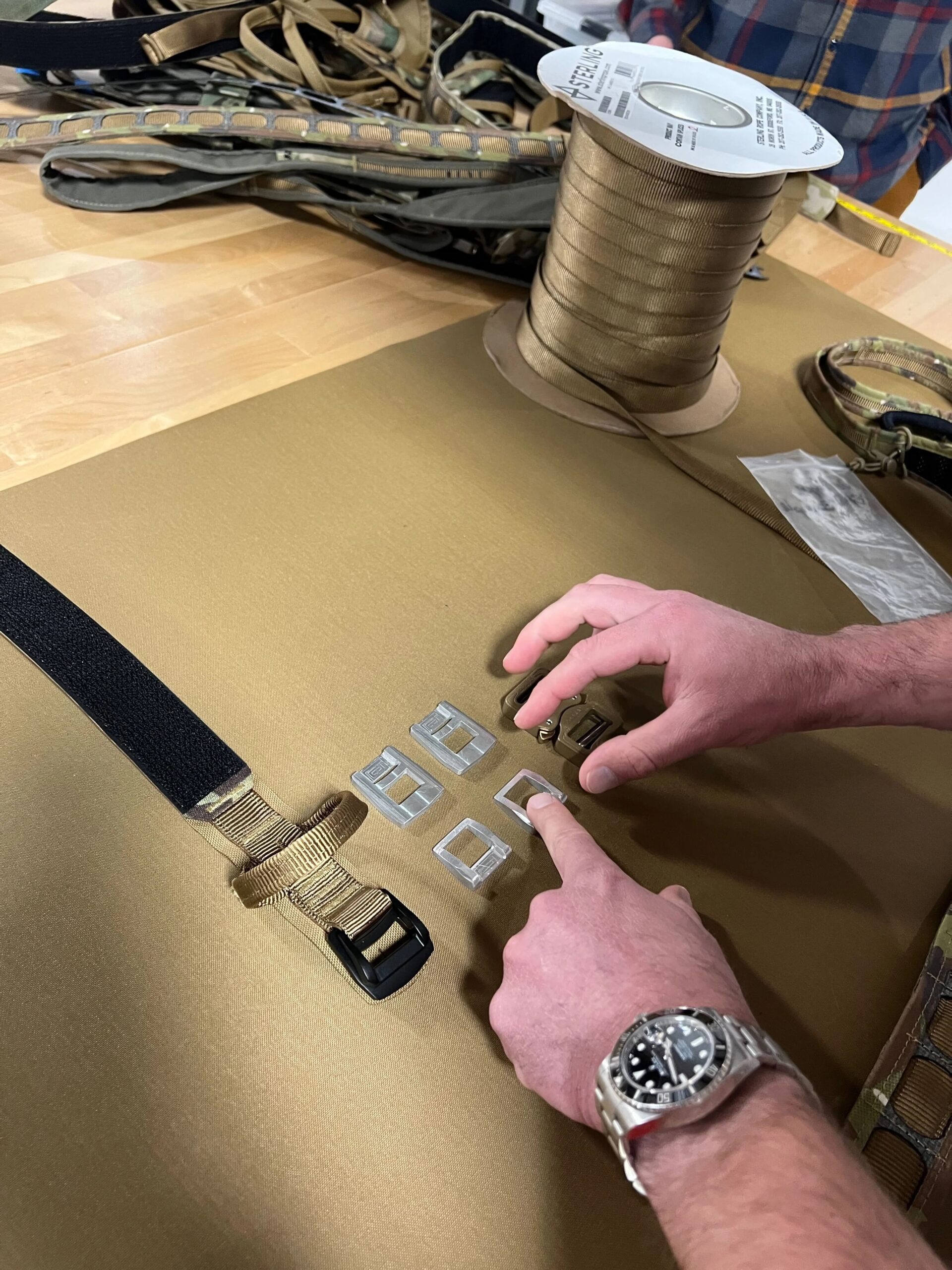
Engineering an anodized aluminum friction buckle

Creating custom hardware for this project proved to be more complicated than we initially anticipated. Luckily, we have engineers on staff at CRO. We ended up with a custom friction buckle that works well with our webbing selection and has excellent retention while still allowing the user to tighten and loosen easily, which is required to route the inner belt through your belt loops.


Outer Belt

The Outer Belt needed to be familiar and functional for mounting a pistol, mags, dump pouch, tools, etc., but also needed to integrate with the inner belt. It’s bad practice to load metal on top of metal, so we offset the inner belt friction buckle to the side in the appendix area and centered the working loop/ belay loop. When loading the outer belt, the Cobra buckle routes through the belay loop, and both are centered. A perfect setup and the belay loop has a retention strap when not used. This makes a very clean, stable shooting platform with a ton of working space to mount tools.

Designing the Leg Loops

Retention was a key design metric during the process. The problem with most leg loops is they don’t stay in place when you put them on. They tend to sag and fall down the back of your legs. We found the ideal balance of retention, functionality, and comfort through trial and error.

These turned out really well, and they pack down nicely. They’re not too bulky like the ISH harness leg loops (although not quite as streamlined as the Arc’teryx Leaf leg loops), but they provide a REAL hoisting capability and are actually comfortable to use. Removing the tightening buckle hardware also allowed us to slim it down.

The result of this project is a riggers belt, gun belt, and assault climbing harness, all-in-one. So far, the feedback has been tremendous, and we look forward to getting this out to anyone needing a gun belt and a vertical capability.

For quotes, contact support@cromedical.com 

www.cromedicalgear.com/products/hoist-harness

MSRP $280