Celebrate 20 years of the TLR-1

Archive for the ‘Guest Post’ Category

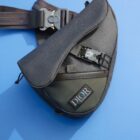
Mystery Ranch x Dior Collaboration

Saturday, February 18th, 2023

BUILT FOR: Dior

This is not a drill! Announcing DIOR X MYSTERY RANCH

Combining the formal with the informal, the practical with the purely aesthetic, and the outdoor culture with the demands of luxury, the creative exchange born of this unique collaboration gives life to the bags inspired by Monsieur Dior’s love of nature.

What many would think of as an unlikely collab, we see it differently.

“This collaboration is a testament to two companies that care deeply about their crafts and the communities they serve. Working with companies like Dior is the ultimate recognition that we are doing what we set out to do: To design and build great packs and bags specific to the mission. The Dior collection is a thing of beauty. Mission accomplished.”

– Dana Gleason

The Dior x MYSTERY RANCH collection features the Gallagator backpack with our signature 3-zip design, Saddle Bag, Belt Pouch (also a 3-ZIP design), Wallet, and Tactical Belt, in two colorways, featuring a CORDURA® re/cor™ fabric that is entirely recycled, resistant and durable, and embroidered with a leather crest intermingling the seal of the two Houses.

Meet the Winners of the 2023 Army’s Best Medic Competition

Saturday, February 18th, 2023

WASHINGTON — The Command Sgt. Maj. Jack Clark Army Best Medic Competition is a grueling three-day test of strength, knowledge and endurance held annually. This year’s competition at Fort Polk, Louisiana, put some of the best medics in the Army to the test by challenging their abilities to determine who is the most skilled.

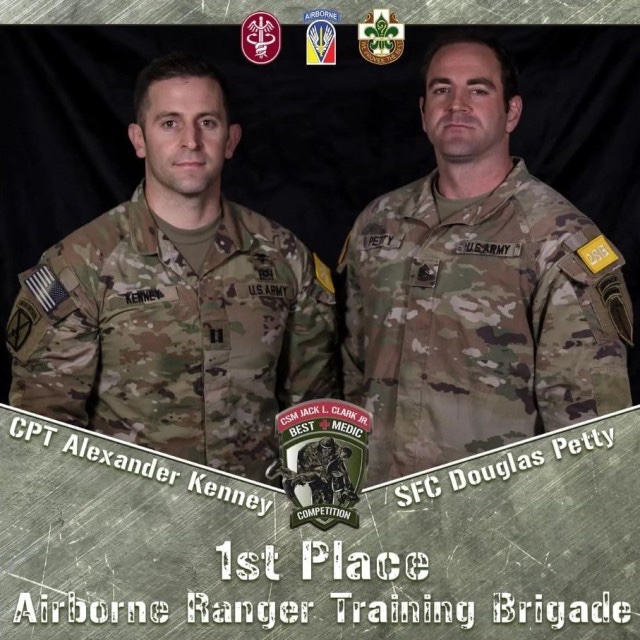
This year’s winners, Capt. Alexander Kenney and Sgt. 1st Class Douglas Petty from the 6th Ranger Training Battalion, Airborne Ranger Training Brigade, demonstrated exceptional skill, resilience and teamwork, solidifying their place among the top medics in the Army.

Combat medic specialists — also known by their military occupation specialty 68W — play a critical role in the Army. They are responsible for providing medical support to Soldiers on the battlefield and ensuring their health and well-being. They are often the first line of aid and care when Soldiers are injured or become ill.

Medics are required to be physically fit, mentally tough and knowledgeable in a wide range of medical procedures and techniques. The Army’s Best Medic Competition is not only a test of individual skill and endurance but also a testament to the importance of the medic’s role in the Army.

Kenney explained the competition is broken down into multiple phases: the Army Combat Fitness Test; an obstacle course; aircraft repelling; Combat Water Survival Test; a helocast; a ruck march; an extrication exercise; casualty hoist operations; M4 rifle qualifications; stress shoots; a written test; day and night land navigation; tactical combat casualty care; health services and support; prolonged field care; a mystery event; and a chemical, biological, radiological and nuclear event.

Kenney is a former combat medic and currently serves as the battalion physician assistant, or 65D, for the 6th Ranger Training Battalion. Petty, on the other hand, had no medical experience prior to joining the Army in 2009. Despite this, he chose to become a combat medic and worked hard to become an excellent one. Both Soldiers put in tremendous effort to achieve their status as top-tier medics.

Winning the Best Medic Competition requires more than just physical fitness and knowledge of medical procedures. It requires a relentless pursuit of excellence, a dedication to being the best possible version of oneself, and an unwavering commitment to the well-being of fellow Soldiers.

Kenney and Petty have put in years of hard work and training to reach the level of skill and knowledge necessary to be the best medics in the Army. They have been tested in some of the most challenging and demanding environments imaginable, including combat deployments to Iraq and Afghanistan, and have emerged stronger and more resilient as a result. Their journey to the top of their field has been a long and difficult one, but it has prepared them well for the challenges that lie ahead.

Kenney noted that “being prepared and pushing the limits of what you know at any given time was super important.”

This mentality of being a lifelong student is essential to being the best medic possible.

Petty agreed, saying that “It made me realize real quick that if I don’t stay on top of my medicine and my mental state, that not only am I going to feel the repercussions of it, but the guys are going to feel the repercussions of it as well.”

Both Soldiers are now dedicated to teaching the next generation of medics.

“One of the best things about military medicine, especially as [physician assistants], is most of us are prior enlisted,” said Kenney. “Not a lot of us are direct commissions off the street or non-medical people beforehand, and we understand the value of building that in the next generation.”

Petty, who now serves as the battalion senior medic and medic platoon sergeant, knows the importance of sharing his knowledge and experience.

“I want to be able to pass that knowledge on to them and see them want to do stuff and be able to help them with the connections I have to get to these other places,” he said. “Train them up to go to these places and go to schools that I have been to and that Capt. Kenney has been to, we have that knowledge to pass to them to see them be successful.”

Petty is also keenly aware of the weight of his responsibility at 6th Ranger Training Battalion.

“It’s the most dangerous, the most high-risk battalion in the United States Army,” he said. “Maintaining health and welfare is a huge portion of that, and understanding what each one is going through — which is why we’re all Ranger tabbed as well — we’ve all been through the program. So knowing what their issues are, and knowing what their struggles are, are super helpful in being able to deliver effective care and anticipate what their challenges are going to be medically.”

The Ranger Tab refers to a badge earned by Soldiers who have completed the grueling Army Ranger School, a course that specializes in small unit tactics and leadership. Rangers develop functional skills directly related to units whose mission is to engage the enemy in close combat and direct fire battles.

Kenney and Petty have done what few in the Army have. They have proven that they are the best of the best. But for them, it is not about the accolades, but about the work they do every day to make sure that their fellow Soldiers are healthy and well.

“Integrity and dedication. It’s a no-fail mission, so you have to be dedicated to what you do,” said Kenney. “And the integrity piece of it is not only doing the right thing 100% of the time, but having the self-check, self-awareness, the integrity to take it up every day. Learn something new and be better than you were yesterday, because medicine is a lifelong learning experience.”

Petty agreed, saying he’s “trying to instill in them the confidence and knowledge and a willingness to want to grow both medically and as a Soldier.”

Kenney and Petty serve as role models for anyone who wants to make a difference in the lives of others, and they exemplify the very best of what it means to serve in the U.S. Army.

“The greatest benefit that you can actually see is from the ground up,” said Kenney.

“I do enjoy the fact that I continually have to learn, and it’s not something I get bored with,” said Petty. “That willingness to never give up has really made me succeed throughout the Army.”

By SGT Pablo Saez, U.S. Army Public Affairs

FirstSpear Friday Focus: Beanie Leather Patch

Friday, February 17th, 2023

FirstSpear’s New American Made Beanie Leather Patch is live!

This incredibly soft beanie will keep your dome warm while wicking away moisture. It features a double-stitched edging with a premium laser engraved leather FS logo patch that is stylishly offset. The beanie is constructed from FirstSpear’s ACM 600 Merino Wool, proudly sourced in the USA. It’s perfect for a cold day at the range or bustling around town. It’s carefully constructed to strategically taper slightly longer at the neck to reduce cold drafts and to prevent it from riding up out of place when you’re on the move.

This beanie is available now, while supplies last.

The ACM-Warm 600 is FirstSpear’s warmest wool layer.

Visit FirstSpear to find America’s premier tactical gear and equipment.

European Theater CSELs Participate in Nordic Regional Engagement

Friday, February 17th, 2023

RAMSTEIN AIR BASE, Germany (AFNS) —  

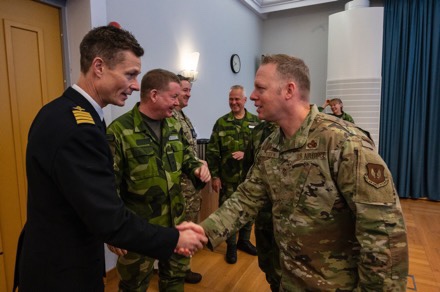
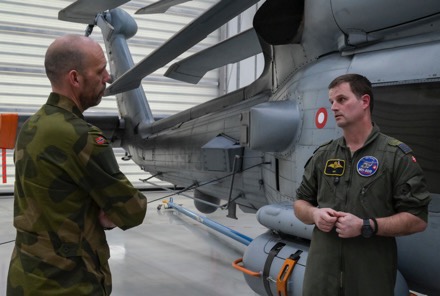
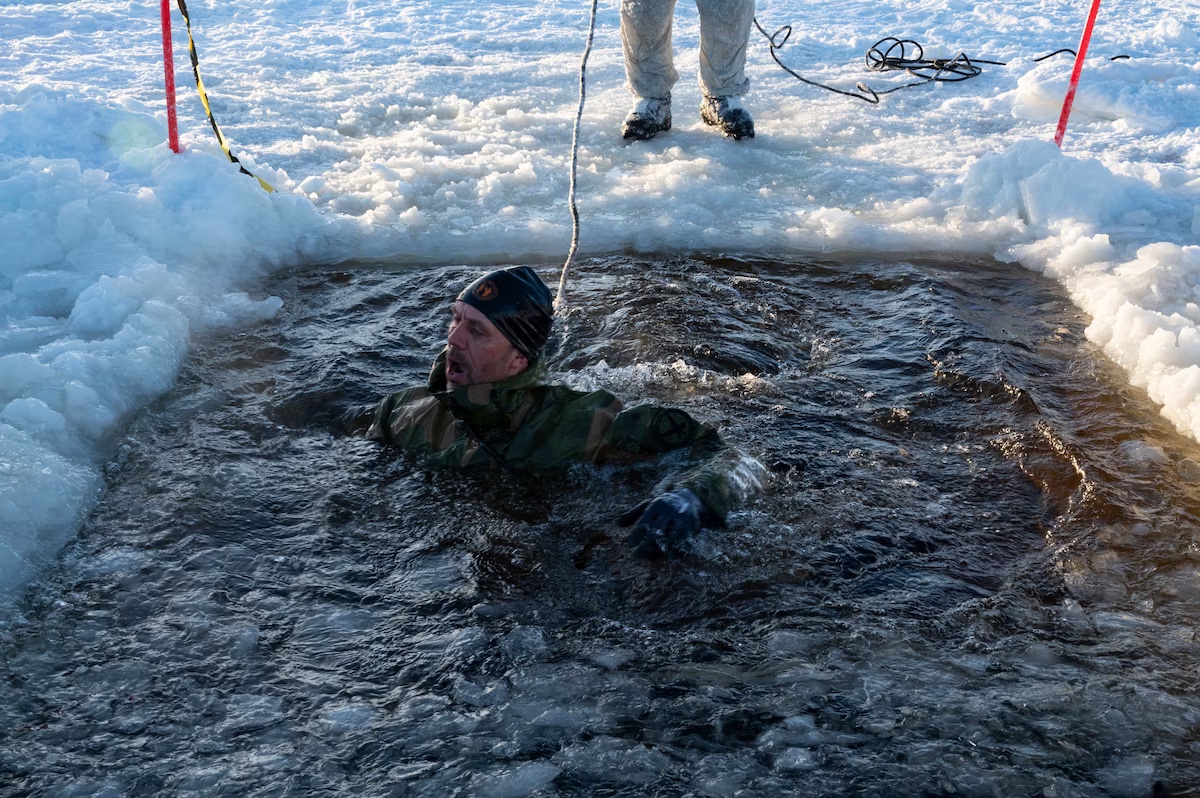
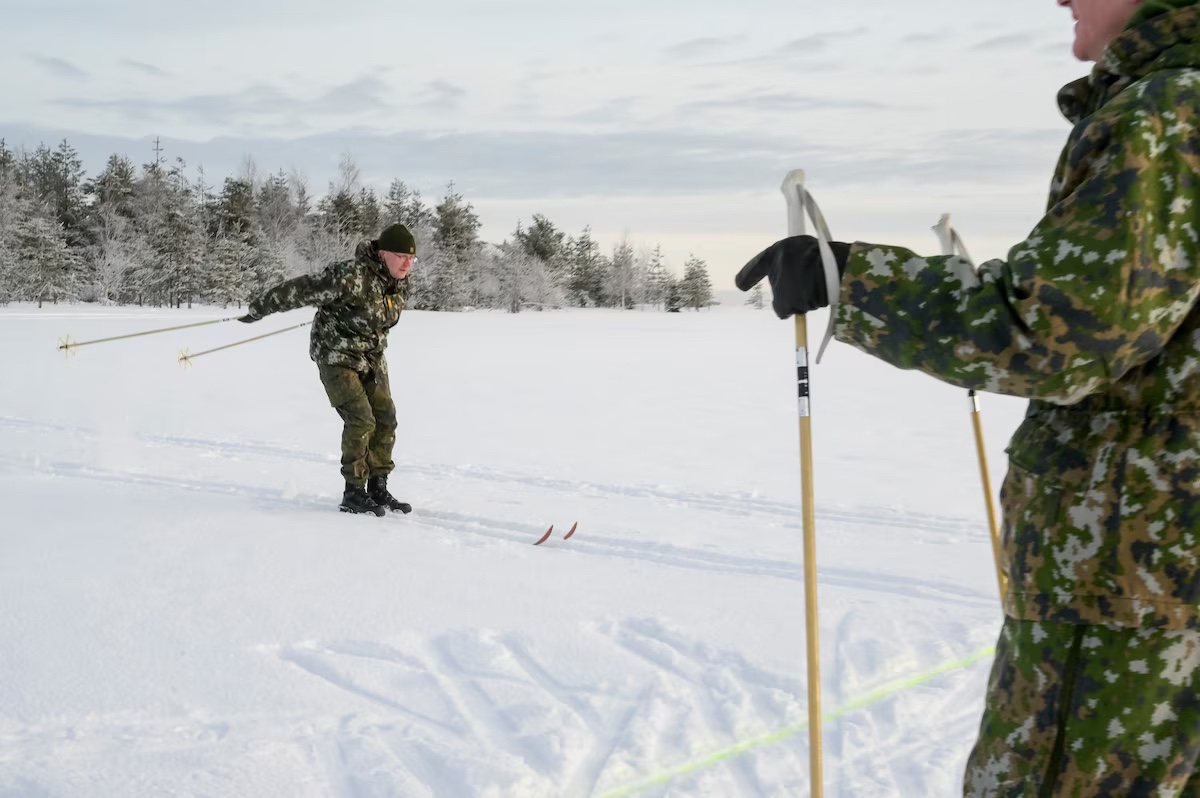
Command senior enlisted leaders from U.S. Air Forces in Europe and Air Forces Africa, NATO Allied Air Command, the Royal Danish, Royal Norwegian, Finnish, and Swedish air forces recently participated in a Nordic regional engagement to Sweden, Denmark, Norway and Finland.

The two-week engagement provided a platform for the CSELs to discuss Agile Combat Employment across the Nordic nations, explore multinational, professional military education exchange opportunities and discuss the operational environment in the High North.

“The Nordic visit is a significant engagement,” said Royal Air Force Warrant Officer Simon Waldock, command senior enlisted leader for NATO Allied Air Command. “The visit will provide an important steppingstone in developing and strengthening relationships and partnerships in the region.

Waldock also said this trip is paramount to the success of NATO.

“NATO’s fundamental goal is to safeguard the [allies] freedom and security by both political and military means,” Waldock expressed. “The expertise and knowledge the High North partners have is fundamental. The part they play in countering the threat from any adversary is critical, and their support to assist nullifying the effectiveness of any hostile air actions is fundamental in the success of NATO in the Nordic region.”

In conjunction with visiting NATO countries Denmark and Norway, the tour also visited Sweden and Finland, both of which have applied for NATO membership within the last year.

“Although not officially NATO members yet, both Sweden and Finland are critical to the NATO mission,” Waldock said. “Both geographically and strategically, the Nordic region is an area of significant importance to the NATO alliance. Both countries are near the High North and Arctic regions. These areas are key to the success of the NATO mission and will continue to be going forward.”

In addition to discussing strategic importance of the NATO region, the engagement focused heavily on the development of the enlisted corps, specifically the non-commissioned officers in the four nations, as well as professional military education exchanges across the allied nations and partners.

“Developing our NCOs is critical to the success of our air forces,” said U.S. Air Force Chief Master Sgt. Benjamin Hedden, USAFE-AFAFRICA command chief. “We’ve seen in recent history that a military without a strong NCO presence will fail. For that reason, it’s critical that we learn from each other, discuss ways to improve and work on ways to develop our enlisted force across the alliance.”

He continued by saying, “This trip gives us a unique opportunity to work face-to-face in developing the groundwork necessary to solve issues facing our enlisted forces. By learning more about the NCO corps of each nation, we find areas of common grounds and challenges that we can collectively work together to solve.”

Waldock summed up the two-week trip by saying in the end it’s all about the partnership events like the Nordic regional CSEL engagement build that are so important.

“It’s about enhancing CSEL relationships and friendships within the Nordic region,” he said. “Solidify already strong, current relationships with Norway and Denmark CSELs and develop new relationships with future NATO CSELs from both Sweden and Finland. The High North and Arctic region are a key area now and will continue to be a key region heading into the future.”

By MSgt Michael Battles, U.S. Air Forces in Europe and Air Forces Africa Public Affairs
1st Cavalry Division Hones Skills in Field Training Exercise

Thursday, February 16th, 2023

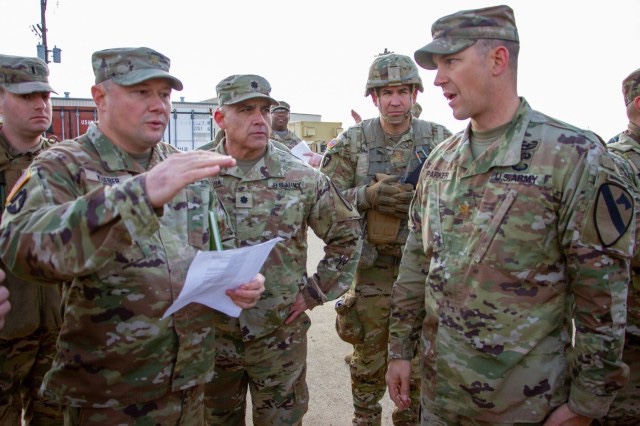
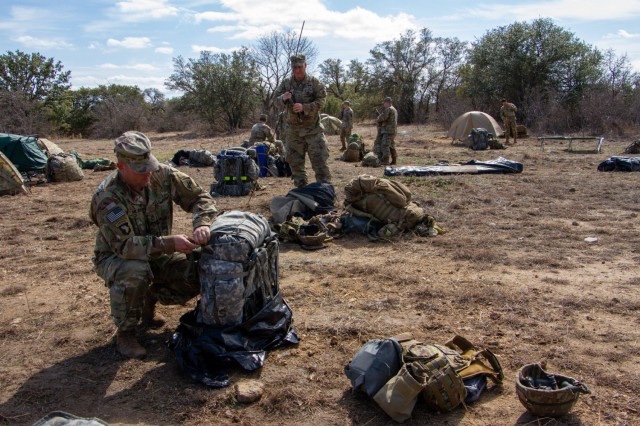
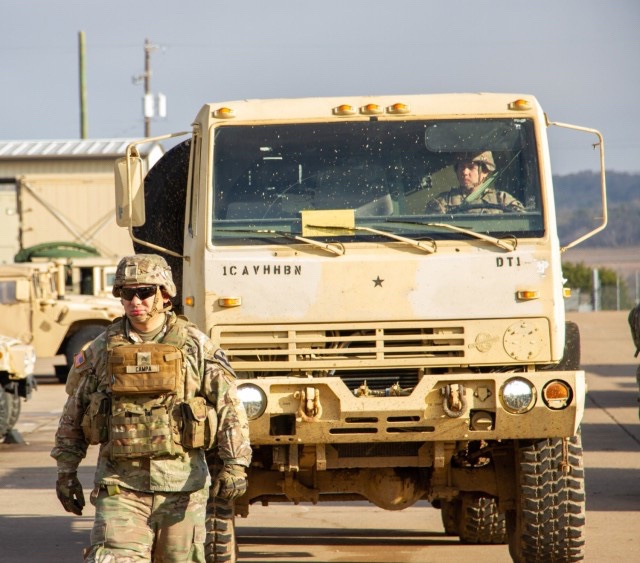
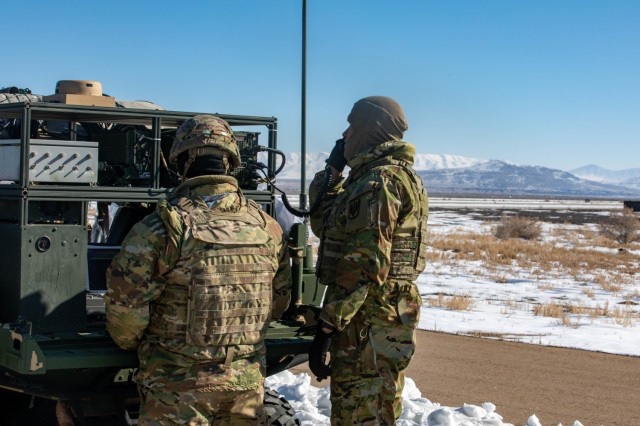
FORT HOOD, Texas — 1st Cavalry Division staff and subordinate brigades conducted a command post exercise at Fort Hood over the past in early February to test warfighting functions and refine processes ahead of a Warfighter exercise planned for this spring.

“It is absolutely critical to maintain the ability to deploy to multiple locations and stay in the fight, because failure to do so will diminish all warfighting capabilities,” said Sgt. Maj. Yolonda Jordan, division sustainment non-commissioned officer in charge, 1CD.

A command post exercise, or CPX, is a field training exercise that prepares units to fight in a large and complex environment. The exercise enables the commander to see if the staff’s processes and procedures work and identify what needs to change before being called to the fight.

“This CPX allows us to better prepare and execute our mission objectives,” Jordan added.

This is the second CPX iteration for the division as they prepare for their culminating exercise where the division will be evaluated in their proficiency, communication and warfighting capability in Warfighter 23-04 scheduled this spring.

“This is absolutely critical, you have to know the team that you work with,” said Maj. Mark Mckinney, division sustainment deputy officer, 1CD. “This sets the stage, so everybody gets their job done right so we don’t have to learn the hard way in combat.”

Testing the division’s ability to communicate as an effective warfighting team is vital, as the main command post and rear command post the staff works to effectively communicate and coordinate while also providing support towards subordinate units. Without synchronizing communication methods, the division would be unable to guide the fight.

“All elements of our division must be ready to contribute to the fight at hand,” said Jordan.

Projecting the First Team’s firepower includes augmenting the division with the right personnel.

“The goal is for us to be ready to support the “First Team” in training so that when the time comes to deploy we are not meeting for the first time,” said Maj. Robert Kaueber, deputy commander, of the Main Command Post Operational Detachment, Texas Army National Guard.

The exercise is just a steppingstone to test current tactical standard operating procedures and identify battle drills that work and things that no longer work so they can be updated before the Warfighter and potential deployments in the future.

It’s important for the staff to be able to interact with subordinate units across the battlefield and it’s also extremely important that everyone understands how to use command and control systems designed for sharing battlefield updates and communicating at different echelons.

“It’s always important to remember if you’re going to win the fight, every piece of equipment has a person behind it, whether it’s a weapon system, communication system, or planning tool,” said Maj. David Christensen, deputy command chaplain, 1CD. “If we don’t make sure our people are taken care of physically, mentally, and spiritually none of those systems matter. Conversely, if we spend a little more time taking care of our people, that effort can make the difference that ultimately wins the fight.”

By SGT Elliot Alagueuzian

Army Chaplain Diversity Serves the Needs of America’s Soldiers, Families

Wednesday, February 15th, 2023

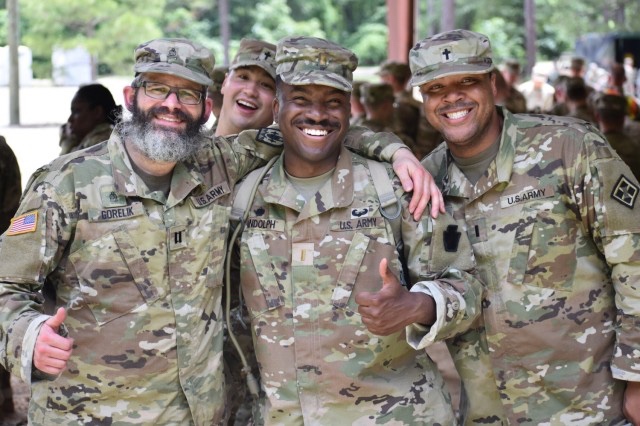
The first Chaplain Basic Officer Leader Course of the year, Class 23-001 began at the Army Institute for Religious Leadership, Jan. 19.

The students come from different locations, backgrounds and faith groups. The diversity of the students plays a major role in providing religious service support to Soldiers and their Families.

Soldiers and their Families represent a cross-section of America. The Army Chaplain Corps seeks chaplains and religious affairs specialists who can meet the needs of this diverse population and care for the soul of America’s Army.

It is not always an easy task to match the diversity of the Army population with members of the clergy, but it is a major part of the recruiting effort to try.

“The military focus on diversity, equity and inclusion helps to capture the full landscape of our diverse culture. One dimension of the military culture is a person’s faith as it relates to spirituality and their religious beliefs,” said Chaplain (Col.) Monica Lawson, chief, Recruiting and Accessions Division – Office of the Chief of Chaplains. “In order to assist in our chaplain recruiting efforts we are looking for called and qualified applicants who also represent the diversity of the Army population.”

There are three CHBOLC classes each year. A look at the three CHBOLC classes in 2022 tells a story of how it is going.

At a glance, there were 78 students in class 22-001, 86 students in class 22-002 and 82 students in class 22-003. CHBOLC 23-001 begins with 75 students.

Males’ makeup most students with 70 males in class 22-001, 77 in class 22-002 and 73 in class 22-003 with ranges of 20-59 years of age. Chaplain candidates tend to be older due the requirement to complete seminary and hold a master’s degree. Younger applicants who apply for the Chaplain Candidate Program are able to attend CHBOLC while going through seminary and working on their master’s degree. The age requirement for the Chaplain Candidate Program is less than age of 37 unless a waiver is granted.

Candidates are mixed racially and ethnically. Caucasians are the largest group followed by African Americans, Asian, Hispanic and others. They represent future active duty, Reserve and National Guard appointments. Some have prior military service as officers or enlisted in various specialties.

The faith traditions the Army recognizes for training as Army Chaplains include Christian, Muslim, Jewish, Hindu and Buddhist. Christian is the largest group, but also represent many denominations.

Candidates are associated with an endorser organization within different faith groups. Many faith groups don’t allow females to become clergy which partially accounts for the lower number of female candidates. Female chaplains are part of an underrepresented group that the Chaplain Corps is working to grow. Underrepresented faith groups include Muslims, Hindu, Buddhist and Catholics.

The Chaplain Corps introduced Every Chaplain Corps Member a Recruiter Initiative to address the low numbers across the corps and among the underrepresented groups.

“We need to recruit the next generation of chaplains today. We need chaplains who are passionate about caring for the souls of Soldiers and their Families, and who can operate effectively in a pluralistic environment,” said Chaplain (Maj. Gen.) Thomas L. Solhjem, chief of chaplains.

The goal is to transition civilian clergy of different faith traditions into Chaplains who will take on the charge of caring for the souls of America’s Army.

“‘The mission of the Initial Military Training Division is to provide education and training to newly accessioned chaplains and religious affairs specialists that enables graduates to perform the function as a Unit Ministry Team.’ The training enforces the Army standard and welcomes all people of all backgrounds,” said IMT Division Chief, Chaplain (Lt. Col.) William M. Oliver.

There are minimum requirements to request entry into the Army chaplaincy.

One must possess a bachelor’s degree from an accredited university or are a current graduating college senior, secure an endorsement for military service from one’s faith group and enroll or get accepted as a full-time student in an accredited graduate program that qualifies one for ordination.

The core responsibilities of a chaplain are to nurture the living, care for the wounded and honor the dead. This includes Soldiers, Family members and Department of the Army Civilians. In a diverse organization with many beliefs, this may require coordination among UMTs. When chaplains encounter those of another faith group, they work to find a chaplain of that faith group to provide religious service support to the Soldier or Family member.

This is known as perform or provide.

“That’s the strength of our Chaplaincy. We care for everybody,” said Deputy Chief of Chaplains, Chaplain (Brig. Gen.) Bill Green. “When the four chaplains had to give away their life jackets, they weren’t looking for their particular faith group to give their life jackets to. They saw another person. They honored the life of that person and as a result of that they gave their jacket away and made the ultimate sacrifice. They died.”

Once an individual has accepted the call to serve as an Army Chaplain, they would need to follow the steps outlined on the www.goarmy.com/careers-and-jobs/specialty-careers/chaplain webpage.

By Mel Slater, Institute for Religious Leadership

317th AW Brings Tactical Airlift to Battalion Mass Tactical Week

Tuesday, February 14th, 2023

DYESS AIR FORCE BASE, Texas (AFNS) —

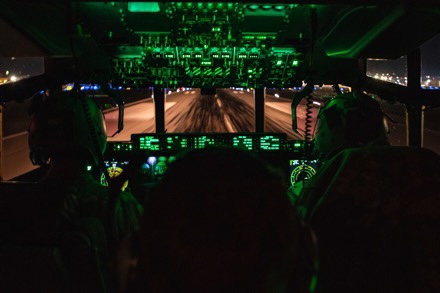
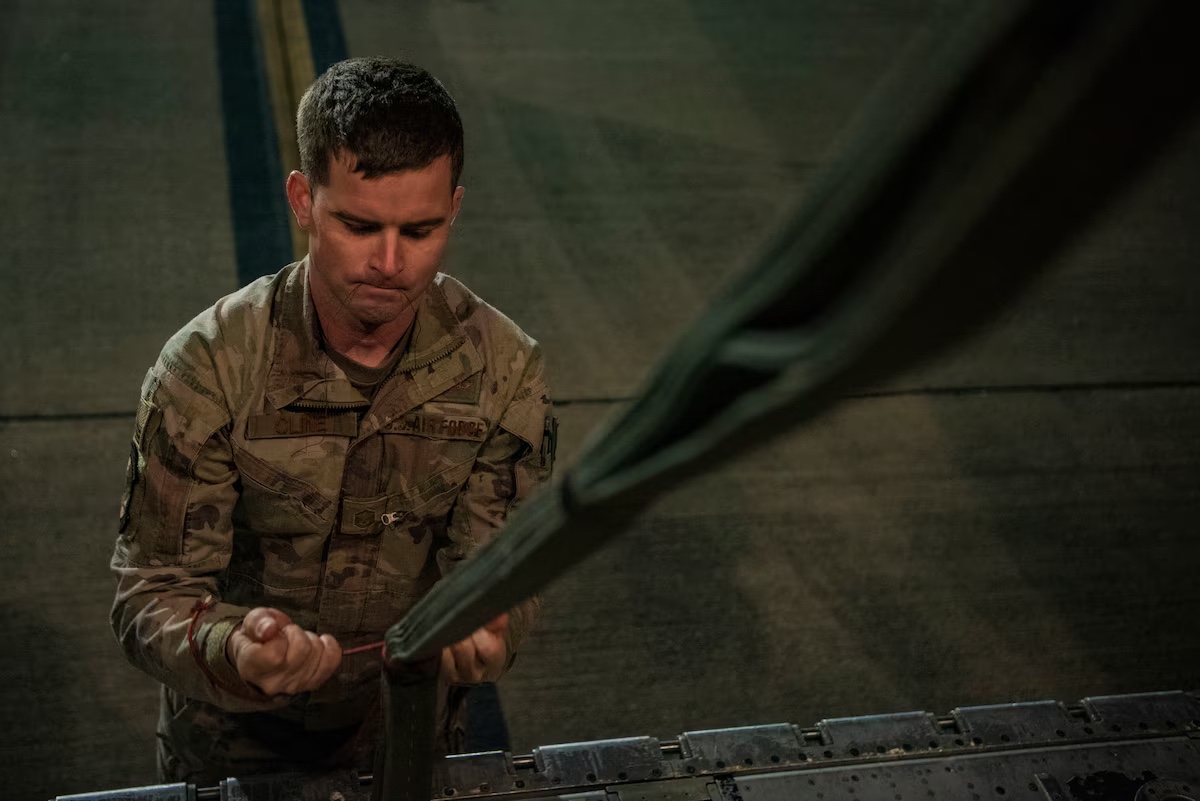
The 317th Airlift Wing supported Battalion Mass Tactical Week at Pope Army Airfield, North Carolina, Jan. 22-28.

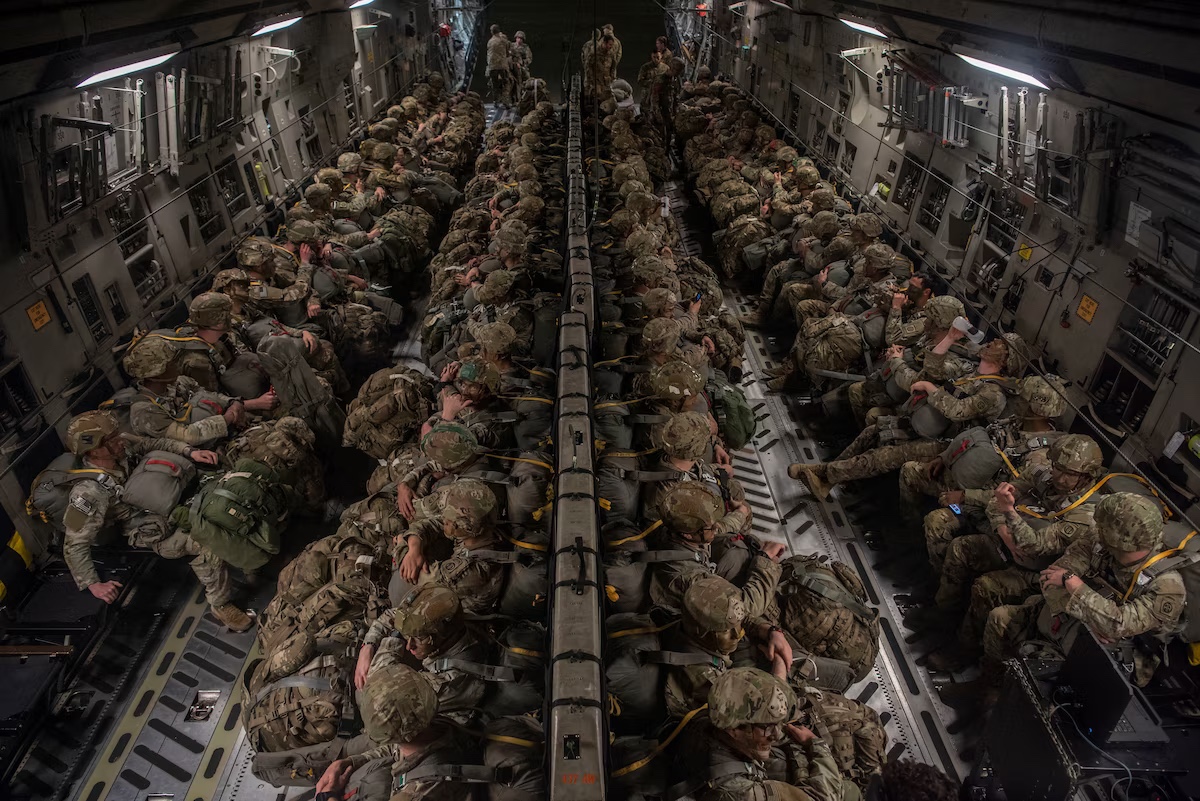
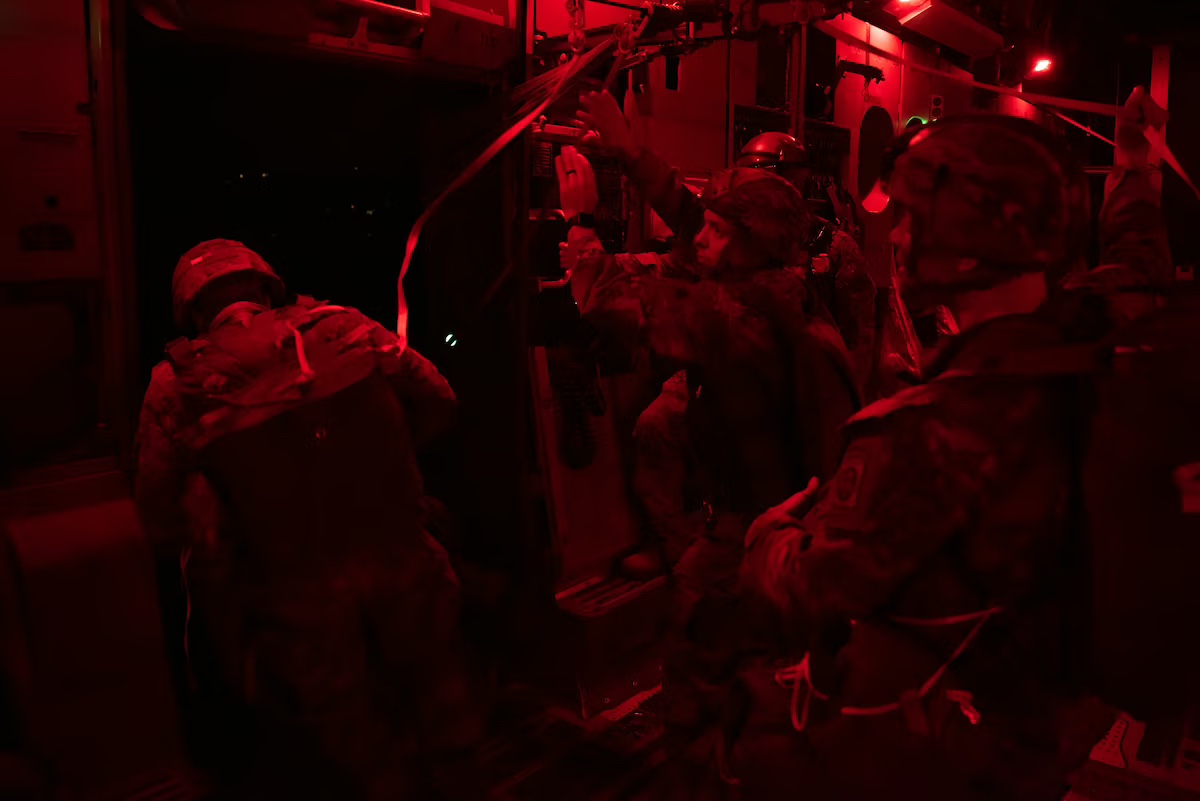
BMTW is a week of training simulating a U.S. Indo-Pacific Command 24-hour response scenario. Three C-130J Super Hercules from the 317th AW alongside three C-17 Globemaster III from Joint Base Charleston, South Carolina, trained with the 82nd Airborne Division, Fort Bragg, North Carolina, as an integrated force to provide strategic and tactical airpower.

“Events in the past, such as D-Day, have led to a demonstrated need for these events giving us now the ability to respond anywhere in the world, utilizing the strategic and tactical airpower of the C-130s and C-17s,” said Lt. Col. Ryan Miller, 317th Operations Group deputy commander and airlift mission commander.

Aircrews focused on meeting the Army’s scatter plan during BMTW by strategically spreading where the paratrooper, heavy equipment and container delivery systems containing supplies would land for ground personnel within the drop zone.

“Joint operations are always difficult and there is a clear need for us to continuously improve,” Miller said. “Being within this environment gets us out of our comfort zone. Moving to something a little more complicated makes us work together as an integrated force which ultimately improves ourselves.”

One of the challenges with BMTW was conducting dissimilar six-ship formations. There are risks associated with flying a dissimilar six-ship formation because of aircraft performance, such as differing slow-down speeds, power settings and altitudes.

“The timing of all of this matters,” Miller said. “When you combine all the different aspects of each aircraft in a high tempo environment, things can get missed. Deconfliction between the aircraft, ensuring the safety of our personnel by communicating and learning with the Army all matters for the mission’s success.”

Many risks were associated with executing BMTW properly, but through disciplined planning and execution, the aircrews and soldiers who participated have come out of BMTW having built a more strongly integrated team. 

“The 317th AW participation in BMTW enables continued development of an experienced and capable joint force. While airdrop is one of our oldest core competencies, this exercise allowed us to use emerging technologies to deliver our joint partners with more precision into the battlespace. The time we gain for them improves survivability and makes them even more lethal upon arrival,” said Col. Thomas Lankford, 317th AW commander.

By Airman 1st Class Ryan Hayman, 7th Bomb Wing Public Affairs
Data-Centric Exercise Showcases Joint Capabilities, Lethality

Saturday, February 11th, 2023

FORT BRAGG, N.C. — In the midst of a modernization effort that is focused on meeting strategic demands, organizations from across the military services collaborated in a joint exercise to improve capabilities to prepare to combat near-peer threats.

The XVIII Airborne Corps is at the leading edge of building the future force of 2030 and beyond through collaboration and innovation to meet these complex global challenges.

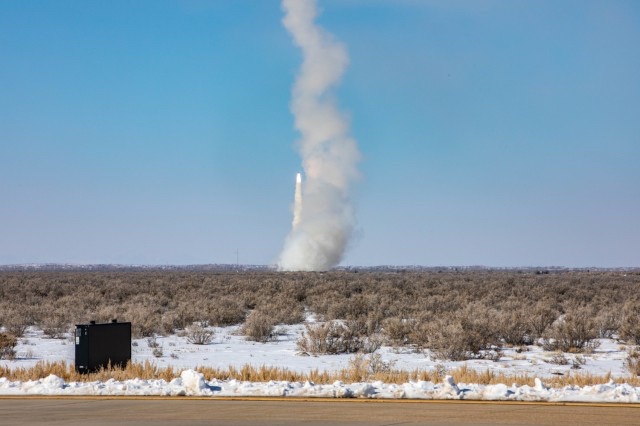
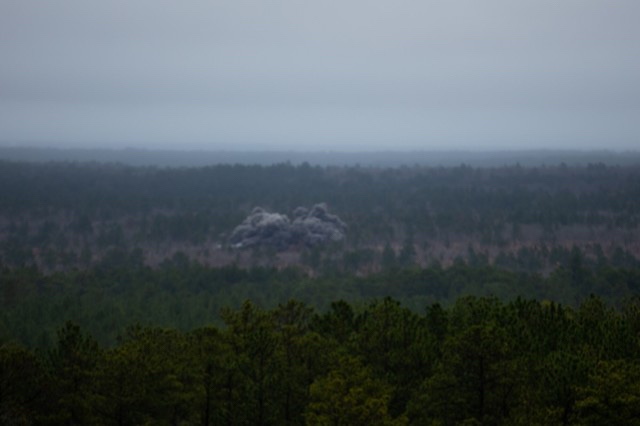
America’s Contingency Corps put that on full display during Scarlet Dragon Oasis, an artificial intelligence and data-centric operation that enabled a live-fire target identification and execution exercise from Jan. 23 to Feb. 3, 2023.

This was the sixth iteration of the Scarlet Dragon Oasis, and is a continuation of Project Convergence, in an ongoing series of training operations since 2020 that solely serve to increase the capabilities of warfighting skills across the joint force.

The XVIII Airborne Corps partnered with U.S. Central Command and several commands spanning across all branches of the Department of Defense to enable data-driven predictive models to inform and drive operations. The exercise was held across multiple states, including North Carolina, Georgia, Utah and Florida. They employed multiple platforms across all domains to hit specific targets in a more precise and effective manner.

Scarlet Dragon also enabled service members from across the joint force to improve interoperability by incorporating NATO allies. The exercise focused on sharing data and processing artificial intelligence to increase capacity for each warfighting function.


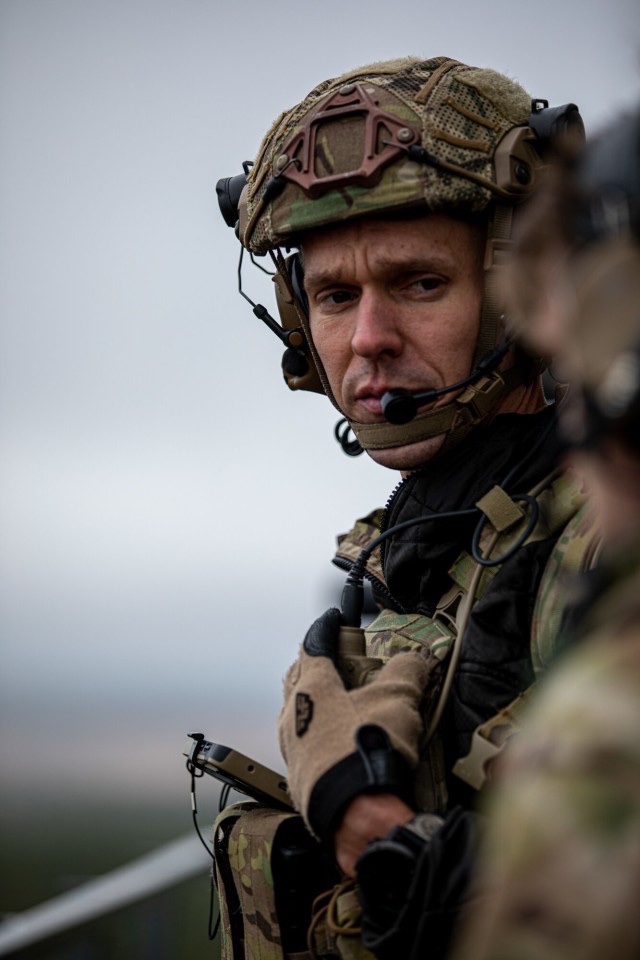
“We see this as an opportunity to take our joint partners and continue training to solve problems together,” said U.S. Army Col. Joseph O’Callaghan, XVIII Airborne Corps Fire Support Coordinator. “Partners are a crucial part of our warfighting force.”


The exercise showcased each service’s ability to operate in a multi-domain environment aimed to enhance their joint relationship.

From the U.S. Army using Boeing AH-64 Apache attack helicopters in a sprawling gunnery range to the U.S. Air Force providing Boeing B-52 Stratofortress bombers, Scarlet Dragon demonstrated the accuracy and lethality of targeting using sophisticated technology.

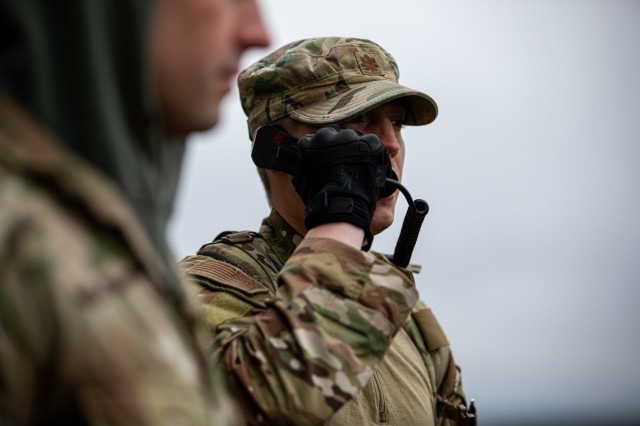
“The Army is able to find the targets with the software, and then passes that information on to us through our joint domain architecture,” said U.S. Air Force Tech Sgt. Matthew Ping, a tactical air control party specialist. “We pass that information onto Air Force fixed-wing aircrafts, to strike the target.”

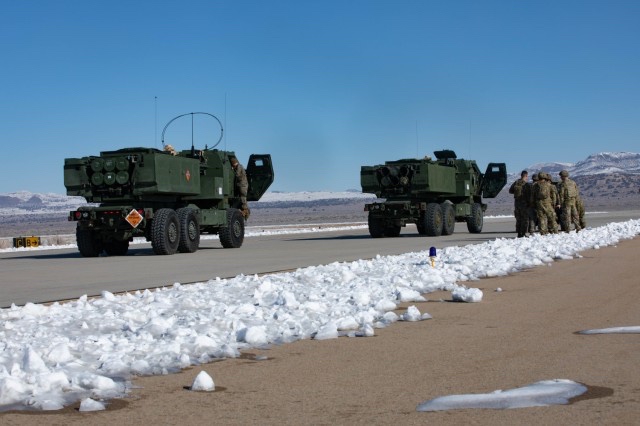
The U.S. Marine Corps conducted a High Mobility Artillery Rocket System Rapid Infiltration, partnering with the 18th Field Artillery Brigade using their HIMARS.

The sea domain also played a vital part of the Scarlet Dragon Oasis as the U.S. Coast Guard and U.S. Navy demonstrated their ability to control and patrol the waters by using the Tomahawk Land Attack Missile displaying their targeting precision.

This exercise was also the first time the U.S. Space Force was incorporated into the exercise, and they provided key elements to the exercise by incorporating the space domain and space range to harness another realm of data centric warfare.

“We are using artificial intelligence to pull all actionable data from a scan, instead of having an extra delay from having a team measure it out,” said U.S. Air Force Maj. Joseph Hamilton, a tactical air control party officer. “We’re significantly cutting the time it takes from detection until the point of the strike.”

The joint force model’s interoperability is crucial to our nation’s warfighting success and the improvement of our technology lies within the people who are the service themselves.

“The ultimate goal is if one person from any service walks out with an idea or concept from here and applies it to their work, and makes it better, then we have won. Plain and simple.” said O’Callaghan.

By SPC Osvaldo Fuentes

Some photos by SGT Erin Conway