Phantom Lights

Archive for the ‘Guest Post’ Category

Army Leaders Gather for Annual Stryker Leader’s Summit

Monday, January 30th, 2023

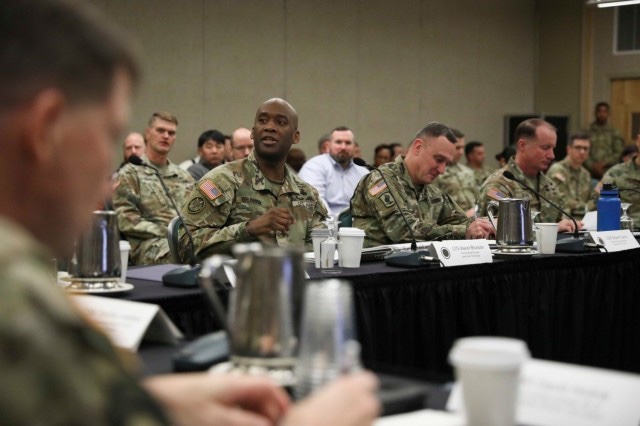
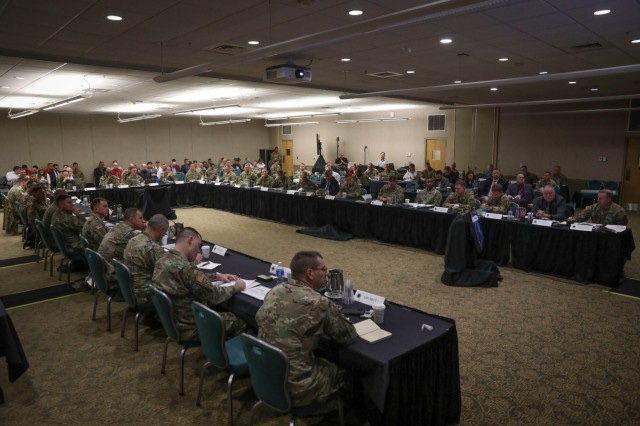
JOINT BASE LEWIS-MCCHORD, Wash. — U.S. Army leaders and Stryker industry experts and gathered at Joint Base Lewis-McChord’s American Lake Conference Center, Jan. 9-10, 2023, for the annual Stryker Leader’s Summit. The two-day event gave attendees the opportunity to discuss modernization and readiness for Stryker units throughout the Army.

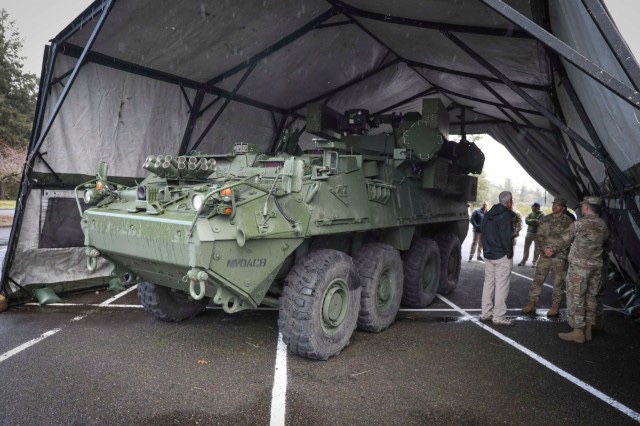
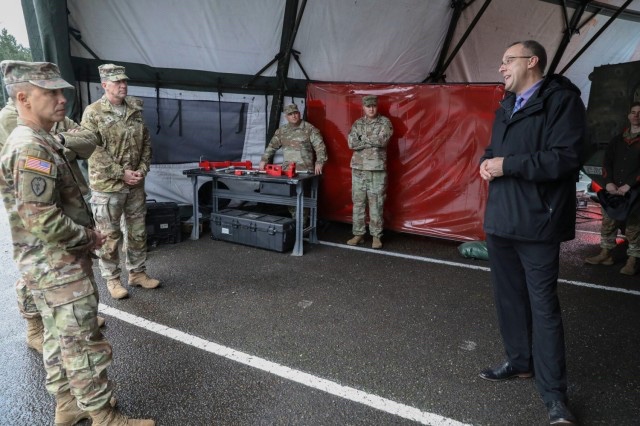
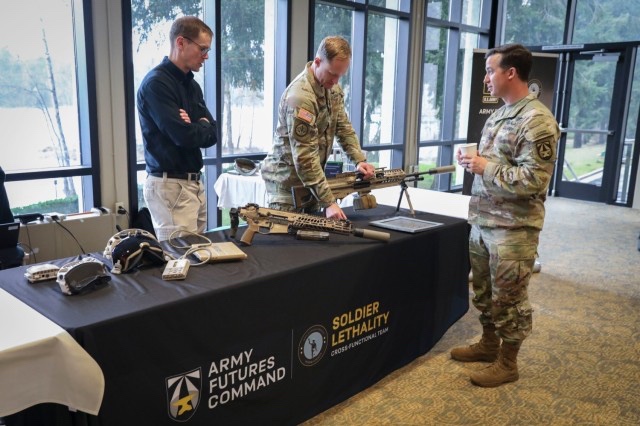
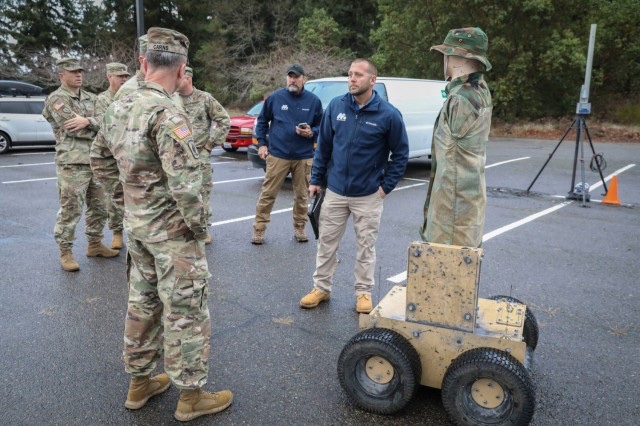
The summit brought together Army leaders from various Stryker units, DoD civilians, and industry professionals. Static displays and demonstrations gave attendees an up-close look at the latest Stryker technologies and concepts.

“It’s important for us to take a day like today to understand where we’re going and what the way forward is for the Stryker,” said Lt. Gen. Xavier Brunson, commanding general of America’s First Corps. “I know that the answers are here in this room right now.”

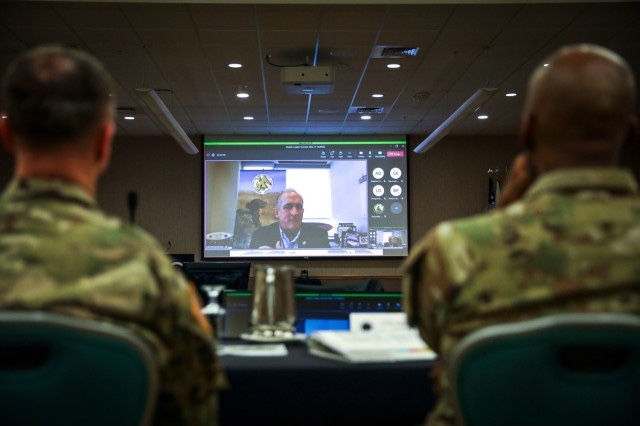
Association of the United States Army President, retired Gen. Robert B. Brown, former commander of the United States Pacific, kicked off the summit with opening remarks. He spoke about his time in Stryker Brigade Combat Teams (SBCT) and the modernization of SBCTs and Strykers since then.

“It’s a critical time going from modular brigade centric, to division centric, and really a return to [training for] full scale combat operations,” said Brown. “Despite all the buzzwords, all of the misunderstanding out there, there’s no question that multi-domain operations is the future.”

“The Stryker brigades are the only infantry-centric medium brigades in the Army,” Brown explained. “They have tremendous capability, enhanced lethality, mobility and networked mission command.”

The summit emphasized the Army’s 2030 Force Structure Initiatives and included key discussion on SBCT modernization and Stryker improvements. Leaders in attendance also discussed challenges, lessons learned and ways to maintain and improve readiness.

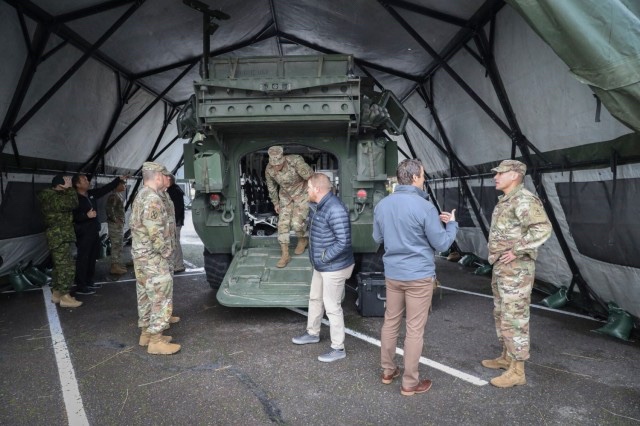
Guests in attendance also had the opportunity to observe some of the latest technology and Strykers. One of the Strykers being showcased was the Double V-Hull A1, which is equipped with 30mm weapons and an unmanned auto-cannon.

“The actual lessons will be learned from those on the ground closest to the problem,” Brown said. “They will come up with what future fight looks like.”

While the summit encouraged Stryker stakeholders to discuss updates and changes to the SBCT, members acknowledged that the Army’s number one priority, its people, are critical to the decision-making process.

“We’ve got to figure this out,” said Brunson. “And that innovation is going to come from deep down in our formations. It’s going to come from each unit,”

“We’re going to change or revolutionize the things that we have to do,” said Brunson.

Story by SPC Karleshia Gater

Photos by SGT Joshua Oh

Zama Middle High School Holds its Largest Marksmanship Match in Years

Sunday, January 29th, 2023

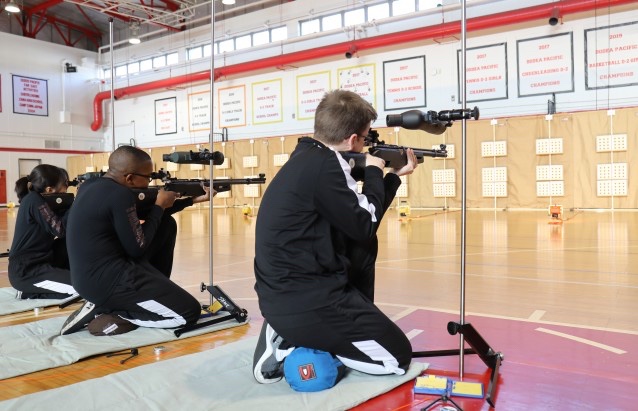
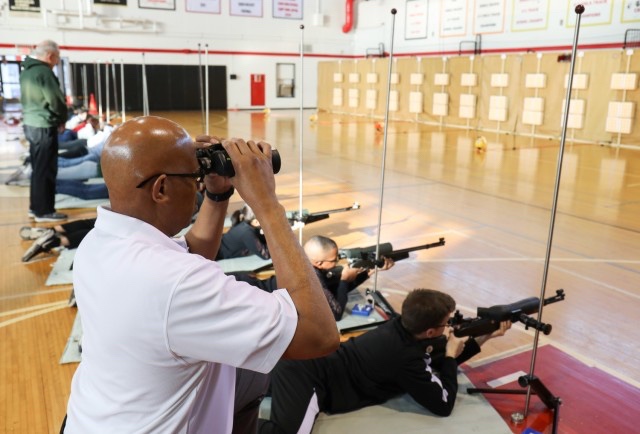
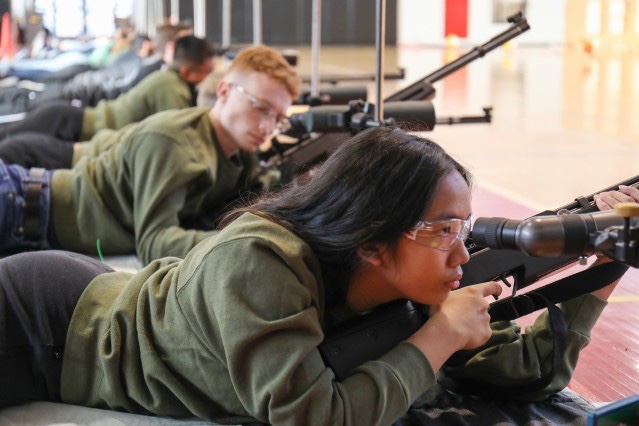
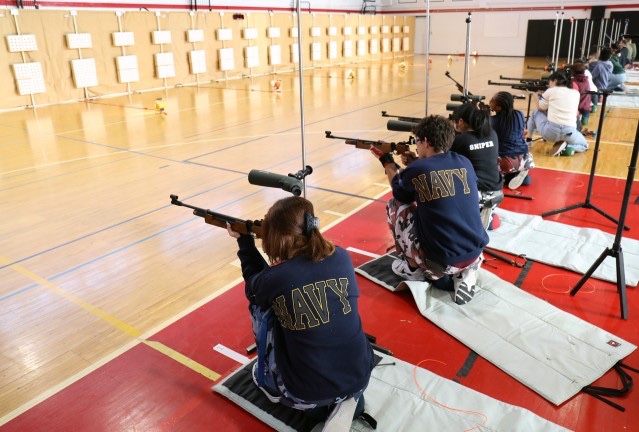
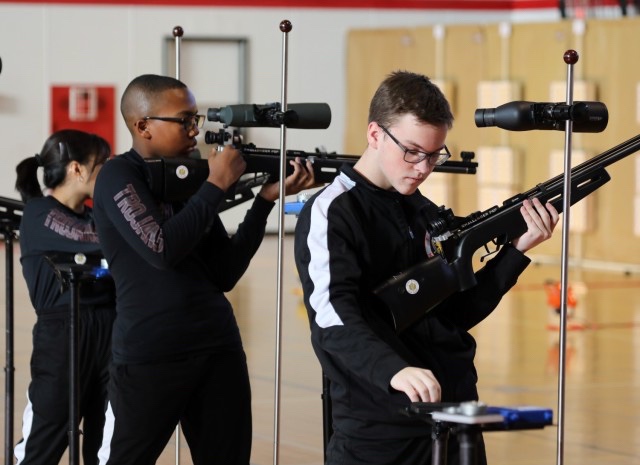
CAMP ZAMA, Japan – More than 70 cadets are competing in a two-day marksmanship match, the largest of which to be held at Zama Middle High School in years.

The Junior Reserve Officers’ Training Corps competition, which ends Saturday, includes cadets from all eight Department of Defense Education Activity high schools across the country.

“This year is unique because we’re [inviting] all of the Japan schools,” said retired Sgt. Maj. Danny Davis, a Zama JROTC instructor who helped organize the invitational event.

In the competition, varsity and junior varsity students will compete by firing pellet rifles at paper targets inside the school’s gym in three positions: prone, standing and kneeling.

Events like these typically have been held virtually in recent years due to the pandemic. Zama’s event was the second in-person match after MC Perry High School hosted the first one of the winter season. Davis said the Zama match has more cadets and is the largest held at the school in at least the past five years he has been there.

“It’s a team effort,” he said of the event, which has 20 target lanes for competitors. “Our teams set up the range and will tear it down tomorrow.”

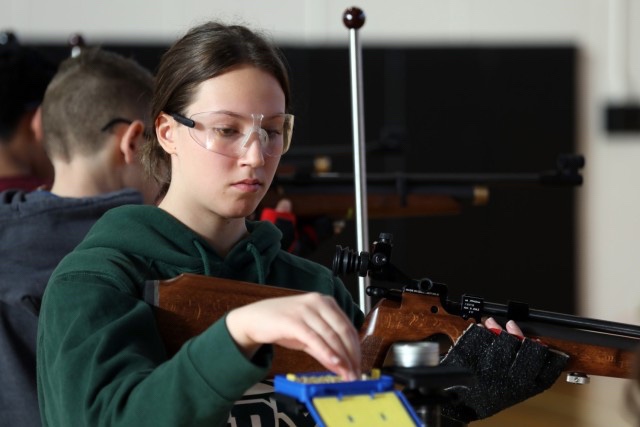
Sophomore Kristaleen Fugrad, captain of the Zama varsity team, said these events can be tense but still enjoyable.

“I’m shaking a lot,” she joked of when she prepares to zero in on a target. “It’s fun and kind of nerve-racking at times.”

Fugrad, who said she and others practice these skills for hours after each school day, said her team has invested a lot of time into the sport, so they don’t want to back down during competitions.

“It’s good to compete against others and for bragging rights,” she said.

Sophomore Daniel Denson, a fellow team member, said the “will to win” helps keep him motivated.

“We definitely don’t want to be at the bottom,” he said. “We want see ourselves at the top.”

He said the events are also a great opportunity to meet cadets from other schools.

“Since this is just a JROTC sport, it’s nice to see other people who have the same interests as us,” he said.

Marksmanship is about more than hitting a bullseye on a small, black round target. While the in-person event may bring some extra pressure, Davis said cadets must stay disciplined and focused.

“It’s about taking your time and patiently shooting,” he said, adding cadets learn how to manage their time and stress as well as pay attention to detail. “There are a bunch of life skills they can learn in shooting.”

Competitors plan to travel to South Korea early next month to vie in the Far East marksmanship match.

To see results of the most recent match, visit www.orionresults.com/zama.

By Sean Kimmons, U.S. Army Garrison Japan Public Affairs

PACAF Visits Kunsan AB, Validates Next-Gen Aircrew Protection

Saturday, January 28th, 2023

KUNSAN AIR BASE, South Korea (AFNS) —

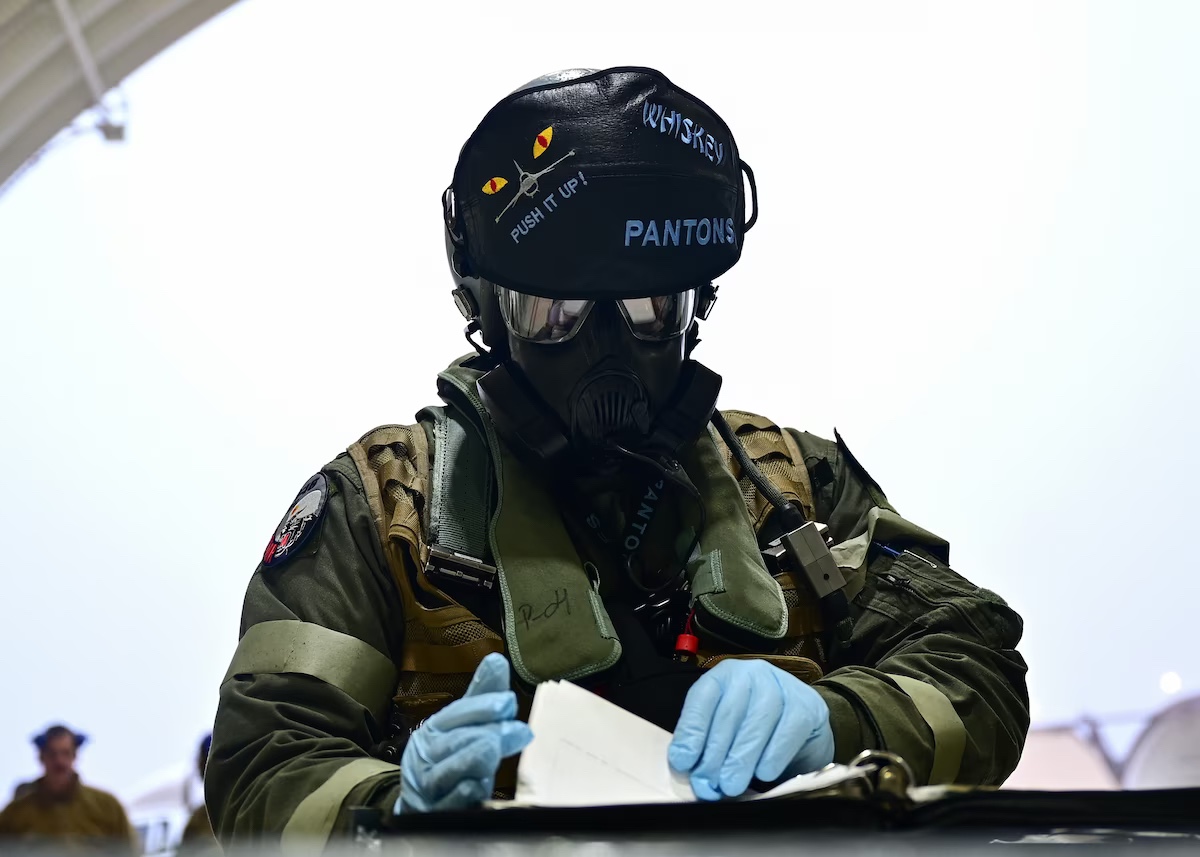
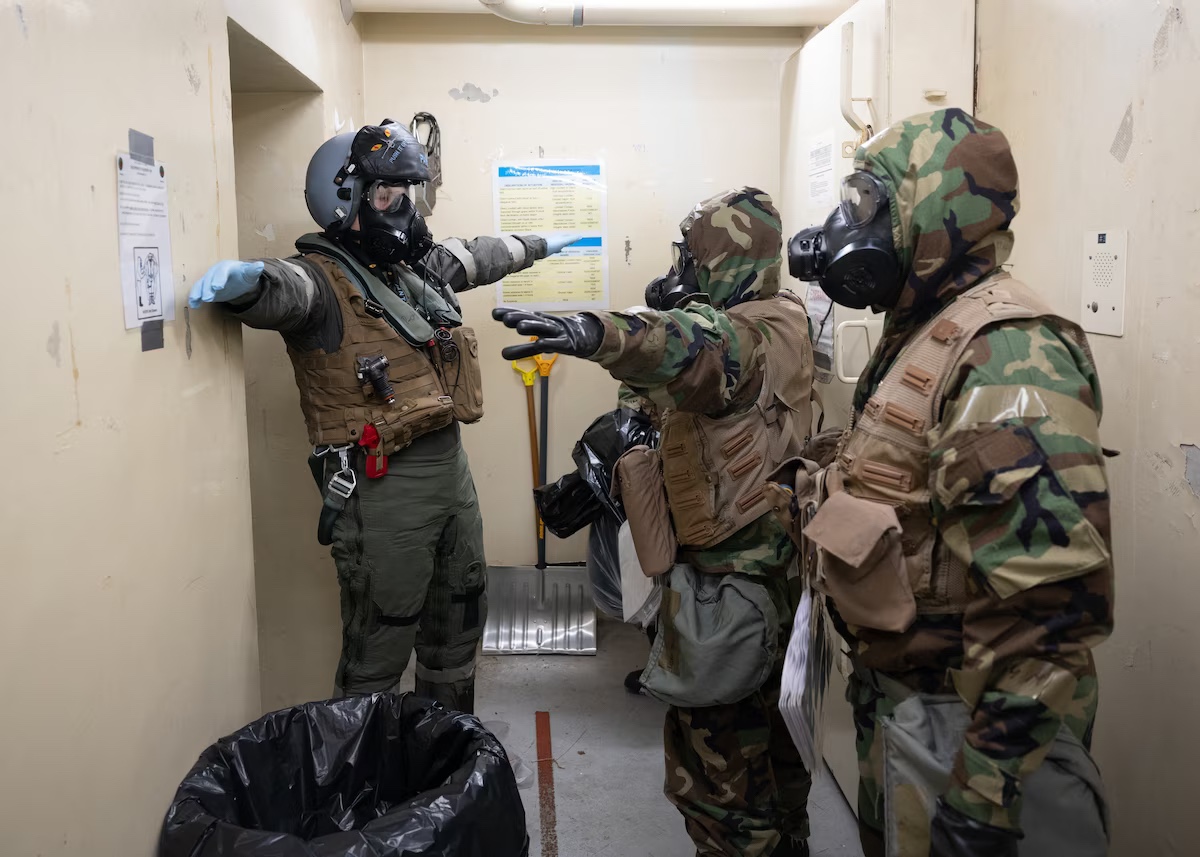
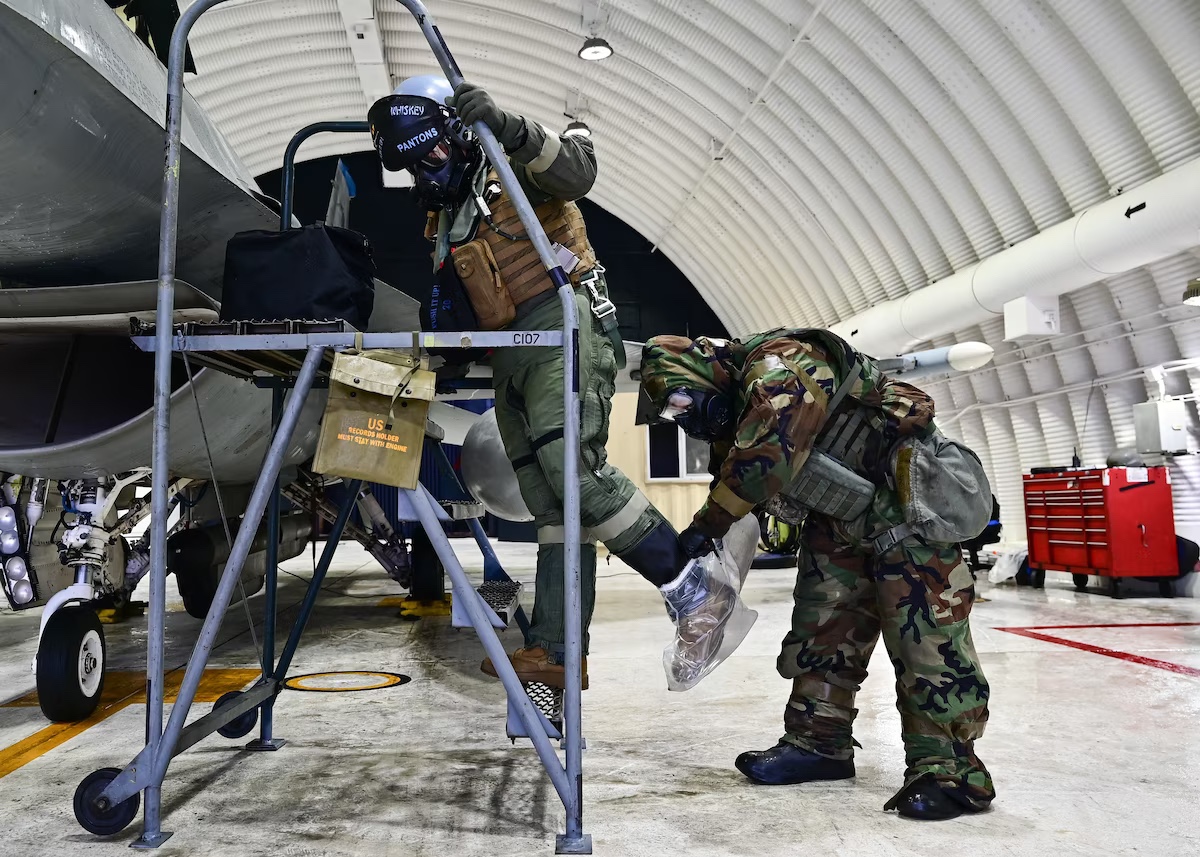
Pacific Air Forces recently deployed a joint team of representatives and subject matter experts to Kunsan Air Base, conducting the major command’s first test and validation of counter-chemical warfare tactics, techniques and procedures, or TTP.

These tests are part of the Next Generation Aircrew Protection program, designed to ensure aircrew have proper chemical, biological, radiological and nuclear, or CBRN, protective equipment and that CBRN measures are modernized to meet emerging threats while maintaining peak human performance.

“Current aircrew and pilot CBRN protective equipment are effective but restrictive and burdensome, thus hindering combat effectiveness,” said Chief Master Sgt. Charles Hall, PACAF aircrew flight equipment major command functional manager. “The Air Force realized this in late 2021 and early 2022 and set aside about $16 million to conduct research on aircraft, ground and air testing across various platforms to collect quantitative and qualitative data.”

Armed with the data, researchers refined existing TTPs to better equip aircrews, like Kunsan AB’s, with the tools necessary to continue the ‘Fight Tonight’ mission.

“Wing commanders have an associated risk attached to nearly every decision they make,” said Senior Master Sgt. Ryan Rios, PACAF AFE command manager. “With the integrated data and refined TTPs, wing commanders now have additional information to help them make those tough decisions and continue executing their mission should a CBRN event occur.”

The TTPs are the brainchild of Col. Daniel Roberts, who now serves as 97th Medical Group commander at Altus Air Force Base, Oklahoma.

“Risk is ever-present,” Roberts said. “Looking at combat operations in a chemical environment brings the question to mind; ‘How does one balance and right-size risk to improve combat effectiveness?’ Thinking this way allowed us to improve human performance and the ability of our ground crews to turn aircraft in an effective manner so our combat forces are ready when called upon.”

The program’s tests and validations affected several base agencies to include the 35th and 80th Fighter Squadrons, 8th Operations Support Squadron AFE, 8th Civil Engineer Squadron emergency management, 8th Maintenance Group and the 8th Medical Group bioenvironmental engineering flight.

Participating Airmen tested the updated CBRN TTPs safely and efficiently by stepping, launching and recovering a flying mission in a simulated chemical filled environment.

The PACAF team is scheduled to validate every installation within the MAJCOM and ultimately will establish standardized PACAF-wide counter-chemical warfare aircrew protection measures. Efforts like this help ensure Kunsan AB maintains maximum combat readiness capabilities to support a free and open Indo-Pacific.

By SSgt Isaiah J. Soliz, 8th Fighter Wing Public Affairs

FirstSpear Friday Focus: Wind Cheater

Friday, January 27th, 2023

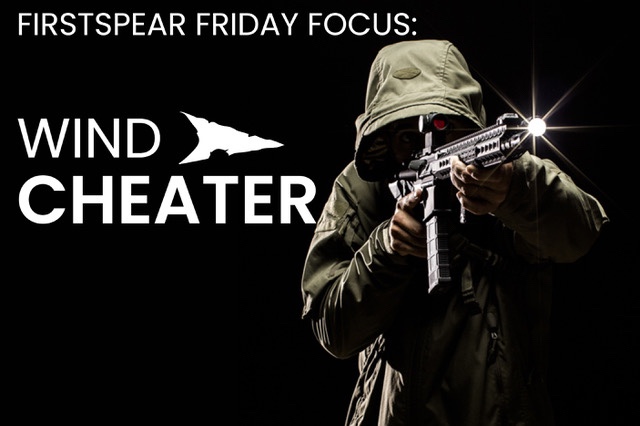
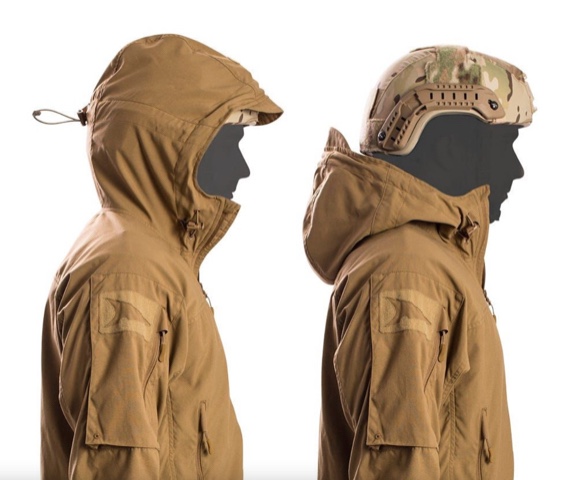
Filling the mid-weight niche of our technical apparel line, the Wind Cheater has a Durable Water Repellant (DWR) finish and excellent wind shedding characteristics. It is quiet, flexible, extremely versatile and made in the USA.

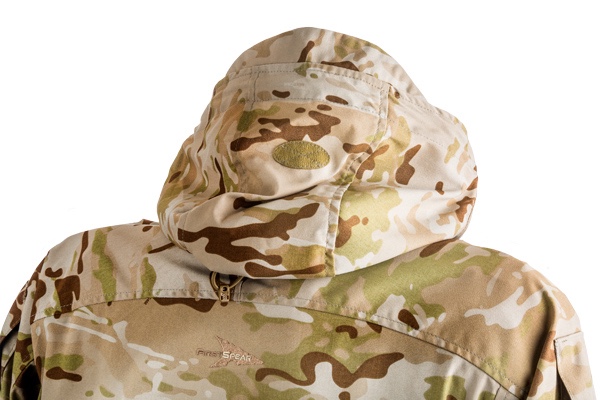
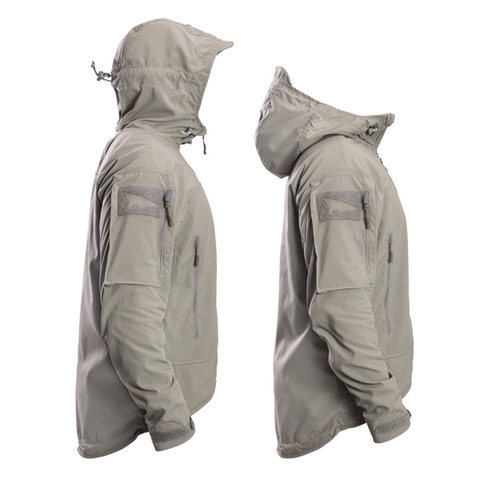
The Wind Cheater features a large hood that can fit over helmets with no problem and is cut generously to aid in movement.

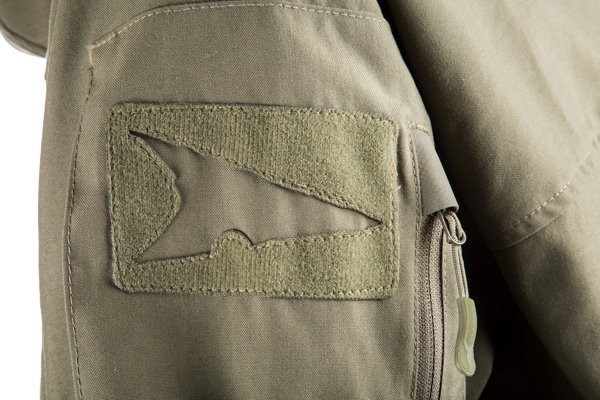
Low profile hook and loop in strategic locations provide ample attachment points for FirstSpear Cell Tags and IFF.

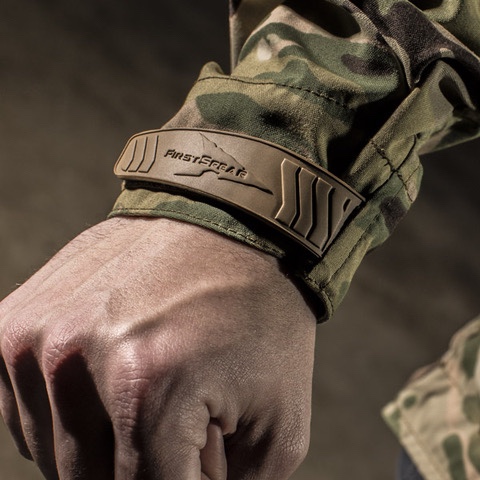
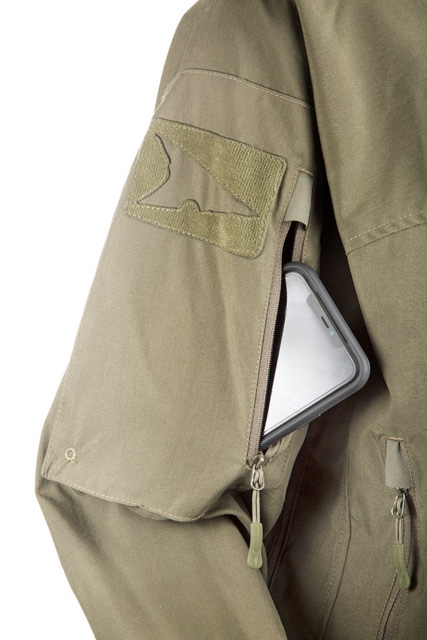
This jacket breathes like a T-Shirt and is designed to dry quickly. Standard cuff tabs and extra-large bicep pockets are found on each sleeve.

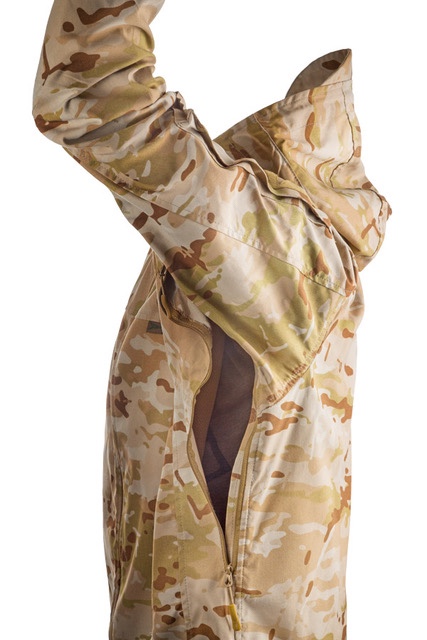
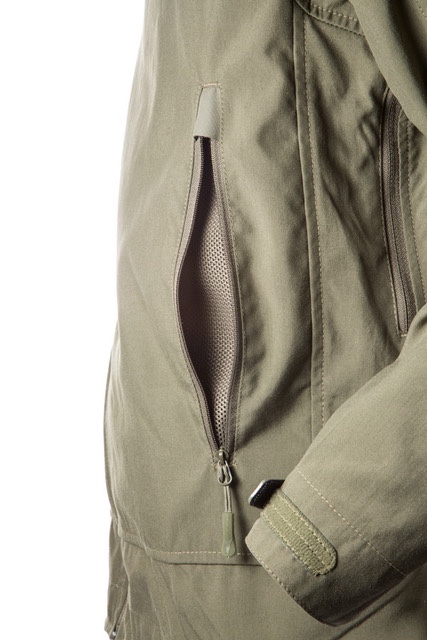
Large pit zips and spacious mesh front pockets allow for massive airflow to regulate heat when desired.

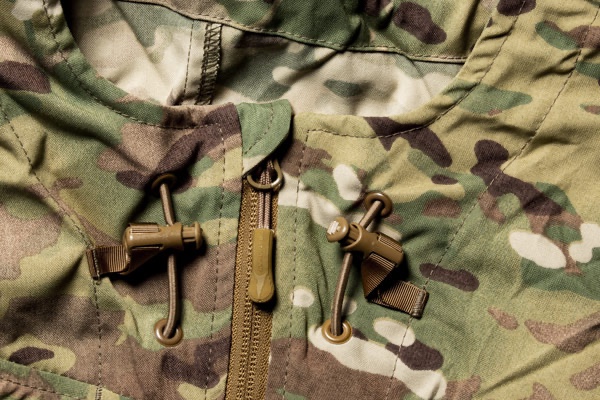
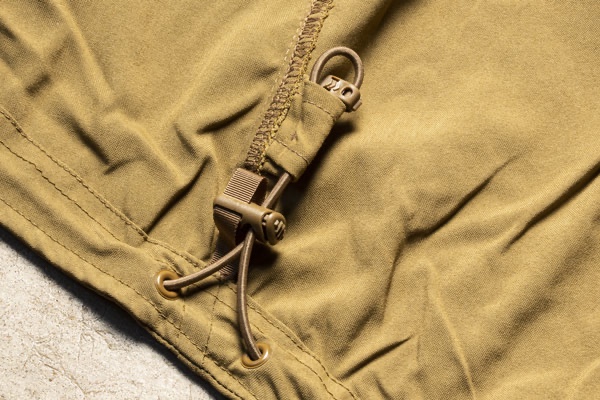
The Wind Cheater features bungee/barrel lock adjustments for the hood, collar and lengthened tail.

With a “true to fit” cut, your t-shirt size is your jacket size. If you wear a large shirt and don’t plan to layer heavily, go with a large Wind Cheater and you won’t be disappointed.

Visit FirstSpear to find the Wind Cheater and the rest of America’s premier tactical gear and equipment.

Silver Star Awarded to Naval Special Warfare Legend

Friday, January 27th, 2023

CORONADO, Calif. –

A half-century ago, Lt. j.g. Thomas Richards, fighting through injury and exhaustion in the rice paddies of Vietnam, made repeated trips through enemy gunfire to rescue three injured SEAL Team One Zulu Platoon teammates. Nicknamed “The Hulk” for his size and strength, Richards demonstrated uncommon valor by hauling the wounded men across a dike and then lifting each into a friendly helicopter for evacuation. Without his courageous runs into the “kill zone,” the other men on patrol would not have survived the day.
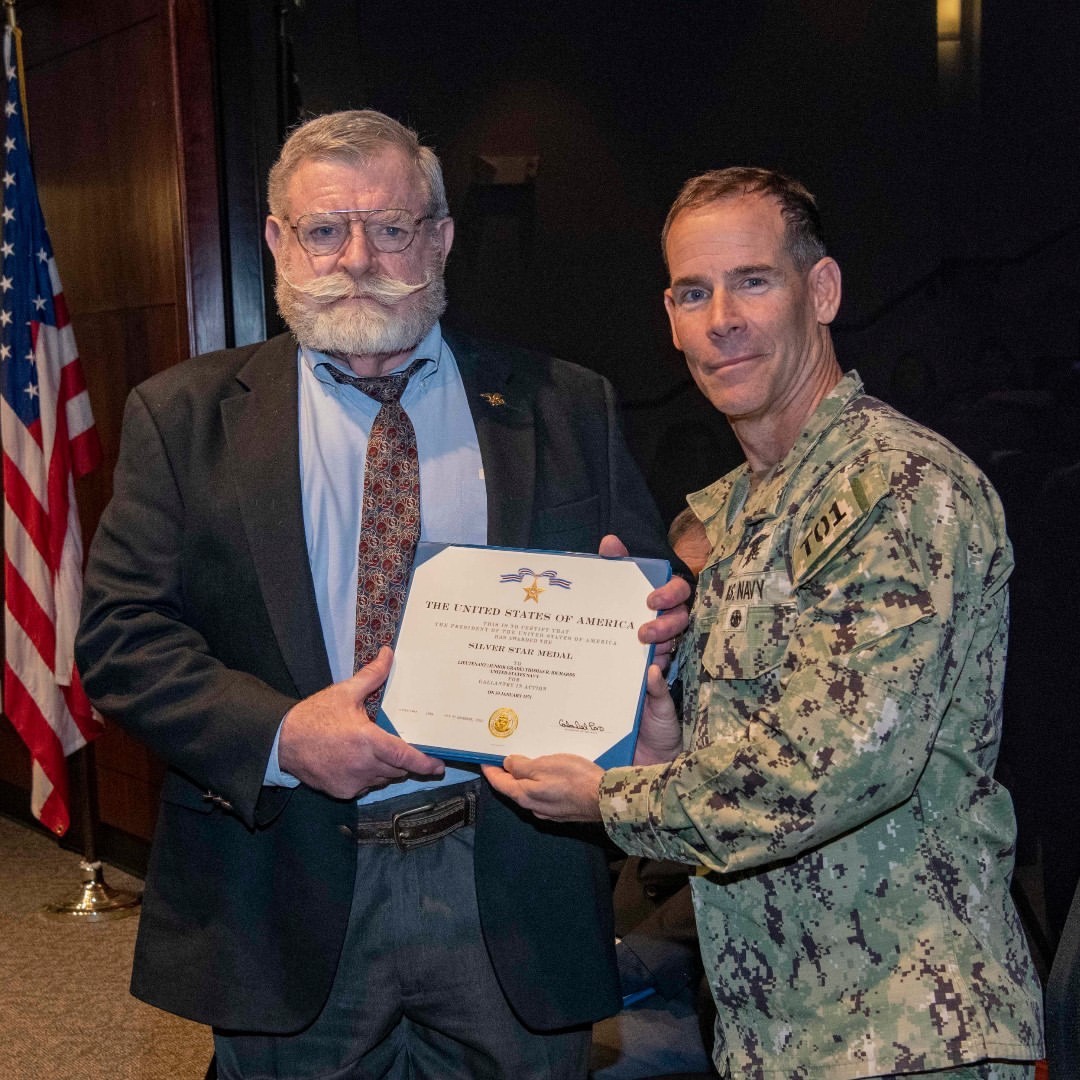
On Jan. 17, over 50 years later, Rear Adm. Keith Davids, commander, Naval Special Warfare (NSW) Command, presented the Silver Star to retired Rear Adm. Richards for his actions that day as the assistant patrol leader of Zulu Platoon. Secretary of the Navy Carlos Del Toro upgraded the original Bronze Star, recognizing the meritorious nature of Richards’ actions.

“Today we were fortunate to attend a very long overdue ceremony to recognize one of Naval Special Warfare’s truest warriors, tribal elders and fantastic teammates,” said Naval Special Warfare Force Master Chief (SEAL) Walter S. Dittmar. “His humility was absolutely evident in the fact that he still recognizes and defers to all the brothers who were around him for why he is alive today.”

Despite originally being recommended for the Silver Star and demonstrating courage under fire typical of higher awards, the staff for Commander, U.S. Naval Forces Vietnam initially recommended Richards for a Bronze Star. The decision by Del Toro to upgrade the award is a reminder that the courage, grit, and integrity of past NSW teammates forms the standard upheld in the community today.

“The upgrade to the Silver Star provides recognition of the fact that things went terribly wrong that day in South Vietnam,” said Richards.

“More importantly, it brings attention to the fact that the SEALs and other special operations forces are put in those situations to support our country’s foreign policy in the most dangerous manner. This Silver Star reminds our country that we have people risking their lives for the democracy we enjoy daily.”

A native of Bay Shore, New York, Richards’ background in lifeguarding, wrestling, and experience with small boats led him to believe that the Navy Underwater Demolition Teams would be a natural fit. Moreover, as someone who could squat and deadlift more than 500 pounds, he was well prepared for the arduous physical evolutions of BUD/S except for the runs. His heavier frame was punished by the soft sand, and the runs left him “puking in front of the Hotel Del (Coronado) more times than you want to know.”

Richards credits his parents for instilling in him the values of integrity, bravery, and self-sacrifice — ideals further refined during his military training. Reflecting on his actions, the retired SEAL matter-of-factly mentioned that he was laser focused on managing the situation and getting his teammates to safety.

“Thinking back on that day, I never gave any thought to my own personal exposure to enemy fire,” Richards said. “ I wanted to get my friends out of danger and to safety.”

When questioned about the nature of his courage and whether it’s innate or imbued through rigorous military training, Richards sees it as a combination of the two. In his view, the candidates that begin SEAL training already have the tools built into their persona; it’s the job of the SEAL instructors to bring those values to the surface. Moreover, the bonds formed during training and pre-deployment workups made it so that he would risk his life rather than leave a teammate behind. His bravery speaks to the fact that Naval Special Warfare’s selectivity is built on the rock-solid foundation of earned respect and an unbreakable commitment to the mission.

Saving his teammates in Vietnam was just the beginning of the frogman’s long and colorful career. Over the next 30 years, Richards would “follow the conflicts,” leading special operations missions in the Arabian Gulf during Operation Praying Mantis and Operation Prime Chance. He would also serve in numerous staff and command positions, including as executive officer of Underwater Demolition Team 12 and as commanding officer of Special Boat Unit 13,  SEAL Team One, and Naval Special Warfare Center. His final post would be as commander of Naval Special Warfare Command from 1996-1999, after which he retired from active duty.

Thanks to his extensive experience at the tip of the spear in various conflicts, Richards is uniquely qualified to comment on how NSW can advance capabilities that directly contribute to integrated deterrence and campaigning for influence.

“What most people do not understand about NSW is that we are the best problem solvers around. Bar none,” Richards said. “Special operations and NSW exist because there is that set of missions that take a different approach to successfully execute.”

As the NSW community shifts its focus to developing the force for strategic competition, Richards points out that NSW must be willing to adapt and innovate to execute its role of gaining, maintaining, and extending access for theater warfare commanders and the Fleet.

“We must be flexible in response to change,” Richards said. “More importantly, we must place ourselves ahead of change coming from our adversaries or potential adversaries.”

Effusive in his praise of others, Richards is a stellar example of the servant leadership requisite of any naval officer. When discussing how the incident in Vietnam impacted his career and leadership style, Richards made it clear that he viewed his role as the commander of Naval Special Warfare as one in which he “worked for 6,000 people, not that there were 6,000 people under my command.” Moreover, he learned early the importance of taking care of his people first “drag the injured men out of the rice paddy, stay up as late as you need to get the Fitreps and awards done right for those within your command,” he said.

Evident when speaking with the retired admiral is the importance of family and personal relationships. His father, who had a successful law enforcement career, provided discipline that served Richards during his own career. According to the Richards, the BUD/S instructors never struck as much fear in him as his father did during a high school wrestling competition. The innovative young athlete had previously invented a new move which was quickly banned. After witnessing his son’s blatant use of the now illegal move, the elder Richards’ stood up from the bleachers and called out to his son in a tone more chilling than any future instructor.

In addition to the numerous commanding officers and executive officers he served under, his wife of 52 years, Jackie, is a source of strength and inspiration. Jackie, whom he describes as one of the most brilliant individuals he ever met, provided wisdom and counsel over Richards’ career. His advice for those pursuing careers in special operations and trying to make a relationship work is to understand the tremendous burden you’re asking of your partner. Just as a good teammate puts their fellow SEALs first, similarly, one must be considerate and accommodating in family life.

Throughout their history, U.S. naval commandos have pioneered special operations from the sea and waterways. These were irregular warfare missions from the maritime flanks of the enemy. Our forefather’s resolute example inspires how Naval Special Warfare today is evolving to fight under, on, and above the sea to gain and maintain access for the Fleet and joint force. For Richards, receiving the Silver Star is long-deserved recognition of his meritorious actions. A warrior, husband, leader, and teammate, his influence is felt by our special operators today, as they continue to adapt and change to meet the challenges of tomorrow.

By Lt. Zachary Anderson, Naval Special Warfare Command Public Affairs

Mustang Survival – 55 Years Beyond Land
Thursday, January 26th, 2023

More than five decades ago, Mustang Survival began engineering lifesaving solutions that push the boundaries of performance and what is possible in marine safety. Fifty-five years later, we continue evolving and innovating, never losing sight of our goal to bring people home safe.

We remain committed to improving our customers’ experience on the water by expanding our recreational portfolio and strengthening our professional, military and government innovations.

Our mission remains unchanged – to protect and enrich life on the water by delivering confidence to those who live beyond land.

We invite you to look back on this nostalgic journey. Thanks for sharing it with us. Here’s to the next 55 years of partnership and collaboration!

11th Abn Div Testing Cold Temperature and Arctic Protection System in Alaska

Thursday, January 26th, 2023

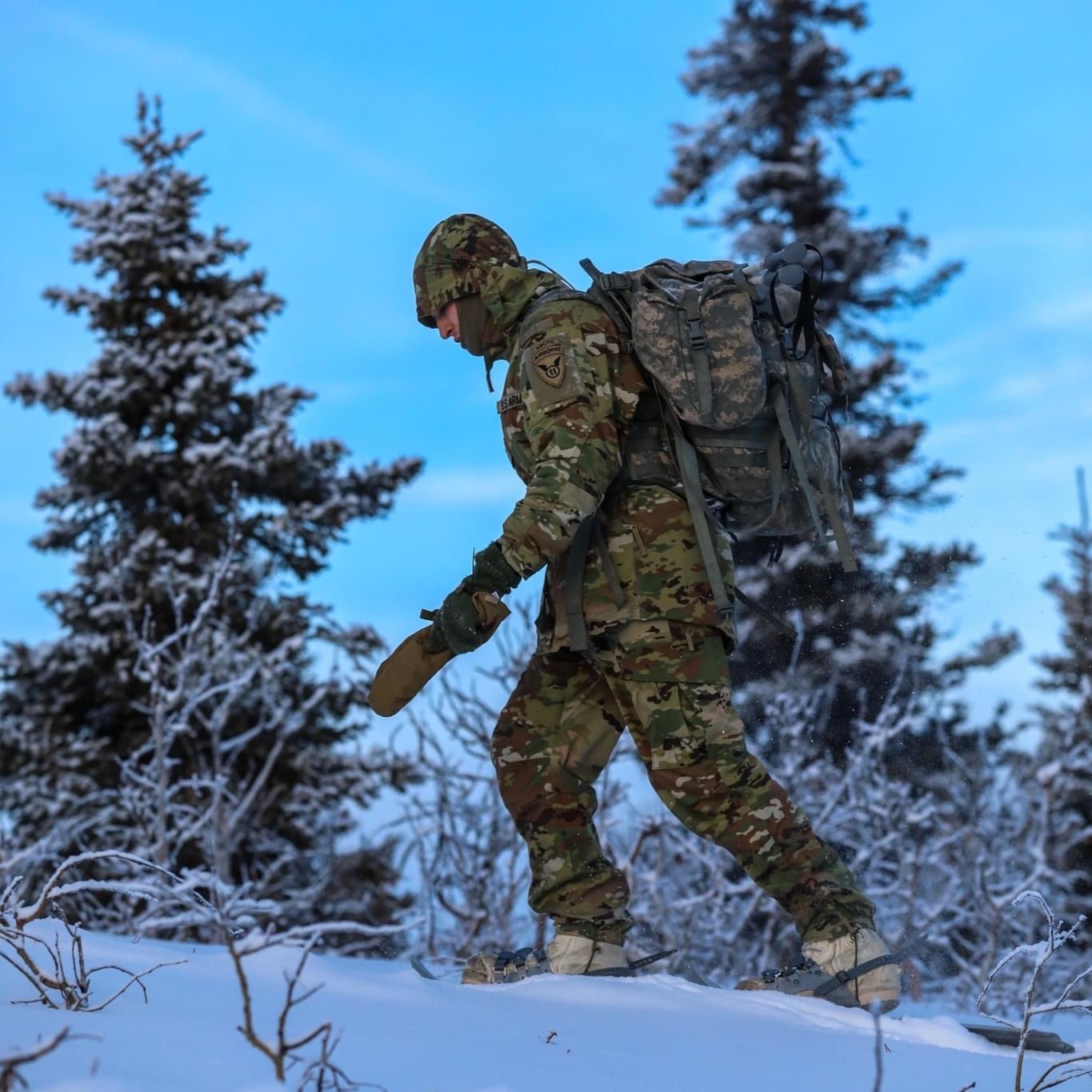
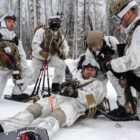
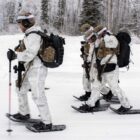
Soldiers of D Company, 70th Brigade Engineering Battalion, supporting the 11th Airborne Division, test out the new Cold Temperature and Arctic Protection System, or CTAPS, at the Cold Regions Test Center, Fort Greely, AK.

CTAPS is an innovative multi-layer system that aims to keep Soldiers warmer in cold weather environments, spanning from 45 degrees Fahrenheit to -65 degrees Fahrenheit.

Photo from PEO Soldier

Det 1, 24th SOW Trains In Alaska

Wednesday, January 25th, 2023

24th Special Operations Wing D-Cell, Pioneers of the ACE Concept, Hone Arctic Skills in Alaska

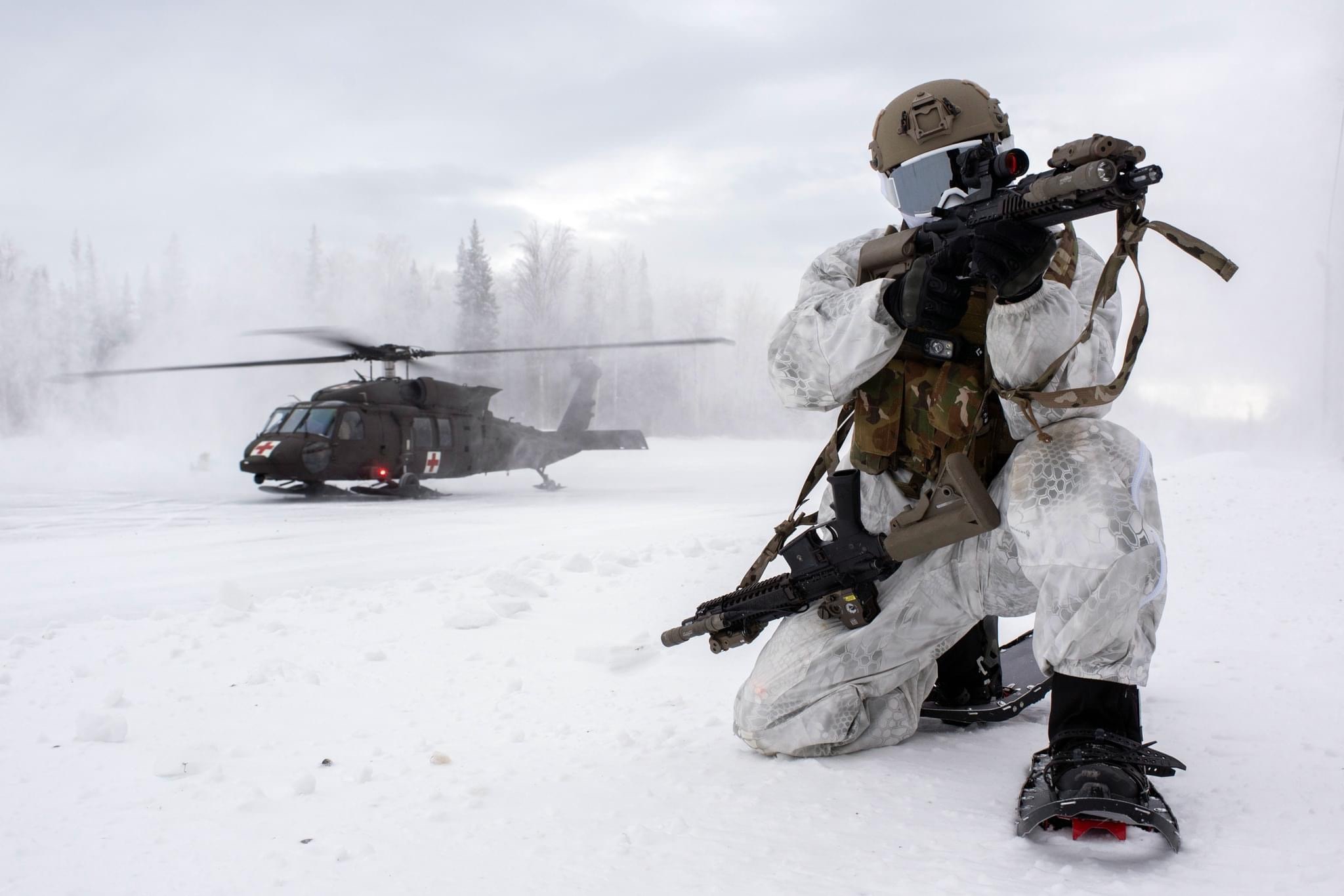
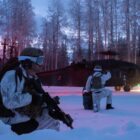
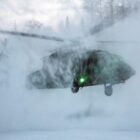
Air Force Special Tactics Airmen with the 24SOW, Detachment 1, aka “D-Cell”, provided security while an Alaska Army National Guard HH-60M Black Hawk landed at Camp Mad Bull during CASEVAC training.

JOINT BASE ELMENDORF-RICHARDSON, Alaska – Agile Combat Employment is one of the most talked-about concepts in the Air Force. The ability to rapidly deploy and establish forward operating locations, manned by multi-capable Airmen, is the way the Air Force is crafting the future of warfare.

The Airmen of the 24th Special Operations Wing, Detachment 1, also known as Deployment Cell or “D-Cell,” have been doing just this for over 60 years.

The unit, based out of MacDill Air Force Base, Florida, consists of 54 members across 15 career fields, forming four agile teams. These teams of multi-capable Airmen are trained in 49 cross-functional tasks including Survival Evasion Resistance and Escape training, advanced shooting, and advanced combat casualty care.

The primary role of D-Cell is to “bare base,” which is to rapidly turn undeveloped locations into fully functional bases.

“The unique thing about us is that we have small teams that can go anywhere,” said Master Sgt. Nathan Johnson, a logistics superintendent and D-Cell Bravo Flight lead. “And because we can do other jobs, we can set up a bare base extremely fast, extremely efficiently.”

Due to working in such light and agile teams, being multi-capable Airmen is essential for mission success.

“Most of our Airmen are at – and I can say this comfortably – at probably a three-level in each other’s career fields, and some even a five-level,” said Master Sgt. Sammy Bridges, security forces superintendent and D-Cell Delta Flight lead.

“If I fall out, the next guy on my team, even though he might be a power [production] guy working on a generator, or he might be a services guy, guess what? He can still upload an aircraft,” added Staff Sgt. Jonathan Webb, an air transportation craftsman. “That [multi-capable Airman] concept is more than what you think it is.”

With their visibilities shifting towards future areas of operation, the unit visited Joint Base Elmendorf-Richardson (JBER), Alaska, Jan. 6 through 10, 2023, to test their operating capabilities in extreme-cold weather environments.

“We’re out here to see if we can validate the Arctic side of what we have to do,” explained Johnson. “We’ve been in a certain part of the world for a long time, and mindsets are changing over where we could go. This is so we can test what we’ve been doing since the ’60s in a cold environment.”

The team spent their time in Alaska operating out of Camp Mad Bull, a training area on JBER designed to provide realistic austere operating conditions to test unit capabilities.

“You’re used to building and being at different locations for the past 20 years, where the whole [Department of Defense] has been, right?” said Johnson. “So now you come up here in a different environment, and you have to test yourself in that sense it’s zero degrees here versus where you’re used to building in 90 degrees [weather].”

Over the week, D-Cell worked on troop movement in extreme cold and deep snow, tent construction, and night operations, all of which culminated into a simulated combat scenario.

The Airmen also spent two days working with the Alaska National Guard’s 2nd Battalion, 211th Aviation Regiment. One day was spent in a classroom with the regiment’s medevac unit, where they learned cold-weather specific tactical combat casualty care. The aviators also supported the training’s final combat scenario, providing medevacs to the simulated combat’s casualties.

“We’ve done medical training, [tactical combat casualty care] and things of that nature… now we’re getting knowledge from the Soldiers up here, who do things in the mountains and Arctic environment,” said Webb. “Pulling that knowledge of how you treat hypothermia, how you treat frostbite …. versus what we dealt with the past 20 years in a different [area of responsibility].”

“It wasn’t even necessarily the Arctic cold weather training, but it was the questions, the back-and-forth of it,” he continued. “You can read a book on it all day long, but if you’re talking to the author, you’ll get those little details. It’s good to have that insight.”

After the training wrapped up, the team prepared to leave the sub-zero temperatures of Alaska and return to the warm beaches of Florida – bringing back a new set of skills and validated capabilities.

“As leads, not only were we thinking about the actual build and the project,” said Johnson. “From my perspective, it’s about the personalities and the camaraderie. When you put people in an austere location in a stressful situation, whether it be from external weather or threats, how can those people come together and work as a team and react? It’s been an awesome experience together.”

By Senior Airman Patrick Sullivan, 673d ABW/PA