FirstSpear

Archive for the ‘Guest Post’ Category

New Training Course Offers Medics, Nurses Hands-on Experience in Austere Environment

Monday, March 13th, 2023

JOINT BASE SAN ANTONIO-FORT SAM HOUSTON, Texas (AFNS) —  

Army and Air Force personnel from Brooke Army Medical Center’s Department of Emergency Medicine recently established a simulation training platform to increase readiness and meet Joint Commission requirements for staff development and training.

The Tactical Trauma Reaction and Evacuation Crossover Course, or TTREX, is designed to test and validate Individual Critical Task Lists and the Comprehensive Medical Readiness Program for military medical personnel.

“The TTREX course was developed to familiarize military and civilian personnel with critical trauma skills relevant to both the hospital and the austere environment and to maintain mission readiness,” said Army 1st Lt. Jackson Goddard, registered nurse.

The eight-hour course at the Torch Training Site at Joint Base San Antonio-Lackland incorporates battlefield trauma simulations, evacuation procedures, and trauma care in a Role 2 environment. Role 2, also known as forward resuscitative care, has the capability to manage more advanced trauma patients and continue more advanced resuscitative measures in an austere environment such as a combat support hospital.

“We have combined the point of injury with the Role 2 environment,” said Air Force 1st Lt. Marissa Vasek, registered nurse. “Our goal is to get people to understand the deployment setting and the challenges they might face while deployed including limitations with supplies, manpower or experience.”

Additionally, participants experience what it’s like to be on a C-130 Hercules military transport aircraft during a critical care air transport mission to see how a patient is transported to a higher echelon of care.

Army Spc. Wade Wolf, a combat medic, said he feels the training is beneficial because participants get to see how a patient moves from the point of injury to a stateside hospital.

“We’ve had more than 40 participants over the two-day exercise,” Wolf said. “I would say about half of them have never been deployed.”

Emergency nurse Army Capt. Megan Gross agreed.

“This has been one of my favorite courses I have attended in my 14 years in the military,” Gross said. “The course allows nurses and medics to test their trauma knowledge in a tactical environment and provides a realistic peek into the deployed setting. The teamwork and camaraderie among the attendees and the instructors are unique and foster a real esprit de corps.

“My favorite part was the Role 2 trauma lane and having the opportunity to work in a small team to assess, perform interventions, and prepare our patient for transport,” she added. “The autonomy aspect provided a unique learning opportunity we often do not get in the hospital setting. The instructors provided a learning environment that was challenging but collaborative at the same time. I loved it!”

The TTREX course will be offered quarterly and is open to service members, civilians, and contractors.

“The course is geared to medics and nurses, but it’s open to anyone who’s willing to learn or just wants to observe,” Vasek said. “We have even had a few physicians come through.”

“A part of creating this exercise was to help military nurses and medics gain the confidence they need to perform under high stress while downrange,” added Army Capt. Brianna Barkley, a registered nurse who helped create the course. “We have seen camaraderie built amongst BAMC teammates while also checking off required readiness skills. What made our exercise successful is the fact that it is a learning environment. Participants feel comfortable making mistakes and learning from those mistakes to build confidence during deployments.”

“This training is invaluable because it allows service members to maintain combat readiness,” Gross said. “We have Individual Critical Task Lists, which are required training tasks for our jobs. This training opportunity allowed me to complete all of my ICTLS for the year, which maintains my individual combat readiness.”

“I was so impressed with this course as a participant that I volunteered to become an instructor and look forward to being a part of the next TTREX course,” she added.

By Lori Newman, Brooke Army Medical Center Public Affairs

Army photos by Jason W. Edwards

Voting Open Now for Department of the Air Force Spark Tank 2023 Finalists

Sunday, March 12th, 2023

ARLINGTON, Va. (AFNS) —  

The Department of the Air Force’s capstone innovation campaign, Spark Tank, recently concluded submissions — and Airmen and Guardians may now vote for one of the top six selected ideas.

Visit the links in the titles of the selections for more details on each idea. To vote for your favorite, visit the Guardians and Airmen Innovation Network website. First-time users will need to sign up for a free account using their government email addresses and Common Access Cards. Then click “Vote now” next to your favorite idea, limit one idea only. Voting ends March 8.

The semi-final round of Spark Tank completed December 19, with six of 235 ideas advancing to the finals. Finals are scheduled to take place at the Air and Space Forces Association Warfare Symposium March 8 in Aurora, Colorado. Department of the Air Force senior leaders and two celebrity judges will review the ideas and select the winner in a live event.

Spark Tank 2023 Finalists:

Accelerated Development of Multi-Capable Airmen/Guardians
Maj. Caitlin Harris
351st Special Warfare Training Squadron
Kirtland Air Force Base, New Mexico
Air Education and Training Command

The Special Warfare prototype project will provide linkages between human systems and operational tasks across a spectrum of skillsets that will accelerate training, learning, and retention while developing Airmen/Guardians in multiple competencies. This aggressive modernized training focuses on training the Airmen and Guardians in an efficient and dynamic way, preparing them for wartime situations requiring them to step outside their occupational specialty and operate as expert multi-disciplinarians.

Advanced Maintenance and Troubleshooting System
Master Sgt. Aaron Cordroch
1st Special Operations Maintenance Group
Hurlburt Field, Florida
Air Force Special Operations Command

Imagine a world where we leverage cyber threat and intrusion/anomalies hardware detection and diagnostic mapping tools to take a snapshot of clean data and systems to build a picture of maintenance issues that can be monitored for changes.

Infrastructure in an Augmented Reality World
Tech. Sgt. Sarah Hubert and Tech. Sgt. Raymond Zgoda
353rd Special Operations Wing and 374th Civil Engineer Squadron
Yokota Air Base, Japan
Pacific Air Forces

Realizing the potential of augmented reality enables precise determination of what and where our underground infrastructure is located without digging it up. Scanning installations and using Augmented Reality drastically reduces resources to repair after attack or natural disaster.

Project Kinetic Cargo Sustainment
Capt. Andrew Armor, Master Sgt. Brandon Allensworth, Master Sgt.
Peter Salinas, Master Sgt. Jet Nesle and Tech. Sgt. Justin Sprinkel
18th Logistics Readiness Squadron
Kadena AB, Japan
Pacific Air Forces

 Dramatically accelerate mobility cargo processing capacity and throughput by means of operating outside of analog mobility processes and tools for port operations.

Real-Time Asset Management System
Michael Dolan
Space Base Delta 3
Los Angeles AFB, California
Space Systems Command

 Imagine leaders and employees optimizing office space, minimizing modernization construction costs and enable tracking and evolution continuity of every location and asset from unclassified to Special Access Programs. This Space Management tool provides real-time assessment and data mining capability for every square foot of buildings and every office space to include IT configurations down to the chip level.

Project Oregon Trail
Staff Sgt. Michael Sturtevant
353th Special Operations Support Squadron
Kadena Air Base, Japan
Air Force Special Operations Command

 Reimagined and reduced Time-Phased Force and Deployment Data are afforded because there are smaller, lighter, and faster-to-deploy mechanisms to move cargo and equipment wherever needed, on the spot without the need for pallet jacks or forklifts.

By Crystal Ortiz, Secretary of the Air Force Management and Business

FirstSpear Friday Focus: Siege-R Optimized

Friday, March 10th, 2023

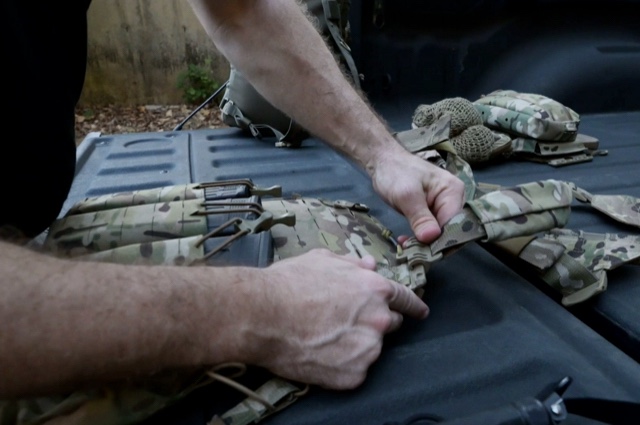
After collecting and analyzing years of valuable feedback from users about our popular Siege R, we designed the Siege-R Optimized.

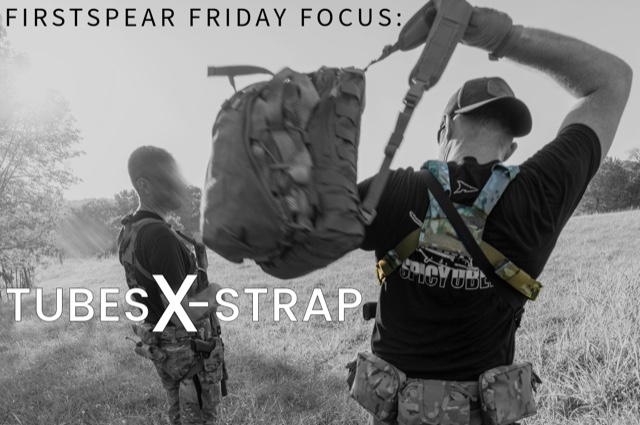
The standard shoulder pads are padded and fully adjustable, including two sets of Tubes in the front and back for rapid switch-out to the enhanced MASS Shoulder System.

The front and back plate pockets are internal to the vest, making the system slimmer and better suited for confined & tubular spaces.

Our quick-drying airflow mesh is utilized on the interior to reduce overall weight and shed water quickly. This iteration of the Siege-R truly is Optimized for all missions and conditions!

Ballistic Armor Inserts, complying with NIJ Category IIIA.06 or Military Specification requirements, are available separately, please contact us for armor options and pricing.

Visit FirstSpear to find America’s premier tactical gear and equipment.

DARPA, Services Demonstrate Battlefield Airspace Deconfliction Software

Friday, March 10th, 2023

Tools enable planes, helos, missiles, uncrewed aircraft to operate simultaneously in contested airspace

DARPA’s Air Space Total Awareness for Rapid Tactical Execution (ASTARTE) program recently demonstrated new automated flightpath-planning software that successfully deconflicted friendly missiles, artillery fire, and manned and unmanned aircraft while avoiding enemy fires in a simulated battle in contested airspace. In a demonstration held at the U.S. Army’s Mission Command Battle Lab, Ft. Leavenworth, Kansas, in late 2022, the ASTARTE software seamlessly integrated with the Army’s Integrated Mission Planning and Airspace Control Tools (IMPACT) software suite. IMPACT is managed by the Aviation Mission Systems and Architecture Project Office in the Program Executive Office for Aviation.

The ASTARTE Program, which began in 2021, is a joint collaboration between DARPA, the Army, and the U.S. Air Force to enable efficient and effective airspace operations and de-confliction in a highly congested anti-access/area denial, known as A2/AD, environment. The program’s goal is to provide an accurate, real-time common operational picture of the airspace over an Army division, enabling long-range fire missions, as well as manned and unmanned aircraft operations, to occur safely in the same airspace.

“The demonstration showed that complex route alternatives could be created in seconds, leveraging available permissive airspace to avoid airspace where conflicts would potentially occur,” said Paul Zablocky, ASTARTE program manager in DARPA’s Strategic Technology Office. “There are many reasons this integration helps the warfighter. Coordinating and consolidating services at the user level greatly reduces procedural burden, which speeds the enterprise. ASTARTE also increases accuracy by automating tasks and reducing inherent human error. Most importantly, the ASTARTE and IMPACT integration forms a foundation of artificial intelligence-enabled services that will interact with other service component AI tools such as the Air Force’s Kessel Run All Domain Operations Suite (KRADOS) for planning and the All Domain Common Platform (ADCP) for operations.”

ASTARTE performer Raytheon Technologies developed an automated flightpath-planning capability for fixed and rotary wing aircraft, which includes the capability to deconflict airspace use by routing through or around defined airspace coordinating measures, commonly called ACMs, in both space and time. General Dynamics Mission Systems (GMDS) developed the Army’s IMPACT suite, which adds a Joint All-Domain Command and Control (JADC2) class of data-enabled, over-the-horizon tools to existing airspace management systems to form a multidomain capability supporting the Army’s 2030 Multi-Domain Operations vision.

During the demonstration, GDMS and Raytheon identified the interfaces allowing the ASTARTE flightpath planner to receive flight path requests with associated constraints from IMPACT (e.g., timing, altitude range, start and end points), and returned complete deconflicted flight paths back to IMPACT on demand.

The ASTARTE-IMPACT demonstration also illustrated a novel approach for transitioning cutting-edge microservices and software components developed by the science and technology community very quickly into military service programs of records.

ASTARTE is currently wrapping up Phase 2 integration efforts and is scheduled to begin Phase 3 live testing this summer.

– DARPA Public Affairs

Air Commandos Co-Host SAWS, Champion Transformation and Partnerships

Wednesday, March 8th, 2023

FORT WALTON BEACH, Fla. —  

Air Force Special Operations Command and the Global SOF Foundation co-hosted the annual Special Air Warfare Symposium [SAWS] and expo at the Emerald Coast Convention Center Feb. 28 to Mar. 2, 2023.

The symposium featured speakers from across the special operations aviation community that included AFSOC senior leadership, defense officials, industry representatives as well as allies and foreign partners from more than 10 countries that were focused on integration and cooperation to remain relevant as the threat environment continues to evolve.

U.S. Air Force Maj. Gen. Wolfe Davidson, AFSOC deputy commander, delivered opening remarks to symposium participants.

“The threat environment continues to evolve across the globe and we now have contested environments in areas previously not considered high risk due to the continued proliferation of threat systems,” said Davidson. “This [symposium] is an opportunity to get closer to our industry partners who are doing greats things in technology and are critical as we look to adapt our tools to the fight we have.”

Military and industry speakers identified an on-going need to collaborate to prepare, prevent, and prevail against current and future adversaries over the course of the 3-day event.

“We must continue to adapt and look for opportunities to innovate and transform our Air Commandos to remain the most capable, most lethal Air Force in the world,” said U.S. Air Force Lt. Gen. Tony Bauernfeind, AFSOC commander. “AFSOC, alongside our industry partners, has been transforming…and we continue to look for opportunities and avenues, like the Special Air Warfare Symposium, to do so.”

The ongoing transformation of AFSOC involves a new force generation cycle, the implementation of mission command, the development of Special Operations Task Groups and Units as well as creation of multi-domain theater-focused squadrons.

“Although change can be difficult, irrelevance is worse,” said Bauernfeind. “We have a proud history and heritage of transformation to meet the mission…and we too shall rise to ensure our nation’s security.”

By TSgt Jonathan McCallum, AFSOC

‘Stryking’ Towards Networked Battlefield Communications

Tuesday, March 7th, 2023

HOHENFELS, Germany — As the geopolitical landscape in Europe continues to draw attention, one U.S. Army regiment stationed in Germany is leading the force with new on-the-move communications from inside the hull of a Stryker.

The 2nd Cavalry Regiment recently completed its annual Dragoon Ready exercise at the Joint Multinational Readiness Center in Hohenfels, Germany. This exercise helps to ensure readiness and train the regiment in its mission essential tasks in support of unified land operations, enhancing proficiency and improving interoperability with NATO Allies.

The exercise also served as the Army’s second Integrated Tactical Network (ITN) operational testing event (Ops Demo Phase II) for Capability Set (CS) 23, which demonstrated the latest version of networked communications between the command post, integrated Stryker vehicle platforms and dismounted troops.

Several weather events, including freezing temperatures and pounding snowfalls, provided a real-world backdrop to ensure the 2CR learned to operate and stress the ITN equipment in all environments.

As part of the U.S. Army V Corps, the 2CR provides a lethal and agile force capable of rapid deployment throughout the European theater. The “Dragoons” are the first mechanized unit to receive CS23 for evaluation and operational testing, with CS23 officially fielding in 2023. Last June, the Army conducted Ops Demo Phase I with the regiment’s 3rd Squadron, while Phase II two incorporated the entire regiment, making this the largest ITN test to date.

“The regiment has taken on a tremendous responsibility to help the Army continue to mature the Capability Set,” said Matthew Maier, Project Manager for Interoperability, Integration and Services, Program Executive Office for Command, Control, Communications-Tactical (PEO C3T). “From the earliest collaborations deciding how components will fit into mounted formations like 2CR’s Stryker squadrons, to this week’s full-regimental networked communications as part of Dragoon Ready, we could not be more thankful for their feedback on CS23 capabilities.”

The ITN’s flexible capabilities are comprised of both military and commercial technologies and include several varieties of software-defined tactical radios, including both single channel radios and two-channel Leader and Manpack Radios, commercial phone technology and small satellite terminals. ITN radios deliver applications through the Nett Warrior end-user device (EUD) to consolidate the air, ground and fires pictures onto a single common operating picture.

New ITN capabilities are being developed as part of the Army’s capability set process, which incrementally delivers new capabilities every two years informed by Soldier feedback and industry advancements. With this approach, the Army can leverage the best of commercial technology to ensure it stays current in the fight with peer and near-peer adversaries.

The CS23 Ops Demo Phase II is a critical precursor to CS25, which will integrate the ITN capabilities on other mounted platforms for Armored Brigade Combat Teams. This exercise will also provide data and lessons learned on how to meet the Army’s shift from brigade to division as a unit of action, leading up to informing network solutions for Army 2030 priority units.

“We have been brigade-centric since the late 2000s, but as we now focus ourselves as a division as unit of uction, we have to think about the architecture and how we bring this vision to the network to support the fight,” said Maj. Gen. Tony Potts, program executive officer for C3T.

Radios are the key capability used for ITN communications across the echelons, and for this exercise, the unit operated Leader radios and single channel radios for dismounted operations and Manpack radios for both dismounts and inside the vehicles. The radios are connected to the Nett Warrior EUD, which is a commercial cell phone with hardware and software ruggedization for military use. The Nett Warrior EUDs provide the dismounts with real-time, map-based position location information (PLI) and provides mission essential data to and from command posts.

The primary waveform used with ITN is the TSM waveform — a commercial mesh waveform that provides line-of-sight voice, data and PLI communications using a multi-node relay, where every radio is a repeater for all network traffic. The TSM operates in the secure but unclassified-encrypted network environment, which enables encrypted data to be transmitted over military or commercial networks, the Internet, cellular networks or compatible but non-military waveforms.

“The TSM is very clear as opposed to [the single channel ground and airborne radio system],” said Pfc. Liam Croson, radio telephone operator in charge of communications from inside the hull to the command post and squad-level commanders. “It’s self-healing and performs well even in shaded areas.”

Reconnaissance missions also benefited from ITN’s capabilities.

“The whole suite of ITN allows us to be fast, flat and accurate,” said Lt. Col. Joseph Byerly, 4th Squadron, 2CR commander.

Byerly’s Soldiers report from the frontline back to the analysts in the command post, who collect information to make informed battlefield decisions. They incorporated the Mobile User Objective System (MUOS) satellite communications system, which has been a pivotal reach-back capability, especially as Army operations in Europe and INDOPACOM require beyond line-of-sight, point-to-point communications across the services.

“At one point we had an analyst on a cell talking to the commander at the front of the formation 20k away using MUOS,” Byerly said. “I’ve never had the capability before.”

The analyst looked at a UAV feed to observe a vehicle, type the intelligence into the chat using the EUD to the commander on the ground, who was able to simulate the ‘kill’ of the vehicle, Byerly said.

“With ITN, we had connectivity between different elements of the organization that aren’t normally connected,” Byerly said. “Every day we used the ITN we learned more and were able to incorporate it into our exercise.”

The breadth of the test brought together multiple organizations to assess and measure the operational effectiveness, suitability, and survivability of CS23’s ITN, including the Network Cross-Functional Team, U.S. Army Combat Capabilities Development Command C5ISR Center, PEO Intelligence, Electronic Warfare and Sensors for the Electronic Warfare stress test; PEO Soldier for NET Warrior and Dismounted EUDs; and the Army Test and Evaluation Command (ATEC), which has the critical role of collecting all network performance data, Soldier surveys, first-hand observations and instrumentation data from the various ITN components.

Presented with the opportunity to test an entire European-based Army regiment tasked with multiple priorities required flexibility and teamwork from the unit and testers.

“We were faced with achieving our test and evaluation objectives while simultaneously adhering to unit training objectives,” said Maj. Greg Stueve, test officer for the Army’s Operational Test Command, under ATEC.  “With the many competing priorities facing the unit, they worked with the test team to ensure we had opportunities needed to collect sufficient data.”

Preliminary reports will identify system successes and key priorities for improvements to further enhance ITN capabilities throughout the regiment, which will also be used to iterate development for future capability sets.

“The speed and accuracy at which we continue to field capabilities across the force is due to our ability to participate in major operational exercises such as Dragoon Ready and implement our capability set process,” Maier said. “For now, we will review the data points collected, and most importantly, continue to support the critical mission of the 2CR as they take on current and future deployments throughout the European Command’s area of responsibility.”

By Kathryn Bailey, PEO C3T Public Affairs

Department of the Air Force Updates Policies, Procedures to Recruit for the Future

Monday, March 6th, 2023

ARLINGTON, Va. (AFNS) —  

The Department of the Air Force is committed to recruiting talented and qualified individuals, while retaining the experienced Airmen and Guardians currently serving. 

Throughout the upcoming months, a Barriers to Service Cross-Functional Team, championed by Vice Chief of Staff of the Air Force Gen. David W. Allvin, is examining existing policies and procedures to ensure they reflect the service members needed for the future.

Created to rally various department stakeholders, this cross-functional team was charged to research, plan and execute these changes quickly, cut through bureaucracy, with the modern American in mind.

“America’s Air Force and Space Force rely on access to our nation’s extensive, geographically and demographically diverse talent,” said Alex Wagner, assistant secretary of the Air Force for Manpower and Reserve Affairs. “To remain competitive, both with the private sector and our fellow military services, we are re-examining and updating our approach to talent sourcing and management—and that requires constant review and re-evaluation of our accession policies and ensuring that any changes are consistent with those high military standards required for mission accomplishment.”

This approach became a reality when various stakeholders realized these opportunities would need supporting policy, guidance, resources, and legal authorization. Additionally, the team is currently executing a comprehensive policy review to identify existing requirements that disqualify many potential Airmen and Guardians from serving and are irrelevant to warfighting.

“While we met our active-duty recruiting goals last year, record-low unemployment rates and steadily declining familiarity with the U.S. military today leaves us uncertain whether we can achieve our goals this year,” said Maj. Gen. Ed Thomas, Air Force Recruiting Service commander. “We are starting to see some positive results of our training program, policy changes and our enhanced marketing efforts, but military recruiting will remain a long-term challenge.”

One of the leading barriers currently being tackled is the increased prevalence of hand and neck tattoos among America’s youth. Previously, Air Force policies permitted ring tattoos, although they were limited to a single band on one hand. Now, in addition to the ring tattoo, a single tattoo is authorized on each hand not exceeding one inch in size.

Additionally, one tattoo on the neck is authorized not exceeding one inch in measurement. The neck tattoo will only be placed behind a vertical line at the opening of the ear orifice around the back to a vertical line at the opening of the other ear orifice and includes behind the ear.

Hand, arm, leg, neck, and ring tattoos can be exposed and visible while wearing any uniform combination. Chest and back tattoos will not be visible through any uniform combination or visible while wearing an open collar uniform.

Tattoos or body markings anywhere on the body that are obscene, commonly associated with gangs, extremist, and/or supremacist organizations, or that advocate sexual, racial, ethnic, or religious discrimination are prohibited in and out of uniform. The updated policy is here.

Additional items senior leaders are looking to modernize are:

– Accelerating Naturalization at Basic Military Training (Will apply to the Air Force and Space Force)

– Reinstating the Enlisted College Loan Repayment Program (Air Force only)

– Adding additional funds to Initial Enlistment Bonuses (Air Force only)

– Alignment of the DAF’s Accession Body Fat Composition Standard with OSD Guidance (Will apply to the Air Force and Space Force)

More information on policy and accessions changes will be published when available.

Secretary of the Air Force Public Affairs

New York ANG Supports Canadian Arctic Exercise

Sunday, March 5th, 2023

RESOLUTE, Nunavut, Canada (AFNS) —  

The New York Air National Guard’s 105th and 109th Airlift Wings partnered with Vermont Army National Guard and Canadian Armed Forces to support Exercise Guerrier Nordique, Feb. 22–March 31 in the Canadian Arctic. 


The 109th AW, Stratton Air National Guard base in Scotia, New York, deployed two LC-130 Hercules aircraft and 60 Airmen to Resolute Bay in Canada’s northern Arctic territories to act as tactical airlift support for the Canadian exercise. 

Vermont Army National Guard soldiers will be transported to Resolute Bay, Nunavut, on a C-17 Globemaster III from the 105th AW, Stewart ANG base in Newburgh, New York. From there, teams will forward-deploy to establish remote camps. 

The LC-130H is the largest ski-equipped aircraft in the world, capable of landing on ice and snow in polar environments. As the only unit to fly the LC-130H, the 109th AW provides support to scientific research stations in Antarctica and Greenland.

Among the 109th deployers are the 109th’s Polar Camp Skiway Team — personnel trained to establish a remote camp in extreme cold — and build a ski landing area supporting the unit’s LC-130H aircraft. The PCST used specially equipped snowmobiles to lay out the landing zone for the larger American LC-130Hs.

The team works with the Royal Canadian Air Force’s 440 Squadron, which flies the Twin Otter ski-equipped aircraft to establish ski landing areas.

In the past, Guerrier Nordique has operated as a training exercise for emergency response and domestic operations in extreme weather in Northern Canada.

The Vermont Army National Guard, which includes a mountain warfare battalion, has participated in the exercise since 2012.

This year, the Guerrier Nordique exercise focuses on combat capability and lethality in temperatures that stay below zero all day during the training period.

“While elements of the Vermont Guard and Canadian Armed forces will be conducting training, the role of the 109th AW is as a real-world tactical airlift,” said Chief Master Sgt. Ron Jemmott, the senior enlisted leader for the wing’s maintenance squadron and a member of the PCST.

“Our job is to establish the ski landing area as a lifeline for the guys out there training,” Jemmott said.

Once established, the remote camp and ski landing area will provide multi-national ground forces with tactical support via the 109th’s LC-130Hs.

This can include flying supplies and personnel to and from the exercise site and aeromedical evacuation if needed, Jemmot said.

“The exercise will culminate in a mock overland assault of an airfield 100 miles away, wherein Canadian and American soldiers will utilize snow machines and vehicles — capable of traversing the arctic terrain — to travel, assault and secure the airfield,” said Lt. Col. Matt Sala, a pilot with the 109th AW and officer in charge of the PCST during Guerrier Nordique.

“Our job is to use skills we have built over years of operating in the Arctic and Antarctic to provide the real-world tactical support to enable citizen-soldiers from Canada and the U.S. to develop similar abilities through exercising their role in possible arctic combat operations,” Sala said.

Canadian Armed Forces and Vermont Army National Guard personnel will deploy to the exercise area, establish their own remote camp and train in arctic combat and survival techniques.

“Exercises like this illustrate the growing strategic importance of developing American and allied capabilities in the Arctic as interest in the region is scaling up around the world,” Jemmott said.

“When adversaries like China and Russia are beginning to operate more often there, it is time for us to work with allies and other agencies to increase our individual capabilities as well as our interoperability so we can compete in the future,” Jemmott said.

By SSgt Madison Scaringe and MSgt Jamie Spaulding, New York National Guard