GORE-TEX Professional

Archive for the ‘Guest Post’ Category

First Team Participates in Project Convergence 2022

Saturday, November 19th, 2022

FORT IRWIN, Calif. — The 1st Cavalry Division recently participated in Project Convergence 2022 from Sep. 29 to Nov. 9 at Fort Irwin. Project Convergence is an Army-led experiment offering opportunities to access future warfighting strategies, including how the all-service and multinational force can work together to detect and defeat threats.

The First Team’s primary mission during the experiment consisted of forming attack positions each morning while moving to a landing departure zone in the M113 Tracked Armored Personnel Carrier, M1A2 SEP v3 Abrams Tank, M2A3 Bradley Fighting Vehicle, and the Joint Light Tactical Vehicle while fighting the opposing forces. Each day new technology was added to the mission to test its success and practicality when used in a lifelike scenario.

Electronic assets allowed the unit to conduct reconnaissance and bring out the enemy without endangering Troopers, preserve combat power of larger platforms, scan the battlefield in a minimal amount of time and allowed the commander to make decisions with less risk.
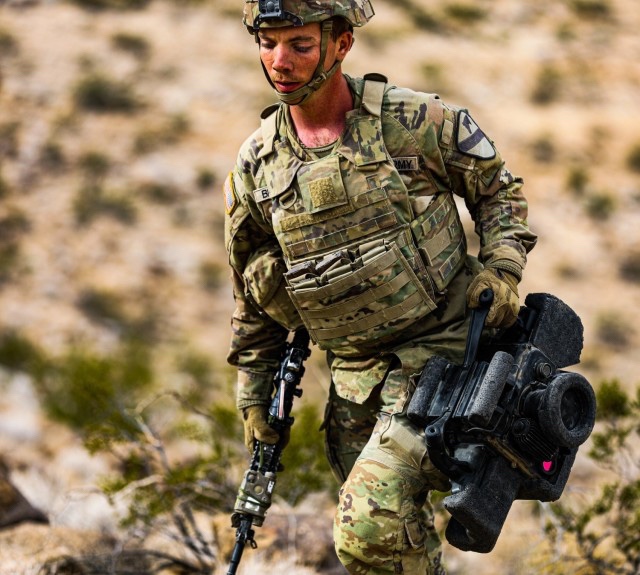
The assets also provided rapid communications with allied partners across the spectrum of operations, reducing the time needed for decision making and allowing for more rapid target engagement by the 1st Cav artillery.

The 1st Cav is transforming by integrating these new technologies across the formation to enhance their ability to compete globally, deter adversaries and win on all-domain battlefields.
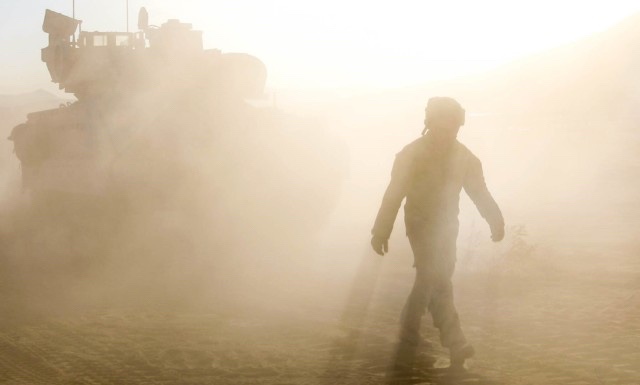
“I firmly believe that everything we do here is something that we’ll see throughout the Army over the next 60 years,” said Lt. Col. Brennan Speakes, 1st Squadron, 7th Cavalry Regiment commanding officer. “This is the equivalent of the Army moving from the horse drawn cavalry to the armored formations we know today.”

Army Futures Command established Project Convergence in 2020 as an opportunity for collaboration, experimentation and a way of informing how we fight, how we organize, the talent we need and what we fight with.
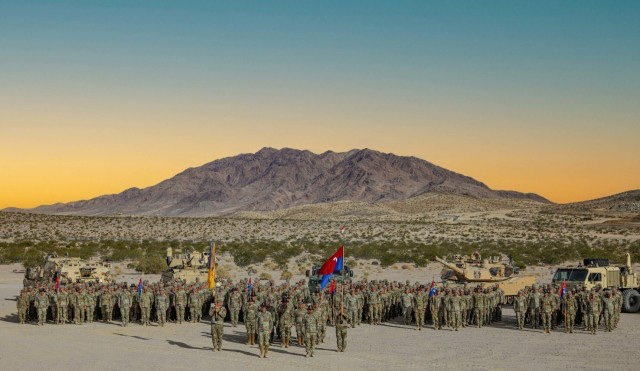
“1-7 Cav is going to be the best trained squadron in the Army by next summer,” said Maj. Gen. John B. Richardson IV, 1st Cavalry Division commanding general. “You are building an incredible reputation right now across the Army.”

Project Convergence is designed to aggressively advance and integrate the Army’s contributions to the joint and multinational force and ensure that the Army, as part of that force, can rapidly and continuously converge effects across all domains including air, land, sea, space and cyberspace, to overmatch our adversaries, increase operational tempo and generate decision advantage over our adversaries.

Convergence — the namesake of the project — refers to integrating efforts across all echelons, from the tactical to the strategic level, to deliver optimal lethal and non-lethal effects across all domains.
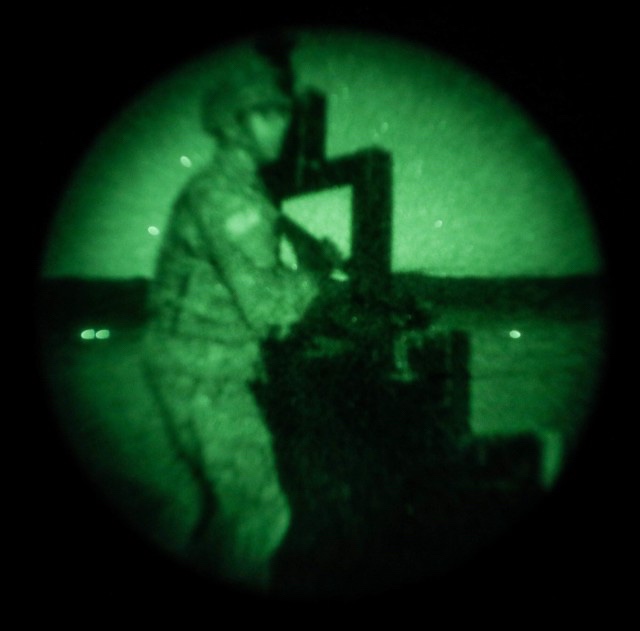
“Project Convergence 2022 is good for not only the training value for the squadron, but to learn the use and capabilities of this new technology,” said Sgt. Kyler Tackett, a Bradley gunner with 1st Squadron, 7th Cavalry Regiment, 1st Cavalry Division. “Hopefully PC22 will help with the further development of these vehicles, and to help solve problems for the future of the Army.”

Through Project Convergence, the Army is demonstrating new technologies continuously throughout the year to ensure we can fight and win as one team by framing objectives within the Joint Warfighting Concept and Joint All-Domain Command and Control network.

These experiment demonstrations and future modernization capabilities inform Army emerging technologies, future concepts and future formations.

“Hopefully we leave our mark as a contributor to future technologies that are going to help the Army fight our future wars,” said Cpt. Rannie Lintag, a human resources officer with 1st Squadron, 7th Cavalry Regiment, 1st Cavalry Division.

Looking to Project Convergence 2023 and beyond, the Army will continue to expand its alliances and demonstrate the impact modernization will have in various theaters of our geographic combatant commands.

“I couldn’t be prouder of the team that’s out here,” said Speakes. “This team is making things happen, and I’ve seen a stark improvement in not only their capabilities, but also their leadership potential.”

By SGT Brayton Daniel
PDW Guide Half Zip Sweater

Friday, November 18th, 2022

Modern Classic Made for the Mountain and Knit with Premium Merino Yarns

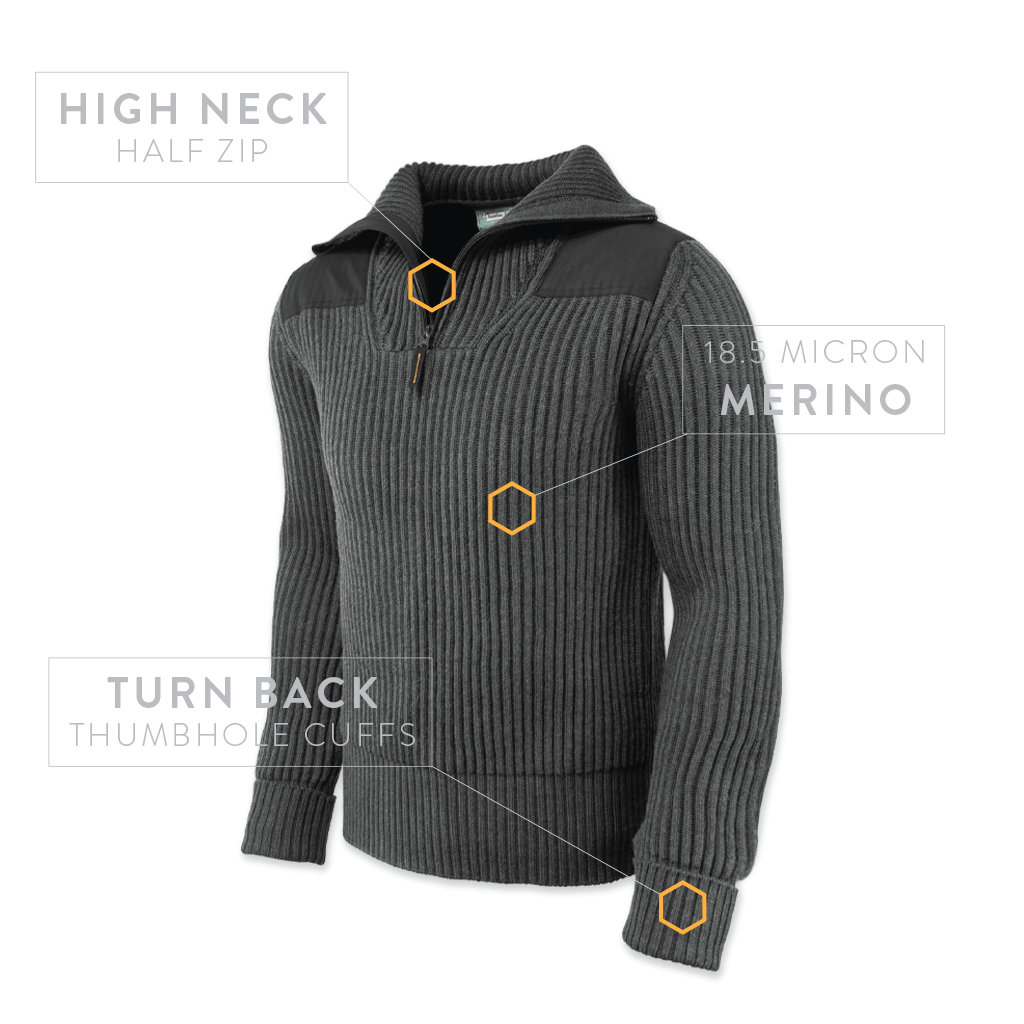
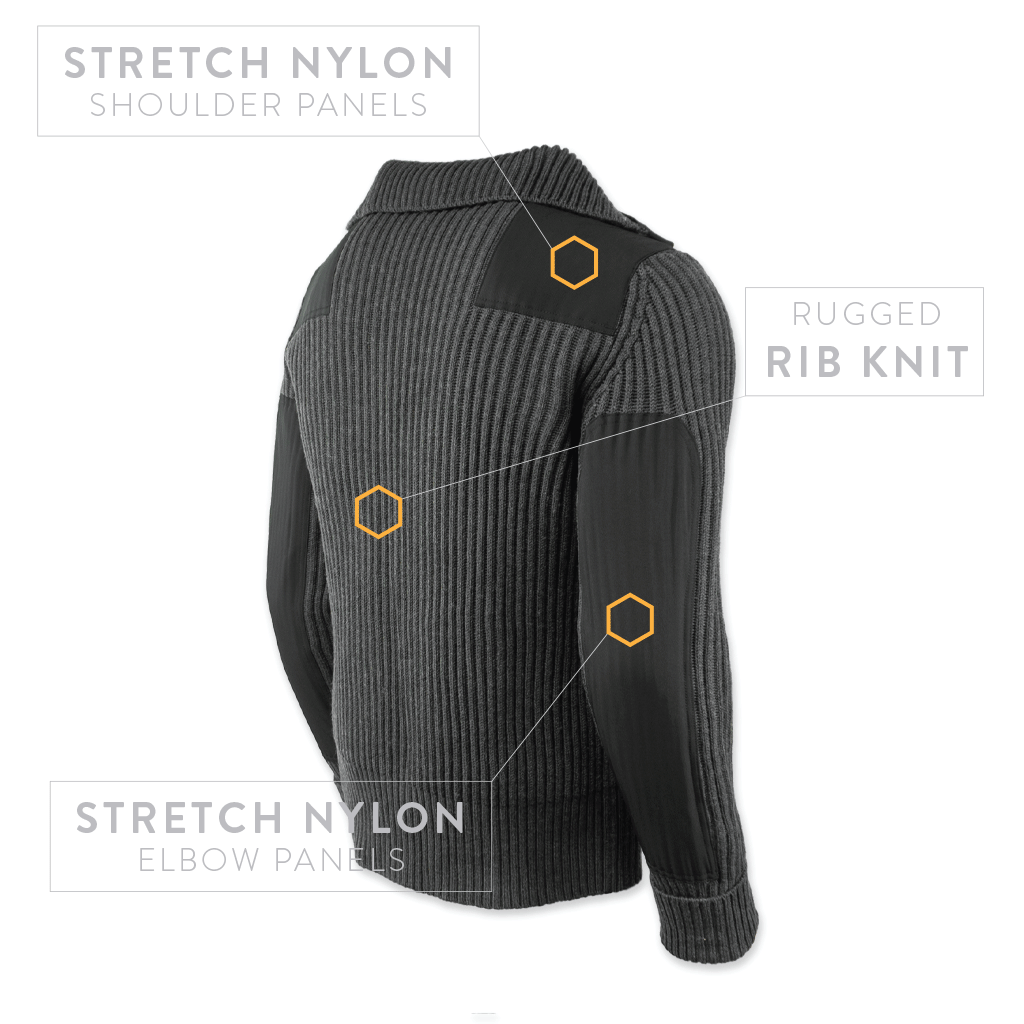
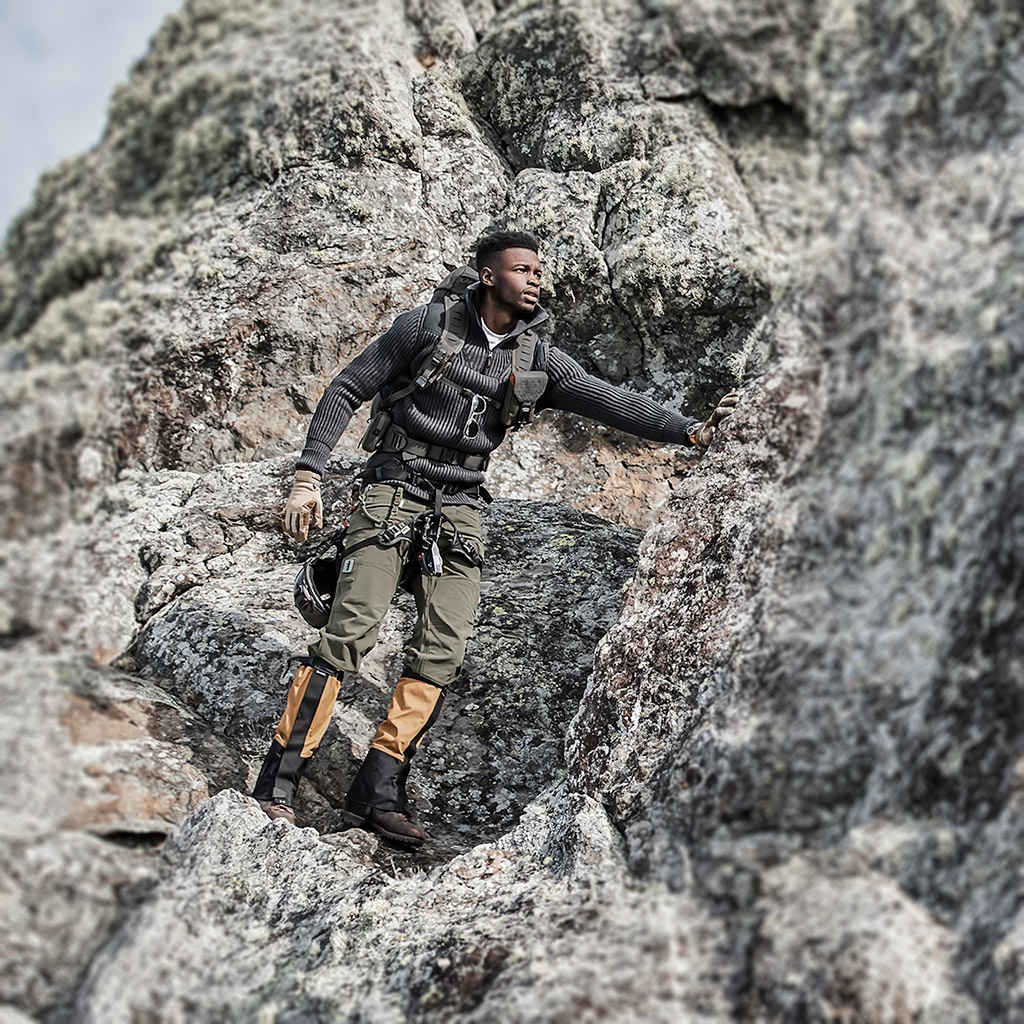
Prometheus Design Werx introduces their Guide Half Zip Sweater for Fall/Winter 2022. Inspired by classic alpinist and mountaineering guide sweaters, this style has been updated with soft, yet hearty, premium merino yarns and expertly knit in a substantial weight with a 2×2 rib. Other details include a reverse coil YKK half front zipper for easy core venting, 4-way stretch nylon twill fabric reinforcements on the shoulders and elbows, turnback type cuffs with thumbholes and zips up to a high neck height. To bring this highest caliber performance sweater to market, PDW partnered up with an Italian knitting mill that has been making extra fine knitwear for generations. With the rugged Dolomites as their backyard, this factory knows a thing of two about crafting world class sweaters for expert alpinists, mountaineers, and skiers.

The Guide Half Zip Sweater is a part of Prometheus Design Werx’s PRO-Line of technical apparel. Available in Charcoal Heather Gray with Black accents.

The Design and R&D Team at PDW states:

“Following up to last year’s CWO Sweater, the Guide Half Zip is directly inspired by classic alpinist and mountaineering guide sweaters before the age of polyester fleece. While the originals were also made with wool, they used standard yarns and were simply not nearly as comfortable as ours. We used extra fine, Italian merino yarns in 18.5 microns, which is soft yet rugged, insulates when damp/wet, no melt and no drip. Like the CWO we used over 2lbs of this premium yarn per sweater for a substantial weight to keep the user warm in cold weather conditions. From there it was refining and updating the additional details that went into this sweater. We used a reverse coil nylon YKK zipper, 4-way stretch nylon twill fabric reinforcements on the shoulders and elbows that would move as the sweater would move, and included turnback cuffs with thumbholes. The Guide Sweater is a style we created using uncompromising materials and old world craftsmanship, upgraded in meaningful ways, and inherently possesses the look of classic cold weather mountaineering wear. As in all of our apparel styles, it is the attention to details, premium materials, functional design considerations, and excellent quality of make that goes into everything we produce. This sweater is for those who set their sights for themselves and what they use to a higher standard.”


The Guide Half Zip Sweater is available now for purchase at $229.00 via their website, prometheusdesignwerx.com.

FirstSpear Friday Focus: Wool ACM-WARM 600

Friday, November 18th, 2022

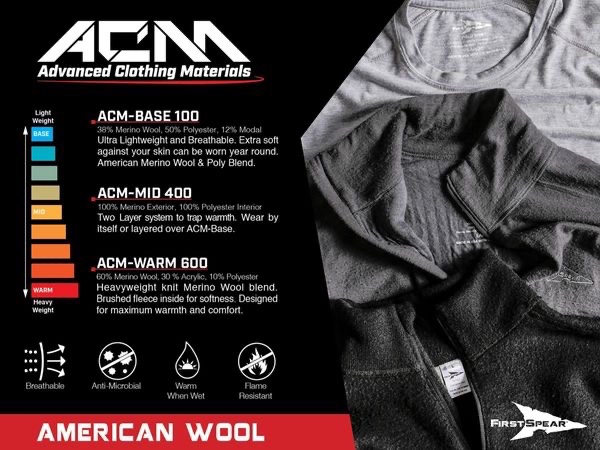
This week, we’re featuring our warmest Merino Wool line in ACM-WARM 600.

The ACM-WARM 600 is FirstSpear’s heaviest weight Merino Wool and provides the greatest standalone warmth. Pair with ACM-BASE 100 and ACM-MID 400 to create an extremely warm and comfortable system to beat the elements.

The Everyday Vest (EDV) is a great addition to the FirstSpear wool line. It utilizes an extremely lightweight 50/50 blend of our American Merino Wool and Polyester and is fully Berry Compliant. This is a heavyweight Merino Wool vest with a soft, brushed fleece interior, designed for the coldest temperatures.

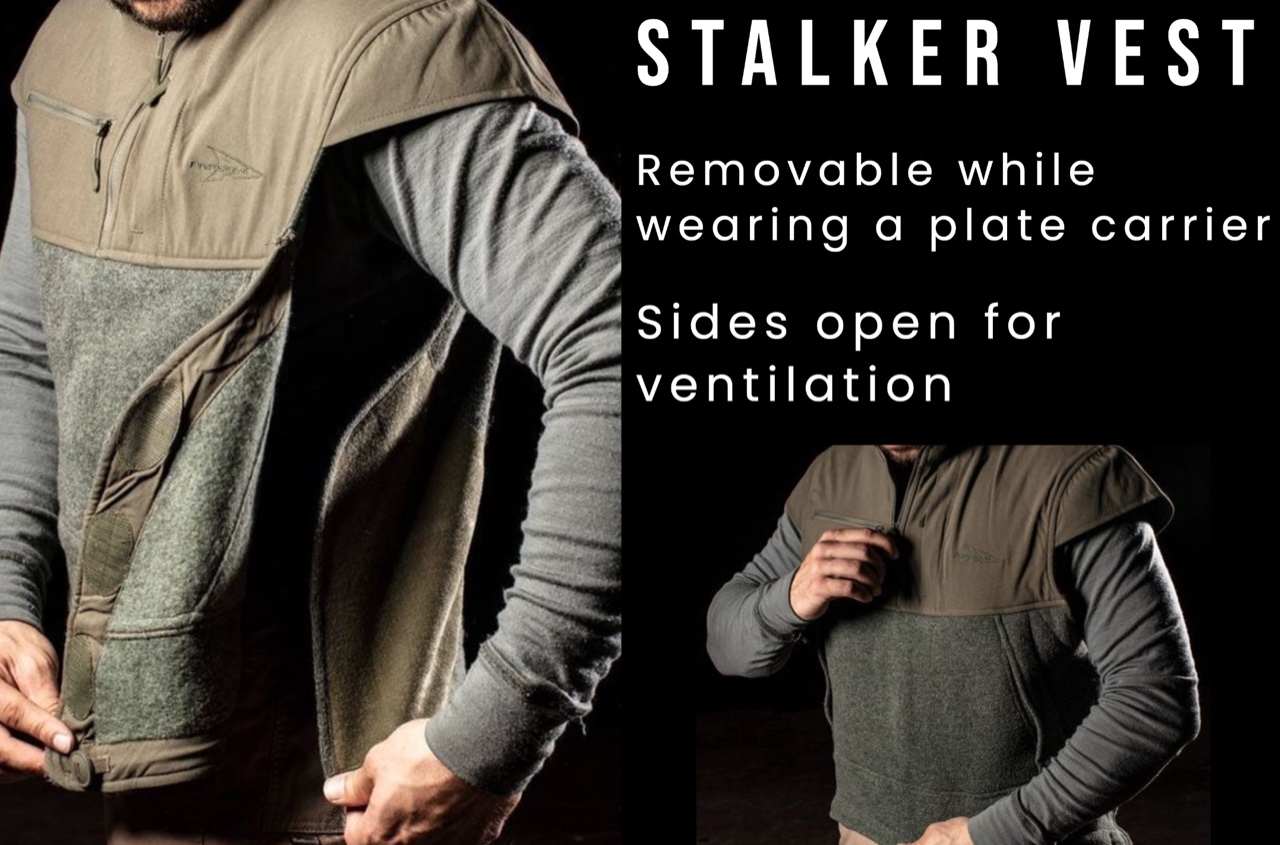
The sleeveless design of the Stalker Vest is a unique feature in the FirstSpear American Wool line with an important benefit. The Stalker Vest has been designed for wear under plate carriers and can be removed without taking the carrier off. Simply open the sides of the Stalker Vest and slide it over your head. With the exclusive design of the Stalker Vest, you can easily adjust body heat retention. Too hot, one the sides for ventilation. Too cold, close the sides. Way too hot, remove the whole vest. All without removing your carrier.

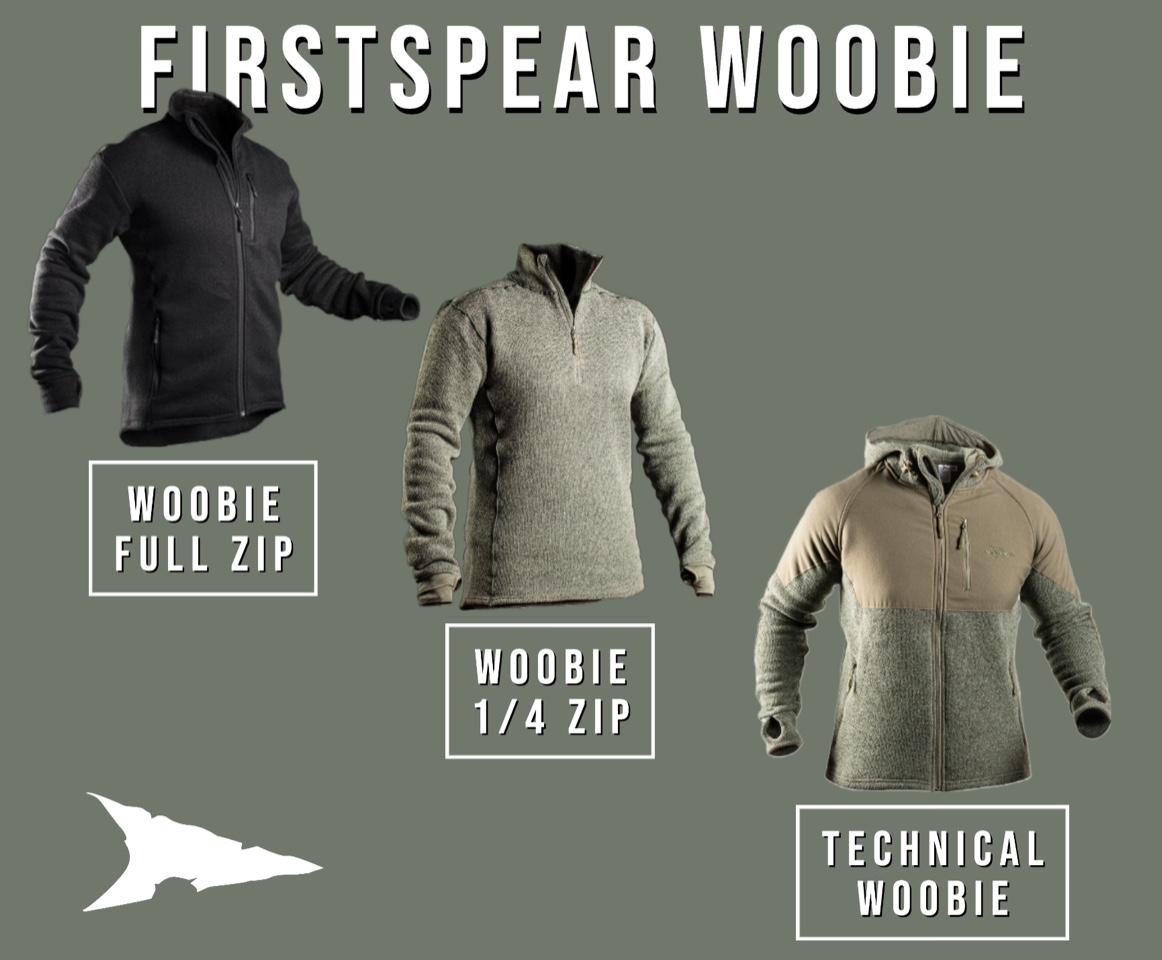
The FirstSpear Woobie’s are 100% Made in America and include the Woobie Full Zip, Woobie 1/4 Zip and the advanced Technical Woobie. Each have their own unique style while remaining the absolute warmest American Merino Wool that FirstSpear offers. If you’re looking for technical apparel thats both warm and functional, a FirstSpear Woobie is definitely the way to go.

Visit FirstSpear to find all the gear and apparel for America’s War Fighter.

The Saint and Ten Sinners

Friday, November 18th, 2022

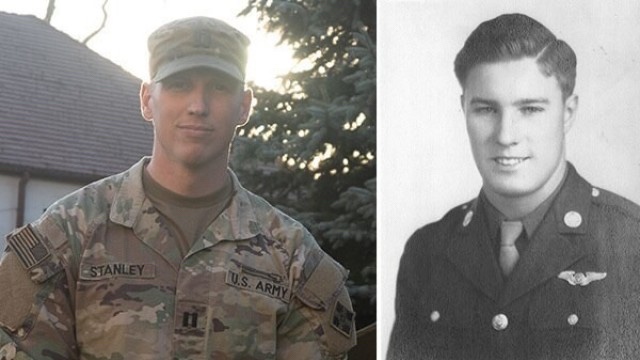
ZAGAN, Poland — Capt. Robert Stanley, the brigade assistant intelligence officer assigned to the 3rd Armored Brigade Combat Team, 4th Infantry Division always had an interest in history, and after learning of his great-uncle’s involvement in WWII, he was inspired to research it more.

“I love history, for me, all the sacrifices made by servicemembers put me in a position that I’m in,” said Capt. Stanley. “If I’m going to appreciate those things, I must investigate it.”

Capt. Stanley went on to say that this is a way to put a face to a story that he’s attached to. He encourages everyone to look into their family history because you may be impressed with what you find.

The Stanley family’s service to the United States armed forces date back as far as the Civil War. Although many people were drafted into the United States Army when the Nazis began their conquest of the world, Sgt. Everett W. Stanley continued his family’s legacy by enlisting into the U.S. Army Air Corps as a ball turret gunner with the 401st bomb group, 613th squadron.

“My great uncle volunteered after the beginning of WWII,” said Capt. Stanley.

At the beginning of WWII, there wasn’t an organic Air Force. It was part of the U.S. Army as the Air Corps, which was originally formed in 1917 during WWI. After enlisting, Sgt. Stanley was stationed at Deenethorpe Airfield in England where he flew the Boeing B-17 Flying Fortress.

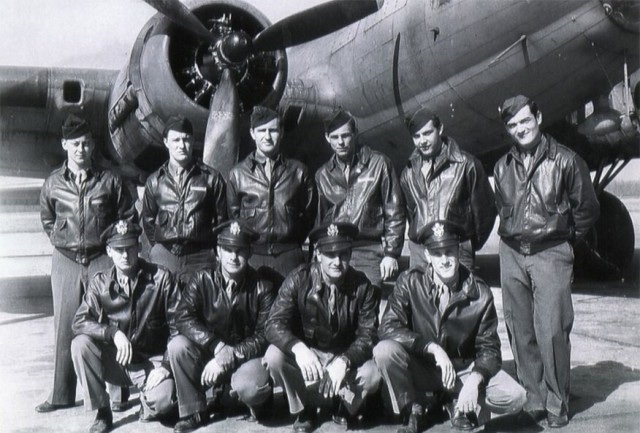
While stationed at Deenethorpe Airfield, Sgt. Stanley met his crew consisting of 2nd Lt. Donald E. Butterfoss, pilot, 2nd Lt. Robert L. Westfall, co-pilot, Bernard J. Boyle, flight navigator, 2nd Lt. Robert C. Kerpen, bombardier, Sgt. Roger R. McCauley, radio operator, Sgt. Alfred J. Truskowski, engineer & top turret gunner, Sgt. William H. Lee, tail gunner, Sgt. William E. Watkins, left waist gunner and Sgt. John W. Reeves, right waist gunner. During their WWII deployment, they were known as “The Saint and Ten Sinners”.

Sgt. Stanley and his crew conducted several missions out of Deenthorpe, their most significant being the largest bombing run during WWII during that specific timeframe.

“It was the largest daylight bombing mission of WWII up to that point,” said Capt. Stanley.

During their last bombing mission, Sgt. Stanley and crew were hit by Flak from a German 88mm anti-aircraft and both port engines caught fire. The crew noticed German fighters coming toward them, so they took cover in the clouds and decided to head home with the engines they had left.

As the crew flew over Arnhem, Holland, they received enemy fire which caused severe damage to the plane and the crew had no choice but to bail. After being shot down during mission, Sgt. Stanley was taken into captivity as a prisoner of war (POW) where he spent the next 11 months.

“There were thousands of POWs, that’s thousands of stories and thousands of experiences,” said Capt. Stanley.

Although Sgt. Stanley was a POW, he was allowed to send letters home to his family with the help of the American Red Cross. This made his family aware of the immense sacrifice he made for our great nation.

“If I have a rough day, I think to myself, my great uncle was a prisoner of war,” said Capt. Stanley. “If he can get through that, I can deal with whatever I have going on.”

During his time in Poland, Capt. Stanley took the opportunity to visit some of the historic sites in the area. He went to Berlin and Stalag Luft III, one of the locations it is believed his great uncle spent time as a POW.

“My great uncle served through the Korean War and Vietnam War,” said Capt. Stanley. “After retiring, he stayed with the Air Force as a Department of Defense civilian.”

Sgt. Stanley received a POW medal, European campaign medal and a WWII service medal among others before retiring after more than 20 years of faithful service to the nation.

“To understand Veterans’ Day, you have to know that those aren’t just names on a board, it’s an entire life that has been lived up to this point,” said Capt. Stanley.

As Capt. Stanley begins to transition from active duty service to National Guard, thinking back on his family’s sacrifice much like his ancestors before him, he looks to the future. Sitting on a ranch remembering those that came before him and starting a new tradition for the Stanley clan.

Capt. Stanley stated that all vets, even those who haven’t seen combat, have made great sacrifices. There’s a lot more to military service than just combat.

“My call to serve has been a part of what members of my family have done,” said Capt. Stanley. “Many people before me have died for something worth fighting for.”

As you go about your day conducting normal business during Veteran’s Day, take a moment to remember why we as Americans are provided with the freedoms we enjoy every day. Remember those that came before you and their sacrifices; remember “A Saint and Ten Sinners.”

By SGT Timothy Brokhoff and SFC Theresa Gualdarama

TNVC Presents: Decisive Action

Thursday, November 17th, 2022

AFSOC Conducts Live-Fire Exercise with Rapid Dragon

Wednesday, November 16th, 2022

ANDøYA SPACE DEFENSE RANGE, NORWAY (AFNS) —

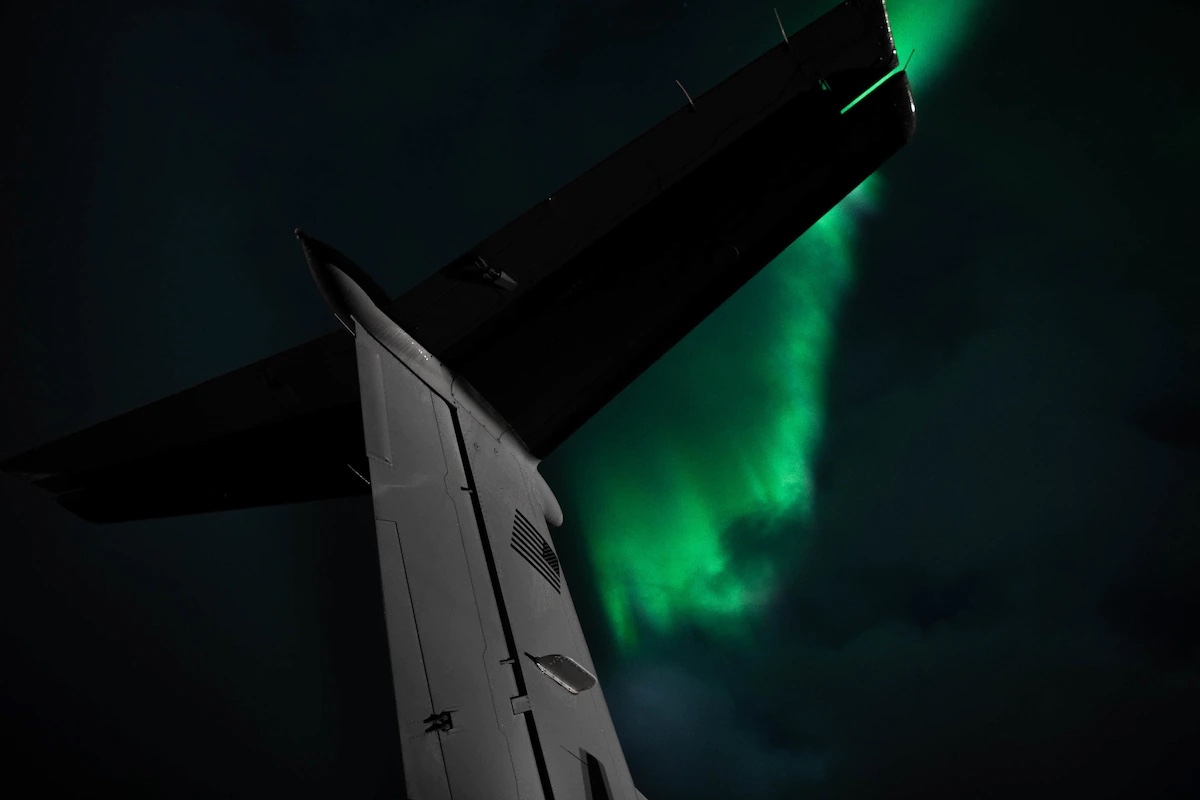
Two Air Force Special Operations Command wings partnered in a total force initiative to conduct the first live-fire demonstration of Rapid Dragon, a long-range palletized munitions system, in the U.S. European Command theater over Andøya Space Defense Range, Nov. 9.

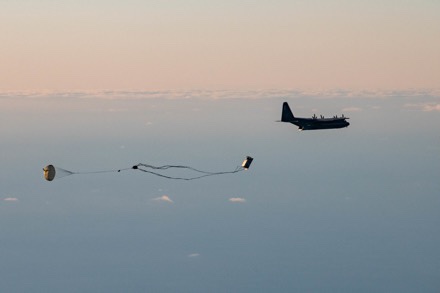
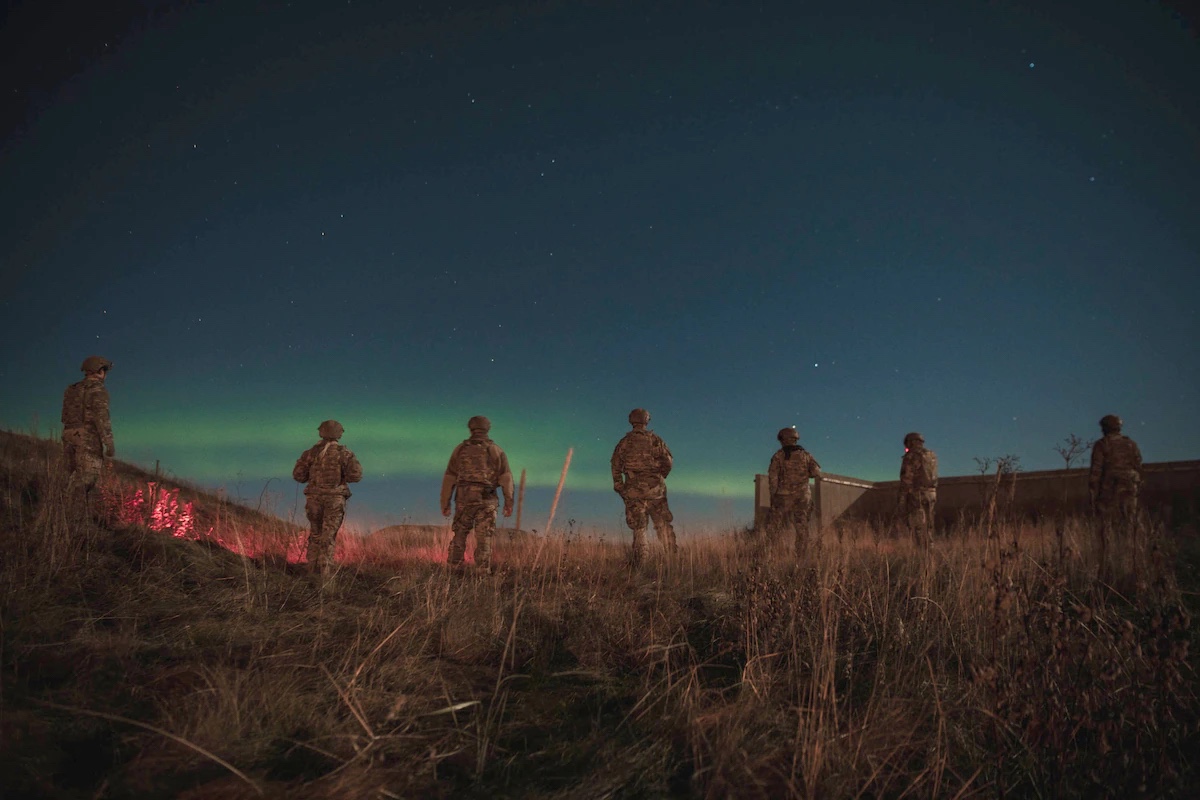
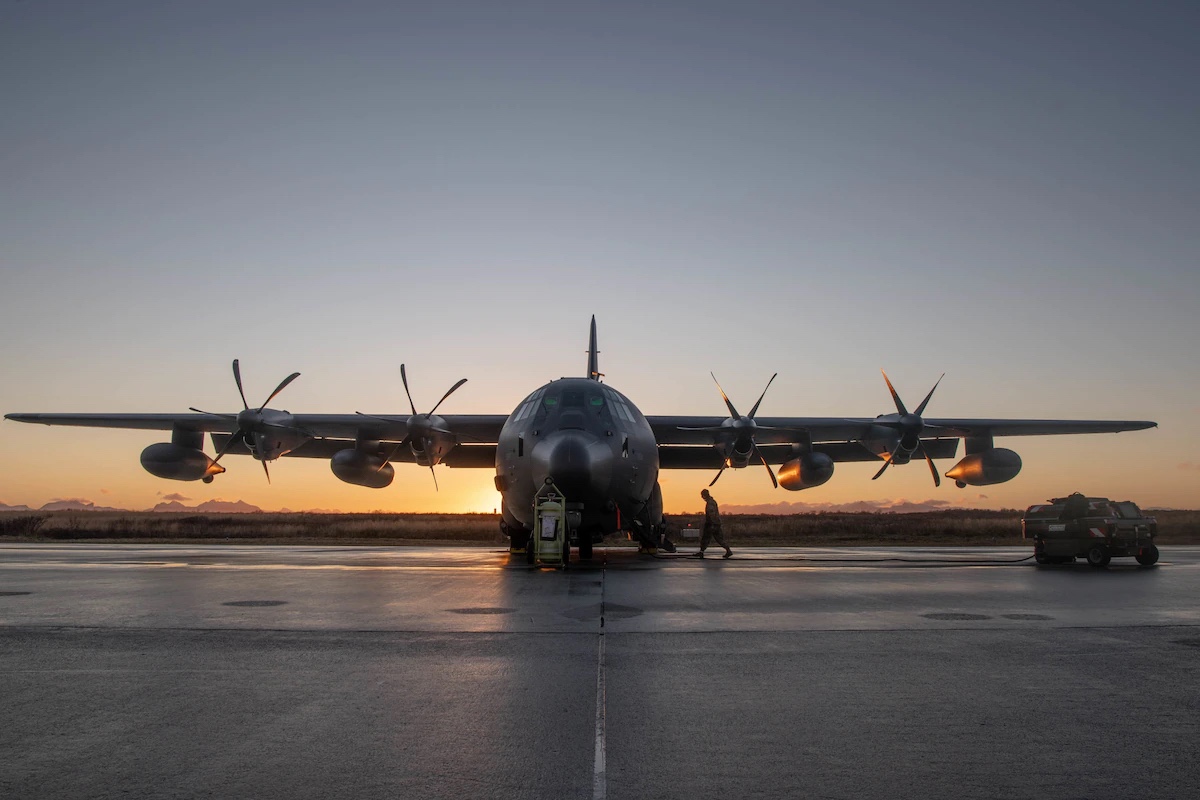
During U.S. Special Operations Command Europe exercise ATREUS 22-4, two MC-130J Commando IIs assigned to the 352nd Special Operations Wing flew the Rapid Dragon package to a Royal Norwegian Air Force training range and deployed it over the Atlantic Ocean. An MC-12W Liberty assigned to the 137th SOW, Oklahoma Air National Guard, used its manned intelligence, surveillance and reconnaissance capabilities to collect and disseminate information about the release.

This is the first time Rapid Dragon has been employed using cargo aircraft in the USEUCOM theater, and precision munitions capabilities for medium-sized or larger cargo aircraft allows U.S. and NATO forces a flexible rapid response option.

“It’s really easily exportable to our partners and allies around the globe that may want to increase the utility of their air force,” said Lt. Gen. Jim Slife, AFSOC commander, during a recent Air and Space Force Association event. “When you look at partner capability, we have a lot of partners around the globe that don’t have heavy bomber-type platforms that would be traditional carriers of those types of munitions, but they’ve got plenty of C-130s proliferated around the world.”

More than 40 countries operate C-130 Hercules, but AFSOC has been the only U.S. Air Force combatant command to demonstrate this system.

“An MC-130J is the perfect aircraft for this capability because we can land and operate from a 3,000-foot highways and austere landing zones whereas a bomber cannot,” said Lt. Col. Valerie Knight, 352d SOW mission commander. “Additionally, a crew qualified to execute heavy equipment airdrop could employ this operationally. After the successful execution of this airdrop, we have now proven we can employ the same weapons system — creating a dilemma for our adversaries. As the only U.S. Air Force Special Operations Wing in Europe, this capability provides our allies, partners and the joint force an additional response option, strengthening our deterrence capabilities in USEUCOM.”

Developing relationships between allies and partners extended to the total force with the inclusion of an Oklahoma Air National Guard MC-12Ws. Two U.S. Air Force pilots and a combat systems officer were part of the MC-12W aircrew to conduct the mission, with support from aircrew flight equipment and special operations communications Airmen.

“The 137th SOW actively seeks out exercises where we can demonstrate our unique capabilities and create relationships with our partners — not just within AFSOC and the total force, but across a multi-national coalition,” said Maj. Murray Ludwig, a 137th SOW combat systems officer. “Thanks to the assistance of our Norwegian allies, our integration into this exercise has been seamless. We were able to demonstrate that our wing can provide top-tier ISR support and a wide array of sustainment capabilities for our joint partners.”

Members of the 137th Mission Sustainment Team also participated, conducting pre-deployment site surveys and airfield assessments. While it is not the first time the team has worked with coalition forces, it is the first time the MST has conducted their mission in a setting realistic to the austere environments they will operate in as they support global SOF operations.

“The multi-capable Airman concept allows us to become completely self-sufficient anywhere in the world,” Ludwig said. “The training our operations Airmen and Mission Sustainment Team are receiving here will be critically important to their future war-fighting potential.

As AFSOC postures its forces for the future fight, developing unconventional, innovative capabilities to protect against near-peer adversaries is critical.

“This rapid roll-on, roll-off capability extends America’s ability to project firepower around the globe,” Knight said. “It doesn’t require any aircraft modifications, making it incredibly easy to employ any place, any time.”

By TSgt Brigette Waltermire, Air Force Special Operations Command Public Affairs

Video by SSgt Izabella Workman

Missile Wings Conduct Remote Code Change with ICU II

Tuesday, November 15th, 2022

F.E. WARREN AIR FORCE BASE, Wyo. (AFNS) —  

The missile wings of the 20th Air Force are changing their procedures on how nuclear code change operations are done, with each wing having switched one squadron’s area of responsibility to the new Intercontinental Ballistic Missile Cryptography Upgrade program.

It is a change that promises to save the Air Force considerable resources in labor hours, cash, and the wear and tear on vehicles.

“Code change has typically included hundreds of defenders, maintainers and missileers working five or more 14-hour days, and that’s just at one wing,” said Maj. Gen. Michael Lutton, 20th AF commander. “With the new procedure for conducting code change, it now takes two missileers a single, eight-hour alert; saving each wing thousands of miles of road time, as well as the fuel and labor hours that go with that. This innovation will improve the quality of life of our Airmen while saving [the Air Force] millions of dollars.”

Code change is an annual requirement that typically takes three weeks to complete for each wing, at about five days for each missile squadron’s AOR. In those three weeks, missileers, maintainers and security forces drive thousands of miles and work thousands of hours to change the codes required for the launch of a wing’s ICBMs on site at each launch facility. This manual process is now being changed to one that is conducted remotely from the launch control capsule by a team of missileers.

Before the remote code change can be conducted, launch facilities must all be properly configured to the new format, a considerable effort for the maintenance group, said Master Sgt. Adam Urban, 90th Missile Maintenance Squadron, noncommissioned officer in charge of Electromechanical Maintenance Team section. 

“With an average of a three-person team, EMT expended a total of 1,965 man-hours and typically accomplished one or two sites every day, including many weekends, until the whole squadron of 50 launch facilities and five missile alert facilities was complete,” Urban said. “Each day reconfiguring launch facilities was between 11 to 14 hours; with the days we were dispatched to the missile alert facilities taking about eight.”

Urban said that though his teams worked long hours, it was only from the efforts of other units that they had the resources required to complete the job.

“EMTs efforts really came from a culmination of many other actions for the ICU II rollout, such as the electronic laboratory section of the 790th Maintenance Squadron logging many manhours handling procuring, storing, packing and shipping the old component drawer units,” Urban said. “Additionally, the OSS [Operations Support Squadron] codes section coded KS-60 code components about every day to ensure the new drawer could communicate with the rest of the system.”

The process of reconfiguring a missile squadron’s AOR to ICU II consists of three phases, said Capt. Aaron McLarty, 320th Missile Squadron director of training. The first phase, initial implementation, involves ensuring everyone involved understands what ICU II is, and what goes into a remote code change. The second phase is like a typical code change and is what prepares the site to be formatted for a remote code change.

“Phase two of the process was the largest movement of personnel and resources, involving the code shop, maintenance and security forces,” McClarty said. “Codes dispatch the properly coded components to maintenance, then the maintainers and defenders go out to the launch facilities multiple times over the course of a couple of months, getting them into a state of configuration for the operator in the capsule to be able to conduct that remote code change.”

The third phase is the culmination of all the previous efforts in conducting the remote code change, which required substantial training of the missileers in the new procedure.

“The third phase was a code change conducted remotely, which is one of the major capabilities of ICU II,” said Capt. Dustin Maglinti, 90th OSS weapons and tactics instructor. “With its completion, it reduces the manpower required for code change, maintenance and security forces personnel, lessens the need for moving code components from base to the missile field and now we have this capability where we can do all of this remotely.”

From the thousands of hours that went into a legacy code change, the manpower requirement of ICU II diminishes to one eight-hour shift for the missileers on duty that day.

A lot of our day-to-day experience is doing a lot more with fewer people and less resources, and ICU helps a lot with that,” McClarty said. “We’re still accomplishing this code change, just like we normally would, but now we’re cutting down tremendous numbers of personnel that no longer have to be involved in the physical maneuver of code change.”

For all the benefit to the wings’ missileers, ICU II will positively impact the Airmen of the maintenance and security forces groups of the three missile wings too.

In the case of the maintenance groups, leaving the traditional code change format will free up hundreds of maintenance personnel to devote resources to the important job of maintaining the venerable LGM-30G Minuteman III.

“An ICU II Code Change will free 163 personnel to continue their maintenance duties of maintaining and sustaining the launch facilities, missile alert facilities and ICBMs on alert here at F.E. Warren,” Fasting said. “That sums up to 3,000 hours a year returned to the task of maintaining the 50-year-old Minuteman III.

In addition to the benefits of better allocated maintenance personnel, there are positive effects to other units and a direct benefit to the security of coded components. 

“The second- and third-order effects of this are freed MAF space, the costs of and requirement for second chefs, the reduced cost of sundries and linens from not resting overnight and returning that time to our folks and their families,” Fasting said. “Lastly, not carrying as many coded components to the field reduces the security risks from that material.”

The 91st and 341st Maintenance Groups are expected to see similar outcomes.

Like the maintainers, defenders will see their responsibilities specific to code change lessen, as the requirement to protect open sites decreases.

“The Defenders of the Mighty Ninety are always ready to ensure that launch facility sites are secure during code change operations,” said Lt. Col. William Brokaw, 90th Missile Security Forces Squadron commander. “However, following the completion of ICU II, the dated approach to security response during those operations becomes much more limited, and that frees up personnel and resources for other aspects of the Big Missiles’ mission.”

Though the security forces response specific to ICU II code change is not as significant as during manual code change, the physical defense of the complex will not diminish with the change – in fact, it will increase.

“The ICU II upgrade, by nature of design, is more secure and allows security forces defenders the flexibility to focus on all areas of security more effectively and efficiently across the complex,” Brokaw said. “ICU II allows more defenders to patrol the field than ever before and guarantees security and safety of our sites and assets.”

While the process of converting the sites to ICU II is a significant process for personnel across the operations and maintenance specialties, the result is a more secure missile field with more resources returned to the wing. Though the process has not been finalized, all three wings are working toward converting all their sites to ICU II over 2023.

By Glenn S. Robertson, 20th Air Force

Army Futures Command Engages with International Partners to Prepare for the Future

Monday, November 14th, 2022

AUSTIN, Texas — As the U.S. Army transforms itself to ensure the all-service force can deter and, if necessary, win any future conflicts, it is engaged with allies and partners to develop new capabilities and foster leap-ahead warfighting advantages.

U.S. Army Futures Command plays a pivotal role in this effort by engaging regularly and meaningfully with partner nations, embracing a collective approach to warfare that aligns with the demands of multidomain operations to deliver speed, convergence and overmatch on the modern battlefield.

The command’s International Programs Team, part of the G-3/5/7 directorate, is spearheading AFC efforts to prepare for tomorrow’s joint and combined warfighting challenges in an adept and highly integrated manner, as exemplified by ongoing multinational experimentation being conducted through Project Convergence.

“The reality is, as we look to the future of warfare, we don’t do anything without our international partners,” said Newman Yang, AFC International Programs Team lead. “Whether it be Iraq, counterterrorism, Afghanistan, you name it — our operations are executed with our combined allies and partners; we don’t do it unilaterally.”

Yang joined AFC as a Department of the Army civilian after 30 years of active-duty service, in a career that included 20 years as an Army foreign area officer in locations such as Brunei, China, Hong Kong, Malaysia and Singapore. Due to increasing demand signal for greater engagement with AFC, the command recently expanded the International Programs Team to include personnel with diverse backgrounds in domestic and international Army experience, along with Department of Defense and Congressional engagement knowledge and foreign policy expertise.

Together, the team members help explain AFC’s Army transformation mission, structure and programs to international partners, many of whom have expressed an eagerness to stay abreast of new technologies and to engage in collaborative research and development efforts.

In the fall of 2021, for example, the International Programs Team assisted in the design and execution of a two-day modernization forum hosted by U.S. Army Europe and Africa; the forum, which took place in Germany and included the participation of 13 European allies and partners, offered an in-depth exploration of future opportunities, challenges and concerns related to transformation efforts.

The team also regularly supports engagement visits to AFC headquarters in Austin, recently welcoming senior military leaders from Europe, the Middle East and Asia to discuss shared future force plans and objectives.

Understanding what U.S. military equipment and warfighting systems will look like in the future enables allied and partner nations to make informed decisions about their own transformation requirements, Yang explained, and lays the foundation for future interoperability between allied country militaries.

The diligent work of the International Programs Team contributed to the multinational presence at this year’s Project Convergence event, Project Convergence 22, which brings together U.S., U.K. and Australian service members at U.S. military installations to explore the parameters and possibilities of future warfighting scenarios.

“U.K. and Australia have been full planning participants,” Yang said, noting the countries have incorporated their own service branches in the experiment in a realistic way. “This is a huge commitment on their part.”

Canada, France, Israel, Japan, Korea and New Zealand are also attending the experiment as observers, with the understanding that future iterations of Project Convergence may expand to include additional allied and partner nation participation.

The Project Convergence campaign of learning, experimentation and demonstration is accelerating the U.S military’s ability to transform rapidly and efficiently by identifying common preparedness gaps and assessing who might be best suited to address them across the various services and allied nations.

Yang described the mutually beneficial process as “part of that partnership fabric, where we can mutually develop technologies while also conserving resources to avoid duplication of effort where possible.”

“If we have proper agreements and policies in place, then we can work on sharing those technologies to ensure we persistently modernize our forces and equipment together to deter and defeat potential future adversaries.”

By Maureena Thompson, Army Futures Command