Phantom Lights

Archive for the ‘Guest Post’ Category

215 Gear Expands Offerings, Adds Sister Company, Alien Precision

Thursday, October 27th, 2022

215 Gear™ (215) is announcing big changes, in our commitment to American manufacturing. 215 is now approaching our 16th year of manufacturing, we are now proud to say we are a family/Service Disabled Veteran owned and operated company. From day one, 215 committed to making the products that the GWOT needed, but weren’t on the market.  We approached design with our unique background and developed solutions for real world applications, using 100% USA made materials and labor. We continue to be humbled when a unit chooses 215, amongst the sea of products out there.
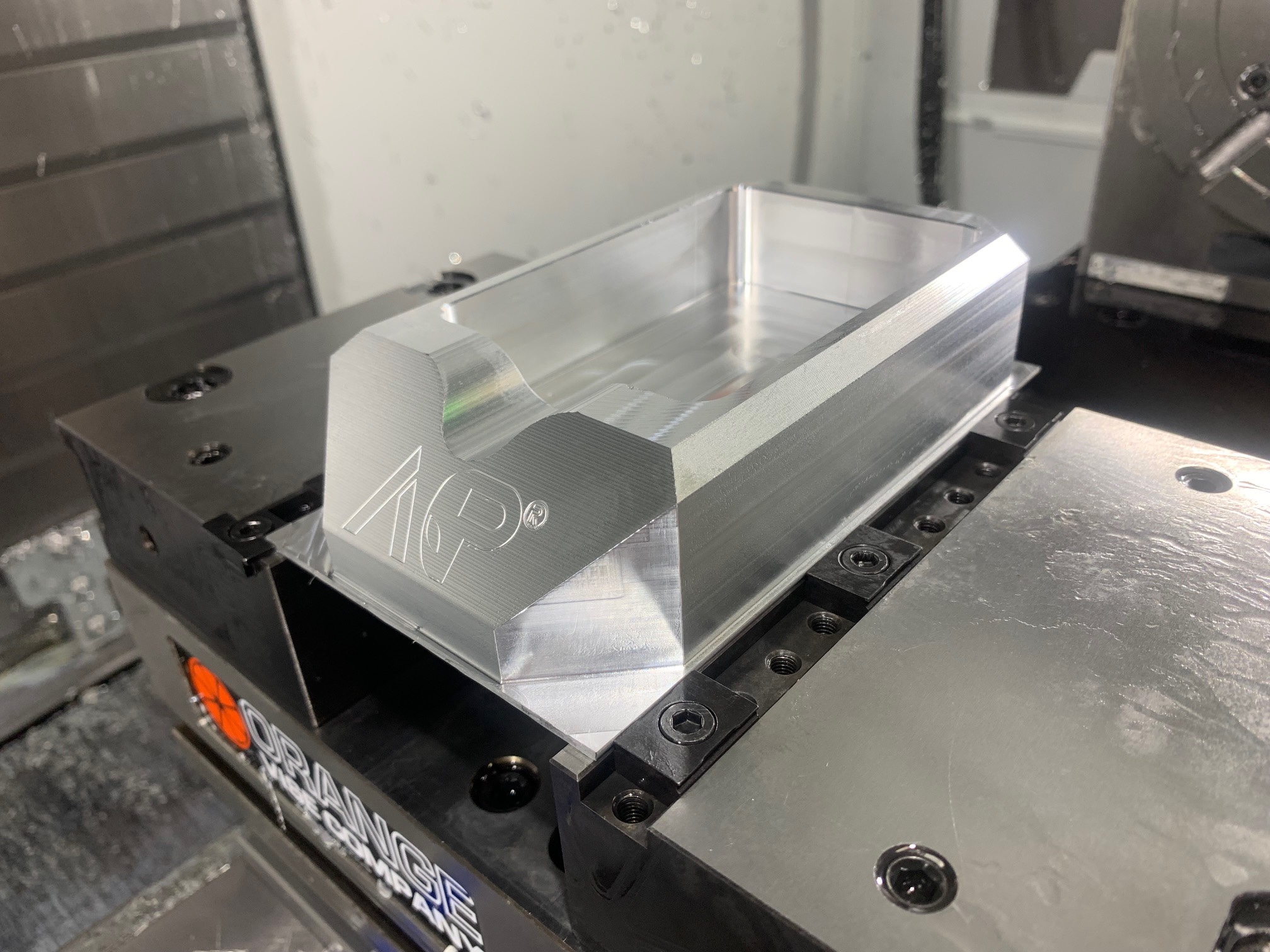
215 will continue our tradition of working with the end user to develop custom solutions for their application. We are announcing our added capability of metal CNC machining to our portfolio of services. This capability greatly expands our ability to provide the end user with sewn and machined parts to better fulfill mission requirements. Producing metal parts, we needed a solution for coating these items. 215 turned to Cerakote, being widely known for making the toughest coating for the firearms and related industry. We received our applicator certification and brought in the added machinery to apply Cerakote productively, in house. This allows us to shorten lead times and known issues associated with third party coatings, such as anodizing.

Additionally, we are announcing a new sister company of 215, Alien Precision. 215 will continue to focus on the tactical gear market, while Alien Precision (AP) will focus on the EDC/accessory market. We are using 100% USA made metal and Cerakote to produce items for both companies, right here in Virginia Beach. We are excited to continue to expand and widen our aperture, as a company. We are upping our social media presence, creating content and updates for our followers. Check us out and follow us on: 215 Gear on Facebook, @215Gear on Twitter and #215Gear on Instagram.

We want to thank our loyal customer base for all of their support and feedback over the years. Without you, none of this is possible. We want to personally thank the other USA manufacturing companies that have helped us to achieve these goals: Moose at Cerakote, Robert, Nick and Stan at Phillips Corporation (Haas), Chris at Orange Vise, Frank at MariTool, Jeff, Marko and Eric at 5th Axis and David at Helical Tool.

 To thank our Soldier Systems friends, we are offering a site wide discount code. Enter “SOLDIERSYSTEMS15” in the coupon code (while checking out), for a 15% discount. We have been with Soldier Systems from the beginning of this journey and truly appreciate what they are doing for the industry.
The Agilite AG3 Placard

Thursday, October 27th, 2022

Agilite has just launched its Patented AG pouches in a 5.56 triple placard version. The proprietary design fixes the age-old issue with pull tab pouches, no longer needing a compromise between retention and quick & easy pouch access. Check out how they work here:

or see more at www.agilitegear.com

Tactical Medical Augmentation Team Increases Combat Medical Capability

Thursday, October 27th, 2022

PATRICK SPACE FORCE BASE, Fla. (AFNS) —  

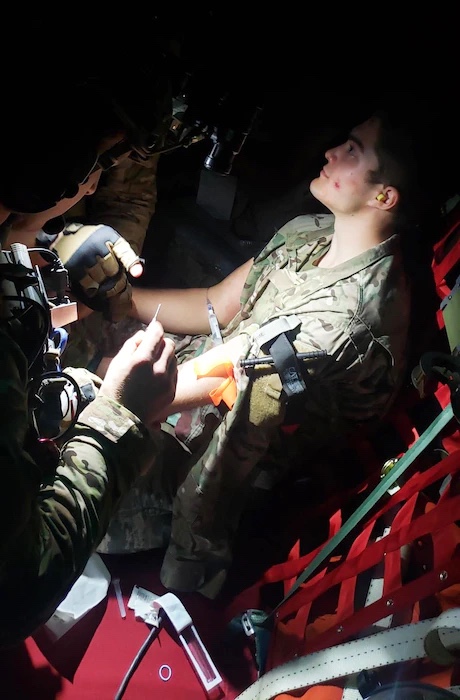
To find a solution to an identified gap in medical care provided in combat situations, the 920th Rescue Wing’s Aeromedical Staging Squadron developed the Tactical Medical Augmentation Team, an embedded medical team that will bring a new level of patient care directly to the battlefield.

This small, multi-capable, highly skilled, and adaptable team of medical personnel can use the wing’s Personnel Recovery Task Force presentation to move higher levels of medical care further forward to wounded warriors and allow pararescuemen and specialty teams to remain closer to the battlespace.

“This capability increases pararescue’s overall mission effectiveness and serves as a force multiplier for combatant and medical commanders in future conflicts,” said Maj. Alexander Torres, TMAT team officer in charge. “It delivers advanced medical care further forward than previous capabilities.”

The concept takes the previously established models of Air Force pararescue, Critical Care Air Transport Team, U.S. Army Dustoff, British Medical Emergency Response Teams and the previous Tactical Critical Care Evacuation Team missions to build a dynamic medical capability that expands the current capabilities of pararescue. By serving as a medical intermediary between pararescue operators and en-route care system, the TMAT concept uses personnel that are already assigned within the rescue wing and is built specifically to cater to the needs of any rescue mission.

The TMAT, as a proposed embedded military rescue community asset, utilizes the PRTF composition of light-, medium-, and heavy-packages to define capabilities. The total team size of a TMAT-Heavy is comprised of six individuals: one physician, two nurses and three paramedics. A medium team is composed of four members: one physician, one nurse and two paramedics. In the light PRTF model, and for maximum adaptability, the team is composed of two members and can be any combination of physician, nurse and/or paramedic depending on mission requirements.

The TMAT-Heavy can provide prolonged field care for 72-hours, the -medium for 48-hours, and the -light for 24-hours. This provides support options when patients can’t be evacuated and need care until transportation is an option or when geographic challenges prevent immediate transport.

The team physicians will be trained in emergency medicine, critical care, anesthesia, or trauma surgery. The nurses will be emergency or trauma trained with trauma and critical care certifications. The paramedics will have advanced training and certification as flight paramedics, thereby providing them with additional critical care and ventilation skills not seen in standard paramedic training.

The team is capable of being utilized on the wing’s rotor and fixed-wing rescue assets as a force multiplier that does not need to rely on transportation outside of the wing. The PRTFs can utilize the land and water assets such as the wing’s Search and Recovery Tactical Vehicles or inflatable boats. Wherever they can get to patients, not only can they provide care, but they can also get them transported on any asset the PRTF can provide.

“Many patient care teams do not have dedicated platforms to evacuate patients,” said Senior Master Sgt. Matthew Harmon, TMAT non-commissioned officer in charge. “By utilizing organic assets in the PRTF, TMAT is able to rapidly bring a higher level of care further forward to patients allowing pararescue to continue to work tactical problems.”

To validate this concept of medical care, the 920th ASTS created a team of six Airmen that developed a lightweight and adaptable equipment allowance and validated its functionality in various transportation platforms. They then completed training with pararescue Airmen in quarterly unit training assemblies and local-level training events. This evolved into placing TMAT light-, medium-, and heavy-packages into wing-level exercises in Florida, Arizona, New Mexico, California, and Hawaii.

A final test of the TMAT’s ability to integrate with the PRTF came during their use in Exercise Balikatan 22, a multinational, joint forces exercise in the Philippines. There they were able to practice these skills within the Indo-Pacific area of responsibility and included a mass casualty exercise, personnel recovery of a downed pilot, and training Filipino pararescuemen in patient assessment and interoperability in a joint environment.

“We believe that TMAT is a valuable asset to the Air Force rescue community,” said Col. Corey Anderson, 920 ASTS commander. “It provides an irreplaceable medical care option that is organic to the PRTF. I’m proud that this team is getting patients the care they need as soon as possible on the battlefield and allowing the pararescue community to stay where they need to be, which is in the fight.”

By Lt. Col. Ian Phillips, 920th Rescue Wing Public Affairs

Soldier Center’s Small Unit Performance Analytics Event Advances Soldier Performance Research

Wednesday, October 26th, 2022

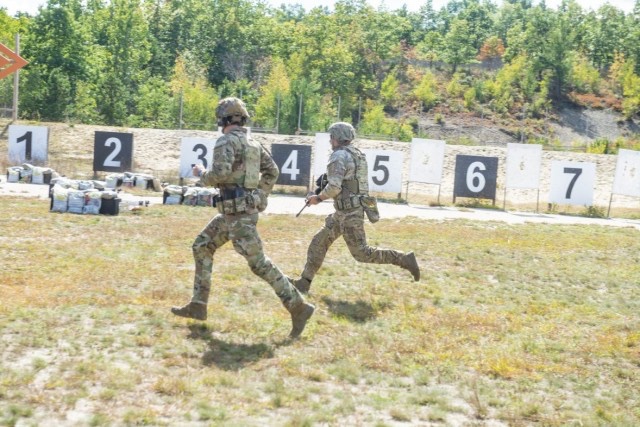
NATICK, Mass. – The U.S. Army Combat Capabilities Development Command Soldier Center, or DEVCOM SC, completed its fifth Small Unit Performance Analytics, or SUPRA, event at Fort Devens on September 12 – 23. The data collection, supported by infantry squads from the 10th Mountain Division, was part of DEVCOM SC’s ongoing Measuring and Advancing Soldier Tactical Readiness and Effectiveness, or MASTR-E, program. MASTR-E’s Small Unit Performance Analytics (SUPRA) research team planned and executed the event.

Led by DEVCOM Soldier Center, the MASTR-E program is a large-scale effort focused on measuring, predicting, and enhancing close combat performance with predictive performance algorithms, sensors, data-driven decision aids, and targeted interventions to maximize Soldier performance. DEVCOM Soldier Center is executing a collaborative development strategy with numerous military, academic, and industry partners on the effort. The goal of the MASTR-E program is to characterize and predict Soldier cognitive and physical performance under operationally relevant conditions, ultimately increasing warfighter capability.

SUPRA events play an important role in the overall MASTR-E program.

“SUPRA concentrates on true measures of collective performance,” said George Matook, program lead for MASTR-E. “The Army fights as units, not as individuals; while it’s important to understand individual performance as a part of that whole, quantifying unit performance is critical. SUPRA does that for MASTR-E.”

Data collected from participating squads in SUPRA events include communication data, physiological status monitoring, and marksmanship data — to name just a few areas of data collection. SUPRA events aim to increase understanding of how individual and squad performance influences overall Soldier effectiveness and lethality.

“The SUPRA research team collects over 100 GB of data and close to 500 different dependent measures for each squad that completes the testing,” said Meghan O’Donovan, a biomechanics research engineer in DEVCOM SC’s Soldier Effective Directorate who works on the MASTR-E effort. “Given the numbers of squads and Soldiers tested, this makes it one of the largest dismounted infantry, force-on-force data sets in existence.”

By adding data to the MASTR-E Soldier performance effort, this SUPRA event will broaden Soldier representation and enhance the science behind the effort.

“This SUPRA event adds more Soldier data into the analytical pool, strengthening the statistical relevance of the relationships and metrics we’re discovering,” said Matook. “We want to ensure the information is representative of the Army, not just a couple of squads we happened to sample.”

DEVCOM SC’s longtime expertise in multiple domains in Soldier technology research and development, as well as its innovative partnerships with academia and industry are also playing an important role in the SUPRA efforts specifically and in the MASTR-E effort overall.

“DEVCOM Soldier Center’s longtime expertise in multiple domains is necessary to properly execute MASTR-E,” said Matook. “By design, our studies are multi-disciplinary, encompassing work in physical, cognitive, socio-emotional, and health domains. While Soldier Center has experts in some of these areas, it was important to leverage the help of other Army and DoD assets to bring a best of breed team to the problem set. To bring together the right skillsets for SUPRA in particular, we assembled a team from Soldier Center, Aberdeen Test Center, Army Research Institute, Naval Health Research Center, and multiple industry partners.”

SUPRA events are an important part of the MASTR-E program’s effort to better understand and to increase Soldier readiness and performance.

“MASTR-E as a whole will benefit warfighters in many ways, from garrison, to training, and operations,” said Matook. “MASTR-E’s work measuring, predicting, and enhancing close combat performance will help the Army and its Soldiers see themselves better, to understand our true capability and readiness with the metrics that matter. Coupling this knowledge with Optimizing the Human Weapon System will give leaders an unprecedented situational understanding of their formations, enabling higher levels of readiness and increased probability of mission success.”

By Jane Benson, DEVCOM Soldier Center Public Affairs

82nd Airborne Soldiers Engage in Future Warfighting Experimentation

Tuesday, October 25th, 2022

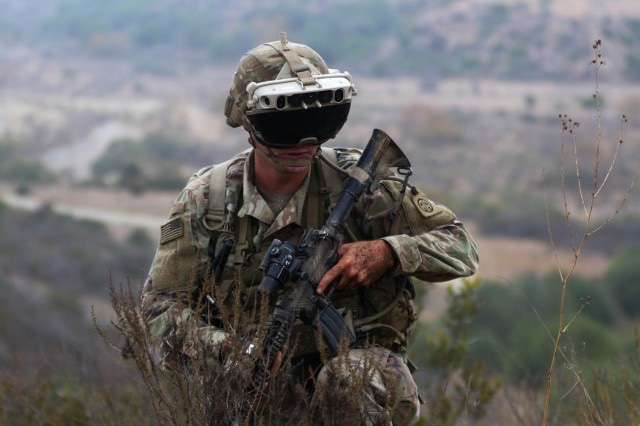
CAMP PENDLETON, Calif. — A thin layer of silver-gray cloud cover rests above an expanse of sloping, taupe-colored hills. The landscape — part of a U.S. military training facility near the southern California coastline — is occupied mostly by shrubs, their amber and green flecks dotting an otherwise neutral terrain.

On the crest of a hill overlooking this stretch of mostly undeveloped land is an abandoned village, or rather, the semblance of an abandoned village. Constructed by the military to provide realistic training opportunities to service members, the collection of structures and nods to everyday life — a carton of eggs for sale, a bicycle discarded along the side of the road — could be representative of any number of locations.

This month, however, the scene is meant to convey an unknown location, somewhere conflict might emerge in the future. It is the setting for a series of mission-based scenarios being conducted through Project Convergence 22, shortened as PC22, an experiment designed to evaluate how the U.S. military can most effectively incorporate new technologies and coordinate with multinational partners to deliver overmatch on future battlefields.

Service members from the U.S., U.K. and Australia are taking part in PC22 experimentation, bringing a wealth of knowledge and resources to simulated and tangible warfighting activities. Included among the thousands of participants are members of the U.S. Army’s 82nd Airborne Division, an elite and rapidly deployable group of airborne infantry Soldiers based out of Fort Bragg, North Carolina.

Known for their ability to parachute into conflict zones, 82nd Airborne Division Soldiers are integral to the U.S. Army and U.S. Air Force’s Immediate Response Force, maintaining the ability to deploy as needed with just 18 hours’ notice. At PC22, they are supporting air assault experiments, dropping from helicopters to traverse unfamiliar landscape with the help of cutting-edge navigational and situational awareness tools.

“We are currently testing out new equipment for the Army,” said Pfc. Nicholas Quintero of the 82nd Airborne Division, who has been participating in PC22 for approximately two weeks.

“We’re going out, we’re doing a lot of training with it and giving feedback,” he explained, highlighting that the goal is to work out kinks and suggest improvements so that the Army can “provide the best piece of equipment for all types of scenarios and situations.”

“It’s a very cool experience,” Quintero said, pointing out that many Soldiers had never handled or even seen the equipment being assessed prior to their participation in the experiment.

In addition to providing materiel developers with candid observations on new equipment, Quintero and other PC22 participants have been able to enhance their understanding of what a future mission might look like, and how new technology is enabling more agile warfighting.

“Right now, intelligence and technology is huge,” said Capt. Dakota Wright. “Being at Project Convergence keeps us at the forefront of military technology.”

“Obviously, it’s going to take time, because technology takes a while, but the concept of this IVAS and the concept of the technology of the future would definitely improve and make the Army a lot more lethal,” Quintero said, referencing Soldier assessments of the Army’s Integrated Visual Augmentation System, or IVAS, prototype.

The event also serves as a training opportunity for Soldiers who may have little to no prior experience on the battlefield.

“We have a real young group of guys out here, so this is a good opportunity for people to get to know each other, learn how to work with each other,” said Sgt. Milton Jean-Baptiste, also of the 82nd, who noted his team is part of the division’s dismounted reconnaissance unit.

Jean-Baptiste stressed the importance of having the Soldiers most likely to use the Army’s new equipment guiding iterative improvements to it.

“At the end of the day, we’re going to be the ones using it. It can be perfect inside of a warehouse or at a table, but we’ll be the ones who have to figure it out,” he said.

Jean-Baptiste also underscored the urgency of U.S. military leaders embracing new technologies, along with the processes necessary to hone them to specific Soldier needs.

“We don’t want to get left behind,” he said. “Seeing that there are programs and leaders who advocate for us to get the latest technology and make sure that it works is important, just so that we’re always a step ahead.”

By Maureena Thompson, Army Futures Command

SGT Daniel Ramos, 22nd Mobile Public Affairs Detachment, contributed to this article

Explosive Ordnance Disposal Soldiers Sharpen Special Forces Support Skills in Danger Zone

Monday, October 24th, 2022

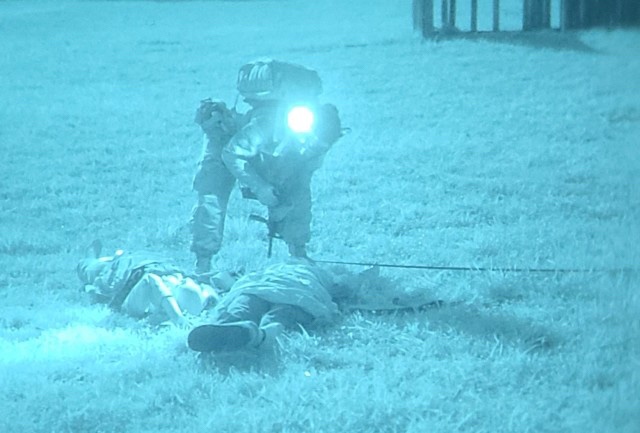
FORT CAMPBELL, Ky. – U.S. Army Explosive Ordnance Disposal technicians are sharpening their ability to operate with some of the nation’s most elite warriors in a bunker on Fort Campbell, Kentucky, called the Danger Zone Training Complex.

EOD Soldiers from the 52nd Ordnance Group (EOD) are leveraging the expertise of the training cadre at the specialized facility to prepare for deployments in support of U.S. Army Special Forces units and conventional ground forces.

The Fort Campbell, Kentucky-based 52nd EOD Group commands all Active-Duty U.S. Army EOD units east of the Mississippi River, including two EOD battalions and 14 EOD companies on Army installations in Kentucky, North Carolina, Georgia, Virginia and New York.

The 52nd EOD Group is part of the 20th Chemical, Biological, Radiological, Nuclear, Explosives (CBRNE) Command, the U.S. military’s premier all hazards command. The 20th CBRNE Command is home to 75 percent of the Active-Duty U.S. Army’s EOD technicians and Chemical, Biological, Radiological, Nuclear (CBRN) specialists, as well as the 1st Area Medical Laboratory, CBRNE Analytical and Remediation Activity, five Weapons of Mass Destruction Coordination Teams and three Nuclear Disablement Teams.

American Soldiers and U.S. Army civilians from 20th CBRNE Command deploy from 19 bases in 16 states to confront and defeat the world’s most dangerous hazards in support of joint, interagency and allied operations.

Master Sgt. Brandon K. Barenie from the 52nd EOD Group Training Cell said the Danger Zone training cadre includes two senior Army EOD noncommissioned officers and civilian contractors who provide subject matter expertise.

“We operate within and take tasking from the 52nd EOD Group S3 Operations Section yet may work directly with battalions and companies when appropriate,” said Barenie.

According to Barenie, the support team provides training in EOD, chemical, nuclear, maneuver unit integration, Special Forces support operations, exercise design, counter-Unmanned Aerial Systems and sensitive site exploitation, as well as threat guidance research, scheduling and coordinating training evolutions and constructing and fabricating training aids.

As the U.S. Army’s explosive experts, EOD technicians are trained to take on everything from a hand grenade to a nuclear weapon while conducting explosive mitigation missions in support of military operations around the world and domestic authorities across the nation.

U.S. Army EOD units from 20th CBRNE Command deploy to the U.S. Central Command and U.S. Africa Command areas of operations while supporting U.S. Indo-Pacific Command exercises and Defense Support to Civil Authorities missions for U.S. Northern Command.

Army EOD Soldiers respond when military munitions are discovered, both on and off post. In 2021 alone, Army EOD technicians from 20th CBRNE Command EOD units participated in 1,415 explosive mitigation missions on military installations and 276 missions off base.

Today, Army EOD technicians are training and preparing to support ground forces during large-scale combat operations against a near-peer adversary.

U.S. Army EOD Soldiers also routinely support the U.S. Secret Service and Department of State during Very Important Person Protection Support Activity missions by helping to protect the president, first lady, vice president and foreign heads of states.

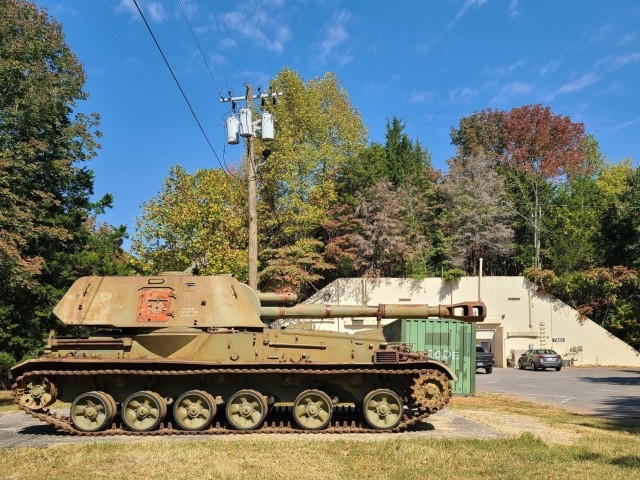
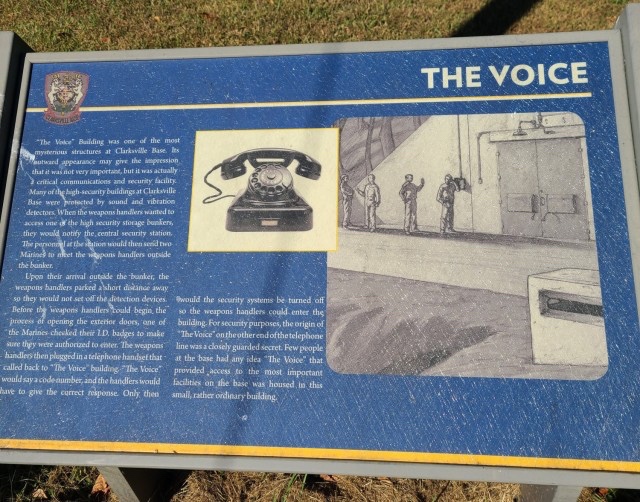
Previously a critical communications and security facility called The Voice, the Danger Zone provides a unique venue for the EOD techs to hone their lifesaving and mission-enabling skills. The facility also provides advanced marksmanship and combat skills training to keep EOD Soldiers on target.

“These training opportunities enhance our group’s ability to employ technically and tactically proficient Soldiers in support of any combatant commander,” said Barenie.

By Walter T. Ham IV

SCUBAPRO Sunday – First Special Service Force

Sunday, October 23rd, 2022

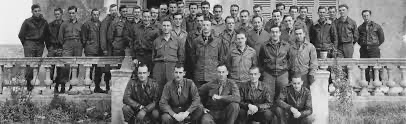
Geoffrey N. Pyke, an Englishman, submitted Project PLOUGH to the British government in 1942 as an innovative operational concept. It caught the notice of Vice Admiral Lord Louis Mountbatten, Chief of Combined Operations. Pyke was offered a position on Mountbatten’s staff. Pyke’s 54-page report proposed commando force operations in Norway and Romania over the winter. Winston S. Churchill, the British Prime Minister, was enthralled by the concept. During a planning conference in London, he pitched the proposal to President Franklin D. Roosevelt and General George C. Marshall. Pyke hypothesized that a ten-thousand-man “North American Force” might encircle significant numbers of German troops in the seized countries by employing compact tracked vehicles to move quickly through the snow.

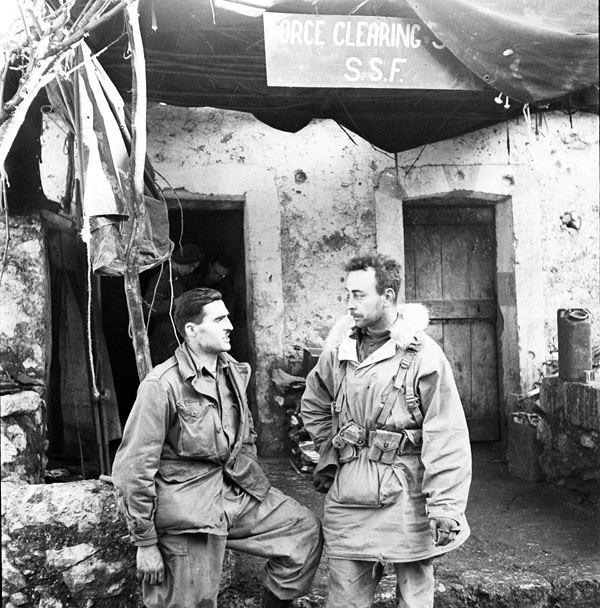
Because it was a one-way trip, Project PLOUGH was infeasible. It did spark the formation of the First Special Service Force (FSSF). A unique combined US-Canadian outfit. Based on the Project PLOW idea, a combined US-Canadian FSSF was activated at Fort William Henry Harrison, Montana, on July 9, 1942. Its structure was outlined in a binational legal agreement. Soldiers, equipment, and supplies were given by the United States Army, while the 2nd Canadian Parachute Battalion provided soldiers from Canada. From regiments to platoons, command positions were evenly distributed by country. Soldiers from the United States and Canada made up the units. Lieutenant Colonel Robert T. Frederick, a 1928 United States Military Academy alumnus, led the FSSF. Lieutenant Colonel John G. McQueen, a Canadian, served as Frederick’s executive officer. In the summer of 1942, a diverse group of volunteers came to Montana. It began a rigorous program of physical fitness, close combat fighting, airborne, demolition, mountaineering, amphibious, and winter warfare training. The FSSF was divided into three 600-man regiments, a service battalion, and a headquarters, with one-third of the Force being Canadian. LTC Frederick persuaded the War Department to employ the FSSF in recovering the Aleutian Islands after Project PLOUGH was canceled.



The Force led the attack on Kiska Island on August 15, 1943. Even though the Japanese had left, Kiska served as a crucial training ground for future operations. The combat-proven FSSF was deployed to Europe, notably to the Fifth U.S. Army in Italy (Lieutenant General Mark W. Clark). To break the German Winter Line, the Force took the 3,000-foot-high Monte La Difensa and La Rementanea mountain peaks, guarded by a Panzer Grenadier division, on December 2-3, 1943. Their relentless night patrols earned them the nickname “Devil’s Brigade” after they landed at Anzio on February 1, 1944. The FSSF led the Allied invasion into Rome on June 4, 1944, seizing vital bridges in preparation for the massive U.S. II Corps assault. In Rome, Colonel Frederick was wounded three times. Brigadier General Frederick, who had recently been elevated to Brigadier General, was assigned to head the 1st Allied Airborne Task Force during the invasion of Southern France. Colonel Edwin A. Walker of the United States Army acquired command of the 3rd FSSF Regiment. On August 14, 1944, he spearheaded the Force’s amphibious assaults on the Mediterranean islands of Port Cros and Levant. Operation DRAGOON allowed the Seventh United States Army (Lieutenant General Alexander M. Patch) to land safely in southern France. Five months later, on December 5, 1944, outside the village of Menton, France, the FSSF paraded one more time to commemorate the departure of the Canadians. After the FSSF was disbanded on January 6, 1945, American veterans formed the 474th Infantry Regiment (Separate). When the war in Europe ended in May 1945, the 474th was dispatched to Norway to disarm German soldiers.

The 1st Special Forces Regiment can trace its official U.S. Army history and accolades to the FSSF’s activation on July 9, 1942. The Force is represented by the S.F. Coat of Arms, embroidered on the S.F. Regimental colors. The shield was designed with the FSSF in mind. LTC Frederick created the V-42 fighting knife, which is included in the set.

The U.S. Army Indian Scouts first used the crossed arrows on the crest in 1890. During World War II, the Force wore them as a branch emblem. In 1960, the fighting knife and crossed arrows were added to the Regiment’s S.F. Distinctive Unit Insignia (DUI). The S.F. Shoulder Sleeve Insignia (SSI), often known as a “unit patch,” was adopted in 1955 and is shaped like the FSSF red arrowhead patch but with the words “USA” and “CANADA” embroidered in white. The Special Forces Regiment’s relationship with the First Special Service Force is still felt.

Arizona National Guard, Oman Form Partnership

Sunday, October 23rd, 2022

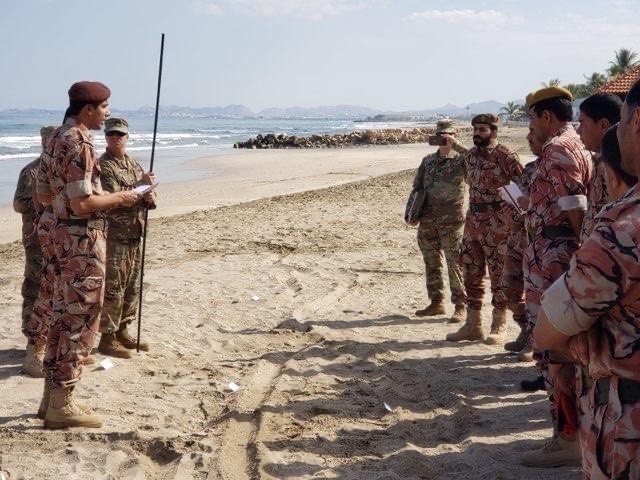
PHOENIX – The Arizona National Guard announced a new partnership with the Sultanate of Oman Oct. 13 through the Department of Defense National Guard Bureau State Partnership Program.

“Arizona has extensive land, air and emergency management experience that closely aligns with the capabilities, challenges and goals of Oman,” said Maj. Gen. Kerry L. Muehlenbeck, director of Arizona’s Department of Emergency and Military Affairs. “We are excited to welcome this partnership and look forward to the collaboration and establishment of enduring relationships for years to come.”

Next year marks the 30th anniversary of the program, which now includes more than 90 nations paired with states to build mutually beneficial, durable partnerships that support each nation’s strategic goals.

Arizona was one of the first states to join the cooperative program and has partnered with the Republic of Kazakhstan since 1993. That relationship will also continue.

“Our state partnership with Oman will offer a new perspective in working, deploying, training and learning together,” said Col. Pete Caffrey, State Partnership Program coordinator. “Our investments into relationships like that with Oman and Kazakhstan will sustain future advantages and strengthen our network of security.”

The National Guard conducts military-to-military engagements to build partner capacity, improve interoperability, and enhance U.S. access and influence while increasing the readiness of U.S and partner forces. The program has become a key security cooperation tool by facilitating cooperation across international civil-military affairs, as well as people-to-people ties.

“It allows our Soldiers and Airmen to really visit a lot of other countries,” Lt. Gen. Daniel R. Hokanson, chief of the National Guard Bureau, said of the State Partnership Program. “To look at the environment that they operate in, and to really see, in many cases, the same problems — just approached from a different angle. We learn a lot in those countries and in those interactions that we bring back to make our organizations better, and I like to think vice versa.”

The Sultanate of Oman, an Arabian country off the southeastern coast of the Arabian Peninsula, is home to almost 4 million people. It borders Saudi Arabia, the United Arab Emirates and Yemen while sharing maritime borders with Iran and Pakistan. Oman’s military, known as the Sultan of Oman’s Armed Forces, consists of Army, Navy, Air Force, Royal Guard and other defense forces.

Officials with the Arizona National Guard and the Sultanate of Oman are coordinating an official signing ceremony to celebrate their partnership.

By Arizona National Guard Public Affairs