FirstSpear TV

Archive for the ‘Guest Post’ Category

New Vessel Class Enters Army Watercraft Fleet with Prototype Launch

Tuesday, October 18th, 2022

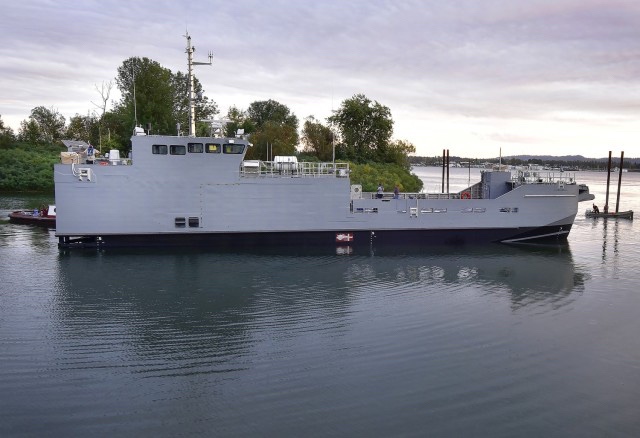
VANCOUVER, Wash. — The Army’s Maneuver Support Vessel (Light), or MSV(L), prototype was launched Oct. 10 at the Vigor, LLC marine fabrication facility in Vancouver. The launch is significant, as the MSV(L) represents the first of a new class of Army Watercraft.

The MSV(L) will replace the Landing Craft Mechanized-8, (LCM-8,) a Vietnam-era watercraft that is unable to transport some of today’s equipment due to the weight of modern combat vehicles. MSV(L) is a modernized landing craft that will improve the speed and effectiveness of the Army’s dynamic force repositioning.

The MSV(L) features increased payload capability; providing access within the Maritime Domain; increased speed and maneuverability to move the Army faster; and improved draft for greater geographical access.

“Launching the MSV(L) prototype, a brand-new, first-in-class vessel is a major achievement for us to celebrate,” said Col. Beth Behn, the Army’s chief of transportation. “Not only does this prototype represent the first of its kind for the Army as a digital vessel, but also, the overall team has surmounted several hurdles having to do with COVID-19-related workforce and supply-chain issues. I couldn’t be more proud of this partnership to become one step closer to providing Army Mariners the world over a truly modernized capability.”

“The MSV(L) represents the first new major watercraft system acquisition in more than 20 years representing the U.S. Army’s commitment to Army Watercraft modernization,” said Brig. Gen. Samuel L. (Luke) Peterson, the Army’s program executive officer for Combat Support and Combat Support (PEO CS&CSS.) “Our Product Manager, Army Watercraft Systems, has worked very closely with our Army enterprise partners and Vigor to ensure a successful launch. The team has done an outstanding job working through some fairly significant schedule challenges in order to get to where we are today. This launch is the direct result of the collaborative work between many dedicated professionals from both the Army and Vigor.”

The Army awarded Vigor in late 2017 a 10-year contract for the development and production of up to 36 of the new watercraft. In September 2019, Vigor and the Army laid the keel in a ceremony also held in Vancouver. The current Army Acquisition Objective is to build 13 vessels, according to Wolfgang Petermann, project manager, Transportation Systems, PEO CS&CSS. The Army’s strategy for the MSV(L) has centered on integrating mature commercial off-the-shelf subsystems into a new hull form, which takes advantage of the marine industry design innovation and competition, he added.

Army watercraft enables commanders to transport and sustain combat-configured equipment with personnel, vehicles and sustainment cargo, through fixed, degraded and austere ports, inland waterways, remote and unimproved beaches and coastlines for missions across the spectrum of military operations. The improved maneuverability and increased speed capability that the MSV(L) brings to bear will provide a better watercraft for operating in inter-coastal areas, rivers and inland waterways, and in anti-access/area-denial environments.

The length of MSV(L) is 117 feet. It will have a speed of 21 knots fully laden and 30 knots unladen. Its range will be 360 nautical miles when fully laden. Eight Army Mariners will crew the MSV(L).

Each vessel’s payload will be 82 short tons, which means it can haul one combat configured M1 Abrams tank, or two Stryker combat vehicles, or four Joint Light Tactical Vehicles, as well as multiple other payload configurations.

MSV(L) now enters builder’s trials, which are designed to finalize Vigor’s fabrication and commissioning activities. Builder’s trials are slated for completion in November. They will be followed by extended acceptance trials, led by the Army’s Product Manager, Army Watercraft Systems and the Army Test and Evaluation Command, to verify that the watercraft meets its intended requirements.

A low-rate initial production decision on the Maneuver Support Vessel (Light) is targeted for early 2023. The prototype is slated for delivery to the Army Mariner community headquartered at Joint Base Langley-Eustis in early 2024.

PEO CS&CSS is one of 12 Army Program Executive Offices reporting to the Assistant Secretary of the Army (Acquisition, Logistics & Technology.) Its military and Army civilian acquisition professionals are charged with the lifecycle management for the majority of the Army’s Engineer, Ordnance, Quartermaster, and Transportation systems, which account for roughly 20 percent of all the equipment the Army’s Active, Reserve and National Guard components use.

By Rae Higgins, U.S. Army Program Executive Office Combat Support & Combat Service Support
BCM Gunfighter History – Commanders In-Extremis Force (CIF) Assault High Cell Leader Kit

Monday, October 17th, 2022

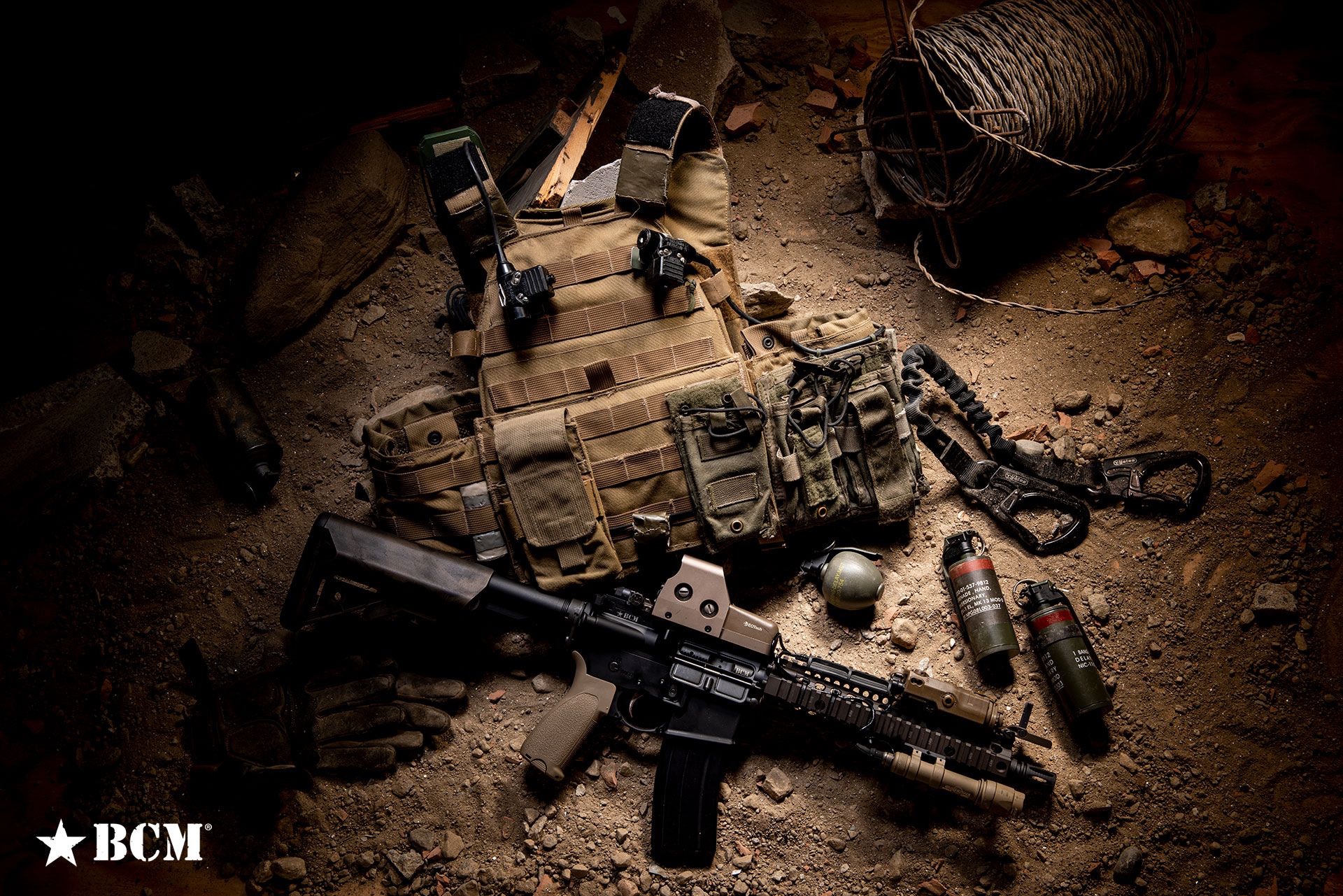
I spent 2008-2012 as an assaulter in the Commanders In-Extremis Force, with my final years there as an Assault High Cell Leader. The CIF was tasked with direct action, hostage rescue, counter proliferation and counter terrorism actions.

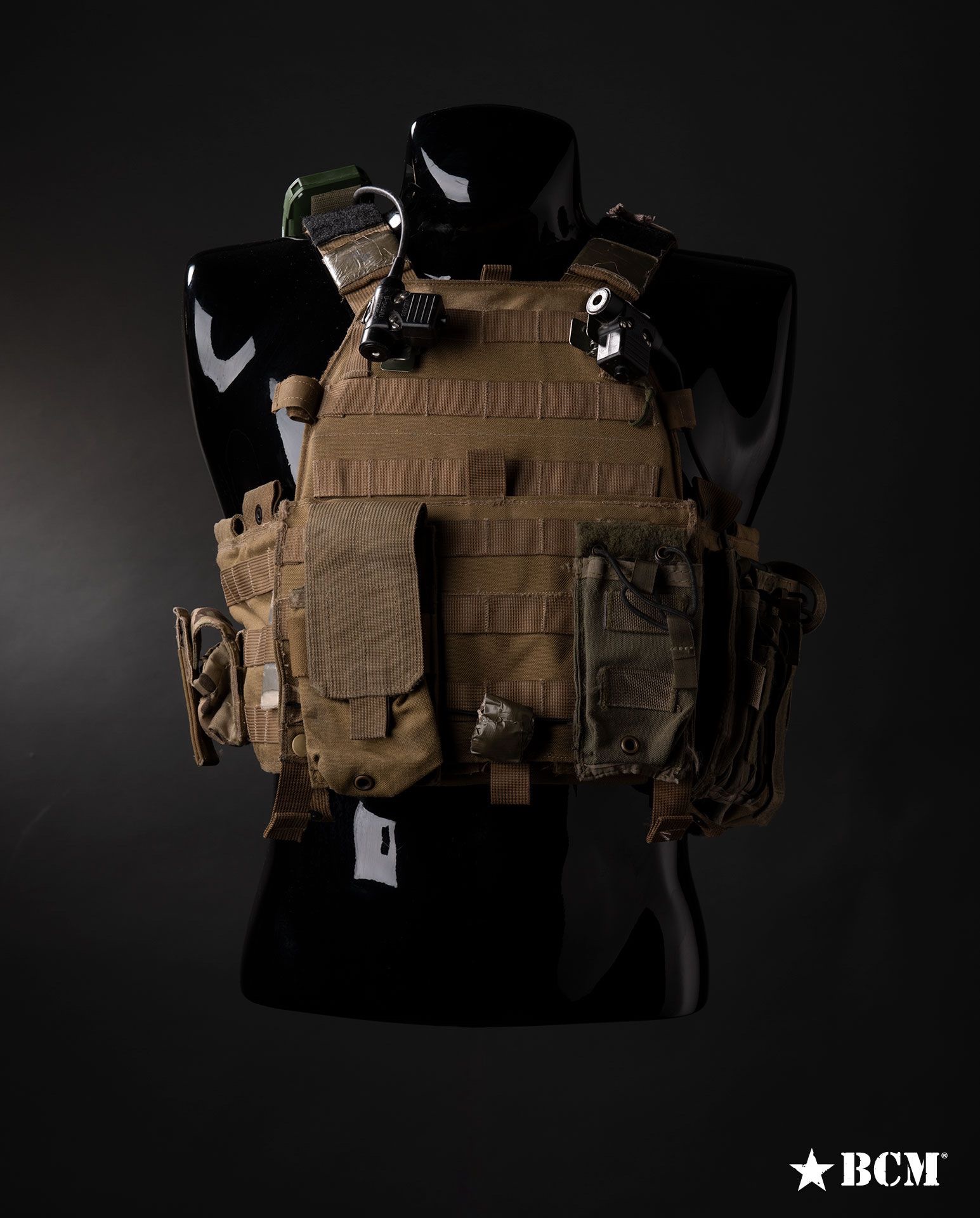
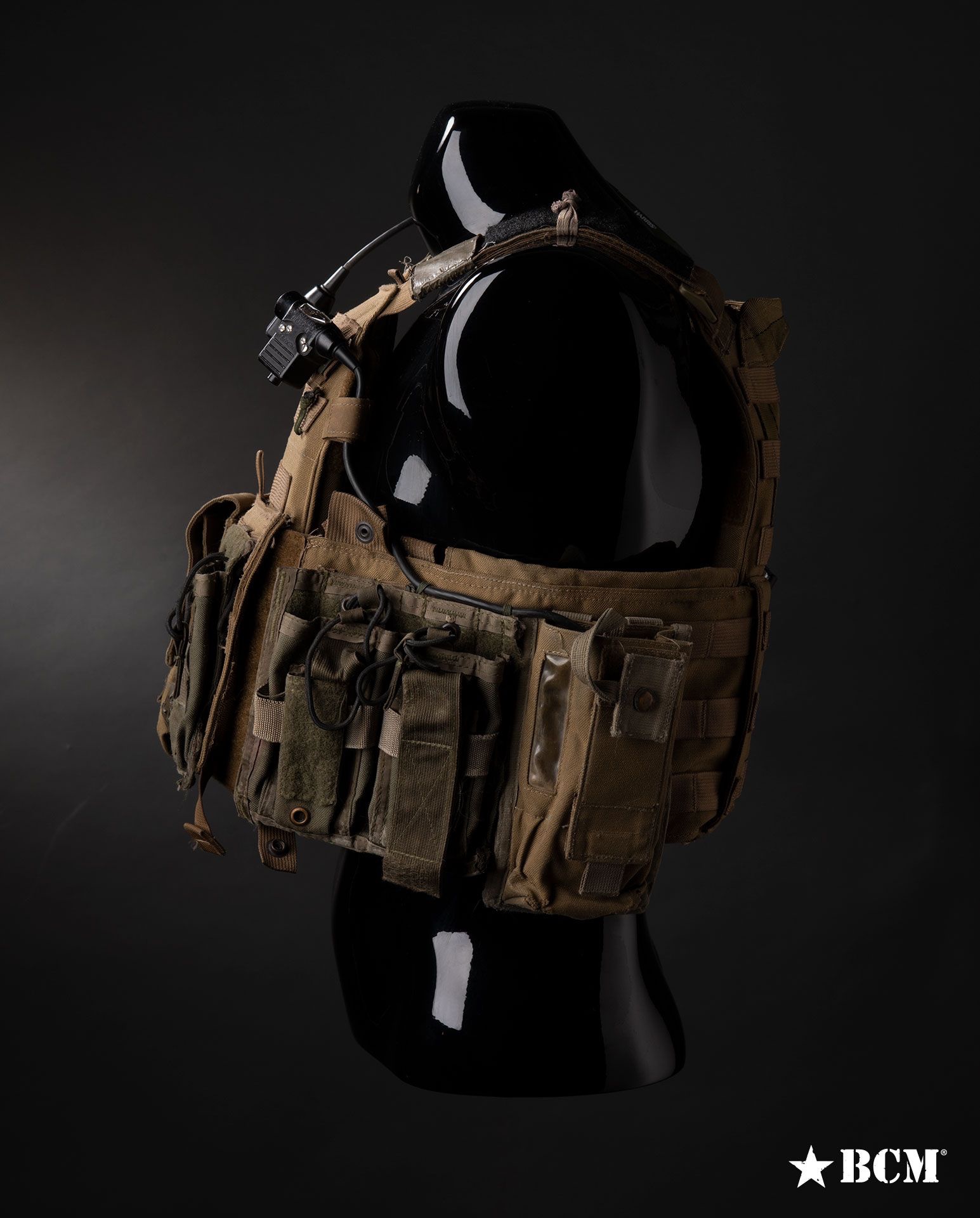
Due to the nature of assaulting/fighting in an urban environment, I ran as light and as slim as possible. We trimmed our basic load down four to five M4 magazines, two initiators for interior charges, an M67 frag grenade, and, in my case, both an MBITR and PRC-117G with associated cables, PTT and antenna. It came out to 26 lbs all in, not including specialty items and tools we occasionally carried.

I had been originally issued the Eagle RBAV (Releasable Body Armor Vest), a platform I ran for three trips (one to Iraq and two in Afghanistan). During both deployments, the vest required repeated repairs. Duct tape and dental floss fixes dotted the vest where the sewing had failed. It got to the point where I began looking to find a more durable alternative that was both lighter, and less restrictive to fight in, even if I had to pay for it myself.

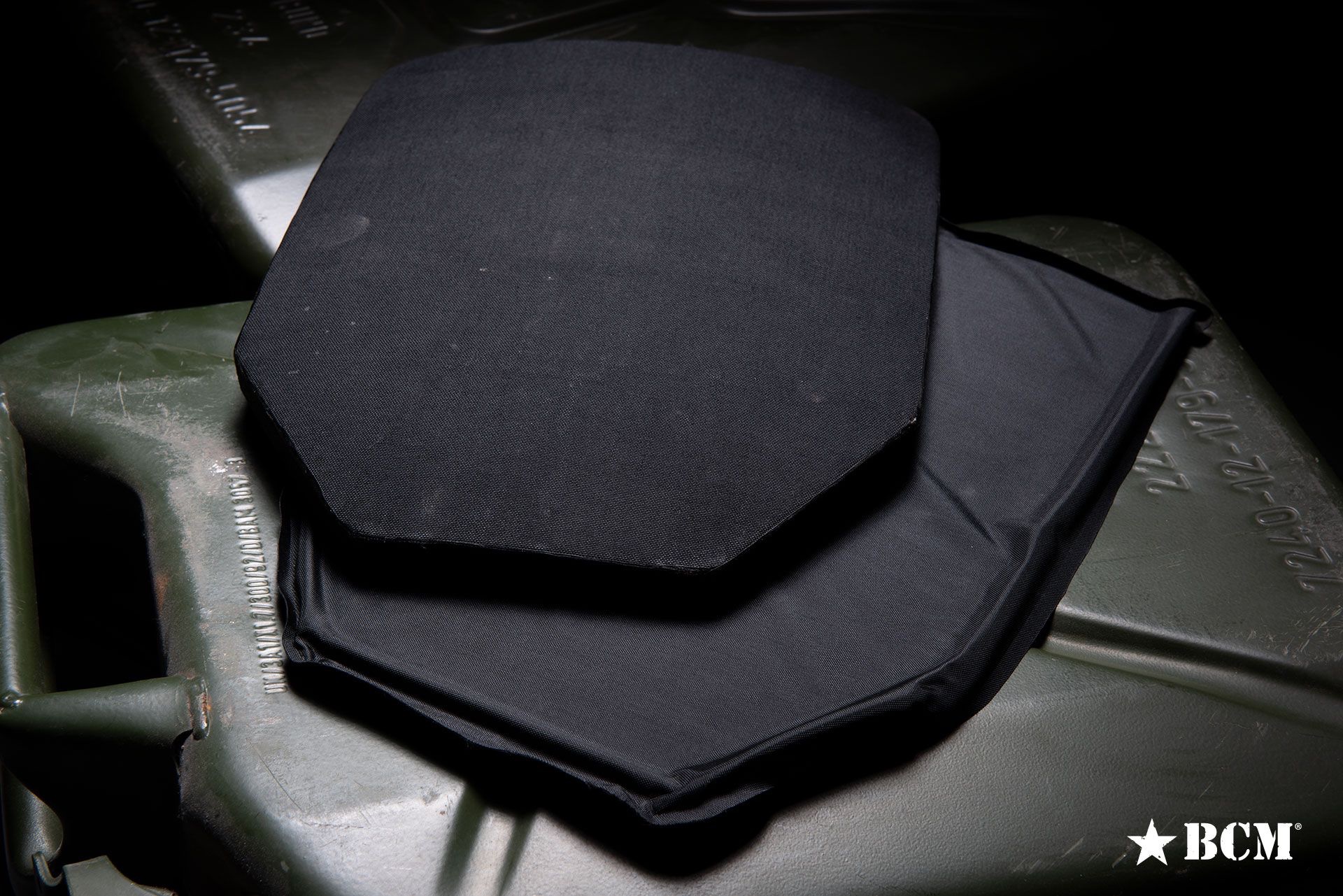
One of our attached Navy WMD specialists gave me a London Bridge Trading (LBT) 6094A and a set of LTC 28340 plates. Lighter and slimmer than the RBAV, the LBT 6094A came in a “shooter cut” with plate pockets that allowed me to run my M4 without fighting the vest. The LTC plates were also significantly lighter, half as thick and more capable (Level IV stand-alone) than my Army issued PPE. These plates were also size medium versus the size large I was issued due to my build. At the end of the day, the LBT and LTC package shaved pounds and inches while increasing mobility and protection.

This would be my set-up until I left the Army a few years later.

Here’s a run down, from a shooter’s perspective, of the layout and why things were positioned where they were.

Front Plate Pocket

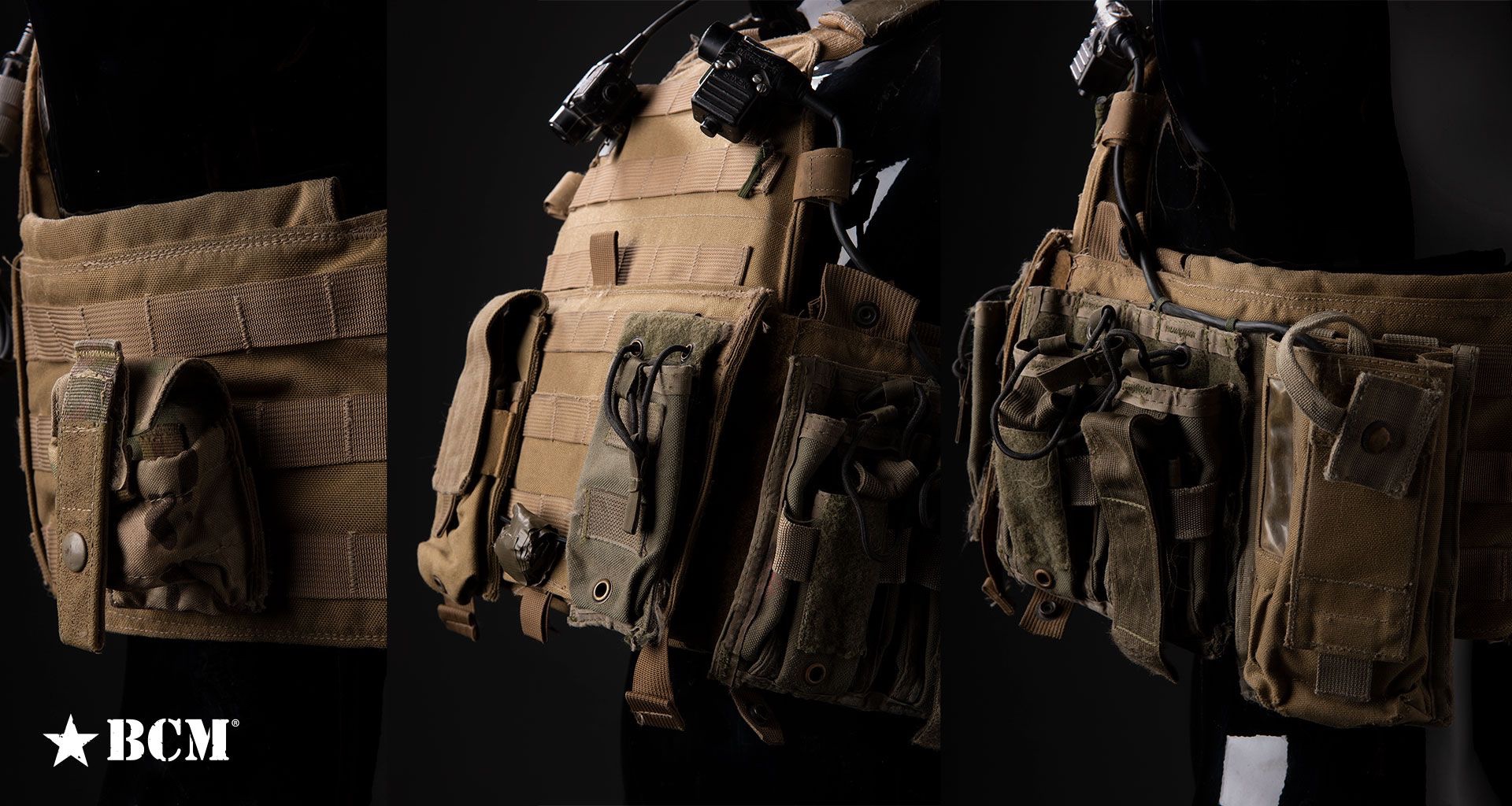
I ran a double mag carrier on the right, and a single mag pouch on the left. The double mag pouch served a number of masters based on the mission, but typically was used for secondary exterior initiators, specialty grenades or extra M4 magazines. The remaining single magazine pouch was positioned for the most consistent and quick reloads based on positions I was most often in while working. The pouch featured a bungee strap that could be employed for retention when roping, but more often than not, I left the pouch top open.

Running no deeper than a single magazine on the front of my carrier allowed for a far better dexterity and capability when dealing with non-compliant people as well as climbing.

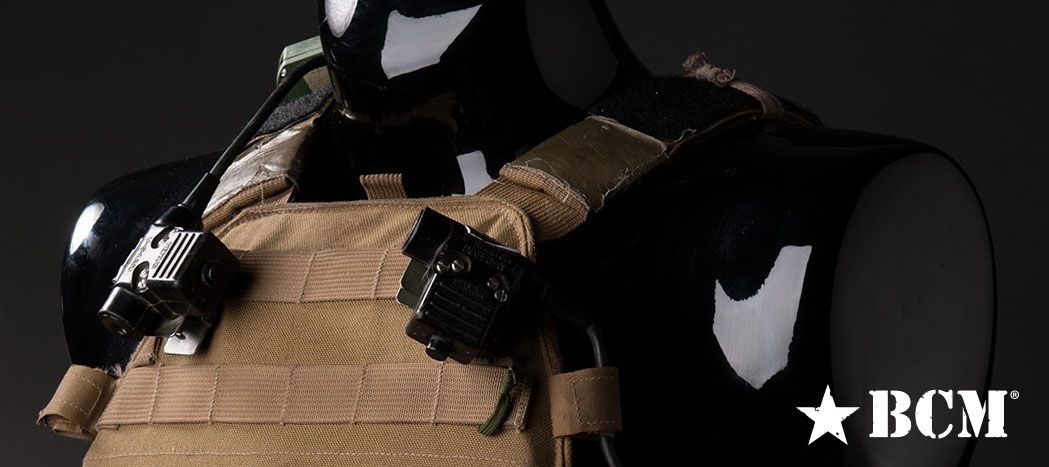
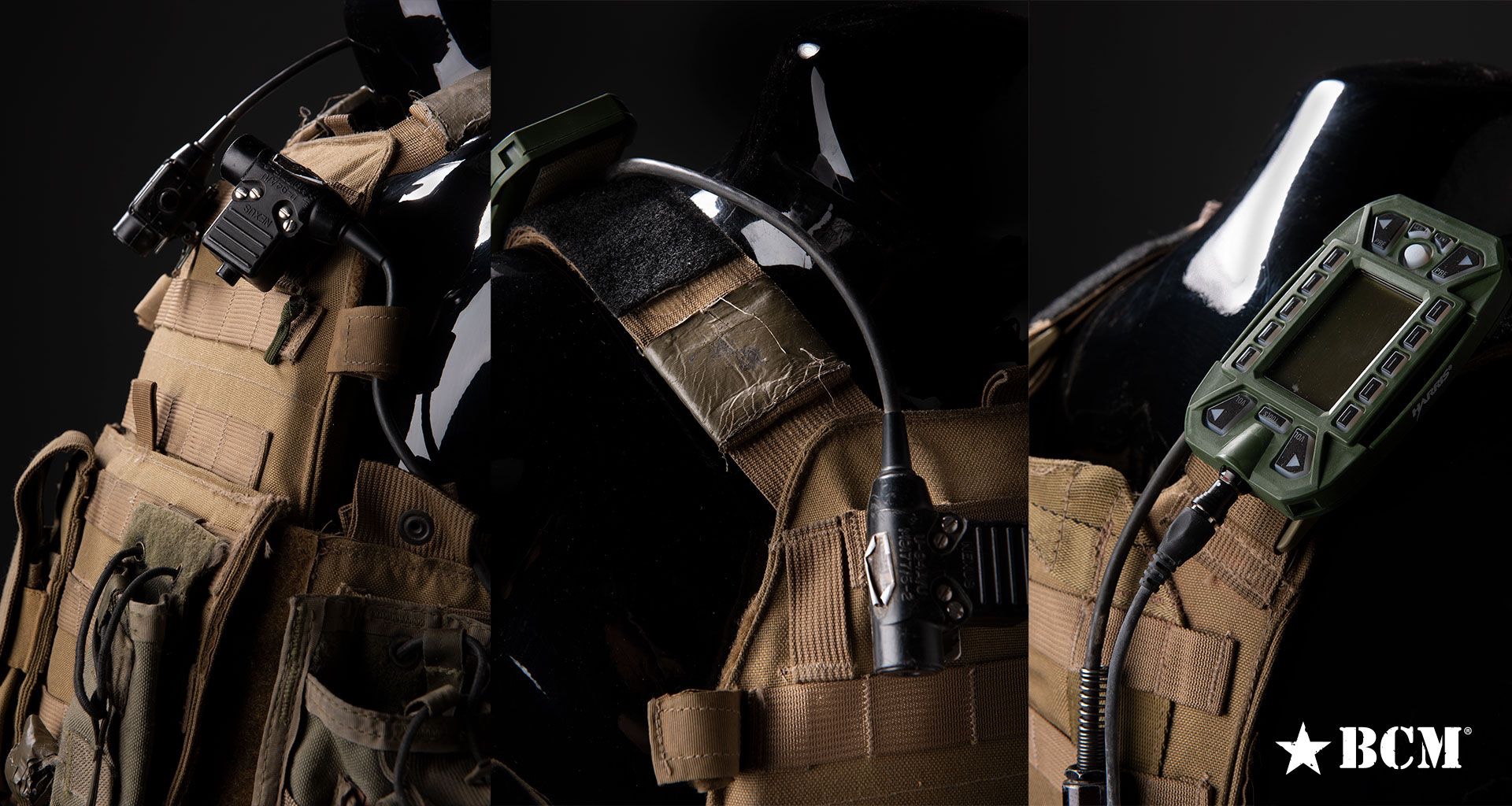
On the top right and left edges of the plate pocket I ran Nexus U-94A/U Push-To-Talk (PTT) activators. At the time, these were the most reliable and minimalist PTT available. The right side fed off a PRC-117G for external comms and on the left, an MBITR for team/enabler chatter. I set them on opposite sides of my body to eliminate the chance of keying the wrong radio.

Both systems fed into a Peltor dual comm headset, with the shortest cables possible to minimize excess cable management.

Cummerbunds

Right-side, I ran a M67 Frag in a High Ground frag pouch just rearward of where my belt worn Glock 19 pistol grip sat. This gave me rapid access to the frag as well as positive retention without a Fastex buckle. Fastex buckles had proven to be less than optimal for employing a grenade on mission.

Slotted into the PALs webbing just off the front plate bag, I had breacher’s tape to replace or augment any compromised charge attachment medium. Additionally, I had a QCC-CSD (Quick Cap Connector-Connector Single Delay) to replace compromised QCCs on interior breaches, and a QCC-CDI (Connector Dual Instantaneous) for replacement of dual-primed exterior charges.

On my left-side, a Paraclete triple M4/Glock magazine shingle cut down to a double shingle, was positioned with additional M4 magazines captured by bungie retention. Both pistol pouches carried initiators for interior charges as I never ran pistol reloads in combat. Set just off the front plate bag, this positioning gave me the most consistent reloads and equipment employment on mission.

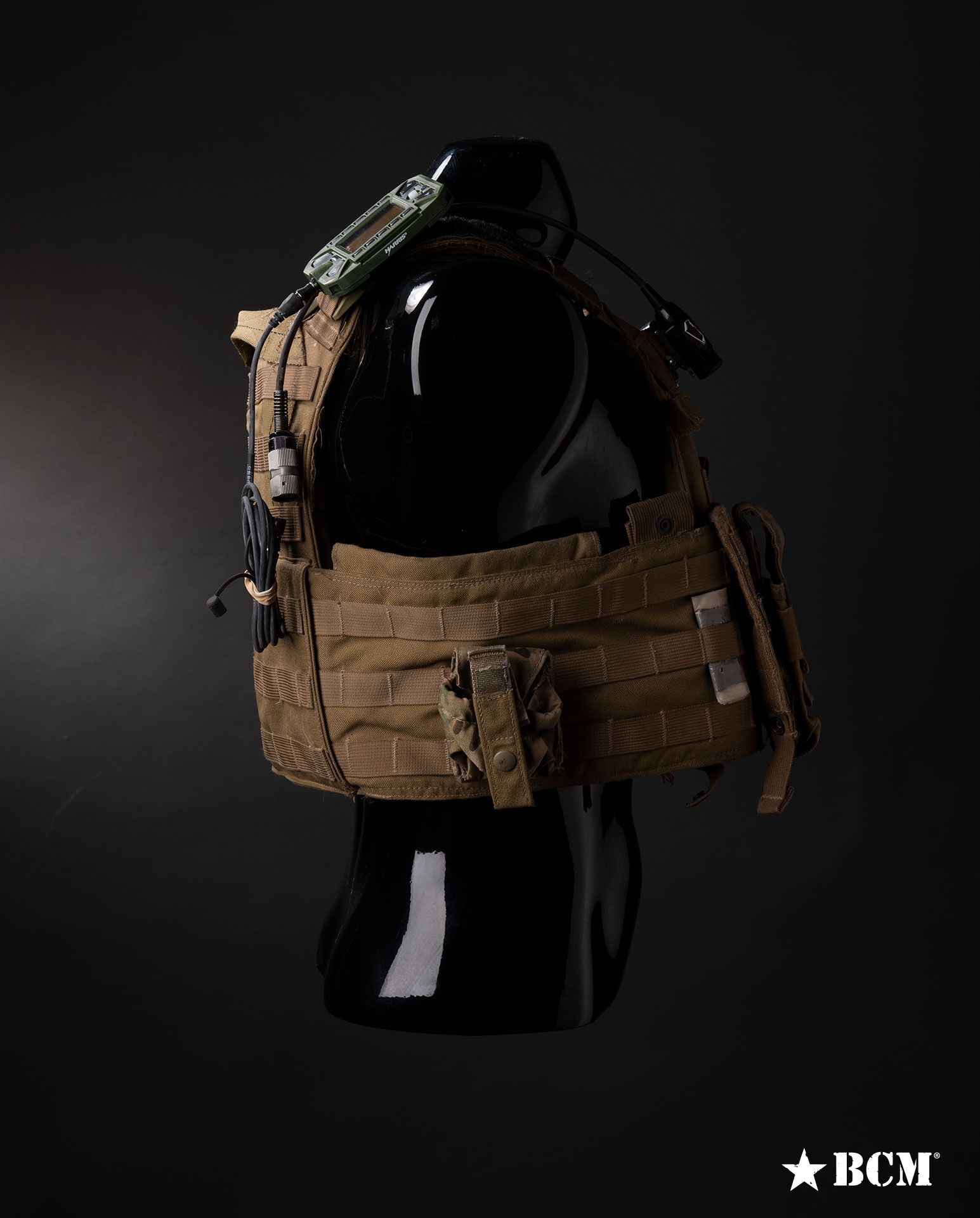
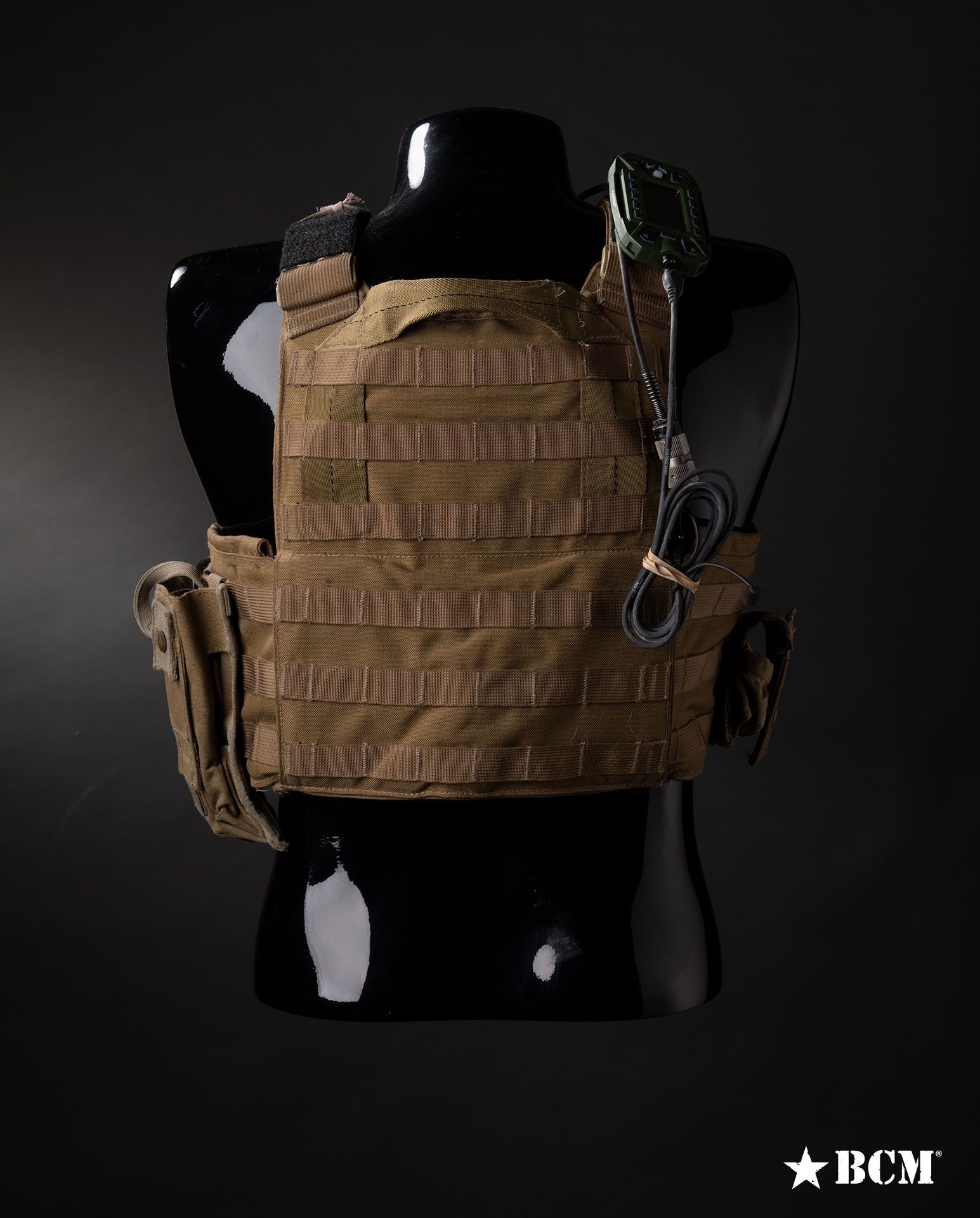
Just adjacent to the rear plate bag, I ran a MBITR radio in Diamondback Tactical MBITR pouch, the most minimal/reliable radio pouch available at the time. Placed to put the antenna comfortably behind the left armpit or to provide protection for connectors when running an antenna relocator, the positioning allowed me to access and rapidly manipulate both dials and channels from memory. This also allowed me to remove the radio from the pouch without disconnecting all the attachments to troubleshoot the system. A lesson learned the hard way.

Finally, I rigged some 550 cord loops to create improvised cable management channels that reduced the odds of snags or other potential breakages in the routed comms wires. These loops also allowed the cables enough slack to move freely during movement and fighting.

Rear Plate Bag

Managing comms with unilateral assets + enablers, partner forces, and air assets across multiple objectives simultaneously required a second radio that could talk to a wide spectrum of receivers. To this end, I ran the PRC-117G manpack radio in a Tactical Tailor pouch (not pictured) and controlled the radio with a Keypad Display Unit (KDU) velcro mounted to my right shoulder (which I had also affixed with loop). Despite being mounted on my back, I was able to still access both the radio’s battery compartment as well as troubleshoot issues without pulling the 117 from the pouch.

Shoulder Straps

One of the first mods I made to the 6094 was to dump the shoulder strap pads. With the minimal weight, the discomfort was negligible, and I was able to further reduce bulk. Adding Velcro loop to both shoulders created a mounting surface for the aforementioned KDU, that was positioned high enough to not interfere with the rifle stock nor was it a snag hazard.

Today, I would relocate the KDU centerline along the top edge of the front plate bag, but there was no interface available in-country at the time.

I ran a host of other equipment, to include medical pouches, tourniquets, a Glock 19, and more on my belt, but this vest was set up based on years of combat experience and training. Every inch of it was informed by experiences, both positive and hard learned.

– Commanders In-Extremis Force (CIF) Assaulter

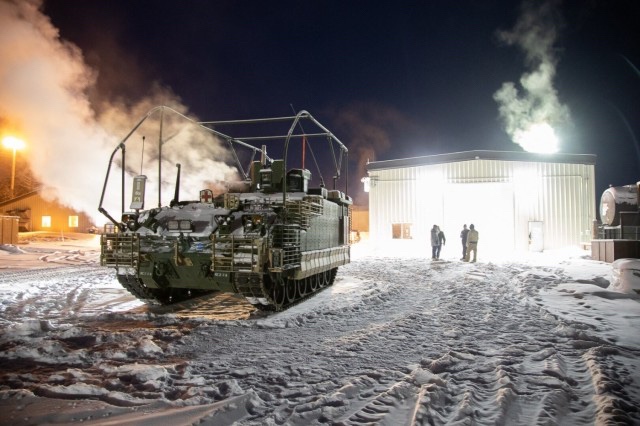
New Armored Multi-Purpose Vehicle Shows Its Stuff at the Army’s Cold Regions Test Center

Monday, October 17th, 2022

YUMA PROVING GROUND, Ariz. — Soldiers depend on armored vehicles for mobility in combat situations.

This past winter, a high impact, multi-month evaluation at U.S. Army Cold Regions Test Center in Alaska helped ensure the Army’s latest armored personnel carrier — the Armored Multi-Purpose Vehcicle, or APMV — works even in the world’s coldest environments.

The AMPV’s five variants — a general purpose vehicle, mission command vehicle, mortar carrier, medical evacuation and medical treatment vehicles — have nearly 80% more interior volume than the M113 armored personnel carrier, and significantly more power, survivability and maneuverability. The cooling and electrical systems are also more robust to accommodate both existing and future upgrades. It boasts the same powertrain and suspension system as the Bradley Fighting Vehicle and M109A7 self-propelled howitzer, which eases maintenance and logistics challenges for all three vehicles in the field.

Though the weather this past winter at CRTC didn’t reach the jaw-dropping low temperatures that are typical, the variation didn’t faze the testers.

“Extreme cold comes in windows, and it’s normally a scramble to try to get things into those windows,” said Stephan Krueger, test officer.

The coldest times still saw the mercury plunge below minus 35 degrees Fahrenheit, and the crew had much to do. The AMPV accumulated hundreds of miles on CRTC’s punishing road courses and undertook braking and acceleration tests at CRTC’s automotive test track. Further, the engine was subjected to cold starts in temperatures well below zero, oftentimes after having cold air blown on its engine from tubular fans to ensure a maximum of frigidness. The testers drove the vehicle for more than 1,000 miles across primary and secondary roads and cross-country trails.

“Normally when it is extremely cold, we prioritize cold starts,” said Krueger. “If it is extremely cold and we aren’t doing cold starts, I like to try to get a lot of durability miles in. Cross country is the slowest and takes the most time — the majority of our effort is getting those miles.”

A portion of the test involved a Soldier touchpoint where active-duty service members used the vehicle in the extreme cold.

“The Soldiers that participated were from a Stryker brigade,” said Hannah Henry, test coordinator. “The AMPV is fairly similar to it, so we wanted to get their feedback.”

The touchpoint utilized the medical evacuation variant of the AMPV.

“Their main focus was the ability to get patients into and out of the vehicle,” said Henry. “How slippery does the ramp get? Can you operate the medical equipment in the cold? They rode as patients in the vehicle and rated how they felt as the vehicle moved along.”

The AMPV has undergone extensive testing at all three of U.S. Army Yuma Proving Ground’s natural environment test centers — Yuma Test Center in Arizona; Cold Regions Test Center at Fort Greely, Alaska; and, most recently, at Tropic Regions Test Center in the jungle of Panama.

By Mark Schauer

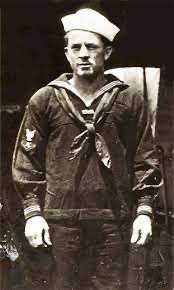
SCUBAPRO Sunday – Gunners Mate First Class Ingram WWI  

Sunday, October 16th, 2022

Gunners Mate First Class GM1 Osmond Kelly Ingram of Pratt City, Alabama, was the first enlisted man to die in World War I. On 15 October 1917, the 30-year-old seaman was serving aboard the Navy destroyer USS Cassin DD-43, which was sunk by a German submarine U-61. For his bravery that day, Ingram would be awarded the Medal of Honor. He would also be the first enlisted man to have a ship named after him.

Osmond Ingram was born in Oneonta, Blount County, Alabama, on 7 August 1887, to Naomi [Bettie] and Robert Ingram. His father was a Confederate Army soldier and Methodist Episcopal priest. Before Robert’s death in 1897, the family relocated to Pratt City, Jefferson County, Alabama. After becoming 16 years old in 1903, Kelly, as he was known, decided to join the Navy. On 24 November 1903, he enlisted in the United States Navy with his mother’s permission. He left the Navy after five years to join the Pratt City Fire Department. He spent five years as a firefighter before reenlisting in the Navy. As a Gunner’s Mate in the Gunnery Department, he was assigned to the USS Cassin. When the United States entered the war on 6 April 1917, Ingram was still aboard the USS Cassin. His ship was part of a Navy armada going to France and England to safeguard American commercial ships transporting merchandise.

The USS Cassin was patrolling off the coast of Ireland on 15 October 1917 when she came in contact with the German submarine U-61, which fired a torpedo. Ingram was the first person on board the destroyer to notice the torpedo heading straight for the ship’s stern. When Ingram realized the depth charges were kept in the stern, he dashed to the back of the ship and began releasing them to lessen the blast’s impact. Before the torpedo hit, he had detonated many of the depth charges. Ingram was thrown overboard from the explosion, and Cassin’s rudder was severely damaged. The warship was able to return to port for repairs. Ingram’s death was the lone fatality. His remains were never found.

In 1920, Secretary of the Navy Josephus Daniels wrote to his mother, notifying her of the decision to award Ingram the Medal of Honor posthumously:

“For extraordinary heroism in the presence of the enemy on the occasion of the torpedoing of the Cassin, on 15 October 1917. While the Cassin was searching for the submarine, Ingram sighted the torpedo coming and, realizing that it might strike the ship aft in the vicinity of the depth charges, ran aft with the intention of releasing the depth charges before the torpedo could reach the Cassin. The torpedo struck the ship before he could accomplish his purpose, and Ingram was killed by the explosion. The depth charges exploded immediately afterward. His life was sacrificed in an attempt to save the ship and his shipmates, as the damage to the ship would have been much less if he had been able to release the depth charges.”

After Congress established the Military and Naval Insurance Act in 1918, his mother became the first beneficiary of money for dependents of soldiers and sailors. The USS Osmond Ingram DD-255, a destroyer, was commissioned in June 1919 in his honor. It was the first navy ship to be named after an Enlisted sailor. The ship was one of the ships anchored at Pearl Harbor on 7 December, 1941.

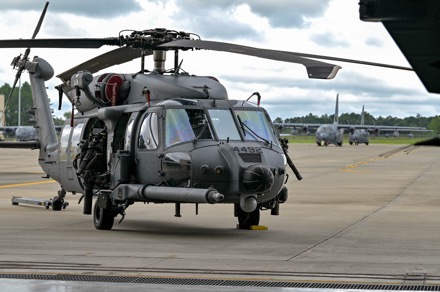
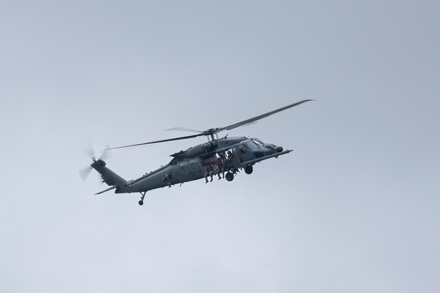
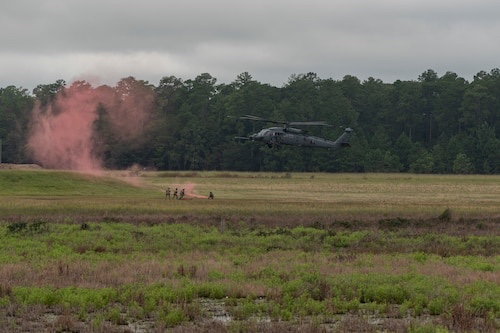
HH-60W Reaches Initial Operational Capability

Sunday, October 16th, 2022

JOINT BASE LANGLEY-EUSTIS, Va. (AFNS) —

Gen. Mark Kelly, commander of  Air Combat Command, declared the HH-60W Jolly Green II has reached initial operational capability on Oct. 4.

The declaration means that the U.S. Air Force now possesses sufficient HH-60Ws, logistics requirements and trained Airmen to support a 30-day deployment to any independent location with a package of four aircraft.

“It’s an exciting day for Combat Rescue as we bring a new platform and its upgraded capabilities into operation,” said Maj. Gen. David Lyons, ACC director of operations. “This declaration is the culmination of years of hard work and vision. Current and future combat environments require us to maneuver further and faster than ever before, and the capabilities provided by the Jolly Green II supports the platform’s viability for our Air Force Personnel Recovery core function for as long as possible.”

The 23rd Wing at Moody Air Force Base, Georgia, one of the first locations to receive the HH-60W, held a ceremony to mark the declaration Sept. 9.

“The Airmen of the 23rd Wing have done a tremendous job working with partners to get this aircraft combat-ready on time,” said Col. Russ Cook, 23rd Wing commander. “Bottom line, the future of Air Force Rescue is secure, and our team is ready to recover anybody, anytime, anywhere, against any adversary.”

The HH-60W offers a range of improved capabilities over its predecessor, the HH-60G Pave Hawk, to include improved range and survivability, a new fuel system, advanced avionics and more. As a digitally focused platform, it also allows faster movement of data and better integration with other platforms and combatant command capabilities.

These upgrades will continue to enable safer search and rescue operations and provide the joint force with the capabilities needed to accomplish the complex and critical mission of personnel recovery.

Story by Capt. Lauren Gao

Air Combat Command Public Affairs

Photos by photo by Senior Airman Jasmine M. Barnes

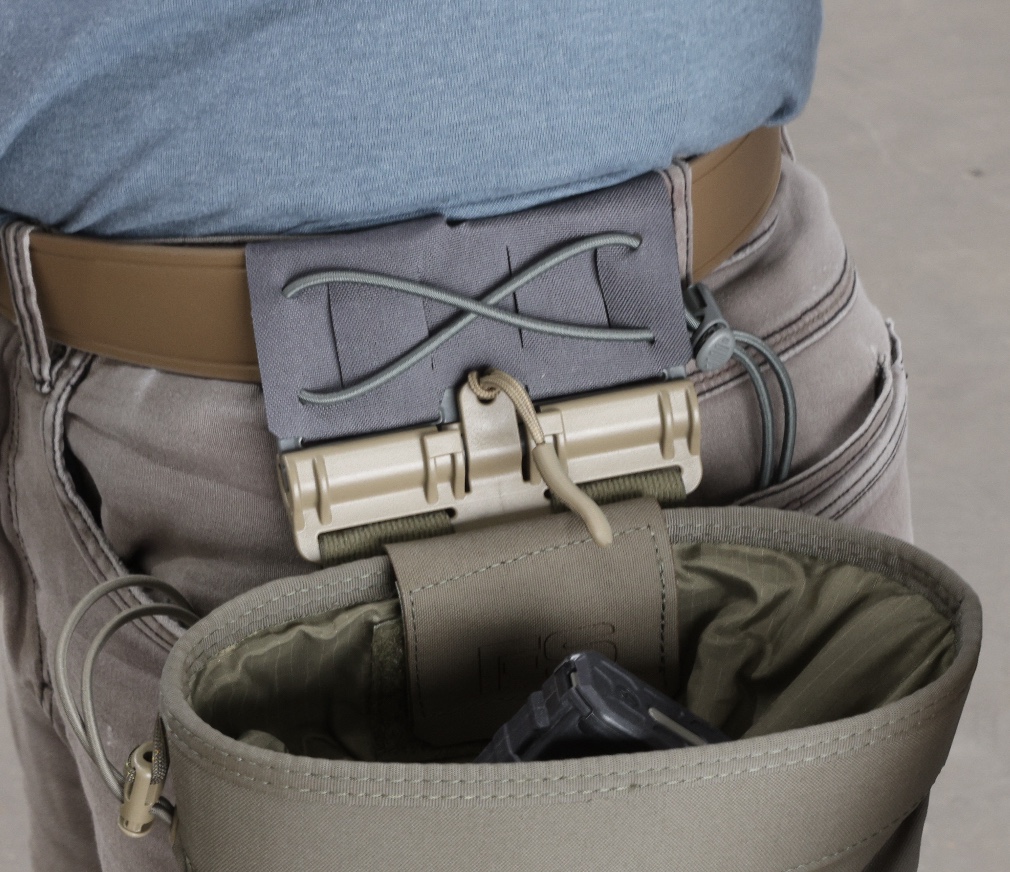
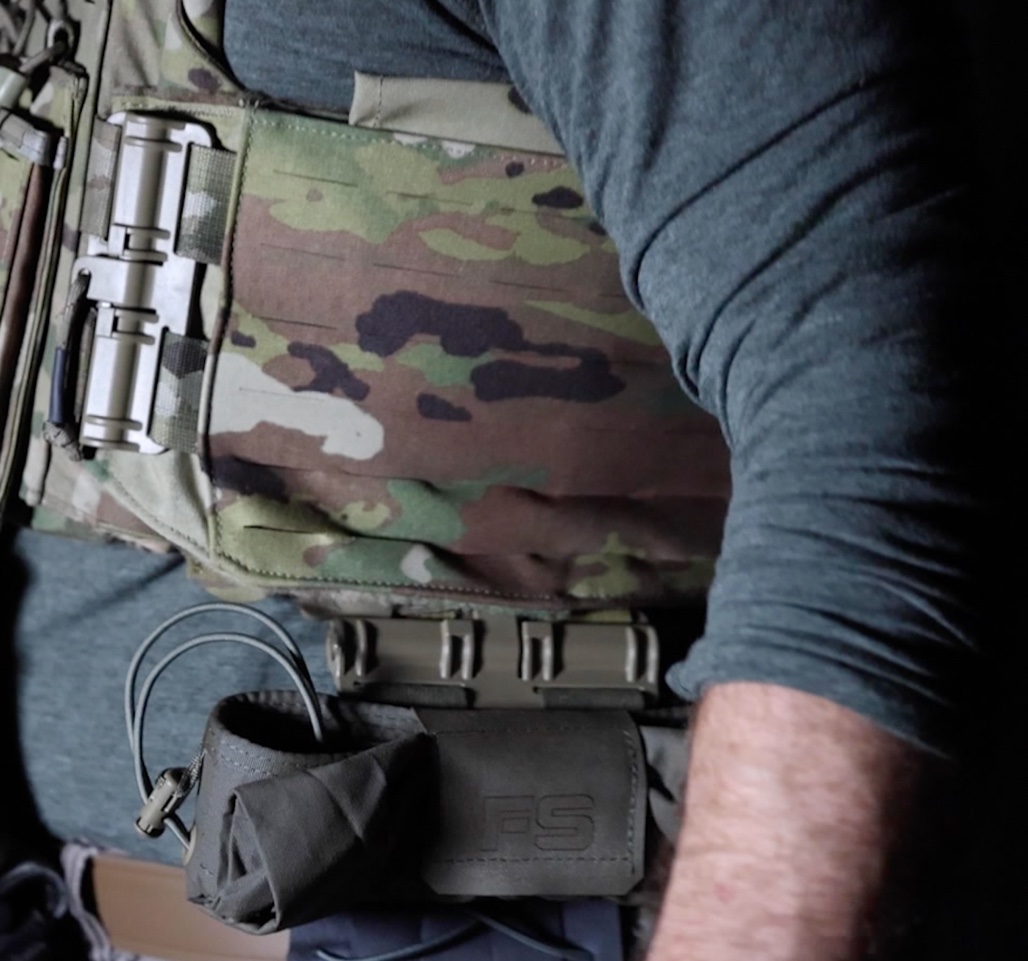
FirstSpear Friday Focus: Tubes Accessories

Friday, October 14th, 2022

FirstSpear incorporates Tubes into many of the pockets and attachments seen throughout the suite of products. In this week’s Friday Focus, we’re sharing a number of capabilities FirstSpear Tubes offers.

The FirstSpear Tubes Attachment Accessory revolutionizes pocket attachment. The hook backed Tube Attachment Accessory allows a 4” Male Tube to be placed in multiple locations, allowing attachment of any FirstSpear pouch with Tubes attachment.

The Shaw Concepts RAID Pouch V1 is an abdominal hanger style pouch that attaches to Plate Carriers and Chest Rigs. The RAID Pouch is the first of its kind to incorporate a FirstSpear Tubes® to quickly remove the pouch from the user’s body/kit for greater ease of use as well as for passing off. The pouch features its unique Tubes® attachment, a Hook & Loop VELCRO® flap, internal elastic bands for storage, clamshell opening w/YKK zippers, Elastic Tourniquet Sleeve on the bottom, front Loop Velcro Field for ID Patches, front Shockcord Lashing for Gloves & Tourniquets, and more. The RAID Pouch V1 is Berry Compliant and manufactured in the USA by First Spear, LLC.

The FirstSpear Tubes Belt Mount Accessory provides a modular option for Tubes Compatible pockets and pouches. Designed with a rear hook and loop closure system that secures the Belt Mount in place. It will work on belts that are up to 2″ in width.

The FirstSpear Tubes Dump Pouch has several great features. The Tube attachment allows for rapid attachment and detachment. A formed open top allows for easy dropping and reaching of gear and, when utilized, a drawstring closure keeps items secure.

The Tubes Gas Mask Pouch allows the user a quick and efficient attach and detach option. The wide opening featuring a secure SR Buckle is designed for rapid stowing and removal of a gas mask.

Visit FirstSpear to find all the gear and apparel for America’s Warfighter.

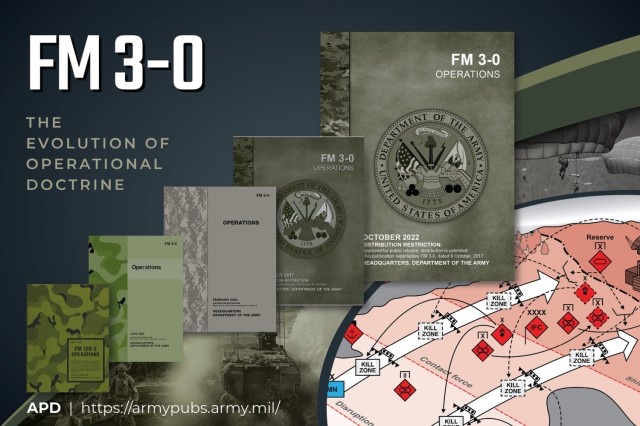
US Army Training and Doctrine Command Updates Army Capstone Doctrine, Codifying Shift to Multidomain Operations

Friday, October 14th, 2022

WASHINGTON — U.S. Army Training and Doctrine Command will release the latest version of the Army’s capstone operations doctrine, Field Manual 3-0, Oct. 11, 2022, as senior leaders gather for the 2022 Association of the United States Army Annual Meeting and Exposition, Oct. 10-12, in Washington D.C. The manual is available to view and download on the Army Publishing Directorate website.

The newly updated FM 3-0 establishes multidomain operations as the Army’s operational concept. The focus remains on large-scale combat operations against adversaries able to contest the joint force in the land, air, maritime, space and cyberspace domains. The updated doctrine defines multidomain operations as “the combined arms employment of joint and Army capabilities to create and exploit relative advantages that achieve objectives, defeat enemy forces, and consolidate gains on behalf of joint force commanders.”

“Training and Doctrine command drives change for the Army,” said Gen. Gary M. Brito, commanding general, TRADOC. “Doctrine shapes our thinking about operations and is foundational for integrating all modernization efforts in support of the Army,” Brito explained.

According to Rich Creed, director of the Combined Arms Doctrine Directorate at Fort Leavenworth, Kansas, observations from recent conflicts inspired several updates. Among those changes is a deeper understanding of the current operational environment through three dimensions — physical, information and human — and five physical domains — air, ground, space, cyberspace and maritime.

“This update to our operations doctrine is just one evolutionary step in how we need to adapt to deal with current threats,” Creed said. “We may have to operate from a position of disadvantage and that should drive changes to our organizations, acquisition priorities, and training.”

The Army has had four significant operational concepts since 1986. Each has built on the earlier concept and adapted to changing operational environments. While AirLand Battle focused primarily on threats in Europe, full spectrum operations in the early 2000s recognized Army forces did more than operate during big wars against big threats.

Unified land operations as an operational concept entered the lexicon in 2011, recognizing the lessons learned during the Global War on Terror, even as it acknowledged the changing threat environment and an increased likelihood of large-scale combat operations. Multidomain operations represent a maturation of capstone concepts and recognizes the need to deal with threats that have capabilities specifically designed to defeat U.S. forces across the competition continuum.

To ensure readiness and increase understanding of the new operations doctrine, the Army will use mobile training teams to introduce the new FM 3-0 to leaders responsible for professional military education, at the combat training centers, and in the operational force. Subject matter experts at the U.S. Army Combined Arms Doctrine Directorate are also developing a series of training materials and presentations designed to augment mobile training team support to units.

Brito emphasized that the new FM 3-0 will have an impact across the force and encouraged every Army leader to read, understand and use its concepts in training, education and worldwide operations.

“The TRADOC team is committed to building the Army of 2030 down to the Soldier level through training, education and exercising our foundational operations doctrine,” Brito said.

For more information on Army doctrine and to access associated resources, visit the Combined Arms Doctrine Directorate website.

By Randi Stenson, Mission Command Center of Excellence

US Marine Air Traffic Controller Achieves Guinness World Record At MCAS Iwakuni

Thursday, October 13th, 2022

IWAKUNI, Japan —

“Don’t let your accomplishments define you. If you let one define you, then you will become that very thing forever. Always keep climbing for more,” said U.S. Marine Corps Sgt. Nahla Beard.

Beard has been stationed at Marine Corps Air Station Iwakuni, Japan since 2019. Beard is of Iranian descent; her parents emigrated from Iran to the U.S. when they were in their 20’s to start a new life in California.

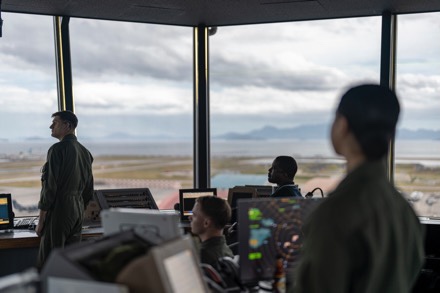
She is now an Air Traffic Control supervisor with Headquarters and Headquarters Squadron who values physical fitness and is routinely setting new goals for herself and her fellow Marines.

“I wasn’t always into physical fitness,” said Beard. “ Just basic levels that were required of me, but during my second year in the military I hurt my back pretty badly which took almost nine months to recover from. When I felt like I was back at a hundred percent, I really started getting into fitness so I would avoid getting injured again.”

She started by putting more effort into aerobic physical training sessions that furthered her cardiovascular ability, with an emphasis on stretching afterward, which she says is something that some service members neglect from time to time.

“It’s not all about running and doing max pull-ups” Beard said. “In my experience, people don’t really take the time to have PTs that are dedicated to mobility and stretching.”

When Beard was a corporal, she led her shop in a PT program where they worked on their mobility and stretching. In a few weeks’ time, her Marines improved in their physical capabilities drastically and became significantly more proficient in their annual physical fitness evaluations.

She continues to focus on her agility and aerobic drills in order to improve her abilities and her resilience to injury, driven by a desire to never be in a physical slump for a long period of time again.

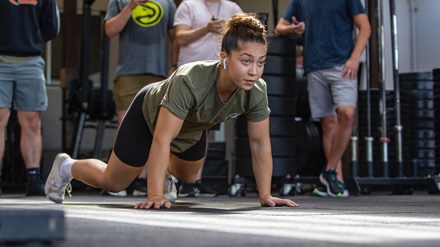
Her motivation to stay free from injury eventually culminated in a desire to push herself to the apex of her abilities. Beard was getting stronger, faster, and more efficient with her movements, and she began to develop a strong proclivity for a specific exercise that is one of the cornerstones of cardiovascular fitness: burpees. “I got into high intensity tactical training for a really long time and participated in the HITT competition they had on base,” Beard said. “That was really fun. It built my stamina to the point where I was able to do a lot of burpees and then that’s when I looked up the world record out of curiosity.”

For a time, Beard volunteered as a Physical Fitness Test Regulations for H&HS when the unit was running low on CPTRs. Over time, she decided to get certified, and now she conducts her own PFTs and CFTs with the H&HS operations office, or S-3.

Beard would later attempt the Guiness World Record for most chest-to-ground burpees in one minute for the female category. With three months of rigorous training to make sure her form was flawless, Beard would have to give all she had — and more — in order to break the record.

With the rules for a chest-to-ground burpee being different from a regular burpee, Beard wanted to make sure she did exactly what the rules dictated for the Guiness world record.

“During my three months of training I did a lot of burpees while timing myself and kept trying to break my last record. I then set it up according to the rules they had and tried to do it within the time limit.”

 U.S. Marine Corps Sgt. Nahla Beard

In order for her to perform the correct technique for the burpees, she had to make sure her arms were extended out by her sides when her chest was on the ground, and when she jumped up in the air and landed, her feet and hands had to be the correct distance from tape markings on the ground.

On August 14 2021, Beard decided to put her body to the test and attempt to break the world record.

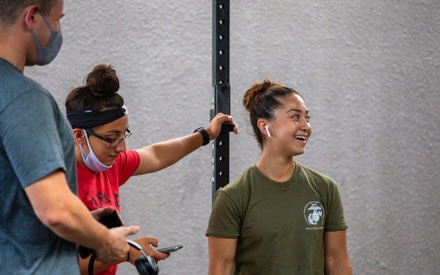
“It was a really cool day because a bunch of the command on base showed up with friends and family,” Beard said. “I ended up attempting five times on the same day because I wasn’t sure if I did it.”

Beard was uncompromising in her approach, deciding to do it multiple times to ensure that success would be hers that day and that all the hard work she put into herself would pay off and be symbolized in the coveted world record plaque.

“It was super nerve-wracking,” claimed Beard. The on-going coronavirus pandemic meant that she was not able to compete for the world record with a Guiness judge in person and instead had to record herself and submit her attempt virtually. “They had more delays than usual because it was the time of covid. They kept on emailing me asking for more evidence to help verify it more. When they gave me their final email my heart dropped for a bit when I saw the word “congratulations.”


She was elated by the good news. She achieved something that she could not have even dreamed of accomplishing just a couple of years ago. But with world record plaque in hand, it was all too real.

When asked if she would be attempting to break other Guinness world records, she did not keep it out of the question.

“Right now, I’m focusing more on powerlifting,” Beard said. “I’m trying to get my numbers up for that. A year ago I was in the 500 pound club and just last week I made it to the 700 pound club.”

Beard is now working on getting her bachelor’s degree in nutrition to further her education with fitness and perhaps make a career out of it.

Beard continues to inspire others with her initiative and physical prowess, showing others to never have a single incident define who you are for the rest of your life. Despite her early injuries, she built herself up stronger and more capable than before and achieved something that relatively few have ever accomplished.

Cpl Mitchell Austin, Marine Corps Air Station Iwakuni, Japan