TYR Tactical

Archive for the ‘Guest Post’ Category

Project Convergence 2022 to Demonstrate Futuristic Joint, Multinational Warfighting Technologies

Saturday, September 24th, 2022

AUSTIN, Texas — Several thousand U.S., U.K. and Australian service members, researchers and industry partners will experiment with and assess new technologies at U.S. military installations across the Western U.S. between September and November as part of Project Convergence 2022.

The expansive effort is the newest endeavor of the U.S. Army’s Project Convergence, a flagship modernization learning, experimentation and demonstration campaign. The Army led its first large-scale Project Convergence experiment in 2020, and has continued to grow the scope, scale and complexity of the event annually.

“Project Convergence 2022 is an all-service experiment that includes Special Operations Forces, and our U.K. and Australian partners. Using existing and emerging technologies from space to land and sea, PC22 will experiment with capabilities that protect against air and missile threats as well as those that will allow us to defeat anti-access defenses,” said Lt. Gen. Scott McKean, director of Project Convergence 2022. McKean explained Project Convergence 2022 incorporates service experimentation and learning, like the Air Force’s Advanced Battle Management System and the Navy’s Project Overmatch, to inform Joint All-Domain Command and Control development. Logistics capabilities will also play a central role in PC22.

Project Convergence 2022 will evaluate approximately 300 technologies, including long-range fires, unmanned aerial systems, autonomous fighting vehicles and next-generation sensors, and focus on advancing Joint and Multinational interoperability in future operational environments.

The event will also encompass the inaugural PC22 Technology Gateway, an industry engagement opportunity hosted by U.S. Army Combat Capabilities Development Command that will kick off experimentation by assessing novel solutions available from the commercial sector.

“Having Tech Gateway as part of the Project Convergence series gives us the opportunity to assess new technologies against operational concepts and see what’s in the realm of the possible; what could be. Such experimentation informs possible future Army requirements, provides valuable feedback and increases the speed of learning as we strive for breakthrough technologies of the future,” said Lt. Gen. Thomas H. Todd III, deputy commanding general for Acquisition & Systems and the chief innovation officer at U.S. Army Futures Command.

The Joint Force and Multinational partners will utilize key learning and experimentation outcomes from Project Convergence 2022 to hone new military technologies, many of which offer state-of-the-art problem solving and network integration capabilities for the future fight.

By Army Futures Command

“Truly an honor.”: SOST Member Recognized as Air Force OAY

Friday, September 23rd, 2022

HURLBURT FIELD, Fla. —  

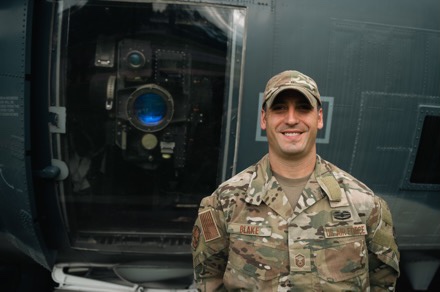
U.S. Air Force Master Sgt. Brandon Blake, a special operations surgical team member assigned to the 24th Special Operations Wing, is set to be recognized as one of the Air Force’s 12 Outstanding Airmen of the Year at the 2022 Air, Space & Cyber Conference Sep. 19-21.

Blake and 35 fellow airmen were considered by an Air Force selection board for the department-wide award. Enlisted members are chosen based on superior leadership, job performance and personal achievements.

Blake is the Superintendent, Special Operations Surgical Team Detachment One, 720th Operations Squadron assigned to the 24th Special Operations Wing, Hurlburt Field, Florida.

Last summer, Blake was a catalyst in the evacuation of over 124,000 evacuees in support of Operation ALLIES REFUGE. He drove a six-member team supporting thousands of military and civilian personnel, treating over 70 wounded individuals and assisting seven surgeries.

“I couldn’t have asked for a stronger team sergeant than MSgt Blake. His experience and leadership in stressful, highly dynamic environments was crucial to our team’s success while deployed to Afghanistan,” said U.S. Air Force Major Jesse Payne, deployment team lead and Medical Operations flight commander for the SOST Detachment 1.

The efforts of Blake and his team earned praise from then 82nd Airborne Division commander Maj. Gen. Christopher Donahue and Commandant of the United States Marine Corps, General David H. Berger.

Additionally, Blake tackled the COVID-19 front lines at the University of Alabama Birmingham, a Level 1 trauma center, providing 768 acute service hours and aiding treatment for 156 severely injured patients.

“His ability to integrate with the civilian trauma system to see high acuity patients at UAB highlights the value of the Air Force partnership with the university,” said U.S. Air Force Lt. Col. Marc Northern, Blake’s former supervisor.

“He demonstrates his commitment to his unit, to his patients and to the mission every day. MSgt Blake upholds the highest level of compassion, clinical judgement, skill, and composure under pressure,” added Northern.

His leadership proved vital in his role as detachment superintendent, managing 25 members, four teams and four flights on top on a 1.5-million-dollar inventory.

His active roles, on top of countless trainings, exercises, and crisis response situations led to dozens of lives saved and exceptional operational readiness for the detachment.

Simultaneously, Blake earned a degree in Public Health and Healthcare Administration and spent free time with local animal rescue along with toy and food drives supporting low-income populations.

“To be recognized as OAY for Air Force Special Operations Command is truly an honor, and I am grateful for the opportunity,” said Blake. “I stand on the shoulders of giants, and I couldn’t have done any of this without my team.”

SPD CAS OTF

Thursday, September 22nd, 2022

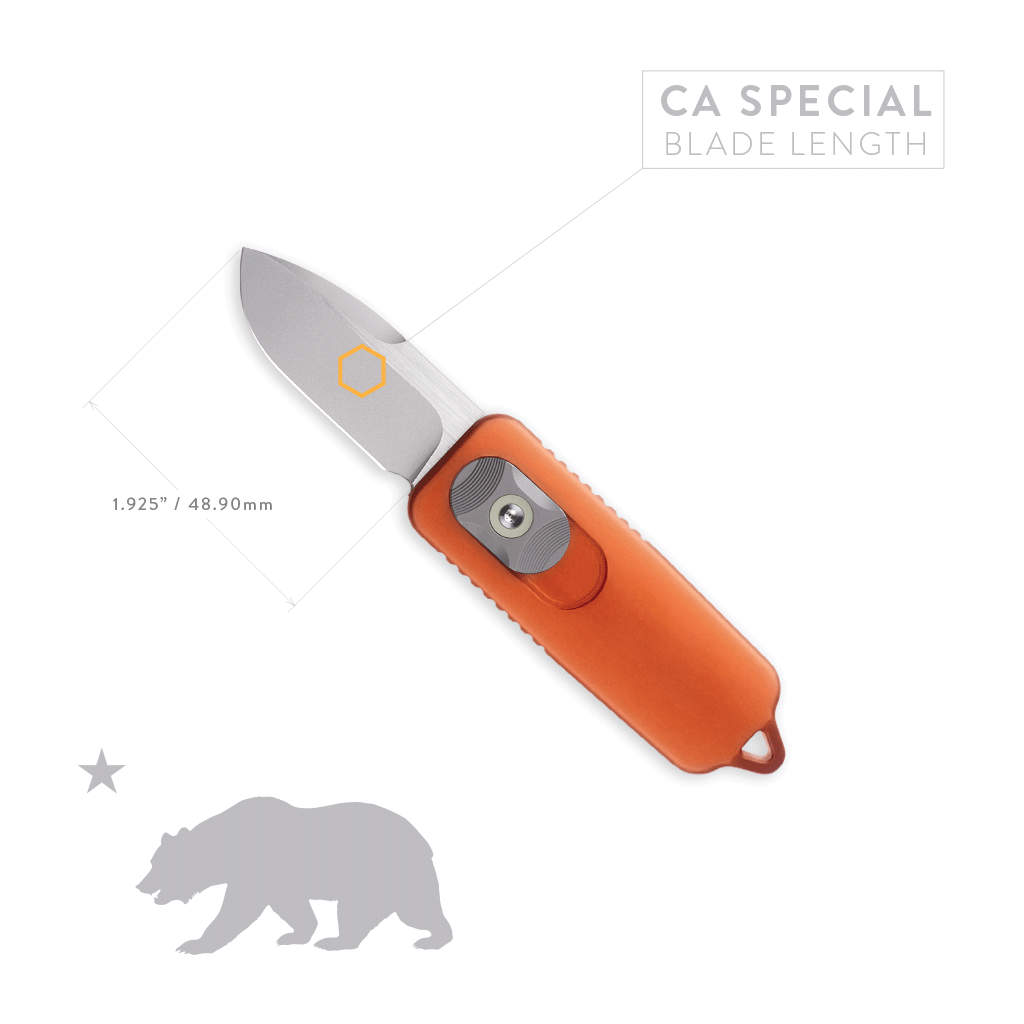
Special Projects Division CA.lifornia S.pecial O.ut t.he F.ront Auto Knife

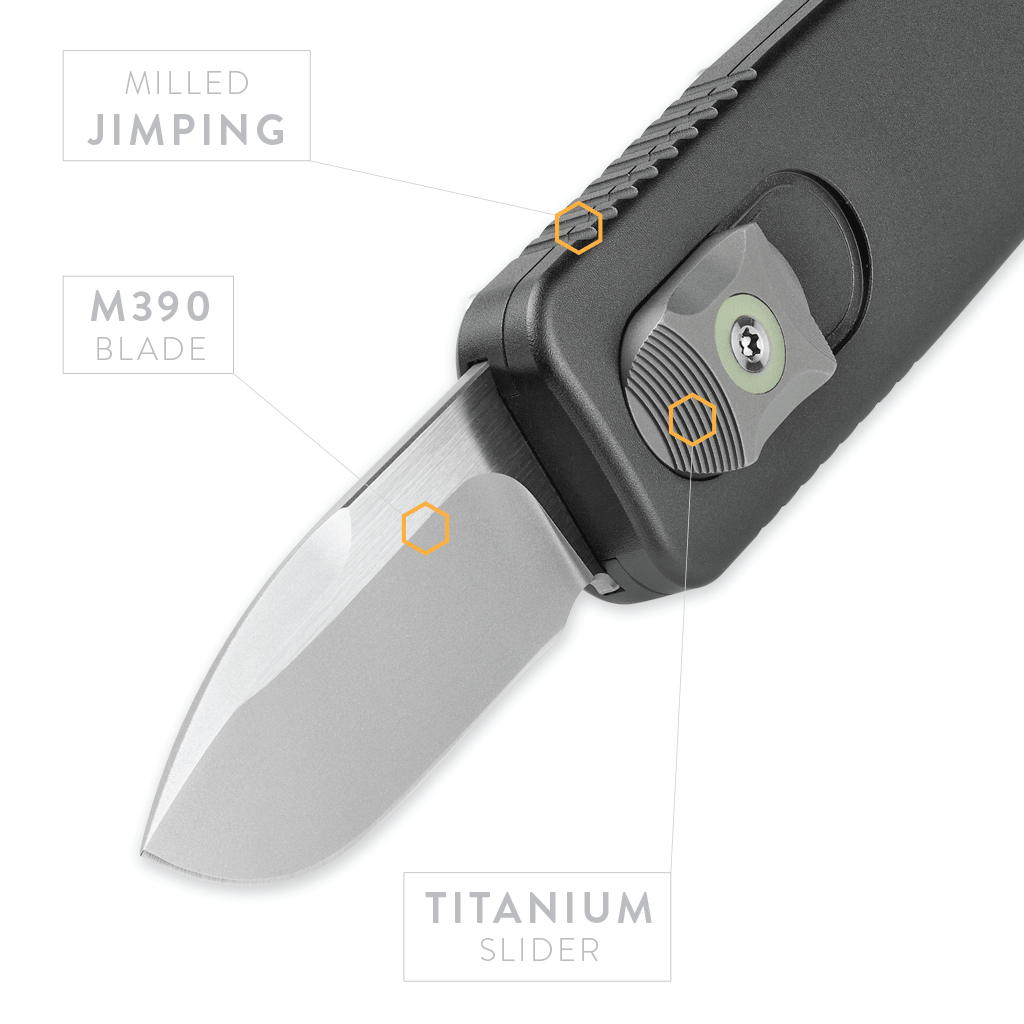
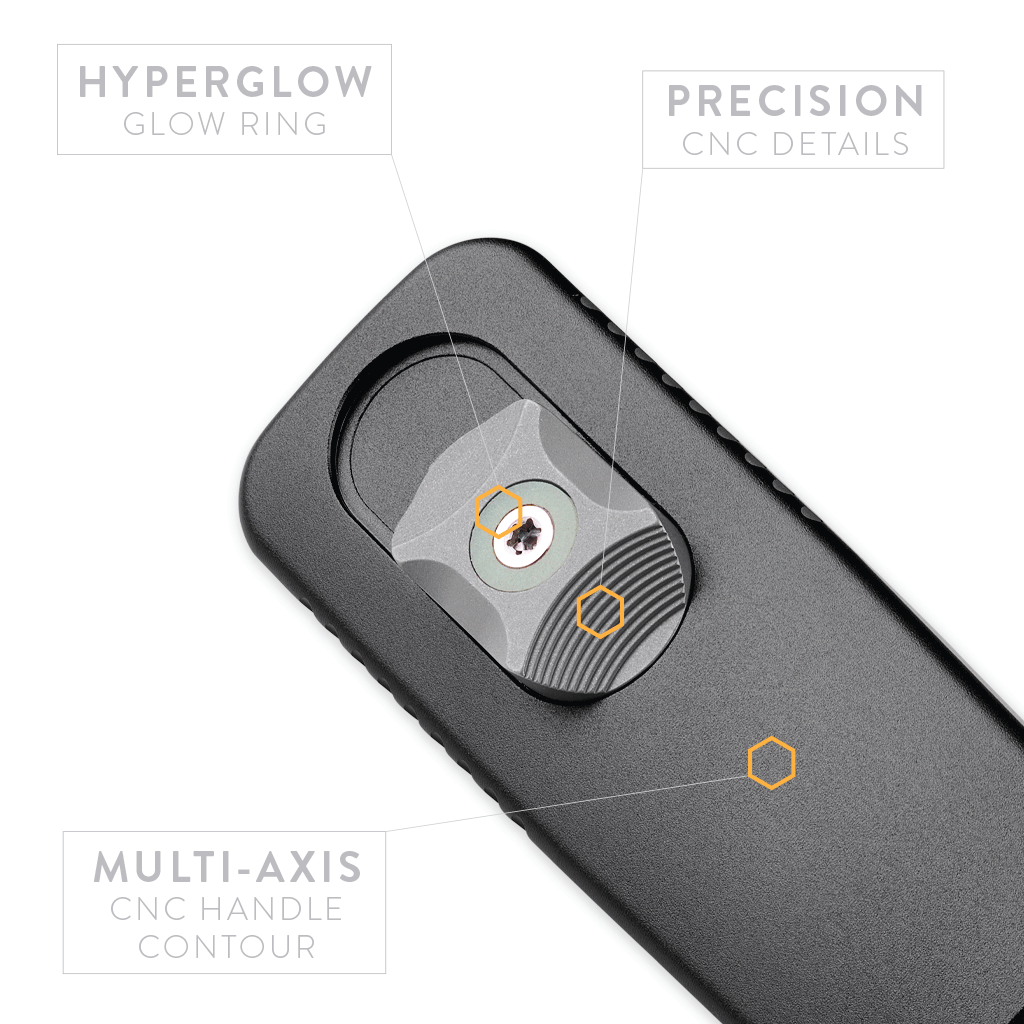
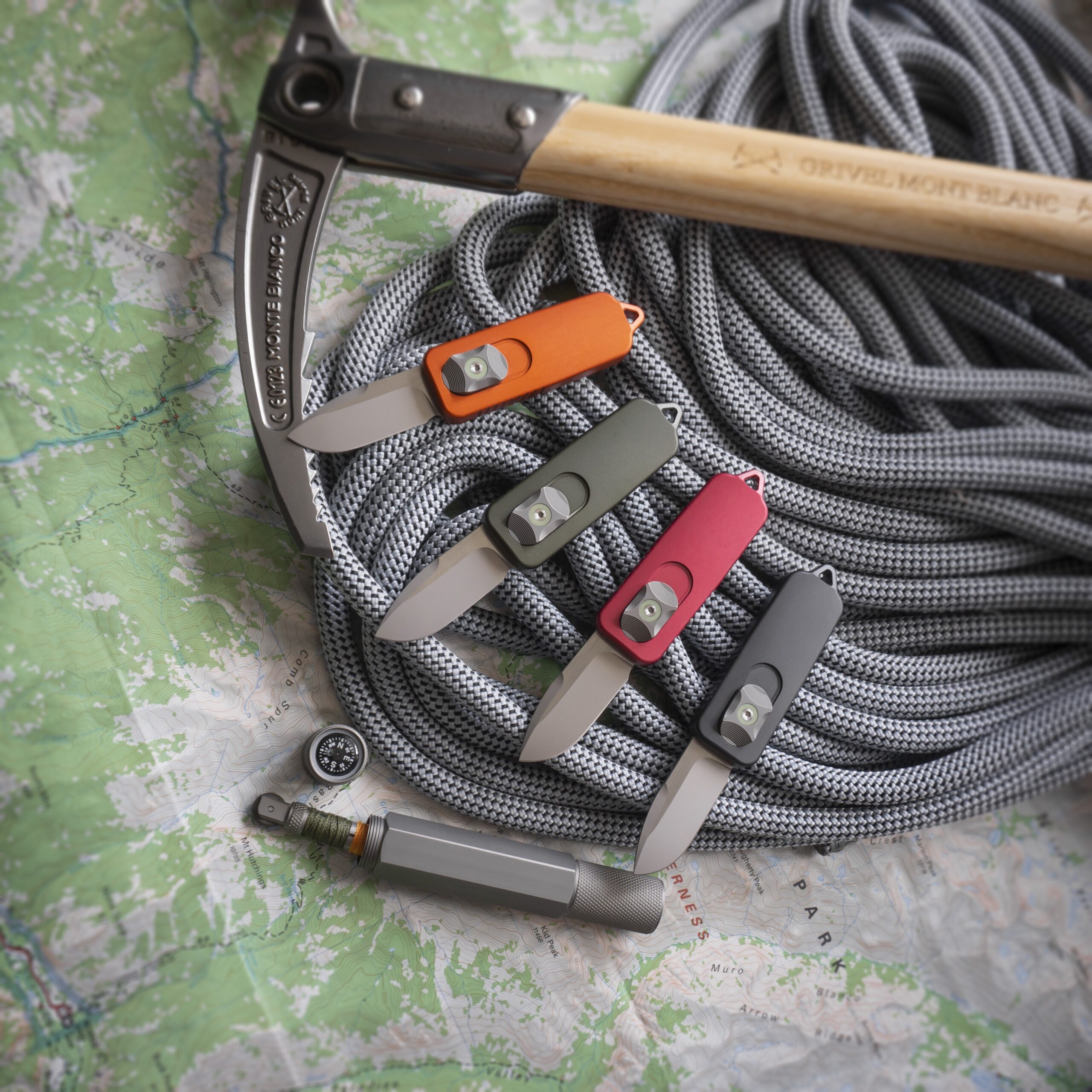
Prometheus Design Werx introduces their CA.lifornia S.pecial O.ut t.he Front automatic knife under their sub-label of Special Projects Division. Compact and legal to carry in the state of California, this knife is precision made from aerospace grade T6061 aluminum, 6AL-4V titanium, Böhler M390 blade steel, and best in class Hyperglow. Details make the design. We produce some of the only OTFs on the market with a milled contoured handle, which requires 3x longer on the CNC to achieve. We designed this OTF handle where the machine screws are in blind holes for an uncluttered and clean presentation side. A titanium pocket clip, and a titanium slider with Hyperglow ring round out the fine details.

The SPD Edition CAS OTF will be available with a 2-tone finished blade and dark gray, OD green, and limited-edition orange or red anodized handles.

The Design and R&D Team at PDW states:

“The CA.lifornia S.pecial OTF exemplifies our design and production ethos. Its functional design strength comes from its simplicity. There are no racing stripes, randomly ground contours, garish decorative elements, superfluous swooshes and silly lines. Despites its diminutive ‘California Special” size, this compact out the front knife is very versatile and highly usable for your daily cutting chores. From opening boxes, stubborn plastic packages, to envelopes, and much more, this knife will easily tackle the job. The action is crisp and satisfying to fire and close. We chose the highest level of materials and held steadfast to our stringent attention to details and highest quality of make. For those who adhere to the philosophy of form follows function, find beauty in finely made edged tools, and demand precision made mechanical objects, the CAS OTF is made for you.”

The SPD CAS OTF will be available for $195.00 at noon Pacific, Friday September 23rf, 2022 via their website, prometheusdesignwerx.com.

UF PRO Announces Coming Availability of the AcE Gen.2 Winter Combat Shirt, Described as a Perfect Next-Level Clothing Solution for Ops in Extreme Cold

Wednesday, September 21st, 2022

KOMENDA, SLOVENIA (21 September 2022)—Tactical garment innovator UF PRO today announced that its new AcE Gen.2 Winter Combat Shirt for military and law-enforcement personnel will soon become available for purchase online and at the company’s brick-and-mortar store in Komenda.

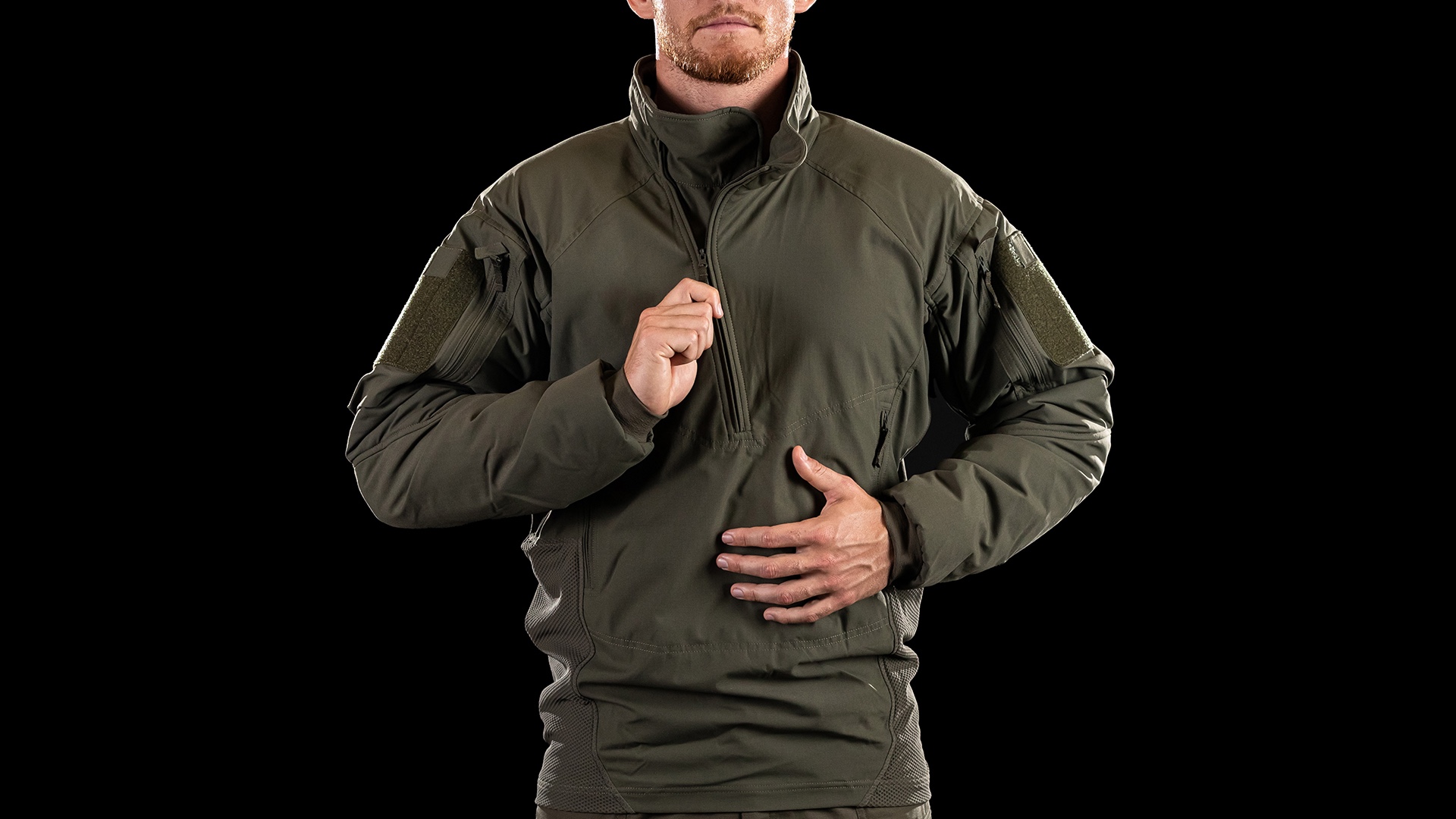
The AcE Gen.2 Winter Combat Shirt is a tactical garment that embodies revolutionary, next-generation advances in performance and comfort. UF PRO said its AcE Winter Combat Shirt was developed in response to the very specific, cold-weather operational requirements of today’s armed forces and police units.

“This is a second-generation product built upon the proven strengths of the original AcE Winter Combat Shirt,” said Armin Wagner, UF PRO head of development. “The result is a next-level iteration that incorporates a hybrid design intended to give wearers even greater ability to execute mission-specific movements and to better meet the requirements for overall more rugged performance and remarkable comfort.”

According to UF PRO, the AcE Gen.2 Winter Combat Shirt’s key features include:  

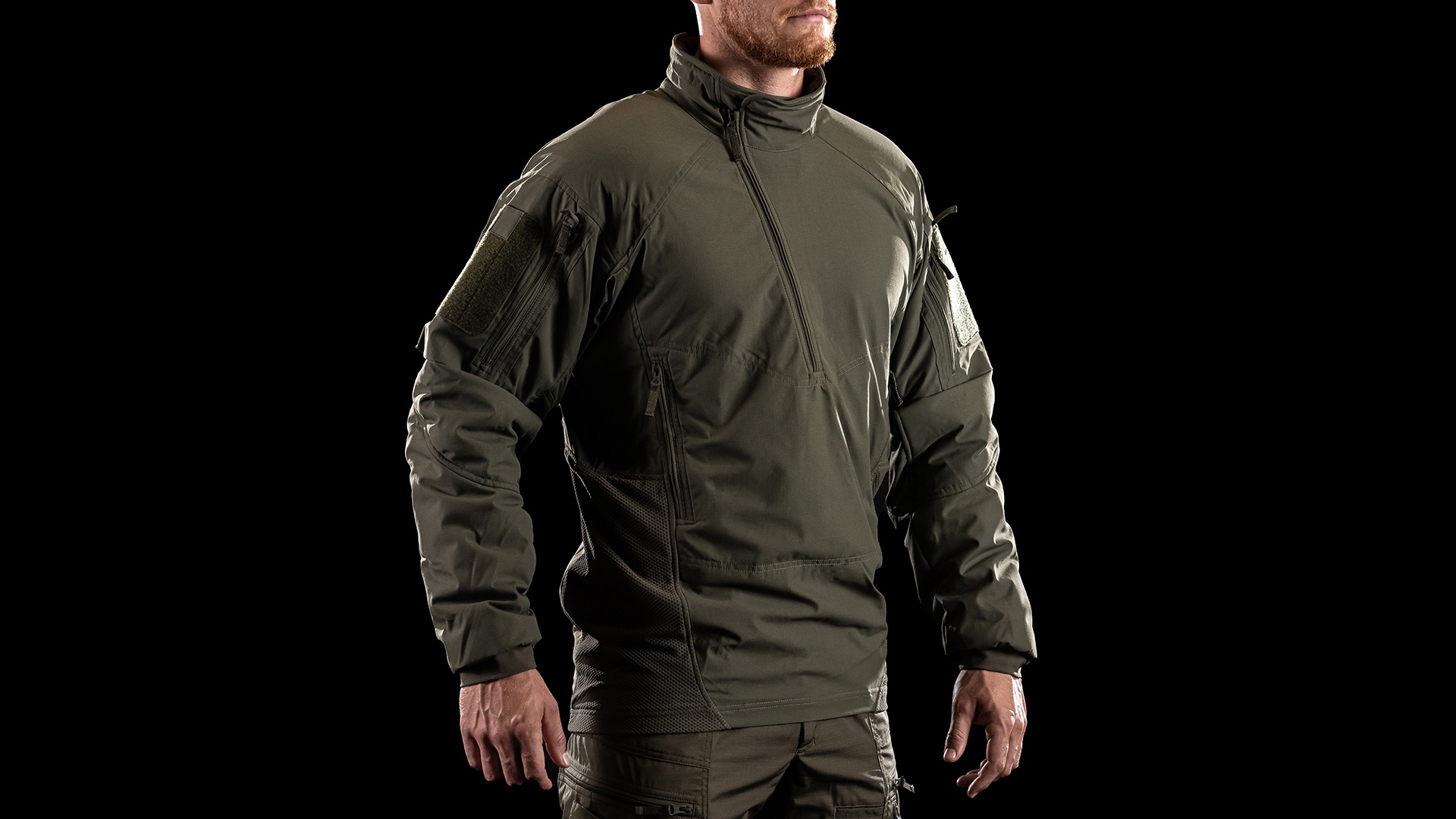
• Hybrid design that achieves superior thermal performance by integrating a 100-percent windproof and highly water-repellent face fabric with G-LOFT® insulated sleeves plus a body lining consisting of Merino wool and COCONA® 37.5™ microfleece  

• Two-way VISLON® zippers for easier use of ventilation openings

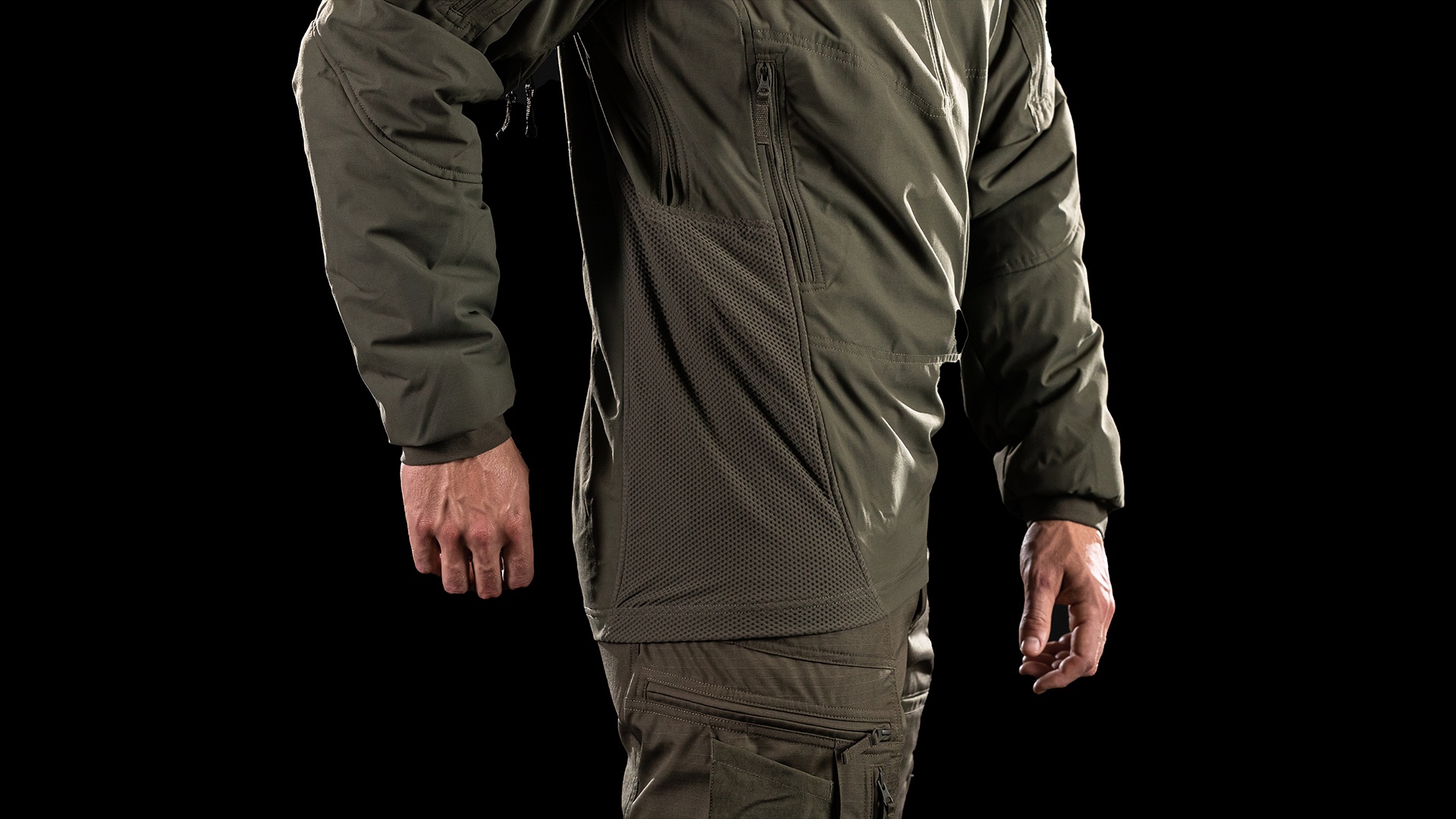
• Kangaroo pockets with meshed air vents

• Fixed air/pac® inserts in the shoulder and upper back for increased air circulation along with better plate-carrier support and weight distribution

• Angle zippers to reduce pressure points that can result from wearing additional layers of clothing

• Collar-width adjuster

• Layered design for softer, quieter performance and better management of body moisture  

• Compatible with both hard-shell and thermal jackets

• schoeller®-dynamic stretch cuffs

• Improved durability and moisture-wicking owing to breathable, abrasion-resistant, 3D mesh along the section where the shirt overlays the hips

Said Wagner: “We designed the AcE Gen.2 Winter Combat Shirt to follow and fit the contours of the human body as perfectly as possible, while at the same time opting for a material to give it exactly enough stretchiness that wearers can put it on and take it off with ease.

“Also, this second generation’s face fabric is more resilient, lighter in weight, softer to the touch, and a lot quieter. It combines the functionalities of a base, middle, and outer layer in a single garment—all so that the AcE Gen.2 Winter Combat Shirt can readily adapt to the needs and output of the individual wearer’s body.”

Wagner added that the AcE Gen.2 Winter Combat Shirt is intended for high-intensity ops conducted in cold weather.

“It’s an incredible team player,” he said. “Here’s why. Our bodies perform best when they’re able to maintain a core temperature that’s consistent. If that temperature fluctuates and drops below 35°C, hypothermia sets in. We start shivering and experience confusion. On the other hand, if our body’s core temperature rises too high, we’re at risk of suffering heat exhaustion. The complex hybrid structure of the AcE Gen.2 Winter Combat Shirt is designed to counter such core temperature fluctuations and their bad effects, so wearers never feel too cold or too hot.”

Core temperature is maintained in large part thanks to the existence of a miniscule amount of space between the fabric and the skin. This space, said Wagner, supports an interior microclimate that helps wearers enjoy optimum comfort while active even in extremely cold weather.

“This very slender space is between the shirt’s microfleece lining and laminated outer layer, which creates an air pocket,” he explained. “This pocket serves two other purposes besides supporting the microclimate zone. First, it functions as an additional layer of insulation. Second, it contributes to the ability of wearers to move freely and not feel as if the shirt is binding them or tying them down.”

Among the enhancements found in the second-generation AcE Winter Combat Shirt is extra protection for those parts of the body that normally are the most exposed to outdoor cold.

“Additionally, the Merino wool and 37.5™ microfleece lining provides stronger resistance to odour build-up and gives this next-generation combat shirt better moisture-wicking and breathability properties,” Wagner said. “Meanwhile, the G-LOFT® filling increases the shirt’s previous outstanding thermal-insulation performance as well as enabling it to regain its original shape more readily after being compressed. And Kangaroo pocket openings built for easy access—even with a plate carrier in place—feature interior mesh linings that permit air to flow directly to the body and rapidly draw off excess heat.

UF PRO said it will later announce a firm date for the start of AcE Gen.2 Winter Combat Shirt sales. The company did, however, indicate that the garment will be available in a choice of colours: they are Brown Grey, Navy Blue, Black, Steel Grey, and MultiCam®.

“With the AcE Gen.2 Winter Combat Shirt, our product-development team has once again raised the bar when it comes to tactical garments delivering highest-level performance capabilities,” Wagner said.

For additional information and release dates, please visit ufpro.com or contact support@ufpro.si.

Mystery Ranch Special Projects Service

Monday, September 19th, 2022

At MYSTERY RANCH, we solve problems for our customers – we work with them to identify a solution that meets their needs.

MYSTERY RANCH builds the best load-bearing gear in the world. Period.  

In addition to designing products for commercial sale, we regularly work on Special Projects for government and other industry organizations. With our Special Projects Service offering, MYSTERY RANCH designs and manufactures custom products when no other load-carriage solution exists. That includes packaging weapons, comms gear, optics, sensors, connectors, cabling, and so on.

If needed, we collaborate with in-field experts that bring their expertise to the design and help deliver a rigorously field-tested product to the client.

MYSTERY RANCH has many patents on technologies necessary for special load-carriage requests, which cannot be found otherwise. Our Montana-based, in-house product development and production teams are structured to facilitate such specific design needs.

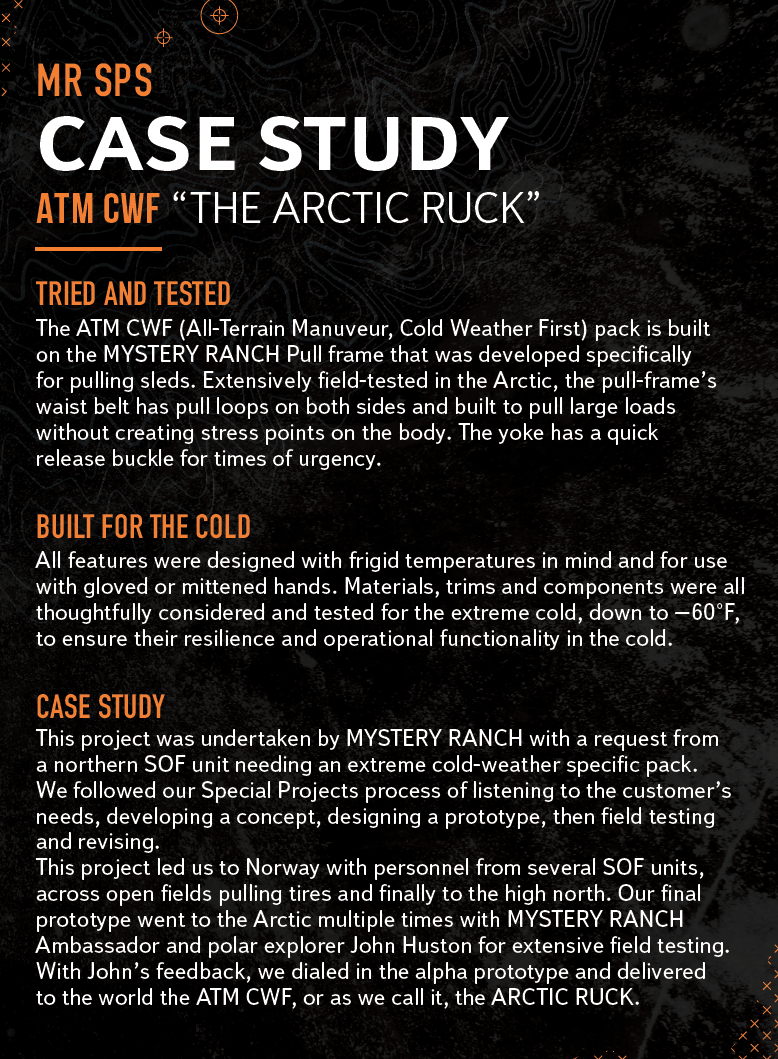
Our most recent Case Study is the ATM CWF – aka “THE ARCTIC RUCK.” Details of this service outlining the process and collaboration efforts with in-field professionals can be found here.

In many cases, the client comes to our facility to brainstorm a solution with our design team for their load carriage or packaging needs. They show us the equipment we need to design around. In other cases, the client may send us the equipment and then collaborate with us via video conference, phone, or email. When necessary, we travel to the client’s location to work with them directly or see or experience items or factors that cannot be brought to us.

If it needs to be carried by a human – let’s talk or visit our site: www.mysteryranch.com/Packs/Military/SP.

Wisconsin Guard Soldiers Hone Water Survival, Rescue Skills

Monday, September 19th, 2022

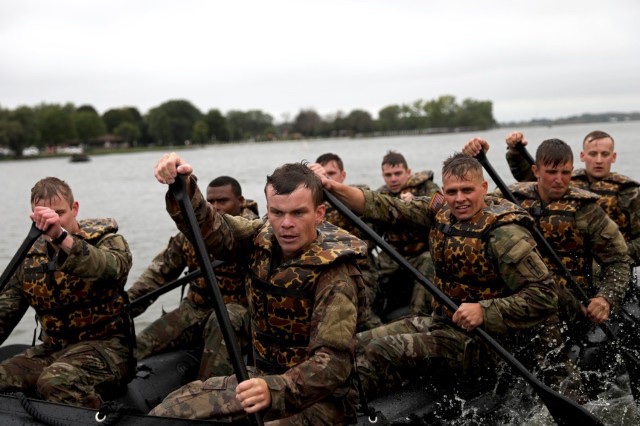
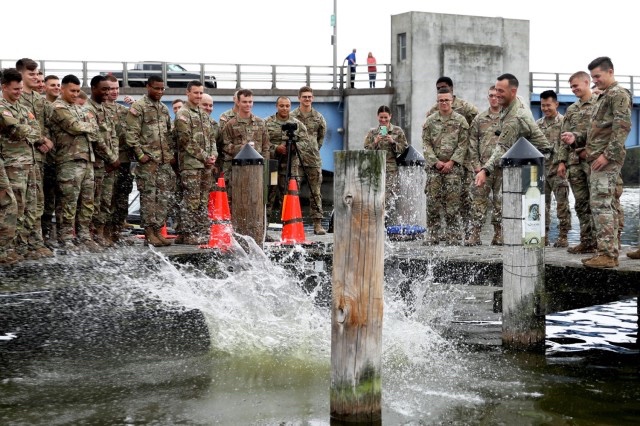
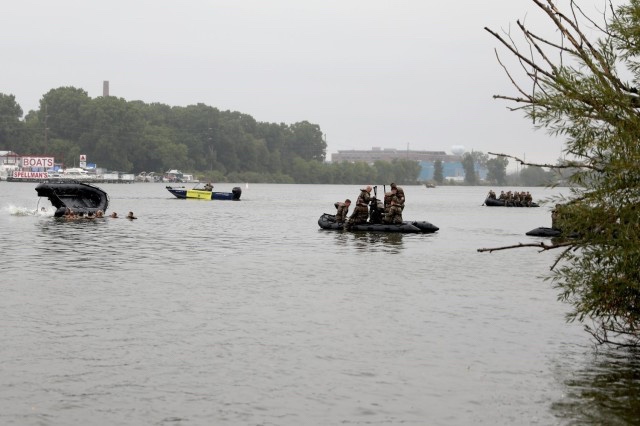
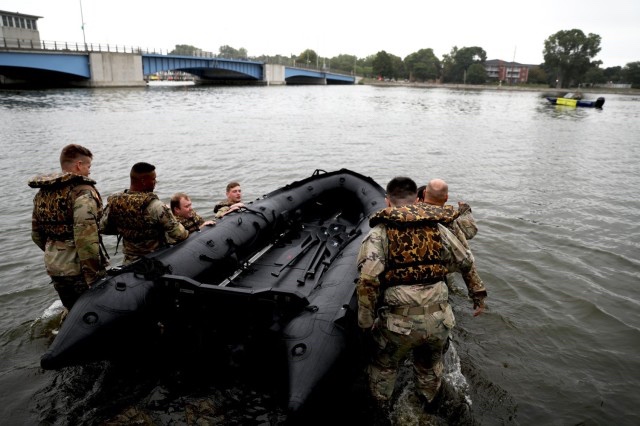
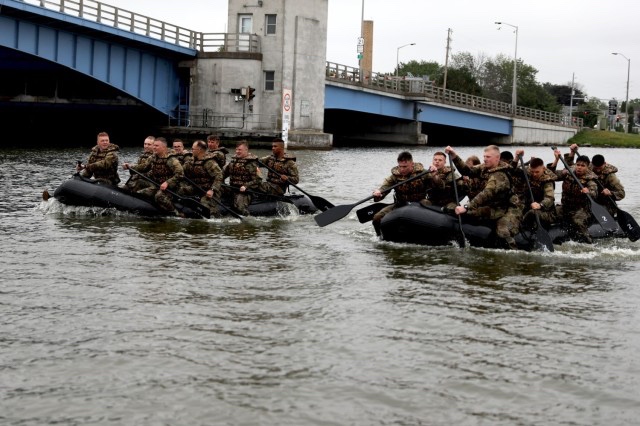
OSHKOSH, Wis. — Wisconsin National Guard Soldiers conducted combat water survival and swift water rescue training in the Fox River on Sept. 10.

The rigorous training prepared the Soldiers of Company A, 2nd Battalion, 127th Infantry Regiment, 32nd Infantry Brigade Combat Team, to answer the call to aid in domestic operations whenever needed.

The event was the company’s first large-scale home station training with all Soldiers back together after many deployments and state missions over the past few years.

While on the water, Soldiers learned how to use a Zodiac watercraft and right it when capsized. They also trained to rescue people from a debris field in swift-moving water and identify and treat the victim’s injuries.

The Soldiers performed combat water survival training by treading water in full uniform, including combat boots, for five minutes, swimming 25 meters in full uniform and with a rifle.

“It is great to get back into the community where the National Guard belongs,” said Sgt. 1st Class Charles Hensen, readiness noncommissioned officer and platoon sergeant with Company A. “And to be hosting a domestic operations training event that prepares the Soldiers to use the equipment they could be using in a natural disaster so that we can remain true to our mission to serve our neighbors and the people of Wisconsin.”

Spc. Shane Kieslich received a challenge coin from Brig. Gen. Matthew Strub, Wisconsin’s deputy adjutant general for Army, for his efforts during the training.

“Command has been trying to switch things up and get us training we haven’t done before,” Kieslich said. “I’m not the best swimmer, so it was a little bit of a struggle, but I thought it was great and I think it really boosts the morale of the Soldiers in the unit.”

Command Sgt. Maj. Georgett Hall, senior enlisted advisor to Wisconsin’s adjutant general, shared that sentiment.

“Not only is this great training for their mission, but it’s also great for morale and retaining Soldiers because there are not a lot of units in the state doing events like this,” Hall said.

Strub said the event was about overcoming adversity and fear and forming a stronger bond as a unit.

“Having competition and building that camaraderie in small teams helps a team to gel and work together,” Strub said. “And then no matter what task they are given in the future, they are able to attack it that much better.”

By SSG Kati Volkman, Wisconsin National Guard

SSG Alice Ripberger contributed to this story.

SCUBAPRO SUNDAY – Buoyancy

Sunday, September 18th, 2022

Buoyancy is key to a lot of things when diving. It helps make the dive easier in a lot of ways. When using a closed-circuit rig (CCR), it keeps you from rocketing to the surface, and it prevents you from dropping to the bottom when you stop to fix your gear or “Dräger” talk/ yelling at your dive buddy.
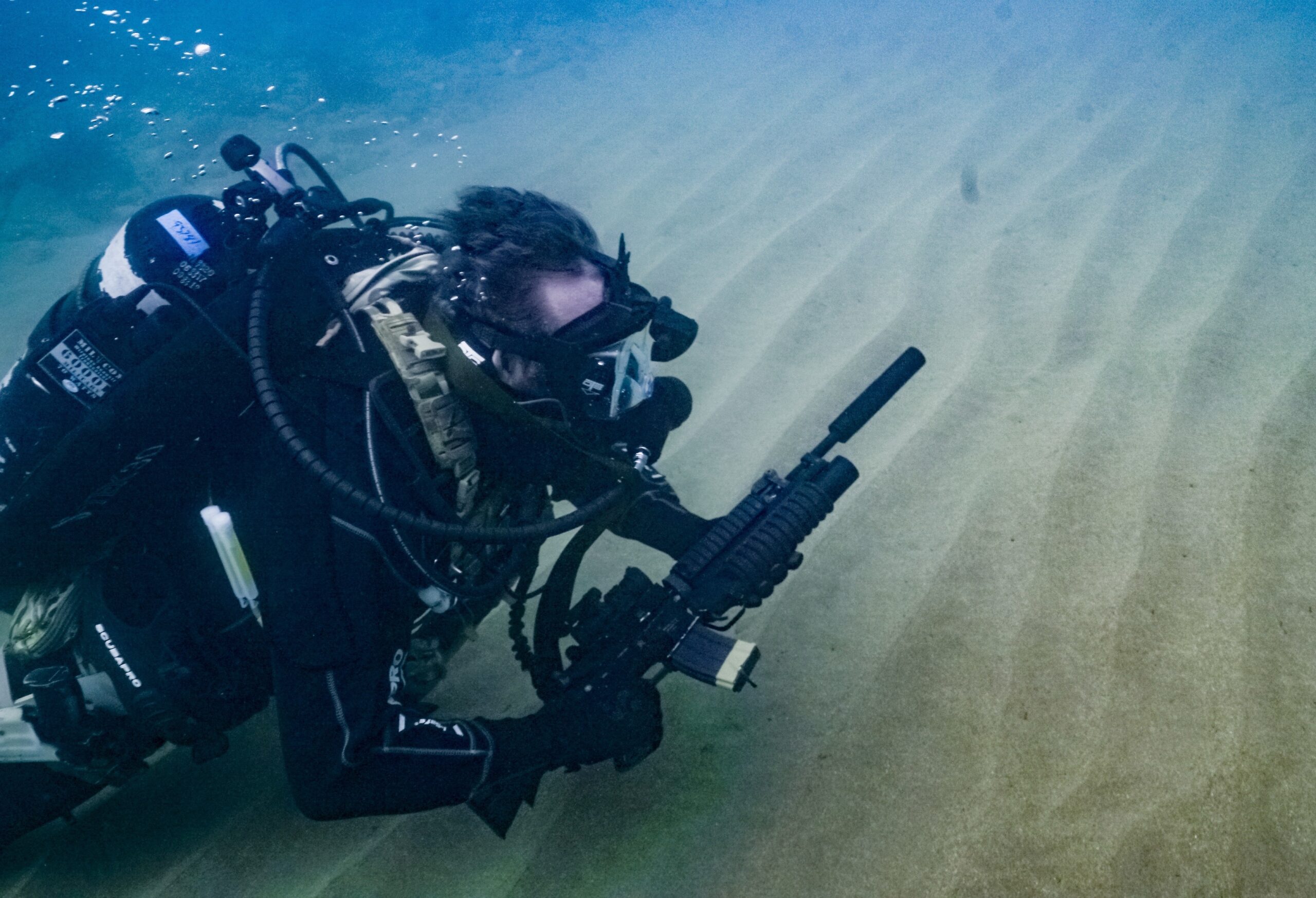
The keys to buoyancy are balance and breathing.

The two significant factors in achieving neutral buoyancy.

Wear the right amount of weight for the dive. This will differ depending on the thickness of your wetsuit/ drysuit and gear you are wearing, also water type fresh or salt.

Breathing slowly and evenly, so you do not have too much air in your breathing bag. If diving a CCR

Steps to help maintain buoyancy.

Pre-dive preparation.

Buoyancy control begins with pre-dive preparation as you pick what to wear for a dive. Double-check to make sure nothing has changed that could affect buoyancy. A new wetsuit is more buoyant than an older one and will need more weight. A new suit has more inherent buoyancy at first because diving, especially deep diving, bursts the tiny bubbles in the suit over time. Make sure you look at any new gear compared to the old version. Equipment is constantly evolving and updated with new buckles or martial, so when you switch from old to new, make sure you know the buoyancy with the new stuff. Check the weights on a scale; often, there is variation between claimed and actual weight. If diving open circuit, remember cylinders are negatively buoyant when full and less negative when empty.
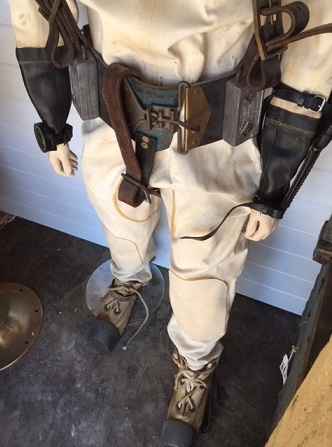
Do a buoyancy check.

Here is the best way to do a proper buoyancy check. With your lungs half-full, you should float at eye level with no air in your BCD. If you are diving open circuit, remember the average cylinder loses about 5 pounds as it empties. So, you might have to add about 5 pounds to your weight if you have done your buoyancy check with a full tank.

Keep a log

Keep a log of what gear you have worn, the temperature, and the type of water (salt/fresh /brackish). What equipment you used, how much lead you carried, your body weight, and whether you seemed too heavy or light. Knowing the weight of the gear that you used on the dive will help. Make sure you understand that if you are going to remove something during the dive, you need to account for that on the return trip home. If you plan by recording in training what you used, it will help when you have to do it the next time.  
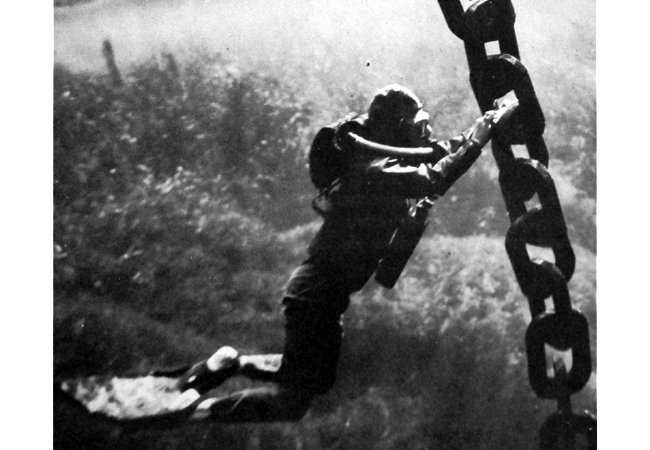
Saltwater VS Freshwater.

If most of your driving is done in the ocean, ballast calculations should be done for saltwater. Jumping in the pool to check your ballast will get you close, but it won’t be 100% correct. If you switch back and forth, you’ll need to adjust your ballast. Be prepared to add weight if needed sometimes, it’s nice to have a weight belt with extra pouches just in case, or maybe just an empty pouch on a gear belt will help. But still, try and keep the weight evenly distributed.

Buoyancy, Trim, Position, and Breathing

The secret to buoyancy control begins with fine-tuning your weighting. How much lead do you put into your pouches or have on your weight belt? If you carry just the right amount of weight, you will only have to put a little air in your BCD. That means less drag and more efficient finning. Less BC inflation also means minor buoyancy shift with depth, so you’ll have to make fewer adjustments. There are many tricks, but buoyancy control is a fundamental skill. Precise control of your buoyancy is what enables you to hover motionless and fin through the water at any depth. It would be best not to use your hands and not stir up mud or silt from the bottom by always moving your feet. In addition to using the right amount of weight, make sure you are correctly balanced to optimize your position underwater.
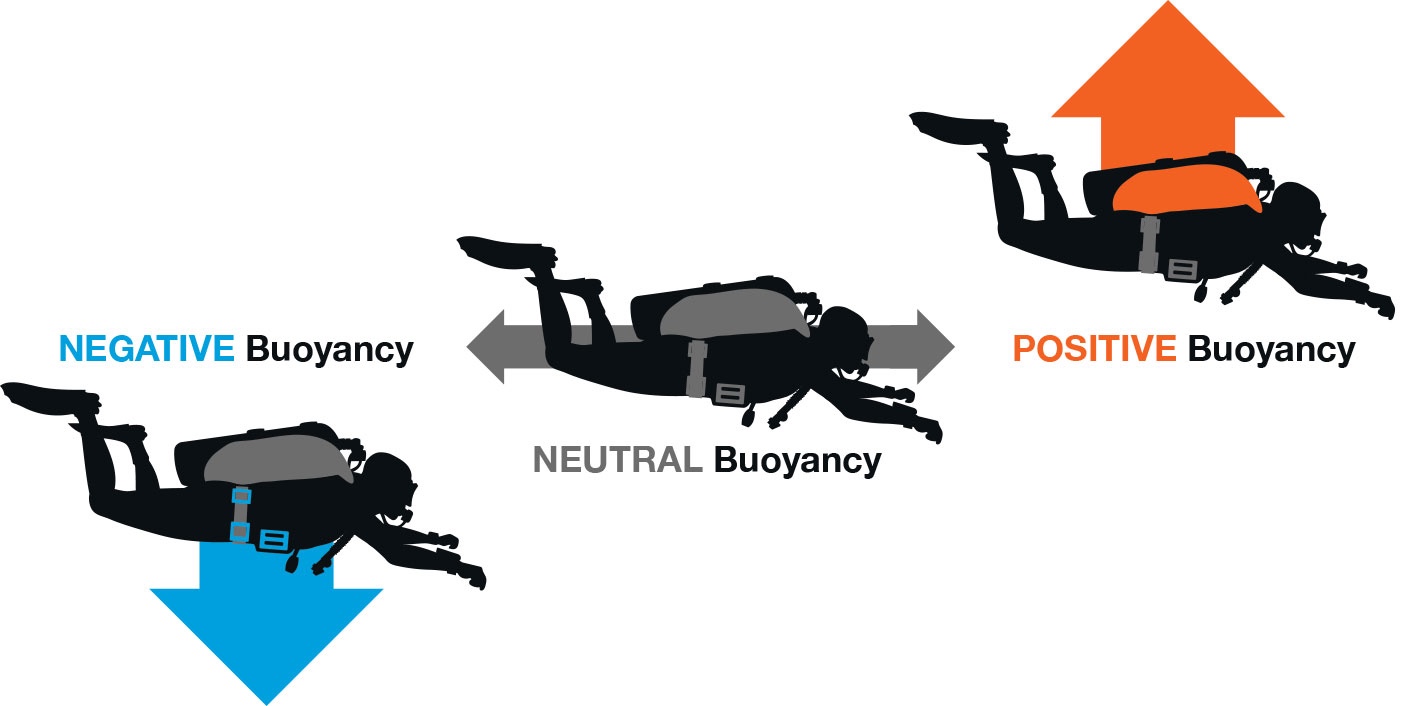
Keeping a more horizontal position makes you more hydrodynamic. Distribute the weight as uniformly as possible from side to side; you should never notice that you put more weight on one side while driving. It would help if you also considered the weight of your dive gear and any other additional gear you might be wearing. I.e., gun belt or special equipment. Make sure it is balanced on your body, and it doesn’t shift when you are diving. The lower you wear your dive rig can cause a tendency to push the diver forward (upside down) in the water, so the placement of weight towards the back can help reverse this position, especially on the surface. Make sure any dive weight you put on can be easily removed in an emergency.

Besides ballast weight, the factors that affect your buoyancy are BC inflation, your trim, exposure suit, depth, and breathing control. Your ballast weight and your trim are the only two factors that, once you’ve selected them, stay put. Ballast is the amount of weight it takes to keep you neutral in the water. Trim is about the position of your body weight relative to the position of your weight. Sometimes when diving a rebreather, you can tape lead washers on it to help with your trip.

There is one more thing to understand that will help with your buoyancy. It is controlling your breathing. Make sure you maintain proper breathing. Take relaxed breaths. This allows you to maintain control over your buoyancy.

To determine the amount of weight you need, you can take your body weight, the diving suit you will use, the weight of your equipment, and the environment you are diving in salt or freshwater. If you use about 10 percent of your body weight, that is a good starting point for a full 5 mm or more and for a 3 mm suit, use 5 percent of your body weight.
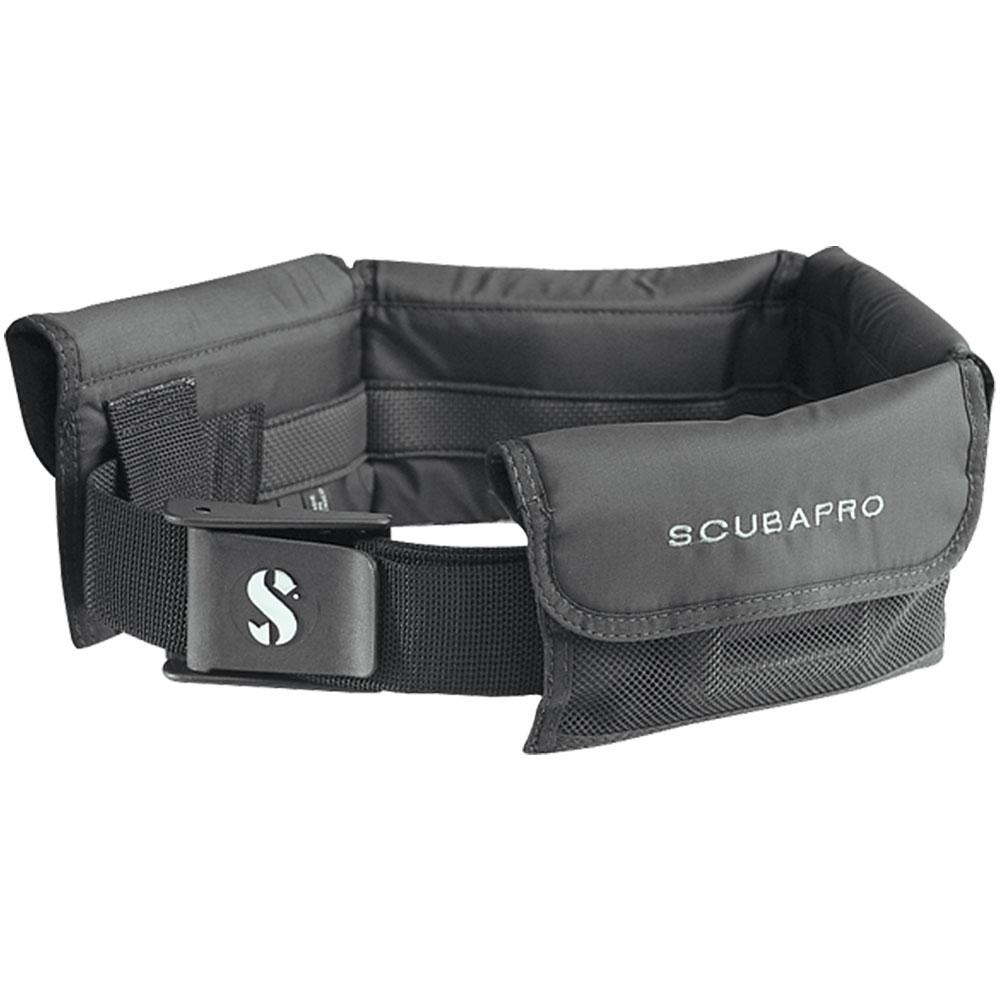
Drysuits and thick neoprene suits require more ballast to counteract the increased buoyancy of those suits compared to the thinnest. Body composition (the muscular density, for example) will also influence the necessary weight. Remember, fat floats, muscle sinks.

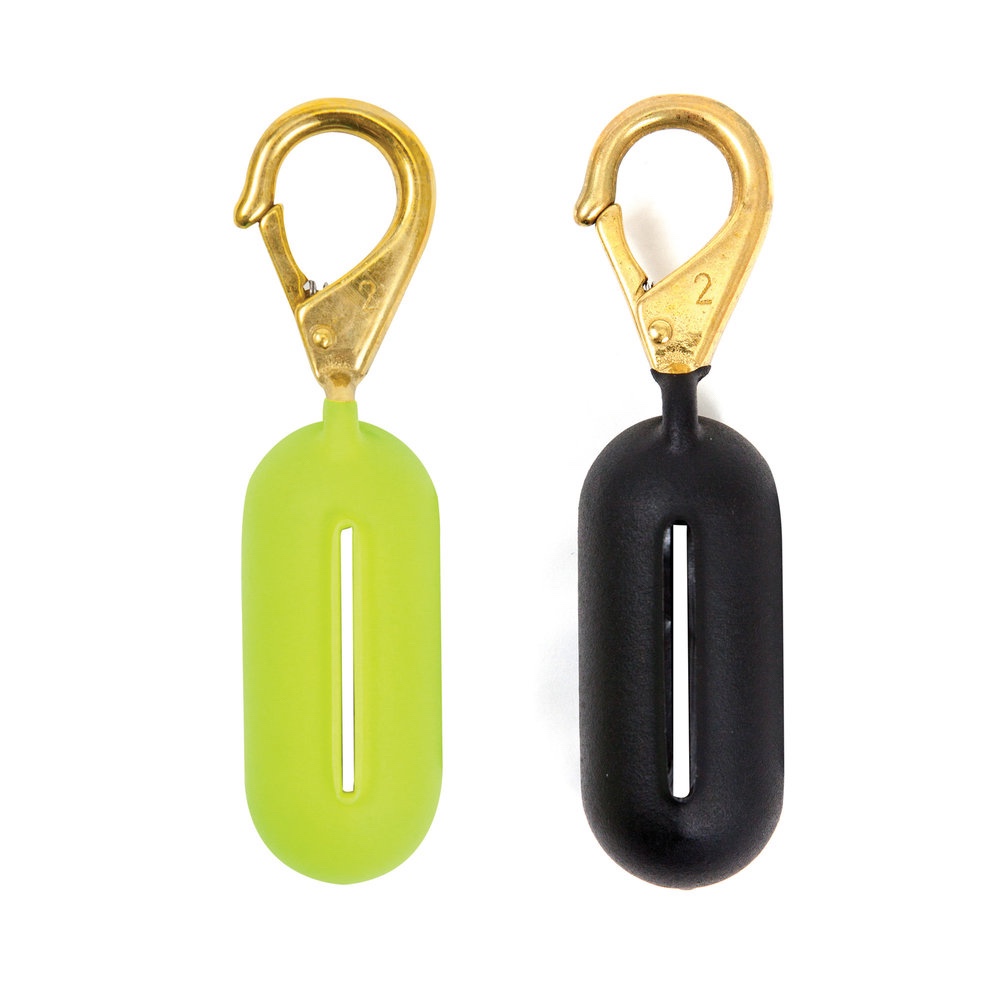
Remember to calculate everything you will use and wear on your dive if you are doing a long drive and plan to leave or remove something halfway thru your dive. Say conducting a ship attack, and you are taking limpets off. Plan for the whole dive, not just the start when you will be at your heaviest; plan if you are carrying something that you plan to leave behind, how will that affect your extraction. To check your buoyancy, get into the water deep enough to stay in an upright position without treading and releasing all air from the vest. Inhale, normally, the surface of the water must be at the level of your eyes. When you exhale, you should sink until the water covers your head and inhale again. You should emerge once again until the level of the eyes. Adjust your weight in small increments, about 1 pound at a time. You can use a weight with a snap link or just some weight with some 550 cord on it. Make sure you don’t just put all the weight you are adding to one side. Try and use this time to even yourself out and set your trim also. I have also seen people tap lead washers to the front of their rebreather to help even them out. The rule of thumb is never add more than 10Lbs. that can’t be released.
Once you get your ballast weight and trim dialed in, you will be ahead of about 75% of all divers toward perfect buoyancy control. Now you can fine-tune your BC inflation to compensate for the very predictable changes due to breathing down your tank and changing depth.

Lastly, there are advanced classes that you can take that focus on advanced skills like this. This may seem like a lot of work, but it will help make diving a lot better and make you more efficient at your job.


Airmen Train, Deliver Humanitarian Aid to Honduras

Sunday, September 18th, 2022

SOTO CANO AIR BASE, Honduras (AFNS) —

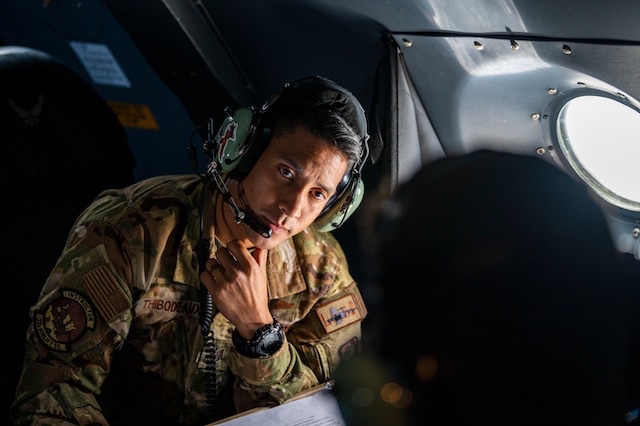
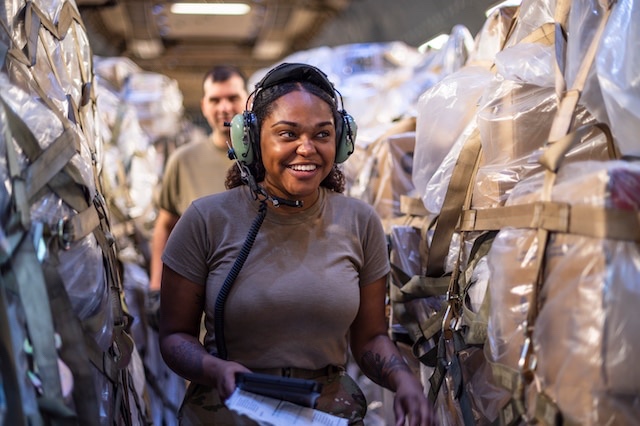
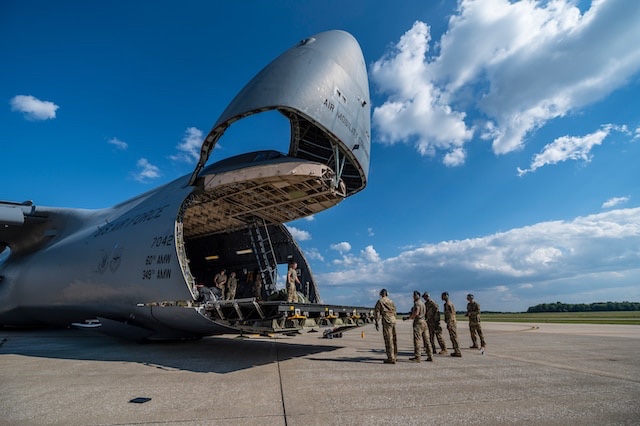
Airmen assigned to the 22nd Airlift Squadron and 60th Aircraft Maintenance Squadron from Travis Air Force Base, California, collaborated to deliver more than 90,000 pounds of humanitarian aid to Honduras during a combined Major Command Service Tail Trainer (MSTT) and Denton cargo mission Aug. 21-31, 2022. Members of Youngstown Air Reserve Station’s 76th Aerial Port Squadron helped palletize and load the cargo.


Maj. Zachary Barrington, 22nd Airlift Squadron C-5M Super Galaxy pilot instructor, led a 14-member crew that delivered approximately $38,000 worth of medical supplies and other goods to support the Denton Program, which allows private U.S. citizens and private organizations to transport humanitarian goods to approved countries in need.

The crew consisted of pilots, flight engineers, loadmasters and crew chiefs with varying levels of experience. Each member received real-world operations training for the C-5M, enabling some members to become fully qualified and ready to support rapid global mobility.

“It was incredible to witness how the crew divides and conquers each challenge to successfully deliver aid where it’s needed,” said Staff Sgt. Darren Hopkins, a recently cross-trained 22nd AS C-5M flight engineer.

With the guidance of his instructor, Tech. Sgt. Beverly Castro, 22nd AS C-5M flight engineer instructor, Hopkins transitioned from simulators and theoretical systems studies to real-world applications in operations for the first time on this mission.

Each student on board received guidance and debriefs during flight and upon completion of their performance at every stop from their respective career field instructor.

“One of our goals during these MSTT missions is obviously to expedite students’ upgrade training, but just as important is to build our loadmasters’ competence and confidence,” said Tech. Sgt. Jacob Buruato, 22nd AS loadmaster instructor.

These long missions allow pilots, flight engineers and loadmasters the opportunity to check off tasks required to reach proficiency.

“These training missions are imperative to the development of our students’ skillset and ultimately, to mission success.” said Buruato. “Whether you are a pilot, flight engineer or a loadmaster student, MSTTs equip our Airmen with additional knowledge and real-world experience to tackle obstacles in the future should they face any.”

Both students and instructors benefit during these training missions.

“The moment when your student understands and realizes the importance of their role during a mission is very rewarding,” said Buruato, “And missions tend to drive that newfound mindset home.”

Dual-purpose missions like these tend to do just that.

“Flying into Honduras was a unique experience on its own,” said Hopkins. “Realizing that these supplies contribute to the development of that country helped me put things into perspective.”

The rest of the training consisted of stops to unique places such as Colorado, Ohio, Florida, South Carolina and Portugal.

“One of my personal takeaways from my first flight in my new career field is witnessing how these trainings support growth on the road, enhance communication and draw the crew closer to become one team, one fight when it comes to rapid global mobility,” said Hopkins. 

By Senior Airman Karla Parra, 60th Air Mobility Wing Public Affairs