TYR Tactical

Archive for the ‘Guest Post’ Category

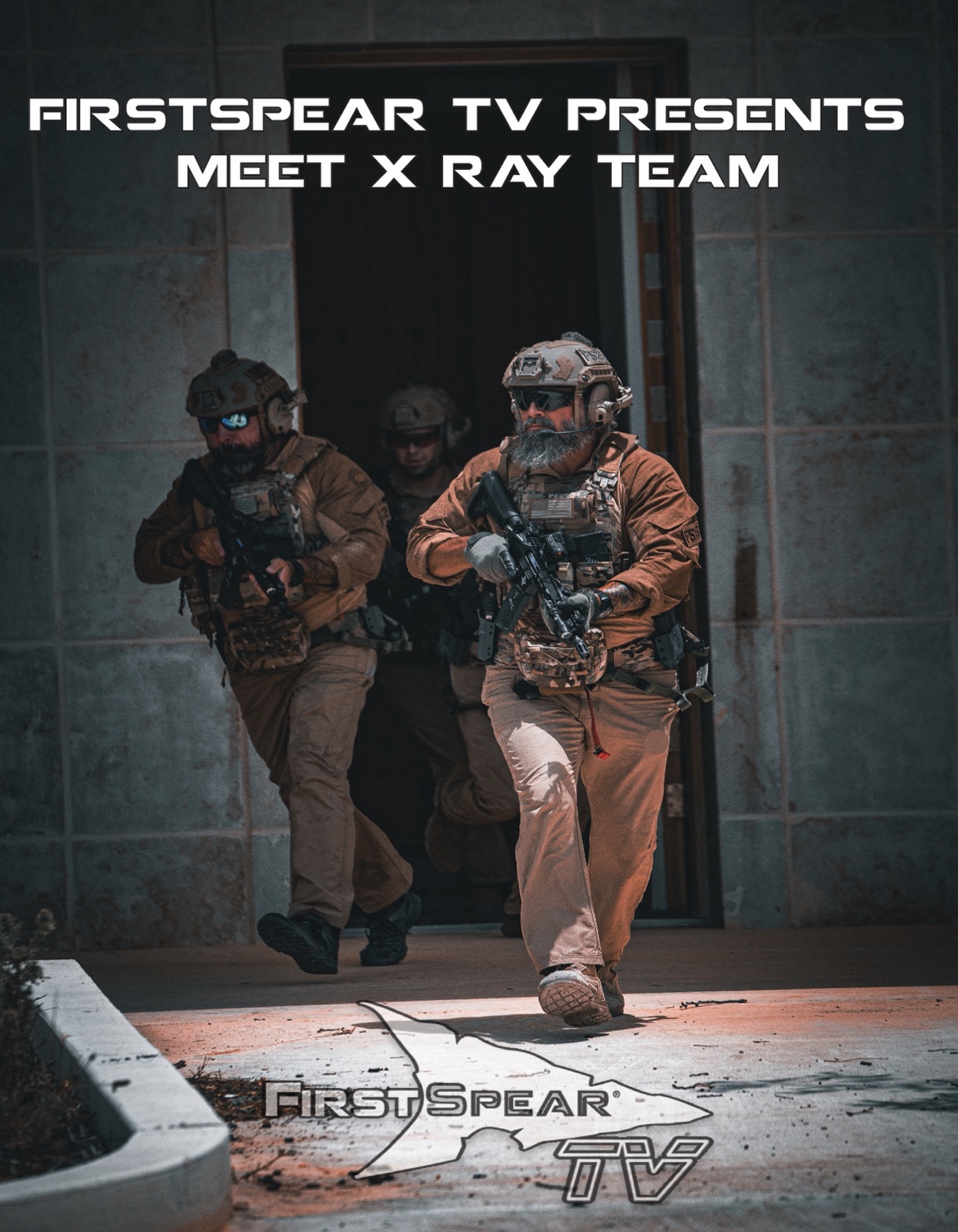
FirstSpear Fri Focus: Meet X Ray Team

Friday, July 15th, 2022

FirstSpear TV releases a new series introducing the real life characters behind the beards and gear.

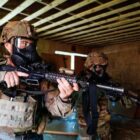
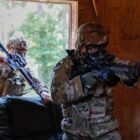
(X Ray Team on set during filming.)
Go beyond the war stories to meet the men and women who served this great country. Learn how the guy next door took an extraordinary path of service. Discover the inspiration behind enlistment and how veterans are making a lasting impact after retirement. Hear how men and women made contributions during their deployments and time spent in their respective branches. These are their legacies.

Meet X-RAY TEAM.

FirstSpear TV’s mission:

– Produce and distribute the first SOF Inspired, multi-channel, video network
– Produce a variety of authentic content guided by active and retired members of the SOF community
– Entertain with stories derived from SOF experiences while promoting SOF relevant brands and products
– Provide support and recognition for the high level of professional efforts in the SOF community

To see more of the X Ray Team Series, check out FirstSpear TV and FirstSpear TV YouTube.

Contact Director FirstSpearTV: vinnie@first-spear.com

Check out FirstSpear to find gear and apparel for America’s Warfighter.

New Medical Support Team Reduces Muscular-Skeletal, Mental Health Issues

Friday, July 15th, 2022

HILL AIR FORCE BASE, Utah (AFNS) —

One of the first multidisciplinary medical operational support teams in the Air Force is working to reduce muscular-skeletal and mental health issues at Hill Air Force Base.

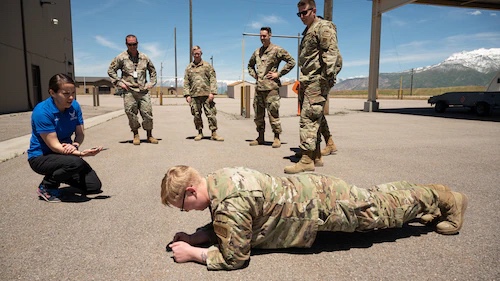
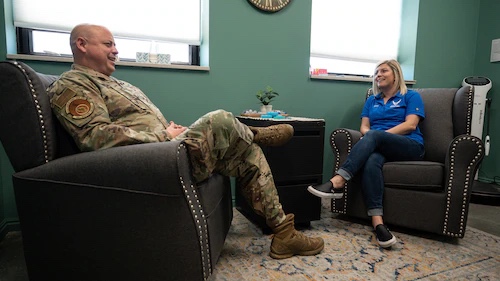
The five-person team, consisting of an exercise physiologist, clinical psychologist, clinical social worker, physical therapist and strength conditioning coach, embeds with high-risk units for up to six months to accomplish desired results.

“What we’re really trying to do is observe for the broader, longer-term things that are causing muscular-skeletal and mental health issues so we can help the unit make adjustments to prevent future injury or mental health crises,” said Bill Goins, Base Operations Support Team specialist”

Risk data, collected from the 75th Medical Group over the past year, identifies high-risk units on the installation.

“We take the data and approach the leadership of the top couple units on base and explain what we’re seeing and what we can do to help,” Goins said. “Units have been extremely receptive and excited to have us come in.”

Once in the unit, the OST uses a four-phased approach to determine how best to help reduce muscular-skeletal and mental health issues and to establish internal sustainment when they move to the next unit.

The team works side-by-side with unit members, in every section and on every shift to experience what Airmen experience on the job and to build trust with them.

“We’re out there trying to build trust and break down barriers so they will bring concerns to us,” Goins said. “We do a couple needs assessments, work in their sections with them and find out what they want and need. Then, we get to work helping Airmen”

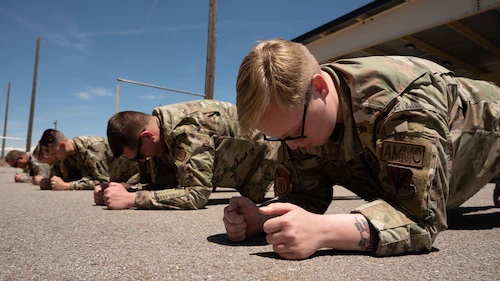
During a recent embed opportunity with the 75th Security Forces Squadron, the OST observed a lack of shoulder mobility from people wearing their necessary gear.

The team’s physical therapist made suggestions on what squadron members could do before they arm-up with their gear and when they arm-down, to help reduce repetitive-use injuries.

Goins said the OST reduced profiles for lower back pain by 75% during their time with the 75th SFS.

“When we entered the unit, their muscular-skeletal profile risk and mental health profile risk was the 12th highest of 82 security forces units across the Air Force,” he said. “When we left, they were 75th of 82.”

An essential part of what the OST does is to help the squadron build and expand upon what they can do without the team around and establish contacts where the team can reach back for sustainment.

“We develop the squadron performance optimization response team,” Goins said. “These are people in the unit, so when we transition to our next location, these folks can continue the goodness after we leave.”

Goins said the OST concept is important for the Air Force right now because instead of waiting for people to break, it’s getting in front of it before the breakage happens.

“We are doing physical jobs and mentally-stressful jobs and people break,” he said. “That’s not unique to the Air Force, that’s just people. It excites me for Airmen to have access to these specialties and knowledge in prevention.”

Every Air Force base is expected to have the services of an OST in the next three to five years.

“Our goal is the make Airmen better for themselves, for their families and for the Air Force,” Goins said. “It’s an exciting thing, for sure.”

Story by Donovan Potter, 75th Air Base Wing Public Affairs

Photos by R. Nial Bradshaw

Testing the Limits of the Improved Ribbon Bridge

Thursday, July 14th, 2022

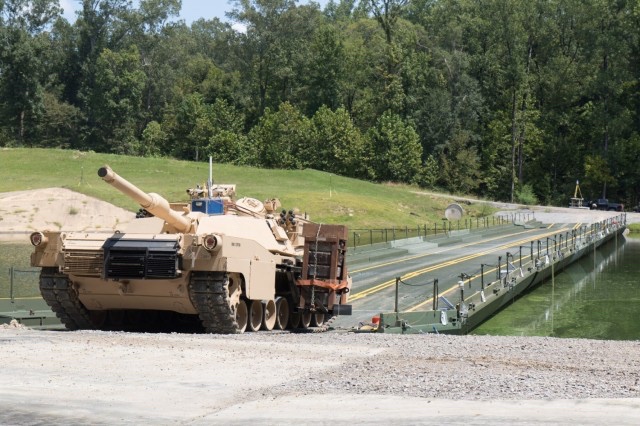
VICKSBURG, Miss. — In today’s ever-changing world, technology is advancing at lightning speed. For the U.S. Army that means constantly evolving vehicles, weapons and systems. With that in mind, the U.S. Army Engineer Research and Development Center, or ERDC, has partnered with the U.S. Army Program Executive Office Combat Support & Combat Service Support’s Project Manager Bridging to test high military load capacity vehicle weight limits of the Improved Ribbon Bridge, known as the IRB.

The IRB floating bridge system is used to transport weapon systems, troops and supplies over water when permanent bridges are not available. It provides wet-gap crossing capabilities either as a floating bridge or as a multi-bay raft for tracked and wheeled combat and tactical vehicles and has seen extensive combat operations with the Army and the U.S. Marine Corps since 2003.

“The family of high military load class bridging program is a program that we have here at ERDC that leverages subject matter experts across the ERDC to evaluate the structural response of the IRB when subjected to extreme loading conditions,” said Stephanie Robert, program manager and research civil engineer with the ERDC’s Geotechnical and Structures Laboratory. “We are able to look at the IRB and test it against different loading and hydrodynamic conditions to determine operational conditions in which the IRB can be deployed and subject it to increased weight and heavier vehicles.”
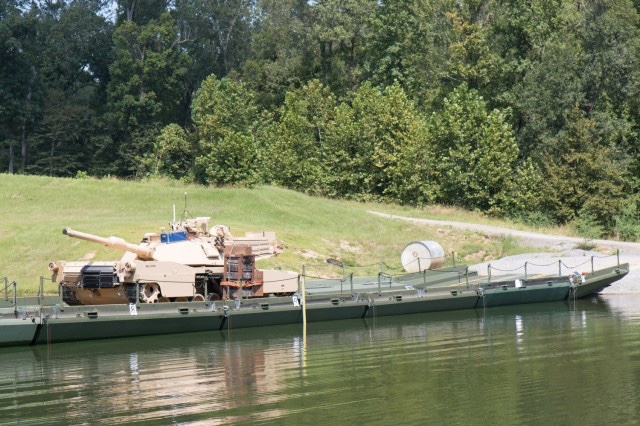
The multi-laboratory project reaches across the organization and includes personnel from the Mississippi Army National Guard and Anniston Army Depot. The project itself will span two years and has three testing phases: a full-scale still-water prototype test, a small-scale model test and computational modeling and analysis.

The first test phase, completed in September 2021, consisted of full-scale water testing of several military vehicles at various speeds and weights.

“We executed a fully successful test series with the IRB here at one of our testing basins,” said Dr. Wes Trim, a research mechanical engineer with ERDC Geotechnical and Structures Laboratory.

“The IRB is a complex float bridge system, and it’s difficult to test it under laboratory conditions,” he said. “We developed, designed and executed a full-scale still water test of the bridge, specifically aimed toward evaluating it against high military load capacity vehicles, by incrementally increasing our loading cases, not jumping into the heaviest most potentially damaging load first, but rather ramping up and taking a lot of measurements and inspections in between to safely approach our highest load targets.”
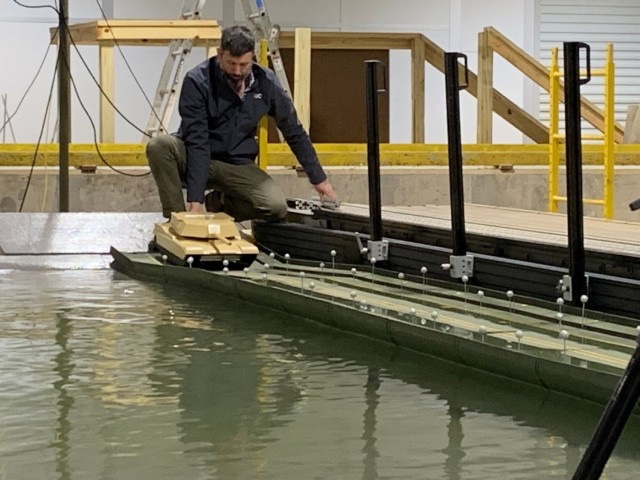
The team has since moved to the small-scale model testing phase of the project which will replicate the full-scale test and began in October 2021.

“We are going to take our results from our full-scale static flow testing, and we are going to validate it with our small-scale model testing,” said Robert.

“In full-scale, we had still water conditions, so there was no flow going through the channels,” she continued. “It was just the bridge out there, and we ran our vehicle across. Now we’re introducing hydrodynamic effects. We’re introducing river velocities and speeds across it that we didn’t test out in the field, so we’re able to bridge that gap.”

“We are doing scaled testing on the IRB,” said Dr. Duncan Bryant, a research hydraulic engineer with the ERDC’s Coastal and Hydraulics Laboratory. “We take a lot of care to make sure that we choose a scale where the hydrodynamic forces that we get here are captured and can be correlated up to a larger scale.”

The two tests are designed to complement each other with the small-scale test incorporating hydrodynamic aspects such as flow and depth.
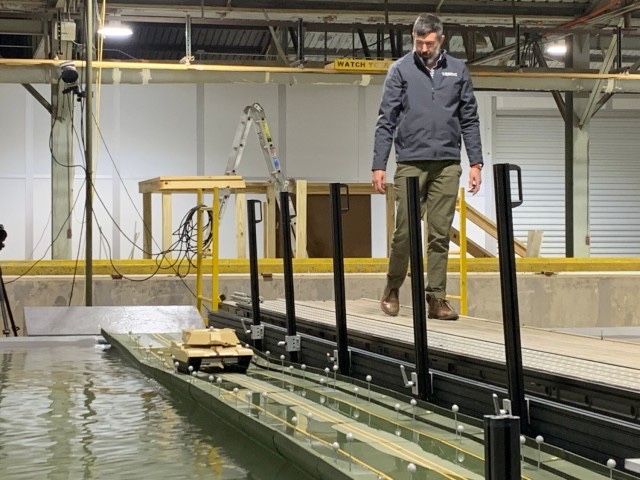
“We can introduce river velocities, so we can ramp the river velocity up or down depending on what we are trying to simulate,” said Bryant. “As the water comes in, it impacts the IRB and changes the hydrodynamics. There is an operational space where it’s just too much flow for the bridge, and as you add more weight, that operational space changes. The way to do that safely is a scaled model. Here we don’t have to worry about sinking a tank or sinking a bridge, and we can try a lot of different scenarios out without any risk to anybody or any property.”

“We’re able to test conditions that we weren’t able to test in the full-scale here in a safe environment,” said Robert. “We’ll be able to determine river velocities. We’ll be able to determine max crossing speed of vehicles. We’ll be able to determine the type of crossings. We’ll be able to determine exactly how many bays we need in order to support the conditions that we are testing.”

The final phase of the project will begin when small-scale testing is complete. All data will go into a computational model to look at all loads and conditions the team was unable to test with the previous methods, which will allow the warfighter to know under what operational conditions they can safely cross the IRB.

The IRB is a robust bridge,” said Trim. “It has significant capability. It’s impressive the amount of load that it’s actually able to carry.”

By Carol Coleman

Air Force Expects Lower Enlisted Promotion Rates

Wednesday, July 13th, 2022

ARLINGTON, Va. (AFNS) —  

The Air Force is expecting lower promotion rates for the next few years due to enlisted grade restructuring, a leveling-off of end-strength growth, and high retention levels. 
 
Based on structure revisions and end-strength requirements, grades E-5 through E-7 will be impacted. Through this realignment, the Air Force intends to balance and increase experience within its noncommissioned officer tier. 
 
“We value the experience Airmen bring to their work centers and we want to ensure we are aligning our enlisted force grade structure appropriately,” said Lt. Gen. Caroline Miller, deputy chief of staff for Manpower, Personnel, and Services. “Although this news may be discouraging for some, this revision is absolutely needed and allows us to grow the Air Force our nation needs.” 
 
The review also confirmed various career field managers’ concerns on the decrease of experience levels among their Airmen after analyzing historical data. 
 
“While a small part of the decline can be explained by the elimination of time-in-grade and time-in-service points from enlisted promotion considerations, the majority of the experience decline was attributable to the Air Force trying to achieve an enlisted force structure with too many higher grades,” said Col. James Barger, Air Force Manpower Analysis Agency commander. “We also found that experience levels would continue to decline unless the Air Force lays in more junior Airmen allocations and fewer E5-E7 allocations. So, we built a plan to transition to a healthier grade distribution by Fiscal Year 2025.” 
 
From 2015 to 2021, enlisted end-strength grew by nearly 16,000 Airmen and since more promotable quotas were available to Airmen during the period of growth, promotion rates over this time period were higher. 
 
Now that the end-strength growth has leveled off, the higher promotion opportunity is no longer available and will be further constrained as strengths drops by 3,000 into FY23 from its high in March 2022. 
 
Furthermore, due to record-high retention levels across the enlisted force, promotion opportunities due to Airmen separating or retiring have also been reduced. Over the next several years, and as retention levels may be expected to normalize, increased promotion opportunity may be expected. 
 
The revised grade structure distribution is essential for solidifying and building upon the experience gained and captured from the recent revisions to the Enlisted Evaluation System. Within this FY22 promotion cycles, the Air Force adopted the Promotion Recommendation Score, which places value on the experience of Airmen and sustained superior performance when it comes to promotions. The goal is to slow the rate at which the average Airman is promoted to give an average of an additional year of experience at each of the E-5 and E-6 grades. 



 
Last year, the Air Force introduced Airman Leadership Qualities which focus on competency-based development and lay the foundation for “Developing the Airmen We Need” for both officers and enlisted personnel. The ALQs are also an integral part of the recently released “Blueprint: Roadmap to Enlisted Development.” ALQ-based evaluations, slated to begin this fall, allow the Air Force to measure what it values for leadership development and future conflicts. 



 
“As we continue to improve and revise our enlisted evaluation system and grade distribution, we must ensure members are ready to both take care of their Airmen and are experts in their primary duties,” Miller added. “Our enlisted force must be poised and structured to be able to accomplish both of those key tasks.” 

Secretary of the Air Force Public Affairs

US and Finnish Soldiers Kick Off Summer Exercise

Tuesday, July 12th, 2022

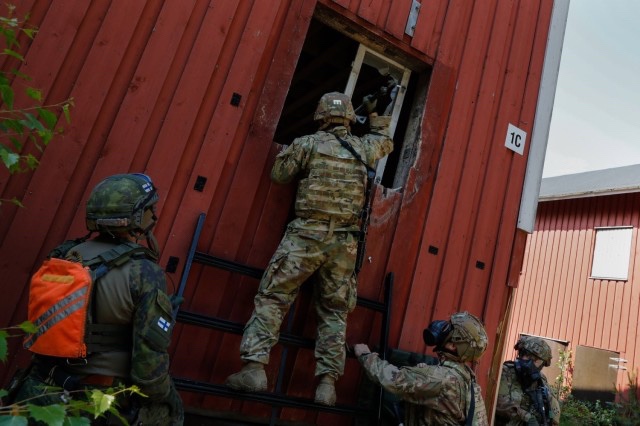
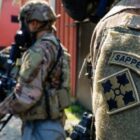
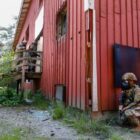
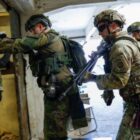
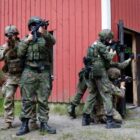
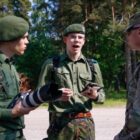
HELSINKI – Soldiers of the 3rd Brigade Combat Team, 82nd Airborne Division; the 3rd Armored Brigade Combat Team, 4th Infantry Division; and the Guard Jaeger Regiment of the Finnish Army, conducted bilateral training in Santahamina Island, Finland, June 28, 2022.

Over 200 U.S. Soldiers conducted urban operations training alongside Finnish soldiers, learning tactical skills from each other in order to operate seamlessly with partner nations.

The training is part of the Finnish Summer Exercise, a training exercise conducted in various bases throughout Finland, running from the end of June to September.

“Finland has been great. We appreciate the hospitality. From a military standpoint, the training has been exceptional. The Guard Jaeger Regiment has been very accommodating for anything we need,” said U.S. Army Lt. Col. Jacob Teplesky, commander of the 4th Squadron, 10th Cavalry Regiment, 3rd Armored Brigade Combat Team, 4th Infantry Division.

During the exercise, U.S. engineers and sappers conducted training on breaching, demolitions, and have learned how to use Finnish type charges they’ve never experienced before, said Teplesky

The Guard Jaeger Regiment’s primary mission is to train soldiers for urban operations. These soldiers would defend the capital as part of wartime units formed by the regiment.

“It’s very important, the cooperation between Finnish and U.S. forces. I think you will continue to see, as we continue to expand these exercises, throughout the summer as … we move from squad and platoon level, to a battalion command post exercise, we fly our unmanned aerial systems and we shoot a mechanized gunnery,” said Teplesky.

The 3rd Armored Brigade Combat Team, 4th Infantry Division is among other units assigned to the 1st Infantry Division, proudly working alongside regional security partners to provide combat-credible forces to V Corps, America’s forward deployed corps in Europe.

SPC Hassani Ribera Soto

USAF Career Assistance Advisor Renamed, Recoded to Synchronize Responsibilities with Resources

Monday, July 11th, 2022

ARLINGTON, Va. (AFNS) —  

Beginning this fall, the Air Force’s 92 enlisted Career Assistance Advisors will be converted to Airmen Development Advisors, complete with a new corresponding Air Force specialty code and bolstered foundational support.

The change is designed to align the broad spectrum of CAA responsibilities with deliberate development of the enlisted force, as recently outlined in the Enlisted Force Development Action Plan.

The portfolio of daily CAA responsibilities includes guiding Airmen in making informed decisions about their military careers, such as career path counseling, reenlistments, retraining, and specialty job opportunities. They also advise commanders and supervisors on enlisted force management and professional development opportunities and manage the administration of key training programs such as the First Term Airmen Course.

Though these roles and responsibilities will not be altered as a result of the transition from CAA to ADA, the new AFSC will make ADAs part of the professional military education instructor community. This will align them with Air Education and Training Command’s Thomas N. Barnes Center for Enlisted Education, allowing for a more cohesive level of baseline professional support.

“Right now, CAAs perform their duties without any formal training, standardized resources or instruction on how to build curriculum,” said Senior Master Sgt. Wes Lawrence, CAA special duty manager. “The change reinforces the importance of what Airmen Development Advisors will execute in their daily mission. We must provide tailored, professional resources and support that will benefit all Airmen.”

The transition exemplifies the “Force Development Ecosystem” focus area of the Enlisted Force Development Action Plan, which calls for building greater connections between initial skills, technical and on-the-job training, education and experiences.

“Connecting Airmen Development Advisors with the professional military education community makes sense as we strive for more deliberate development of tomorrow’s enlisted force,” said Chief Master Sgt. of the Air Force JoAnne S. Bass.

ADAs will continue to support all mission partners, to include: active duty, Guard, and Reserve Airmen; Guardians and civilians. The change will be official once the Air Force Enlisted Classification document is published, which is scheduled for Oct. 31.

Secretary of the Air Force Public Affairs

SCUBAPRO SUNDAY – The Real USMC Birthday

Sunday, July 10th, 2022

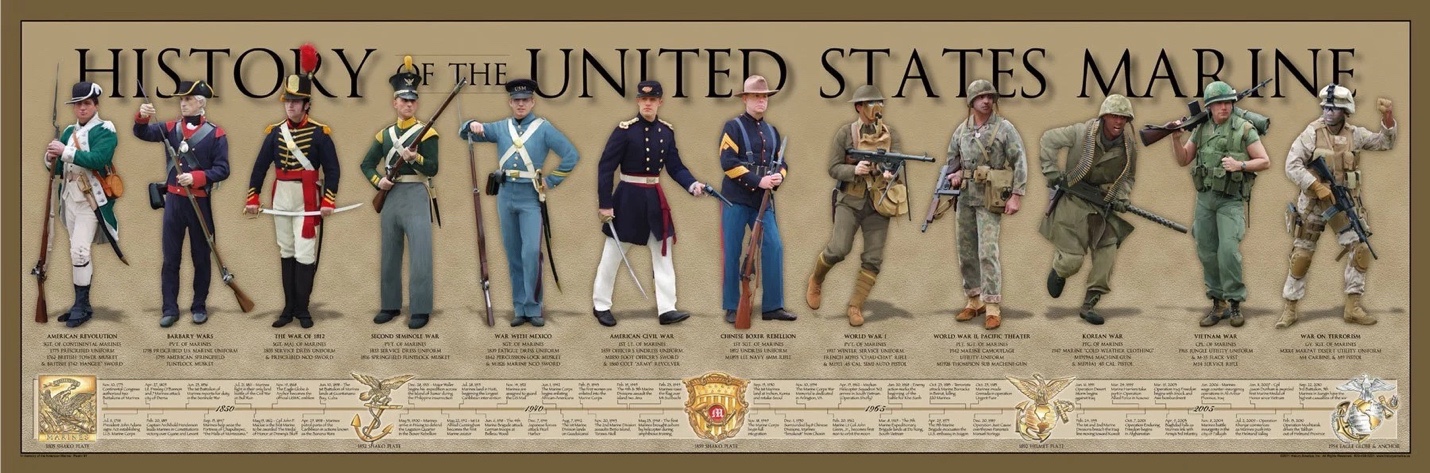
It’s a fact that most Marines are probably unaware of but a fact nonetheless, according to the Marine Corps History Division, which records the service’s official institutional and operational history.

The Second Continental Congress passed a resolution establishing two Continental Marines battalions on November 10, 1775, which the Corps now celebrates as its official birthday, marking 247 years of existence.

But as the History Division notes in its Brief History of the United States Marine Corps, the Continental Marine Corps was disbanded after the Revolutionary War “for reasons of the economy” in 1783 and ceased to exist for the next 15 years.

“The government auctioned off warships, and the Continental Marines ceased to exist,” military historian Chester Hearn told The Camp Pendleton Patch. “Major Samuel Nicholas, the first Marine officer, returned to his former occupation as owner of Tun Tavern in Philadelphia.”

It wasn’t until July 11, 1798, that Congress established a service known as the United States Marine Corps under the command of the Navy. The act passed by the 5th Congress and signed into law by President John Adams created the nearly 900-man strong Marine Corps, which consisted of one major, four captains, 28 lieutenants, about 100 sergeants, and corporals, and more than 700 privates.

And for the next 123 years, the Marine Corps recognized its birthday as July 11. As the History Division notes, “an unidentified newspaper clipping from 1918 refers to the celebration of the 120th birthday of the Marine Corps on July 11 ‘as usual with no fuss.'”

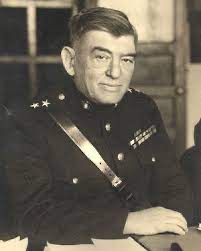
Then, in 1921, the good idea fairy caught the attention of the Commandant of the Marine Corps, Gen. John A. Lejeune, and suggested the service celebrate its earlier birthdate despite that 15-year gap. From the History Division:On October 21, 1921, Maj Edwin McClellan, Officer-in-Charge, Historical Section, Headquarters Marine Corps, sent a memorandum to Major General Commandant John A. Lejeune, suggesting the actual birthday on November 10, 1775, be declared a Marine Corps holiday to be celebrated throughout the Corps. Maj McClellan further suggested that a dinner be held in Washington D.C. to commemorate the event. Guests would include prominent men from the Marine Corps, Army, and Navy, and descendants of the Revolution.

Accordingly, on November 1, 1921, Maj Gen Lejeune issued Marine Corps Order No. 47, Series 1921. The order summarized the history, mission, and tradition of the Corps and directed that it be read to every command on November 10 each subsequent year in honor of the birthday of the Marine Corps. This order has been duly carried out.

Hey, look on the bright side: now you can get drunk and celebrate the birth of the Marine Corps twice a year. So, Semper Fidelis and Happy Early birthday!

Red Team: Reserve Marines Simulate Cyberspace Attackers In Exercise Cyber Yankee 22

Sunday, July 10th, 2022

CAMP NETT, Conn. —

Cyber warfare is defined as the use of computer technology to disrupt the activities of a state or organization, especially the deliberate attack or defense of information systems for strategic or military purposes. If a successful cyber-attack was directed at a power utility grid, it would have the ability to cut off electricity and running water. In response to this potential threat, service members from all branches of the United States military work alongside industry professionals to simulate an attack and defense of the northeastern power grid and transmission system.

“The transmission system is just a bigger version of what you have in your house,” said. Jason LaDuke, a Company CEO of the electrical enclave. “It’s like a circuit breaker, but a much, much bigger system. So power flowing into a city is flowing over a specific line. If you could close those breakers you would effectively cut off power to the transmission system.”

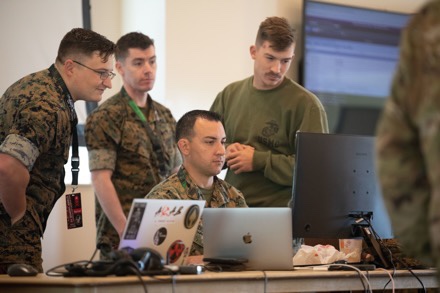
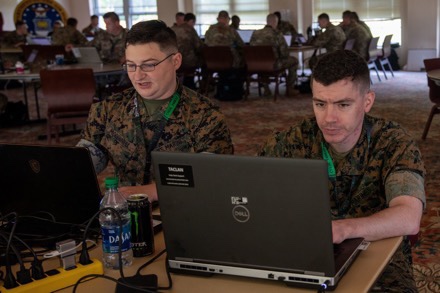
Reserve Marines from Defensive Cyberspace Operations-Internal Defensive Measures Company B, 6th Communication Battalion, and Marines from the newly created Marine Innovation Unit (MIU), joined their active duty counterparts from 8th Communication Battalion, with help from a subject matter expert from Marine Cyber Auxiliary to participate in exercise Cyber Yankee June 13-17 2022 Camp Nett, Conn.

“Cyber Yankee is a joint effort between the national guards of the New England states. They try to build up their capabilities and respond to any attacks to the critical infrastructure in New England while building a partnership between the National Guard, industry partners and the other branches of the United States military,” said Lance Cpl. Miles Young, a data systems administrator for Defensive Cyberspace Operations-Internal Defensive Measures (DCO-IDM) Company B, 6th Communication Battalion. “The Marine Corps role in this is to simulate an attacker so that the defense can clearly evaluate how they are doing.”

During Cyber Yankee, the service members are divided up into red teams and blue teams, with the Marines participating as the red team. The red team acts as an attacking force while the blue team tries to defend their network.

“This exercise is red versus blue. This emulates four different threat actors that leverage the cyber kill chain to meet their end states.”

MSgt Mike McAllister, cyberspace operations chief, MIU

“Each one of the four actors have different end state objectives. They vary in levels of sophistication from a cyber-criminal or hacktivist that is doing nothing more than low risk access attempts that can be mitigated by very simple security controls and elevate all the way up to the most advanced threat act or using sophisticated means of initiating access with stealthy movement throughout the IT enclave and into the operational technology enclave where the critical infrastructure is located,” said Master Sgt. Mike McAllister, cyberspace operations chief, Marine Innovation Unit.

Cyber Yankee is currently the only exercise of its kind.

“Training like this event is hard to come by. It’s rare and there are no other exercises that take it to this level. The power grid is a very complex system. It’s essentially one of the biggest machines on the planet when you look at it all together. This exercise really drives that complication element because it is so fast paced and high energy similar to what would take place in a real attack,” explained LaDuke.

The ability for Reserve Marines to integrate with Active Component Marines and service members from other branches provided a valuable training experience as the potential threat of cyber warfare continues to evolve.

“Marines participate in regional exercises and provide red team capabilities to the Joint Force Reserve, National Guards, and industry professionals [as they] interface for regional utilities which means we’re going in and helping the blue teams refine their play books so if they are called to support utility companies or in disasters of cyber nature,” said Staff Sgt. Sean Sarich, an innovation laboratory specialist at Marine Innovation Unit.

The Reserve Marines from MIU also played an important role in Cyber Yankee 2022 and plan to continue to support similar exercises to bring in additional talent and subject matter expertise from the cyber and developmental support occupational fields. MIU leverages existing talent in the Marine Corps Reserve to address advanced technology challenges in order to accelerate the development of new capabilities. MIU houses coders who have the potential to bring a new skillset and in-depth challenges to the exercise.

“It’s good for us to participate in this exercise because it’s important for us to build our technical skills defending this kind of network because the critical infrastructure power and water have very specific systems most people don’t have experience defending,” said Young. “We get the opportunity to sharpen our skill sets and expand our knowledge.”

LCpl Ashley Corbo, Marine Corps Forces Reserves