FirstSpear

Archive for the ‘Guest Post’ Category

SCUBAPRO Sunday – POW Ships

Sunday, January 1st, 2023

Throughout the course of the American Revolutionary War, the British imprisoned a significant number of colonists as prisoners of war. They were held on ships because doing so was more cost-effective than constructing prison of war camps on land.
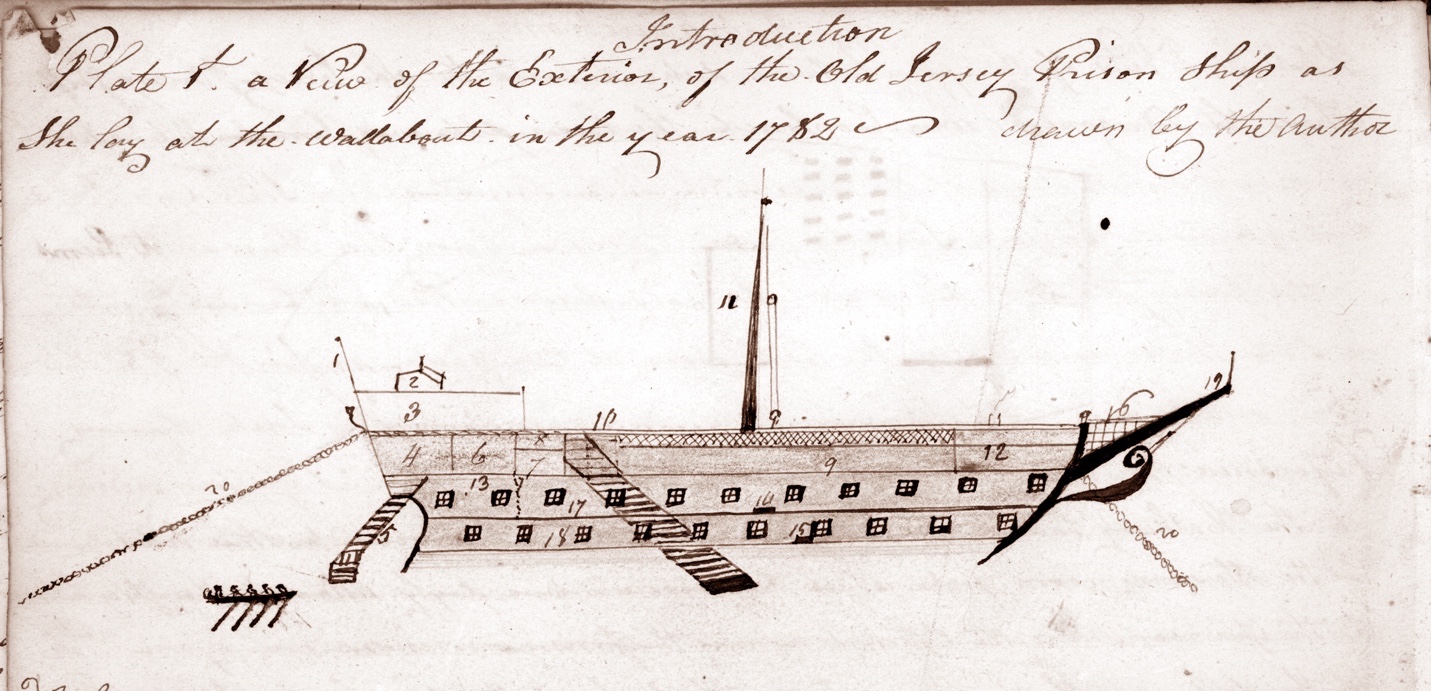
In Wallabout Bay, one ship that fit this description was the HMS Jersey. This port was in close proximity to New York City. The captives were handled in an extremely cruel manner. They were not provided with an adequate amount of food or water. Many of the soldiers perished as a result of diseases such as yellow fever and smallpox. More Americans lost their lives on British prison ships in New York Harbor than in all of the Revolutionary War’s engagements combined. For the majority of the conflict, there were at least 16 of these floating prisons, all of which were known for their filth, bugs, contagious diseases, and terror. They were all anchored in Wallabout Bay on the East River. The Jersey was the most infamous of the miserable ships, although they were all awful.

The British had hundreds of prisoners on their hands after the Battle of Long Island in August 1776 and the subsequent surrender of New York City, and the jails in New York quickly became overcrowded. The British then converted a number of old ships into prison ships when they started taking hundreds of seamen from privateers.

On the HMS Jersey, more than a thousand soldiers were crammed at once. When their British jailers opened the hatches in the morning, their first words to the soldiers below were, “Rebels, turn out your dead!” They died so frequently.

The Department of Defense reports that during the Revolutionary War, 4,435 people died in action. There may have been more deaths on prison ships than the 7,000–8,000 that one historian estimated. Some sources have that number as high as 12, 000 dyeing on the prison ships. Although such number is improbable for a single ship, it is plausible for all of the prison ships taken together and is frequently used.

Elizabeth Burgin was a loyal and brave citizen. We don’t have a lot of information regarding her life. It is well knowledge that she paid as many visits as she could to the captives held aboard the British prison ships. She provided the men food as well as a joyful spirit. An American officer took note of her frequent trips. He intended to provide assistance to a few of the inmates so that they might flee. He requested Elizabeth’s assistance in carrying out his plan. The British authorities did not permit male visitors on board the ships. Elizabeth gave her consent for the inmates to be informed to prepare. They were able to escape the ship with her assistance. The winter of 1779–1780 was one of the coldest on record. Men were able to escape from the ships by walking on the ice that formed when the water in the harbor froze over. During the winter of that year, Elizabeth Burgin was responsible for freeing more than two hundred convicts.

The anger felt by the British was palpable. They were willing to pay a reward of two hundred pounds for information leading to her capture. This sum was greater than what the majority of British troops were paid throughout their whole career of twenty years. Elizabeth was concerned that she might be executed by hanging. As a result of being forced to escape her home, she had to leave the majority of her valuables behind. Elizabeth’s bravery was praised in a letter that General George Washington sent to the Continental Congress. In recognition of her service and sacrifice, the Continental Congress awarded her a pension in the year 1781.
YEAR IN REVIEW: Soldiers Take Next Steps, Preparing for Future Fight

Saturday, December 31st, 2022

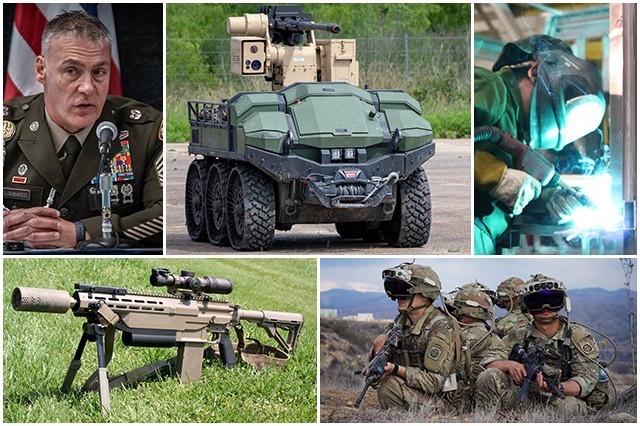
WASHINGTON — In 2022 the Army announced that the Next Generation Squad Weapon Program will become Soldiers’ primary firearms, awarded a defense contract for new, Mobile Protected Firepower vehicles and outlined its designs to build the Army of 2030.

The Army of 2030 is a plan to modernize and upgrade Army forces while preventing near peer adversaries from outpacing the service on the battlefield.

The branch also took the next step in its annual series of experiments, Project Convergence, and produced its Organic Industrial Base Modernization Implementation Plan to upgrade its facilities and work force across its organic industrial base. The industrial base is comprised of 23 depots, arsenals and ammunition plants, which plays the critical role of providing crucial materiel and sustainment support to the Joint Force.

Finally, the Army announced in December that it had awarded the Future Long Range Assault Aircraft contract to Texas-based manufacturer Bell Textron.

Next Generation Squad Weapon

For the first time in 65 years, Soldiers will field a new standard service weapon. In the spring of 2022 the Army announced that the Next Generation Squad Weapon, consisting of the XM5 rifle and XM250 light machine gun, will replace the M4 carbine, M16 rifle and the M249 light machine gun.

The lightweight weapons will make Soldiers significantly more lethal, with improvements in accuracy and range and the capability of mitigating recoil, improved barrel performance, and integrated muzzle sounds and flash reduction.

Infantry Soldiers, cavalry scouts, medics, combat engineers and forward observers can expect distribution of the NGSW in fall 2022.

To upgrade overall performance, the new weapons system will move from the 5.56 mm ammunition of the M16 and M4 to the 6.8 mm series of ammunition.

The service awarded a 10-year contract to New Hampshire-based weapons manufacturer Sig Sauer who will produce and deliver the new weapons system and its ammunition.

Mobile Protected Firepower Program

Soon Mobile Protected Firepower vehicles will also help Soldiers move at a faster pace and will not restrict movement and flexibility when driving on off-road terrain. The MPF vehicles will help the service’s light-maneuver forces achieve overmatch against adversaries.

The Army announced plans to field up to 96 MPF vehicles that will give infantry brigades the ability to identify threat systems earlier and at greater distances and improve overall survivability.

Feedback from Soldiers who tested the vehicles directly impacted the design. The Army awarded the $1.14 billion contract to Michigan-based company General Dynamics Land Systems.

Army of 2030

In October, the Army unveiled the “Army of 2030,” its plan to fully prepare for the future battlefield and to outpace near-peer adversaries.

To fully ready its forces to meet the challenge of evolving threats, the Army outlined six lines of effort.

First, the service must acquire sensors to see at a wider range and at greater distances than enemies. Second, the Army will develop the capability to rapidly deploy lethal, low-signature combat forces from a wide range of locations to overwhelm the opposition.

Next, Soldiers will deliver accurate, long-range precision missiles as part of the joint, all-domain force to strike deep targets. Army leaders said the Army will protect itself from air, missile and drone attacks. The branch must also secure its data and shield communication with coalition forces and other U.S. military branches from enemy cyber and electronic attacks.

And finally, Soldiers will learn to sustain the fight over contested land and over time.

The Army will also shift how it organizes its forces, moving to larger formations capable of working with other military branches. Division and corps commanders will view the battlefield from a wider perspective while divisions and corps will develop weapons to attack enemies across multiple domains.

Project Convergence

In October and November, the Army expanded the scope, complexity and range of Project Convergence, its annual series of experiments to include participation among partner nations and other military branches.

The service began the event in 2020 to rapidly integrate joint, all-domain service capabilities and to achieve overmatch through greater speed, range and decision dominance.

The Army experimented with its capabilities at long distances across the Pacific, breaking up the series into two phases at two California locations: Camp Pendleton and Fort Irwin.

More than 4,000 service members, civilians and contractors took part in the experiments testing about 300 new technologies. The experiments took place in maritime environments across the Indo-Pacific at locations in Japan, the Philippines, Australia and Hawaii.

In addition to all five military branches taking part in the experiments, Australian and British troops participated and representatives from the Canadian and New Zealand militaries acted as observers.

Organic Industrial Base Modernization Implementation Plan

The Army outlined how it will modernize and upgrade its facilities processes through implementation of its Organic Industrial Base Modernization Implementation Plan.

Army Materiel Command and Doug Bush, the Assistant Secretary of the Army for Acquisition, Logistics, and Technology will lead the 15-year, $16 billion plan in seven lines of effort that will augment the service’s industrial base.

The plan includes measures to update and modernize facilities, invest in tools and machinery, recruit and retain the best qualified work force and implement cybersecurity and protection.

The OIB modernization implementation plan will also improve production and manufacturing methods, participate in projects on health and safety and make energy use improvements while ensuring environmental safety compliance.

Future Long Range Assault Aircraft

The service took the next step in bringing the FLRAA capability to Soldiers in fall 2022. FLRAA, which will have a hybrid design that combines characteristics of planes and helicopters, will eventually replace the UH-60 Black Hawk as the Army’s utility and tactical transport helicopter.

The Army announced it had awarded the $1.3 billion FLRAA contract to Bell Textron on Dec. 5. The agreement will enable the service to continue with preliminary design development as well as the production and delivery of FLRAA virtual prototypes.

Maj. Gen. Walter Rugen, Future Vertical Lift Cross Functional Team director, said that the Army accelerated the development of the FLRAA capability by four years.

By Joe Lacdan, Army News Service

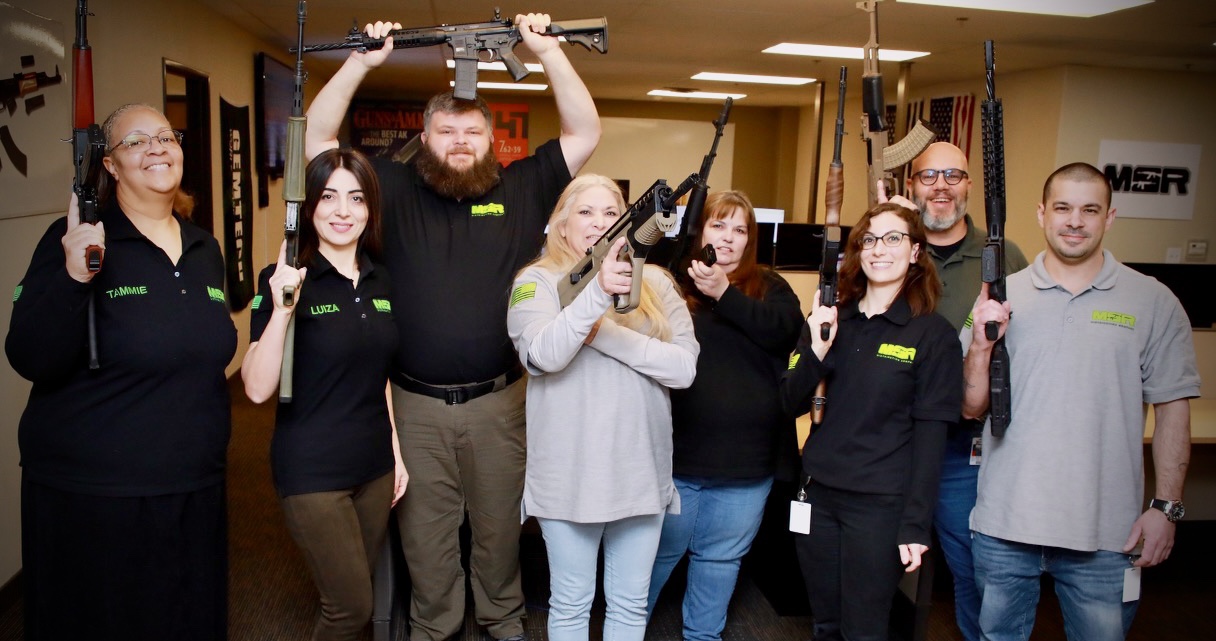
Happy New Year from MSR Distribution

Friday, December 30th, 2022

From the Sales Crew here at MSR Distribution. May you all have a wonderfully amazing New Year’s Weekend and may all your wildest wishes come true for 2023!

We look forward to seeing all our friends at SHOT Show 2023 and are super excited to make new ones!

Raven Concealment Systems Launches Kari Pistol Magazine Carriers

Friday, December 30th, 2022

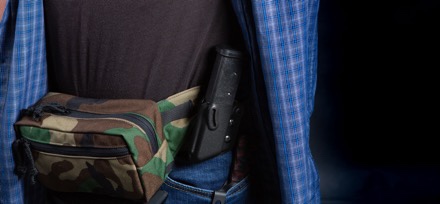
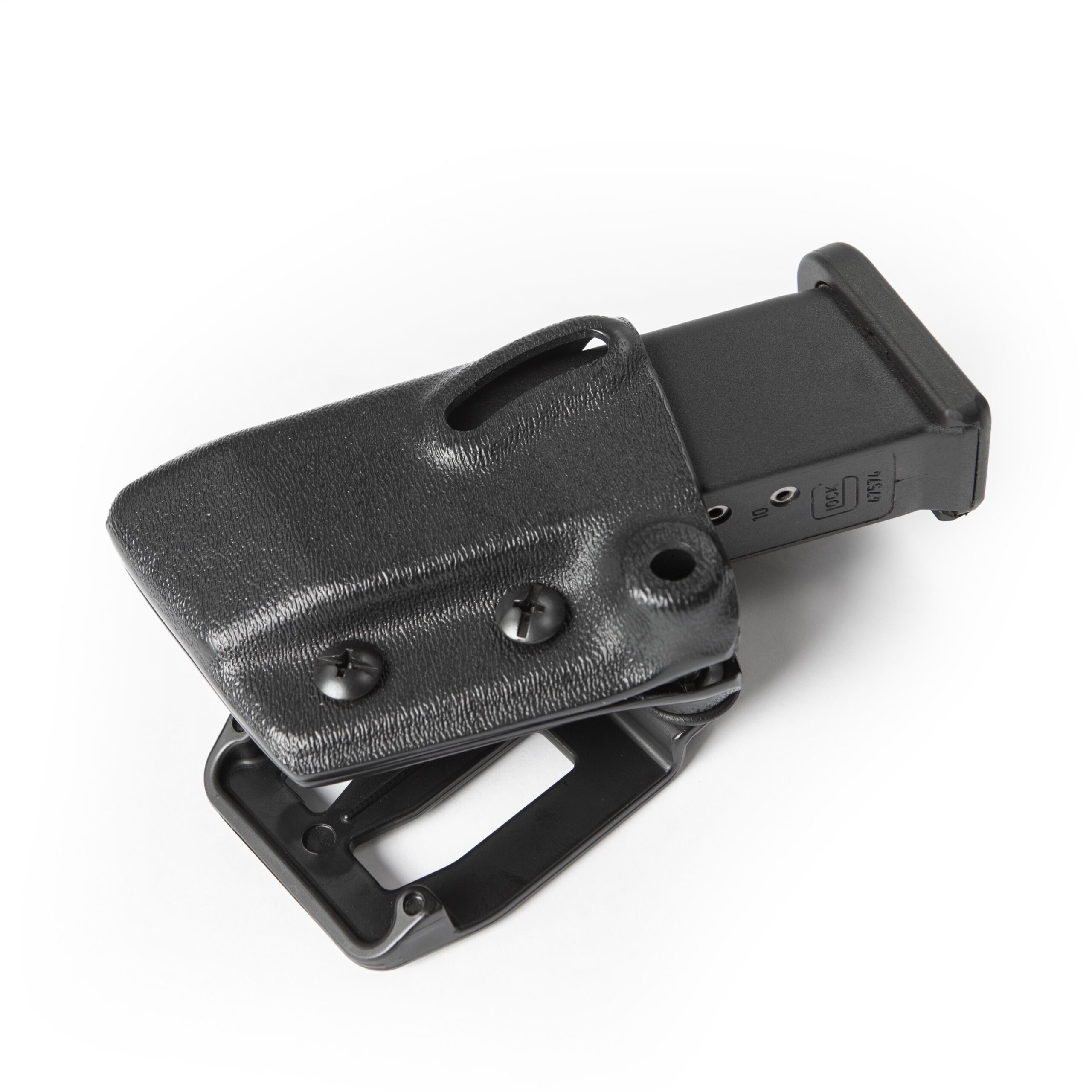
Raven Concealment Systems has released a new family of pistol magazine carriers, which they are calling the Kari.

Named after the ‘kari-ebira’ arrow quiver used by samurai, the Kari pistol magazine carrier provides shooters with an optimal blend of speed and concealment for their emergency reload. 

The Kari is a reverse-cant single magazine carrier.  Reverse-cant is a feature RCS borrowed from the competitive shooting sports.  Competition shooters frequently use reverse-cant magazine carriers because the angle orients the spare magazine in a position that is significantly faster to access for a reload.

This same design feature, when applied in the concealment role, gives the additional benefit of making it easier to keep the magazine hidden under certain types of cover garments.

The Kari is secured to the shooter’s belt with Raven Concealment Systems’ incredibly popular belt clip, allowing it to be donned and doffed without lacing it on and off the belt. It can be configured for use by both left- and right-handed shooters.

The Kari is compatible with most modern 9mm/.40 S&W caliber double-stack service pistols, such as the Glock 26/19/17, Sig P320/P320C/M17/M18, Walther PDP, HK VP9, HK P30, and similar sized weapons.

The Kari Slim is compatible with the Sig P365/P365XL/Macro, Glock 43/43X/48, Beretta M9, Browning Hi Power, CZ-75B, and other similar sized weapons.

The Kari has a retail price of $49.99, and is in-stock and shipping now.

Military, law enforcement, and government customers should contact Matt Edwards for pricing and lead times:  m.edwards@ravenconcealment.com

FirstSpear Friday Focus: Happy New Year

Friday, December 30th, 2022

Happy New Year from the FirstSpear team.

As dawn breaks into the new year, remember those working hard at home and abroad so we can celebrate in peace with family and friends.

Visit FirstSpear to find America’s Best tactical gear this New Year.

AFCENT’s Innovation Task Force 99 Establishes Ops, HQ

Friday, December 30th, 2022

AL UDEID AIR BASE, Qatar (AFNS) —  

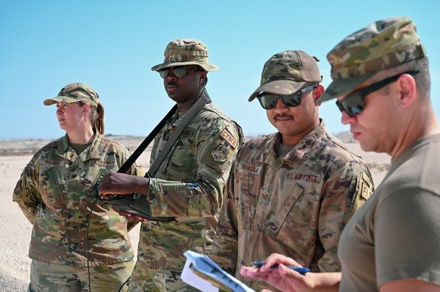
Less than two months following the establishment of Task Force 99, Lt. Gen. Alexus G. Grynkewich, Ninth Air Force (Air Forces Central) commander, visited the team at their new location for a peek behind the curtain of the command’s innovation powerhouse Dec. 1.

The new unit is the cornerstone of AFCENT’s approach to U.S. Central Command’s intent of building a Culture of Innovation. Comprised of eight full time multi-capable Airmen, its mission is to leverage digital and unmanned technologies, creating dilemmas for adversaries and new opportunities for collaboration with partners.

“[Task Force 99] a small group of super-empowered Airmen who I’m going to provide resources to so they can rapidly innovate and experiment in our area of responsibility we have in the Middle East,” said Grynkewich at the 2022 Air Force Association’s Air, Space and Cyber Conference in September.

The “Desert Catalysts” became an official Air Force organization Oct. 13, when Lt. Col. Erin Brilla took command. Agility and speed underwrite TF 99’s innovation core tenets, and the unit wasted no time setting up shop.

“Our humble beginnings started in a borrowed workspace graciously loaned to us by 379th Air Expeditionary Wing’s Desert Spark Innovation Lab. Within one month of being established, we were able to acquire this new workspace,” Brilla said. “Thanks to our incredible Qatari partners, a new hangar constructed specifically for Task Force 99 may also be in the works.”

In keeping with the command’s Partner for Strength priority, TF 99 will seek input and support from regional partners.

“[Task Force 99] will receive resources to rapidly innovate and experiment in austere and sometimes dangerous environments,” Grynkewich said. “It will also expand the collaborative space with our partners in the region and tie AFCENT into the innovation ecosystem.”

To date, 17 coalition partners have been invited to join TF 99’s efforts, encouraging all to bring their own hard problems and technologies for collaboration and regional synergy.

“None of us have enough time or money to do this on our own,” Brilla said. “We need an expansive network that shares ideas so we all can work together to solve complex problems from the lowest possible echelon.”

TF 99’s hard charging Airmen were hand-picked from a wide variety of specialties, ranging from cyber operators to civil engineers and intelligence analysts to metal technicians.

“These Airmen are the very embodiment of the Chief of Staff of the Air Force’s Accelerate, Change, or Lose mantra,” Brilla said. “Every member of our small, highly skilled, agile team is a subject matter expert in their field. We’ve empowered and encouraged them to experiment, tinker, and wonder ‘what if?’ given a few resources and high-risk tolerance, there’s no limit to what they can deliver.”

The team is empowered to accelerate change by getting after all four of the Air Force Chief of Staff’s Action Orders Airmen, Bureaucracy, Competition and Design.

The task force is also focused on flattening communication across the various innovation labs, and spark cells that exist at AEWs across the CENTCOM area of responsibility to encourage crosstalk and collaboration.

In addition to collaborating with the innovation arms of the U.S. Navy Central Command, TF 59, and the U.S. Army Central Command, TF 39, this air domain innovation task force (TF 99) also leverages relationships with partners across other arenas.

“We are interoperable by nature,” Brilla said. “To be successful, we want to unlock, embrace, and then uplift innovative solutions that can be implemented across organizations.”

Over the next two weeks, the task force will travel to the United States to connect with various vendors, leaders within academia and several government agencies. TF 99 is also sponsoring technology development through the Small Business Innovation Research program to power innovative solutions rapidly.

The task force is also leveraging relationships with the U.S. Air Force Academy by sharing real world, operational problem sets with cadets, giving them an opportunity to create innovative solutions as part of their curriculum.

TF 99 is actively recruiting the next generation of Desert Catalysts, seeking hard-charging innovators from active duty, the Air National Guard and Air Force Reserves who might be interested in joining this elite team on future deployment rotations.

“Innovation allows us to better posture our forces, to better sense the environment, to more effectively deter and defeat threat actors,” said Army Gen. Erik Kurilla, CENTCOM commander. “Together through innovation, we can all do much more to advance the stability of the region.”

Story by Capt Kayshel Trudell

Ninth Air Force (Air Forces Central)

Photo by Senior Airman Micah Coate

Cyber Focus Unveiled at Justified Accord 23 Final Planning Event

Thursday, December 29th, 2022

NAIROBI, Kenya — U.S. and Kenya military planners gathered in Nairobi, Kenya, Dec. 5-9, to finalize plans for U.S. Africa Command’s largest East Africa military training exercise.

Justified Accord 23, or JA 23, scheduled from Feb. 13-24, is led by U.S. Army Southern European Task Force, Africa. This multinational exercise brings together more than 20 countries from three continents to increase partner readiness for peacekeeping missions, crisis response, and humanitarian assistance.

JA 23 will feature the following events: An African Union academics course, a multinational field training exercise, a live-fire exercise, humanitarian assistance and disaster relief projects, as well as training on defensive cyber capabilities.

This is the first-year cyber elements will be included in the exercise.

“Cyberspace is an increasingly important aspect of our daily lives and it effects both our civilian and military operations,” said U.S. Army Lt. Col. Kendra Tippett, chief of plans and exercises (G6), SETAF-AF.

“It is critical we understand the threats in cyberspace and effectively defend against them,” she added.

Tippett explained how this year’s exercise will provide U.S. joint forces the opportunity to work with African partners in the cyber domain. Specifically, multinational forces including Kenya and Uganda will focus on key cyber aspects such as incident identification, threat intelligence, artifact collection, containment and eradication.

Kenya will host activities primarily in Nairobi and Isiolo, while Uganda, Rwanda and Djibouti will provide venues for additional exercise events.

“Working together in cyberspace with our African partners and sharing our best practices will ultimately enhance our ability to defend against malign actors who seek to degrade critical infrastructure and impede military and civilian operations,” Tippett said.

SETAF-AF, based in Vicenza, Italy, is U.S. Africa Command’s lead agent for planning the Justified Accord exercise series conducted annually in East Africa. SETAF-AF is responsible for coordinating all U.S. Army activities in Africa in support of U.S. Africa Command and U.S. Army Europe and Africa. Activities include military readiness exercises across the continent, hundreds of security force assistance engagements, crisis response and enduring posture support. These engagements strengthen partner networks in Africa, build partner capacity against regional and global security threats, and provide strategic access for U.S. forces in contingency operations.

For the latest photos, videos and articles from past and present iterations of the exercise, visit www.dvidshub.net/feature/JustifiedAccord.

By CPT Joe Legros

Laser Target Locator Fielded to More Soldiers

Wednesday, December 28th, 2022

FORT CAMPBELL, Ky. — Program Executive Office Soldier concluded a four-day fielding event of the Laser Target Locator Module II, or LTLM II, units to Soldiers assigned to the 3rd Brigade Combat Team, 101st Airborne Division, with a new equipment training session on Fort Campbell, Dec. 1.

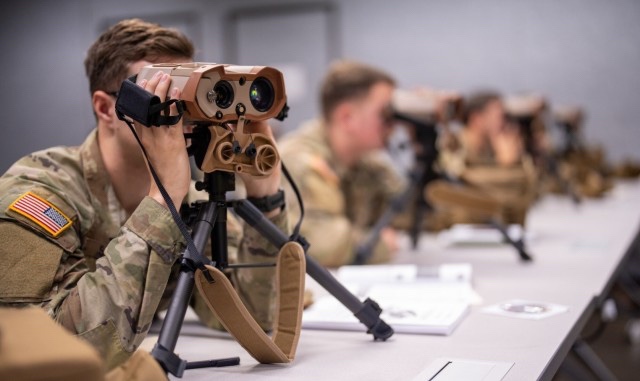
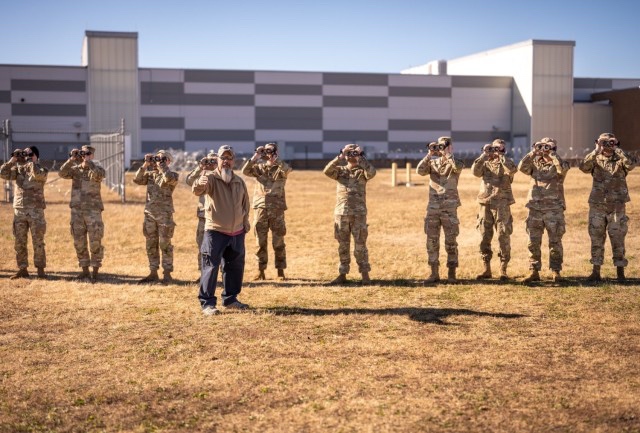
PEO Soldier personnel fielded 166 LTLM II devices and provided Soldiers training on its operations both in the classroom and outdoors in practical exercise scenarios.

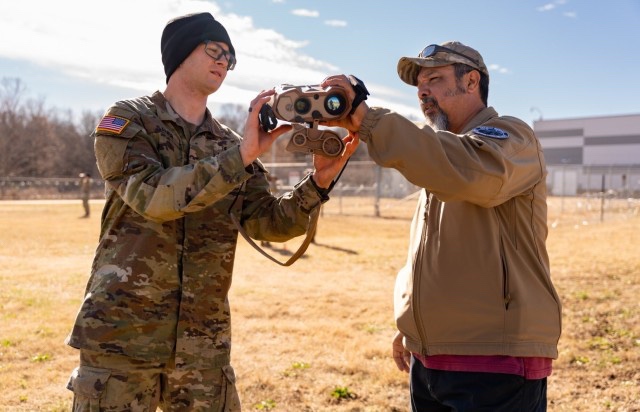
“We want them to get as hands-on as possible,” said Mario Garcia, Soldier Precision Targeting Devices New Equipment Training team lead for PEO Soldier. “We also give them the training material because this is a ‘train the trainer’ course. That way, they can take that with them and build the training within their unit.”

LTLM II is a second-generation lightweight, handheld laser target locator with a direct view optic, uncooled thermal camera, low-light camera, eye-safe laser range finder, digital magnetic compass, and a Selective Availability Anti-Spoofing Module GPS receiver. It provides dismounted forward observers, scouts, snipers, and platoon leaders all-weather capability to locate targets accurately and transmit target data.

LTLM II improves upon its predecessors, such as the Target Reconnaissance Infrared Geolocating Range Finder, or TRIGR, by being smaller, lighter and more user-friendly.

“The biggest difference is size and weight. With the TRIGR, we’re going from a five-and-a-half-pound system to a system that’s just over three pounds. And that’s not counting the batteries or tripod. The buttons and menus are easier to operate as well. You have less multi-functions of the buttons, which enhances ease of use. These changes were all the result of Soldier feedback,” said Garcia.

Prior to the LTLM, a single Soldier would determine the location of a target of interest by getting their self-location, finding the potential target and estimating the distance and direction of the target. Once the self-location, distance and direction to the target are found, the Soldier then would go back to their map and plot the estimated location on it and find the location.

With LTLM II, Soldiers can determine a target location in seconds and much more accurately. Soldier feedback following the hands-on training was positive and many look forward to using LTLM II in the field.

“I think this device is going to be really good to integrate into dismounted reconnaissance teams,” said a Soldier assigned to the 3rd Brigade Combat Team, 101st Airborne Division. It has good thermal capabilities and picture quality, so we’ll be able to deliver really good information to our commander and send that up immediately. The only thing we have that’s comparable to this right now is the AN/PAS-13 (thermal weapon sight) and as a tool this is 20 times better.”

In addition to fielding more than 160 units, PEO Soldier personnel were also able implement a software update that allows LTLM II’s fielded prior to September 2021 to communicate with the Precision Fires-Dismounted system. LTLM II’s fielded after September 2021 already have the software installed.

“We conducted software updates on systems previously fielded to 1st Brigade Combat Team, 101st Airborne Division while we were here doing this fielding with the 3rd Brigade. The update allows the device to also communicate with the PFD in addition to the Defense Advanced GPS Receiver and Pocket-sized Forward Entry Device. In the event I’m targeting something, instead of having to read off the screen, it’ll send the targeting data to whatever device I’m using, and I can send that digitally to wherever it needs to go,” said Garcia.

By Jason Amadi