X-PAC

Archive for the ‘Guest Post’ Category

FirstSpear Friday Focus: OEM Spotlight Brave Castle

Friday, May 13th, 2022

In this weeks Friday Focus, we featured another installment of our OEM Spotlight. An American brand, a solid choice in material and craftsmanship, enter Brave Castle. Guest interview with Loren Butchart, owner and operator of Brave Castle.

How did Brave Castle get its start?

Brave Castle got its start as a podcast, fully transitioning into a tactical nylon company in 2020. Retention solutions have always interested me and the ongoing challenges continue to be a puzzle I enjoy sharing my input on. Providing kit to Americans is one the highest honors I have attained and maintaining this is a responsibility that I respect and hold at a very high regard.

Why did you choose to collaborate with FirstSpear?

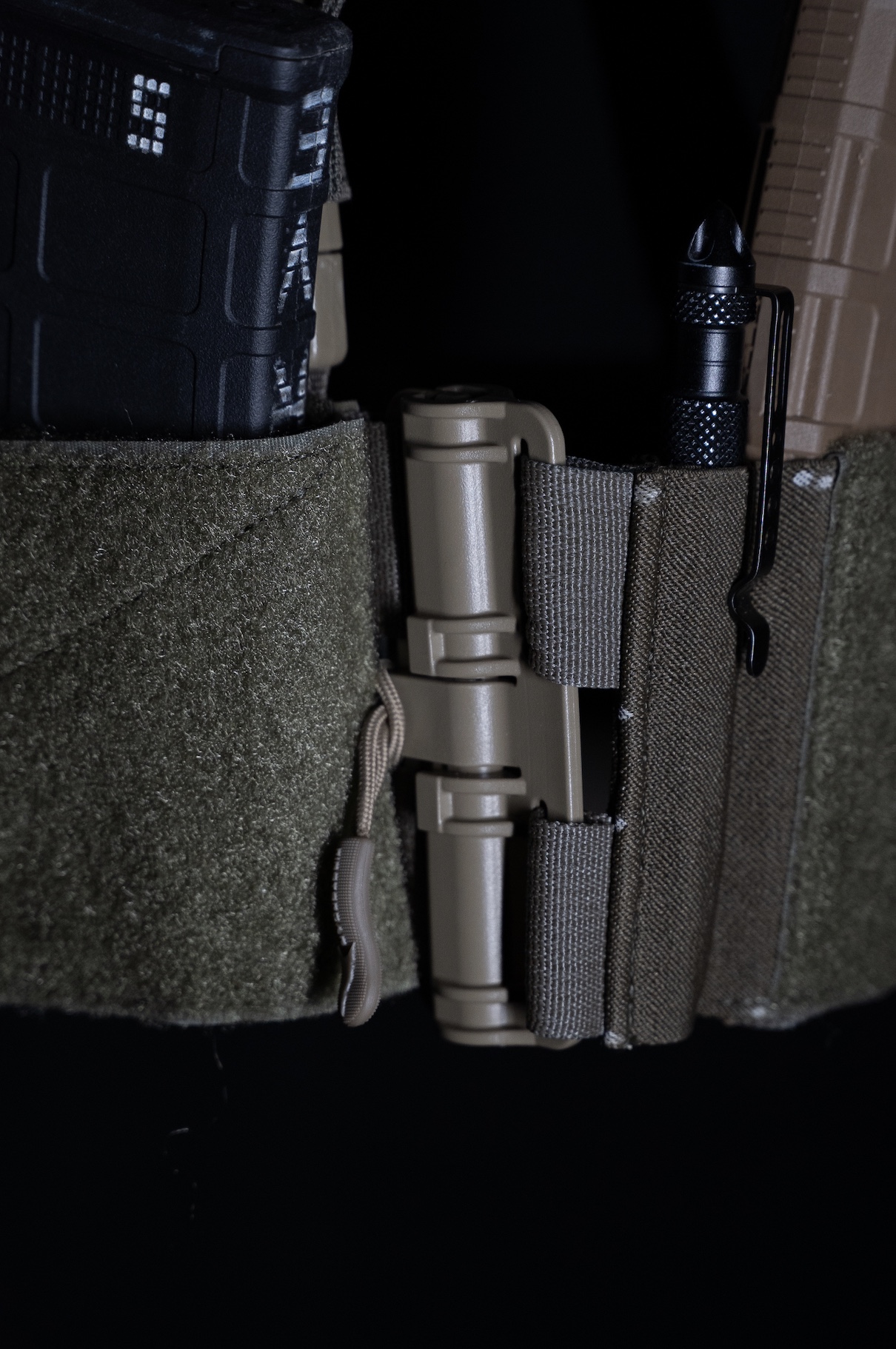
I have followed, collected and studied nylon companies for a long time. I found FirstSpear and was blown away at the level of innovation they were offering. FirstSpear quickly became one of my favorite companies and the Tubes™ connector system was something I had to have. When I started sewing kit, I really wanted to make a chest rig that utilized Tubes™ connectors. The relationship I have built with one of my favorite companies has been a true honor and everyone I have worked with at FirstSpear has been incredible to collaborate with.

Where did the need for the BCR-1 Chest Rig arise?

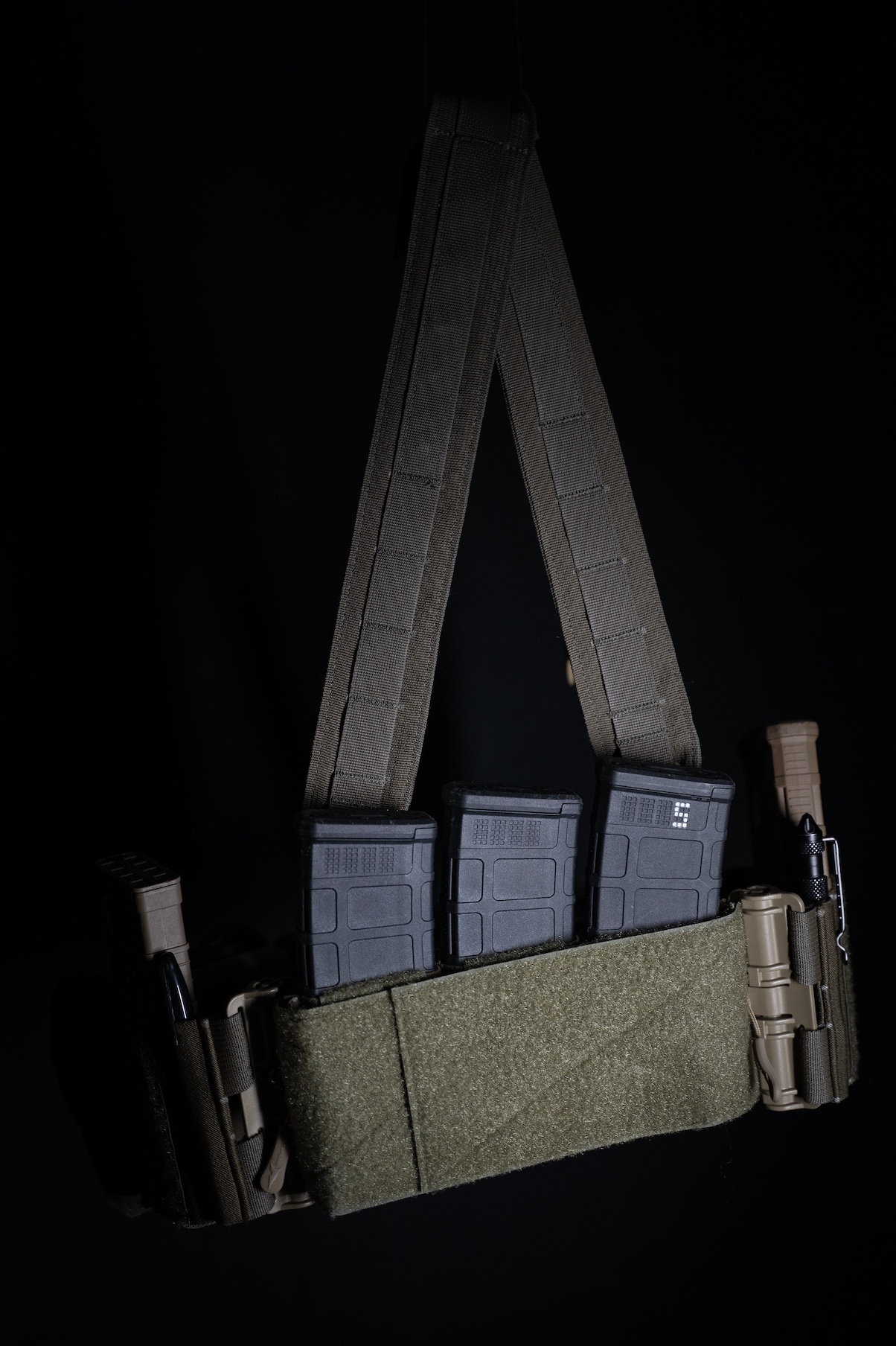
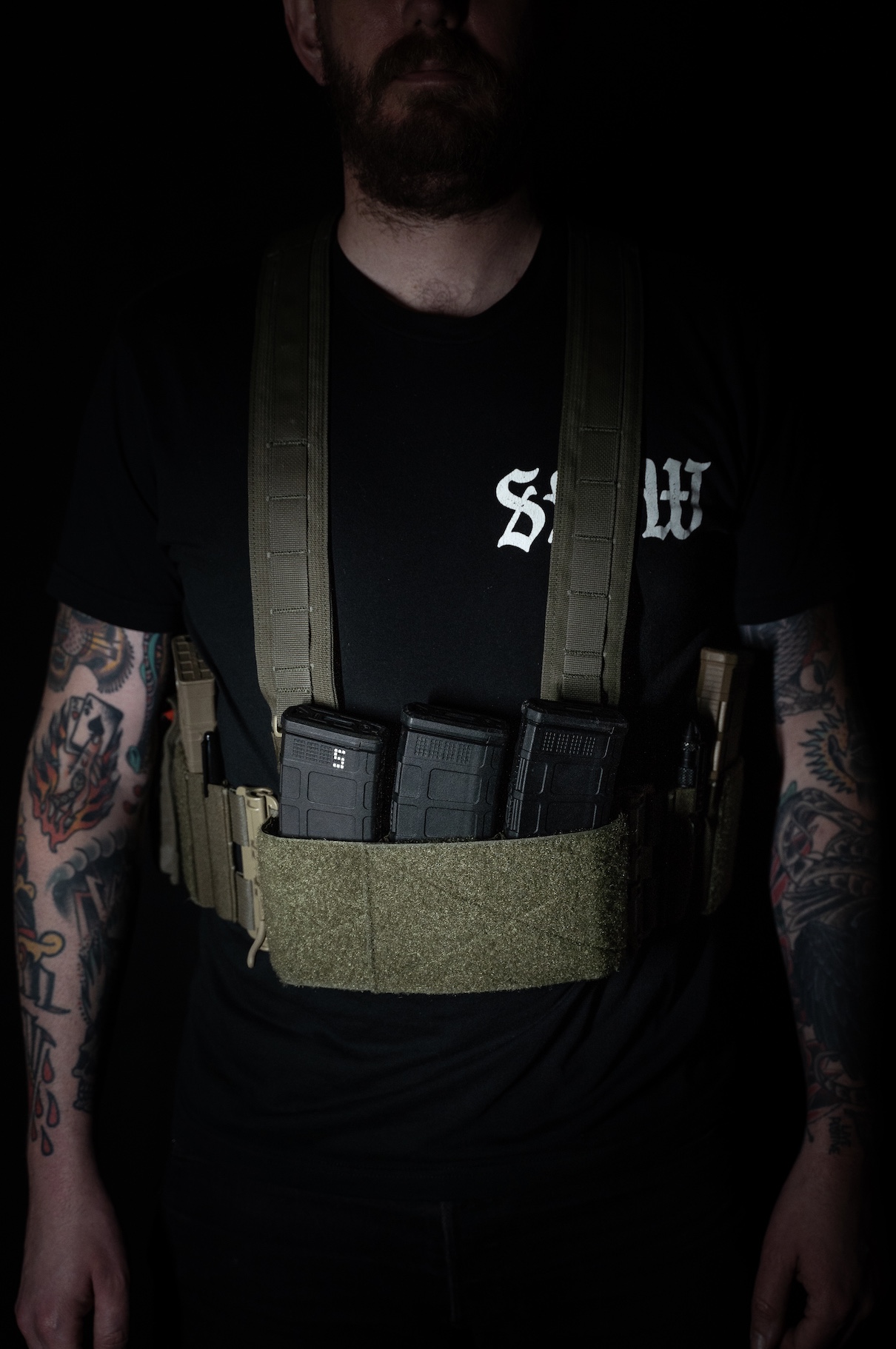
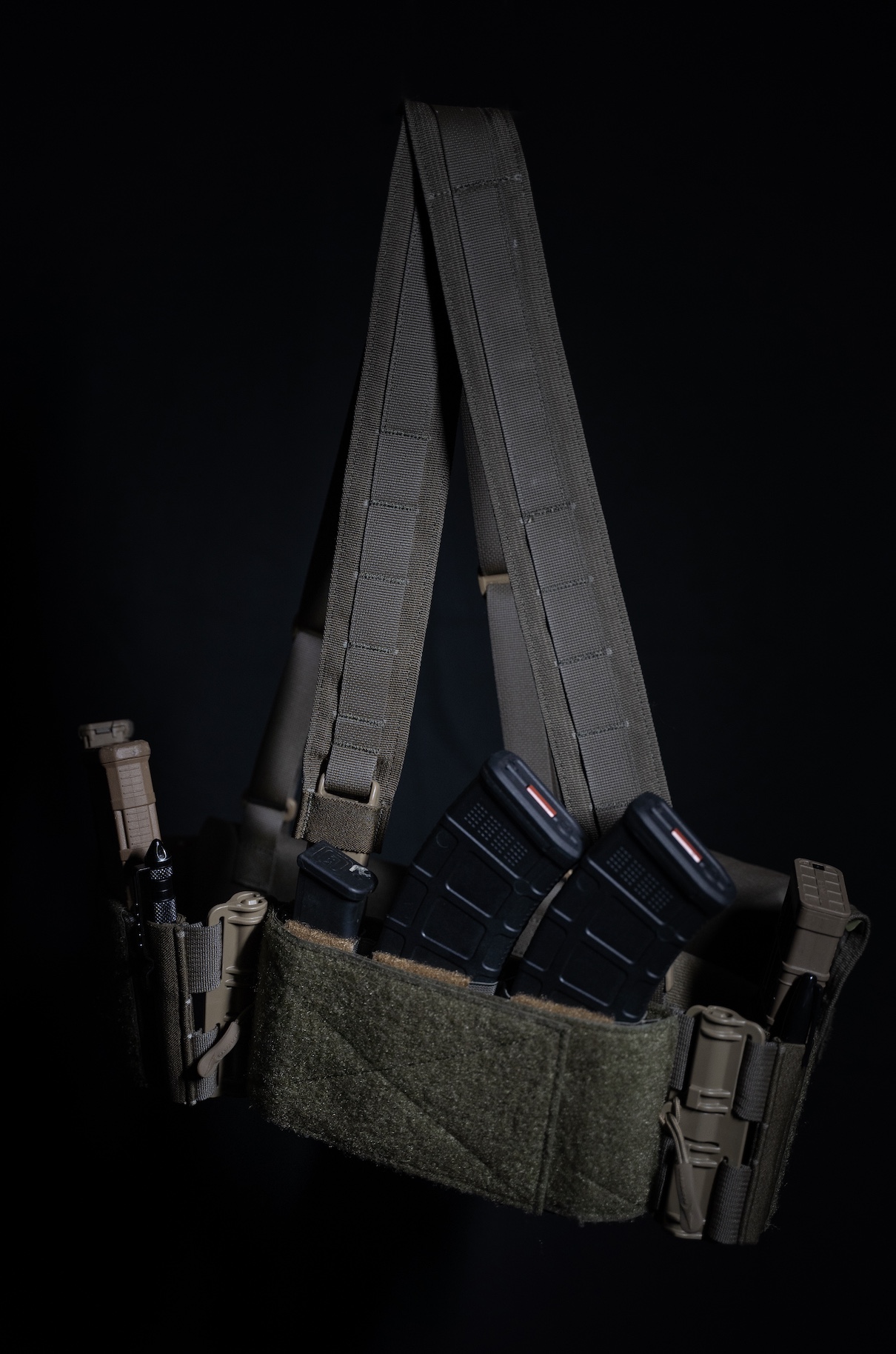
The Brave Castle Rig One (BCR-1) was born from some basic niche problems that I saw in the classic chest rig and micro rig designs. The BCR-1 is essentially a plate carrier minus the plate bags. The first solution I wanted on the BCR-1 was the utilization of the Tubes™ connector system for a more secure closure and ease in donning and doffing. The BCR-1 is constructed out of 7 individual parts, all of which can be replaced.

Explain the modularity of the BCR-1 and why you chose FirstSpear Tubes™ technology.

The BCR-1 is made up of 2 cummerbund sides, a front velcro based placard, a magazine shingle, a back sizing panel and 2 shoulder straps that form an X on the users back. Upgradability is native to the BCR-1. The heart of the BCR-1 is the front velcro based placard which accepts magazine shingles with ease. The wealth of knowledge, innovation, technology and experience make working with FirstSpear a gold mine for a creative brain like mine. It is a massive honor to be able to work with FirstSpear and I am eternally grateful for everyone who works with this company.

For more information on Brave Caste and the BCR-1, check out www.bravecastle.com.

For more information on FirstSpear, check out www.first-spear.com.

Revised Air Force ‘Brown, Blue Book’ Released

Friday, May 13th, 2022

ARLINGTON, Va. (AFNS) —  

The Air Force recently updated the contents of The Enlisted Force Structure and The Profession of Arms: Our Core Values, more commonly known among Airmen as the “Brown” and “Blue” books.

Tradition and heritage are themes found within the revamped foundational guides for Airmen to emulate throughout their career.

“Our Airmen are the greatest competitive advantage we have to deter and defeat the fast-paced, complex threats we face around the globe,” said Chief Master Sgt. of the Air Force JoAnne S. Bass. “Airmen should approach our mission with the mindset of respect, pride, innovation, and a continued commitment to anticipate and embrace change to achieve excellence.”

The Enlisted Force Structure, or “Brown Book,” provides a standard baseline to best meet mission requirements, while outlining foundational and occupational competencies Airmen should develop as they progress in rank and responsibility. It underscores the importance of character in each tier of the enlisted structure, and clearly outlines standards Airmen must meet and enforce to advance a culture of trust, respect and inclusion.

Although the core of the enlisted force structure remains the same, the updated “Brown Book” supports developing current and future Airmen by adding topics such as: Airman Leadership Qualities, teaming, force development and multi-capable Airmen. The updates outline modernized development changes within the Air Force, in line with the vision to accelerate change across the enterprise.

The Profession of Arms: Our Core Values, known as the “Blue Book,” was originally published in 1996 and provides guidance to Airmen at all levels on the service’s institutional values and guiding principles. This revision extensively explains the Profession of Arms; Service Oaths for Enlisted, Officers and Civil Servants; Air Force Core Values and the Code of Conduct.

“We must periodically review and refresh our foundational guides to ensure we’re giving Airmen the tools they need to succeed in the future force,” said Air Force Chief of Staff Gen. CQ Brown, Jr. “What hasn’t changed, is every Airman’s responsibility to inspire others, set an example through personal conduct, and promote leadership and accountability across our force.”

The Blue Book calls on Airmen to be dedicated to continuous individual and institutional improvements. It emphasizes the importance of showing respect for others and implements a recommendation of the Independent Review Commission on Sexual Assault in the Military by clarifying that engaging in and tolerating sexual assault and sexual harassment are violations of the Air Force Core Values. Stalking, bullying, extremism and discrimination are additional behaviors cited as eroding the foundation upon which the Air Force was built.

In addition to the “Brown” and “Blue” books, Airmen can expect a new “Purple Book” to be released in the summer. The “Purple Book” will aim to educate Airmen about how Airpower fits into the joint-force environment, and connects joint doctrine, values, capabilities and warfighting concepts that capture how the Air Force effectively partners with other services to protect America’s interests across the globe.

“Updating these foundational guides equips Airmen with the resources needed to become highly trained, educated, and adaptable to the threats our competitors present, and the significant role every Airman plays for the mission to be successful,” Bass said.

Developing and updating these guides was part of the 28 Enlisted Force Development Action Plan objectives focused on developing the future enlisted force. The revised “Brown Book” can be found here and the revised “Blue Book” can be found here.

Secretary of the Air Force Public Affairs

Army Futures Command Incorporates International Partners into Annual Demonstration

Thursday, May 12th, 2022

DUGWAY PROVING GROUND, Utah – Army Futures Command’s Future Vertical Lift Cross-Functional Team kicked off its annual Experimental Demonstration Gateway Event, or EDGE, on May 2 to assess new tactics, technologies and interconnecting architectures with more than 16 inter-service organizations and seven international partners.

EDGE 2022 includes progressive efforts connecting Joint All-Domain Command and Control to the lower tier of the air domain by extending the reach and lethality of the Future Attack Reconnaissance Aircraft Ecosystem to accelerate combined kill chains in all-domain operations. This year seven international partners; to include Australia, Canada, France, Germany, Italy, Netherlands and United Kingdom; are participating, some with network and weapons systems. This inclusion advances efforts to ensure integration and interoperability among allied nations.

“The EDGE experimentation is a powerful step in our transformation towards a data-centric Army,” said Lt. Gen. James Richardson, Acting Commanding General of Army Futures Command. “The effort continues our campaign of learning by focusing in on our aviation assets ability to network and utilize data as ammunition.”

EDGE22 objectives include:

Interoperability: Improve ability for allies and partners to coherently, effectively and efficiently act together to achieve tactical, operational and strategic objectives. Achieved across multiple dimensions: technical, procedural, human and information.

Network: Advance data-centric solutions and enable the speed, range and convergence to achieve decision dominance and overmatch.

Interactive Drone Swarm: Technology demonstration within Future Unmanned Aircraft System signature effort. Alters battlefield geometry providing tailored capability for threat overmatch through advanced teaming.

Multi-INT Sensors: Pursue tailorable payloads to include electronic sense, decoy and attack. Advance AI enabled aided target recognition to improve threat detect and identification.

Enhanced Sustainment: Increase systems’ reliability, availability and maintainability. Critical in contested and expeditionary logistic environments.

“We’re doing a couple really big things at EDGE22,” said Maj. Gen. Walter “Wally” Rugen, Future Vertical Lift Cross-Functional Team director. “Pulling in our international allies is an important piece, and the interactive drone swarm, testing how that needs to be fought, seeing how that concept develops and what needs to go into our doctrine. The swarm is tailored to generate overmatch, this concept of outpacing the enemy in a battlefield geometry that breaks them.”

Bottom line, he said, is that our teams are working to innovate and to “execute violently to get after innovation.” The goal is to keep pushing the envelope, working these complex problems hard and taking the risk if it’s going to bring us better knowledge.

EDGE22 is part of AFC’s Project Convergence Campaign of Learning and builds on lessons learned from previous experimentations at our nation’s Western Test Ranges, including EDGE21 at Dugway Proving Ground and Project Convergence 21 at Yuma Proving Ground, Arizona.

By Lisa Ferguson, AFC Future Vertical Lift Cross Functional Team

Modern Day Marine Day One

Wednesday, May 11th, 2022

On the first day of Modern Day Marine 2022, Marine Corps leaders provide updates on Force Design 2030, focusing on experimentation, logistics, an maritime operations in the littorals. Throughout the day, speakers described the concepts and initiatives currently underway, while maintaining a focus on the individual Marine and the role human factors play in the future success of the Marine Corps.

The Secretary of the Navy, Carlos Del Toro, and Commandant of the Marine Corps, Gen. David H. Berger, provided introductory remarks on the current state of the Marine Corps and Force Design 2030 efforts. Berger described the technological fluency and experience of Marines who join the Marine Corps today and how the Service can leverage these personal characteristics and translate them into operational success.

“What we’ve learned over the past three years is that we can do much more to identify those skills, those interests, and then align them individually to the needs of the Marine Corps,” said Berger.

The Commandant of the Marine Corps also emphasized the unique role an operational capabilities of the Marine Corps, particularly those provided by a Marine Expeditionary Unit (MEU) embarked on the U.S. Navy ships of an Amphibious Ready Group (ARG). Coupled with emerging technologies like Uncrewed Surface Vessels and underwater drones, the welldeck of an amphibious ship enables a host of capabilities, including reconnaissance and counter-reconnaissance.

“The MEU has been the crown jewel of the Marine Corps for decades, and will continue well into the future,” said Berger. “They have capabilities that cannot be replicated by any other part of the joint force. No platform, no unit, is capable of a more diverse set of missions across the range of military operations than an ARG/MEU.”

At the Congressional Breakfast, the Sergeant Major of the Marine Corps, Sgt. Maj. Troy E. Black, reiterated the importance of the human element of warfare, and the requirement to ensure the Marine Corps invests not only in systems, but in people. “Warfare is a human activity,” said Black. “Machines don’t do it.I would argue that our strategic advantage is in our Marines, in our people.”

Lt. Gen. Karsten Heckl, Deputy Commandant for Combat Development and Integration, and senior leaders from Combat Development and Integration gave an update on the Force Design Annual Update and the many ways the Marine Corps is currently experimenting to ensure a more combat capable force exists tomorrow.

Lt. Gen. Edward Banta, Deputy Commandant for Installations and Logistics, spoke about how the Marine Corps is sustaining the future force and modernizing Marine Corps logistics.

During his remarks on capabilities and the way ahead for Marine Forces Special Operation Command (MARSOC), Col. Ian A. Fletcher, the Director of Combat Development & Integration (CD&I) for MARSOC, identified MARSOC operators as having unique capabilities and being an integral part of the vision for the future of special operations forces.

“One of the unique things.that MARSOC has always had in our DNA, is the integration of a special operations capabilities specialist. So, an intel analyst, or a truck driver, or a mobility specialist, you name it: we have a whole enterprise of individuals who are trained to a Special Operation Forces standard. They are built purposely to go out on the tactical edge at various different levels with our special operators.”

The Marine Corps is innovating today to win tomorrow’s battles. The theme of human performance as an essential element and key enabler for Force Design was echoed throughout the first day of Modern Day Marine 2022.

For additional coverage of Modern Day Marine or attend in person, visit:

marinemilitaryexpos.com/modern-day-marine/home

For more information on Force Design 2030 and associated modernization efforts, visit: www.marines.mil/Force-Design-2030

Headquarters Marine Corps

KP15 Rifles, Complete: Six Hundred Bones

Tuesday, May 10th, 2022

KE Arms is currently offering complete KP15 rifles for $599.95; that’s a KE15 forged flat top complete upper receiver atop a KP15 monolithic polymer lower receiver with a MilSpec fire control group and KP15-optimized parts. This complete KP15 offers four (4) choices of bolt carrier group and three (3) rail system options.

KP15 with 15 in. Delta-P MLOK Rail and Forward Assist Upper: 5.85 lbs, lighter with a shorter handguard selection. This configuration would normally retail for $899.95, but KE Arms is currently trying to reduce inventory to make way for new products. They’ll continue selling rifles in this configuration until they’re all gone.

BLUF: The KP15 is a superb and reliable lightweight rifle for an excellent price.

Upper

• Precision machined from 7075-T6 forgings to MilSpec standards.
• Available with a standard forward assist or slick side without forward assist.
• MilSpec Type III Hard Anodized
• Made to fit all M16/M4 rifles and carbines.
• Features a USGI Type T marked top, making it easy to remount your tactical accessories.
• Weight: 0.5lbs.

Lower

• KP15 Complete MilSpec FCG Polymer Receiver
• Flared magwell to make reloads under stress easier to perform.
• A1 Length 13 in. Length of Pull (LOP) Buttstock to fit a wide range of shooters
• MLOK Slots at the rear of stock for sling attach points or strap
• Holes at the front of the stock for QD socket inserts for more sling attachment options
• Improved grip for comfortable use
• ‘Winter’ Trigger Guard
• Standard or Trapdoor buttplate available

Barrel

• 16 in. 5.56mm stress-relieved 41V40 steel barrel
• 1:9 button-rifled
• Chrome-lined bore and chamber, and phosphate finish
• 750″ gas block with drilled gas port
• 1/2 x 28 muzzle thread
• Assembled with M4 feed ramp extension
• Designed for carbine length gas system

Danyela D’Angelo behind her KP15.

Charging Handle

Billet machined out of 7075 T-6 aluminum
 Mil 8625 Type III, Class 2 hard anodized
Includes a heavier spring for increased durability and longevity
Large latch for easy manipulation in times of stress.

Bolt Carrier Group Options

• M16 Black Nitride
• M16 Chrome Standard
• M16 Chrome with HMB Bolt
• Slick M16 Chrome with HMB Bolt

The KP15 does not come with magazines; KE Arms recommends Gen 3 PMAGs.

Rail System Options

• 12.5 in. Delta-P MLOK
• 12.5 in. Delta-R MLOK
• 15 in. Delta-R MLOK

Learn more about the KP15 rifle and other platforms online at KEarms.com.

Special Projects Division Audax OTF

Monday, May 9th, 2022

Precision Made, DA OTF for Military and Law Enforcement Users

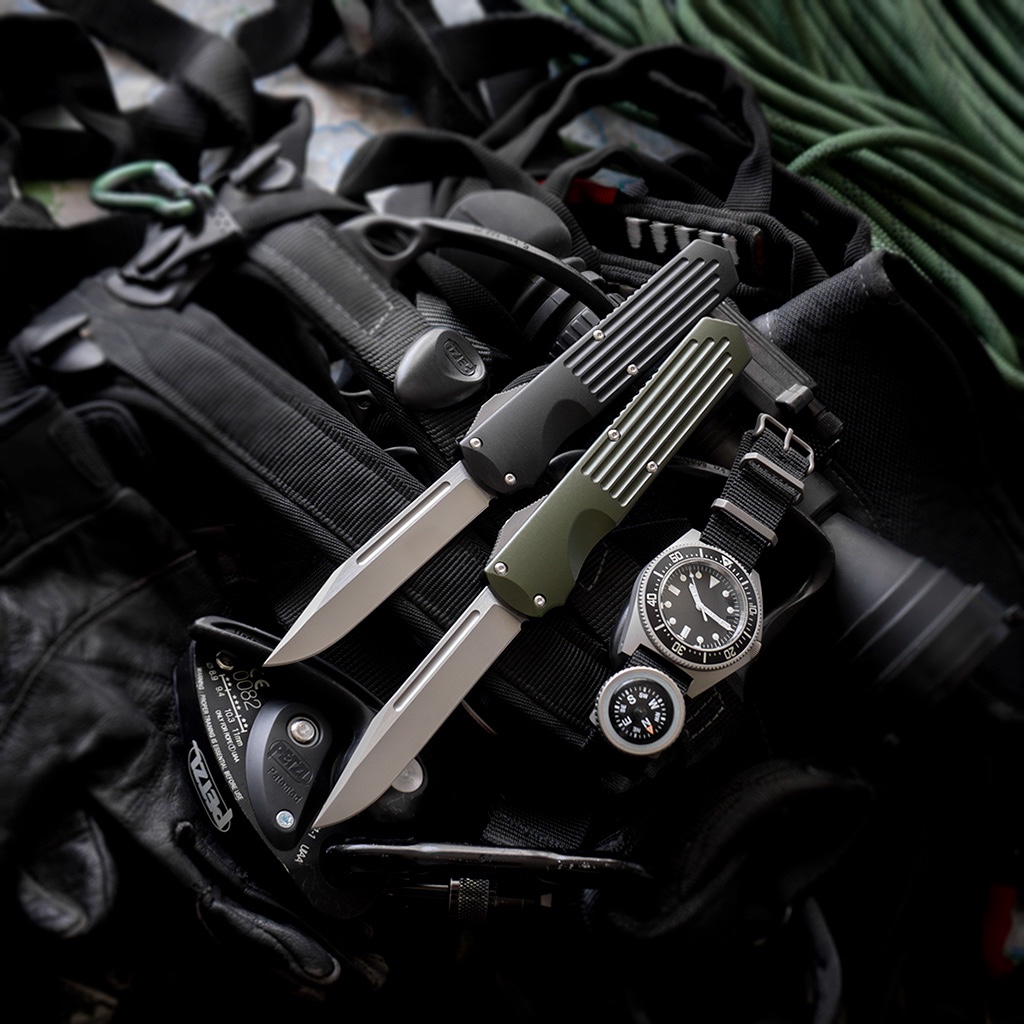
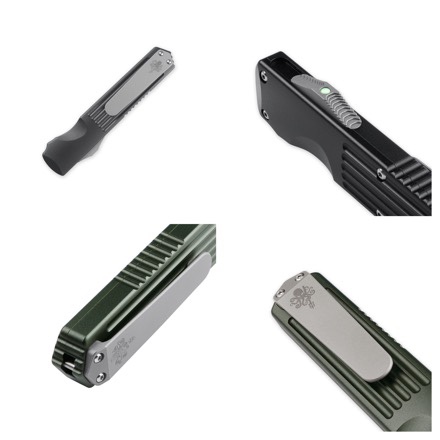
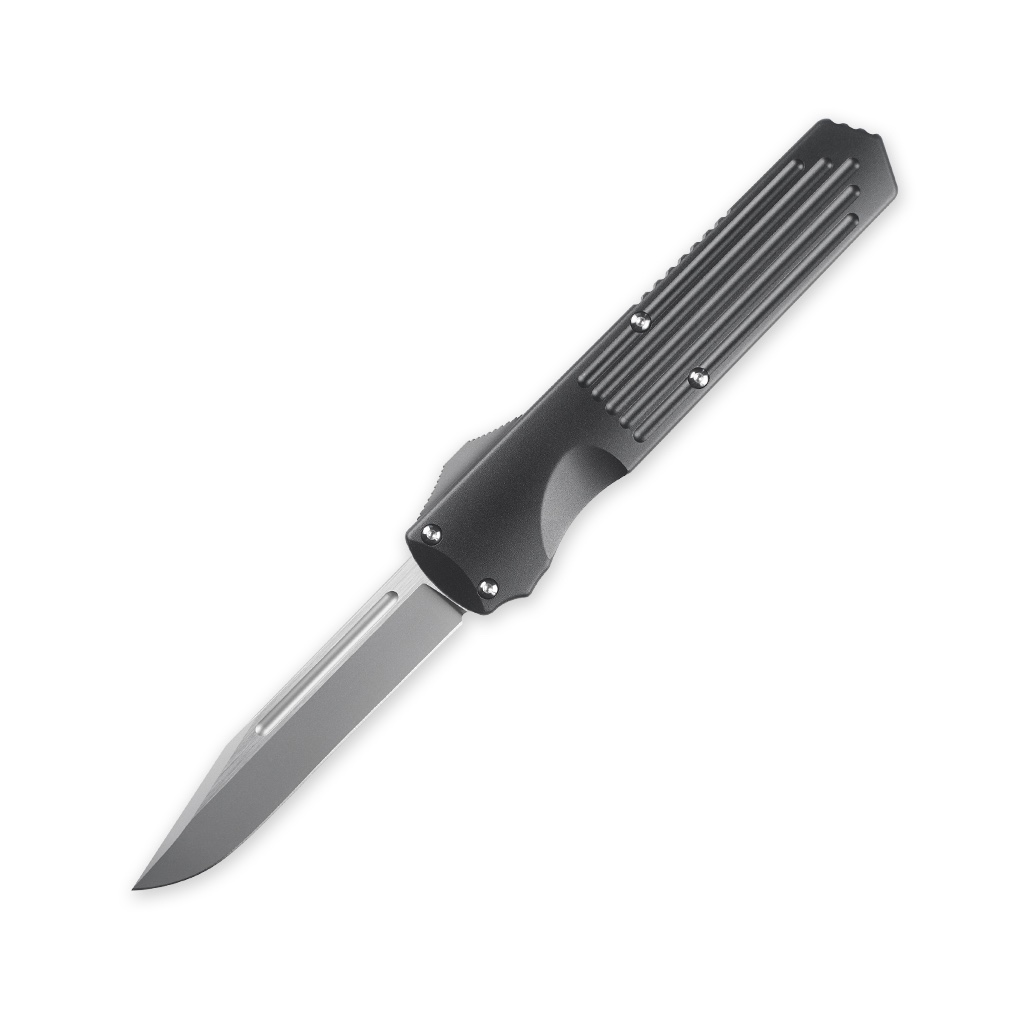
New for Spring 2022, Prometheus Design Werx introduces their Audax OTF under their Special Projects Division label. This modern, precision made, double-action, “out the front” type knife features a clip point blade made with Böhler M390 steel, fully machined-contoured, T6061 handles with a type III hard anodized finish, and a titanium sliding actuator with a dive-watch grade, luminous glow dot inlay. Many fine details are machined throughout this purpose driven OTF including a blade fuller, jimping for saber and reverse grips, signature handle fullers, an internal lanyard pin, and titanium billet pocket clip. The SPD Audax OTF is designed and made for their military and law enforcement users in mind and is available with black or olive drab green handles and a fine matte finish blade with satin flats.

The Design and R&D Team at PDW states:

“We created with Audax OTF as a refined, reliable and purpose driven edged tool for our Military and Law Enforcement customers. Unique to our OTF design is the fully milled contoured handle, and along with the five fuller pattern, offers solid positive grip with or without gloves. Our signature luminous dive-watch grade glow dot inlay on the sliding actuator and internal lanyard pin rounds out the small details which makes our design stand apart. Our Audax OTF holds fast to our form follow function design ethos in this fast-deploying duty knife. ‘Audax’ is Latin for bold, courageous and daring; and a well suited product name for the knife’s intended users.”

The Audax OTF will be available for purchase for $289.00 on Wednesday, May 11th, 2022 at 12:00pm Pacific via their website, prometheusdesignwerx.com.


Gun Safes Excluded from Military Household Goods Weight Allowance

Monday, May 9th, 2022

ARLINGTON, Va. (AFNS) —  

As of May 2022, the Joint Travel Regulations for service members were updated to exclude the weight of gun safes from the total weight allowance of household goods in a permanent change of station.

As the number of accidental child injuries and deaths continue to rise, more and more incidents are attributed to unsecured, loaded guns. Defense leaders are confident this update will help improve overall gun safety in homes, while also helping to decrease service member suicides.

“We will continue to prioritize the health, safety, and welfare of our Airmen, Guardians, and their families,” said Secretary of the Air Force Frank Kendall. “We want to ensure our service members have a safe home.”

The weight allowance for household goods falls between 5,000 and 18,000 pounds, based on rank and whether or not a service member has dependents.

With the weight of gun safes typically ranging from 200 to over 1,000 pounds, some service members may have experienced a conflict when choosing between safety and convenience. Now, service members are allowed to ship empty guns safes, not to exceed 500 pounds, in addition to respective household goods weight allowances.

Leaving loaded guns in unsecured areas of the home, such as bedside tables, closet storage rooms and unlocked gun cabinets, creates an opportunity for children to gain access to weapons, putting themselves or others in danger.

The Centers for Disease Control and Prevention found that firearms were the leading cause of death among U.S. children and adolescents in 2020.

Beyond the impact unsecured guns have on child safety, the Department of Defense has recognized the significant rise in service member suicide rates and established the Suicide Prevention and Response Independent Review Committee in March to address and prevent suicide in the military.

The Department of the Air Force Suicide Prevention Program, Integrated Resilience, Security Forces and the Safety Office combined to promote an effort focused on putting time and space between distressed individuals and the means to harm themselves named “Time-Based Prevention,” which became a part of the Department of the Air Force’s comprehensive suicide prevention strategy.

“We know that increasing the time between one’s suicide ideation and one’s access to a firearm can play a critical role in preventing a suicide. If this policy change prevents just one suicide, it’ll be a success in my eyes,” said Under Secretary of the Air Force Gina Ortiz Jones.

The concept was presented to Total Force Airmen who shared that the cost of going over their household goods limits is a barrier to using weapon safes in the home, leading the Department of the Air Force to pursue this change to the JTR. The DoD went on to adopt the “Time-Based Prevention” approach as a part of the DoD suicide prevention strategy.

In addition to the JTR update, the Department of the Air Force implemented a cable gun lock safety program in 2020, sending 150,000 cable gun locks to every installation in the United States for distribution to service members on a first-come, first-served basis.

“The bottom line is our first obligation is to the Airmen, Guardians, and families who were courageous enough to raise their right hand to serve this country,” Kendall said. “Everything we do is with them in mind, and this regulation update is no different.”

By SSgt Elora J. McCutcheon, Secretary of the Air Force Public Affairs

SCUBAPRO Sunday – Finning Techniques

Sunday, May 8th, 2022

Finning is the process of generating propulsion. In that sense, it is probably the most basic of all the diving skills, and one that most of us are already able to do when we first start diving.

In particular, a better finning technique, choosing the right technique for the right circumstances, can increase your dive’s efficiency.

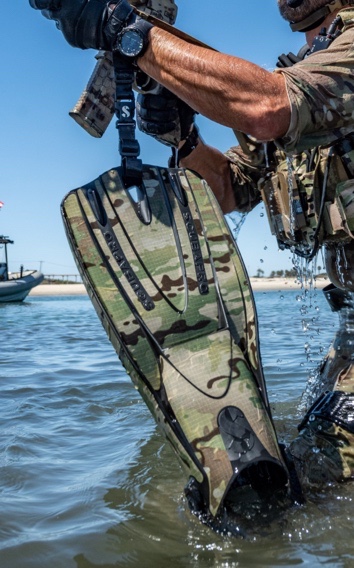
This will decrease your air consumption, reduce physical fatigue, and extending your dives. Picking the right finning technique will also decrease the amount of silt you turn up. I am going to talk about four types of SCUBAPRO fins.  The Jet fin, the Seawing Nova Gorilla, The Seawing Nova, and the Go Sport fins. The Jet Fin is the most wildly used fin in the world by profession divers, the SeaWing Nova, the SeaWing Nova Gorillas (a stiffer version of the Seawing Nova that is great for people that who are strong kickers). The Go Sport fin is new to our line and is a tremendous all-around fin for diving, surface swimming like OTB and River and Stream crossing. Lastly are the Twin Jet fins, again a SCUBAPRO iconic fin; it is used by strong kickers that like to use a flutter kick type stroke.

There are three main fin kicks that any diver should know. These are flutter kicks, frog kicks, and bent-knee cave diver kicks.
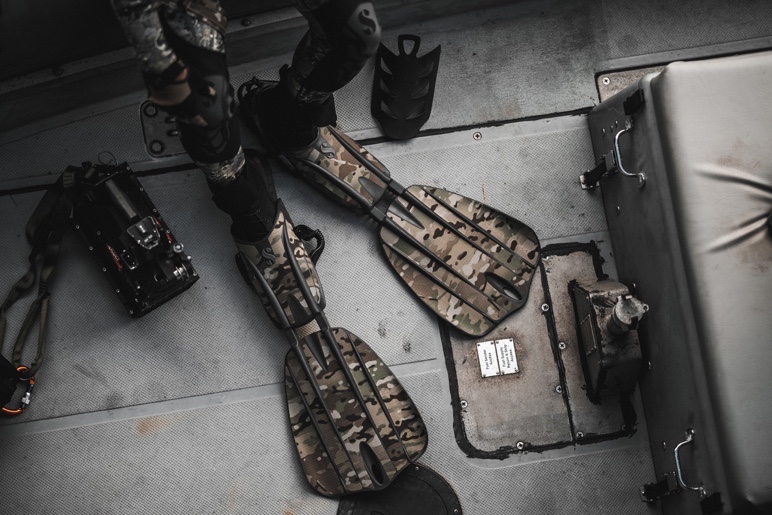
Flutter kicks

The flutter kick is the basic finning technique that most divers use. This technique is similar to the leg part of freestyle swimming.

Watch 90 percent of all divers, and you’ll see them use flutter kicks. In the early days of diving, it was the only technique taught. The reason for its popularity is quite simply that it is the strongest of all the kicking techniques, and it generates a lot of propulsion. Back in the early days of diving, before the invention of the BCD, speed was the primary way of maintaining buoyancy. The advantage of this kick is the forcefulness of it. It is excellent for moving at high speed or when fighting a current. The legs’ vertical up-down movement also means it is beneficial for wall diving, mainly when diving by a wall covered in corals. There’s less risk of kicking something on the side of you like your dive buddy, coral or the finning’s backwash, stirring up sediment. The disadvantages of this kick are related to the advantages. The forcefulness of the kick means that it is relatively strenuous and increases air consumption because of it. The vertical movement can steer up a lot of silt; this is bad for many reasons. If you are on a combat swimmer operation, the trail of silt can give you away. Second, it will make it hard for anyone following you to see their gauges and find the target. (unless you are using the SCUBAPRO HUD dive computer) (shameless plug, but it is excellent for low visibility).  In confined spaces like close to the target around the piers or in a cave, it can cause a blackout and make it very hard to see what you are doing.

A fast, powerful technique is useful when fighting a current, for short bursts of speed. The best fins for this are the SCUBAPRO SeaWing Nova Gorillas, The Go Sports, and the Jet fans.
Frog kick

The frog kick looks very similar to the leg portion of the breaststroke from swimming. A large and wide kick that utilizes the leg’s full strength is a good, general technique for open-water diving, either in the water column or close to the bottom. Because the movement and propulsion aren’t continuous, good buoyancy technique is required, though. 

The movement here is horizontal, or close to it, meaning that there is minimal disturbance of the bottom when swimming close to the bottom, which will maintain the visibility for any divers that come after you. However, the kick’s width means that the kick isn’t recommended for caves or when diving close to a wall.

This kick, combined with good buoyancy, will quickly become your go-to technique once you get used to it, and will likely decrease your air consumption significantly. The more adequately trimmed your position in the water, and the more you take advantage of the gliding phase before initiating the next kick, the more you’ll reduce your energy (and air) consumption.

The powerful kick that can be extremely efficient, especially if you master the kick-and-glide aspect. Suitable for open-water diving in mild currents, in the water column, or close to the bottom. Not advisable in stronger currents or close to walls.

The best fins for this are the Jet fins.
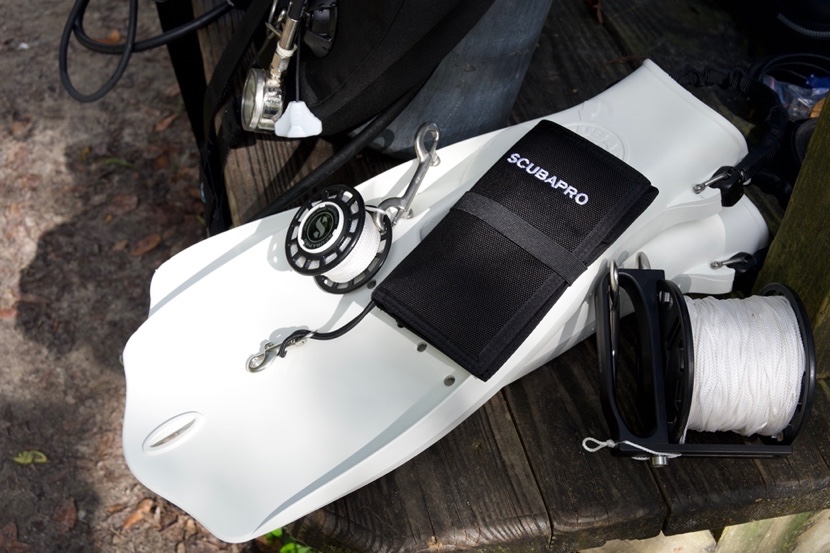
Bent-Knee Cave Diver Kick

With the complicated name, this technique is the go-to technique for technical divers and is the one that causes the least disturbance of the environment. The bent knees mean that the movement is minimal, with the entire kick coming only from a small movement in the hips, combined with a kick of the ankles. This means that propulsion is limited, compared to the two kicks above, but it also decreases strain and air consumption.

The small movement means that it works well in cramped areas, such as inside wrecks and caves, and, when executed correctly, can minimize the amount of silt kicked up to almost nothing. For this reason, it is also the recommended technique for diving close a very silty bottom, like in a confined space, close to piers or around ships.


The slow movement also means that this technique helps you slow down, making it useful for muck dives or other nature dives where you’ll be looking for small animal life. Because it is a very low-propulsion kick, this technique has its limitation when swimming against a current, though. This is a minimal-impact kick that is ideal for cramped environments and close to very silty bottoms, as well as helping you slow down during your dives and maximize your available air. The Jet Fin is the best fin this, and with some practice, the Go Sport is good also.

Lastly, the SeaWing Nova Gorillas come in OD Green or Orange, but they can be special ordered in all black. You can also order the SeaWing Nova in all black. Special orders require a minimum of 24 per size, but we can work to get you want you need.

Contact ecrazz@clannfive.com for more information.