TYR Tactical

Archive for the ‘Guest Post’ Category

Electronic Battle: Cold War Peer-Threat SIGINT Then and Now | Cold War Wednesday

Wednesday, March 30th, 2022

As the man said, “Ivan will destroy your grid square if you even key your radio, let alone talk to your squad. Break out the books and practice. This is for real.”

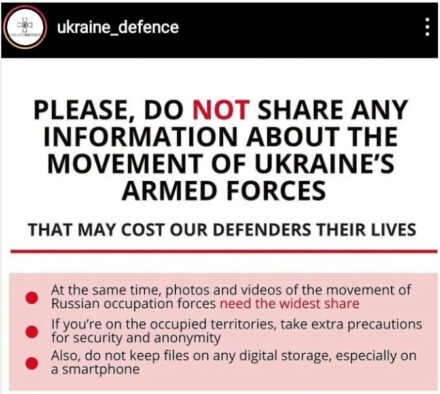
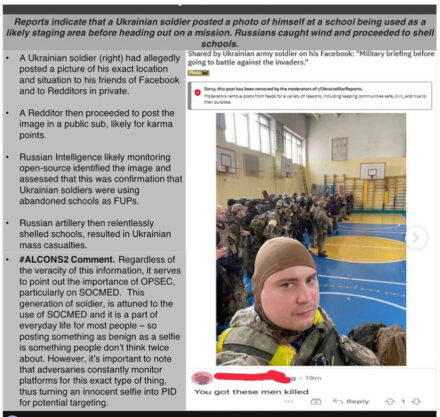
Given recent events in and around Ukraine, we thought it might be interesting to consider the contrast of what modern technology – particularly social media – has to electronic-related security issues in contrast to what we were taught during the Cold War era. PERSEC, INFOSEC, OPSEC, ELINT, SIGINT, COMINT, and of course EMCON – there is absolutely no shortage of acronyms all those cell phones (among other things) might jeopardize…and with them, both missions and lives (see reported Redditor example, below).

Combat Electronic Warfare and Intelligence is one hell of a lot more complicated now than it was in the teen years of the Superbowl. Cyber Warfare and GPS Spoofing are just two examples. Geolocating is another. Even something as simple as a Google image search can precipitate an attack. Several examples of this have emerged over the last few weeks on both sides of the Russian invasion of Ukraine.

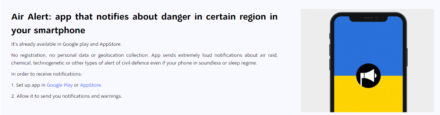
“Compromised by TikTok” and “death by Reddit” sound funny until the Kalibrs and Bayraktars come calling. While apps like Air Alarm are certainly beneficial, they don’t counterbalance all the OSINT opportunities afforded by Telegram, Instagram, Twitter, and the like. This is why cell phones are often taken up before training evolutions and troop movements (unless, apparently, you’re Chechen).

But if you’re reading this, chances are you already know that.

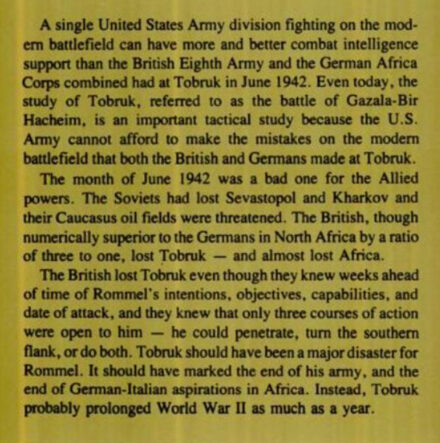
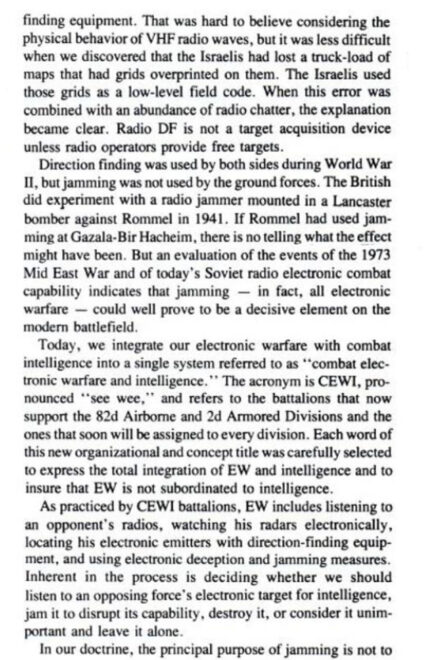
What you might not know, depending on the length of your teeth, is what electronic warfare and signals doctrine looked like 40 or 50 years ago. And that’s why we’re sharing the following article.

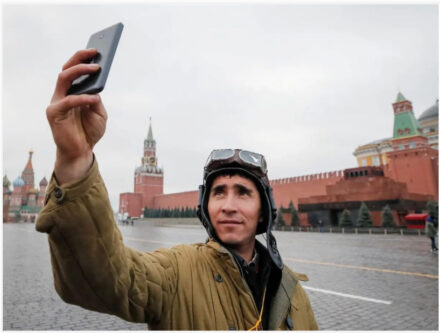
Much like Crossfit workouts and pet shenanigans, you gotta take a pic of your invasion or it didn’t happen.

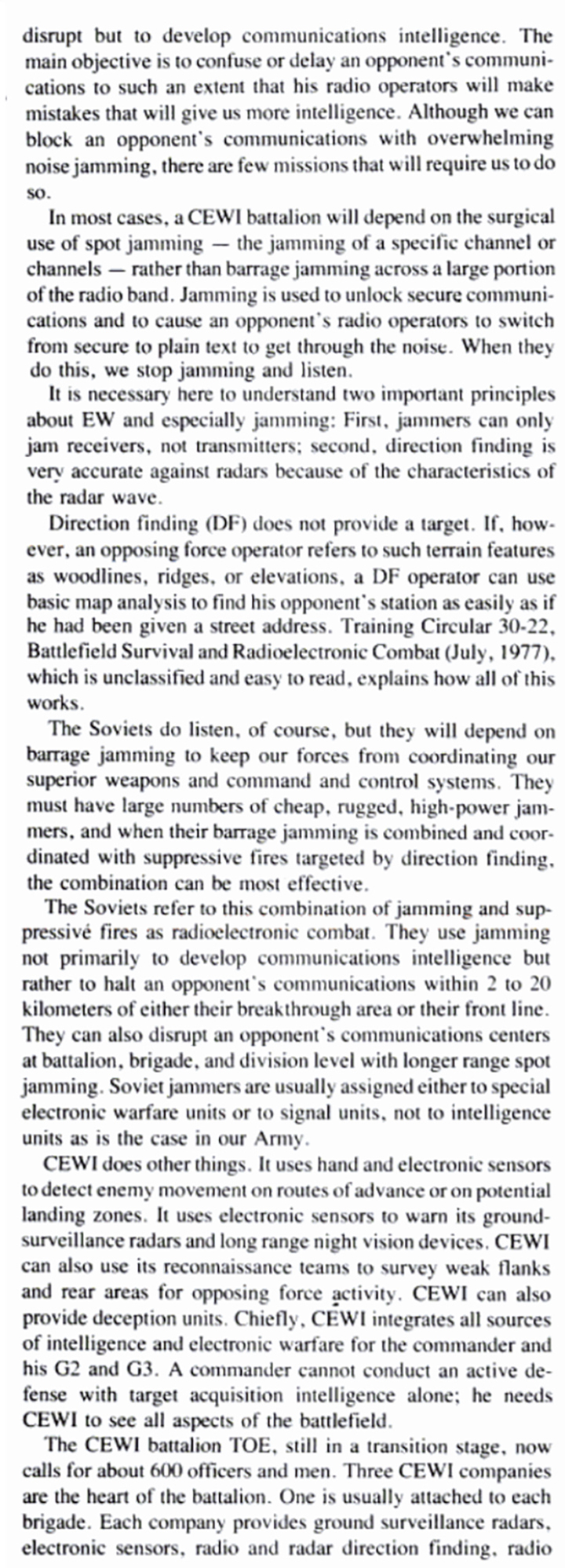
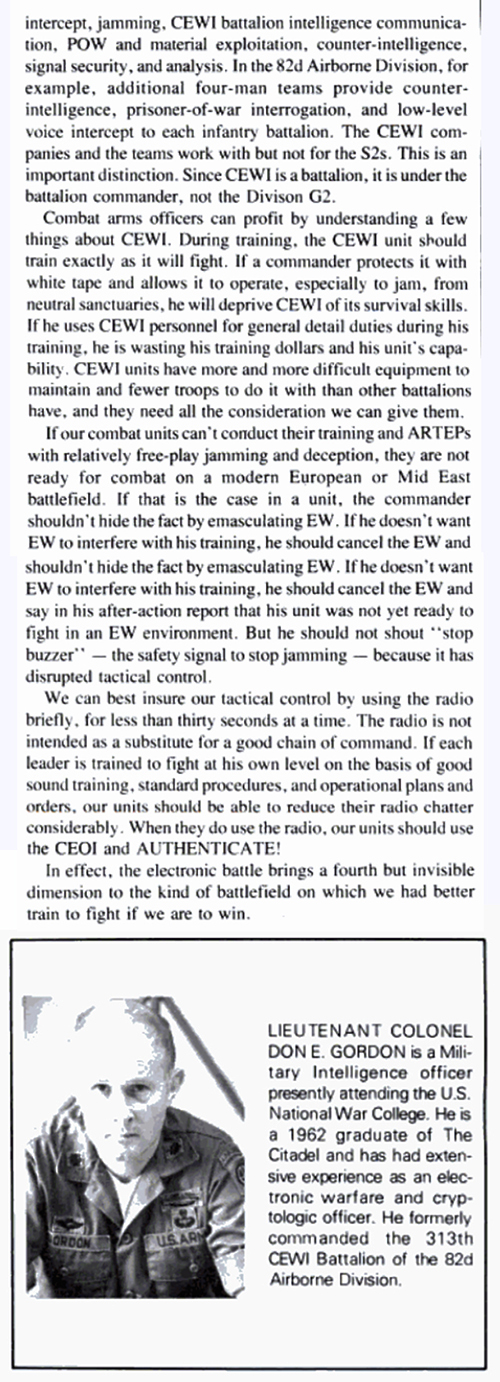
The Electronic Battle

Lt. Col. Don E. Gordon

INFANTRY Magazine, 1980

The Reddit Example

Even if this report is apocryphal, the lesson it delivers is not. 

Thoughts on then vs. now?

More SIGINT history

DRW

David Reeder is a sometime SOLSYS contributor and reporter-at-large. He is currently the editor of the GunMag Warehouse blog (The Mag Life) and the world’s okayest 1/6 scale kit-basher. 

Air Combat Command Stands Up Information Warfare Training and Research Initiative Detachment

Wednesday, March 30th, 2022

ACC co-leads effort to hone Information Warfare readiness

JOINT BASE LANGLEY-EUSTIS, Va. —  

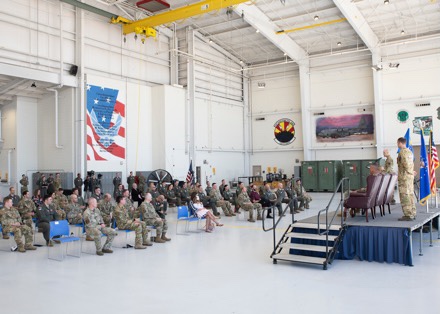
Air Combat Command stood up a new organization to accelerate information warfare training and research on March 22, 2022, at Davis-Monthan Air Force Base, Arizona.

This new Information Warfare Training and Research Initiative Detachment, a subordinate unit of the 55th Wing at Offutt Air Force Base, Nebraska, will conduct IW training and research events to addresses the growing importance of operations in the information environment and the electromagnetic spectrum, as they relate to strategic power competition.

The 55th Wing, Detachment 1 will also have operating locations at the 67th Cyberspace Wing, Joint Base San Antonio, Texas, and Offutt.  

For the last three years, Air Combat Command, Air Force Research Laboratory, Secretary of the Air Force Concepts, Development and Management, and several academic organizations have been experimenting to change the way the Department of the Air Force conducts IW training and research. This resulted in the creation of a hybrid, wing-level organization to connect IW Airmen from multiple locations to accelerate readiness through training and research initiatives through its next phases of development.

These efforts are, in part, a reflection of recent DAF leadership directives on range modernization, Live-Virtual-Constructive efforts, Information Warfare planning and guidance, and Electromagnetic Spectrum Superiority strategies, among others.   

The group organized and executed 22 IW-focused events that spanned the globe, bringing together Airmen, Guardians, joint forces and members of academia and industry to rapidly innovate, experiment and accelerate readiness. Integrating elements and capabilities enables the team to re-think traditional training and research models. 

The team supports IW experts by designing and building training environments and linking Airmen across the world to enable operators and researchers to experiment, test and train in the information environment and electromagnetic spectrum. This approach does not detract from other organizations who are working these efforts, but rather helps accelerate their work.  Additionally, each event provides IW-focused training and research to support a larger Air Force mission, such as air superiority; and intelligence, surveillance, and reconnaissance. 

“We’ve adapted a ‘build, learn, correct, repeat’ model,” said Col. Christopher Budde, chief of ACC’s information warfare division. “We are experimenting with sustainable processes and events in quick succession to scale conceptual ideas, operationally test them, then integrate these processes across the larger federated enterprise.”

This model offers several advantages over traditional events, which are often infrequent and focused on different training audiences with different objectives. This approach gives IW teams the training and research repetitions they need to excel in other major exercises. The quality of the events increases with each iteration and helps increase readiness among IW Airmen and the rest of the Air Force as each event exposes more communities to understanding how IW supports the Air Force missions.  

“The distributed nature of the events means they can be conducted more frequently, can be ongoing, and members can participate in multiple iterations,” said Budde. “If a unit is unable to participate in an event, they can jump back into a future iteration when available, but the challenges in the information environment continue and the teams have to respond with the capabilities available.” 

The “build, learn, correct, repeat” model also enables accelerated learning and engagement between operators, researchers, and academic teammates.  

“Because of the relationship we’ve established with the Air Force Research Laboratory and academic organizations, they help plan and participate in each event,” he said. “This allows the operators to provide immediate feedback, so research and operational efforts move faster at a decreased cost.”

In the most recent event, IW Airmen from 34 organizations and teams across 23 geographically separated locations integrated their capabilities within an ISR centric mission. In each event, Airmen are identifying more application and potential, so the concept, players and capabilities continue to grow.
   
By building environments to test and train IW elements and integrating new tactics, techniques and procedures with existing capabilities, the DAF is preparing for the future of strategic power competition and building the foundations to integrate IW throughout every AF core mission.  

“If we want to be a resolute world power, we must not only compete in the global commons but also compete and win in contested sovereigns,” said Gen. Mark Kelly, commander of ACC. “Most competition, if not all combat, will take place in the electromagnetic spectrum. Focusing our offensive and defensive capabilities in the digitally-enabled domain is critical to honing our lethality in strategic competition.”

By Senior MSgt Jared Marquis and 1st Lt Teri Bunce, Air Combat Command Public Affairs

TMS Tuesday – The M.A.R.C.H. Algorithm – Hypothermia

Tuesday, March 29th, 2022

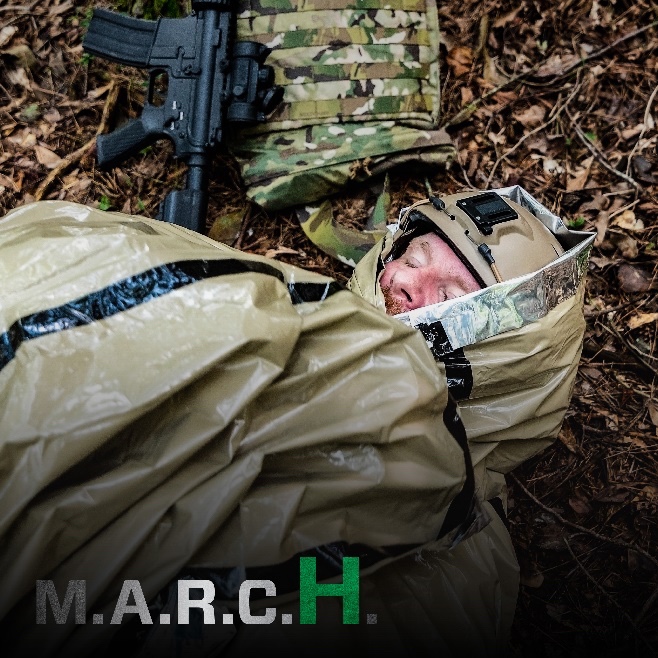
The M.A.R.C.H. algorithm is laid out differently from Advanced Trauma Life Support (ATLS) which uses Airway, Breathing, and Circulation (ABC) as the order of treatment to instead use Massive Hemorrhage, Airway, Respiration, Circulation, Hypothermia/Head Injury for prioritizing lifesaving treatments. Among these critical steps, hypothermia is included in the algorithm’s final phase of care.

Despite advancements in trauma care over the past three decades, trauma remains among the leading causes of death. In penetrating trauma, what you cannot see occurring is the lethal diamond of hypothermia, hypocalcemia, acidosis, and coagulopathy. The lethal diamond is recognized as a significant cause of death in patients with traumatic injuries. Thus, failing to stop any one of the diamond’s complicating factors leads to worsening hemorrhage and eventual death.

If a patient has lost blood, they have lost body heat meaning you are fighting an uphill battle to intervene. If you are not preventing hypothermia, then you are not properly treating your patient. So, what should you do?

According to TCCC Guidelines, these are the steps that you should take:

1. Take early and aggressive steps to prevent further body heat loss and add external heat, when possible, for both trauma and severely burned casualties.

2. Minimize casualty’s exposure to cold ground, wind, and air temperatures. Place insulation material between the casualty and any cold surface as soon as possible. Keep protective gear on or with the casualty if feasible.

3. Replace wet clothing with dry clothing, if possible, and protect from further heat loss.

4. Place an active heating blanket on the casualty’s anterior torso and under the arms in the axillae (to prevent burns, do not place any active heating source directly on the skin or wrap around the torso).

5. Enclose the casualty with the exterior impermeable enclosure bag.

6. As soon as possible, upgrade hypothermia enclosure system to a well-insulated enclosure system using a hooded sleeping bag or other readily available insulation inside the enclosure bag/external vapor barrier shell.

7. Pre-stage an insulated hypothermia enclosure system with external active heating for transition from the non-insulated hypothermia enclosure systems; seek to improve upon existing enclosure system when possible.

8. Use a battery-powered warming device to deliver IV/IO resuscitation fluids, in accordance with current CoTCCC guidelines, at flow rate up to 150 ml/min with a 38°C output temperature.

9. Protect the casualty from exposure to wind and precipitation on any evacuation platform.

These recommendations are from the TCCC Guidelines which can be found at: www.deployedmedicine.com/content/40

Tools to Aid in Hypothermia

TacMed Solutions™ offers a variety of products built to assist preventing and treating hypothermia including the HELIOS® System, Emergency Bivvy, and more. To stock your kit with these essential tools, check out TacMed Solutions™ at tacmedsolutions.com/collections/m-a-r-c-h-tccc/hypothermia.

Pennsylvania Guard First Guard to Field New SIGINT System

Tuesday, March 29th, 2022

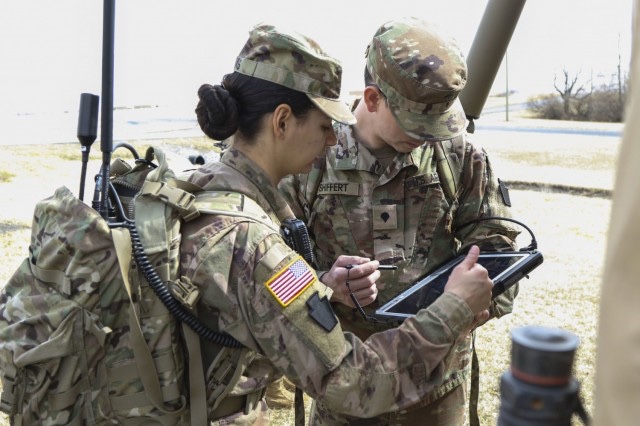
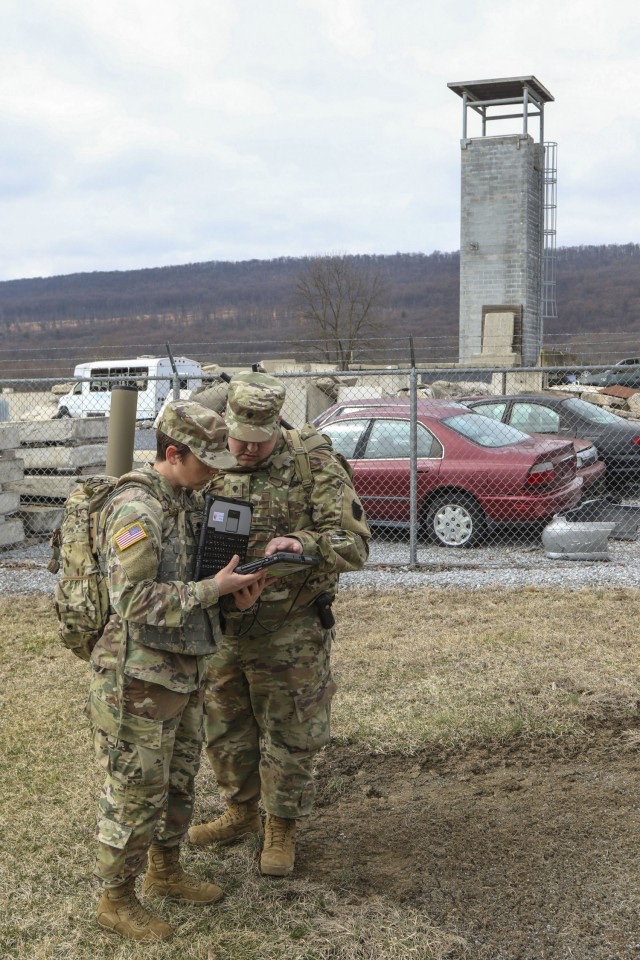
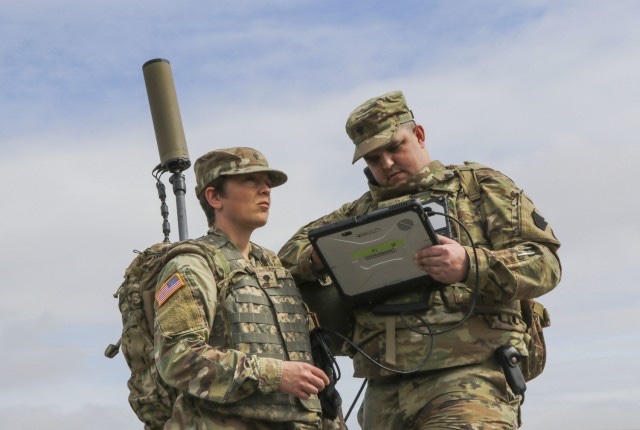
FORT INDIANTOWN GAP, Pa. — The Pennsylvania National Guard is the first National Guard in the country to field the new Tactical Dismounted Electronic Warfare and Signals Intelligence (TDEWS) system.

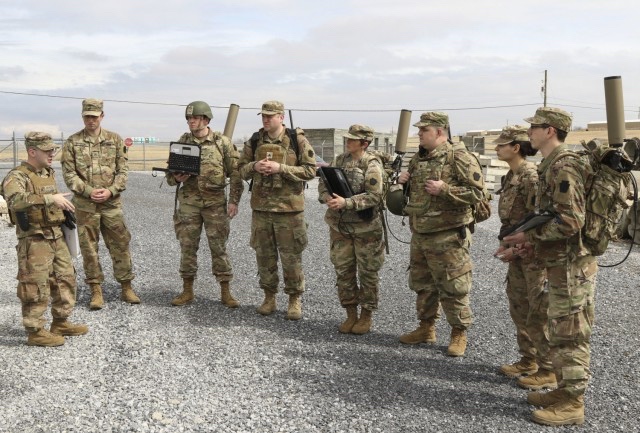
Eight Pennsylvania National Guard Soldiers trained at Fort Indiantown Gap March 13-17 on the TDEWS, which filled a significant gap in the training of Soldiers in the intelligence Military Occupational Specialties. Signals Intelligence advisers from the Army National Guard Technical Control and Analysis Element and the Intelligence and Electronic Warfare Program of the Mission Training Complex facilitated the training.

“This system adds a huge amount of value to our intelligence capabilities,” said Warrant Officer Trevor Burgess, a signals intelligence analysis technician with 28th Infantry Division, the Pennsylvania Guard’s senior SIGINT technician. “Soldiers train for six months to acquire the MOS, then when they get to their units here in Pennsylvania, they didn’t have this equipment to train on and the support of full-time subject matter experts that the Army National Guard G2 provides, so this does improve our intelligence capability.”

The TDEWS is a dedicated, all-weather, tactical electronic warfare system providing force protection and situational awareness to commanders at any echelon.

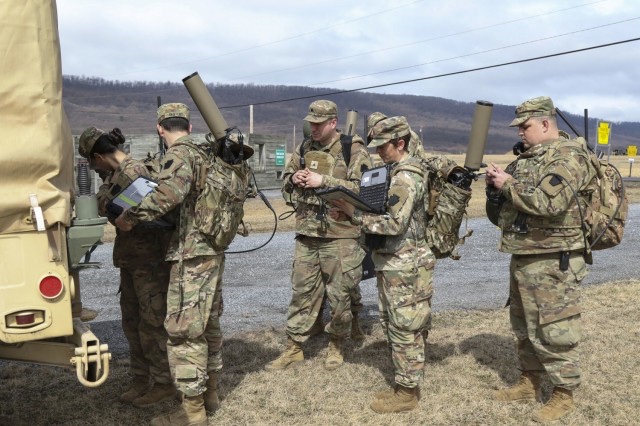
“We went from classroom instruction to hands-on setting up and tearing down the system over and over, to using it in a controlled dismounted environment, and then in the past two days, we’ve been able to pack it up in our special man packs we were issued for the system and actually come out here and work with trainers who built situational training exercise lanes for us to train on,” said Sgt. Emily Rivas, a cryptologic linguist with the 103rd Brigade Engineer Battalion, 56th Stryker Brigade Combat Team, 28th Infantry Division.

The 56th SBCT will be doing a rotation at the National Training Center at Fort Irwin, California, this summer. The training will ensure these Soldiers can employ this new equipment during the brigade’s validation exercise and can execute their mission as they would on the battlefield, Burgess said.

“The thing with this system that makes it so nice for our training is that we’re able to just fire it up and use it whenever we want at any training site,” said Rivas. The previous system required a lot of coordination and approvals, which became cumbersome.

During the recent training at Fort Indiantown Gap, the eight Soldiers were divided into two-person teams to locate trainers posing as enemy forces at a rubble pile. Rivas’ team was the first to locate their target.

“We were able to lock it down really fast, locating the enemy really quickly and let the other teams know where they were and how they were communicating,” she said. “It felt really good to actually be able to see the system working and how it all comes together.”

“As of right now, I’m feeling very good about it,” said Sgt. Joe Falcone, a cryptologic linguist with the 103rd Brigade Engineer Battalion, 56th Stryker Brigade Combat Team, 28th Infantry Division. “We have a total of eight days so far training on this equipment, just due to the nature of being in the National Guard and that it was only fielded to us at the beginning of January, but every single day I feel leaps and bounds better.”

Falcone said he didn’t feel as comfortable with the device earlier in the week, but this event significantly improved his confidence in advance of the upcoming rotation.

“The NTC rotation will allow the Soldiers to actually utilize the skills that they train hard in, and use that to improve the intelligence footprint, the intelligence picture and make the overall mission a success,” said Burgess.

By SSG Zane Craig, Joint Force Headquarters – Pennsylvania National Guard

Forgotten Weapons Presents – Radical Defense M249FVS: Laser Sintering Meets Lewis Gun

Monday, March 28th, 2022

Forgotten Weapons presents a video on the Radical Defense M249FVS suppressor.

Defense Logistics Agency Designated DOD’s Printing Services Provider

Monday, March 28th, 2022

FORT BELVOIR, Va. (AFNS) —  

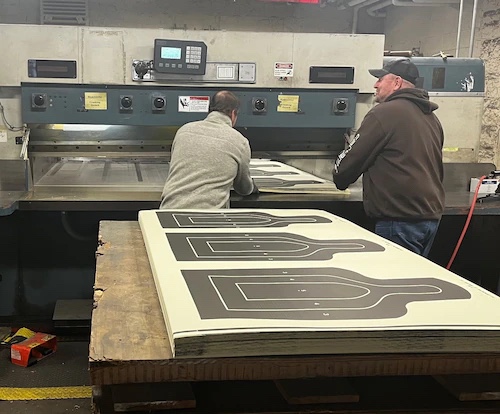
The Defense Logistics Agency is now the Defense Department’s primary provider of printing services, office print devices and electronic conversion services according to a DOD instruction signed by the Under Secretary of Defense for Acquisition and Sustainment.

All DOD components except DOD intelligence agencies, National Guard and Reserve organizations, tactical activities, and the U.S. Army Print and Media Distribution Center must now purchase such services through DLA Document Services. The change is expected to save tens of millions of dollars each year.

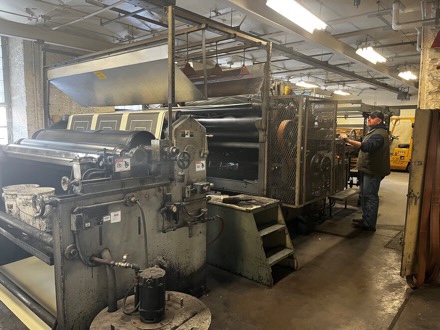
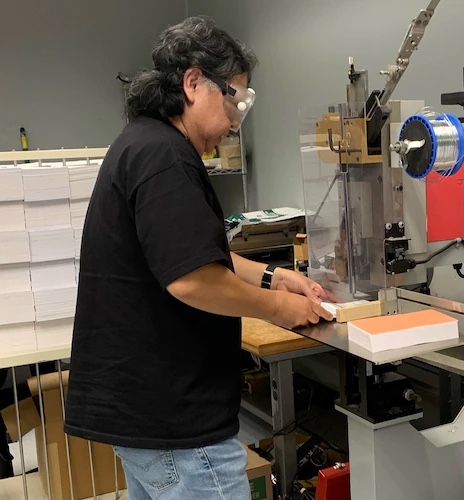
DLA Document Services offers numerous printing services ranging from brochures and training manuals to banners and aircraft decals. Custom and specialty options like vinyl, foam board and magnets are available, and the team can also produce large-scale items like museum displays.

“We can assist customers throughout every step of their project from planning to production,” said Nick Janik, DLA Document Services director of production operations. “Our print production employees work hard to make the customer’s vision a reality while being as efficient and timely as possible.”

DOD customers turning paper documents into electronic format can use scanning and conversion services available at DLA print facilities or with help of on-site technicians who can convert documents of all sizes. Digital conversion preserves documents and makes them searchable. Shredding services are available too.

The updated instruction also charges DLA Document Services with the procurement, delivery and sustainment of office devices including office, desktop and stand-alone printers as well as copiers, fax machines, scanners and multi-function devices – the latter of which is the main focus of the office device program. The process of procuring office devices includes an assessment of customer needs and existing equipment to ensure new devices are streamlined and compatible.

“Our office assessments help to eliminate unnecessary equipment and shift customers from a single-function or stand-alone environment to a business model of shared resources with MFDs,” said Terra Nguyen, division director for DLA’s office device program.

More information and help placing orders is available through local customer relations specialists or the DLA Document Services Customer Support Center at 866-736-7010 or j67dcsc@dla.mil.

Defense Logistics Agency Information Operations

SCUBAPRO Sunday – The First Frogman Ship Attack

Sunday, March 27th, 2022

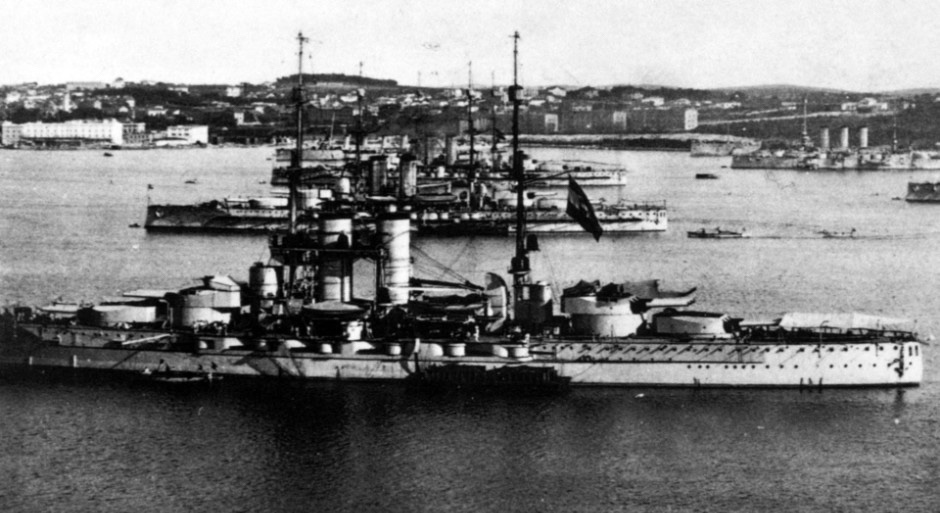
During the summer of 1918, as World War One ended, the Austrian Navy suffered a series of defeats at the hands of the Royal Italian Navy, which was based in Genoa. The most powerful ships of the Austrian Navy withdrew to the Adriatic Sea port of Pola to avoid capture. Enemy ships could not enter the harbor because of floating booms and barricades designed to encircle and destroy their targets. The Italian Navy attempted several attacks on the Austrian fleet at Pola. Still, it could not penetrate the sophisticated harbor defenses in any of them.
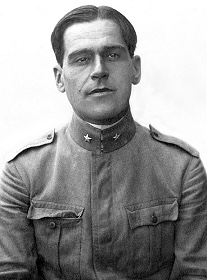
Raffaele Paolucci was an Italian Naval surgeon who devised a plan to infiltrate the harbor at Pola and destroy the largest ships of the Austrian fleet. He was killed during the operation. Even though the sheltered enemy fleet appeared impenetrable to conventional attack, Lieutenant Paolucci had the idea that he might be able to reach the Austrian ships by simply swimming to them with explosives in his possession.

“If I could be dropped off near the entrance to the harbor, a swim of three kilometers would enable me to reach my destination,” Paolucci concluded after consulting charts depicting the Pola estuary.”

Paolucci began training to swim alone into the harbor at Pola while keeping his plans a secret from his friends and family. Evenings and weekends were spent swimming in the lagoons of Venice, building up his endurance to the point where he could comfortably swim five miles without stopping. To simulate the weight of an explosive charge he planned to carry with him to destroy the enemy ships, Paolucci began dragging a 300-pound barrel of water behind him as his stamina grew.

Paolucci presented his plan to his commanding officers in May, confident in his ability to carry out his vision for the military. He was informed of the apparent dangers associated with such a venture. Still, he was instructed to continue with his training.

Paolucci was introduced to Major Raffaele Rossetti in July, who impressed him. In his investigation, Paolucci discovered that Rossetti had designed and built an entirely new type of aquatic weapon. This manned torpedo was ideal for the mission for which he had been preparing himself.
An unexploded German torpedo shell that had washed up on the Italian coast had inspired Rossetti to design and build a sleek submersible craft that could be pulled through the water like a horse, using the long, slender shell as a frame. Rossetti’s rebuilt torpedo was about 20 feet long, weighed one and a half tons, and could propel a pair of riders through the water at a top speed of two miles per hour. It was filled with compressed air that drove two small, silent propellers, powered by compressed air. Located at the front end of the apparatus were two detachable watertight canisters with a capacity of 400 pounds of TNT, each of which could be detached and transported separately. The craft’s position in the water could be changed by adjusting a series of control valves that Rossetti had devised.

Swimming and guiding the torpedo were practiced in the Italian naval shipyard in Venice, where Rossetti and Paolucci worked. Paolucci later wrote, “We had to be in the water clinging to the machine, which moved slowly; we had to steer it with our bodies, and in some cases were forced to drag the apparatus ourselves…we habituated ourselves to remaining in the water for six or seven hours at a stretch with our clothes on, and to passing unnoticed beneath the eyes of the sentries posted along Venice dockyard’s perimeter.”

An Italian navy motorboat brought the two men and their hybrid watercraft to within a few miles of the entrance to the harbor at Pola on the night of 31 October 1918. Rossetti and Paolucci slipped into the water, mounted their torpedoes, and set out to sabotage the Austrian fleet, which was utterly unaware of what they were getting themselves into.

Rossetti and Paolucci submerged the torpedo by riding the incoming tide until only their heads were visible above the water’s surface. They left for Pola at 10:13 p.m. on a Friday. Assuming everything went according to plan, Rossetti estimated that it would take no more than five hours to deliver the explosives to the Austrian ships and return to the waiting Italian motorboat, which was safely anchored away from the sight of Austrian patrol boats.

Rossetti turned off the air valve driving the torpedo’s twin propellers on their way into the harbor, preventing them from being sucked into it. The torpedo was carefully guided up to the first of the barriers that guarded the outer harbor by the two men who had guided it up. The enemy’s searchlights swept across the water, threatening to reveal them to the public. The searchlights passed over them despite their repeated appearances without disclosing their location.

When Rossetti and Paolucci arrived at the outermost barricade at 10:30 a.m., they discovered that it was constructed of “numerous empty metal cylinders, each approximately three yards in length, between which were suspended heavy steel cables.” “….. In the meantime, the two men lifted and pushed their boat over the obstacle, fearful that the sound of metal scraping against metal would alert Austrian guards on the other side of the water. Their efforts went largely unnoticed. “After a great deal of effort,” Paolucci wrote, “we were able to get past the obstruction when I felt myself being seized by the arm.” After a moment’s thought, I realized Rossetti was pointing to a dark shape that appeared to be moving toward us.” They were completely unaware of the presence of an Austrian U-boat, which was gliding past them and out into the Adriatic Sea without using its lights and with only its conning tower above the water.

The two men steered the torpedo slowly toward the seawall that protected Pola’s inner harbor after restarting the torpedo’s motor. While Rossetti waited in the shadow of the seawall, Paolucci swam ahead to find the quickest way into the port. Rossetti was a little late. Instead, he encountered another stumbling block in the form of a gate constructed of heavy timbers studded with long steel spikes.

Paolucci returned to Rossetti’s boat and informed him of his discovery. Rossetti decided to proceed with the mission. It was now against the tide, and the two men had to fight against it to drag the massive torpedo up to the submerged gate. As the tide receded, Rossetti and Paolucci struggled to make their way past the nets and into the harbor where the anchored Austrian battleships were anchored. Paolucci wrote, “our endeavors proved successful.” It was 3:00 a.m. now, and the sun was shining brightly.

The dreadnought SMS Viribus Unitis, the largest ship in the fleet, was chosen as the primary target because it was closest to the shore. Rossetti and Paolucci were swimming through sleet and hail when they noticed the sky beginning to brighten with dawn. Just as they were about to reach the side of the Viribus Unitis, the torpedo began to sink unpredictably.

While Paolucci was frantically trying to keep the torpedo afloat, Rossetti discovered an intake valve that had been accidentally opened, allowing air to escape from the cylinder and sinking the ship. After closing the valve, the two men took a few moments to relax in the shadow of the Austrian flagship. According to Paolucci, “this was unquestionably the worst of all our trying moments.”
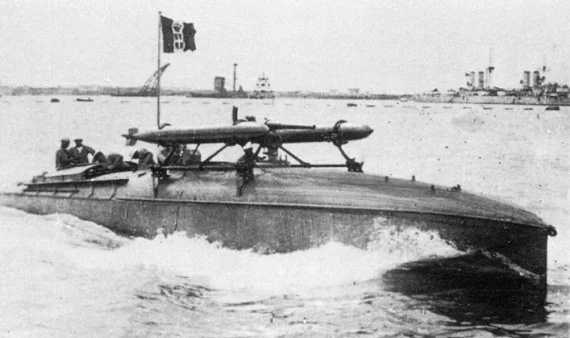
They reached the Viribus Unitis at 4:45 a.m. after making their way down a long line of Austrian battleships that stretched for miles. Rossetti detaches one of the TNT canisters from the front of the torpedo and attaches it to the hull of the Viribus Unitis, which was then launched. Rossetti set a timer for 6:30 p.m. when he planned to detonate the 400-pound charge of TNT.

As Rossetti and Paolucci pushed off from the side of the Viribus Unitis, a sentry on the flagship noticed them and alerted the authorities.

The Italians attempted to navigate towards the shore, hoping to find refuge. A boat from the Viribus Unitis was dispatched to capture them as soon as they were discovered. After quickly arming the second canister of explosives, Paolucci set it free in the ebbing tide of the river. As a result of flooding the torpedo’s air cylinder, the ship sank to the bottom.

A group of sailors from the Viribus Unitis apprehended the Italian officers and transported them back to the ship. They were shocked to discover that the Austrian fleet had mutinied during the previous night and that the Austrian admiral had transferred command of the Viribus Unitis to a Yugoslavian captain named Ianko Vukovic. Having been ordered ashore, all German and Austrian crew members were escorted off the ship, leaving the fleet in the care of neutral Yugoslav sailors.

It was 6:00 a.m. at the time. Because Rossetti was aware that the TNT would detonate in half an hour, he informed Captain Vukovic that his ship was in “serious and imminent danger.” “Save your men,” says the captain. Captain Vukovic demanded an explanation calmly. “I’m not going to tell you when, but the ship will be blown up in a short time,” Rossetti said.

Vukovic didn’t waste any time, yelling in German, “Men of the Viribus Unitis, save yourselves and everyone else you can!” “The Italians have smuggled bombs aboard the vessel!” When the Yugoslavian crew members learned of this, they panicked and abandoned the ship. As Paolucci described it, “we heard doors open and shut quickly, we saw half-naked men rushing about madly and clambering up the steps of our batteries, and we heard the noise of bodies splashing into the sea.”

Rossetti took advantage of the sudden panic and inquired of Captain Vukovic about the possibility of saving themselves. Vukovic agreed with me. Rossetti and Paolucci dashed to the side of the ship and jumped overboard. They were captured. They were quickly apprehended by a group of enraged Yugoslavian sailors in a small boat, who took them back to the Viribus Unitis, where they were imprisoned. “We were under the impression that they intended for us to perish on the doomed ship,” Paolucci wrote. The time was 6:20 p.m.

Once again, Rossetti and Paolucci found themselves surrounded by a threatening mob of sailors when they returned to the ship’s deck for the second time. They were yelling at us, claiming that we had deceived them, and others demanded to know where the bombs were hidden. Rossetti rose to his feet and demanded that he and Paolucci be treated relatively as prisoners of war, which was granted. Vukovic ordered his men not to harm the Italians, and they followed his orders.

There was no explosion at 6:30 p.m. when the time came. Neither Rossetti nor Paolucci said anything to one another, as if they were wondering what had gone wrong. Captain Vukovic was still attempting to restore order on the ship’s deck when a storm hit the ship. Crewmen who had abandoned the Viribus Unitis rowed in lifeboats all around the ship, unsure whether to flee to safety or return to the ship as the ship sank.

The TNT charge exploded at 6:44 p.m. local time. When the delayed explosion occurred, Rossetti and Paolucci were taken aback by how quiet it was, describing it as “a dull noise…a deep roaring, not loud or terrible, but rather light.” Instantaneously, however, a massive column of water rose into the air at the ship’s bow and splashed down on the ship’s forward deck. In the aftermath of the explosion, Rossetti and Paolucci requested permission to abandon the ship once more out of shock. Captain Vukovic shook their hands and pointed to a rope they could use to escape into the water, motioning for one of the lifeboats to come and pick them up from the water.
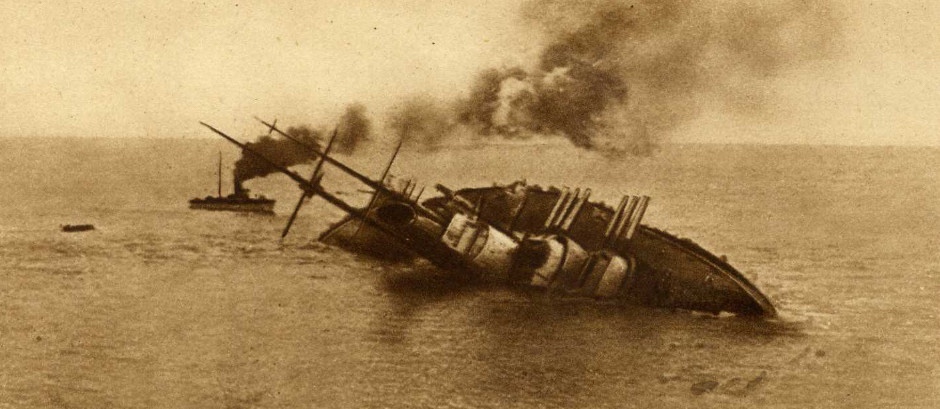
When Rossetti and Paolucci were dragged onto the small boat, they turned to watch the Viribus Unitis sinking into the water. In his book, “The Viribus Unitis,” Paolucci describes how the ship began to heel over more and more until the water reached the level of the deck and the ship capsized utterly. I noticed that the massive turret guns were being tossed around like toys. Towards the keel, I noticed a man crawling until he reached the top of the ship. It was Captain Vukovic who made the announcement. He died a short time later after being struck in the head by a wooden beam while attempting to save his life by swimming to shore after having extricated himself from the whirlpool of water.” Rossetti and Paolucci were transported as prisoners of war to an Austrian hospital ship for their recovery. There, they discovered that the second canister of explosives, which had been set free by Paolucci just before they were apprehended, had exploded against the hull of an Austrian ship named Wien, causing it to capsize and sink.

Italy and Austria signed a peace treaty three days later, on 4 November 1918, bringing the war to an end. The following day, the Italian fleet seized control of Pola, allowing Rossetti and Paolucci to be released from captivity. The two gentlemen were presented with gold medals in recognition of their bravery. Rossetti received a reward from the Italian government of 650,000 lire as compensation for his services. “A war adversary who, in dying, left me with an ineradicable example of generous humanity,” he said of Captain Vukovic’s widow when he presented the reward. Widows and mothers of other war victims received the funds used to establish a trust fund for them.

croatian-treasure.com/viribus

$20 Million in APS-2 Materiel Delivered to Armored Brigade in Grafenwoehr

Saturday, March 26th, 2022

MANNHEIM, Germany – What’s easily apparent are the tanks and armored vehicles being prepared, loaded, transported, offloaded, staged and issued. But what’s less obvious are all the supply items, tools and repair parts needed to keep those vehicles and the 1st Armored Brigade Combat Team, 3rd Infantry Division, up and running.


And that’s another area where Army Field Support Battalion-Mannheim has once again excelled.

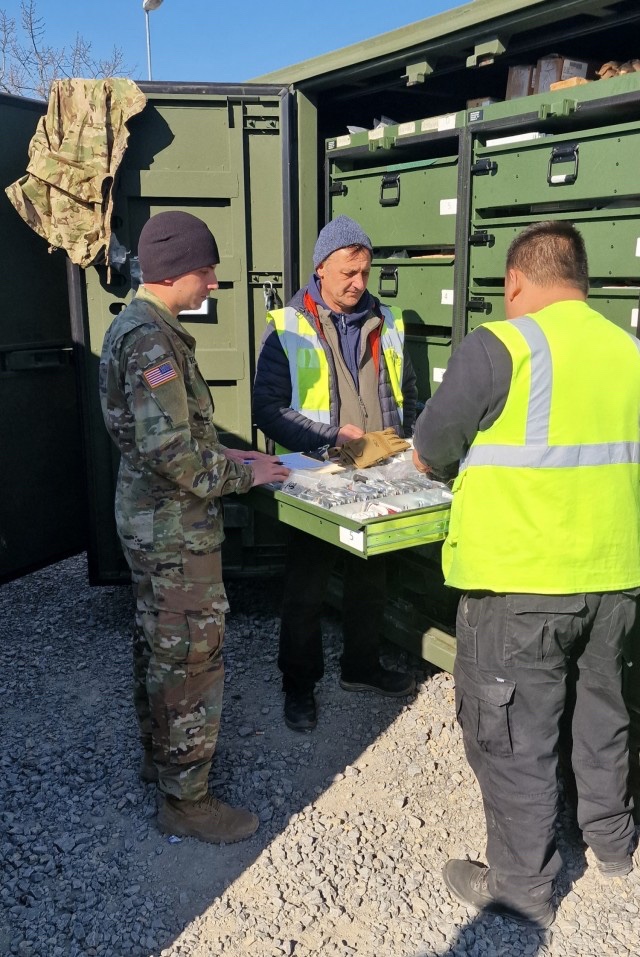
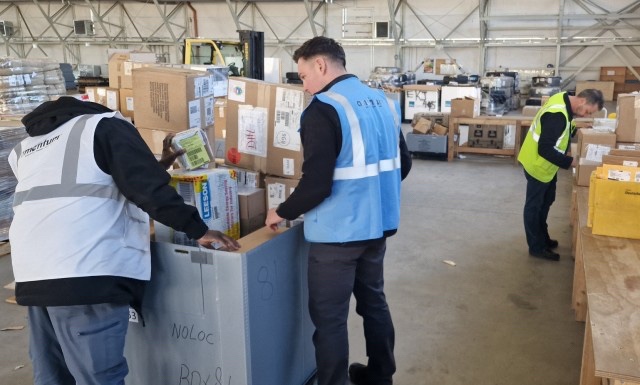
More than 4,700 lines of materiel — some containing over a thousand items per line — were recently accounted, reported, shipped and issued to 1st ABCT, 3rd ID, by a team of about 30 personnel under the command and control of AFSBn-Mannheim and the watchful eye of the 405th Army Field Support Brigade.

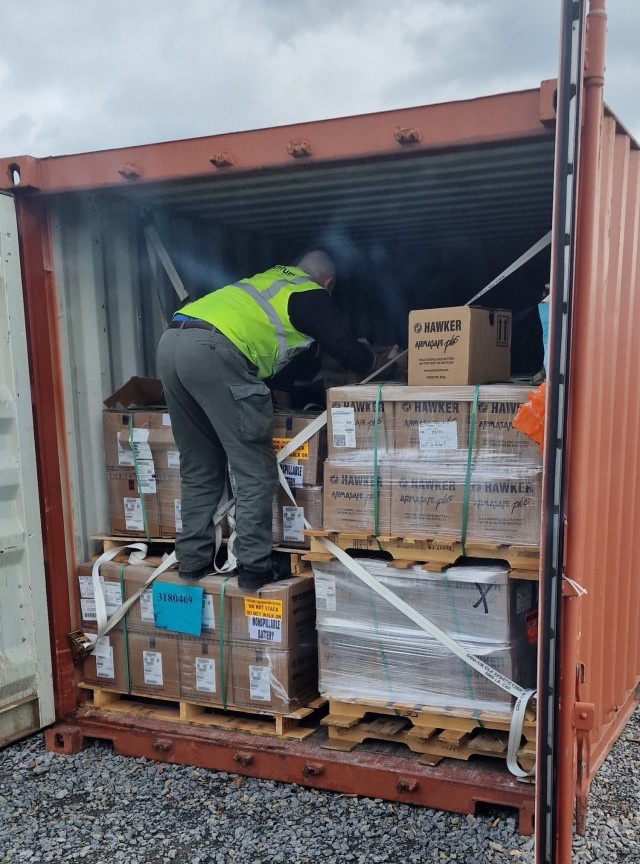
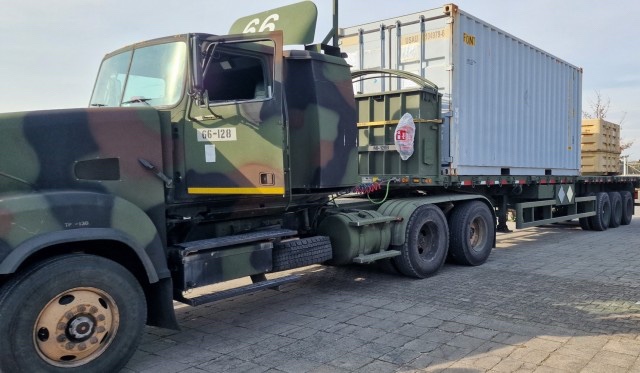
Valued at nearly $20 million, tens of thousands of Army Prepositioned Stocks-2 individual repair parts, supply items and tools in more than 40 containers were shipped from Coleman worksite in Mannheim, Germany, to Grafenwoehr Training Area, Germany, and issued to the U.S.-based armored brigade combat team deployed there from Fort Stewart, Georgia.

Army Sgt. 1st Class Georgie Rodriguez said the mission was a total team effort. Broken down into mostly 2-person teams, logistics supply specialists and contractors assigned to AFSBn-Mannheim, 405th AFSB and 1st ABCT, 3rd ID, completed the mission in just five days.

“It’s a very tedious process,” said Rodriguez, who serves as the Supply Support Activity noncommissioned officer at Support Operations, 405th AFSB. “They have to check everything – every single item – and then re-check and check again. And then they have to post all this information into the Global Combat Systems Support-Army.”


The Global Combat Systems Support-Army, or GCSS-Army, is a web-based automated logistics system that tracks and maintains accountability of repair parts and supply items. It’s capable of managing large volumes of transactions, and it provides current item location updates as well as expected times of arrival. It also interfaces with the General Funds Enterprise Business System, or GFEBS, for financial data tracking and feedback.

Rodriguez said two key individuals who helped lead the process and ensure the mission was a success were Phillip Bosco from AFSBn-Mannheim, who was the accountable officer for the more than 4,700 lines or materiel, and Nixon Pierre-Louis from 405th AFSB Support Operations, who was the materiel manager, planner and operations officer for the mission.

“I commend them and the entire team of Soldiers, Army civilians and contractors – to include Sgt. 1st Class Rodriguez, Mr. Bosco and Mr. Pierre-Louis – for ensuring the process was finished in record time with 100 percent accuracy,” said Lt. Col. Brian Astwood, AFSBn-Mannheim commander. “Thanks for all your hard work.”

Rodriguez said his main responsibility was providing updates on the process to the Support Operations director, who in turn updated the 405th AFSB commander.

“Watching the representatives from the various organizations come together and react so quickly – it was outstanding,” said Rodriguez. “They executed the mission flawlessly – on time and on point.”

The 405th AFSB is assigned to U.S. Army Sustainment Command and under the operational control of the 21st Theater Sustainment Command, U.S. Army Europe and Africa. The brigade is headquartered in Kaiserslautern, Germany, and provides materiel enterprise support to U.S. Forces throughout Europe and Africa – providing theater sustainment logistics; synchronizing acquisition, logistics and technology; and leveraging U.S. Army Materiel Command’s materiel enterprise to support joint forces. For more information on the 405th AFSB, visit the official website and the official Facebook site.

Story by Cameron Porter, 405th AFSB Public Affairs Officer

Photos by SFC Georgie Rodriguez