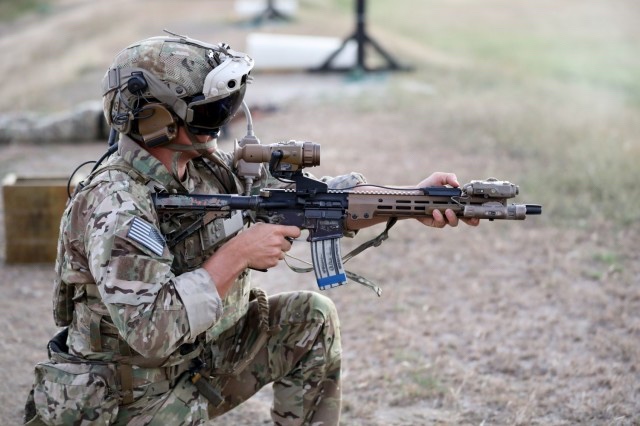
XC3 Weaponlight

Archive for the ‘Guest Post’ Category

FirstSpear Friday Focus: V20 Now Available!

Friday, January 28th, 2022

Now available for digital download, FirstSpear has released the all new V20 product catalog. Check out some of the latest advancements in maritime and land based personal protective equipment, technology and technical apparel.

For a physical copy, check out www.first-spear.com/catalog or download a pdf: www.first-spear.com/first-spear-catalog


British Army Experiments with Automated Vehicles to Deliver Vital ‘Last Mile’ Capability

Thursday, January 27th, 2022

The British Army has embarked on a six-month experiment, working with industry, that will focus on the feasibility of automating supplies to soldiers.

This innovative experiment, known as Project Theseus, will determine which tasks in the crucial ‘last mile’ of the battlefield can be automated. This technology will be used to transform the Army of the future. 

Under Project Theseus, it is hoped the use of self-driving air or ground platforms to deliver combat supplies, including ammunition, materials, food and fuel, will reduce the need for personnel to risk their life by entering into what are typically hostile environments. 

Contracts worth £3million each have been awarded to Horiba Mira, Rafael, and Marlborough Communications Limited (MCL) to provide full ground and air automated resupply systems for the tactical battlefield. 

Robotic and Autonomous System capabilities will play an increasing role in delivering deployed sustainment in the near-future. Doing so will increase combat power through increasing mass and tempo of resupply, as well as reducing risk-to-life for our people, leading to an increased probability of mission success.

-MAJOR MATT MCGARVEY-MILES, SO2C ROBOTIC AND AUTONOMOUS SYSTEMS, FUTURE FORCE DEVELOPMENT

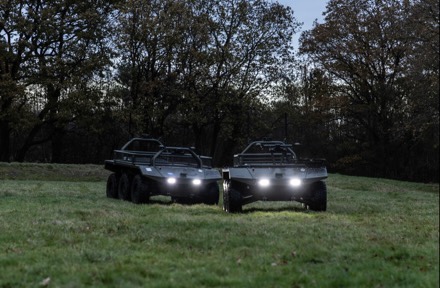
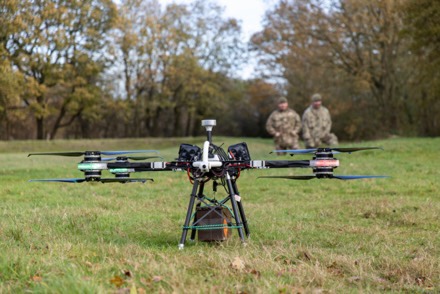
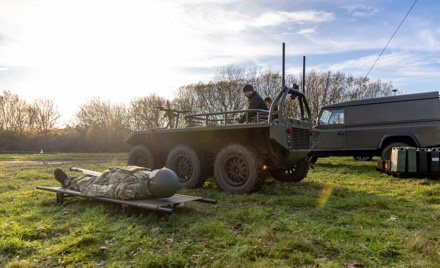
On 9 December 2021, Nuneaton-based Horiba Mira demonstrated its autonomous ground and air vehicle platforms. This included an uncrewed aerial vehicle (drone) taking off, loaded with ammo boxes and dropping them to soldiers some distance away, and a ground platform loaded by soldiers with a dummy casualty evacuation, which was then sent back to the command station. 

The project is part of the Army’s wider Robotics and Autonomous Systems experimentation within the Expeditionary Robotics Centre of Expertise. It has built upon the foundation of autonomous systems development from projects such as Robotic Platoon Vehicle (RPV), which predominantly focused on platform autonomy. 

Major Matt McGarvey-Miles, SO2C Robotic and Autonomous Systems, Future Force Development said,

“Robotic and Autonomous System capabilities will play an increasing role in delivering deployed sustainment in the near-future. Doing so will increase combat power through increasing mass and tempo of resupply, as well as reducing risk-to-life for our people, leading to an increased probability of mission success.”

Theseus also exploits the innovation, findings and technology demonstrator investigations delivered by Dstl’s Autonomous Last Mile Re-Supply (ALMRS) project.  

Theseus is looking at the entire resupply process, as a system, rather than individual platforms. It will seek to identify the most effective tasks to automate, including the use of AI tools.

Experimentation with the Field Army will take place in the UK, culminating with a large-scale experiment in March 2022.

The project will not only focus on the use of self-driving air and ground vehicles but also the autonomous processing, ordering and delivery of ammunition, fuel and other items to troops over the last mile of the battlefield. The aim is to give soldiers the ease of an Amazon-style delivery service when and where they need it most.  

The project will deliver six months of funded research and development and a series of capability experiments. The autonomous systems being put through their paces are designed to augment the existing military capability, not replace it, and will enable soldiers to be redeployed to the tasks that only humans can do.

– Courtesy of British Army

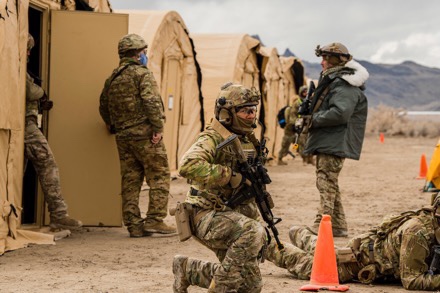
Rangers and National Guard Support IVAS Tropics Test

Wednesday, January 26th, 2022

CAMP SANTIAGO, Puerto Rico — From minus 30 degrees Fahrenheit to over 90, the Integrated Visual Augmentation System was tested in back-to-back extreme weather test events led by Program Executive Office Soldier’s Project Manager IVAS this spring. After its time at the Cold Region Test Center in Alaska, the system was tested by 3rd Battalion, 75th Ranger Regiment at Camp Santiago’s Joint Readiness Training Center in Puerto Rico.

This was the first time that a platoon from a Ranger regiment had put IVAS military form factor through its paces and tested how the goggle increases situational awareness during land navigation, rapid target acquisition and full mission exercises.

“In my opinion, no one in the Army trains harder than we do,” said Brian Hayman, platoon sergeant for the 3rd Battalion, 75th Ranger Regiment. “If a unit is going to fully put this system to test, whether it’s good or bad, it’s going to be the guys out here.”

Hayman explained why his Soldiers were selected for this task. “The Ranger Regiment has a unique mission mindset where our guys, from skill level one all the way up to our senior enlisted, have been trained by the best of the best,” he said. “Our squad leaders have countless deployments overseas and they were trained by guys who have countless deployments overseas, and all that wealth of knowledge trickles down.”

LAND NAVIGATION

The Rangers tested land navigation, rapid target acquisition and after action review capabilities in progressive exercises that culminated in a movement-to-contact event and a platoon raid. The land navigation feature stood out as a favorite capability among the group.

“Traditionally, you have five points and you’re taking the time to hand-plot them on a map,” said Hayman. “A lot of guys make mistakes plotting on a map. With IVAS, the mistakes are taken away by just inputting the 10-digit grid into the system and then the programmed route populates in front of you. You never have to stop to do a map check or anything like that because, with just the push of a button, you have an arrow that’s in the bottom of your screen and you walk the arrow to your point, so there’s no accidentally drifting left or right. You never use a compass, and even if you need one, you look up and it’s in the top of the band. That’s what helped me a lot, overall.”

With intuitive access to navigation tools preventing the need to stop and fumble with a compass to discreetly reevaluate their location in the dark, the Rangers executed the land navigation course significantly faster than the Army requirement for a traditional five point course.

“The Army standard is to find four out of five points in five hours,” said Hayman. “I believe last night almost 90 percent of the guys had five points within an hour, hour and 15 minutes max.”

“The land navigation last night was too easy,” said squad leader Staff Sgt. Jake Croxdale. “It was super intuitive to navigate with the guide arrow, because I would just click where I wanted to go, the arrow popped up and I moved out. Being able to access a map by hitting just one button instead of having to look down at a phone or paper allowed me to not stop as much as I normally would, and ultimately execute faster.”
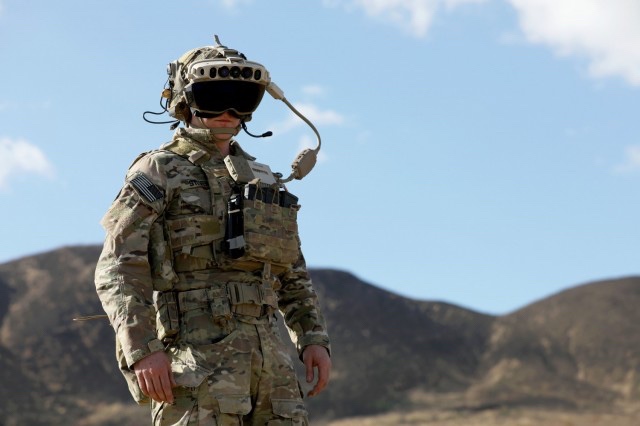
The IVAS heads-up display provides map, compass and navigation tools at the click of a button, not only for individual Soldiers, but it also enables the interconnected communication necessary to plan, build, share and execute routes across team, squad and platoon level elements.

“Land navigation was easy, but so was making the route and sharing it with my guys,” said Croxdale. “I created a route and blasted it out and it worked super quickly. We’ve had problems with other products where the connectivity was not as good, but as soon as I sent it to them they had it and we were able to move out.”

While executing the shared route, each Soldier could also see where the others were within their selected element. The ability to see the location of other Soldiers during the land navigation was a benefit praised by every level of leadership on the ground executing test operations, from the platoon leader to the platoon sergeant to squad leaders.

“I have command and control aspects in my job as platoon leader, so the icons on the map of where everyone’s located on the battlefield at any given point in time is super beneficial for me,” said 1st Lt. Luke Huen. “Instead of having to relay to a person to get their exact location, which might change in a matter of seconds, I can just hit a button and I know exactly where they are. It takes away all the guesswork. I think that’s by far the best feature.”

Huen recognized the information visibility as an advantage at his operational level, and the platoon sergeant and squad leaders echoed his sentiment as well.

“The good thing about being able to see where everybody is located is that you know where your front line trace is,” said Hayman. “If I’m running a support by fire berm and maneuvering two assault squads, especially in thick vegetation like we were last night, I can look on my map and see and then give more accurate commands off of that. I always know where all my guys are.”

Croxdale added that the situational awareness provided by IVAS allowed him to track accurately all eight members of his squad in real time so he knew exactly where each member of his formation was, with just the scroll of a cursor. He explained that their current tools are not carried by everyone in the squad, so the increased visibility allowed him to make more informed tactical decisions as a leader.

AFTER ACTION REVIEW

The Rangers were also briefly shown the after action review feature of the IVAS suite of capabilities. It gives a detailed virtual “play back” of the executed scenario to use as a review tool during both training drills and missions.
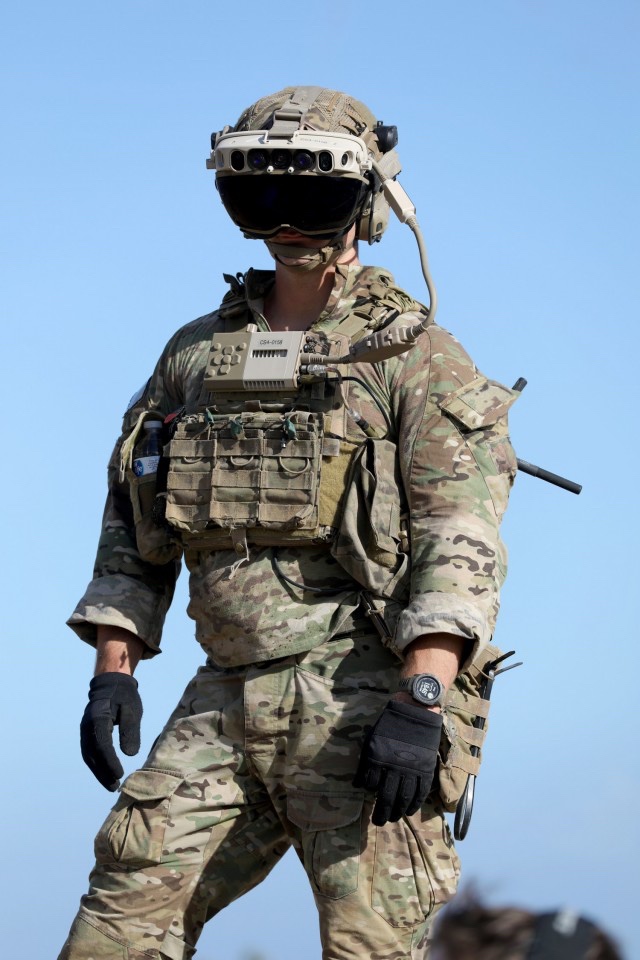
“It’s just like watching tape, growing up playing football,” said Croxdale. “You can see where the mistakes were made. I can replay it, see what everyone was doing and be like, ‘Hey, your dispersion wasn’t very good at this point in this situation,’ and if they come back and question it, I have the tapes to back it up.”

“It could be useful, especially if you get into something where there was literal fire and maneuver,” added Croxdale. “Not even just looking at walking and dispersion, but to [review] a fire and maneuver, that is definitely value added.”

TEAM & NATIONAL GUARD SUPPORT

The 75th Rangers provided thorough and honest feedback on the fourth IVAS capability set, but the test could not have been executed without support from the Army test community and Army National Guard.

“IVAS is an important system for the Army,” said Col. Ben Patrick McFall, commander of Yuma Proving Ground, Arizona. “But what I think is really important is the relationships between the PEOs, [program managers] and [Army Test and Evaluation Command] test community.”

“What is really important is the partnership that we have that allows us all to work together with the sole interest of supporting the warfighter, so we find any failure points before they do downrange,” McFall added. “We are also incredibly thankful to the Puerto Rico National Guard for support to this effort.”

The 191st Regional Support Group of the Puerto Rico Army National Guard stepped up to provide logistical and installation support to the IVAS test event at Joint Readiness Training Center. The Guard team, led by Capt. Noelia Roldan of the 292nd Combat Sustainment Support Battalion, remained flexible and accommodated changes, proving the team and the installation to be an ideally located asset to the Army test community.

Sgt. 1st Class Joshua Braly, who currently serves on the Soldier Lethality Cross-Functional Team, said he helped to facilitate ARNG support because he has personal ties to the Guard.

“I am also a Georgia Guardsman,” said Braly. “IVAS is being designed for the close combat force and the Army National Guard is a large part of that, which is why I am involved.”

Because of his connection to the Guard, Braly knew that they could deliver flexible and invaluable support that other locations could not.

“Given challenges we faced with COVID restrictions of movement, our usual avenues of approach for assessing this type of equipment in Panama, Suriname, Hawaii, Guam and other tropics region test centers were more challenging,” said Braly. “We reached out to the Puerto Rico National Guard and they eagerly accepted. Not only that, but they put Soldiers on orders to provide dedicated training area, range and logistical support to our effort.”

In fact, IVAS has leveraged National Guard installation and personnel support throughout many of its previous test events as well. Besides the tropics testing event in Puerto Rico, the Guard supported multiple large IVAS Soldier touchpoint events at Fort Pickett, Virginia, over the past two years; the aviation platform integration held at Redstone Testing Center in Huntsville, Alabama, using National Guard aircraft; and Vehicle User Study 3 held at Camp Roberts, California, in September 2021. Each of these events assess key areas necessary to further the development of IVAS for future testing, integration and fielding.

“The National Guard has been instrumental in support of the assessment and testing phase for this Army signature effort,” said Braly. “The flexibility of ARNG facilities and support of personnel and equipment will continue to enable timely and constructive testing necessary to further the development of IVAS, as well as other Army modernization efforts.”

The IVAS tropics weather test was executed by 3rd Battalion, 75th Ranger Regiment and supported by the Puerto Rico National Guard. Without the involvement of either IVAS team partner, the test would not have been as impactful.

“The IVAS test team has been beyond impressed with the professionalism and quality of feedback provided [by] the Rangers,” said Susan Fung, deputy technology director for Project Manager IVAS. She assured them, “Your feedback has been invaluable. We’ve been providing daily updates to the team back at the office and are definitely taking the details of your feedback and are working to incorporate them.”

The Rangers provided honest and realistic feedback based on their years of operational experience and deployments and can see the overall potential for the IVAS technology.

“The potential for this is unbounded, the ceiling is super high for it,” said Huen. “All these guys know that like in the next five, 10, 15 years we can see that this could be extremely useful, especially in what we do.”

“The thought process behind the IVAS system is incredible,” said Hayman. “It blows my mind that we’re in a day and age where the system even exists.”

By Courtney Bacon

TacMed Tuesday – The TacMed Convertible Drop Leg Kit

Tuesday, January 25th, 2022

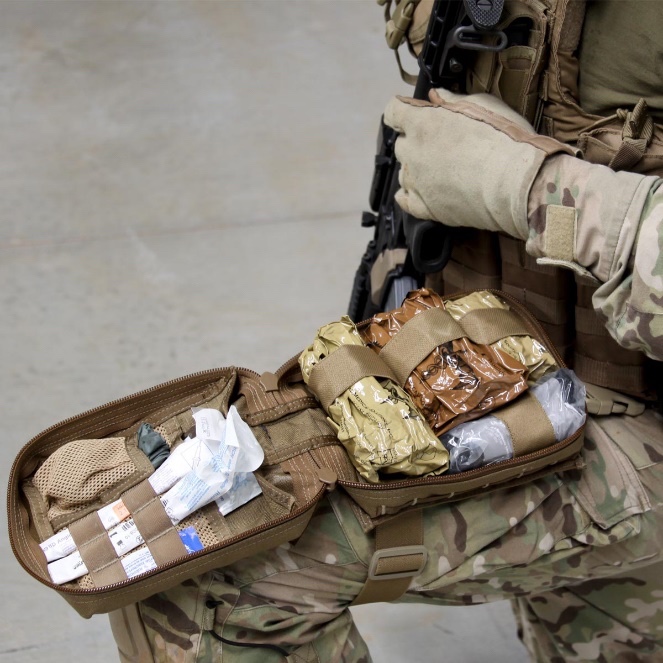
The TacMed™ Convertible Drop Leg Kit provides a fully stocked kit that allows for maximum flexibility without compromising the ability to provide on target care. This drop leg pouch can be worn on the leg or attached to a MOLLE style vest depending on the users’ preference.  




TacMed’s™ drop leg pouches are stocked based on different levels of capability, varying from basic to advanced. Additionally, the kits are customizable and can be packed to meet your specific mission requirements.

Included in the basic TacMed™ Convertible Drop Leg Kit is:

• 1x SOF® Tourniquet

• 1x OLAES® 4″ Modular Bandage

• 1x OLAES® 6″ Modular Bandage

• 1x Blast® Bandage

• 1x H&H Compressed Gauze Civilian Version

• 1x Petrolatum Gauze

• 1x NPA w/ Lube

• 1x 5.5″ Trauma Shears

• 1x 2″ Surgical Tape

• 3PR Black Nitrile Gloves (size XL)

• 1x Combat Casualty Card

If you are interested in learning more about this kit or customizing your own, check  it out at: tacmedsolutions.com/collections/military/products/tacmed-drop-leg-kit


2021: AFSOC’s Year of Innovation

Tuesday, January 25th, 2022

HURLBURT FIELD, Fla. —  

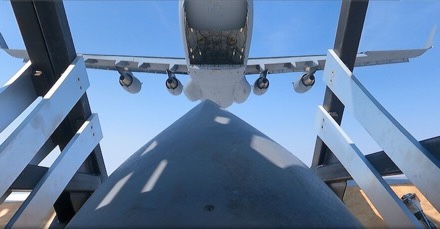
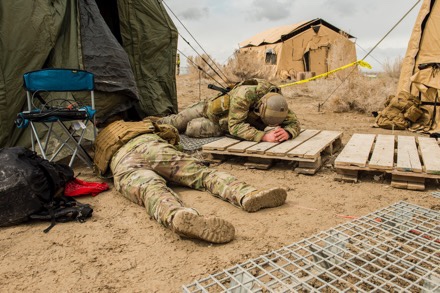
An aircrew with the 492nd Special Operations Training Group Detachment 2, Hurlburt Field, Florida, conducted the palletized munitions platform’s first live-fire test from an MC-130J Combat Talon II for the Rapid Dragon program, Dec. 16, 2021, over the Gulf of Mexico.

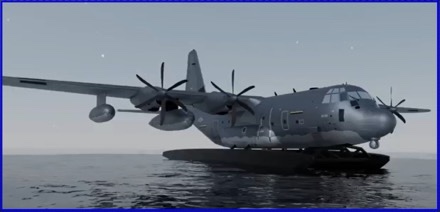
Air Force Special Operations Command’s year of innovative projects started with the creation of mission sustainment teams and leapt to the conceptualization of an amphibious capable MC-130J concept. These pathfinding efforts pave the way for a ready and relevant force of future warfighters.

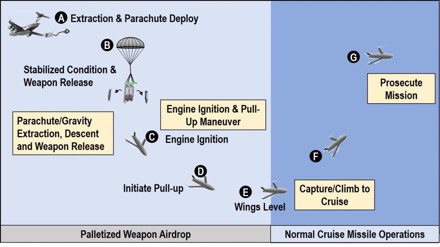
The final demonstration of the palletized munitions platform showcased a new capability for mobility aircraft that gives any airdrop-capable cargo aircraft the ability to retarget and employ standoff munitions en masse.

“Rapid Dragon is one of our pathfinding efforts that showcases the speed of capability development when the right teams are partnered together, combined with a rapid iterative design process that builds, tests and refines prototypes as fast as possible throughout the year,” said U.S. Air Force Maj. Ryan Pinner, chief of pathfinding and innovation for AFSOC. “We started 2021 by airdropping 15,000lb steel boxes to identify the best parachute configurations during the Emerald Warrior exercise in March. Following a total of 15 flight demonstrations on three different aircraft, we sunk our target on the Eglin Overwater Test Range before the end of the year.”

Adding palletized munitions to an aircraft designed as a multi-mission combat transport and special operations tanker enables combatant commanders to increase the number of platforms available to put adversary targets at risk.

“As the weapon system goes back into design to incorporate mixed loads and future weapons, I look forward to integrating this capability with the downrange combatant commands in the near future,” said Pinner.

The live-fire exercise is a result of a pioneering partnership between the Air Force Strategic Development Planning and Experimentation Office and AFSOC, as well as U.S. Special Operations Command Detachment 1, the Naval Surface Warfare Center-Dahlgren, Standoff Munitions Application Center, Lockheed Martin Missiles and Fire Control, Systima Technologies, Safran Electronics & Defense, Parachutes USA and R4 Integration, Inc.

Earlier in the year, the 27th Special Operations Mission Support Group, Cannon Air Force Base, New Mexico, stood up three mission sustainment teams comprised of 60 members who train, operate and deploy together.

“This team trains together, learning operational functions of each other’s career fields and bond together establishing a family-type relationship to deploy in support of special operations forces elements,” said U.S. Air Force Maj. Justin Lukso, chief of plans and integration with AFSOC. “They don’t just speak the lingo of their own [Air Force Specialty Code], but also of those other career fields they train alongside within their SOF force generation cycle as a member of the MST.”

Having a variety of career fields working as one allows AFSOC to incorporate faster movement and sustainment during contingency operations.

“An MST provides the capability to establish, sustain and retrograde from a forward operating base while simultaneously supporting up to three contingency locations and enabling command and control, and mission generation,” said Lukso. “This is incredibly valuable in keeping adversaries guessing and maintaining unpredictability while competing on a global scale. The ability to effectively support SOF operations with a minimal footprint at multiple locations provides a competitive advantage.”

During the Air Force Association 2021 Air, Space and Cyber Conference, AFSOC announced the development of the MC-130J Combat Talon II Amphibious Capability. The removable amphibious float modification allows improvement of the aircraft’s global reach, and survivability of the aircraft and Air Commandos.

“The MAC helps the Air Force and [U.S. Special Operations Command] create cost-effective and complex dilemmas for our adversaries, particularly with runway independence for the Joint Force and our allies,” said U.S. Air Force Lt. Col. Joshua Trantham, deputy chief of science systems, technology and innovation division with AFSOC. “We need distributed operations. Opening seaborne operations vastly expands options in Joint Operations Areas beyond what adversaries can easily address, which is highly valuable from both conventional and special operations perspectives and logistics under attack requirements.”

As the battlefield changes, so will AFSOC as it continues to ‘path find’ new operational concepts and technologies for the Air Force while aligning experimentation efforts with the Joint SOF enterprise.

“We are accelerating change within the command to ensure we are the AFSOC that is needed in the future,” said U.S. Air Force Maj. Gen. Eric Hill, deputy commander of AFSOC. “These innovative examples demonstrate our ability to turn fast and create new capacity out of existing capability. I am proud of the accomplishments we’ve made this past year and look forward to the many pathfinding efforts our Air Commandos will bring to the future fight.”

Air Force Special Operations Command Public Affairs

3rd ID Collaborates with Cadets at Inaugural Marne Innovation Workshop

Monday, January 24th, 2022

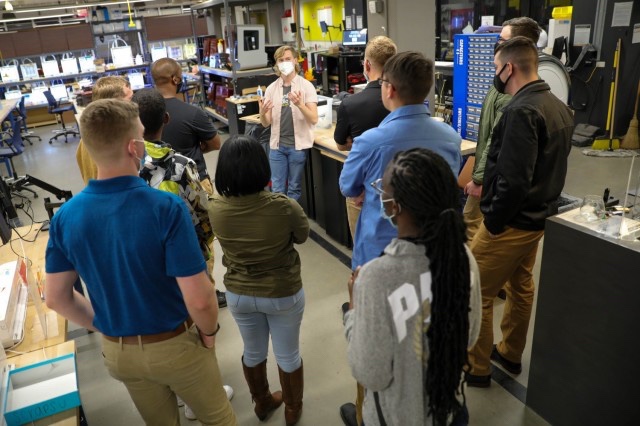
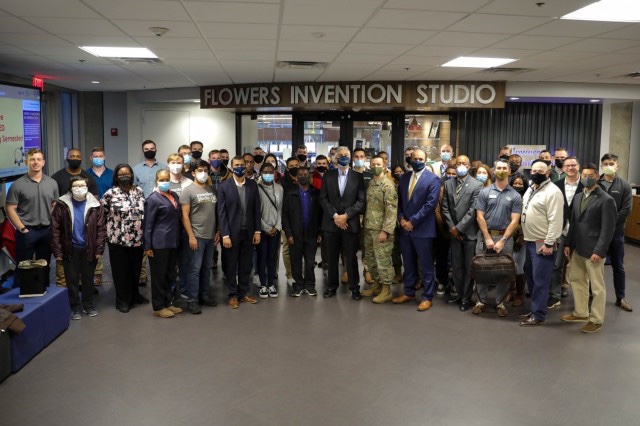
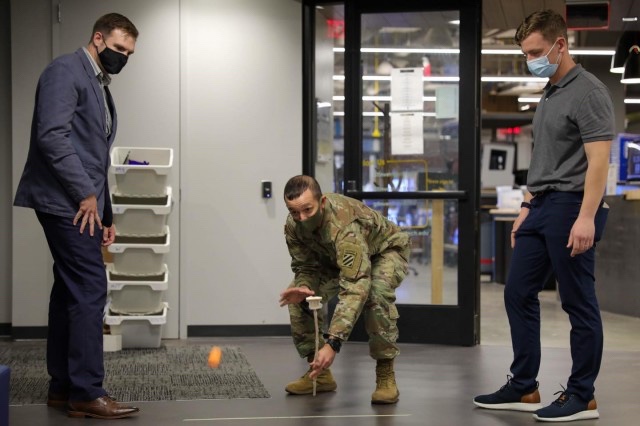
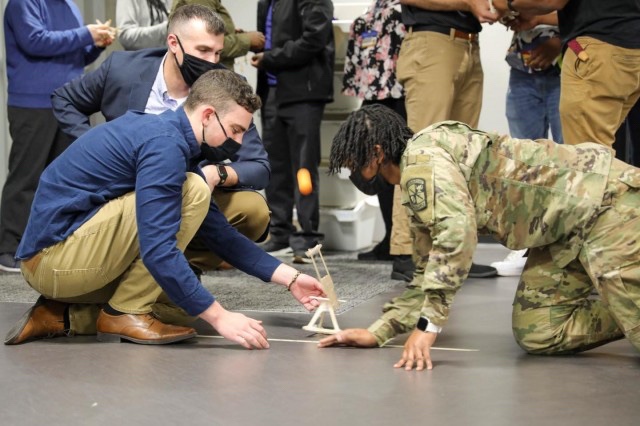
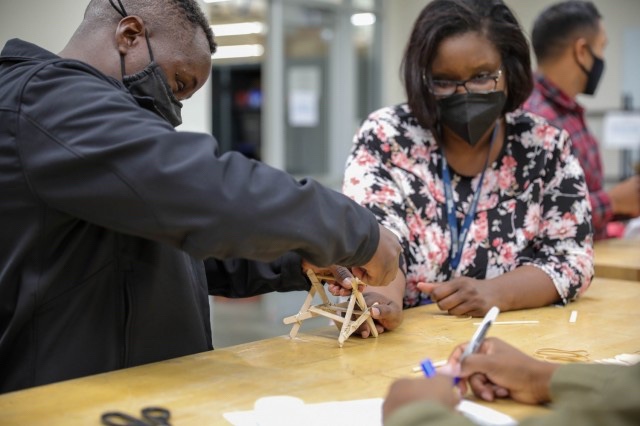
ATLANTA — Soldiers from the 3rd Infantry Division participated in the first Marne Innovation Workshop at the Georgia Institute of Technology in Atlanta, Jan. 6-9, 2022. The workshop is a collaborative event that included participants from the Army ROTC program at Georgia Tech, the United States Military Academy and the 75th Innovation Command.

“The Marne Innovation Workshop is the first opportunity for 3rd ID to partner with the Georgia Institute of Technology, and its intent is to solve today’s problems with today’s technology,” said Capt. Ben McFarlin, deputy innovations officer for 3rd ID.

Recently, 3rd ID Soldiers generated a list of challenges which were curated from feedback and survey results received from across the Division. Georgia Tech students and USMA cadets then selected a set of challenges from this list.

Groups of cadets and students worked with Soldiers during the four-day workshop to begin developing ideas and prototypes to solve the challenges brought forward by 3rd ID. The teams will continue to work together over the next six months to further hone their ideas.

The 3rd ID is currently on a modernization path that includes new equipment, weapons and vehicles across the division. The Marne Innovation Workshop complements this modernization push by focusing on enhancing and broadening its Soldiers intellectually through new industry and academic partnerships, and in new directions for problems.

“The investments that we make in people will pay off in the long run,” said Brig. Gen. Jasper Jeffers, the deputy commanding general of maneuver for 3rd ID. “I hope our Soldiers realize that they don’t have to accept barriers to their good ideas; if they have a good idea, there is a way and a path to put together a team and work on it.”

Innovation fosters a culture of development for Soldiers by giving them technical skills learned through education. It also makes their units more efficient and lethal by giving time back to warfighters to devote to readiness. Those benefits contribute to any mission the Marne Division receives, whether it’s deploying, conducting garrison operations, or modernizing the force.

Although the cadets, students and Soldiers who met during the Marne Innovation Workshop are geographically dispersed, they will remain in contact over as they collaborate to develop solutions to problems faced by 3rd ID Soldiers.

By SPC Daniel Thompson

SCUBAPRO Sunday – Mesh Bags

Sunday, January 23rd, 2022

Mesh Gear Bags are handy when it comes to carrying wet gear. They can be used to take everything from masks and fins to wet and sanding wetsuits or cammies. A mesh bag can hold all of your wet gear and allows you to raise them quickly. You can rinse and dry your gear without taking it out of the bag because mesh bags allow water to drain rapidly and air to flow thru. Mesh bags are an excellent choice for transporting your gear to and from the dive site, as well as carrying it when there is limited room. SCUBAPRO makes a few different mess bags. I am going to start with the big one and work my way down.

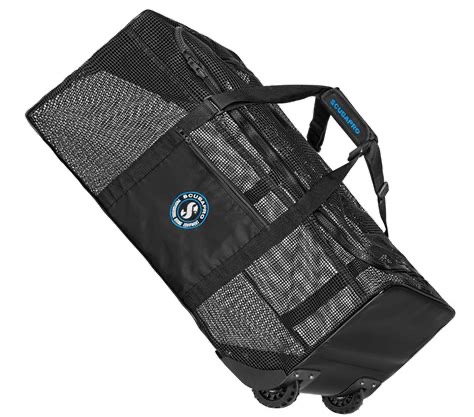
The SCUBAPRO MESH ‘N ROLL takes the mesh bag concept to the next level by adding a top pull handle and heavy-duty off-road style wheels, so now you can roll your gear down to the dive site. The MESH ‘N ROLL is built with heavy-duty coated mesh fabric that is lightweight and very durable. The main compartment holds a lot of gear and closes with a YKK saltwater-resistant double slider zipper which is U-shaped, allowing the bag to open wide for easy packing. The mesh weave allows for lots of air circulation, which helps eliminate odors and control mildew when storing gear between trips. This bag is also great for putting your dirty gear and letting it dry out. So, if you are working with a partner force, you can lock the bag and help keep honest people honest. Lastly, it can be rolled up for smaller storage.

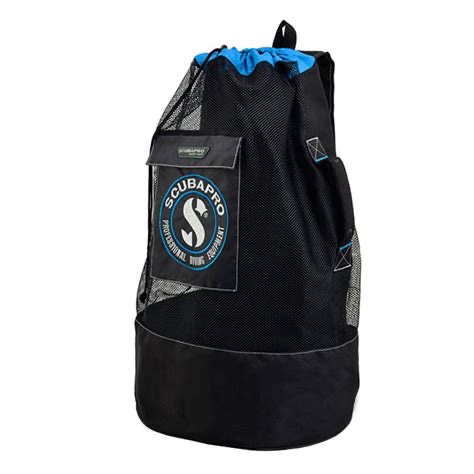
The SCUBAPRO Mesh Sack is a lightweight nylon mesh backpack. Able to hold a complete gear set, this backpack is the perfect carryall for your dive gear. The bag opening is secured with a top rope fitted with a sliding, spring-loaded button closure. It has a main compartment and a front exterior pocket. The main compartment is used to handle the larger gear, while the outer pocket can stow your smaller accessories. The bag also features backpack straps for easy transport or carriage of the bag while on the go.

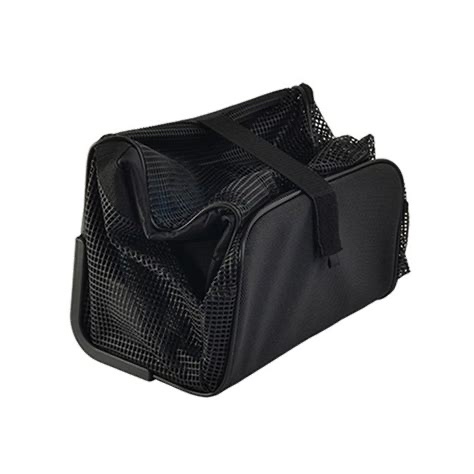
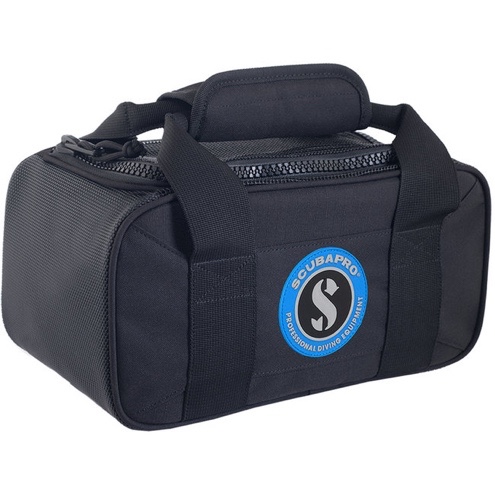
Carry your weight safely and with ease by loading them into the Weight 7 Bag. Built with double webbing encircles the entire bag for added strength and joins to form a padded top grab handle. It also makes a great toiletry/ shower bag. It includes an additional coated mesh for quick drying. YKK double-slider zipper U-shaped opening makes it easy to access the main compartment.

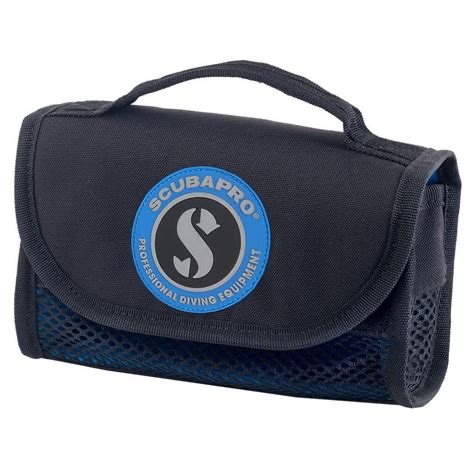
This high-quality, padded Mask bag has a robust nylon-polyester material. The tough fabric protects the mask from damage when traveling and keeps it safe and clean for your next dive trip. It is designed to hold your essentials and includes two Velcro straps on the back for attaching your snorkel.

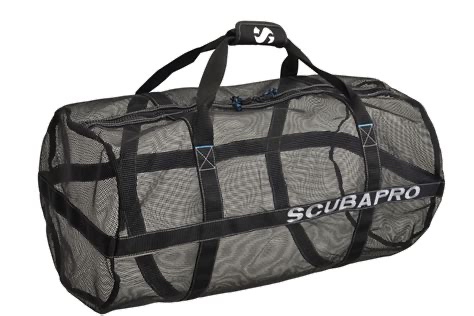
The SCUBAPRO Duffel Mesh Bag is a perfect duffel-style dive bag made from durable nylon mesh that lets water drain easily. Roomy enough and strong enough for a complete gear set, it is still lightweight and folds easily for storage. It is an ideal gear-hauler for liveaboard use or for carrying dive suits separately. Top-loading U-shaped opening makes it easy to load gear. This bag is great because it can be used for more than just diving. It makes a great laundry bag for use when deployed or to leave in your locker at the team. It is great for putting all your gear in so you can raise it all at once. It is designed to allow for optimum packing flexibility. When you’re ready to rinse your equipment after a day of diving or a day where all your equipment is sandy and muddy, drop the entire bag in the rinse tank and hang up to dry

AFIMSC Prioritizes Diversity, Inclusion for EOD Physical Fitness Test

Sunday, January 23rd, 2022

JOINT BASE SAN ANTONIO-LACKLAND, Texas (AFNS) —  

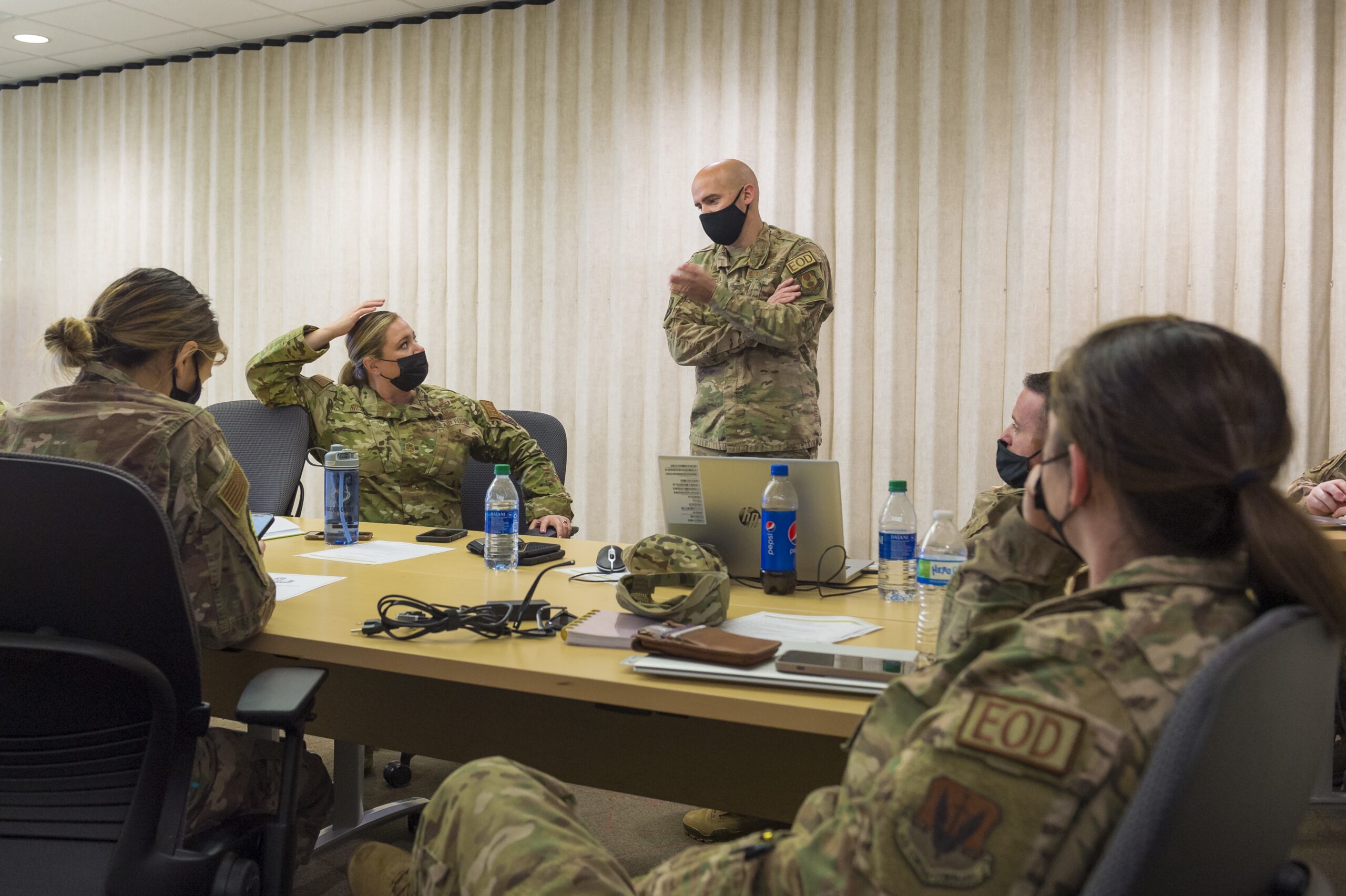
The Air Force Installation and Mission Support Center is leading the postpartum health guidance revisions for the upcoming explosive ordnance disposal Airmen-specific physical fitness test policy.

“We’re taking into account the mother’s needs while still keeping to the higher standard for the career field’s physical demands,” said Master Sgt. John Johnson, AFIMSC’s Installation Support EOD Program resource analyst. “We went right to the source and invited six EOD mother-Airmen to participate in a postpartum working group to develop courses of action and recommendations.”

Johnson and his team were given the charge to write the guidance for the career field’s operationally relevant Tier 2 PFT, which unlike the Tier 1 test is more physically demanding and independent of age and gender.

“This test will be more difficult than the standard Air Force test, so we wanted to make sure the policy gives our EOD mother-Airmen the correct amount of time to heal after giving birth,” Johnson said. “We don’t want them to rush back in and get hurt. We’re looking at the longevity of their careers and we’re here to see what we can do to help.”

Women’s health professionals were also present at the working group.

“Women make up 20% of the Air Force, so it’s important to ensure that we have policies in place that support them in their careers, as well as support them in their abilities to plan their families,” said Lt. Col. Larissa Weir, chief women’s health consultant to the Air Force Surgeon General. “Postpartum care for all women in general is evolving. We used to think the postpartum period was the first six weeks after the baby was born and then you go see the doctor to get the blessing that you were good to go. That’s not the case. For the first 12 months, there are continuous changes: hormonal, physiologic, and anatomic, … so postpartum care needs to be more comprehensive.

“Women in EOD have a special mission and more stringent requirements, so in order for the career field to be mission ready, we need to have these discussions and ensure our policies also evolve and are inclusive,” Weir said.

There are currently 37 women in the approximately 1,200 active EOD career field.

“We’re an even smaller group of mothers in EOD, so it’s easy to forget about us,” said Master Sgt. Andrea Rasmussen, EOD equipment section chief, 96th Civil Engineer Squadron at Eglin Air Force Base, Florida. “I am six months postpartum myself and it’s been a challenge. I have medical issues pertaining to my postpartum and have even gone to the emergency room a few times. All this while trying to take care of myself, take care of my home, take care of my daughter, take care of my work and prepare for a physical fitness test.

“I want to remain fully qualified and continue to be an asset to my team,” Rasmussen said, “so I’m glad we’re here being heard and coming up with courses of action now as this new Tier-2 policy is being written.”

Members of the working group also decided to continue to collaborate and develop additional tools and guidance for postpartum EOD Airmen.

“This meeting made me and my male counterparts in attendance realize how little we know about postpartum care in the EOD community,” Johnson said. “Outside of the policy, one of our go-do’s will be to put together a postpartum playbook and share it on our EOD SharePoint site. It’ll be a compilation of all the information the medical professionals shared with us today and other highlights in our discussion.”

The next steps for Johnson and his team will be to write the courses of action decided by the group, which include a proposed extension to the current Tier 1 postpartum delay, and add recommendations for related care. The draft of the Tier 2 test policy will then be sent to Headquarters Air Force for approval.

“I’m glad we have leadership who is willing to listen and willing to address issues that they may not be familiar with,” Rasmussen said. “That kind of support is paramount for not only women experiencing postpartum but women in general across the Air and Space Forces.”

By Malcolm McClendon, Air Force Installation and Mission Support Center Public Affairs