TYR Tactical

Archive for the ‘Guest Post’ Category

Zero Confusion: M150 RCO

Saturday, January 8th, 2022

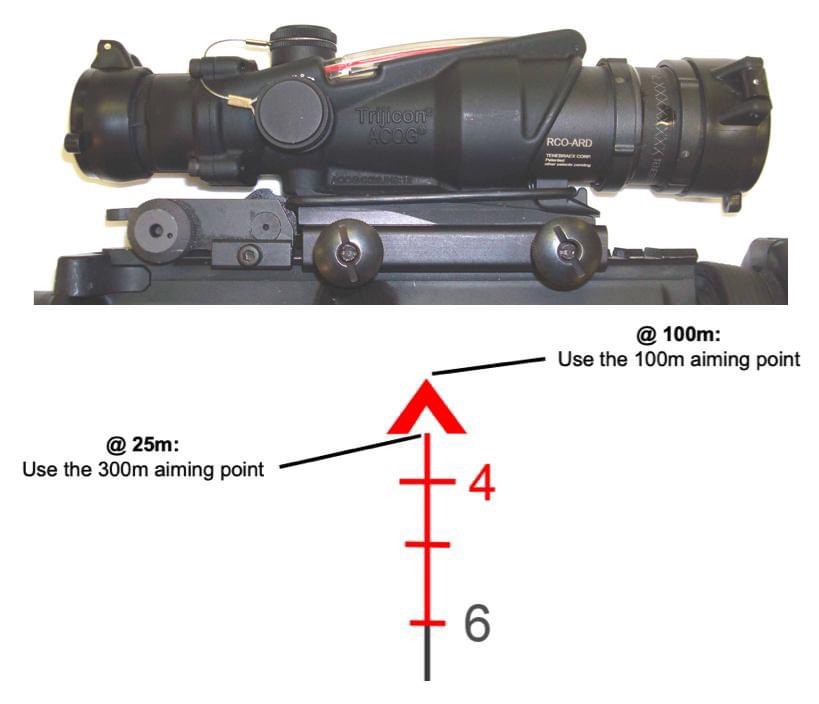
We’ve run into Soldiers with a couple different ideas about how to properly zero the Rifle Combat Optic: Which reticle aiming point is used? Tip of chevron, or tip of post?

Once, again, the answer is found by looking at Army references. For a complete answer to this question, we need to dig into the RCO TM 9-1240-416-13&P and Task Report 071-705-0008, “Zero the M150 Rifle Combat Optic (RCO) on a M16 Series Rifle or M4 Series Carbine.”

RCO TM, Work Package 5, page 5-25:

“Aiming Point. At 25 m, the point of the aim using the tip of the 300-meter aiming point is center mass (Figure 11).”

NOTE: A proper ballistic offset is still required at 25m. Your zeroing group must strike 1.5 MOA below the 300m point of aim, for a correct 300m zero conducted at 25m. Each square on the A8 25m target is 1 MOA.

Meanwhile, the zeroing Task Report, Figures 2 & 3 say:

“Use tip of chevron for POA/POI fix zeroing at 100 meters”

“Use tip of 300m post for POA/POI zeroing at 25 meters”

NOTE: When using the tip of chevron for zeroing at 100m, NO ballistic offset is required. The zeroing group must strike at the same 100m point of aim.

There’s a time and place for either solution, but you must understand when, where, and how to use each one.

– SSG Ian Tashima, CAARNG Asst State Marksmanship Coordinator

With 2022’s Arrival, U.S. Air Force Gear Up To Commemorate Its 75th Anniversary

Saturday, January 8th, 2022

WASHINGTON (AFNS) —  

It’s never too early to start celebrating a major milestone, which explains why the U.S. Air Force and Department of the Air Force kicked off the year with a bang Jan. 1 by highlighting the start of their 75th year at the Tournament of Roses Parade and the Rose Bowl.
Seventy-five years after the Air Force’s birth on Sept. 18, 1947, the spirit of innovation that has driven the service was on display when a B-2 Spirit from the 509th Bomb Wing, located at Whiteman Air Force Base, Missouri, roared over the Tournament of Roses Parade and one of the most prestigious college bowl games, the 2022 Rose Bowl, to kick-off the yearlong 75th-anniversary celebration.

The B-2 has supported the Tournament of Roses and Rose Bowl for nearly two decades, showcasing one of the Air Force’s premier weapon systems over the skies of Pasadena to inspire a future generation of patriotism and aviation.

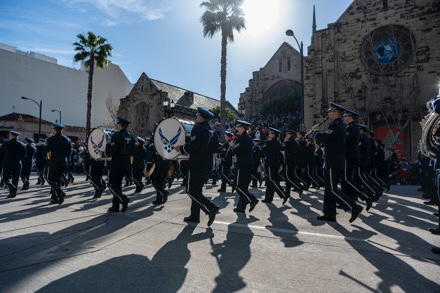
Joining the B-2 this year to kick off the celebration was an Air Force Total Force Band, comprised of 75 Airmen-Musicians from 14 units. Fittingly, the band marched in the 75th spot in the Tournament of Roses parade lineup.
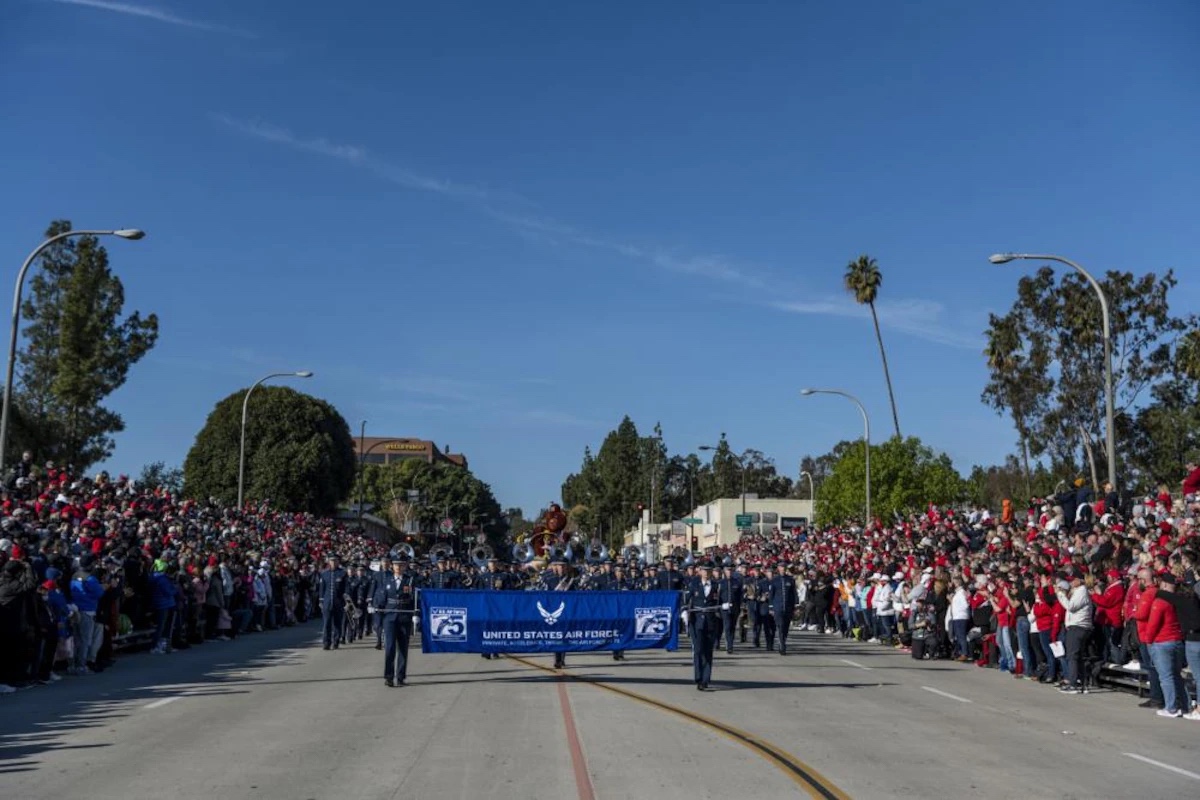
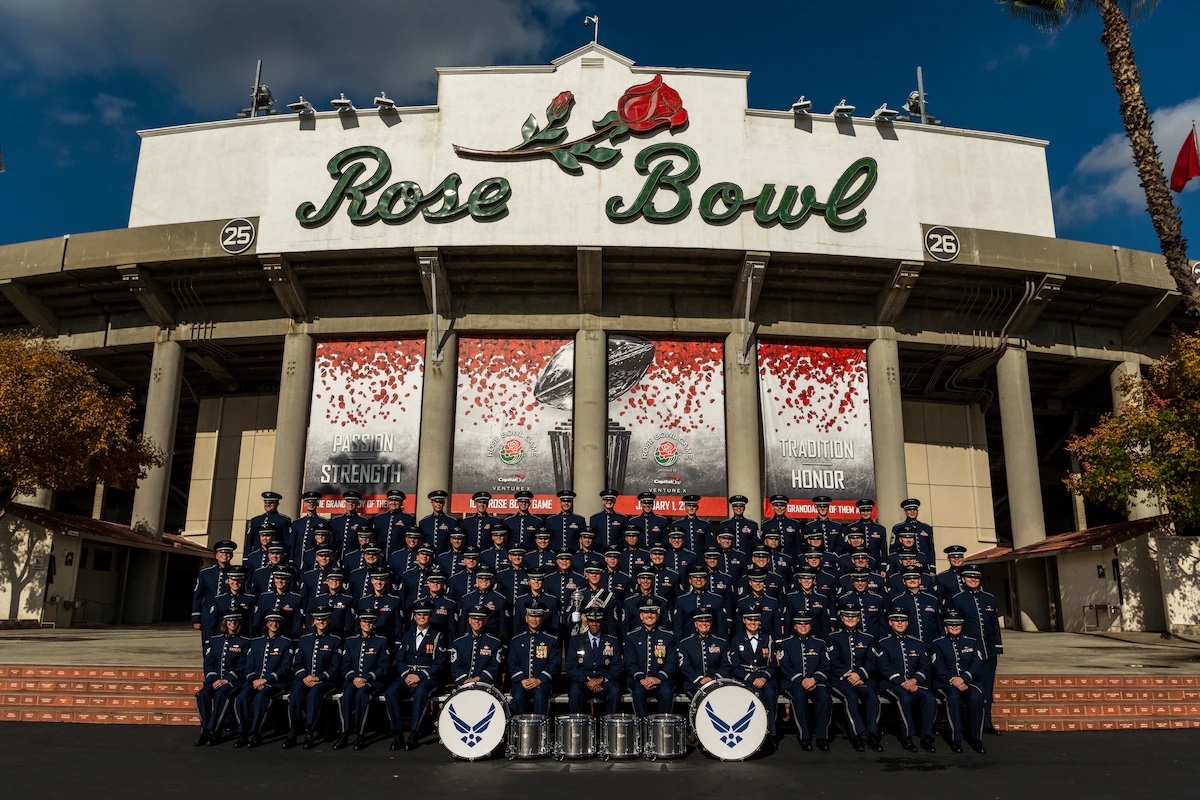
The Airmen taking part in the start of the year celebration highlighted one of the service’s greatest strengths: the nearly 700,000 active duty, Guard, Reserve and civilian Airmen who remain the heart and soul of the service, said Air Force Chief of Staff Gen. CQ Brown, Jr., who currently serves as the service’s highest ranking military officer.
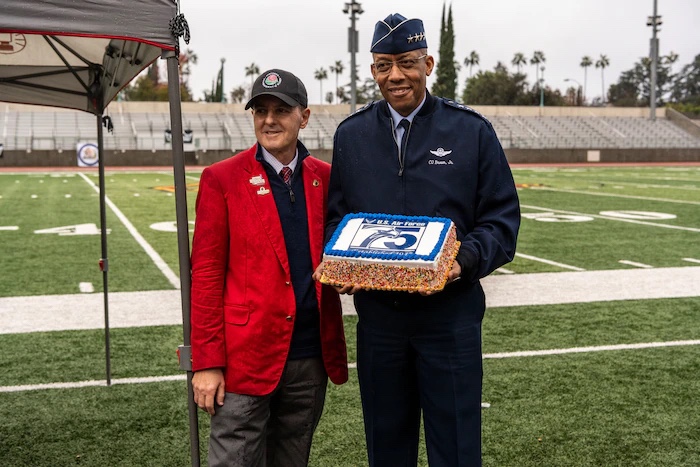
“Ever since the Air Force became a separate military service, empowered Airmen have pushed the boundaries of technology and innovation that have allowed the service to excel and keep pace with the rapid changes and the demands placed upon us,” Brown said. “Our commemoration of this important anniversary provides a chance to reflect on the amazing accomplishments of our service and those who have served among its ranks since 1947, while also celebrating the boundless future that lies ahead.”

Brown added, “As the Air Force approaches its 75th anniversary, we have a responsibility to our nation and our international allies and partners. I am confident that our Airmen will continue to innovate, accelerate and thrive so that we can execute our mission to Fly, Fight, and Win…Airpower Anytime, Anywhere.”
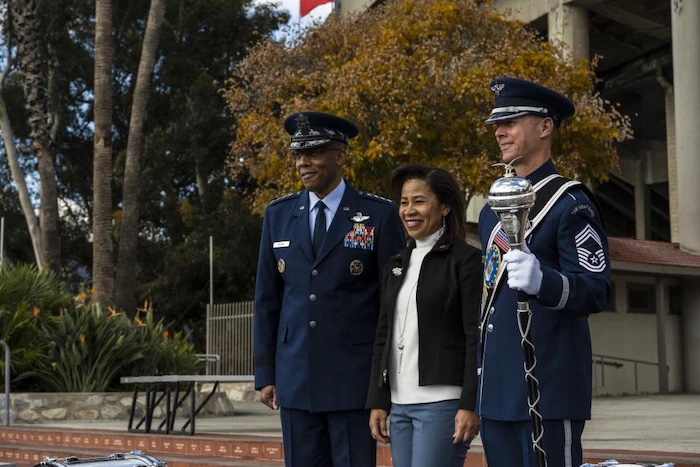
To honor the past, present and future, the theme for the 75th anniversary is “Innovate, Accelerate, Thrive – The Air Force at 75.” That focus captures a range of activities and observations that will take place throughout the year and highlight the anniversary’s significance.

“The 75th anniversaries of the U.S. Air Force and the Department of the Air Force provides a unique opportunity to highlight the contributions of our Total Force Airmen, both past and present, who have fought and defended our nation in air and space,” Secretary of the Air Force Frank Kendall said. “When you think about what the Air Force has accomplished since its inception in 1947, there’s so much to be proud of – it’s truly incredible.

“These past 75 years have showcased the service’s ability to adapt to any situation and provide unparalleled airpower as well as spacepower right up to the establishment of the U.S. Space Force within the Department of the Air Force in 2019,” he said. “As we look ahead to the next 75 years, we must continue to adapt and modernize so that our Airmen and Guardians have the warfighting capabilities they need to stay ahead of our pacing challenges, while also ensuring they and their families have the resources they need to thrive. One team, one fight!”

Throughout 2022, the Air Force will celebrate its 75th milestone with various events around the U.S. and worldwide to showcase the values, commitment, and expertise of America’s Total Force Airmen, past and present. In addition, the service will spotlight its history, accomplishments, and many of the pioneering Airmen whose innovation, dedication to mission, and war-fighting spirit helped established the U.S. Air Force of today.

Innovation fueled by Airmen has always been a part of the Air Force’s heritage, even before it became an independent service in 1947.

Maj. Gen. Billy Mitchell, also known as the “Father of the Air Force,” was one Airman who paved the way for the service. According to military historians, his commitment to pushing boundaries and working towards a distinct aerial service branch seeded a renaissance for the airpower legacy that would distinguish itself during conflicts across the globe for years to come.

Likewise, Gen. Henry H. “Hap” Arnold, who was designated the first and only five-star General of the Air Force by President Truman, also played a key role in leading, developing and innovating American military airpower during World War II, providing the necessary vision and drive to ultimately create the conditions for an independent U.S. Air Force following the war. Today, Gen. Arnold is considered an airpower pioneer whose efforts helped to lay the foundation for modern Air Force logistics, R&D, and operations, according to the National Museum of the U.S. Air Force.

The Air Force’s history is also the history of the nation’s advancements in space. Under the Air Force’s early space pioneers such as Gen. Bernard Schriever, the Air Force developed and integrated the technologies that put U.S. rockets and satellites into space. By Operation Desert Storm in 1991, often called the nation’s first space war, space became central to nearly all military operations. These same technologies that brought victory in Desert Storm, such as GPS and communication satellites, are now essential to modern life in America. The importance of space grew to such an extent that the U.S. Space Force emerged as an independent service within the Department of the Air Force in 2019.

“This is what is being celebrated as the U.S. Air Force and the Department of the Air Force enter their 75th years and what was on display in the skies over California when the B-2 roared overhead: 75 years of American airpower, spacepower, and innovation that have secured our nation and made us stronger,” said Brig. Gen. Patrick Ryder, Department of the Air Force Public Affairs director.

Secretary of the Air Force Public Affairs

Photos by Nicholas Pilch

FirstSpear Friday Focus: Tactical Hand Warmer

Friday, January 7th, 2022

With frigid temps dropping in January, don’t let your mitts get cold. This is an iconic OG cold weather piece from FS that’s mission-specific, look no further than the FS Tactical Hand-Warmer. The Tactical Hand-Warmer is a perfect way to keep your fingers warm on a cold day. The fleece-lined interior is soft and retains heat exceedingly well.

The Tactical Hand-Warmer can be attached directly to your platform or worn on its own. When not needed, the included attachment strap stows inside. An attached storage bag allows the system to be packed up small and tight. The Tactical Hand-Warmer has additional pockets to hold “air activated hand warmers” or other essential items. Cuffs allow for changes in length.

Stay tuned next week, as we’ll be launching our new technology and we’ll have a lineup of new products for SHOT Show 2022.

For more information, check out www.first-spear.com/tactical-hand-warmer.

MISINFORMATION: M17 Grip Module Replacement by Soldiers

Thursday, January 6th, 2022

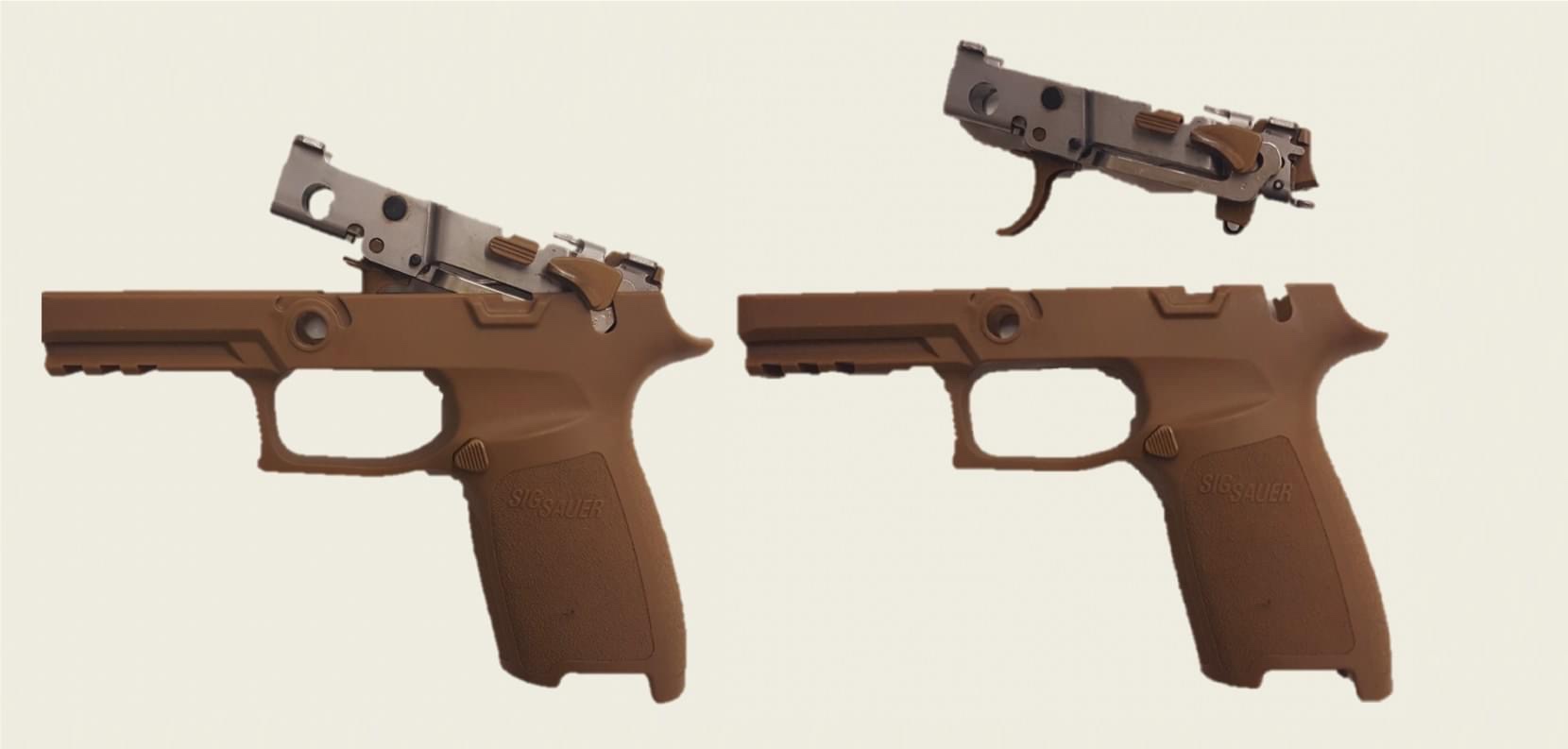
BLUF: End user Soldiers ARE authorized to separate the receiver from the grip module.

Some folks read the -10 TM and conclude that Soldiers aren’t allowed to do this. Here’s what TM 9-1005-470-10, MHS Operator Manual says right up front in Work Package 16:

“Army only: To prevent damage to equipment, procedures in this work package should be performed by unit armorer.”

Contrast this with the Air Force guidance, which follows the above:

“Air Force only: Changing of the grip module will only be accomplished by Combat Arms qualified personnel with AFSC 3P0XXB, SEI 312, or properly qualified Civilian Equivalent Personnel.”

The source of this confusion is a general misunderstanding of key words and what they mean. Notice that the Army note uses “should,” and the Air Force note uses “will.”

Here’s the breakdown, and this applies to all Army official publications*:

“May” = Optional; acceptable means of accomplishment

“Should” = Optional; preferred method of accomplishment

“Will,” “must,” & “shall” = Non-optional; mandatory requirement

Also, the -10 Operator Manual provides 10-level operation and maintenance “with you, the user, in mind.” [from -10 TM “How to Use This Manual,” page v.] If it’s in the -10, you, the Soldier, are permitted to perform all procedures included in the TM…it’s a 10-level function, after all.

So, the bottom line is….

In the Army it’s recommended that unit armorers remove the receiver from the grip module, but not a requirement.

Meanwhile, in the Air Force the Combat Arms folks are the only ones authorized to do the same.

*Some, but not all, doctrinal references provide these definitions within the publication.

By SSG Ian Tashima, CAARNG Asst State Marksmanship Coordinator

CSAF Signs Agile Combat Employment Doctrine Note

Thursday, January 6th, 2022

MAXWELL AIR FORCE BASE, Ala (AFNS) —  

Air Force Chief of Staff Gen. CQ Brown, Jr. recently signed the service’s first doctrine publication on Agile Combat Employment, codifying a proactive and reactive operational scheme of maneuver to increase survivability while generating combat power throughout the integrated deterrence continuum.

Working with experts across the service, the Curtis E. LeMay Center developed Air Force Doctrine Note 1-21, Agile Combat Employment, to serve as the foundation of ACE operational doctrine. AFDN 1-21 provides guidance for Airmen to rapidly innovate and generate discussion across the force to develop new best practices.

“Rapid development of guidance is essential to accelerating change for our service and our Joint teammates,” said Maj. Gen. William Holt, LeMay Center commander. “This doctrine note represents another milestone in our ability to develop and leverage emerging doctrine.”

AFDN 1-21 will complicate and create dilemmas in an adversary targeting process while creating flexibility for friendly forces to achieve operational advantage. To deter and win, the core elements of ACE are Posture, Command & Control, Movement and Maneuver, Protection, and Sustainment.

“Future conflict will never look like wars of the past, and that is why we have to get after building multi-capable, strategically-minded Airmen today, so they can compete, deter, and win tomorrow,” said Chief Master Sergeant of the Air Force JoAnne S. Bass. “AFDN 1-21 presents, in doctrine, expeditionary and multi-capable Airmen capable of accomplishing tasks outside of their core Air Force specialty to provide combat support and combat service support to ACE force elements.

Our adversaries around the globe have increasing capabilities to hold our main operating bases at risk. Peer adversaries have achieved rapid technological advancement in small-unmanned aircraft systems as well as cruise, ballistic, and hypersonic missiles. This, combined with a reduction of overseas operating locations, means the Air Force can no longer consider MOBs as sanctuaries from attack. The Air Force must adapt to this new paradigm to maintain a combat effective force. Airmen should expect to conduct operations at a speed, scope, complexity, and scale exceeding recent campaigns from distributed locations.”

In order to update the doctrine, the development team will use current best practices to improve future information.

“Over the last year, we have reaped several benefits by taking this same doctrine development approach with the Air Force’s role in Joint All-Domain Operations resulting in AFDP 3-99,” said Lt. Col. Richard Major, Air Force Doctrine Development director. “I expect we will see the same for ACE as our Airmen use the doctrine note as a point of reference to help build new best practices we can then integrate into current doctrine and use to inform future doctrine.”


The LeMay Center serves as CSAF’s principal agent for doctrine, lessons learned and provides Air Force input to Joint doctrine. The center also assists in the development of concepts and strategy.

-Air University Public Affairs

Combat Aviation Advisors Participate in Airdrop Competition

Wednesday, January 5th, 2022

DUKE FIELD, Fla. —  

The luxury of readily available gear and resources is not always a reality for Combat Aviation Advisors working with partner nations in remote locations. These unique situations have led CAAs to find innovative ways to help partner nations accomplish their missions with resources and budgets that are realistic for them.

One way CAAs have been innovating is by using improvised parachute bundles for aerial delivery. While trained riggers normally build bundles with specific materials, improvised bundles can be made from locally sourced items on a smaller budget.

“We have built bundles using water bottles for crush materials where that was the only available material we could find,” said Master Sgt. Christian Becker, a 711th Special Operations Squadron CAA. “Basically, this whole process is using what you have to maximize the benefit for the mission.”

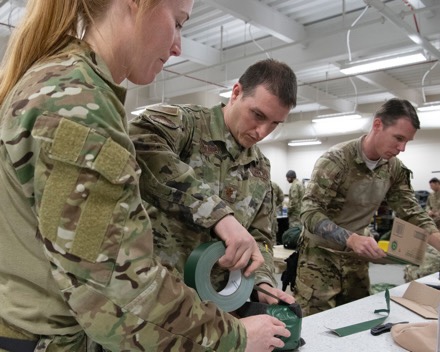
In order to hone these improvised parachute bundle building skills, the 711th SOS aircrew flight equipment team hosted a bundle building course during the December unit training assembly. Some active-duty CAAs and Army riggers also joined the training that included an extra element of competition for creating the best bundle.

“We have done training like this in the past, just more compartmentalized,” said Master Sgt. Juan Acevedo, the 711th SOS NCO in charge of training. “This was the first time we actually built and dropped the bundles that people made that same day.”

During the class, instructors demonstrated the bundle building process and then divided the students into teams to practice what they learned previously. Each team received a kit of limited supplies to build a bundle that included an egg and three soda cans. The competition aspect provided extra incentive to see who could best protect their bundle contents during the aerial drop.

 “I love that we are having a competition using skills outside of our normal careers,” said Maj. Daniel Saunders, a 711th SOS CAA participating in the training. “When we deploy as a small team, each of us has our expertise, but we want to learn from our teammates.”

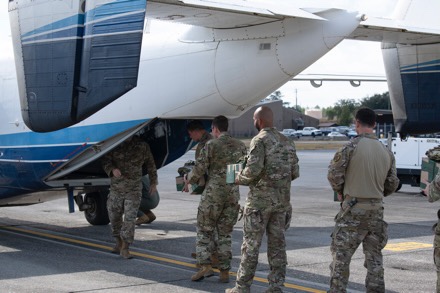
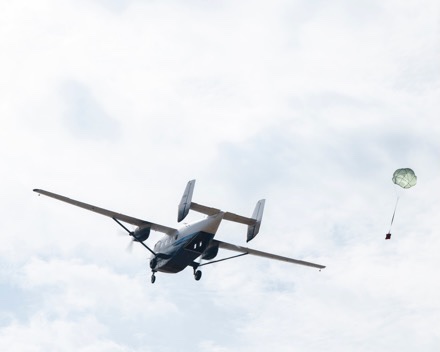
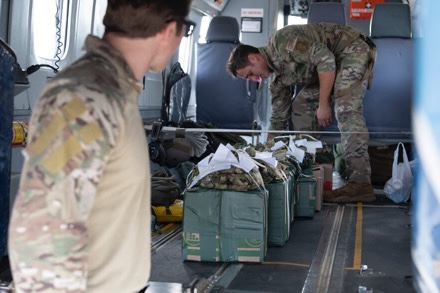
After the CAAs finalized their improvised bundles, they loaded them on a C-145A Combat Coyote for aerial delivery and headed to the drop zone for the final portion of their training. While at the drop zone, they called in the air drops and watched how each bundle fared in protecting its fragile cargo.

“The training was excellent because it not only allowed us to introduce tactics, techniques and procedures to members of the squadron, it also gave us a chance to practice our advising,” said Becker. “Everyone loved it and mentioned how great it was. We are going to move forward doing more events like this.”

Only two of the eight eggs broke from impact and though some cans faced structural damage, none broke open. All eight bundles landed in their intended zone and the instructors said the training was a success.

“Now we all have a better idea on how to assist our riggers in airdrop operations,” said Saunders. “Exercises like this allow us to resolve team dynamics and help cement how we operate in a deployed environment.”

Story by Nicole King, 919th Special Operations Wing

Photo by Michelle Gigante

TacMed Tuesday – What is the BLAST Bandage?

Tuesday, January 4th, 2022

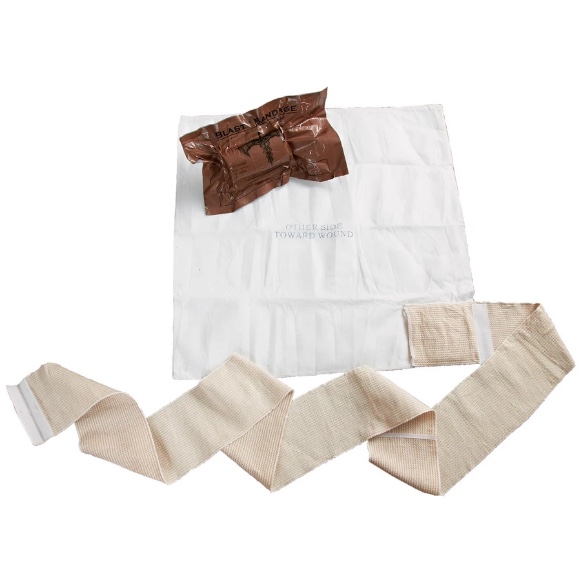
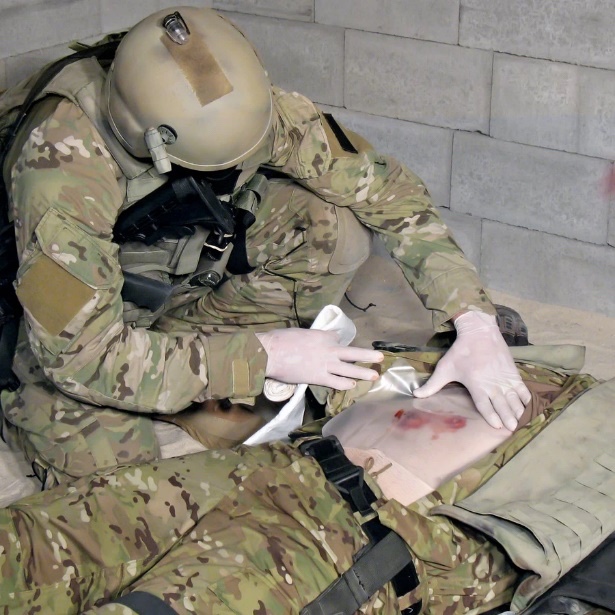
The BLAST® Bandage from TacMed™ Solutions was designed out of necessity to provide the ability to quickly package traumatic amputations, burns, and large pattern wounds with minimal use of supplies and effort.  

It provides a 20″ X 20″ treatment area, but packs to about the size of a 4” combat bandage and provides a large non-adherent wound pad that can be easily wrapped around limbs and secured with the attached elastic wrap. The covering area of the BLAST® Bandage is large enough to cover the entire back or chest of most casualties.

The BLAST® Bandage also offers a removable multipurpose occlusive layer that can cover a 19″x 19″ area or be used to cover abdominal contents minimizing the loss of heat and moisture.  

As with other TacMed Solutions bandages, the “brakes” on the bandage help prevent accidental unrolling of the elastic wrap during high-stress application. These brakes are especially helpful during the dressing of amputations. By providing multiple points of adhesion, the brakes prevent slippage of the elastic during the wrapping process creating a more secure, effective bandage and decreases the chance of the wound being exposed during movement.  

If you are interested in learning more about the BLAST® Bandage from TacMed™ Solutions, check it out at: tacmedsolutions.com/products/blast-bandage

AFIMSC Announces 2022 I-WEPTAC Topics, Seeks Working Group Volunteers

Tuesday, January 4th, 2022

JOINT BASE SAN ANTONIO-LACKLAND, Texas (AFNS) —  

The Air Force Installation and Mission Support Center has announced topics and chairs for the 2022 Installation and Mission Support Weapons and Tactics Conference.

With a theme of “Adaptive Operations through Expeditionary Combat Support,” I-WEPTAC 2022 topics and Mission Area Working Group chairs are:

Transition the Agile Combat Support Deployment Model from the Air and Space Expeditionary Force to Air Force Force Generation, chaired by Capt. Randi Brown, Expeditionary Engineering Branch Chief, Air Combat Command Headquarters, Joint Base Langley-Eustis, Virginia.

Enterprise-as-a-Service and Base Operation Support Broken Glass for Expeditionary and Base Operation Support Communications, chaired by Donald  Lewis, Cyberspace Systems Support Branch Chief, AFIMSC, Joint Base San Antonio-Lackland, Texas.

Operationalize Blue Small Unmanned Aerial Systems for Installation and Mission Support, chaired by Capt. Kristin Ober, Operations Branch Chief, AFIMSC Detachment 4, Ramstein Air Base, Germany.

Passive Defense for Adaptive Operations, chaired by Maj. Kendall Benton, Policy Branch Action Officer, Headquarters Air Force Security Forces Directorate, the Pentagon, Arlington, Virginia.

MAWG chairs, who were selected from 33 nominations submitted from across the Department of the Air Force, represent the diversity of installation and mission support Airmen and Guardians.

“Selections were based on relevant experience and their commanders’ acknowledgement of their exceptional leadership qualities,” said Col. Lance Clark, director of AFIMSC’s Expeditionary Support and Innovation Directorate.

AFIMSC assigned mentors to guide the working groups as they develop solutions for the topics. Mentors include retired Maj. Gen. Theresa Carter, former AFIMSC commander; retired Gen. Frank Gorenc, former commander of U.S. Air Forces in Europe; and retired Maj. Gen. Timothy M. Zadalis, former U.S. Air Forces in Europe-Air Forces Africa vice commander.

“We are lucky to have such great support from these senior leaders,” Ober said. “The encouragement and expectation to reach out to the highest ranks in the Air Force underscore how vital it is that we get these answers right and it speaks to AFIMSC’s commitment to get the most out of I-WEPTAC.”

With the MAWG leadership now in place, the chairs will be looking for Airmen and Guardians to build out their teams over the next few months. They welcome nominations for Airmen, Guardians and government civilians who want to participate in this year’s I-WEPTAC.

“As we’re selecting our teams, my focus is going to be on people who understand the current system, but are excited about change, because what we’re going to propose hasn’t been done before by the Air and Space Forces and can affect the entire enterprise,” Brown said. “So we’re looking for people who are ready to get after these solutions.”

The target team members are lieutenants through majors, GS-11 through GS-13, and technical sergeants through senior master sergeants, who are actively working in or have recent experience with the associated topic.

I-WEPTAC is an annual event that examines fundamental installation and mission support challenges to identify deficiencies, shortfalls and developmental gaps that limit the Air Force’s and Space Force’s ability to execute and operate efficiently. MAWGs develop executable courses of action for their topics and recommend solutions to senior leaders during their final out-briefs. MAWGs will present out-briefs virtually April 4-7.

For more information, visit the I-WEPTAC website.

For more information on volunteering to become a MAWG member, click here.

By Malcolm McClendon, Air Force Installation and Mission Support Center Public Affairs