Pirata Series from OTB Boots - Coming March 2026!

Archive for the ‘Guest Post’ Category

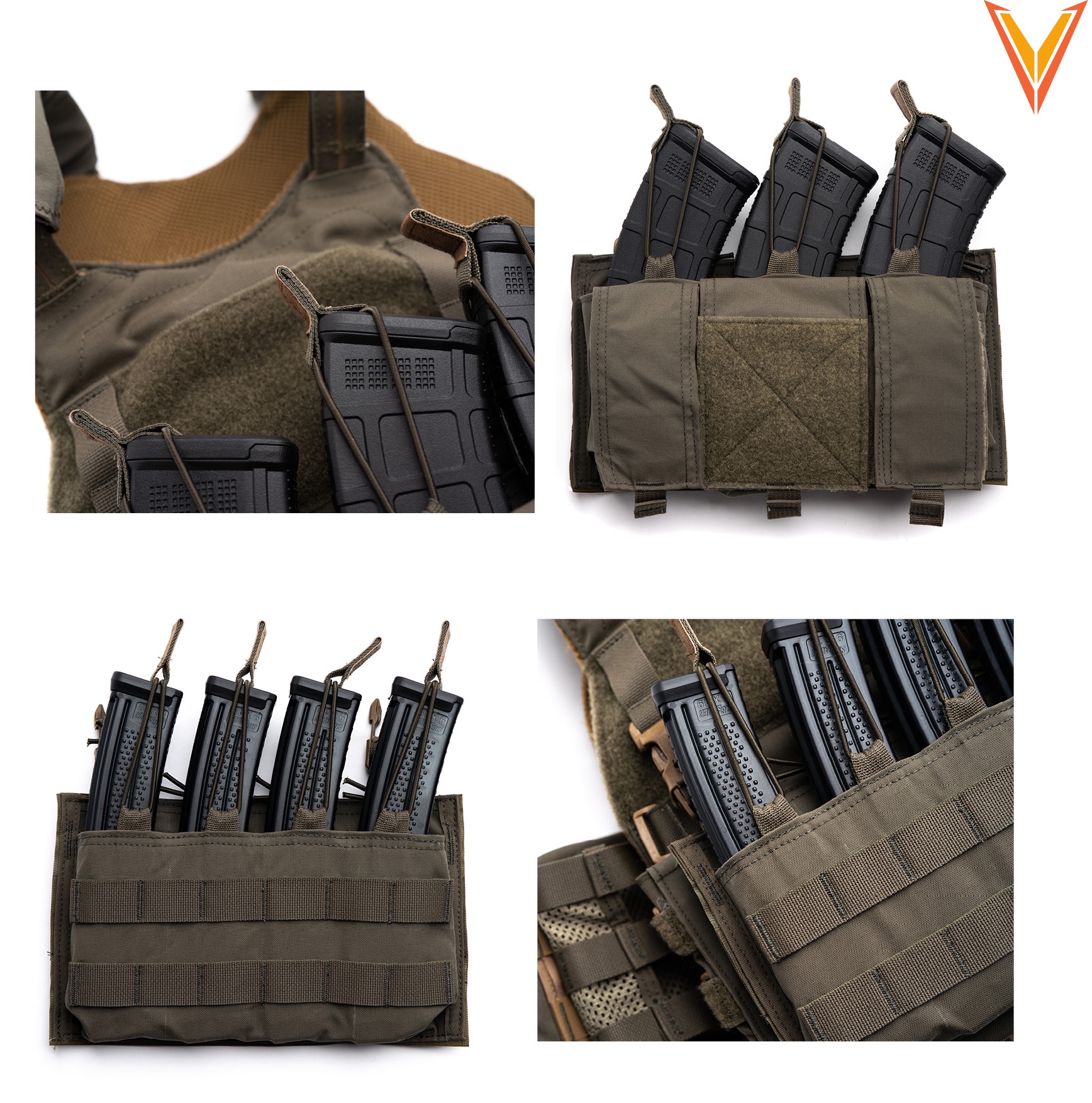
Velocity Systems Quad MPX SwiftClip Placard and Triple AK47 SwiftClip Placard, GP

Thursday, December 16th, 2021

The Triple AK47 SwiftClip® Placard, GP is a smaller, lighter alternative to a full chest rig, and is a quick attach/detach option allowing the end user to quickly change weapon systems without removing the rest of their equipment (radio, med etc). The placard has upward facing male buckles to clip into the SwiftClip® System on the chest of plate carriers and vests. The placard holds three AK47 magazines with an adjustable shock cord retention system. The front of the placard has three general purpose pouches, and a loop panel on the center pouch flap for ID Patches. www.velsyst.com/collections/featured-products/products/triple-ak47-swiftclip%C2%AE-placard-gp

The Quad MPX SwiftClip® Placard works in conjunction with our SwiftClip® attachment system to attach to an armor carrier or vest. The placard allows the user to carry four MPX (or similar sized) magazines and provides additional rows of MOLLE to increase modularity. The design includes internal dividers that creates four separate magazine pockets, each with an adjustable shock cord retainer and webbing pull tabs. The back of the placard has hook Velcro® to mate with the loop Velcro® on the front of an armor carrier or vest. The height of the buckles from the top of the placard can be adjusted by hook and loop straps on the back of the placard to get the placard to the needed placement on chest. The front of the placard includes 2 rows of 6 column MOLLE webbing. www.velsyst.com/collections/featured-products/products/quad-mpx-swiftclip%C2%AE-placard

USAF WAPS Adjusts for 22E6, 22E5 Testing Cycles

Thursday, December 16th, 2021

WASHINGTON (AFNS) —  

Starting with the 22E6 and E5 promotion testing cycles, the Air Force will begin using Situational Judgment Test questions as part of the Promotion Fitness Examination (PFE). This change is an integral part of the overall talent management transformation effort to better align the enlisted promotion system with the Air Force’s foundational competencies and the new Airman Leadership Qualities, as well as provide an agile approach to measuring the diverse knowledge, skills, and experience of Airmen.

“This is another critical step in our talent management transformation, moving us away from using strictly knowledge-based questions while providing more agility in the way we measure the competency level and leadership abilities of our Airmen,” said Lt. Gen. Brian Kelly, Air Force Deputy Chief of Staff for Manpower, Personnel and Services.

The change decreases PFE knowledge questions from 100 to 60, and adds 20 Situational Judgment Test questions that were derived from a diverse group of behavioral scientists and Senior Enlisted Leaders from across the Air Force. The overall points for the PFE will not change and will still make up 100 points of an Airman’s total score.

For each SJT question on the PFE, examinees will read the description of a situation relevant to their potential rank and duties, examine four possible responses to the situation, and then select the most effective and the least effective response.

Although there are no study references available for the SJT questions, Airmen should continue to familiarize themselves with the Airman Leadership Qualities, foundational competencies, and associated behaviors which will provide a general framework to consider when responding to these types of questions.

“We are constantly looking at ways to better develop and assess Airmen’s skills and abilities,” said Chief Master Sergeant of the Air Force JoAnne S. Bass. “This is another step in the right direction, with more to come.”

US Army and Air Force Fire Support Specialists Form a ‘COLT’ at Combined Resolve XVI

Wednesday, December 15th, 2021

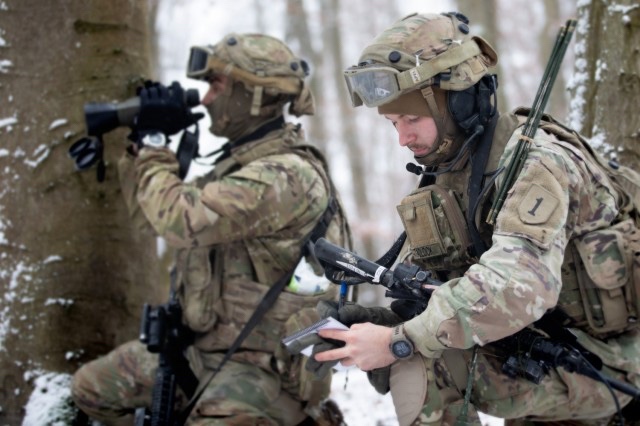
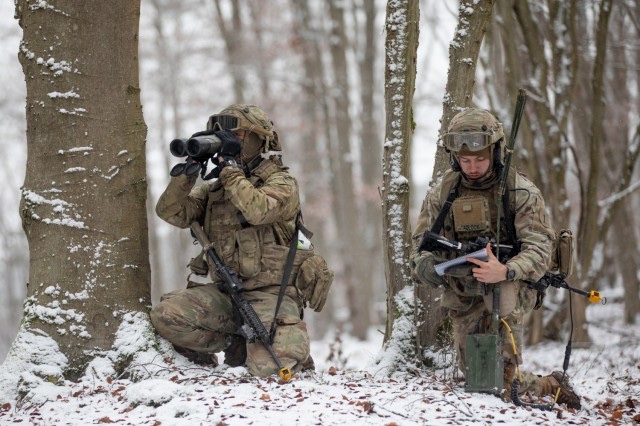
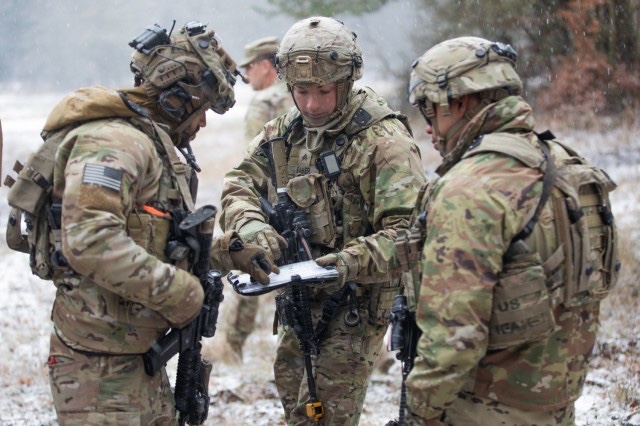
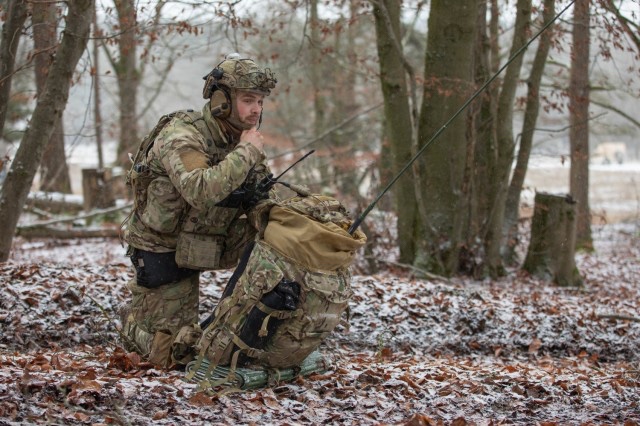
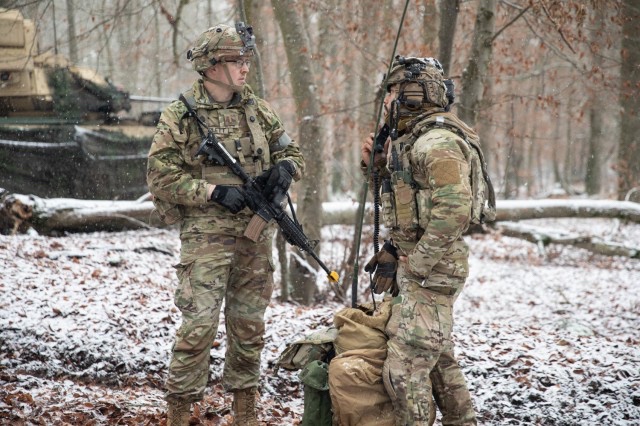
HOHENFELS, Germany — A two-person team of Airmen is dropped off by a Bradley Fighting Vehicle at the forward line of troops. They move down the line of cavalry scouts until they meet another small team, this one made up of U.S. Army artillerymen, who are dismounted from their own Bradley and are outfitting their rucksacks for an extended patrol. They are preparing to scout enemy positions, checking their radios and packing binoculars for a long patrol behind enemy lines.

The teams are part of the force-on-force exercise portion of Combined Resolve XVI, which includes approximately 4,600 armed forces service members from Bulgaria, Georgia, Greece, Italy, Lithuania, Poland, Serbia, Slovakia, Slovenia, Ukraine, United Kingdom and the United States. The operations are being conducted by integrated battalions with multinational units operating under a unified command and control element, allowing the U.S., its allies and partners to experience invaluable training alongside each other.

“Today we are going out as a COLT (Combat Observation Lasing Team),” said Senior Airmen Fernando Marquez, a Joint Terminal Attack Controller with 4th Air Support Operations Group. “A COLT team is basically the eyes on the ground when our sensor assets, which typically allows us to see far, cannot do the job. We have to push behind enemy lines, or in as far as possible with the enemy, so we can provide real targeting data for the brigade and division fires assets.”

The goal of COLT teams is to identify enemy targets, and, if possible, the teams will use laser targeting systems to mark targets for precision guided munitions. Joint teams of Fire Support Teams, known as FiSTers, and JTACs are best suited for providing COLT support to an Army brigade deployed in a combat scenario.

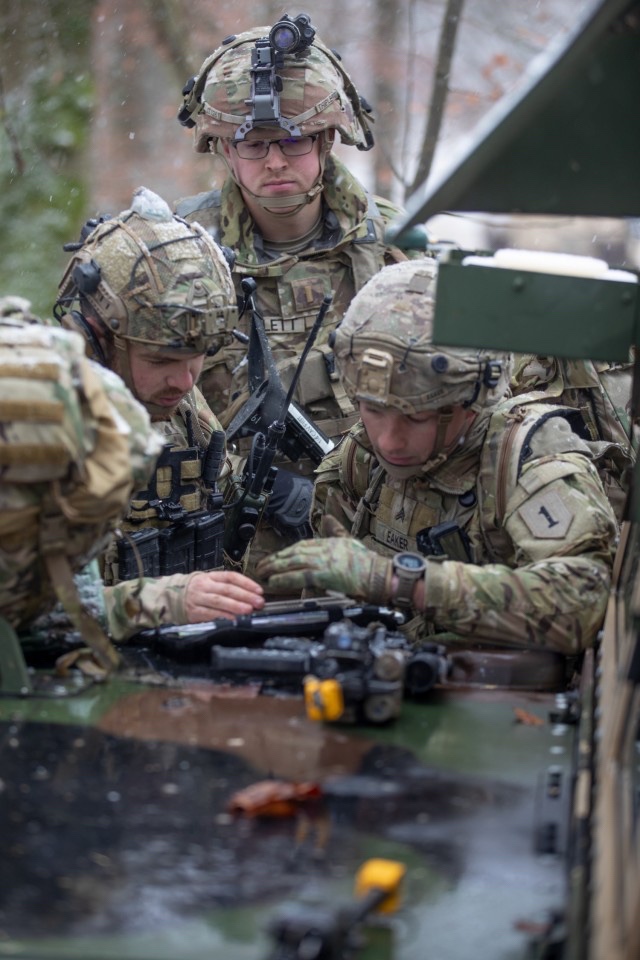
“Our mission is a list of high-value enemy targets,” said Sgt. Devon Eaker, a Joint Fire Support Specialist with 1st Battalion, 5th Field Artillery Regiment “Hamilton’s Own,” 1st Armored Brigade Combat Team, 1st Infantry Division. “I think I’m lucky to have the six guys total that we have right here. I’ve worked with these two JTACs before, and I’ve worked with the other three FiSTers a lot, and I can’t think of a better group of dudes to send forward to do this.”

FiSTers are the 1-5FA Headquarters and Headquarters Battery fire support officers, noncommissioned officers and enlisted joint fire support specialists responsible for identifying indirect fire, or fires, missions on the Combined Resolve XVI notional battlefield. FiST teams are attached to all of the multinational maneuver units operating during CBR XVI. This is an opportunity for these multinational units to experience the capability of the U.S. to provide close air support in joint operations.

“My fire support NCOs are organic to the field artillery battalion but are tasked out to each maneuver element,” said 1st Sgt. Michael York of HHB. “They are combat multipliers, and they enable the maneuver units to perform their mission by providing them with fires. So, if there is ever artillery, mortars or attack aviation getting called in, there is a fire supporter attached to that asset.”

Air Force JTACs direct the actions of aircraft while engaged in close air support. They can call in close air support from F-22s, A-10s, F-35s, or anything that the U.S. Air Force can provide air-to-ground operations.

“We’re fighting this new fight,” Marquez said. “We’re getting out of the COIN [counterinsurgency] mentality and moving into this new LSCO [large scale combat operations] fight. So, we are trying to shape the way we fight this new battle.”

Despite the proliferation of unmanned aerial vehicles in combat operations, both the Army and the Air Force continue to train and develop ground-force fire support teams. The force-on-force exercise held during Combined Resolve XVI at the Joint Multinational Training Center in Germany provides an excellent training opportunity for COLT.

“We’re essentially deep strike and reconnaissance,” Eaker said. “We get out there, forward of the FLOT, as close to the enemy as we can, see what’s coming and pitch it backwards. And if we can, we’ll kill what’s out there. We have access to aircraft via JTACs, fixed and rotary wing. We are in range of all artillery that the brigade has now through 1-5FA. With those combined, there’s not much out there that we can’t kill.”

The modern battlefield is shaped by UAVs directing cameras toward the enemy to gather intelligence. As the fight turns from terrorism to an enemy with more sophisticated electronic equipment and air defense, the potential disruption of UAV imaging is a very real threat. Well trained COLT teams ensure that U.S. Forces maintain the ability to penetrate enemy formations, identify threats and deliver fires munitions onto those threats, helping to maintain overwhelming firepower which is critical to victory on the LSCO battlefield.

To learn more about exercise Combined Resolve, follow: www.dvidshub.net/feature/CombinedResolve

By SSG George Davis

Sitka Arrowhead WWP Half Bib Pant – MDW

Tuesday, December 14th, 2021

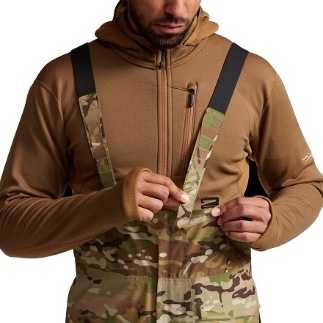
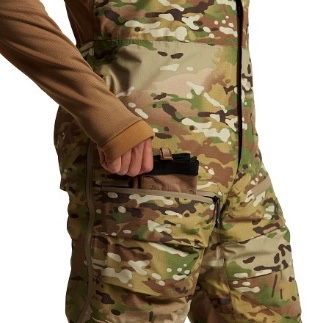
Fully Featured Gore-Tex Bib Pant Designed for Wet/Cold Weather Operations, Made in the USA

Rounding out the Wet Weather Protective (WWP) ensemble that launched the brand to market this spring, SITKA Arrowhead introduces the WWP Half Bib Pant – MDW as a COTS offering for Winter 2021.  

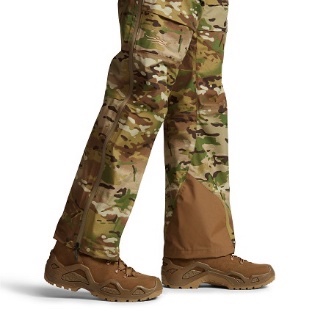
Intended for wet/cold environments the Half Bib Pant is made with Gore GTX 3L 40d Nylon Ripstop with DWR. Providing an optional WWP pant solution that enhances protection when the end-user is in a static position, specifically when deployed in the prone position conducting observation or support by fire tasks.

The integrated suspender system with laddered adjustability allows the end-user to dial in the fit for unrestricted movement and flexible torso sizing.  7/8 Side Zips have been added to allow for the ease of donning and doffing when wearing boots. Large front facing cargo zip pockets provide ample space for gloves & accessories and dump pocket capability.

Always focused on best-in-class materials to meet SITKA Arrowhead purpose-built design principles, the WWP Pant and Half Bib Pant MDW include reinforced insteps made with Trelleborg HANK™.

Trelleborg HANK™ is a flexible and extremely light weight High Abrasion Neoprene Kevlar, that belies the fabrics exceptional durability and waterproofness.

“We picked this particular textile for our instep because it proved to be lighter, more flexible, had great abrasion resistance and was more waterproof than any other instep reinforcement materials on the market. It complements the GORE-TEX textiles we use without feeling over built. “  

Eric GilmoreSITKA Arrowhead Creative Lead

Berry Compliant – Made in USA – Find your nearest dealer

TacMed Tuesday – Innovative Splinting in the Field

Tuesday, December 14th, 2021

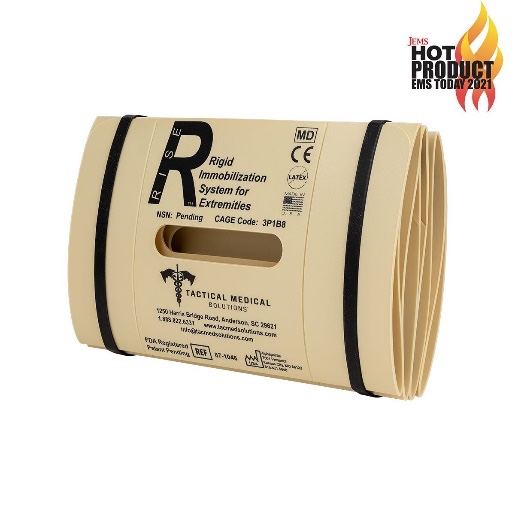
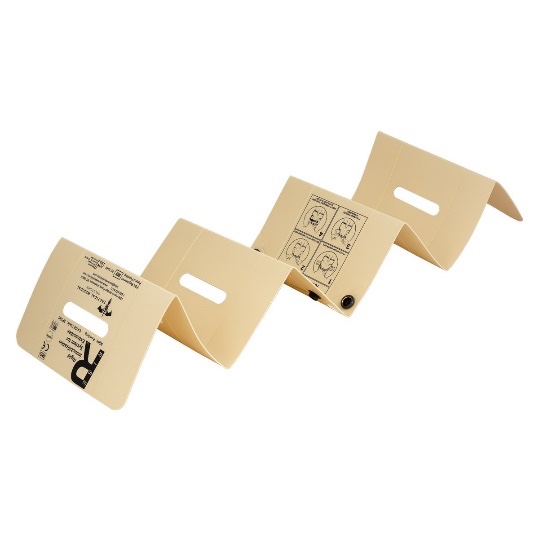
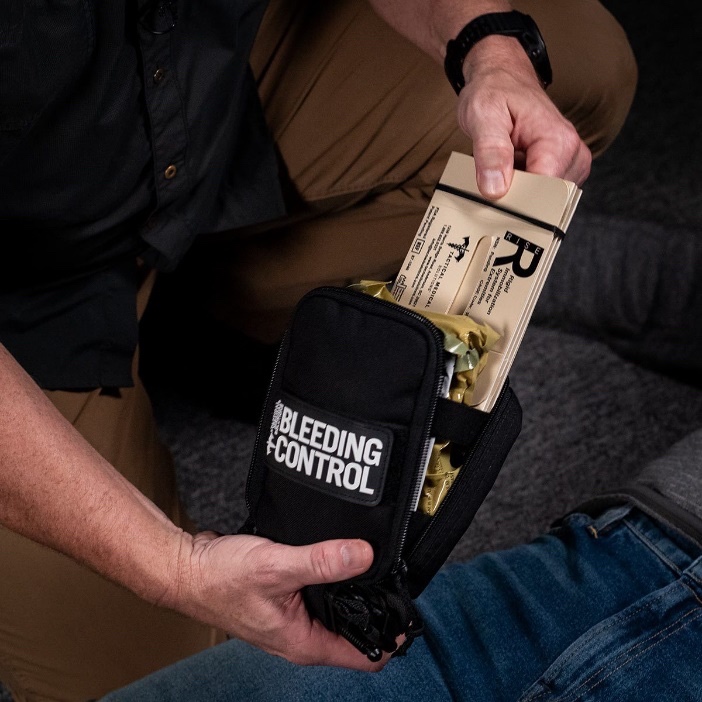
The TacMed™ RISE™ is a low profile, rugged splint designed for extremity fractures and pelvic stabilization in the prehospital environment. Born from lessons on the battlefield, it can be intuitively applied under stress to create a straight splint, a 90-degree sprint, or pelvic stabilizer and be easily secured to the patient with items such as an elastic wrap or pressure bandages.

It features dynamic living hinges that allow the splint to collapse for maximum portability and kit space savings while easily form-fitting to the required shape and dimensions for proper upper and lower extremity splinting of fractures. Its one-of-a-kind design is made of a lightweight polymer capable of withstanding surface cleaning and harsh elements, including saltwater, while maintaining its rigidity and durability.

With its compact size, the RISE™ also fits into most individual first aid kits including all standard military-issued IFAKs.

Unique to the RISE™, multiple cutout slots provide you the capability to create a pelvic stabilizer when paired with a windlass or ratcheting tourniquet such as our SOF® Tourniquet. The Committee on Tactical Combat Casualty Care (CoTCCC) recognizes splinting and pelvic stabilization application as a critical step to prevent additional injury before moving a casualty.

Whether you’re on the battlefield or a responder here at home, the RISE™ is an advantageous addition to any IFAK for increasing your medical capability at the point of injury when needed most.

If you are interested in learning more about the RISE™, check it out here: tacmedsolutions.com/products/rise

Competitors Show Off Innovative Thinking at HACKtheMACHINE Unmanned

Tuesday, December 14th, 2021

SAN DIEGO – This year’s HACKtheMACHINE Unmanned competition, held Nov. 16-19, virtually brought together nearly 1,000 competitors in the first of a series of public-facing technology challenges designed to accelerate the U.S. Navy’s Unmanned Task Force, forging valuable partnerships between the Navy, industry and academia to create new, high-end unmanned capabilities.

Sponsored by the Office of Naval Research (ONR), this technology competition encouraged creative “hackers” to help meet the needs of the Fleet by developing and integrating unmanned and autonomous systems at scale.

Chief of Naval Research, Rear Adm. Lorin Selby, helped kick off the event, speaking about innovating in the Navy, including the notion of “the small, the agile, the many.” The idea behind that is they look at small, attritable autonomous platforms and build them quickly and at scale, to complement the larger, expensive platforms that form the bulk of the Fleet and Force. For more information about their new vision, read their press release: ONR Chief Unveils New Vision to Reimagine Naval Power.

“The centerpiece of my strategy to reimagine naval power as Chief of Naval Research is built on a few key themes. First, we are living in a time of incredible technological change, and we must meet the moment with bold action. Second, we will introduce the idea of Strategic Hedge against an alternative future. Third, we have a plan to synthesize the most creative and potentially game changing ideas of the last three decades into a plan of action,” said Selby. “Finally, we conclude with a call to action, which all begins with exploring digital challenges at HACKtheMACHINE.” 

Although participants competed virtually, event organizers and Navy personnel were on-site in San Diego to oversee and facilitate the competition, which was streamed live via YouTube and StreamYard.

There were three tracks for participants to compete in: Hack the Pilot, Detective Bot and Top Model. Each challenge fell into a different focus area – maritime cyber, data science and digital engineering, respectively – to appeal to a broad range of talents and skill sets. The Navy’s Cybersecurity Office (PMW 130) sponsored and developed the challenges for the Detective Bot track, as a way to pursue artificial intelligence/machine learning (AL/ML) tools that can distinguish benign from malicious code.

PMW 130 provided a dataset with thousands of malicious and benign code samples to see who can take inefficient AI/ML techniques developed with unlimited resources ashore and adapt them to efficient and effective cyber solutions on smaller afloat and autonomous platforms.

“The competitors at this year’s HACKtheMACHINE had to solve some really tough challenges,” said Mike Karlbom, PMW 130 Technical Director of AI/ML. “We were excited to welcome so many different participants, who were able to show off their data science skills and creative thinking in these tracks. This event shows the importance of bringing together smart people, from a variety of backgrounds, to drive innovation and collaboration.”

In the Hack the Pilot track, participants were provided with an auto piloting system and challenged to test and identify all vulnerabilities in the code base.

In the Top Model track, participants were given a set of mission goals and asked to build a simulation scenario of a wide-area search. Then, they created model-based solutions for defined situations within the created model. Finally, they determined whether their created solutions could outperform a heterogeneous collection of objects combatting the scenario.

Also at the event, PMW 130 announced the winner of their third prize challenge in the Artificial Intelligence Applications to Autonomous Cybersecurity (AI ATAC) Challenge series. The winner of the challenge and the $750,000 prize was Splunk Inc. (NASDAQ: SPLK), a data platform leader. Their submission, Splunk® SOAR, had the best performance based on the criteria of the challenge, which focused on enhancing the Security Operations Center using AI and/or ML tools to automate the detection and prevention of advanced persistent threats and other cybersecurity campaign activity.

A technology competition run annually by the Navy since 2016, HACKtheMACHINE events have been previously held in five cities nationwide: San Francisco, Austin, Boston, Seattle and New York. This year’s Unmanned challenge took advantage of a virtual setting and focused on AI/ML and digital engineering to accelerate the process of reimagining naval power.

The next HACKtheMACHINE event is scheduled to be conducted live in Miami, Florida in April 2022.

From Lily Chen

SCUBAPRO Sunday – The Palawan Massacre

Sunday, December 12th, 2021

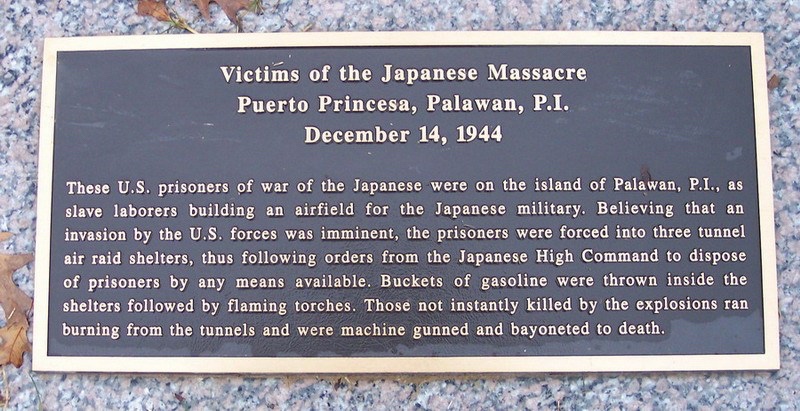
The Palawan massacre occurred on 14 December 1944, during World War II, near the city of Puerto Princesa in the Philippine province of Palawan. The Japanese Imperial Army massacred 139 of 150 American POWs. The Palawan compound was named Camp 10-A by the japanese, and the prisoners were quartered in several unused Filipino constabulary buildings. Food was almost nonexistent; the prisoners received a daily meal of wormy Cambodian rice and a canteen cup of soup made from camote vines boiled in water (camotes are a Philippine variant of sweet potatoes). Prisoners who could not work had their rations cut by 30%.

The Japanese unit in charge of the prisoners and the airfield at Palawan was the 131st Airfield Battalion, it was command of Captain Nagayoshi Kojima, whom the Americans called the Weasel. Lieutenant Sho Yoshiwara commanded the garrison company, and Lieutenant Ryoji Ozawa was in charge of supply. Ozawa’s unit had arrived from Formosa in 1942 and had previously been in Manchuria. There was also a Military police and intelligence unit, called the kempeitai at Palawan, they were feared by anyone who fell into their hands because of their brutal tactics.

In September 1944, 159 of the American POWs at Palawan were returned to Manila. The Japanese estimated that the remaining 150 men could complete the arduous labor on the airfield, hauling and crushing coral gravel by hand and pouring concrete seven days a week. The men also repaired trucks and performed a variety of maintenance tasks in addition to logging and other heavy labor

An attack by a single American Consolidated B-24 Liberator bomber on 19 October 1944, sank two enemy ships and damaged several planes at Palawan. More Liberators returned on 28 October and destroyed 60 enemy aircraft on the ground. While American morale in the camp soared, the treatment of the prisoners by the Japanese grew worse, and their rations were cut. After initially refusing the prisoners’ request, the Japanese reluctantly allowed the Americans to paint American Prisoner of War Camp on the roof of their barracks. This gave the prisoners some measure of protection from American air attacks. The Japanese then stowed their supplies under the POW barracks.

On 14 December, Japanese aircraft reported the presence of an American convoy, which was headed for Mindoro, but which the Japanese thought was destined for Palawan. All prisoner work details were recalled to the camp at noon. Two American Lockheed P-38 Lightning fighter aircraft were sighted, and the POWs were ordered into the air-raid shelters. After a short time, the prisoners re-emerged from their shelters, but Japanese 1st Lt. Yoshikazu Sato, whom the prisoners called the Buzzard, ordered them to stay in the area. A second alarm at 2 p.m. sent the prisoners back into the shelters, where they remained, closely guarded.

Suddenly, in a deliberate and planned move, 50 to 60 Japanese soldiers under Sato’s leadership doused the wooden shelters with buckets of gasoline and set them afire with flaming torches, followed by hand grenades. The screams of the trapped and doomed prisoners mingled with the cheers of the Japanese soldiers and the laughter of their officer, Sato. As men engulfed in flames broke out of their fiery deathtraps, the Japanese guards machine-gunned, bayoneted and clubbed them to death. Most of the Americans never made it out of the trenches and the compound before they were barbarously murdered. Still, several closed with their tormentors in hand-to-hand combat and succeeded in killing a few of the Japanese attackers.

Marine survivor Corporal Rufus Smith described escaping from his shelter as coming up a ladder into Hell. The four American officers in the camp, Lt. Cmdr. Henry Carlisle Knight (U.S. Navy Dental Corps), Captain Fred Brunie, Lieutenant Carl Mango (U.S. Army Medical Corps) and Warrant Officer Glen C. Turner, had their dugout, which the Japanese also doused with gasoline and torched. Mango, his clothes on fire, ran toward the Japanese and pleaded with them to use some sense but was machine-gunned to death.

About 30 to 40 Americans escaped from the massacre area, either through the double-woven, barbed-wire fence or under it, where some secret escape routes had been concealed for use in an emergency. They fell and/ or jumped down the cliff above the beach area, seeking hiding places among the rocks and foliage. Marine Sergeant Douglas Bogue recalled: Maybe 30 or 40 were successful in getting through the fence down to the water’s edge. Of these, several attempted to swim across Puerto Princesa’s bay immediately but were shot in the water. I took refuge in a small crack among the rocks, where I remained, all the time hearing the butchery going on above. They even resorted to using dynamite in forcing some of the men from their shelters. I knew [that] as soon as it was over up above, they would be down probing among the rocks, spotting us and shooting us. The stench of burning flesh was strong. Shortly after this, they were moving in groups among the rocks dragging the Americans out and murdering them as they found them. By the grace of God, I was overlooked.

Eugene Nielsen of the 59th Coast Artillery observed, from his hiding place on the beach, a group of Americans trapped at the base of the cliff. He saw them run-up to the Japs and ask to be shot in the head. The Japs would laugh and shoot or bayonet them in the stomach. When the men cried out for another bullet to end their misery, the Japanese continued to make merry of it all and left them there to suffer. Twelve men were killed in this fashion. Nielson hid for three hours. As the Japanese were kicking American corpses into a hole, Nielson’s partially hidden body was uncovered by an enemy soldier, who yelled to his companions that he had found another dead American. Just then, the Japanese soldiers heard the dinner call and abandoned their murderous pursuit in favor of hot food. Later, as enemy soldiers began to close in on his hiding place, Nielson dived into the bay and swam underwater for some distance. When he surfaced, approximately 20 Japanese were shooting at him. He was hit in the leg, and bullets grazed his head and ribs. Even though he was pushed out to sea by the current, Nielson finally managed to reach the southern shore of the bay.

He was one of 11 prisoners of war who escaped the December 1944 massacre on Palawan Island in the Phillippines, where around 140 soldiers died when the Japanese put them into trenches, dumped gasoline on them and set them on fire. He was later a key witness in the War Crime Trials of 1945.

This biography tells the story of Glenn (“Mac”) McDole, one of eleven young men who escaped and the last man out of Palawan Prison Camp 10A. Beginning on 8 December 1941, at the U.S. Navy Yard barracks at Cavite, the story of this young Iowa Marine continues through the fighting on Corregidor, the capture and imprisonment by the Japanese Imperial Army in May 1942, Mac’s entry into the Palawan prison camp in the Philippines on 12 August 1942, the terrible conditions he and his comrades endured in the camps, and the terrible day when 139 young soldiers were slaughtered. The work details the escapes of the few survivors as they dug into refuse piles, hid in coral caves, and slogged through swamp and jungle to get to supportive Filipinos. It also contains an account and verdicts of the war crimes trials of the Japanese guards, follow-ups on the various places and people referred to in the text, with descriptions of their present situations, and a roster of the names and hometowns of the victims of the Palawan massacre.

www.humanitiestexas.org/news/articles/interview-rufus-w-smith-world-war-ii-pow

SCUBAPRO Sunday is a weekly feature focusing on maritime equipment, operations and history.

Primary Focus – Core Differences Between the .223 Wylde and 5.56 NATO

Saturday, December 11th, 2021

What’s the hype about .223 Wylde, and is it worth the money and time?

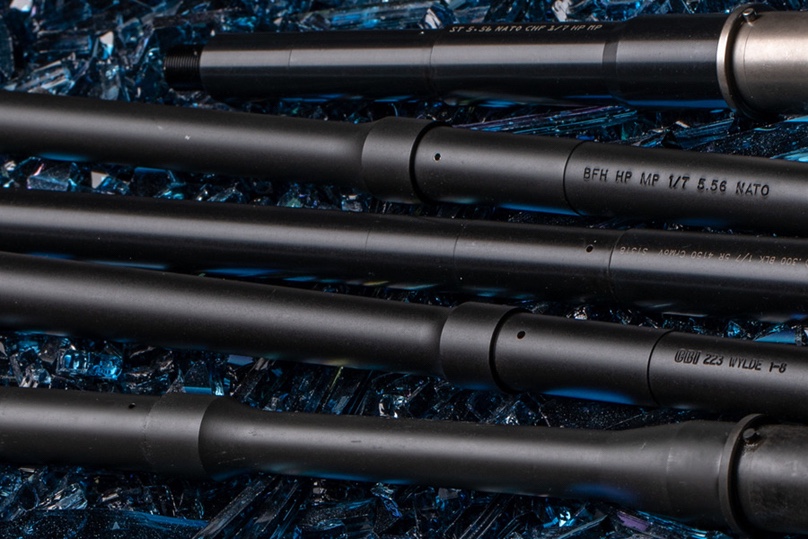
It’s not so much hype as reality. The .223 Wylde can successfully chamber and fire both the 5.56NATO round and the .223 Remington. The Multi-Cal on your lower receiver explained. Mystery Solved. Case closed – article over.

Unless you want the details…
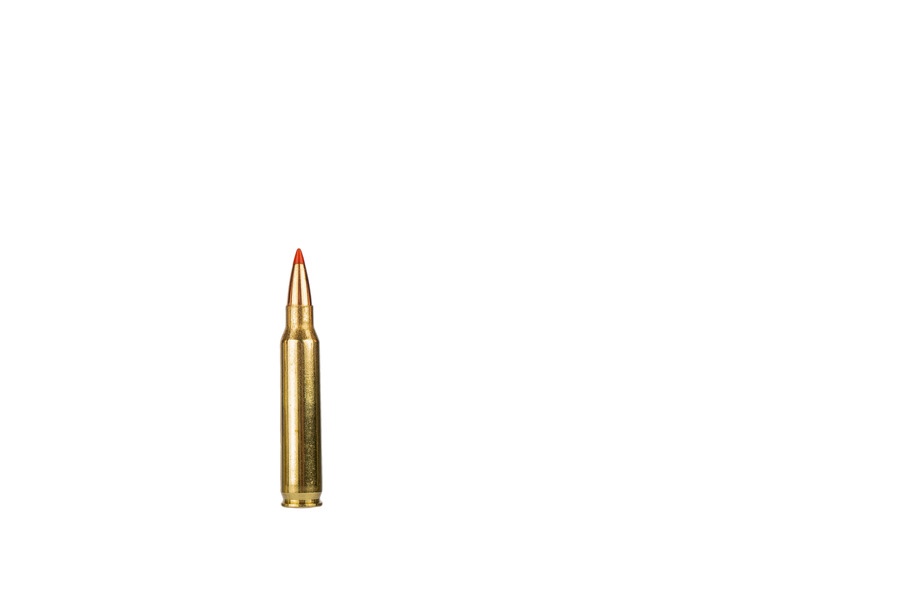
The 5.56×45 and the .223 Remington aren’t interchangeable. This is mostly because of pressure differences in the SAAMI specification. The load pressure for the 5.56×45 is 62,000 on the specification. The .223 Remington is loaded to a 55,000-psi pressure specification. The dimensions aren’t different, but the tolerances and the chambering dynamics are different.

All things equal, the .223 Remington is held to a tighter set of tolerances in expectation of being loaded into a firearm chambered to enhance accuracy and take advantage of that core tolerance control. The picture below shows 223 Wylde. They typically have a sharper taper from the case down to the bullet.

The 5.56 is held to a less rigorous tolerance specification and is meant to deliver a higher pressure load in its respective chamber.

So again, all things equal, the differences in potential are that the 5.56 is made for a higher pressure scenario and therefore requires a more supported chamber. The .223 Remington is built to a theoretical higher tolerance specification and can potentially be used to deliver better accuracy if given the right conditions.
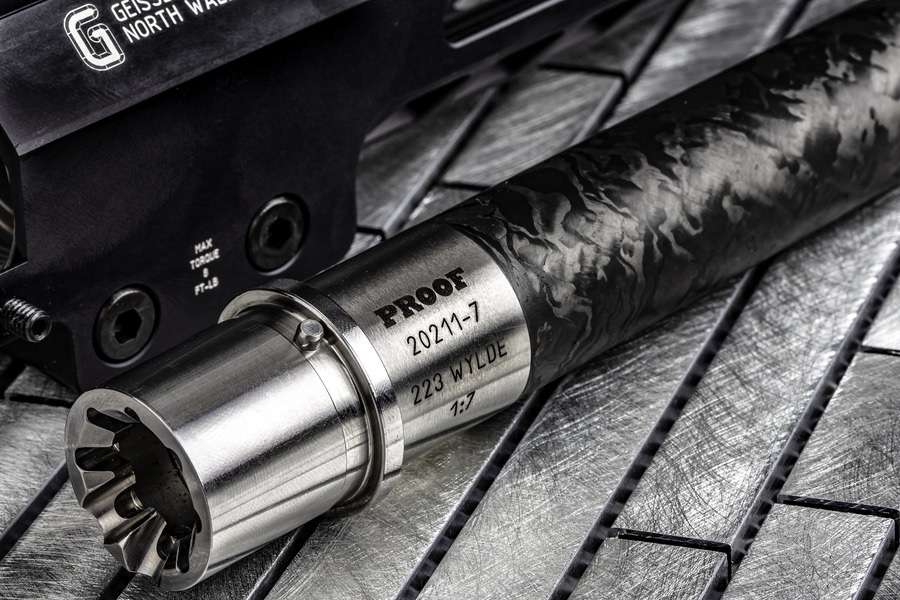
This is provable in the real world. You see it in ammunition prices (sometimes), and you see it on the target, more often. But the real benefit here is that safety and interchangeability that has been talked about for so long is part of the deliverables of the .223 Wylde.

What’s the point here? Sounds like something you could do safely with a 5.56×45 stamped barrel for years. Yes, in part, but not in totality. A 5.56 chambered barrel, while tough enough to handle anything it can chamber, doesn’t offer the same barrel-specific variables to enhance the accuracy that the .223 chambering will offer to the .223 Remington cartridge.

Similarly, the 5.56×45 cartridge should not be shot out of the .223 Remington chambering/barrel. This is already a higher pressure load. But the concern comes not from the higher pressure load, but the combination of a higher pressure load, and the higher pressure that will be stacked upon it from the fact that the 5.56×45 will be engaging the leade (the transitional part from the front of the chamber into the rifling of the barrel) incorrectly for the pressure specifications.

This means additional pressure will be present, even above and beyond the 62k psi that is part of the loadout.

In a .223 Remington, the leade is built to maximize the tolerance and quality control inherent in the .223 Remington cartridge from the factory. That engagement relies on a shorter space between the chamber and the rifling, where that transition will be too tight of a fit for a 5.56×45 relative to the tighter tolerances of a .223 Remington.  

Does this mean your 5.56 will blow up a .223 Remington barrel or chamber? Not necessarily. It may never happen. But it’s a risk you shouldn’t be taking. The risk is real, and there have been accidents and failures, and it is a legitimate situation.

The backstory on the .223 Wylde
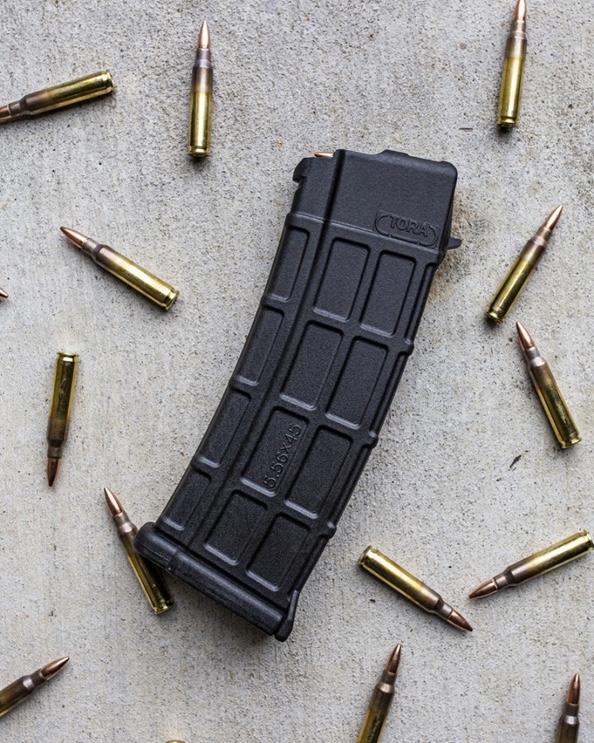
To get to the backstory of the .223 Wylde, you might be best served understanding the backstory of the .223 Remington and the 5.56 and how their paths crossed in 1972 when FN (the famous Belgian manufacturer) made a round-based off the .223 Remington for use by NATO that had preferable performance increases over the .223 Remington. This was due mostly to the higher pressure specification – 62,000 psi.

The benefit of increased range and effectiveness made the 5.56 the go-to for wartime and military usage.

The inherent accuracy though was lost from the .223 Remington, as it now had to be chambered in a chamber with different freebore and leade dimensions, which meant that the projectile engagement into the rifling of the bore was looser and not optimized for the .223 Remington.

Bill Wylde decided to modify the dimensions to suit the best attributes of each cartridge in hopes of finding a way to get the best of both worlds from either cartridge in a single barrel suited to handling the intricacies of both cartridges independently or in use together.

The leade and outer dimensions of the 5.56 barrel were used to compensate for pressure and allow for the proper chambering, while the freebore of the original specification for the .223 Remington was used to ensure safe engagement but still support the tendencies of the .223.

The result was improved effectiveness on the accuracy front for the .223 Remington, in a barrel specification that could safely chamber and shoot both cartridges with reliability and the performance that was only slightly lacking over the previous optimized standalone accuracy of the .223.

Basic performance ranges and off the shelf type performance parameters

Each cartridge is going to get similar performance metrics out of the Wylde. It isn’t overly compensating for anything. Where you will see some important performance increases is with the .223 being slightly more accurate than it was having been used out of a true 5.56×45 specification chambering.

It also allows for the higher grain weight and slightly elongated 80-grain projectiles that are popular in National match type events to be shot particularly well from the barrel and therefore gives niche shooters a way to optimize further for longer range more effective projectiles on hand loads or specialty factory loads for longer range targets.

What’s the incremental cost increase and does it pencil out logistically?
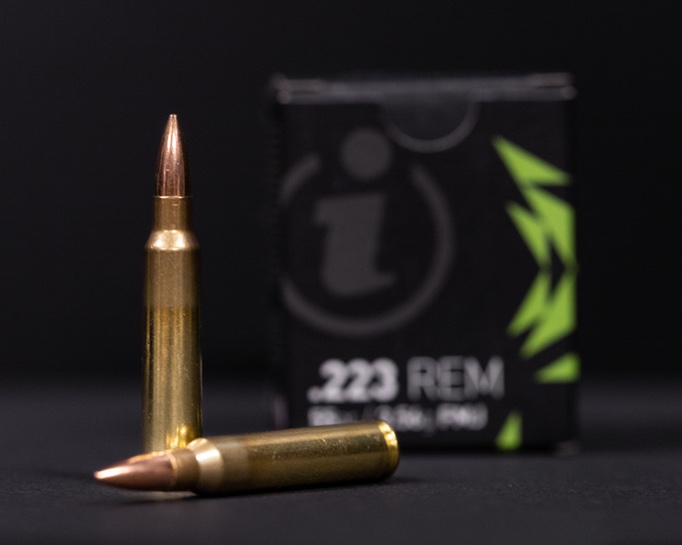
It depends on what you are trying to accomplish with your rifle. It’s simultaneously a good way to be sure you get good performance from both cartridges out of a single barrel and to utilize an optimized build to prioritize larger grain weight bullets that are particularly good on long-range targets in competitions.

That is where the market has determined the Wylde should be at this point, and there are enough shooters in that niche or with the desire to play around with the stability and accuracy of the larger grain weight projectiles that the Wylde chambering has become an interesting option to a growing market population.

Only you can decide if the cost of a barrel will ruin the economies of your engagement in the varied aspects of the AR market.

What can you do with a .223 Wylde that you cannot do with other chamberings?

Shoot safely, and extract maximum theoretical precision from any given (safely) chamber-able cartridge from either the 5.56×45 or the .223 Remington. You can also hone down on the optimization for larger grain weight bullets suitable for competition that have a longer overall length.

Some basic optimization considerations for the .223 Wylde

The competition group has become so hyper-focused on tangential optimization strategies that a whole subculture of customization now exists that can cut a freebore by a few thousandths of an inch for a specific chambering to match a specific projectile, and specific Overall Cartridge length projectile included.

The importance to some shooters is so high on these dimensions that they are custom handloading rounds to that given specification in an attempt to wring out the most accuracy from the specific pairing.

While it may seem a bit esoteric, the tangible benefits are evident through data collected by volume shooters of precision builds in competitions like the National Match formats.
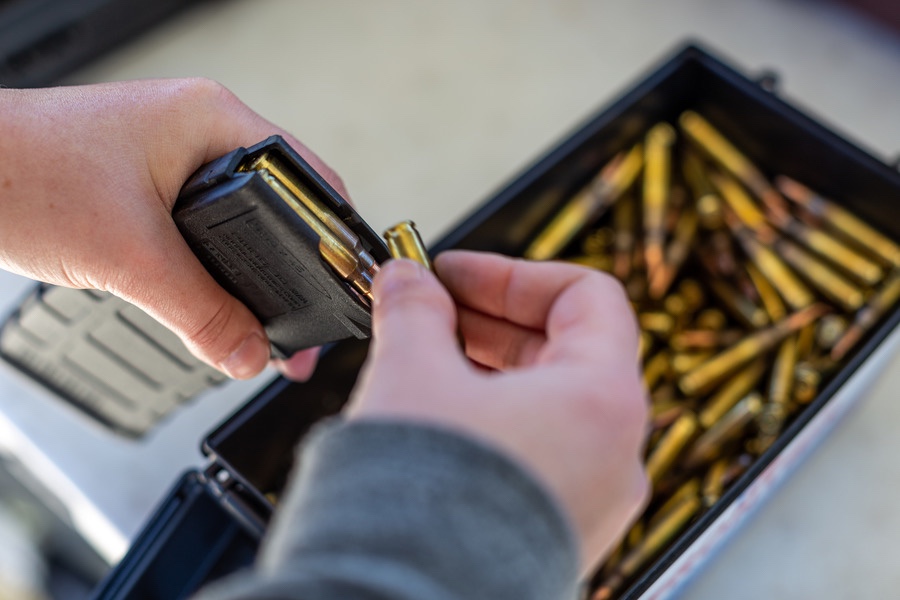
In a broader sense, the mainstream adoption of ever more optimized and nuanced parts and components in the AR space allows the consumer to further tailor their modular build to their unique needs, even if that incremental improvement may not be registering in the overall data.

This is not a criticism of the Wylde concept; the people who strive for absolute precision in their components and the variables they build for their style of shooting; or the market for AR component parts.

Rather, this is an exploration of what is possible when a modular platform like the AR can begin to make improvements on an already ridiculously refined set of components to further defy the pundits of the AR market and sell more nuanced and sophisticated elements to a group that likes to test everything.

The Wylde equals the playing field for the .223 Remington, which was made for higher tolerance guns, and the 5.56×45 which was made for cyclic reliability. It melds the best of both worlds to create a space where innovation might be derived.

Getting a bit more into the weeds about how the Wylde Chamber can be optimized – you will typically find the chamber matched to a rifling twist rate of 1 in 8 inches, which is traditionally mated to projectiles in the 75 and 77-grain arena.
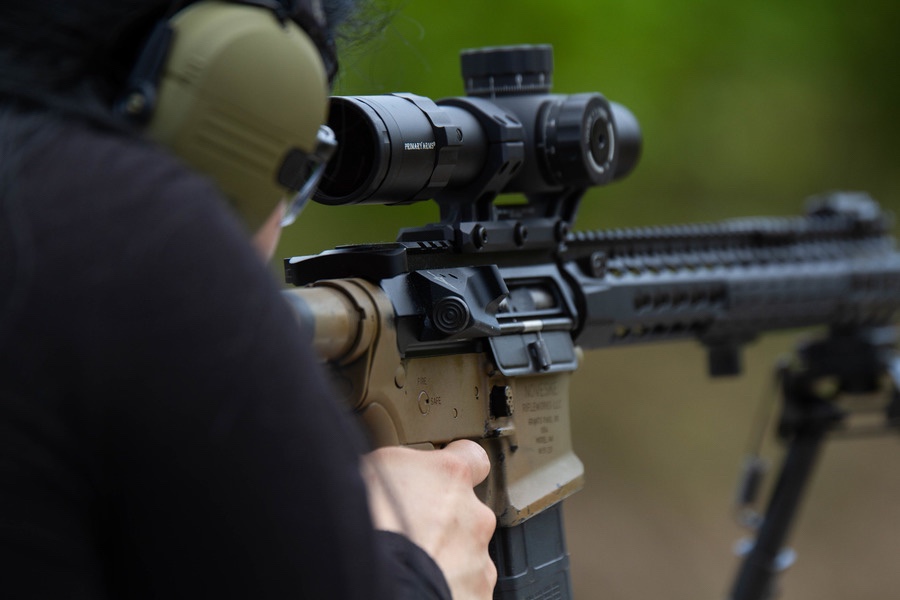
You’ll also have access to the 80-grain specialty match bullet – the storied Boat Tail hollow point by Sierra Match King that has quite the reputation, which is also being optimized over a decent range of velocities. The twist rate is good for stabilizing the longer bullets and the specific angles of these types of projectiles.


The 1:8 twist is particularly forgiving and doesn’t over or under spin the projectiles in this range, giving the handloader the ability to find a standard deviation range that works best for their specific goals on the range and specific distances, taking the barrel out of the equation and giving the corresponding control over flight to the handloading precision of the ammunition maker.

Conclusion

Such is the state of the competitive market in the AR space – and that is said without a hint of sarcasm or frivolity. Individual shooter control where there was never control given before, is a benefit to those who will optimize it. That may be the best storyline about the Wylde that we can think of.

Primary Focus is a weekly feature from Primary Arms that covers various firearms related subjects.