Pirata Series from OTB Boots - Coming March 2026!

Archive for the ‘Guest Post’ Category

‘Talk to me, Airman’: Minnesota Reservists Learn to Shoot, Move, Communicate

Monday, December 6th, 2021

MINNEAPOLIS-ST. PAUL INTERNATIONAL AIRPORT AIR RESERVE STATION, Minn. —  

Two rounds to the chest and one round to the head.

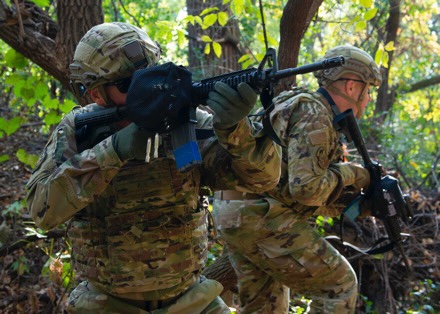
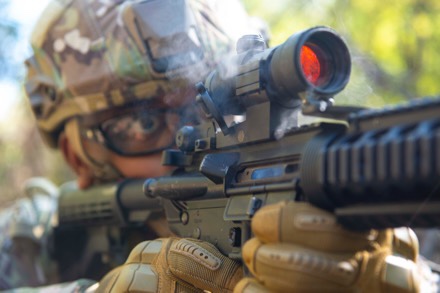
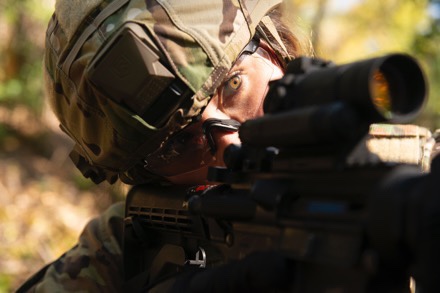
934th Aeromedical Staging Squadron Airmen engaged their targets using this shooting method while working in two-person teams with M4 carbines at the new Shoot, Move and Communicate course at Minneapolis-St. Paul International Airport Air Reserve Station, Minnesota, in October.

This close-quarter shooting method is called the Failure Drill. This technique isn’t a critique of a shooter’s performance or a countermeasure to succumb from a weapons malfunction. Instead, it is more of a failure on the engaging target’s ability to return fire after receiving two rounds to the chest and one round to the head. Furthermore, adversaries are now wearing body armor. Therefore, the final round is needed to permanently neutralize the danger.    

Tech. Sgt. Charles Foster, 934th ASTS section chief of medical records, was invited to run through the new course with other ASTS Airmen. The lane structure and design were a complete mystery to him. “From word of mouth, what they had set-up here, I knew that it was out in the woods and they had a bunch of different targets with contact areas.” After going through the course five times, Foster said, “I didn’t know they had this amazing of a set-up.”

The 934th Security Forces Squadron spent most of the year building this course and making needed improvements to provide a viable training opportunity for Airmen. Before the SMC course was built, the area was a dense tree wood line with a lot of deadfalls. 934th SFS members used the base overlay to determine where the property started and ended before committing to this project. 

Preceding the new course, Defenders used to maneuver between multiple 4 x 8 sheets of plywood to engage one target on a service road. The overall intensity of this course was limited due to its scale, aesthetics and allure. The SFS Defenders worked with what they had to conduct training; however, they wanted an attractive, resilient and motivating course. What they needed was an extreme course makeover, and they needed it right away. 

“This whole plan fell on that cliché: design on a dime. Everything here was either from the forest naturally or donated wood from the Marines, Navy or actually from a stockpile here from pallets and things,” said Master Sgt. Kory Soderquist, 934th SFS chief of training.

Soderquist and a group of SFS Airmen and civilians volunteered to be the project managers and architects of the new course. The first thing that had to go was the flat single straight-lined lane. The new course would curve and have an upper and lower path for more Airmen to go through. Instead of engaging one single target, Airmen now have 56. Some targets were placed in plain view and others were camouflaged in a dense thicket. This forced Airmen to quickly scan their lane and rapidly react. To provide a sense of realism in an austere environment, the SMC was placed in a densely forested area. As a result, teams can’t see the course before they begin.  

“My Defenders basically took a hopscotch board and added a roller coaster to it,” said Lt. Col. Charles Trovarello, 934th SFS commander. “I was incredibly impressed with how they utilized the space because when you first looked at it, you think you can’t possible do anything more from what we already had set up.” 

“It is definitely one of those places we want to showcase because it’s so new,” said Soderquist. “It’s also really functional, easy to go through and easy to clean up. Basically, it’s zero maintenance when you have it up and running. You can run about 170 Airmen through it. It seems flawless and we have all the safety hazards out of the way. We haven’t had a single hang-up. It’s been good.” #ReserveReady

By Chris Farley

(Farley is assigned to the 934th Airlift Wing public affairs office.)

SCUBAPRO Sunday – Pirates

Sunday, December 5th, 2021

“Been to Disney World one too many times? Have we, Captain Ron?”
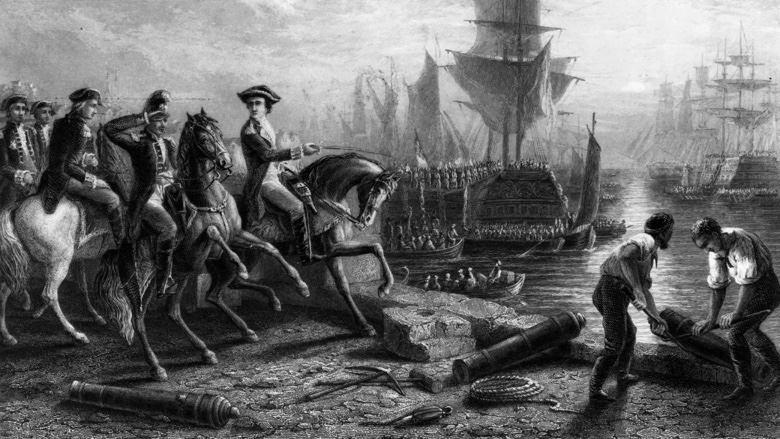
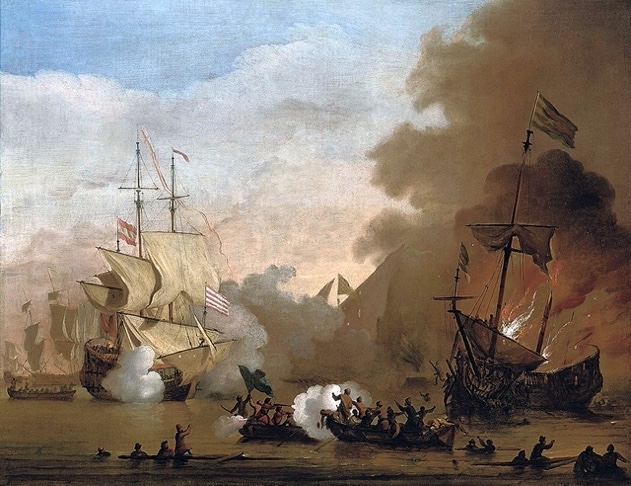
During the American Revolution, George Washington, while serving as head of the Continental army during the siege of Boston in 1775, started using pirates to help attack the British where they were most vulnerable on the sea. “Finding that we were not likely to do much in the land way, I fitted out several privateers, or rather armed vessels, on behalf of the Continent. With an offer of a percentage of spoils as an inducement, the call for citizen sailors to hijack inbound supply ships tapped the same vein of self-interest and comradeship that had led the colonies to seek independence in the first place.” Although private piracy proved detrimental to the Royal Navy, it ultimately helped turn the British public against the war.

“He said gorilla. Not guerrilla. Guer, go. HUGE difference kids,” Martin Harvey

A pirate is a seaman who threatens, seizes, or destroys any ship at high seas and often even harbors at the shore. Besides, they have been involved in many other criminal activities, such as piracy and the slave trade. Without any legal rights, the pirates are doing it for personal reasons. And they were regarded as criminals in all countries because those attacks were illegal acts. Piracy was punishable by death almost everywhere during the times when it was at its height. The critical difference between them and the privateers or buccaneers, about whom we can also claim that they were some sort of pirates, but not treated like criminals, is also the legality of their acts.

The U.S. allowed about 1,700 private warships to cruise the ocean, searching for British prizes during the Revolution, when a cash-strapped Congress could not launch an efficient navy of its own at the time. These revolutionary privateers carried congressional commissions, effectively legalized pirates, which outlawed attacks on neutral ships and prisoners’ mistreatment but otherwise allowed them free rein to rob and plunder. Most privateers were motivated by greed as much as by patriotism.

However, Washington was also outfitting a fleet of lightly armed schooners, and the debate over the navy took place in Congress. Although most members thought the idea of a navy insane, the Marine Committee was formed to oversee the production of 13 frigates.

Meanwhile, with its deep-rooted culture of fishing, shipbuilding, and ocean trade, Massachusetts considered whether to unleash its citizens by allowing state-sponsored privateering. Throughout history, governments at war have used the authority under international law to authorize independent operators to transport enemy merchant cargoes. There had already been incidents off the Massachusetts coast of scavenging looting crews abandoning ship down one side as local marauders clambered up the other side wielding clubs and cutlasses; the loot from these raids had to give them visions of bigger gains to come. To legalize privateering, the government would provide the colony with an instant navy for little to no cost.

In March of 1776, Congress followed suit and ordered that all British ships be considered “fair game for civilian warships.” After months of bitter debate on the general theme of business and patriotism, Philadelphia leaders embraced trade, going so far as to provide signed preprinted applications for commissions complete with blank spaces where names of ships, captains and owners could be inserted with minimal fuss. An early proponent of privateering, John Adams, appreciated, “I was always extremely interested in it.” Privateers had to pay monetary obligations to ensure their proper conduct under regulations. Although it is only fragmentary, incomplete information, more than 1,700 Letters of Marque were granted during the American Revolution. Approximately 800 privateers were commissioned and are frequently attributed with burning, looting, and capturing around 600 British ships.

Following congressional recognition of privateering, privateers flocked from Massachusetts, New Hampshire, and Rhode Island. Most had reputations for contraband, quirkiness, and eccentricity until this point. Most privateers just smuggled items throughout the Royal Navy’s blockade.

Weapons shortages resulted in delays in securing gunpowder, but some, like the Brown brothers, managed to solve the problem by converting their iron foundry to cannon-making. The Brown brothers were accused of charging ‘extortioners’ prices for guns for Congress’ frigates, giving preference to their vessels and advertising for crews with promises of quick fortunes, congenial captains, ample alcohol, and a thrilling opportunity to smite “the tyrant’s pilferers.”

Privateering was a natural fit for the brothers, and they immediately began cutting gun ports through the trade ships’ bulwarks and clearing holds to make room for more crewmen needed to sail the captured prizes home for auction. They were also named a member of the congressional committee that oversaw Congress’ frigates’ construction.

In 1777, the Ranger, an 18-gun sloop captained by a young John Paul Jones, sailed across the Atlantic with a vow “to draw off the enemy’s attention by attacking their defenseless structures,” a plan fulfilled the following spring in his daring hit-and-run raid on the British port of Whitehaven. However, Richard Grenville’s prediction that he would do infinite damage to their shipping was realized by the pirates he so loathed. While still skeptical of America’s ability to defeat them on the battlefield, the British were forced to concede one point about the rebel privateers that diplomats on the European Continent had noted in July 1776: “What is certain on the side of the Americans is their activity at sea and the ships of the Crown they are capturing.”.

In the Caribbean alone, whose position as the hub of Britain’s New World trade made it the primary hunting ground for at least a hundred New England privateers by May 1776, maritime losses reached over $2 million within a year. Royal Navy captains in the West Indies learned that a storm was approaching, but their superiors had no clue. “Time is running out,” they urged their companion, “for our journey to the English Channel.”

Before then, most American vessels carried goods such as tobacco and paper to trade for European munitions. The privateers among them were adventurous predators who might provision in French and Spanish ports but rarely sold prizes there (doing so violated those nations’ neutrality agreements with Britain), instead dispatching them back to America for appraisal and auction.

The first ship that sailed into Europe was the 16-gun Continental brig named Reprisal. Under its captain, Lambert Wickes, and carrying Benjamin Franklin to France to serve as an ambassador, the Reprisal sailed to Europe in December 1776 to join the endeavor to create an international alliance. Reprisal then set out to plunder the seas, capturing 13 merchant vessels before being chased into a French harbor by an enemy frigate.

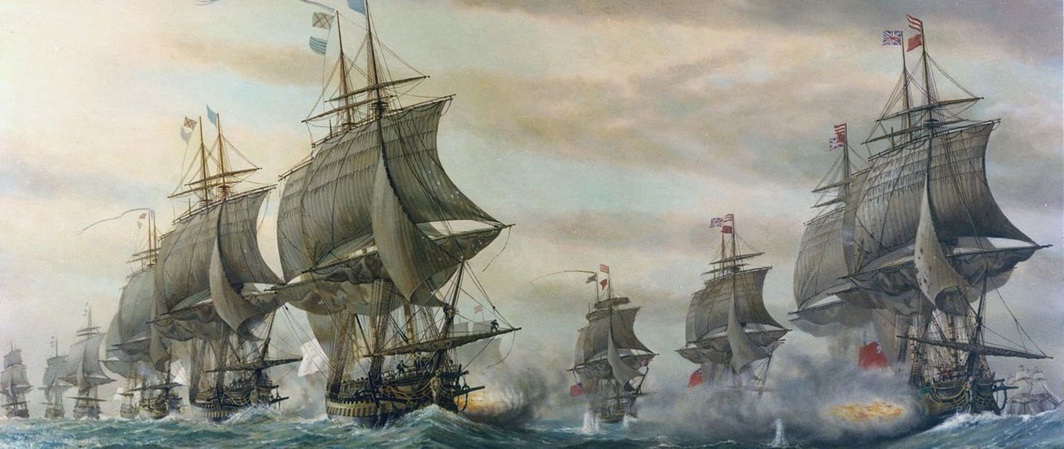
Small privateers like Retaliation and most other ships were forced to flee before a frigate’s firepower, which could hurl a barrage of hurtling metal from up to two dozen 12-pound cannons mounted along each side. The frigate HMS Brune, for instance, destroyed a 12-gun schooner with a single broadside and significantly damaged a 9-gun schooner. In trying to treat the wounded among Volunteer’s crewmen, the boarding party found the vessel “so much damaged that we hardly had time to get them all on board before she sank.” Similarly, a Boston privateer, Speedwell, carrying 14 guns and 90 men, took a frigate’s broadside “between wind and water” (the portion of the hull usually below the waterline but exposed to the air the vessel is heeled over in the wind). The study revealed that “she was lost at sea immediately, and all her crew perished during the voyage.”

On May 17, 1777, another American captain, Gustavus Conyngham, sailed aboard Surprise with 25 men from the French port of Dunkirk and intercepted Prince of Orange, a mail steamer plying between Holland and the British port of Harwich.

In the late 1700s, British political and military leaders denounced the Revenge’s hit-and-run combat style and the many other warships now swarming European waters. For the people in Parliament, the pirates were an immoral group of terrorists to be exterminated. One report of the capture of a supply ship alleged that “rebels stripped the killed and wounded, robbed every article of clothes, bedding, and provisions belonging to the sick, burned the cutter and added every insult to the distress.” And any foe that would, “against the laws of God and Man,” fire on a vessel under a flag of truce deserved, it was declared in Parliament after one such incident, “all the horrors of rebellion,” by which was meant no mercy.

Privateers comprised two distinct ventures. A Letter of Marque permitted merchants to attack any hostile vessel they encountered along their commercial voyage. A privateer commission was issued to those who were commissioned to attack enemy merchant shipping. The primary objective was to engage a lightly armed commercial ship.

Privateers of every type of vessel were pressed into service. The largest 18th-century ship was the 600-ton, 26-gun ship Caesar out of Boston. Simultaneously, crew sizes were as little as a few men in a whaleboat and as high as 200 aboard a fully equipped privateer. Vessels designated for Privateering and Letters of Marque were launched from places up and down the east coast.

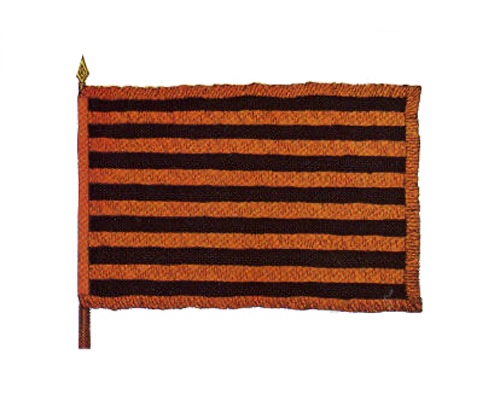
Privateers didn’t usually fly the black pirate flags; they flew a flag that looked very similar to the “Don’t tread on me flag.” Privateers that could effectively convince their opponent that the opposition was futile did the best. When that plan failed, it often resulted in extremely violent fighting with unpredictable results. Many of the pirates were captured or sank when the situation wasn’t going their way. Most did not raise the pirate flags that we know of today, but there were two basic types, Black and Red, if they did. The black was raised when you planned to raid the ship but didn’t plan on killing everyone and the Red Flag or “no quarter giving” or “the blood flag” meant they planned to kill everyone, and no mercy was to be given. It also didn’t always have to have a skull and bones. It was up to the captains what it would look like, and most pirates didn’t fly them. Those flags were used truly by pirates not necessarily by privateers.

Despite all the hardships, the crippling of British commercial shipping was highly effective, and fortunes destined to aid the founding of the new Republic were made. It is estimated that American privateers’ total economic damage was about $18 million, or about $302 million in today’s dollars during the war.

George Washington recognized early in the war that his best strategy was to “sink Britain under the disgrace and expense of war.” To survive against the formidable British military, countless small- and large-scale offensive operations needed to be conducted and maintained to keep the enemy off balance, under strain, and demoralized.

SCUBAPRO Sunday is a weekly feature focusing on maritime equipment, operations and history.

How an Air Force Recruiting Commercial Became a Popular VR Game

Sunday, December 5th, 2021

JOINT BASE SAN ANTONIO-RANDOLPH, Texas (AFNS) —

When Air Force Recruiting Service deployed its “Activate: Special Warfare” mobile tour in April 2021, the four-dimensional virtual reality, experience-on-wheels became the latest entry in an elite category of games.

Over the years, dozens of movies have made their way to becoming games in arcades and on portable devices. This genre includes commercial hits like Dune, a 1992-released game that is based on its namesake film.

Activate’s own story began in 2019 with the production of a commercial targeting special warfare recruitment.

“We were coming up with ideas to promote Special Warfare,” said Travis Waid, a writer and creative director for GSD&M. Waid’s employer is the Austin, Texas-based advertising agency for the U.S. Air Force. “We were also assigned with creating a new experiential tour to promote Special Warfare and it hit us. Instead of creating two separate things, what if they supported each other?”

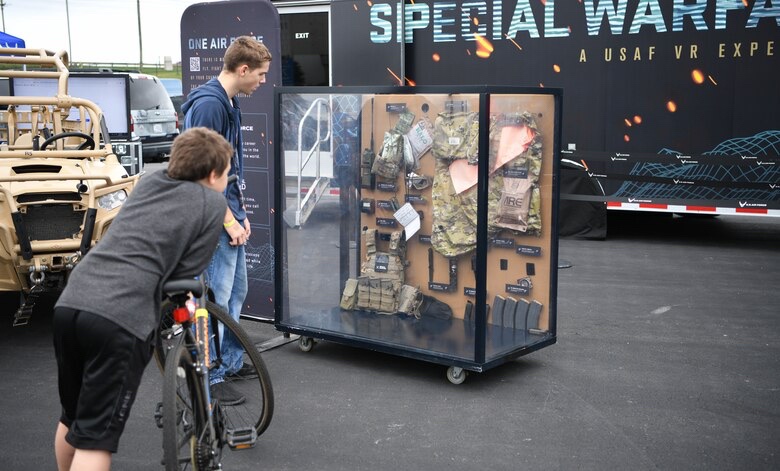
Passersby examine a display case outside of Charlotte Motor Speedway in Conway, N.C., which featured tactical equipment similar to what Special Warfare Airmen might use. The display is part of the Air Force Recruiting Service’s Activate: Special Warfare mobile exhibit and gives guests a four-dimensional Air Force Special Warfare experience as depicted in an online Air Force commercial. (U.S. Air Force photo by Randy Martin)

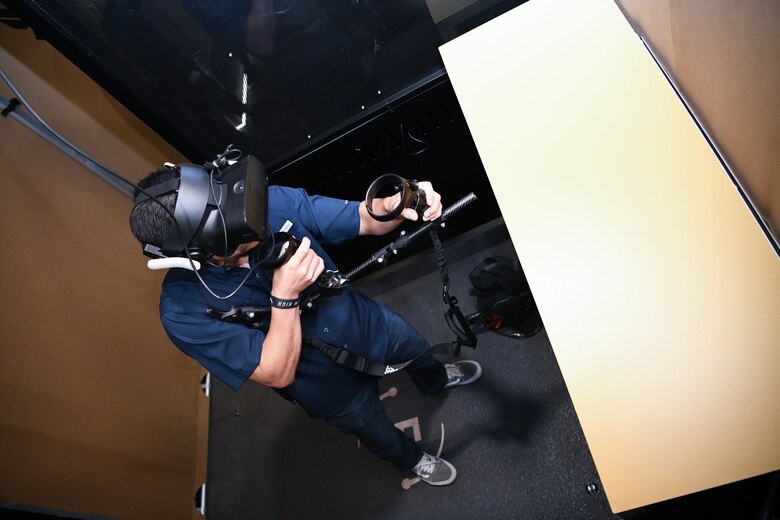
A guest with virtual reality goggles and a replicated gun gets a four-dimensional Air Force Special Warfare experience at the Fanzone outside of Charlotte Motor Speedway in Conway, N.C., Oct. 9, 2021. Activate’s scenario is taken from an online Air Force commercial. (U.S. Air Force photo by Randy Martin)

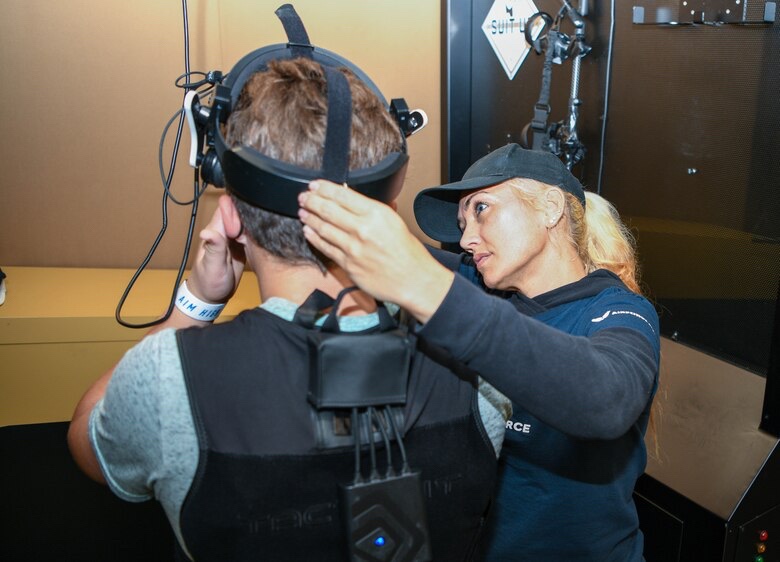
An Air Force Recruiting brand ambassador at the Fanzone on Oct. 9, 2021, outside of Charlotte Motor Speedway in Conway, N.C., assists a visitor to the Air Force Recruiting Service’s Activate mobile exhibit. Virtual reality goggles are one of the tools that give Activate’s guests a four dimensional Air Force Special Warfare experience as depicted in an online Air Force commercial. (U.S. Air Force photo by Randy Martin)

So in late September of that year, a film production team of 53 and more than a dozen people from AFRS, GSD&M and other Air Force members representing several career fields, converged on a bombing range near Cannon Air Force Base, New Mexico. Filming required three days and involved Security Forces and Special Warfare Airmen, pilots, tactical wheeled vehicles, helicopters and airplanes from bases throughout the U.S.

For the commercial to look more realistic, the production company turned to Hollywood for delivery of movie-ready weapons.

“We couldn’t use the SF and SW Airmen’s weapons because they had red tips,” Waid said. “So, we relied on a prop house that we found in Los Angeles.”

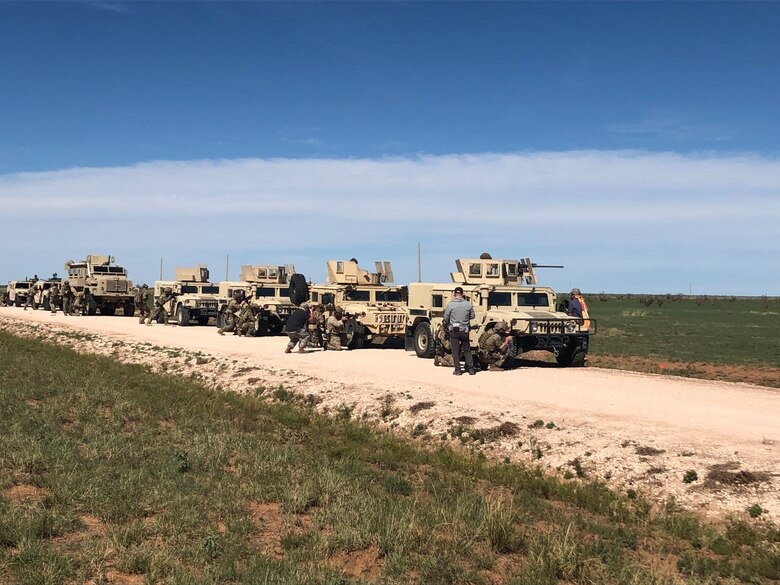
In the final commercial, action-packed sequences show Airmen in a gunfight with an enemy force outside a walled compound. Viewers see a medevac while pyrotechnics create blast clouds with smoke enveloping a line of sand-colored vehicles on a desert road. An A-10C Thunderbolt II flies by as the video reaches its climax.

Two commercials from this production debuted in several variations on YouTube, Jan. 5, 2020. They were later posted to other Air Force Recruiting social media platforms. One, titled “Calm and the Storm,” has exceeded 18 million views. The other, titled “Join the Fight,” has been seen more than 17 million times.

For AFRS, attention turned to developing Activate: Special Warfare, the game.

Work started on the VR mobile tour with an intended launch date sometime in 2020, Waid said. However, COVID-19 struck in March and forced AFRS to wait until April 2021, for Activate’s inaugural tour.

Since its launch, people have flocked to Activate at venues such as NASCAR’s Fanzone outside Charlotte Motor Speedway, in Conway, North Carolina, Oct. 9-10.

There, among tents and trailers reminiscent of a traveling carnival, Activate was positioned on high ground where throngs of fans ambled about on a quest for souvenirs, free merchandise, food and pre-NASCAR race entertainment. Activate’s shining, black paneled trailer featured graphics to attract visitors from great distances.

Contracted attendants called “brand ambassadors” beckoned passersby to try their skills at no cost. The only condition being a minimum age requirement of 13 or older and registration on a tablet computer. Next came the anxious wait to enter the gaming booth along with other guests.

“The VR game is a real-life version of the commercial video and what connects them really is the story of how SW operators are able to remain calm under extreme pressure while engaging the enemy, calling in air strikes and rescuing others,” Waid said.

Once inside each player dons a vest and VR goggles, takes hold of a device that replicates a gun, and enters the scenario as one of the Airmen in the beleaguered convoy from the commercial.

Because participants wear special VR headsets and vests they hear everything in surround sound and they sense impacts on their over garments. Designers also engineered booths to generate hot air bursts and wind effects synched with explosions and landing of a helicopter for a full four-dimensional experience.

“Best game ever,” one woman said as she exited Activate.

Air Force recruiters were standing close by and greeted people. They talked to potential applicants about experiences and opportunities. Some visitors examined an all-terrain vehicle that was parked out front alongside a display case featuring gear like that used by Airmen in the film. The equipment leant a tactile experience to the VR one.

“The case and ATV are pretty effective in terms of generating interest and questions for recruiters who can step in and have a conversation with a lead or influencer,” said Tech. Sgt. Amos Parker, a recruiter for the 337th Recruiting Squadron at Shaw AFB in Sumter, South Carolina. “With most of the population under the impression that the Air Force only flies jets, it’s really eye opening to influencers and potential applicants.”

In 2021 the experiential tour went to 23 events in 15 states and had more than 12,000 people sign up to go through.

“Of those who signed up, 5,282 opted in to learn more and 1,453 turned into actual leads, which are all great percentages. Considering that the pandemic kept a lot of people home in 2021, those numbers are expected to increase as life begins to return to normal and more people come out,” said Maj. Jason Wyche, AFRS chief of national events branch, strategic marketing division.

Activate: Special Warfare is set to be part of AFRS’s mobile tours for at least five years.

By Randy Martin, Air Force Recruiting Service

Advancing Cyber Warfare Training with Escape Room

Saturday, December 4th, 2021

KEESLER AIR FORCE BASE, Miss. —

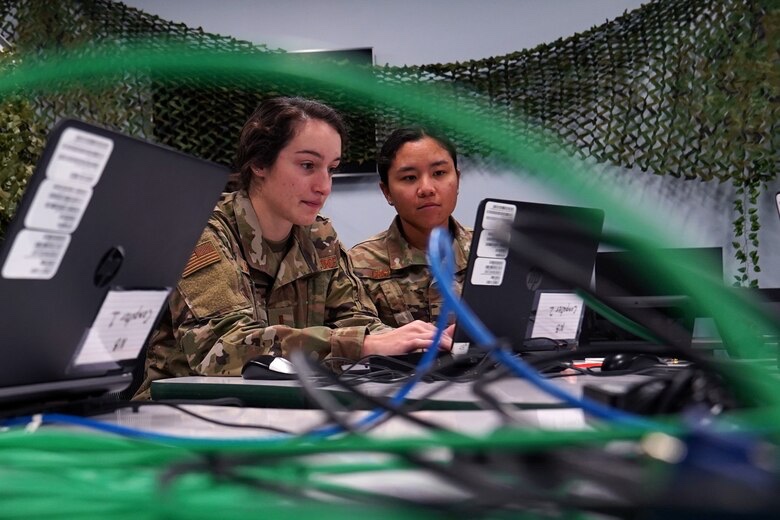
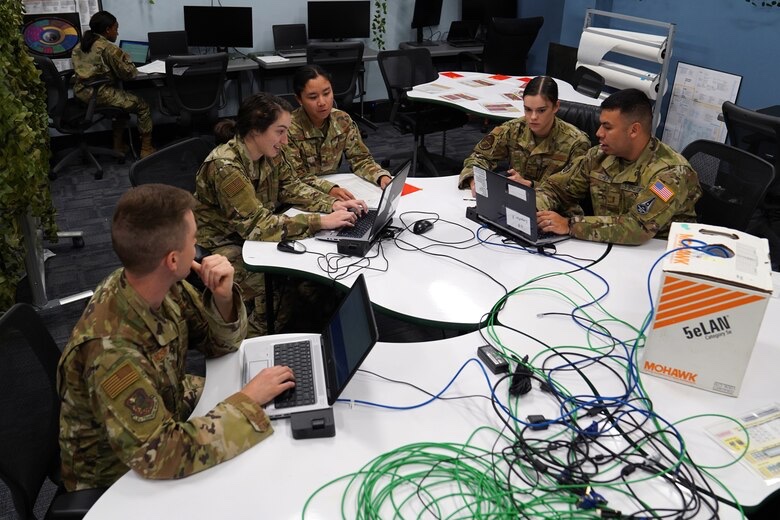
Accelerating and changing the possibilities of learning, the 333rd Training Squadron implemented a new cyber escape room to test knowledge and sharpen the skillsets of cyber warfare students.

The students are put into a simulated hostile scenario, requiring them to think critically and apply their skills under pressure to “escape” the exercise.

“Our students approached this challenge with no plan,” said 2nd Lt. Kendra Perkins, 333rd TRS cyber warfare officer and escape room project manager. “This forces them to adjust to the environment, preparing our students for any complex or uncertain situations they might face.”

From decoding cyphers and packet tracing to programming and networking, the room provides students with a hands-on training experience. Throughout this cyber warfare class iteration, only one team was able to complete the challenge, which included 2nd Lt. Ethan Isaacson, 333rd TRS cyber warfare officer.

“Most of our tests have been in a controlled environment, focusing on the most recent concepts we learned,” said Isaacson. “The escape room required us to apply all of our curriculum we’ve learned. We had to put trust in ourselves and each other and we came out of this room more confident in our skillset.”

Capt. Luke Thornton, 333rd TRS cyber warfare instructor, provided his perspective as the class instructor, overseeing how the teams took on the challenge.

“We are able to test the team dynamics, communication and camaraderie of our students,” said Thornton. “Our students were put into a new situation with a lot of pressure and they had to really think outside the box. We were able to test our students to the best of their capabilities.”

Perkins said the inspiration for the escape room was derived from Air Force Chief of Staff Gen. Charles Q. Brown, Jr. and his action orders to accelerate change across the Air Force through the direction of transforming the way we learn across all facets of Air Force education and training curricula including but not limited to professional military education to reflect renewed emphasis on competition and warfighting.

“Our goal was to create an environment that highlighted gamification to stray away from the initial Q&A or multiple choice and have something hands-on that was able to apply critical thinking, teamwork and communication as well as creating scenarios built on high standards for competition,” said Perkins.

By SrA Seth Haddix, 81st Training Wing Public Affairs

FirstSpear Friday Focus: Buy Socks, Give Socks & Exclusive Yippee Ki-Yay Stickers

Friday, December 3rd, 2021

In the immortal words of a damn fine soldier, Lt. Dan Taylor, “There is one item of G.I. gear that can be the difference between a live grunt and a dead grunt. Socks, cushion, sole, O.D. green. Try and keep your feet dry when we’re out humpin’. I want you boys to remember to change your socks wherever we stop.” – Forrest Gump (1994)

Like any good leader we’ll get you the items you need to succeed. Here at First Spear, we remember what Lt. Dan said, and we have the tools for you to do this. Exclusive during the season of giving, we are offering a buy a pair, give a pair on our grunt-proof Merino Wool socks. We have both our Everyday Sock and Boot Sock. These socks will not only stave off that foot eating bacteria, but they’ll keep your feet dry, thanks to Merino Wools natural antimicrobial and high breathability. The reinforced and added cushion to the heal and toe will absorb those long days on your feet and shrug off those long hours of wearing boots.

In addition to our month of giving, every web order for the month of December will receive a limited edition FS Festive Yippee Ki-Yay Sticker.

Beginning of December 10th, we’ll be launching our 12 Days of Christmas, be sure to sign up for our email newsletters to be the first to know, first-spear.com/landing.

To check out our merino wool socks, go to: www.first-spear.com/technical-apparel/american-merino-wool.

New Range Simulates Combat Stress, Tests Precision, Speed

Friday, December 3rd, 2021

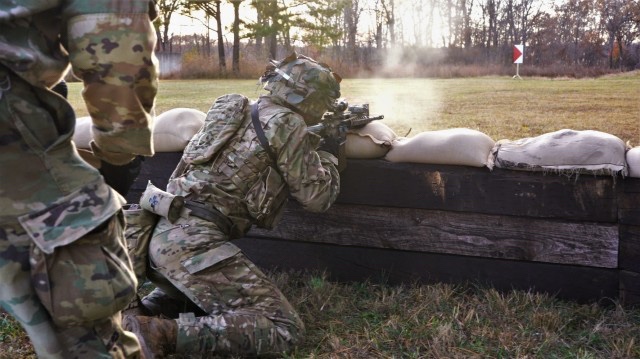
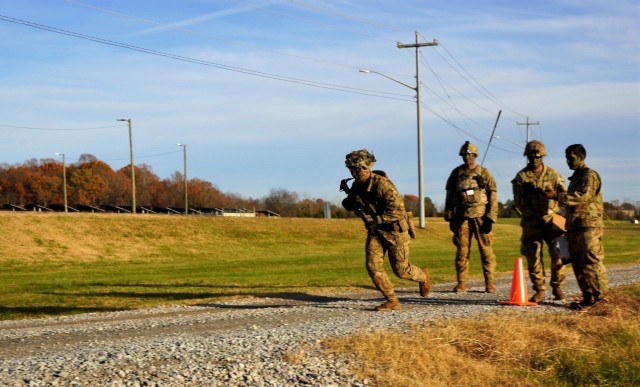
FORT CAMPBELL, Ky. — During Operation Lethal Eagle I, the 101st Airborne Division (Air Assault) assessed and validated a new stress shoot range by conducting the first iteration Nov. 18.

“I think this range is going to help dramatically,” said Sgt. David Lee, a team leader from Charlie Company, 1st Battalion, 187th Infantry, 3rd Brigade Combat Team. “There are strength and cardio elements with the stress of shooting and for me coming from the Army where we do static ranges all day to a move, shoot, move and communicate environment I think will really help the division out.”

There are eight engagements on the range to put 101st Soldiers to the test.

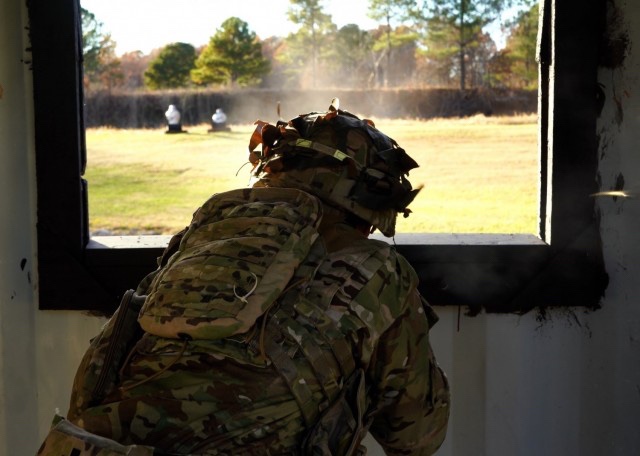
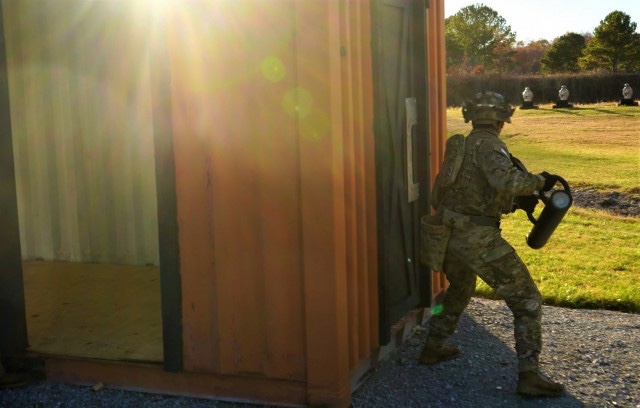
The tower engagement where each Soldier engages targets from three different heights ranging from 175 meters prone, 75 meters kneeling and 75 meters standing. At the base of the tower the Soldier picks up a battering ram and runs to the next station.

The breach engagement is where the Soldier breaches the door with the battering ram and engages three 50-meter targets with two rounds from a window in the building.

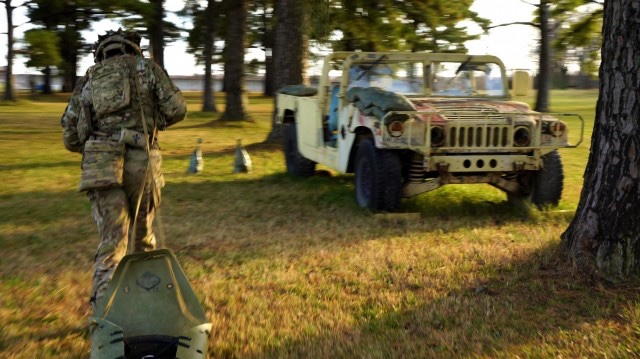
Next, the Soldier must drag a litter to a Humvee, taking cover behind the vehicle while engaging three 50-meter targets. After the targets have been engaged, the Soldier must pick up and carry two sandbags to the next location.

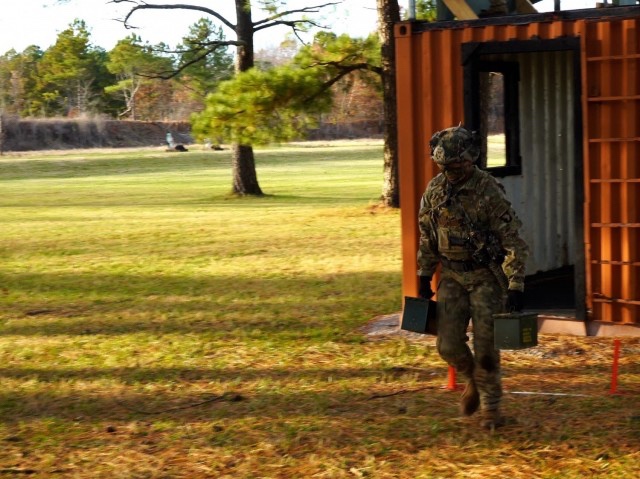
At the next location, the Soldier climbs the ladder to the rooftop and uses a barrier as cover to engage three more 50-meter targets. The Soldier then climbs down the ladder and secure two ammo cans to carry to the next position.

The Soldier must then drop the ammo can to maneuver over the top of the climbing wall to secure two water cans the he or she must carry to the bunkers from where he or she will engage the next three 50-meter targets.

For the eighth and final engagement, the Soldier moves to a location where he or she loads a magazine and engages with two rounds while walking toward the target.

“If you’re not in shape for one, get into shape and be the leader Soldiers want to follow,” Lee said. “Based on my interest in shooting I have participated in multiple three-gun competitions, so this is something that is familiar to me, but it helps set the example for the Soldiers as well.”

The stress shoot range is designed to make Soldiers and units in the 101st Abn. Div. more lethal and prepared for future combat.

“This is what we are going to expect our Soldiers to do in combat, varied terrain, heart rate up, stressed out,” said Maj. Gen. JP McGee, commanding general of the 101st Abn. Div. and Fort Campbell. “If you want to talk about increasing lethality and making it super easy for our Soldiers to get out there and work on it, this is it right here.”

This range is open to all units on Fort Campbell and its focus is to prepare the Soldiers in all units to react to enemy contact with precision and speed despite the stresses of combat.

– SFC Jacob Connor

Pushing to the Limit: Special Tactics Airmen Compete Together for Team USA Bobsled

Thursday, December 2nd, 2021

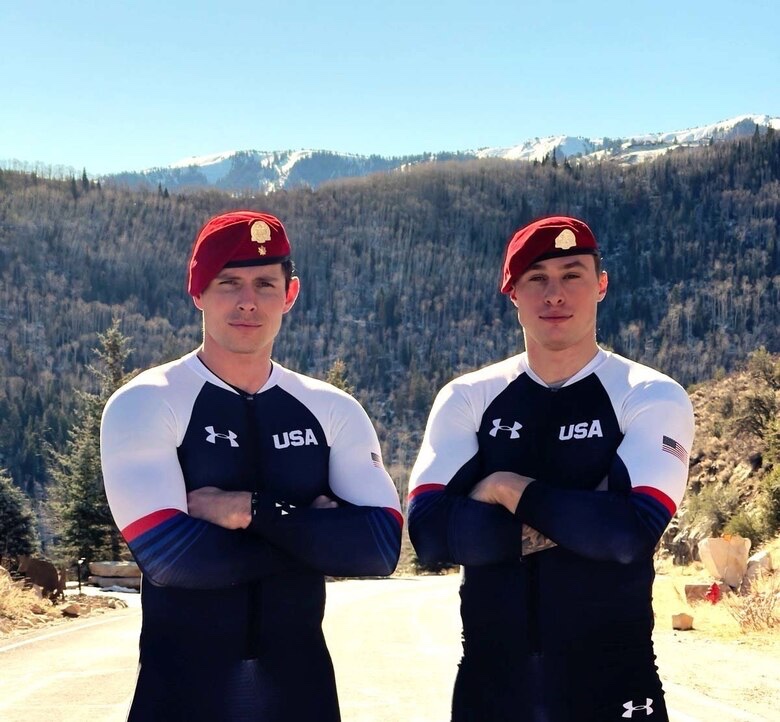
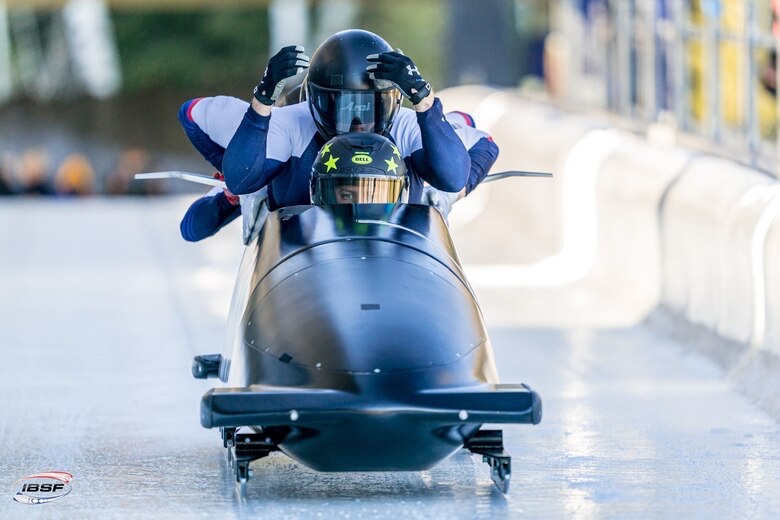
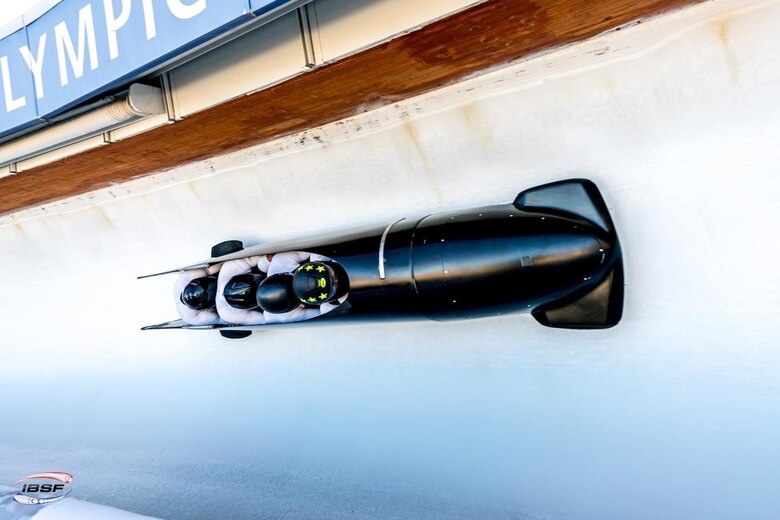
HURLBURT FIELD, Florida–For the first time ever, two Special Tactics Airmen assigned to the 24th Special Operations Wing competed together in a major competition for Team USA Bobsledding Nov. 28-29, 2021 at Park City, Utah.

                U.S. Air Force Special Tactics Officer Maj. Chris Walsh and Staff Sgt. Matt Beach, a combat controller, competed together at the International Bobsleigh and Skeleton Federation North American Cup for a chance to represent Team USA at the 2022 Winter Olympics.

                As a Special Tactics Officer, Walsh is trained to lead teams of special operations ground forces for global access, precision strike and personnel recovery missions, however since August of 2019 he’s been training and competing as a full-time athlete in the Air Force’s World Class Athlete program. WCAP provides active duty, National Guard and reserve service members the opportunity to train and compete at national and international sports competitions with the ultimate goal of selection to the U.S. Olympic team while maintaining a professional military career.

                “It’s great to be in the Olympic team picture at all,” said Walsh. “Competing with Team USA, USA Bobsled and the other athletes is a pretty big honor and to represent the Air Force on an international stage is awesome. You hope that you’ve done enough and things work out to where you end up making the olympic team, regardless of that outcome, to me the whole journey of learning a new sport and being able to compete and push myself to the highest level has been very rewarding.”

                Beach, currently assigned to the 22nd Special Tactics Squadron at Joint Base Lewis McChord, Washington, started his bobsledding journey in 2020 under the guidance of Walsh and fellow Air Force Special Operations Command teammate and bobsled athlete, Capt. Dakota Lynch, a U-28 pilot, who could not compete due to injury.

                “Being introduced to the sport by a fellow ST member is an example of just how good the leadership in the community is,” said Beach. “Having people like Maj. Walsh and Capt. Lynch to coach me through the process has been pivotal to getting me to where I am. Very rarely does anyone come in and instantly master the push and load. It’s a process, but it’s a process I look forward to.”

                Both ST operators are push athletes, who use their explosive strength and precision to accelerate a two or four-man bobsled. In order to excel in this role, the athletes have to conduct thousands of correct repetitions to make sure every hundredth of a second counts. Although the physical training for this process is different from the fitness training required for special operations missions, the mindset needed is similar.

                “The biggest thing from Special Tactics that translates to bobsledding is the mindset that you gain from going through all the ST training,” said Walsh. “It’s that no-quit, figure out how to find a solution, figure out a way to be successful-type of mindset. There are days where it’s really tough and you have to do a lot of late-night work on the sled and then get up early the next morning to compete, so having that gritty mindset is very valuable.”

                In addition to the “gritty” mindset, Special Tactics operators are accustomed to being in extreme pressure situations where high levels of precision are required in rescue missions, controlling aircraft or guiding bombs on targets, which in turn helps them as athletes compete at the highest levels.

                “To compete at this level requires the same focus and attention to detail as pre-mission prep and mission execution,” said Beach. “[Bobsledding], believe it or not, has a lot of parallels with the ST community.”

                Unlike Walsh, Beach is not currently part of the World Class Athlete Program and still works as a full-time combat controller continuing to train alongside his teammates at the 22nd STS.

                “Competing at this level while maintaining all the currencies expected of us as operators is not an easy feat,” said Beach. “Scuba diving all day and jumping out of planes in the middle of the night is not the best recovery when having to race some of the best athletes in the nation, but I have found a way to make it work.”

                In typical ST fashion, both athletes and operators are determined to continue to push themselves to the highest level in whatever they do. For example last year, Beach took on a popular internet fitness challenge back at his squadron in which he had to complete a sub-five-minute mile and squat 500 pounds in the same day. Not only did he complete the challenge, but made sure it was executed to the highest standard by using a certified professional running track and receiving official review from USA Powerlifting judges to verify the squat.

                Meanwhile, Walsh also had his eye on professional car racing and became the first active-duty service member to compete in the TC America Series, a touring car racing series in Virginia earlier this year. He ended up placing third overall among some of the top car racers in North America.

                Although the ST Airmen hope to represent their country on the Olympic stage, in 2022 for Walsh and 2026 for Beach, even more so, they love the thrill of a good challenge and encourage others to pursue their goals no matter what.

                “The best advice I can give anybody to accomplish anything they want to do is, to just start it,” said Walsh. “There’s never a perfect plan from the beginning. I can wait until the moment’s right or I can jump when I’m at an 80% solution and see where I land. And if I fail, figure out how to fail better the next time and eventually succeed. Just begin to build whatever it is that you hope to do. Once you start, you can figure things out as you go.”

                Walsh and Beach placed 6th overall in their most recent competition, despite some equipment issues. They will be competing once more before the 2022 Olympics in Lake Placid, New York Dec. 18-20, 2021.

                Special Tactics is Air Force Special Operations Command’s tactical air ground integration force and part of the Air Force Special Warfare enterprise, trained to execute global access, precision strike, personnel recovery and battlefield surgery operations across the spectrum of conflict and crisis. Air Force Special Tactics is one of the most highly decorated communities in the Air Force since the Vietnam War with one Medal of Honor, 13 Air Force Crosses and over 50 Silver Star medals. The 24th Special Operations Wing is headquartered in Hurlburt Field, Florida with geographically separated units across the country.

By Capt Alejandra Fontalvo, 24th Special Operations Wing Public Affairs

Air Force Hosts Coalition VIRTUAL FLAG, Premier Coalition Virtual Air Combat Exercise

Tuesday, November 30th, 2021

The 705th Combat Training Squadron, home of Air Combat Command’s Distributed Mission Operations Center, recently hosted one of the DoD’s largest coalition and joint virtual air combat exercises across eight time zones at Kirtland Air Force Base, New Mexico, Oct. 24 through Nov. 5.
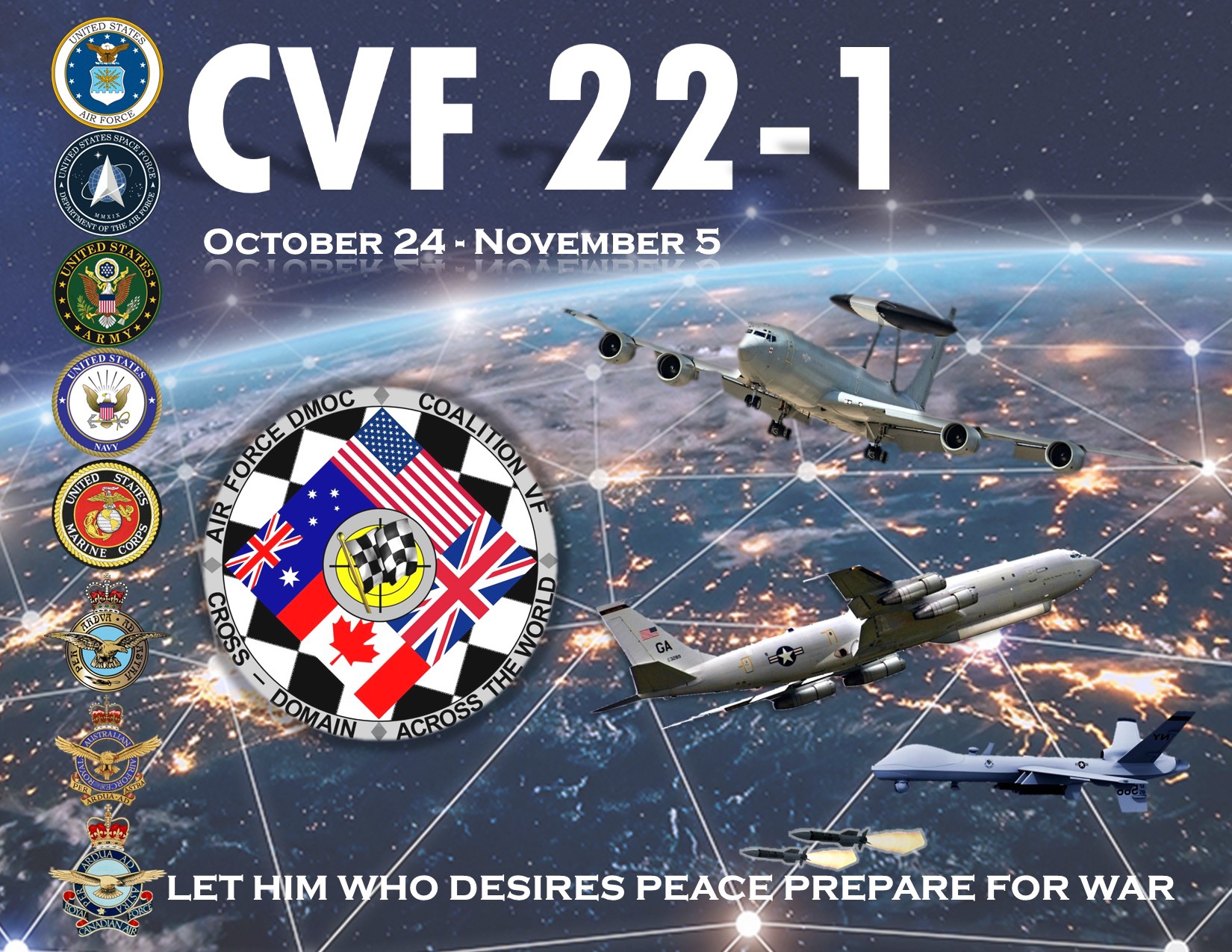
Coalition VIRTUAL FLAG exercises led by the United States Air Force focus on major combat operations in a realistic theater against a near-peer threat in a dynamic training environment. CVFs are designed to build and maintain joint and coalition partnerships between the United States, United Kingdom, Australia, and Canada by focusing on planning, executing, and debriefing a multitude of mission sets in air, space, surface, and cyber domains.

All units operate within a simultaneously live, virtual, and constructive environment which allows warfighters to prepare to wage war, and then practice doing so in a synthetic environment so that they can learn how to be combat effective.

CVF 22-1 trained over 344 participants, 200 joint and 144 coalition warfighters, and accomplished over 6,461 joint training events for 67 units using seven networks and 23 different systems connected at 29 sites across the world.

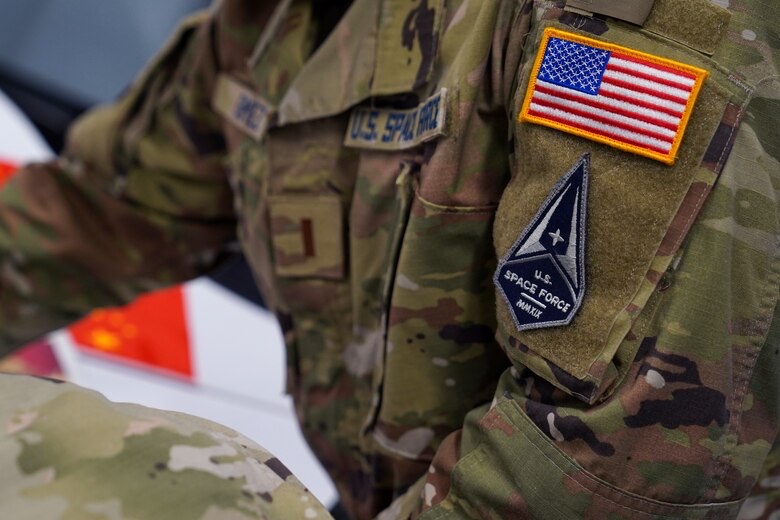
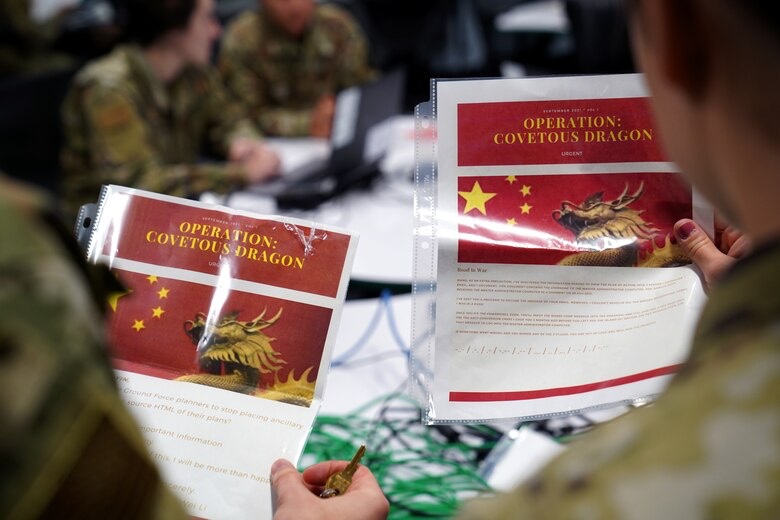
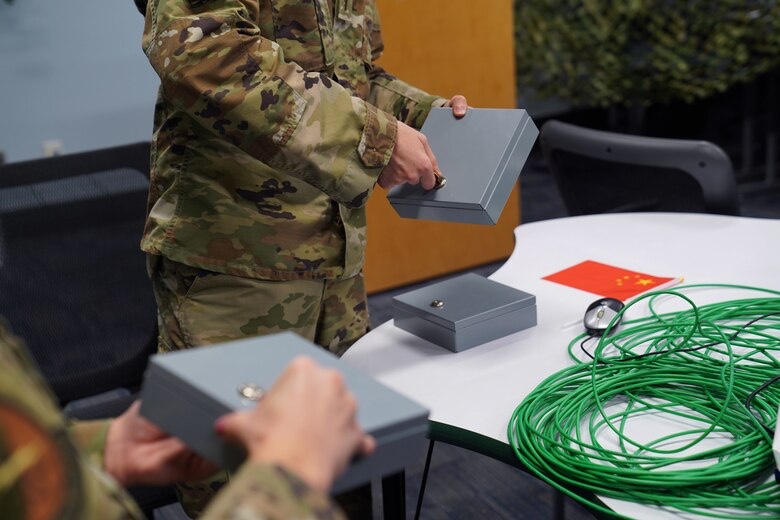
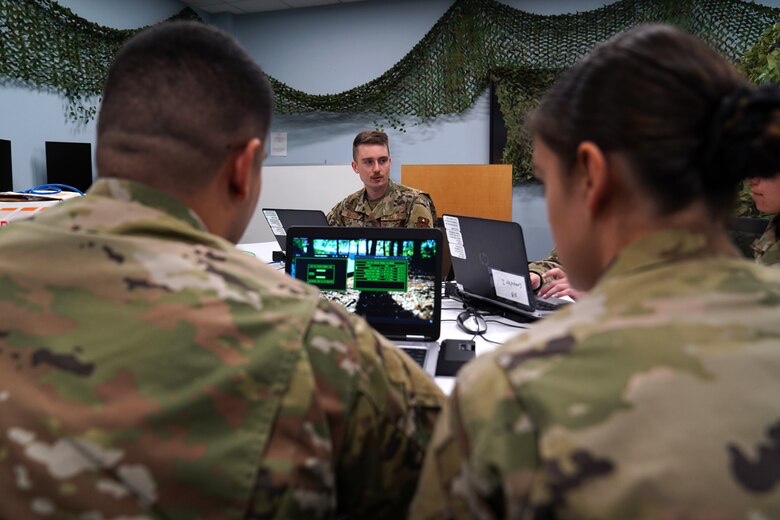
For the first time ever, the DMOC integrated cyber effects and planning into CVF 22-1’s training scenarios requiring the defense against cyber maneuvers by opposing forces. Groups were broken into blue cyber teams, made up of a British cyber protection team, augmented by Canadian intelligence members, fusing cyber intelligence into the larger operational picture, and red cyber teams, composed of an opposing force of U.S., Canadian, and United Kingdom members executing as a team of enemy cyber operators attempting to disrupt operations.

While the cyber teams were physically located at Kirtland AFB, New Mexico, they were working in a virtual “range” of computers in the United Kingdom which took a lot of bandwidth to run all the cyber intrusion tools required. The team was able to sort through those problems over the first few days and accomplish valuable cyber training objectives.

The DMOC is building out a complete cyber cell at Kirtland and will continue to refine and include cyber desired learning objectives seamlessly into their simulation environment to integrate with all of the other domains.

“The 705th CTS has built its Distributed Mission Operations capabilities up over decades and integrating a domain like cyber is a challenge the squadron is excited to face,” said U.S. Space Force Capt. Oliver Peery, cyberspace operations flight commander, Kirtland AFB, New Mexico.
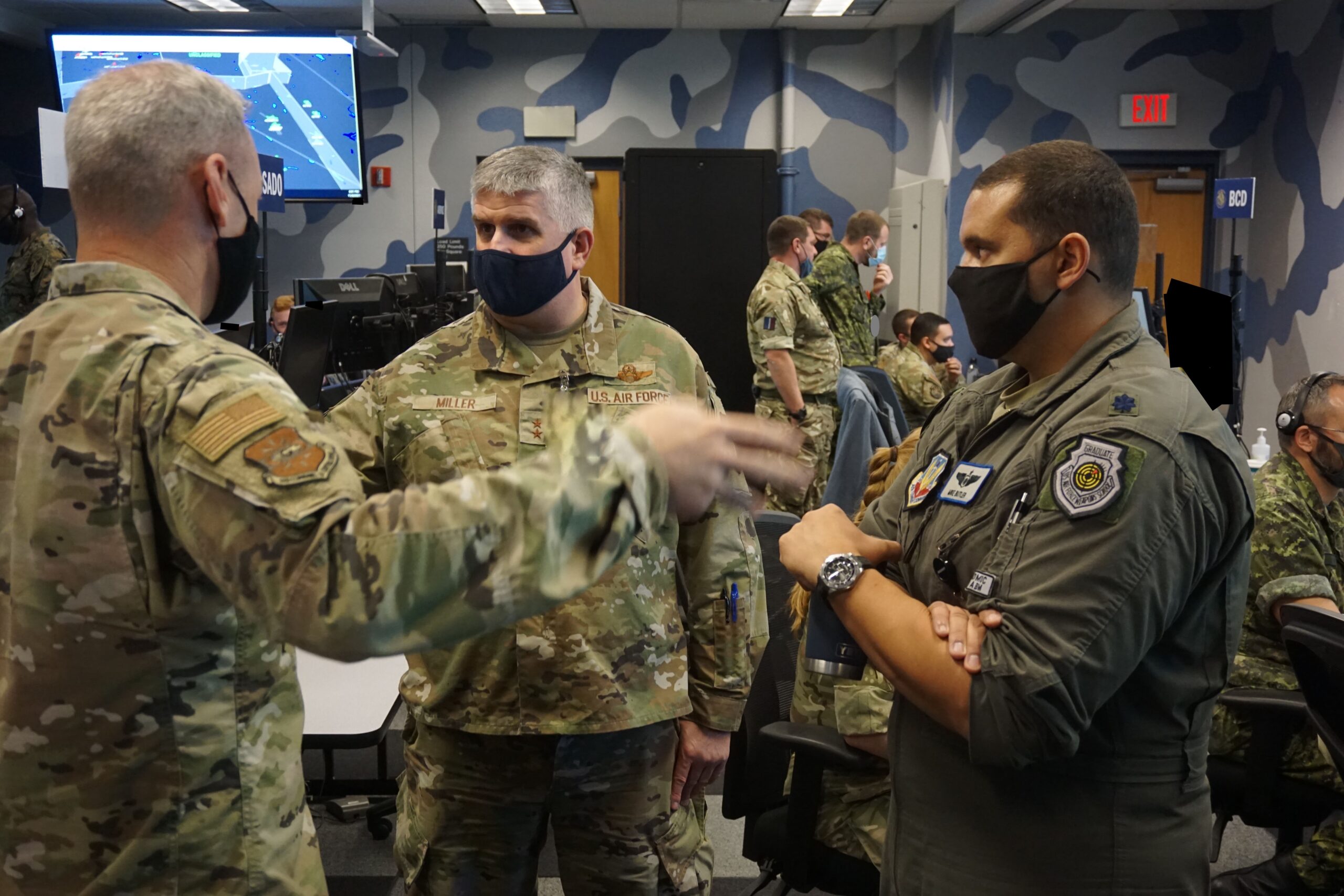
Cyber operator’s roles will continue to grow in future exercises and keep progressing towards true joint all-domain command and control, or JADC2.

“I believe the 705th Combat Training Squadron has something very unique to provide to the cyber warfighter, integrating cyber into a realistic war exercise and forcing not only traditional operators to be more aware of cyber effects on a battlefield environment, but for cyber to see how they can truly support and directly integrate their offensive and defensive capabilities into the operational environment,” said Peery.

The DMOC develops realistic and relevant training environments and scenarios for participants while allowing individual units to add elements so they may complete required training objectives or certifications during CVF.

The U.S. Army used CVF 22-1 to certify three air defense artillery fire control officers; ADAFCOs are the USA’s air defense representative at C2 nodes.

CVF 22-1 presented participants with a contemporary multi-domain threat where exercise participants had to think through complicated problem sets.

“22 Wing provided personnel with the opportunity to exercise within a state-of-the-art command and control training centre, working alongside other members of the Royal Canadian Air Force, the Canadian Army, the United States Air Force, and the United States Marine Corps who made up the Control and Reporting Centre,” said Royal Canadian Air Force Maj. Shaun Hyland, exercise and event management coordinator, Royal Canadian Air Force Aerospace Warfare Centre.

The DMOC’s exercise scenarios allow participating warfighters to discover the friction points in their plans and allow the crews to work through them, whether that is in mission planning or real-time during the vulnerability period.

“Exercise Coalition VIRTUAL FLAG is the world’s premier distributed synthetic training environment where colleagues from many nations are able to practise large-scale operational warfare,” said Royal Air Force Squadron Leader Graham Orme. “Joint planning and execution allow the participants to learn through shared expertise across multiple domains from combat air to space and cyber.”

Orme continued, “The dedicated simulator staff enable bespoke tailored scenarios that push the operators, test their skills, and allow for the development of new techniques and procedures.  As such, the exercise is a prized element of any force’s annual training programme.”
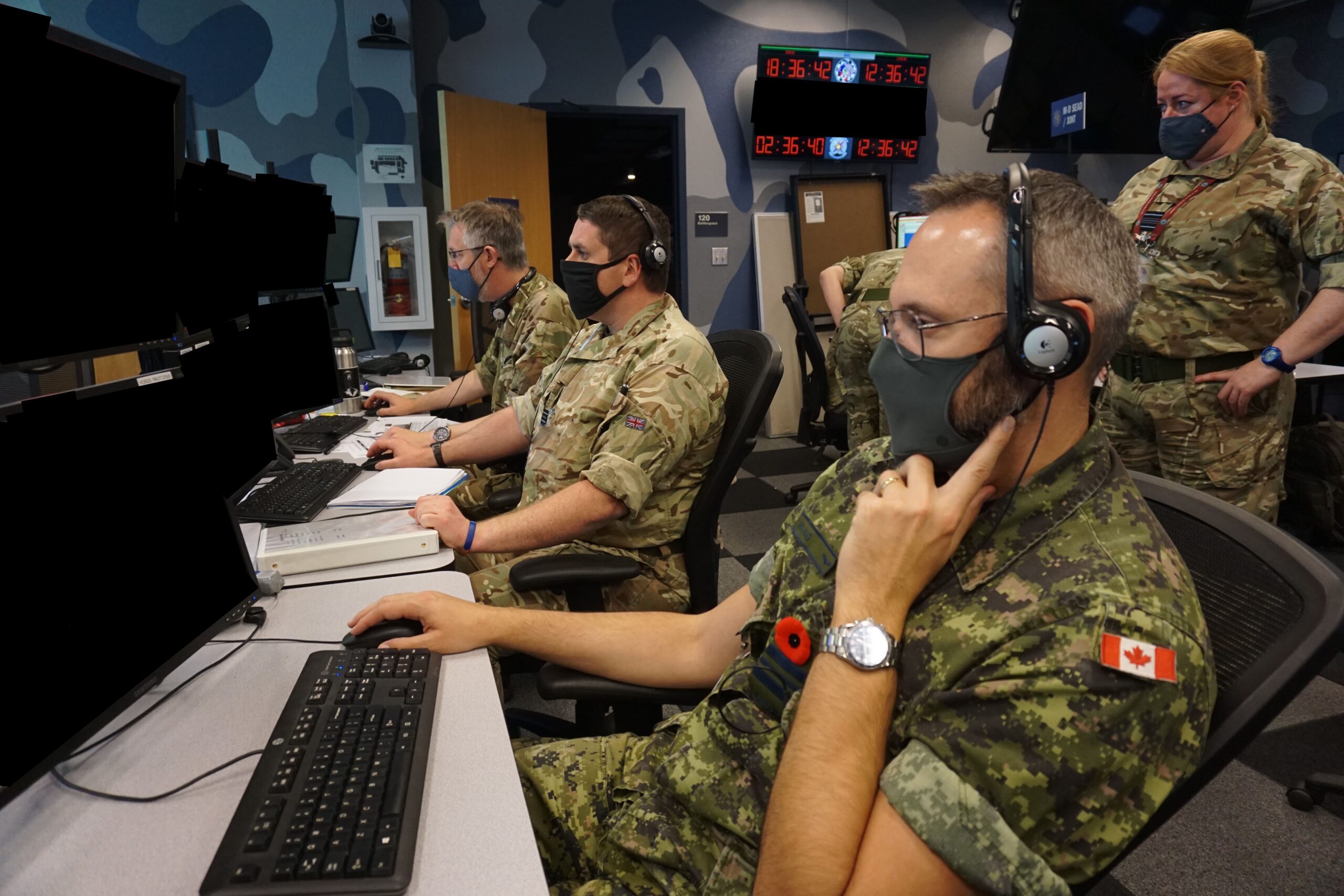
DMOC-Space, Schriever Space Force Base, Colorado, sent exercise data in real-time to Kirtland during CVF. The transfer of data allowed the DMOC to forego issuing a notional event which further strengthened the C2 of joint and coalition forces during the virtual, large-force exercise.

In addition to missile-warning data, the 392nd CTS, Schriever SFB, Colorado, also provided global positional system data to the DMOC to use their GPS environment generator for the first time in CVF. This allowed pilots using DMOC flight simulators to deploy precision weapons in a simulated GPS-degraded environment.

“CVF provides a unique opportunity to integrate the space domain into the tactical environment using the virtual construct of the DMOC to determine best practices, and ultimately learn how to maximize combat effectiveness,” said USSF Tina Bragdon, 705th CTS space subject matter expert and planner.

Space capabilities bring more to the fight than ever, but we have to ensure we leverage them to our nation’s full advantage.  Relevancy on the battlefield is not derived by independence, but by interdependence and the successful fusion of capabilities.

“This exercise is the culmination of 18 months of training for our QSIC [Qualified Space Instructors Course] students,” said Royal Air Force Squadron Leaders Laura Ridley-Siddall, Air and Space Warfare School officer commanding space training.  “This year, for the first time, we have used the wholly simulated environment as the final evaluation for our students on the QSI Course in the position of Space Duty Officer.”

When planning VIRTUAL FLAG exercises, the DMOC’s objective is to incorporate new capabilities continually providing an environment in which the warfighter may train with the forces they could expect to coordinate with during major combat operations.

“It is particularly poignant when executing our coalition events because there are many assets with which U.S. operators have never had the opportunity to work with until CVF,” said USAF Lt. Col. Michael Butler, 705th CTS director of operations.  “While the DMOC has traditionally included space and cyber domains in our exercises, in CVF 22-1 we focused on integrating coalition space and cyber capabilities to great success.”

Butler continued, “We built a strong foundation in CVF 22-1 and learned many lessons that will allow us to make our scenarios more robust and realistic for future exercises.”

CVF 22-1 provided the unique opportunity for joint forces from the USAF, USSF, USA, U.S. Marine Corps, U.S. Navy, and four partner nations’ forces to train in a complex and integrated live-virtual-constructive training exercise.

“Modern warfare is far more complex and dynamic than ever, and victory demands the highest proficiency in planning and executing operational objectives smarter, faster, and more precisely than your adversary,” said U.S. Space Force Walt Marvin, 392nd CTS exercise planner.  “We must fight together effectively in a joint environment, and most likely as a coalition of nations.”

The 705th CTS reports to the 505th Combat Training Group, Nellis AFB, Nevada, and the 505th Command and Control Wing, headquartered at Hurlburt Field, Florida. 

 “Coalition and joint partners interested in participating in future VF or CVF exercises should contact dmoc.css@us.af.mil to connect with the DMOC,” said USAF Lt. Col. Lindsay Post, 705th CTS commander, Kirtland AFB, New Mexico.



By by Deb Henley, 505th CCW, Air Combat Command