SIG SAUER - Never Settle

Archive for the ‘Guest Post’ Category

Why Sitka Arrowhead Relies On YKK Zippers

Thursday, August 26th, 2021

Sitka Arrowhead sent us this great post in why they rely on YKK waterproof zippers for their garments. The details matter and using the best components creates the best garments.
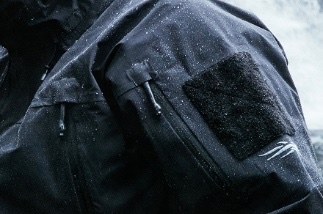
BLUF: Ounces Equals Pounds

At first glance insignificant, however, small parts and components (commonly referred to as trims in the textile industry), play a major role in the final weight and function of technical apparel. From G-Hooks, zippers and zipper pulls to cords and cord locks. Even down to the granular choice of thread. Trims sourcing and development is a foundational element in all Sitka Arrowhead product development. After all a product, much like a team, is only as strong as its weakest link.
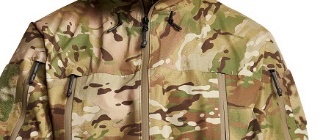
Giant of Small Parts

Within the global apparel industry nobody understands the importance of premium trims more than the Japanese brand who have made focusing on the tiny details their big mission, YKK. Self-reflect and chances are the zipper pull on your jacket has YKK stamped on it? The YKK brand is synonymous with the zipper and all its associated hardware. Dedicating the last one hundred years to developing, engineering, and manufacturing premium zipper systems; that not only continue to function through extended use, but are precisely engineered to not fail you when failure is not an option. Because let’s face it, a jacket without a zipper is essentially useless.

To achieve a true best-in-class Gore-Tex® product, all components of the SITKA Arrowhead Wet Weather Protective (WWP) collection meant focusing on attention to detail holistically, fabrics, trims, fit, form, function and construction. For no-fail zippers that pass the Gore-Tex® Storm Test, we naturally looked to YKK.

AquaGuard® Zipper
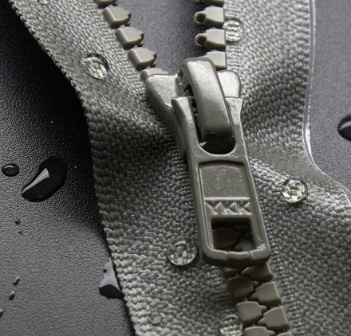
YKK® AquaGuard® Zippers have a water-repellent polyurethane film coating that helps shed water from the zipper opening. A DWR treatment to the polyester tape side increases the surface tension and adds an extra level of protection to prevent water leaking through. These zippers are strong, have a smooth operation and can be depended upon to withstand the harsh environments that our WWP Jacket and Pant has been designed for.

ARROWHEAD Application
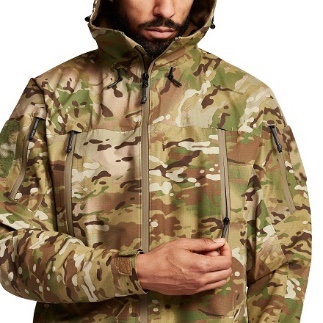
YKK components selected by SITKA Arrowhead have a matte PU finish and are made in the USA. This makes them purpose built for the current Berry Compliant WWP MDW Jacket and Pant ensemble, soon to be joined by a Half Bib Pant in Winter 2021-22.

To find your ARROWHEAD Dealer – www.sitkaarrowhead.com/retail-locator
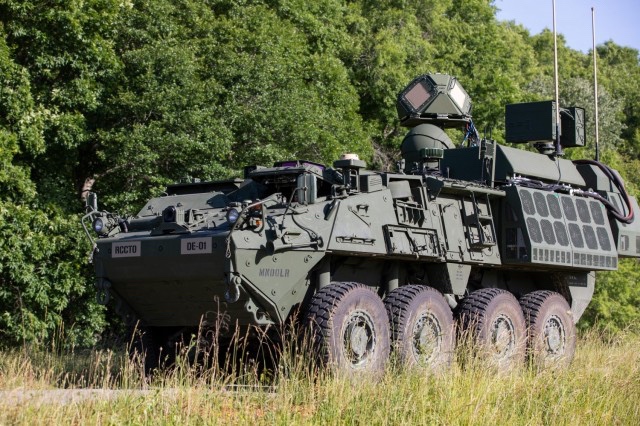
Army to Field Laser-Equipped Stryker Prototypes in FY 2022

Thursday, August 26th, 2021

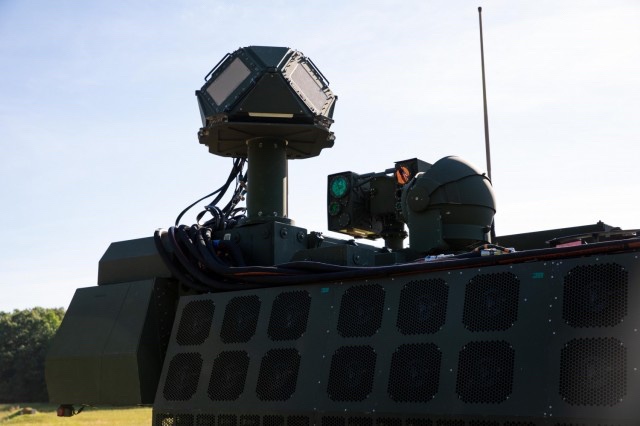
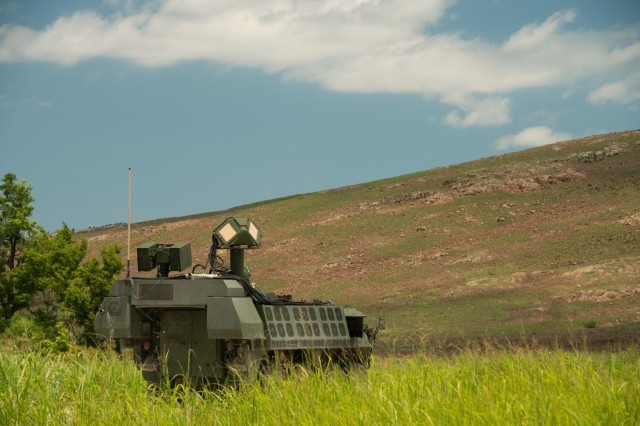
WASHINGTON — The Army recently conducted a successful evaluation of a new directed-energy capability, moving the service one step closer to fielding a platoon of four laser-equipped Stryker combat vehicle prototypes next fiscal year, program leads said Wednesday.

The Directed Energy Maneuver-Short Range Air Defense system, or DE M-SHORAD, is a 50kW-class laser designed to protect divisions and brigade combat teams against unmanned aircraft systems, rotary and fixed-wing threats, rockets, artillery, and mortars, said Marcia Holmes, the deputy director of hypersonics, directed energy, space and rapid acquisition.

“Our goal is to deliver prototypes that Soldiers can use as the mission requires and that the Army can leverage as a baseline for a program of record,” Holmes said. “A Soldier-centered design is a key part to reduce risk and to ensure an operationally effective weapon system.”

A strong partnership between the Army Rapid Capabilities and Critical Technologies Office and science and technology industry leaders led to the development and implementation of the first prototype in 24 months, Holmes said.

The addition of the DE M-SHORAD and other directed-energy capabilities like the Indirect Fire Protection Capability-High Energy Laser, or IFPC-HEL, and IFPC-High Power Microwave are all designed to complement the Army’s kinetic air defense capabilities, said Craig Robin, deputy director of the RCCTO’s directed energy project office.


The unique design of the DE M-SHORAD leverages the Stryker’s gas-powered engine to energize its batteries, cooling system, and laser. The self-contained system has enough electricity to address multiple threats at a time before needing a period to recharge, he said.

“There are places where directed energy can provide a significant advantage,” he added. “All the bullets are built into the system, so the logistics associated with moving a platform and supplying it requires just gas and parts.”

Robin added that directed-energy systems are also more cost-effective from a life cycle perspective, making them a strategic tool to take out low-cost threats like an UAS to save the Army’s kinetic capabilities.

The Army plans to demonstrate the DE M-SHORAD capabilities during Project Convergence 21, where it will participate in a joint and coalition exercise later this year, said Col. Scott McLeod, the program’s manager.

“[PC 21] will be a big opportunity for us to show how we can integrate with our systems and demonstrate the capability against other threats,” McLeod said.


In July, the prototype proved its abilities during a combat shoot-off at Fort Sill, Oklahoma. During the event, Soldiers faced several realistic scenarios intended to refine future DE M-SHORAD characteristics, as program leads collected extensive data and user feedback to refine the system, McLeod said.

In addition to Project Convergence 21, the DE M-SHORAD development team will make minor adjustments to improve the device’s performance in the coming months, followed by several internal system verifications, he added.

“We are delivering a brand new capability -– it is not a modification or an upgrade. It is unlike any other system the Army has fielded to date,” McLeod said. “This event was a major step in the prototyping process and an informative waypoint as we move forward with building and delivering a prototype platoon in [fiscal year 2022].”

By Devon L. Suits, Army News Service

US Army Revamps Cyber Doctrine to Support Joint Warfighters

Wednesday, August 25th, 2021

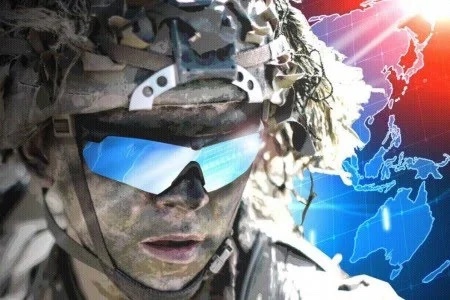
AUGUSTA, Ga. — The Army plans to update its cyber operations doctrine, as it continues to march toward a more data-driven joint environment, a top Army cyber officer said last week.

Once published, the updated field manual, FM 3-12, will outline how the service plans to integrate its cyber operations mission into the larger vision of a modernized Army, said Brig. Gen. Paul T. Stanton, commander of the U.S. Army Cyber Center of Excellence.

Although no timeline was given on the document, Stanton said during the AFCEA TechNet conference on Aug. 17 that his team was moving quickly. The doctrine was last revised in 2017.

“The [new doctrine] is being drafted as we speak,” said Lt. Gen. Ted Martin, commander of the Army Combined Arms Center, in a pre-recorded video.

Martin said the doctrine, which stems from the National Defense Strategy of 2018, will continually evolve to keep pace with new technology and help the Army increase its lethality against near-peer threats.

Despite being a cyber-based field manual, Stanton said the entire Army could benefit from it and not just cyber operators.

For example, at the Army Maneuver Center of Excellence, Soldiers can adapt the document in their classrooms to explain how cyber can be used by them, he said.

The major role cyber plays in the future is also why leaders across the Army need to be on board with how to use it, he added.

“If there’s one theme across all this, it’s that we are driving operations for commanders,” Stanton said. “Commanders are the ones that make the decisions [and] commanders are the ones that develop the course of action and scheme of maneuver.”

In the future, all commanders will have to know the ins and outs of the Army’s cyber doctrine and cannot “bury their heads in the sand and say, ‘I can’t understand the science,’” he said.

“We can help abstract away some of the complexity of the science, but our commanders have to understand the fundamentals because this is a huge part of how we’re going to fight in the future,” he continued.

Even with knowledgeable leaders, achieving an information advantage through cyber is not possible without a unified network supporting it, he said.

To bring about a unified network, the Army is looking to use the latest technologies such as 5G capability, zero-trust cybersecurity and pulling data from the cloud.

No place where information advantage is more critical than on a joint battlefield, Stanton said, where warfighters may need to collaborate against a potential adversary.

Multi-domain operations will require data to be pulled from several locations. By pulling information, it “implies that my tactical edge assets are combined with my operational [and strategic] assets,” Stanton said.

“I have to move the right data to the right place at the right time inside the decision cycle of the adversary, so that I can maintain [the] information advantage,” he continued. “I can’t do that without a unified network.”

A common operational picture that brings together data from the tactical, operational and strategic levels helps enable commanders to make quick decisions, he said.

However, being able to pull the data isn’t enough. Army officials “have to protect that information,” Stanton said. “We’re pushing hard toward a zero-trust environment and an architecture to support and apply zero-trust principles across the entire Department of Defense Information Network.”

While the future of cyber warfare continues to change, Martin said that with the help of junior leaders, “we can get it right.”

“You don’t have to be a general to come up with this doctrine,” Martin told the crowd. “I feel that the best ideas are out there in the audience right now, because at [U.S. Army Training and Doctrine Command] — victory starts here.”

By Thomas Brading, Army News Service

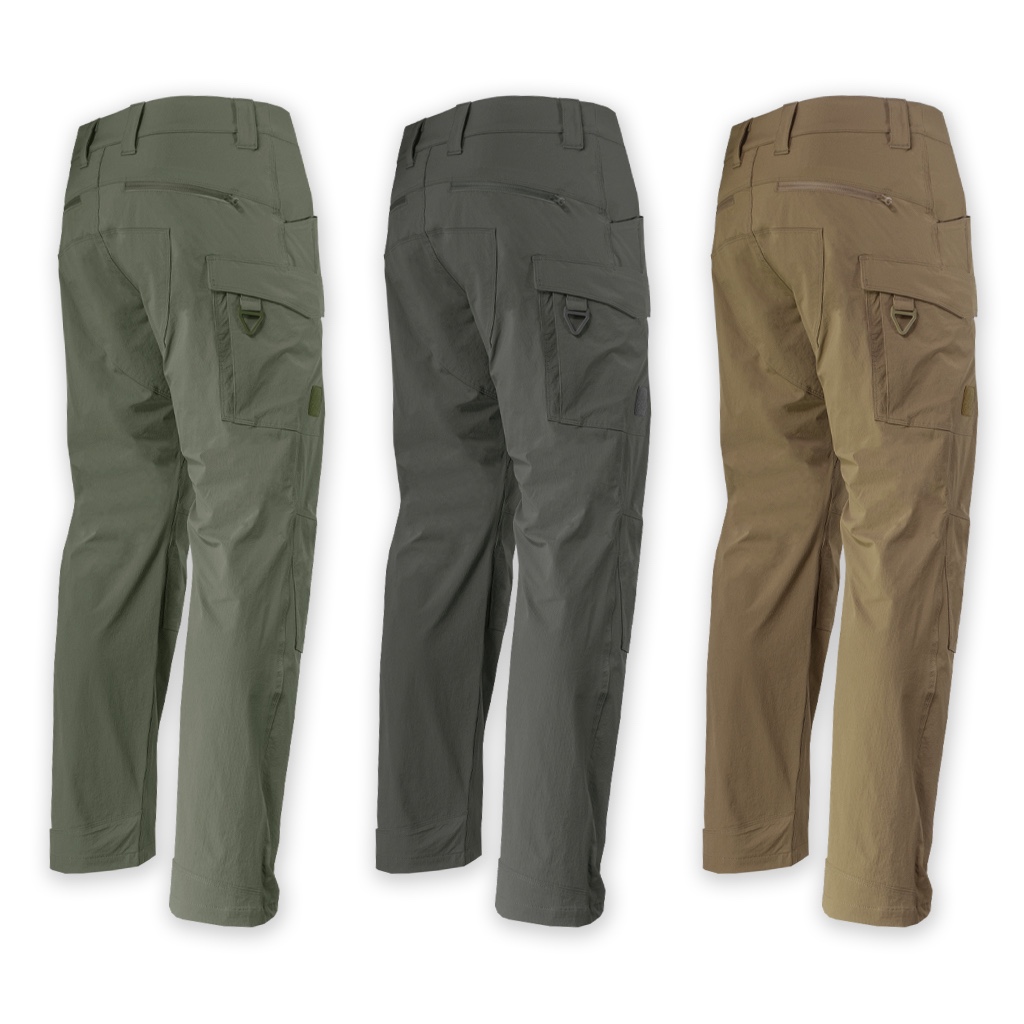
PDW Delta Cargo Pant TRS

Tuesday, August 24th, 2021

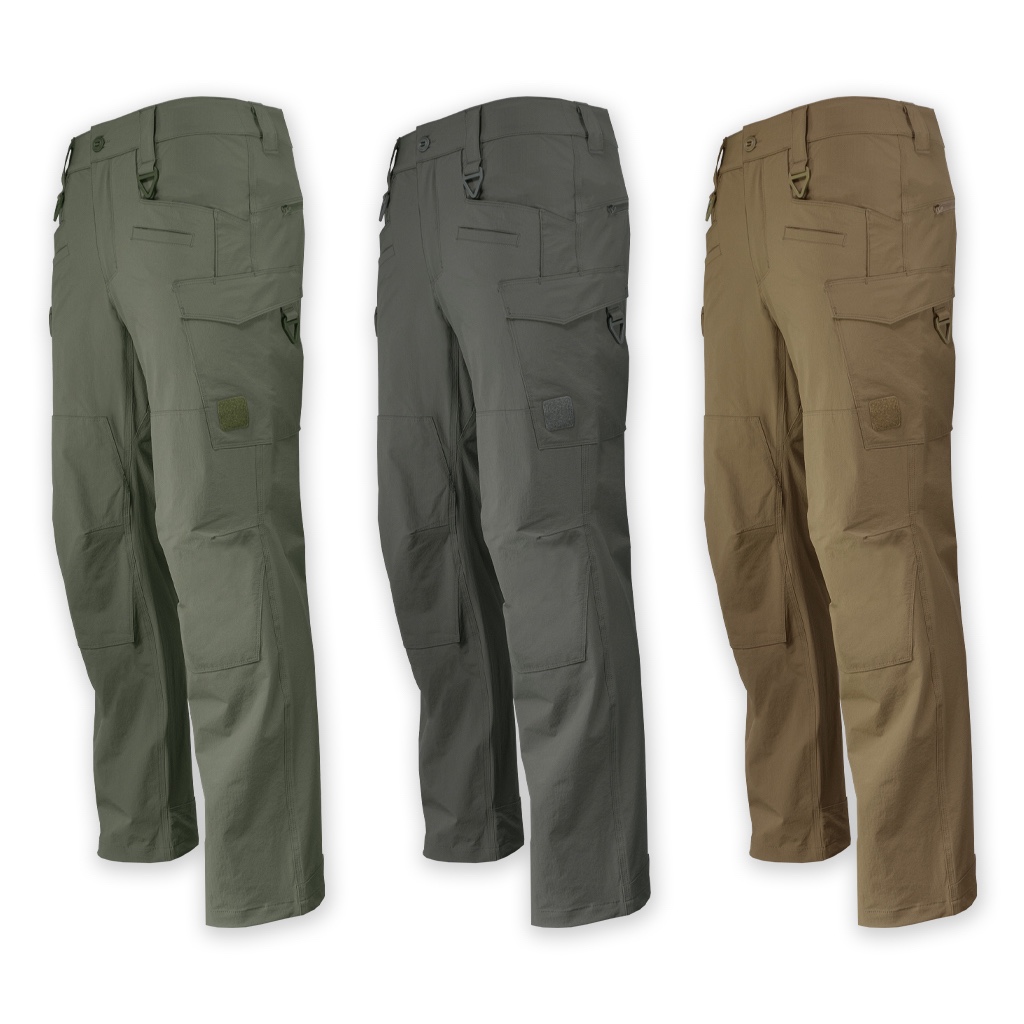
Expedition Grade, Field Pant with Low Profile Cargo Pockets in Technical Ripstop Nylon

Prometheus Design Werx introduces their new Delta Cargo Pant TRS for Fall 2021. An expedition grade field pant with low profile cargo pockets designed for rigorous and protracted adventures and exploration. Constructed in their new, 6.13oz, technical, 4-way stretch Technical Ripstop nylon with a quick-dry and DWR finish for durable wear in all terrains. A total of 13 pockets to stash and organize as little or as many EDC items as the user needs. Pocket Clip Docks™, quad no-twist custom made Delta-Rings for keychain-carabiner clip points, double reinforced seat, double knees, and a Hide-Away waistband pocket round out these shorts’ features. Produced with industrial grade triple needle stitching on all major seams and expertly made in California, USA.

The Delta Cargo Pant TRS by Prometheus Design Werx will be available in Transitional Field Green, Universal Field Gray and All Terrain Brown.

The Design and R&D Team at PDW states:

“Naturally, we planned on following up our Delta Shorts with the pant version. This style picks off from where the shorts leave off and offers full, reinforced leg coverage for cooler weather and equally rugged terrains. We trialed numerous technical fabrics, to finally arrive at our TRS (Technical Ripstop) fabric, which would dry quickly, withstand frequent abrasion, allow plenty of movement with the stretch yarn component, at the same time not be so heavy, it would be a chore to wear, and a comfortable regular fit. We chose to add the low-profile cargo pockets to this design to cover the additional storage needs while on the go. The Delta Cargo Pant TRS is an expedition grade style and engineered to tackle a wide array of adventurous pursuits on land or in and around water. From trekking in cooler, damp weather, packrafting, overlanding, international adventure travel, or a 30 day backpack, these pants are built in the USA for the global adventurer and to withstand the most challenging adventures.”

The Delta Cargo Pant TRS will be available for $136.00 on Wednesday, August 25th, 2021 at 12:00 noon Pacific via their website, prometheusdesignwerx.com.

Marine Corps Successfully Demonstrates Nmesis During LSE 21

Tuesday, August 24th, 2021

KAUAI, Hawaii —

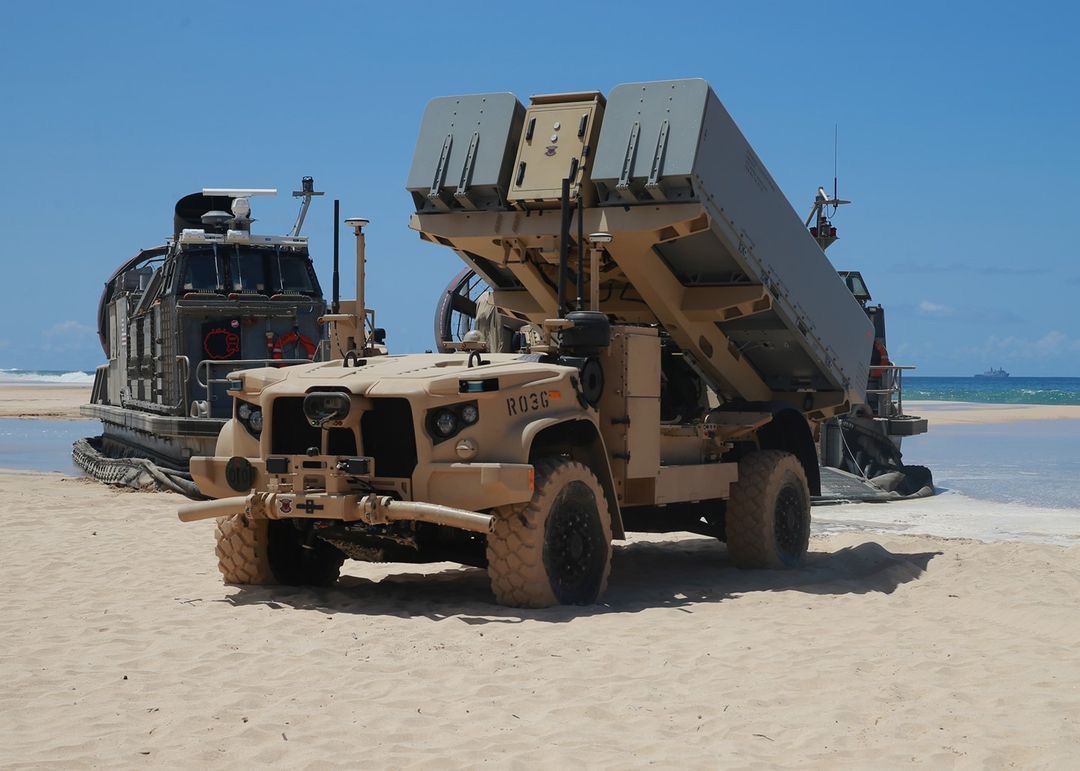
The Navy/Marine Corps Expeditionary Ship Interdiction System successfully hit its target in support of Marine Corps Forces, Pacific, during Large Scale Exercise 21 Aug. 15, 2021. The exercise showcased the U.S. maritime forces’ ability to deliver lethal, integrated all-domain naval power.

LSE 21 was a live, virtual and constructive scenario-driven, globally-integrated exercise with activities spanning 17 time zones. LSE 21 applied and assessed developmental warfighting concepts that will define how the future Navy and Marine Corps compete, respond to crises, fight and win in conflict.

The Marine Corps’ NMESIS will provide the Marine Littoral Regiment with ground based anti-ship capability to facilitate sea denial and control while persisting within the enemy’s weapons engagement-zone, and LSE 21 provided a venue for the program team to validate some of those concepts.

“This scenario is representative of the real-world challenges and missions the Navy and Marine Corps will be facing together in the future,” said Brig. Gen. A.J. Pasagian, commander of Marine Corps Systems Command. “This exercise also provided an opportunity for us to work alongside our service partners to refine Force Design 2030 modernization concepts.”

SINKEX, the exercise scenario involving NMESIS, provided a testing environment for new and developing technologies to connect, locate, identify, target and destroy adversary threats in all domains, culminating in the live-fire demonstration of the naval strike missile against a sea-based target. During the exercise, forward-deployed forces on expeditionary advanced bases detected and, after joint command and control collaboration with other U.S. forces, responded to a ship-based adversary. Simultaneous impacts from multiple, dispersed weapons systems and platforms across different U.S. services—including NMESIS—engaged the threat.

NMESIS integrates established, proven sub-systems, such as the Joint Lightweight Tactical Vehicle Chassis, the Naval Strike Missile and the Fire Control System used by the Navy for NSM.

“From an acquisition perspective, NMESIS started a little over two years ago,” said Joe McPherson, long range fires program manager at MCSC. “We’ve been able to rapidly move [on developing and fielding this system] because we’re leveraging existing NSM and JLTV subsystems.”

Because NMESIS is not yet a fielded capability, engineers from MCSC managed the fire control piece of the system during the exercise. Marines, however, were able to practice maneuvering the system and validating the system’s interoperability with their Naval and Air Force partners.

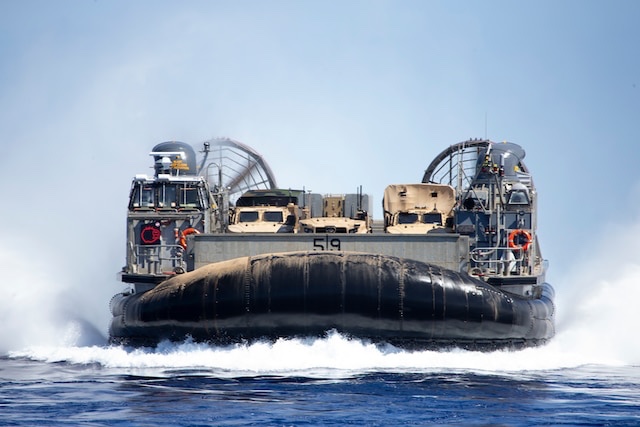
“This week was very successful,” said McPherson. “In addition to the two live fire shots that hit the target, we also successfully deployed the system aboard the Marine Corps’ primary transport systems, the C130 and LCAC.”

Though not associated with its program development, the NMESIS transportability and mobility demonstration serves an important role in developing tactics, techniques and procedures related to this critical capability, said McPherson.

MCSC is developing and fielding new anti-surface warfare weapons capabilities, including NMESIS, on pace to support Force Design 2030 objectives. These new capabilities contribute to the Fleet’s ability to achieve sea control, sea denial and defense against adversary amphibious force missions.

“This exercise gave us an opportunity to not only measure, but also validate the concepts for [the Marine Corps’] anti-ship capability, which is one of the most important avenues of the Commandant’s Force Design 2030,” said Lieutenant Col. Ryan Collins, combat integration office for artillery and fires at Marine Corps Combat Development Directorate, Combat Development and Integration. “I think the successful launches of the missile will help us clarify the path forward as we move to fulfill the Commandant’s 2030 vision, and giving the Marine Corps a transformative anti-ship capability.”

Exercises such as LSE 21 increase maritime interoperability and the ability to project American power at home and around the world. 

Kelly Flynn, MCSC Office of Public Affairs and Communication

Civil Air Patrol Continues Auxiliary Efforts for the Total Force

Monday, August 23rd, 2021

In 2015, the Air Force Doctrine Volume 2 “Leadership” was updated to include the Civil Air Patrol as an official Air Force auxiliary, and part of the Total Force.

“All Airmen, including the members of the Civil Air Patrol, are directly responsible for acquiring, delivering, supporting, launching and driving Airpower,” said Air Force Chief of Staff Gen. CQ Brown, Jr. “The Civil Air Patrol has a critical role in attracting and developing innovative individuals who have an interest in science, technology, engineering and mathematics who can help reshape the design of the Air Force in line with the ‘Accelerate Change or Lose’ Action Orders.”

The doctrine lists the active duty Air Force, Air National Guard, Air Force Reserve, retirees, contractors and other groups supporting the Air Force mission as other parts of the Total Force. When acting on behalf of the Air Force, the Civil Air Patrol is aligned under First Air Force.

Since 2020, the auxiliary has logged more than 365 days of continuous support during the COVID-19 pandemic. This included flying test kits, vaccines and critical protective equipment to hospitals, which was the largest coordinated effort since World War II.

The inclusion of the Civil Air Patrol allows for approximately 59,000 volunteers to support non-combat related Air Force missions within the United States. They also act as ambassadors to the Air Force to communities that may not have consistent military exposure. 

“CAP is in over 1,400 communities across the United States and its territories,” said John Russo, the assistant deputy for the Air Force Auxiliary. “In many cases, CAP may be the closest Air Force-associated unit a person interested in aviation and the military comes in contact with.”

The auxiliary members conduct 90% of the inland search and rescue missions in the U.S. tasked by the Air Force Rescue Coordination Center and other agencies, and has nearly 7,000 aircrew members and 33,00 responders trained to the Federal Emergency Management Agency’s standards.

“The Civil Air Patrol bolsters many of the Air Force homeland operations,” Russo said. “The auxiliary flies Air Force-assigned missions at about 1/40th the cost of an active unit. For example, during every hurricane response, the program saves the Air Force $8 million. They are also recognized by the Air Rescue Coordination Center with about 100 lives saved each year.”

The Civil Air Patrol provides intercept training, light cargo transport and aerial imagery for disaster damage assessments to support local, state and national agencies, along with disaster relief.

Another example of how the Air Force Auxiliary provides support to the United States is its ability to be an avenue for a diversity of cadets and students interested in pursuing aviation and STEM-education and careers.

“Civil Air Patrol has cadets as young as 12 years old, and gives youth the chance to learn more about the military and service to their community,” Russo explained. “The Civil Air Patrol has squadrons located in underserved areas, exposing more diverse youth to the opportunities the Total Force offers.”

The Civil Air Patrol provides an Air Force-style organization with values, structure, and focus on aerospace. For young Americans seeking to learn about service, to give back to their community, and explore more about aviation or the military, the Civil Air Patrol is a great opportunity to prepare them for service in the Air Force, Russo said.

SCUBAPRO Sunday – Self Adjusting Fin Straps

Sunday, August 22nd, 2021

Self-adjusting fin straps are one of the best ways to don and doff your fins. It also makes it easier to use different size booties. Steel spring straps are a relatively new product for fins. It was invented by cave divers that didn’t want their rubber straps breaking on them in the middle of a cave. So, they took screen door springs and made fin straps out of them. Typical rubber straps also have a chance of breaking at some point. If you are lucky, it will happen when you are putting them on before a dive, not in the middle of one. I had a strap break on me in the middle of a dive. Lucky the suction between the fin and my booties kept the fin on.

I noticed that the fin was slightly lost, but we only had about 30 minutes left in the dive, so I just went with it. I was also lucky that I wanted to drive and hang out and make sure we didn’t run into anything. I did have a very small bungee that I used to hold the fin on. It wasn’t great, and I should have tried it in the pool before I was out doing a combat swimmer dive. It would help if you always carried a spare strap on you. Replacing a strap can be a pain in the middle of a dive. So, as I said before, and I have said this a lot in the articles I post, always practice things before you are in the field.

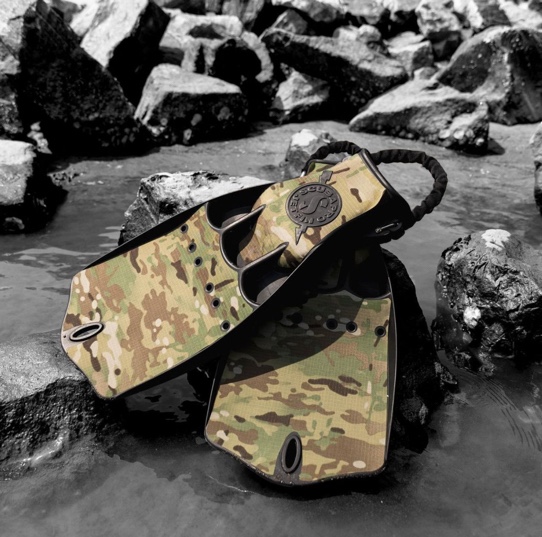
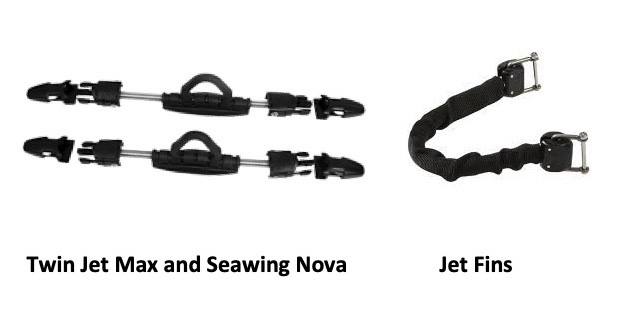
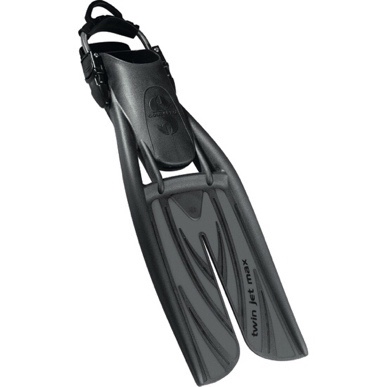
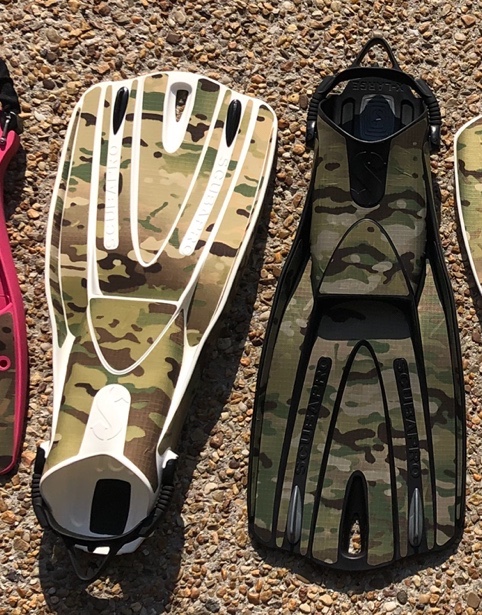
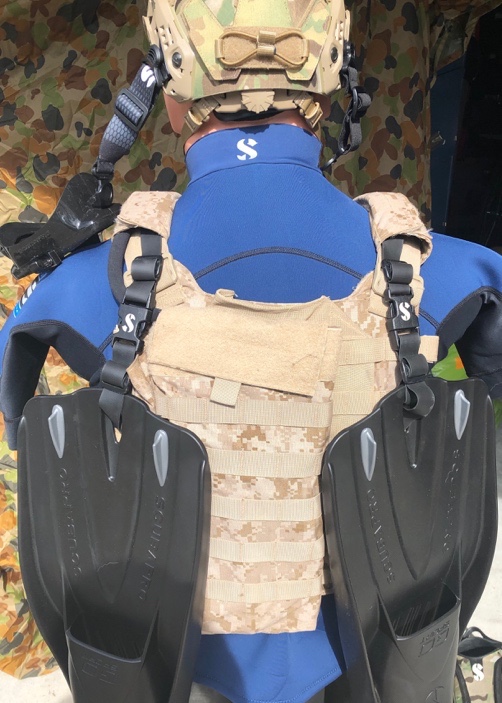
The self-adjusting strap helps avoid most of these problems. You can find them for almost every type of open-heel fins. The spring straps typically attach using rust-resistant metal hardware. SCUBAPRO Steel Spring Straps are available for SCUBAPRO Jet fins, Twin Jet Max, Veloce fins, and the Seawing Nova fins. They are made from High-grade marine steel. These straps can replace the traditional fin strap with the added benefits of being easier to don and doff, and they will compensate at depth for the pressure underwater. The flexible nature of the spring strap tightens as you descend to compensate for the crush on your boots, meaning your fins stay on at the exact tension you set them to at the surface. They are also a lot less likely to break when entering the water from a helicopter. The Steel Spring strap for the SCUBAPRO Jet fin has also been added to the 2020 Naval Aircrew Systems State of the Art Catalog. This allows SAR swimmers the ability to start using the Spring heels on their fins.

Spring straps are strong springs with a rubber or nylon heel cover for comfort. Instead of adjusting the tension every time you put them on like with traditional straps, you simply stretch the spring over your heel. This decreases your time and energy spent putting on and taking off your fins before and after a dive. Several fins models now come with pre-installed spring straps, but they can also be added to many other fin models.

The other type of self-adjusting straps is made from quality marine-grade bungee designed for years of reliable use. Marine-grade bungee is design and construction, making it ideal for prolonged exposure to saltwater, sunlight/UV radiation, and the general wear and tear that fin regularly go through. A denier Dacron polyester cover is thick and long-lasting, repelling water and resisting abrasion better than nylon.

This bungee is made from a top-quality first extruded latex rubber with a consistent 100% stretch and high modulus that won’t lose its elasticity as many others do. Like the steel spring, the bungee is self-adjusting at depth. Upon ascent, they decompress, keeping fin straps comfortable throughout the dive. Straps have a large rubber finger loop to aid in donning and doffing. Marine bungee is highly reliable and has a very low percentage of breaking. All this being said, I know you can break it if you “test it” to try and prove me wrong. They come standard on the SCUBAPRO Go (Barefoot fin) and GO Sport fins (Boot fin).

They are made from 100% Monprene construction avoids de-lamination problems, broken blades, and torn foot pockets that tend to plague average thermoplastic fins. This enables the Go Sport to stand up to long-term, heavy-duty use.

The Go fin excels in strength, comfort, and convenience, but where it shines is in kicking performance. The Go is built with a 25° pre-angled blade with a central power panel that provides longitudinal rigidity and channeling effect. Power bars on the underside of the rails prevent over-flex; this helps maintain the optimum angle of attack under high load conditions. The result: you get a lightweight fin that delivers speed, power, stability, and maneuverability with a minimum of effort.

The Go Sport fin is genuinely one of the best fins I have ever used. I have giving them away to a lot of people. This is because when I let someone uses them, they usually won’t give them back. I have used them diving in a strong current, swimming over the beach, pushing a ruck, and for surface swims. I have never had a cramp while using them. They are light and do not take up too much room, making them the ideal river and stream crossing fins. I am 6’2″ 225, and they push my big butt around.

CSASS Goes To War

Sunday, August 22nd, 2021

Paratroopers of the 82nd Airborne Division’s Immediate Response Force prepare personnel and equipment for a deployment to the U. S. Central Command Area of Operations. The Immediate Response Force is charged with remaining ready to answer the Nation’s call to deploy to anywhere in the world at a moments notice.