FirstSpear TV

Archive for the ‘Guest Post’ Category

Special Tactics Enterprise Transitions as 24 SOW Flag Furled

Friday, May 30th, 2025

HURLBURT FIELD, Fla. —  

The 24th Special Operations Wing furled its flag May 16, 2025, marking the transition of the organizational structure of the Special Tactics enterprise, the latest change in Air Force Special Operations Command’s commitment to adapting to the evolving demands of the strategic environment.

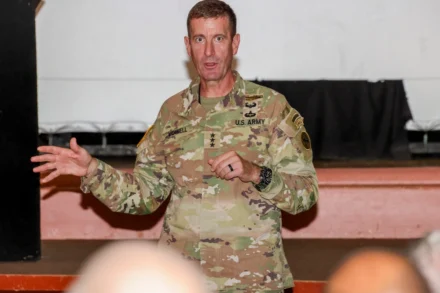
“The furling of this flag represents not an end, but another transition point for both the Special Tactics community and AFSOC,” said Lt. Gen. Michael Conley, commander Air Force Special Operations Command. “I truly believe that the best days of Special Tactics lie ahead, not behind us. Special Tactics remains vital to AFSOC and our Nation.”

Activated in 2012 as the ST functional wing, the 24 SOW was initially designed to maximize the effectiveness and advocacy of AFSOC’s air-to-ground integration force. However, the operational environment has evolved significantly over the past 13 years, impacting the role of ST within AFSOC.

“The 24th Special Operations Wing has not ended. It has simply passed into each of you. Wherever you go next, carry it forward. Lead with the quiet strength that built this wing. Fight with the heart that made it great. Honor those who cannot stand beside us today,” said Col. Dan Magruder, outgoing 24 SOW commander.

While the demand for small, self-sustaining, and distributed forces – the attributes inherent to ST units – are more valuable than ever, the integration of ST into the larger AFSOC enterprise has matured considerably. ST leaders, both officer and enlisted, now consistently fill key leadership positions across the command, SOF enterprise and joint force.

“This isn’t a division of labor. This is a unity of effort as we transition to the next phase,” said Col Joseph Gross, 720th Special Tactics Group commander. “I can’t wait to see the next two years as we move out with a new [organization],” he added.

The 720 STG will now report directly to AFSOC headquarters continuing to provide operational and administrative oversite of the 2-series special tactics squadrons, as well as the Special Tactics Training Squadron which is responsible for combat mission qualification for all ST operators.

“The evolving strategic landscape and advancing adversary capabilities underscore the invaluable nature of Special Tactics’ skills,” said Conley. “Innovation, ingenuity, boldness, and valor have been defining attributes of the ST community since its inception and are critical as AFSOC adapts to meet the challenges ahead.”

By AFSOC Public Affairs

AFSOC Public Affairs

Warfighters Put Emerging Technologies to the Test at Fort Leonard Wood

Thursday, May 29th, 2025

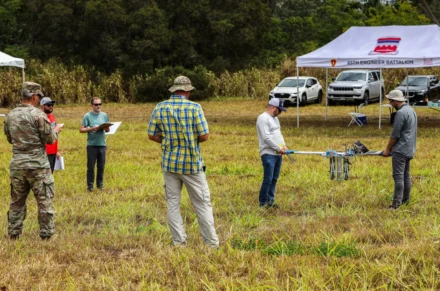
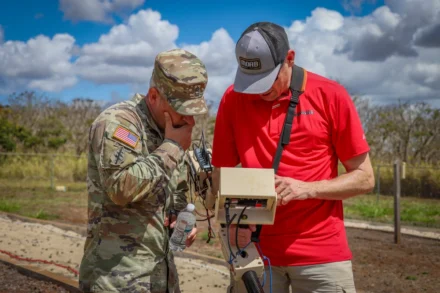
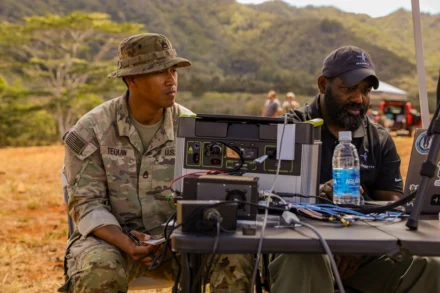
FORT LEONARD WOOD, Mo. — The Army Futures Command Maneuver Support Battle Lab is winding down this year’s Maneuver Support and Protection Integration eXperiments and Army Application Lab assessments, in which warfighters conducted simulated battlefield experiments with 14 emerging technologies from May 5 to 16, 2025, at locations across Fort Leonard Wood.

“Protection, though largely attributed to the Maneuver Support Center of Excellence, is everyone’s responsibility,” said Kyle Henry, MSBL Experimentation Branch chief and one of the key organizers of the event.

According to Henry, MSPIX puts the latest tools in the hands of Soldiers while also giving capability developers and the science community credible and validated operational experiment venues for their conceptual and materiel development.

“Engineers and scientists can get lost behind their computer screens and become narrow sighted within the confines of their labs. Their ideas of how something might benefit a Soldier in real world applications are often biased and skewed,” Henry said. “Bringing their capabilities — often their life’s work — out into the field with the Soldiers who may become the end-user provides a reality check for all involved.”

MSPIX participants include both government labs and private industry.

“The vast majority of technology providers are not under contract with the government and pay-to-play, meaning they bring their technology and support to us at no cost. Through coordination with Army Test and Evaluation Command and MSCoE, we can put these capabilities into the hands of Soldiers, something that is mutually beneficial, at a relatively low cost to the taxpayer,” Henry explained.

AAL’s assessments focused on robotic breaching and terrain shaping operations, while MSPIX tested several unmanned and autonomous technologies.

About 50 U.S. Army Forces Command Soldiers from Fort Leonard Wood; Fort Cavazos, Texas; Joint Base Lewis-McChord, Washington; Fort Bragg, North Carolina; Fort Carson, Colorado; and Vicenza, Italy, took part in the assessments.

Some of the experiments had Soldiers controlling unmanned drones, vehicles and boats traversing air, land and water.

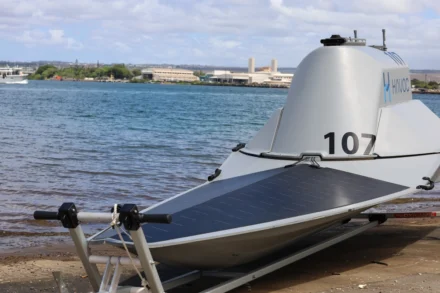
Sgt. Mariano Negron, a 12C, or bridge crewmember, with the 74th Multi-Role Bridge Company at Fort Cavazos, spent much of May 13 at Training Area 250’s lake using a system that allowed him to control a bridge erection boat, commonly called a BEB, from a handheld controller.

He said he regularly uses BEBs to build bridges, but not with a remote control.

“I am used to using handheld controllers to play games and it is similar to that. I picked it up easily. It’s like driving a remote-controlled car,” Negron said.

The system can be fitted to existing vessels already in the Army’s inventory to facilitate remote control or autonomous operation.

“We could use this to build bridges without having Soldiers enter the water,” Negron said. “If we needed to remain covered but also needed to bridge a gap to transport troops or cargo we could with this technology.”

Negron said it felt good to be able to provide guidance to the system’s creators.

“We operate these boats all the time. We know how to make these boats do what we need them to do to complete our mission. I have been able to give them feedback that I hope will improve this technology if we get it someday in the future,” Negron said.

Capt. Adam Robinson, an experimentation officer with the Maneuver Support Capability Development Integration Directorate of AFC at Fort Leonard Wood, supervised the testing of seven technologies at Training Area 401.

“We are running platoon style lanes to test the remote breaching and terrain shaping capabilities of these technologies,” Robinson said. “We are giving a platoon leader, a platoon sergeant and a section of combat engineers a mission to complete with these new technologies and watching how they use the technology to execute.”

Robinson said he was impressed by watching how the Soldiers operated a robotically controlled utility terrain vehicle.

“The way it can move and track is pretty impressive,” Robinson said. “The engineers are using them to shape terrain, but as a MP, I would use it for surveillance or resupply. It has a variety of applications.”

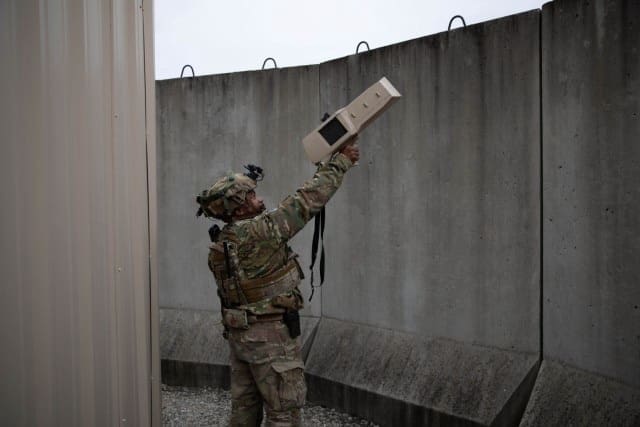
Other technologies assessed the capabilities of autonomous track loaders for dig, dump and fill operations; autonomous biological critical area disinfection; a mobile sensing system designed to detect the movement of targets and provide visual imaging; equipment delivering a broad-spectrum electromagnetic pulse during breaching operations; and bioreporters created to detect nerve agents for standoff chemical threat detection.

By Melissa Buckley, Fort Leonard Wood Public Affairs Office

TACP, SERE Airmen Conduct Sensing Operations Against 820 BDG Opposing Forces at Exercise Capri Sun

Wednesday, May 28th, 2025

ALPENA, MICHIGAN, UNITED STATES

U.S. Air Force Survival, Evasion, Resistance, and Escape (SERE) specialists and 3d Air Support Operations Group (ASOG) Tactical Air Control Party (TACP) waged simulated war against 820th Base Defense Group (BDG) Airmen during exercise Capri Sun at an Alpena Combat Readiness Training Center operations site in Michigan, Mar. 31 to Apr. 11, 2025.

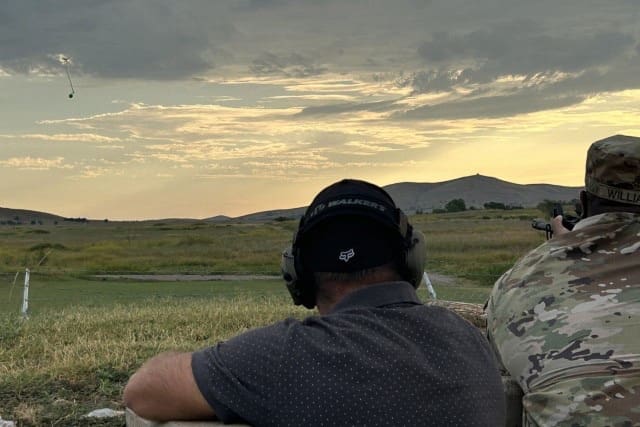
Blue force TACP and SERE conducted surveillance and targeting operations while being hunted by 820 BDG opposing forces in the bitter cold of Michigan’s forests reaching lows of 14 degrees Fahrenheit. The opposing forces’ goal was to detect TACP and SERE Airmen’s presence with small unmanned aerial systems, simulated intelligence injects, roving patrols, and reconnaissance and surveillance equipment, then to engage with blank rounds and simulated indirect fire.

“It’s critically important that exercises are difficult,” said Col. Anson Stephens, 3 ASOG commander. “You never want someone to see something for the first time on the battlefield when bullets are actually flying, so we intentionally make these as difficult as we can to push the limits, and the next time, that limit is even further to make us successful in combat.”

820 BDG’s primary mission is to defend austere airfields in contested battlefield environments, and this exercise enabled them to apply their defensive fundamentals to protect simulated adversarial assets on this battlefield. Blue forces aimed to infiltrate these defenses undetected to provide targeting data to strike assets.

“A motivated and capable opposition force truly tests the mission capabilities of the blue force, it identifies both strengths and weakness,” said Master Sgt. Anthony Pyle, 823d Base Defense Squadron opposing force leader.

These opposing forces stressed the TACP and SERE Airmen’s ability to blend into the environment, move covertly throughout the simulated battlefield and detect critical assets for strikes. The weather, environment and opposing forces confronted these blue forces during their 108 operating hours.

“It’s important for us to train in arduous and difficult conditions, because we need to be able to employ our forces anywhere, anytime,” said Capt. Aaron Moore, 3 ASOG TACP officer.

These blue forces enabled 820 BDG opposing forces to develop and test their subordinate leaders, the backbone of a flexible fighting force. Through centralized planning and decentralized execution, these subordinate leaders executed individual operations to achieve their common objective.

“The capability for a commander to empower their subordinate leaders to execute their intent with minimal oversight is a huge force multiplier in Agile Combat Employment operations,” Pyle explained. “Rather than operating as one giant echelon of troops at a company level, we can execute multiple missions at the squad level and below to achieve greater effects.”

Story by Capt Christian Little 

93rd Air Ground Operations Wing

Hegseth Announces Pay Raise for Army Paratroopers

Saturday, May 24th, 2025

FORT BRAGG, N.C. — Defense Secretary Pete Hegseth announced a pay raise for Army paratroopers today during remarks to current and former members of the 82nd Airborne Division at Fort Bragg, North Carolina.

Hegseth made the announcement during the 82nd’s All American Week, a four-day event that brings past and present paratroopers together to celebrate their service through competitions and camaraderie.

“I’ve got a bit of an announcement today that might be of interest to this community,” Hegseth said to the formation of Soldiers.

“For the first time in [decades], here [as] the secretary of defense, through the secretary of the Army, we are increasing jump pay,” Hegseth said, eliciting an enthusiastic response from the crowd.

Hazardous duty incentive pay — commonly referred to as “jump pay” — is set to increase from $150 per month to $200 for rank-and-file paratroopers.

Additionally, Hegseth added, jumpmasters — the senior paratroopers responsible for training and teaching the techniques for jumping from aircraft — will receive an additional $150 per month on top of the $150 in HDIP they already earn.

“Here’s to our paratroopers, our jumpmasters, who do the difficult things in difficult places that most Americans can never imagine,” Hegseth said following the announcement.

He emphasized that service members remain central to decision-making at the Pentagon.

“I want you to know [that] inside the corridors of the Pentagon, you are on our minds — with the decisions we make in budgets, in planning, in deployments, in orders [and] in reorganizations,” he said.” We have you and your families in mind.”

Hegseth then spoke about rebuilding the military and reestablishing deterrence — two of his top three priorities, along with restoring the warrior ethos, as outlined in his Jan. 25, 2025, message to the force.

“President [Donald J.] Trump is committed to historic investments inside our formations,” Hegseth said. “Our promise to you is that when the 82nd Airborne is deployed — if we have to call 911 for America’s response force — you will be equipped better than any other fighting force in the world.”

He added that under the current administration, the 82nd Airborne will always maintain a superior advantage in battle.

“That’s my promise to you,” he said.

On deterrence, Hegseth said the department is focused on restoring “peace through strength.”

“When I look out at this formation, the eyes of the men and women and these flags, I see the eyes of deterrence; I see the eyes of American strength; I see the eyes that will deter the wars that we don’t want to fight,” he said. “Those who long for peace must prepare for war.”

Hegseth closed his remarks by expressing gratitude to the division’s troops, veterans and their families in attendance.

“Like those who came before you, you keep showing the world the stuff you’re made of,” Hegseth said.

“Because we know you are ready for the important work that lies ahead.”

– Matthew Olay, DOD News

Special Operations Airmen Maneuver Through TRADEWINDS25

Saturday, May 24th, 2025

TRINIDAD AND TOBAGO (AFNS) —  

Mission Ready Airmen assigned to the 137th Special Operations Wingmission sustainment team, Oklahoma Air National Guard, strengthened critical self-sustaining skills and assessed their ability to operate in multiple expeditionary environments across the Caribbean during TRADEWINDS25, April 21-May 5.

The team conducted five total maneuvers during the exercise, establishing forward operating sites in Trinidad and Tobago, Antigua, Martinique and Puerto Rico. This is the first time the 137th SOW’s current MST Airmen conducted agile combat readiness in environments outside of the continental U.S. These rapid maneuvers tested their resiliency, adaptiveness and ability to integrate logistics with U.S. Air Force aircrews and multinational hosts.

“Being able to operate in environments where you don’t have the logistical footprint to move resupplies in is critical,” said Lt. Col. Morgan Mathis, mission sustainment team commander. “With each maneuver, we are dealing with different embassies, different security operations officers and different militaries to enable movement into those different countries. That is a big push for us this Tradewinds.”

Mission sustainment teams are employed in support of Air Force Special Operations Command assets. By exercising enhanced operational reach and sustainment through integrated logistics, pre-positioning of forces and shared infrastructure during TW25, the 137th SOW MST assessed their ability to ensure readiness and responsiveness for future exercises and operations.

The 40th iteration of Tradewinds, a U.S. Southern Command-sponsored, regionally oriented annual exercise with 26 participating nations, provided a platform for the 137th SOW MST to train in ground, air and cyber operations. Although the exercise was held in Trinidad and Tobago, the 137th SOW team’s various movements to neighboring islands offered a blueprint for what future iterations of the exercise could incorporate to further interoperability between Caribbean nations.

“This team is able to provide a proof of concept by moving around to different countries and seeing what standard operating procedures we can develop for next year so that we can expand that Agile Combat Employment all over the Caribbean and all over the U.S. Southern Command,” Mathis added.

The first iteration of the 137th SOW MST was established in 2021, aligning AFSOC forces with the U.S. Air Force’s shift toward ACE. ACE is a concept that allows Mission Ready Airmen to operate in expeditionary environments to maintain posture, command and control, movement and maneuver, protection and sustainment. This is reliant on their ability to rapidly execute operations from various locations with integrated capabilities and interoperability, as 137th SOW Mission Ready Airmen demonstrated in TW25, through technical training and by conducting multiple maneuvers across Caribbean islands.

In the 18 months leading up to TW25, Airmen assigned to the current 137th SOW MST were hand-picked to form a team centered around enabling rapid maneuvers around areas of responsibility, sustaining AFSOC forces, providing force and medical protection to those forces, and mission generation: being able to rearm, refuel, launch, land and recover aircraft.

TW25 is the fourth major field training exercise this team participated in, each with an emphasis on movement and maneuver, protection, mission generation or sustainment. While operating in the Caribbean, Airmen assigned to the 137th SOW MST focused on the movement and maneuver and the sustainment elements of their mission.

“This is a huge opportunity for our Airmen to learn, to grow, to be leaders and to make decisions,” Mathis said. “As we look toward the future, exercises are how our Airmen are going to learn how to do mission command and how to problem solve on the fly without oversight. These exercises are a huge part of enabling them to gain that experience that, in the past, Airmen would have gotten through multiple deployments, but now they are getting through named exercises like Tradewinds.”

A key element to self-sustainable operations and maneuvers for Mission Ready Airmen is tactical combat casualty care tier two. TCCC tier two equips Mission Ready Airmen with advanced lifesaving skills that are crucial for sustainment in expeditionary environments. Airmen assigned to the 137th SOW MST enhanced these critical skills through multiple hands-on scenarios during TW25 in Trinidad and Tobago.

“TCCC tier two is especially critical for Mission Ready Airmen to understand and be proficient in,” said a 137th SOW TCCC instructor that accompanied the MST for TW25. “It is battlefield-proven to reduce preventable deaths. When they are in austere environments, these Airmen may be the only medical care available to their wingmen.

Following their operations in Trinidad and Tobago, the team shifted focus toward bolstering mobile communications.

Throughout their maneuvers, 137th SOW Airmen were tasked to establish and test the effectiveness and reliability of Mobile Ad-hoc Network, or MANET, communication networks between dispersed 137th SOW Airmen across Caribbean-centric islands in multinational operations, increasing the survivability, security and sustainability of communications as ACE’s command and control element requires.

With each maneuver to a new island, 137th SOW Mission Ready Airmen would establish a near vertical incidence skywave antenna to bounce high-frequency radio waves off of internal mobile communications. Alongside the NVIS technology, the 137th SOW team utilized handheld AN/PRC-163 radios to extend their secure communications networks further as they tested line-of-sight communications on the island of Martinique, and satellite communications to Wingmen on other islands and to units stationed in North Carolina and New York.

This technical and hands-on training provided a foundation for 137th SOW MST Airmen to participate in a cross-functional mobile communications discussion with members of the French Navy while the team was operating in Martinique.

“Communications are a big part of MST,” Mathis shared. “Without communications, MST cannot operate. We want each of the members of the team to be proficient in not just basic communications but digital communications, line-of-sight and beyond.”

Similarly, the Mission Ready Airmen assigned to the 137th SOW MST conducted a knowledge exchange with the Antigua and Barbuda Defense Force where they compared combat casualty care methodologies and life-saving techniques, mission and command planning, supply transportations logistics and mobile communications while staying in Antigua.

By comparing mission essential strategies with multinational forces, the 137th SOW Mission Ready Airmen are able to reinforce their skillsets and expertise while enhancing foundational relations and interoperability for future exercises and operations.

Opportunities like TW25 allow for these Airmen to demonstrate their professionalism and proficiency as they continue to grow as leaders and Citizen Airmen. For many on the 137th SOW team, this was the first time they collaborated with a Caribbean nation.

“I was very appreciative of their hospitality,” an MST Airman noted. “This exercise has helped me expand my worldview in ways that will continue to help me grow as a person and as a Mission Ready Airman.”

As Guardsmen, the 137th SOW team has the advantage of retainability, allowing for TW25 multinational interoperability opportunities to serve as a cornerstone for continuity and lasting relations that will allow 137th SOW Mission Ready Airmen to better support Air Force Special Operations Command assets in future global operations.

The success of global operations relies on the ability of units like the 137th SOW MST to project, maneuver and sustain the joint force and is made stronger through continued relationships with allies and partners.

“Working with these host nations is everything,” Mathis said. “From initial planning and coordination to on the ground communication and logistics support, building that relationship with each of the countries is a big part of what we have been able to do in Tradewinds. We hope to continue that in the future as we practice working with partner nations to enable Agile Combat Employment for AFSOC.”

Collaboration with partners and participation in multinational operations and exercises, such as TW25, reinforces 137th SOW Mission Ready Airmen’s capabilities to operate in a high-intensity environment, improving readiness, responsiveness and interoperability in both peacetime and crisis.

By Senior Airman Erika Chapa

137th Special Operations Wing Public Affairs

FirstSpear Friday Focus: Assaulter’s Accessory Pocket (AAP)

Friday, May 23rd, 2025

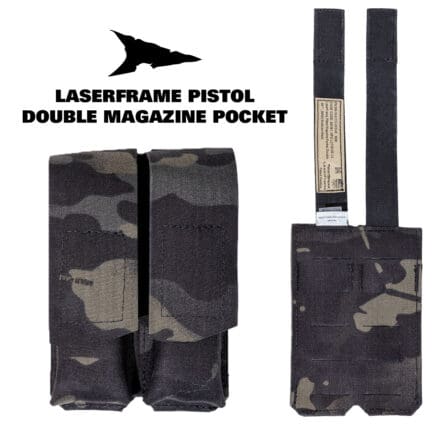
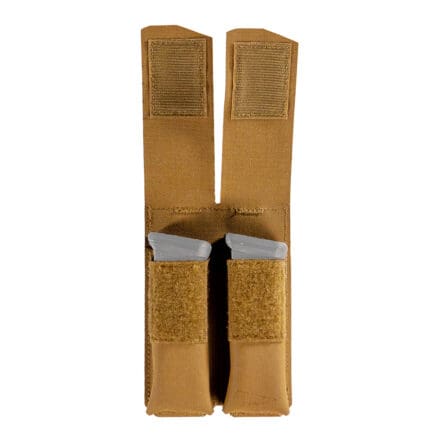
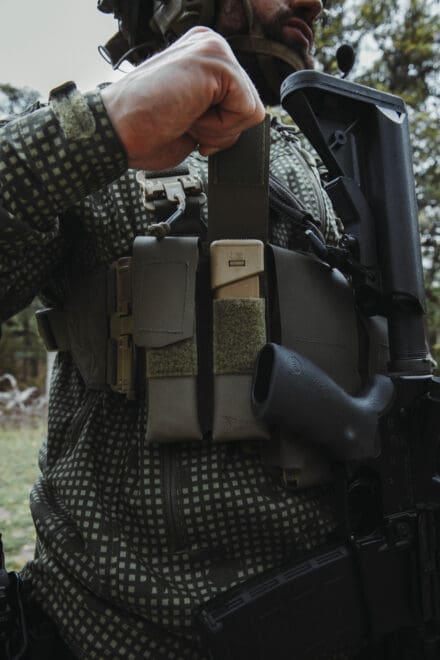
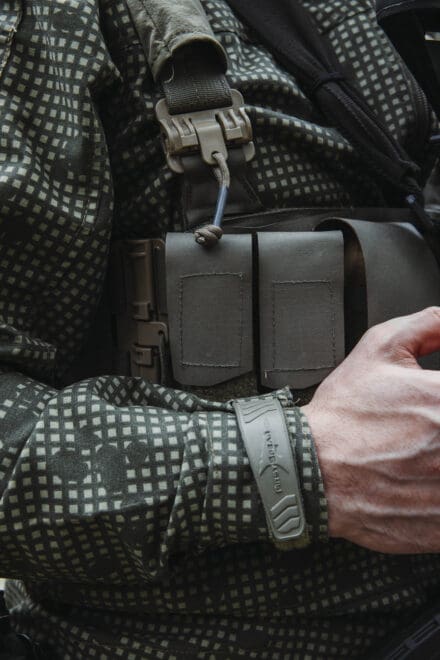
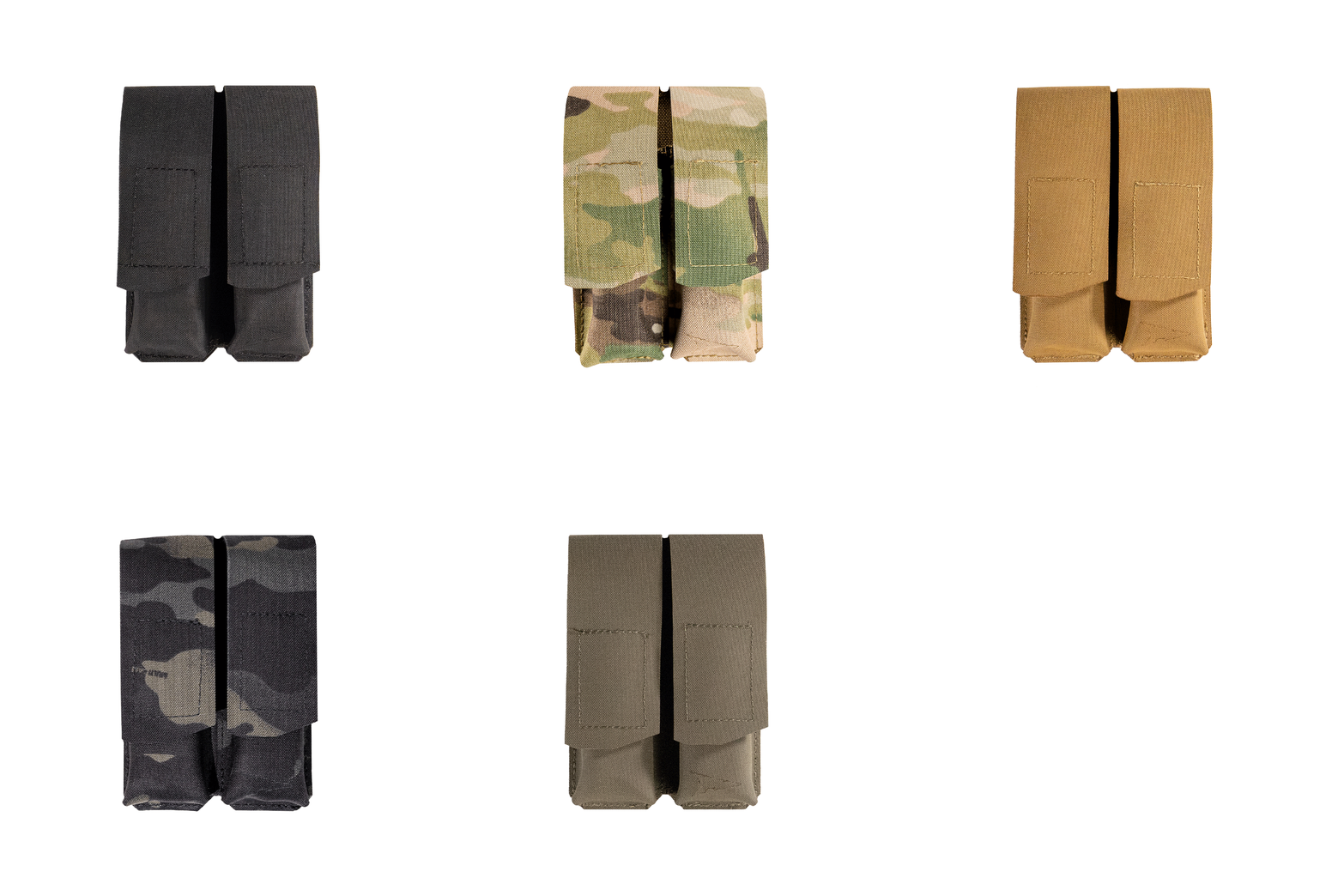
The ASSAULTER’S ACCESSORY POCKET (AAP) is a highly versatile tactical pouch designed to meet the demands of both everyday and mission-specific gear organization.

At its core, it features a spacious main compartment ideal for storing essential equipment such as an Individual First Aid Kit (IFAK), breaching tools, or other loose gear. A removable interior organizer panel provides customizable options for arranging your contents, while the loop interior allows for hook-backed pouches to be added for even greater storage flexibility.

The pouch is engineered with a unique “shark mouth” opening that enables it to open wide for quick, efficient access—especially when worn on a belt—then compresses down to a slim, low-profile form when closed. This makes it both functional and compact.

The AAP offers two mounting options: a belt mount that fits belts up to 2 inches wide, including large cobra-style buckles, and a tube mount for added flexibility. Dummy cord attachment points enhance security for sensitive items, and a bungee cord is included to help stabilize or restrain loose gear within the pouch.

Built with tactical efficiency in mind, the ASSAULTER’S ACCESSORY POCKET is rugged and reliable in high-stakes environments. Its thoughtful design makes it a go-to choice for professionals requiring adaptable gear storage. Whether you’re carrying medical supplies, breaching tools, or everyday tactical essentials, this pouch delivers top-tier organization and access.

FirstSpear is the premier source for cutting edge-tactical gear for military, law enforcement and those who train.

For more information visit First-Spear.com.

Contract Awarded for Modernized Equipment for the Canadian Army’s Light Forces

Friday, May 23rd, 2025


Dismounted infantry soldiers test Logistik Unicorp’s protective and load carriage equipment during trials for the Dismounted Infantry Capability Enhancement trials. (Cpl Peter Grieves)

On March 18, 2025, Canada awarded a contract with an initial value of $19.7 million (excluding taxes) to Logistik Unicorp to supply the Canadian Army’s (CA) light forces with 3,000 units of advanced protective and load carriage equipment. This contract includes the provision of ballistic armour layers, tactical vests, pack systems and associated pouches, as well as options for additional systems and services.

The current equipment used by CA soldiers offers excellent ballistic and blunt impact protection but requires modular capabilities for modern dismounted infantry operations. The Dismounted Infantry Capability Enhancement (DICE)initiative aims to improve the form, fit and function of this equipment, to enable a full range of motion for soldiers performing demanding tasks.



User trials were conducted from October to November 2024 with active dismounted infantry soldiers that provided detailed data and individual feedback, that were in turn analyzed carefully against the contract requirements. The result is that soldiers will be equipped with the modern and effective equipment needed to do their jobs, at the best value to Canadians. To address past concerns about fit, especially for women, the trials included soldiers of different sizes and body types, with female participation at 13.3 percent,higher than the 0.3 percentrepresentation in dismounted infantry units.



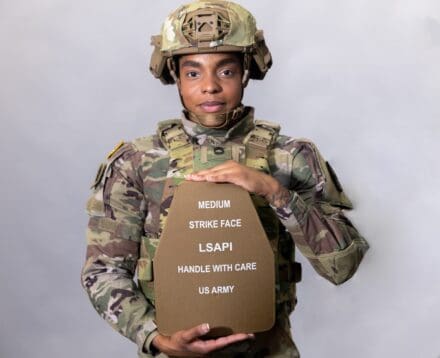
The new equipment was exhaustively tested to ensure that it fits various bodies and forms, with soft armour available in two distinct cuts. Ballistic plates will be offered in a greater range of sizes to maximize comfort and protection. While protection remains the priority, the new equipment significantly improves overall fit and coverage.

The new equipment is expected to be delivered starting in fall 2025 and will be used in conjunction with the contract awarded to Galvion in March 2023 for new helmets (known as the “Helmet High Cut Ground Troop”). While that initial contract was for 2,100 helmets and spare parts for the light forces, the Department of National Defence (DND) has since exercised its options to obtain more, bringing the total number of helmets to 10,500, for a total contract value of $14.9 million.

The DICE is working in parallel with the Soldier Operational Clothing Enhancement Modernization (SOCEM)initiative, which provides all CA units with a full range of modernized equipment and clothing. The DICE initiative allows DND to purchase smaller quantities of equipment for specific groups, and to trial procurement methods that can be applied to the larger SOCEM initiative. This approach helps to deliver new equipment quickly and effectively by applying best practices from smaller procurements.

By Nancy Cook

The Maple Leaf

Photo and article via CANADA DND

Unique Army Unit Shares Lessons Learned on How Army Can Become More Mobile, Lethal

Thursday, May 22nd, 2025

WASHINGTON — The Army’s 3rd Brigade Combat Team, 10th Mountain Division, shared insights gained from its nine-month European rotational deployment as the Army’s only Transformation in Contact 1.0 unit in an active theater during a media roundtable May 5, 2025, at the Pentagon.

The brigade is one of three brigades with an initiative to integrate technological advancements into equipment and force structure.

Unique to the Soldiers’ experience was that they were the first Army brigade to “transform in contact” while forward deployed. Transforming in Contact, or TiC, is how the Army is adapting its organization and delivering new technologies into the hands of Soldiers so they can experiment, innovate and be ready to fight on a modern battlefield. It accelerates fielding of necessary capabilities and leverages commercial off-the-shelf products to get new capabilities to the force fast.

Col. Josh Glonek, commander of the 3rd Brigade Combat Team, 10th Mountain Division, said when their deployment began nine months ago along NATO’s eastern flank from the Baltics to the Black Sea region, the Army asked them to do two things: become more mobile and more lethal.

Lessons learned

The unique brigade applied lessons learned from the war in Ukraine to advance Army efforts in unmanned aerial systems employment, electronic warfare, ground mobility, deception, command and control, survivability and more.

The brigade operated in challenging terrain in complex environments, during winter conditions, Glonek said during Combined Resolve 25-01 at the Joint Multinational Readiness Center in Germany.

“The difficult terrain and weather tested equipment and Soldiers, leading to crucial adjustments in tactics,” he said. “The European weather — cloud cover, fog, icing — presented significant challenges to drone operations. We need to develop technologies and tactics that can operate effectively in these conditions.”

Although the terrain and weather were difficult, he said the Soldiers proved their resiliency.

“Our Soldiers are proving that they can adapt and overcome, even in the most demanding environments,” Glonek said.

The colonel said the unique brigade also successfully fielded new equipment across five NATO countries.

“The 3/10 has been at the forefront of integrating cutting-edge technologies like advanced drones (Skydio, Vector, Darkhive), new vehicles such as Infantry Squad Vehicles, or ISVs, and networked communication systems. This isn’t just about having new gear. It’s about how we’re using it to enhance our capabilities.”

Glonek said the integration of Infantry Squad Vehicles, unmanned systems — including lethal drones — and redesigned Strike Companies has increased the brigade’s ability to maneuver quickly, find the enemy, and deliver decisive firepower. He said ISVs and Soldier Mounted Equipment Transports significantly improved the light infantry’s mobility, reducing their reliance on traditional support units.

Ninety percent of the brigade-initiated fire missions were observed by the UAS, significantly increasing accuracy and reducing risk to Soldiers, he said. The integration of Strike Companies, equipped with scouts, mortars and unmanned systems proved effective in finding, fixing and locating enemy forces.

“Through this, we’ve learned the importance of maintaining dedicated reconnaissance,” Glonek said.

Lethality, readiness

Glonek said the brigade combat team is modernizing their equipment and their approach to warfare to increase their lethality and readiness, so they can answer the call anywhere at any time.

“The 3/10 was specifically designed to rapidly integrate new technologies and adapt our organizational structures,” he said. “We’re now delivering those lessons learned — practical, actionable insights — to the entire Army.”

He said they incorporated discoveries from their European rotation to test and improve their C2 configuration, invest in innovations, and implement emerging technology with brigades to make them more lethal in multi-domain operations.

“The lessons learned by the 3/10 are shaping the future of the Army,” Glonek said. “We are prioritizing electronic warfare, investing in drone capabilities, and ensuring our Soldiers are equipped with the skills and technology they need to win on the modern battlefield.”

Transformation, interoperability

The brigade fielded lightweight alternatives and introduced drones, unmanned aerial systems equipment, electronic warfare and mobile infantry vehicles to adapt to the changing modern warfare environment.

It integrated multiple TiC systems and capabilities across the European theater. By emphasizing these TiC capabilities, integrating NATO Allied Forces and partner nations, Patriot Soldiers validated the Army’s ability to command and control U.S. and NATO ground forces in a large-scale combat operational environment, Glonek said.

The brigade integrated multiple TiC systems and capabilities across the European theater. They operated in a real-world environment, 90 miles from Ukraine, and in an exercise that involved nearly 4,000 participants from multiple nations.

“This provided invaluable insights unavailable in training exercises,” he said. “We worked side-by-side with our NATO allies, sharing technology and learning from their experiences. It reinforced the importance of interoperability and collective defense.”

As a TiC unit, the Soldiers were prioritized to receive the newest warfighting capabilities, including more than 150 unmanned aerial systems and upgraded communications equipment.

– Shannon Collins, Army News Service