GORE-TEX Professional

Archive for the ‘Guest Post’ Category

US Army To Test New Tech-based JROTC Program at Select Schools

Sunday, March 29th, 2020

WASHINGTON — The Army plans to implement a new cybersecurity and tech education program for high school students enrolled in junior ROTC programs, leaders told lawmakers March 11.

The program, scheduled to be implemented at select schools by fiscal year 2022, will focus on cybersecurity and computer science. Assistant Secretary of the Army for Manpower and Reserve Affairs Casey Wardynski said the program’s curriculum remains under development.

The Army wants to reach a broader, more academically diverse group of students while also expanding its science, technology, engineering and math curriculum in its JROTC programs, said Assistant Deputy for Recruiting and Retention Lin St. Clair.

While the Army’s JROTC programs aren’t inherently a recruiting tool, they could open the doors toward a possible military career, Wardynski said. The cyber pilot program is being developed by the Office of the Secretary of the Army (Manpower and Reserve Affairs), Army Training and Doctrine Command and U.S. Army Cadet Command.

“Our effort here is designed to capture the imagination of young adults,” Wardynski said during a Senate Committee on Armed Services personnel oversight hearing. The assistant secretary added the service has been working to expand the number of eligible candidates for military service through education.

Through the program, Army leaders hope young men and women will be steered toward a possible Army career earlier in life. While the goal of junior ROTC remains to create better citizens, Wardynski said the program will raise awareness of career opportunities in computer science and cyber security so that the Army will be on recruits’ radars when they decide on their post-high school plans.

In many of the Army’s 22 priority cities for recruiting, young people don’t have much awareness about the Army as a potential career path, Civilian Aide to the Secretary of the Army Jim Bland said recently. CASAs are community leaders who provide advice and counsel to Secretary of the Army Ryan McCarthy.

“We need to begin educating them much earlier about the opportunities in the military, the benefits of service and the challenges of service,” Wardynski said, “so that as they form their set of life-course alternatives, military service can be in there early enough to shape their behaviors throughout high school. So by the time they graduate, they can avail themselves to those opportunities.”

St. Clair said many of areas with schools that remain underrepresented in junior ROTC programs lie in the Midwest and Northeast. And that diverse student populations are located in or near the Army’s priority cities.

The proposed pilot program is intended to educate students at the Advanced Placement and honors course level  St. Clair said the program would cover the entire four-year junior ROTC program.

The pilot program as envisioned would be “rigorous and arduous enough that it would warrant AP or honors-level equivalency in terms of points or grade structure,” St. Clair said. He added it would be graded the same and it would be viewed the same as an honors or advanced-placement class.

By Joseph Lacdan, Army News Service

SureFire Spotlight: The SFMB Muzzle Brake

Saturday, March 28th, 2020

The advanced SureFire SFMB muzzle brake greatly reduces both recoil impulse and muzzle rise so that the weapon tracks straight back to keep you on target for faster shot-to-shot recovery. Its patented Impulse Diffusion design minimizes side blast and rear-directed concussion effects. The SFMB also serves as a rock-solid mounting adapter for SureFire SOCOM Series Fast-Attach® suppressors.

www.surefire.com

SureFire Field Notes Ep 56: Intro to Night Vision Use with Don Edwards

Friday, March 27th, 2020

In this episode, Don Edwards of Greenline Tactical discusses techniques for getting acclimated with Night Vision, for new users.

Don Edwards is a retired 20+ year veteran of US Army Special Operations. He began his career in 3rd Bn 75th Ranger Regiment where he was a participant in Operation Just Cause. Retired from 20th Special Forces Group where he served as a Team Sergeant, a Weapons Sergeant and Intelligence Sergeant during combat operations in Iraq and Afghanistan. He has served for five years as the Use of Force training manager and primary instructor at the ATF National Academy in Glynco, GA instructing in tactics and firearms as well. Don has worked as tactical advisor to the Department of Defense since 2008 serving in both Iraq and Afghanistan and is a FLETC certified firearms instructor.

Greenline Tactical was founded, and is run by Don Edwards. Don is the former Director of Training for TNVC and he is considered a leader in Night Vision Operations Training offering real world tactical and defensive training to law abiding civilians, State/Local Law Enforcement officers and SWAT teams as well as Conventional and Special Operations military units around the country.

www.surefire.com

FirstSpear Friday Focus – Online Ordering Update

Friday, March 27th, 2020

Note to Customers –

FirstSpear’s manufacturing factories are up and producing critical DOD and LE items, but some of our inventory for online purchases is running low with the increased demand over the last few weeks. Many of our customer service and office personnel are working from home, so response times on commercial questions are also lagging more than usual. It’s always been our policy to prioritize deploying US forces and urgent Law Enforcement requirements, so please bear with us as we get caught up with commercial requests. We remain open for business and committed to supporting the professional user with rapid development, prototyping and production throughout these challenging times.

First responders and medical personnel have discovered our OIG and OCG gloves work great in conjunction with nitrile gloves and help reduce breaking and tearing while providing excellent touch screen functionality. All sizes are currently in stock.

Operator Contact Glove

Operator Inner Glove

UCSD Medical Center Requesting MCSC’s Help to Support COVID-19 Crisis

Wednesday, March 25th, 2020

MARINE CORPS BASE QUANTICO, Va. —

The University of California San Diego Medical Center has requested Marine Corps Systems Command’s assistance to help medical professionals as they deal with the evolving crisis of COVID-19.

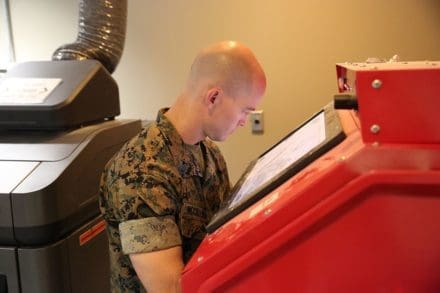
On March 16, Dr. Sidney Merritt, an anesthesiologist at UCSD Medical Center, contacted MCSC’s Advanced Manufacturing Operations Cell requesting assistance in coordinating 3D printer assets to design parts to enable the simultaneous ventilation of multiple patients.

AMOC initiated collaboration with the Naval Information Warfare Center Pacific Reverse Engineering, Science and Technology for Obsolescence, Restoration and Evaluation Lab to rapidly design, print, test and evaluate prototype ventilator splitters using various materials.

The AMOC team also worked with the Navy’s Bureau of Medicine and Surgery for support in evaluating, certifying and approving the parts prior to delivery to the medical center.

MCSC, NIWC Pacific and UCSD have established a Cooperative Research and Development Agreement to facilitate current and future support requests. A Memorandum of Understanding among MCSC, NIWC Pacific and the Navy’s Bureau of Medicine and Surgery is also being established to codify roles and responsibilities.

MCSC’s involvement

On March 18, Merritt provided design files for the ventilator splitter based upon a successful test print conducted by the UCSD engineering team. UCSD requested assistance in printing ventilator splitters in higher resolution and with diverse materials that could meet specific design requirements.

After receiving the design files, AMOC and the NIWC Pacific RESTORE lab printed several prototypes using different materials. In less than a day, AMOC used its industrial printer in Quantico, Virginia, and the RESTORE Lab employed its organic printers to produce initial prototypes. 

The 3D-printed ventilator splitters were scanned to ensure accuracy with the design files and then brought to UCSD Medical Center for fit testing and further design analysis.

AMOC’s reputation in advanced manufacturing has grown since its establishment in 2019. The cell has demonstrated the ability to produce 3D-printed parts and provide other sustainment and manufacturing solutions in a timely fashion. When called upon, the AMOC can produce parts in a fraction of the time it takes traditional manufacturers.

“AMOC’s response to this situation demonstrates how additive manufacturing can respond quickly to supply chain disruptions and rapidly prototype, evaluate and test new solutions to meet emerging urgent requirements,” said Scott Adams, AMOC lead at MCSC.

The rapid response by AMOC and the NIWC Pacific RESTORE lab to UCSD Medical Center’s request for support is indicative of how the Department of the Navy is prepared to respond to the medical community during the COVID-19 crisis.

“I couldn’t be prouder of the Marine Corps and NIWC Pacific team,” said Carly Jackson, NAVWAR Chief Technology Officer. “We are demonstrating the power, agility and speed of response that our Naval research and development centers bring to bear in times of national need.”

By Matt Gonzales, MCSC Office of Public Affairs and Communication | Marine Corps Systems Command

MATBOCK Monday – OsteoFX Casting System

Monday, March 23rd, 2020

Good morning and Happy MATBOCK Monday. We hope that everyone is taking the proper precautions to remain safe during these difficult times. Here at MATBOCK we are continuing to monitor the situation to provide a safe and healthy environment for our MATBOCK family. Ultimately MATBOCK is still here to help you whether through phone calls, text or email. If you need anything please reach out and we will be happy to assist you.

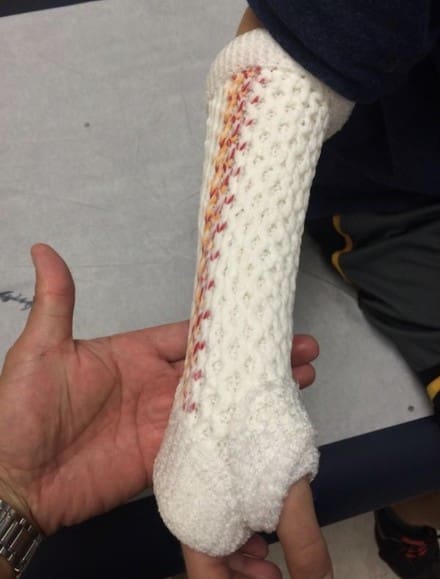
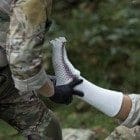
As a part of Medical March we are showcasing our OsteoFX Casting System. The OsteoFX Casting System from MATBOCK is now fully in stock and has been added to the DAPA schedule. We introduced this a few months back but MATBOCK now has the system fully available in different diameters from 2 inches (pediatric) up to 5 inches, all in various lengths for arms and legs. The cast system is easier to use than current systems, available at the same cost, and reduces some of the risks involved with current technologies. With the roll on method, there is reduced pain to the patient during application as well as the elimination of the risk of over tightening compared to wrapping methods. Additionally, because the system can breathe and dry, there is no reason for recasting in the event of exposure to water such as showering or swimming and these activities are encouraged with the OsteoFX. The material is also radiolucent for any X-rays that may be needed after application.

-FDA Approved
-Reimbursable
-Easy to apply with less mess
-Lightweight and breathable
-Water resistant for swimming and showering
-Little to no skin issues
-Superior radiolucency
-Cost effective with reduced application times and reduced waste

Join us this Monday at 4:30pm EST and every Monday thereafter for a brief webinar on our weekly highlighted product. To register click here: zoom.us

Soldier-Centered Approach Helping Lead Ground Modernization Efforts

Monday, March 23rd, 2020

WASHINGTON — Nearly two years into its largest modernization overhaul in four decades, the Army looks to continue its momentum of developing new ground systems centered on input from Soldiers.

Testifying before the House Armed Services Committee’s tactical air and land forces subcommittee, the Army’s acquisition chief told lawmakers Thursday that adequate funding is needed to build on those efforts.

“The Army’s modernization program takes time and money,” said Bruce Jette, assistant secretary of the Army for acquisition, logistics and technology. “We are working to achieve efficiency wherever possible and we need sufficient, predictable, sustained and timely funding to ensure a successful outcome.”

REALIGNING FUNDS

In its fiscal year 2021 budget request, the Army has realigned $9 billion to fund its six modernization priorities over the next five fiscal years.

In total, there is now $63 billion over that period aligned against those priorities: long-range precision fires, next-generation combat vehicle, future vertical lift, the network, air and missile defense, and Soldier lethality.

The realigned funds come after senior leaders carried out extensive “night court” sessions that led to the elimination or reduction of 80 programs across the Army.

In the latest budget request, the top program being canceled is about $122 million for the Advanced Precision Kill Weapon System, a guidance kit for helicopter-launched rockets. The largest program reduction is $222 million for upgrades to Bradley Fighting Vehicles.

The Army intends to replace the Bradley with the Optionally Manned Fighting Vehicle. In January, the Army halted its solicitation for a rapid prototype and now plans to solicit it again to gain more interest from industry.

“We’ve made it clear OMFV is continuing,” Jette told lawmakers. “The objective we were pursuing is unchanged. It’s the methodology by which we’re trying to get there.”

Jette also thanked Congress for granting the Army new authorities to strengthen its acquisition process.

As a result of the middle-tier acquisition authority, the Army has been able to rapidly prototype and accelerate select modernization efforts. Currently, there are 11 rapid prototyping efforts and one rapid fielding effort, he said.

In addition, the other transaction authority, or OTA, has allowed the Army to attract small companies and nontraditional businesses. In fiscal 2019, the Army awarded 830 agreements valued at roughly $5 billion, he said.

Jette also credited the unique relationship between his office and Army Futures Command for bringing system concepts and designs to life.

“Together they are aligning requirements, development and acquisition expertise with representatives from testing, logistics, science and technology, and other important Army communities,” he said.

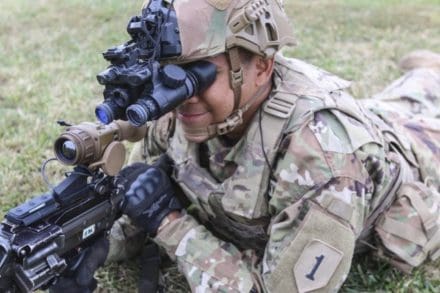
The collaboration has quickly delivered equipment to Soldiers, such as the Enhanced Night Vision Goggle-Binocular and the Command Post Computing Environment, a software system that supports mission command.

“And, in both cases, statement of need to delivering those capabilities was less than 18 months,” Gen. John Murray, the AFC commander, said during the hearing.

The general also noted successful test shots of the Precision Strike Missile and the Extended-Range Cannon Artillery, which both aim to greatly extend the range of two key long-range precision fire delivery systems.

SOLDIER-CENTERED APPROACH

The Army has also relied on Soldiers to play a larger role in developing new equipment.

“In all of our efforts we are leveraging a Soldier-centered design approach to delivering capability, putting Soldiers at the center of our production,” Murray said.

Before, Soldiers typically did not see a new piece of equipment until a limited user test.

“And it usually didn’t fare well because we didn’t have Soldiers involved from the front,” he said. “So that has become a standard principle for everything.”

Soldiers, he said, have been heavily involved with the next-generation squad weapon, as companies vie to replace the M4 carbine and M249 squad automatic weapon.

The Integrated Visual Augmentation System, or IVAS, has been another success of Soldier feedback. Murray said there has already been over 6,000 hours of Soldier touchpoints that have helped engineers make modifications to the system.

“Within this approach, we are committed to learning early and learning often,” he said. “This means focusing on characteristics and working with industry and our Soldiers to make sure that when we do write requirements, we get them right the first time.”

Story by Sean Kimmons, Army News Service

Photo by Chris Bridson


SCUBAPRO Sunday – US Riverine Forces

Sunday, March 22nd, 2020

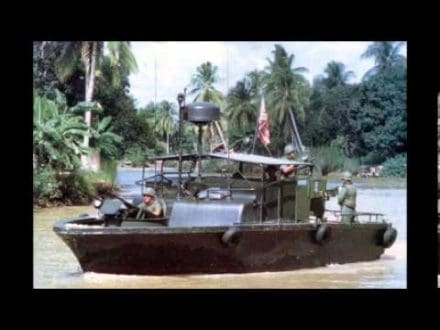
The U.S. Navy Riverine Force go back to the beginning of the U.S. Navy. The hay day for Riverine force was during the Vietnam War. The Brown Water Navy had the highest volunteer and retention rate of any unit in the U.S. military. They are also one of the highest decorated units during that time frame. The Riverine Force concept in Vietnam was based on tactics first used in the Revolutionary and Civil War. But they were quickly adapted for the Mekong delta.

During the Indochina War, the French Navy successfully utilized riverine assault craft against Viet Minh forces between 1946 and 1954. In 1955 with the departure of the French, the U.S. Navy sent in a hand full of advisers to help the South patrol the inland waterway. When the U.S. Mobile Riverine Force arrived in 1967, many of the older French craft were still being used by the South Vietnamese Naval Forces. By 1965 the Brown Water Navy was patrolling the over 26,000 square miles of the Mekong delta. The Navy was not the only service working on the waters of Vietnam, the Army, Coast Guard, Air Force, and USMC all worked together.  Below is a link to help you better understand the scope of the River force in Vietnam, and you can also read the book “Brown Water, Black Beret.” It’s a great book to read during quarantine.



www.history.navy.mil/research/library/online-reading-room/title-list-alphabetically/r/riverine-warfare-us-navys-operations-inland-waters

www.amazon.com/Brown-Water-Black-Berets-Bluejacket-ebook